Teal Bay wrote in June 2013 expressing concern over reverse confusion, then sued. When it became clear that the dispute would take a while to resolve and be expensive, Southbound made the business decision to select a new name and abandon the pending trademark application, choosing Backshore Brewing Company as the new name. Teal Bay persisted in the lawsuit, claiming damages. The court commented that “[n]o purpose would be served by detailing herein the implausibility of the damage theories Teal Bay has presented.”
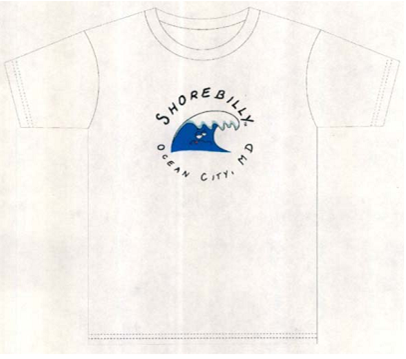
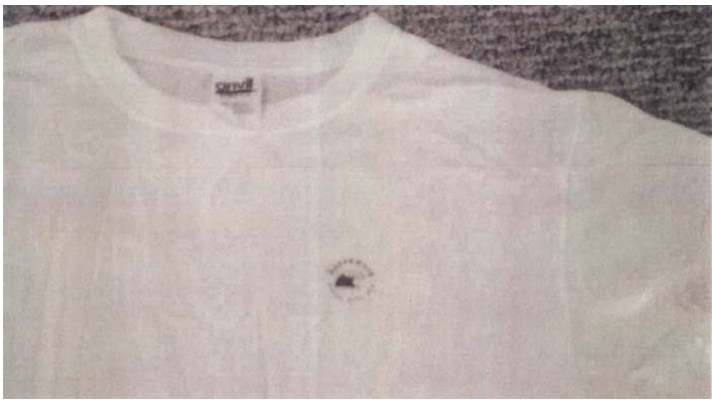
Registration creates a presumption of validity, which shifts the burden to the challenger to produce sufficient evidence to rebut the presumption. The evidence established that Teal Bay failed to file a genuine specimen, which is required to show the manner in which the mark is seen by the public. A picture such as an artist’s drawing or printer’s proof is not enough; that “merely illustrates what the mark looks like and is not actually used on or in connection with the goods in commerce.” “[W]ith the intent to mislead the PTO, Teal Bay created and filed a purported specimen (never used in commerce) that presented a Polo or Izod type of use of the proffered mark rather than the actual use in commerce.” There was therefore no genuine administrative filing that the mark was valid.
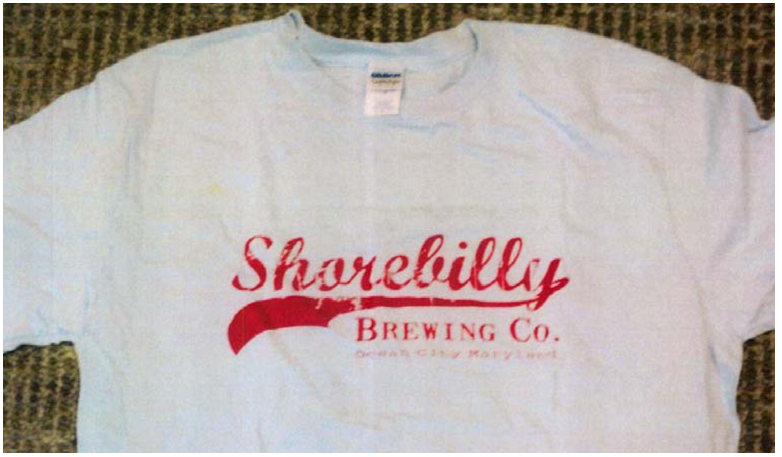
Teal Bay argued that the mark as shown on the substitute specimen was the same mark as used on t-shirts actually sold in commerce, though smaller and located differently. But the size and location were exactly what materially misled the PTO. The validity of a specimen generally doesn’t constitute a valid ground for cancellation, where the PTO determined that a specimen reflected a trademark use. But where, as here, the PTO was prevented by the applicant from making a determination based on actual use, the registration had no validity and needed to be cancelled.
The TTAB has said that the sufficiency of specimens is a technical question and not something for the TTAB to supervise, but also that “it is not the adequacy of the specimens, but the underlying question of [trade] mark usage which would constitute a proper ground for opposition.” Rejection of a mark on such grounds is not about the inadequacy of the specimen as such, but about failure to function as a mark. The TTAB has found a registration void because the specimens didn’t show use in commerce, and another district court has found that an invalid specimen justified cancellation; cancellation was also appropriate here.
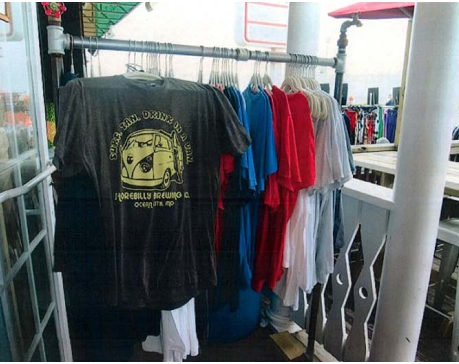
Even if the registration had been properly obtained and its validity were presumed, the court would still find that Teal Bay had no valid rights before Southbound’s first use in commerce. Had the burden of producing sufficient evidence to rebut the presumption of validity been shifted to Southbound, Southbound would amply have carried it, for the reasons noted above. Teal Bay’s use prior to October 2012 was ornamental, not trademark use, though thereafter Teal Bay “took some actions—such as using hangtags and labels—that could be considered to be trademark, rather than ornamental, usage of the name ‘Shorebilly.’”
McCarthy says: “Trademark usage is typically immediately evident. Usually, when viewed in context, if it is not immediately obvious that this ornamental design is being used as an indication of origin, then probably it is not.” There’s no bright-line rule; trademark use is a question of fact. A recognizable logo of a clothing designer can be immediately recognized as trademark use even if it’s also a decorative design. And use of a mark as ornamentation (basically, promotional goods—apparel licensed by a non-apparel maker) can be trademark use as long as the mark also serves to identify source.
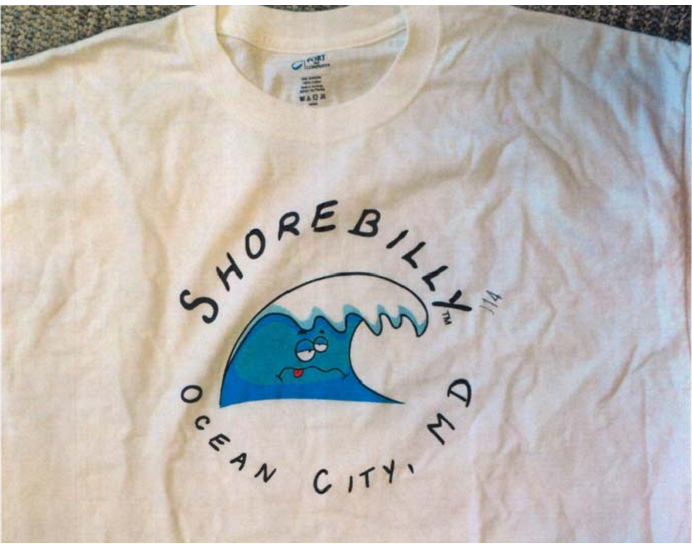
This is what happens with college insignia. But purely ornamental designs can’t be marks. The commercial impression of the alleged mark is a key factor, which is affected by the size, location, and dominance of the design as applied to the goods. “The larger the display relative to the size of the goods, the more likely it is that consumers will not view the ornamental matter as a mark.”
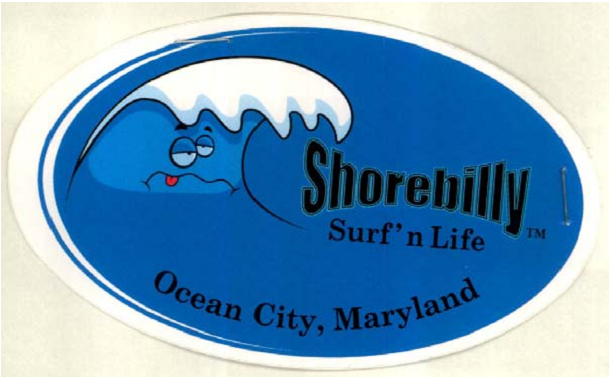
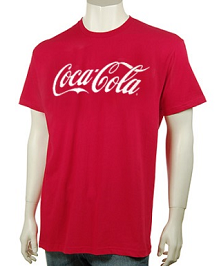
Teal Bay used the TM symbol on the shirts, but that’s not enough to make a mark. Moreover, the fact that the symbol might have been a trademark for some product or service didn’t lead to the conclusion that the trademark was for the t-shirt being sold. Rather, it most reasonably looks like the display of a mark for a product other than a t-shirt, like a Coca-Cola branded shirt. The t-shirts had a Port & Co. label, indicating that Port & Co. was the source of the shirt, as distinct from the source of whatever Shorebilly was a mark for.
Teal Bay sought, but was not entitled to, patent- or copyright-like protection for “shorebilly.” It was not using the term as a mark before Southbound’s first use. A design used as ornamentation may ultimately acquire secondary meaning, but Teal Bay didn’t prove it had done so by October 2012. “[B]y the time Teal Bay filed the instant lawsuit, it had sold or given away no more than about 150 t-shirts and spent only a little more than $100 on promotion and advertising, including the cost of t-shirts given away.”
And, even if Teal Bay had priority, the court would still find noninfringement. The mark was commercially weak given Teal Bay’s limited sales/promotion and the term’s use in the Ocean City area by others. The marks as used weren’t very similar given Southbound’s use of different graphics and “Brewing Company.” The goods weren’t similar, even though Southbound sold T-shirts with the company logo. There was no reason to think someone who bought a Shorebilly Brewing Co. promotional t-shirt would likely think that the source was Teal Bay, “the producer of totally dissimilar t-shirts that did not refer to the brewing company.” Sales channels: both marketed to tourists and local consumers, but Southbound sold only at its bar/restaurant and its t-shirts were strongly identified with its brewery, while Teal Bay sold only at a Shell station, which weighed against likely confusion. There was no similarity in advertising, given that Teal Bay had little, if any, advertising and promotion. There was no bad intent.
Actual confusion: “Teal Bay presented testimony of two individuals who stated that they were confused about whether there was a relationship between Teal Bay and the Shorebilly Brewery, evidence of telephone calls to Mrs. Rogerson asking about the brewery’s location or hours, and examples of a few in-person comments made to Mrs. Rogerson indicating some confusion about whether there was an affiliation between Teal Bay and Shorebilly Brewery.” But there was no evidence of confusion about a purchase decision, so that didn’t weigh in favor of finding confusion. Sophistication of consumers wasn’t relevant because the consuming public was the general public. Overall, there was no likely confusion.
Teal Bay argued reverse confusion. Where the factors differ, courts consider the commercial strength of the junioruser’s mark (counterfactually treating Southbound as the junior user). Southbound invested in advertising and promotion, and received a fair amount of media coverage; its mark was commercially stronger than Teal Bay’s. But this factor was totally outweighed by the other factors.
Intent: in reverse confusion, knowledge or reckless disregard of the senior user’s right matters, not intent to trade on goodwill. Southbound was aware of Teal Bay’s ITU, but Teal Bay was doing little, if anything, more than offering a few t-shirts for sale at a Shell station and out of the trunk of an automobile. This weighed strongly against reverse confusion. For actual reverse confusion, Teal Bay pointed to misdirected telephone calls and comments indicating confusion about whether the Rogersons owned the brewing company. But there was no evidence indicating that consumers believed that Southbound was the source of Teal Bay’s Shorebilly t-shirts. “Moreover, it is unlikely in the extreme that any consumer buying a Teal Bay t-shirt would believe, or even contemplate, that Southbound—selling promotional t-shirts bearing the Shorebilly Brewing Company name and logo—would be the source of t-shirts having no reference to its business and presenting a totally different logo.” Even if the Fourth Circuit were to recognize this cause of action, which it has yet to do, it wouldn’t matter here.


 Rebecca Tushnet