claim of "improved" version of competitor’s product not likely to confuse

Arborjet, Inc. v. Rainbow Treecare Scientific Advancements, Inc., 63 F.Supp.3d 149 (D. Mass. 2014)
 
Arborjet sued Rainbow over an alleged breach of a sales agency agreement and won a preliminary injunction.  Arborjet makes insect and pest control products for direct injection into trees. Rainbow makes pesticides to protect trees and also distributes pesticides manufactured by other companies; it competes directly with Arborjet.
 
In 2008, Arborjet began selling an emamectin benzoate product, TREE-age, which protects trees from the emerald ash borer and other destructive pests. TREE-age was successful, and Rainbow solicited Arborjet to become its distributor of the full line of Arborjet’s products, including TREE-age.  During negotiations, Arborjet allegedly expressed concern about Rainbow’s possible copying of Arborjet’s products, and Rainbow allegedly assured Arborjet that it had no such intention.  So they entered into a Sales Agency Agreement and Rainbow agreed to devote its best efforts to the promotion and sale of Arborjet’s products. 
 
The Agreement included a confidentiality and nondisclosure provision, and said “in view of the confidential information regarding Arborjet’s business affairs, plans, and necessities, [Rainbow] will not engage in affairs intended to replicate the Arborjet’s products or processes.”  Plus, it had a noncompete provision that said Rainbow wouldn’t “replicate the Arborjet system of using a plug which seals the formulation in the xylem and a needle which injects behind the plug” for two years after the agreement ended.  Arborjet didn’t allege a breach of this last provision, but the parties disputed its relevance to Arborjet’s breach of contract claim.
 
Instead, Arborjet alleged that Rainbow violated the part of the agreement prohibiting Rainbow from “engaging in affairs intended to replicate” its products.  Rainbow began developing and testing ArborMectin, its competitor for TREE-age, as early as 2011, when the Agreement was still in force.  (Rainbow terminated the Agreement in 2013.)  Arborjet didn’t allege that Rainbow used confidential information, but said that didn’t matter. 
 
In 2014, Rainbow sent a blast marketing email to customers with the subject line “Improved TREE-age! NEW ArborMectin Speed VIDEO.” The text said that “Rainbow is excited to offer ArborMectin™, an improved 4% emamectin benzoate (TREE-age) tree injection formulation. …Treat trees 30–70% faster using ArborMectin™ versus TREE-age.”  The email linked to a video that characterized ArborMectin as a replacement for TREE-age and indicated that ArborMectin is “backed by science,” “proven to be effective,” and treats trees “consistently faster than TREE-age.”
 
Arborjet argued that, while the Agreement was in effect, Rainbow was contractually barred from engaging in “affairs intended to replicate” Arborjet’s products, even absent misappropriation of Arborjet’s proprietary confidential information. Moreover, Rainbow allegedly breached the implied covenant of good faith and fair dealing given that it knew Arborjet’s purpose in the Agreement was to stop copying.
 
Rainbow argued that it didn’t “replicate” TREE-age because ArborMectin was not a “copy” or “duplicate.” Though the products have the same active ingredient, ArborMectin is less toxic and has lower viscosity than TREE-age. The court found this argument unpersuasive.  First, the fact that the final product had differences didn’t matter, given that the contract covered activities “intended to replicate” Arborject products. Given how Rainbow marketed the product as “improved TREE-age,” the court found its activities covered. Plus, it was unreasonable to read the contract as barring only exact copies “in light of Arborjet’s particular, expressed concern about direct competition with its own products.” Thus there was likely success on the merits of the contract claims.
 
Lanham Act false advertising: Arborjet argued that claims that its product was “backed by science”, “proven effective” and “treats trees 30–70% faster than TREE-age” were establishment claims.  The tests Rainbow relied on were allegedly unreliable because none of them was subject to peer review and the studies tested only five or six trees whereas studies of TREE-age tested between 60 and 100 trees. Thus, the study results didn’t prove the claim that ArborMectin was an improvement over TREE-age. The court found that Arborjet hadn’t demonstrated the studies’ unreliability at this stage, without industry or regulatory standards regarding peer review or sample size.  The claim that ArborMectin was an “improved TREE-age” was a non-establishment claim, just a general claim of superiority. Arborjet didn’t show actual falsity, because ArborMectin had lower toxicity and viscosity than TREE-age and those differences could be regarded as improvements.
 
However, the court expressed concern that the “improved TREE-age” claim was likely to mislead customers into thinking the products came from the same company. Rainbow indicated that it would no longer make that claim.
 
Arborjet also argued that Rainbow’s website infringed Arborjet’s registered trademarks “without including the symbol or any other attribution to the owner,” which would cause customer confusion.  But, as Rainbow pointed out, none of the other confusion factors favored Arborjet, such as the dissimilarity between TREE-age and ArborMectin.  RT: Also, it has never been the rule that failing to use a ® is misleading.  Unfortunately, the court also said that Rainbow “should be more careful with its attribution of proprietary marks in its communications,” even though Arborjet was unlikely to succeed on the merits.  Rainbow should clearly be more careful about suggesting that it produced an “improved version” of someone else’s product—there are lots of ways of saying that which are nonconfusing—but failing to use ® is not one of the ways in which it was careless.
 
Given Arborjet’s substantial likelihood of success on the merits of the contract claim, it had less of a burden to show irreparable harm under the First Circuit’s sliding scale.  The court found irreparable harm because of the significant risk of damage to Arborjet’s reputation and relationships with its consumers.  “Although plaintiff can be compensated for lost profits by monetary damages, the effect on its goodwill and reputation are particularly hard to quantify.”
 
The balance of equities tipped in Arborjet’s favor, but only slightly given Rainbow’s investment in a new product.  Rainbow also argued that the public interest favored competition and that this lawsuit would suppress competition, but “here the parties voluntarily and knowingly contracted to limit their competition.” Thus, it was in the public interest to enforce a limit on competition in this case.
Posted in contracts, http://schemas.google.com/blogger/2008/kind#post, trademark | Leave a comment

False patent marking isn’t material to business customers

Pactiv, LLC v. Multisorb Technologies, Inc., 63 F.Supp.3d 832 (N.D. Ill. 2014)
 
Pactiv and Multisorb compete to sell oxygen absorbers—“packets of chemicals that react with moisture to absorb oxygen when placed inside food containers,” keeping food fresher longer. The parties have sued each other for patent infringement, and Multisorb also counterclaimed for tortious interference and unfair competition and false advertising in violation of the Lanham Act. Pactiv’s patent claims are currently stayed pending re-examination before the PTO.  The court found that prosecution history estoppel barred Multisorb from pursuing its doctrine of equivalents-based patent claim, and therefore Multisorb lost its patent infringement counterclaim.
 
The remaining counterclaims arose from a failed business arrangement with Pactiv. Multisorb agreed to manufacture and sell oxygen absorber packets to Pactiv for use in its fresh meat packaging system, the ActiveTech System. The ActiveTech System is comprised of the ActiveTech Product (the oxygen absorber packet), a “case ready” packaging system, and Pactiv’s methods for packaging products. Shortly after the companies entered into a supply agreement, Pactiv received a patent on a packaging system and a method for sealing and preserving raw meat in a low or reduced oxygen environment. At Pactiv’s request, Multisorb marked the oxygen absorber it supplied with a stamp indicating that the product was protected under the patent.
 
Over ten years later, in 2008, the parties’ business relationship soured after Multisorb began selling oxygen absorbers to Wal-Mart and Wal-Mart vendors directly, taking business from Pactiv. Pactiv switched to Dessicare to make a new oxygen absorber, continuing to mark the Dessicare absorber with the Pactiv patent number.
 
Multisorb charged Pactiv with initiating “sham litigation” against Multisorb with the intention of interfering with its prospective business relationships. Internal Pactiv documents indicated that suing Multisorb had business reasons more than IP-related reasons, and that Pactiv desired to “tie [Multisorb] up” and force it to spend money.  But sham litigation relates to antitrust claims, not tortious interference.  And anyway Multisorb couldn’t prove sham litigation; even assuming Pactiv’s statements indicated bad faith, the court couldn’t find that Pactiv lacked a reasonable chance of success on the merits. Though its patents were recently declared invalid in reexamination (a decision under appeal to the Federal Circuit), there was nothing in the record to show that Pactiv would have known of the invalidity at the time it sued.  Thus, the tortious interference claim failed: “the mere filing of a lawsuit cannot serve as a basis for a tortious interference claim when there has been no showing that the litigant knew or should have known the case was meritless or otherwise unjustified.”
 
As for false marking, Multisorb failed to show that Pactiv intended to deceive the public by marking the oxygen absorber with its patent number.  At best, the evidence showed mere negligence: Pactiv “did not recall any discussions as to what patent number to put on the Desiccare oxygen absorber” and Pactiv “did not have a formal process in place to approve product covers.”
 
As for Multisorb’s Lanham Act counterclaim, Multisorb argued that Pactiv misled customers by telling them that the ActivTech System was protected by a patent when, in fact, it was not. However, Multisorb failed to show deceptiveness or materiality.  “[N]one of the customers deposed in this case indicated that they cared the least bit whether the ActiveTech System was patent protected.”  The Executive VP/COO of one meatpacking company testified that the existence of patents didn’t influence his decision to use Pactiv’s system; the GM of another meatpacking company “testified similarly that patents play no role in its purchasing decisions.”  Another customer witness didn’t recall any discussion of patents relating to the system with Pactiv.  A final customer witness testified that patent protection “didn’t really affect our decision-making process,” and indicated that the validity of the patent wouldn’t have altered its buying process.
Posted in http://schemas.google.com/blogger/2008/kind#post, patent | Leave a comment

London TM finds, food edition

“It’s All About the Base” pizza ad

Chocolate boxes


More chocolate boxes

For the last one, compare this story from Australia about another chocolatier.

from Blogger http://ift.tt/1dmKrwP

Posted in Uncategorized | Tagged , | Leave a comment

London TM finds, food edition

“It’s All About the Base” pizza ad

Chocolate boxes


More chocolate boxes

For the last one, compare this story from Australia about another chocolatier.

Posted in trademark | Leave a comment

it’s illegal to say that use of non-manufacturer accessories voids a warranty

EMED Technologies Corp. 
v. Repro–Med Systems, Inc., No. 13–cv–1957, 2015 WL 3794967 (E.D. Cal. June
16, 2015)
 
The parties compete to supply components of medical devices
used to administer immunoglobulin (human plasma and antibodies) to patients
suffering from a particular immunodeficiency disorder.  This therapy is increasingly administered at
home, instead of in medical offices and hospitals. Ten major customers in the
U.S. purchase the majority of the devices, and EMED and RMS are the two primary
U.S. manufacturers. 
 
The devices relevant to this lawsuit are: (1) mechanical
infusion pumps; (2) rate sets; and (3) subcutaneous needle sets. RMS makes a
Freedom 60 infusion pump, which was cleared by the FDA in 1994 and which has
become the dominant pump in the market. 
Pumps can last 10-15 years, but rate sets and needle sets are single-use
accessories.  Rate sets are a type of
tubing that regulate the flow of infusion between the pump and the needle sets,
and the parties are the only two suppliers of rate sets for use with the
Freedom 60.  EMED developed two different
rate sets: (1) “Infusets,” intended to compete directly with RMS on design and
price; and (2) “VersaRate,” which allow the user to adjust the flow rate. EMED
claimed that Infusets were FDA cleared via 510(k)s from 1994 and May 2014, and
that VersaRate sets were FDA cleared via a 2012 501(k).
 
EMED alleged that RMS tried to push it out of business
through false and misleading statements, including a 2012 “Safety Bulletin” to
customers claiming that when it learned of attempts to “encourage” use of
non-RMS rate sets with the Freedom 60, it was
 
concerned because, to the best of
our knowledge, such knock-off tubing has not been cleared by the FDA for use
with the FREEDOM60 pump, nor tested in accordance with our stringent release
criteria to confirm that it can be safely and effectively used in the RMS FREEDOM60
Syringe Infusion System. RMS believes this knock-off tubing, marketed as the
same product, fails to meet RMS specifications. Furthermore, we believe that
using such non-RMS tubing with the FREEDOM60 Syringe Infusion System could
potentially result in uncontrolled flows that could lead to patient injury or
death.
While RMS investigates whether
legal action against unauthorized sets is necessary to protect customers and
patients, we urge you to use caution and refer to the product labeling …:
Caution: Use only FREEDOM60 tubing
sets manufactured by RMS Medical Products. Use of any other tubing may cause
the syringe to eject from the pump and eventually cause internal damage to the
pump. Use of any other flow rate control tubing set may cause over or under
delivery or medication to the patient, which could result in injury or death.
Please keep in mind that patient
safety may be compromised by the use of unapproved and incompatible flow
control tubing sets to deliver drugs. In addition, regulatory, patent
infringement, reimbursement, and other issues may also arise. Moreover, use of
non-RMS flow rate tubing voids the warranty for the FREEDOM60 Syringe Infusion Pump….
 
RMS’ SEC Form 10-Q in 2013 mentioned the Safety Bulletin and
said that any non-RMS product could be “unsafe” and even cause death.  Its 2014 SEC Form 10-Q said that it didn’t
believe that EMED’s product had FDA clearance. Its website said that it had the
“only tubing specifically designed and FDA-cleared to have the accuracy
necessary for the safe, controlled, dynamically-responsive infusions of the
FREEDOM 60.”  In addition, statements
that use of non-RMS rate sets voids the warranty for the Freedom 60 appeared in
RMS’ four most recent SEC Form 10–Q’s.  And the Freedom 60’s user manual contained a
warranty provision saying that “use with non-approved accessories or disposable
items” voids the warranty.  Similar
statements appeared in a 2014 article on NASDAQ.com and used words like
“knock-off.”
 
EMED alleged that these were false statements that harmed
its sales.  For example, a customer wrote
to EMED stating: “The Freedom 60 warranty is voided if we use sets other than
the RMS products. This is documented in the user manual. Accordingly, the EMED
sets have not been proven to be accurate with the use of the Freedom 60 pump.
Taking these things into consideration, I have asked our locations to
discontinue use of the EMED sets.”  Others expressed concerns about FDA approval
and safety, based on RMS’ claims.  Others
required EMED to indemnify them before agreeing to purchase rate sets.  EMED claimed a loss of roughly 33% in related
revenue since January 2014.
 
RMS sued EMED for patent infringement; EMED counterclaimed
for false advertising.  The court first
found “serious questions going to the merits” (still an alternative to likely
success on the merits in the 9th Circuit).  EMED claimed that, from 2002 to 2005, RMS
contracted with EMED for the “manufacture of microbore tubing for RMS’ branded
rate sets,” and during this time EMED sold at least 155,000 units of microbore
tubing to RMS. RMS provided EMED with specifications necessary to manufacture
the tubing, which allowed EMED to specifically design its rate sets for the
Freedom 60 pump.  For years, RMS
allegedly provided consumers with instructions for using EMED needle sets.
Thus, the claim that EMED accessories couldn’t be used with RMS products was
false.

RMS responded that, before issuing its Safety Bulletin, RMS tested EMED’s
products and found that EMED’s Infuset products did not provide flow rates that
are compatible with the advertised RMS equivalent.  RMS argued that EMED tested its products
improperly, using fluids of the wrong viscosity.  EMED never made complete tubing sets, and
thus didn’t have the complete specifications. 
RMS attributed EMED’s revenue decline to RMS’ ability to sell a total
system for treating patients. 
 
The court found that the facts were disputed as to whether
EMED’s testing procedures were equivalent to RMS’, or whether the alleged
superiority of RMS’ “total system” was the reason for EMED’s decline in
revenue.
 
So what about those 510(k)s? 
A 510(k) clearance means that there’s substantial equivalence to another
legally marketed device, with either the same technological characteristics or
differences that don’t raise new questions of safety and effectiveness.  EMED’s 2012 clearance didn’t specifically
mention the Freedom 60, but the May 2014 clearance for Infusets did.  Internal EMED emails, construed in a light
favorable to RMS, showed doubt over whether EMED previously had FDA clearance,
though EMED’s position was that its VersaRate clearance covered a variety of
pumps, including the Freedom 60; the court couldn’t make a definitive finding
at this time, or a definitive finding that Infusets were covered by the 1994
510(k), even though RMS’ argument that Infusets weren’t covered was “unconvincing.” 
 
However, it was undisputed that there was clearance for
Infusets to be used with the Freedom 60 as of May 2014. After that time, the
Safety Bulletin warning of “death” was still available on RMS’ website, and
showed up as the top Google search entry when typing in “Freedom60 customers.”
It wasn’t clear how much RMS participated in the NASDAQ.com article, but the
article tracked the statements in the Safety Bulletin, and those statements
were false or misleading, because they contradict the fact that Infusets were
FDA cleared to be used safely with the Freedom 60.  Likewise, as of September 2014, the RMS
website still said “That’s why it has to be Precision—it’s the only tubing
specifically designed and FDA-cleared to have the accuracy necessary for the
safe, controlled, dynamically-responsive infusions of the FREEDOM 60.” RMS
argued that even if Infusets received FDA clearance they still were not FDA
cleared and designed for accuracy
with the Freedom 60. Still, it was misleading in light of the 510(k). The court
found that EMED raised serious questions going to the merits on falsity and
misleadingness as of May 2014.
 
In addition, EMED argued that RMS’ claims about voiding the
warranty violated the Magnuson–Moss Act, Section 2302(c) of which states:
 
No warrantor of a consumer product
may condition his written or implied warranty of such product on the consumer’s
using, in connection with such product, any article or service (other than
article or service provided without charge under the terms of the warranty)
which is identified by brand, trade, or corporate name …
 
Comment: News to me! 
That is a very interesting provision, and I wonder if it’s
underlitigated compared to other claims. 
RMS said EMED didn’t have standing to enforce the law, which permits
suits by the AG, the FTC, and consumers. 
But California’s UCL converts violations of other laws into violations
of the UCL, and RMS was allowed to sue under the UCL.
 
RMS argued that it didn’t know about the law, but that doesn’t
change the fact that voiding the Freedom 60’s warranty based on use of non-RMS
products would actually violate the Magnuson–Moss Act.  The Safety Bulletin thus described an unlawful
warranty, apparently directed specifically at EMED, which again raised serious
questions going to the merits of a claim for “unfair or fraudulent” practices
or “unfair, deceptive, untrue, or misleading advertising.”
 
Turning to the remaining preliminary injunction factors: RMS
argued that EMED had unclean hands because a draft user manual for its products
had the same provision, but that was just a draft. The current user manual
states: “Limited Warranty: EMED Technologies Corporation (“Manufacturer”)
warrants the SCIg60 Infuser to be free from defects in materials and
workmanship under normal use.”
 
The balance of hardships tipped “sharply” in EMED’s favor,
given the evidence of negative customer response, indemnity agreements demanded
by customers, and declining revenues. 
Enjoining RMS to stop its false or misleading statements would cause
minimal to no hardship.
 
RMS argued that EMED’s delay in seeking a preliminary
injunction cut against a finding of irreparable harm.  EMED waited for nearly two years to use after
receiving December 2012 customer emails expressing concerns; it waited over 16
months after sending its first cease-and-desist letter to RMS and one year
aftter sending its second; and it waited 11 months after asserting its
counterclaims. EMED argued that it acted after RMS continued to claim that only
its products could be safely used with the Freedom 60 even after the May 2014
510(k).  The court agreed that the delay
was long, given EMED’s position that its rate sets were FDA cleared even before
May 2014, but delay is just a single factor and courts are reluctant to
withhold relief solely on this ground.
 
EMED supported its irreparable harm claim with evidence that
the Safety Bulletin raised customer concerns about safety and voiding the
warranty, plus allegations of lost revenue. 
Given all this, an injunction against false and misleading advertising
was in the public interest.

from Blogger http://ift.tt/1Jo5PAd

Posted in Uncategorized | Tagged , | Leave a comment

London visit, TM and cultural property edition

All of This Belongs to You sign at the V&A Museum: cultural patrimony (though often of other cultures …)


English Milky Way, apparently caramel-less, and Yorkie (note the Yorkie’s offer of Man Prizes, which I can only assume are paid more than Woman Prizes)

“Never Mind the Bollards” exhibit at New London Architecture

from Blogger http://ift.tt/1LKD0LR

Posted in Uncategorized | Tagged , | Leave a comment

it’s illegal to say that use of non-manufacturer accessories voids a warranty

EMED Technologies Corp.  v. Repro–Med Systems, Inc., No. 13–cv–1957, 2015 WL 3794967 (E.D. Cal. June 16, 2015)
 
The parties compete to supply components of medical devices used to administer immunoglobulin (human plasma and antibodies) to patients suffering from a particular immunodeficiency disorder.  This therapy is increasingly administered at home, instead of in medical offices and hospitals. Ten major customers in the U.S. purchase the majority of the devices, and EMED and RMS are the two primary U.S. manufacturers. 
 
The devices relevant to this lawsuit are: (1) mechanical infusion pumps; (2) rate sets; and (3) subcutaneous needle sets. RMS makes a Freedom 60 infusion pump, which was cleared by the FDA in 1994 and which has become the dominant pump in the market.  Pumps can last 10-15 years, but rate sets and needle sets are single-use accessories.  Rate sets are a type of tubing that regulate the flow of infusion between the pump and the needle sets, and the parties are the only two suppliers of rate sets for use with the Freedom 60.  EMED developed two different rate sets: (1) “Infusets,” intended to compete directly with RMS on design and price; and (2) “VersaRate,” which allow the user to adjust the flow rate. EMED claimed that Infusets were FDA cleared via 510(k)s from 1994 and May 2014, and that VersaRate sets were FDA cleared via a 2012 501(k).
 
EMED alleged that RMS tried to push it out of business through false and misleading statements, including a 2012 “Safety Bulletin” to customers claiming that when it learned of attempts to “encourage” use of non-RMS rate sets with the Freedom 60, it was
 
concerned because, to the best of our knowledge, such knock-off tubing has not been cleared by the FDA for use with the FREEDOM60 pump, nor tested in accordance with our stringent release criteria to confirm that it can be safely and effectively used in the RMS FREEDOM60 Syringe Infusion System. RMS believes this knock-off tubing, marketed as the same product, fails to meet RMS specifications. Furthermore, we believe that using such non-RMS tubing with the FREEDOM60 Syringe Infusion System could potentially result in uncontrolled flows that could lead to patient injury or death.
While RMS investigates whether legal action against unauthorized sets is necessary to protect customers and patients, we urge you to use caution and refer to the product labeling …:
Caution: Use only FREEDOM60 tubing sets manufactured by RMS Medical Products. Use of any other tubing may cause the syringe to eject from the pump and eventually cause internal damage to the pump. Use of any other flow rate control tubing set may cause over or under delivery or medication to the patient, which could result in injury or death.
Please keep in mind that patient safety may be compromised by the use of unapproved and incompatible flow control tubing sets to deliver drugs. In addition, regulatory, patent infringement, reimbursement, and other issues may also arise. Moreover, use of non-RMS flow rate tubing voids the warranty for the FREEDOM60 Syringe Infusion Pump….
 
RMS’ SEC Form 10-Q in 2013 mentioned the Safety Bulletin and said that any non-RMS product could be “unsafe” and even cause death.  Its 2014 SEC Form 10-Q said that it didn’t believe that EMED’s product had FDA clearance. Its website said that it had the “only tubing specifically designed and FDA-cleared to have the accuracy necessary for the safe, controlled, dynamically-responsive infusions of the FREEDOM 60.”  In addition, statements that use of non-RMS rate sets voids the warranty for the Freedom 60 appeared in RMS’ four most recent SEC Form 10–Q’s.  And the Freedom 60’s user manual contained a warranty provision saying that “use with non-approved accessories or disposable items” voids the warranty.  Similar statements appeared in a 2014 article on NASDAQ.com and used words like “knock-off.”
 
EMED alleged that these were false statements that harmed its sales.  For example, a customer wrote to EMED stating: “The Freedom 60 warranty is voided if we use sets other than the RMS products. This is documented in the user manual. Accordingly, the EMED sets have not been proven to be accurate with the use of the Freedom 60 pump. Taking these things into consideration, I have asked our locations to discontinue use of the EMED sets.”  Others expressed concerns about FDA approval and safety, based on RMS’ claims.  Others required EMED to indemnify them before agreeing to purchase rate sets.  EMED claimed a loss of roughly 33% in related revenue since January 2014.
 
RMS sued EMED for patent infringement; EMED counterclaimed for false advertising.  The court first found “serious questions going to the merits” (still an alternative to likely success on the merits in the 9th Circuit).  EMED claimed that, from 2002 to 2005, RMS contracted with EMED for the “manufacture of microbore tubing for RMS’ branded rate sets,” and during this time EMED sold at least 155,000 units of microbore tubing to RMS. RMS provided EMED with specifications necessary to manufacture the tubing, which allowed EMED to specifically design its rate sets for the Freedom 60 pump.  For years, RMS allegedly provided consumers with instructions for using EMED needle sets. Thus, the claim that EMED accessories couldn’t be used with RMS products was false.
RMS responded that, before issuing its Safety Bulletin, RMS tested EMED’s products and found that EMED’s Infuset products did not provide flow rates that are compatible with the advertised RMS equivalent.  RMS argued that EMED tested its products improperly, using fluids of the wrong viscosity.  EMED never made complete tubing sets, and thus didn’t have the complete specifications.  RMS attributed EMED’s revenue decline to RMS’ ability to sell a total system for treating patients. 
 
The court found that the facts were disputed as to whether EMED’s testing procedures were equivalent to RMS’, or whether the alleged superiority of RMS’ “total system” was the reason for EMED’s decline in revenue.
 
So what about those 510(k)s?  A 510(k) clearance means that there’s substantial equivalence to another legally marketed device, with either the same technological characteristics or differences that don’t raise new questions of safety and effectiveness.  EMED’s 2012 clearance didn’t specifically mention the Freedom 60, but the May 2014 clearance for Infusets did.  Internal EMED emails, construed in a light favorable to RMS, showed doubt over whether EMED previously had FDA clearance, though EMED’s position was that its VersaRate clearance covered a variety of pumps, including the Freedom 60; the court couldn’t make a definitive finding at this time, or a definitive finding that Infusets were covered by the 1994 510(k), even though RMS’ argument that Infusets weren’t covered was “unconvincing.” 
 
However, it was undisputed that there was clearance for Infusets to be used with the Freedom 60 as of May 2014. After that time, the Safety Bulletin warning of “death” was still available on RMS’ website, and showed up as the top Google search entry when typing in “Freedom60 customers.” It wasn’t clear how much RMS participated in the NASDAQ.com article, but the article tracked the statements in the Safety Bulletin, and those statements were false or misleading, because they contradict the fact that Infusets were FDA cleared to be used safely with the Freedom 60.  Likewise, as of September 2014, the RMS website still said “That’s why it has to be Precision—it’s the only tubing specifically designed and FDA-cleared to have the accuracy necessary for the safe, controlled, dynamically-responsive infusions of the FREEDOM 60.” RMS argued that even if Infusets received FDA clearance they still were not FDA cleared and designed for accuracy with the Freedom 60. Still, it was misleading in light of the 510(k). The court found that EMED raised serious questions going to the merits on falsity and misleadingness as of May 2014.
 
In addition, EMED argued that RMS’ claims about voiding the warranty violated the Magnuson–Moss Act, Section 2302(c) of which states:
 
No warrantor of a consumer product may condition his written or implied warranty of such product on the consumer’s using, in connection with such product, any article or service (other than article or service provided without charge under the terms of the warranty) which is identified by brand, trade, or corporate name …
 
Comment: News to me!  That is a very interesting provision, and I wonder if it’s underlitigated compared to other claims.  RMS said EMED didn’t have standing to enforce the law, which permits suits by the AG, the FTC, and consumers.  But California’s UCL converts violations of other laws into violations of the UCL, and RMS was allowed to sue under the UCL.
 
RMS argued that it didn’t know about the law, but that doesn’t change the fact that voiding the Freedom 60’s warranty based on use of non-RMS products would actually violate the Magnuson–Moss Act.  The Safety Bulletin thus described an unlawful warranty, apparently directed specifically at EMED, which again raised serious questions going to the merits of a claim for “unfair or fraudulent” practices or “unfair, deceptive, untrue, or misleading advertising.”
 
Turning to the remaining preliminary injunction factors: RMS argued that EMED had unclean hands because a draft user manual for its products had the same provision, but that was just a draft. The current user manual states: “Limited Warranty: EMED Technologies Corporation (“Manufacturer”) warrants the SCIg60 Infuser to be free from defects in materials and workmanship under normal use.”
 
The balance of hardships tipped “sharply” in EMED’s favor, given the evidence of negative customer response, indemnity agreements demanded by customers, and declining revenues.  Enjoining RMS to stop its false or misleading statements would cause minimal to no hardship.
 
RMS argued that EMED’s delay in seeking a preliminary injunction cut against a finding of irreparable harm.  EMED waited for nearly two years to use after receiving December 2012 customer emails expressing concerns; it waited over 16 months after sending its first cease-and-desist letter to RMS and one year aftter sending its second; and it waited 11 months after asserting its counterclaims. EMED argued that it acted after RMS continued to claim that only its products could be safely used with the Freedom 60 even after the May 2014 510(k).  The court agreed that the delay was long, given EMED’s position that its rate sets were FDA cleared even before May 2014, but delay is just a single factor and courts are reluctant to withhold relief solely on this ground.
 
EMED supported its irreparable harm claim with evidence that the Safety Bulletin raised customer concerns about safety and voiding the warranty, plus allegations of lost revenue.  Given all this, an injunction against false and misleading advertising was in the public interest.
Posted in http://schemas.google.com/blogger/2008/kind#post, warranties | Leave a comment

London visit, TM and cultural property edition

All of This Belongs to You sign at the V&A Museum: cultural patrimony (though often of other cultures …)


English Milky Way, apparently caramel-less, and Yorkie (note the Yorkie’s offer of Man Prizes, which I can only assume are paid more than Woman Prizes)

“Never Mind the Bollards” exhibit at New London Architecture

Posted in trademark | Leave a comment

visiting London: TM edition

The band Camel Anathema, with a familiar font and presentation

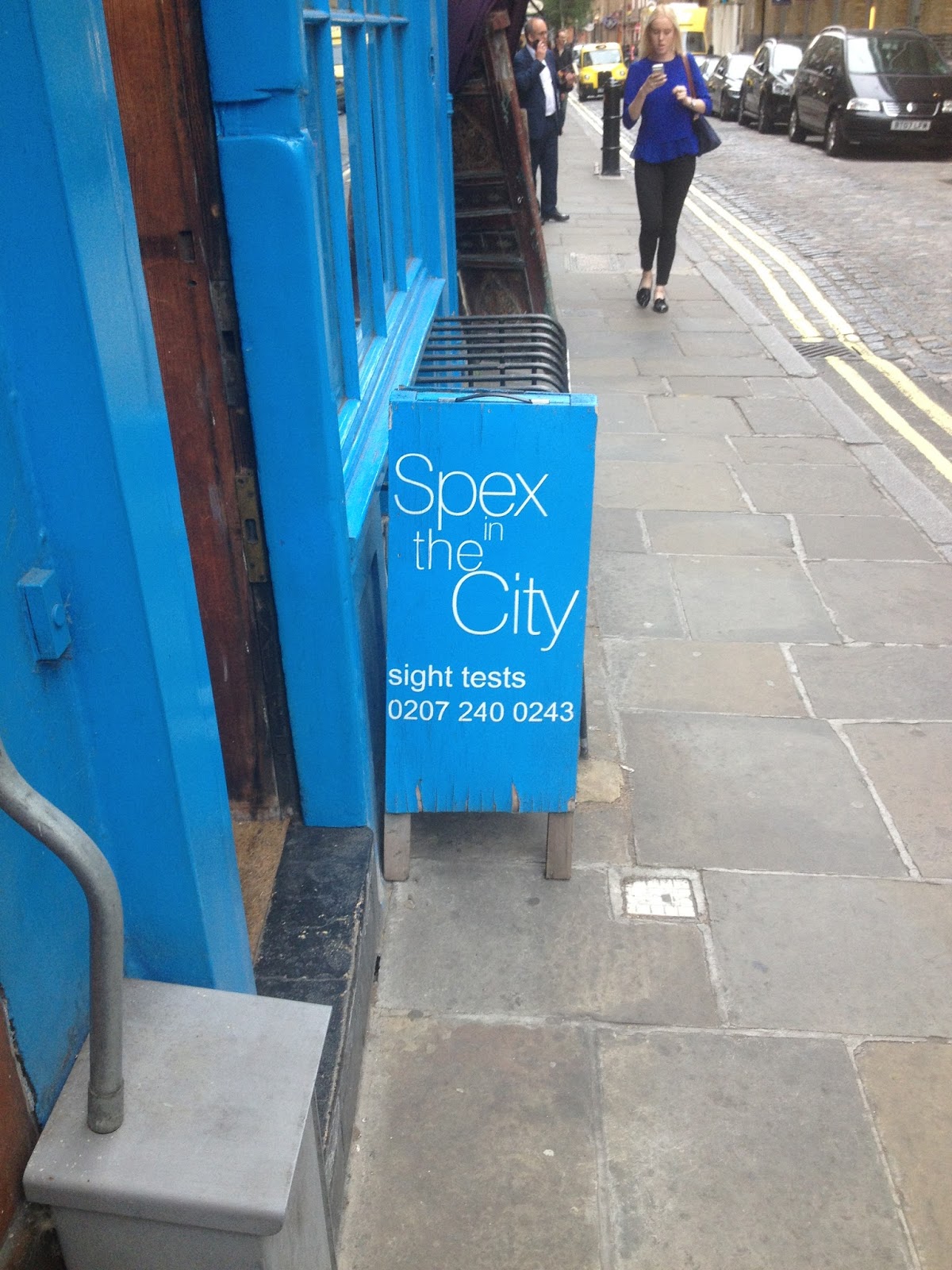
Spex in the City

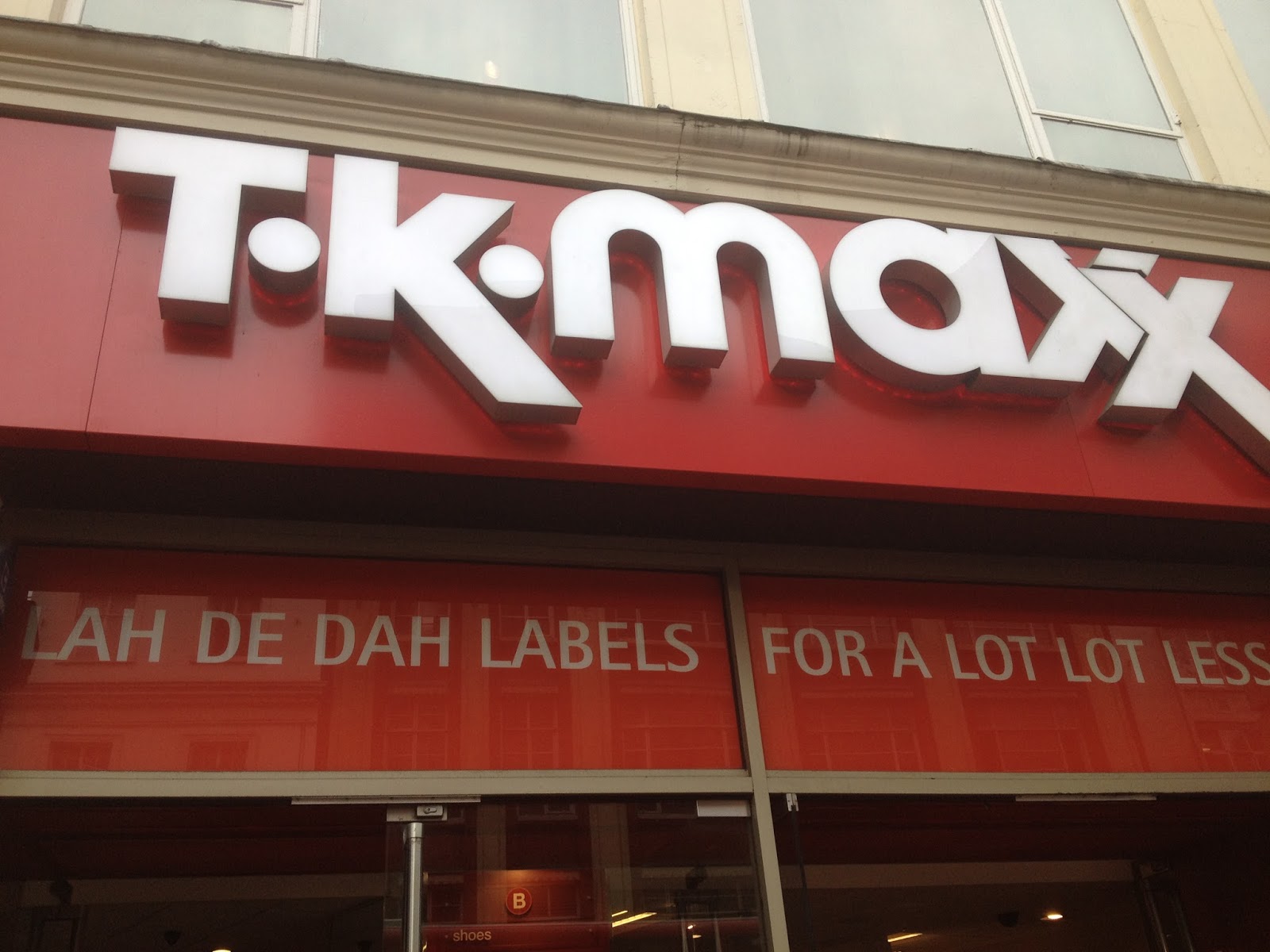
TK Maxx, aka TJ Maxx, apparently renamed in the UK to avoid conflict with retailer TJ Hughes

from Blogger http://ift.tt/1GAxIxQ

Posted in Uncategorized | Tagged | Leave a comment

visiting London: TM edition

The band Camel Anathema, with a familiar font and presentation

Spex in the City

TK Maxx, aka TJ Maxx, apparently renamed in the UK to avoid conflict with retailer TJ Hughes

Posted in trademark | Leave a comment