9th Circuit reverses preemption finding in consumer protection case

Reid v. Johnson & Johnson, 2015 WL 1089583, No. 12–56726, — F.3d – (9th Cir. Mar. 13, 2015)
 
Reid sued defendants (here J&J) based on claims about Benecol, a vegetable oil-based spread sold as a healthy substitute for butter or margarine. The label says the product contains “No Trans Fat” and that it contains plant stanol esters that lower cholesterol (e.g., “Proven to Reduce Cholesterol”). But Benecol does contain trans fat, which allegedly is harmful to human health/raises bad cholesterol, counteracting the beneficial effects of the plant stanol esters in Benecol.  J&J said the amount was so insignificant that it was authorized under FDA regulations to make the statement. (The inside of the packaging, where only a purchaser could see it, says: “A small amount of partially hydrogenated oils are used in BENECOL® Spreads to maintain a semi-solid structure and to enhance the melting characteristics of the BENECOL® Regular Spread. As a result, BENECOL® Spreads[ ] contain an extremely low level of trans fat. The FDA allows foods containing less than 0.5 grams of trans fat/serving to be labeled 0 grams trans fat, since this is considered an insignificant amount.”)  Also, Benecol doesn’t comply with the terms of the FDA’s regulation authorizing plant stanol ester-based health claims, but J&J said that a 2003 FDA letter authorized its statements and was entitled to preemptive effect.
 
The district court found that Reid lacked standing and that his claims were preempted; the court of appeals reversed (while agreeing that primary jurisdiction and abstention were not problems). Reid alleged that he bought Benecol based on J&J’s misrepresentations and, since Benecol costs more than similar products, paid a premium for doing so.
 
Along with Reid’s other claims, he argued that Benecol’s name (a combination of “cholesterol” and “benefit”) and the heart and vegetable graphics on the package reinforced the deceptive statements.  He brought the usual California claims.
 
Though Reid alleged that he wouldn’t have been willing to pay as much as he did for Benecol, if anything, if he had not been misled by J&J’s misrepresentations about Benecol’s health effects, the district court found that he lacked standing because he failed to “set forth alleged facts showing that Benecol’s statements may deceive a reasonable consumer.” True, the reaction of reasonable consumers is the standard for violations of the UCL, FAL, and CLRA, but it’s not a standing requirement. Rather, it usually raises fact questions inappropriate for resolution on a motion to dismiss. 
 
If the district court meant Reid failed to state a claim, it also erred, since it relied on disclosures in Benecol’s ingredient list, which included partially hydrogenated vegetable oil.  But the 9th Circuit has already held that the ingredient list can’t be used to shield manufacturers from liability for other misrepresentations on the label. “Regardless, it is far from clear that typical consumers understand that a product containing partially hydrogenated vegetable oil necessarily has trans fat, so even if an ingredient list has a curative effect in some cases, it might not here.”  Reid’s allegations were sufficiently plausible.
 
Preemption: The key question was whether the challenged statements were authorized by the FDA’s regulations or other pronouncements of similar legal effect. The NLEA expressly preempts non-identical state regulations, but also says there’s no preemption unless the preemption is express.  FDA regulations require a nutrition label, but the claims made in it are not considered “nutrient content claims” for the purposes of FDA regulations. “While a required statement inside a nutrition label escapes regulations reserved for nutrient content claims, the identical statement outside of the nutrition label is still considered a nutrient content claim …. As a result, a requirement to state certain facts in the nutrition label is not a license to make that statement elsewhere on the product.”
 
FDA regulations provide that trans fat should generally be disclosed in the nutrition label “except that label declaration of trans fat content information is not required for products that contain less than 0.5 grams of total fat in a serving if no claims are made about fat, fatty acid or cholesterol content.” In such circumstances, the trans fat content has to be expressed as zero on the nutrition label.  Outside the nutrition label, claimants may make nutrient content claims such as “fat free,” “no fat,” “zero fat,” or “negligible source of fat” on labels where the food contains less than 0.5 grams of fat per serving and certain other conditions are met. There’s a parallel regulation permitting similar claims about “saturated fat,” but not about “trans fat.” The FDA decided not to authorize a “trans fat free” claim in light of “insufficient scientific information.”
 
FDA also authorized certain health claims, as long as they’re “complete, truthful, and not misleading.” Claims for plant stanol esters being associated with reduced risk of heart disease (CHD) are among those authorized. They have to use “may” or “might”; specify the daily intake necessary to reduce the risk; indicate the contribution one serving of the product makes to the specified intake level; and specify that the daily dietary intake of plant sterol or stanol esters should be consumed in two servings eaten at different times of the day with other foods.  The claim may state that the heart disease relationship is through the intermediate link of cholesterol.
 
In a 2003 letter, the FDA indicated that it “will consider exercising enforcement discretion with regard to the use of a claim about reduced risk of CHD in the labeling of phystosterol containing food” that did not meet the requirements in the regulation. Qualifying health claims had to relate to foods containing 400 mg per serving, had to specify “that the daily dietary intake of phytosterols that may reduce the risk of CHD is 800 milligrams (mg) or more per day,” and the food had to satisfy the regulation’s other requirements.
 
The FDA also recognizes a heart symbol as a health claim, and requires a complete claim to appear in immediate proximity.
 
The first question was whether the “No Trans Fat” claim was authorized by FDA regulations.  In a warning letter, the FDA indicated that “No Trans Fat” is “an unauthorized nutrient content claim … which has not been defined by FDA.”  This interpretation, albeit informal and nonfinal, deserved deference unless clearly erroneous.  The court of appeals agreed that, because Benecol contains some trans fat, its “No Trans Fat” claim was misleading.  The FDA regulations don’t allow a “No Trans Fat” claim similar to allowed “No Fat” and “No Saturated Fat” claims for products that contain less than 0.5 grams of fat or saturated fat per serving; the warning letter made the most sense of the overall labeling regime.  As noted above, the statement on the ingredient list didn’t authorize a “No Trans Fat” nutrient content claim elsewhere on the label. Thus, the trans fat claims weren’t preempted.
 
J&J admitted that its plant stanol esters and cholesterol reduction claims didn’t satisfy the relevant regulation, but claimed that they met the criteria described in the FDA’s 2003 letter about its enforcement intentions. The FDA explicitly found that “[t]he scientific evidence establishes that including plant sterol/stanol esters in the diet helps lower blood total and LDL cholesterol levels.” So, if Benecol contained the minimum amounts necessary to make the health claims at issue, it was consequently also proven to reduce cholesterol as far as the FDA was concerned.  Was this letter a “law” with preemptive effect? “Creation of federal law should demand at least the same formality for purposes of preemption as it does for purposes of Chevron deference.” Thus, the court declined to give preemptive effect “to agency actions that do not carry the force of law under Mead and its progeny.” 
 
Under that rule, the 2003 letter lacked preemptive effect; enforcement guidelines like those in the letter “are beyond the Chevron pale.”  It did not indicate that FDA had a lawmaking purpose, but was “couched in tentative and non-committal terms.” It didn’t promise not to enforce existing regulations, but announced an “inten[t] to consider the exercise of enforcement discretion” in certain circumstances.  A separate statement firmed up the FDA’s intent not to object to the use of the claim specified in the letter, but that wasn’t enough. “The FDA’s equivocal language regarding its intention to foreclose its own ability to enforce noncompliance with existing rules is a good indication that it did not intend to foreclose state law challenges to health claims that do not comply with existing rules.”  The FDA could have acted more formally—it has the power to approve health claims effective immediately, pending consideration of public comment and publication of a final regulation. The fact that it didn’t do so for the claims in the letter indicated that it didn’t intend to create a standard with the force of law, foreclosing state-law protections. “Giving the 2003 letter preemptive effect would effectively open an additional shortcut allowing the FDA to authorize health claims without notice and comment.”  That’s not inherently bad and notice and comment isn’t always required, but Congress showed that it knew how to create a shortcut and didn’t do so here.
 
The court noted an additional prudential consideration: “we are concerned that allowing the FDA effectively to authorize health claims by way of statements of its enforcement policy could place those authorizations beyond judicial review. This is so because agency decisions not to take enforcement action are usually committed to agency discretion by law and thus generally not subject to judicial review.”  Foreclosing challenges to such approvals wouldn’t serve Congress’s goals of improving protection for public health and safety (citing Pom Wonderful).
 
The court of appeals then agreed that the doctrine of primary jurisdiction didn’t bar the claims. There were no issues of first impression, since the FDA had already addressed the substance.  And, though the FDA said it would someday issue a new final plant stanol esters rule, that was over a decade ago; there was no indication that it was thinking about authorizing “No Trans Fat.”  Courts are competent to address the key issue of misleadingness. 
Posted in california, consumer protection, fda, http://schemas.google.com/blogger/2008/kind#post, preemption | Leave a comment

Insurance misrepresentations could ground claims against Uber/Lyft

Greater Houston Transportation Co. v. Uber Technologies, Inc., 2015 WL 1034254, No. 4:14–0941 (S.D. Tex. Mar. 10, 2015)
 
Taxi permit holders in Houston and San Antonio sued Uber and Lyft for tortious interference with business relations, unfair competition, and false advertising under the Lanham Act.  Uber and Lyft moved to dismiss.  The plaintiffs operate taxis that can be hailed conventionally on the street or by phone; many also offered smartphone apps.  Municipalities are required by Texas law to license, control, and regulate taxi transportation service, and thus plaintiffs were subject to various regulations, including (in Houston) medical exams for operators, criminal history checks, mechanical upkeep of automobiles, compliance with established taxi rates, insurance, and antidiscrimination rules.  San Antonio had similar regulations.
 
Uber and Lyft claim to be ridesharing operations, not taxi services, which connect passengers with third-party transportation providers.  In Houston and San Antonio, Lyft represented that it operated on donations alone. “Lyft provides a suggested donation to passengers, but claims that the decision to donate to the driver belongs entirely to the passenger.”  The parties disagreed about the proper classification of defendants’ services, as well as their safety, insurance coverage, and their compliance or need to comply with local ordinances related to vehicles for hire.  As of April 2014, defendants had been cited 26 times by Houston for failure to register as a “mobile dispatch service” under a since repealed portion of the city code, and at least ten times by San Antonio, and the San Antonio Chief of Police sent a cease-and-desist letter to Lyft.  In August 2014, Houston amended its law creating permitting and other regulations for “transportation networked companies” (TNCs), at which point Lyft suspended operations in Houston.  In December, San Antonio adopted similar amendments.
 
Currently, plaintiffs alleged that defendants used misleading terminology to describe their businesses and misrepresented their insurance coverage and compliance with local ordinances. In addition, plaintiffs alleged common-law unfair competition, as well as tortious interference from plaintiffs’ solicitation of independent contract drivers to drive for their allegedly unlawful operations.
 
Defendants argued that plaintiffs failed to plead proximate cause under the Lanham Act.  Ordinarily, harms to third parties are too remote to constitute proximate cause, but Lexmark explained that, given the Lanham Act’s purpose, “the intervening step of consumer deception is not fatal to the showing of proximate causation required by the statute.”  Ordinarily, a plaintiff has to show economic or reputational injury flowing directly from the deception perpetrated by the defendant—usually withheld trade.  Defendants argued that plaintiffs couldn’t show that consumers would have been influenced by the alleged misrepresentations or that they lost business because of the misrepresentations instead of other market factors.
 
Plaintiffs pled numerous false or misleading statements, such as misrepresentation of legality;  misrepresenation of the nature of the service through terms like “ridesharing,” “partners,” and “donations;” misrepresentation of the scope of their insurance coverage; comparisons to traditional taxi companies with regard to insurance coverage and general safety.  They further alleged that this took business from them.  They didn’t need to disprove the effects of all other market factors to survive a motion to dismiss; pleading that customers were induced by false advertising to give business to defendants instead of plaintiffs was sufficient.
 
Defendants then argued that plaintiffs didn’t adequately plead falsity.  For these purposes, neither the alleged illegality of defendants’ services, nor any misrepresentations allegedly made to regulators, counted—only statements directed at consumers.
 
Uber: Uber claimed on its website that “every driver meets all local regulations,” and the assurance that the service is “LICENSED & INSURED—From insurance to background checks, every driver meets all local regulations.” Although Plaintiffs admited that Uber’s non-compliance with the new Houston ordinance “remains to be seen,” they alleged that Uber failed to comply with the new Houston ordinances or San Antonio requirements for permit-holders. In addition, Uber allegedly discriminated by red-lining, in violation of anti-discrimination ordinances in both Houston and San Antonio by incentivizing its drivers to service primarily affluent white neighborhoods.
 
Uber argued that this was effectively an attempt to enforce local ordinances.  Misrepresentations about legality are special because they could be used to create a private cause of action where a law provides none. Thus, the court found that claims based on Uber’s purported red-lining, failure to get properly licensed, and other failures to comply with local ordinances or codes were illegitimate attempts to use the Lanham Act to enforce plaintiffs’ preferred interpretation of local ordinances. Citations and a C&D letter from the San Antonio chief of police weren’t “clear and unambiguous statements” from the cities’ regulatory agencies that defendants were in violation of local ordinances; they predated the recent amendments.
 
Uber also allegedly misrepresented itself as a “ridesharing” service, which is distinguished in the Houston ordinance from “for hire” services by being defined as shared travel “to any location incidental to another purpose of the driver, for which compensation is not accepted, collected, encouraged, promoted, or requested.” Plaintiffs couldn’t rely on the Houston ordinance’s definition of “ridesharing” for the same reasons they couldn’t generally rely on the ordinance, and there was no plausible misrepresentation. The dictionary definition of “ridesharing” didn’t exclude ridesharing for a fee.  And with no literal falsity, plaintiffs didn’t plead misleadingness: Uber’s website openly provides fare information. To find misleadingness, “one would have to presume a customer who believes that ‘ridesharing; excludes fee-based arrangements, but is careless enough to disregard the information actually provided by Uber about fees.”
 
Uber also claimed on its website that its drivers were “partners,” “driver partners,” or “partner drivers” of the Uber company, but the Terms of Service indicated that they were “third party transportation providers.”  The court found that these terms were not necessarily inconsistent.
 
However, a quote that “partnering with uberX is a safer alternative to taxis” was different in kind.  “While statements that a product is better than the competition are typically deemed to be nonactionable puffery, statements as to the comparative safety of a product are specific and measurable, and thus frequently considered actionable.” However, plaintiffs failed to plead that Uber’s service was not safer than taxi service.
 
Uber further claimed that it offered a minimum million-dollar-per-incident insurance policy, while plaintiffs argued that in fact Uber had an “excess and surplus lines policy,” rather than a more carefully regulated taxi/livery or commercial auto insurance policy like those held by taxi companies. Plaintiffs argued that this coverage was illusory, in that the named insured was a third party subsidiary of Uber, Rasier LLC, and coverage was available only if Rasier was found liable for injuries sustained in the accident; and also Uber had no insurable interest in passengers, since it claimed not to be a transportation company. Plaintiffs also alleged other misleading statements about driver coverage under drivers’ personal insurance policies, even though most of those policies excluded coverage for commercial operations. Uber nonetheless claimed to have “best-in-class commercial insurance,” with “almost 20x the requirements taxis have in Houston.” Moreover, Uber’s Terms of Service stated that users waived any claims against Uber.
 
Uber responded that it only said “there will be a $1,000,000 per-incident insurance policy,” implying a present intent for a future action, which couldn’t be literally false, and also that it didn’t engage in any other literal falsity—it never claimed to carry commercial auto insurance.  According to Uber, drivers were always covered by either their own personal insurance or Uber’s insurance, and it denied that its disclaimers would limit coverage in the way claimed by plaintiffs. (I sure hope Uber remembers that when it gets sued by a passenger.)
 
Uber’s arguments went to literal falsity, but its claim to carry insurance with “almost 20x the requirements taxis have in Houston” could lead consumers to believe, wrongly, that the insurance policy is of the same type as the cab companies’. Plaintiffs adequately pled that the statements were materially misleading; determining the actual scope of Uber’s insurance was for summary judgment or trial.
 
Lyft: mostly the same. Plaintiffs also alleged that Lyft misrepresented its payment model by claiming that drivers collected only “donations” in Houston and San Antonio. The city-specific webpages said that a “suggested donation” was calculated based on a “base charge,” “cancel penalty,” “cost minimum,” “cost per mile,” and “cost per minute.” Plaintiffs alleged that Lyft automatically charged the full “suggested donation,” unless the rider affirmatively opts out. Pressure to donate is exacerbated by Lyft drivers’ ability to screen passengers based on whether they have made donations, and the mobile app’s warning to users that they are more likely to obtain a ride if they consistently make donations.  This was adequate to plead that customers could believe that the service was donation-based, when in fact less savvy customers would be automatically charged and everyone would effectively have to pay to get picked up.  The situation was similar to advertising “free” services with hidden fees or mandatory action on the consumer’s part to avoid being charged.
 
Tortious interference with contract claims failed for want of an allegation of an actual existing contract between plaintiffs and any independent drivers, or defendants’ awareness thereof. Tortious interference with prospective business relations claims also failed for want of adequate pleading of intentional interference, or of independently tortious conduct performed with a desire to interfere, given that the alleged violations of Houston and San Antonio ordinances were not actionable.
 
Unfair competition:  the same conduct remaining in the Lanham Act claims survived here under Texas law.
 
Defendants moved to dismiss plaintiffs’ request for a permanent injunction, which seems weird to me at this stage. Although eBay casts doubt on prior presumptions of irreparable injury in Lanham Act cases, the Fifth Circuit still accepts them, and there was no clear directive from the Supreme Court that courts can’t presume irreparable injury based on direct comparative advertising; thus, plaintiffs adequately pleaded a claim for permanent injunctive relief.
 
The court also rejected defendants’ request for Burford abstention, since it wasn’t allowing claims based on city ordinances in the first place
Posted in http://schemas.google.com/blogger/2008/kind#post, tortious interference | Leave a comment

It’s possible to violate the right of publicity intentionally but innocently

Jordan v. Jewel Food Stores, Inc., No. 10-c-340 (N.D. Ill. Mar. 12, 2015)
 
Jewel took out a page in a commemorative issue of Sports Illustrated congratulating Michael Jordan on his 2009 induction into the Hall of Fame.  Time asked Jewel to design a one-page ad for its special issue “with some play on words or design that is specific to Michael Jordan.”  Its solicitation included examples of ads designed for a similar commemorative issue celebrating the Philadelphia Phillies’ 2008 World Series win; those ads incorporated the Phillies’ logo and name. A Time vice president agreed that “acceptance of [the offer] would require the content [of the ad] to at least have something to do with Michael Jordan.”  Jewel didn’t pay, but but did agree to stock and sell the commemorative issue at special displays by the checkout counters of its stores. The ad says “Jewel-Osco salutes #23 on his many accomplishments as we honor a fellow Chicagoan who was ‘just around the corner’ for so many years,” referencing its slogan, which is also printed below its logo: “Good things are just around the corner.”
 

Jordan sued for violation of his statutory Illinois right of publicity.  (There were Lanham Act claims, but Jordan agreed to dismiss them—perhaps noting that publicity rights plaintiffs may do better when they only bring publicity claims; a Lanham Act claim occasionally reminds courts of the more vigorous First Amendment defenses available in false endorsement cases.)  Jewel filed third-party claims against publisher Time (and the page’s designer, Vertis, now in bankruptcy) for contribution and indemnification.  Time counterclaimed against Jewel for breach of contract and indemnification. The Seventh Circuit previously held that Jewel’s ad was commercial speech within the meaning of the First Amendment, but did not rule on the ultimate merits of the right of publicity claim.
 
Jordan moved for summary judgment on liability as to his right of publicity claim. The Illinois law provides: “A person may not use an individual’s identity for commercial purposes … without having obtained previous written consent[.]” The only contested issue was whether the ad served a “commercial purpose,” defined in the statute as “the public use or holding out of an individual’s identity (i) on or in connection with the offering for sale or sale of a product, merchandise, goods, or services; (ii) for purposes of advertising or promoting products, merchandise, goods, or services; or (iii) for the purpose of fundraising.”
 
Jordan argued that the Seventh Circuit ruling conclusively established a “commercial purpose” within the meaning of the law, but the court of appeals made clear that it wasn’t resolving the state law issues.  (E.g., “It is true that each of the statutory and common-law claims alleged here has a ‘commercial’ element in one form or another, but it’s not clear that the Supreme Court’s commercial-speech doctrine should be used to define this term in each cause of action.”)  Because all Jordan did was argue that the Seventh Circuit had resolved the issue, his motion for summary judgment failed.
 
Time argued that Jewel had no right of contribution because the right of publicity is an intentional tort, and Illinois law prohibits intentional tortfeasors from seeking contribution from co-tortfeasors. Jewel argued that it was possible to violate the right unintentionally, given that the right of publicity statute allows for punitive damages for “willful[]” violations, and Illinois law holds that “unlike intentionally tortious behavior, conduct characterized as willful and wanton may be proven where the acts have been less than intentional.” It thus followed, Jewel argued, that a tortfeasor could violate the law not intentionally, but only negligently or recklessly. That was wrong, because “willful” in the contest of punitive damages meant “in bad faith” or “with malice,” orthogonal to the question of whether a tort was intentional or unintentional.  For example, publishing a photo in an ad with the honest but incorrect belief that one has permission is intentional, but not malicious or willful. Thus, Jewel was barred from any contribution from Time. “One cannot accidentally create an ad using another’s likeness and then publish it without consent—even though one can do so innocently.”
 
Jewel’s third-party indemnity claim against Time required it to establish a pre-tort relationship between the parties, plus that it was subject to derivative liability for the acts of Time (that is, that Time was truly at fault and that Jewel was only strictly liable for some reason).  The wholesaler/retailer relationship alleged was insufficient to create the necessary relationship, and Jewel’s liability wasn’t derivative of Time’s.
 
The only claims remaining were state-law, but given the time invested, the court would continue to exercise supplemental jurisdiction over them.
Posted in right of publicity | Leave a comment

Transformative work of the day, kaleidoscope edition

Ad Roulette: match audio from one ad with video from another and see what develops. Bonus question: unfixed derivative work?  Or something else?

Posted in http://schemas.google.com/blogger/2008/kind#post | Leave a comment

New paper: response to Fishman’s Creating Around Copyright

Joseph Fishman’s article Creating Around Copyright was just published in the Harvard Law Review. Abstract:

It is generally understood that the copyright system constrains downstream creators by limiting their ability to use protected works in follow-on expression. Those who view the promotion of creativity as copyright’s mission usually consider this constraint to be a necessary evil at best and an unnecessary one at worst. This conventional wisdom rests on the seemingly intuitive premise that more creative choice will deliver more creativity. Yet that premise is belied by both the history of the arts and contemporary psychological research on the creative process. In fact, creativity flourishes best not under complete freedom, but rather under a moderate amount of restriction. Drawing from work in cognitive psychology, management studies, and art history, this Article argues that contemporary copyright discourse has overlooked constraint’s generative upside. The Article unpacks the concept of constraint into seven characteristics: source, target, scope, clarity, timing, severity, and polarity. These characteristics function as levers that determine a given constraint’s generative potential. Variation in that potential provides an underappreciated theoretical justification for areas in which copyright law is restrictive, such as the exclusive derivative work right, as well as areas where it is permissive, such as the independent creation and fair use defenses. The Article reveals that the incentives versus access debate that has long dominated copyright theory has misunderstood the relationship between creativity and constraint. Information may want to be free, but creativity does not.

My response is here. A brief taste:

Most copyright restrictionists, of whom I count myself one, don’t want to eliminate all copyright law. Fishman’s argument is directed at creators who want to take an existing work and do something with it — incorporate parts of it into a new creative work or make a derivative work based on it. Because the question is the proper scope of copyright as applied to these works, the comparison should not be to a world without copyright, but should instead focus on the marginal effects of expanding or contracting copyright’s definitions of substantial similarity and derivative works. Once the question is properly framed, I have concerns about the major analogies Fishman uses — patent law and experimental evidence about other types of constraints on creativity — as well as his model of the rational creator.
… Neither information nor creativity wants to be free (or chained), because neither of those concepts wants anything. People do. And when copyright restrictionists speak of “freedom,” it’s not because we want to make up our own languages or breathe on the moon, awesome as that might be. It’s because broad copyright produces specific winners and losers, and the winners are gaining too much at the expense of the losers.

Dan Burk also has a response, here.

Posted in http://schemas.google.com/blogger/2008/kind#post, my writings | Leave a comment

Past falsity is no guarantee of present results

Dyson, Inc. v. Euro-Pro Operating LLC, No. 14-cv-09442 (N.D. Ill. Mar. 10, 2015)
 
I’m going to try to go light on the details of the tests here, featuring evaluations of vacuums’ carpet cleaning power.  Bottom line: while Dyson brought some serious objections to Euro-Pro’s tests and showed likely liability for past wrongful activity, it was not entitled to a preliminary injunction.
Euro-Pro runs ads claiming that “the one and only industry-recognized test of carpet cleaning,” performed by an independent laboratory, shows that its “Shark Rotator Powered Lift Away” vacuum deep cleans carpets better than Dyson’s “Animal” vacuum.
 
ASTM standards for carpet cleaning (the world is a big place with many standards!) use several types of carpet as a stand-in for the variety of carpets a vacuum will encounter in the real world. They require results to meet the 90% confidence level, as well as sampling at least three machines from any given model.  (Confidence intervals can be made smaller by using more samples.)  The settings should be tested as provided for in the instruction manual for each type of carpet; there are other highly detailed specifications about testing procedures, including the pattern, speed, and height the tester should use to vacuum and how to clean the vacuum between tests.  The percentage of dirt removal effectiveness is the average of the geometric means obtained by making three cleaning passes per test vacuum over each of the four carpet types in the prescribed pattern.
 
While Dyson’s vacuum adjusts automatically to the type of carpet, “the names of the settings and the corresponding instructions, handle nomenclature, and handle icons changed multiple times after the release of Euro-Pro’s NV650.” The record contained three complete sets of instructional materials (manual, quick start guide, and hang tag) plus a fourth set of instructions comprised of a manual and quick start guide that Euro-Pro posted on its website in December 2014, which weren’t packaged with the vacuums on store shelves. “Thus, the marketplace has a mix of outdated and current instructions.”  The instructions generally told consumers to use upper settings (less suction, which means less cleaning ability) on shag/high pile carpet. Euro-Pro argued that it consistently intended the middle setting to be used for carpet unless the vacuum was difficult to push or pull (meaning more suction on high pile carpet unless it caused trouble pushing/pulling).
 
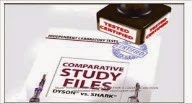
Euro-Pro prominently and extensively claimed in its ads to have independent lab tests to back up its better suction claim. For example, one of the versions of its short-form infomercial has this graphic:
 

Its banner ads don’t generally include the disclaimer about the setting used for testing; Euro-Pro said that this was due to space limitations, but didn’t show that it would be unable to include a disclaimer if it changed its graphic.
 
When the Euro-Pro model launched in July 2014, the person who made the claims in the infomercials didn’t actually know whether Euro-Pro had independent lab tests supporting its claim of cleaning superiority, though his team had been tasked with designing a vaccum that would outclean the Dyson.  He believed that his team would have ensured that Euro-Pro’s claims were supported by appropriate testing when the infomercial was released and the boxes with cleaning superiority claims appeared on store shelves.
 
The claims at issue are establishment claims, and Dyson argued that Euro-Pro’s tests failed to substantiate them. The court considered only third-party testing, not internal testing, and then only third-party testing that failed to meet the 90% confidence level, since such tests were noncompliant with ASTM’s requirements. Based on the remaining universe of third-party testing, the court didn’t find a sufficient likelihood of success on the merits.
 
However, when Euro-Pro launched the NV650 in mid-2014, its representation that independent laboratory testing supported its cleaning superiority claim was false. It didn’t have such tests then, and it also was uncertain whether the lab that ran the tests at issue was really independent. Dyson might ultimately be entitled to damages for the period of time in which Euro-Pro’s claim was false, but not to a preliminary injunction.
 
One detail from the testing: the court believed that the fact that the confidence intervals varied across tests, depending on the sample size, created a “fundamental problem” with the parties’ evidence.  A comparison of mean results, stripped of the accompanying upper and lower ranges of the confidence limit/confidence interval, wouldn’t necessarily tell the full story of truth or falsity, since a broad confidence interval might mean it was pretty likely that any particular vacuum would diverge from the mean.  (Regardless of the size of the confidence interval, though, the mean is still the best estimate in any given test.)  The court wanted the parties to address this issue, likely with statistics experts, as they proceeded.
 
The biggest fight was about the appropriate settings/level of suction for the tests, based on ASTM’s instructions to use the manufacturer’s own settings, which were incredibly hard to figure out/inconsistent.  (If there had to be a mini-trial about the right settings, my inclination would be to interpret the instructions against the drafter and require the “tests prove” claim to be accurate as to either alternative; otherwise I’d find that the tests don’t prove the proposition for which they are claimed.)  The court found that the current instructions told consumers to use the middle setting (higher suction, thus greater cleaning) unless they experienced difficulty pushing or pulling the vacuum (in which case they should use the lower-suction setting).  The NV650 moved easily on ASTM-compliant carpet, which I take to mean that it was ok to base claims on the middle setting going forward, though the court didn’t make a final ruling on what setting should have been used for testing deep carpet. “Euro-Pro’s revisions cured any defects in the prior versions of its product documentation.” And claims of past harm can’t support preliminary injunctive relief.
 
Taking the relevant tests together, the NV650 narrowly edged out the DC65, though further development of the record could change this conclusion.  While “Dyson’s injury in the face of Euro-Pro’s advertising claims is likely to be both significant and irreparable,” there just wasn’t likely success on the merits yet.
Posted in http://schemas.google.com/blogger/2008/kind#post, remedies | Leave a comment

art collector lacks remedy against foundation’s claim of inauthenticity

Bilinski v. Keith Haring Foundation, Inc., 2015 WL 996423, No. 14cv1085 (S.D.N.Y. Mar. 6, 2015)
 
Keith Haring was a “prolific artist and social activist whose work responded to the New York City street culture of the 1980s.”  Plaintiffs alleged that they owned Keith Haring artwork, and that defendants interfered with the exhibition and sale of their art, reducing the value of their property. The court dismissed all of plaintiffs’ many claims.
 
The Foundation is a nonprofit established by Haring; other defendants were individual officers and directors, an entity that operated an authentication committee for the Foundation, Haring’s estate, and the president of Artestar, a company that represents the Foundation in licensing and consulting.  Haring bequeathed the majority of his works to the Foundation, as well as “any copyrights relating hereto” and trademarks. The Foundation’s collection of Haring works was valued at approximately $25 million as of 2011. It earns income by selling pieces from its collection; individual pieces can fetch millions of dollars.
 
The Foundation operated an Authentication Committee to review artwork attributed to Haring and issue opinions regarding the authenticity of submitted works, which was dissolved in 2012. The dissolution increased the value of previously-authenticated works. “Many auction houses require a certificate of authentication as a condition of sale, but will sell Haring artwork without a certificate with the tacit approval of the Foundation.” Private sales may occur at reduced prices without authentication or Foundation approval. 
 
Plaintiffs owned 111 pieces of Haring work they believed to be authentic, tracing title through a personal friend of Haring. In 2007, the Foundation rejected 41 of Bilinski’s works as “not authentic,” but did not provide a reason and stated that the determination by the Committee could “change by reason of circumstances arising or discovered … after the date of this opinion.” Bilinski gathered additional evidence of authenticity, including a signed statement of origin from Haring’s friend.  In 2008, the Foundation accused Bilinski in writing of selling or making “available for sale items you are representing to be original works by Keith Haring when you have been duly warned they are not,” and warned Bilinski that legal action could follow if she did not cease this activity. The Foundation refused to respond to her attempts to address the issue.
 
In 2010, Bilinski brought her works to Sotheby’s. A Sotheby’s representative indicated his belief that the works were authentic, but reported that he could not do anything to help her because of the Foundation. The Gagosian Gallery reacted similarly.  Bilinski asked the Foundation to reconsider, and it refused.  Another auction house told Bilinski that the works appeared to be authentic and it would be willing to produce an auction. Bilinski also commissioned a forensic analysis of two of the works, which concluded that the two paintings “could be considered as having been produced in the mid–1980s.”
 
In 2013, plaintiffs participated in an exhibition featuring their Haring works that was scheduled to run from March 7–10. On March 8, the Foundation filed suit and sought a TRO, referring to the works as “fakes, forgeries, counterfeits and/or infringements.” The motion for a TRO referred to the show as “fraudulent.” That same day, the Foundation and the organizers of the exhibition agreed to the removal of all but ten works, and to remove and destroy all copies of the brochure and/or catalog. In a press release, the Foundation described the lawsuit as an “effort to stop the display of fake Haring works at the exhibition.” The Press Release reports that the organizers of the Miami Exhibition “agreed to remove all fake Haring works from the exhibition immediately and to destroy the offending catalogue that illustrated most of the fake works.” One plaintiff lost the sale of artwork to a museum in London as a result of the press release and litigation.
 
The antitrust claims of course failed.
 
The Lanham Act claims based on the complaint and press release also failed because they weren’t “commercial advertising or promotion.”  Allegations that the complaint and press release were published “with the intent of preventing sales of the [the plaintiffs’] works … and of increasing the value of Defendants’ artworks at their expense” failed to allege a sufficient connection between either document and a proposed commercial transaction.  (Although the Lexmark Court didn’t resolve the commercial advertising issue, this seems in some tension with its general recognition that defaming a competitor can be enough to be false advertising, even without a direct promotion of competing goods.)
 
Plaintiffs’ state law tort claims also failed. The court exercised its supplemental jurisdiction from concerns of convenience and judicial economy. “Under New York law, statements made in the course of legal proceedings are absolutely privileged if pertinent to the litigation,” even if made with actual malice. The statements in the underlying complaint were privileged, because they were directly relevant to the central dispute. 
 
The statements in the press release, however, weren’t privileged.  The fair report privilege protected substantially accurate reports of any judicial proceeding, but application of that privilege was inappropriate at the motion to dismiss stage if a reasonable jury could conclude that the report “suggest[ed] more serious conduct than that actually suggested in the” judicial proceeding.  The press release characterized the parties as having agreed to remove “fake” Haring works.  But there was no such admission by the exhibition organizers, and a reasonable jury could find the privilege inapplicable.
 
Defamation/conspiracy to defame claims failed because no reasonable jury could conclude that the press release was of and concerning them, rather than the organizers of the exhibition. Any defamation was of the organizers; any implication only disparaged their property.
 
Tortious interference with business relationships: the complaint failed to identify the London buyer or allege that the defendants knew of the business relationship at the time they filed their lawsuit or issued the press release.
 
Trade libel: assuming the plaintiffs sufficiently alleged defamation of their goods, they still failed to allege special damages, which had to be itemized.  Again, the complaint didn’t name the London buyer or the sales price. Plaintiffs argued that the requirement that the lost customers be identified may be relaxed when disparaging comments are disseminated widely and the nature of the plaintiffs’ business prevents the identification of lost customers. But none of those cases excused the failure to identify the lost sales associated with the London Museum, and they weren’t solid authority for this situation. Intentional infliction of economic harm/prima facie tort: again, plaintiffs failed to plead special damages. 
 
Unjust enrichment: The allegations that the value of defendants’ Haring works was increased by preventing others from selling the works, and that certain individual defendants were enriched through the salaries and fees paid by the Foundation, weren’t sufficient.  The benefits allegedly acquired didn’t flow directly to the defendants at plaintiffs’ expense; they were indirect and hypothetical. Also, the connection between the alleged harm to the plaintiffs and the compensation paid to individual defendants was too attenuated to support an unjust enrichment claim.
Posted in commercial speech, defamation, http://schemas.google.com/blogger/2008/kind#post | Leave a comment

Foie gras as speech? even so, it can still be challenged under UCL

Animal Legal Defense Fund v. LT Napa Partners LLC, 2015 WL 1004423, No. A139625 (Cal. Ct. App. Mar. 5, 2015
 
ALDF sued LT Napa alleging that defendants sold foie gras in their Napa restaurant in violation of California’s law banning such sale; the trial court denied an anti-SLAPP motion and the court of appeals affirmed. In early January, a federal district court found the foie gras sale ban preempted, but the appeals court found that this didn’t moot the case at bar.
 
Defendant Frank, the head chef at Napa restaurant La Toque (owned by defendant LT Napa), was a vocal opponent of the ban.  After the ban went into effect, ALDF paid an investigator to dine at La Toque three times: September 2012, October 2012, and March 2013:
 
On each occasion he requested foie gras and was told that if he ordered an expensive tasting menu he would receive foie gras. On two of the occasions it was described as a “gift” from the chef. He ordered the tasting menus and was served foie gras. He was not told he was served foie gras in protest against the foie gras ban and was not provided information about defendant Frank’s opposition to the foie gras ban.
 
(Defendants argued that they now presented a protest card when offering a “gift” of foie gras, and that they did so randomly rather than systematically, but those were contested facts on which the court refused to rely.)
 
ALDF tried to get Napa authorities to act, but the city attorney declined, so ALDF sued under the UCL. For purposes of appeal, the court assumed that the lawsuit arose out of defendants’ conduct in furtherance of speech. Nonetheless, ALDF showed a probability of prevailing, justifying rejection of the anti-SLAPP motion. First, ALDF showed a probability of prevailing on standing.  The UCL requires plaintiffs to have lost money or property as the result of the defendant’s unfair business practices.  The evidence that ALDF “has diverted significant organizational resources to combat [defendants’] continuing illegal sales of foie gras,” undertaking various activities that would not have been necessary without defendants’ acts. Kwikset, in which the California Supreme Court interpreted the UCL, cited a case with favor in which a housing advocacy organization met its UCL standing requirement by “present[ing] evidence of actual injury based on the loss of financial resources in investigating [a] claim and diversion of staff time from other cases to investigate the allegations here.”  Cases applying the federal standing requirement, which was broader than the UCL standard but still relevant, also supported finding standing here with an organizational plaintiff. 
 
A cost incurred simply to initiate litigation is insufficient, but “funds expended independently of the litigation to investigate or combat the defendant’s misconduct may establish an injury in fact.”  Here, ALDF presented evidence of a genuine and longstanding interest in the effective enforcement of the statute and in exposing those who violate it. “Plaintiff’s evidence provides a basis to conclude that defendants’ alleged violations of the statute tended to frustrate plaintiff’s advocacy for an effective ban on the sale of foie gras in California, and tended to impede plaintiff’s ability to shift its focus on advocacy efforts in, for example, other states and at the federal level.” This evidence also showed that the defendants’ acts “caused” ALDF’s harms for purposes of rejecting the anti-SLAPP motion.
 
ALDF likewise showed a probability of prevailing on its claim that defendants unlawfully “sold” foie gras. Defendant Frank’s declaration indicated his personal responsibility for the restaurant’s acts: “In the exercise of my constitutionally protected right of petition and free speech, my restaurant, La Toque, is protesting the law, not breaking it, by giving away foie gras to customers I choose to give it to. … [W]hat I do give away to customers is my way of dumping tea in the harbor, so to speak.”
 
Moreover, the court was unpersuaded by defendants’ argument that there was no “sale” here. Ennabe v. Manosa, 58 Cal.4th 697 (2014), found that a law imposing liability on a person “who sells, or causes to be sold, any alcoholic beverage, to any obviously intoxicated minor” applied where the defendant supplied alcohol to a minor at a party, and the minor was charged a fee to enter the party.  Ennabe favorably cited a California AG opinion interpreting liquor licensing laws with respect to commercial enterprises that offer “complimentary” alcoholic beverages to paying customers who purchase another good or service to be a “sale,” even though there was no additional charge to customers who elected to consume alcohol.  To hold otherwise would undermine the legislature’s regulatory intent, and the same was true here.
 
“Plaintiff’s investigator’s decision to order and agreement to pay the specified price for the tasting menu was the consideration offered for the entirety of the food served, including the foie gras.”  Defendants argued that they didn’t give foie gras to everyone who bought the tasting menu at that price, but that fact was irrelevant. “[R]egardless of whether other patrons paid the same amount without receiving foie gras, the investigator’s averments show the receipt of foie gras was part of the tasting menu offered to him prior to his decision to order it. Thus, the foie gras was part of the property he was offered for the price he agreed to pay.” This was a sale.  The “gift” characterization of the server didn’t matter because the investigator could only get the “gift” by buying the tasting menu.
Posted in california, consumer protection, first amendment, unfairness | Leave a comment

Copyright preemption bars athletes’ right of publicity claims against photo sales

Maloney v. T3Media, Inc., No. 14-cv-05048 (C.D. Cal. Mar. 6, 2015)
 
Plaintiffs, members of the Catholic University basketball team from 1997 until 2001, sued T3, which provides cloud-based storage, hosting and licensing services for digital content uploaded by third-parties. T3 entered into an agreement with the NCAA to store, host, and license thousands of photographs for which the copyrights are owned and/or controlled by the NCAA, including photos of plaintiffs.  People could view samples and descriptions of the photos, and buy a non-exclusive license to download a single copy of a photo for personal use.  Plaintiffs, on behalf of a putative class of current and former NCAA student-athletes, sued for violation of their statutory and common-law rights of publicity, and added a derivative UCL claim.  (Why doesn’t §230 take care of this in the 9thCircuit, at least for T3?)
 
The court granted T3’s special motion to strike under California’s anti-SLAPP law. The court quickly agreed that, as required by the anti-SLAPP law, the claims here arose from protected activity.  First, the challenged conduct was “publication made in a public forum in connection with a matter of public interest,” and second, it was “in furtherance of the exercise of the . . . constitutional right of free speech in connection with a public issue or an issue of public interest,” both of which are protected statutory categories. The website was a public forum even though it didn’t allow members of the public to comment; and anyway the statute applies in that second provision to private communications as long as they concern a public issue.  The statute doesn’t define a “public issue” or an “issue of public interest,” but it does provide that it shall be construed broadly. Courts have therefore found that “an issue of public interest . . . is any issue in which the public is interested.” And here, this wasn’t a hard call: “The photographs here depict moments in NCAA sports history.”
 
Under the anti-SLAPP law, the burden thus shifted to plaintiffs to prove a probability of prevailing on their claims—essentially an early summary judgment proceeding.
 
The court didn’t have to address the First Amendment or statutory defenses for depicting sporting events, because it found §301 preemption.  Section 301 preempts causes that concern the same subject matter and the same rights as copyright.  As to the subject matter, plaintiffs’ claims came from advertising and sale of images to the public; the images were photographs, which fall within the subject matter of copyright.
 
Plaintiffs argued that they weren’t asserting rights in the photos, but rather rights in their likenesses, which aren’t works of authorship.  This has always struck me as a distinction without a difference, given that the likenesses are an inseparable part of the photos.  But plaintiffs argued that under Downing v. Abercrombie & Fitch, 265 F.3d 994 (9th Cir. 2001), publicity claims were categorically not preempted. 
 
T3 responded that Downing, and all the other cases plaintiffs cited, involved “the use of plaintiffs’ names and likenesses to sell commercial products and services . . . .”  By contrast, here “the plaintiffs are trying to prevent the display, reproduction, and/or distribution of copyrighted works.” Note that this distinction seems more relevant to part two of the §301 analysis (extra element), but the court agreed that Downing was only rejecting preemption as applied to use of photos in an ad campaign. 
 
In Laws v. Sony Music Entm’t, Inc., 448 F.3d 1134 (9th Cir. 2006), the Ninth Circuit explained that, in Downing, “[defendant] had not merely published the photograph. Rather, it published the photo in connection with a broad surf-themed advertising campaign, identified the plaintiffs-surfers by name, and offered for sale the same t-shirts worn by the plaintiffs in the photo.”  Thus, the use of the name/likeness was separated from the copyrighted work itself.  Downinghad distinguished Fleet v. CBS, Inc., 50 Cal.App.4th 1911, 58 Cal.Rptr.2d 645 (Cal. Ct. App. 1996), by contrasting the Fleetplaintiffs, who sought to prevent the defendant from reproducing and distributing their copyrighted performances, with the Downing plaintiffs whose “claim [was] based on the use of their names and likenesses, which [were] not copyrightable.”  (Note, however, that the Fleet plaintiffs’ names and likenesses were used, as was Laws’ name in connection with her sampled song; it’s just that they were used in direct connection with identifying the subject matter—who was in the film or who sang the song, respectively.)
 
An unpublished decision in Lightbourne v. Printroom, Inc., No. SACV 13-00876, held similar claims by student athletes against a company selling photographs were not preempted by copyright.  But the critical distinction at issue was not identified, and the court didn’t find Lightbournepersuasive. “Defendant correctly observes the difference between merely selling a copyrighted photograph containing an athlete’s likeness and using the athlete’s likeness contained in the photograph for some other purpose.” 
 
Here, the likeness was only used “insofar as it is contained in the four corners of the copyrighted work,” justifying preemption.  But using the image to sell a box of cereal or a T-shirt would be use “for some purpose beyond the four corners of the copyrighted work” and would suggest endorsement of that other use.  (I think this result is right, but as expressed here it doesn’t make much sense.  If I buy a T-shirt with a celebrity on it, how is that different from buying a photo of the celebrity or a video of celebrity playing a game?  In both cases I am paying for a material object but what I really want is the representation of the celebrity; and yet I don’t think the court means to limit its holding to intangible downloads.  And note the recent Marley case in contrast to the automatic assumption that appearance on a T-shirt equals endorsement.)  The court here agreed with the Seventh Circuit that “the basis of a right of publicity claim concerns the message—whether the plaintiff endorses, or appears to endorse the product in question.”   Toney v. L’Oreal USA, Inc., 406 F.3d 905, 910 (7th Cir. 2005).  That only occurs when the use of the athlete’s likeness extends beyond the four corners of the work.  (But why?  Why couldn’t consumers assume that the athlete endorsed within the four corners?  Why doesn’t the athlete at least get a chance to prove that?  I don’t think he should, let me be absolutely clear, but the reason has to be more than just certainty in advance of evidence: it has to be that we aren’t willing to let the athlete control copyrighted works in that way.  That’s why I think conflict preemption works better than conventional §301 analysis.)
 
Because plaintiffs didn’t allege use beyond the “four corners” of the photos themselves, their claims were preempted.  Their claims sought to prevent T3 from distributing the copyrighted works themselves.  “Accepting Plaintiffs’ interpretation without separating the likeness from the work would impermissibly negate Copyright’s intended preemptive effect.    Further, it would destroy copyright holders’ ability to exercise their exclusive rights under the Copyright Act, effectively giving the subject of every photograph veto power over the artist’s rights under the Copyright Act and destroying the exclusivity of rights the Copyright Act aims to protect.”
 
Plaintiffs argued that the contrary cases were distinguishable because they involved copyrightable performances.  But that was confusing the question of which exclusive copyright right was at issue with preemption. “For Plaintiffs’ claims to succeed, they must identify some use of their likenesses (as captured in the photographs) independent of the mere sale of the pictures. Otherwise, these sales fall squarely within the rights of display, reproduction, and distribution controlled by the Copyright Act” (citations omitted). The photos were only used to advertise their own sale.  (And that of other pictures?  Would showing them as a sample of what was available count to take this out of the preemption category?)  This attempt “to prevent nothing more than the reproduction, performance, distribution, or display of a [copyrighted work] is subsumed by copyright law and preempted.” Fleet.
 
Under these circumstances, plaintiffs’ “likenesses [can] not be detached from the copyrighted [work]” and their claims were preempted.  KNB Enterprises v. Matthews, 78 Cal. App. 4th 362 (Cal. Ct. App. 2000), addressed the defendant’s contention “that something more than a mere infringing use is required to avoid preemption of a [right-of-publicity] claim,” but found no preemption because the defendant didn’t have legal rights to publish the copyrighted work; that was not the case here.
 
Returning to Downing, the plaintiffs’ argument that it categorically established a no-preemption rule could be thought to apply to the second prong: “Because the subject matter of [plaintiffs’] right of publicity claims is their names and likenesses, which are not copyrightable, the claims are not equivalent to the exclusive rights contained in § 106.” (That sounds like prong one, but ok.)  To survive preemption, a state cause of action must have an extra element that changes the nature of the action. But here, there was no use of plaintiffs’ names or likenesses independent of the display, reproduction, and distribution of the copyrighted images in which they are depicted. Thus there was no extra element rendering their claims qualitatively different from the copyright holder’s right in the photographs themselves.  It wasn’t that plaintiffs would need to be the copyright owner to have rights, the court said: it was that they didn’t “identify a use of their likenesses independent of the copyrighted works.” As a result, their claims involved both the same subject matter and the same rights and were preempted.
Posted in http://schemas.google.com/blogger/2008/kind#post, preemption, right of publicity | Leave a comment

Transformative work of the day, animal edition

Hairy Otter, from an eagle-eyed (or is that otter-eyed) reader.

Posted in trademark | Leave a comment