None but Bob Marley’s heirs can free our minds

Fifty-Six Hope Road Music, Ltd. v. A.V.E.L.A., Inc., — F.3d —-, 2015 WL 728031, No. 12–17502 (9th Cir. Feb. 20, 2015)
 
Despite being a plaintiff victory, there’s a fair amount in here that might hearten opponents of a generalized merchandising right, suggesting that at least some 9th Circuit judges are willing to rethink trademark expansionism. (Of course, “at least some 9thCircuit judges” might be willing to consider just about anything.)
 
Bob Marley “transcended celebrity roles from pop idol to muse, championing social change and diffusing his music and message to an ever-growing audience. Even now—more than thirty years after his death—Marley’s influence continues to resonate, and his iconic image to command millions of dollars each year in merchandising revenue.”  Marley’s children own plaintiff Hope Road, formed to exploit Marley’s image; plaintiff Zion is Hope Road’s exclusive licensee for t-shirts and other merchandise.  Defendants sold competing merchandise: the AVELA defendants owned photographs, images, movie posters, and other artwork, and licensed them to defendants Jem and Freeze for the production of Marley t-shirts and other merchandise. These items were sold at Target, Walmart, and other large retailers.
 
A jury found that defendants used Bob Marley’s image on T-shirts and other merchandise in a manner that was likely to cause confusion as to plaintiffs’ sponsorship or approval of the merchandise.  Defendants waived several defenses by failing to properly raise them; the 9th Circuit noted that it was not ruling on the merits of these defenses: Aesthetic functionality; Dastar; and Rogers v. Grimaldi/the First Amendment, which may be waived.  And on appeal, the record wasn’t sufficiently developed to rule on those issues.  (It’s not clear to me what record would be needed on Dastar and Rogers, but ok!)
 
Characterizing its holding as “narrow,” the court stated that this was a familiar false endorsement claim.  Defendants argued that the claimed right in “persona” was too “amorphous” to constitute a “name, symbol, or device” under § 1125(a). Case law says otherwise, where a distinctive attribute of the celebrity’s identity is imitated and an implied endorsement results.
 
Plaintiffs disclaimed any source confusion theory, relying only on sponsorship/approval confusion. Along with the usual factors, “[w]here the plaintiff is not the celebrity himself, an additional factor becomes relevant: the strength of association between the mark and the plaintiff.”  The evidence did not compel a finding contrary to the jury’s verdict.  There was evidence of a high level of recognition of Marley’s image among defendants’ target market, as well as testimony that Marley’s image has long been associated with apparel, both by Marley and by his successors-in-interest.
 
Defendants objected to plaintiffs’ confusion survey, consisting of 509 face-to-face interviews conducted by professional interviewers with individuals in shopping malls. Interviewers showed the test group an actual AVELA T-shirt bearing Bob Marley’s image and showed the control group a T-shirt bearing the image of an unrenowned African–American man with dreadlocks. To the question “Who do you think gave their permission or approval for this particular T-shirt to be made or put out?” 37% of the test group answered “Bob Marley/the person on the shirt or his heirs, estate, or agents.” With the control group, the answer was 20%.
 
Many survey respondents subsequently opined that the law required permission from the person whose image appeared on the shirt. We need not entangle ourselves in lay legal opinion. Rather, we look solely at the former set of responses, which indicates actual confusion. The latter responses only answer why some of those surveyed were confused.
 
Defendants argued that the identity of the putative endorser was indefinite, and that a false endorsement claim should have an identifable endorser.  But there was no precedent that a single entity must be falsely understood at the party that approved the product or that the survey taker must be able to identify the party. “Thus, identifying Marley or whoever holds the rights to his persona in the alternative does not render the survey data useless or irrelevant. Rather, the imprecision of the data merely decreases its probative value.”  A jury could rely on this factor, along with other factors, to find likely confusion.
 
There was also evidence of shared marketing channels and a low degree of purchaser care for these “impulse” buys.  Given the similarity between a plaintiffs’-licensed shirt and an AVELA-licensed shirt, the jury could have inferred that defendants “sought to associate their product with Plaintiffs by intentionally creating similar merchandise.”
 
Because Marley himself wasn’t the plaintiff, the court also considered the strength of the association between Marley and the plaintiffs, which was more important where the evidence primarily indicated likely confusion that the celebrity himself sponsored or approved defendants’ products.  Cairns held that Princess Diana’s image was only weakly associated with the plaintiffs claiming to control her publicity rights, “largely because Princess Diana’s image had not served a source-identifying (trademark) function during her life or after her death.” Pervasive unauthorized use “will tend to dull the popular perception that use of that persona signifies an endorsement at all, weakening the initial automatic association between the celebrity and his or her estate.” In Cairns, the defendants and others had been selling products bearing Princess Diana’s image since before her death, and Princess Diana “knew of the vast commercial uses of her image” and “did nothing to prevent others from using her image while she was alive.”
 
By contrast, Marley sold merchandise bearing his image during his lifetime, and his successors-in-interest continued to do so, “implying that his image served (and continues to serve) a source-identifying function.”  [Right, because consumers are aware of the individualized enforcement practices of celebrities.] True, there’d been significant unauthorized use of Marley’s persona since his death, but that use was not “uncontested,” since plaintiffs sent more than 400 cease and desist letters and filed more than 20 lawsuits. “Thus, the jury was free to infer that the source-identifying function of Marley’s persona had not weakened to the extent that there was no likelihood of confusion.”
 
In addition, plaintiffs showed that one defendant approached Rohan Marley, one of Bob Marley’s sons and an owner of Hope Road, seeking rights to create Bob Marley merchandise. These actions imply Hope Road “was known to be associated with Bob Marley’s image.”  [By whom?  The passive voice doesn’t tell you, because the defendant wasn’t a relevant consumer.] Another former AVELA licensee testified that it was “common understanding in the licensing industry” that Hope Road owned the rights to Marley (emphasis added). Defendant Freeze’s vice president of licensing also stated that she knew of Zion’s license to Marley’s persona based on “market knowledge.”
 
Defendants then argued that Marley’s image would have needed to have been used in connection with a separate product or service to constitute an “endorsement.” But defendants used the mark (persona) on “goods.”  “[A] viable false endorsement claim does not require that the mark be used in connection with separate goods to promote the purchase of those separate goods—but may be used directly on the defendant’s goods.” 
 
Defendants claimed that this interpretation would create a federal right of publicity, but the court of appeals disagreed.  Federal claims “require an additional element—that the use be likely to confuse as to the sponsorship or approval of a defendant’s goods.” Although defendants argued that consumers would always associate a deceased celebrity’s image with his/her estate, “a plaintiff must show more than mere association to succeed in a false endorsement claim…. [T]he outcome of this case is in part a function of defenses expressly waived by Defendants. We are not in the position to assess the Defendants’ litigation strategy.”
 
Other issues: The district court didn’t abuse its discretion in determining profits, or finding that one defendant, Freeze, willfully infringed, because Freeze’s vice president of licensing testified that she knew that plaintiffs had the right to merchandise Marley’s image before Freeze began selling similar goods. Further, the Seventh Amendment didn’t require that a jury calculate these profits, because juries have not traditionally done so, and a claim for profit disgorgement is equitable in nature. Along with its fact-intensive discussion of profits, the court commented:
 
The district court ought to tread lightly when deciding whether to award increased profits, because granting an increase could easily transfigure an otherwise-acceptable compensatory award into an impermissible punitive measure. Generally, actual, proven profits will adequately compensate the plaintiff. Because the profit disgorgement remedy is measured by the defendant’s gain, the district court should award actual, proven profits unless the defendant infringer gained more from the infringement than the defendant’s profits reflect.
 
Here, though plaintiffs claimed that defendants accrued goodwill from their infringement, they didn’t provide evidence of that fact.
 
Nor did the district court abuse its discretion by ordering certain defendants to pay attorneys’ fees, because the case was exceptional due to defendants’ willful conduct.  Egregious conduct isn’t required, nor is bad faith; the court considers the relief obtained and whether the relevant area of law was unclear at the time of the conduct. The uncertainty of the law weighed in defendants’ favor, but that was only one aspect of willfulness. Along with defendants’ awareness of the conflict between their conduct and plaintiffs’ rights (including previous attempts to seek a license/awareness of the rights discussed above),
 
Roberto Rabanne, a photographer who took pictures of Bob Marley, testified that Valencia had convinced him to write a false email to help Valencia negotiate with the Marley family for a license. The email falsely stated that Rabanne had used photographs of Marley on merchandise during Marley’s lifetime. Rabanne also testified that he refused Valencia’s request to backdate a 2006 photograph licensing agreement between them to 2003 or 2004. According to Rabanne, Valencia claimed that backdating the agreement would help him in “negotiations.” Valencia also asked Rabanne to delete emails from him and files on his hard drive and said he would flood the market with Marley merchandise so that Plaintiffs could not use the photographs of Marley anymore.
 
“Thus, even considering the uncertainty of the law, this conduct exhibits a subjective belief that A.V.E.L.A. Defendants’ conduct infringed Plaintiffs’ intellectual property rights.”  Even though there’d already been disgorgement, a fee award served an additional compensatory purpose.
 
Defendants Freeze and Jem didn’t have to be required to pay attorneys’ fees too, though, because the evidence was not as strong; there was no contradiction in the court’s varying conclusions, and evidence sufficient to allow a jury to find willfulness by a preponderance of the evidence doesn’t require a finding that a case is exceptional. While plaintiffs’ argument that the district court shouldn’t have relied on the profits award against those two defendants to deny fees had some merit—because a monetary award should support an attorneys’ fees award—that wasn’t enough to make its decision an abuse of discretion.  (There’s some tension here with the court’s earlier statement that the fee award represents additional compensation, even though the other defendants had already been required to disgorge their profits—if the question is how much compensation is in order, then I think the fact that plaintiffs have already been compensated could justify denying fees.)
 
Next: The district court properly granted summary judgment on plaintiffs’ right of publicity claim, because Nevada’s right of publicity statute unambiguously provided that a publicity right successor waived its publicity rights, not just the right to sue a particular person, by failing to timely register its rights.  Under Nevada law, “A successor in interest … of a deceased person may not assert any right against any unauthorized commercial use of the deceased person’s name, voice, signature, photograph or likeness that begins before the filing of an application to register his or her claim.” Further,
 
A person claiming to be a successor in interest to a deceased person must, within 6 months after the date he or she becomes aware or should reasonably have become aware of an unauthorized commercial use of the deceased person’s name, voice, signature, photograph or likeness, register a claim with the Secretary of State …. Failure to register shall be deemed a waiver of any right of publicity.
 
Plaintiffs argued that the six-month registration requirement applied with respect to each unauthorized use, and that they registered their rights either before or within six months after learning of defendants’ unauthorized use.  The court of appeals found the statute unambiguous: “[A]ny right of publicity” “indicates that the forfeiture is broad, not limited to the particular unauthorized use a plaintiff became aware of six months or more before.”  Ambiguity aside, context, reason, and public policy supported the district court’s interpretation.
 
Under Nevada law, registration was permissive absent knowledge of unauthorized use; a successor in interest could only enforce its rights with respect to unauthorized use that occurred after registration.  But registration would become mandatory once the claimant knew of unauthorized use. Read together, the provisions encouraged successors in interest to register sooner rather than later.  The first provision penalized failure to register by not allowing the successor to “assert any right” against unauthorized use that occurred prior to registration. But the later provision penalized failure to register by deeming a “waiver of any right” of publicity. If the legislature meant that the right would have been only partly waived but would still exist, it could have used parallel language for both provisions.
 
Plaintiffs argued that the purpose of the statute was to give rights, not to forfeit them.  Yes, broadly speaking, but the legislature also intended to limit successors’ rights; they terminated 50 years after the person’s death, and living persons never needed to register to have rights. “Thus, the six-month registration requirement is in line with the qualified nature of rights allowed successors under the statute.”
 
The jury also had sufficient evidence to find that certain defendants intentionally interfered with plaintiffs’ prospective economic advantage, based on Hope Road’s licensing agent’s testimony that one of Hope Road’s licensees lost an order intended for Walmart, because defendant Jem sold Marley t-shirts there.
 
Judge Christen concurred in part and dissented in part, noting that “the narrow holding [on false endorsement] is dictated by the standard of review on appeal, and by the defenses actually pursued by defendants.”   She pointed out that the survey asked two questions, (1) “Who do you think made or put out this particular T-shirt?” and (2) “Who do you think gave their permission or approval for this particular T-shirt to be made or put out?” Plaintiffs conceded that their claim wasn’t based on (1), so only (2) provided relevant evidence.  The 37%/20% who said Marley, or “the person on the shirt,” or Marley’s heirs etc., were asked why they thought so.  Representative answers included: “Because I don’t know anyone else that would have those types of rights,”“Because his picture is on the shirt,” and “I’m assuming there’s some kind of copyright.”
 
Those responses showed two things: “(1) members of the public have no problem recognizing the late Bob Marley, an internationally famous musician; and (2) members of the public share a common lay legal opinion that Marley, or someone connected with Marley, must have sponsored the T-shirt.” But this lay opinion was likely to be held every time merchandise bore a recognizable celebrity image. The T-shirts here didn’t have a recognizable label, logo, or mark; plaintiffs’ self-described interest was “trademark-like.” Their claim was to Marley’s image itself, “arguably the very product being purchased.”  As a result, “rather than being deceived by the mark on the product being purchased, the facts suggest that consumers may have received exactly what they bargained for: a T-shirt with a picture of Bob Marley on the front.”
 
The purpose of §43(a) is “to prevent consumers from being misled or tricked into making purchases through use of a trademark.”  (You are the best, Judge Christen!)  The survey responses to question two revealed nothing about whether any purchase decision was likely to be influenced by confusion about who gave permission to produce the shirts.  Plaintiffs didn’t claim that Marley’s image suggested a particular quality, or that the shirts were “official” or otherwise had special memorabilia value.  The argument that consumers mistakenly believed that Marley, or someone connected with his estate, must have given permission for the use of Marley’s image on the T-shirt was insufficient to violate §43(a), absent a showing that consumers cared whether permission had been given. This was not enough to show that finding liability here would serve the purpose of the Lanham Act.
 
In a footnote, Judge Christen identified only three survey responses that might have possibly affected purchasing decisions: “He should get paid when someone uses his picture, even if he’s not with us,”“If he was my family, I would want someone to ask my permission if they were going to sell T-shirts of a dead family member,” and “Because it’s based on a celebrity, and his son will probably get the royalties.” She concluded: “Even when construed in the light most favorable to plaintiffs, three responses are insufficient to establish actual consumer confusion.”
 
“Confusion,” Judge Christen sagely explained, should be read in light of the Lanham Act’s purpose.  “[W]here a celebrity image is itself the only indication of sponsorship, I would hold that a finding of actual confusion under § 43(a) must be supported by some evidence that the confusion could have had an impact on the consumers’ purchasing decisions.” (Citing Stacey L. Dogan & Mark A. Lemley, The Merchandising Right: Fragile Theory or Fait Accompli, 54 Emory L.J. 461, 488 (2005) (“If individuals don’t care one way or the other whether the trademark holder sponsors or endorses such products or whether the products are officially licensed, then the competitive process certainly does not suffer from their assumption that the use required a license.”).)  Otherwise, actual confusion would become a nullity, “because consumers’ common understanding about who must have authorized the use of a celebrity image may well have nothing to do with the product.” I totally agree.
 
Because actual confusion was just one factor, Judge Christen continued, and given the record, she couldn’t conclude that the jury verdict had to be invalidated. But “[i]t is difficult to over-state the extent to which this result is the product of the unique way this case was litigated. … [O]ur holding is very narrow, and largely a function of issues and defenses the parties chose not to litigate.”

Posted in right of publicity, surveys, trademark | Leave a comment

Transformative use of the day, crossover edition

Trust me, these are the droids you’re looking for.

Posted in fanworks | Leave a comment

Violating taxi regulations isn’t unfair competition in Pa.

Checker Cab Philadelphia, Inc. v. Uber Technologies, Inc., 2015 WL 966284, No. 14–7265 (E.D. Pa. Mar. 3, 2015)
 
Plaintiffs, taxi companies and their dispatch company, sought to enjoin Uber from operating an allegedly illegal taxi operation in Philadelphia; the court denied the motion. Plaintiffs are regulated by the Philadelphia Parking Authority, which provides them with a limited number of medallions allowing them to operate taxis.  Checker has an app, approved by the Authority, allowing people to order a ride at the touch of a button. Uber has a competing app, not approved by the Authority.  It uses drivers who supply their own vehicles and who don’t have medallions.
 
Here, plaintiffs sought an injunction based solely on its unfair competition claim under Pennsylvania common law: that it was unfair competition to run a taxi service in violation of various state and local taxi cab ordinances.  
 
The court found no likely success on the merits.  Uber’s alleged regulatory violations couldn’t support an unfair competition claim where enforcement of the relevant laws and regulations is left to regulators, and the laws provide no private cause of action.  The court cited Sandoz Pharmaceuticals Corp. v. Richardson–Vicks, Inc., 902 F.2d 222 (3d Cir.1990), finding exclusive FDA jurisdiction over alleged mislabeling of a product in violation of the FDCA.  (The court did not discuss the extent to which Pom Wonderfullimited Sandoz. That might not be vital here, because California is unusual in making violation of other laws a violation of its UCL, and the court did not say that plaintiffs argued that violation of taxi laws resulted in some kind of false advertising.) In Dial A Car, Inc. v. Transportation, Inc., 82 F.3d 484 (D.C.Cir.1996), the D.C. Circuit Court of Appeals also held that private parties couldn’t invoke the Lanham Act to create a private cause of action for enforcement of local taxi regulations.  Similar results obtained in Yellow Group LLC v. Uber Technologies, Inc., 2014 WL 3396055 (N.D.Ill. July 10, 2014), Manzo v. Uber Technologies, Inc., 2014 WL 3495401 (N.D.Ill. July 14, 2014), and Greater Houston Transportation Co. v. Uber Technologies, Inc., Civ. A. No. 14–941 (S.D.Tex. Apr. 21, 2014).  The relevant issues were “best left to the state and local legislative bodies and regulatory authorities charged with implementing and enforcing the ordinances and regulations that Plaintiffs here seek to enforce by way of private litigation.”
 
Plaintiffs also failed to show irreparable harm.  Plaintiffs argued that a legal violation justified a presumption of irreparable harm, but that was only for state agencies seeking injunctive relief, and not for private parties bringing common-law unfair competition claims. It was also inconsistent with the Third Circuit’s holding in Ferring that Lanham Act violations don’t justify a presumption of irreparable harm.  Plaintiffs’ harm came solely from loss of business or fares, and such harms were compensable in money damages.  And plaintiffs’ argument that their losses were indeterminate also failed: an inability to precisely measure financial harm doesn’t make it irreparable or immeasurable.
Posted in unfairness | Leave a comment

You come at the queen, you best not miss: Oprah wins Own Your Power suit

Kelly-Brown v. Winfrey, No. 11 cv 7875 (S.D.N.Y. Mar. 5. 2015)
 
Kelly-Brown and her company, Own Your Power Communications, Inc., sued Oprah Winfrey and related defendants, alleging that they unlawfully used plaintiffs’ “Own Your Power” trademark on the cover of their magazine, at a magazine-related event, on their website and social media accounts, and on their TV show.  The district court granted defendants’ motion to dismiss, but the 32/§43(a) claims were revived on appeal. Kelly-Brown v. Winfrey, 717 F.3d 295, 315 (2d Cir. 2013). Here, Winfrey secures a hat trick: the claimed mark is invalid; there’s no likely confusion; and her use was descriptive fair use.
 
Kelly-Brown is a motivational speaker, life coach, and business coach who has been using the phrase “Own Your Power” in workshops and seminars since 2004. Her service mark was approved in 2008:
 

According to the registration, light blue was claimed as a feature of the mark.
 
The October 2010 issue of O, The Oprah Magazine prominently displayed the phrase “Own Your Power”—in white, italic font—surrounded by the phrases: “Unlock Your Inner Superstar: Our 4-step plan”; “The 2010 O Power List!: 20 Women Who Are Rocking the World”; “How to Tap Into Your Strength”; “Focus Your Energy”; and “Let Your Best Self Shine.”
 

Defendants also used the phrase on a promotional page inside the October and December 2010 issues, and on banners at their “first-ever own your power event”:
 

The magazine and event were subsquently mentioned on an episode of Oprah’s TV show and on affiliated websites/social media accounts.
 
First, the court found that “Own Your Power” was descriptive and lacking in secondary meaning.  Registration creates a rebuttable presumption of validity, but here plaintiffs registered a “special form” mark with script letters in light blue, with the disclaimer (also inherent in the fact that this wasn’t a word mark registration), “No claim is made to the exclusive right to use own your power apart from the mark as shown.” As a result, the registration was limited to that use of the phrase, and plaintiffs had no claim over the phrase itself.  (Compare the Ninth Circuit in KP Permanent, which held that the word portion of a mark was the most important and therefore protected by the special form registration there.)
 
In any event, defendants showed that the term was descriptive and not distinctive.  Plaintiffs’ use was descriptive because it referred to “the life/career empowerment services provided by Plaintiffs; these motivational services help clients own  their power.”  Though plaintiffs claimed that the phrase meant different things to different people, they still used the phrase on their website to describe their services: “Below are my services that can help you OWN YOUR POWER!” 
 
Despite “voluminous” discovery, plaintiffs couldn’t show that the claimed mark had secondary meaning.  Applying the Second Circuit’s six factors—(1) advertising expenditures, (2) consumer studies linking the mark to a source, (3) unsolicited media coverage of the product, (4) sales success, (5) attempts to plagiarize the mark, and (6) length and exclusivity of the mark’s use—the only conclusion was that plaintiffs completely failed to establish secondary meaning. From 2009 to 2013, they spent $2,957 on advertising.  They had no consumer studies, insufficient evidence of unsolicited media coverage, sales ranging from $966 in 2009 to $30,007 in 2013, and no profit between 2010 and 2012. There was no evidence of intentional copying; they issued C&Ds to other businesses that used the phrase, but that alone fell short of showing intentional copying.  Indeed, multiple other businesses used the phrase, as did Winfrey more than 20 years ago in a commencement speech delivered to Spelman College: “. . . Be a queen. Own Your Power. Own your glory. Go forth Spelman, and triumph.”  There was no triable question of material fact here. (Also compare AOL v. AT&T, where a registration alone created a triable question despite a lot of evidence of lack of distinctiveness.)
 
But even if there were a protectable mark, no confusion was likely; in fact, plaintiffs didn’t show that any Polaroid factor favored them.  Plaintiffs showed neither inherent nor market strength. Although both parties used the same phrase, the similarities were reduced in context.  Plaintiffs used “light blue scripted letters,” while defendants used white italicized letters against a large background image of Oprah Winfrey. In all other uses, they began the word “Own” using their trademark stylized “O,” and surrounded the phrase with colored bubbles containing other power-evoking words.
 
The parties also offered “fundamentally different services”: small scale/individual life coaching services versus a global media empire disseminating positive messages. Even were the services similar, defendants’ “geographic scope (worldwide), market position (highest rated program of its kind in history), and audience appeal (up to 16 million viewers) eliminate any actual competition and decrease any likelihood of confusion.” There was no evidence of likely bridging the gap; defendants have a global media presence and plaintiffs failed to make a profit from 2010 to 2012.
 
Plaintiffs’ evidence of actual confusion consisted of anecdotal statements from four business associates who emailed them purporting to be confused. (A fifth associate emailed questioning whether Kelly-Brown was “owning [her] power with Oprah now.” That query was not evidence of confusion, just an inquiry. Another associate also emailed plaintiffs, noting that defendants’ use of the phrase reminded her of Kelly-Brown, but not indicating confusion.)  Anecdotal evidence can raise a genuine issue of fact, but this evidence appeared to be in response to “a ‘call-me-and-tell-me-you-are-confused’ request,” and two emails were apparently solicited by Kelly-Brown.  One sender spoke to Kelly-Brown about defendants’ use of the phrase two days before emailing purporting to be confused, and another conceded that despite his email, he “knew [Plaintiff Kelly-Brown] wasn’t working with Oprah.” The remaining two people were already familiar with plaintiffs’ use of the phrase and their emails didn’t relate to any purchasing decisions.
 
Defendants, by contrast, introduced three surveys demonstrating no consumer survey—one tested forward confusion, one tested reverse, and one tested both.  Plaintiffs quibbled about the surveys, but failed to present their own, which weighed against them.
 
Also, there was no bad faith, even though plaintiffs’ mark was registered before defendants’ use.  Had defendants conducted a trademark search, they’d have noted that plaintiffs’ rights were limited to the stylized use, and their use was primarily descriptive, which itself showed good faith.
 
And furthermore, even if plaintiffs could show likely confusion, fair use would still apply.  Though the Second Circuit determined that plaintiffs plausibly pled defendants’ use of the phrase was “as a mark,” plaintiffs provided no evidence to support their claim that the uses of the phrase “Own Your Power” “collectively created a sub-brand using the phrase as a symbol to attract public attention.” 
 
As Judge Sack’s concurrence in Kelly-Brown noted, to prevail at summary judgment plaintiffs would need to prove a plan for such use or consumer perception of the phrase as a mark. Though plaintiffs argued that defendants made multiple uses of the phrase, they were exclusively associated with defendants’ Own Your Power conference, “an isolated event which occurred on September 16, 2010.” Shortly thereafter, defendants stopped using the phrase.  [Though presumably they are now free to begin again!] The court also found that defendants’ use of the phrase was inconsistent in font/stylization, weighing against a finding of intent to create a sub-brand.  Plus, plaintiffs failed to show that each use of the phrase was as a symbol to attract public attention, given that in each case the use was accompanied by defendants’ own registered marks.
 
The use was instead in a descriptive sense. The court found that “Own Your Power” was a commonly used phrase and courts “more readily find a phrase descriptive when it is in common usage.” Defendants’ expert evidence showed that the phrase had been used since at least 1981 as “a common motivational exhortation to harness or achieve mastery over one’s own power.” Winfrey’s own use of the phrase in her 1993 commencement speech at Spelman College, as well as numerous recent examples of the phrase’s use in the media, supported that conclusion.  On the magazine’s cover, the phrase described the issue’s theme: power. Likewise, at the conference, the phrase appeared on banners, surrounded by other power/confidence evoking words that are encapsulated by the phrase “Own Your Power.” These words—prefaced by “The Power of . . .”—surrounded the phrase: “living large,” “one voice,” “proof,” “passion,” “taking a stand,” “authenticity,” “command,” “speaking out,” “the big picture,” “make-believe,” “taking a leap,” “style,” “heart,” and “vision.”  Winfrey used the phrase descriptively on her TV show when she advised Serena Williams to “own her own power.”
 
And the use was in good faith, even though defendants had constructive knowledge of the registration; prior knowledge doesn’t necessarily mean bad faith.  There was no evidence of an intent to generate confusion, or intent to appropriate the phrase and create a sub-brand.
 
Posted in trademark | Leave a comment

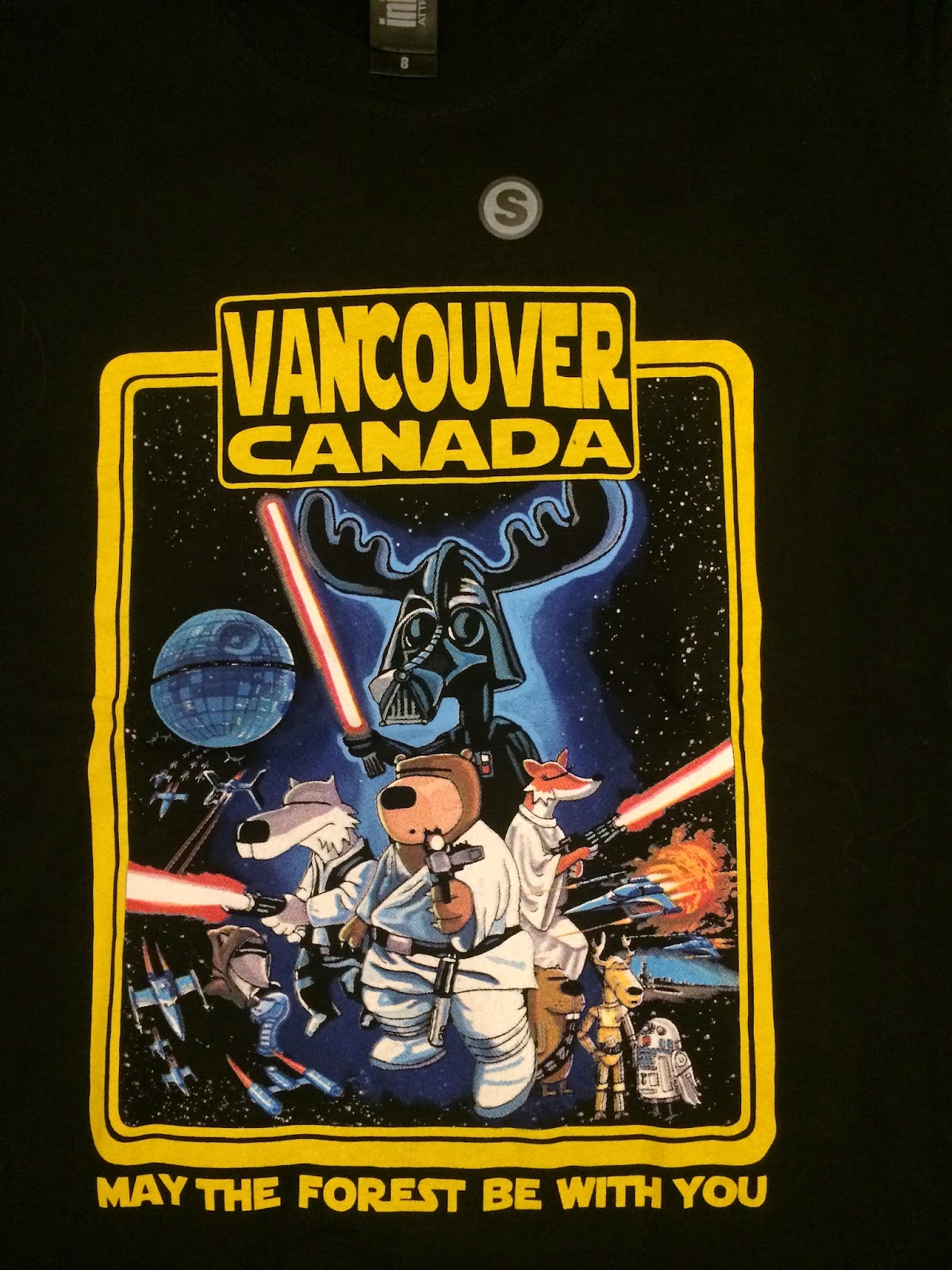
Transformative use of the day, Vancouver edition

Via an eagle-eyed friend.

Posted in http://schemas.google.com/blogger/2008/kind#post, trademark | Leave a comment

Focus, Grasshopper: infringement isn’t false advertising

Grasshopper Motorcycles, Ltd. v. Rivera, No. 14–cv–320, 2015 WL 853564 (W.D. Wis. Feb. 26, 2015) (magistrate judge)
 
Grasshopper sells a moon-shaped backrest designed to be attached behind the driver’s seat of a motorcycle. “Its 2013 sales were approximately $333,000, with the majority of these sales occurring on eBay.” It claimed trademark rights in the design of its motorcycle backrest and the goodwill associated with the Grasshopper name and products.  Grasshopper leased part of its commercial space to Rivera for unrelated business, but then learned that Rivera, doing business as Better Built Backrests, was making a motorcycle seat backrest that looked a lot like Grasshopper’s backrest, using online marketing that looked similar to Grasshopper’s. Some customers allegedly mistakenly purchased a backrest from Rivera, thinking it was a Grasshopper backrest. Grasshopper sued and moved for summary judgment.
 
Rivera built his first backrest around January 2014, and had never before constructed motorcycle backrests and had not been trained in sewing or upholstery. For the purposes of the motion, the court accepted that the photos, layout and wording that Rivera used in his on-line advertising were very similar to Grasshopper’s. Rivera described his seats as “professionally sewn.” “In April 2014, he included a photo on his eBay advertisement that showed a black vinyl backrest that was labeled ‘My competitors Finished product,’ and which had large staples closing off the upholstery work. Next to this photo was a second photo of a nearly-identical backrest labeled ‘Better Built Finished Product,’ which was a more finished looking product without visible staples.” At his deposition, Rivera admitted that the former photo was actually a backrest he built himself, allegedly to resemble the look of backrests made by his competitors, including Grasshopper, which in his view are inferior to his own because of the visible stapling. Around July 2014, eBay removed his advertisement from his eBay webpage because it violated eBay’s policy against including “gratuitous information that doesn’t describe the item being sold,” which Rivera understood to mean the photo and language stating that his “product is much less expensive than the high-dollar OEM1 products.” Rivera removed the “competitor’s product” photo and the OEM language and re-listed his backrests on eBay.
 
Grasshopper argued that undisputed evidence showed false advertising under state and federal law with the photo of the stapled backrest and the “professionally sewn” claim.  But its complaint didn’t allege false advertising, only copying and misappropriation of Grasshopper’s backrest design.  Rivera, representing himself, had not waived his right to object to this broadening of the complaint. At this point, the court would deny leave to amend on timeliness grounds, regardless of the merits, but the court addressed the claims on the merits for the sake of completeness.
 
Even assuming literal falsity [RT: which does actually seem to be the case], Grasshopper was seeking damages, and it therefore needed to show actual harm. It failed to do so. There was some evidence of customer confusion: “affidavits from customers and employees who report that it is difficult on eBay to distinguish Rivera’s backrest from Grasshopper’s because of the similarity of the written advertisements and photos and because both backrests are listed for approximately the same price.” There was also anecdotal evidence of customers who purchased a Better Built backrest by mistake, intending to purchase a Grasshopper backrest. But that’s confusion about the wrong thing.  Grasshopper needed to show that it lost sales because of Rivera’s false statements, not by the appearance of Rivera’s product or his marketing:
 
Indeed, if what Grasshopper is claiming is true—that Rivera’s online advertising looked so much like Grasshopper’s that customers were misled into thinking it was Grasshopper’s—then how could Rivera’s false statements have hurt Grasshopper? Obviously, a customer believing he was viewing Grasshopper’s posting for its backrests would not think the shoddy backrest shown on the “competitors Finished product” photo was Grasshopper’s, and would be happy to know that Grasshopper’s backrests were “professionally sewn.”
 
This also doomed summary judgment on the state deceptive practices law claim, which requires pecuniary harm, and anyway doesn’t offer a cause of action to competitors for representations made to third parties. Nor did Grasshopper show that Wisconsin state common law unfair competition covered false advertising.  “Rivera’s alleged copying of Grasshopper’s marketing style could, in theory, amount to misappropriation of a property right. However, Grasshopper has not adduced evidence sufficient to establish that its marketing materials have value independent from the backrests themselves, which are not the subject of the summary judgment motion.” None of the summary judgment evidence showed that Grasshopper had a “distinct” marketing style that customers associated with Grasshopper. And whether Rivera copied the language of Grasshopper’s ads was a question of fact for a jury.
Posted in http://schemas.google.com/blogger/2008/kind#post, trademark | Leave a comment

PTO descriptiveness finding inadmissible where court ruled mark suggestive

Innovation Ventures, LLC v. NVE, Inc., 2015 WL 871137, No. 08–11867 (E.D. Mich. Feb. 27, 2015)
 
Various evidentiary rulings in the latest round of this trademark/false advertising case over energy shots, the first of which presages what I expect to be increasing uncertainty in the courts until the Supreme Court revisits the issue.  The others are in moderately decreasing order of broader importance, but the later ones have enough human interest to include here.
 
Here, Innovation wanted to exclude evidence that the PTO refused its ITU application for “5-Hour Energy” in 2005 on grounds of mere descriptiveness.  The mark was subsequently registered on the Supplemental Register.  In 2008, the PTO refused another application, again on mere descriptiveness grounds.  The Sixth Circuit, however, held that “[t]he line between merely descriptive and suggestive marks is admittedly hazy and can be difficult to discern” but that 5-Hour Energy was suggestive. Thus, Innovation argued, evidence about the PTO proceedings would be contrary to the law of the case and would confuse the jury. NVE responded that the PTO proceedings were probative of the relative strength or weakness of the mark.
 
The court agreed that this evidence would have some probative value, but concluded that on balance it was more prejudicial than probative:
 
Introducing prior USPTO findings which conclude that the mark is merely descriptive, and therefore not protectable, would contradict the Sixth Circuit’s legal conclusion and serve only to confuse the jury. Even with a limiting instruction, proof that the USPTO had repeatedly denied Plaintiff a trademark could carry definitive weight with the jury, and suggest that they were allowed to reach a conclusion inconsistent with the Sixth Circuit’s ruling.
 
Nor did NVE cite cases where PTO rulings were presented to a jury as probative of the strength of a mark for purposes of likely confusion analysis.  Though arguably relevant to strength, the rulings were more directly probative of protectability, and the Sixth Circuit had already determined protectability.
 
[Comment: It seems to me that this question implicates two issues before the Supreme Court this Term: from Hana Bank, if classifying a term/mark is a question of fact and not law (and if placing a term on one side of the generic/mark line is a question of fact, why wouldn’t the descriptive/suggestive line be the same?), then shouldn’t a jury get to decide it and not the Sixth Circuit, given that court’s conclusion that the matter is not free from doubt?  Relatedly, Hargis may tell us the kind of deference the PTO’s conclusion is due when the applicant had the opportunity to contest the finding—at the very least, I’d think it should be evidence for the jury to consider.]
 
Innovation also unsuccessfully sought to preclude NVE’s unclean hands defense. NVE initially argued fraud on the PTO, though it lost that part of the argument. It also argued that Innovation “usurped” NVE’s 6 Hour Power mark by registering “sixhourpower.com” and “6hourpower.com” in bad faith, and also brought forth an expert who identified and discussed alleged anti-competitive behavior such as Innovation’s “STS rack program” that paid retailers to keep NVE’s products off the front counters at convenience stores. These allegations of anti-competitive and unfair conduct were enough to preserve an unclean hands defense.
 
The defense must be established by “‘clear, unequivocal and convincing’ evidence,” but that didn’t mean that NVE had to maintain viable counterclaims for cybersquatting and antitrust violations. The facts underlying an unclean hands defense need not be of “such a nature as to be punishable as a crime or as to justify legal proceedings of any character.”
 
Innovation also sought to exclude evidence or argument contrary to the Sixth Circuit’s mandate, but the court concluded that Innovation overread that mandate.  Innovation argued that NVE couldn’t introduce evidence: (i) that Innovation was not the first to use the mark in specific geographic areas, when the Sixth Circuit stated that Innovation used its mark “nationwide” since June 2005; (ii) that the “5–hour ENERGY” mark was weak when NVE entered the market; and (iii) that Innovation’s conduct supported NVE’s unclean hands defense.  The trial court reviewed the court of appeals opinion and disagreed.  The Sixth Circuit didn’t excuse Innovation from carrying its burden of proof on its common-law trademark infringement claim, and part of that is the plaintiff’s burden to establish first use of its mark in every geographic area in which it claims superior rights.  The use of the term “nationwide” was part of the court of appeals’ recitation of background facts, not a definitive ruling or finding of fact intended to establish the date upon which Innovation’s  use of its mark occurred in particular geographic areas.
 
Innovation argued that the Sixth Circuit’s finding of suggestiveness prevented NVE from introducing evidence of 5-Hour Energy’s relative strength when NVE entered the market.  But that argument improperly conflated protectability with likely confusion.  The Sixth Circuit found likely confusion to be a “factually intensive issue” and a “close call” that could be “decided either way.” NVE was not precluded from introducing evidence that Innovation’s mark was weak when it entered the market as part of the likely confusion analysis.
 
Nor would NVE be precluded from introducing evidence of alleged cybersquatting and antitrust/anti-competitive behavior as part of its unclean hands defense, because those counterclaims have been dismissed from the case. The evidence pertaining to them could nevertheless be offered as relevant to support an unclean hands defense. The Sixth Circuit didn’t address the merits of the unclean hands defense, and there was no clear mandate negating that defense.
 
NVE also moved to exclude expert testimony from Dr. Dan Sarel, a marketing consultant who conducted a mall intercept survey in 2009.  The respondents were limited to “buyers and potential buyers of 2–ounce energy drinks who are 18–35 years old, ¾ males,¼ females, residing all over the country.”  NVE challenged the methodology for including an improper survey population, employing an improper control, utilizing leading and suggestive questions, and failing to replicate market conditions. In late 2011, a very similar survey and report from Dr. Sarel was excluded in another case brought by Innovation, on the grounds that its methodology had “multiple flaws” resulting in an “unreliable scientific foundation for its conclusions.”  The court found that the report here suffered from many of the same kinds of problems.
 
The previous exclusion relied in part on the fact that Dr. Sarel did not allow the survey participants to handle the actual sample bottles, but rather used pictures of the various products. Here, respondents were allowed to handle the bottles. But other significant flaws remained, including leading questions, failure to provide a “don’t know” option, and use of an inadequate control product, the energy shot “ROCK ON.” That control had “blatantly obvious differences” from the 5–Hour ENERGY product in color, lettering, theme, imagery, and name. (NB: The image I found of Rock On does have orange on the label, but apparently the control used had “no significant red, orange, yellow, or blue coloring.”) ROCK ON didn’t emphasize time or duration, have a bright red bottle to coordinate with its flavor, depict an image of fruit, or feature durational language in a bold font in horizontal writing.
 

Innovation commissioned a new survey with different methodology; that could be relied on at trial, but not this original survey.
 
NVE also moved to exclude Innovation’s Teflon survey conducted by Howard Marylander.
Marylander opined that: (1) 5–Hour ENERGY “is recognized as a brand name in the context of foods and food supplements … [and] that brand recognition is a strong one[ ]” and (2) “[b]ecause of its clear recognition as a brand, … 5–HOUR ENERGY has strong secondary meaning.” NVE argued that the Teflon survey was mooted by the Sixth Circuit’s finding of suggestiveness, and also argued that the survey had various methodological flaws.
 
Innovation responded that the survey could be used to show the strength of its mark, a likely confusion factor, and the court agreed that it was relevant for this purpose, given the unique procedural posture of the case.  Teflon surveys are generally reliable and widely accepted; Marylander’s methodology was patterned after other surveys that have been judicially scrutinized and approved by other courts. Any errors did not make it unreliable but could be tested in front of the jury.
 
NVE further moved to exclude Innovation’s expert witness Dr. Gregory Carpenter.  Innovation agreed not to elicit testimony about Carpenter’s opinion of NVE’s intent in selecting its name, or on the ultimate issue of likely confusion/infringement. Thus, the only disputed issue was whether Dr. Carpenter’s opinion about Innovation’s brand strength was cumulative.  Dr. Carpenter, a professor of marketing strategy at Northwestern University, was a well-credentialed professor specializing in market research concerning “pioneering brands,” or brands that have a “first mover” advantage.  NVE argued that he didn’t conduct any independent investigation, study, or survey.  Innovation argued that his testimony would show how a pioneering brand draws competitors and why others would want to trade on the power of the brand, and would explain how NVE’s actions were indicative of these types of competitors.  The court agreed that this testimony could be helpful to the jury “in understanding how the various expert surveys support the marketing theory that pioneering brands have high brand strength.”
 
NVE further moved to exclude Innovation’s food and beverage industry expert, Tom Pirko. His opinion, based on over 35 years of experience in marketing and sales in the food and beverage industry, would be that Innovation’s merchandising, display and incentive programs were consistent with the industry standard and NVE’s own practices. This would be relevant to the unclean hands defense. However, certain portions of his report and testimony shouldn’t be presented to the jury, such as his testimony about the effect of the “Legal Notice” Innovation sent out saying it had won an injunction against the sale of a 6 Hour energy shot (albeit not this 6 Hour energy shot; the problem was that Innovation tried to use this injunction to get all such shots pulled off shelves).  Pirko’s report said that the Notice was clear and didn’t name NVE’s 6 Hour Power; didn’t actually demand removal of the product from shelves; couldn’t have damaged NVE; and, if it was misread, that was NVE’s fault for choosing a confusingly similar name.  Those kinds of statements crossed the line from proper opinion evidence to improper factual and legal conclusions.
 
Pirko could properly testify concerning how recall notices were normally handled in the beverage industry, and what kinds of actions a typical merchant would ordinarily take in response to a Legal Notice of the type sent out by Innovation. He could not opine on the intended scope of the Legal Notice or speculate about its “meaning,” or how others would understand or interpret that meaning. He could not summarize what he believed to be the testimony or statements of other people who have read the Legal Notice and he could not offer any opinion on the ultimate issue as to whether the Legal Notice was misleading or whether NVE’s 6–Hour POWER brand was confusingly similar to Innovation’s 5–Hour ENERGY.
 
Pirko could, however, still be an expert on the general practices of the beverage industry, even though he wasn’t recently published on the subject matters in this suit and listed no-peer reviewed or non-peer-reviewed articles citing him as an expert. He had over 35 years of experience in advising food and beverage managers, manufacturers and sellers, including nearly 25 years of experience with recalls. He had offered consultation services regarding energy shot products, as well as other relevant experience. Expert testimony can legitimately be based entirely on experience.
 
NVE successfully excluded references to misstatements or slips of the tongue made by NVE’s counsel or expert witnesses.  During the over six years this case had been pending (!), NVE’s counsel and experts occasionally misstated the names of the parties’ products during discovery, such as “5–Hour POWER.” This wasn’t relevant to the question of actual confusion in the marketplace of consumers. See, e.g., Marshall Field & Co. v. Mrs. Field’s Cookies, 25 U.S.P.Q.2d 1321, 1992 WL 421449, at *16 (T.T.A.B.1992) (“It is obvious that respondent’s attorney was quite aware of the differences between the two [trademarks] and that what occurred was nothing more than a slip of the tongue under the pressure of conducting the interrogation”); VMC Corp. v. Distrib. Marketing Serv., 192 U.S.P.Q 227, 1976 WL 21124, *3 n. 4 (T.T.A.B.1976) (“This slip of the tongue under the tension of being subjected to interrogation by opposing counsel is not indicative of a marketing environment”). “This evidence is not probative of trademark confusion. Moreover, the spectacle of Plaintiff’s presenting misstatements by Defendant’s counsel or witnesses to prove actual confusion would be fraught with unfair prejudice that would greatly outweigh whatever miniscule probative value such evidence may have.”
 
As to instances of alleged actual confusion not related to 6-Hour Power’s product or name, Innovation would have to lay a foundation showing that the confusion asserted related to NVE’s product, not some other 6-Hour product.  But evidence of commingling the parties’ products on a common display shelf could be introduced, at a bare minimum to show the same marketing channels.  As to alleged hearsay, the Sixth Circuit admonished that “the strict application of the rules of evidence to a claim that depends on customer confusion places too heavy a burden on” the offering partyand that customer calls “were not relied on to show the content of the conversations, but rather were introduced merely to show that the conversations occurred and the state of mind of the declarants.”
 
Evidence about lawsuits filed by consumers against NVE  for personal injuries and wrongful death allegedly caused by the ingestion of NVE’s discontinued products which contained ephedra was excluded because its probative value is substantially outweighed by the danger of unfair prejudice.  This evidence offered no support for claims of trademark infringement, but would only serve to suggest that NVE was a bad actor.  If NVE’s president, Robert Occhifinto, made statements at trial inconsistent with his sworn testimony before Congress as part of an investigation into the lawsuits, then he could be impeached with that testimony, but that was it.
 
NVE was unsuccessful in its attempt to exclude the testimony of Jesus “Joe” Palmeroni, a former NVE VP terminated in 2006 due to purported theft and fraudulent conduct in his role as a sales rep.  NVE sued him to recover the allegedly stolen monies.  NVE presented evidence that a lawyer purportedly acting on Palmeroni’s behalf contacted NVE’s counsel and offered for him to provide favorable deposition testimony in this litigation in exchange for a favorable settlement in the NVE-Palmeroni lawsuit.  A transcript of the purported phone call allegedly stated that “Joe” (presumably Mr. Palmeroni) “could either be forgetful of not so forgetful” during his deposition testimony, and that the attorney wished to “have a dialogue about how we can help each other bring finality to both things” (presumably, the two lawsuits). NVE didn’t accept this apparent solicitation, and Palmeroni ultimately provided deposition testimony that was unfavorable to NVE, testifying that he believed that the name 6-Hour Power was chosen by NVE to “trade off the success and reputation” of 5–Hour ENERGY.
 
During the deposition, NVE cross-examined Palmeroni at length and he said he was unaware of any communications between the parties’ lawyers.  NVE had no corroborating evidence that he knew of or participated in any kind of offer to provide favorable testimony.  While NVE could question him at trial about this, his testimony would not be excluded.
 
NVE moved to bar Innovation from arguing that its Legal Notice was literally true, given that the Sixth Circuit deemed it “on the cusp between ambiguity and literal falsity,” and thus not literally false. Whether parts of the Legal Notice were literally true was somewhat beside the point, since it could still be misleading.  The court wouldn’t bar Innovation from arguing that the Notice contained some true statements, but the jury question was whether the Notice was misleading, deceptive to its intended audience, and actually deceived recipients.
 
Also, the court granted NVE’s motion to preclude Innovation from introducing evidence of Occhifinto’s 1991 criminal convictions for importation of hashish and money laundering. Neither involved an act of dishonesty or false statement, and in any event more than ten years passed since conviction/release from confinement. Evidence of convictions more than ten years old will “very rarely and only in exceptional circumstances” be admitted. Those circumstances weren’t present here.  Innovation argued that because of his drug-related convictions, in 2003, Occhifinto must have been lying when he testified to Congress that he only learned after naming
certain ephedra-containing products “Yellow Jacket” and “Black Beauty” that those names were also street names for illicit drugs. Innovation also apparently wanted to argue that Occhifinto had a propensity to copy from other product names and then lie about name selection.  “This tortured logic simply does not give rise to adequate probative value, sufficient to overcome the highly prejudicial nature of presenting Mr. Occhifinto’s prior criminal convictions to the jury.”
 
Finally, Innovation moved to exclude NVE’s theory of lost market share damage from its Lanham Act false advertising counterclaim.  But NVE’s witnesses had offered evidence on that theory all through the case.  NVE principals’ testimony about lost market share was admissible lay opinion testimony based on their specific knowledge of NVE’s business.
Posted in http://schemas.google.com/blogger/2008/kind#post, surveys, trademark | Leave a comment

Irreparable harm webinar tomorrow

Please click on the link below to register for a timely lunchtime teleseminar where our panel of experts will address the status of “irreparable harm” in Lanham Act false advertising cases.
 
Recent cases have suggested that courts no longer will “presume” irreparable harm in Lanham Act false advertising cases (where a preliminary injunction is sought).
 
Will this trend hold?  Is this trend appropriate?
If the trend holds, the next question is, how do plaintiffs show irreparable harm going forward? 
 
This is an important issue in the Lanham Act false advertising practice, and the panel discussion is sure to be a lively one.
 
Here is your all-star panel:
 
Moderator
• Sherrie Schiavetti, Kelley Drye
 
Panelists
• David Bernstein, Debevoise & Plimpton LLP
• Roger Colaizzi, Venable LLP
• Rebecca Tushnet, Georgetown University
 
èPlease register at link below  – it’s free for ABA Antitrust Section Members!


Posted in http://schemas.google.com/blogger/2008/kind#post, remedies | Leave a comment

UK ad regulator finds Israel falsely advertised

By implying that the Old City of Jerusalem was recognized as being in Israel, rather than in occupied Palestinian territories.  File under: having the First Amendment makes the US very different.

Posted in advertising, http://schemas.google.com/blogger/2008/kind#post | Leave a comment

Pregnancy clinic ads are commercial speech

First Resort, Inc. v. Herrera, No. C 11-5534 (N.D. Cal. Feb. 20, 2015)   
 
The court rejected a facial challenge to San Francisco’s Pregnancy Information Disclosure and Protection Ordinance, “aimed at ensuring that indigent women facing unexpected pregnancies are not harmed by false or misleading advertising by certain providers of pregnancy-related services that do not offer abortions or referrals for abortions.” First Resort is a non-profit corporation which operates a state-licensed community medical clinic in San Francisco. The clinic offers pregnancy testing, ultrasounds and counseling, but not abortions, emergency contraception, or referrals for same.  
 
First Resort’s ads characterize it as a provider of medical care and counseling services for pregnant woman. Abortions and related resources are “featured prominently in its promotional materials.”  Thus, its website has a heading “Abortion Counseling,” claiming to offer “abortion information, resources, and compassionate support for women facing the crucial decisions that surround unintended pregnancies and are considering abortion.” Another page discusses “Pregnancy Services and Abortion Services,” and claims to provide “pregnancy options counseling and many other services.” The website and ads make no mention of First Resort’s anti-abortion views or refusals to provide abortions or referrals.  First Resort targets women considering abortion, and uses Adwords to show its paid ads when “San Francisco” and “abortion” or “emergency contraception” are used in combination.  It considers keyword advertising “a means of competing with abortion providers for the attention of online viewers.”
 
First Resort relies on donations generated through fundraising. Members of First Resort’s senior management receive enhanced compensation based on the number of new clients brought in.
 
San Francisco passed the Ordinance because pregnancy clinics that oppose abortion—“crisis pregnancy centers”—have become common throughout California. While some centers readily acknowledge their anti-abortion stance, others don’t.  The City found that some intentionally deceive women, causing them harm.  The deception is especially harmful to poor women, for whom time is of the essence, “and even a few days delay in accessing emergency contraception or abortion services can render less invasive options unavailable.”
 
The ordinance therefore barred a “limited services pregnancy center” from making statements of fact related to their services that were “untrue or misleading, whether by statement or omission,” when the center knew or should reasonably know were untrue or misleading.  In particular, it was unlawful to make statements “with the intent not to perform the services expressly or impliedly offered, as advertised.”  After giving notice of a violation, the City Attorney could file a civil action, with injunctive relief available as well as civil penalties of $50-500.
 
Because First Resort brought a facial challenge, it had a heavy burden of showing unconstitutionality across the board. The City took the position that the Ordinance only regulated false and misleading conmmercial speech, which is unprotected.  There was no dispute that only false and misleading speech was targeted, so the court asked only whether the Ordinance regulated commercial speech.
The Supreme Court has held that speech may be “characterized as commercial when (1) the speech is admittedly advertising, (2) the speech references a specific product, and (3) the speaker has an economic motive for engaging in the speech.” While “[t]he combination of all of these characteristics . . . provides strong support for the . . . conclusion that [the communication is] properly characterized as commercial speech,” it is not necessary that each of the characteristics “be present in order for speech to be commercial.”  Factors (1) and (2) were true of First Resort’s ads here.
 
First Resort argued that its ads weren’t commercial speech because it didn’t engage in economic transactions with its clients and thus had no economic motive for its communications. But that wasn’t helpful for a facial challenge. In any event, failure to charge a fee wasn’t dispositive.  The record strongly supported the conclusion that First Resort’s ads, in context, were economically motivated.  First Resort paid for Adwords, and considered its ads a means of competing with abortion providers for online attention.  “Notably, First Resort’s ability to attract clients to its clinic is critical to its fundraising efforts—which, in turn, are necessary to First Resort’s operations, including the provision of free services.” Thus, the ads were economically motivated, and even for First Resort the Ordinance targeted commercial speech.
 
True, fundraising per se isn’t commercial speech, but it was First Resort’s ads, not its fundraising activity, that was at issue; the fundraising just provided context to the economic motivation. First Resort also argued that its ads were inextricably intertwined with noncommercial exhortations to get free pregnancy counseling.  But the Ordinance didn’t regulate any such solicitations—only the (unprotected) false advertising thereof.
 
Also, even if the First Amendment were implicated, the Ordinance was not impermissible content or viewpoint discrimination. The regulation depended on the services offered by a clinic, not its views; there were many reasons a clinic might not offer abortions that were unrelated to its views on abortion. First Resort and other clinics remained free to express their views.  This reasoning also disposed of First Resort’s equal protection claim.  First Resort argued that it was being discriminated against in violation of its right of conscience.  But the Ordinance didn’t compel First Resort to support any particular belief about abortion; it just couldn’t defraud or mislead the public about the services it offered.
 
Finally, First Resort alleged that the Ordinance is preempted by Section 17500 on the grounds that they are “nearly identical and seek to regulate the exact same conduct—false and misleading advertising.” California state preemption of local regulation differs a bit from federal preemption because in theory it could preempt local rules that “duplicate” state law.  But the case law indicated that what “duplicates” really meant was “creates double jeopardy” and this wasn’t a criminal law, so it didn’t create that problem.  Other cases using the “duplicate” rule looked to interference with state law, and there was none here. Also, the Ordinance wasn’t coextensive with state law: it was narrower than the general false advertising law, but also broader in that it covered false advertising even when the services at issue weren’t offered for sale.
Posted in commercial speech, first amendment, http://schemas.google.com/blogger/2008/kind#post | Leave a comment