
Pinterest, sponsorship, and copyright

Fascinating story on top pinners on Pinterest, which suggests that Pinterest’s policies deter people from disclosing sponsorships (which the FTC wants them to do; could it go after Pinterest for deterring users’ compliance?), and also contains the interesting note that one of the top pinners prides herself on introducing new, previously unpinned images to Pinterest—which might have some copyright implications.

Posted in disclosures, ftc, http://schemas.google.com/blogger/2008/kind#post | Leave a comment

Lexmark applies to false association, not just false advertising

International Foundation of Employee Ben. Plans, Inc. v. Cottrell, No. WDQ–14–1269, 2015 WL 127839 (D. Md. Jan. 7, 2015)
 
IFEBP sued Cottrel, d/b/a HR Vantage, for false advertising, trademark infringement, and related claims.  IFEBP is a nonprofit that trains and certifies professionals in employee benefits and compensation, with registrations for CEBS and Certified Employee Benefits Specialist (certification marks allowing certified individuals to use those designations). Cottrell provides disability retirement counseling to federal employees, and uses those designations on her website and LinkedIn profile, but doesn’t have certification from IFEBP.
 
IFEBP alleged harm in the form of “lost sales of [IFEBP’s] educational and examination fees,” as well as harm to its reputation because Cottrell “is providing substandard services,” and “customers receiving such sub-standard services from Cottrell will presume … that [IFEBP has] certified [Cottrell’s] sub-standard services.”
 
Cottrell argued that IFEBP didn’t show harm causation from her alleged use of its marks and that its claims failed because they weren’t competitors. The court found that her competition-based argument applied to both the §43(a) false designation and the §43(a) false advertising claims. The court then reasoned that Lexmarkapplied to both prongs of §43(a).  The Supreme Court relied on the Lanham Act’s purpose, which applies to all its provisions; “there is no reason to think the Supreme Court would apply different standing requirements to a false designation claim.” Indeed, the Court then observed that “[m]ost of the enumerated purposes are relevant to false-association cases.”  Thus, direct competition wasn’t required for either claim.
 
IFEBP plausibly alleged a likelihood of confusion. And confusion wasn’t a necessary element of its false advertising claim; when a representation “is literally false, a violation may be established without evidence of consumer deception.” The allegations sufficiently delineated literal falsity.  Plus, IFEBP alleged economic and reputational injury: Cottrell displayed its certification without paying “educational and examination fees,” and customers would believe that IFEBP “certified [Cottrell’s] sub-standard services.”  (That first injury doesn’t really seem like Lexmark injury. It occurs to IFEBP as vendor of services, the flip side of injury suffered as a customer, which isn’t within the Lanham Act’s definition of harm according to the Supreme Court.)
Posted in http://schemas.google.com/blogger/2008/kind#post, trademark | Leave a comment

Interpretation of alleged relabeling agreement is for jury

Ecore International, Inc., v. Downey, No. 12–2729, 2015 WL 127316 (E.D. Pa. Jan. 7, 2015)
 
Ecore makes recycled rubber flooring; defendants allegedly relabeled and resold Ecore’s goods as its own.  Downey owns an engineering consulting company that provided consulting services to Ecore, and founded and was the sole shareholder of defendant Pliteq, also in the business of sound-control flooring products.  Defendants bought Ecore products through third parties, first buying unlabeled goods and adding Pliteq labels.  Later, defendants had workers remove the Ecore labels and replace them with Pliteq ones. Defendants allegedly took precautions to prevent the relabeling from being discovered, including instructing employees not to mention Pliteq when communicating with Ecore. Defendants also published marketing materialis misrepresenting that Pliteq created and manufactured the products.
 
Defendants argued that there was an email agreement between Downey and Ecore to relabel to deal with some competitors, and that Ecore used similar private labeling strategies with other partners. Ecore denied this and denied that the relevant person even read the part of the message at issue. The court found that the relevant email, while it appeared to discuss competitors’ products, was “difficult to comprehend fully from an outside perspective, even with the benefit of some deposition testimony.”  The key portion says:
 
If Irvine is willing to accept alternates, I have told Mark that we will sell a private label of QT [Ecore’s product brand], called Pliteq GenieMat, through our distributor at $0.75/SF. It won’t have the same level of testing, or say QT on it, but at least is comparable with the SoundSeal testing, and we can provide a letter saying it is a private label as manufactured by Ecore. This should alleviate their need for lowest price.
 
Ecore’s response email said “F* * * them … cut their throat on price….this is a war and our nuclear device is not ready yet. The USRR suit is going to cost a f* * *ing fortune to defend. Take no prisoners … we’ll clean up the market mess once we have the reissue in hand” (ellipses in original).  Ecore said that the recipient didn’t even read the relevant portion of the email, and also noted that defendants’ conduct was inconsistent with the alleged proposal because the relabeling never came with any sort of “letter saying it is a private label as manufactured by Ecore.”  Plus, defendants resold the products at a higher price, which didn’t seem in keeping with the alleged agreement.
 
Given the highly factual nature of the dispute, the court denied summary judgment for Ecore. The court also noted that defendants’ argument that relabeling/private labeling was common wasn’t sufficiently shown.  They cited a case finding that, “because it was common in the clothing industry for retailers to add their own labels, retailer labels do not express or are not understood by consumers as a designation of origin at all, and thus they cannot constitute false designations of origin for the second element of a reverse passing off claim.”  But defendants only offered examples of Ecore’s own private labeling agreements; they didn’t show a common industry practice. Plus, defendants didn’t just relabel. They made express statements of origin on their website and in marketing materials. However, the existence of private labeling agreements did potentially enhance the credibility of the claim that Ecore had a similar agreement with defendants, further showing that the issue should be for the jury.
 
The false advertising claims were based on largely the same misrepresentations as to the source of the products in marketing materials.  Ecore argued that actual deception and materiality could be presumed given literal falsity. But this presumption only applied for injunctive relief, not money damages.  Ecore’s off-hand reference to evidence that two actual consumers were misled wasn’t enough to grant it summary judgment. Those incidents involved a sales rep who wrongly tried to push customers into buying defendants’ products rather than Ecore’s, which had little or nothing to do with the advertising statements at issue.
Posted in http://schemas.google.com/blogger/2008/kind#post, trademark | Leave a comment

Passing off claim is subject to Rule 9(b) but passes

Medscript Pharmacy, LLC v.My Script, LLC, LLC, No. 14 C 0469, 2015 WL 149062 (N.D. Ill. Jan. 12, 2015)
 
The complaint alleged that Medscript was a Professional Compounding Centers of America (PCCA) certified compounding pharmacy, while defendants are compounding pharmacies/former owners and members of Medscript.  The non-pharmacy defendants sold their interests in Medscript and received a patient list containing health information to verify the amount of payments they’d get from Medscript post-closing.  The non-pharmacy defendants allegedly gave the patient list to My Script and defendant Valuscript to market those pharmacies and get prescribers to fill prescriptions with those pharmacies, in alleged violation of HIPAA.
 
My Script employees or agents allegedly falsely told Medscript patients and prescribers that (1) Medscript was out of business and My Script was taking over its patients and would fill the patients’ prescriptions, or (2) Medscript had changed its name to My Script, and My Script would fill the patients’ prescriptions going forward. My Script also made these false statements to prescribers. Also, Valuscript allegedly sent patients unauthorized prescriptions that were supposed to be filled by Medscript, and billed the patients’ insurance carriers for the prescriptions.  Finally, My Script and Valuscript allegedly sent their representatives prescription pads to give to prescribers that had Medscript’s name on them but My Script’s and Valuscript’s fax numbers. Thus, prescribers would believe they were filling prescriptions with Medscript but were unknowingly filling them with My Script and Valuscript.
 
First, defendants argued that the complaint didn’t plead with sufficient specificity under Rule 9(b), and the court agreed that allegations of false statements/passing off with the prescription pads triggered Rule 9(b).  But the complaint adequately alleged the who (My Script employees), what (out of business/name change/prescription pads—direct quotes not needed), where (to Medscript patients and prescribers), when (after they received the patient list), and how (use of the patient list).  Thus, the Lanham Act claims and related claims survived Rule 9(b) scrutiny.  (Note the interesting fact that the court applies Rule 9(b) to what’s ordinarily considered a classic trademark claim, passing off, and courts don’t often do that with §43(a)(1)(A) claims.)  But the civil conspiracy claim wasn’t pled with sufficient particularity.
 
Defendants argued that the allegations didn’t establish “commercial advertising or promotion” because the statements weren’t made to the general population or a significant portion of the industry, but were person-to-person communications.  Advertising or promotion is usually directed to a subset of the public.  But the Lanham Act requires that communications be made to a significant portion of the relevant industry. Here, the relevant industry was the compounding pharmacy industry. It was plausible that Medscript’s patients and prescribers contacted by defendants represented a significant portion of that industry, though factual development might ultimately show otherwise.  Thus both Lanham Act and related state law claims (including tortious interference) survived.
Posted in http://schemas.google.com/blogger/2008/kind#post, procedure, tortious interference, trademark | Leave a comment

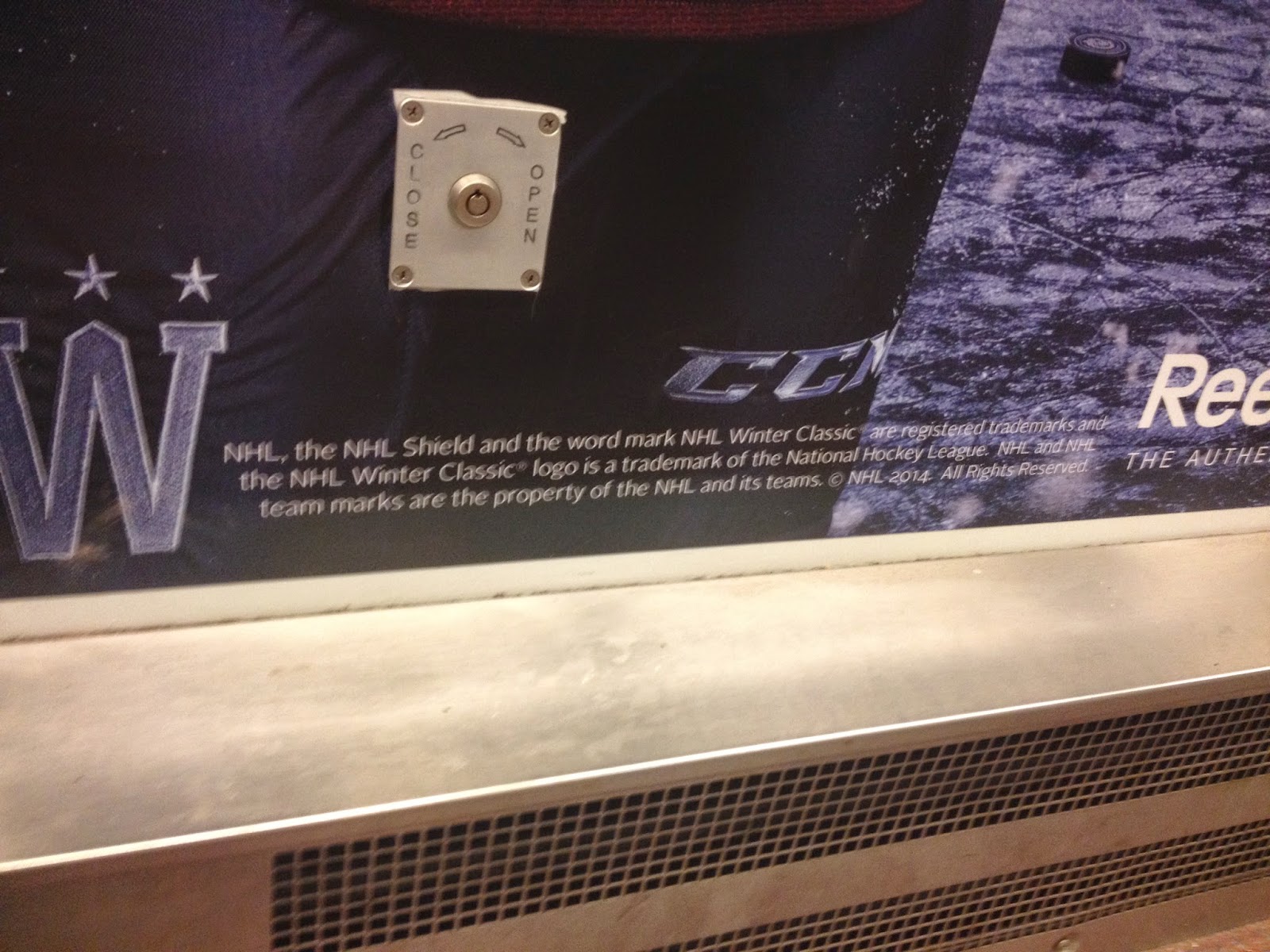
Pop quiz, hotshot

Who authorized the following promo?

“Winter is Coming” NHL/Reebok promo, seen on subway

Alternatively: the NHL and Reebok can take it, but they don’t want to dish it out:

NHL/Reebok trademark statements on ad

Posted in trademark | Leave a comment

Art objects and trademark infringement

Anthony Antonellis creates art objects/sculptures with bottles of Poland Spring water and knockoff wristbands.  Nestle objects, claiming likely confusion.  What is the appropriate test?  Rogers or something else?  Antonellis is looking for a pro bono lawyer.

Posted in trademark | Leave a comment

Transformative work of the day

Six country songs from last year, played over each other.  I’m not a fan of the genre, but this strikes me as very well done as well as funny.

Posted in copying, copyright, http://schemas.google.com/blogger/2008/kind#post | Leave a comment

Reading list: cheap books and scientific progress

Barbara Biasi & Petra Moser, Does Cheap Access Encourage Science? Evidence from the WWII Book Replication Program.

Abstract:

Policies that reduce the costs of accessing prior knowledge (which is covered by copyrights) are becoming increasingly prominent, even though systematic empirical evidence on their effects continues to be scarce. This paper examines the effects of the 1942 Book Republication Program (BRP), which allowed US publishers to replicate science books that German publishers had copyrighted in the United States, on the production of new knowledge in mathematics and chemistry. Citations data indicate a dramatic increase in citations to BRP books after 1942 compared with Swiss books in the same fields. This increase is larger for BRP books that experienced a larger decline in price under the program. We also find that effects on citations are larger for disciplines in which knowledge production is less dependent on physical capital: Citations to BRP books increased substantially more for mathematics (which depends almost exclusively on human capital) than chemistry (which is more dependent on physical capital).

Posted in copying, http://schemas.google.com/blogger/2008/kind#post, reading list | Leave a comment

Lost goodwill isn’t irreparable harm without comprehensive effect on overall business

Via Sarah Burstein:
 
Worldwide Diamond Trademark S, Ltd., v. Blue Nile, Inc., No. 14-cv-03521 (S.D.N.Y. Nov. 6, 2014)
 
Worldwide sought a preliminary injunction in its patent and trade dress lawsuit against Blue Nile for allegedly copying its Hearts and Arrows trade dress/diamond design.  The court declined, citing Worldwide’s failure to show irreparable harm; any lost sales or goodwill could be adequately compensated with damages, since the only record evidence was that Worldwide had lost some business/business opportunities.  Other posited harms were speculative and remote.
 
Worldwide makes cushion-cut diamonds, called the Ideal Cushion, which generate a “hearts and arrows” pattern visible in the presence of light at low magnification.  It has a patent for the design of its cushion-shaped diamond and a pending application for “Ideal Cushion with corresponding diamond design.”  Worldwide diamonds come from Canada and thus cost more than diamonds from other sources; to maintain its profits, Worldwide charges a premium, and allegedly cultivated a reputation of exclusivity by telling customers that the Ideal Cushion cannot be obtained from any other source.  Worldwide only sells its proprietary cuts to brick and mortar retailers. It also has a relationship with De Beers allowing it to obtain high quality rough diamonds, and certifications from Forevermark, the De Beers brand reserved for the most exclusive and reputable diamond manufacturers.
 

Blue Nile, an online retailer, also sells cushion-cut diamonds that generate a hearts and arrows pattern.  Blue Nile also has a patent for its diamonds.
 

Worldwide sought a preliminary injunction, and irreparable harm is the most important prerequisite.  Irreparable injury requires injury that is neither remote nor speculative, but actual and imminent.
 
The evidence the court discussed was as follows: Worldwide marketed itself as the exclusive provider of cushion-cut diamonds that generate a hearts and arrows pattern, enabling it to charge a premium.  But soon after its introduction, Blue Nile began selling the Blue Nile diamond.  Worldwide claimed that an unidentified number of its retailers returned an unquantified number of the Ideal Cushion diamonds t because their customers believed that they could purchase similar diamonds directly from Blue Nile. In addition, Worldwide claimed that it lost other opportunities for new business because customers were expressing doubt that Worldwide Diamond was the exclusive provider of cushion-cut diamonds that generate a hearts and arrows pattern. A Malaysian diamond retailer decided to delay a contract with Worldwide and a U.S. based jewelry manufacturer and distributor “withdrew [its] interest” in selling the Ideal Cushion. Worldwide was also concerned that loss of exclusivity could threaten its relationship with Forevermark, De Beers, and two U.S. retailers, which could negatively impact its reputation, sales, and revenues.  Finally, Worldwide argued that Blue Nile’s competition would force Worldwide to lower its prices, leading to insolvency.
 
But the mere possibility of irreparable harm was insufficient.  Worldwide only provided speculation about the risk of losing additional customers.  It claimed to have suffered returns because of the Blue Nile diamonds, but didn’t produce affidavits, emails, letters, or any other form of correspondence from these retailers or customers to substantiate this claim. A subjective belief in injury was insufficient.  Worldwide didn’t offer evidence that sales decreased from prior years or below projections since the Blue Nile diamonds entered the market, and even if it had, it would have needed to show a causal connection.
 
Nor did Worldwide show evidence that its business relationship with either Forevermark or De Beers was in jeopardy. Neither Forevermark nor De Beers had indicated that these relationships were at risk.  As for price erosion, Worldwide hadn’t lowered its prices, and had no expert or other testimony about the likelihood of price erosion, or evidence that retail customers had requested price reductions because of the Blue Nile diamonds.
 
Moreover, any injury would be compensable with money damages.  If Worldwide ultimately prevailed, Worldwide’s sales could be compared against its established track record and its reasonable forecasts to determine the extent of its damages.  What about goodwill?  Well, when a product has a sales record and its loss wouldn’t affect other aspects of business, damages could generally be proven.  “In general, injury resulting from the loss of goodwill is irreparable only when ‘the very viability of the plaintiff’s business, or substantial losses of sales beyond those of the terminated product, have been threatened.’”  
 
Here, however, Worldwide’s history of operation allowed it to calculate money damages for any lost goodwill. Worldwide had sold more than 7,600 diamonds that generate the hearts and arrows pattern, and made at least fifteen different types of proprietary cut diamonds. By contrast, Blue Nile sold a redacted but apparently non-significant number of Blue Nile diamonds; even if every Blue Nile sale constituted a lost sale to Worldwide, the court held, it was “inconceivable” that those losses would completely destroy Worldwide’s business.
 
At the hearing, Worldwide didn’t identify what percentage of its business was based on sales of the Ideal Cushion or quantify the number of retailers who returned diamonds or how many were returned. Without that, the court wouldn’t speculate that such returns or loss of goodwill would threaten the viability of Worldwide’s overall business.  Thus, Worldwide failed to show that any harm resulting from the loss of goodwill was irreparable.
 
Worldwide’s alleged lost business opportunities with a Malaysian diamond retailer and U.S. manufacturer didn’t come with evidence about the stage of negotiations, the length or term of the contract, or the quantity of products to be provided, so it was “entirely unclear” that Worldwide lost an actual, tangible, business opportunity as a result of the alleged infringement. Moreover, Worldwide failed to establish a causal link between Blue Nile diamonds and its lost opportunities.  It also didn’t assert obstacles to calculating damages for these lost business opportunities.
 
Finally, Blue Nile averred that it could satisfy any damage award in the event liability
 
Injunctive relief denied.
Posted in http://schemas.google.com/blogger/2008/kind#post, patent, trademark | Leave a comment

Book chapter on resisting gendered concepts of creativity

Rebecca Tushnet, The Romantic Author and the Romance Writer: Resisting Gendered Concepts of Creativity, in DIVERSITY IN INTELLECTUAL PROPERTY, (Irene Calboli & Srividhya Ragavan eds., Cambridge Univ. Press, forthcoming 2015). Abstract:

Dominant narratives of creativity regularly expect female-associated forms of creativity to be provisioned naturally without need for the economic incentives provided by exclusive rights, just like housework and childcare. Even as the concept of Romantic authorship has come under sustained analytic assault, its challengers often look elsewhere–to the kinds of creativity in which men are more likely to participate–to find models of situated, always-influenced authorship. In this chapter, I examine one variant of the problem, in which certain arguments about copyright discount the value of forms that are predominantly produced and enjoyed by women. But creative works in these oft-denigrated genres, such as media fandom, open up new possibilities in sexual and gender relations, and women learn to see themselves as valuable speakers by becoming creators. As a result, increasing the visibility of women’s creative works, including explicitly transformative works based on specific copyrighted predecessors, is an important part of rejecting the fetishization of Romantic authorship and valuing diverse kinds of creativity.

Posted in fan fiction, fanworks, http://schemas.google.com/blogger/2008/kind#post, my writings | Leave a comment