Is it in the public domain? Find out here

The Samuelson Clinic releases “Is it in the Public Domain?” handbook: a handy, if sadly complicated, manual and flowcharts. “The handbook walks readers though a series of questions—illustrated by accompanying charts—to help readers explore whether a copyrighted work from that time is in the public domain, and therefore free to be used without permission from a copyright owner.  Knowing whether a work is in the public domain or protected by copyright is an important first step in any decision regarding whether or how to make use of a work.”
Posted in http://schemas.google.com/blogger/2008/kind#post | Leave a comment

Copyright Society: fan productions


Crowd-Sourced Editorial Content and Fan Productions
[Note: this is accidentally on purpose the perfect encapsulation of the move to monetize fandom: Four dudes sitting on a panel and telling me the history of fan fiction.]
Moderator: Jay Kogan, DC Entertainment
A few years ago we talked about fan productions, new business models. Most people had begrudging tolerance to noncommercial fan stuff—commercialization was the big issue on taking action. Some people were looking to get free publicity/promotion; Lucasfilms did some stuff on fan films if Lucas owned the rights. Moving forward from that conversation to new business models that allow fans to create new content, but IP owners partner in a sense with the fans to create new IP in which both IP owners and fans can get a commercial benefit. Can be tied to social media, which invites more participation with users, gameplayers, fans.  Like digital music: recognizes demands, facts that fans will create. Instead of fighting, figure out how to make money.
What’s going on out there:  What fans are doing and what’s being done through legit authorized sources.  Video touting Kindle Worlds, which is hilarious because it presents fanworks as an incredible new opportunity brought to you by Amazon. “Right where you want to be.”  Um, actually, no.  Then Star Trek:TOS watching Miley Cyrus twerk.  Audience finds it hilarious.  Then a movie trailer recreated in a game engine.  Sorry, could identify neither.  But the engine allowed pretty good replication.  Then Buffy v. Edward, which most of the audience took a while to warm up to (quelle surprise).  Then a videogame play video with a profane commentary track.  Fan-designed Lost T-shirts and other tchotchkes from CafePress.  Where the Wild Things Are/some sort of inspired work—subject to takedown claim.
Copyright/TM owners find some sites problematic, and enter into deals allowing creation of fan-authorized merchandise. DeviantArt is an example of art with characters.  Business model: run contest for IP owners; winners get prizers and owners can use the art under license/assignment.
Panelists:
Matthew Bloomgarden, Alloy Entertainment, A Warner Bros. Entertainment Company
Moderator asked him to tell us about the history of fan fiction.  B: traditionally it’s works by amateur writers who write their own stories. Now we’re trying to monetize it, v. stories on ff.net where they’re all available for free. No way to sort through 600,000 stories (I hope no one tells him about recommendations), or to make money, or to police that number of stories.  Royalty is pretty competitive for Kindle Worlds—similar to net profits from ebook sales. An official way out of the mess/lost in the sea.
Q: is there a limit on how many there can be?
A: No, but there are rules on the world. Can’t crossover, can’t use too many elements from the TV shows.  Can’t novelize the TV shows.
S. Gregory Boyd, Frankfurt Kurnit Klein & Selz, PC
Plenty of tolerated use in games.  Some companies are doing revenue shares in “let’s play” games where the voiceover is sometimes funny, critical, or not either.  Steam—largest games digital distribution network. Steam Workshop: you can open up your game to modding.  Users can sell content and receive 25% for that.  Could we have too much? We could, but in medium/long term iTunes quality will emerge: people will buy the good stuff and it will percolate up to the front page.
Q: do you find that authorized fan fiction etc. causes a decrease in distribution of unauthorized product/move to legitimate product?
Bloomgarden: Lots of press about Kindle Worlds/Gossip Girl in particular; only about 20 official books in that space. So they’re not lost.  More are added on a regular basis.
Boyd: wasn’t it a success when the Vampire Diaries writer returned?
Bloomgarden: the writer who wrote the first 7 books stopped because of creative differences.  She went away with stories she wanted to tell, and now she has the ability to tell them; the fans wanted her take.  She’s picking up where she stopped.
Q: now she’s earning money in her fan capacity—is she making less than she would’ve?
A: she’s said she’s doing it more to get her stories out there; yes.  It will open the door to other things for her.  (Because she wasn’t known before, right?)  Another fan who just wrote VD stories—very talented, now we want them to write official books—crossover both ways.
Art Neill, New Media Rights
Q: revenue sharing models like this don’t exist on video sites. Who owns what on Kindle Worlds?
A: you give up to your rights to the story in exchanged for a fixed percentage. All rights go into the program but you’re guaranteed royalties (as traditionally authors were too—it’s not a trade).
Q: can you publish elsewhere?
A: he doesn’t know.  I do: no.
Q: what about derivatives?
A: No.  We included payments as presale element and avoid any claims and you’ve already agreed that we can use your work for an episode (in case you thought it was copied but we were really already working on it).  (This seems slightly in tension with the claim that the payment is the same as for a traditional author: the payment is the same, but the content owner/publisher receives more for that royalty.)
Neill: discussed the Buffy v. Edward takedown and controversy.  Content ID took 3 months.  We were told it had to be monetized by them or it would go down. But it’s fair use.
Current system doesn’t leave any room for monetization by uploader—split between Content ID claimant and Google. 
Q: if they accept money for something that’s not authorized—do they then authorize it?  If there are third party participation deals, do they have to start sharing the money? 
Boyd: Many properties are often involved with videogame content—music, character claims can be made even when the game company is fine with it.  Lots of times the contract didn’t even anticipate that in the game-music licensor deal.
IFPI cited the Star Trek Miley Cyrus video in its report on monetization, but when we tracked it back the original video was not monetized; it’s still there not monetized. There are multiple unauthorized versions that have been monetized.
Kogan: we’ve seen fan films that were noncommercial, then monetized by someone else.
Neill: Many copyright holders = much confusion.  Many people are now making more money on monetizing third party content than on their own content.
Boyd: done more deals with people with large followings than I’ve done takedown or revenue share claims. The business case is clear for him.  Can’t say that this is the future model, though.  Old UGC case: Duke Nukem, decided when internet had only been publicly available for a year. The person who gathered the fan-made levels from all over had a much weaker case than a fan who made her own and tried to monetize on her own.
Neill: Many questions are still outstanding: Marvel v. NCSoft settled. 
Boyd: We’re giving people “thought processors”—they can make anything, including existing characters; that’s internally policed; we don’t want it because it breaks the fourth wall. Players don’t want to see Batman outside of a Batman game.
Q: best practices?
Neill: we’re seeing online video explode. There are different categories of videos, some critical. Good to think about fair use not just legally–§512(f)—but publicity penalties from overreach are painful.  Room to create more than sharecropping space, but where videogame creators get to get rewarded from significantly adding value.  You get better content.  Content owners can give people new ways to take part—right now people don’t necessarily know where to go with their good ideas.  Steam has taken modding from random websites to coherent.
Boyd (I think): TV and film has to change its culture; it’s afraid because it has a long history and also a bunch of talent agreements—videogames didn’t have that entrenched culture.
Kogan: film agreements often require exclusive rights—that can be a barrier to fan films.
Are you concerned about infringement in Kindle Worlds? DMCA?
A: we have that in our Amazon contract, if works go outside the parameters—it will be taken down.  One big example is film/TV—hard to open that up to fan fiction/fan use because of all the guild requirements.  WGA requires payments.  Opens up so many doors it’s easier not to get into it. In publishing it’s just the author, and thus easier.
Boyd (I think): they do recognize, but they have a list of reasons it’s hard to change.
Kogan: have you seen a case where an IP owner pursues rights to a fan creation it loves?  Marvel is said to have taken fan images of Hulk and used them in the background.
Neill: see it a lot—people put a lot of work into existing characters/content, taking them to new places.  But what happens is that if it’s not a strong fair use argument and not in Steam/Kindle Worlds it goes into a strange place; level of creativity doesn’t matter. Almost out there for the taking—Anderson v. Stallone.
Bloomgarden (I think): Nobody wants to miss out on the next 50 Shades of Gray.
Neill: You either do a deal or help the person take it a different direction.
Kogan: Wasn’t it the fan fiction that brought her the notoriety for 50 Shades?
A: but they changed the connection to Twilight.
Kogan: 60 Years Later/Catcher in the Rye case?
Neill (I think): All the things we did when we were learning how to be creators—write extra chapter, make our own ad—can be shared so easily.  Difference is that now these things have real value.  (Um, they always did.) Issue is creating legal structures and values. There are situations where a bulk of what’s added is really remix from the downstream creator, but sometimes it’s almost verbatim.
Kogan: how does crowdfunding change the dynamics of fan productions?
Neill: You always have to have the rights or it will be taken off it comes to the attention of the platform, because the platform doesn’t want that. Kickstarter: the original creator of GI Joe wanted to launch a new military series.  There were similarities with GI Joe.  Turned out that the movie company that got his attention had done a GI Joe fan film; he wanted to work with them. Did fair use/truthful: from the creator of GI Joe.
Bloomgarden: with the Vampire Diaries, there were contract/noncompete issues—we agree not to compete with the books we give the publisher, which in a way did happen when LJ Smith returned to the field.
Kogan: when you make deals with CafePress/DeviantArt, you try to work into the deal additional obligations to restrict/prohibit/police their site from third party infringements, so you aren’t dependent on the DMCA, in exchange for authorized fan art.
Q: did Lionsgate say they could do an official crossover with Buffy, and that meant the fourth factor favored them?
[sexist joke omitted]
Neill: No, they didn’t.  There are a lot of nonattorneys doing the work—they’re just hired to do takedowns; didn’t necessarily have the sophistication—or the will—to do that analysis.  There’s a real need to get out there and do workshops and talk to creators and raise awareness of basic copyright issues. That would help everyone.
Q: when you acquire fan content, is it work for hire?
Bloomgarden: yes, that will come up in 35 years.  Hard to make the claim it’s a contribution to a collective work even if it is part of a series. 
Kogan: could acknowledge that it’s using underlying copyrighted content—they’re frozen, but they could stop you from using it going forward.
Q:  MicroStar, given the tech at the time: as a practical matter, user couldn’t collect levels and sell them in retail stores.
Q: what about crowdsourcing, when lots of people come together to create one thing?  Star Wars Uncut, where people contribute their own reshot scene of Star Wars and they’re sewn together.
[discussion of contracting electronically—what works?  Acting at least in the US as if e-signing was sufficient; can embed links to short licenses/hashtags for quick licensing for some game content]
Q from Joe Gratz: when he thinks fan fiction, he thinks of slash.  Will copyright owners try to go after fanworks that go outside Kindle Worlds guidelines?
A: great point. They will fall outside official licensing.  Those are the works that have the best fair use arguments.
Kogan: most IP owners prefer to look the other way rather than lose a case that would set a bad precedent.  Vivid Entertainment: porn parodies. Almost every studio’s properties are used. Three Stooges sued them; people are afraid because it’s costly and a loss would not be good. They want to bring it on.
Boyd (I think): Existing market was argued in Perfect 10. Establishing a market can help plaintiffs.

Posted in copyright, fan fiction, fanworks, http://schemas.google.com/blogger/2008/kind#post | Leave a comment

Copyright Society: international developments


International Copyright Developments
Moderator: Robert Brauneis, George Washington University Law School
Covering not the world, but focusing on certain important areas. Also focused on new rights/limitations rather than issues of jurisdiction and procedure.  Tomorrow: event on Marrakesh Treaty at AU—come!
Panelists:
Jiarui Liu, University of New Hampshire School of Law
Chinese backlash to Chinese copyright law: authors, musicians, and artists voiced their views in public.  Coverage in media was relatively impartial.  Rare treat to see gov’t agency called controversial and irritating.  In a country with 90% piracy rates, the general public appears to be sympathetic to authors and approve of their efforts against rent seeking. 
In response, the Copyright Office presented three different drafts.  Most controversial: extended collective license, orphan works, mechanical licenses.  ECL pioneered by Nordic countries.  Limited to special cases—copying for research, preservation, etc. Authors may sometimes opt out.  First draft of Chinese proposal: substantially different from Nordic model, not limited to special cases—any collecting society (China has 5 now) could apply. Existing societies: Musical works, music videos, literature, photos, and motion pictures—all the commercially significant types except software; potentially quite expansive. Authors would only be entitled to royalties if the user/infringer obtained a license from collecting society; opt out would not increase royalties.  Key difference: Chinese collecting societies are far from representative.  Objections: undermine remuneration, harms both users and authors, might violate Berne’s three-step test.  90% is not a special case. 
Pressure resulted in dramatic turnaround—collecting society that was driving force behind first draft pulled its support.  Admitted that the society was “too narrow minded” and short-sighted and insensitive to authors’ needs. 
But the ECL system does have its merits.  Lowers transaction costs for potential users.  Increases bargaining power of collecting society.  Example: collecting society approached Google, as only society for Chinese literature.  But only represent 10% of Chinese authors—pay us and there’s still a 90% chance of getting sued. Google rationally walked away.  The less representative a society is, the more it wants ECL. Many Chinese societies currently offer indemnity to users, holding users harmless.  So Chinese collecting societies not uncommonly fight with Chinese authors.
ECL is not the only way to increase representativeness—could improve service/attract more. ECL would undermine incentives to offer better terms/better services.
Orphan works. Should user have to pay royalty before author emerges?  China sides with Canada/compulsory license because it creates opportunities for rent-seeking for collection societies.  The US approach (no royalty before author emerges) makes more sense.  Alternative is worst of both worlds: user tax with no incentive for authors. Well-functioning market benefits entire society.
If all producers get from gov’t, nobody has any need to negotiate prices or terms—central planning.  Not favored by Chinese public.  Market economy produced growth: lesson is that lower transaction costs don’t justify abandonment of markets.
Madeleine Lamothe-Samson, Norton Rose Fulbright
Canada: New right of making available.  ESA v. SOCAN (2012): is a musical work communicated to the public by telecommunication when video game w/work in it is transmitted for download?  Answer: No.  Likewise for downloads of music, though yes for streams.
But that was before the law changed to introduce making available.  Is the Supreme Court decision still relevant?  Hot debate in Copyright Board now.  Rightsholders say the legislator has spoken; for this change to be meaningful there has to be a new right to comply with our international obligations.  Right to get paid separately from the download, which triggers the reproduction right.  (Don’t they get paid for downloads too?)  Opponents say that it’s a clarification, not a new right.  Decision probably before Christmas.
Fair use: two step test—allowable purpose and fair?  Before Nov. 2012, there was a list: research, private study, criticism or review, and news reporting.  Purpose of the dealing, character, alternatives to dealing, nature of the work, and effect of dealing on the market—similar to US test for fairness, but fixed list of purposes.  SOCAN v. Bell Canada: 30-second previews of muscal works were fair dealing for the purposes of research.  Purpose must be the purpose of the end user, not the purpose of the service provider.  Thus Bell was helping individual consumers w/their own private research of music of interest.  Another case: Access Copyright, SCt said that student’s purpose allowed institutional copying by teachers of book excerpts.  Universities have now reacted and there is a big fight going on.
New era for private copying: time and format shifting now legal without compensation; so is backup copying; so is reproduction for private purposes—CD to iPod.  Exciting times!
Axel Nordemann, Boehmert & Boehmert
EU: 28 different copyright laws.  Not even Benelux, with unified TM law, has unified © law. One tool for harmonization is EU directives.  May not be stricter or looser: copyright term.
EU doesn’t have a general exemption, like fair use.  Rather there’s a conclusive list of exceptions for certain uses provided by law.  Three-step test on top.  Always difficult to achieve lack of prejudice to rightsholder.  (!)  Private copying exemption: member states may but need not exempt it.  Luxembourg and UK do not; but this is due to change soon.  Only the copying is exempt, not distribution/making available.  Private copy must always be made from lawful source. 
oyalty on storage media: controversial, and differs substantially across countries.  Mess.  Hard drive may be expensive, or free of tariff.  The company trying to make the most out of this mess is Amazon, whose EU business is organized to contract/invoice always through Amazon EU in Luxembourg, thus doesn’t pay tariff. But shipping/return centers are usually centrally located, mainly in Germany. Refuses to pay royalties for recording devices because Luxembourg has a zero royalty.  But this is no longer justified.  The rule of the member state in which the end consumer is located is applicable.
Photocopies are also exempted, if related to reproduction on paper/similar medium. Photographic techniques or processes having similar effects.  Not applicable to sheet music.  Fair compensation must always be made. Digital copies are not exempted.
Collecting societies sometimes have territorial monopolies—we thought CJEU might kill this as against free movement of goods/services, but CJEU allowed member states to give a monopoly, but pricing is subject to checks on abuse.
Right of citation is also exception/limitation.  Citing a work must be in accordance w/fair practice, and source including name of author must be indicated.
Exhaustion/first sale: we only have regional exhaustion, first sale in EU. Prevailing opinion was: must relate to material medium, thus only CDs etc., not to downloads. This has changed since the Usedsoft decision of CJEU.  Now you can sell downloaded software. Main reason for judgment: economic point of view—sale of computer program on CD v. by download is similar.  Does that affect digital exhaustion of downloaded music?  (Why not yes?)
Shira Perlmutter, United States Patent and Trademark Office
At WIPO/multilaterally.  WIPO internet treaties established new rights, such as making available, and relied on permissive system for making exceptions w/in the three step test.  After over 15 years of inactivity, new developments in both rights and exceptions.  Two treaties in 3 years: one with new rights, and one with new exceptions. Beijing Treaty on audiovisual performances and Marrakesh Treaty for print-disabled access.  We may not be done, because current agenda involves another possible new rights treaty and several categories of exceptions.
Beijing Treaty: update rights of performers in AV works to deal with realities of current technological world.  In 1996, AV performers were carved out of internet treaties mostly because EU and US couldn’t agree.  Conflict over transfer provision—in what circumstances the movie producer could exercise the performer’s exclusive rights.  US WFH doctrine is controversial, and motion picture industry wanted to keep it in place when films were exploited in other countries and other countries didn’t want to agree.  Finally, this sticking point was resolved.  Solution: each country’s law can decide how to deal w/transfer, but that’s made explicit in the treaty.  Each country may provide that consent to fixation means that exclusive rights of authorization shall be owned/exercised by/transferred to producer, subject to any contract w/the producer. Countries could provide for equitable remuneration despite transfer rules.
Actors get economic rights as in WPPT, and moral rights, but agreed statement puts a number of specifics in place.  Explicitly permits modifications in normal course of exploitation, including compression, formatting, and dubbing.  Term, formalities, rights management information/TPMs also covered.  Agreed statement: nothing in the TPM article prevents  acontracting party from adopting measures to ensure the benefit of limitations and exceptions, where TPMs have been applied and there is legal access to the content, and where appropriate and effective measures haven’t been taken by rightsholders to enable the beneficiary to take advantage of the limitations and exceptions. Every word there was carefully negotiated, among other things to be consistent w/DMCA rulemaking. How does that affect interpretations of past treaties, which doesn’t have that agreed statement, or future treaties? 
Botswana, Syria, and Slovakia have ratified; EU will take us over the threshold of 30 countries ratifying.  US is working on ratification and implementation.
(What is the need that this treaty is solving?)
Proposed broadcasters’ treaty.  No question that there’s a need to update from the Rome Convention.  (Really? Because I have that question.)  US proposed a treaty for broadcasters, cablecasters, and webcasters—anyone who invested in programming and sent it to the public.  That wasn’t popular.  Copyright owners expressed concerns about their rights to license.  User groups worried about ability to make private copies.
Signal-based approach instead of content-based approach—what exactly does that mean? Confusion about meaning has been rife.  The work stagnated for a few years. Last year, US made a new suggestion: time to break impasse.  More targeted approach: something we can all agree on.  Fundamental problem of broadcasters: signal piracy over any medium.  Proposal would have provided a single right to authorize simultaneous or near-simultaneous transmission of their signal to the public, allowing only for delays due to technical requirements or to time differences.  No protection for subsequent uses of fixations of the signal.  That would be content protection. Would avoid concern over extra layer of protection requiring authorization for post-fixation use.
Current status: discussions are continuing.  Some progress on clarifying subject matter of protection.  Looking at which rights are necessary and ways in which past proposals could be narrowed.  Public briefing at PTO coming June 11.
Marrakesh: Debate over whether treaty was necessary, or whether it could be done voluntarily between publishers and authorized entities. Int’l copyright has historically been “flexible” rather than requiring specific obligations for exceptions. Here there was a unique humanitarian need, for a limited class of users, not the general public.  Messy treaty. Countries are free to impose requirement that exception is only available if copies aren’t available on reasonable commercial terms. Three-step test continues to apply, repeated throughout.  Needs 20 countries to go into force.  Zero so far, but a lot are working on it, including US.
On agenda: exceptions for libraries, archives, educational uses, other disabilities.  Text-based work was our first priority; still an open Q what kind of text is at issue. Developing countries want treaties, but industrialized countries oppose them. US: these are important issues and libraries are key to vibrancy of system; we have exceptions in our law that work very well, but we need int’l flexibility for countries to tailor to their own conditions/needs.  (RT: You know, like rights are tailored to countries’ conditions and needs ….)  We don’t want a treaty.  Objectives and principles should be agreed on: countries should have an exception allowing libraries to make preservation copies under appropriate conditions.
There was a big fight over what text-based means.  More to come.
Q: how does EU know whom to compensate for copying onto digital media?
Nordemann: not sure. Same problem with radio broadcasting in EU member states.  But there the stations will deliver lists/schedules of songs.  Nobody can know whether that’s similar to private copying.
Lamothe-Samson: Same for Canada.  Distributed to different collectives, who have access to radio statistics.  (I’m sure that’s helpful for determining non-music distribution!)
Q: the idea is that there is a correlation–SCt of Canada accepted try before you buy because of the idea that in fact the use generated sales.  
Lamothe-Samson: that’s one way of seeing it.  (laughter)
Q: in new Canadian mashup exception, how is commercial defined?
Lamothe-Samson: It’s not!  We are all wondering.  If you become a viral hit on Facebook, and you end up starting a business, where does it stop?  We don’t have any definition or guidelines from cases yet.  A lot of undefined new vocabulary in the act–private use, private purposes, noncommercial purposes.  Very confusing.
Posted in copyright, http://schemas.google.com/blogger/2008/kind#post | Leave a comment

Copyright Society: transformative use (herein mainly of Google)


Transformation of Transformative Use          
Moderator: Julie Ahrens, Stanford Fair Use Project
Mass digitization: at the start of the litigation Google seemed bold, but after 8 years the result was less surprising, at least to some, since digitization is so valuable/expected. Perceptions about what ought to be easily accessible have evolved along with the law.  Subtle but critical shift in fair use evaluations.  It all started with Campbell.
Beyond parody: Dorling Kindersley is a very important case. Not required to discuss the artistic merits of the posters to use them on the timeline; the different purpose—use as historical artifacts—was sufficient when the initial use was artistic expression/concert promotion.  Prince v. Cariou: artist need not have anything to say about the original art if the purpose is different. Message need not be tied specifically to the original work/analyze the original work.  With remand on 5 works, Prince left some uncertainties about how much change is enough.
Panelists:
Joseph Gratz, Durie Tangri LLP
The Campbell mold has never been unique—something much older, can’t be stuffed into one word. The use in question is productive: results in the creation of something new that goes beyond purposes/value of original, and doesn’t supersede the original. Transformative is just shorthand for non-superseding productive use. Goes back to Folsom v. Marsh.  It’s been a good run since Campbell, but maybe the word transformative should be retired and talk about what we really mean, since different uses might not fit in the same bucket even though they are all nonsuperseding and productive—Pam Samuelson’s categorization attempts to group them. 
Four different buckets he’ll discuss: (1) Easily articulable comment on original, incorporated into new creative work.  Campbell, Wind Done Gone. Not all are “parodies,” but there is comment. That’s easy and everyone calls it transformative. Harder cases when incorporated into new creative work where commentary is harder to articulate—Cariou, Blanch v. Koons—commentary on society. We could say the original is used as a touchstone/icon.  Though Cariou photos were probably not iconic.  (Blanch is not iconicity; it’s representativeness/standardness, which also deserves to be available; you’ve got to be able to pick an example.)  Cat in the Hat came out wrong under this standard.
(2) Verbatim copying for the purpose of criticism—not a new song/painting/book, but just to criticize.  Rarely been of the expressive value of the original, but instead of the original or even of the author.  Maxtone-Graham: abortion-related book.  Criticism of Scientology.  Criticism of the message of the song “Imagine,” not the melody/chord structure/etc.  That’s transforming the work as a tool/object of criticism, but transformativeness is distracting: use for purpose of criticism, where license is unlikely. 
(3) Noncritical copying to prove a point: using the work as evidence.  Dorling Kindersley. The work isn’t being commented on in itself, but the work is necessary to make a point about the world.  Zapruder film case fits into this category: raw material in order to make an argument that couldn’t be made without that expression.  Different use than original.  (Why isn’t Blanch v. Koons here?)  These are three distinct categories.
(4) Technological uses.  Google Books, iParadigms (plagiarism detection). They aren’t the creation of new creative works, and they don’t involve criticism/commentary.  What do they have in common? Productive: result in creation of new thing that didn’t exist and couldn’t exist without the original, and they aren’t substitutes. You don’t and can’t go to these new tools instead of experiencing the original in full form. Does the value of that plagiarism tool stem from the expressive value of the inputs? No, its value doesn’t flow from or replace the creative value of the original. That’s how Google Books, Perfect 10, HathiTrust fit into fair use/favored under the first factor.  It’s a big umbrella, but transformativeness may obscure more than it makes clear.
Liz McNamara, Davis Wright Tremaine LLP
Not her position that a significant number of cases have gone wrong on fair use (speaking for herself). Courts have generally done the case by case analysis properly. What concerns her is the rhetoric and the way transformativeness is discussed, unhinged from Campbell—that happened in Google Books.
Where the law was before Google: pendulum swing!  Too often, content owners are accused of living in a time warp.  But content owners are the foremost users of fair use.  (Equivocation in the definition here, but ok.)  In the 1990s, the swing was in favor of too much protection—Harper & Row v. Nation led into Salinger/New Erathat made fair use of unpublished works almost impossible, which was what led to Leval’s article and subsequent amendment of © Act.  Overemphasis on whether secondary use was commercial—Sony’s statement that every commercial use is presumptively unfair.  The 6th Circuit in Campbellrelied on this, which was the cause of such concern. Content owners breathed a sigh of relief after Campbell.
Rhetoric has become more shrill/out of the box on what’s transformative, with little regard for content owners—“free on the internet is free to use.”  (I’m not sure which advocates say that.)  Kelly v. Arriba Soft—not necessarily wrong.  But the facts are important: thumbnails were small/poor resolution and could not serve as substitute for aesthetics of full image. Court also assumed, w/o evidence, that search engine actually acted as pointer/drove users to websites where you could get the full image to the benefit of the © owner. Substitution remains a critical component of transformative use, not just in the 4th factor.  9th Circuit in Kelly took pains to contrast facts before it, where it found substitution impossible, with Infinity Broadcasting, where it was possible to use original broadcast for entertainment purpose.
Judge Chin/Google Books: what’s at issue is not what’s being served up in the search results, but the fact that Google digitized 20 million books without permission. They didn’t say please or thank you; they just took it. A volume discount on fair use? Judge Chin failed to take into account monetization of data Google collects/Google’s data mining.  (I thought she was cool with commercial fair uses?)  Improperly considered the project educational, looking at ultimate user rather than Google, when law dictates that Google’s use controls rather than ultimate user’s under Texaco.  When uses are systematic and no new expression emerges, we should apply a new and heightened standard, considering not just that the new use is useful, as Infinity said—change in format/enhancing convenience is not transformative.  Instead should ask whether it is capable of substituting for the original.  Kelly wrongly assumed that search engine acted as a pointer; AP v. Meltwater: we now understand how often clicks do/don’t happen.  News service was really being read as substitute. Including links wasn’t a pointer.
Also, are profits being diverted from original publishers?  Rosetta Books established that electronic rights are separate for authors.  Authors are entitled to license them.  Totally removed from the analysis.  Serious loss of revenue—Google strives to keep users on its platform, and 20 million books is an important monetary incentive to stay.  (… If you got to read the whole book, sure.)
Also need to look at whether this is one-off taking or systematic taking of massive quantities of data. 
She isn’t that optimistic about the 2nd Circuit decision in favor of Authors Guild, but does hope that the court carefully circumscribes its rulings so as not to create unanticipated/significant negative consequences for creators.
Kozinski said that if you want to win in the 9thCircuit you have to say that to go against you would be the demise of Google. That’s where we are.
Gratz: He’s since said that he’s not worried about Google.
McNamara: reminder about Infinity: media dial-up subscription services, allowing subscribers to listen to radio broadcasts around the US. Marketed for the purpose of auditioning talent, verifying that ads were played, etc.  Evidence showed that users could listen to snippets or entire broadcast.  2d Circuit found infringement.  D had argued that its broadcasts were used informationally, not for entertainment—different purpose.  Court rejected that argument: a difference in purpose is not quite the same thing as transformation. Retransmissions left the character of the broadcast unchanged, without new meaning or message.  Listener coulduse for entertainment purposes.  (Interesting switch to the effect on the user, which McNamara said wasn’t legit when Google does it.  Also doubtful that many users piece together a few hundred words at a time for original entertainment purposes of the books.)  Societal benefit wasn’t enough to be fair use, citing Texaco.  Not enough of a benefit to outweigh the taking.  Google Books will have to deal with this language.
Ahrens: one thing that seems missing from Infinity that is in more recent cases seems to be the idea of nonsubstitutionary use.
Gratz: we don’t disagree to the extent someone is using the service just to listen to songs, because the songs make them happy—that’s a substitution.  One thing that’s changed in the 2nd Circuit is how one looks at who the primary/direct infringer is, and who we’re running the fair use analysis on.  We didn’t have the volitional conduct rule in 1998.  Who’s the direct infringer in Infinity? The facts in Infinity could have turned out differently if D was just operating a system that didn’t do anything until someone logged in and tuned their own little radio to play to them.  Is that fair use?  Maybe/maybe not, but then D would be secondarily liable.  If there are legit uses for ad verification, etc., that would be a fair use.  Have to drill down into what the person choosing to activate a technological system is doing.  That’s not actually a matter of changed fair use doctrine.
McNamara: D wasn’t paying anyone who created the content from which it reaped a benefit. Also, Texacorefutes the notion that the end user matters rather than the commercial actor appropriating the content.  News reporting mission doesn’t let news organizations line their shelves with photocopies of books on journalism.  Equally extravagant to claim that Google Books can line its shelves with 20 million copies of books.  (But in this analogy, the “journalists” can’t take the whole book off of Google’s “shelf,” even if their activities bring indirect profit to Google.  Now we’re back to the snippets.)
Ahrens: but what kind of substitution are we talking about? The original or a derivative market that the copyright owner would just really really like to license?
McNamara: substitution comes in many ways. There can be outright substitution, with news aggregation.  Sliding scale.  There can be substitution if copying usurps a separate existing market that people pay for. 
Gratz: Those are fourth-factor considerations, and don’t go into Q of where the value comes from—expression in the original or what the secondary user added. 
Texaco: not employed as part of a larger whole for some new purpose. Verbatim copying is always the case—it’s necessary to the process of creating transformative works.  Scientist wanted to make hardier copy/copy that he could write and spill stuff on; court said that might well be transformative if that was all you were doing.  But it wasn’t shown that he was doing that.  He was reading it to understand its intellectual content.  Assess the means by which the value of the second use is generated—if the means is the same, copying expression to enjoy expression, then that’s not transformative.
Would this be the same today?  Yes, even after the Second Circuit (hopefully) affirms in HathiTrust and Authors Guild cases.  Just making a reading copy is not by itself transformative, though that same act may also be necessary for a different and transformative purpose/act later.  Public benefit isn’t enough—and that doesn’t even come into transformativeness, though it’s worth weighing in fair use overall.  Totally useless changes can be transformative.   Letting us read 20 million books in their entirety would have a great public benefit, but that wouldn’t make it fair.  Creating something that doesn’t exist before, and that can’t substitute for the original, is different.
McNamara: seat licenses for electronic newsletters—the market has evolved in a way that addresses the Texacoissue.  (And strangles our libraries, but never mind.)
Q: how do you square Cariouwith the definition of a derivative work?
Gratz: “transforms, recasts, adapts,” and he doesn’t disagree that the best word for what was going on may have been recasting rather than transforming in the sense of a parody.  Where it departs from what would talk about as a derivative work, is the way the word transformative is used in fair use: fodder or raw material in a way that separates it not for its expression but as a touchstone/icon.  Transformation is not physical (or not only physical) but in purpose, and that means something different.  But that’s one reason we should stop using the term in fair use. 
Ahrens: some markets are not reserved to the copyright owner, like criticism or commentary.  Maintaining that distinction helps preserve free speech.
Q: but it does interfere with derivative rights.  Looking at third party audience’s reaction isn’t helpful to the artist figuring out whether they need a license.  Yes Rasta photos weren’t iconic.  Rather than take his own pictures, he took what was convenient.  There are easily licensable materials.
Ahrens: necessary isn’t the standard; reasonability in light of the purpose is the standard. Nothing is necessary.  2 Live Crew didn’t have to comment on Pretty Woman. 
Q: but no one would ever permit parody.  But a visual reference isn’t parody, and is available for licensing.  (I wrote an article with Bruce Keller about why this is wrong.)
Ahrens: but he wasn’t picking from pictures of Rastafarians.  He was inspired by that specific book. 
Q: McNamara sounds like grafting unfair competition law onto fair use.  Why is making money relevant without a theory of unfair competition (which would be preempted)?
McNamara: there is an existing market for digitizing works.  Copyright Alliance amicus brief: needs to be decided with stakeholders at the table, not unilaterally by Google which drives everyone else out of the market—no one else can engage in this level of mass digitization; even Microsoft backed off. There is a derivative right at issue.  (RT: No, there’s a reproduction right.  This argument about Google’s uniqueness seems a bit in tension with the immediately previous claim that there’s an existing market.)
Gratz: those are fourth factor issues, and asking permission doesn’t matter to fair use.
Q: DJ culture as new business model. Where does that fit in transformativeness?
Ahrens: mashups can be new/not substitutive.  W/music in particular, and sampling law, it’s complicated.  The licensing model matters.  If sampling cases had begun to be decided now, and not in 1992, that might’ve changed the entire landscape.  But it’s not a new business model, but how the genre developed.  There are arguments about how this has harmed the art form; the only people who sample are showing off how much money they have and new entrants are limited in their expression.
Posted in copyright, google, http://schemas.google.com/blogger/2008/kind#post | Leave a comment

Copyright Society meeting: Maria Pallante


Copyright Society of the USA Annual Meeting
[self-promotion: I’m here to pick up an award for Performance Anxiety.]
The View from the Copyright Office
Maria A. Pallante, Register of Copyrights, U.S. Copyright Office
Petrella and Aereo through the perspective of the government’s briefs.
Petrella waited 18 years to sue; MGM spent a bunch of money investing in a new version of the film.  Concern is for equity to defendant.  9th Circuit was too generous to MGM, but should the court consider the delay in some way?  Copyright Office was concerned about threat to three-year rolling statute of limitations.  Middle position between what CO saw as parties’ extreme views, arguing that 3-year period should not be subject to laches, but delay could be considered w/r/t equitable remedies such as injunction, where user has invested in derivative works.  Gov’t prevailed.
9th Circuit wrongly held that laches should be a complete bar where any part of the conduct occurred outside the statutory period—could deprive owners of their copyrights decades before the statutory term has run.  (RT: Of course, one can be deprived of other property that has noexpiration date; other causes of action run out.) 
Dicta: is registration a requirement, or just application?  10th and 11thcircuits use a registration approach: registration or refusal is required.  5, 7, 9th use application approach.  Petrella passage suggests that Ginsburg & the 5 Justices who joined her agree with registration approach: registration reduces the need for extrinsic evidence—“registration must be on file with the Copyright Office before the copyright owner can sue.”
Aereo: performance can be most valuable right; 2d Circuit could undermine streaming models. But it’s important to preserve some cloud models, and the SCt focused on drawing a line.  CO: transmit clause makes the relevant audience the ones capable of receiving the performance, and Aereo’s promise to transmit to any paying member of the public makes each transmission one to the public even though each one goes ultimately to a single subscriber.  Could enjoin this infringement without questioning innovative tech for allowing consumers to store lawfully acquired copies.
Observations from oral arguments: Sotomayor asked about other services; Ginsburg asked about whether Aereo’s view was compatible with int’l obligations.  Another query of note: how do you deal with Cablevision? (laughter)
Many current reform initiatives, including PTO/NTIA green paper.  Multistakeholder dialogue on improving DMCA notice and takedown; also soliciting comment on specific legal issues such as first sale, statutory damages, remix.  Signature theme of IPEC (coordinator) was voluntary cooperation—between ISPs, music labels, movie studios. Led to copyright alert system, which just released its first report.  Copyright ecosystem: everyone benefits, so everyone including ISPs, payment processors, advertisers, search engines should contribute to its robustness. Civil and criminal liability is important, but voluntary practices can do a lot. Question: what’s gov’ts role in monitoring/setting practices?
Congressional hearings are underway, on House Judiciary website.  13 hearings by the end of the month.  They’ve had lots of copyright owner groups testify, MPAA to Getty Images to media photographers. Tech platforms; Library of Congress preservation experts; law professors.  Next Congress: more indication of what/whether we’ll have an omnibus bill or connected series of small bills.  Also unclear: what decisions Congress might send to the CO.  Courts are important but don’t weigh the public good; voluntary practices are good but a private sector deal won’t necessarily benefit public policy. SCt confirmed Congress’s role in Eldred. If the CO were to have more authority to update certain things, that might help.  Congressional Q: How to avoid picking favorites when it comes to tech and not allow piracy?  That’s the million-dollar question.
Does the existing Copyright Act adequately protect right of communication to the public under WIPO treaties?  CO believes there’s uncertainty in implementation, which has clouded the certainty required. Legislative clarification of making available would be beneficial; is it possible?
US implemented treaties in 1998 w/DMCA.  Congress and CO concluded that authority was already governed by combination of reproduction, distribution, and public display/performance.  Congress’s intent was to comply with the treaties, and the US takes the position that we comply. But some courts have not understood/been inconsistent, especially in questions over whether infringement requires actual distribution.  Nimmer: both sides recognize distribution right. Point of disagreement: quantum of proof required to demonstrate that distribution took place—uploading, or uploading plus proven downloads. (RT: Um, some of us think that a download is an unauthorized reproduction, not a distribution since no copy is transferred; secondary liability for the unauthorized reproduction takes the place of distribution liability.)  Prof. Lunney disagreed.  Notice of Inquiry: what would the contours be?  If Aereo wins, what is to be done?
Orphan works: years of study.  Picked it up again because of cases applying fair use. Had another public hearing on this.  What should be a good faith diligent search? What should the role of private and public registries be? Should photographs be treated differently, because they’re difficult to trace ownership and a category of works of a very vulnerable population of owners because so frequently targets of unauthorized use?  Mass digitization has been conflated with other issues.  CO is leaning towards view that mass digitization should be uncoupled from orphan works; need legislative solution because even if mass digitization for search/print disabilities is ok, that doesn’t solve other needs if access to works is what the public wants, so Congress should put a framework in place with remuneration for authors.
Small claims: 2-year study. Many small creators want to pursue claims but it’s expensive; we should not pay attention to those who don’t care about asserting their rights because they don’t have a problem, but these small creators do.  Songwriters’ Guild: combined impact of small claims is death by a thousand cuts.  Pro bono assistance for lower-income artists: people who do it wanted alternatives to federal litigation.  We recommended an alternative voluntary system (has to be voluntary, constitutionally) under supervision of the Register but general direction of Librarian, administered through online and teleconferencing, without personal appearances.  Three adjudicators, two with experience in copyright law and one in alternative dispute resolution.  Focus: no more than $30,000 in damages, actual or statutory, but statutory are $15,000 per work or $7500 per unregistered work; registration required before action.  Executive summary bears reading.  We expect a hearing.  Photographers want this; very few can afford suit without this. Dramatist Guild and National Writers Union also agree.
Music:  if there’s a primary focus in policy now, it’s in music. In the middle of 8 hearings/CO roundtables.  Licensing: Commerce Task Force roundtable too.   Lyle Lovett: struggle remains to convince music users and policymakers that music makers should get paid.  Analog/digital divides, etc.
Asking many questions about revenue divisions, opportunities for gov’t to encourage microlicensing and/or standards for ID’ing musical works and sound recordings. Current licensing is broken and should be fixed if not done away with completely: that’s the consensus. Question is what should replace it?  Musical works reproduction/performance licensed together?  Maybe with sound recordings?  Musical work folks want to move to “free market”; others don’t.  Transparency/competition concerns in collective licensing. Some frustrated music publishers have been offering rights to digital services directly. Challenge: how to reconcile competition issues with beneficial aspects of collective management, which is still very important.  DoJ is going to conduct its own parallel review of the operation/effectiveness of BMI and ASCAP consent decrees—whether and how they should be modified.  Comments due Aug. 6!
New bills in Congress: Songwriter Equity Act, changing CRB rates to willing buyer/willing seller and eliminated §114(i) which prohibits consideration of sound recording royalties in setting musical work royalties. Another: require payment of royalties for pre-1972 recordings for any service availing itself of §112 licenses on the same terms.  Other pre-1972 issues would remain before Congress.
CO: we’ve been stuck in time, in budget and otherwise.  Given the changes, we need modernization.  Nimble and forward-thinking; interoperable with marketplace we serve.  We’ve done everything we can do without money: talking/research. The registration system needs a faster/better interface; secure repositories for digital works; identifiers that match how works are created; automated recordation for assignments, licenses etc. that would be publicly indexed; metadata to connect to outside registries; need to finish digitization of pre-1978 works and integrate them into a useful chain of title for public record.
We can’t be fee-funded unless the statute were changed to allow us to recover capital costs for long term projects like IT.  We could if the statute were changed also ask larger © owners to pay a surcharge to make it remain affordable for smaller owners. Under our statute, we can’t raise fees beyond literal cost, but we can keep some deflated. Most have gone from $35 to $55 but we’ve kept it lower to allow for single applications to stay at $35.
Shoutout to Bob Brauneis, who’s working on modernizing registration as a scholar in residence.  Parterned with Stanford University Law & Policy Lab; also Barbara Ringer honors program, 2 year paid fellowships like clerking for a judge.
Posted in copyright, http://schemas.google.com/blogger/2008/kind#post | Leave a comment

meaningless numbers aren’t advertising


MGM Resorts Intern. v. Pacific Pillows, LLC, 2014 WL 2434628, No. 2:13–CV–1404 (D. Nev. May 28, 2014)
Pacific Pillows lets consumers buy bedding products that are used in various hotels including several hotels owned by MGM. Its website allows people to “shop by hotel,” and (at least some) pillows are named after hotels that MGM owns.  MGM also sells pillows and bedding using MGM’s marks for its hotels.  MGM sued Pacific Pillows for trademark infringement, counterfeiting, false advertising, and unfair competition.  Pacific Pillows counterclaimed, to no avail.
The Sherman and Clayton Act claims were dismissed because there is no antitrust law left.  MGM’s allegedly false advertising on its pillow tags was also not actionable under the Lanham Act.  Pacific Pillows lacked a  “concrete and particularized” injury, because all it alleged was that MGM’s advertising created “significant confusion in the marketplace” and harmed Pacific Pillows, which was too vague and speculative.  Even with standing, the claim failed. The allegedly false advertising was an incorrect registry number on pillow tags, but a registry number isn’t a commercial advertisement.  “The incorrect registry number is simply a series of letters and numbers that means nothing to consumers. The number does not give typical consumers any information about the pillow, and it certainly does not influence customers to buy the pillow.”  Even if other parts of the tags (the logo) were advertising, that didn’t make the registry number a commercial ad.  Also, Pacific Pillows failed to plead that the registry number was likely to influence purchase decisions or cause injury to Pacific Pillows.
Separately, Pacific Pillows alleged that MGM falsely advertised a pillow named “Aria,” because “Aria” wasn’t the exclusive pillow used at the Aria hotel, and that a pillow similar to the “Aria” pillow is only used in a small number of rooms. Pacific Pillow also lacked standing to bring this claim.  Further, it didn’t allege a false statement of fact: it didn’t allege that MGM advertised that a customer who purchased “Aria” would get the same pillow that is found in every room at the Aria hotel. Since both sides agreed that a similar pillow is found in some rooms in the Aria hotel, there was no falsity.
Common-law unfair competition failed too, as did wrongful interference with contractual relations/prospective economic advantage.  Though MGM allegedly contacted Pacific Pillows suppliers, and thus did intentionally interfere with contractual relationships, Pacific Pillows didn’t successfully plead that this interference was improper.  MGM notified the suppliers that they were supplying a company that was allegedly infringing MGM’s marks.  Protection of its trademarks was legitimate.
Posted in http://schemas.google.com/blogger/2008/kind#post | Leave a comment

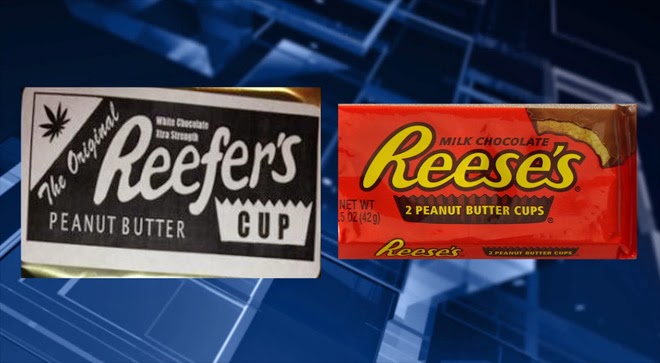
(pot)head of liability: Hershey’s sues marijuana candy producer

Here’s the story.  I’ve been waiting for this for years, ever since a NYT story that included similar illustrations.  As with e-cigarettes, an unregulated field full of small players tends to have a lot of playing fast and loose with all laws.  Take this quote from the story: “‘I think it’s just a simple market strategy – mimicking brands that are pre-existing,’ said Vivian McPeak who is the Executive Director of Seattle Hempfest.” Still, is anyone really likely to be confused?

Reefer’s Cup and Reese’s

HT Patricia Williams/The Trademark Blog.

Posted in dilution, trademark | Leave a comment

unregistrable means unprotectable by sec. 43 as well


Renna v. County of Union, N.J., 2014 WL 2435775, No. 2:11–3328 (D.N.J. May 29, 2014)
This is a well-written opinion whose legal conclusions are in part obvious but nice to have down in print and in part quite striking: I think for the first time, a court clearly rules that a mark specifically excluded from federal registration on policy grounds may not take advantage of §43(a) either.  If I were the attorney for Washington’s slur-named football team, I would be paying attention.
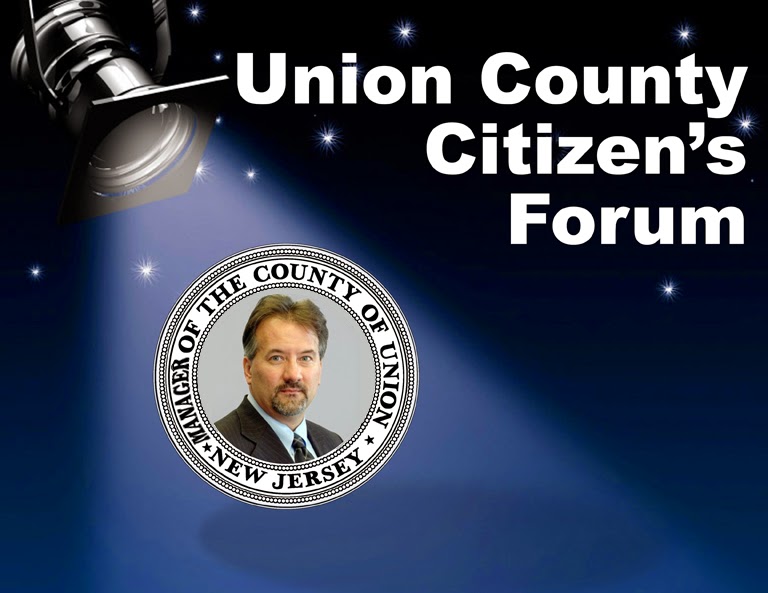
Renna, an outspoken critic of the County Board, produced a public access television show, the “Union County Citizen’s Forum.” The show displayed a graphic illustration depicting the Seal of the County of Union with a spotlight shining on it, symbolizing “the self-proclaimed mission of the show to shine a critical light on the workings of the Union County Board of Chosen Freeholders…. It would appear in the background as Renna read Board resolutions or interviewed guests on the air.” 
Screenshot of spotlight logo
A tidbit from the opinion:
This Seal, by the way, may be the only official County seal to depict a murder. The central illustration is an artist’s re-creation of the fatal shooting of Hannah Caldwell during the Revolutionary War. Hannah resided with her husband, “rebel pastor” James Caldwell, in the Connecticut Farms area of what today is Union Township. Her death in 1780, allegedly at the hands of a British soldier, was used to further galvanize public sentiment against England and its royalist sympathizers.
The County Attorney sent a C&D to the television station, warning it to stop displaying the seal and claiming trademark infringement.  “Whether the County has tried to bully a constituent is for the public to decide.” What it didn’t do was assert any legitimate rights. Declining to reach the First Amendment issues, the court found that Union County had no trademark rights in its seal, and Renna’s display in connection with her TV show did not infringe.  (If I were the County, I’d get out my checkbook for fees.  The Rutherford Institute represented Renna.)
The County’s C&D to the Township of Cranford, which operated the public access channel, said:
Re: Unauthorized usage of the seal of the County of Union Union County Citizens Forum
To Whom It May Concern:
It has come to the attention of the County of Union that your entity is using the Seal of the County of Union without proper authorization. The County of Union demands that your entity cease and desist use of the Seal of the County of Union in any way including, but not limited to, displaying it in the background of all television shows with exception of the prerecorded unedited meetings of the Board of Chosen Freeholders. Please be advised that the County Seal is also a pending trademark, therefore you are committing trademark infringement.
Renna discussed the letter with the TV station manager, who asked her not to use the Seal graphic.  Meanwhile, the USPTO refused the County’s pending trademark registration application, “because the applied-for mark consists of an insignia of a U.S. municipality.” 15 U.S.C. § 1052(b).
When Renna resumed taping (after an unrelated delay), she replaced the old logo with a new one, a spotlight shining on a photograph of the Union County Manager.   
Revised logo
This resulted in another request from the Cranford Township laywer to stop using that logo. Then the management requested that Renna sign an indemnification agreement, which made her nervous and caused her to seek legal counsel. 
Her counsel then sent a letter to the Union County Counsel who’d sent the C&D, pointing out that the County was wrong in a number of ways, with the consequence of chilling Renna’s First Amendment rights.  Counsel requested that the County withdraw its demands.  Instead, the County doubled down, claiming, “For your information, this Seal is in fact now trademarked.” The County maintained that the seal was “trademarked under Federal law”; that by state statute, the County was required to maintain a seal; that use by others was unauthorized; that State law “prohibits a third party, such as your client, from registering a mark that uses such an insignia”; and that there was “no impairment of your client’s first amendment right.” The County “simply is protecting its official seal, protected by trademark, from direct and unauthorized use.”
Meanwhile, the County failed to respond to the office action denying registration, and the registration was abandoned.  The County tried to revive its application, but of course revival would’ve been futile, and the application was again abandoned.
The court ruled that, given Section 2, 15 U.S.C. § 1052(b), the Seal was not a “valid and legally protectable mark.”  Section 2(b) provides an absolute bar to registration of matter that “[c]onsists of or comprises the flag or coat of arms or other insignia of the United States, or of any State or municipality, or of any foreign nation, or any simulation thereof.”
The County argued that this barred registration only by nongovernmental parties, not by the government body itself.  “The USPTO, however, correctly and authoritatively interpreted Section 1052(b) as an ‘absolute bar,’ one that ‘does not list any exceptions that would allow for countries, states or municipalities to register their own flags or insignia.’”  The Federal Circuit has agreed with the PTO.  In Re City of Houston, 731 F.3d 1326 (Fed. Cir. 2013).  While G-d  and the Supreme Court know that the fact that the Federal Circuit came to a conclusion doesn’t mean it’s right, the reasoning itself is sound. The Lanham Act must be read according to its terms, and not as a mandate to protect the public from “pirates and cheats” of all stripes. “And it would be particularly inappropriate to read a silent exception into section 2(b), because the surrounding provisions demonstrate that Congress knew how to express such an exception when it wanted to.”  
In a footnote, the court noted that it was bound by the statute’s words.  But it also defended the lack of any special exemption for government entities as consistent with the Lanham Act’s purpose.  “The registration bar was not enacted to protect official prerogatives or preserve official symbols from desecration. Rather, the bar represents a more general determination that state insignia are not appropriate subjects of trademark law at all. Trademark law concerns itself with goods and services in commerce.”  McCarthy explains the bar as based on the theory that government insignia shouldn’t be registered as symbols of origin for goods and services because such insignia “ought to be kept solely to signify the government and not to be sullied or debased by use as symbols of business and trade.” The court concluded that it could “easily imagine the absurdities that would arise from the trademark registration of flags and insignia, which are intended to be used by the citizenry.”
In its communications with Renna’s counsel, the County didn’t acknowledge the USPTO’s authoritative rejection, but instead claimed that the seal was “now trademarked under federal law,” which—given the earlier reference to a pending mark, which had to mean registration—“carried the misleading implication that some intervening event had solidified the trademark status of the Seal” when the opposite was true.  To that misleading implication, the county’s lawyer added another, claiming that New Jersey law barred third parties from registering insignia.  But the state statute didn’t say that—it said what the Lanham Act says, imposing a categorical bar.  The letter then added a “non sequitur”: “Indeed, N.J.S.A. 52:2–4 makes unauthorized use of the State seal a crime.”  While this is true, the state seal wasn’t at issue.  “It is hard to discern any purpose, other than general intimidation, for the citation of this criminal statute in an official communication to a citizen, even one represented by counsel.”  The stated basis for the C&D was illusory.
Okay, so what about § 43(a)?  The County argued that its seal was a protectable mark “because its letters and symbols signify only one thing: the County of Union and the services the County provides,” as well as being fanciful/inherently distinctive.  The doctrine says that the Lanham Act “protects unregistered marks to the same extent as registered marks because trademark rights emanate from use and not merely registration.”  Registration is not a prerequisite for protection—but validity is.  The court concluded that there was “a difference between a mark that happens to be unregistered, and one that cannot be registered as a matter of law” (emphasis added).
Section 2 was best interpreted as determining that certain marks “are inappropriate subjects for trademark protection.”  It followed that an unregistrable mark was not actionable under §43.  There are no cases finding unregistrable marks protected under §43, which made sense because of the broader purpose of §2 to distinguish “fit from unfit” subjects of trademark protection. Section 2’s bar is substantive, not a function of the registration process.
Two Pesossupported this result, using §2 standards to determine validity in a §43 case.  Though §43 is broader than §32, that doesn’t mean it applies to “a different kind or class of mark.”  Justice Stevens’ concurrence further elaborated that “§43(a) is properly understood to provide protection in accordance with the standards for registration in §2.”  Wal-Mart likewise applied §2 analysis about distinctiveness to a §43 case.  (Consider whether a deceptive mark could get §43 protection.  The court’s reasoning suggests that there’s a super-unclean hands defense whenever a plaintiff’s mark is itself confusing/deceptive.) 
This all made sense.  Consistency was an “independent virtue”: as McCarthy said, “What the law does not need is a separate set of different substantive trademark rules followed in § 43(a) cases…. A plethora of different rules and standards provides neither predictability nor consistency, both hallmarks of a rational and democratic legal system.”  Plus, the whole point of §43 was to provide unregistered marks with the same protection as registered marks.  “A mark should not earn extra protection because it is not registered. The Congressional scheme would be scrambled if Section 43(a) were used to protect marks that could never have received any protection as registered marks.”
Thus, Renna’s use could not violate any County trademark rights; there were none.
Independently, even assuming that the County had trademark rights, trademark law has a particular purpose, to which it should be confined: the use of a mark in connection with furnishing goods or services.  “Trademark law is not properly employed to stifle discussion. Microsoft Corporation could not use trademark law to enjoin a consumer from saying ‘I prefer Apple® to Microsoft®,’ nor could Apple do the reverse. Such comments simply have nothing to do with protecting a purchaser mistaking the source of goods.”  Use in the course of criticism is not infringement.  Even if the County considers Renna’s statements inaccurate, trademark law “protects only against mistaken purchasing decisions and not against confusion generally,” which must be corrected with counterspeech or, if appropriate, a libel claim.  This rule implements First Amendment values.  And if that’s true of the limits of trademark as applied to a private company, it is much more so with respect to a governmental body. 
But the court didn’t have to decide any First Amendment issue, though Renna’s arguments on this point were persuasive.  Renna’s use was clearly expressive and political, “entitled to the highest degree of constitutional protection.”  If the US couldn’t criminalize the desecration of the US flag, “an artful extension of trademark law” to quash political expression using a county seal would be “both unwarranted and Constitutionally risky.”  Not before the court was whether a state or municipality could enjoin deceptive misuse of official insignia, as opposed to expressive statements.  The county submitted no evidence that any viewer had been or was likely to be deceived by Renna’s logo.
Comment: And now we see the sub rosa encoding of a confusion analysis.  But I’d say this makes more sense than many such moves (*cough*Louboutin*cough*), since the relevant confusion in an official insignia case would be confusion about the source of authority.  The risk of deceptive use of insignia is not that people will buy a T-shirt from the wrong person; the risk is that they will obey or give money to someone believing that someone to be an official/have official sanction.  That’s just not a trademark concern, but it is reasonably addressed by laws against impersonation.
Posted in first amendment, trademark | 2 Comments

a twist on substantiation claims in consumer protection cases


In re Bayer Heathcare and Merial Ltd. Flea Control Prods., — F.3d —-, 2014 WL 2209024 (6thCir. May 29, 2014)
In this multidistrict litigation, the district court dismissed the claims after limited discovery, and the court of appeals affirmed. 
Defendants claimed that their flea control products dispersed over pets’ bodies via the skin/hair after being applied to one area.  To streamline the case, the district court framed it as turning on a single issue—whether these claims were substantiated.  Defendants had the initial burden of producing studies to substantiate the claims, and then plaintiffs would have to show that the studies were unreliable, inaccurate, or incomplete.  The plaintiffs agreed to this case management plan, but then sought discovery on additional issues.  The district court denied most of those request and granted summary judgment to defendants.
Defendants submitted several studies, including a peer-reviewed study which applied Bayer’s product on dogs, and tested dog hair and skin samples for distribution of the product’s active ingredient and a doctoral dissertation that topically applied Merial’s product on dogs, and tested dog hair samples for distribution of the product’s active ingredient.  Plaintiffs submitted their own studies.  The district court concluded that defendants had a good faith basis for their claims; the parties failed to reach settlement and defendants weren’t interested in commissioning a neutral study as the district court suggested.  The district court then allowed discovery into consumer complaints, on the theory that evidence that the companies had received a large volume of consumer complaints would call into question Bayer and Merial’s good faith reliance on their studies.  After that came the summary judgment ruling. 
The court of appeals first affirmed reliance on the case management plan, which treated the case as having only one dispositive issue, and its associated discovery limits, to which the plaintiffs agreed. “[A]lthough they gave up discovery and some of the claims in the case, they got something in return. They no longer shouldered the initial burden of disproving the defendants’ advertisements; the defendants instead shouldered the initial burden of substantiating them.”
Then the court of appeals agreed that defendants met their burden, and plaintiffs didn’t successfully refute their studies.  Plaintiffs argued that their studies showed the presence of the products in animals’ bloodstreams, “which when considered in isolation might suggest that the products spread internally rather than by translocation.”  But the study also detected active ingredients in the pets’ hair twenty-four hours after application. Plaintiffs’ study asserted that its protocol was superior to the protocol used in Bayer and Merial’s studies, but it did not attack the basis of Bayer and Merial’s studies.  At best, this was a conflict, but that didn’t meet plaintiffs’ burden of showing that defendants couldn’t rely on their own studies in their advertising.  More than mere assertion that defendants’ studies weren’t as good was required.  “By requiring the plaintiffs to submit studies that demonstrated why Bayer and Merial’s studies did not provide a good faith basis for their claims, the district court was able to avoid a ‘battle of the experts’ and the attendant costs, which was another objective of the case management plan.”
Plaintiffs argued that the truth of the claims was at issue, but “if veracity was the central issue in the case, one would expect the plaintiffs to bear the initial burden of showing that Bayer and Merial’s claims are false.” Instead, the central issue was whether the plaintiffs could cast doubt on Bayer and Merial’s good faith basis for their advertising claims through expert studies.  “The plaintiffs’ studies did not attack the basis of Bayer and Merial’s studies; they merely asserted an opposing conclusion.”   
Comment: I would think that expert analysis of the defendants’ studies, not (or not just) conflicting studies would be required; otherwise there is, as the court of appeals says, just a disagreement, not an explanation of which is better.  The court’s discussion of the plaintiffs’ burden suggests that this is true, even though some of its language could be read as requiring plaintiffs to submit studies of their own.  Since plaintiffs failed to show that Bayer and Merial’s studies were unreliable, inaccurate, or incomplete, summary judgment was appropriate.
The court of appeals also rejected the plaintiffs’ argument that the defendants’ studies were never subjected to Daubert analysis because this argument was raised for the first time on appeal.
Posted in consumer protection, http://schemas.google.com/blogger/2008/kind#post | Leave a comment

Regression analysis is a plaintiff’s best friend


Werdebaugh v. Blue Diamond Growers, 2014 WL 2191901,  No. 12–CV–2724 (N.D. Cal. May 23, 2014)
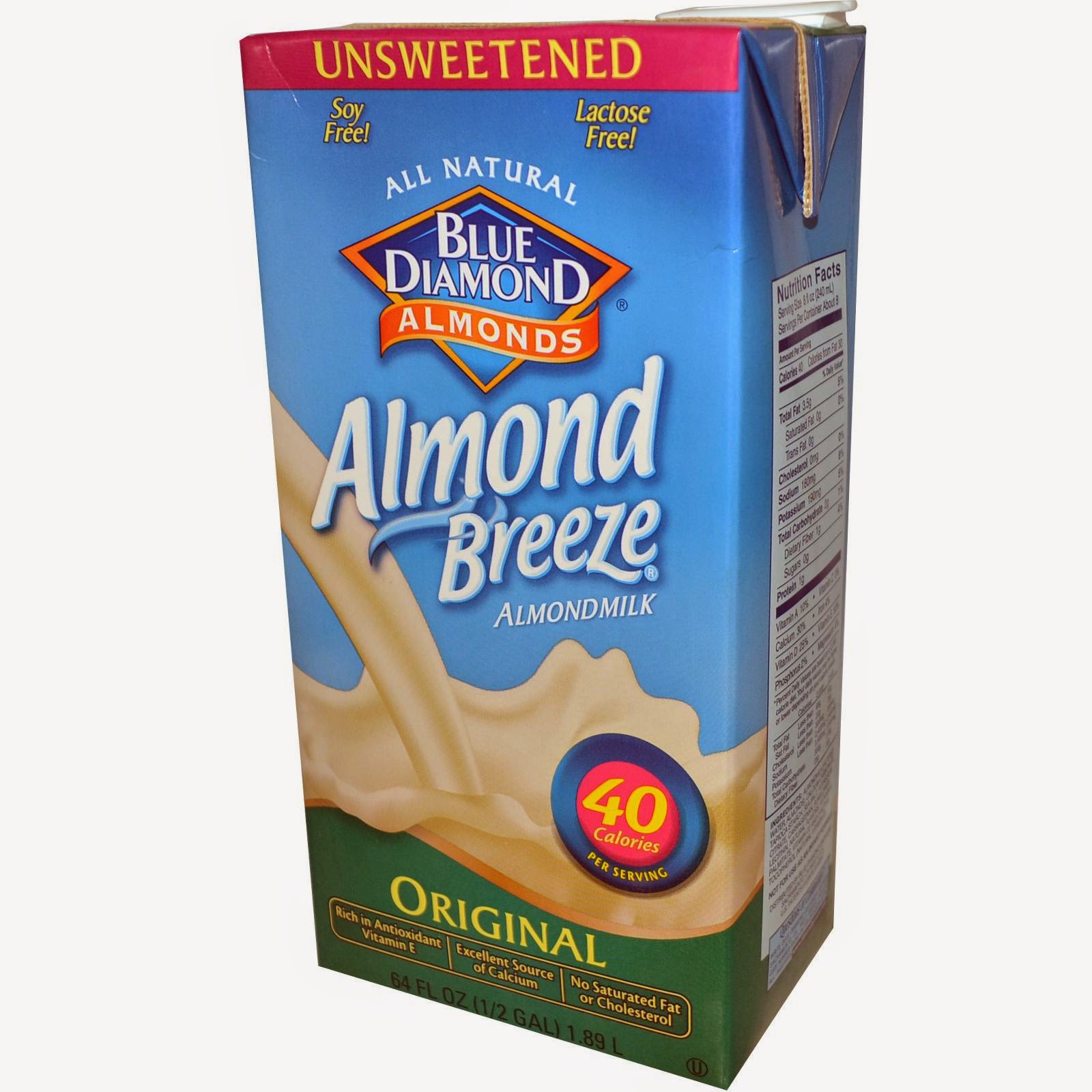
I’m going to try, with probably limited success, to summarize results rather than reasoning for most of this consumer class action case in which certification of a California class was granted, and focus on the interesting damages model bits.  Werdebaugh sued Blue Diamond for listing the sweetener on its almond milk as “evaporated cane juice” instead of sugar, and using “All Natural” when in fact the products allegedly contained synthetic ingredients.
Werdebaugh had standing to bring his claims for damages, but not for injunctive relief.  His deposition testimony clearly showed that he wouldn’t have bought Blue Diamond almond milk had he known about the alleged misbranding, which sufficed.  He testified that he was unfamiliar with the product, but “the ‘all natural’ label stood out” to him. He “stood at the shelf and saw this packaging and picked it up, read the labels, and made the purchase,” and the “all natural” label was a substantial reason why.  Werdebaugh further testified that he was concerned about seeing “evaporated cane juice” on the ingredients list, but did not know that it is “the equivalent of table sugar.”
Blue Diamond argued that it was implausible for Werdebaugh to believe that the products didn’t contain added sugars, since the nutrition facts panel that the almond milk contained 20 grams of sugars, and anyway he didn’t know what “evaporated cane syrup” or “dried cane syrup” was either so his purchase decision wouldn’t be affected by using those terms either.  The court disagreed.  The ingredients wouldn’t necessarily have indicated the presence of added sugars; Werdebaugh testified that he thought the 20 grams of sugar in the product he purchased was not added sugar, but rather was “an actual squeezed element of an almond that naturally occurs.”  Though he testified that “dried cane syrup” wouldn’t have affected his purchase decision, that just showed that he didn’t know what it was.  He’d still introduced sufficient evidence of reliance on both statements.
Ascertainability: not a problem, especially limited to a California class.  The class was defined based on objective criteria, and that was enough.
Numerosity: but of course.
Commonality:  Blue Diamond argued that what’s material varies from consumer to consumer.  “The law is to the contrary…. Whether Blue Diamond’s label statements constitute material misrepresentations does not depend on the subjective motivations of individual purchasers, and the particular mix of motivations that compelled each class member to purchase the products in the first place is irrelevant.”  Blue Diamond also argued that the allegedly deceptive labeling statements were not specifically regulated and, therefore, were not material, since the only official guidance came from “non-binding FDA policy statements.” But at this stage, the only question was whether materiality was a common question.  Finally, Blue Diamond argued that “All Natural” had no common definition and thus was not susceptible to common proof.  But cases using that reasoning generally involved representations that differed for each class member, such as representations made by doctors prescribing drugs. Here, the alleged misrepresentations were the same to each calss member, so the objective inquiry into whether “a reasonable consumer would attach importance” to Blue Diamond’s label statements was a question common to the class.  And, unlike the Astianacase cited by Blue Diamond, where over 90 different products with different ingredients and different ad campaigns were challenged, Werdebaugh was only challenging seven products, all based on their inclusion of the same ingredient (potassium citrate).  Blue Diamond didn’t contend that differences in its products’ labels would cause prospective consumers to understand the representations differently.
Typicality: Blue Diamond objected to including products Werdebaugh didn’t buy—he only bought Blue Diamond Almond Breeze Shelf Stable Chocolate Almond Milk.  But every other product included in the class definition was an almond milk product, and each bore one or both of the same misbranded label statements. They were different flavors, but the legal theory was identical for all claims. That’s typicality.
Blue Diamond then argued that Werdebaugh’s claims were atypical because he didn’tread or review the back label, which contained two of three “All Natural” statements.  But Blue Diamond didn’t persuade the court that he needed to read and rely on all alleged misrepresentations; even if he didn’t read two repetitions of “All Natural,” “he read the third, and Defendant provides no reason to distinguish between the three statements.”  Reading it on the package once was enough for typicality.
Nor were defenses unique to Werdebaugh likely to become the focus, since under California consumer protection law “individual experience with a product is irrelevant” because “the injury under the UCL, FAL and CLRA is established by an objective test.” Regardless of his particular motivations for purchase, “he shares with the proposed class the same interests in determining whether Blue Diamond products were deceptively advertised and labeled.”
Adequacy: yep.
Predominance: not for a nationwide class per Mazza, but for a California class.
Blue Diamond then argued that there was no predominance because Werdebaugh hadn’t identified an appropriate damages model, an argument the court analyzed in detail.  An appropriate damages model under the Supreme Court’s recent Comcast ruling must measure only damages attributable to the defendant’s conduct.
Restitution was available under California consumer protection law to compensate the purchaser for the difference between a product as labeled and the product as received.  For this, Werdebaugh needed a damages methodology that could determine the price premium attributable to Blue Diamond’s use of the labeling statements “All Natural” and “Evaporated Cane Juice.” 
The court rejected a full refund model, because it was wrongly based on the assumption that consumers receive no benefit whatsoever from purchasing the accused products.  
Then, the court turned to Werdebaugh’s expert’s price premium model, which compared the price of the accused products to allegedly comparable products without the challenged statements and calculated the entire price difference as restitution.  The court also rejected this model. “[The expert] has no way of linking the price difference, if any, to the allegedly unlawful or deceptive label statements or controlling for other reasons why allegedly comparable products may have different prices.”  The comparison product (a Whole Foods house brand) itself included the objectionable ingredient potassium citrate; the label listed “organic evaporated cane juice” as an ingredient until 2013; and the alternative was currently priced the same as the challenged Blue Diamond version at Whole Foods stores in San Francisco and Palo Alto. Werdebaugh’s deposition testimony also indicated that consumers typically pay a premium simply by buying from Whole Foods, which the model didn’t account for.  The price premium model just calculated what the price difference was, without tying it to a legal theory; it didn’t account for factors that might lead consumers to prefer Blue Diamond over “other identical products.”  These factors could include “brand loyalty or quality differences between brand and generic products.”  (If they’re identical, why the brand loyalty?)
However, a regression model saved the day (or ruined it, if you’re Blue Diamond).  By controlling for commonly recognized factors associated with sales—“price of the product, prices of competing and complementary products, income, advertising, seasonality, and regional differences”—as well as by taking into account differences in sales of the products before and after the “All Natural”/“evaporated cane juice” labeling, a more precise measure of damages could be calculated.
Blue Diamond argued that this model would raise individual issues not subject to common proof because consumers experience price variation across “products, sales channels, retailers, geographic regions, and time.”  For example, “the price for the top selling shelfstable Blue Diamond almondmilk product in 2012 varies by 26% across sales channels, by 31% across the top three retailers, and by 40% across cities in California.” But that’s kind of what the regression controls for, and Blue Diamond didn’t explain how these differences would affect the measure of damages—“price changes within regions that correspond to the introduction and/or removal of the allegedly misleading label statements.”  Even if a carton costs $4 in San Francisco and $3 in Sacramento, that wouldn’t necessarily affect damages—the price might have risen by a constant amount or by a percentage, but either way it could be calculated classwide.  (This would also be easier with a class limited to California instead of nationwide.)  If Blue Diamond introduced evidence that the price increase attributable to the allegedly false labeling would be 20% in San Francisco and 2% in Sacramento, the model might well fail under Comcast, but Blue Diamond didn’t explain why that would happen.
Blue Diamond also argued that retail prices varied and that it didn’t set retail prices, and that using a weighted average price measure would undercompensate some consumers and overcompensate other, but that didn’t address the way the model purported to measure price changes from the allegedly false advertising.  The model controlled for regional differences.  Comcast doesn’t require calculations to be exact, only that a model supporting a damages case has to be consistent with the theory of liability, both at certification and at trial. Even with regional differences, the regression model was sufficiently precise under Comcast, and could control for non-liability-producing factors.
Blue Diamond said that the methodology was too vague, but at this stage what is needed is a workable model, not necessarily a model that actually works. “Comcast did not articulate any requirement that a damage calculation be performed at the class certification stage,” so the fact that the expert had yet to actually run the regressions and provide results, and would need discovery to do so, wasn’t necessarily fatal.  Blue Diamond couldn’t succeed by attacking the specific variables of the regression the expert posed, if the tool of regression analysis itself was appropriate, as it was.
Superiority: yep.
Posted in california, class actions, consumer protection, damages, http://schemas.google.com/blogger/2008/kind#post | Leave a comment