No nominative fair use or dilution dismissals if plaintiff pleads the elements?


Valley Forge Military Academy Found. v. Valley Forge Old Guard, Inc., No. 09–2373, 2014 WL 2476115 (E.D. Pa. Jun. 2, 2014)
Nominative fair use doesn’t have to work this badly, guys!
Valley Forge Military Academy Foundation operates the Valley Forge Military Academy, a college-prep boarding school and a two-year college. The Foundation and coplaintiff Valley Forge Military Academy and College Alumni Association alleged that they own/license various federally registered and common law marks, including “Valley Forge Military Academy,” “Valley Forge Military Academy & College Alumni Association,” and “Valley Forge Experience.” The Foundation also alleged goodwill in marks such as “Lieutenant General Milton G. Baker Founder’s Society,” “Baker Founder’s Society,” and “Founder’s Society.”
Valley Forge Old Guard is a nonprofit that has criticized plaintiffs over the past few years. Plaintiffs alleged that Old Guard used their marks to solicit funds from parents and alumni. Plaintiffs submitted two letters from parents of students at the Academy allegedly showing actual confusion about the distinction between the Old Guard and the Alumni Association. The Alumni Association’s mission statement reads: “[T]o enhance the quality of the ‘Valley Forge Experience’ and to contribute to the welfare and future of the finest institution of its kind in the world through leadership, recognition, contribution of resources, and the investment of time.” The Old Guard’s mission statement reads: “[T]o enhance the nature of the ‘Valley Forge Experience’ by contributing to the welfare, viability, and future of the Valley Forge Military Academy and College and its Corps of Cadets through leadership, the investment of time, the proper management of tangible resources ….”
After a C&D, the Old Guard changed its name from the Valley Forge Old Guard to the Founder’s Old Guard, and changed its website from http://www.valleyforgeoldguard.org to http://www.foundersoldguard.org, adding a disclaimer that disavowed any affiliation between the Old Guard and the Alumni Association. Plaintiffs were unsatisfied, and contested the use of “Founder’s” in the new name. They sued for trademark infringement, false advertising, and dilution.
The court rejected defendants’ arguments that their speech wasn’t commercial.  The court first quoted the general standard for commercial speech: basically, is it an ad for a product/service by someone with an economic motivation for the speech—is it speech proposing a commercial transaction? But it quickly pivoted to the more expansive definition used in Lanham Act cases.  (Cf. Riley v. Nat’l Fed’n of the Blind, finding fundraising speech for nonprofits to be noncommercial.)
Plaintiffs alleged that defendants competed with the Alumni Association for fundraising and alumni services, and that they used plaintiffs’ marks in an ad referring to a specific service: the Old Guard emailed 4000 people promoting the Old Guard’s alumni services, with an economic motivation—they solicited funds.  This plausibly alleged that the Old Guard proposed a commercial transaction, not another type of speech.  Thus, their “appropriation of Plaintiffs’ marks for commercial purposes” was not protected by the First Amendment.
Unsurprisingly, the court then rejected defendants’ arguments that they weren’t using plaintiffs’ marks to sell goods or services.  “Services” is a broad term that has been applied to lots of defendants providing noncommercial public/civic benefits.  United We Stand Am., Inc. v. United We Stand, Am. N.Y., Inc., 128 F.3d 86, 89 (2d Cir. 1997); Villanova Univ. v. Villanova Alumni Educ. Found., Inc., 123 F. Supp. 2d 293, 306 (E.D.Pa. 2000) (applying Lanham Act to alumni organization and finding that while “they are not commercial entities, the parties to this action are now in competition in that they offer similar services and engage in similar activities”); Am. Diabetes Ass’n, Inc. v. Nat. Diabetes Ass’n., 533 F. Supp. 16, 20 (E.D. Pa.1981) (applying Lanham Act to two organizations that solicit donations to find services for diabetics). The services here were provided to the Academy’s alumni.
Likely confusion: defendants argued that their messages criticized plaintiffs, and thus couldn’t be confusing.  But plaintiffs alleged that defendants were their competitors in the market for fundraising and alumni association services, and directed their activities towards the same customers (parents and alumni).  Note that this is clearly nonresponsive!  However, the court also gave weight to plaintiffs’ allegation that “much of the information that Defendants distribute is not, in fact, critical of Plaintiffs.”  Nor could defendants’ website disclaimer be ruled sufficient as a matter of law, given the other contents of the website, such as the similar mission statement, “text of the Academy’s alma mater, and pictures of the Academy’s campus.”  Plus, there was no showing that defendants used disclaimers in their other challenged activities, such as email and press releases. And plaintiffs alleged incidents of actual confusion.
Nominative fair use: defendants argued that they were only using the marks to identify the plaintiffs as the subject of their criticism.  (I don’t see how this works given the name of defendants’ organization.)  But “[t]he facts necessary to establish an affirmative defense generally come from outside of the complaint.” The three-part nominative fair use showing (the Third Circuit has its own special version) can only come after a plaintiff shows likely confusion.  Further factual development was required.
Dilution: Defendants correctly pointed out that the marks aren’t famous.  But the court, despite Twiqbal, accepted well-pleaded facts as true, and plaintiffs alleged that the marks “have been continuously used since 1928, have continuously been used to advertise and promote for Plaintiffs, have been used extensively by the press in connection with Plaintiffs, and are known throughout the nation and world as identifying Plaintiffs.” Comment: That’s not even close.  The court doesn’t mention whether plaintiffs pled that their marks were “widely recognized among the general consuming public,” and to contend that they are is entirely implausible. If a court accepts this weak tea at the pleading stage, I sure hope it makes fees available at the summary judgment stage. Hope springs eternal, I guess.
Defendants also argued that their uses were excepted from dilution liability by § 1125(c)(3).  But plaintiffs alleged that defendants offered competing alumni services and that there was source confusion, which defeated any exceptions. Note, however, that comparative advertising will generally be by someone in competition with the claimant and it is still categorically protected, and the statute also does not require that the comparative advertising be nonconfusing.  Still, to the extent that defendants were using the marks at issue as marks, dilution could apply in the counterfactual world in which the marks were famous, unless it’s a Chewy Vuiton situation in which the reference actually increases the connection between the plaintiff and the marks, which is plausible on these alleged facts (and isn’t even inconsistent with the more persuasive confusion theory!).
False advertising: defendants argued that they weren’t engaged in commercial advertising or promotion, but the court already found that they were engaged in commercial speech.  (Note: the conventional test here has three more elements besides that, though one—the requirement of commercial competition—might not properly survive Lexmark.) Anyhow, §43(a)(1)(B) “is broad enough to support, in the context of non-profit fundraising, a claim of false and misleading statements about the services represented by a protected mark.” Birthright v. Birthright, Inc., 827 F.Supp. 1114, 1138 (D.N.J.1993). There’s liability for misrepresentations not only in commercial advertising but also in the “promotion” of services, which plaintiffs alleged.
Posted in dilution, procedure, trademark | Leave a comment

islands in the stream: Netflix v. Verizon


Netflix responds to Verizon’s C&D. For those not keeping track, it started when Netflix started sending error message to certain Verizon customers experiencing playback difficulties, telling them that the Verizon network was slow. Verizon responded angrily, threatening suit and demanding details on which customers received these messages—but the letter was released publicly, which is itself an interesting strategic choice worthy of study. Netflix, unsurprisingly, continues to fight in the court of public opinion, releasing its own response to the C&D while also saying that the messages were part of a “test” scheduled to end soon.  Review question: after Lexmark, could there be Lanham Act liability for Netflix—sort of a noncompetitor, sort of a customer—for saying nasty things about Verizon?

Netflix error message indicating Verizon network is congested
Posted in advertising, http://schemas.google.com/blogger/2008/kind#post, standing | Leave a comment

Tough sledding: statements to industry-focused publication can be commercial speech


Skedco, Inc. v. ARC Products, LLC, 2014 WL 2465577, No. 3:13–CV–00696 (D. Or. Jun. 2, 2014)
The parties compete in the market for emergency medical rescue equipment, and are suing over false advertising. Plaintiff’s Sked is “an evacuation sled system designed to quickly evacuate wounded people from confined spaces, from high angles, in technical rescues, and in traditional land-based rescues.” Defendant’s Vertical Lift Rescue Sled (VLR Sled) “is an evacuation device that provides quick transport of a nonambulatory individual in a difficult rescue situation or a confined space.” Here, the court analyzes three of defendant’s false advertising counterclaims.
First, ARC alleged that Skedco claimed that the Sked sled was composed of “Low density E-Z glide polyethylene plastic[,]” commonly referred to as LDPE, that would begin to melt at 450 degrees F to 500 degrees F. In fact, ARC alleged, “publically available technical specification materials demonstrate that LDPE plastic generally starts to melt at the substantially lower temperature of approximately 248 degrees.” ARC attached an example ad flyer, and alleged that Skedco distributed it to third parties, precise identities and dates of distribution to be determined by discovery.
Skedco argued that this pleading flunked Rule 9(b). But ARC gave Skedco enough to prepare an adequate defense: it identified the allegedly false statement, its theory of falsity, and an example ad. Though it didn’t identify a time period or a recipient, or how/if a customer was deceived, the Rule 9(b) standards “may be relaxed where the circumstances of the alleged fraud are peculiarly within the [plaintiff’s] knowledge or are readily obtainable by him.” Skedco can figure out when it distributed its ad, and discovery is required for ARC to know to whom Skedco distributed it. As for deception, ARC sufficiently pled falsity syllogistically, which was enough to put Skedco on notice of the nature of the claim.
Next claim: “Skedco claims its cross-strap Cobra buckles are rated at 3,000 pounds, but this claim is materially misleading because the Sked sled cross-straps are likely to fail where said straps attach to the Sked sled, and that such failure is likely to occur at a significantly lower weight than 3,000 pounds.” ARC challenged similar representations about Skedco’s lift rope strength, claimed to be over 5,000 pounds when, according to ARC, the rope would pull the attachment grommets free from the Sked sled at a lesser weight. These were allegedly misleading claims, not literally false ones. Skedco argued that these claims were inadequately pled because ARC didn’t include any details about actual consumers being misled. But ARC identified the allegedly false statements and the reasons why they were allegedly misleading, and attached a relevant ad. “[T]he court finds it near impossible for defendant to allege which of plaintiff’s customers were actually misled by the advertisement without the benefit of discovery.” There was adequate notice of the claim. ARC also argued falsity by necessary implication (which seems like a valid argument to me, especially given the safety-related nature of the claims), but didn’t plead that; it could seek to amend. (I didn’t realize you needed to plead your precise subtheory of falsity! If you do, I don’t quite understand why the court allowed the misleadingness theory to proceed without allegations about survey evidence or other consumer reaction evidence.)
Finally, ARC challenged representations about Skedco’s loading speed. According to ARC, “Skedco’s Carston ‘Bud’ Calkin made assertions in his capacity as an executive and agent of Skedco in a published interview titled ‘Cleared for Takeoff,’ which appeared in the publication ‘Military Medical & Veterans Affairs Forum’ … that an individual person can have an injured person ready for transport in a Sked sled in a mere 20 seconds and that Calkin [who told the interviewer he was 75] could perform this ‘routinely,’ when in reality it takes significantly longer for an injured person to be loaded into and ready for transport into a Sked sled.” The interview appeared in close proximity to a paid Skedco ad. ARC alleged that in reality it takes substantially longer to load an injured person.
Skedco argued that statements a journalist attributed to a Skedco officer weren’t commercial speech. The journalist might not have been engaging in commercial speech, but “defendant did not bring a claim against the author.” Calkin’s statements highlighted new features of the Sked sled and explained their added benefits to customers. The magazine that published the article claimed to reach a “targeted mailing list” of “the military’s top leadership,” which is to say Skedco’s primary customer. “The court cannot find a purpose behind Calkin’s statements other than to promote his company’s product to potential customers.” Thus, the statements were commercial speech.
They also satisfied the rest of the test for “commercial advertising and promotion”: the parties competed; the statements were about the product; they were meant to influence readers of the article to purchase the Sked sled. Given the targeted audience, Calkin’s statements were disseminated sufficiently to the relevant purchasing public to constitute promotion. Thus, they were actionable under the Lanham Act.
Posted in commercial speech, http://schemas.google.com/blogger/2008/kind#post, procedure | Leave a comment

Is embedded advertising any good?


Negative take on “native advertising” from a purely advertiser-focused viewpoint. The author’s basic argument is that native advertising is essentially by definition unlikely to generate positive brand attention, because who the sponsor is will be forgettable. Query whether the “mere exposure” effect could help here—it might depend on whether the content is only relatedto the sponsor or the concerns of the sponsor’s target audience, or whether the sponsor is more thoroughly embedded: product placement for journalism. In the former case, I find the argument persuasive, but less so for the (ethically more questionable) latter situation where the brand is front and center.
Posted in advertising | Leave a comment

A little bit pregnant: miscounting pregnancy duration as false advertising


Church & Dwight Co. v. SPD Swiss Precision Diagnostics, GMBH, No. 14 Civ. 00585, 2014 WL 2526965 (S.D.N.Y. June 3, 2014)
C&D sued SPD for false advertising over its pregnancy test advertising. The court denied SPD’s motion to dismiss.
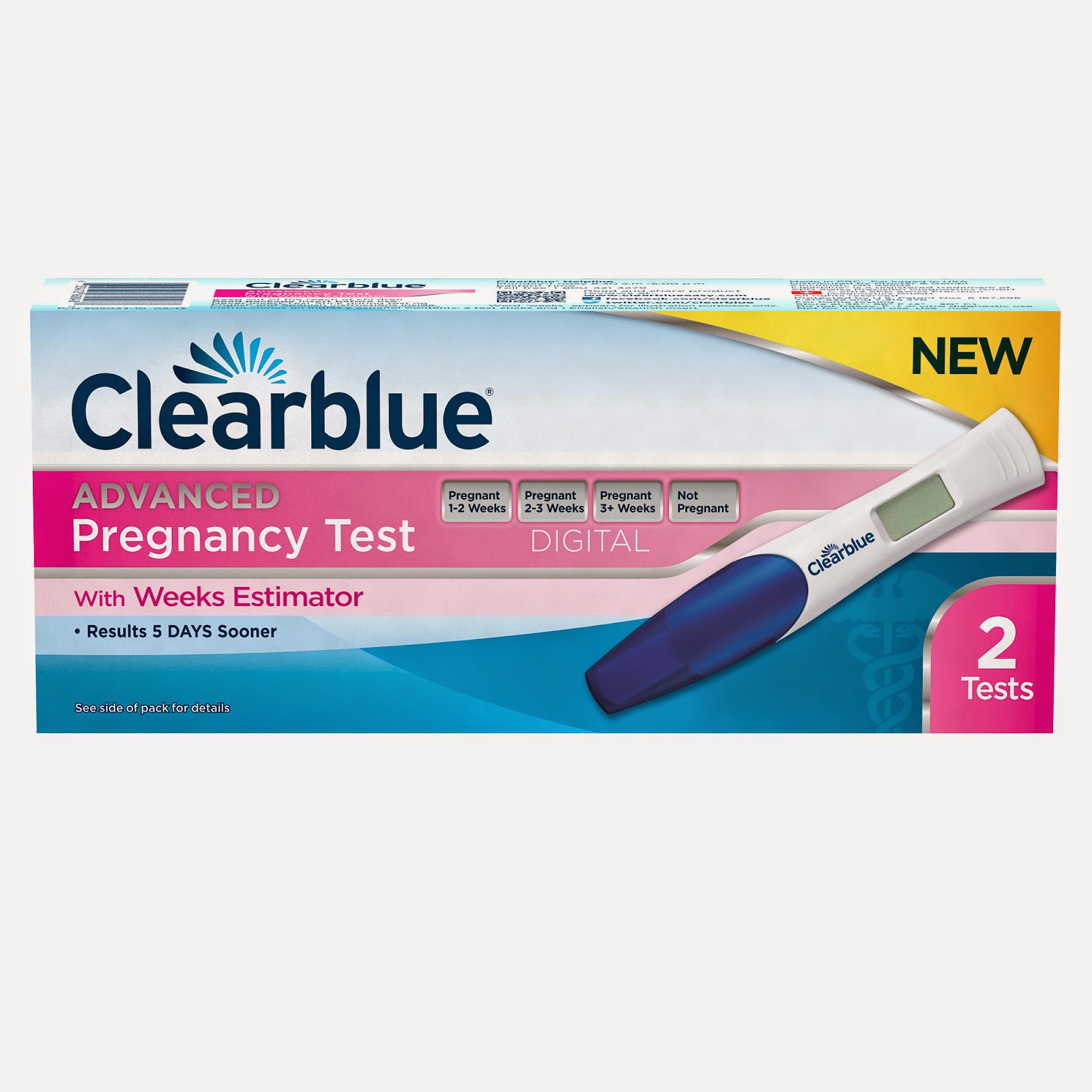
The parties compete in the market for home pregnancy test kits. SPD’s “Clearblue Advanced Digital Pregnancy Test with Weeks Estimator” is not just designed to detect pregnancy, but also to estimate the number of weeks that have passed since the user last ovulated. C&D’s basic claim is that the Weeks Estimator can’t be used to estimate the duration of pregnancy. The medical profession doesn’t use ovulation, but (allegedly universally, which comports with what I’ve seen) measures pregnancy from a woman’s last menstrual period (LMP). This occurs about two weeks before ovulation, on average. The court doesn’t explain why this is so important, but my Google search for the product confirmed my intuitions: consumers searching for this product will also get ads for abortion clinics, and the number of weeks LMP is vital both for the medically appropriate forms of abortion and for its availability; a woman misled into thinking she was two weeks less “pregnant” than she is according to the law could be tragically deceived. (I wonder what the reason was that the product wasn’t designed to add two to its estimate.)
SPD allegedly made false representations in various forms of advertising. C&D challenged the product name, along with graphics on the box in which the words “Pregnant 1–2 Weeks,” “Pregnant 2–3 Weeks,” and “Pregnant 3 Weeks” appear. In alleged violation of FDA directives, the indications for use statement (of which more in a bit) doesn’t appear in close proximity to the name, or in similar font size, or in bold font. Thus, the literal message “(or, at the very least, the necessary implication)” of the packaging is that the Weeks Estimator can tell a woman how many weeks she has been pregnant. 
Clearblue package with pregnancy estimates
There’s also a TV commercial with allegedly the same message:
A woman tells a friend that she is pregnant, to which her friend exclaims “Really?!” The woman holds up two fingers and says “two weeks.” After her friend asks whether she has already seen a doctor, the woman responds “Not yet,” holds up the pregnancy test stick, and says “but I just took this new Clearblue test.” The scene moves to a close up of the test stick, with the Clearblue logo, and a display window with the word “Pregnant” and “1–2 Weeks” immediately below that word. The pregnant woman then is heard to say “It’s like two tests in one!” The scene then changes to a graphic reflecting the three display windows noted above, while an announcer states “the new Clearblue pregnancy test also estimates how many weeks.” At the end of the commercial, the announcer concludes “Weeks Estimator. Only from Clearblue.”
(Here’s the Spanish version.)
SPD’s website, until a recent change, referred to the Weeks Estimator as “the ONLY Pregnancy test that Estimates Weeks” next to a graphic of a test stick with “Pregnant 1–2 weeks” in the display window, with similar statements repeated farther down on the page. The page also said that the Weeks Estimator “estimates the number of weeks,” is “Like 2 Tests in 1,” and notes that 78% of women surveyed believe it is important to know “how far along they are.” The page then said that the Weeks Estimator “estimate[s] how many weeks based on time since ovulation,” which was allegedly deceptive because time since ovulation is not the standard used to measure pregnancy. (But a consumer might not know that!) At the bottom of the page, SPD included the FDA’s indications for use.
Point of purchase displays and retail ads also were allegedly deceptive—each display tray said either “First pregnancy test to estimate weeks” or “How far along are you?” The ads didn’t include the FDA’s indications for use statement or disclose that the product measures time since ovulation. A web ad similarly promised “Clearblue Advanced Digital Pregnancy Test with Weeks Estimator. Is there a baby on board? How far along? Find out!”
Finally, C&D challenged a press release that claimed that the product was “approximately 93 percent accurate in estimating the number of weeks based on time since ovulation,” whereas the package insert says that “Agreement of Weeks Estimator results with clinical findings ranged widely from 45%–99%.”
SPD argued that this was all the FDA’s business. SPD’s product is a Class II device: it doesn’t need advance approval but can be subject to “special controls.” Under § 510(k), SPD submitted a premarket notification seeking approval as substantially equivalent to an existing product; §510(k) clearance doesn’t “in any way denote official approval of the device.”
The FDA issued a Clearance Letter stating that it had “determined that there is a reasonable likelihood that [the Product] will be used for an intended use not identified in the proposed labeling and that such use could cause harm.” The letter required that, in the package insert, the “Weeks Estimator results should not be expressed as ‘weeks pregnant’ and should only be explained as the number of weeks that may have passed since ovulation.” In addition, it required a chart in the package insert explaining that a doctor would date the pregnancy roughly two weeks longer than the Weeks Estimator, because doctors use LMP. The letter required the “indications for use” statement be “prominently displayed in all labeling, including pouch box and carton labels and instructions for use, in close proximity to the trade name, of a similar point size and in bold and shall be conveyed accurately—including any limitations—in all promotional materials.” The statement included:
This test cannot be used to determine the duration of pregnancy or to monitor the progression of pregnancy. Your doctor determines how many weeks pregnant you are based on the first day of your last menstrual period and ultrasound results. This test provides a different estimate that cannot be substituted for a doctor’s determination of gestational age. Only your doctor can provide a reliable estimate of gestational age and only your doctor can monitor pregnancy progression. You should seek qualified prenatal care if you suspect you are pregnant.
Chart for interpreting “Pregnant 1-2” etc.
The Clearance Letter finished by noting, among other things, that “FDA’s issuance of a substantial equivalence determination does not mean that FDA has made a determination that your device complies with other requirements of the Act or any Federal statutes and regulations administered by other Federal agencies.”
C&D communicated with the FDA, raising many of the same concerns as those in this lawsuit. Then it decided that it needed to sue.
The court first determined that SPD’s communications with the FDA weren’t subject to judicial notice as public records of agency actions. Instead, they were internal documents that SPD treated as confidential (and tried to preserve as confidential even through this litigation). Their authenticity wasn’t beyond dispute, especially as to minutes of a teleconference prepared by SPD purporting to memorialize the call. “Even the documents embodying communications between SPD and the FDA are subject to interpretation such that discovery may illuminate their meaning.”
The court turned to FDCA preclusion of Lanham Act claims. This isn’t subject to a bright-line rule. When faced with two conflicting federal statutes, courts try to give maximum possible effect to both. Also, the differing aims of the two statutes matter. The Lanham Act aims to “protect[] commercial interests and prevent[] unfair competition that arises due to false advertising,” while the FDCA is “generally not focused on the truth or falsity of advertising claims but is instead directed to ensuring that drugs and medical devices are safe, effective, and not misbranded.” Still, the statement in Lexmark that courts have a virtually unflagging obligation to hear and decide cases within their jurisdiction wasn’t dispositive: because of the lack of a private action under the FDCA, there’s a necessary tension with the Lanham Act, and courts therefore limit the substantive scope of Lanham Act claims. This isn’t jurisdictional, or a prudential doctrine, but “an implied statutory limitation to the Lanham Act itself by virtue of its potential conflict, in some situations, with the FDCA.”
The basic rule is that “courts refuse to usurp the FDA’s role in the enforcement of the FDCA and the FDA’s authority under that statute.” That has to be figured out case by case. The FDA’s authority here focuses on avoiding misbranding by providing “adequate directions for use” of a medical device, with respect to its intended use. In this case, the FDA found that there was a reasonable likelihood that the device would be “used for an intended use not identified in the proposed labeling” and therefore imposed limits on how SPD could market the device. It specifically provided that “[p]erformance of the Weeks Estimator should not be displayed” on the box labeling and that users should be directed to the package insert for more information on that point. And then it set forth a number of requirements for the package insert, including not expressing the result as “weeks pregnant” but instead as weeks since ovulation. The FDA also drafted the indications for use, including two paragraphs on the Weeks Estimator feature, and required that they be prominently displayed in all labeling and in all promotional materials.
Given this, SPD’s argument that the claims here involved the FDA’s authority over the marketing of the product was “not wholly without force.” Nonetheless, resolving the complaint didn’t necessarily involve direct application of the FDA’s regulations. The core of the Lanham Act claim was that SPD was falsely marketing the Weeks Estimator as capable of estimating the duration of a pregnancy, but it couldn’t do so because what it measured, time since ovulation, was not pregnancy duration. (The 93% accuracy claim was similar for these purposes.) Thus, though the FDA’s determination that the product doesn’t measure the duration of pregnancy was evidence of falsity, C&D’s claim would exist even if the FDA hadn’t made that determination.
The court’s job, in this interpretation, would then be to determine the message conveyed to consumers, and then determine whether that message was false or misleading. On the current record (which could be supplemented), neither of those determinations required the interpretation, application, or enforcement of the FDCA, the FDA’s regulations, or the Clearance Letter. “C&D’s claim is independent of the FDCA and FDA regulations and would exist even in their absence.” Many courts have considered the FDA’s positions on scientific findings as evidence of falsity.
The mere fact of regulation in an area doesn’t inevitably lead to preclusion. “Indeed, were courts unable to look to agency expertise in this fashion or if the mere fact that an agency had regulatory authority in an area was sufficient to invoke preclusion, the doctrine of primary jurisdiction … would be incoherent.”
Cases finding preclusion were distinguishable—here, there was no need to apply an FDA regulation to determine whether an ad was false. Nor was there an actual conflict between a regulation and the claims. In Pom Wonderful, the rationale was that the FDA scheme provided a basis to conclude that the product name had been authorized by the FDA, but the Clearance Letter was not authorization of the Weeks Estimator’s box, label, or advertising. No similar conflict was apparent from the current record.
The court noted that the Clearance Letter also required many of its disclosures in the package insert, not the box. “[I]t may be that the box—even if approved by the FDA when taken in conjunction with the package insert—is misleading to the consumer at the time of purchase due to the unavailability of the package insert at that time.” This is where the different purposes of the Lanham Act and the FDCA had the greatest bite. “[F]rom the perspective of the FDA, so long as the consumer is adequately informed about the use of the Weeks Estimator post purchase and does not misunderstand its results, the FDA’s safety concerns are addressed.” But that was cold comfort to a competitor, because the clarity would come too late to avoid a deceptively induced purchase.
Although there was potential conflict between the FDA’s views and some hypothetical judgment for C&D given the Clearance Letter’s directive that “[p]erformance of the Weeks Estimator should not be displayed on your box labeling,” that FDA statement was ambiguous, and had to be read in context with the FDA’s concerns about intended use. The statement could mean a directive that SPD remove specific product claims it had made in the proposed labeling, and nothing in the letter demonstrated that the FDA actually approved the box and labeling that SPD put on the market, let alone the other promotional materials. “Viewed in the light most favorable to C & D, the Court cannot view this portion of the Clearance Letter as preemptive approval by the FDA of any advertisement for the Weeks Estimator—no matter how misleading that advertisement may be as to the product’s capabilities—so long as it includes this indications for use statement.”
As you might expect, the court also rejected SPD’s primary jurisdiction argument. Primary jurisdiction involves deferral, not dismissal, giving an agency the first bite at the apple. But the FDA has already “provided its views as to the principal scientific question that this Court might refer to it: whether the Weeks Estimator can measure the duration of pregnancy based on the last menstrual cycle.” Its answer is no. And the FDA has even provided its opinion on whether a measure of pregnancy based on date of ovulation is the standard most commonly applied by physicians. Also no. The court’s task was to evaluate potential consumer confusion from the product’s marketing, which is within a court’s core competence. “The Court has the agency’s answer on the primary matter for which its technical expertise may be invoked, strongly suggesting primary jurisdiction is not applicable.” The §510(k) process was apparently over; there was no need to wait for more. There was little danger of an agency ruling inconsistent with a court judgment. While C&D made an informal application to the FDA requesting review of SPD’s compliance with the Clearance Letter, the FDA hadn’t indicated that it would take action or provided a timeline. On this record, primary jurisdiction didn’t justify delay.
The parallel state law claims also survived.
Given that Pom Wonderful might change things, and that C&D was willing to fold injunctive relief into the merits process, the court determined that it would await the opinion in that case before making any further determination.
Posted in fda, http://schemas.google.com/blogger/2008/kind#post, preemption | Leave a comment

Copyright Society: first sale


Digital First Sale
Panelists: Karyn T. Claggett, U.S. Copyright Office
History repeating: we studied digital first sale before studying digital first sale was cool.  PTO is now having a series of roundtables on these issues—next will be in Boston, June 25.
What has changed since 2001?  Is there tech that could now overcome issues we identified about expanding digital first sale?  Is there “transporter” technology to move a material object and not leave a copy at the point of departure?  ReDigi argued that it had created that kind of tech.  Court disagreed.  It didn’t matter whether there was an additional copy, because the issue was that the reproduction right—a new copy—was implicated.  There was no move, and that was the most significant aspect. But as a policy matter, transporter tech would be very important. (Suppose we do get a transporter.  Could you carry a book through a portal without infringing?)
Courts are confused about sale/ownership.  Cases like Vernor v. Autodesk; international law (CJEU UsedSoft case) doesn’t comport with how we’ve considered the issue of ownership v. licensing.  If courts are confused, consumers are even more confused.
John Villasenor, Brookings Fellow and Professor of Electrical Engineering and Public Policy at UCLA
What would happen if we had digital first sale?  Consider 1 million music fans who each like to listen to a particular song that last 3 minutes once a week.  How many copies of that song would there need to be for there to be a good chance that you could borrow it and listen it at a time of your choosing, then give it back?  Answer: a few hundred.  Could we restrict transfers so you can’t loan a work for a few seconds?  If you try to draft language to allow reasonable transfers but restrict others, it turns out to be impossible, or at least he hasn’t seen it.   (I guess we’re about to conduct a natural experiment on this w/software in the EU.)
We’ve already moved to a licensing based system of digital distribution. When there’s no sale, then there’s no issue of §109 expansion, because there’s no ownership.  In today’s license-based ecosystem, permissible downstream uses are addressed by a mix of contract and IP.  (And consumer protection law, if you live in the EU.)  Much of the argument for digital first sale stems from consumer frustration about limits.  There is a legit concern consumers face with their ability to dispose of works; we should acknowledge those concerns.  You can get more content now than 5-10 years ago, but that doesn’t erase the concerns about the messaging we give consumers. 
Consumers who buy copies of digital works are often subject to complex agreements saying they’re licenses.  If you asked a person on the street what it means if you hit the “buy” button for a movie, there’s an enormous amount of confusion (RT: where “confusion” means “beliefs I don’t like”), and that’s not on them. There is at least an ethical and possibly a legal obligation under deceptive marketing laws to properly inform consumers about what they’re getting. This should not be addressed through copyright law, or through law altering the kinds of agreements providers are allowed to offer consumers, but it is an important issue. Solving the problem of better disclosure will go a long way to put to rest the clamor for a digital first sale doctrine. Market forces would lead to license-based content that would give consumers more options than they have. Letting market develop on its own, not one size fits all statutory approach.  Licenses could explicitly be designed to permit reasonable downstream dispositions.  Could emulate the rules about tangible copies.
(This is an interesting approach, and has a fair amount of logical force.  The problem it will face is that disclosures, as a class, struggle to work even when the consumer is motivated and attentive to the relevant information.  Consumers will not be motivated to attend to this information, and that means it will be all but impossible to “educate” them about the terms the copyright owner would like to impose.  I do not believe that it is possible to have your cake and license it too here.  There’s a reason the button doesn’t say “license.”  It says “buy” or “rent.”  And I expect it will continue to do so.)
Janet Cullum, Cooley LLP
ReDigi did not avoid the cloud model. Suppose you have a legit copy, stored in the cloud.  You transfer your account to me, losing access while I have it, and I listen to the copy. ReDigi decision itself doesn’t put that off limits.  Contracts?
Apple and Amazon are thinking about how to facilitate this consumer desire to be able to resell their works. Patent applications: Apple has contemplated a Bitcoin-like encryption model, where your digital copy needs a key to access.  To transfer for sharing/sale you’d give that key to the next user.  Why would Apple contemplate this?  These reflect desires to create a userbase/keep it happy. Walled garden! You’ll buy more music/more devices. 
Qwest TV commercial, circa 1999: In the middle of nowhere, small motel with few amenities: but all rooms have every movie ever made, in any language, anytime, day or night.  The future is here! Does ownership make sense? Or should I just rent/stream?  Like renting a Zipcar.  In the future, will consumers tell themselves they don’t need to possess anything, either digitally or physically, because they can get anything, any time, in a seamless fashion?
(RT: Note the implicit assumption that there is a fixed pool of creators who create stuff, and users who consume stuff, and never the twain shall meet, certainly not at the point of fair use. How one crosses over to become a creator is an exercise left for the reader—or should I say the renter.  And that’s even setting sociology/psychology aside, though a renter class behaves differently than an owner class for those reasons as well.  Another observation: if the people in this room buy this story, then they really should go for net neutrality. A country in which our internet service is much slower and more expensive than that in other developed countries is not one where it makes sense for consumers to switch and be at the mercy of Verizon.)
Streaming probably won’t eclipse all models—slower in books than in music. Cons: Economic model isn’t sufficient for compensation right now, even though pros are that consumers discover more works, lower manufacturing costs, and possible replacement for piracy.  Consumers have to give up resale right; depend on provider keeping things current/having internet access. But the pros for them are greater: vast quantities of content, convenient.
Studios and labels are winners: broader audiences, cut deals with streaming platforms that give them increased control—generate royalties, ownership interest in some platforms.  To the extent platforms are successful, they too reap economic rewards.  (I wonder how the Hachette/Amazon fight works as evidence here.  The platforms love not studios/publishers/etc.)
Smaller players have it harder: they don’t have the bargaining power that large legacy rightsholders do.  NYT: trade groups representing 1000s of independent labels and musicians appealed to the EC, accusing YouTube of unfair contracts for a planned music service, and threat to block labels’ content if they don’t sign.  Am Ass’n of Indep Music has asked FTC to stop YouTube from blocking its members’ content, abuse of a dominant position.
For streaming services: profitability challenges are huge.  50,000 foot view—if they can continue this kind of growth, they can monetize audiences.  People wondered whether Facebook could make money not long ago. ASCAP consent decree must be revamped.  Tensions in marketplace: Pandora won case on whether rightsholders could pull out from streaming.  Ultimately, regulation + market will get us past the profitability challenge.
Q: if there’s digital first sale, what prevents HathiTrust or other mass digitizers from selling their copies?
A: Nothing.
Claggett: concern would be if they’re lawfully made copies, they could be sold/resold.
Interplay between contracts and exceptions—should contract be able to override fair use?  Many communities argue we should have presumption in favor of exceptions so contract couldn’t trump them.
Q: what about the legal force of the “buy” statement on the button?  If they present it as a sale, don’t consumers have the right to treat it that way?
Villasenor: good case law on the difference between license and sale from 9th Circuit, though Vernor is specific to software. UMG v. Augusto: UMG distributed promo CDs, the court rightly found that recipients weren’t bound by the statement on the CDs that they were promotional.  Contract providers have a need for simplicity. But they pay a downstream price. Content providers would do us/themselves a service by providing more clarity that they’re not selling ownership; lack of clarity annoys consumers, gives consumers reasons to complain to legislatures, and gives plaintiffs ammunition to say they’re owners.  Judge/jury’s reaction to a big “buy” button is of concern.
Claggett: EU case: found that there was actually a sale.  It may be claimed to be a license, but court found it to be a sale for, among other things, policy reasons—otherwise there’d never be a first sale if even unlimited licenses were found to be just licenses and not sales.
Cullum: typical consumer—but that case will never be brought.  Harder to bring a class action.  Intermediary drives the case law: who’s making the market? Harder to predict in that context.
Q: how do you counsel clients in the EU?
Cullum: you have to look at local law.
Villasenor: extraterritorial recharacterization of what the content owner thought were licenses as sales is of concern, especially given Kirtsaeng.
Claggett: look at key aspects of UsedSoft case that made it sale.  Are there additional restrictions on licensors you could put?
Villasenor: without agreeing w/the decision, the court cited the perpetual nature of the license as dispositive in terms of recharacterizing. 
We aren’t ever confused when we rent cars about whether we actually own things, even though the car contract is long. Companies could do a lot to provide more clarity/flexibility if they wanted to, but they shouldn’t be forced to, but they could distill messages to consumers.  (RT: Yeah, because when you rent a car you return it, and it’s gone. That’s not like the Placebo track I bought eight years ago, which lives to this day in my iTunes.  Try to distill the message that supposedly needs to be conveyed here, which is quite distinct from the message Hertz sends you: it’s yours forever, but you don’t own it.  I don’t think that works as well.  I’m also perplexed by the idea that it’s shocking that a perpetual license should be characterized as a sale, since the very reason you want to end the transaction having purchased access to the content forever is so that you won’t lose it for failing to pay the rent: conventionally speaking, you wish to own it.)
Villasenor continues by noting that content owners would love to stop selling things across the board, but that would create various provisions.
Claggett: there are arguments for giving various rights/privileges to the lawful possessor of content, whether or not it’s owned.
Cullum: evolution to expectation of “free.”  Production cost is cheaper, but that expectation must be changed—and she thinks it will, because business models can provide value-adds like prepopulated playlists and additional services that are worth paying for and can be ratcheted up in price over time until they start making lots of money. 
Posted in copyright, http://schemas.google.com/blogger/2008/kind#post | Leave a comment

Copyright Society: recent developments (but not the most recent)

This panel had the misfortune to occur just as the Second Circuit released HathiTrust.  More on that to come, obviously.

Recent Developments in Copyright Law
Panelists: Robert W. Clarida, Reitler Kailas & Rosenblatt LLC
Thomas Kjellberg, Cowan Liebowitz & Latman, P.C.
Snow glitter globe copyright: Pan v. Kohl’s (S.D. Ohio 2013).  Sculptural work was registered. 12(b)(6) motion was denied on copyrightability/substantial similarity.  §43(a) claims as well.   
Though it’s just a Santa, and we have to filter out the stereotypical elements of a Santa, there could still be copying of the specific elements.  Even after filtering, there are myriad ways to portray a Santa.  There could be substantial similarity because of virtually identical shape, height, circumference, hats, scarves, eyes, noses, mitten hands—an ordinary observer would overlook the differences.
Pan’s Santa

Kohl’s Santa
Hobbs v. John (7th Cir. 2013).  Elton John’s “Nikita”: affirmed 12(b)(6) dismissal.  P wrote song “Natasha,” on similar theme.  Idea/expression, scenes a faire, etc.  Combination of elements that aren’t protectable can be protectable, but that doesn’t mean that you can’t dismiss the case.  Why was a UK plaintiff against a UK defendant in a jurisdiction with hostile case law?  Like Nikita, we’ll never know.
Petrella: fine for © owner to defer suit until she can estimate whether the game is worth the candle.
Court expressly doesn’t reach claim accrual, though 9 circuits have adopted discovery rule and not injury rule.
Capitol Records v. Harrison Greenwich (Sup. Ct. N.Y. County 2014): statutory period for NY copyright is 6 years.  Restaurant used Bee Gees music as background on website without license.  Found out in 2009, didn’t sue until 2012.  Harrison argued the suit was untimely, citing 3 year statute of limitations for injury to property.  Judge said there was a catchall clause for “an action for which no limitation is specifically prescribed by law.”  That was for common law copyright.
Anderson v. LaVere (Miss. 2014): underlying facts are lost in the mists of time—Robert Johnson, legendary figure.  Father of blues and also father of many children.  Producer LaVere arranged with Johnson’s half sister to exploit the two known photos said to be of Johnson.  LaVere collected $1.5 million in royalties, but in the 90s Johnson had a commercial resurgence and others started to lay claim to be his rightful heirs.  One, Claude Johnson, was found to be his sole rightful heir/son by the Miss. S.Ct.  Claude Johnson’s claims for fraud: barred by statute of limitations; copyright SOL mentioned, absolutely incomprehensibly.  So now Claude Johnson is the heir.
HarperCollins v. Open Road Integrated Media (SDNY 2014): do old rights grants to publisher encompass ebook rights?  1971 contract: court finds it did give HarperCollins ebook rights.  Book at issue: Julie of the Wolves.  Three critical clauses: exclusive right to publish “in book form.”  Rosetta Books focused on that clause, and D here really tried to say “in book form” isn’t ebooks; but in some cases it might be enough.  Have to look at facts/circumstances.  Also says “sell, lease, or make other disposition of subsidiary rights in which it has an interest.” Doesn’t solve the problem.  Finally: notwithstanding, the publisher shall grant no license without the written consent of the author w/r/t “use thereof in storage and retrieval and information and/or whether through computer, computer-stored, mechanical or other electronic means now known or hearafter invented,” and net proceeds to be split 50/50 with author and publisher.  Not well drafted: what is that “and/or” doing?
D proposed a 50/50 deal with the author; author went to her existing publisher and asked for the same deal, HC said let’s do 75/25 even though the contract says 50/50. So she went with D and got an indemnification deal with D.  D sold 1600 ebooks, thousands of dollars at stake.
Court says this is a contract question.  Extrinsic evidence is likely irrelevant.  Guided by new use precedent like Boosey & Hawkes v. Disney—do movie rights encompass home video/TV.  Question is whether new use may reasonably be described to fall within the medium described. No default rule. Impossible to reconstruct actual intent of 40 years ago; author has since died. Foreseeability isn’t a sine qua non of finding a grant encompasses new technology.  HC has a right to license electronic publishing, but not to publish electronically itself.
Not like Rosetta Books, which explicitly referenced the right to “print.”  Court said the final paragraph enabled HC to issue licenses for uses broad enough to reach ebooks. But it’s a limit and not a grant.  He thinks the contract was saying that if you don’t have ebook rights you have to come to the author.  Maybe it implies a right to license, maybe not, but the only exclusive right in the contract is the right to publish, not to license. Court found that distinction irrelevant, though. Question was whether HC had exclusive right to license ebooks.  But here, the author licensed the publishing; the D only published!  Footnote: court offers no opinion on whether HC breached its contract by offering 75/25 split.
Still something unworkable about the result: HC has the right to license, and it won’t if the author insists on 50/50, so the ebook won’t come out. The court was mindful of the market implications. Risk of deadlock was high. But the parties explicitly split the rights and gave the author a veto right. He thinks there’s more gray than the court acknowledged. 
Finally: court expressed hope that the language was antiquated and the problem would never come up again.
Craigslist v. 3Taps Inc. (ND Cal. 2013): scraping case.  D scraped Craigslist listings, wholesale.  Reformatted visually.  Padmapper ordered data geographically to help people find apartments. But Craigslist just takes listings people send them—how does it have standing for a copyright claim?  Court found that for a short period, in anticipation of litigation, Craigslist changed ToS to acquire exclusive rights in everything submitted to Craigslist—became the copyright owner between July 16 and Aug 8 2012.  Court allows that only for the period when the ToS claimed exclusive rights.  There are no magic words that need to be included in a transfer.  No discussion of whether clicking on a button could be a signed writing under §204.
But Metro. Reg’l Info. Sys. v. Am. Home Realty Network (4thCir. 2013) answered that question. Rather than subscribe to a MLS and get the feed, D took photos and made them directly available to users.  P compiles data/photos from various real estate agents and brokers.  Terms clicked through assigned P all rights, and P registered database every 90 days.  Court rejects need for very specific itemization of every photographer/etc.  But main issue is whether clickthrough was signed writing.  First, this provision isn’t intended for benefit of third party infringer, but more importantly, e-Sign Act says electronic signatures are valid for all federal purposes with exceptions not relevant here.
Gary Friedrich Enters v. Marvel Characters (2d Cir. 2013): Ghost Rider comic character. Created 1968; tried to self-publish and created written synopsis of origin story. Didn’t get anywhere; eventually got Marvel interested.  P supervised entire publication.  Published 1972 with © notice in Marvel’s name, “conceived and written by Gary Friedrich,” but no written agreement.  Agreement in 1978, when Marvel thought it should get some paperwork.  Boilerplate WFH language about commissioned for collective work.  Belt-and-suspenders: if not WFH, assigned.  Agrees not to contest Marvel’s exclusive ownership.
Friedrich sued over Marvel’s renewal registration/new uses.  But what about that “forever” language?  District court said “forever” had to include renewal term, even if he was the sole author and it wasn’t a WFH.  Second Circuit remanded.  Main reason: ambiguities in contract/strong presumption against conveyance of renewal term rights. Strain of paternalism. Renewal rights = new estate.  Need content of whole agreement: Second Circuit finds agreement ambiguous, opaque, unclear.  “Forever” isn’t ambiguous, but when you read it, it seems only to cover work submitted after the date of the agreement, some language to the contrary.  “have been and will be” is in there, but the court isn’t willing to stretch that back to 1971 self-publishing. A Marvel witness who hadn’t seen the agreement before even read it in deposition and thought the language was forward-looking, which was evidence of ambiguity.  No magic words “renewal term.” Genuine dispute on intent: result in remand.
Still no section 203 termination cases: predicted trainwreck hasn’t materialized.
Section 304: Jack Kirby, freelancer, but under 1909 Act instance and expense test his works could nonetheless be (and were) for hire.  Assignments were still given by Marvel; Marvel could and did reject some of his artwork; there was some evidence that work sessions resembled an employment arrangement.  “Expense” was a more difficult question, because Marvel paid a flat rate, only for pages that Marvel accepted.  But he expected payment and mostly it happened, so expenses was satisfied. Presumption of WFH arose that could be rebutted only by an explicit agreement to the contrary, and the heirs didn’t have it.  All they had was a 1975 agreement that used both WFH and assignment language; that wasn’t enough.  Marvel paid w/checks that included assignment, not WFH, language, but that also wasn’t enough.  No termination because no transfer.
Copyrightability: Teller v. Dogge (D. Nev. 2014): first pantomime case!  No longer argued as copyright in magic trick.  This was an illusion.  Dogge argued that his method of performing the trick was different, but the court found that didn’t matter.  Doesn’t matter whether it’s real magic.  The performances appear identical.  (Actually, were it real magic, wouldn’t §102 exclude it as the inherent result of patentable subject matter?)
Note that these cases involve weird hybrid performances on YouTube: possibly the wave of the future?
Azaria v. Bierko (C.D. Cal. 2014): Comedian Hank Azaria, voice on the Simpsons, traveled in same social circles as comedian Craig Bierko. Since 1986, Azaria has done a baseball announcer character for his friends’ amusement.  In 1990, he was at a party and met Bierko, who also had a baseball announcer voice, and they had a great time riffing off each other. Bierko left a message on a friend’s answering machine tape, though it’s been destroyed and no one can remember the contents. They got together and riffed again and again.  Azaria then wanted to use the baseball voice in a project, and Bierko said no.  In 2010, Azaria did a Funny or Die video, which gave the character a name, Jim Brockmire, and had actual ESPN sports announcers say they stole from Brockmire.
Questions for litigation: copyrightability of each character, infringement, and contract.
Copyrightability: Brockmire, yes, he has attributes that are fixed and he is the story being told. Although that’s really beside the point since Azaria isn’t suing for infringement.
But the Bierko character is too vague—40ish, white male announcer with psychological issues.  We know Brockmire has a lucky pen, by contrast.  And what we do know about Bierko’s character isn’t fixed in a tangible medium.  A voice is not copyrightable.
No implied contract because disclosure of voice in 1990 wasn’t disclosed for sale; and phone call in 1997 where Azaria allegedly asked permission the voice had already been disclosed. The two elements, disclosure and proposing terms for sale, implicitly have to be simultaneous.
Garcia v. Google: Garcia was lied to; had minor role in film.  Bad movies make bad law.  (I’d never seen the clip: wow, that was a terrible dubbing event, content aside.)  Kozinski: She was the copyright owner of her performance. Implied license was exceeded.  Kozinski assured us that these facts would not come up again.  “I know this is bad law, but this woman’s life is in danger and we need to do something.” Similar to his reasoning in the Network Solutions Sex.com case: we need to provide a remedy.  Dissent makes good points about performance and fixation and copyrightability.  Loses credibility by saying it could be a WFH—but she’s not an employee and there’s no writing.
Am. Inst. of Physics v. Schwegman Lundberg & Woessner (D. Minn. 2013): summary judgment to patent law firm on fair use of copies of articles disclosed as prior art.
Kienitz v. Sconnie Nation LLC (W.D. Wis. 2013): “Sorry for partying” case: sold 54 T-shirts with gross profit of $910: robustly transformative, citing Cariou.
Faulkner Literary Rights v. Sony Pictures (N.D. Miss. 2013). Used fair use factors to determine de minimis/substantial similarity (crowd hisses).  It’s fair use and there’s no substantial similarity, or there’s no substantial similarity because it’s fair use, or something.  (She’s my sister and my daughter!)
Seltzer v. Green Day (9th Cir. 2013): P’s own deposition testimony said that the image was tainted, reassociated, changed by D’s use, which doomed the claim.  Court adopted incredibly lax standard for transformativeness: new expressive content is apparent.  Reversed grant of attorneys’ fees, finding case not objectively unreasonable.
Posted in copyright, google, http://schemas.google.com/blogger/2008/kind#post | Leave a comment

Copyright Society: Representative Judy Chu


Keynote Speaker: Congresswomen Judy Chu (D-CA) (House Judiciary, IP Subcommittee)
There can be bipartisan agreement; there’s no obvious Democratic/Republican point of view, and we could get something done.  Copyright is important in her district—Pasadena/LA.  Influenced by entertainment industry, not with chart-toppers but set designers, makeup artists, lighting technicians.  Copyright is fundamental to this country.  Constitution, American economy/culture.  More than $1 trillion to GDP; $142 billion foreign sales/exports.  Always positive trade balance.  Original works can’t be duplicated anywhere else (RT: although it helps if they’re filmed in New Zealand). 
Reform: Multiple stakeholders have views on best approach.  She advocates for the everyday creator, who often doesn’t have a voice in Congress.  We all witnessed unraveling of SOPA.  She supported SOPA as a way to combat rampant piracy in this country.  (In this country?  I thought you told us it was to deal with pirates outside the reach of US law ….) Was dismayed by hysterical accusations about breaking the internet.  Defeat made clear that concerns of creative community weren’t heard.  Thus, she launched Congressional Creative Rights Caucus, with her chair Coble.  To help members of Congress understand everyday Americans whose jobs rely on these industries and rely on Congress to protect their rights.  53 members strong over 17 states, bipartisan.  Active in hosting educational briefings/events—songwriters talked about absurdly low payments for digital streaming; photographers speak about thumbnail images being higher quality so their livelihood is threatened when users don’t click through; recording artists talk about lack of compensation for terrestrial radio; next month a briefing for authors/publishers.  Upcoming: Rock the House competition, modeled on a competition in Parliament, to stop eyes from glazing over. Challenged members to choose the best song from groups w/in their districts.   Greatest victory: members of Parliament became engaged in IP issues, and eventually copyright law changed for the better.
Judiciary IP subcommittee: going section by section into the Act.  Needs of creators/public have evolved so much since last major action.  New tech poses challenges, as fair use and digital first sale hearings showed.  Most witnesses agreed no action on fair use was required for parodies/quotes, but recent decisions have allowed the expansion of fair use in Google Books, and an increasing number of remixes/mashups allow significant sections of an artist’s work to be inserted without compensation—should Congress intervene?  Should Congress intervene in first sale? 
She is hopeful we can move the needle on key issues, particularly in music licensing.  Fair compensation for all artists across all platforms.  Cosponsored Songwriter Equity Act—not fair that songwriter only makes 8 cents for 1000 digital streams.  Music licensing is not working for all creators on digital radio—rates need to be updated to reflect fair market value under willing buyer/willing seller standard, and rate courts should be able to consider other royalties when considering digital royalties. Also supports efforts to reform consent decree which has kept streaming rates artificially low.  DoJ is reviewing the consent decree—an important step forward.
Another bill: RESPECT Act—Respecting Senior Performers as Essential Cultural Treasures Act (sigh).  All artists should be fairly compensated regardless of platform, but because of federal statutory license, legacy artists get nothing for digital radio if their works predate 1972. Entire channels are dedicated to music from 40s, 50s, and 60s where no artist gets compensated, losing estimated $60 million in royalties in 2013. Many can’t make a living touring/selling records because of their age. This legislation would fix disparity in state/federal law.  Some of the biggest digital radio companies take advantage of this loophole. 
Performance rights for terrestrial radio: the long fight.  Nearly all the industrialized countries compensate for radio play, but we’re like North Korea and Iran.  (I fully support this reform, though I’d rather move us out of the holdout category for paid maternity leave first.)  Also we can’t take advantage of reciprocity in foreign countries.  Session artists etc. really need this income.
SOPA: where can we make change on piracy? Voluntary agreements show a lot of promise.  Internet infringement costs $250 billion/year and robs American workers of 750,000 jobs.  Lose $16.3 billion in earnings/year to infringement.  Copyright Alert system is voluntary, with progressive series of notifications.  Fair, user-friendly, with built-in consumer protections.  After 1 year, the program has been smooth and successful, with 1.3 million copyright alerts.  Slated to double notices in the coming year. 
Voluntary efforts can also improve notice and takedown’s whackamole problem.  Current system is ineffective, forcing industry to employ armies of employees just to issue takedowns. The individual creator doesn’t have armies.  Marie Schneider testified that she struggles against endless sites offering her music illegally, and takedown system is frustrating because when she issues a takedown the music reappears on similar or even the same site.  PTO is now conducting roundtables on how to make these work better. These notices should at least be standardized.
Role of search.  Congress was concerned that infringing sites are still prioritized in Google search results, and autocomplete makes finding infringing content easier, even after Google’s algorithm change in 2012.  At that hearing, she put “watch 12 Years a Slave” on her iPad, and the first/second sites were infringing.  (Now the first result is Google Play, BTW.)  Not much has changed.  Search engines play a critical role in leading consumers to infringing sites—more than 4 billion referrals a year, and millions sought infringing content during one month alone. Search engines could do a better job of deprioritizing illegal sites, since over 90 legit services download/stream content. Voluntary agreements need to find a way to make this happen.
The administration plays a key role.  IPEC: Victoria Espinel was key in coordinating Copyright Alert system.
CO: Congress is central to 21st Century CO.  Supports funding the effort to have multiyear technical upgrade, including digital repository and reengineering recordation.  Result: $1.2 million more than CO’s overall budget request, with $1.5 million for the project. Now it’s up to the Senate.
Stories of artists who have to tour because they can’t afford not to, or die in poverty because they don’t get radio royalties.  (Artists are just an instance of our large social transfer of risk to individuals.  How about a guaranteed basic national income? Why should you have to write a hit song to avoid dying in poverty?)
Posted in copyright, http://schemas.google.com/blogger/2008/kind#post | Leave a comment

Copyright Society: politics!

The 21st-Century Copyright Office   
(I know, but really, this panel is almost all about forum shopping and maneuvering to make sure that the people who have always made copyright policy continue to do so.  It’s important.)
Moderator: Jacqueline Charlesworth, U.S. Copyright Office
Review of history of Office; long history of small budget, big job.
Panelists: Allan Adler, Association of American Publishers
Rulemaking authority of CO: most of the change in copyright has been legislative and judicial, because rulemaking has always been somewhat circumscribed/in question.  Congress has Art. I sec. 8 cl. 8 authority, and judges are judges, but the nature of their processes challenges copyright reform. Congress politicizes everything, which in more genteel times was viewed by many as esoteric and arcane; as a species of property law, supported by both political parties. Democrats thought of it as engine of free expression and Republicans thought of it as property. But Congress can’t satisfy the many stakeholder communities that have an interest today. (RT: Side note: the neoliberal capture of the American political imagination is nowhere better reflected than in the widespread idea that policymaking addresses “stakeholders” rather than “citizens,” especially in issues of technology and free expression in which every citizen has a stake.)  Courts can only deal with change one case at a time, which takes a while.  And there’s a lot of conflict in and across circuits.  Both are extremely awkward in how to adapt technological innovation to copyright law, which is the main issue in how we reach the next great © Act.
Sometimes Congress has specifically given direct authority to the CO.  DMCA 1201(a) is the primary example.  Because of the dissatisfaction with that process among stakeholders, it’s not necessarily an example to hold up of why the CO should be given additional substantive rulemaking authority.  But because some have argued that the statute is so heavy, difficult to parse, perhaps additional substantive rulemaking is what’s necessary to address concerns.  (Will rules be easier to parse?)  If regulatory copyright is the current state of the Act (as Joe Liu has so persuasively argued), looking more like rulemaking than legislation because it addresses industries distinct from each other rather than applying broad rules, then maybe we should rethink.  If the Act is regulation and not general statutory guidance, giving the CO more substantive authority is the better solution. Regulation is more flexible than legislation, more nuanced, more specific.  Can adapt and be more readily and adroitly changed.  CO has the expertise and the legislative and judicial branches have relied on it for years.  (RT: And here the constitutional problem rears its head.  I was under the impression that the Copyright Office, located in the Library of Congress, was part of the legislative branch.)
What issues?  Fair use, whose substance/meaning is in the eye of the federal judge.  (If you can’t win in the courts, change the forum!)  Opinion letters, as SEC does, which would help people resolve some of the problems on a daily basis but would be broadly applicable to large populations.  Substantive rulemaking would be more broad—currently CO only addresses its own ministerial functions like deposit, or what Congress orders it to do.  Could the CO expand in this way?  Administering compulsory licenses; use 1201 rulemaking to craft new exemptions based on a more full record of technological changes.  (More full record?  Did the AAP participate last time?  Because it seemed extensive to a fault to me. (Note: I found 2003 and 2009 by a quick search; I imagine they’re part of the Joint Commenters on a regular basis, but I’m not sure what they think was missing from the record.))
CO can provide participatory balance as well as transparency, key for public understanding and trust. This is important now that some of the public thinks copyright is like civil rights, despite the SCt’s repeated insistence that copyright is not bounded by the First Amendment.  CO must realize that in order to examine the law and execute further changes to accommodate tech innovation, rulemaking authority should be addressed broadly sooner rather than later.
Susan Chertkof, The Recording Industry Association of America (RIAA)
Many tech challenges.  User fees can’t really be raised high enough to upgrade to full electronic registration and recordation (including electronic deposit of sound recordings, images, etc.).  How can we go beyond keyword searching—possibility of audio fingerprinting, image search?  Seems to be a disconnect between fee collection and registration/certificate department.  We’ve sent in money through the deposit account, but the people with the documents say we haven’t paid. 
Incentives for registration/recordation—reinstituting formalities? We wouldn’t favor that. It’s fine to create true incentives, like discounts.
June Besek, Kernochan Center for Law, Media and the Arts
We all want faster, better registration; image recognition.  The CO needs more money and a better IT infrastructure to do this.  They can’t just buy off the shelf, literally or figuratively.  The budget is 2/3 fees and 1/3 appropriations now.  Need a really large investment!  The CO would like to keep fees for individuals low, and there are statutory obstacles to raising fees, but even if it could be done, then appropriations would just go down.
So how could we get increased appropriations?  The CO’s dealings with Congress go through the Library of Congress.  The CO is a line item.  Library picks its priorities, understandably doesn’t give the CO everything it asks for. Ideally, the CO should be extricated from the LoC appropriations process to make its own case for what it needs.  Need ability to do year to year projects—fees aren’t a good basis for long term planning.
Fees.  Makes sense to uncouple CO from LoC.  The CO is a business office and needs a dynamic fast paced system, and the LoC currently supplies a lot of the IT.  They have different priorities; CO is in line with other constituents.  The CO needs a system better designed for what it does.  Security is a big issue.  Commercially relevant records don’t always track library needs.
Gov’t shutdown last year: websites that were up at CO were static; you couldn’t register or file.  There’s no reason why you shouldn’t have been able to see the CO’s records, but it took days to get the website back up just in static form because IT people at LoC didn’t think it should be done.  Why are they telling CO management what CO should be doing, as a business office for the copyright industries? 
This is our gov’t. We’re the only ones who can make changes: the customers.  (Which puts an interesting spin on “this is our gov’t.”)  We have to persuade Congress that the system is inadequate.  The patent bar has been extremely good at getting changes to the funding of the patent system; their fees sometimes exceed spending and Congress raids the money, but the principles are the same.  We can do something similar.
David Carson: as recent CO alum, note of caution/concern.  1201 rulemaking isn’t the Register’s in final form—all regulations are subject to Librarian’s approval. Historically it hasn’t been much of a problem, but not always, and in recent years it can be difficult (cf. 1201 overruling on access to print disabilities).  Actuarial tables suggest Librarian will change soon, and if you look at the political environment among library associations, the likelihood that the next Librarian will be hostile to copyright is high.  (Hostile to overextension isn’t the same as hostile to copyright, but that’s this crowd.)  Which leads to Adler’s points. They might welcome substantive rulemaking authority with the right leadership.
Posted in copyright, http://schemas.google.com/blogger/2008/kind#post | Leave a comment

Pet (food) sounds

Posted in advertising, http://schemas.google.com/blogger/2008/kind#post | Leave a comment