claim proceeds against allegedly scammy publishing company now owned by Penguin


James v. Penguin Group (USA) Inc., 2014 WL 1407697, No. 13 Civ. 2801 (S.D.N.Y. Apr. 11, 2014)
Plaintiffs sued Penguin and Author Solutions, a Penguin company, for breach of contract, unjust enrichment, and violation of California, NY, and Colorado consumer protection law. The court dismissed all claims against Penguin, but kept most claims against Author Solutions.
Author Solutions markets to self-publishers, and since 2007 allegedly worked with 170,000 authors to publish over 200,000 book titles. Plaintiffs bought publishing and marketing services from Author Solutions, and alleged that Author Solutions didn’t provide promised services, but pressured authors into purchasing “more, equally bogus” editing, marketing, and publishing services. Author Solutions allegedly refused to fix errors in manuscripts, implanted new errors, and delayed publication until authors purchased more services. In addition, it allegedly didn’t pay authors their earned royalties or provide accurate sales statements.
As an example of the allegations, plaintiff James bought a “Premier” package for his second book, which includes a service called Editorial Evaluation, marketed as a “diagnostic tool” to help authors improve their manuscripts and to determine whether the author will receive an “Editor’s Choice” designation. James received an “opinion of the Editorial Board that the Editor’s Choice designation cannot be awarded without additional revision,” with a recommendation that he buy proofreading and editorial services. When he didn’t, he allegedly began to suffer delays, and his published work included multiple errors that were not in the manuscript he submitted to the publisher. Another plaintiff received the same evaluation and did buy the recommended services, but alleged that they fell short of what was advertised. Another plaintiff was told that she received a “Rising Star” designation, but that it would be removed if she didn’t buy additional marketing services, though this amount was later refunded. Plaintiffs alleged that no editorial board actually reviewed the manuscript or made an assessment that revisions to the manuscripts were necessary. 
Other allegations of misfeasance included: allegedly false claims about the royalty rate; assignment of a “Check–In Coordinator” or “Product Services Associate” who is instructed not to correct errors in manuscripts; errors uncorrected and introduced despite the purported opportunity to correct 50 errors at no cost; demands for a fee to correct errors; and delayed publication and difficulty contacting editors while sales representatives continue to call and attempt to upsell authors. Plaintiffs alleged underpayment of royalties, reflected in contradictory sales statements or claims that they’ve made no sales. In addition, plaintiffs alleged that Author Solutions developed websites that resemble independent advice sites on self-publishing (e.g., chooseyourpublisher.com) to direct readers to itself, along with “imprints”—essentially sub-brands—that offer identical services, “creating the impression that authors have more self-publishing options than is actually the case.”
Penguin bought Author Solutions in July 2012, publicly stating a desire for its “skills in customer acquisition and data analytics.” A year later, the president of Penguin International became Author Solutions’s CEO. Plaintiffs weren’t attempting to pierce the corporate veil, and they didn’t sufficiently allege that Penguin participated in the deceptive conduct. Penguin didn’t acquire Author Solutions until after “virtually all of the conduct alleged with any specificity” in the complaint. So Penguin was dismissed.
Unjust enrichment under NY law is available only in the absence of an enforceable contract. Thus, unjust enrichment claims relating to unpaid royalties were dismissed, while unjust enrichment claims based on alleged failure to provide services that were purchased without entering into a contract survived.
The California UCL/FAL claims were based on allegedly false statements to induce authors to purchase “Publishing Packages and Services,” false claims that Authors Solution services would create books “primed for retail success,” and false promises regarding the quality of its services. The court found the claims adequately pled.  The complaint satisfied Rule 9(b) by, for example, quoting from a plaintiff’s “Editorial Evaluation” and its opinion that her manuscript might receive a special designation if she purchased additional services and completed tasks satisfactorily. The complaint pled that the representations that an “editorial board” had formed an “opinion” about the quality of the manuscript was false, and explained its reasons for so concluding. Author Solutions argued that many of the statements alleged in the complaint were puffery, which isn’t actionable under the FAL. But statements about providing publishing and marketing services delivered by professionals were objectively verifiable and likely to trigger reliance.
Author Solutions also failed to kick out the UCL unfairness claim.  When brought by a competitor, an unfairness claim must “be tethered to some legislatively declared policy or proof of some actual or threatened impact on competition.” It’s not yet clear whether this applies to consumer claims or whether the older test, “balancing the harm to the consumer against the utility of the defendant’s practice,” applies.  But either way, the complaint adequately alleged unfairness.  “By alleging that Author Solutions is in essence a scam, the [complaint] has described conduct that would impact competition, have no lawful utility, and would harm consumers.”
Turning to the NY GBL § 349 claim, the court refused to apply Rule 9(b) since it doesn’t require the same essential elements as common-law fraud; thus the NY plaintiff didn’t need to identify with specificity the misstatements that deceived him.  The complaint adequately pled deceptive consumer-oriented conduct; “Author Solutions engages in an extensive marketing scheme that has impacted many would-be authors.”  Author Solutions argued that the authors weren’t consumers, but were instead publishing their own work. See Tasini v. AOL, Inc., 851 F.Supp.2d 734 (S.D.N.Y. 2012) (blogging contributors to The Huffington Post were held not to be “consumers” under GBL § 349).  However, Karlin v. IVF America, Inc., 712 N.E.2d 662 (N.Y.1999), endorsed a broad reading of the GBL, which applies to “virtually all economic activity.”  Karlin cited with approval a decision in which a GBL § 349 claim had been brought against an editing company that had “organized and directed a fraudulent and deceptive scheme to induce authors seeking to publish their manuscripts to submit them to [the company] for editing.”  Thus, the claim survived.  (I don’t think the court has to disagree with Tasini, and it doesn’t do so explicitly—Tasini wasn’t suing in his capacity as a consumer of AOL’s services, whereas these people are.)
Again, Author Solutions argued puffery, but the plaintiff identified several non-subjective representations.  E.g., “because Author Solutions represented itself as a publisher that assists authors in publishing their manuscripts, it promised a base level of quality and speed consistent with such a publisher.”
Finally, the Colorado consumer protection law claim also survived.  This one was based on a failure to disclose known material information with intent to induce the consumer to enter into a transaction. The allegation that defendants “knowingly made false representations as to the characteristics and benefits of their editorial and marketing services, and their royalties’ payments structure” was adequate. The Colorado plaintiff wasn’t required to allege knowledge and intent with particularity; the complaint raised a strong inference of both by alleging that Author Solutions was aware of numerous complaints by authors that it routinely failed to provide its promised services and that Author Services was a fraudulent scheme designed specifically to induce individuals to purchase its “bogus” services. Though the plaintiff didn’t specify what the omitted information was, the complaint adequately alleged specific material misrepresentations and then that those statements had material omissions, which was enough to provide adequate notice.  Because a defendant has a duty to disclose material facts that in equity or good conscience should be disclosed, the plaintiff also adequately pleaded a duty to disclose.
Posted in california, consumer protection, http://schemas.google.com/blogger/2008/kind#post, procedure | Leave a comment

John Oliver covers Pom Wonderful and other false advertising issues

And unsurprisingly, it’s a fantastic summary!  Starts around 15:27. 

Posted in advertising, http://schemas.google.com/blogger/2008/kind#post | Leave a comment

Bait and switch advertising isn’t TM infringement


Sussman-Automatic Corp. v. Spa World Corp., — F. Supp. 2d —, 2014 WL 1651953 (E.D.N.Y. Apr. 25, 2014)
Sussman sued Spa World and its principals for bait-and-switch advertising. They allegedly purported to sell Sussman’s “Mr. Steam” steam shower and spa products on their website and over the phone but never stocked Sussman products. Instead, when a customer would order a Sussman product on the phone or by putting it in an online shopping cart, defendants’ employees falsely said the requested product was “temporarily out of stock” and instead offered to sell the customer a Spa World product. This was allegedly literally false because there was no Mr. Steam inventory in the first place, and also falsely implied that Mr. Steam products had been stocked in the past and would be in the future.  In addition, defendants allegedly attempted to “convert” customers to their products by misrepresenting material qualities of Spa World’s products and by maligning Sussman’s products.  Employees would allegedly represent the Spa World brand as an “upgrade” compared to Mr. Steam, for the same or lower price.  In addition, employees would allegedly claim that defendants’ products were made in the US, certified by Underwriters Laboratories, and of high quality—while in fact they were made in China from inferior materials and were not UL certified.
Sussman alleged that it discovered the bait and switch scheme when one of its resellers’ sales managers tried to buy a Mr. Steam product from defendants’ website and couldn’t complete the sale.  Its employees allegedly verified defendants’ practices by placing similar phone calls, and received the same treatment.
The court, surprisingly, granted defendants’ motion to dismiss. It (correctly) held that Rule 9(b) didn’t apply to the Lanham Act claims, because there was no Second Circuit precedent on point.
Trademark infringement: initial interest confusion is enough, but it’s not clear how IIC interacts with the Polaroid factors.  But it doesn’t matter, because you can’t run through the Polaroid factors on a motion to dismiss. 
Defendants argued that there could be no IIC without confusion as a result of similarity between the parties’ marks.  Sussman argued that it could state a claim by alleging unauthorized use of its mark to divert customers (as stated, overbroad).  It’s not enough, the court found, to allege unauthorized use of a mark (true enough), but also similarity between the parties’ marks.  Courts using IIC have spoken about consumers being “initially … attracted to the junior user’s mark by virtue of its similarity to the senior user’s mark, even though these consumers are not actually confused at the time of purchase.”  Thus, the court concluded, even if the unauthorized use of the mark helped defendants gain crucial credibility in the early stages of a purchase decision, “there is no allegation that such credibility was acquired on account of the similarity between the parties’ respective trademarks, as is required to state a claim sounding in ‘initial interest confusion.’”  
What about confusion over the source or sponsorship of the defendants’ goods?  Well, the court says that Sussman alleged “tangible confusion” on the part of consumers who might’ve thought that defendants regularly carried Mr. Steam products or that Sussman endorsed defendants’ resale of Mr. Steam products, but this confusion didn’t result from “uncertainty regarding the source of a product, either prior to or at the point-of-sale.”
Note: all of this makes perfect sense, and may increase the coherence of trademark law as a distinct form of false advertising, as long as it’s clear that there’s a separate false advertising claim arising from the bait and switch.
So, on to false advertising. The falsities alleged were (1) the offer of Mr. Steam products on the website, (2) the assertion that defendants were temporarily out of the products, (3) positive misstatements about defendants’ products, and (4) disparagement of Mr. Steam products. 
The court found that Sussman adequately alleged the falsity of (1) and (2):
The fact that the Defendant promoted the ‘Mr. Steam” products on its website, while not false in the literal sense, could imply a false message that the Defendants carried “Mr. Steam” products in its inventory. Similarly, the Court finds that an assertion by an employee of Spa World that the Defendants were temporarily out of stock of the “Mr. Steam” Products could imply a false message that the Defendants carried or intended to carry “Mr. Steam” products in its inventory.
I’m still puzzled!  In what sense is allowing a consumer to put an item in a shopping cart anything other than a literal claim of its availability?  
Defendants argued that their statements about their own products were mere puffery.  But while some statements were puffing, statements that the products were manufactured in the US and were UL-certified were not.  In addition, the negative statements about Mr. Steam might be actionable—the allegations were that defendants routinely told customers that Mr. Steam’s products were of poor quality, were unreliable and sluggish, and were inferior to defendants’ products.
What about “commercial advertising or promotion”?  Courts look for “an organized campaign to penetrate the relevant market.” A few oral statements might not be enough—but that would be after discovery.  Anyway, “the unspecified number of phone calls and interactions between the Defendants’ employees and prospective ‘Mr. Steam’ consumers and the online display of the Plaintiff’s products on the Spa World website, both albeit without a clear time frame, is sufficient to infer an ‘organized campaign’ on the part of the Defendants.”  
However, the court still dismissed the claim because the plaintiff made no attempt to define or allege a “relevant market.”  (Hunh? Did the court just not like the plaintiff or something?  How is a website that, by reasonable inference, is the defendants’ means of targeting customers online not an attempt to penetrate the relevant market, as evidenced by defendants’ own actions?  It’s not as if the website is reserved only for people with a password.  It was apparently found via search; the relevant market would appear to be “people looking for spa products.”)  Plaintiff could replead.
The court also declined to recognize a separate cause of action for unfair competition under the Lanham Act, which just covers trademark infringement and false advertising.  That killed the state-law unfair competition claims too, as duplicative.  Having dismissed the federal claims, the court declined to exercise supplemental jurisdiction under the NY GBL § 349 (false advertising) claims, though it noted that repleading the Lanham Act claim would allow reassertion of the state claim.
Posted in http://schemas.google.com/blogger/2008/kind#post, trademark | Leave a comment

is noncompliance with FDA definitions inherently misleading?


The FDA just issued a rule for nutritional claims about DHA and EPA. Explanation here. Some of the comments objected to the proposed rule on First Amendment grounds, and the FDA’s response is of interest. Basically, there’s a special statutory provision for nutrient claims based on an authoritative statement that identifies an appropriate nutrient level; if the FDA is notified in advance, these claims can be made unless the FDA acts to disapprove them. Other claims have to go through a different petition process. The FDA found that certain DHA/EPA claims weren’t based on the necessary authoritative statement, and thus couldn’t be used.
Among other things, the FDA stated that “[w]hen we establish by regulation particular definitions for terms (such as ‘good source’), the use of such terms without complying with the established definitions is inherently misleading, and therefore not protected by the First Amendment, because such use implies that the definitions and other statutory and regulatory requirements have been met, which they have not” (citations omitted).  Plus, proposed claims that stated or implied that there was some established daily value for DHA or EPA were false.
The FDA rejected the idea that it was required to allow the statements plus a disclaimer.  No appropriate disclaimer was identified by the commenters, “and indeed, we conclude that there is no disclaimer that could cure the fundamental flaw of the proposed DHA and EPA claims: namely, that the claims are not based on an authoritative statement that identifies a nutrient level, as required by statute.”  One comment suggested that consumer research could identify an appropriate disclaimer.  But the statutory expedited procedure wasn’t available unless an authoritative statement identifying a nutrient level has been made; it hadn’t been; as a result these claims weren’t permitted.  Consumer research wouldn’t change that, and the FDA isn’t required to conduct empirical research before barring false or misleading commercial speech.
Under the statute, a permissible claim must accurately represent the relevant authoritative statement, and “must be stated in a manner that enables the public to comprehend the information provided by the claim and to understand the relative significance of such information in the context of the total daily diet.”  The FDA determined that proposed claims based on “population-weighted” numbers wouldn’t enable the public to understand the claims’ relative significance in the context of a total daily diet.  “Population-weighted” numbers average amounts for different groups, e.g., women of childbearing age, children, etc.; the standard FDA practice instead is to use a “population coverage” number that is sufficient to cover all age and gender groups.  Using two different approaches would result in inconsistent and conflicting claims on food labels.  Such claims would be inherently misleading:
Consumers cannot make meaningful product-to-product comparisons based on such claims. The ALA claims [at issue] take place against a backdrop where all other food labeling references to nutrient levels are based on the population-coverage approach. In most situations, the reference value that results from the population-coverage approach will be higher than the reference value that results from the population-weighted approach; thus, by using the latter method, a company can in effect hold itself to a lower standard when making claims such as “good source” or “high.” 
The FDA gave examples of how this contradiction would occur just within ALA claims—one standard would allow a food to claim to be “high” in ALA while the other would allow only a “good source” claim. Not only would the presence of conflicting claims be inherently misleading, more generally, the population-weighted approach was inherently misleading in the larger context of the current labeling regime, which relies solely on the population-coverage approach.  Allowing population-weighted claims 
would create contradictory information about the meaning of “good source” when used to characterize the level of a nutrient. Even if a disclaimer or other modification were to explain that a given claim arose as a result of a certain statistical method for computing nutrient levels, this would not change the fact that terms such as “high” or “good source” would have two different meanings under this hypothetical regime. This is precisely what Congress sought to avoid when it passed the NLEA, and it is what we sought to avoid when we issued regulations under that statute, defining terms such as “high” and “good source.” 
Even if the claims weren’t inherently misleading, barring them would still be ok under Central Hudson.  Assuming counterfactually that this was truthful commercial speech, the government’s substantial interests in “promoting public health, preventing inconsistent and contradictory labeling claims (and thereby preventing consumer confusion), and maintaining the integrity of the food label so that consumers will have access to meaningful information that they can understand in the context of a total daily diet and that will enable them to make meaningful product-to-product comparisons so they can select foods that can lead to healthier diets” would justify the regulation. The FDA’s rule requiring consistent definitions and consistent labeling directly advances these government interests. And there was a reasonable fit between the government’s ends and its means: its approach was narrowly tailored to advance its interest in “preventing inconsistent and contradictory claims, maintaining the integrity of the food label, and promoting the public health.”  Claims using the population-coverage approach were not, at this time, being barred, and the commenters failed to explain why using “multiple, inconsistent statistical methods that generate inconsistent and contradictory claims would be preferable for consumers.”  Again:
No disclaimer would cure the fundamental flaw presented here: that the use of two different daily values for ALA would render the nutrient content claims that were based on those reference values inconsistent with one another, and would therefore impede consumers’ ability to make meaningful product-to- product comparisons based on those claims. A disclaimer cannot bring clarity to a situation where a fundamental contradiction remains. 
The FDA noted that producers could state the amount of a nutrient, but the purpose of nutrient content claims was to use contextualizing words such as “high” and “good source,” “which, because they are defined by regulation, place that type of information in the context of the total daily diet.  This purpose is only served if the terms … are given a consistent meaning.”  
Note: it is almost always possible to define a standardization measure as an anti-deception measure.  Commercial speech libertarians wouldn’t let that bootstrapping stand—giving the government the power to set the standard, and then claiming that deviations from the standard are confusing—but I think it’s a pretty good idea.
Posted in commercial speech, fda, first amendment, http://schemas.google.com/blogger/2008/kind#post | Leave a comment

eCigarette advertising: past is prologue

Smithsonian National Museum of American History

Dr. Robert Jackler, “Freedom to Vape”: Unregulated Exuberance in Electronic Cigarette Advertising (Dr. Jackler is talking to FDA and to Congress about the same issues on his trip to the East Coast)

Note: I’m just going to stuff Dr. Jackler’s images into this post until Blogger rebels, because they are amazing.

Study of advertising looked at outrageous ads (doctors recommending) as well as tobacco ads targeting women and African-Americans; Ebonyhas 3-4 tobacco ads/month and no antismoking/ “talk to your kids” content.

Vape ads faithfully reproduce all the excesses of the past century—seem to have been using historical ads to inform their own claims.  Stanford Research into the Impact of Tobacco Advertising: many high-resolution scans online.  Themes and subthemes, all annotated with metadata and theme descriptors; fully searchable. Stanford’s collection, shared with Smithsonian’s collection, is over 20,000 original ads. Also an antismoking ad compendium, largely far less sophisticated—someone in a county is given a budget with no idea what to do.  Also have comparisons: then and now.  Many videos, including many from 40s-60s that were broadcast.  Also videos done in 2014 for electronic cigarettes. 

E-cigarettes becoming very prominent: 2x on front page of NYT in last few weeks. (Also a new store just opened near my home, so I’m quite interested.)  Almost all e-cigarette ads are online. Invented in 2004 in China; entered American market in 2007.  Varieties: look like cigarettes, Vape PENS (often used for marijuana), and e-hookahs; e-cigars and ePipes. Even inhalers (look like asthma inhalers) have been repurposed—for social acceptability?

Two forms: emulate cigarettes and distinctive design in some way. Some disposable w/fixed battery, and some rechargeable. They come as systems; can even get a USB charger to charge one from your smartphone.  Battery; atomizer; cartridge filled with vapor.  Suck on it = lights up and produces a mist.  E-liquid/e-juice.  Unlike tobacco, the vapor is much more extensive.  In Mad Men, when they smoke, it’s not tobacco but clove—but that big plume is part of the glamor of smoking of that time.  Ads tout the thickness of the vapor.

How bad is this stuff?  Much less cancer causing bad stuff than combustible tobacco. 

Marketplace is a gold rush. Over 250 brands, many startups, in US alone. Lorillard just bought a couple.  Altria/Philip Morris is buying them up; RJ Reynolds too.  Selling both ends of the market: owning both the problem and the solution.

Where made? China. Handful of Chinese mfgrs.  Look at boxes: different brands, same boxes with different printing.  You can have your own e-cigarette company by buying off the shelf.

¾ of adults who use are committed tobacco smokers who aspire to quit. Unlike patches and gums, e-cigarettes have advantage of recapitulating social glamor of smoking; sucking, primordial human urge.  Smoking is also a social identity, given the ostracization.  E-cigarettes allow you to participate in that social identity.

Teens are very different. Teens aren’t motivated by desire to quit.  Many haven’t chosen to smoke conventional tobacco at all. Expressing individuality by conforming to “coolness.”  Percentage of teens smoking doubled in a year. Many are “tobacco naïve.”  Smoking is only started by young people, not by adults.  If you get them started with nicotine addiction at an early age, you have them.

Museum ads: themes of freedom.  E-cigarette ads use freedom to show: freedom to break the rules, to smoke anywhere, freedom from stigma, etc. Ad shows woman giving smoking ban the finger.  “Inhale the freedom.”  “Liberty Vapor.” “Smoke Revolt.” “Take back your freedom.” Compare classic Philip Morris ad: “Freedom from throat irritation.”

“Welcome Back.”  Shows diner: welcome back to being allowed to be in a restaurant; welcome back to the glamor of the 60s; welcome back to the Greensboro diner, where the sit-ins were—an image that appears in every history textbook.  Discontinuity of nicotine in bloodstream from bans on airplanes and restaurants and work—that helps people quit.  Risk with e-cigarettes: people dual-use and keep nicotine levels high.

“Rewrite the Rules.”  Woman fueling up at gas station (with retro car). Though e-cigarettes do explode; they have lithium ion batteries in them.

Now we are seeing more explicit health claims—lots of images of doctors; image of caduceus to connote health. “eHealth Cigarette.”  (Also claim “Marlboro flavor.)  Label says “Smoking is bad for your health. e-cigarette is good for your health.”) Safer is likely true; safe is likely untrue.  “I plan to be a grandfather; therefore I smoke e-cigarettes.”  Compare historical claims for specific tobacco brands promoting health.  Claims that esmoking is the smart/logical choice.  “Pure”—compare purity claims in historical ads.  “True Cigarettes” were supposedly safer; now you have “Tru e-cigarettes.”  “Lung Buddy.” “Breathe Freely.”

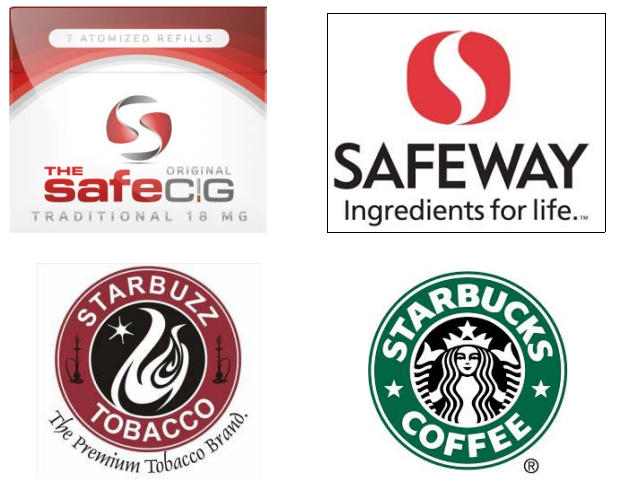
What’s changed is that online you don’t only have ads; you have blogs, forums, Twitter.  Website: “Women and COPD: Reducing the Risk”—looks scientific.  “No smokers cough”—like old tobacco promises. 6 different e-cigarette companies put out breast cancer-themed e-cigarettes.   ProSmoke uses American Cancer Society logo and donation promise to advertise.  (Hmm…wonder what TM counsel thinks about that.)

Health claims: “Vitamin Smokes.”  “iSlim,” “NutriCigs” to make you slim.  “Inhale Flavors. Curb Cravings. Lose Weight.”  This is “Reach for a Lucky instead of a sweet” revisited.

Energy claims: similar to energy drinks.  “Energy Surge.”

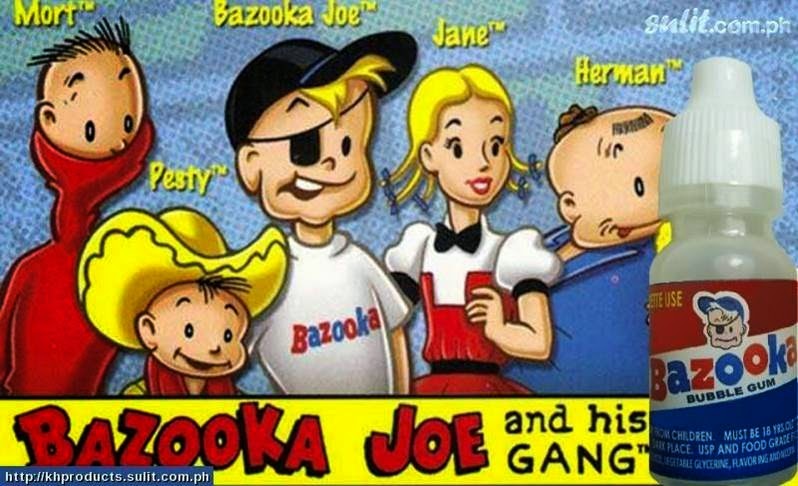
Targeting teens: They claim not to target teens.  They have sham age certifications—you click and go in.  The ads have 20-something models doing things that 15 year olds could do. Very youth-oriented. Cartoons are forbidden to tobacco under master agreement, but e-cigarettes use them.  Then they blog about parents secretly buying teens e-cigarettes.  Sampling is illegal for tobacco, but they’re doing it.  Online games that result in coupons for e-cigarettes.

Cheapness as lure: youth are notably price sensitive.  “Student discount” for cigarettes.

Sex sells: XXX e-cigarettes.  Sex Stimulant, Tiger E cigarette.  Party with Playmates at Playboy’s Top Party Schools—2 Playmates hand out e-cigarettes; Playboy even has its own brand. Subliminal sex signals too.

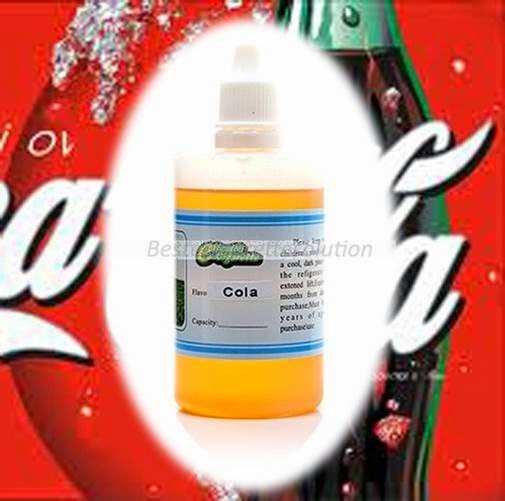
Teen flavors: primary way of attracting teens is sweetness, which was also true in tobacco; 2009 FDA banned tobacco flavors, but flavored mini-cigars escaped the FDA ban.  Vapor companies produce flavors like bubble gum, gummi bears, candy corn, cotton candy, peppermint patty, honey, chocolate, caramel, banana split, Fruit Loops, Lucky’s Charms; Trix (again, TM counsel pay attention); cakes, colas, coffees; alcohol flavors—beer, champagne, amaretto, gin & tonic; pepperoni pizza; popcorn; kosher; bacon.  If you want to create your own, you can buy an e-liquid kit online and mix your own.  Dangerous! 

Teens crave social acceptability, and one of the ways they advertise is the avoidance of trash, yellowed teeth, stinky hair/clothes. You can vape around your loved ones. “Save humanity. Start vaping.”

Second hand vapor does contain nicotine, but not combustion products of leaf. Probably considerably safer than secondhand smoke.  Many ads show people in love smoking. Touted as good Mother’s Day gifts (as tobacco historically was).  Ads show smoking in groups; organized meetups for people who smoke the same brand; sponsor festivals.  Social media: Your Blu cigarette pack can be turned on so that it identifies nearby Blu smokers, stores, or other relevant locations. “Friends don’t let friends smoke.”  Indeed, if he knew a smoker he’d want them to switch; he’s not saying that vaping is bad but that the combination of nicotine, flavor (and marketing) is bad.  Bringing back the era of glamorous smoking.

Even mking them as luxury items—Louis Vuitton e-cigarettes (query whether authorized); one Russian oligarch ordered one covered in diamonds. Women’s brands; started to segment women, though not African Americans yet—recapitulation of history of tobacco. Dozens of pink e-cigarettes. 

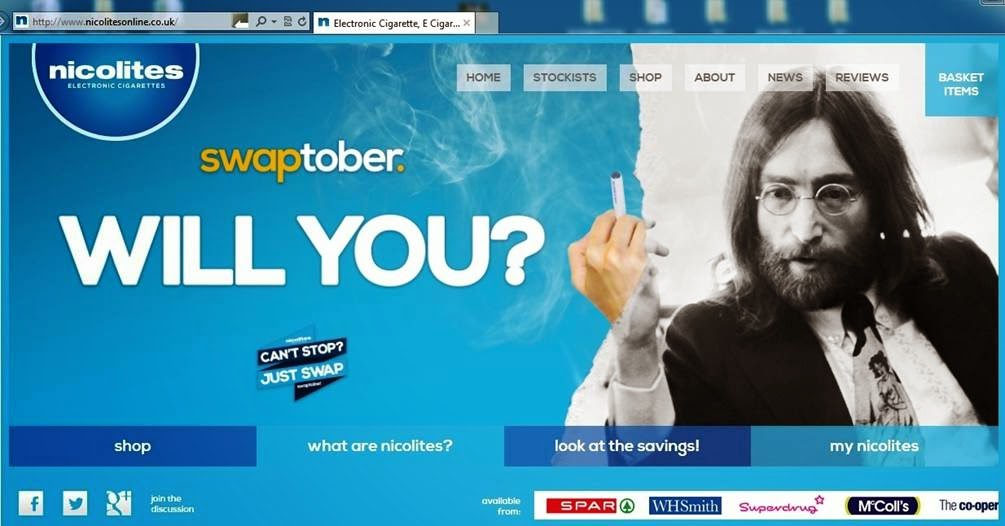
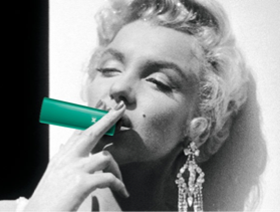
Celebrity endorsements—Courtney Love. (Wow, that’s quite an ad.) Jenny McCarthy (hates vaccines, loves e-cigarettes).  Steven Dorff (actor who has emphysema).   E-cigarettes are at Oscars in the grab bags, and advertise heavily around that. Golden Globes—Julia Louis-Dreyfuss smoked on camera. Websites show celebrity vapers like Jack Nicholson (and they photoshop John Lennon and Marilyn Monroe in).  (Intermediate conclusion: these small players don’t actually care about any advertising rules.)

Nicotine fix: advertised as giving big dose. Deaths in children from toxic liquid. Doses even in small bottle will kill a kid. Industry is trying to normalize nicotine addiction, as with caffeine.  Some brands even have “no nicotine” e-cigs.

What of the argument that it helps you quit? That’s not a good business model.  Look at data: most-cited study is that an adult smoker with counseling has 5.8% chance of quitting on patches, 7.3% chance on e-cigarettes. Another recent study showed no assistance of e-cigarettes.  If marketed as cessation aid, FDA can regulate as drug—so they say something like “smoking alternative,” or “kiss tobacco goodbye” or “it works” (without saying works for what).  Deniability.  FDA needs consumer perception studies because tobacco industry has cleverest people money can buy; banning some words aren’t enough.  “Why quit? Switch to Blu” as reverse psychology: consumers perceive as “quit” message.

Consumer testimonials include disallowed claims, and companies post those on their websites and try to disclaim responsibility. (Again, these people just don’t care to conform their conduct to the law.)

Additive free, organic, and natural in tobacco—same gimmick in e-cigarettes.  Young people also like tech, and they emphasize the technological aspects. Apps track your vape consumption and plot your “life expectancy increase” v. tobacco.

Also of course used heavily for cannabis. You can get cannabis flavored e-cigarettes.

Sponsorships: forbidden to tobacco, now coming to e-cigarettes. Big investment in car racing; showed an Olympic ad that I can’t imagine was authorized.

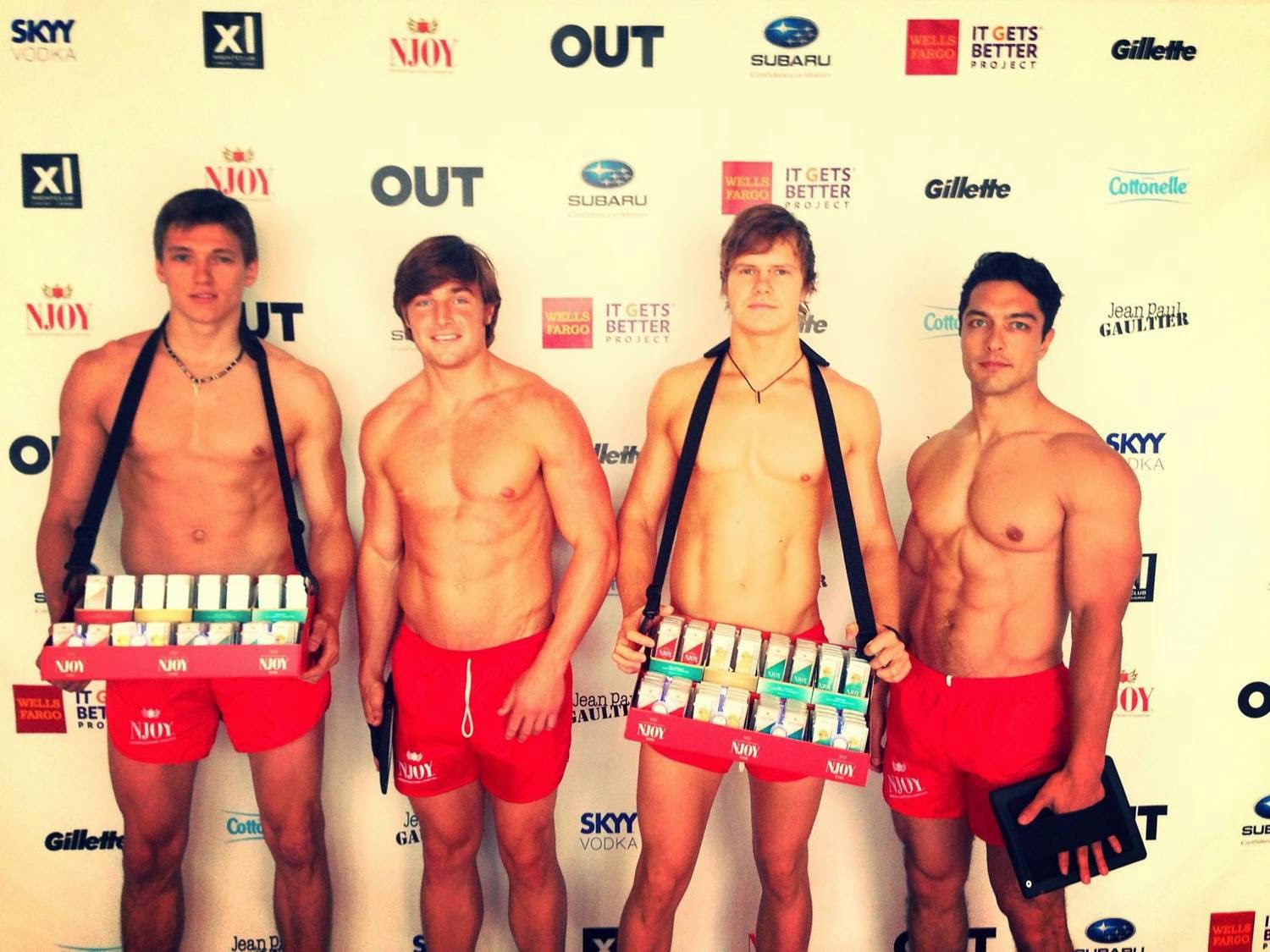
NJOY ran a Super Bowl ad; but most ads are on websites and elsewhere online.  Blogs, wikis, chats—claims that FDA would regulate as drug claims made on social media.  Many “independent” sites are highly laudatory of particular brands—he suspects that they are actually marketing arms.  There are road shows with free samples; discounts; contasts with iPad giveaways; stores all over America.  Sophisticated point of sale displays, not required to be behind the counter like tobacco.  Vapor bars: you can fill your cigarette at the bar.  Estimated 250,000 retail outlets like 7-11s are markets for e-cigarettes, and the business trajectory is sharply upward. Prediction that they may overtake tobacco cigarettes in 10 years.

Business model is like printer cartridges: they want you to buy the liquid, and they want to stop you from buying from other makers. 

Right now FDA is in a process called “deeming.”  Land rush for market share. But when they deem it to be a tobacco product, e-cigarettes will have the same regulation, which will take away flavoring, health claims, cessation claims, medicinal roles, celebrity endorsements, and sponsorships; will leave channels intact (except TV & radio that they don’t use anyway).  Backdoor online channels are a challenge.  (Is the FTC talking to the FDA about this? The endorsement guidelines would seem very relevant.)

Jurisdictional issues: nicotine free e-cigarettes; nicotine can be extracted from tomatoes, though that’s not economical now—if becomes possible, then it will escape FDA authority. Local ordinances are everywhere.

Unless youth adoption can be stemmed, public health gain will be offset by youth initiation and dual-use smoking where vaping is used to support tobacco.

His end game strategy: replace combustible tobacco with vapor.  He supports e-cigarettes, but not the Wild West.  E-cigarettes could be used to provide glamor/social benefits.  If they have no nicotine: low tax, flavors allowed; youth drawn to it. Nicotine: high tax, flavors forbidden, for experienced smokers.

Q (from RT): is FDA talking to FTC?  FTC has useful guidelines for the online advertising with which you are so justly concerned, especially the undisclosed advertising.

A: there’s inertia there.  Big players want regulation—that will put all the riffraff out of business; want expensive burdens for testing/purity to get rid of the competition.  That’s their endgame.  His hope is they’ll have deeming, but what we’ve learned from history of ad regulation is that they figure a way around any regulation.  In Europe etc. they can be much more effective, but the First Amendment restrictions (that killed graphic warnings on packs) is a barrier here.

Q: what of the impact on throat and mouth cancer?

A: seems unlikely to be as bad as combustible tobacco, given the carcinogens in the partially burnt hydrocarbons in combustible tobacco. We’re seeing a big explosion in cancer from HPV, but we hope vaccinations of young women—and men—will produce herd immunity.

Q: what are the materials—plastic?  Leaching?

A: Some of the stuff, they’ve detected cadmium/nickel in; not much known about the polymers. Stuff is being deeply inhaled in the lungs that you wouldn’t normally inhale, and especially extended use is an unknown.  A few reports of pneumonia, reactive airway disease. The additives are also an issue. Not meant to be in the lungs! Your nose is usually a filter.  We should see what’s growing in these liquids—the compounders are not necessarily trustworthy.  But it’s here to stay, and probably will replace combustible tobacco.

Q: what is the vapor?

A: People are starting to study. Mostly water/propylene glycol, which is well known.  Really key thing: right now, smoking is declasse; it’s a deprecated social signal and was growing over time. That’s changing—reglamorizes/renormalizes smoking. He is a realist about this.  Genie won’t go back in bottle.
Posted in advertising, dilution, fda, http://schemas.google.com/blogger/2008/kind#post, trademark | Leave a comment

A bit more on Pom

I wonder whether this was the first Supreme Court brief featuring a color picture?  Also, I should probably add a tag for Pom, same as I have for Google.  Feels a bit like giving in, though.

Anyway: Transcript of oral argument, for those who prefer not to read secondhand postmortems.

Supreme Court post-argument discussion at AU’s Washington College of Law: Pom Wonderful v. Coca-Cola (webcast available)

Moderated by Prof. Christine Farley, American University Washington College of Law

Rebecca Tushnet, Professor, Georgetown Law School

How we got here: excellent work on the cert petition by Pom, because while it was hard to call what was going on in the lower courts a split, it was certainly an unholy mess.

Brian Boynton, Partner, Wilmer Hale (Pom Wonderful)

“Pomegranate Blueberry” with “flavored blend of five juices” is the product; 99.4% apple and grape juice, only .3/.2% pomegranate and blueberry. Pom thought it was losing business from this and sued.  Coca Cola internally acknowledged that the product posed a risk from a misleadingness perspective but accepted the risk.

DCt dismissed on the ground that the FDA juice regulations precluded this claim. Wasn’t clear what the 9th Circuit’s rationale was; we thought there was a tangible split and the US agreed there was tension.

Farley: Coca-Cola’s argument?

RT: Disclaimer that while I am not always on Pom’s side I think it had the better argument here. That said, Coke relied on the detailed nature of FDA regulations and need for national uniformity; problem is that sounds like field preemption, which isn’t part of the FDCA.

Samuel Gedge, Associate, Wiley Rein LLP (Chamber of Commerce)

Need for national uniformity is an interest of the Chamber.

Boynton: noted US brief—Pom shouldn’t be able to challenge the full name “Pomegranate Blueberry Flavored Blend of 5 Juices” since that choice was specifically authorized, but should be able to challenge other aspects of label including how that name is presented (large typeface for PB, small for everything else) as well as coloring of juice to be darker.

Farley: any other avenues for challenge?

Boynton: Cal. UCL claim; FDA does not provide administrative route for challenges of this sort.

Farley: what’s preempted?

RT: nonidentical state laws—you can’t enforce the FDCA but you can enforce state laws identical to those of the FDCA. 

Farley: Congress thought hard about this, it seems, but didn’t say anything about the Lanham Act.  What about a nonidentical Lanham Act claim: is it in limbo? Pom says no preclusion; Coke says yes.

Boynton: preemption provision mentions only state law.

Farley: the argument is that Congress intended to preempt this kind of claim; broad preemption (preclusion) is desirable.

Gedge: national uniformity is a significant concern of Congress and has been for a while. If a consumer can’t bring a state law claim that they were misled, why should a competitor be able to bring a derivative claim?

Farley: what is the worst case scenario?  That Pom wins and the labeling is enjoined?  What’s disruptive of uniformity?

Gedge: we aren’t dealing with just one jury.  Juries across the nation can come to drastically different conclusions. Juries don’t say what the label should be, just that the Lanham Act was violated. Same need for uniformity/certainty.

RT: not exactly; Lanham Act is a uniform federal law. Juries enforce FDCA too in various circuits. There’s no uniform single jury for FDCA claims.  Moreover, the fact that the jury doesn’t say what the label should be is a reason this isn’ta uniformity/preclusion problem; the jury just says a particular version is or isn’t misleading, which is a burden borne by all manufacturers.  The FDA regulations do not specify what juices must be named, the way they specify how fat content must be disclosed on the nutrition panel.

Farley: what about that email from Coke suggesting the risk of misleadingness and going with regulatory compliance?  What is Coke saying its compliance is?

Boynton: we don’t know yet, but we think that it’s compliance with the very specific regulation about what names for blended juices are offlimits as misbranding. Not as specific with respect to other aspects of the label, such as the fruit vignette.

Gedge: there are different levels of specificity with regard to different parts. The requirement for usual/common name is more specific than the relative type sizes.  US government’s position tried to split the baby—specific enough = precluded. Court didn’t seem particularly persuaded.  But regardless of whether there are FDCA juries, but Congress had that information before it and nonetheless implemented preemption, because other regimes would cause damage. 

Farley: why not mention Lanham Act?

Gedge: never been a requirement for Congress to scour federal statutes for conflicts; courts should reconcile competing regimes.

Farley: any difference between federal and state claims?

Gedge: Same concerns were juries under different standards, making determinations that Congress vested in the FDA. Presumption against preemption at state level, not applicable here. Separation of powers: courts determining which statutes to give effect to. In the end, there’s tension that needs to be reconciled.

Farley: turn to the oral argument.

Boynton: Pom got to make the arguments it wanted to make, as did Coca-Cola.  All the issues were hashed out.

Gedge: Kennedy was open about the fact that the container misled him.  Court seemed to be taking a view that Coke was advocating field preemption, and that’s understandable because there was confusion about what the 9th Circuit actually held. We aren’t saying everything is off limits, just that there should be mirror of state preemption.

RT: I couldn’t distinguish Coke’s position from the 9th Circuit’s.  Mini field preemption? But you can comply with both.

Boynton: if we took Coke’s position that the existence of a state preemption provision automatically created a federal preclusion provision, we’d have a very different world. Congress carefully considered which laws to displace, and only displaced (certain) state law. No reason to think it was an oversight. Hearing testimony included availablility of Lanham Act claims against misleading food labels.

Farley: difference of opinion about Congress’s intent.

We’ve seen Lanham Act claims supplementing other types of claims—patent, copyright. Limits of the Lanham Act.

RT: Many thoughts about this!

(1)   Amicus participation: INTA and AIPLA despite the absence of any TM interest—the other half of the Lanham Act has arrived!

(2)   Role of Dastar—nice argument by Coke about how SCt interpreted Lanham Act restrictively in Dastar in order to preserve the scope of the Copyright Act.  I think it’s a bigger stretch here: “origin means physical origin” is easier than “false or misleading means false or misleading unless heavily regulated by the FDA.” But still worth thinking about.

(3)   Court’s skepticism about FDA’s capacity to understand what consumers are thinking—Justice Kennedy was very clear that he didn’t trust the FDA to figure out what’s deceptive—helps Pom in this case, but has bad implications for FDA authority when its regulations are challenged on First Amendment grounds.

(4)   Limiting the Lanham Act only when consumers are deceived by non-IP issues seems like a bad limit.

Farley: how does the FDA know what’s misleading?

RT: historically anecdotal evidence/reasoning sufficed, though this may be changing as the evidentiary burden on adminstrative agencies increases.

Gedge: Even if the FDA didn’t have resources, vesting private actors as roving AGs isn’t necessarily the solution.  FDA is competent, and hears from stakeholders on all sides.

Farley: can’t Lanham Act cases provide really specific evidence that’s useful?

Boynton: FDA’s limited resources were discussed in the briefing.

RT: in defense of the other side: surveys suck and cases can be brought for anticompetitive reasons.  One way to look at this: Pom sold a very expensive juice that was more expensive because of health claims that the FTC has found to be misleading.  It’s not clear how customers are harmed by drinking apple juice instead.  (I think the harm is to their autonomy and that ought to be enough, but I recognize the issue.)

Farley: read the tea leaves.

Gedge: Kennedy seemed convinced of misleadingness.  Arguments on both sides.  Don’t let competitors cloak themselves in consumer’s mantle but not let consumers sue.

Farley: of course that’s what TM does.

RT: The Court likes corporations a lot better than consumers!  Pom seemed to have a pretty good day.  No one was obviously on Coca Cola’s side.

Farley: we rely a lot on private actions to check misleadingness—TM is about private regulation of the markets.  Is the best case superregulation by an all encompassing agency?

Boynton: express preemption provision here excludes the provision of the FDCA that makes misleading claims actionable, so misleadingness claims should be allowed anyway (I don’t think this is true).

Gedge: Coca-Cola’s position is that this blanket ban is just a summary/statement of comprehensiveness, not an independent authorization of state misleadingness claims.

Q: will customers’ sophistication grow over time?

Boynton: that will be picked up in surveys.  There was some discussion today about whether a discerning consumer understood what “flavored” meant in terms of small amount of juice.

RT: No, it won’t.  We’re cognitive misers; we will always have gaps in our ability to process information. We will be sophisticated about some things and not others.  Even if the market were static there’d still be predictable gaps in our information processing.

Q: posted calorie content in NYC restaurants. 

RT: doesn’t work that well; if it works, would decrease other information, which is certainly a valid policy choice but it can’t make our brains take in more information. Regulation usually changes the behavior of retailers/manufacturers more than understanding of consumers.

Q: how much is this case about authenticity?

Boynton: Pom’s view is that you should provide consumers accurate information and then they can decide.

Gedge: fundamental disagreement between parties about what consumers want to know; FDA considered that in the rulemaking. Pom says people are buying juice for pom’s benefits; Coca Cola says people buy it for the taste, so we can provide them the same with that label.

Boynton: if you took the same label and simply disclosed .3% pom and .2% blueberry, Coca Cola could still convey its view that it has the same flavor.  Don’t have to deceive someone.

Gedge: trenches on trade secrets.

Q: if Coca Cola wins, would that effectively be a limit on the scope of the Lanham Act? Would it continue to other regulatory bodies?

Boynton: we say yes.  Nothing that stops this rationale at juice labeling.  Some lower courts have extended it beyond FDA to USDA regulated cosmetics.  FTC regulation could have preclusive effect.

Gedge: depends on what argument the Court decides on.  Anchor would be express preemption clause.

RT: many statutes do have them: FIFRA, USDA’s organic regulations, etc.

Q: taste is so subjective—is there a way to prove it’s pomegranate flavored?

Boynton: no record in this case.  We don’t think it’s likely that .3% could provide the flavor; in the gov’ts view this should get litigated.

RT: Your brain will fool you: pink ice cream flavored vanilla will be judged to taste like strawberries, so it’s hard to figure out what the appropriate testing would be to judge what the flavor is.

Farley: what should this product be called?

Gedge: its current name.

Boynton: many alternatives: could call it Pom-Blueberry Flavored Apple & Grape Juice, or Apple & Grape Juice w/Pom-Blueberry Flavor, or disclose percentages.
Posted in advertising, consumer protection, http://schemas.google.com/blogger/2008/kind#post, preemption, presentations | Leave a comment

Reading list: consumer protection

Reading list: Dee Pridgen, Wrecking Ball Disguised as Law Reform: ALEC’s Model Act on Private Enforcement of Consumer Protection Statutes, 39 New York University Review of Law & Social Change (2015). Abstract:

The consumer protection statutes of every state are currently under attack by a proposed model law that would effectively eliminate the critical private enforcement provisions that give these laws their power.  The American Legislative Exchange Council (ALEC) has produced a purported law reform vehicle that is actually a wrecking ball to destroy one of the building blocks of consumer protection, namely the private enforcement of state unfair and deceptive practices acts. It does this by systematically weakening each and every provision of these laws, such as lower burdens of proof, special damages, and attorney’s fees, that were designed to provide consumers with access to justice for small economic wrongs. This article examines the history and goals of the state consumer protection statutes, with their private enforcement mechanisms, and then demonstrates how the ALEC model act would undermine these goals. The article also critically examines certain research studies that claim to demonstrate abuses of the current laws.  The article concludes that while the statutes in question could perhaps benefit from some limited reforms, the ALEC proposal is an ill-conceived attempt to effectively repeal the private enforcement of state consumer protection statutes.

Posted in consumer protection, http://schemas.google.com/blogger/2008/kind#post, reading list | Leave a comment

I’m interviewed about Aereo

In which I give my take on Aereo, albeit briefly and for a general audience. My pet theory is that the best way for the Court to rule for the broadcasters without screwing too much up would be to distinguish between avoidance of the cable retransmission rules and evasion, like the distinction between tax avoidance and tax evasion.  I doubt that will happen, though.

Posted in http://schemas.google.com/blogger/2008/kind#post | Leave a comment

Pom Wonderful post-argument

I’ll be speaking at this AU Washington College of Law event, which will be webcast (follow the link).

Panelists:

  • Brian Boynton, Partner, Wilmer Hale
  • Rebecca Tushnet, Professor, Georgetown Law School
  • Samuel Gedge, Associate, Wiley Rein LLP
Moderated by Prof. Christine Farley, American University Washington College of Law
Slight spoilers: after I read the briefs, I worried that this had become too unholy a mess; the deep dive into the intricacies of FDA regulations seemed counterproductive to Pom’s theory of the case.  After the oral argument, it seems at least probable that Pom will prevail on a fairly straightforward theory that the FDA regulations provide a floor and not a ceiling.  No Justice was obviously sympathetic to Coca-Cola, though Pom also faced some tough questions.
I remain puzzled by Coca-Cola’s theory that, because there’s an explicit preemption provision preempting non-identical state laws, Lanham Act claims must also be precluded.  I was gratified that the Justices who spoke seemed equally puzzled.
Posted in http://schemas.google.com/blogger/2008/kind#post, preemption | Leave a comment

Adam Levitin responds to General Mills

Here:

By permitting, allowing, or suffering me to purchase any of your products or services, whether directly from you or indirectly through dealers, vendors, agents, or other third-parties, you agree to irrevocably surrender all rights to compel me to arbitration or to waive my rights to proceed against you as a member of a class action.  In order to make this provision effective and allow effective vindication of my rights, you also agree to irrevocably surrender all rights to compel arbitration and to prevent class actions against all other purchasers of your products and services.  You also agree to cover all of my costs associated with bringing an action, including attorneys’ fees and any damages awarded against me, irrespective of the outcome of the action. 

As he says, let the battle of the forms begin.

Posted in consumer protection, contracts | Leave a comment