POM Won: a summary of the ruling

POM Wonderful LLC v. Coca-Cola Co., No. 12–761, 573 U.S. — (June 12, 2014)
POM sued Coca-Cola for falsely advertising a “pomegranate blueberry” juice blend with 0.3% pomegranate juice and 0.2% blueberry juice. The Ninth Circuit found this claim precluded by the FDA’s extensive juice labeling regulations, and the Supreme Court reversed in a broad opinion that nonetheless leaves room for preclusion arguments, certainly in pharmaceutical cases. Examining text, history, and structure of both laws showed no congressional purpose to forbid private suits in cases of this type, but the Court left room to fight about just what POM’s “type” is. (E.g., does this ruling have any bearing at all on a case in which at least part of the plaintiff’s evidence of falsity is use of a term that is inconsistent with a FDA definition thereof, such as “generic”? Consider in this regard what the Court says below about the FDA’s area of expertise ….)
We know that Congress, in the Lanham Act, intended to protect competitors from deceptive advertising/unfair competition. (The Court uses “competitor” as a shorthand for people with standing under Lexmark.)
The FDCA “is designed primarily to protect the health and safety of the public at large.” It prohibits misbranding of food and drink, which includes false or misleading labeling. The FDA promulgated extensive regulations about juice labeling to implement this mandate. Under these regulations, “[i]f a juice blend does not name all the juices it contains and mentions only juices that are not predominant in the blend, then it must either declare the percentage content of the named juice or ‘[i]ndicate that the named juice is present as a flavor or flavoring,’ e.g., ‘raspberry and cranberry flavored juice drink.’” The FDA does not preapprove juice labels, unlike drug labels, “consistent with the less extensive role the FDA plays in the regulation of food than in the regulation of drugs.”  The FDCA may not be privately enforced, and the NLEA preempted many non-identical requirements from a state or political subdivision of a state.

Minute Maid Pomegranate Blueberry …

“Despite the minuscule amount of pomegranate and blueberry juices in the blend,” “pomegranate blueberry” is prominent and set-off on the label, with “flavored blend of 5 juices” in much smaller type, then “from concentrate with added ingredients,” in still smaller type, then “and other natural flavors.” There’s also a vignette of blueberries, grapes, and raspberries in front of a halved pomegranate and a halved apple. The Ninth Circuit held that the FDA’s extensive regulation precluded a Lanham Act claim against these elements.

The court began by distinguishing preemption, which involves a state-federal balance and a resulting presumption against preemption.  Nonetheless, preemption principles were instructive “insofar as they are designed to assess the interaction of laws that bear on the same subject.”
But at the core, this was a statutory interpretation case.  POM argued that two statutes must be given full effect unless they are in “irreconcilable conflict.” Coca-Cola argued that a more specific law, the FDCA, narrowed the scope of a more general law, the Lanham Act.  Even if the Court’s task were to reconcile the two laws, Coca-Cola was wrong that the best way to harmonize them was to bar the Lanham Act claim.
The Lanham Act, by its own terms, has a “comprehensive imposition of liability” extending to food and beverage labels.  And the FDCA, by its own terms, doesn’t bar Lanham Act suits. The absence of textual preclusion is especially significant because the Lanham Act and the FDCA have coexisted since the passage of the Lanham Act in 1946.  Congress has amended both during the last 70 years, and could’ve addressed interference by the Lanham Act with the FDA if it had concluded that there was any, for example when it enacted the express preemption provision in the NLEA.  “This is ‘powerful evidence that Congress did not intend FDA oversight to be the exclusive means’ of ensuring proper food and beverage labeling.”  If anything, applying expressio unis to the NLEA suggests that Lanham Act suits are not precluded:
It is significant that the complex pre-emption provision distinguishes among different FDCA requirements. It forbids state-law requirements that are of the type but not identical to only certain FDCA provisions with respect to food and beverage labeling. Just as significant, the provision does not refer to requirements imposed by other sources of law, such as federal statutes…. By taking care to mandate express pre-emption of some state laws, Congress if anything indicated it did not intend the FDCA to preclude requirements arising from other sources.
Structure reinforced text.  “When two statutes complement each other, it would show disregard for the congressional design to hold that Congress nonetheless intended one federal statute to preclude the operation of the other.”  So here: each statute has its own scope and purpose.  “[T]he Lanham Act protects commercial interests against unfair competition, while the FDCA protects public health and safety.”  They complement each other more fundamentally, in that the FDA is largely responsible for enforcing the FDCA, but it doesn’t have “the same perspective or expertise in assessing market dynamics that day-to-day competitors possess.”  Those competitors have detailed knowledge about consumer reaction to “certain sales and marketing strategies,” and “[t]heir awareness of unfair competition practices may be far more immediate and accurate than that of agency rulemakers and regulators.”  The Lanham Act allows this market expertise to be brought to bear on a case-by-case basis.  By providing compensation that may motivate injured parties to come forward, the Lanham Act provides additional incentives for manufacturers to behave well.  Allowing Lanham Act suits “takes advantage of synergies among multiple methods of regulation.”  Each statute thus has its own mechanisms to enhance the protection of competitors and consumers.
(As I wondered after oral argument, I wonder how this conclusion about competitor expertise plays out in First Amendment challenges to FDA regulations.  There’s room here, especially given the Court’s reference to “synergies,” to argue that the FDA may underidentify misleading behavior, but still has expertise to determine a minimum blanket rule for what’s false/misleading—but I worry the DC Circuit won’t go for that.) 
A preclusion finding for food and beverage labels would cut a hole in consumer protection.  The FDA doesn’t preapprove such labels, as it does for drugs, and the FDA acknowledges that it doesn’t pursue enforcement against all objectionable labels.  If Lanham Act claims weren’t allowed, then competitors, and indirectly the public, “could be left with less effective protection in the food and beverage labeling realm than in many other, less regulated industries. It is unlikely that Congress intended the FDCA’s protection of health and safety to result in less policing of misleading food and beverage labels than in competitive markets for other products.”
Coca-Cola argued that preclusion was appropriate because Congress wanted national uniformity in food and beverage labeling.  But that desire wasn’t enough.  Congress did delegate FDCA enforcement to the feds, but POM wasn’t trying to enforce the FDCA.  Preemption of a possible patchwork of state standards was different:
Although the application of a federal statute such as the Lanham Act by judges and juries in courts throughout the country may give rise to some variation in outcome, this is the means Congress chose to enforce a national policy to ensure fair competition. It is quite different from the disuniformity that would arise from the multitude of state laws, state regulations, state administrative agency rulings, and state-court decisions that are partially forbidden by the FDCA’s pre-emption provision.
Congress often allows variability “even in areas of law where national uniformity is important.”  (Citing Bonito Boats’ statement about the importance of national uniformity in IP, then noting the private right of action for patent infringement, and noting that the FDCA contemplates that federal juries will resolve most misbranding claims.)  The Lanham Act is uniform in the sense that it protects an entire class against unfair competition; it varies only in being enforced on a case-by-case basis.  That’s no different than the variability to which any industry is subject.
Coca-Cola argued that the FDCA regulations were much more specific than the Lanham Act.  That’s true.  But that specificity would matter “only if the Lanham Act and the FDCA cannot be implemented in full at the same time.”  However, there was no structural or empirical reason to see “any difficulty in fully enforcing each statute according to its terms.”
The Court then rejected the government’s confusing halfway approach, which wouldn’t have allowed POM to challenge the name but would have allowed other challenges to the configuration of the label.  The government wanted preclusion “to the extent the FDCA or FDA regulations specifically require or authorize the challenged aspects of [the] label.”  The Court was concerned about the practical difficulty of distinguishing between regulations that “specifically . . . authorize” a course of conduct and those that merely tolerate that course.  Also, this position had the same problem of treating the FDCA as a ceiling on regulation of food and beverage labeling, but that was inconsistent with the Lanham Act’s complementarity.  (It’s pretty clear that requirements would not be subject to this analysis—if someone challenged a label that said “zero fat” even though it had a tiny detectable amount of fat, the obvious defense is that the FDA requires the use of “zero fat” under such circumstances, and the Court doesn’t suggest that preclusion would be unavailable then.)
The FDA had not, despite what the government said, fully balanced the competing interests at issue. While the rule mentioned “provid[ing] manufacturers with flexibility for labeling products while providing consumers with information that they need,” it didn’t discuss or even cite the Lanham Act. Plus, the FDA explicitly encouraged manufacturers to include material on labels that wasn’t required by the regulations, which was inconsistent with the idea that the regulations were comprehensive.  “A single isolated reference to a desire for flexibility is not sufficient to transform a rulemaking that is otherwise at best inconclusive as to its interaction with other federal laws into one with preclusive force, even on the assumption that a federal regulation in some instances might preclude application of a federal statute.” 
This was distinguishable from Geier v. American Honda Motor Co., 529 U. S. 861 (2000), in which the agency’s regulation deliberately allowed manufacturers to choose between options to encourage diversity in the industry.  A subsequent lawsuit against one of the choices was barred because it directly conflicted with the agency’s policy choice.  But the FDA hadn’t made a policy judgment inconsistent with POM’s suit, “and in any event the FDA does not have authority to enforce the Lanham Act.” “Even if agency regulations with the force of law that purport to bar other legal remedies may do so, it is a bridge too far to accept an agency’s after-the-fact statement to justify that result here. An agency may not reorder federal statutory rights without congressional authorization.”
Reversed and remanded.
Final note: because the 9th Circuit’s ruling was so broad and ill-defined, and because the Court is careful to distinguish pharmaceutical regulation, it’s hard to say that this will directly affect many lawsuits, though plaintiffs may draw on the Court’s emphasis on the Lanham Act’s breadth.
Posted in fda, http://schemas.google.com/blogger/2008/kind#post | Leave a comment

The Pom Wonderful ruling has arrived

It is here.  Pom wins reversal. More to come.

Posted in fda, http://schemas.google.com/blogger/2008/kind#post | Leave a comment

selling to multiple hospitals isn’t "advertising or promotion" when total market is large

Synthes, Inc. v. Emerge Medical, Inc., 2014 WL 2579286, — F. Supp. 2d — (E.D. Pa. June 5, 2014)

This is a big case involving trade secrets/former employees who started a competing medical device firm. I’m just going to cover a few bits. The Lanham Act false advertising claim, which included challenges to Emerge’s comparative statements about the Synthes product, seem headed towards failure because the statements weren’t sufficiently disseminated to count as advertising or promotion.  (Post edited for clarity: Given the procedural posture–a denial of summary judgment for the plaintiffs on their Lanham Act claim–all that can be said right now is that the court didn’t need to resolve any other issue to deny summary judgment to Synthes.)

At one point, Emerge “would begin the sales process by approaching a hospital system directly—either by phone, email or in person, through corporate supply chain management. Emerge would then describe its method of not relying on sales reps and would make representations about the characteristics and performance of its products. These statements were made via phone calls, emails, in-person meetings, websites, printed materials, presentations, trade show displays, and social media.”

Even if the statements were literally false, discovery had shown only sporadic instances of dissemination. The identified recipients included 9 healthcare facilities/groups and several other hospitals in the Arizona, Texas, Massachusetts, Georgia, and California regions. However, the relevant device market was national since each hospital and orthopedic surgeon was a potential customer. Thus, this didn’t show wide dissemination throughout the relevant market. (How close does “sufficiently disseminated” have to be to “nationally/nearly comprehensively”?  A campaign that reaches 25% of a huge market can do a lot of harm, and the description of the conduct seems to me to cross over from sporadic to a significant component of a marketing strategy, even if not the only component.)

The CFAA claim was dismissed for failure to show sufficient harm. Synthes argued that it incurred sufficient expenses in investigating the data breach at issue to trigger the CFAA, but there’s a difference between the harm caused by the misappropriation of data/expenses incurred in litigating the issue and the requisite CFAA harm caused by investigating damage to the integrity of a computer system. Synthes’ evidence went to the former. Synthes only investigated damage to its systems once the litigation began, over a year after the alleged unlawful access.

Posted in cfaa, http://schemas.google.com/blogger/2008/kind#post | Leave a comment

animal rights organizations have standing to challenge bull run

Animal Legal Defense Fund v. Great Bull Run, LLC, 2014 WL 2568685, No. 14–cv–01171 (N.D. Cal. June 6, 2014)
ALDF and PETA sued defendants under California’s UCL to enjoin them from operating a bull run. The court denied the motion to dismiss for lack of standing.
Plaintiffs alleged that Great Bull Run organizes events in which “panicked and agitated bulls chase down fleeing runners,” while defendant Lone Star Rodeo supplies bulls and steers for the events, transporting them thousands of miles in trailers. According to plaintiffs, the events involve
people on horses using ropes as whips to scare as many as three dozen bulls—each of which weighs approximately 1,500 pounds—to charge towards as many as 1,000 people arrayed along a quarter-mile track. As the bulls approach at speeds faster than humans can run, the participants try to keep up while avoiding the stampede at their heels. Many runners intentionally run as close to the bulls as possible to provoke them. An eyewitness at the most recent bull run event in Florida reported that several runners taunted and punched the bulls as they ran by.
Plaintiffs alleged that these events subjected bulls to needless suffering, distress, and unnecessary cruelty. Bull runs are allegedy dangerous for the animals because bulls “may become entangled with other bulls or runners, causing them to slip and break their legs or get gored.” They are also inherently stressful to the bulls, “who find themselves in an unfamiliar location surrounded by loud noises, often after having travelled for days in cramped transport trailers.” GBR and Lone Star allegedly take advantage of this fear and confusion to motivate the animals to stampede.
Moreover, bull runs are allegedly dangerous for humans; three participants in prior events were trampled and hospitalized. GBR’s emergency plan still allegedly provides that if someone is injured on the track, the bulls will still be released and no medical personnel will be allowed to enter the course area. GBR requires contestants to sign a waiver form acknowledging that the event is hazardous and presents serious physical and mental dangers.
ALDF alleged that it has invested time and money to prevent these events, “committing staff time and resources to educating the public about the animal welfare concerns, mobilizing opposition such as petition drives, researching permitting requirements, submitting public records requests to local governments, reviewing responsive documents, and speaking with state agencies and local officials about the event.” PETA made similar allegations.
According to plaintiffs, defendants were unlawfully “‘promot[ing] [and] advertis[ing] [a] … bloodless bullfight contest or exhibition, or … similar contest or exhibition,’ in violation of section 597m of the California Penal Code. In addition, the bull run would violate 597b, which prohibits making bulls fight with humans, and section 597(b), which prohibits causing ‘needless suffering’ to animals.”
Defendants argued that plaintiffs lacked an injury in fact. But “[a]n organization suing on its own behalf can establish an injury when it suffered ‘both a diversion of its resources and a frustration of its mission.’” This was sufficiently alleged. Redirected resources/staff time investigating defendants’ practices wouldn’t be necessary but for defendants’ actions, and plaintiffs diverted these resources not just in response to defendants’ activities “but also to counteract the effect these events have on Plaintiffs’ own outreach and education efforts designed to prevent animal cruelty.” Taken as true, these allegations were enough to plead that defendants’ acts perceptibly impaired plaintiffs’ outreach and education efforts by diverting resources to fight defendants’ allegedly unlawful acts. Although this diversion resulted from a voluntary choice, that’s not dispositive. What matters is “whether they undertook the expenditures in response to, and to counteract, the effects of the defendants’ alleged [unlawful acts] rather than in anticipation of litigation.” Defendants argued that plaintiffs were just trying to set up this litigation, but that’s not what the complaint alleged.
What about UCL standing? Did plaintiffs lose money or property? They alleged that they spent money and organizational resources to send agents to witness and record the GBR in other states, and also spent staff time requesting and reviewing public records, incurring costs in both money and payroll expenses. This was enough: “Organizational plaintiffs have standing under the UCL where they divert resources as a result of a defendant’s alleged unlawful business practices.”
Did plaintiffs state a valid claim? Defendants argued that there was no private right of action to enforce the California Penal Code, and that it was improper to use the UCL to circumvent this restriction. The first part is true, but the second isn’t. The UCL provides for a private cause of action for “unlawful” acts, which is to say violations of other laws. It is a “sweeping,” “intentionally broad” borrowing provision. The limitation is that a plaintiff can’t plead around an absolute bar to relief, as when another rule or law provides immunity for particular conduct. (E.g., conduct subject to a litigation privilege.) But the animal cruelty laws don’t have any immunity or absolute privilege of that sort.
Posted in california, standing | Leave a comment

Success has many copies: HathiTrust


Authors Guild, Inc. v. HathiTrust, No. 12‐4547 (2d Cir. June 10, 2014)
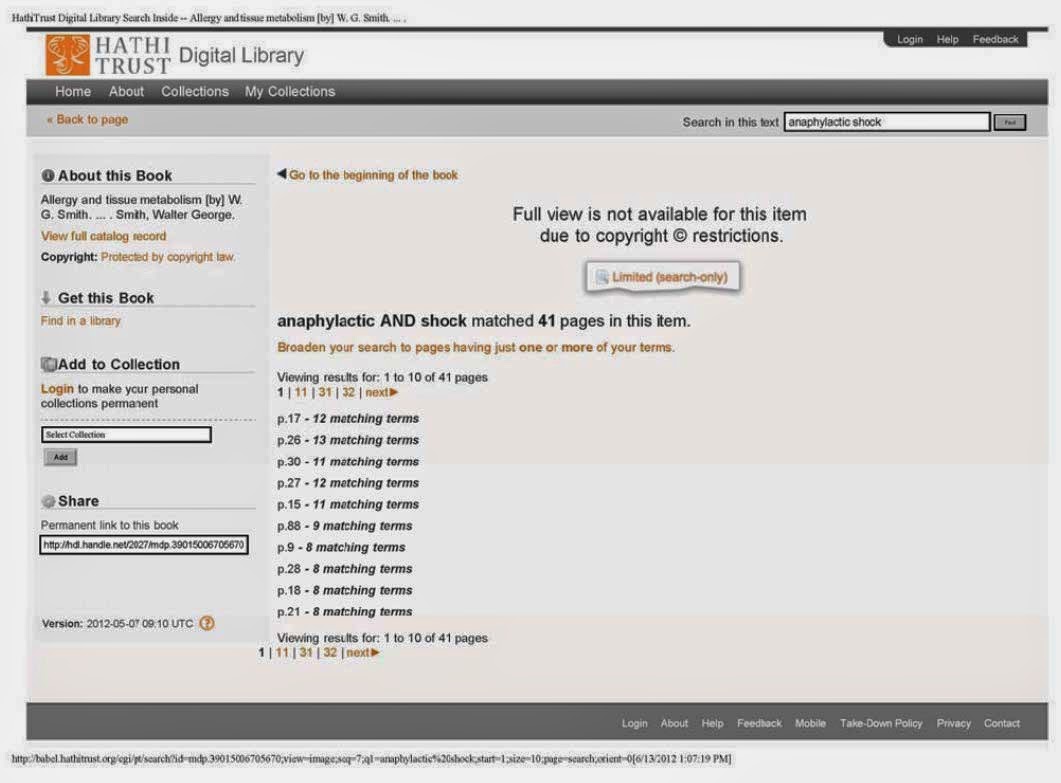
Several research universities allowed Google to scan their collections; then they created a repository for the digital copies, the HathiTrust Digital Library (HDL), which currently has 80 member institutions and over ten million works.  HathiTrust allows the public to search for particular terms.  Unless otherwise authorized, the search results show only page numbers and the number of times the term appears, with no snippets, like so:
HathiTrust also allows member libraries to provide patrons with certified print disabilities access to the full text of copyrighted works.  Print disabilities include blindness and disabilities that prevent a person from physically holding a book or turning pages. Print‐disabled users can obtain access using adaptive technologies such as software that converts the text into spoken words, or that magnifies the text.  Michigan was the only member that permitted such access; others intended to provide it in the future, which, presumably, starts now.
Finally, by preserving the copyrighted books in digital form, the HDL plans to permit members to create a replacement copy of the work, if the member already owned an original copy, the member’s original copy is lost, destroyed, or stolen, and a replacement copy is unobtainable at a “fair” price elsewhere.  
Michigan also developed an Orphan Works Project that would attempt to identify out of print works, try to identify their copyright owners, and, if none could be found, publish a list of orphan works candidates.  If no owner still came forward, orphan works would be made accessible in digital format to library patrons, with simultaneous viewers limited to the number of hard copies owned by the library.  Michigan became concerned that its screening process wasn’t adequately distinguishing between orphans and non-orphans, and the project was indefinitely suspended.
The district court found that the three HDL uses were fair, and that the provision for print-disabled patrons was permitted by the Chafee Amendment, which allows “authorized entities” to reproduce or distribute copies of a previously published, nondramatic literary work in specialized formats exclusively for use by the blind or other persons with disabilities. The district court concluded libraries of educational institutions have “a primary mission” to provide specialized services to print-disabled individuals, as required for eligibility to take advantage of the Amendment.  The Authors Guild, for reasons that apparently seemed sufficient, appealed.
Initially, the court of appeals found that three authors’ associations (the Authors Guild, Australian Society of Authors Limited, and Writers’ Union of Canada) lacked standing to bring claims on behalf of their members.  Four foreign associations, however, asserted that foreign law conferred on them exclusive rights to enforce their foreign members’ copyrights, and the libraries didn’t contest that claim.  (Though I’ve got to wonder about that “exclusive.”)  Thus, they had standing. 
Fair use: Plaintiffs argued that §107 couldn’t apply because §108 governs reproduction by libraries.  But §108 says, “Nothing in this section in any way affects the right of fair use as provided by section 107,” so that’s that. 
The court went through a number of fair uses: book reviews with quotes “to illustrate a point and substantiate criticisms”; biographers quoting from unpublished works ditto; art “employ[ing]” photos “in a new work that uses a fundamentally different artistic approach, aesthetic, and character from the original”; low-resolution versions of images in search engines to direct users to the source website; newspaper use of a modeling photo to “inform and entertain” the readers for a news story; time-shifting of broadcast TV; and reverse engineering of software.
However, “[a] fair use must not excessively damage the market for the original by providing the public with a substitute for that original work.”  Thus, quoting extensively from the heart of a forthcoming memoir “in a manner that usurps the right of first publication and serves as a substitute for purchasing the memoir” is not fair use.
Transformativeness is an important focus of the first factor.  “A use is transformative if it does something more than repackage or republish the original copyrighted work.” However, “a use does not become transformative by making an ‘invaluable contribution to the progress of science and cultivation of the arts.’ Added value or utility is not the test: a transformative work is one that serves a new and different function from the original work and is not a substitute for it.”  Plus, the impact of the use on the traditional market for the copyrighted work is the “single most important element of fair use.” “To defeat a claim of fair use, the copyright holder must point to market harm that results because the secondary use serves as a substitute for the original work.”
Full-text search: the process of full-text search requires digital copies, but doesn’t show them to users.  The creation of a full-text searchable database is “a quintessentially transformative use.”  The result of a word search “is different in purpose, character, expression, meaning, and message from the page (and the book) from which it is drawn.”  There was “little or no resemblance between the original text and the results” of a search. 
Comment: Exactly because of that last point, I don’t see how the search results could be deemed infringing at all even if there were no such thing as a fair use doctrine.  Where’s the substantial similarity?  Note also that the court’s focus is now on the third-party use enabled by the database, although in this particular instance the label “transformative” applies better to the database itself, since at least with the latter the reproduction right has been implicated.  One way of parsing the court’s analysis would be to call the database copies intermediate copies, as in the reverse engineering cases; but the distinction is that the HDL does not perform the full-text searches, whereas reverse engineers themselves ultimately create a new work.  However, perhaps because the HDL’s copying is part of a system designed so that the only output can be noninfringing, and because the HDL’s copying itself is useless unless and until that output is created, the HDL gets to take advantage of its users’ entirely noninfringing uses. 
Anyhow: there was no evidence that the plaintiffs write “with the purpose of enabling text searches of their books.”  Thus, full-text search doesn’t supersede the objects or purposes of the original.  It wasn’t mere repackaging or republishing into a new mode of presentation.  “[B]y enabling full‐text search, the HDL adds to the original something new with a different purpose and a different character.”  Indeed, it adds “a great deal more to the copyrighted works at issue than did the transformative uses we approved in several other cases,” such as Cariou (same medium) or Bill Graham Archives (photos simply shrunk in size).  (Interesting collapse of artforms at work here in the creation of a different kind of distinction—the court lumps together photo and collage, print and photo—but that’s a tangent.)  Perfect 10 (thumbnails) and iParadigms(plagiarism detection) reinforced the court’s conclusion.
Dog that didn’t bark: no mention of commercialism.  The libraries can do this with one hand tied behind their backs!
Nature of the work: it doesn’t matter, because of transformativeness.
Amount of the work: the issue is whether the copying was excessive—whether no more was taken than necessary.  Here, the entire work was necessary for the purpose.  Plaintiffs’ argument that the copying was excessive because the HDL maintains copies at four different locations was not well founded. They were “reasonably necessary” to facilitate legitimate uses.  The two mirror sites allow for balancing user loads, and act as back-up in case of disaster.  The two encrypted backup tapes were also important to protect against large-scale data loss.  (The HDL also creates digital copies of images of each page; these aren’t retained for full-text search purposes and the court dealt with them under the head of print-disability access.)  There was no reason to think that these copies were excessive or unreasonable in relation to the purpose.
Factor four: We’re looking for whether a use “usurps the market of the original work.”  Plaintiffs could identify no harm to any “existing or potential traditional market.”  The only type of harm factor four considers is substitutionary harm.  “[A]ny economic ‘harm’ caused by transformative uses does not count because such uses, by definition, do not serve as substitutes for the original work.”  Book reviews with quotations can deter purchases, but that doesn’t matter because they’re transformative. 
Comment: it’s not hard to see how book reviews might differ from other uses that might qualify as the creation of derivative works, but a rule of this sort is necessary to avoid circularity/the collapse of fair use into a regime of universal licensing.  If the collapse of fair use is something you see as a harm, then willingness to license, even innovative new or nontraditional forms of licensing, can’t be weighed against the defendant whose use is otherwise nonsubstitutionary.  Also, it might be worth considering that offering a license to someone to make a new thing is not the same as having the ability to make that new thing oneself—that could be one possible boundary of “traditional markets.”
Plaintiffs offered a “lost sale” theory: a market for licensing digital search might develop in the future, but the HDL impairs its emergence.  “This theory of market harm does not work under Factor Four, because the full‐text search function does not serve as a substitute for the books that are being searched.”  It’s irrelevant that the libraries might be willing to purchase licenses, if their use were otherwise deemed unfair.  “Lost licensing revenue counts under Factor Four only when the use serves as a substitute for the original and the full‐text‐search use does not.”
The court also rejected plaintiffs’ other, less globally significant theory of market harm: the risk of a security breach that might put their works out in the open.  But the record showed extensive security measures to safeguard against that risk.  This was too speculative to count as harm, though the court cautioned that it wasn’t foreclosing “a future claim based on circumstances not now predictable, and based on a different record.”
Access for print-disabled patrons: Expanded access wasn’t transformative, since the authors write books to be read (or listened to), and the HDL simply enabled a larger audience to read the works, consistent with the author’s original purpose.
Weirdness alert: The HDL’s reformatting “appears, at first glance, to be creating derivative works over which the author ordinarily maintains control.”  Sure, this adaptation into a different medium is the only way the print-disabled audience can obtain access, but that’s also true for non-English speakers and books written in English.
Comment: Noooooo!  Formatting isn’t a derivative work because it doesn’t add new creativity.  Translation, as into ASL, would create a derivative work.  But unless I completely misapprehend the techniques used for print-disabled audiences, changing text into Braille, making its size larger, changing its color, etc. no more create a derivative work than the change of a print book into an ebook creates a derivative work, even though the ebook is now made of ones and zeroes.  Nor, I think, would using a substitution cipher on a book create a derivative work.  Unlike the British, we don’t have a quasi-copyright right protecting typographical arrangements.  Can we all agree to pretend that the court invoked the reproduction right instead?  Thanks.
Anyhow, transformative use isn’t absolutely necessary for fair use.  Providing access to the print-disabled is itself a valid purpose under factor one.  The Supreme Court said so in Sony: “Making a copy of a copyrighted work for the convenience of a blind person is expressly identified by the House Committee Report as an example of fair use, with no suggestion that anything more than a purpose to entertain or to inform need motivate the copying.”  The 1976 Act legislative history on which the Court relied expressly stated that making copies accessible “for the use of blind persons” posed a “special instance illustrating the application of the fair use doctrine . . . .”  That history noted that publishers don’t usually make accessible formats commercially available, and said that an individual who made a single copy, for free, for a blind person would be a fair use.  Since then, the ADA reaffirmed Congress’s commitment to “ameliorating the hardships faced by the blind and the print disabled,” as did the Chafee Amendment.
Factor two weighed against fair use, but didn’t matter.  Nor was retaining entire digital image files excessive.  While text files allowed text searching and text-to-speech, “the image files will provide an additional and often more useful method by which many disabled patrons, especially students and scholars, can obtain access to these works. These image files contain information, such as pictures, charts, diagrams, and the layout of the text on the printed page that cannot be converted to text or speech. None of this is captured by the HDL’s text‐only copies.”  The court noted that many legally blind patrons could view these images with sufficient magnification or increased color contrast, and other patrons who couldn’t turn pages or hold books could use assistive devices to view all the content in image files.  For them, access to the image files was necessary to perceive the books fully, making the retention of copies reasonable.
Factor four: it was undisputed that the present‐day market for books accessible to the print-disabled “is so insignificant that ‘it is common practice in the publishing industry for authors to forgo royalties that are generated through the sale of books manufactured in specialized formats for the blind,’” according to the appellants themselves.  Comment: again, the mere desire to control something doesn’t confer a right to do so.  The number of accessible books currently available is a few hundred thousand, a minute percentage of the world’s books, versus the HDL’s over ten million.  Congress knew that publishers didn’t make their books available in 1976; this is still true.
Preservation copies: the HDL’s digital preservation copies ensure that books will still exist when their copyright terms lapse.  As for the HDL’s propsed use to make replacement copies for a member library if (1) the member already owned an original copy, (2) the member’s original copy is lost, destroyed, or stolen, and (3) a replacement copy is unobtainable at a fair price, this wasn’t obviously ripe for resolution.  The record didn’t show that the plaintiffs owned copyrights in any works that would be effectively irreplaceable at a fair price and thus would be potentially subject to being copied in case of loss or destruction of an original. Since the plaintiffs couldn’t assert the rights of others, there was no live controversy.  The district court’s finding of fair use on this point was vacated and remanded for resolution of the standing issue.

Likewise, the orphan works-related claims weren’t ripe.  There was no indication about whether the program will be revived or what it would look like.  The plaintiffs argued that the orphan works program’s legality wouldn’t depend on the specific procedures the libraries ultimately used to identify orphans, because any program resulting in the publication of complete copyrighted works would infringe.  The court wasn’t persuaded.  Even assuming for the sake of argument that the plaintiffs were right about infringement, it didn’t follow that any of theircopyrights would be infringed. Thus, there was no “certainly impending” harm, nor any hardship if decision were withheld. If Michigan or HathiTrust reinstitutes the program in a manner that would infringe the copyrights of any proper plaintiffs, they could return to court. The mere possibility of future injury isn’t hardship.

Posted in copying, http://schemas.google.com/blogger/2008/kind#post | Leave a comment

No nominative fair use or dilution dismissals if plaintiff pleads the elements?


Valley Forge Military Academy Found. v. Valley Forge Old Guard, Inc., No. 09–2373, 2014 WL 2476115 (E.D. Pa. Jun. 2, 2014)
Nominative fair use doesn’t have to work this badly, guys!
Valley Forge Military Academy Foundation operates the Valley Forge Military Academy, a college-prep boarding school and a two-year college. The Foundation and coplaintiff Valley Forge Military Academy and College Alumni Association alleged that they own/license various federally registered and common law marks, including “Valley Forge Military Academy,” “Valley Forge Military Academy & College Alumni Association,” and “Valley Forge Experience.” The Foundation also alleged goodwill in marks such as “Lieutenant General Milton G. Baker Founder’s Society,” “Baker Founder’s Society,” and “Founder’s Society.”
Valley Forge Old Guard is a nonprofit that has criticized plaintiffs over the past few years. Plaintiffs alleged that Old Guard used their marks to solicit funds from parents and alumni. Plaintiffs submitted two letters from parents of students at the Academy allegedly showing actual confusion about the distinction between the Old Guard and the Alumni Association. The Alumni Association’s mission statement reads: “[T]o enhance the quality of the ‘Valley Forge Experience’ and to contribute to the welfare and future of the finest institution of its kind in the world through leadership, recognition, contribution of resources, and the investment of time.” The Old Guard’s mission statement reads: “[T]o enhance the nature of the ‘Valley Forge Experience’ by contributing to the welfare, viability, and future of the Valley Forge Military Academy and College and its Corps of Cadets through leadership, the investment of time, the proper management of tangible resources ….”
After a C&D, the Old Guard changed its name from the Valley Forge Old Guard to the Founder’s Old Guard, and changed its website from http://www.valleyforgeoldguard.org to http://www.foundersoldguard.org, adding a disclaimer that disavowed any affiliation between the Old Guard and the Alumni Association. Plaintiffs were unsatisfied, and contested the use of “Founder’s” in the new name. They sued for trademark infringement, false advertising, and dilution.
The court rejected defendants’ arguments that their speech wasn’t commercial.  The court first quoted the general standard for commercial speech: basically, is it an ad for a product/service by someone with an economic motivation for the speech—is it speech proposing a commercial transaction? But it quickly pivoted to the more expansive definition used in Lanham Act cases.  (Cf. Riley v. Nat’l Fed’n of the Blind, finding fundraising speech for nonprofits to be noncommercial.)
Plaintiffs alleged that defendants competed with the Alumni Association for fundraising and alumni services, and that they used plaintiffs’ marks in an ad referring to a specific service: the Old Guard emailed 4000 people promoting the Old Guard’s alumni services, with an economic motivation—they solicited funds.  This plausibly alleged that the Old Guard proposed a commercial transaction, not another type of speech.  Thus, their “appropriation of Plaintiffs’ marks for commercial purposes” was not protected by the First Amendment.
Unsurprisingly, the court then rejected defendants’ arguments that they weren’t using plaintiffs’ marks to sell goods or services.  “Services” is a broad term that has been applied to lots of defendants providing noncommercial public/civic benefits.  United We Stand Am., Inc. v. United We Stand, Am. N.Y., Inc., 128 F.3d 86, 89 (2d Cir. 1997); Villanova Univ. v. Villanova Alumni Educ. Found., Inc., 123 F. Supp. 2d 293, 306 (E.D.Pa. 2000) (applying Lanham Act to alumni organization and finding that while “they are not commercial entities, the parties to this action are now in competition in that they offer similar services and engage in similar activities”); Am. Diabetes Ass’n, Inc. v. Nat. Diabetes Ass’n., 533 F. Supp. 16, 20 (E.D. Pa.1981) (applying Lanham Act to two organizations that solicit donations to find services for diabetics). The services here were provided to the Academy’s alumni.
Likely confusion: defendants argued that their messages criticized plaintiffs, and thus couldn’t be confusing.  But plaintiffs alleged that defendants were their competitors in the market for fundraising and alumni association services, and directed their activities towards the same customers (parents and alumni).  Note that this is clearly nonresponsive!  However, the court also gave weight to plaintiffs’ allegation that “much of the information that Defendants distribute is not, in fact, critical of Plaintiffs.”  Nor could defendants’ website disclaimer be ruled sufficient as a matter of law, given the other contents of the website, such as the similar mission statement, “text of the Academy’s alma mater, and pictures of the Academy’s campus.”  Plus, there was no showing that defendants used disclaimers in their other challenged activities, such as email and press releases. And plaintiffs alleged incidents of actual confusion.
Nominative fair use: defendants argued that they were only using the marks to identify the plaintiffs as the subject of their criticism.  (I don’t see how this works given the name of defendants’ organization.)  But “[t]he facts necessary to establish an affirmative defense generally come from outside of the complaint.” The three-part nominative fair use showing (the Third Circuit has its own special version) can only come after a plaintiff shows likely confusion.  Further factual development was required.
Dilution: Defendants correctly pointed out that the marks aren’t famous.  But the court, despite Twiqbal, accepted well-pleaded facts as true, and plaintiffs alleged that the marks “have been continuously used since 1928, have continuously been used to advertise and promote for Plaintiffs, have been used extensively by the press in connection with Plaintiffs, and are known throughout the nation and world as identifying Plaintiffs.” Comment: That’s not even close.  The court doesn’t mention whether plaintiffs pled that their marks were “widely recognized among the general consuming public,” and to contend that they are is entirely implausible. If a court accepts this weak tea at the pleading stage, I sure hope it makes fees available at the summary judgment stage. Hope springs eternal, I guess.
Defendants also argued that their uses were excepted from dilution liability by § 1125(c)(3).  But plaintiffs alleged that defendants offered competing alumni services and that there was source confusion, which defeated any exceptions. Note, however, that comparative advertising will generally be by someone in competition with the claimant and it is still categorically protected, and the statute also does not require that the comparative advertising be nonconfusing.  Still, to the extent that defendants were using the marks at issue as marks, dilution could apply in the counterfactual world in which the marks were famous, unless it’s a Chewy Vuiton situation in which the reference actually increases the connection between the plaintiff and the marks, which is plausible on these alleged facts (and isn’t even inconsistent with the more persuasive confusion theory!).
False advertising: defendants argued that they weren’t engaged in commercial advertising or promotion, but the court already found that they were engaged in commercial speech.  (Note: the conventional test here has three more elements besides that, though one—the requirement of commercial competition—might not properly survive Lexmark.) Anyhow, §43(a)(1)(B) “is broad enough to support, in the context of non-profit fundraising, a claim of false and misleading statements about the services represented by a protected mark.” Birthright v. Birthright, Inc., 827 F.Supp. 1114, 1138 (D.N.J.1993). There’s liability for misrepresentations not only in commercial advertising but also in the “promotion” of services, which plaintiffs alleged.
Posted in dilution, procedure, trademark | Leave a comment

islands in the stream: Netflix v. Verizon


Netflix responds to Verizon’s C&D. For those not keeping track, it started when Netflix started sending error message to certain Verizon customers experiencing playback difficulties, telling them that the Verizon network was slow. Verizon responded angrily, threatening suit and demanding details on which customers received these messages—but the letter was released publicly, which is itself an interesting strategic choice worthy of study. Netflix, unsurprisingly, continues to fight in the court of public opinion, releasing its own response to the C&D while also saying that the messages were part of a “test” scheduled to end soon.  Review question: after Lexmark, could there be Lanham Act liability for Netflix—sort of a noncompetitor, sort of a customer—for saying nasty things about Verizon?

Netflix error message indicating Verizon network is congested
Posted in advertising, http://schemas.google.com/blogger/2008/kind#post, standing | Leave a comment

Tough sledding: statements to industry-focused publication can be commercial speech


Skedco, Inc. v. ARC Products, LLC, 2014 WL 2465577, No. 3:13–CV–00696 (D. Or. Jun. 2, 2014)
The parties compete in the market for emergency medical rescue equipment, and are suing over false advertising. Plaintiff’s Sked is “an evacuation sled system designed to quickly evacuate wounded people from confined spaces, from high angles, in technical rescues, and in traditional land-based rescues.” Defendant’s Vertical Lift Rescue Sled (VLR Sled) “is an evacuation device that provides quick transport of a nonambulatory individual in a difficult rescue situation or a confined space.” Here, the court analyzes three of defendant’s false advertising counterclaims.
First, ARC alleged that Skedco claimed that the Sked sled was composed of “Low density E-Z glide polyethylene plastic[,]” commonly referred to as LDPE, that would begin to melt at 450 degrees F to 500 degrees F. In fact, ARC alleged, “publically available technical specification materials demonstrate that LDPE plastic generally starts to melt at the substantially lower temperature of approximately 248 degrees.” ARC attached an example ad flyer, and alleged that Skedco distributed it to third parties, precise identities and dates of distribution to be determined by discovery.
Skedco argued that this pleading flunked Rule 9(b). But ARC gave Skedco enough to prepare an adequate defense: it identified the allegedly false statement, its theory of falsity, and an example ad. Though it didn’t identify a time period or a recipient, or how/if a customer was deceived, the Rule 9(b) standards “may be relaxed where the circumstances of the alleged fraud are peculiarly within the [plaintiff’s] knowledge or are readily obtainable by him.” Skedco can figure out when it distributed its ad, and discovery is required for ARC to know to whom Skedco distributed it. As for deception, ARC sufficiently pled falsity syllogistically, which was enough to put Skedco on notice of the nature of the claim.
Next claim: “Skedco claims its cross-strap Cobra buckles are rated at 3,000 pounds, but this claim is materially misleading because the Sked sled cross-straps are likely to fail where said straps attach to the Sked sled, and that such failure is likely to occur at a significantly lower weight than 3,000 pounds.” ARC challenged similar representations about Skedco’s lift rope strength, claimed to be over 5,000 pounds when, according to ARC, the rope would pull the attachment grommets free from the Sked sled at a lesser weight. These were allegedly misleading claims, not literally false ones. Skedco argued that these claims were inadequately pled because ARC didn’t include any details about actual consumers being misled. But ARC identified the allegedly false statements and the reasons why they were allegedly misleading, and attached a relevant ad. “[T]he court finds it near impossible for defendant to allege which of plaintiff’s customers were actually misled by the advertisement without the benefit of discovery.” There was adequate notice of the claim. ARC also argued falsity by necessary implication (which seems like a valid argument to me, especially given the safety-related nature of the claims), but didn’t plead that; it could seek to amend. (I didn’t realize you needed to plead your precise subtheory of falsity! If you do, I don’t quite understand why the court allowed the misleadingness theory to proceed without allegations about survey evidence or other consumer reaction evidence.)
Finally, ARC challenged representations about Skedco’s loading speed. According to ARC, “Skedco’s Carston ‘Bud’ Calkin made assertions in his capacity as an executive and agent of Skedco in a published interview titled ‘Cleared for Takeoff,’ which appeared in the publication ‘Military Medical & Veterans Affairs Forum’ … that an individual person can have an injured person ready for transport in a Sked sled in a mere 20 seconds and that Calkin [who told the interviewer he was 75] could perform this ‘routinely,’ when in reality it takes significantly longer for an injured person to be loaded into and ready for transport into a Sked sled.” The interview appeared in close proximity to a paid Skedco ad. ARC alleged that in reality it takes substantially longer to load an injured person.
Skedco argued that statements a journalist attributed to a Skedco officer weren’t commercial speech. The journalist might not have been engaging in commercial speech, but “defendant did not bring a claim against the author.” Calkin’s statements highlighted new features of the Sked sled and explained their added benefits to customers. The magazine that published the article claimed to reach a “targeted mailing list” of “the military’s top leadership,” which is to say Skedco’s primary customer. “The court cannot find a purpose behind Calkin’s statements other than to promote his company’s product to potential customers.” Thus, the statements were commercial speech.
They also satisfied the rest of the test for “commercial advertising and promotion”: the parties competed; the statements were about the product; they were meant to influence readers of the article to purchase the Sked sled. Given the targeted audience, Calkin’s statements were disseminated sufficiently to the relevant purchasing public to constitute promotion. Thus, they were actionable under the Lanham Act.
Posted in commercial speech, http://schemas.google.com/blogger/2008/kind#post, procedure | Leave a comment

Is embedded advertising any good?


Negative take on “native advertising” from a purely advertiser-focused viewpoint. The author’s basic argument is that native advertising is essentially by definition unlikely to generate positive brand attention, because who the sponsor is will be forgettable. Query whether the “mere exposure” effect could help here—it might depend on whether the content is only relatedto the sponsor or the concerns of the sponsor’s target audience, or whether the sponsor is more thoroughly embedded: product placement for journalism. In the former case, I find the argument persuasive, but less so for the (ethically more questionable) latter situation where the brand is front and center.
Posted in advertising | Leave a comment

A little bit pregnant: miscounting pregnancy duration as false advertising


Church & Dwight Co. v. SPD Swiss Precision Diagnostics, GMBH, No. 14 Civ. 00585, 2014 WL 2526965 (S.D.N.Y. June 3, 2014)
C&D sued SPD for false advertising over its pregnancy test advertising. The court denied SPD’s motion to dismiss.
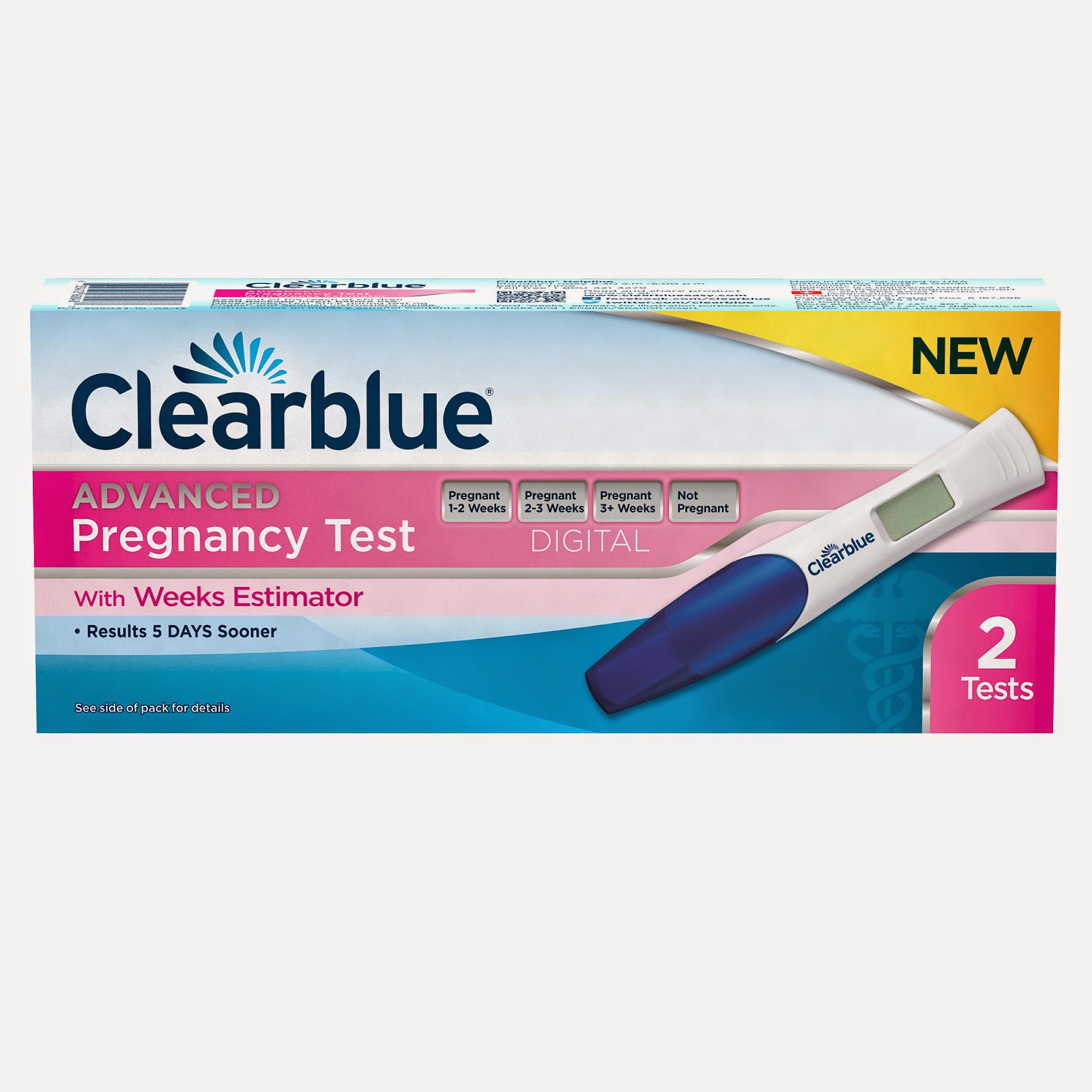
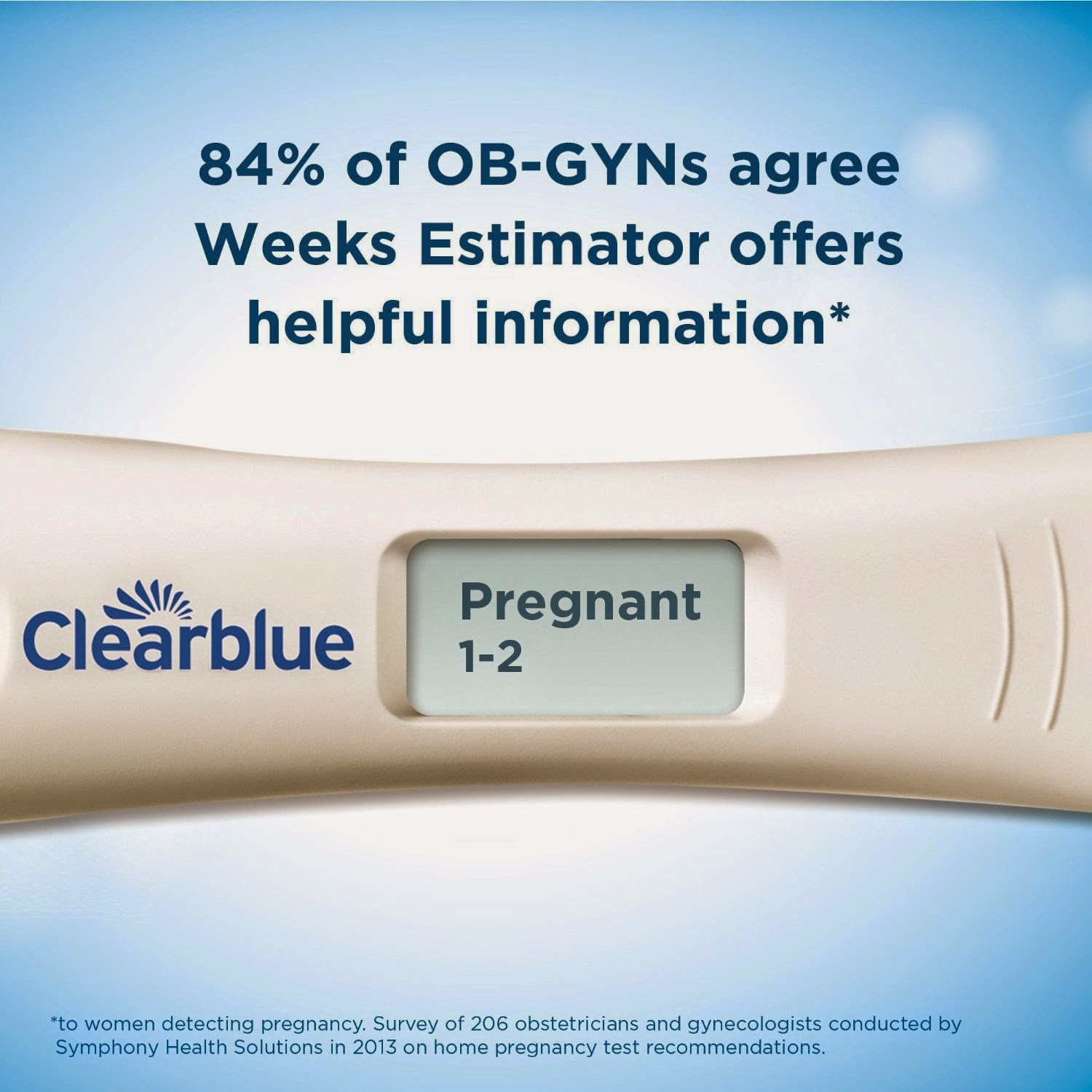
The parties compete in the market for home pregnancy test kits. SPD’s “Clearblue Advanced Digital Pregnancy Test with Weeks Estimator” is not just designed to detect pregnancy, but also to estimate the number of weeks that have passed since the user last ovulated. C&D’s basic claim is that the Weeks Estimator can’t be used to estimate the duration of pregnancy. The medical profession doesn’t use ovulation, but (allegedly universally, which comports with what I’ve seen) measures pregnancy from a woman’s last menstrual period (LMP). This occurs about two weeks before ovulation, on average. The court doesn’t explain why this is so important, but my Google search for the product confirmed my intuitions: consumers searching for this product will also get ads for abortion clinics, and the number of weeks LMP is vital both for the medically appropriate forms of abortion and for its availability; a woman misled into thinking she was two weeks less “pregnant” than she is according to the law could be tragically deceived. (I wonder what the reason was that the product wasn’t designed to add two to its estimate.)
SPD allegedly made false representations in various forms of advertising. C&D challenged the product name, along with graphics on the box in which the words “Pregnant 1–2 Weeks,” “Pregnant 2–3 Weeks,” and “Pregnant 3 Weeks” appear. In alleged violation of FDA directives, the indications for use statement (of which more in a bit) doesn’t appear in close proximity to the name, or in similar font size, or in bold font. Thus, the literal message “(or, at the very least, the necessary implication)” of the packaging is that the Weeks Estimator can tell a woman how many weeks she has been pregnant. 
Clearblue package with pregnancy estimates
There’s also a TV commercial with allegedly the same message:
A woman tells a friend that she is pregnant, to which her friend exclaims “Really?!” The woman holds up two fingers and says “two weeks.” After her friend asks whether she has already seen a doctor, the woman responds “Not yet,” holds up the pregnancy test stick, and says “but I just took this new Clearblue test.” The scene moves to a close up of the test stick, with the Clearblue logo, and a display window with the word “Pregnant” and “1–2 Weeks” immediately below that word. The pregnant woman then is heard to say “It’s like two tests in one!” The scene then changes to a graphic reflecting the three display windows noted above, while an announcer states “the new Clearblue pregnancy test also estimates how many weeks.” At the end of the commercial, the announcer concludes “Weeks Estimator. Only from Clearblue.”
(Here’s the Spanish version.)
SPD’s website, until a recent change, referred to the Weeks Estimator as “the ONLY Pregnancy test that Estimates Weeks” next to a graphic of a test stick with “Pregnant 1–2 weeks” in the display window, with similar statements repeated farther down on the page. The page also said that the Weeks Estimator “estimates the number of weeks,” is “Like 2 Tests in 1,” and notes that 78% of women surveyed believe it is important to know “how far along they are.” The page then said that the Weeks Estimator “estimate[s] how many weeks based on time since ovulation,” which was allegedly deceptive because time since ovulation is not the standard used to measure pregnancy. (But a consumer might not know that!) At the bottom of the page, SPD included the FDA’s indications for use.
Point of purchase displays and retail ads also were allegedly deceptive—each display tray said either “First pregnancy test to estimate weeks” or “How far along are you?” The ads didn’t include the FDA’s indications for use statement or disclose that the product measures time since ovulation. A web ad similarly promised “Clearblue Advanced Digital Pregnancy Test with Weeks Estimator. Is there a baby on board? How far along? Find out!”
Finally, C&D challenged a press release that claimed that the product was “approximately 93 percent accurate in estimating the number of weeks based on time since ovulation,” whereas the package insert says that “Agreement of Weeks Estimator results with clinical findings ranged widely from 45%–99%.”
SPD argued that this was all the FDA’s business. SPD’s product is a Class II device: it doesn’t need advance approval but can be subject to “special controls.” Under § 510(k), SPD submitted a premarket notification seeking approval as substantially equivalent to an existing product; §510(k) clearance doesn’t “in any way denote official approval of the device.”
The FDA issued a Clearance Letter stating that it had “determined that there is a reasonable likelihood that [the Product] will be used for an intended use not identified in the proposed labeling and that such use could cause harm.” The letter required that, in the package insert, the “Weeks Estimator results should not be expressed as ‘weeks pregnant’ and should only be explained as the number of weeks that may have passed since ovulation.” In addition, it required a chart in the package insert explaining that a doctor would date the pregnancy roughly two weeks longer than the Weeks Estimator, because doctors use LMP. The letter required the “indications for use” statement be “prominently displayed in all labeling, including pouch box and carton labels and instructions for use, in close proximity to the trade name, of a similar point size and in bold and shall be conveyed accurately—including any limitations—in all promotional materials.” The statement included:
This test cannot be used to determine the duration of pregnancy or to monitor the progression of pregnancy. Your doctor determines how many weeks pregnant you are based on the first day of your last menstrual period and ultrasound results. This test provides a different estimate that cannot be substituted for a doctor’s determination of gestational age. Only your doctor can provide a reliable estimate of gestational age and only your doctor can monitor pregnancy progression. You should seek qualified prenatal care if you suspect you are pregnant.
Chart for interpreting “Pregnant 1-2” etc.
The Clearance Letter finished by noting, among other things, that “FDA’s issuance of a substantial equivalence determination does not mean that FDA has made a determination that your device complies with other requirements of the Act or any Federal statutes and regulations administered by other Federal agencies.”
C&D communicated with the FDA, raising many of the same concerns as those in this lawsuit. Then it decided that it needed to sue.
The court first determined that SPD’s communications with the FDA weren’t subject to judicial notice as public records of agency actions. Instead, they were internal documents that SPD treated as confidential (and tried to preserve as confidential even through this litigation). Their authenticity wasn’t beyond dispute, especially as to minutes of a teleconference prepared by SPD purporting to memorialize the call. “Even the documents embodying communications between SPD and the FDA are subject to interpretation such that discovery may illuminate their meaning.”
The court turned to FDCA preclusion of Lanham Act claims. This isn’t subject to a bright-line rule. When faced with two conflicting federal statutes, courts try to give maximum possible effect to both. Also, the differing aims of the two statutes matter. The Lanham Act aims to “protect[] commercial interests and prevent[] unfair competition that arises due to false advertising,” while the FDCA is “generally not focused on the truth or falsity of advertising claims but is instead directed to ensuring that drugs and medical devices are safe, effective, and not misbranded.” Still, the statement in Lexmark that courts have a virtually unflagging obligation to hear and decide cases within their jurisdiction wasn’t dispositive: because of the lack of a private action under the FDCA, there’s a necessary tension with the Lanham Act, and courts therefore limit the substantive scope of Lanham Act claims. This isn’t jurisdictional, or a prudential doctrine, but “an implied statutory limitation to the Lanham Act itself by virtue of its potential conflict, in some situations, with the FDCA.”
The basic rule is that “courts refuse to usurp the FDA’s role in the enforcement of the FDCA and the FDA’s authority under that statute.” That has to be figured out case by case. The FDA’s authority here focuses on avoiding misbranding by providing “adequate directions for use” of a medical device, with respect to its intended use. In this case, the FDA found that there was a reasonable likelihood that the device would be “used for an intended use not identified in the proposed labeling” and therefore imposed limits on how SPD could market the device. It specifically provided that “[p]erformance of the Weeks Estimator should not be displayed” on the box labeling and that users should be directed to the package insert for more information on that point. And then it set forth a number of requirements for the package insert, including not expressing the result as “weeks pregnant” but instead as weeks since ovulation. The FDA also drafted the indications for use, including two paragraphs on the Weeks Estimator feature, and required that they be prominently displayed in all labeling and in all promotional materials.
Given this, SPD’s argument that the claims here involved the FDA’s authority over the marketing of the product was “not wholly without force.” Nonetheless, resolving the complaint didn’t necessarily involve direct application of the FDA’s regulations. The core of the Lanham Act claim was that SPD was falsely marketing the Weeks Estimator as capable of estimating the duration of a pregnancy, but it couldn’t do so because what it measured, time since ovulation, was not pregnancy duration. (The 93% accuracy claim was similar for these purposes.) Thus, though the FDA’s determination that the product doesn’t measure the duration of pregnancy was evidence of falsity, C&D’s claim would exist even if the FDA hadn’t made that determination.
The court’s job, in this interpretation, would then be to determine the message conveyed to consumers, and then determine whether that message was false or misleading. On the current record (which could be supplemented), neither of those determinations required the interpretation, application, or enforcement of the FDCA, the FDA’s regulations, or the Clearance Letter. “C&D’s claim is independent of the FDCA and FDA regulations and would exist even in their absence.” Many courts have considered the FDA’s positions on scientific findings as evidence of falsity.
The mere fact of regulation in an area doesn’t inevitably lead to preclusion. “Indeed, were courts unable to look to agency expertise in this fashion or if the mere fact that an agency had regulatory authority in an area was sufficient to invoke preclusion, the doctrine of primary jurisdiction … would be incoherent.”
Cases finding preclusion were distinguishable—here, there was no need to apply an FDA regulation to determine whether an ad was false. Nor was there an actual conflict between a regulation and the claims. In Pom Wonderful, the rationale was that the FDA scheme provided a basis to conclude that the product name had been authorized by the FDA, but the Clearance Letter was not authorization of the Weeks Estimator’s box, label, or advertising. No similar conflict was apparent from the current record.
The court noted that the Clearance Letter also required many of its disclosures in the package insert, not the box. “[I]t may be that the box—even if approved by the FDA when taken in conjunction with the package insert—is misleading to the consumer at the time of purchase due to the unavailability of the package insert at that time.” This is where the different purposes of the Lanham Act and the FDCA had the greatest bite. “[F]rom the perspective of the FDA, so long as the consumer is adequately informed about the use of the Weeks Estimator post purchase and does not misunderstand its results, the FDA’s safety concerns are addressed.” But that was cold comfort to a competitor, because the clarity would come too late to avoid a deceptively induced purchase.
Although there was potential conflict between the FDA’s views and some hypothetical judgment for C&D given the Clearance Letter’s directive that “[p]erformance of the Weeks Estimator should not be displayed on your box labeling,” that FDA statement was ambiguous, and had to be read in context with the FDA’s concerns about intended use. The statement could mean a directive that SPD remove specific product claims it had made in the proposed labeling, and nothing in the letter demonstrated that the FDA actually approved the box and labeling that SPD put on the market, let alone the other promotional materials. “Viewed in the light most favorable to C & D, the Court cannot view this portion of the Clearance Letter as preemptive approval by the FDA of any advertisement for the Weeks Estimator—no matter how misleading that advertisement may be as to the product’s capabilities—so long as it includes this indications for use statement.”
As you might expect, the court also rejected SPD’s primary jurisdiction argument. Primary jurisdiction involves deferral, not dismissal, giving an agency the first bite at the apple. But the FDA has already “provided its views as to the principal scientific question that this Court might refer to it: whether the Weeks Estimator can measure the duration of pregnancy based on the last menstrual cycle.” Its answer is no. And the FDA has even provided its opinion on whether a measure of pregnancy based on date of ovulation is the standard most commonly applied by physicians. Also no. The court’s task was to evaluate potential consumer confusion from the product’s marketing, which is within a court’s core competence. “The Court has the agency’s answer on the primary matter for which its technical expertise may be invoked, strongly suggesting primary jurisdiction is not applicable.” The §510(k) process was apparently over; there was no need to wait for more. There was little danger of an agency ruling inconsistent with a court judgment. While C&D made an informal application to the FDA requesting review of SPD’s compliance with the Clearance Letter, the FDA hadn’t indicated that it would take action or provided a timeline. On this record, primary jurisdiction didn’t justify delay.
The parallel state law claims also survived.
Given that Pom Wonderful might change things, and that C&D was willing to fold injunctive relief into the merits process, the court determined that it would await the opinion in that case before making any further determination.
Posted in fda, http://schemas.google.com/blogger/2008/kind#post, preemption | Leave a comment