"original" and "first" are mere puffery


Bern Unlimited, Inc. v. Burton Corp., No. 11-12278, 2014 WL 2649006 (D. Mass. June 12, 2014)
Bern sued six of its competitors in the market for sports helmets, alleging trade dress infringement.  Answering Bern’s third amended complaint, defendants asserted false advertising counterclaims, which the court struck in part.
First, defendants alleged that Bern falsely advertised that its helmets were the “first visor helmet offering a protective visor cover in the front.” The court found this, and claims that the helmets were the “original” and the “first functional visor lid” to be puffery. They were not specific and measurable, and thus not actionable.  (No Dastar analysis required, then.)
Second, defendants alleged that Bern falsely advertised that its helmets were covered by a patent, implying that its competitors’ helmets were imitations.  Bern argued that there could be no falsity because the patent in fact issued and was presumed valid.  But the presumption can be overcome by showing objective and subjective bad faith.  What counts as bad faith is determined on a case by case basis; if the patentee knows of invalidity but represents that a competitor is infringing, that’s clearly bad faith.
The counterclaims alleged that Bern advertised and sold the helmet more than a year before the applicant applied for the patent, triggering the old on sale bar.  If the counterclaims were true, Bern’s statements that the patent covered the helmet were made in bad faith because it couldn’t reasonably have believed that the patent was valid.
Bern argued that statements could only be actionable if they directly referred to a competitor or its products, and that it didn’t explicitly claim that the defendants were infringing its patent.  But the counterclaims alleged that Bern characterized competing helmets as imitations, and did so in the same marketing materials that included references to the patent.  One ad included, on the same page, both a reproduction of the first page of the patent and the statement, “Every single brand in the market now has a brim, but your customer wants the original!”  While the argument that these statements in combination would reasonably cause consumers to believe that competing helmets were infringing was “thin, at best,” the allegations were sufficient to state a claim.
Bern also argued that defendants didn’t allege proximate cause, as required by Lexmark.  But Lexmark’s requirement of injury flowing directly from advertising is satisfied when “deception of consumers causes them to withhold trade from the [claimant].” The counterclaims properly alleged that scenario.
The court also rejected Bern’s argument that the counterclaims were added too late.  Defendants argued that they didn’t know until they received Bern’s document disclosure that Bern knew the patent was invalid from its inception, thus completing their counterclaim with the requisite bad faith.  The court had “doubts” about the timing and purpose of the counterclaims, but still declined to strike them on grounds of undue delay.  There would be some prejudice to Bern, because Bern would be entitled to discovery on deception and materiality (even though literal falsity creates a presumption of deception, that can be rebutted, and materiality has to be shown independently; thus discovery would be appropriate).  But that prejudice was not enough to overcome the interest in adjudicating related claims together; much relevant discovery was already completed, and it would be a waste to separate the claims.
Posted in http://schemas.google.com/blogger/2008/kind#post, patents | Leave a comment

Washington’s football team registrations cancelled

If you didn’t get the link from five other places, here it is.  (It turns out that today was a bad day to wear shorts to the office; it’s not the best outfit for being interviewed by a suited TV reporter.)

My contributions: a reminder that Renna v. County of Union has some very important things to say about the lack of protection for marks under sec. 43(a) when those marks are not registrable under sec. 2.

Also, a picture from my collection: I got this from a yard sale; the guy who made them was forced to discontinue them due to threats from the team.  (Object in center of card is an Indian-head nickel.)  You can see Bad Frog Beer hanging out behind the card.

Posted in trademark | Leave a comment

Grande deception?

Starbucks and the “free” college education for its workers: The reporting on Starbucks’ offer has gone beyond the headline—and if treated like ordinary advertising, that headline is misleading.  As it turns out, Starbucks will only pay in full for two years, not four; it’s negotiated a discount with ASU online for everyone.  And Starbucks does not pay up front.  Instead, the employee must go out of pocket, and get reimbursed only after sufficient credits have been completed.  I don’t think this meets the standard for “free” offers set forth by the FTC.  Although most of the Guide is directed at other situations, it’s pretty clear that material constraints on the “free” offer have to be disclosed, and the requirement that the employee pay up front is quite significant, financially.  This seems to me similar to the cases involving purported early tax refunds, which were instead tax refund anticipation loans, with very different potential economic consequences.  Calling them “rapid refunds” was false and misleading. 
Consider also that Starbucks is using this announcement to tout its own specialness and corporate social responsibility, as on The Daily Show.  So it’s commercial speech, certainly under Nike v. Kasky.  Just as dolphin-safe tuna is an intangible product attribute that convinces consumers to buy even though saving dolphins does nothing for them directly, so is “free” college tuition for employees, something Jon Stewart highlighted when he stated that because of Starbucks’ announcement he’d be buying from one of their stores.  Given all this, should Starbucks be worried about its PR moment turning into a moment in court?
Posted in advertising, commercial speech, consumer protection, http://schemas.google.com/blogger/2008/kind#post | Leave a comment

Fair use decisionmaking

Deconstructing arguments that treat fair use as a mysterious and dangerous concept: This detailed analysis of a flowchart is quite useful. And it cites the OTW’s Fair Use Test Suite!
Posted in copying, http://schemas.google.com/blogger/2008/kind#post | Leave a comment

reading list: marijuana advertising and lessons from tobacco

Kimber P. Richter, Ph.D., M.P.H. & Sharon Levy, M.D., M.P.H., Big Marijuana — Lessons from Big Tobacco, New England Journal of Medicine:

[T]obacco was not always as lethal or addictive as it is today. In the 1880s, few people used tobacco products, only 1% of tobacco was consumed in the form of manufactured cigarettes, and few deaths were attributed to tobacco use. By the 1950s, nearly half the population used tobacco, and 80% of tobacco use entailed cigarette smoking; several decades later, lung cancer became the top cause of cancer-related deaths. This transformation was achieved through tobacco-industry innovations in product development, marketing, and lobbying….

Marketing strategies go hand in hand with product innovation. The market for marijuana is currently small, amounting to 7% of Americans 12 years of age or older, just as the tobacco market was small in the early 20th century. Once machines began mass-producing cigarettes, marketing campaigns targeted women, children, and vulnerable groups by associating smoking with images of freedom, sex appeal, cartoon characters, and — in the early days — health benefits. There is reasonable evidence that marijuana reduces nausea and vomiting during cancer treatment, reverses AIDS-related wasting, and holds promise as an antispasmodic and analgesic agent. However, marijuana manufacturers and advocates are attributing numerous other health benefits to marijuana use — for example, effectiveness against anxiety — with no supporting evidence. Furthermore, the marijuana industry will have unprecedented opportunities for marketing on the Internet, where regulation is minimal and third-party tracking and direct-to-consumer marketing have become extremely lucrative. When applied to a harmful, addictive commodity, these marketing innovations could be disastrous. This strategy poses a particular threat to young people. Adolescents are more likely than adults to seek novelty and try new products.

Posted in advertising, reading list | Leave a comment

ALI CLE event on Lexmark, Pom, etc.

First, I apologize for the slew of RSS feed updates you may recently have received if you subscribe via an RSS reader like Feedly—the feed has apparently been broken since early May. I was still here though!  If you’re interested, you can browse the archives at tushnet.blogspot.com, or use any tags of interest to see what you missed.  I have taken measures so I’ll notice earlier next time.
Thursday July 10, 2014 1:00 – 2:00 pm Eastern
The law of false advertising has attracted national attention. Two recent Supreme Court decisions interpreting the Lanham Act will provide companies with more flexibility in policing their competitor’s product claims.
The Supreme Court recently issued Lanham Act opinions in Lexmark International v. Static Control Components and POM Wonderful v. Coca Cola, involving standing and preclusion, respectively. The Third Circuit will soon address whether a Lanham Act plaintiff who shows a likelihood of succeeding on its false advertising claim is entitled to a presumption that the defendant’s conduct causes irreparable harm.
What impact will these decisions have on future actions under the Lanham Act? Learn more at this CLE on the latest rulings on the Lanham Act.
What You Will Learn
Discussion will include:
analysis of Court’s decisions in Lexmark and POM Wonderful
standing to bring suit under Lanham Act
FDA preclusion and preemption
remedies: injunctive relief vs. damages
Who Should Attend
This continuing legal education program from American Law Institute CLE will benefit in-house counsel, IP and business attorneys, and other professionals involved in business marketing.
Planning Chair
Christopher M. Kindel, Member, Pirkey Barber PLLC, Austin, Texas
Mr. Kindel focuses his practice on intellectual property trademark and copyright. His experience crosses a wide range of industries including consumer and luxury goods, retail sales, hotel services, music and entertainment, pharmaceuticals, software, financial and consulting services and information technologies industries.
Saul H. Perloff, Member, Norton Rose Fulbright LLP, San Antonio, Texas
Mr. Perloff is a partner in the firm’s Intellectual Property Group and the head of the false advertising group where he represents domestic and international clients in a wide range of complex advertising and unfair competition disputes under the Lanham Act and state law. He also counsels and advises pharmaceutical, consumer product, biotechnology and other clients on advertising and brand protection strategies.
Adam L. Scoville, Vice President & Assistant General Counsel, RE/MAX, LLC, Denver, Colorado
Mr. Scoville leads a team of over a half dozen professionals charged with advertising substantiation, trademarks and brand protection, and other intellectual property issues at RE/MAX, LLC, which franchises real estate brokerage operations with over 90,000 sales associates, in over 6,000 franchised offices, in over 95 countries.
Rebecca L. Tushnet, Professor of Law , Georgetown Law, Washington, D.C.
Professor Tushnet is a professor of law at Georgetown specializing in intellectual property and is a frequent author and speaker on the topic. She also writes the widely-followed 43(B)log False Advertising and More which reports on current IP cases, issues, conferences, and debates.
Posted in http://schemas.google.com/blogger/2008/kind#post, presentations | Leave a comment

Such a lonely word: "honest" isn’t puffery

Salazar v. Honest Tea, Inc., 2014 WL 2593601, No. 2:13-cv-02318 (E.D. Cal. June 10, 2014)
Salazar alleged that HT’s Honey Green Tea bottles didn’t contain the amount of antioxidants represented on their labels, where independent lab testing determined that the bottles contained an average of 186.7 mg of flavonoids per bottle, or 24 percent below the “247 mg Antioxidants Green Tea Flavonoids Per Bottle” highlighted on the labels.  (Previous versions claimed “250mg EGCG2 Super Antioxidant,” though independent testing showed only 70 mg, and then “Antioxidants 190mg Tea Catechins/Bottle,” though independent testing showed only 119 mg.  Salazar alleged that HT changed its labels but not the formulation.)  Salazar alleged that HT’s “Refreshingly Honest” and “Brutally Honest,” and interactive campaigns centered on the word “honesty,” made this more deceptive.
Salazar brought the usual California claims.  HT argued express preemption, because her tests didn’t employ the FDA-mandated test protocol for nutrient content claims.  Salazar argued that the FDA requirements only apply to disclosures in the “Nutrition Facts,” and that HT’s alleged misrepresentations weren’t “nutrient content claims” subject to the FDA regulations.  The court disagreed.
Under FDA regulations, “compliance with requirements for nutrient content claims” must be determined by analyzing a sample consisting “of a composite of 12 subsamples (consumer units), taken 1 from each of 12 different randomly chosen shipping cases, to be representative of a lot.”  However, Salazar’s claims were based on (1) her own independent testing (finding, for example, an average of 70 mg of EGCG, less than a third of the claimed 250 mg amount, with similar lower-than-claimed results for catechins and bioflavonoids), (2) a report from ConsumerLab.com (finding 57.5 mg of EGCG, with similar lower-than-claimed results for catechins), (3) HT’s own marketing materials referring to supposed independent tests by Men’s Health Magazine(finding 71 mg).
The court found that the label statements were nutrient content claims even if not required to be in Nutrition Facts. Therefore, their accuracy had to be challenged under the 12-sample test method, which allowed for some variation in nutrient content of each individual product.  The complaint didn’t allege such testing. It was therefore dismissed with leave to amend.
However, the court did find that Salazar had standing, making the usual allegations of reliance.  But could she sue for the earlier labels, given that she began buying only in 2012?  At this stage, she’d alleged sufficient similarity between the Honey Green Tea products she bought and those she didn’t. The formulation was identical from 2008-2013, and all the variants related to the advertised antioxidant content.  Material differences, if any, were better addressed at the class certification stage.
HT argued that claims based on  the “Honest Tea” name; its “Refreshingly Honest” and “Brutally Honest” taglines; or its “just a tad sweet” and “a kiss of honey, but not enough to gross you out” statements should be dismissed because they are non-actionable puffery. Salazar argued that she believed them, as a reasonable consumer would.  While nonspecific, nonmeasurable assertions are puffery, some courts have found “honesty” to be actionable.  See, e.g., Richman v. Goldman Sachs Grp., Inc., 868 F.Supp.2d 261, 277 n. 8 (S.D.N.Y.2012) (“If Goldman’s claims of ‘honesty’ and ‘integrity’ are simply puffery, the world of finance may be in more trouble than we recognize.”).  The honey-related statements were more blatant puffery:
It is unclear how one could verify whether the level of honey in defendant’s product qualifies as a “kiss” and is “not enough to gross you out.” A “tad” and a “kiss” are vague and non-specific terms that lack any clear, objective indication of their levels. “Not enough to gross you out” is inherently subjective; two different consumers may have different tolerance levels to the honey.
Thus, the claims were dismissed with prejudice insofar as they relied on honey-related statements.
But “honesty” required more analysis.  The term’s frequent use in trademarks was “suggestive of its hyperbolic, generalized nature.”  HT’s use of “honest” was similar to non-actionable claims for “reliability” and “authentic[ity]” in other commercial product cases. “Adding the terms ‘refreshingly’ and ‘brutally’ to ‘honest’ in the tagline may appeal to consumers but may not substantively contribute to notions of honesty.”  On the other hand, “honest” might imply claims to provide only truthful information, and truthfulness can be measured. 
“Honest Tea” by itself also had a “concrete message.”  HT’s ad campaigns included a website posting, “Honest Tea: If it’s not real, it’s not Honest”; re-styling of the label to accentuate the word “Honest”; a billboard campaign of truths such as “YES, THAT DRESS DOES MAKE YOU LOOK FAT, BE REAL. GET HONEST” and “IT’S NOT ME IT’S YOU, BE REAL. GET HONEST”; and a National Honesty Index social experiment measuring compliance with an honor system across cities. As alleged, “defendant sets out to paint itself as honest and bases virtually its entire product image on that characteristic. These claims are not mere puffery.”
Posted in california, consumer protection, fda, http://schemas.google.com/blogger/2008/kind#post, preemption | Leave a comment

infringement isn’t disparagement for advertising injury purposes

Hartford Casualty Ins. Co. v. Swift Distribution, Inc., No. S207172, 2014 WL 2609753 (Cal. June 12, 2014)
The California Supreme Court here provides a relatively rare state court interpretation of the scope of an advertising-related insurance policy.  Hartford insured Swift (here, Ultimate) for claims arising from “[o]ral, written, or electronic publication of material that slanders or libels a person or organization or disparages a person’s or organization’s goods, products or services.”  A third party, Dahl, sued Ultimate, alleging patent and trademark infringement, false designation of origin, and damage to business, reputation, and goodwill based on Ultimate’s sale of a media cart.  Hartford denied coverage on the ground that the underlying suit didn’t allege disparagement.
The duty to defend is broad.  It can be triggered by the allegations of the complaint, or where extrinsic facts known to the insurer (whether disputed or undisputed) suggest that the claim may be covered. 
The court nonetheless held that a claim of disparagement “requires a plaintiff to show a false or misleading statement that (1) specifically refers to the plaintiff’s product or business and (2) clearly derogates that product or business. Each requirement must be satisfied by express mention or by clear implication.”  These limits derive from the common law tort of disparagement, which has been shaped by First Amendment considerations even as applied to nonmedia defendants. 
These specificity requirements “significantly limit the type of statements that may constitute disparagement, especially since advertisements and promotional materials often avoid express mention of competitors,” though the court noted that other courts “have found certain kinds of statements to specifically refer to and derogate a competitor’s product or business by clear implication.” This can occur when a false or misleading statement necessarilyrefers to and denigrates a competitor’s product.  A total superiority or uniqueness claim may clearly or necessarily disparage another party without expressly mentioning them. 
The underlying complaint here alleged infringement and dilution, and attached Ultimate’s ads, which didn’t name the Multi-Cart or any other competing product.  Ultimate offered two theories of disparagement: the first focused on Dahl’s claim that the products’ similarity in design and product name led to confusion, while the second involved false statements of superiority that allegedly implied the inferiority of Dahl’s product.
Even if the use of Ultimate’s “Ulti-Cart” could reasonably imply reference to Dahl’s “Multi-Cart,” there was no disparagement.  Consumer confusion does not by itself mean disparagement.  Intentional mimicry, without more, doesn’t derogate or malign the subject of copying.  Even assuming it’s true that confusing consumers into thinking that you offer a high-quality product and then offering them a cheap knock-off is derogatory to the trademark owner, because confused consumers will believe that the cheap knock-off represents the legitimate product’s actual quality, no such conduct was alleged here.  Instead, Dahl repeatedly asserted that the two products were “nearly identical, folding transport carts.” “A false or misleading statement that causes consumer confusion, but does not expressly assert or clearly imply the inferiority of the underlying plaintiff’s product, does not constitute disparagement.”
Ultimate argued that its 2010 product catalog disparaged the Multi-Cart by asserting the superiority of the Ulti-Cart: “Ultimate Support designs and builds innovative, superior products,” provides “unique support solutions that are crafted with unparalleled innovation and quality and accompanied by superior customer service,” and the Ulti-Cart has “patent-pending folding handles and levers.” The catalog was referenced in the complaint and should be considered, but were insufficient. Except for the patent-pending statement, the statements were general descriptions of the company.  And “superior” doesn’t necessarily imply a derogatory comparison; according to the dictionary, it may be used to describe something “[o]f great value or excellence; extraordinary” or “notably excellent of its kind: surpassingly good.”  Nor does “patent-pending” guarantee that a patent will be granted or that the product is of higher quality. These statements weren’t specific enough to call into question Dahl’s proprietary rights in his product or to suggest that the Ulti-Cart had any important, unique feature.  Instead, they were mere puffing.  “Were we to adopt Ultimate’s theory of disparagement, almost any advertisement extolling the superior quality of a company or its products would be fodder for litigation.”  That would be a free speech problem.
Posted in disparagement, insurance, trademark | Leave a comment

mortgages and the UCL: an occasional series

Pestana v. Bank of America, 2014 WL 2616840, No. A137566 (Cal. Ct. App. June 12, 2014)
Pestana sued his mortgage loan servicers (BoA) after BoA denied his application for a loan modification under the federal Home Affordable Mortgage Program (HAMP), and instead offered him an allegedly less favorable in-house modification, which he accepted. He alleged that BoA representatives made misrepresentations about the requirements and availability of a HAMP modification, breached promises to modify his loan, improperly stalled the modification review process, and incorrectly denied his application for a HAMP modification.  The trial court dismissed all his claims, but the court of appeals revived his UCL claim.
The breach of an oral agreement claim was dismissed because there was no writing signed by BoA, despite the alleged oral promise to review Pestana’s application/modify his loan.  The only letter he received just listed documents he should send in and didn’t make promises. 
The promissory estoppel claim relied on oral statements made by BoA representatives during three telephone conversations, but none of these was enough to make a clear and unambiguous promise supporting a claim for promissory estoppel.  Pestana first alleged that a BoA representative named Bob told him that, if he became delinquent on his mortgage payments, he would receive a loan modification. But he didn’t allege that Bob promised a HAMP modification, and he alleged that he only learned about HAMP later.  Offering an in-house modification fulfilled any general promise of a modification.  Then, Pestana alleged that a BoA rep named Denise told him he’d be evaluated for a HAMP modification if he returned the appropriate form and supporting documentation, and that this implied that BoA’s evaluation would be conducted in good faith.  But this too was not a clear and unambiguous promise that BoA would conduct its evaluation in a particular manner.  And BoA fulfilled its general promise to evaluate Pestana’s application, ultimately rejecting it.  Finally, Pestana alleged that a rep named Shawn told him that BoA had received all the required documentation and that the review process would begin immediately, which he alleged implied good faith review. The court found no express promise about how the review would be conducted.
Intentional misrepresentation claims were also dismissed.  They’re a variety of fraud claims.  The allegations didn’t establish that the reps made false promises or promises without any intention of performing them.  Requests by BoA for additional documentation and BoA’s denial of his application didn’t themselves involve false representations or false promises, except for (allegedly) BoA’s statement that Pestana didn’t qualify for a HAMP modification, and Pestana didn’t believe or rely on that.
However, the UCL claim was different.  BoA allegedly
(1) told borrowers, including Pestana, that, if (and only if) they stopped making mortgage payments, they could apply for loan modifications and Bank would review their applications in good faith, (2) promised Pestana he would be granted a modification, (3) stalled the review process for Pestana and other borrowers, including by requesting documents Bank had already received, and (4) falsely represented to qualified borrowers, including Pestana, that they did not qualify for HAMP modifications.
BoA argued that Pestana lacked standing.  But Pestana alleged that he incurred late fees and penalties after he stopped making (and continued to withhold) his mortgage payments in reliance on BoA’s representations about the availability and requirements of a loan modification.  That was enough to show economic injury and causation at this stage.  Pestana alleged that he stopped making mortgate payments “after (and in reliance on) representations in June 2009 by a [BoA] representative that (1) [BoA] could not help him with a loan modification as long as he was current on his payments, and (2) if he were to miss his payments, he would receive a modification.”  His default and late fees could thus be traced to BoA.
BoA argued that Pestana was contractually obligated to pay late fees if he missed mortgage payments and thus couldn’t count them as injury.  Even if the note so provided, that didn’t mean Pestana suffered no economic injury: he wouldn’t have become obligated to pay the late fees if he hadn’t stopped paying.  BoA also argued that Pestana ultimately received an in-house loan modification, but at the pleading stage the court wasn’t going to determine the factual question of whether this was enough benefit to match or outweigh his loss.
UCL “fraudulent” conduct: This doesn’t require the elements of the common-law tort of fraud, but rather only requires a showing that members of the public are likely to be deceived.  Pestana sufficiently alleged that BoA made untrue or misleading representations that were likely to deceive reasonable consumers, such as that modifications would only be possible if he stopped making mortgage payments.  Then BoA allegedly stalled the review process, racking up extra late fees and penalties that benefited BoA as servicer.  And BoA allegedly falsely told Pestana and other borrowers they did not meet the eligibility requirements for HAMP modifications.  At the demurrer stage, the court couldn’t determine that BoA’s statements were accurate and nonmisleading.
Clean-up: the absence of a federal right of action under HAMP didn’t bar the UCL claim. There was no indication that federal law displaced state remedies.
Posted in california, consumer protection, unfairness | Leave a comment

A little more than kin: prominent house mark overcomes weak evidence of confusion

KIND LLC v. Clif Bar & Co., 2014 WL 2619817, No. 14 Civ. 770 (S.D.N.Y. June 12, 2014)

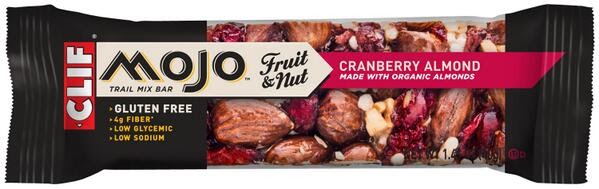
KIND sought a preliminary injunction against Clif Bar’s new trade dress for its MOJO bars; the court denied the motion.  KIND defines its trade dress as
(1) packaging with a transparent, rectangular front panel revealing a large portion of the bar itself; (2) a horizontal stripe bisecting the transparent front panel containing the flavor of the bar in text; (3) a text description of the product line (e.g. “Fruit & Nut,” “Plus,” or “Nuts & Spices”) in line with the horizontal stripe bisecting the transparent front panel; (4) a vertical black band, offset to the side of the package, containing a bulleted list of many of the bar’s key healthful attributes; (5) opaque vertical bands, or end caps, at either edge of the product package; and (6) a 40g size, in a slender shape.
KIND bar

KIND also sought to protect “the overall impression of the packaging,” not just those six specific elements, but the court wasn’t having it.  A clear definition of the protectable dress is necessary to allow courts and defendants to know what they’re supposed to be evaluating, and to avoid protecting a look at an improper level of generality.

First, the court determined that the trade dress was neither inherently distinctive nor generic.  Distinctiveness should be evaluated bearing in mind (1) the risk that overextension of trade dress protection could undermine limits on copyright and patent law, and (2) that trade dress doesn’t protect an idea, a concept, or a generalized type of appearance.  KIND understandably cited the old Landscapelanguage that “the varieties of labels and packaging available to wholesalers and manufacturers are virtually unlimited [so] a product’s trade dress typically will be arbitrary or fanciful and meet the inherently distinctive requirement for § 43(a) protection.”  But KIND’s own “very common packaging design” wasn’t inherently distinctive.  Nor was it generic—the combination of the six elements wasn’t a “singular custom in the industry.”
Running through the evidence, many food bars use one or more of the six elements KIND sought to protect: transparent packaging, horizontal banners with product/flavor descriptions, product attributes along one side of front panel, 40 gram size, and opaque end caps.  Many of these were also common in the food industry in general. Most of these elements also served functional purposes—the transparent window reveals the bar within; the text description informs consumers of the bar’s ingredients, etc.—and this also weighed against finding the trade dress protectable. These elements, either individually or together, just didn’t identify source.  The KIND logo wasn’t included in the claimed trade dress.  (And its two registrations for its packaging differed from that claimed here, most notably by including “KIND.”)  All the elements it sought to protect here instead described its product, particularly the most prominent feature: the transparent, rectangular front panel.  Likewise the text description and the 40g size in a “slender shape”; the horizontal stripe bisecting the transparent front panel contained the flavor, and the vertical black band contained “a bulleted list of many of the bar’s key healthful attributes.”  The opaque end caps might not seem descriptive at first, but they sometimes reflected the bar’s flavor or featured plus signs to show that the bar was part of KIND’s “Plus” line.
So, could KIND show secondary meaning?  Relevant factors: (1) advertising expenditures, (2) consumer studies linking the dress to the source, (3) unsolicited media coverage of the product, (4) sales success, (5) attempts to plagiarize the dress, and (6) length and exclusivity of the trade dress’s use.  KIND failed to meet its heavy burden of showing secondary meaning.
MOJO bar

The court found evidence that Clif Bar did deliberately copy elements of the KIND trade dress, making factor (5) favor KIND.  Sample statements: an email recapping a MOJO redesign meeting stated that “[e]veryone also agreed that Kind is a best in class packaging that we should learn from for MOJO,” with a “[l]arge product visual with clear window”; “[g]ood branding (KIND)” (although that wasn’t part of the trade dress at issue here); “[c]laims on front panel (not wrapped); and “[g]ood flavor communication claim.”  Another internal document said that KIND had an “advantage” in packaging because of its “large clear window” and because its “claims are clearly indicated on the front wrapper”; an email instructed a team member to “[b]ring multiple KIND bars” to a MOJO redesign meeting; a presentation indicated that one “packaging objective[ ]” was to “[c]ompete head-to-head with Kind” by incorporating a “[l]arger window to showcase bar with whole pieces of fruits & nuts,” a “[s]imilar window shape & coloring to Kind.”  At one point a brand manager said that the MOJO packaging was “now too close to KIND.”

That wasn’t enough to show secondary meaning, though.  Since launch, KIND had spent more than $100 million on marketing and advertising, had sold $600 million dollars’ worth of KIND bars, had received extensive unsolicited media coverage, and all KIND bars allegedly shared the six elements at issue.  However, KIND didn’t show that these sales/ads/etc. resulted in consumers associating these six elements with KIND, in the absence of the logo.  Even four ads featuring KIND bars without the logo displayed the logo elsewhere on the ad. Thus, the court couldn’t determine whether secondary meaning existed in these elements, or the logo, or the logo plus the six elements.
While “intentional copying constitutes persuasive evidence of consumer recognition, conscious replication alone does not establish secondary meaning.” (Otherwise competitors would hesitate to copy good, descriptive ideas.)
Though it wasn’t necessary, the court ran through the confusion factors as well. 
Strength of the trade dress: the court found it to be weak—descriptive, and without secondary meaning.  The commercial context also mattered: many food bars used the six elements, either individually or some in combination, which additionally undercut the strength of the trade dress and “indicate[d] that its claim is pitched at an improper level of generality.”  KIND’s CEO even testifed that the Think Thin Crunch bar “may arguably be infringing” as well, but most of the six elements at issue didn’t appear on its trade dress—the only similarities were the transparent window and the opaque end caps.  This was impermissibly seeking protection for “a generalized type of appearance.”
Similarity: Though the trade dresses shared some similar elements, the overall impression differed significantly, weighing against KIND.  KIND’s witness explained that packaging can be divided into two types, one that emphasizes straight lines and minimizes curvature, and the other that has or emphasizes curvature. Jargon ahoy: KIND’s trade dress is best described as “minimalist,” “simple,” “clean,” “modern,” and “sleek,” connecting with its brand concepts of integrity and simplicity.  It uses straight lines.  The MOJO trade dress has a different color scheme, fonts, and number and placement of design elements; it’s embellished rather than minimalist; and it uses curves in the large curved “J” of MOJO, the cursive font used to describe the product-line, and the mountain displayed along the bottom of the packaging.  Its movement/mountain imagery “connects with the core concepts” of the Clif Bar/MOJO brands.
Also, the prominent use of MOJO and the Clif Bar mark, which has 87% aided awareness, tended to dispel any confusion.  See Bristol-Myers Squibb Co. v. McNeil-P.P.C., Inc., 973 F.2d 1033, 1046 (2d Cir. 1992) (house brands can prevent confusion).  KIND argued that the Bristol-Myers rule didn’t apply because the Clif marks weren’t prominent enough and weren’t universally recognized, and because the KIND trade dress was remembered better than the name. The court disagreed: the marks didn’t have to be the most prominent part of the trade dress to dispel confusion, and anyway MOJO was the second most prominent feature after the transparent window.  Also, the evidence didn’t show general consumer recognition of KIND bars only through the six claimed elements.
Competitive proximity favored KIND; there was no gap to bridge.
Actual confusion evidence was weak; its absence wouldn’t weigh against KIND because the product was new to the market.  This factor weighed slightly in KIND’s favor:  There were dueling surveys and some anecdotal evidence.
KIND’s survey found 15% net confusion.  This was “on the lower end of rates that courts within this Circuit have found sufficient to show actual confusion.”  True, in the bad old days some courts accepted gross rates of 15% without control groups, but that was before courts understood consumer survey evidence. 
Plus, Clif Bars’ expert credibly testified that the KIND survey was flawed because it only measured whether there was confusion, not what caused it.  When there is a multi-element trade dress, it’s vital to understand what causes the problem.  But the control had none of the elements.  Thus, the survey may have underestimated noise/overestimated confusion.  The survey respondents were asked: “Do you think this brand of [snack bars] is or is not made by or made with the approval or sponsorship of the same company that makes the [corresponding type of product] you saw in the earlier photo?” Yes-sayers got follow-ups, and the verbatim responses to “What makes you say that?” and “Anything else?” questions proved Clif Bars’ point.  Some responses cited the similar packaging; other responses cited the similar flavors of the KIND and MOJO bars (e.g., “They have the same flavors, and are both healthy snack bars”; “Fruit and nut was on most of the packaging with the exception of the chocolate bar I believe. Looks like a higher quality of the same bars”; “They had the exact same titles for each of the different bars”); others cited both packaging and flavors; and others just completely whiffed (e.g., “These are very nice packages and I was looking for a special Valentine gift along these lines anyway, so it is exciting to encounter new products with better ingredients”; “I think this would be in every store and people would love to buy them.”).  Thus, the court gave little weight to the survey.
The anecdotal evidence of confusion involved one customer who thought the MOJO bar he’d selected was a KIND bar, but he had “no clue” about the bar he selected, and told the interviewer he was looking for a KIND bar because his daughter told him to buy it.  Since “the correct test is whether a consumer who is somewhat familiar with the plaintiff’s [dress] would likely be confused when presented with defendant’s [dress] alone,” this didn’t matter.  Another potential consumer who shared an apartment with a KIND employee, selected a MOJO bar, believing it to be a KIND bar, from a bowl of snacks in her apartment. But this confusion might have resulted from her expectation that she’d find KIND bars in her home because of her roommate’s employment. That wasn’t probative of the average consumer in marketplace conditions.
KIND also relied on social media post, but the court found them “mostly unhelpful.”  Comments on Clif Bar’s Facebook posts noted similarities between the bars, e.g., “I love all things Clif and I’m sure I’ll like these too, but don’t they kinda look like Kind bars?”  But assertions of similarity don’t establish confusion.  One tweet said, “I was about to pick up one of those [MOJO bars] because I thought it was a Kind Bar at the vitamin shop ….,” and that did suggest actionable initial interest confusion.  (Argh!  Confusion remedied before the consumer even takes physical action should not count.  That’s just initial attention. There are no sunk costs making this like bait and switch.)  But the overall evidence of actual confusion was weak.
Bad faith: the evidence didn’t show an intent to deceive consumers into believing that the MOJO bar was made or sponsored by KIND, and thus this factor weighed in favor of Clif Bar.  Intent to compete by imitating is vastly different from an intent to deceive.  The prominent display of the MOJO/Clif Bar marks and dissimilarity to KIND’s minimalist trade dress negated any inference of intent to deceive.
Quality: no evidence; no one cares.
Buyer sophistication: About half of retail outlets sell KIND bars in a “primarily impulse” setting, but over three-quarters of its sales volume comes from frequent purchasers who eat a bar several times a week or more.  Some buyers are casual and some careful. The court gave this factor little weight.
The court also identified other marketplace factors that favored Clif Bar.  Here, the “caddies” or “inner cases” in which these products are often sold, and the point of sale displays Clif Bar has provided retailers, all prominently bore the MOJO and Clif marks, thus dispelling confusion.  In addition, many MOJO and Clif bars are sold through mass market and grocery stores, where MOJO bars are often grouped with other Clif Bar products and KIND bars are often grouped with other KIND products.
Balancing the factors, no confusion was likely. Thus there was no irreparable harm. 
Under the alternate standard for preliminary relief (assuming it survives eBay), KIND also failed.  Clif Bar alleged sunk costs for the new MOJO products of $13.9 million, including inventory ready to ship and already shipped; “contracted ingredient and marketing commitments; R & D development costs; the cost of sales kits, merchandising shippers, plan-o-grams and reset work; and the forecasted loss of sales from Clif Bar products discontinued to make room for new CLIF MOJO products on the shelf.”  KIND’s proposal for a three-month sell-off period would reduce losses only as to the first category.  It would cost Clif Bar approximately $500,000 and take eight months to develop and manufacture new packaging, with a loss of $10 million in revenue during that period, with consequent harm to brand loyalty and reputation while it couldn’t fulfill its commitments.  While KIND argued that ingredients could be repurposed and that a new design would only take three months, KIND’s irreparable harm was premised on KIND’s alleged loss of goodwill and market share through confusion, which wasn’t sufficiently shown, so it couldn’t meet its burden of showing that the balance of harms tipped decidedly in its favor.

Posted in surveys, trademark | Leave a comment