Congressional hearing on the scope of copyright protection

Video here.  Written testimony is also available from Glynn Lunney and David Nimmer on the right of making available; James Love and Mark Schultz on broadcast signal rights; and Patricia Griffin and Carl Malamud on rights in standards/local codes.  It’s almost as if we’re having a serious conversation about copyright reform.
Posted in http://schemas.google.com/blogger/2008/kind#post | Leave a comment

FDA declines to define "natural," again

FDA letter.  Discussion at Seller Beware Blog.

Posted in consumer protection, fda, http://schemas.google.com/blogger/2008/kind#post | Leave a comment

qualitative statements about insurance policies weren’t necessarily puffery

U.S. Bank Nat’l Ass’n v. PHL Variable Ins. Co., 2013 WL 791462, No. 12 Civ. 6811 (S.D.N.Y. March 5, 2013) (magistrate judge)

Just coughed up by Westlaw, noted for discussion of puffery.

US Bank, as securities intermediary for Lima Acquisition LP, sued PHL for breaching its policy terms and violating various laws by raising the insurance rates on its policies.  The causes of action included Connecticut Unfair Trade Practices Act (CUTPA) and Connecticut Unfair Insurance Practices Act (CUIPA) claims; the magistrate judge concluded that there was no independent private cause of action under CUIPA, but a CUIPA violation could form the basis of a CUTPA claim.

Lima owned twelve policies issued by PHL. The policies allowed holders to choose how much to pay, and the account would accrue interest, with fees deducted.  The policies permit the insurer to adjust the key fee (the cost of insurance), but only based on certain specified factors, the most significant of which is mortality. If the account isn’t sufficient to cover fees, the policy will lapse.

The complaint alleged that PHL misrepresented the circumstances under which rate increases might occur and later further misrepresented that the rate increases were in accordance with the policy terms.  PHL allegedly increased rates to make money and induce “shock lapses” in which policyholders give up instead of paying, relieving PHL of payout risk, including by intentionally overstating the cost of insurance to current policyholders to induce lapse and by stating that policyholders needed only to pay enough to cover monthly charges, but then charging more for policyholders who paid only the minimum. Other alleged falsehoods included PHL’s statements that the policies provided the “opportunity to lower premiums” and “increased choice and policy design flexibility.”

Some of the statements might be outside the 3-year statute of limitations, but some of the alleged misrepresentations were clearly timely.  PHL argued that the alleged misrepresentations about flexibility were made well over 3 years before suit was filed, in other policies issued from 2005-2007, and in “press releases to policyholders and prospective policyholders” issued in 2003 and 2006.  But PHL didn’t allegedly wrong this plaintiff at that time, since Lima hadn’t bought then.  “The defendant has provided no reason why violations against someone else should also start the limitations period as to the plaintiff’s claims, even though the plaintiff was not affected by that initial violation.… To bar the plaintiff’s claim, as the defendant argues, would mean that the defendant can make the statements at issue here to anyone in the future with impunity because any claims based on the statements would be untimely.”

PHL argued that its statements were merely opinion, not fact.  Misrepresentations about policy terms are actionable.  And “‘while statements containing simple economic projections, expressions of optimism, and other puffery are insufficient,’ qualitative statements can be misrepresentations of existing facts if those statements are belied by conditions known to the defendants.”  Opinions can be actionable if they’re without a basis in fact or undermined by facts known to the speakers. 

The statements here revolved around the choice/flexibility represented by the policies, e.g., “opportunity to lower premiums, as well as adjust the amount and timing of premium payments” and “features suited to meet policyholders’ evolving personal or business planning needs.”  The court found that these statements, while not phrased as absolutes or measurable characteristics, described their “essential, distinguishing characteristics.”  Though “flexible” or “lower premium payments” alone might be nonactionable opinion, they could be actionable in their full context.  “If, as alleged, the policyholder could not pay only the monthly policy charges or adjust the amount of monthly payments without being penalized, the Policies departed from their advertised characteristics.”  The statements weren’t just PHL’s hopes.  “To find them to be mere puffery would drain all meaning from descriptions such as ‘flexible’ or ‘lower premium payments’ and leave policyholders unable to rely on any qualitative descriptions of insurance policies.”

As for PHL’s statement that the rate increases were “in accordance with the terms” of the policies, though, that was an opinion about the law, not a misstatement of fact.  (Citation: Restatement (Second) of Torts § 545(2) & cmt. a (1977) ( “[T]he statement of the legal consequences of [the known] facts is a statement of opinion as to what a court would determine to be the legal consequences of the facts.”).  Mentioned because the court in the recent Oracle case held to the contrary—that representations that a course of conduct was legally protected could be false advertising.)

The complaint also sufficiently alleged facts going to reliance and pled the fraud claim with particularity.
Posted in consumer protection, http://schemas.google.com/blogger/2008/kind#post | Leave a comment

keyword purchase supports unfair competition verdict

Chow v. Chak Yam Chau, — Fed.Appx. —-, 2014 WL 92094, No. 12–15994 (11th Cir. Jan. 10, 2014)

Michael Chow credits himself with introducing “high-end Chinese cuisine in a fine dining setting to the west” through the “Mr Chow” restaurants he opened across the country, starting in 1974 (reaching NYC in 1979 and expanding through 2009).  Mr Chow restaurants have signature dishes, distinctive décor, and feature the “noodle show,” where a staff member makes fresh noodles by hand.

Philippe Chow Chau, born Chak Yam Chau, worked in the kitchen of the NYC 57th Street Mr Chow restaurant for 25 years, then partnered with Stratis Morfogen to open a restaurant called “Philippe by Philippe Chow” on 60th Street, a few blocks from the Mr Chow.  They later opened additional restaurants, including in cities where Mr Chow operates. The menu, décor and “noodle show” were very similar to those in the Mr Chow restaurants.  Michael Chow believed that Chau stole his recipes and business plan.

Chow and the related corporate entities sued Chau, Morfogen, etc., alleging trademark infringement, false advertising, misappropriation of trade secrets, and unfair competition under federal, state, and common law. The Philippe Restaurants filed counterclaims for defamation and to cancel the Mr Chow’s trademark.  Defendants also won summary judgment to the extent that Chow’s claims were based on alleged illegal compensation practices by the Philippe Restaurants, finding that plaintiffs hadn’t shown any damages therefrom.  The district court also kicked out the trade secret claim as barred by the applicable statute of limitations.  The jury found for plaintiffs only on the claims for false advertising/unfair competition and awarded roughly $500,000 from the 60th Street restaurant to the 57th Street restaurant, and $500,000 from Morfogen to Chow (a verdict that was set aside because Chow shouldn’t have appeared separately on the verdict form; the court of appeals reinstated the award).  None of the other plaintiffs were found to have been damaged. The jury rejected the counterclaims.

The parties appealed on various issues; I’ll focus on false advertising/unfair competition.  The district court ruled that Mr Chow failed to show any connection between its allegations that the Philippe Restaurants illegally paid their staff cash “under the table” and any damage Mr. Chow sustained, especially given evidence that Mr Chow did the same thing.  The court of appeals affirmed, because any connection to harm to Mr Chow was speculative.

The court of appeals also affirmed the jury’s verdict against the 60th Street restaurant.  There was evidence of potentially deceptive public statements attributable to the relevant defendants, such as that Philippe Chau was the “mastermind” and “architect” of the menu at the Mr Chow restaurants and that Philippe Chau was a critically-acclaimed chef in his own right.  Morfogen also bought “Chow” and “Mr Chow” so that sponsored links would appear in search results—the court didn’t discuss the text of the resulting ads.  “A reasonable jury could conclude that, taken together, the public statements and the sponsored links were misleading and had the capacity to deceive consumers.”  A reasonable jury could have rejected Mr Chow’s trademark infringement claims and still found liability for unfair competition under §43(a), since that section is broader than trademark (not clear if the court means “because it also includes false advertising” or if it thinks there’s some inchoate form of unfair competition that involves neither false advertising nor infringement; I hope it’s the former).
Posted in http://schemas.google.com/blogger/2008/kind#post, trademark | Leave a comment

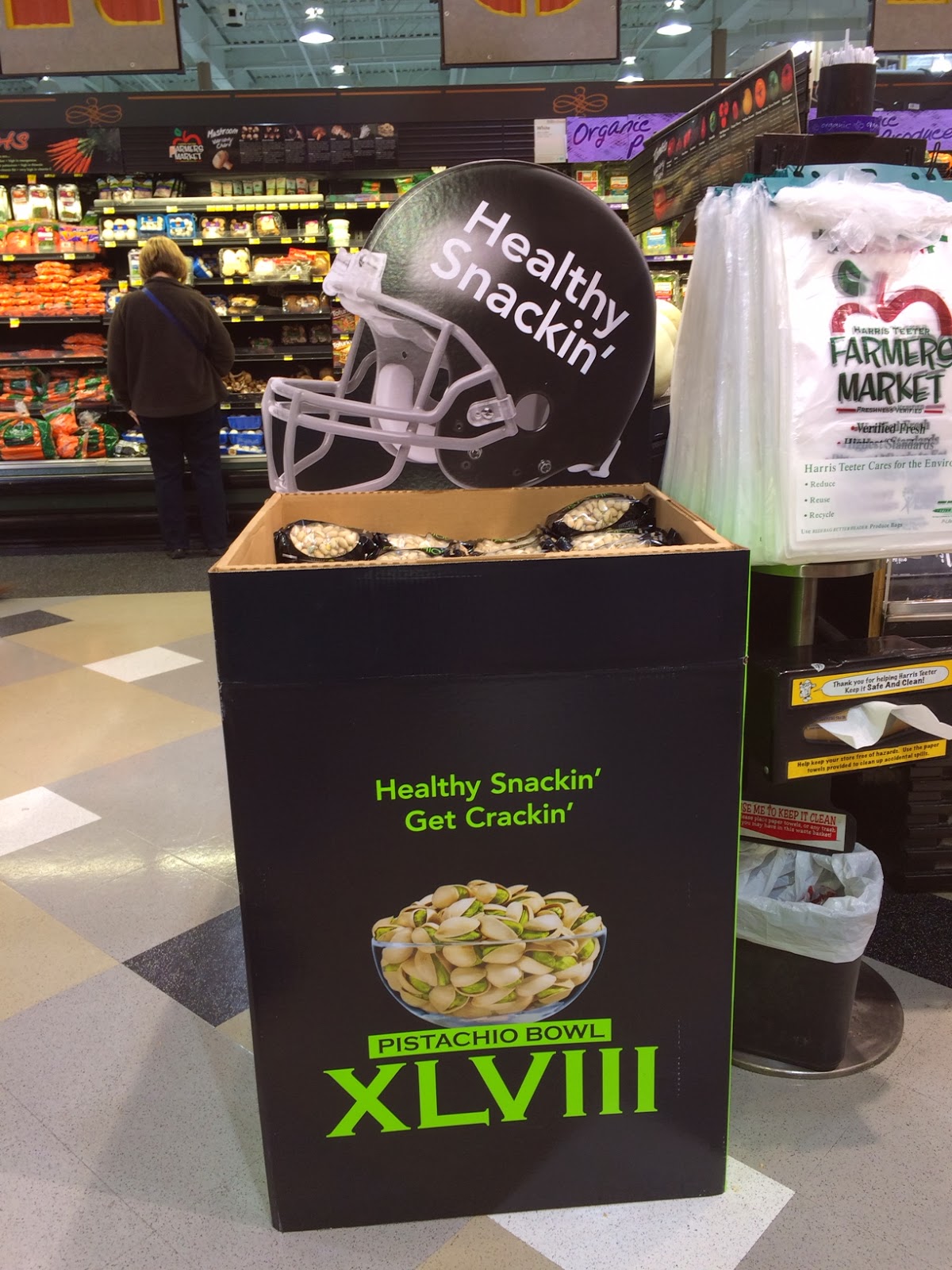
time to shell out for an IP lawyer

You can’t say Pom’s owners aren’t willing to pick a fight (or a fruit or nut).

Also via Zach Schrag.
Posted in trademark | Leave a comment

Hedging and bullying in trademark

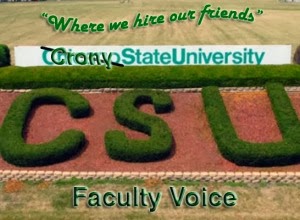
Chicago State University attempts to intimidate a faculty blog into not identifying itself properly, using trademark law as its bullying tool/justification.  This takes a turn for the silly as the university now objects to a picture of CSU hedges, trimmed in the shape of the letters “CSU,” that replaced the earlier text.  Intriguingly, the use of an image might indeed have some effect on search algorithms, depending on the technology—but it’s completely legitimate nominative fair use in either case.  This nonlawyer’s discussion does not analyze the issues in the way I’d expect a trademark lawyer to do, but the underlying point—there is nothing wrong with the faculty blog, and it’s a misuse of trademark law to object to critical content—is clearly right; the discussion of other CSU institutions makes the related point that those who make overbearing trademark threats sometimes put their overall rights at risk.

HT Zach Schrag.
Posted in trademark | Leave a comment

Cert granted in Pom Wonderful v. Coca-Cola

Orders list here.  There were also some grants relating to some other minor IP issues.  Pom’s petition, with QP: “Whether the court of appeals erred in holding that a private party cannot bring a Lanham Act claim challenging a product label regulated under the Food, Drug, and Cosmetic Act.”  Excellent framing by petitioner.

Two false advertising cases!  Is this a trend?

Posted in http://schemas.google.com/blogger/2008/kind#post | Leave a comment

Trademark strategy question of the day

MLA Subconference is “an independent and evolving group of graduate students in the humanities who are interested in creating a new kind of conference environment, in order to propose alternative professional, social, and political possibilities for ourselves and our peers.” The FAQ says: “The Subconference is in no way affiliated with or endorsed by the Modern Language Association” (though the “who we are” section of the website does not say this).  Given the political sensitivities involved if the MLA threatened graduate students, how would you counsel the MLA to respond? 

Posted in trademark | Leave a comment

Inability to determine who bought what dooms class certification

Astiana v. Ben & Jerry’s Homemade, Inc., 2014 WL 60097, No. C 10-4387 (N.D. Cal. Jan. 7, 2014)

The court denied certification to a proposed class who bought ice cream from Ben & Jerry’s that contained alkalized cocoa and were labeled “all natural.” Astiana, bringing the usual California claims, contended that the packaging and ads were deceptive and misleading because the cocoa was alkalized with a “synthetic” agent.  After Dennis v. Kellogg, the initial proposed class settlement fell apart, and they proceeded to the class certification motion, which sought to cover California purchasers of “ice cream products that were labeled ‘All Natural’ but contained alkalized cocoa processed with a synthetic ingredient.”

The court found a lack of ascertainability and a lack of typicality/predominance.  Ben & Jerry’s argued that, because cocoa can be alkalized using one of several alkalis – some of which are “natural” and some of which are “non-natural” – and because Ben & Jerry’s is a wholesaler and didn’t keep records about which consumers bought which products, class membership couldn’t be determined.  Astiana didn’t provide evidence about which products included the allegedly synthetic ingredient, or evidence that there was a way to identify the alkali in ice cream purchases. “The packaging labels say only ‘processed with alkali,’ because that is all the FDA requires,” and Ben & Jerry’s uses cocoa from as many as 15 different suppliers.  Although one supplier was the only supplier who provided cocoa for use in ice cream with a chocolate base, the supplier’s designee testified that he didn’t know which alkalizing agent was used in every instance, and other sources provided Ben & Jerry’s with mix-in ingredients made from alkalized cocoa, without identifying the alkalizing agent.

Ben & Jerry’s also challenged Astiana’s standing, because she testified in deposition that the price had no bearing on her purchase decisions, so she couldn’t have suffered an injury from paying a premium for the ice cream.  But she also testified that she’d paid a premium for all-natual products and refrained from buying products that weren’t all natural, and also that she lost money because of the purchase.  The arguments here were sufficient for standing at this stage.

On commonality, Ben & Jerry’s argued that (1) “all natural” has no common meaning; (2) there was no evidence that the term was likely to deceive, such as consumer surveys or expert evidence suggesting that consumers would expect a non-synthetic alkali; (3) its survey evidence showed that there was no common understanding of “all natural.”  Ben & Jerry’s expert showed 400 consumers a “Cherry Garcia®” cartoon with either the words “all natural” or “Vermont’s Finest” on the label. “More than half the respondents had no expectation that the ice cream contained alkalized cocoa (although both packages included ‘cocoa (processed with alkali)’ as an ingredient; only 13% shown the ‘all natural’ label expected that the alkali would be ‘natural,’ and of that group, only 3% said that would make them more likely to buy.” (It’d be interesting to see the exact questions asked/how much attention was directed to the label claim, especially given the inattention to the ingredient lists.) 

Its other expert found no evidence that consumers of Ben & Jerry’s ice cream gave significant consideration to the “all natural” label but instead were motivated by many other factors; Ben & Jerry’s didn’t charge more for ice cream with the “all natural” label.  Moreover, when Ben & Jerry’s removed the “all natural” label, the retail and wholesale prices did not decrease.

A single significant common issue can establish commonality.  But Ben & Jerry’s provided evidence that consumers weren’t likely to be deceived, while Astiana presented no evidence in opposition, preventing a finding of commonality on that question.  However, the court found that the question whether there was a common or accepted meaning of “all natural” was arguably sufficient to establish commonality.

Ben & Jerry’s used the same evidence to fight typicality.  Astiana testified that she relied on “all natural,” but 97% of consumers in the survey responded that it did not matter if the product contained cocoa processed with a synthetic alkali.  The court found that she hadn’t shown typicality, in part because she hadn’t identified an ascertainable class.

Also, Astiana sought damages, but hadn’t established that common issues predominate such that there was a classwide method of granting relief.  She hadn’t offered expert testimony demonstrating that the market price of Ben & Jerry’s ice cream with the “all natural” designation was higher than the market price without it. Further, she had no testimony demonstrating a gap between the market price of Ben & Jerry’s “all natural” ice cream and the price it should have sold for, or any evidence demonstrating that consumers were willing to pay a premium for “all natural” ice cream made with cocoa alkalized with a natural alkali.  Ben & Jerry’s doesn’t set retail prices, and such prices differ by nature and location of sales outlets.  Plus, individualized restitution would require individualized consideration of how many packages a customer bought.  Plaintiffs are required to provide “evidentiary proof” showing a classwide method of awarding relief consistent with their theory of liability. That didn’t happen here.
Posted in california, class actions, consumer protection, http://schemas.google.com/blogger/2008/kind#post | Leave a comment

New piece: Henry Jenkins and fair use

I wrote a short piece for a festschrift on Henry Jenkins’ Textual Poachers.  I think it might have my best title since Rules of Engagement.  “I’m a Lawyer, Not an Ethnographer, Jim”: Textual Poachers and Fair Use.

Posted in fan fiction, fanworks, http://schemas.google.com/blogger/2008/kind#post, my writings | Leave a comment