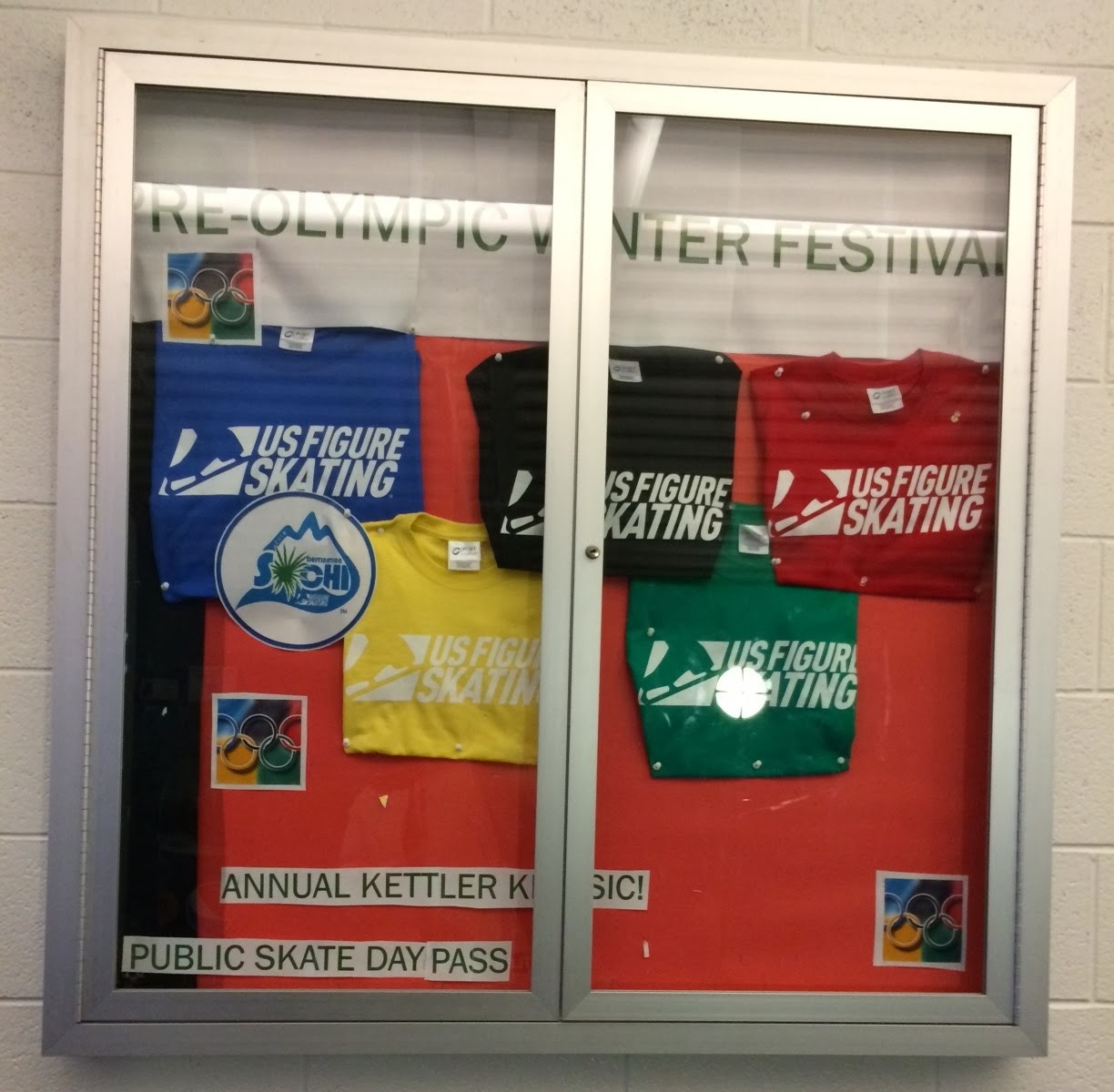
Olympic rectangles?

Picture from nearby skating rink

So, does the configuration of shirts sufficiently replicate the 5-ring symbol to trigger the protections found in US law?

Posted in trademark | Leave a comment

Appropriation art and sf book covers

How a Science Fiction Book Cover Became a $5.7 Million Painting: Appropriation art that relies on expanding size, not shrinking compared to the original, for the claim of transformativeness.  E.g., from a program: “[The paintings] are unusual for Brown in that they are based upon paintings made specifically to be reproduced and reduced in scale – their originals versions were commissioned to illustrate the covers of popular science fiction novels. By enlarging them so dramatically, Brown merges the conventions of science fiction illustration with the spectacle of large-scale history or landscape painting by artists such as Jacques-Louis David and J.M.W. Turner.”  It’s not clear how much of the artist’s way of speaking about his work, and his gallery’s, have been affected by fair use case law—and, especially for an appropriation artist, why shouldn’t case law have influence on an artist’s self-concept, as the rest of culture surely does?  Also, this news comes not from the US, but from a country with a distinct fair dealing regime, and yet here the artist is—how should we think about that?

Posted in art law, http://schemas.google.com/blogger/2008/kind#post | Leave a comment

Oracle suit against third party claiming to provide lawful software updates proceeds

Oracle America, Inc. v. TERiX Computer Company, Inc., No. 13-cv-03385, 2014 WL 31344 (N.D. Cal. Jan. 3, 2014)

Oracle sells hardware, software, and support and consulting services to maintain those.  But people also use third-party vendors for support, and here Oracle sued two, alleging that they duped Oracle’s customers into providing them with access to updates to Oracle’s Solaris operating system.  Oracle customers get a Customer Support Identification number linked to products covered by their support contract.  An active licensed customer can download covered software updates, but isn’t allowed to share or use its access credentials for the benefit of others or for the benefit of unsupported Oracle hardware.  When third parties provide support services, neither they nor their customers are allowed to use Oracle’s support website or Oracle’s updates.  However, defendants allegedly told customers that they could lawfully provide that access and support (TeRIX allegedly claimed to be an Oracle partner) and/or that customers were entitled to obtain updates even without an active Oracle support contract by virtue of their licenses to use the underlying OS in conjunction with their Oracle hardware.  Defendants allegedly obtained access to Oracle’s secure support website under false pretenses or directed others with access to download the software. In at least one instance, they allegedly copied and distributed Oracle’s software.  Oracle sued for copyright infringement, violation of the CFAA, breach of contract, false advertising, tortious interference with prospective economic relations, and unfair competition.  Most of the claims survived, but not all the CFAA claims. 

I’m not going to cover the CFAA claims in any detail, though notably the court declined to apply Rule 9(b) because, though the CFAA uses the word “fraud,” a CFAA claim as alleged here didn’t necessarily require fraud in the sense of conduct that is fraudulent under California law.  “[T]he nub of Oracle’s complaint in this case is that Defendants duped at least one Oracle customer into purchasing its unauthorized service update by misrepresenting the customer’s right to updates without a support contract with Oracle. It therefore was not Oracle, but Oracle’s customers, that relied on the alleged misrepresentation.”  Thus, even if Rule 9(b) might apply to first-party claims of reliance, it didn’t here.  Also, defendants can’t be liable for trafficking merely for receiving login credentials.  However, Oracle sufficiently alleged that defendants accessed its websites without authorization/exceeded authorized access under US v. Nosal, because unlike non-CFAA violators in other cases, defendants weren’t themselves authorized to access the website—they didn’t just misuse information they got from Oracle’s site (not actionable under the CFAA); rather, they weren’t supposed to have access in the first place.

The breach of contract claims for violating Oracle’s ToS on its website also survived.  On whether defendants sufficiently assented to the terms, that wasn’t an appropriate topic on a motion to dismiss.

The copyright claims survived, with a twist.  The updates at issue were unregistered derivative works, and thus Oracle couldn’t sue on them. However, it could sue for infringement to the extent that there was copied material common both to the underlying registered work and the unregistered derivative work.  Defendants’ defense that customers were licensed to use the registered work (and that they could rely on these licenses) was an affirmative defense not apparent on the face of the complaint.

Lanham Act false advertising: Oracle alleged that defendants falsely advertised that they could provide legal copies of Oracle updates if customers cancelled their Oracle contracts, including claims that defendants could provide support as the customer’s agent under a claimed “right to use.”  Defendants argued that these were nonactionable statements of opinion, and also that the statements at issue were generic references to UNIX platforms, patch management, and software distribution, not specific references to Oracle or its software. 

Oracle rejoined that the statements were deceptive, even if not literally false, and argued that it shouldn’t have to litigate its infringement and CFAA claims to conclusion, turning opinion to fact, before it could bring a Lanham Act claim.  Despite precedent that legal opinions from nonlawyers aren’t actionable because they are neither true nor false, the court agreed with this clever framing—“the court does not see a reason to first require Oracle to litigate its underlying causes-of-action before bringing a Lanham Act false advertising claim.”  Also, it refused to apply Rule 9(b), because the Ninth Circuit has never required that for Lanham Act claims.  Unsurprisingly, the state law unfair competition claim also survived, as did the intentional interference with prospective economic relations claim, since Oracle had sufficiently alleged the necessary wrongful acts and expectation of future economic benefit.
Posted in cfaa, copyright, http://schemas.google.com/blogger/2008/kind#post, procedure, tortious interference | Leave a comment

the trademark joke is a tricky beast

For example:

Dealer: is pepsicane ok?
Posted in trademark | Leave a comment

Bumble Bee pushes the envelope, finds lawsuit inside

Ogden v. Bumble Bee Foods, LLC, No. 12-CV-01828, 2014 WL 27527 (N.D. Cal. Jan. 2, 2014)

I’m trying to do less food claim blogging, but I noted this case because of the summary judgment submissions, which contain interesting evidence about food marketing practices generally.

Ogden sued Bumble Bee, alleging the usual California claims, over representations related to several tuna/sardine products it sold.  She alleged that Bumble Bee made unlawful nutrient content claims about the presence of Omega-3 fatty acids, contrary to the FDCA and FDA regulations as adopted by California law.  The products claimed to be an “excellent source” of or “rich in” Omega-3, but the FDA hasn’t established a reference daily intake/value for Omega-3 as required for such claims. Ogden testified that she read and relied on the statements, and that she paid more for the products than she otherwise would because of them. She further alleged that the statements were unlawful because they weren’t accompanied by disclosures about the products’ high levels of fat or cholesterol, as required for such products making nutrient claims. Though Ogden doesn’t normally read detailed nutrition information panels, she testified that she bought the products because of the Omega-3 claims and that she wouldn’t have done so if she’d known about the high levels of fat or cholesterol. Ogden also challenged various vitamin A and iron nutrient content claims made on the relevant Bumble Bee website, but she didn’t visit that site before buying.  (She also challenged the heart symbol on the label of one of the products as an unlawful health/disease treatment claim.)

As is now required, we start with standing.  Bumble Bee argued that Ogden didn’t show a genuine factual issue about whether she bought any Bumble Bee products “as a result of any false or misleading statement” by Bumble Bee.  (Why this is a standing issue and not a merits issue …)  Standing requires reliance on the defendant’s alleged misrepresentations and resulting injury.  The reliance requirement applies also to “unfairness” claims predicated on misrepresentations.  Ogden had indeed created a material issue with her testimony.

Bumble Bee argued that Ogden couldn’t show reliance on a misrepresentation because its claims were authorized by federal law.  The FDCA allows manufacturers to petition the FDA for permission to use new nutrient content claims.  If the FDA doesn’t object within 120 days, it’s deemed authorized at least until the FDA issues a superseding regulation (or a district court rules against the manufacturer in an enforcement proceeding).  In 2005, a different seafood manufacturer sought permission to use an “excellent source”/“high in”/“rich in” Omega-3 claim, and the FDA didn’t object within 120 days.  Though it issued a proposed rule that would’ve declared this claim unlawful, the proposed rule never took effect, so it remains authorized.

This other notification didn’t render Bumble Bee’s statements lawful.  The language was materially different from Bumble Bee’s own statements, identifying the specific type of Omega-3 fatty acids present, as Bumble Bee did not.  The language of the law itself required notification about the “exact words” to be used in the claim. And, the court pointed out, if the Omega-3 statements weren’t authorized by FDA regulations, then they shouldn’t have appeared on the product labels at all, since they’re nutrient content claims. “Although the Court does not conclude, at this point, that Bumble Bee’s Omega–3 statements were unlawful, the Court notes that Bumble Bee has not identified, and the Court has not found, any other statute, regulation, or governing authority that indicates that Bumble Bee’s Omega–3 statements complied with federal and state labeling requirements.”  (Yikes!)

As for claims based on Bumble Bee’s failure to accompany the Omega-3 statements with a front-of-package fat/cholesterol disclosure, Ogden’s concession that she doesn’t ordinarily read detailed nutrition information wasn’t dispositive.  She testified that she understood the Omega-3 statements to mean that the products were heart-healthy and that she wouldn’t have bought the products had she known the truth given her concerns over high levels of fat and cholesterol.  Thus, a jury could reasonably infer that she would’ve read front of package disclosures and thus suffered an injury from their absence.  In fact, “the inference that favors Ogden may even be stronger than the inference that favors Bumble Bee,” since the whole point of the front-of-package disclosure requirements “appears to be to give consumers extra encouragement to read the nutrition panel” and the FDA clearly regards such disclosures as “critical” in informing consumers.

Bumble Bee also argued that “consumers in general are indifferent to nutrition information on a food product’s packaging.”  This, the court noted, went to the substance of the claim that Bumble Bee’s conduct was likely to deceive reasonable consumers, not to standing, but anyway it’s generally a factual issue.  The court cited testimony from a Bumble Bee marketing rep acknowledging that Bumble Bee views statements on the front of its labels as important, as well as a Bumble Bee VP who stated in meeting minutes that “[m]y suggestion [for label statements regarding Omega–3s] is to push the envelope as FDA doesn’t have a track record of challenging anything.”  This was enough to preclude reliance on Bumble Bee’s expert report concluding that consumers do not care about fat or cholesterol content in deciding whether to purchase canned seafood.

However, the vitamin A and iron nutrient content claims were rejected because they only related to statements on the website, and Ogden neither proved that the statements were actually made by providing evidence of what the website said nor testified that she relied on the website before purchase.  The same was true for the health claims, except for that based on the heart symbol on the Bumble Bee tuna in water.  But there, she failed to explain why the heart symbol was unlawful.

The court rejected other arguments that reduced to FDA preemption, which doesn’t exist because California’s law here is identical and Ogden was enforcing California law.  However, the court found that Ogden wasn’t entitled to restitution or disgorgement because she didn’t offer evidence to prove the difference between what she paid and the value of what she received.  Finally, her injunctive relief claims survived because, while Bumble Bee was “in the process” of revising the labels, there was no evidence of the timing or content of that change, so injunctive relief might still be appropriate.
Posted in california, fda, http://schemas.google.com/blogger/2008/kind#post, standing | Leave a comment

advertising law exam in 140 characters or less

Film critic’s tweet turned into ad without his consent: violation of the right of publicity?  Grounds for a false endorsement claim?  Or just standard practice for publishers’/studios’ use of reviews?  (This ad is for a product itself protected by the First Amendment, which should make a big difference—but would it meet the transformativeness test that is, we are now to believe, the dominant test for First Amendment protection for artistic works, much less ads?)  The tweet was edited so that a partial quote looked complete. Does that make a difference?  What would the FTC think?  Also of note: the NYT has guidelines for ads; did it violate them?

“I’m surprised that Rudin did it over my objection, and I do feel that The Times itself should have checked with me, especially given that these are my words but not from a review,” Mr. Scott told [the NYT public editor] on Monday. “This is new enough ground that it should have been talked about more.”

Others have mentioned the potential relevance of Twitter’s terms of service (is the film company bound by them? The film/production company probably has a Twitter account), and the public editor discusses the awkwardness of this event right when the NYT is about to start “native advertising.”  In that light, I was struck by the film producer’s claim that “The paper running the ad is a tacit approval of the content of the ad.”  Also by his implausible, to the point of laughability, idea that putting the notation “MT” somewhere on the ad would have disclosed that the tweet had been modified.
Posted in advertising, right of publicity | Leave a comment

Guest post: Betsy Rosenblatt on the case of Sherlock Holmes’ two lives

Klinger v. Conan Doyle Estate, Ltd., No. 13-cv-01226 (N.D. Ill. Dec. 23, 2013)  

I’m going to turn this over to Betsy Rosenblatt, current colleague/head of the legal committee of the Organization for Transformative Works and Assistant Professor of Law/Director, Center for Intellectual Property Law at Whittier Law.  Professor Rosenblatt is also the author of an article about Holmes-related IP issues, so she’s the best possible commentator. 

Arthur Conan Doyle’s Sherlock Holmes canon, comprising 56 short stories and 4 novels, are among the most read and most-adapted works in recent history.  In most of the world, copyright in all of the stories and novels has expired.  In the U.S., copyright protection has expired on some of the stories but, thanks to the Copyright Term Extension Act, copyright protection remains for ten stories, first published after 1923 in the U.S. under the collective title “The Case-Book of Sherlock Holmes.”  These rights belong to a company called the Conan Doyle Estate (“CDE”), which has licensed them to a number of adapters, including Warner Brothers (for the Robert Downey Jr. Sherlock Holmes films), CBS-TV (for Elementary), and the BBC (for its distribution of its Sherlock series in the U.S.). 

On December 23, 2013, Judge Ruben Castillo of the Northern District of Illinois ruled in the case of Klinger v. Conan Doyle Estate, Ltd. that U.S. copyright protection had expired on all elements of the Sherlock Holmes canon that were first introduced before 1923.  That part of the case is straightforward, and no doubt correct. 

But the case also has broader implications worth exploring.  Most notably, while several courts have held that “increments of expression” original to derivative works may be protectable, they’ve provided little to no guidance about what constitutes a protectable “increment of expression” about a copyrightable character.  This ruling sets the bar uncomfortably low—implying that any new fact or trait about an already distinctly delineated character may create a new, protectable version of that character, no matter how generic, predictable, or insignificant that trait.   

1. Copyright in serialized characters

Klinger structured his complaint very narrowly to focus on copyright expiration.  He could have asked whether his anthology or similar commercial derivative works constituted copyright fair use.  He could have asked for a declaration concerning the CDE’s claim (made elsewhere) that it has trademark rights in the word mark “Sherlock Holmes” for a number of classes of goods, including detective fiction.  As it was, Klinger asked only for a declaration concerning the copyright status of the pre-1923 story elements and post-1923 stories.  

This narrow framework allowed the court to rule on summary judgment, reaching the generally self-evident conclusion that story elements first published prior to 1923 are no longer protected by copyright, and those protectable elements introduced later are still protected.  This is a straightforward and wholly reasonable result for the characters, plots, and story elements that appeared exclusively in pre-1923 works.  But what of characters that appeared in both pre-1923 and post-1923 works?   

The CDE offered what the court described as a “novel legal argument” that the characters of Sherlock Holmes and Dr. Watson continued to be developed throughout the post-1923 stories, and that therefore, the characters themselves would not enter the public domain until their last story did.  The court rejected this argument, explaining—in line with Silverman v. CBS and a number of other cases that have held similarly—that “where an author has used the same character in a series of works, some of which are in the public domain, the public is free to copy [character and] story elements from the public domain works,” but not from still-protected works.  The same rule would apply broadly to not only Holmes and Watson, but also other characters created early in the 20th century and serialized over time, like G.K. Chesterton’s Father Brown, Edgar Rice Burroughs’ Tarzan, and Agatha Christie’s Hercule Poirot.

Although the court explicitly avoided deciding “the copyright status of the Sherlock Holmes character” as a whole (fn 8), as a practical matter, the result of this opinion is that the characters of Holmes and Watson are in the public domain.  To some extent, this result is an artifact of the manner in which Klinger sought relief:  in an exhibit to his complaint, he listed all of the story elements that he argued were on the public domain, including a number of complete characters (such as Inspector Lestrade, Mrs. Hudson, and Irene Adler), and “as to Holmes himself” and “as to Dr. Watson,” a number of character traits.  The court therefore was never asked to, and did not, perform an explicit analysis of whether Holmes, Watson, or other characters reached the threshold of “distinctly delineated” characters worthy of copyright protection—but the clear implication of this ruling is (a) that Holmes and Watson, as characters, were sufficiently distinctly delineated in the pre-1923 stories to be protected by copyright, and (b) that that copyright has expired.  To the extent that the characters were modified in the ten post-1923 stories, those modified versions of the characters remain protected.  The CDE protested that this holding would “dismantle” the characters of Holmes and Watson into a public domain version and a copyrighted version.  The court was unconcerned. 

Personally, I’m less worried by the idea of “dismantled” characters than by the particular character elements that the court found protectable.  The court identified three character traits of Holmes and Watson as still protected:  (1) Dr. Watson’s second marriage; (2) Dr. Watson’s background as an athlete; and (3) Sherlock Holmes’s retirement from his detective agency.  As a factual matter, this result is also an artifact of the case’s procedural history—the court only considered the parties’ factual submissions and didn’t review the text of Arthur Conan Doyle’s actual canonical writings.  If it had, it would have observed, for example, that Holmes’s retirement was actually first described in detail in a public domain story, “His Last Bow.”  Likewise, Watson’s second wife is factually far from the “character” the court may have assumed she was—she is mentioned in passing and never even given a name, much less identified by “distinctly delineated” character traits.    

Setting these factual matters aside, however, the ruling raises a deeper question:  what does it mean for a public domain character to have a protected character trait?  Certainly, the court would not protect the generic ideas of “Doctor with a background as an athlete” or “Doctor with a second wife.”  And the court has made clear that Watson himself has fallen into the public domain—but his history as an athlete and the existence of his unnamed second wife have not.  The court reasoned that the later-published stories constituted derivative works from the public-domain stories, and provided “enough expressive variation from public-domain or other existing works to enable the new work”—here, the historically athletic, second-married version of Watson—“from its predecessors.”   

On one hand, this conclusion likely differs from the way most people experience serialized characters.  We see them as unitary entities, about whom we simply learn more over time as more facts are revealed to us.  We likely imagine that those facts have always been there, even if we did not know them.  This is particularly true of characters like Holmes and Watson, since their tales were not published in chronological order.  We therefore experience their lives out of sequence, and assign the sequence as we read.  But dividing characters into multiple versions—Watson 1.0 was distinctly delineated before 1923, and Watson 2.0 came later—reflects the reality of serialized production and, more importantly, permits characters to enter the public domain in an orderly manner.  The alternative would be far worse:  copyright holders could, in effect, create eternal copyright in characters simply by continuing to write new stories about them.   

But while the idea that new versions of characters may retain protection after old versions fall into the public domain may be a fine one, the ruling highlights a line-drawing problem:  how new does a “new character trait” have to be to create a new version of an old character?  Drawing on case law about the level of originality required for copyrightability in general, this court set the threshold as low as possible:  all that is required is an “original expression” sufficient to “enable the new work to be readily distinguished from its predecessors.”  Although this is consistent with the law about protecting original “increments of expression” in derivative works, it’s an odd result as applied to characters, since courts have generally required a much higher level of originality—“distinct delineation”—for copyright to attach to a particular character.  The court notes that a “character, character trait, and storyline” may each be copyrightable increments of expression in a derivative work.  But why not require the same degree of distinctness from prior works to protect Watson 2.0 as to protect Watson 1.0 in the first instance?  The court does not explain.   

Under this court’s reasoning, once a creator has gone to the trouble of distinctly delineating a character, a relatively small increment of new information about that character would, in essence, always create a “new” version of the character, protectable until expiration of the new copyright.  This isn’t a significant problem for adapters of Conan Doyle’s Holmes canon, since nearly every meaningful trait about the characters and their settings was established in the pre-1923 stories—in essence, therefore, the characters are entirely in the public domain, but for three (indeed, arguably two) character traits.  It’s also not a problem for new works of individual authorship, since copyright protection for such works is tied to the date of the author’s death, rather than the date of publication. But the reasoning of this ruling could create a way for owners of work-for-hire copyrighted characters to, effectively, extend protection indefinitely by making incremental changes to their characters over time.  That’s worrisome. 

2. Declaratory judgment jurisdiction 

The opinion also addressed declaratory judgment jurisdiction in a post-DMCA world.  The CDE argued that the court should decline jurisdiction because there was no “actual controversy” between the parties—Klinger had not yet produced his book, and had no reasonable apprehension of litigation because the CDE hadn’t actually threatened to sue.  Its only explicit threat had been to use the DMCA and keep Klinger’s book out of major retailers such as Amazon and Barnes & Noble.  The court rejected the CDE’s argument, ruling that, per Medimmune, the actual controversy requirement may be satisfied without a threat of litigation, and that the CDE’s DMCA threat established the existence of clear, adverse legal interests.  The CDE also argued that the court should decline to exercise jurisdiction for prudential reasons, as the court had no access to Klinger’s proposed book, but the court reasoned that it could resolve the entire controversy by resolving the copyright status of the elements Klinger proposed to include in the book.   

This result seems right, for a number of reasons. First, it recognizes the business realities of publishing:  threatening to keep a book out of major retailers (and thus out of consumers’ hands) is, no doubt, tantamount to threatening litigation.  It also helps reinforce the important idea that cease & desist recipients have alternatives other than backing down.  More importantly, it can help alleviate the power imbalance set up by the DMCA, whereby rights holders can have works taken down with relative ease, but having them put back up is much more difficult.  Of course, declaratory jurisdiction is far from a panacea for that power imbalance—bringing a lawsuit is even more daunting than sending a DMCA counter-notification!—but in situations like this, where the DMCA claimant is relying on dubious rights, it provides an opportunity for something broader than case-by-case counter-notification.   

3. Impact on future adapters  

This case draws a relatively clean line around the CDE’s copyrights, such as they are, and therefore will likely provide significant freedom to adapt the original Conan Doyle Holmes canon.  This is because the preclusive impact of this case is uneven, in adapters’ favor:  as a matter of civil procedure (specifically, the doctrine of non-mutual defensive issue preclusion), the present ruling will likely preventing the CDE from prevailing in pre-1923-based copyright claims not only against Klinger, but also against other Holmes adapters—but it will probably not (according to the doctrine of non-mutual offensive issue preclusion) bind future courts to this ruling’s three examples of post-1923 protected material.  This will undoubtedly make it more difficult for the CDE to assert claims against adaptations not specifically based on post-1923 works.  And of course even those adaptations may constitute fair uses—in fact, it’s entirely likely that Klinger’s proposed anthology would have been a fair use even if the characters of Holmes and Watson had not been in the copyright public domain—but fair use questions will have to wait for future cases.

It also won’t prevent Holmes adapters from suing each other.  In fact, most cases about intellectual property in Sherlock Holmes have been among adapters:  for example, Granada v.Lorindy involved claims among two producers of Sherlock Holmes television series, and Musto v.Meyer involved a claim by an author of a medical journal article that the book and film “The Seven Per Cent Solution” infringed copyright in his article.  This case may be informative in such cases, but will not bind the courts.

Trademark questions must also wait for another day.  The CDE’s attorney told the New York Times the case has no impact on its “existing trademark claims.”  This refers to the fact that the CDE has actively pursued trademark protection for a number of words and images relating to Sherlock Holmes, including the CDE’s logo and the words “Sherlock Holmes.”  This case has no direct impact at all on any of the CDE’s trademark assertions, although it does highlight the fact that that many different entities have used, and will continue to use, the names and characters of Holmes and Watson without permission from the CDE—a fact that significantly undermines any claim by the CDE that the characters or their names have “secondary meaning” as source identifiers for the CDE. 

RT’s comments: this case is a no-brainer, and in fact is evidence of just how crazily expansive copyright is: I agree that the loose language in the opinion suggesting that the incremental expression in “Holmes retired” or “Watson remarried” is protectable is quite disturbing.  At the very least, the doctrine of merger should prevent any control over the basic postulate that Holmes retired, even if the details in Doyle’s in-copyright story must be avoided in the absence of fair use or some other exception.  As the court itself notes, the increment that has to be added for copyrightability is an increment of expression, not an increment of just anything.  It doesn’t make sense to say, as the court does, that “characters, character traits and storylines” are inherently increments of expression as opposed to “ideas, plots, dramatic situations, and events,” which are not.  (What’s the difference between a storyline and a dramatic situation or a plot?  What about some dramatists’ contention that all plot derives from character?)  I’m heartened, however, by the court’s caution that neither party submitted any portion of the canon for review.  This is a ruling on a declaratory judgment plaintiff’s motion for summary judgment in the absence of evidence.

As for the trademark issues Professor Rosenblatt highlights, they too should be no-brainers under Dastar, and I hope and trust that courts will see this.  In fact, I suspect the Holmes ouvre might be a particularly good test case for preserving the freedom to copy, and to tell people what you’ve copied.

Posted in dastar, http://schemas.google.com/blogger/2008/kind#post, trademark | Leave a comment

The Cadillac of nominative fair use questions

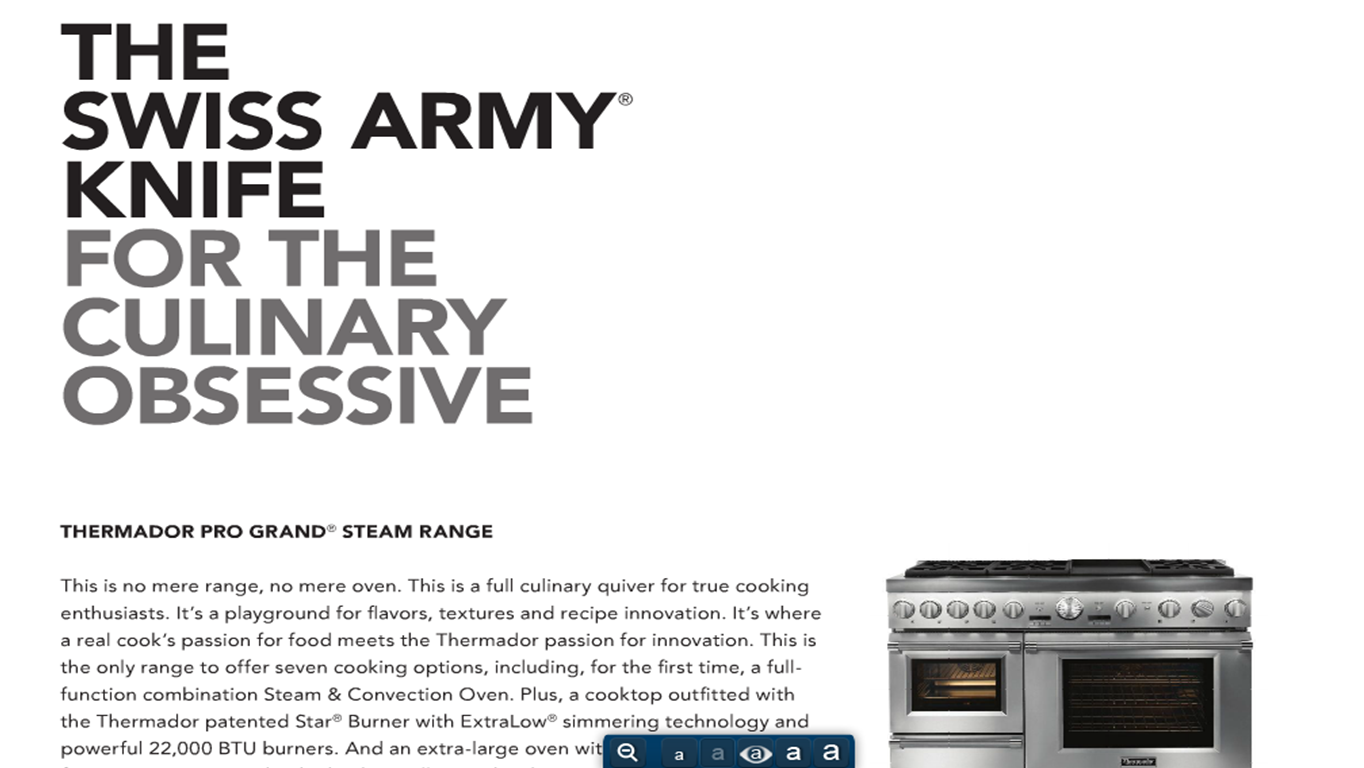
Check out the tagline for this Thermador ad: “The Swiss Army Knife® for the Culinary Obsessive.”  In the mouseprint footnote, there’s a link to the Thermador website and the statement “® Swiss Army is a registered trademark of Victorinox AG and its affiliates.”  Assuming no permission (as this type of TM disclosure is equally common with comparative ads where the TM owner didn’t give permission), is this likely to cause affiliation/permission confusion?  Nominative fair use?  Dilutive?  What if there is permission—does the brand strategy have anything to tell us about “dilution”?

Posted in dilution, trademark | Leave a comment

Transformative work of the day

Parody of Let it Go from Frozen: the rare parody that focuses on song structure.  I’m tempted to suggest that even the music publishers would have to call this one fair use, but that would be unrealistic.

Posted in copyright, http://schemas.google.com/blogger/2008/kind#post | Leave a comment

is political use of 9/11 images fair use?

North Jersey Media Group Inc. v. SarahPAC, No. 13-cv-06494 S.D.N.Y. filed Oct.7, 2013

Sarah Palin used a photo of firefighters raising a flag at Ground Zero on 9/11 in her 2013 Facebook post labeled “Never forget.”  She was sued for copyright infringement, as well as for false designation of origin. The false designation theory is that people will be confused about the photo’s copyright ownership because the SarahPAC logo is on the same website as the photo (I think the logo is on the website and not the photo; the complaint is not pellucidly clear about this and neither is the attached image).  This cause of action is obviously Dastar-barred, something the defendants point out with vim, but why didn’t plaintiffs bring a false CMI claim if they were going for extreme legal theories?

Posted in cmi, dastar, http://schemas.google.com/blogger/2008/kind#post | Leave a comment