a tasty copyright analogy

Jonathan Lethem on the overexpansion of copyright rights, from an author who depends in part on copyright for his living: “It’s like there’s ten miles of frosting on a cake. I like the cake, I might cling to the cake, but it definitely doesn’t need all that frosting.” Anne Jamison, Fic: Why Fanfiction Is Taking over the World 382 (2013).

Posted in http://schemas.google.com/blogger/2008/kind#post | Leave a comment

News for storage jars containing sugar

The NYT discusses searches for new sugar substitutes, along with legal/advertising aspects of their promotion:

[W]hat about the consumers who are drawn to “natural” claims — will they still go for stevia when it flows from a vat of G.M.O.’s? And will regulators object? 

Later that afternoon, I put these questions to David Henstrom, Cargill’s global business director for health ingredients and the man now in charge of selling Truvia. “Country by country they have different ways that they describe what you can say is natural and what you can’t,” he told me. In the United States, food-and-beverage companies get to make the judgment for themselves. “There might be some products that aren’t trying to make that hard ‘all-natural’ claim,” he continued. “Some people are claiming naturally sourced. Some people are claiming nature-identical. It comes down to the product and what the product is trying to say and deliver to the customer.” 

Natural zero-calorie sweeteners have so far been caught between two imperatives: What they want to say and what they can deliver. It used to be that natural sweeteners weren’t sweet enough; now they have an added problem: They aren’t fully natural. 

“‘Natural’ would mean that I picked it from the ground,” said Donna LiVolsi, the director of operations at Cumberland Packing Corporation, which invented Sweet’N Low, the first artificial sweetener sachet, in 1957. … When I asked LiVolsi if she thought [Stevia in the Raw and Monk Fruit in the Raw] were “natural,” she said she couldn’t answer, because each consumer has a sense of what the word means to them. 

It’s a question that has bedeviled beverage-makers, too. In the fall of 2012, a German food company surveyed 4,000 people in eight European countries, to find out how they understood the “natural” claim. Almost three-quarters said they thought that natural products were more healthful and that they’d pay a premium to get them. More than half argued that natural products have a better taste. But the respondents weren’t sure what degree or form of processing would be enough to strip a product of its natural status. Some drew a line between sea salt (natural) and table salt (artificial). Others did the same for dried pasta and powdered milk, though both are made by dehydration.

The story notes the uptick in lawsuits about “natural” claims, including against sugar substitutes:

[A] 58-year-old woman living in Hawaii filed suit against Big Stevia. In March she bought a box of Truvia at Walmart because she thought it was a natural product. Now she’s convinced it’s no such thing. Her complaint declared that “Reb-A is not the natural crude preparation of stevia,” and that its manufacture is not “similar to making tea,” as Cargill’s packaging suggests. Rather, it’s “a highly chemically processed and purified form of stevia-leaf extract.” 

Hers was not the only attack on Cargill’s natural sweetener. In ongoing negotiations to settle a similar suit, Cargill has offered to remove the phrase “similar to making tea” from the packaging and/or add an asterisk to the product’s tagline, “Nature’s Calorie-Free Sweetener,” directing people to a website F.A.Q. That page would explain that Truvia contains very little stevia, by weight, and that its main ingredient — erythritol — comes from yeast that may be fed with genetically modified corn sugar. “As with almost all finished food products,” the F.A.Q. would say, “the journey from field to table involves some processing.”

The NYT describes manufacturers’ response as “pragmatic” in that they won’t make health claims or comparative naturalness claims for forms of stevia.
Posted in advertising, consumer protection | Leave a comment

possible profit recovery means TM case continues

It’s a 10, Inc. v. Beauty Elite Group, Inc., 2013 WL 6834804, No. 13–60154 (S.D. Fla. Dec. 23, 2013)

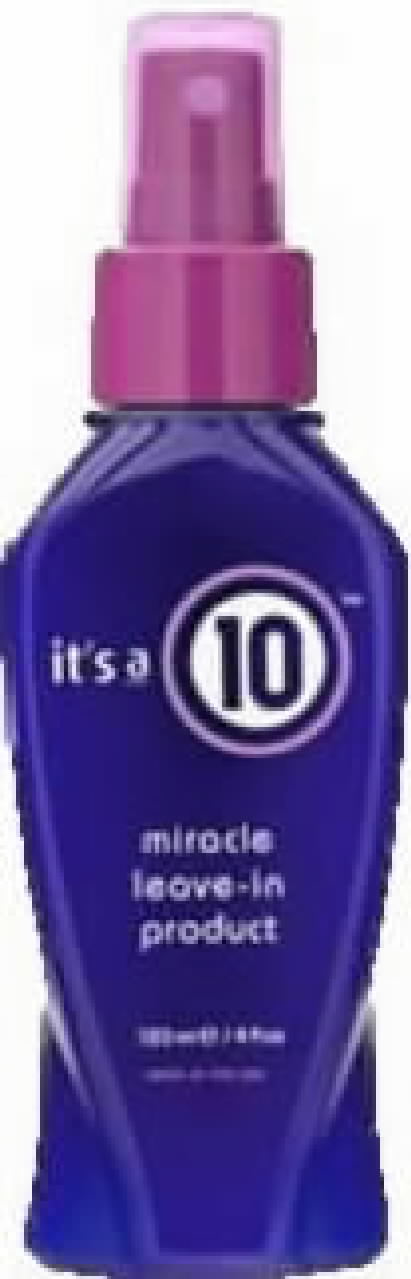
Previous discussion.  Plaintiff sells It’s a 10 Miracle Leave in Product for hair:

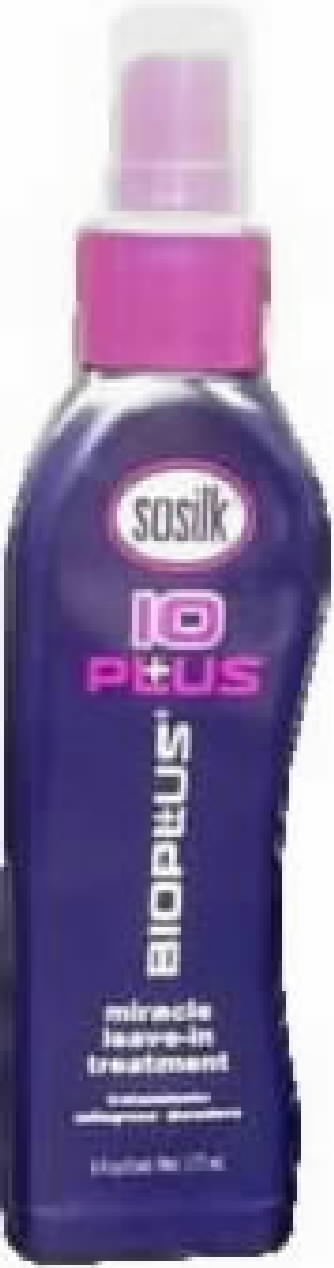
Defendant’s directly competing product was allegedly confusingly similar in coloring and layout: 

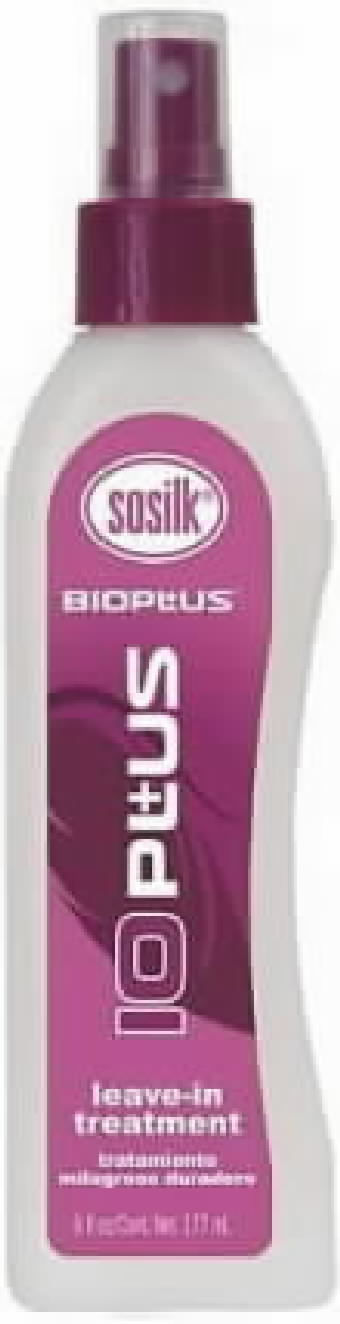
It changed the bottle and represented that it would no longer use the old trade dress:

Defendant moved for summary judgment on the infringement, dilution, and related common-law claims (federal dilution! Where is Rule 11 when you need it?).

The court first ruled that the infringement claim didn’t require a showing of actual damages, because a prevailing plaintiff can recover the defendant’s profits and the costs of the action.  (The defendant’s admission that it sold old bottles was enough evidence that there’d been recoverable profits to proceed.)  There was sufficient evidence to create an issue of fact on confusion with the old bottle.  But the court granted summary judgment as to the new bottle, given the dissimilarity in marks.

The “It’s a 10” mark was suggestive, while the “Miracle Leave In Products” mark was weaker, tending towards descriptive—it described product characteristics, and common self-laudatory epithets don’t tend towards strength.  But given that the two marks appeared prominently and in tandem, “Miracle Leave in Products” was also sufficiently distinctive to warrant protection.  (What?  If anything, a descriptive term appearing in tandem with an inherently distinctive mark is probably more likely to be ignored as an indicator of source, since it’s not enhancing distinctiveness.)  With respect to the old bottle, similarity weighed in favor of confusion.  Defendant’s “10 PL US” and “Miracle Leave In Treatment” marks on the old bottle were very similar to plaintiff’s marks. The connotations were similar, and they shared similar orientations “on similarly colored, irregularly shaped bottles,” using approximately the same color schemes.  Product relatedness also favored confusion.

Defendant argued that it sold to the mass market, including large retailers such as Target, while plaintiff sold to the premium market in salons only.  Plaintiff offered evidence that its products were also for sale by large retailers, including Target.  This made similarity of sales channels a disputed issue.

On intent, the striking similarity of the old bottle to plaintiff’s product suggested intentional copying, as did an invoice from a design firm indicating that defendant retained the firm for a project containing “It’s a Ten” in the project title.  This was circumstantial evidence of intent to capitalize on the plaintiff’s goodwill.  Taken together, the evidence precluded summary judgment for defendant as to the old bottle.

The new bottle was a different matter.  The color scheme changed to conform with defendant’s other product lines; the word “Miracle” was gone; and the orientation and placement of “10 PL US” changed.  The change made the bottles sufficiently dissimilar; for the same reasons, there was no reason to infer an intent to copy as opposed to an intent to differentiate.  The plaintiff didn’t provide any evidence of actual confusion.  In total, no reasonable jury could find likely confusion.

This reasoning on the old and new bottles also applied to the overall trade dress claim, where the plaintiff provided evidence of acquired distinctiveness—“substantial efforts and resources in developing its brand and trade dress, and cultivating consumer recognition of its trade dress,” plus defendant’s apparently intentional imitation.

The court granted summary judgment on the dilution claims in full.  Of course the plaintiff’s mark wasn’t famous. “The threshold for a showing of fame … is exceptionally high…. In other words, [a] party claiming dilution must establish that its mark is practically a household name, of the likes of such giants of branding as Exxon, Kodak, and Coca-Cola.” The plaintiff’s assertions that it had spent millions on ads over the past few years, that its product was one of the “nation’s top-selling leave-in conditioners,” that it has received numerous industry awards, and that its sales top $50 million per year were insufficient.  This showed “laudable recent successes” within its industry.  But it didn’t come close to showing “the cultural heft to transform them from mere trademarks—even strong ones—to a household name that is instantly recognizable among the general public of the United States.”

In an interesting wrinkle, the defendant argued that it didn’t “use” the old bottle in Florida and thus state law didn’t apply.  The plaintiff argued that shipment of samples to a handful of Florida distributors was sufficient.  “Use” under Florida law required that a mark be placed on goods sold or transported in Florida in the ordinary course of trade. Sending samples to potential clients was sufficient, at least to avoid summary judgment.

The plaintiff also alleged counterfeiting under 15 USC § 1114.  Counterfeits are marks “identical with, or substantially indistinguishable from, a registered mark.”  Although “substantially indistinguishable” is ill-defined by the cases, the test is more rigorous than the confusion test, and no reasonable jury could find the marks here “substantially indistinguishable.”  While potentially confusingly similar, “It’s a 10” and “Miracle Leave In Products” had different words, different colors, and different fonts than “10 PL US” and “Miracle Leave In Treatment.”  These differences were not trivial, so summary judgment was awarded to the defendant on this count.

However, the defendant didn’t establish with absolute clarity that all infringement ceased—there was some evidence showing sales of products referred to as “Miracle Leave In Treatm[ent]” even after defendant said it wasn’t using the old bottle.  (This might be recordkeeping trouble, since the new bottle was apparently the same product, but it was enough to keep injunctive relief alive.)
Posted in dilution, trademark | Leave a comment

"Natural" is too vague to be false advertising

Balser v. Hain Celestial Group, Inc., No. CV 13–05604, 2013 WL 6673617 (C.D. Cal. Dec. 18, 2013)


Plaintiffs sued Hain for using “natural” and “100% vegetarian” on over 30 of its cosmetics, and the court dismissed the complaint.  Fraud must be pled with particularity, but plaintiffs didn’t allege what they believed “natural” to mean, or how they relied on and were harmed by that representation.  Under the reasonable consumer standard, “natural” was too vague and ambiguous to be natural.  Plaintiffs’ claim that “natural” meant “existing in or produced by nature; not artificial” was implausible as applied to cosmetics.  “[T]here are no shampoo trees.”  (Aren’t there shampoos made with natural ingredients?  Couldn’t a consumer reasonably think there were?)  Plaintiffs argued that “100% vegetarian” meant only from vegetable matter, but a more common understanding is “without animal products,” as Hain used the term and as further clarified on the labels. 

Moreover, the website said what Hain meant: “We make natural, 100% vegetarian personal care products…. This means we don’t use parabens, sulfates, or phthalates.”  Given Hain’s definition of what it meant by “natural,” the ingredient list on its website, and the labels on the cosmetics explaining what natural ingredients were added, no reasonable consumer could be deceived.
Posted in california, consumer protection, http://schemas.google.com/blogger/2008/kind#post | Leave a comment

Claims relating to organic content completely preempted

Quesada v. Herb Thyme Farms, Inc., — Cal. Rptr. 3d —-, No. B239602, 2013 WL 6730808 (Ct. App. Dec. 23, 2013)

The court found that the federal Organic Foods Production Act of 1990 preempts state consumer lawsuits alleging violations of OFPA and California’s federally approved state organic program (SOP) (codified under the California Organic Products Act of 2003, COPA). “Congress made clear its intention to preclude private enforcement through state consumer lawsuits in order to achieve its objective of establishing a national standard for the use of ‘organic’ and ‘USDA Organic’ in labeling agricultural products.” This contrasts with other federal schemes where Congress didn’t intend to alter citizens’ ability to file unfair competition claims or other claims vased on violations of identical state laws. Instead, Congress mandated federal oversight of state organic programs “to ensure consistent federal and state government enforcement for violations of the Act.” COPA’s remedial scheme doesn’t include private enforcement.  Thus, conflict preemption applied; consumer lawsuits based on COPA or OFPA violations “would frustrate the congressional purpose of exclusive federal and state government prosecution and erode the enforcement methods by which the Act was designed to create a national organic standard.”

Herb Thyme has federal approval to label organically grown herbs as USDA Organic, but allegedly mislabeled products that contained a mix of organically and conventionally grown herbs with “Fresh Organic” and “USDA Organic” labels. Quesada brought the usual California claims.

The court of appeals noted the presumption against preemption of laws operating in traditional state domains. The presumption applied with particular force to consumer protection laws.  Moreover, the express preemption in OFPA was directed at state organic certification laws, not state consumer lawsuits.  This express preemption supported the inference that Congress didn’t intend to preempt other claims, but didn’t require that conclusion.

The court followed the 8th Circuit’s Aurora Dairy case, which found that consumer protection claims against a certified milk producer for mislabeling non-organic milk as organic were impliedly preempted.  Given the certification, the producer was authorized to label its products as organic. Uniform national standards would be undermined if different court systems adopted possibly conflicting interpretations of the same provisions of OFPA.  “Thus, state consumer law claims against a certified organic producer seeking to hold it accountable for representing its products as organic when in fact the products were not, are preempted.”  The allegations here, if found to be true by the certification agent, would have precluded certification; thus certification and compliance are interrelated.  There should be no situation in which a state court could find a certified grower to be mislabeling its product as organic when the grower’s certification wasn’t revoked or suspended.  Although Aurora Dairy didn’t find all state consumer claims preempted, in that case the facts necessary to support the claims (e.g., “our milk comes from healthy cows”) had no bearing on whether the product met the organic standard.  (This isn’t actually true as stated, but on the other hand the facts that would prove/disprove the claim would be the same even if OFPA didn’t exist, unlike certification-related claims.)

Quesada argued that the fact that state law was identical to federal law saved her claims, because no federal law as such was implicated, citing Farm Raised Salmon Cases.  Farm Raised Salmon rejected the claim that, because there was no private cause of action for violation of the FDCA, federal law impliedly barred consumer suits based on identical state laws.  With the FDCA, Congress impliedly authorized identical state laws, including an express savings clause in an uncodified provision of the NLEA, and also the legislative history indicated the importance of state enforcement of parallel state laws.  With OPFA, the coordinated state-federal regulatory scheme, the legislative history, and congressional intent all distinguished this law from the FDCA.  Under COPA, California’s SOP is the national organic program, administered by the state.  It’s not a separate regime.  Allowing states that chose to have their own SOPs to privately enforce national standards could lead to conflicting interpretations of the national standards.   Plus, the legislative history referred to enforcement by the feds, relevant state officials, and certifying agents; it didn’t include reference to private enforcement, as the FDCA legislative history did.  Also, barring private claims “furthers the congressional purpose and objective to nationalize organic labeling standards and to avoid the inevitable divergence of applicable state laws and enforcement strategies.”  This would conflict with Congress’s purpose of establishing national standards.  Though Jones v. ConAgra Foods, Inc., 912 F. Supp. 2d 889 (N.D. Cal. 2012), reached the opposite conclusion, the court wasn’t bound by federal district court decisions.
Posted in california, consumer protection, http://schemas.google.com/blogger/2008/kind#post, preemption | Leave a comment

Sleep Number no more: false advertising but not TM claims get TRO

Select Comfort Corp. v. Tempur Sealy International, Inc.,  No. 13–2451, 2013 WL 6767821 (D. Minn. Dec. 23, 2013)

Select Comfort, which sells Sleep Number/Select Comfort mattresses, sought a TRO against Mattress Firm (one of the defendants), a mattress retailer that sells a number of different brands, including Tempur-Pedic, Sealy, and Serta.  It’s one of the largest Tempur-Pedic retailers, and it doesn’t sell Select Comfort, though it once did.  Select Comfort alleged that Mattress Firm falsely advertised about the Sleep Number bed, had salespeople who disparaged the quality and warranties of Sleep Number beds, falsely told customers it ended its agreement with Select Comfort, and improperly used Select Comfort trademarks.

Mattress Firm disputed Select Comfort’s allegations and claimed to have remedied any issues through prompt action.  The key TRO issue was likely success in showing that the alleged representations were commercial advertising or promotion, using the Gordon & Breach test ((1) commercial speech; (2) by a defendant who is in commercial competition with the plaintiff; (3) for the purpose of influencing consumers to buy defendant’s goods or services; and (4) disseminated sufficiently to the relevant purchasing public).  Mattress Firm primarily argued that the statements at issue weren’t directed to a sufficiently substantial portion of the mattress-buying public and not part of an organized campaign to penetrate the market.  The court disagreed, since Select Comfort identified “flyers and representations” across a number of states.  “While there may be millions of customers compared to the small number of examples provided in Select Comfort’s complaint, at this phase, the geographic spread and consistency of the representations is adequate to create a reasonable inference that the statements are sufficiently widespread to constitute commercial advertising or promotion.”  Thus, Select Comfort showed likely success on the merits of its false advertising claim.

As for trademark infringement, Select Comfort alleged that Mattress Firm used its marks in internet search engines and third-party websites.  On the Mattress Firm website, no Select Comfort marks/ads appeared.  And if consumers searched only for “Select Comfort,” “Sleep Number,” or “Mattress Firm” there was no direct overlap.  However, if a consumer searched for both parties’ marks, or typed “Does mattress Firm sell Select Comfort beds?” the results would include a link to the Mattress Firm website.  (In other words: not even broad matching, but matching on the defendant’s own trademark!  Eric Goldman should love this. The opinion isn’t clear whether the link is a paid ad or organic result, but it shouldn’t matter in the slightest—whatever trademark use is, this ain’t it.)  The link goes to Mattress Firm’s website, where it’s immediately clear that Mattress Firm doesn’t sell Select Comfort.  Select Comfort argued that consumers would be diverted (even though that doesn’t describe diversion, just selection from alternatives), but the court didn’t think that was enough to justify the extraordinary measure of a TRO.  (And what would the order be?  If the results are organic, how could they bind Google?)

Select Comfort also alleged that Mattress Firm paid third-party sites that include links “relating to Select Comfort products which ultimately lead consumers to Mattress Firm’s website.”  At this stage, there wasn’t enough information to find likely success on the merits.

Having found likely success for false advertising, the court found that “loss of goodwill and reputation can constitute irreparable harm,” and “misleading comparisons can diminish a product’s value in the minds of a consumer.”  Given Select Comfort’s showing that there were inaccurate comparative flyers and sales associates making representations that Select Comfort customers were dissatisfied with the low quality/mold in Select Comfort’s products, it was suffering irreparable harm.  (Query whether this is consistent with eBay: is the court inferring irreparability from likely success on the merits?)  But Select Comfort failed to show irreparable harm on trademark infringement because “there is a very narrow universe of search scenarios whereby a consumer might be re-directed to Mattress Firm’s website, and once such a consumer is, he will know immediately that he cannot purchase Select Comfort products at Mattress Firm.”  (Why this is reparable is left as an exercise for the reader.)

The court determined that a narrow restraining order was justified, requiring Mattress Firms to communicate to its stores about avoiding specific claims (that Mattress Firm dropped Sleep Number; that Sleep Number has mold problems/lawsuits based on mold; that Sleep Number offers a shorter warranty than its actual 25-year warranty; and that Sleep Number beds use “cheap foam” or “commodity foam”).  Mattress Firm was ordered to stop using any materials containing these representations, including flyers submitted as evidence to the court.  This didn’t require unreasonable efforts and, if Mattress Firm was correct that it didn’t engage in false advertising/had already ceased any such conduct, the letter/email wouldn’t cause any harm.  But requiring Mattress Firm to control all websites with possible trademark issues was too much.  Mattress Firm was working “to remove any residual coding which may result in the Google search result with the title ‘Select Comfort—Mattress firm’ and a link to the Mattress Firm website.” Requiring Mattress Firm to enjoin all efforts with third-party advertisers was premature.
Posted in http://schemas.google.com/blogger/2008/kind#post, trademark | Leave a comment

Taking on notorious criminal’s persona is protected by First Amendment

Ross v. Roberts, No. B242531, 2013 WL 6780578 (Cal. Ct. App. Dec. 23, 2013)

Ricky Ross, aka Rick Ross and “Freeway” Ricky Ross, “is a former criminal who achieved some sort of celebrity status due, in part, to the enormous scale of his cocaine-dealing operations” during the 1980s. He ran a multimillion-dollar empire; was arrested; helped uncover a ring of dirty cops and helped free 120 wrongly convicted people; had his sentence reduced as a result; was rearrested shortly after his release in 1994; received widespread media coverage after that as a result of his peripheral role in Iran-Contra; and was released from prison in 2009.

William Leonard Roberts II “is a famous rap musician who goes by the name ‘Rick Ross,’” whose lyrics frequently include “fictional stories about running large-scale cocaine operations” (and occasionally celebrate rape, until walked back). In fact, Roberts is a former correctional officer, though he attempted to hide this and instead present himself as a drug-dealing rapper, as in his first commercial single, Hustlin’. Early in his career, he spoke about how Ross’s life story “grabbed him,” but later denied that his stage name was based on Ross and claimed it was instead a play on “big boss,” an old high school nickname.

In 2006 (the same year Roberts’ first commercial CD was released), Ross discovered that Roberts was using the Rick Ross name when he saw an article about up-and-coming rappers. Though he was still in prison, he contacted a lawyer to write a C&D, but that never got a meaningful response. Ross sued Roberts and other defendants for misappropriating his identity.

The court found that Roberts’ use of the “Rick Ross” name and persona was protected by the First Amendment because it incorporated significant creative elements. I challenge readers to distinguish this case from the Electronic Arts cases; I can’t.

Roberts initially sued in federal court, but the district court dismissed the federal claims and declined to exercise supplemental jurisdiction over the state claims, so he refiled in state court. He asserted various misappropriation/publicity-related claims. The state trial court found that his claims were barred by the statute of limitations, because the single publication rule meant that the period began to run upon Roberts’ first commercial use of the name. (The California rule: “No person shall have more than one cause of action for damages for libel or slander or invasion of privacy or any other tort founded upon any single publication or exhibition or utterance, such as one issue of a newspaper or book or magazine or any one presentation to an audience or any one broadcast over radio or television or any one exhibition of a motion picture.”) Ross argued that, at a minimum, each new album constituted a new and separate publication, but the trial court disagreed and also found that Roberts’ claims were barred by laches.

The court of appeals wasn’t convinced that these rulings were correct, but the First Amendment meant that it didn’t matter. To resolve the tension between the right of publicity (on which all of Ross’s claims were based) and the First Amendment, California uses the transformativeness test, examining “whether the new work merely supersede[s] the objects of the original creation … or instead adds something new, with a further purpose or different character, altering the first with new expression, meaning, or message….” (internal quotations omitted). When there’s a literal depiction or imitation of a celebrity for commercial gain without adding significant expression beyond the “trespass” on the right of publicity, the state’s interest in “protecting the fruits of artistic labor” outweighs the imitative artist’s expressive interests. But when a work contains significant transformative elements, it’s both especially worthy of First Amendment protection and less likely to interfere with the celebrity’s protected interest in “markets for celebrity memorabilia.” (If we were to take this emphasis on “work” seriously, then the Electronic Arts cases would be wrongly decided even under the transformativeness test, but oh well.) So the question is whether the celebrity’s likeness is one of the raw materials from which an original work is cooked, or “whether the depiction or imitation of the celebrity is the very sum and substance of the work in question” instead of “primarily the defendant’s own expression rather than the celebrity’s likeness.” Comedy III. In close cases, courts may ask whether the marketability and economic value of the challenged work derive primarily from the celebrity’s fame.

Many cases involve visual representations, but that’s not the only expression to which the First Amendment applies. (RT: Indeed, on the record, visual depictions are far less protected than other kinds.) Here, transformativeness provided a complete defense. Roberts’s work, which the court defined here as “his music and persona as a rap musician,” relied “ to some extent” on Ross’s name and persona—rapping about trafficking in cocaine and bragging about his wealth. However, these were raw materials from which his career was synthesized, not the sum and substance of his work. Instead, Roberts created a celebrity identity (implicitly: one of his own, as opposed to an Elvis impersonator; cf. the discussion of Andy Warhol’s fame as making his portraits transformative in Comedy III). “He was not simply an imposter seeking to profit solely off the name and reputation of Rick Ross. Rather, he made music out of fictional tales of dealing drugs and other exploits—some of which related to plaintiff. Using the name and certain details of an infamous criminal’s life as basic elements, he created original artistic works.” A work is transformative if it adds new expression, which he clearly did.

The value test also supported Roberts. “Although it is possible that Roberts initially gained some exposure through use of the name Rick Ross and the reputation it carried, the value of Roberts’s work does not derive primarily from plaintiff’s fame.” The court assumed that people buy music because they enjoy that music, and thus it would be incredible to claim that Roberts’ success came primarily from appropriating Ross’s name and identity, instead of from his music and professional persona.

Ross argued that the First Amendment defense only applied to “likenesses,” not names. Estate of Fuller v. Maxfield & Oberton Holdings, LLC, 906 F. Supp. 2d 997 (N.D.Cal. 2012), rejected a First Amendment defense by the manufacturer of toys called “Buckyballs,” named for Buckminster Fuller because the toys could be manipulated to resemble a molecule commonly known as a “buckyball,” named for Fuller. The Fullercourt held that transformativeness depended on the visual nature of the transformation, and that use of a name isn’t an act of expression the way creation or alteration of an image is; a name, it reasoned, can’t be transformed while remaining recognizable, as an image can. (Benedict Cumberbatch fans might disagree.) Also, Fuller’s name and identity wasn’t part of the actual toy product: the toys didn’t depict or reference Fuller, only the molecule with which he was associated. (Two terrible rationales for the price of one!) There was no First Amendment protection “for the use of a celebrity’s name, transformed or otherwise, to sell an unrelated product.”

Thankfully, the court here wasn’t impressed either, though it distinguished Fuller rather than rejecting it. The First Amendment protects all forms of expression, including words and music; books are mentioned in Comedy III, and the subsequent Winter case emphasized that the defendants’ Autumn brothers were characters “in a larger story, which is itself quite expressive.” Also, Fuller involved an unrelated product, while Roberts “created music by adding significant transformative elements to the base components of plaintiff’s name and identity.” The product in Fuller “was in no way a transformed portrayal of the famous engineer and inventor,” while the rapper “Rick Ross” was “a highly altered, essentially fantasized version of plaintiff.” “Roberts’s music may be analogized to a work of fiction in which the protagonist bears some resemblance to the original Rick Ross.” This is a “raw material” situation; the resemblance “is merely a minor detail when viewed in the context of the larger story—Roberts’s music and persona are much more than literal depictions of the real Rick Ross.”

Posted in first amendment, right of publicity | Leave a comment

Irrationally sexist advertising

PETA notoriously has a lot of ad campaigns focusing on women’s bodies and sexuality.  Two recent studies suggest that this backfires: dehumanizing women reduces intentions to support the organization.  It’s a mantra that half of all advertising dollars are wasted–but perhaps there are ways to up that percentage.

Posted in advertising | Leave a comment

House brands in Australia

The IP Whiteboard has an interesting series of posts on house brands imitating national brand trade dress in Australia, including pictures.  I also didn’t know about JP Morgan’s “Bitcoin-like” patent application.

Posted in patents, trademark | Leave a comment

Firm that refers instead of represents might be falsely advertising

Larry Pitt & Associates v. Lundy Law, LLP, No. 13–2398, 2013 WL 6536739 (E.D. Pa. Dec. 13, 2013)

The parties compete to represent clients in the greater Philadelphia area, primarily in the fields of “small personal injury, social security disability, and workers’ compensation law.”  Such clients allegedly select lawyers based on brand name or name recall, making advertising vital to business success.  Law firms seek “[m]ass reach, constant messaging, [and] saturation,” ideally on 1) the exterior of buses; 2) radio time slots just before and after traffic and weather updates; and 3) inside sports arenas.  Other alternatives, such as phonebooks, internet ads, billboards, and inside-bus/bus stop ads are allegedly less effective.

Pitt historically bought ad space on the exteriors of SEPTA transit vehicles and bus stops, sold by a national ad agency, Titan.  Lundy’s daughter Sara Lundy is an account executive at Titan, responsible for SEPTA ads.  Titan gave Lundy the exclusive right to advertise legal services on the outside of SEPTA buses, for which Lundy paid above market price.  The contract is one-year and renewable.  Pitt didn’t allege that it couldn’t make its own offer for an exclusive contract, nor did it allege that SEPTA rejected higher offers for exclusive contracts in favor of Lundy Law. Pitt received 142 client referrals from SEPTA ads (presumably including both interior and exterior ads) in 2008, 160 in 2009, 197 in 2010, and 146 in 2011, but only 16 in 2012 and 12 in 2013 after it was barred from bus exteriors.  Lundy made a similar exclusive deal to advertise on the exterior of BARTA buses, another area company; obtained an exclusive contract for rush hour ad slots around weather and traffic updates on the KYW radio station; and had an exclusive contract with the Wells Fargo Center sports and entertainment arena, all by paying “unusually high” advertising fees. Naturally, Pitt’s antitrust claims failed.

However, its false advertising claim survived: Lundy Law allegedly “advertises itself as a law firm representing clients in Social Security disability and workers’ compensation cases, when in fact it refers such cases to other firms in exchange for a referral fee, and does not actually represent clients in such cases.”  This was sufficient to state a claim under the Lanham Act: if the facts were as described such statements could be misleading and even literally false, and Pitt sufficiently pled that advertising influences purchase decisions.  However, Pennsylvania state law unfair competition claims require acts that “substantially interfere[ ] with the ability of others to compete on the merits of their products.” Because the antitrust claims failed, so did the unfair competition claims. (This seems to ignore the Restatement (Third) of Unfair Competition, which Pennsylvania follows, which provides that unfair competition can come either from such interference or from acts/practices actionable under federal or state statutes—which clearly includes the Lanham Act, the federal law of unfair competition; given that the Lanham Act claims survived, the state law claims should have too.)

The court also dismissed Pitt’s tortious interference claim for failure to sufficiently allege prospective contractual relationships or wrongful interference—exclusive contracts aren’t inherently tortious.

Pitt also alleged that Lundy filed a meritless trademark infringement lawsuit against Pitt for Pitt’s use of the phrase “Remember this Number” in ads (a phrase Lundy also uses). Within hours of Lundy’s discovery that Pitt’s insurer was defending the claim, the complaint alleged, Lundy voluntarily dismissed the suit.  “Pennsylvania’s Dragonetti Act allows a civil suit for wrongful initiation of civil court proceedings without probable cause and for a purpose other than securing adjudication of a legal claim, when the proceedings end in favor of the defendant.”  Lundy argued that the voluntary dismissal, early in the case, was insufficient to count as termination in Pitt’s favor, but a motion for preliminary injunction was fully briefed and pending and a hearing was scheduled.  Thus, the claim could continue.  However, the related abuse of process claim was dismissed, because improper purpose was insufficient for abuse of process without costs of defending beyond what was required to address the merits.  Plus, Pitt’s costs were covered by its insurer, and it didn’t allege any other injury.
Posted in antitrust, http://schemas.google.com/blogger/2008/kind#post, insurance, tortious interference, trademark | Leave a comment