
-
Recent Posts
- candy buyers fail to allege difference between pumpkin & Jack-o’-lantern shape
- Amicus in section 230 false light case
- Amicus in Rise & Shine
- it’s hard to get rid of a foreign TM owner’s complaint at the motion to dismiss stage despite territoriality
- dct strikes down California’s new recyclability law on vagueness/1A grounds
Recent Comments
Archives
- September 2026
- August 2026
- July 2026
- June 2026
- May 2026
- April 2026
- March 2026
- February 2026
- January 2026
- December 2025
- November 2025
- October 2025
- September 2025
- August 2025
- July 2025
- June 2025
- May 2025
- April 2025
- March 2025
- February 2025
- January 2025
- December 2024
- November 2024
- October 2024
- September 2024
- August 2024
- July 2024
- June 2024
- May 2024
- April 2024
- March 2024
- February 2024
- January 2024
- December 2023
- November 2023
- October 2023
- September 2023
- August 2023
- July 2023
- June 2023
- May 2023
- April 2023
- March 2023
- February 2023
- November 2021
- October 2021
- September 2021
- August 2021
- July 2021
- June 2021
- May 2021
- April 2021
- March 2021
- February 2021
- January 2021
- December 2020
- November 2020
- October 2020
- September 2020
- August 2020
- July 2020
- June 2020
- May 2020
- April 2020
- March 2020
- February 2020
- January 2020
- December 2019
- November 2019
- October 2019
- September 2019
- August 2019
- July 2019
- June 2019
- May 2019
- April 2019
- March 2019
- February 2019
- January 2019
- December 2018
- November 2018
- October 2018
- September 2018
- August 2018
- July 2018
- June 2018
- May 2018
- April 2018
- March 2018
- February 2018
- January 2018
- December 2017
- November 2017
- October 2017
- September 2017
- August 2017
- July 2017
- June 2017
- May 2017
- April 2017
- March 2017
- February 2017
- January 2017
- December 2016
- November 2016
- October 2016
- September 2016
- August 2016
- July 2016
- June 2016
- May 2016
- April 2016
- March 2016
- February 2016
- January 2016
- December 2015
- November 2015
- October 2015
- September 2015
- August 2015
- July 2015
- June 2015
- May 2015
- April 2015
- March 2015
- February 2015
- January 2015
- December 2014
- November 2014
- October 2014
- September 2014
- August 2014
- July 2014
- June 2014
- May 2014
- April 2014
- March 2014
- February 2014
- January 2014
- December 2013
- November 2013
- October 2013
- June 2013
Categories
- 230
- acpa
- advertising
- antitrust
- art law
- attribution
- blogging
- california
- cfaa
- cfps
- class actions
- cmi
- comics
- commercial speech
- conferences
- consumer protection
- contracts
- copying
- copyright
- counterfeiting
- cultural property
- damages
- dastar
- defamation
- design patent
- dilution
- disclosures
- disparagement
- dmca
- drm
- fan fiction
- fanworks
- fda
- fees
- first amendment
- ftc
- geographic indications
- http://schemas.google.com/blogger/2008/kind#post
- insurance
- jurisdiction
- libraries
- misappropriation
- music
- my lawsuits
- my writings
- parody
- patent
- patents
- preemption
- presentations
- privacy
- procedure
- reading list
- remedies
- right of publicity
- secondary liability
- securities
- standing
- surveys
- teaching
- tortious interference
- trade secrets
- trademark
- traditional knowledge
- Uncategorized
- unconscionability
- unfairness
- warranties
Meta
"stable," "traditional" and "family-based" are puffing descriptions of housing development
Kelly v. Beazer Homes USA, Inc., — Fed.Appx. —-, 2014 WL 107961 (9th Cir. Jan. 13, 2014)
Plaintiffs bought homes from defendants; the court of appeals affirmed the dismissal of their various fraudulent concealment etc. claims based on the condition of the overall development. “While a seller’s duty to disclose may extend to known nuisances on neighboring properties, California courts have never suggested that a seller must disclose the financial condition of neighbors to a prospective buyer. As the district court cogently observed, ‘an indebted neighbor’ is not akin ‘to one who creates a noxious nuisance on his or her property.’” Also, defendants’ references to the “stable,” “traditional,” and “family-based” character of the developments were too vague to be actionable. The other challenged representations were either qualified by express disclaimers, promises from the plaintiffs to the builders, or vague expressions of defendants’ “desires.” Any reliance was unjustifiable as a matter of law. This also doomed the statutory UCL claims.
Posted in california, consumer protection
Leave a comment
economic loss doctrine doesn’t appply to consumer protection claims
Hackel v. National Feeds, Inc., 2014 WL 108552, No. 12–cv–642 (W.D. Wis. Jan. 10, 2014)
Just a quick reminder: the economic loss doctrine is a limit on traditional common law torts, not on statutory consumer protection claims, much as defendants would like it to be otherwise. Here, the district court reiterates a Wisconsin Supreme Court case explaining:
The legislature has plainly chosen in § 100.18 to provide protection and remedies for false advertising that do not exist at common law. The underpinnings of the economic loss doctrine—protecting parties’ freedom to allocate economic risk by contract, encouraging the purchaser to assume, allocate, or insure against that risk, and maintaining the fundamental distinction between tort and contract law are either irrelevant to, or inconsistent with, that legislative choice.
Kailin v. Armstrong, 2002 WI App 70, ¶¶ 42–43, 252 Wis.2d 676, 643 N .W.2d 132.
court rules that Pom Wonderful precludes claims that supplement is unsafe etc.
ThermoLife Intern., LLC v. Gaspari Nutrition, Inc., No. CV–11–01056, 2014 WL 99017 (D. Ariz. Jan. 10, 2014)
This dispute has been around for a while. The court’s introduction gives you a sense of the case: “The briefs and statements of facts alone come to 735 pages. With attachments, the paper reaches 35 inches and 84 pounds. But at the bottom of the 735 pages, 35 inches, and 84 pounds, there is no lawsuit.”
TLI (and president Kramer) and GNI (and president Gaspari) compete to sell bodybuilding-related supplements. TLI sued GNI mostly for false advertising, alleging that GNI falsely marketed its Novedex XT, Halodrol Liquigels, Halodrol MT, and SuperPump 250 as “safe,” “natural,” “DSHEA-compliant,” and “legal.” (DSHEA is the federal law that (barely) regulates supplements.) GNI counterclaimed with similar causes of action, alleging among other things that TLI disparaged GNI’s products.
The court first kicked out a number of expert reports. For example, TLI’s consumer survey went because it essentially asked past GNI purchasers whether they’d have changed their minds if they’d known that GNI falsely advertised its products as ‘Natural,’ ‘Legal,’ ‘DSHEA-compliant’ and ‘Safe.’ The respondents weren’t shown to be representative, and the questions were “worded to obtain a response favorable to TLI,” such as asking respondents “how important is it that the supplement contains ingredients that are legal?” and then offering them the answers “Very important; I would never purchase a supplement I knew contained an illegal drug”; “Somewhat important; I would prefer to purchase a supplement that did not contain an illegal drug;” and “Not important; in purchasing a supplement, I do not consider whether the product might contain an illegal drug.” The survey didn’t ask about the effects of “natural” etc. claims on supplement purchase intentions; it didn’t control for how respondents’ satisfaction levels with their purchases influenced their responses regardless of the ads. So even if the sample had been representative, it wouldn’t have been relevant to the materiality of the challenged claims.
An expert report on whether GNI’s supplements were DSHEA-compliant and safe also went, because the expert opined on whether the results of studies were sufficient to substantiate a safety claim rather than on the key issue of the falsity of the safety claim itself; DSHEA doesn’t require the kind of substantiation he said should be required. (If properly characterized as an establishment claim, a safety claim could be disproven by showing that the evidence didn’t support the claim.) The court concluded the testimony about insufficient evidence wouldn’t aid the jury, which “likely would be confused and easily misled without a standard for determining what is ‘safe.””
Similar fates awaited TLI’s market share and damages experts, GNI’s counterclaim damages expert, and GNI’s legal expert (offered to give legal testimony on the legal meanings of the relevant terms), the last because experts aren’t allowed to testify about law.
Turning to the merits: Novedex XT and the Halodrol products were sold as supplements to increase testosterone levels, while SuperPump 250 was “a preworkout dietary supplement to assist in the development of lean body mass.” Neither Halodrol MT nor SuperPump 250 has been the subject of a recall. However, TLI questioned GNI’s ability to obtain turkesterone, an ingredient of SuperPump 250, claiming to have an exclusive agreement for its sale in the US. It also challenged GNI’s claim that an ingredient in Halodrol MT was 95% pure.
In early 2010, the FDA announced that a third-party retailer was conducting a voluntary nationwide recall of 17 supplements, including Novedex XT and Halodrol Liquigels, sold during several months in 2009. The FDA was concerned that the products might contain ingredients appropriately classified as steroids. The retailer stated that it couldn’t independently confirm the FDA’s concerns, but it was undertaking a voluntary recall out of an abundance of caution. As the FDA’s press release said, steroids can cause harmful effects, including acute liver injury, shrinkage of the testes, male infertility, adverse effects on blood lipid levels, and increased risk of heart attack, stroke, and death. The FDA later announced that GNI was conducting a voluntary recall of Novedex XT, after being informed by the FDA that an ingredient didn’t meet the definition of a dietary ingredient and thus violated the FDCA. The press release also described unpleasant potential adverse side effects from the ingredient.
Many of the allegedly false ads came from posts on the bulletin board of bodybuilding.com, e.g., Kramer called Gaspari “a joke in this industry peddling protein from his garage.” (Gaspari said in an interview that he began selling product out of his car and used his mother’s garage and basement as his warehouse and office.) Kramer also posted that “Gaspari was a joke in this industry,” “knows nothing about supplements,” and “would be a personal trainer at 24 Hour Fitness” without another party. TLI, posting under the name “Truth Speaker,” posted lab test results from GNI’s Vasotropin. The post title was “GASPARI selling SAW DUST? ? ?” and the post stated that “independent lab test results” indicated that each tablet of Vasotropin contained an ineffective amount of ingredient: “A dose that will do NOTHING for anyone expecting a pump but may make Gayspari [sic ] and the scammers that work for him rich and you a sucker!” GNI alleged that the post falsely suggests that this ingredient was the key ingredient in Vasotropin.
Out of this hot mess, the court first analyzed TLI’s claims that GNI falsely represented its products as legal, DSHEA-compliant, naturally occurring, safe/“the safest,” and containing particular ingredients. First, the DSHEA bars private enforcement, so the court refused to determine whether the products were “legal,” “DSHEA-compliant,” “naturally occurring,” and/or “safe” when the FDA hadn’t made such a determination. (This analysis is a pretty unusual extension of Pom Wonderful and any appeal is likely to be influenced by the outcome of that case in the Supreme Court; the long-suffering judge may not be done.) Under the DSHEA, the burden is on the FDA to prove a supplement adulterated, so a supplement can’t be “unsafe, not DSHEA compliant, and/or illegal” unless the FDA proves it adulterated. Judicial determination of these claims would usurp the FDA’s authority. Plus, a layperson’s statements purporting to interpret a statute or regulation are opinion, not factual claims. Thus, GNI’s statements about safety (!), DSHEA compliance, and legality were not false when made. (I think the court’s annoyance with the litigants has led it to reason too broadly—safety can be assessed without the FDA’s ruling, and given the DSHEA’s allowed-by-default rule, a ruling that the product was unsafe would not conflict with the FDA’s authorization of the product, since none has occurred, as it might in the case of prescription drugs.)
The court also kicked out challenges to GNI’s ads that Novedex XT “is the safest way to naturally cause positive anabolic effect,” is a “natural vehicle,” contains “naturally occurring anti-aromatase inhibiting compounds,” and “has been shown to increase natural production.” The parties disputed whether the ingredient could be considered “natural” or “naturally occurring” because the ingredient can be synthesized from naturally occurring material. (If it could only be synthesized, and doesn’t occur in nature, I’m not sure how it could be considered natural by any definition, but ok.) But the court held that it didn’t have a standard for determining what was “natural” or “naturally occurring,” and with no FDA determination, the statements were just opinions. (I would think that consumer perception would provide the appropriate standard, though there doesn’t seem to be any expert evidence left here.) TLI didn’t meet its burden of showing the falsity of the other challenged claims. And because of the expert exclusions, it didn’t show materiality either. Nor did it show damage—it didn’t show that, but for the false advertising, consumers would have chosen TLI’s products, as opposed to those of numerous competitors.
Along the way the court rejected arguments that the statute of limitations and laches barred TLI’s claims, since the evidence showed that TLI might have had suspicions about various ingredients, but not enough knowledge to bar its claims as a matter of law.
GNI counterclaimed based on TLI’s disparagement of GNI products on internet message boards, similar to the false advertising arguments it made in this case: GNI products lacked claimed ingredients; they were ineffective; Gaspari was a “joke” who knew nothing about supplements and a “counterfeiter”; GNI used expired ingredients; the recalled GNI products were “spiked” with illegal steroids; this case would put GNI out of business; etc. “[E]ven when read in context, the statements allegedly made by or on behalf of TLI are … opinions, predictions, or not false.” Plus, GNI’s own arguments that comments on message boards weren’t commercial advertising or promotion applied to the statements it was challenging too. Without damages evidence, its claims had to fail.
trademark licensing and apparent agency
Pullman v. Alpha Media Publishing, Inc., No. 12–CV–1924, 2013 WL 1290409 (S.D.N.Y. Jan. 11, 2013) (magistrate judge)
Another old one coughed up by Westlaw. Interesting to me because of Maxim’s litigation based on its desire to license its brand in many fields; licensors love to rake in the money, but they hate being held responsible for what licensees do. Pullman sued the publisher of Maxim Magazine for common-law fraud and violation of the New Jersey Consumer Fraud Act for misrepresenting to her that it owned the Maxim Bungalows when it wasn’t. Pullman alleged that she bought timeshares in reliance on this belief, and suffered damage when the project went bankrupt as part of an alleged Ponzi scheme. The magistrate judge recommended dismissal of the claims against two named individuals (officers/etc. of one of the corporate defendants), but would find the basic claims against the corporate defendants both plausible and pled with sufficient particularity.
According to the complaint, Pullman was a longtime timeshare purchaser. She was solicited to invest in a new Maxim Bungalow project, and was told that Maxim was an “owner” and “large” investor in the Maxim Bungalows. She saw a video that would lead a reasonable viewer to believe that Maxim was an owner, and received a book of draft beneficial interest documents that didn’t disclose that Maxim was not an owner and had only licensed its trademark to the actual owners. The book did state that the project could be renamed by the company that was “creating the Condominium Regime.”
She had several discussions with Roger Walser, her Maxim Bungalowas sales rep, who told her that the investment was safe and other things that reinforced the idea that Maxim was an owner, such as telling her of “Maxim’s desire, as an owner to capitalize on the world renowned Maxim name to ‘fill the resort with the Maxim readership.’” Walser reassured Pullman that any renaming of the Maxim Bungalows would still include the word “Maxim,” and that the only way Maxim would remove the Maxim name was if it sold “[its] interest in the Maxim Bungalows[,] which would require the approval of the Homeowners’ Association.” Walser represented himself to her as an employee of a group (here the Elliotts) that had just obtained a major sales agreement with Maxim Magazine making them the exclusive sales agents of the Maxim Bungalows.” This led her to believe that Walser “had authority to sell Maxim Bungalows on behalf of Maxim.” The Elliotts were resort developers charged with “the construction and management of the Maxim Bungalows project,” and a license agreement to use the Maxim trademark in connection with the Maxim Bungalows. Another person told her that a company called Ocean Palms, as a “joint Maxim–Elliott Company,” was an owner of the Maxim Bungalows. Pullman signed on because “she felt secure investing alongside ‘Maxim,’ a large media company which would take every step possible to ensure that [its] ‘valuable’ name was protected including, at minimum, a thorough investigation of the Elliotts.”
Pullman further investigated Maxim’s connection to the Maxim Bungalows and visited webpages linked from the maxim.com website that contained information about the project. The Maxim website and linked pages didn’t provide the licensing agreement or disclose that Maxim was just a passive trademark licensor. None of the brochures she’d been provided disclosed Maxim’s true role. Because she didn’t find any contrary information, she finalized her purchase (a six-figure sum).
The magistrate judge concluded that she’d sufficiently pled fraud, which requires “(1) a material misrepresentation of a presently existing or past fact; (2) knowledge or belief by the defendant of its falsity; (3) an intention that the other person rely on it; (4) reasonable reliance thereon by the other person; and (5) resulting damages.”
Alpha Media, Maxim’s publisher, argued that she couldn’t attribute the fraudulent statements to it and that it had no duty to disclose its role as trademark licensor. Alpha Media argued that the individuals who allegedly claimed that Maxim was an owner weren’t connected to Maxim and that it didn’t produce the ads/brochures/etc. Pullman saw. But Pullman pled sufficient connections between Maxim and the fraudulent misrepresentations to survive a motion to dismiss. Taking her allegations as true, she alleged an agency relationship between Maxim and Walser, and Maxim and the Ocean Palms realtor. Plus, other evidence made her belief more plausible, such as the links from maxim.com to the Maxim Bungalows webpages and the fact that nothing in the many ads/documents she saw said that Maxim wasn’t an owner.
In the alternative, she sufficiently alleged an apparent agency theory. The indicia of authority on which she relied originated from Maxim, including the “exclusive sales agent” agreement and the ad materials bearing Maxim’s marks. Numerous cases hold that a jury can find apparent agency through authorized use of prominently displayed insignia. (Citing Gizzi v. Texaco, Inc., 437 F.2d 308 (3d Cir. 1971) (appearance of authority could be created by putative principal’s insignia and slogan prominently displayed on putative agent’s service station, and putative principal’s nationwide advertising campaign); Mayflower Transit, LLC v. Prince, 314 F. Supp. 2d 362 (D.N.J.2004) (putative principal’s logo was on truck that picked up goods and boxes in which goods were placed, and party met with person who identified himself as putative principal’s sales manager); In re NorVergence, Inc., 384 B.R. 315, 368 (Bankr. D.N.J. 2008) (plaintiff alleged that putative principal knowingly allowed putative agent to utilize the principal’s logo on agent’s brochures, among other facts); Mercer v. Weyerhaeuser Co., 735 A.2d 576 (N.J. Super. Ct. App. Div. 1999) ((1) involvement of putative principal was important to plaintiff’s purchase decisions; (2) when plaintiff saw putative agent’s advertisement it always had putative principal’s name and logo with it; and (3) plaintiff was told by agent’s salesman that agent was division of principal).
Defendants argued that Pullman couldn’t have relied on a licensing agreement she didn’t know about at the time she bought. (Um, because she thought that Maxim was an owner? Isn’t that how apparent authority always works—there’s some kind of relationship and then a misrepresentation of its nature/quality?) But there was other evidence of Maxim’s apparent authority, which she encountered before she bought.
Now, on to the substance of the fraud claims. Pullman’s allegation of reliance wasn’t unreasonable as a matter of law. Defendants argued that reliance was unreasonable because the purchase contract was with an unrelated company. But the Ocean Palms realtor told her that Ocean Palms was jointly owned by Maxim, making Pullman’s belief that Maxim was connected to the contract reasonable. They argued that Pullman’s reliance was unreasonable because she was an experienced timeshare investor who would not believe that Walser could contractually bind non-parties. “But Pullman’s belief is rendered considerably more reasonable because Walser said that he worked as an agent of Maxim, his authority seemed corroborated by the promotional video, and every other person with some sort of apparent authority to discuss the Maxim Bungalows stated Maxim was an owner.” Finally, they argued that Pullman was unreasonable because she knew that Alpha Media was a trademark licensor who could terminate the license. But “her argument is that she also thought it was more. She pleads she knew there was risk involved in her purchase; her argument is that she decided the risk was manageable because of her belief that Maxim, as an owner, was backing the project with the value it had invested in its brand.” This was reasonable.
Duty to disclose: such a duty doesn’t exist unless disclosure is necessary to make a previous statement true or the parties share a special relationship. But here the alleged fraud was misrepresentation, not mere silence.
Alpha Media argued that Pullman’s alleged reliance wasn’t reasonable because there was no allegation that it had information that would have helped her. But the fact that Maxim wasn’t actually an owner would plainly have caused Pullman to rethink her purchase. Though she pled that she expected Maxim to investigate the Elliotts thoroughly and do everything in its power to protect its name, the problem wasn’t Maxim’s failure to investigate, it was that she thought that Maxim was an owner.
Alpha Media also argued that Pullman admitted in other proceedings that she knew that the investment risks were obvious. Her earlier statements that she knew that timeshare investment was risky didn’t contradict her theory here, but rather fit into her theory of the case. She pled that she’d had prior positive experiences with timeshares from major brands, and that here Maxim’s brand status caused her to take the risk and invest. Also, Pullman previously stated that she knew defendants could “one day” terminate the use of their name, but she “never dreamed that ‘one day’ could be before [her] purchase check even cleared the bank in July of 2007.” Again, this wasn’t a contradiction, given her allegations about what she’d been told about Maxim’s ability to remove its name.
Then Alpha Media argued that relying on the promotional video and book wasn’t reasonable. Maxim’s name wasn’t mentioned in the video until the 8 minute mark—but it also included a nearly 5-minute highlight of the Maxim media empire to illustrate the promotional power of the brand, and described the key relationship as a partnership, without disclosing that it meant “licensing arrangement.” This was a factual dispute, and the claim was still plausible. Selected language from the draft agreement establishing the timeshare rules also suggested that it would be easier to change the name than Pullman thought, but she didn’t “have the benefit of specific lines highlighted and offset when examining a more than 300-page document.” The judge didn’t think it was appropriate to decide that it would’ve been more reasonable to rely on select statements in this agreement than on direct assurances from a purported agent.
For similar reasons, the NJCFA claim survived. (The judge found sufficient connections to New Jersey even though Pullman was solicited and viewed the relevant timeshare materials in the Dominican Republic.) Here, the court rejected Alpha Media’s argument that it was unreasonable for Pullman to rely on the draft agreement because it was labeled “draft” and unreasonable to rely on the webpages linked from maxim.com “without following up with anyone.” To the contrary, “Pullman was not looking at either of these items in a vacuum. Rather, it was the consistent portrayal of the Maxim Bungalows as Maxim’s property—from sales representatives to marketing materials—that made her reliance reasonable. Pullman does not need to exhaust every conceived avenue of inquiry for her complaint to survive a motion to dismiss.”
Posted in trademark
Leave a comment
Congressional hearing on the scope of copyright protection
Video here. Written testimony is also available from Glynn Lunney and David Nimmer on the right of making available; James Love and Mark Schultz on broadcast signal rights; and Patricia Griffin and Carl Malamud on rights in standards/local codes. It’s almost as if we’re having a serious conversation about copyright reform.
FDA declines to define "natural," again
FDA letter. Discussion at Seller Beware Blog.
qualitative statements about insurance policies weren’t necessarily puffery
U.S. Bank Nat’l Ass’n v. PHL Variable Ins. Co., 2013 WL 791462, No. 12 Civ. 6811 (S.D.N.Y. March 5, 2013) (magistrate judge)
Just coughed up by Westlaw, noted for discussion of puffery.
US Bank, as securities intermediary for Lima Acquisition LP, sued PHL for breaching its policy terms and violating various laws by raising the insurance rates on its policies. The causes of action included Connecticut Unfair Trade Practices Act (CUTPA) and Connecticut Unfair Insurance Practices Act (CUIPA) claims; the magistrate judge concluded that there was no independent private cause of action under CUIPA, but a CUIPA violation could form the basis of a CUTPA claim.
Lima owned twelve policies issued by PHL. The policies allowed holders to choose how much to pay, and the account would accrue interest, with fees deducted. The policies permit the insurer to adjust the key fee (the cost of insurance), but only based on certain specified factors, the most significant of which is mortality. If the account isn’t sufficient to cover fees, the policy will lapse.
The complaint alleged that PHL misrepresented the circumstances under which rate increases might occur and later further misrepresented that the rate increases were in accordance with the policy terms. PHL allegedly increased rates to make money and induce “shock lapses” in which policyholders give up instead of paying, relieving PHL of payout risk, including by intentionally overstating the cost of insurance to current policyholders to induce lapse and by stating that policyholders needed only to pay enough to cover monthly charges, but then charging more for policyholders who paid only the minimum. Other alleged falsehoods included PHL’s statements that the policies provided the “opportunity to lower premiums” and “increased choice and policy design flexibility.”
Some of the statements might be outside the 3-year statute of limitations, but some of the alleged misrepresentations were clearly timely. PHL argued that the alleged misrepresentations about flexibility were made well over 3 years before suit was filed, in other policies issued from 2005-2007, and in “press releases to policyholders and prospective policyholders” issued in 2003 and 2006. But PHL didn’t allegedly wrong this plaintiff at that time, since Lima hadn’t bought then. “The defendant has provided no reason why violations against someone else should also start the limitations period as to the plaintiff’s claims, even though the plaintiff was not affected by that initial violation.… To bar the plaintiff’s claim, as the defendant argues, would mean that the defendant can make the statements at issue here to anyone in the future with impunity because any claims based on the statements would be untimely.”
PHL argued that its statements were merely opinion, not fact. Misrepresentations about policy terms are actionable. And “‘while statements containing simple economic projections, expressions of optimism, and other puffery are insufficient,’ qualitative statements can be misrepresentations of existing facts if those statements are belied by conditions known to the defendants.” Opinions can be actionable if they’re without a basis in fact or undermined by facts known to the speakers.
The statements here revolved around the choice/flexibility represented by the policies, e.g., “opportunity to lower premiums, as well as adjust the amount and timing of premium payments” and “features suited to meet policyholders’ evolving personal or business planning needs.” The court found that these statements, while not phrased as absolutes or measurable characteristics, described their “essential, distinguishing characteristics.” Though “flexible” or “lower premium payments” alone might be nonactionable opinion, they could be actionable in their full context. “If, as alleged, the policyholder could not pay only the monthly policy charges or adjust the amount of monthly payments without being penalized, the Policies departed from their advertised characteristics.” The statements weren’t just PHL’s hopes. “To find them to be mere puffery would drain all meaning from descriptions such as ‘flexible’ or ‘lower premium payments’ and leave policyholders unable to rely on any qualitative descriptions of insurance policies.”
As for PHL’s statement that the rate increases were “in accordance with the terms” of the policies, though, that was an opinion about the law, not a misstatement of fact. (Citation: Restatement (Second) of Torts § 545(2) & cmt. a (1977) ( “[T]he statement of the legal consequences of [the known] facts is a statement of opinion as to what a court would determine to be the legal consequences of the facts.”). Mentioned because the court in the recent Oracle case held to the contrary—that representations that a course of conduct was legally protected could be false advertising.)
The complaint also sufficiently alleged facts going to reliance and pled the fraud claim with particularity.
keyword purchase supports unfair competition verdict
Chow v. Chak Yam Chau, — Fed.Appx. —-, 2014 WL 92094, No. 12–15994 (11th Cir. Jan. 10, 2014)
Michael Chow credits himself with introducing “high-end Chinese cuisine in a fine dining setting to the west” through the “Mr Chow” restaurants he opened across the country, starting in 1974 (reaching NYC in 1979 and expanding through 2009). Mr Chow restaurants have signature dishes, distinctive décor, and feature the “noodle show,” where a staff member makes fresh noodles by hand.
Philippe Chow Chau, born Chak Yam Chau, worked in the kitchen of the NYC 57th Street Mr Chow restaurant for 25 years, then partnered with Stratis Morfogen to open a restaurant called “Philippe by Philippe Chow” on 60th Street, a few blocks from the Mr Chow. They later opened additional restaurants, including in cities where Mr Chow operates. The menu, décor and “noodle show” were very similar to those in the Mr Chow restaurants. Michael Chow believed that Chau stole his recipes and business plan.
Chow and the related corporate entities sued Chau, Morfogen, etc., alleging trademark infringement, false advertising, misappropriation of trade secrets, and unfair competition under federal, state, and common law. The Philippe Restaurants filed counterclaims for defamation and to cancel the Mr Chow’s trademark. Defendants also won summary judgment to the extent that Chow’s claims were based on alleged illegal compensation practices by the Philippe Restaurants, finding that plaintiffs hadn’t shown any damages therefrom. The district court also kicked out the trade secret claim as barred by the applicable statute of limitations. The jury found for plaintiffs only on the claims for false advertising/unfair competition and awarded roughly $500,000 from the 60th Street restaurant to the 57th Street restaurant, and $500,000 from Morfogen to Chow (a verdict that was set aside because Chow shouldn’t have appeared separately on the verdict form; the court of appeals reinstated the award). None of the other plaintiffs were found to have been damaged. The jury rejected the counterclaims.
The parties appealed on various issues; I’ll focus on false advertising/unfair competition. The district court ruled that Mr Chow failed to show any connection between its allegations that the Philippe Restaurants illegally paid their staff cash “under the table” and any damage Mr. Chow sustained, especially given evidence that Mr Chow did the same thing. The court of appeals affirmed, because any connection to harm to Mr Chow was speculative.
The court of appeals also affirmed the jury’s verdict against the 60th Street restaurant. There was evidence of potentially deceptive public statements attributable to the relevant defendants, such as that Philippe Chau was the “mastermind” and “architect” of the menu at the Mr Chow restaurants and that Philippe Chau was a critically-acclaimed chef in his own right. Morfogen also bought “Chow” and “Mr Chow” so that sponsored links would appear in search results—the court didn’t discuss the text of the resulting ads. “A reasonable jury could conclude that, taken together, the public statements and the sponsored links were misleading and had the capacity to deceive consumers.” A reasonable jury could have rejected Mr Chow’s trademark infringement claims and still found liability for unfair competition under §43(a), since that section is broader than trademark (not clear if the court means “because it also includes false advertising” or if it thinks there’s some inchoate form of unfair competition that involves neither false advertising nor infringement; I hope it’s the former).
time to shell out for an IP lawyer
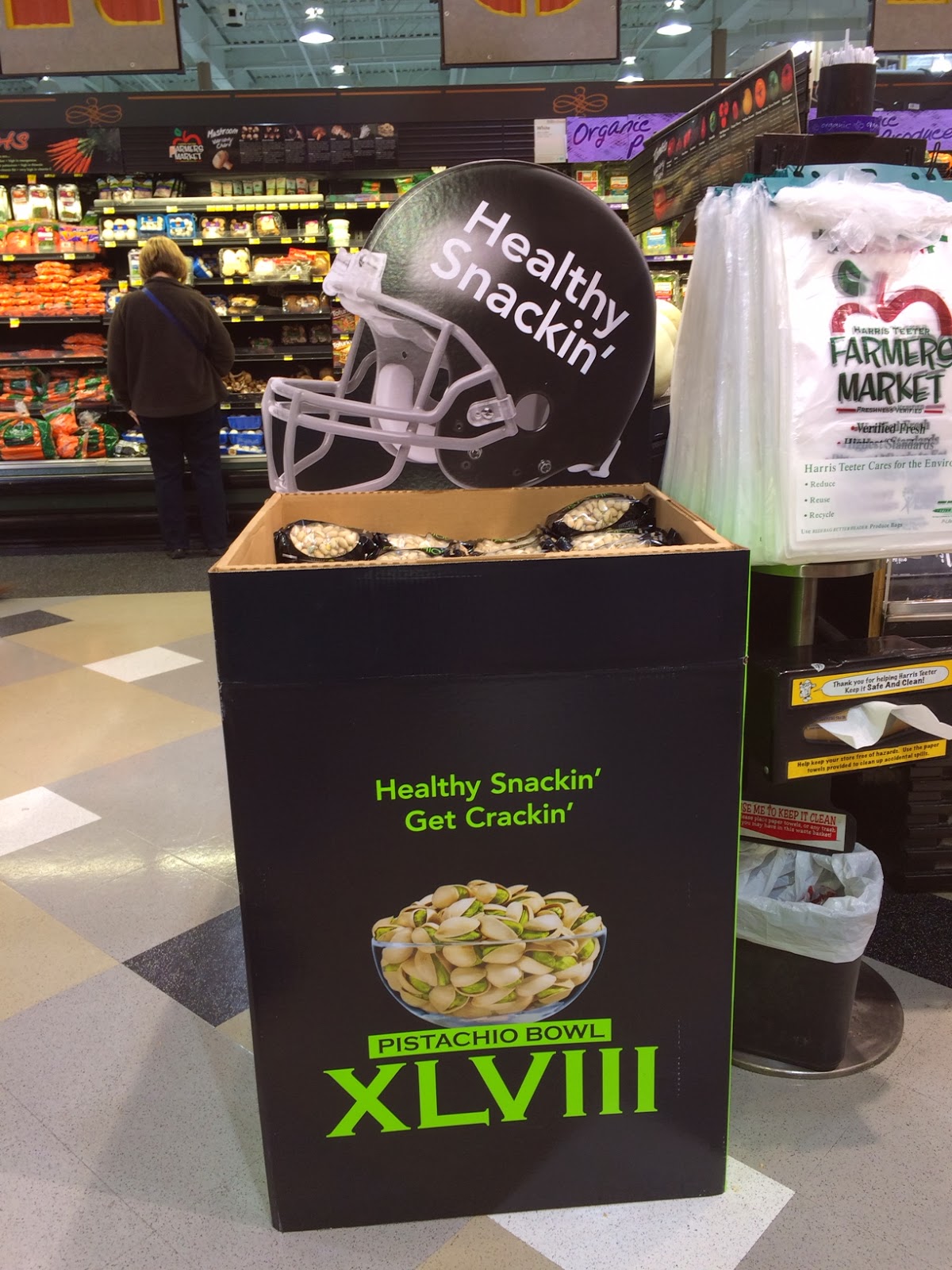
You can’t say Pom’s owners aren’t willing to pick a fight (or a fruit or nut).
Also via Zach Schrag.
Posted in trademark
Leave a comment

