Hedging and bullying in trademark

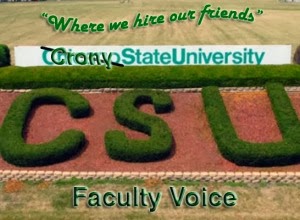
Chicago State University attempts to intimidate a faculty blog into not identifying itself properly, using trademark law as its bullying tool/justification.  This takes a turn for the silly as the university now objects to a picture of CSU hedges, trimmed in the shape of the letters “CSU,” that replaced the earlier text.  Intriguingly, the use of an image might indeed have some effect on search algorithms, depending on the technology—but it’s completely legitimate nominative fair use in either case.  This nonlawyer’s discussion does not analyze the issues in the way I’d expect a trademark lawyer to do, but the underlying point—there is nothing wrong with the faculty blog, and it’s a misuse of trademark law to object to critical content—is clearly right; the discussion of other CSU institutions makes the related point that those who make overbearing trademark threats sometimes put their overall rights at risk.

HT Zach Schrag.
Posted in trademark | Leave a comment

Cert granted in Pom Wonderful v. Coca-Cola

Orders list here.  There were also some grants relating to some other minor IP issues.  Pom’s petition, with QP: “Whether the court of appeals erred in holding that a private party cannot bring a Lanham Act claim challenging a product label regulated under the Food, Drug, and Cosmetic Act.”  Excellent framing by petitioner.

Two false advertising cases!  Is this a trend?

Posted in http://schemas.google.com/blogger/2008/kind#post | Leave a comment

Trademark strategy question of the day

MLA Subconference is “an independent and evolving group of graduate students in the humanities who are interested in creating a new kind of conference environment, in order to propose alternative professional, social, and political possibilities for ourselves and our peers.” The FAQ says: “The Subconference is in no way affiliated with or endorsed by the Modern Language Association” (though the “who we are” section of the website does not say this).  Given the political sensitivities involved if the MLA threatened graduate students, how would you counsel the MLA to respond? 

Posted in trademark | Leave a comment

Inability to determine who bought what dooms class certification

Astiana v. Ben & Jerry’s Homemade, Inc., 2014 WL 60097, No. C 10-4387 (N.D. Cal. Jan. 7, 2014)

The court denied certification to a proposed class who bought ice cream from Ben & Jerry’s that contained alkalized cocoa and were labeled “all natural.” Astiana, bringing the usual California claims, contended that the packaging and ads were deceptive and misleading because the cocoa was alkalized with a “synthetic” agent.  After Dennis v. Kellogg, the initial proposed class settlement fell apart, and they proceeded to the class certification motion, which sought to cover California purchasers of “ice cream products that were labeled ‘All Natural’ but contained alkalized cocoa processed with a synthetic ingredient.”

The court found a lack of ascertainability and a lack of typicality/predominance.  Ben & Jerry’s argued that, because cocoa can be alkalized using one of several alkalis – some of which are “natural” and some of which are “non-natural” – and because Ben & Jerry’s is a wholesaler and didn’t keep records about which consumers bought which products, class membership couldn’t be determined.  Astiana didn’t provide evidence about which products included the allegedly synthetic ingredient, or evidence that there was a way to identify the alkali in ice cream purchases. “The packaging labels say only ‘processed with alkali,’ because that is all the FDA requires,” and Ben & Jerry’s uses cocoa from as many as 15 different suppliers.  Although one supplier was the only supplier who provided cocoa for use in ice cream with a chocolate base, the supplier’s designee testified that he didn’t know which alkalizing agent was used in every instance, and other sources provided Ben & Jerry’s with mix-in ingredients made from alkalized cocoa, without identifying the alkalizing agent.

Ben & Jerry’s also challenged Astiana’s standing, because she testified in deposition that the price had no bearing on her purchase decisions, so she couldn’t have suffered an injury from paying a premium for the ice cream.  But she also testified that she’d paid a premium for all-natual products and refrained from buying products that weren’t all natural, and also that she lost money because of the purchase.  The arguments here were sufficient for standing at this stage.

On commonality, Ben & Jerry’s argued that (1) “all natural” has no common meaning; (2) there was no evidence that the term was likely to deceive, such as consumer surveys or expert evidence suggesting that consumers would expect a non-synthetic alkali; (3) its survey evidence showed that there was no common understanding of “all natural.”  Ben & Jerry’s expert showed 400 consumers a “Cherry Garcia®” cartoon with either the words “all natural” or “Vermont’s Finest” on the label. “More than half the respondents had no expectation that the ice cream contained alkalized cocoa (although both packages included ‘cocoa (processed with alkali)’ as an ingredient; only 13% shown the ‘all natural’ label expected that the alkali would be ‘natural,’ and of that group, only 3% said that would make them more likely to buy.” (It’d be interesting to see the exact questions asked/how much attention was directed to the label claim, especially given the inattention to the ingredient lists.) 

Its other expert found no evidence that consumers of Ben & Jerry’s ice cream gave significant consideration to the “all natural” label but instead were motivated by many other factors; Ben & Jerry’s didn’t charge more for ice cream with the “all natural” label.  Moreover, when Ben & Jerry’s removed the “all natural” label, the retail and wholesale prices did not decrease.

A single significant common issue can establish commonality.  But Ben & Jerry’s provided evidence that consumers weren’t likely to be deceived, while Astiana presented no evidence in opposition, preventing a finding of commonality on that question.  However, the court found that the question whether there was a common or accepted meaning of “all natural” was arguably sufficient to establish commonality.

Ben & Jerry’s used the same evidence to fight typicality.  Astiana testified that she relied on “all natural,” but 97% of consumers in the survey responded that it did not matter if the product contained cocoa processed with a synthetic alkali.  The court found that she hadn’t shown typicality, in part because she hadn’t identified an ascertainable class.

Also, Astiana sought damages, but hadn’t established that common issues predominate such that there was a classwide method of granting relief.  She hadn’t offered expert testimony demonstrating that the market price of Ben & Jerry’s ice cream with the “all natural” designation was higher than the market price without it. Further, she had no testimony demonstrating a gap between the market price of Ben & Jerry’s “all natural” ice cream and the price it should have sold for, or any evidence demonstrating that consumers were willing to pay a premium for “all natural” ice cream made with cocoa alkalized with a natural alkali.  Ben & Jerry’s doesn’t set retail prices, and such prices differ by nature and location of sales outlets.  Plus, individualized restitution would require individualized consideration of how many packages a customer bought.  Plaintiffs are required to provide “evidentiary proof” showing a classwide method of awarding relief consistent with their theory of liability. That didn’t happen here.
Posted in california, class actions, consumer protection, http://schemas.google.com/blogger/2008/kind#post | Leave a comment

New piece: Henry Jenkins and fair use

I wrote a short piece for a festschrift on Henry Jenkins’ Textual Poachers.  I think it might have my best title since Rules of Engagement.  “I’m a Lawyer, Not an Ethnographer, Jim”: Textual Poachers and Fair Use.

Posted in fan fiction, fanworks, http://schemas.google.com/blogger/2008/kind#post, my writings | Leave a comment

Olympic rectangles?

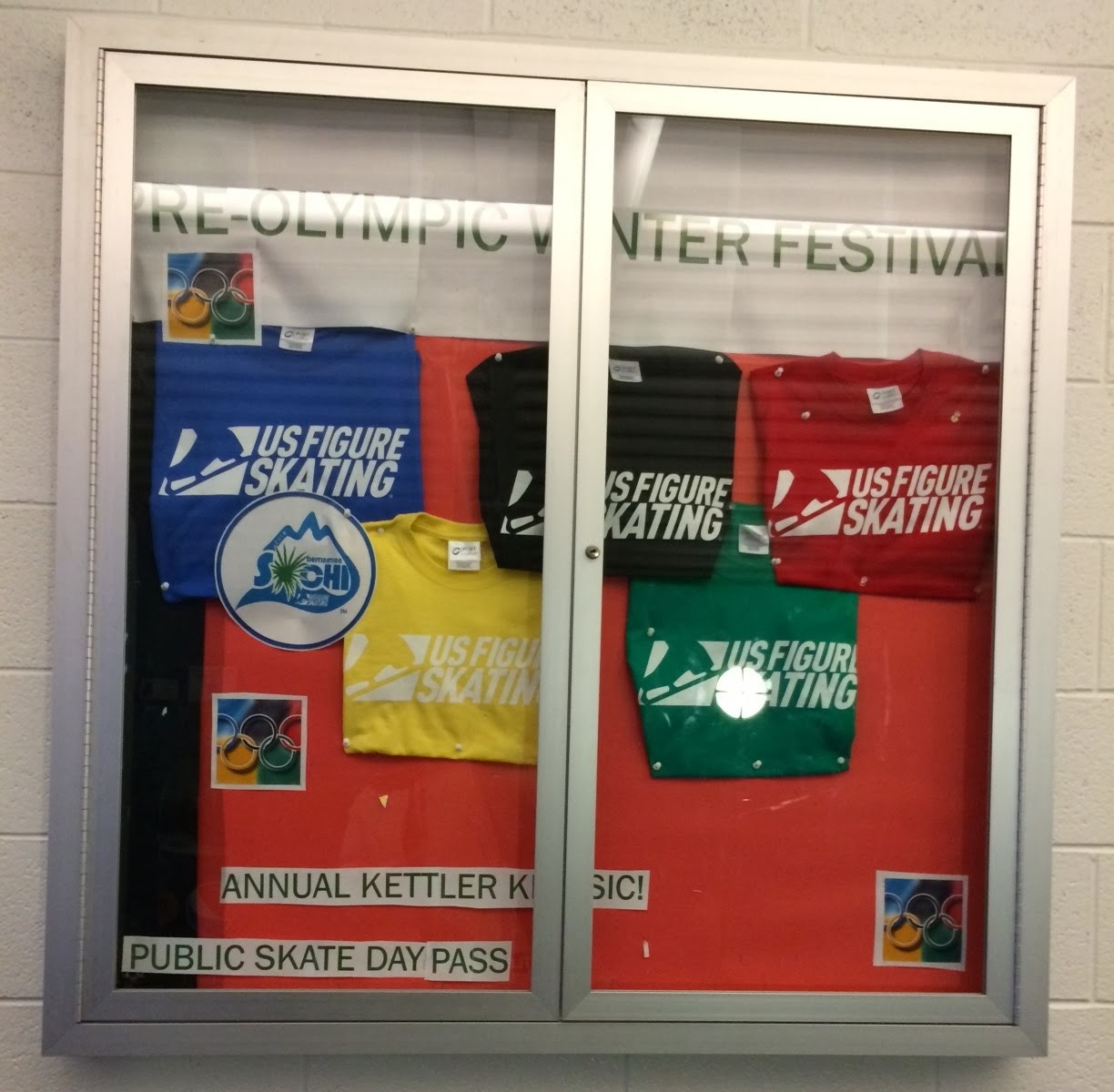
Picture from nearby skating rink

So, does the configuration of shirts sufficiently replicate the 5-ring symbol to trigger the protections found in US law?

Posted in trademark | Leave a comment

Appropriation art and sf book covers

How a Science Fiction Book Cover Became a $5.7 Million Painting: Appropriation art that relies on expanding size, not shrinking compared to the original, for the claim of transformativeness.  E.g., from a program: “[The paintings] are unusual for Brown in that they are based upon paintings made specifically to be reproduced and reduced in scale – their originals versions were commissioned to illustrate the covers of popular science fiction novels. By enlarging them so dramatically, Brown merges the conventions of science fiction illustration with the spectacle of large-scale history or landscape painting by artists such as Jacques-Louis David and J.M.W. Turner.”  It’s not clear how much of the artist’s way of speaking about his work, and his gallery’s, have been affected by fair use case law—and, especially for an appropriation artist, why shouldn’t case law have influence on an artist’s self-concept, as the rest of culture surely does?  Also, this news comes not from the US, but from a country with a distinct fair dealing regime, and yet here the artist is—how should we think about that?

Posted in art law, http://schemas.google.com/blogger/2008/kind#post | Leave a comment

Oracle suit against third party claiming to provide lawful software updates proceeds

Oracle America, Inc. v. TERiX Computer Company, Inc., No. 13-cv-03385, 2014 WL 31344 (N.D. Cal. Jan. 3, 2014)

Oracle sells hardware, software, and support and consulting services to maintain those.  But people also use third-party vendors for support, and here Oracle sued two, alleging that they duped Oracle’s customers into providing them with access to updates to Oracle’s Solaris operating system.  Oracle customers get a Customer Support Identification number linked to products covered by their support contract.  An active licensed customer can download covered software updates, but isn’t allowed to share or use its access credentials for the benefit of others or for the benefit of unsupported Oracle hardware.  When third parties provide support services, neither they nor their customers are allowed to use Oracle’s support website or Oracle’s updates.  However, defendants allegedly told customers that they could lawfully provide that access and support (TeRIX allegedly claimed to be an Oracle partner) and/or that customers were entitled to obtain updates even without an active Oracle support contract by virtue of their licenses to use the underlying OS in conjunction with their Oracle hardware.  Defendants allegedly obtained access to Oracle’s secure support website under false pretenses or directed others with access to download the software. In at least one instance, they allegedly copied and distributed Oracle’s software.  Oracle sued for copyright infringement, violation of the CFAA, breach of contract, false advertising, tortious interference with prospective economic relations, and unfair competition.  Most of the claims survived, but not all the CFAA claims. 

I’m not going to cover the CFAA claims in any detail, though notably the court declined to apply Rule 9(b) because, though the CFAA uses the word “fraud,” a CFAA claim as alleged here didn’t necessarily require fraud in the sense of conduct that is fraudulent under California law.  “[T]he nub of Oracle’s complaint in this case is that Defendants duped at least one Oracle customer into purchasing its unauthorized service update by misrepresenting the customer’s right to updates without a support contract with Oracle. It therefore was not Oracle, but Oracle’s customers, that relied on the alleged misrepresentation.”  Thus, even if Rule 9(b) might apply to first-party claims of reliance, it didn’t here.  Also, defendants can’t be liable for trafficking merely for receiving login credentials.  However, Oracle sufficiently alleged that defendants accessed its websites without authorization/exceeded authorized access under US v. Nosal, because unlike non-CFAA violators in other cases, defendants weren’t themselves authorized to access the website—they didn’t just misuse information they got from Oracle’s site (not actionable under the CFAA); rather, they weren’t supposed to have access in the first place.

The breach of contract claims for violating Oracle’s ToS on its website also survived.  On whether defendants sufficiently assented to the terms, that wasn’t an appropriate topic on a motion to dismiss.

The copyright claims survived, with a twist.  The updates at issue were unregistered derivative works, and thus Oracle couldn’t sue on them. However, it could sue for infringement to the extent that there was copied material common both to the underlying registered work and the unregistered derivative work.  Defendants’ defense that customers were licensed to use the registered work (and that they could rely on these licenses) was an affirmative defense not apparent on the face of the complaint.

Lanham Act false advertising: Oracle alleged that defendants falsely advertised that they could provide legal copies of Oracle updates if customers cancelled their Oracle contracts, including claims that defendants could provide support as the customer’s agent under a claimed “right to use.”  Defendants argued that these were nonactionable statements of opinion, and also that the statements at issue were generic references to UNIX platforms, patch management, and software distribution, not specific references to Oracle or its software. 

Oracle rejoined that the statements were deceptive, even if not literally false, and argued that it shouldn’t have to litigate its infringement and CFAA claims to conclusion, turning opinion to fact, before it could bring a Lanham Act claim.  Despite precedent that legal opinions from nonlawyers aren’t actionable because they are neither true nor false, the court agreed with this clever framing—“the court does not see a reason to first require Oracle to litigate its underlying causes-of-action before bringing a Lanham Act false advertising claim.”  Also, it refused to apply Rule 9(b), because the Ninth Circuit has never required that for Lanham Act claims.  Unsurprisingly, the state law unfair competition claim also survived, as did the intentional interference with prospective economic relations claim, since Oracle had sufficiently alleged the necessary wrongful acts and expectation of future economic benefit.
Posted in cfaa, copyright, http://schemas.google.com/blogger/2008/kind#post, procedure, tortious interference | Leave a comment

the trademark joke is a tricky beast

For example:

Dealer: is pepsicane ok?
Posted in trademark | Leave a comment

Bumble Bee pushes the envelope, finds lawsuit inside

Ogden v. Bumble Bee Foods, LLC, No. 12-CV-01828, 2014 WL 27527 (N.D. Cal. Jan. 2, 2014)

I’m trying to do less food claim blogging, but I noted this case because of the summary judgment submissions, which contain interesting evidence about food marketing practices generally.

Ogden sued Bumble Bee, alleging the usual California claims, over representations related to several tuna/sardine products it sold.  She alleged that Bumble Bee made unlawful nutrient content claims about the presence of Omega-3 fatty acids, contrary to the FDCA and FDA regulations as adopted by California law.  The products claimed to be an “excellent source” of or “rich in” Omega-3, but the FDA hasn’t established a reference daily intake/value for Omega-3 as required for such claims. Ogden testified that she read and relied on the statements, and that she paid more for the products than she otherwise would because of them. She further alleged that the statements were unlawful because they weren’t accompanied by disclosures about the products’ high levels of fat or cholesterol, as required for such products making nutrient claims. Though Ogden doesn’t normally read detailed nutrition information panels, she testified that she bought the products because of the Omega-3 claims and that she wouldn’t have done so if she’d known about the high levels of fat or cholesterol. Ogden also challenged various vitamin A and iron nutrient content claims made on the relevant Bumble Bee website, but she didn’t visit that site before buying.  (She also challenged the heart symbol on the label of one of the products as an unlawful health/disease treatment claim.)

As is now required, we start with standing.  Bumble Bee argued that Ogden didn’t show a genuine factual issue about whether she bought any Bumble Bee products “as a result of any false or misleading statement” by Bumble Bee.  (Why this is a standing issue and not a merits issue …)  Standing requires reliance on the defendant’s alleged misrepresentations and resulting injury.  The reliance requirement applies also to “unfairness” claims predicated on misrepresentations.  Ogden had indeed created a material issue with her testimony.

Bumble Bee argued that Ogden couldn’t show reliance on a misrepresentation because its claims were authorized by federal law.  The FDCA allows manufacturers to petition the FDA for permission to use new nutrient content claims.  If the FDA doesn’t object within 120 days, it’s deemed authorized at least until the FDA issues a superseding regulation (or a district court rules against the manufacturer in an enforcement proceeding).  In 2005, a different seafood manufacturer sought permission to use an “excellent source”/“high in”/“rich in” Omega-3 claim, and the FDA didn’t object within 120 days.  Though it issued a proposed rule that would’ve declared this claim unlawful, the proposed rule never took effect, so it remains authorized.

This other notification didn’t render Bumble Bee’s statements lawful.  The language was materially different from Bumble Bee’s own statements, identifying the specific type of Omega-3 fatty acids present, as Bumble Bee did not.  The language of the law itself required notification about the “exact words” to be used in the claim. And, the court pointed out, if the Omega-3 statements weren’t authorized by FDA regulations, then they shouldn’t have appeared on the product labels at all, since they’re nutrient content claims. “Although the Court does not conclude, at this point, that Bumble Bee’s Omega–3 statements were unlawful, the Court notes that Bumble Bee has not identified, and the Court has not found, any other statute, regulation, or governing authority that indicates that Bumble Bee’s Omega–3 statements complied with federal and state labeling requirements.”  (Yikes!)

As for claims based on Bumble Bee’s failure to accompany the Omega-3 statements with a front-of-package fat/cholesterol disclosure, Ogden’s concession that she doesn’t ordinarily read detailed nutrition information wasn’t dispositive.  She testified that she understood the Omega-3 statements to mean that the products were heart-healthy and that she wouldn’t have bought the products had she known the truth given her concerns over high levels of fat and cholesterol.  Thus, a jury could reasonably infer that she would’ve read front of package disclosures and thus suffered an injury from their absence.  In fact, “the inference that favors Ogden may even be stronger than the inference that favors Bumble Bee,” since the whole point of the front-of-package disclosure requirements “appears to be to give consumers extra encouragement to read the nutrition panel” and the FDA clearly regards such disclosures as “critical” in informing consumers.

Bumble Bee also argued that “consumers in general are indifferent to nutrition information on a food product’s packaging.”  This, the court noted, went to the substance of the claim that Bumble Bee’s conduct was likely to deceive reasonable consumers, not to standing, but anyway it’s generally a factual issue.  The court cited testimony from a Bumble Bee marketing rep acknowledging that Bumble Bee views statements on the front of its labels as important, as well as a Bumble Bee VP who stated in meeting minutes that “[m]y suggestion [for label statements regarding Omega–3s] is to push the envelope as FDA doesn’t have a track record of challenging anything.”  This was enough to preclude reliance on Bumble Bee’s expert report concluding that consumers do not care about fat or cholesterol content in deciding whether to purchase canned seafood.

However, the vitamin A and iron nutrient content claims were rejected because they only related to statements on the website, and Ogden neither proved that the statements were actually made by providing evidence of what the website said nor testified that she relied on the website before purchase.  The same was true for the health claims, except for that based on the heart symbol on the Bumble Bee tuna in water.  But there, she failed to explain why the heart symbol was unlawful.

The court rejected other arguments that reduced to FDA preemption, which doesn’t exist because California’s law here is identical and Ogden was enforcing California law.  However, the court found that Ogden wasn’t entitled to restitution or disgorgement because she didn’t offer evidence to prove the difference between what she paid and the value of what she received.  Finally, her injunctive relief claims survived because, while Bumble Bee was “in the process” of revising the labels, there was no evidence of the timing or content of that change, so injunctive relief might still be appropriate.

Posted in california, fda, http://schemas.google.com/blogger/2008/kind#post, standing | Leave a comment