Foreign Policy covers fanworks

Foreign Policy asks: Why is the Chinese Internet obsessed with writing gay Sherlock Holmes fanfiction?I answer: because the Chinese are people?  People who sometimes go to jail for loving slash.  (Though a commenter claims that the problem was that the jailed guy was selling “porn”; not clear whether it’s the selling or the “porn” that’s allegedly the problem.)  Meanwhile, a Chinese John/Sherlock vid has over 70,000 views.  Sadly, the article doesn’t actually address “why Sherlock as opposed to some other productive source?” though the answer there may just be “timing.”

Posted in fan fiction, fanworks | Leave a comment

Some days Starbucks gets the bear, some days the bear gets Starbucks

Starbucks Corp. v. Wolfe’s Borough Coffee, Inc., No. 12364cv (2d Cir. Nov. 15, 2013)

The district court found that defendant’s Mister Charbucks and Charbucks Blend coffee wasn’t likely to dilute Starbucks’ mark. The court of appeals affirmed on the third trip to the court of appeals, in what I choose to believe is a hopeful sign that the idiocy of dilution is again being recognized.  The court found no reversible error in the district court’s factual findings, and, balancing the statutory dilution factors de novo because that’s a legal determination, agreed that Starbucks failed to prove likely dilution.

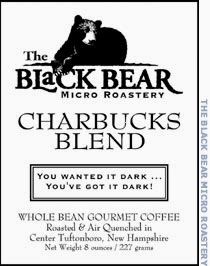
Starbucks famously sells coffee.  So, unfamously, does defendant (doing business as Black Bear), and it called its dark roast blend “Charbucks Blend,” now “Mister Charbucks.”  One of the reasons for the name was the public perception that Starbucks roasts its beans unusually dark. 

Starbucks submitted a consumer survey: a phone poll of 600 participants.  When asked “What is the first thing that comes to your mind when you hear the name ‘Charbucks,’ spelled CHARBUCKS?,” 30.5 percent of participants answered “Starbucks,” while percent answered “coffee.”  Other common responses included “barbeque” or “charcoal” (7.9 percent); “restaurant” or “grill” (7.5 percent); “meat,” “steak,” or “hamburger” (4.6 percent); and “money” (3.9 percent).  When the participants were asked, “Can you name any company or store that you think might offer a product called ‘Charbucks’?,” 3.1 percent responded “Starbucks,” and another 1.3 percent responded “coffee house.”  However, other, more popular responses included: “grocery store” (18.3 percent); “discount store” (16.9 percent); “restaurant” (7.0 percent); “department store” (4.8 percent); and “hardware store” or “home improvement store” (3.7 percent).  The expert concluded that the number one association of Charbucks was with Starbucks, but that it was impossible to measure the reaction to visual cues with a phone survey.

The court of appeals in a previous opinion upheld the district court’s finding that the marks had minimal similarity, because the context of the Charbucks Marks on Black Bear’s packaging, on its website, and in the phrases “Charbucks Blend” and “Mister Charbucks” differentiated them from the famous marks.  But it remanded because the district court erroneously required substantial similarity between the marks, and similarity was only one of six factors in the blurring test (though one would think it’d be a damned important one, since most of the others just go to the fame of the plaintiff’s mark!).  Also, the initial district court TDRA opinion erred by requiring bad faith before intent to associate the marks could favor the plaintiff, and erred by relying on lack of actual confusion, which doesn’t directly matter for dilution.

On remand, the district court found that Starbucks’ distinctiveness, exclusive use, and fame favored Starbucks.  But minimal similarity between the marks in context still favored Black Bear.  And it discounted the survey results for looking for associations only from the isolated word Charbucks, and not in their full context.  Here, only 30.5% of repsondents associated the two, while other dilution cases featured higher percentages.  Thus, the actual association factor weighed no more than minimally in Starbucks’ favor.  Overall, the court found association and similarity to be important factors, given the statutory definition of blurring as “association arising from the similaritybetween a mark or trade name and a famous mark that impairs the distinctiveness of the famous mark” (emphasis added).  Thus, Starbucks failed to carry its burden of showing likely dilution.

The court of appeals ran through the history of federal dilution law, noting but not explicitly highlighting the fact that dilution’s proponents always emphasized the idea that dilution protected the use of famous marks on noncompeting goods.  E.g., Sen. Judiciary Comm. Rep. on S. 1883, S. Rep. No. 100515 (the law was “specifically intended” to come into play “where the unauthorized use by others, on dissimilar products for which the trademark is not registered, dilutes the distinctiveness of [a] famous work.”).  (This is, in fact, worth highlighting: as here, if a plaintiff can’t show infringement when the goods directly compete, there’s very little justification for allowing it a bite at the dilution apple.) 

The court of appeals also nodded to the Chewy Vuiton case: “we need not consider all six statutory factors listed in U.S.C. § 1125(c)(2)(B)(i)–(vi) if some are irrelevant to the ultimate question; nor are we limited to those six factors. See Louis Vuitton Malletier S.A. v. Haute Diggity Dog, LLC, 507 F.3d 252, 266 (4th Cir. 2007).”  Instead, citing pre-TDRA law, the court of appeals endorsed a “cautious and gradual approach,” “which favors the development of a nonexclusive list of trademark dilution factors over time.”

Starbucks challenged the minimal similarity and weak association factual findings, but the court of appeals found no clear error.  The first finding had already been affirmed in the previous appeal because of the distinct packaging and the addition of other terms to “Charbucks.”
As to a weak showing of actual association, Starbucks argued that Black Bear’s admitted intent to create an association triggered a presumption of association, or at least was strong evidence of actual association.  But intent is a separate factor under the TDRA, not per se evidence that actual association weighs in the plaintiff’s favor.  McCarthy, and Federal Express Corp. v. Federal Espresso, Inc., 201 F.3d 168 (2d Cir. 2000), say that intent can be evidence of successful association, and the intent factor is indeed important.  But to avoid making any clause superfluous, the court declined to merge the intent to associate and actual association factors.  So there was no clear error in finding that testimony about the origins of the Charbucks marks wasn’t an admission of actual association or proof thereof.

Comment: Fancy footwork indeed.  Perhaps this could be done more rationally: blurring isn’t just association; it’s association that harms the distinctiveness of the famous mark—whatever that means.  Thus, just as many circuits now recognize that intent to copy is not itself evidence of likely confusion, though intent to confuse would be, we could say, consistent with many confusion cases, that intent to associate isn’t itself particularly weighty, unless it’s intent to harm the distinctiveness of the famous mark.  Maybe that intent will be rare—but let’s face it, how many Buick Aspirins do you see?

Turning to the survey, the court of appeals also found that the district court didn’t err when it discounted the survey because it only tested “Charbucks,” rather than the whole marks in context and because the 30.5% association was relatively small.  Surveys should try to approach marketplace conditions.  The Lanham Act covers the defendant’s “use of a mark . . . in commerce that is likely to cause dilution by blurring,” so “the way the defendant’s mark is used in commerce is central to the dilution inquiry.”  Starbucks presented no record evidence that “Charbucks” is ever read or heard in isolation—though “Mr. Charbucks” was presented in plain text on at least one page of Black Bear’s website, all other record uses of the Charbucks marks used Black Bear’s distinct color scheme, font, and layout.  It wasn’t clearly erroneous to find that prefixes or suffixes lessened the similarity between the marks.

Starbucks argued that 30.5% wasn’t small.  While the court deemed “What is the FIRST THING that comes to your mind when you hear the name ‘Charbucks,’ spelled CHARBUCKS?” to be the question “most probative of actual association,” it was notable that the next question, “Can you name any company or store that you think might offer a product called ‘Charbucks’?” produced much tinier numbers—only 3.1% answered “Starbucks” and 1.3% answered “coffee house.” Those percentages showed minimal actual association.  This question tested source confusion, which can be probative of association, because confusion requires that Charbucks call Starbucks to mind.  Some of the other answers could be consistent with an association with Starbucks (e.g., grocery store, restaurant), but they’re also consistent with other things, such as meat or a charcoal grilling product, as 38.5% said.  Thus, the district court didn’t clearly err when it evaluated the actual association factor as weighing only minimally in Starbucks’ favor.  If the survey had presented the Charbucks mark in commerce, the court of appeals might well have found clear error, but it didn’t.

Engaging in de novo balancing, the court also concluded that Starbucks didn’t meet its burden.  “[T]he ultimate question is whether the Charbucks Marks are likely to cause an association arising from their similarity to the Starbucks Marks, which impairs the Starbucks Marks’ tendency to identify the source of Starbucks products in a unique way.”  In a ridiculous overstatement, the court doubled down on its earlier holding: “Certainly, a plaintiff may show a likelihood of dilution notwithstanding only minimal similarity.”  But in this case, “minimal similarity strongly suggests a relatively low likelihood of an association diluting the senior mark.”  Indeed, the statute itself emphasizes similarity in its definition of dilution by blurring as association arising from similarity that impairs distinctiveness.  While there’s no threshold of substantial similarity, a finding of minimal similarity can be highly probative.

The next three factors—the degree of distinctiveness, exclusive use, and recognition—“are features of the senior mark itself that do not depend on the use of the junior mark.”  Distinctiveness makes the plaintiff’s rights bigger and thus more likely to be impaired by a junior use (of course, that conclusion doesn’t follow at all, since more famous marks are more likely to resist dilution because consumers have such a strong conception of their meaning, but whatever!).  The more important factors are similarity of marks and actual association, as the district court held.  (You mean, the factors that the district court found to be important the first time around?  Given that the Second Circuit says that weighing the factors is done de novo, remind me why this had to go back to the district court?)  Viewed in light of Starbucks’ fame, “the fact that more survey participants did not think of ‘Starbucks’ upon hearing ‘Charbucks’ reinforces the District Court’s finding that the marks are only minimally similar, and therefore unlikely to prompt an association that impairs the Starbucks Marks.”

As for intent, the court of appeals gave it “moderate” significance.  Black Bear was capitalizing on an historic connection between the word “Charbucks” and “Starbucks,” which arose out of the socalled “coffeewars” in Boston.  This favored a finding of likely dilution. 

But actual association was highly relevant, though evidence thereof is not required to prevail.  The survey evidence was weak at best.  Given that Starbucks bore the burden of showing entitlement to injunctive relief, the district court was affirmed.
Posted in dilution, trademark | Leave a comment

Is disclosure of recurring charges enough?

At Slate, a story about Boingo raises questions about what other steps a business ought to take to ensure that consumers make informed decisions to keep accepting recurring charges, when we know that many consumers don’t review their bank/credit card statements every month even if they ought to.

Posted in disclosures, ftc, unfairness | Leave a comment

Organization for Transformative Works submits comments on remix to PTO/NTIA

Or, what I did while not on summer vacation.  An extended discussion of why transformative, noncommercial works and cultures are valuable and deserve legal protection in the copyright regime. Conclusion:  “However the copyright reform project proceeds, it is vital that it not ignore the legitimate interests of the remixers who are working in every form of media. They are the future of our culture.  Artists, not lawyers, should determine the shape of works to come.”

Posted in fan fiction, fanworks, http://schemas.google.com/blogger/2008/kind#post | Leave a comment

Research post available at University of Cambridge

Lionel Bently passes on the following: a 2 year research post studying questions of newspapers, digitisation and copyright, is available at the University of Cambridge

Posted in http://schemas.google.com/blogger/2008/kind#post | Leave a comment

Surveys in defamation cases?

Eriq Gardner at THR Esq. rightly flags this tantalizing tidbit about Tom Cruise’s pending defamation lawsuit(okay, I have a very specific definition of tantalizing; don’t judge me).  Cruise conducted a survey to figure out how readers would interpret the claims at issue.  From the papers: 

Defendants are certainly free to argue that their cover headlines are mere ‘opinions’ of how Suri was feeling in the wake of her parents’ divorce. Plaintiff is likewise entitled to demonstrate that any reasonable reader would interpret Defendants’ headlines as conveying a verifiable statement of fact about Plaintiff’s conduct. Indeed, Plaintiff has already submitted survey evidence to Defendants showing that a majority of readers in fact interpreted the headlines ‘Abandoned By Daddy’ and ‘Abandoned By Her Dad’ as conveying the message that Plaintiff cut Suri out of his life altogether and on a permanent basis – i.e., that he had severed his relationship with her and they no longer had any contact whatsoever. Conversely, less than 4% of readers understood the covers to communicate anything about Suri’s feelings.

I’ve never heard of a survey in a defamation case before, but I suspect surveys in defamation cases will have the same problems of manipulability that they do in Lanham Act cases.  It’s an interesting (and likely expensive) development nonetheless.
Posted in defamation, surveys | Leave a comment

November 21st: WIPO Dir. Gen. Gurry at GW Law – Lecture and Live Webcast

The George Washington University Law School Intellectual Property Law Program cordially invites you to attend a lecture by The Honorable Francis Gurry, Director General of the World Intellectual Property Organization

“Intellectual Property Policy in the International Economy” 

The role of intellectual property (IP) in the world we live in today – a digitized, interconnected world – is vastly different from the world in which the IP system has its roots.  The digitized, interconnected world creates vast benefits, but changes have come so fast that the legal infrastructure around IP struggles to keep up.  The role of the World Intellectual Property Organization (WIPO) is to work with its Member States to ensure that the system does keep up, and stays relevant. 

WIPO Director General Francis Gurry will provide an overview of the evolution of intellectual property and how WIPO’s work program identifies policy responses to fast-shifting IP landscape.  The Director General will discuss, inter alia,  WIPO’s recent accomplishments, such as treaties on the rights of audio-visual performers (2012) and access to copyrighted material for the visually impaired (2013), and future activities, such as a proposed design law treaty and protection for traditional knowledge. 

Thursday, November 21st, 6:00 p.m.

The George Washington University Law School

Faculty Conference Center

5th Floor Burns Building

716 20th Street, NW

Washington, DC

Reception to Follow

Posted in design patent, http://schemas.google.com/blogger/2008/kind#post, traditional knowledge | Leave a comment

Law in an Age of Disruptive Technology, Georgetown Law Journal Symposium

3D Printing 

Moderated by Rebecca Tushnet • Georgetown University Law Center

Deven R. Desai & Gerard N. Magliocca, Patents, Meet Napster:  3D Printing and the Digitization of Things

Deven Desai is a law professor at the Thomas Jefferson School of Law and just completed serving as the first Academic Research Counsel at Google, Inc. Gerard N. Magliocca, Professor of Law & Associate Dean for Research  at Indiana University School of Law.

Desai: Digitization: business and legal change together = disruption.  Already happened with copyright—moving into other areas.  Different possible futures: working with change or replaying the copyright wars.  Three levels of manufacturing: home, start-up, large factory.  Freedom to make anything you want at all those levels—at home, already using 3D printing to play with toys. But Mattel may not be thrilled when people reconfigure Barbie.  Rapid prototyping for startups: excess talent/crowdsourcing used to make/improve a car design. At the high end, GE Aviation bought a 3D printing company to make precision parts for jet engines.

Current setup is for tinkerers—open source, user friendly (for certain values of “users”) and prices are coming down fast.  Revolutionary products have a growth phase: if this is like early computers/early web, it’s tipping to where ordinary people can use it. $3500 printers; Staples has an intro one for $1200.  There was a moment when you’d run to Kinkos to print—UPS has a pilot program for 3D printers on the same model.

Lego spoon designed to connect with real Legos; auto parts; etc.  But there are plenty of hiccups both practical and legal. Designs copied may be covered by copyright or patent; designs could eventually be made at full scale.  Could even print food!  Or guns, as others have noted.  Guns are regulated in various ways—including by patent.  Current printed gun doesn’t last very long.  But it will keep improving.  That’s the challenge.

Magliocca: Patents: there will be a lot more infringement, particularly by homes/small businesses, when 3D printing rises. What should Congress do? Go down the copyright road, trying to shore up patent protection by increasing penalties for infringement/new causes of action/new remedies. This is probably what many in patent industries will lobby for. It was futile then and futile now, which doesn’t mean it won’t happen.  Congress could also do nothing, which would be better but still leaves luckless individuals sued for patent infringement, made examples of.  Chilling effect/unfair in light of overall nonenforcement.  Congress could also create an exemption for things that are printed by 3D printers for personal use.  An exemption could be substantive, or procedural (bar remedies against individuals).

DMCA notice and takedown: defense to intermediaries that take certain actions in response to complaints.  That would help address the home infringer as well. Also possibly an experimental use exception, though it’s construed too narrowly to help almost anyone now: Fed. Cir. could revise its interpretation (or be instructed to do so).

That’s patent, but copyright is also implicated: you can make your own Harry Potter figurine. That’s not as dramatic given what we’ve already seen with copyright, mp3s and such.  But software copyrights used to make 3D printed objects are a potential issue.  Originality as an issue?   Is there merger between the idea of making an Easter Island head and what the program does (making an Easter Island head)?  People have very strong reactions to this question of merger.  Copyright doctrines may need to change.

Also, briefly, trade dress will also increase in infringement as people can make Coke bottles at home: implications for value of trade dress as marketing tool.  If people see bad-looking versions, do they attribute that to the brand (post-sale confusion)?  In a world of 3D printing, seeing something in someone’s house may not trigger any thought that it is attributable to the original TM owner.

Comments: Michael A. Carrier, Distinguished Professor, Rutgers School of Law

Innovation needs attention, not just “piracy.”  What does the law do facing new technology? His empirical survey of CEOs/VPs in music industry provides lessons for innovation in 3D.

Innovator’s dilemma: large well established companies are likely to pursue sustaining innovation—incremental improvements, tweaking the status quo and appealing to existing customers with short-term payoffs. Not interested in destructive innovation, radical breakthroughs that upset existing business models. Upstarts do that.  Music labels were victim of innovator’s dilemma—considered digital to be a passing fancy; focused on short term—executives worried about bonuses; 5 years from retirement and didn’t want to rock the boat.  Similar concerns: established companies have the most to lose from 3D.

Sky is falling: every time we see a new tech, it’s the end of the world as we know it.  Sheet music publishers hated player pianos. John Philip Sousa feared deterioration in American music from player piano; Jack Valenti of MPAA said the VCR was the Boston Strangler.  These were mistakes.  But new tech taking direct aim at existing business model provokes fear.  Maybe some fears are legit with guns, but expect the sky is falling narrative no matter what.

Napster as service: litigation empirically stifled innovation, caused venture capital to dry up. Napster allowed trading individual songs, which we now take for granted. That was no sure thing in 1998.  Executives: admitted they padded albums; Napster brought about a new way of consuming music that broke open the record label model, forcing them to embrace a new type of presentation to the public.  There are new possibilities 3D printing can bring about that could revolutionize consumption.

User innovation: Eric von Hippel has emphasized that users innovate in ways that contrast with manufacturers—users customize to their needs/desires; many manufacturer innovations fail, so coming from the users can be very valuable/exciting.  Rich literature there on which to draw.

Amateurs: last 15 years have shown that amateurs can do a lot they couldn’t do before at every stage of the creative process. Creation: GarageBand and iMovie.  Selection: no longer limited to music label’s A&R.  Still a role for that, but also for bottom-up.  Production and dissemination, likewise.

Why does innovation get lost by the wayside?  Innovation asymmetry: infringing uses are definable/threatening, take direct aim at copyright owners. Noninfringing uses are less tangible, not advanced by army of advocates, less obvious at onset of technology.  History of inventors who didn’t know how their products would be used: Alex. Graham Bell thought the phone would be used to broadcast news; Edison thought phonographs would record deathbed thoughts; railroads were supposed to serve canals; IBM thought there was a market for 10-15 computers. 

Lesson: Congress should stay out of the way; courts should err on side of allowing uses rather than trying to stamp out every instance of infringement, which won’t work anyway.

Michael Weinberg, Vice President, Public Knowledge,

3D printing takes people away from computer screens and back into the real world. Internet has trained a lot of people in how to think about IP. 20-30 years ago most people didn’t think about IP at all; then computers/internet happened and IP became more salient. The thing that will be striking in the physical world is that the world is full of things that have no owner, aren’t protected by IP.  Many things are, but the ratio is different.  For a lot of people, that takes a major readjustment of your worldview.  There are things that are freely copiable/integrable into another project.

When people realize that, many things happen. The free universal construction kit: designed to interconnect many toys, from Legos to Lincoln Logs.  Patented at one point, but patents expire.  Make 7/8 boxes of toys into one big box.  Why not?

Old sculptures in the public domain: they may feel more new/relevant than old books in the public domain—sculptures from 500 years ago do not date in the way that paintings and songs have.  The public domain of physical things feels different.  Metro. Museum of Art is scanning its collection, and people can mash it up: put your face on a sculpture. Slow process of realizing, not in a super activist way, that we can re/create culture. Innovation will be unanticipated.

Internet copyright conversation largely started from the assumption that the things at issue were protected by copyright.  Went to fair use, etc., but fundamental protectability was basically assumed from the start. 3D printing is different: we need to back up a step and ask about protectability.

Tushnet: I was struck by the paper’s descriptive claims: “Today, if you buy a doll, a Lego set, or a car, the ability to alter, tinker, or improve your purchase is low. 3D printing, however, opens the door to personal improvement. You still buy the doll or dollhouse; but once a child is bored, 3D printing allows you to design and create new heads, limbs, or furniture.”  I’d suggest more focus on affordances and how technology changes the salience and visibility of options: resculpting Barbie was always possible; you could always chop the doll’s hair off, make her new clothes, or even melt her limbs in the toaster; you could always build dollhouse furniture; we (lawyers) just didn’t notice it or think it was important for the law to grapple with the possibility. Same as fan fiction, fan art, Batman in the backyard.  (Mike Carrier: some amateurs made remix video throughout much of the 20thcentury. We just didn’t know about it until the internet hit.)

Authors and commenters suggest that there’s a lot of untapped desire for customization:  the paper uses the example of sales of soda mixers.  Suggested explanation: people have different flavor preferences, and thus customization is of value to them.  My suggestion: this account may be enriched by a more social explanation—consider the history of cake mixes, where mixes without eggs sold well not just because they produced better cakes but also because they satisfied a need in some bakers to participate in the process.  Laura Shapiro, Something from the Oven: Reinventing Dinner in 1950s America.  What box cake makers did was convince women that the key participatory moment came with decorating the cake, customizing it, personalizing it.  3D printers, to the extent they catch on, may succeed not just by satisfying preferences but by creating and shaping preferences for how one’s possessions are configured.

Related: the descriptive claim is that consumer can now decide what Lego looks like: the related question will be what kind of licenses will be available.  Rather than just licensing their own files, I expect copyright and trademark owners will wish to get control of files created by others, using their claimed rights as leverage to do so.  Compare Amazon Kindle Worlds: an attempt to move noncommercial production into the commercial world through licensing—no consistently and overtly asserted oversight of the actual production, but attempts to collect money at the point of distribution (which could be, here, the distribution of designs). 

Also, authors note that consumers may seek more assurance that they’re getting the “real” thing, whatever that means, and not something printed out at home by the seller.  Consider then the potential of ID numbers and objects that phone home not (solely) to control the purchaser in the seller-purchaser dyad, but to authenticatethe purchaser to third parties.  We are status-seeking animals; people may be willing to surrender personal information if it means that their friends can verify that their Gucci is real by scanning the QR code.

As for proposed DMCA analogue for 3D printing patent/TM claims: Not so sure that authors are right that the DMCA notice and takedown scheme is agreed to be working “reasonably well”; there are plenty of howls about it, which is part of how we got SOPA/PIPA and the content industries are not done yet.

Desai: DMCA is problematic, but what are the alternatives?

Carrier: notice and takedown is a lot better than the possible alternatives.  It at least is geared to the specific copyrighted work at issue, with a process available for dispute. Going beyond to places like SOPA/PIPA and TPP where we’re willing to punish any tech that enables/facilitates infringements or aids and abets liability (TPP). That can take down just about everything without much notice.

Weinberg: is printing practicing the patent?  Even if so, it’s not infringement to host the description of practicing the patent.  Liability should not necessarily be assumed.

Carrier: music file is instantaneous, but here there is more work involved in actual printing. Extra friction slows things down compared to music files.

Magliocca: at what point does the scale become so great that action is reqiured. You could make your own gun at home now with the know-how, but not that many people do.  (Weinberg: more people do it with lathes & milling than you think.  One feature of these debates is that you discover many many communities of practice doing stuff already—the ATF even has a regulatory framework; it was a solved policy problem in many ways.)  Ok, not enough people do to trigger a general regulatory response.

You can make a Coke label with a color copier.  It’s not a difference in kind, but a difference in degree.

RT: this gets to licensing as a solution: if you make universal licensing possible, then the content owner can say that no legal reform is necessary; if you don’t have a license, your website should shut down.

Desai: note that even streaming is a possibility: licensors could stream files to printers and contractually bar copying/alteration.

Weinberg: music licensing people react to the idea that people won’t need licenses for 3D printing by saying “look, we’ll license everything—we’ll put a package together.”

Desai: we are trying to create spaces where individuals are protected.  Thingiverse and Makerbot have weird notice and takedown policies—trying to act in good faith but not get crushed. Clearer statement/legal recognition.  If the VCR has substantial noninfringing uses, so do these.

Audience Q: shift in copyright from possession to use. People don’t care as much about owning tracks if they can always listen to it.  Is that transferable to 3D printing, which is at its core is about possession?

Carrier: Music is different because of the repeated play.

Weinberg: Ownership and control of physical object in way you don’t have with iTunes track. Reverse engineering is becoming increasingly simple. So even if you can’t hack the stream, you could copy the object. How effective is the license then?

RT: People rent cars and houses.  Why not watches?

Weinberg: why would the owner ever come after you at the end?

RT: well, enforcement ability changes—could bar you from selling on eBay.  Sometimes the claims made—we’ll protect individuals but discipline institutions—seem to work against the alleged transformative potential of the technology itself.

Q: what about a private use exception?  If yard sales won’t ever be covered, is there extra value?

Magliocca: it could be mostly symbolic: showing that this is okay.  Copyright litigation against individuals didn’t seem to do much in the end, though innovation was inhibited in terms of investment/risk averse entities.  Could be fighting some chilling effect. For those unlucky few who are found out, could change things.  The remedies are pretty severe here.

Carrier: the remedy is a central part. Copyright’s statutory damages are a really big deal. 

Weinberg: legitimizing the market: selling to individuals becomes possible. 

RT: notice that one of the paper’s proposals wouldn’t do that by barring individual liability but still allowing them to infringe.

Q: what about protecting creators? The panel seems in agreement, but many people aren’t interested in innovating, they just want to copy.

Weinberg: creators do already have rights in the present system. They can be enforced now. The lesson of the last two decades is that you can sue particularly bad actors, but your best solution is to make access to legitimate works really simple.  There is a role for infringement lawsuits, but economically the better way to use your resources to police your rights and maximize your revenue is to think about distributing as easily as possible.

Carrier: scale.  If your sculpture is copied by one person at home, that’s a very different effect than someone copying it to sell on the market.  Innovation is the best way to deal with infringement; if you made a better product, people wouldn’t be interested in the pirate copy.  People want relationships with artists.

Magliocca: 3D printers are not replicators. They have limits on size, materials, and skill. They will continue to improve, but there’s a way to go. There’s always a war within consumers between desire for customization/free stuff and their laziness. Download from the company’s website is simpler than having to find it somewhere else and risk the file being wonky.  Authenticity (whatever that means) means something to many people.

Q: people printing toys that aren’t safe for children/could have hazardous parts or materials. Innovation may be wonderful, but what do we do with that kind of shifting of risk/liability?

Magliocca: product liability for homemade/manufactured goods—at one level, there ought to be no difference if a defectively designed product injures someone. But should homemade toys come with warnings? We expect more of commercial manufacturers.  Exposing more people, including children, to risk.  There may be visible examples where things go wrong—need to look both at designs and materials.

Desai: Etsy—people have come to understand that handcrafts are different than mass-produced items.  Laziness factor—where brands/TMs come into it. Mattel might change its business, so it can supply materials as well as designs, and provide security in that way.

Carrier: deal with it ex post rather than possibility of harm. Find the market failure and deal with it then, otherwise we’ll never know what we’re missing.

Weinberg: Nora Engstrom of Stanford wrote a great paper on these issues.
Posted in copyright, http://schemas.google.com/blogger/2008/kind#post, patent, trademark | Leave a comment

Bernt Hugenholtz on Flexing Authors’ Rights

American University Washington College of Law Program on Information Justice and Intellectual Property, The 2nd Annual Peter Jaszi Distinguished Lecture:

Professor Bernt Hugenholtz – Flexing Authors’ Rights

Many countries lack fair use or fair dealing.  Adopters include Korea, Israel.  Authors’ rights countries without fair use can be very restrictive: can’t show copyrighted content in powerpoints at a public lecture—educational freedoms tend to be old-fashioned and highly restrictive.  Briefly showing in news reports images from an art exhibition—endless cases about this in France.  French right of quotation only covers fragments, which can’t be done with art.  Using short clips in documentaries is also a problem.  Documentary: not reporting the news; not quoting—falls in between exceptions.  Posting remixes on social media.  Parody of children’s character: successfully sued in Netherlands. Digitizing/indexing content for data mining/operating search engines: No exceptions in Europe come even close.  Google has seen increasing number of court cases, some of which it’s lost in parts of Europe, particularly Belgium and France. Shazam music recognition software: not allowed. Lack of flexibility in exceptions.

Fair dealing is much more limited than fair use.  Exhaustive/closed list, but with some flexibility around the edges depending on the country.  France has a very small list.  Others have more, but the list is still closed.  Quotation, news reporting, some private uses, some library uses.  Info Society Directive enumerated 21 types of limits/exceptions members may have in national law, mandating only one. Doesn’t allow anything beyond the list—anything not foreseen in 2001.  Search engines aren’t on the list.

Why no fair use? Civil law tradition.  Judge should only apply codified law.  Also, author’s rights offers different rationale than copyright system. Strongly favors authors over users. Exceptions are to be narrowly construed. There are also worries that flexibility would decrease certainty—open the floodgates.  Fear of US legal imperialism, too.  Do not underestimate this sensitivity.  There are also people who argue that international law does not allow fair use—conflict with Berne/TRIPS.

Do recognize increased need for flexibility in Europe.  Legislator can’t possibly respond adequately to fast pace of change; codifying everything precisely is outdated or ineffective. We must anticipate change that we cannot predict by providing for more abstract, flexible, and open norms.  European law requires two levels of change, national and directive—very slow response time.

Looking at traditional arguments against flexibility:  not a new problem for civil law, which elsewhere has abandoned the idea of pure codification.  The essential elements of civil law today involve a handful of general principles including fairness and reasonableness.  Balancing property rights with other rights, freedoms.

Certainty: fair use isn’t as wild and unpredictable as its critics here and in Europe claim. There is a coherence—Lee, Samuelson, Netanel have written about this. Conversely, civil law countries without flexibility, in desperation, resort to all sorts of doctrines outside of copyright trying to save the day—so much for predictability. German SCt 2010, Google Image Search/thumbnails: Perfect 10 without the naughty bits. Cook up a theory of implied consent, if you don’t use robots.txt.  Reasonable, but would have been much better if the result could be reached by applying copyright norms properly.  Rigidness therefore undermines certainty. 

Those who don’t like more flexibility often refer to the three-step test.  But that can be turned around: three-step test prevents opening the floodgates.

Not arguing for full US transplant; that rarely works.  Flexibility is different. Even Info Society directive, with its closed list, says flexibility is important—and many of the items on the closed list are actually rather open-ended. Quotation exception: for purposes “such as criticism,” which leaves lots of room to maneuver.  France interprets this restrictively, but Sweden interprets it broadly—comes close to a fair use rule for quotation to the extent necessary for the purpose, in accordance with proper uses.  Another exception: “incidental inclusion of a work or other subject-matter in other material.” Could use for documentarians.  “Caricature, parody or pastiche”—not even the French can define pastiche; could call user-generated content pastiche—again, room for maneuver.

What about the 3-step test? Flexible norms can be reasonably predictable, not all encompassing, and not unduly harm authors/rightholders.  No one has ever complained to the WTO about the US fair use rule—so why are we worrying? Promising developments, though mostly from civil law countries—Ireland recommended fair use; Australia is in a debate over fair use now.

What kind of flexibilities could work in an authors’ rights system?  More room to move inside existing limitations—Dutch copyright commission has proposed this.  UGC could be seen as quotation—just call it that!

More principled approach, flexibility alongside circumscribed limitations—an open norm complementing existing set of limitations.  Korea: a civil law country. 2011 revision introduced such a rule. Ireland is contemplating it.

European Copyright Code: proposed by academics: uses comparable to enumerated uses should be allowed subject to the 3-step test. This model would work very well in authors’ rights countries and common law jurisdictions too.

Who cares?  Chilling effects on institutional users, innovators, authors. Increasing gap between social norms and law undermines social legitimacy of copyright.

Q: what about moral rights? Are they a barrier?

A: No.  Relatively unimportant to exceptions/limitations. Already in European laws—could make norms subject to respect for moral rights. Political level, there is an argument: the absence of moral rights in the US is a constant source of irritation in trans-Atlantic relations.

Q: sometimes institutions in the US aren’t flexible either.

A: certainly need for norms of fairness between authors and intermediaries: the US could learn a lot from Europe there—Germany, France, Belgium, Spain have rules protecting authors against overbroad transfers.

Q: true no one has sued us under the WTO, but the US isn’t known for complying with the WTO anyway; would they bother?  Would other European countries accept Euro. loosening?

A: not sure that it’s even possible for one European country to use the WTO against another.  But a US rightsholder might theoretically sue.  Doesn’t see it happening, given the de facto precedent and the history of the 3-step test, purposefully constructed to embrace all existing exceptions/limitations, including fair use, since the thought had occurred that someday the US might join.
Posted in http://schemas.google.com/blogger/2008/kind#post | Leave a comment

Maxim suffers from max delay

Alpha Media Group, Inc. v. Corad Healthcare, Inc., No. 13 Civ. 5438, 2013 WL 5912227 (S.D.N.Y. Nov. 4, 2013)

AMG, which publishes Maximmagazine, sought to enjoin Corad from marketing a Maxim antiperspirant.  Maximis the core of a “lifestyle” brand featuring travel and entertainment. The mark has been licensed for a number of “lifestyle goods” such as playing cards, restaurants and bars, nightclubs, beauty contests, beer mugs, and bottle openers.  Maxim most commonly displays its name in red, capital letters; AMG has seven MAXIM trademark registrations.

Corad’s antiperspirants treat hyperhidrosis (excessive sweating).   It’s used the Maxim mark since 2001, registered for unscented antiperspirants in 2003.  Since 2003, it’s sold unscented roll-on and wipes in blue boxes with MAXIM in white, capital letters and a photo of a man and a woman, along with a caduceus and notes that it is “prescription strength” and “doctor recommended.” Since 2006, it’s sold unscented wipes for regular skin in a black box with MAXIM in red, capital letters. This box includes four pictograms “denoting travel, golf, exercise, and gym.”  (I.e., activities one might want to do without sweating excessively.)  Corel’s scented wipes are sold in a package with an ® marking, even though that product is outside the registration; Corel agreed to move that marking.

AMG intended to license MAXIM for body sprays, perfumes, and colognes. Though it was aware of Corad’s use of the Maxim mark, it only learned of Corad’s current packaging when it prepared to launch its own line of scented products, and also only recently learned that Corad was marketing a scented Maxim antiperspirant. 

AMG argued that Corad’s packaging “no longer reflects a medical product, but instead is impermissibly evocative of Maxim magazine’s lifestyle brand by using red letters on a black background, a photo of a couple, and the pictograms.”  It also argued that use of the ® constituted false advertising.  Ten weeks after learning about Corad’s packaging and scented product, it sued.
The court declined to grant a preliminary injunction, for want of irreparable harm.  After eBay and Salinger, a court can’t simply adopt categorical rules or presume that a party has met an element of the injunction standard, revising the previous law that preliminary injunctions should usually issue when the court finds likely confusion.  AMG’s assertion that Corad’s products cause consumer confusion and cause AMG to lose control of its reputation was “bare bones and conclusory,” and insufficient under Salinger.  It’s still true that likely success often foretells a finding of irreparable harm, but AMG provided “no reason to believe irreparable harm will in fact occur.”

And there was good reason to believe the contrary.  “Corad does very little marketing and directs its products at a small consumer segment. There can be no irreparable harm when very few consumers are likely to encounter Corad’s products, even assuming they do create a likelihood of confusion as to their origin.”  AMG itself, with its “strong interest” in tracking the use of “Maxim,” didn’t learn about the packaging for years after its first use. AMG itself argued that Corad didn’t conduct any advertising that AMG would have reason to see and didn’t have much in the way of sales or distribution.  “While these arguments may help negate a laches defense, they also diminish any possible inference of irreparable harm.”

AMG also itself told the PTO in its application to register the mark for scented products that  Corad’s product “is not a perfume but a product which is sold to a small group of people who have an excess sweating condition” and that “Corad’s products are sold almost exclusively through websites that it owns or operates.”  AMG argued that its plans to license a fragranced product now produced irreparable harm.  “But AMG’s own plans will not increase the visibility of Corad’s non-prescription medical products, marketed to a niche group of consumers.”

Corad’s multi-year use also negated any presumption of irreparable harm because “any harm caused by Corad’s packaging has likely already been inflicted.”  The elements of which AMG complained had been in use since 2003 for sensitive skin and 2006 for regular skin.  So far, AMG still had control of its reputation, and there was no reason to believe they’d caused confusion.  “It is difficult to see how AMG would now suffer irreparable harm if they remain on the market for the comparatively short time it will take to resolve this matter.”
Posted in trademark | Leave a comment