"Natural" plus green imagery not puffery for diapers and wipes

Jou v. Kimberly-Clark Corp., No. C-13-03075, 2013 WL 6491158 (N.D. Cal. Dec. 10, 2013) (magistrate judge)

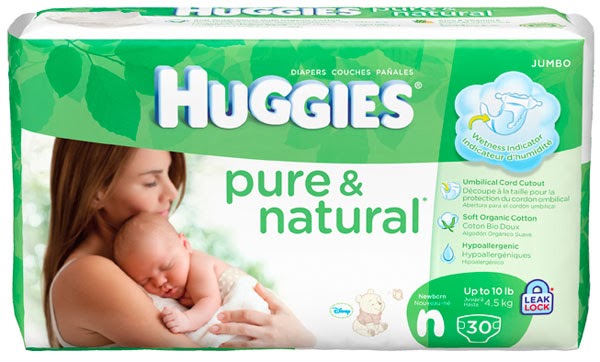
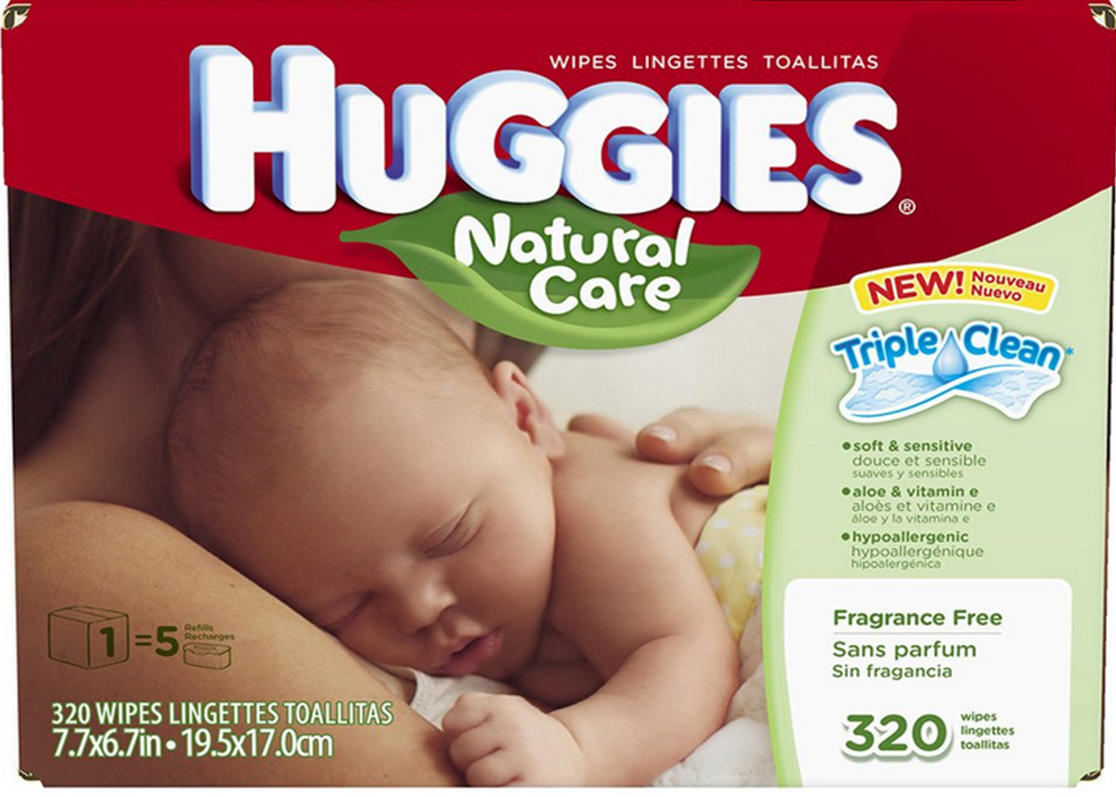
Plaintiffs brought the usual California claims and claims under Wisconsin law based on the “green” marketing of Huggies “pure & natural” diapers and “Natural Care” baby wipes.  Plaintiffs alleged that they paid a premium for the products based on these representations.

The diapers use the brand name prominently on the front of the packaging, which also says that the diapers are made of “soft organic cotton” and displays green coloring, trees, and leaves, in contrast to conventional Huggies. Plaintiffs alleged that, in fact, P&N diapers didn’t differ materially from other Huggies.  “First, while the product contains organic cotton, the cotton is only on the outside of the diaper and therefore never actually comes into contact with the ultimate user, the baby,” defying reasonable consumers’ expectations that the total diaper is organic cotton.  Second, the diaper liner includes “unnatural and potentially harmful ingredients, such as polypropylene and sodium polyacrylate, which are components of Defendant’s traditional diapers,” and the actual composition isn’t disclosed.

On the wipes, “Natural Care” is displayed prominently on the front of the packaging, along with green coloring and leaves. But the wipes contain sodium methylparaben and methylisothiazolinone, which allegedly are not natural and hazardous (and restricted by other countries).

Standing: allegations about reliance on the misrepresentations established economic injury and thus standing.  Kimberly-Clark’s argument that plaintiffs didn’t properly demonstrate the gap between what they paid and the value they received conflated standing with remedies.  However, because of the Ninth Circuit’s standing rules, plaintiffs lacked standing to seek injunctive relief because they didn’t allege that they’d resume purchasing the products if they were properly labeled.  Though some cases hold that applying this rule thwarts the point of a consumer protection class action (because it does), the magistrate judge disagreed, reasoning instead that a plaintiff could theoretically seek injunctive relief: “it is not impossible that a consumer would be interested in purchasing the products at issue if they were labeled correctly.”

The court then found that the allegations satisfied Rule 9(b).  It identified who bought which products and when; where the misrepresentations occurred (the package); and what the misrepresentations were and why they were false. Plaintiffs alleged reliance, and it was plausible to infer that they meant that they looked at and relied on the front of the package.  “After all, the goal of Rule 9(b) is to provide the defendant with notice, not to ensure that the plaintiff has adequately pled causation.”

Kimberly-Clark argued that plaintiffs didn’t plausibly allege that a reasonable consumer would likely be deceived, but the magistrate judge disagreed.  As for the diapers, “pure & natural” could lead a reasonable consumer to believe that that the product is free of non-natural ingredients, especially reinforced by “Soft Organic Cotton.”  That cotton didn’t touch the baby’s skin, but the non-natural protions did.  In addition, the green banner and images of leaves plausibly reinforced a reasonable consumer’s belief that the diapers were entirely natural.  Contrary to Kimberly-Clark’s arguments, the words “all,” “only” or “100%” were not required for likely deceptiveness.  “Whether one labels a product ‘natural’ or ‘all natural,’ the same plausible inference can be drawn– that the product is natural, meaning it is not made with any non-natural ingredients.” Also, “natural” didn’t stand alone on the diapers—“pure,” like “all,” emphasizes the natural state of the product.  Kimberly-Clark conceded that “purely natural” plausibly would lead a consumer to expect a synthetic-free product, and the judge didn’t see any difference based on the ampersand.

Kimberly-Clark contended that “pure & natural” was mere generalized puffery.  But “describing a product as ‘natural’ or ‘pure & natural’ is not generalized and vague.” Kimberly-Clark even argued that the phrase was true because the diapers had some natural ingredients. The issue was not whether the term was devoid of meaning, but rather what meaning reasonable consumers would give it.  Nor was the term puffery because reasonable consumers know that diapers and wipes can’t really be natural, in that they don’t grow directly from the earth.  This was a caricature: the allegations were that consumers would believe that “natural” means that the diapers had no non-natural ingredients.

In addition, “natural” was not puffery just because the FTC has declined to provide general guidance on the use of the term, which it did because it lacked sufficient consumer perception evidence and because the word might mean different things depending on the context.  That didn’t mean that this use had no specific meaning.  To the contrary, the FTC explicitly warned that some uses of “natural” could be deceptive:

Marketers that are using terms such as natural must ensure that they can substantiate whatever claims they are conveying to reasonable consumers. If reasonable consumers could interpret a natural claim as representing that a product contains no artificial ingredients, then the marketer must be able to substantiate that fact. Similarly, if, in a given context, a natural claim is perceived by reasonable consumers as a general environmental benefit claim or as a comparative claim (e.g., that the product is superior to a product with synthetic ingredients), then the marketer must be able to substantiate that claim and all attendant reasonably implied claims.

The judge also rejected Kimberly-Clark’s argument that the packaging clears up any misconception by identifying which parts of the diaper were natural: “Soft Outer Cover With Organic Cotton” “Aloe & Vitamin E,” and “Liner Includes Renewable Materials,” were on the back or side panels.  But, under the Ninth Circuit’s Williams rule, reasonable consumers aren’t expected to look beyond misleading representations on the front of the packaging to discover the truth from small print or from the back of the packaging. “Further, the Court fails to see how the disclosures necessarily inform the consumer that the diapers include non-natural ingredients.”  Taken together, the phrases suggested that the entire diaper wasn’t made of organic cotton, but didn’t disclose what the “renewable materials” were or what other ingredients were included, such as polypropylene and sodium polyacrylate.  Kimberly-Clark argued that Williams was restricted to cases of affirmative misrepresentations.  First, plaintiffs pled an affirmative misrepresentation; second, the claim was that the diapers misrepresented that they onlycontained natural ingredients.  “Thus, it is irrelevant that the disclosures ‘confirm’ that the product does indeed contain some natural ingredients or that the disclosures ‘clarify’ which ingredients are natural.”

The judge then dismissed the relevance of Hill v. Roll Int’l Corp., 195 Cal.App. 4th 1295 (Ct. App. 2011).  Hill rejected claims that a bottle of Fiji water was misleading because its packaging included a “green drop” that inaccurately conveyed that the product was endorsed by a third-party environmental organization and referred to the website fijigreen.com.  While a reasonable consumer would likely perceive an environmental reference from the green drop, that didn’t mean she’d view it as a third-party endorsement, and the website wasn’t alleged to contain any false or misleading information.  Plaintiffs here didn’t allege that the green leaves alone were misrepresentations, but rather contributed to the context of the words.

However, the court agreed that it wasn’t plausible that a reasonable consumer would believe that the diapers were made exclusively of “Soft Organic Cotton.”  Instead, the phrase merely communicated the presence of that material, unlike “pure & natural” which at least implicitly represented that the product was not impure or unnatural.

As for the “Natural Care” wipes, it was also plausible that the packaging would likely deceive a reasonable consumer.  “By labeling these wipes as ‘Natural Care,’ and superimposing that term on an image of a green leaf, it is plausible that a reasonable consumer would likely be led to believe that the wipes contained only natural ingredients,” and not allegedly toxic synthetic ingredients.

Finally, the court found that plaintiffs couldn’t state a claim under Wisconsin’s consumer protection law, not because they lacked “standing” as Kimberly-Clark first argued, but because that law only applied to misrepresentations made in advertising “in this state,” that is, in Wisconsin.  It did not cover misrepresentations merely formulated in Wisconsin (where Kimberly-Clark devised and implemented its marketing program). Thus, while plaintiffs could in theory bring two causes of action under different states’ consumer protection statutes, the law here didn’t support such a claim.
Posted in california, consumer protection, http://schemas.google.com/blogger/2008/kind#post, standing | Leave a comment

FCC regulation doesn’t preempt action against wireless router ads

Netgear, Inc. v. ASUSTeK Computer, Inc., No. C 13-3405, 2013 WL 6512700 (N.D. Cal. Dec. 12, 2013)

Netgear sued defendants, whom I’m going to call ASUS, alleging claims for false advertising/unfair competition, tortious interference, and violations of the Sherman Act.  The parties compete in the market for wireless routers.

The FCC has made rules for wireless routers.  They must be tested and authorized by the FCC before they can be marketed or used in the US.  Manufacturers or sellers can certify compliance with FCC limits by performing tests on the routers to measure how much radio frequency energy they radiate, and to confir that they comply with FCC requirements.  The applicant must file a report with the FCC detailing its procedures and lab results.  The FCC reviews the report and may or may not request a sample for tests.  If the application checks out, the FCC will issue its certification. The FCC doesn’t test transmitters as a matter of course to determine if they match reported test results.

The complaint alleged that ASUS obtained certification for multiple wireless routers using tests performed by the Taiwanese QuieTek Corp.  The measurements were allegedly either false when made, or ASUS modified the models at issue after testing without FCC authorization.  In fact, the models allegedly produce outputs “far in excess of those represented to the FCC, produce outputs that exceed FCC maximum output levels, unlawfully cause interference with adjacent bandwidths (potentially including critically important navigation communications, and safety devices), and operate in a manner that has never been accurately reported to the FCC.”  ASUS thus falsely advertised the routers’ compliance with FCC regulations, which harmed Netgear because ASUS routers were touted by some (interesting vagueness there) as being more powerful and providing a more stable connection than Netgear’s competing products.  To the extent this was true, Netgear alleged, it was possible only because of the noncompliance with FCC radiation standards.

ASUS moved to dismiss the claim as preempted by the FCC’s exclusive authority to enforce its standards. There’s no private cause of action for violating an FCC regulation.  ASUS relied on Pom Wonderful LLC v. Coca–Cola Co., 679 F.3d 1170 (9th Cir. 2012), and PhotoMedex, Inc. v. Irwin, 601 F.3d 919 (9th Cir. 2010), which both barred Lanham Act claims that would have required the court to interpret FDA regulations. 

PhotoMedexinvolved allegations that a laser was falsely advertised as “FDA approved,” but the FDA eventually found that the laser was substantially equivalent to the earlier laser, which was enough for approval.  The plaintiff couldn’t bring a claim: “In a context where the statute and regulations place responsibility in the first instance on the manufacturer to determine whether its device is covered by a previous FDA clearance and permit marketing of the product without an affirmative statement of clearance by the FDA, it is impossible for PhotoMedex to prove that Ra Medical’s device had not been cleared by the FDA when the FDA itself did not take that position.” 

Pom barred a lawsuit over the labeling of a product as “Pomegranate Blueberry Flavored Blend of 5 Juices” when it contained only 0.3% pomegranate juice and 0.2% blueberry juice, because the Ninth Circuit determined that FDA regulations authorized the name.

Both cases emphasized the importance of evaluating each case and giving as much effect to both statutes as possible. Here, unlike cases where resolution of Lanham Act claims would conflict with FDA regulations and require the court to undermine what the FDA apparently determined, Netgear could prove its claims by showing that ASUS falsely advertised that its products met FCC standards, either by submitting falsified test results or by altering their wireless routers after testing. Such proof didn’t risk undercutting the agency’s expert judgments, because the allegations didn’t implicate FCC determinations or require interpretation of ambiguous regulations. 

For similar reasons, ASUS’s field preemption argument against the state law claims failed.  ASUS argued that Congress clearly intended the FCC to occupy the field of setting and enforcing technical standards for radio frequency emissions. But the claims here didn’t implicate the FCC regulation of interference, or seek to impose additional requirements not imposed by the FCC; they were just false advertising claims.

Nor would the court stay the claims based on the primary jurisdiction doctrine.
Posted in http://schemas.google.com/blogger/2008/kind#post, preemption | Leave a comment

The TPP and termination rights

The TPP’s Attack on Termination Rights?  Provocative post on EFF’s blog.  Of course we will be told that the TPP doesn’t require changes in domestic law (it just bars many improvements, something that ought to be notable given that Washington seems to be gearing up for real copyright reform).  But (a) given the secrecy, I’d rather verify than just trust, (b) the US has ignored its international commitments in IP for years when it suits domestic political forces, but doesn’t extend the same consideration to others, so I can absolutely believe we’d push a rule that we’d be immediately violating.  (See also Margot Kaminski’s excellent work on US positions that unduly constrain and even conflict with US law, such as Kirtsaeng, presented in this forthcoming article.)  But maybe the TPP’s proposed language allows restrictions on transfers like our current termination rules.  Maybe we’ll eventually find out. 

Posted in contracts, http://schemas.google.com/blogger/2008/kind#post | Leave a comment

Descriptive or nominative?

I like clever ads that play both on trademark and non-trademark meaning, but I always wonder if our defenses are sufficient to accommodate them:

I saw no indication on the ad that Walmart sought permission for this use of “Apples” (notably, not the usual plural for iPads), nor do I think permission is needed!

Posted in trademark | Leave a comment

plaintiff not enough of a competitor to win false marking claim

Sukumar v. Nautilus, Inc., No. 7:11–cv–00218, 2013 WL 6408351 (W.D. Va. Dec. 6, 2013)

Previousdiscussion.  The court goes through a lot of facts and effort here to confirm that the AIA made false marking claims essentially impossible to win, and I’m not so sure about that adverb.  Sukumar sued Nautilus for false marking of certain exercise machines, and, even despite the court’s ruling that some false marking occurred, the court found that he hadn’t shown enough evidence of “competitive injury,” as required under the AIA.  Coordinate state law claims also failed for lack of evidence of proximate causation.

Sukumar founded plaintiff Southern California Stroke Rehabilitation Associates (SCSRA) with the intention of opening stroke rehabilitation centers.  Based on his experience with his elderly father’s illnesses, he made strength training equipment a central part of his plan. He believed Nautilus machines would need to be modified to serve the senior fitness and rehab market, and developed concepts for such machines.  As part of his research, he bought a number of different exercise machines from Nautilus and others.  In the course of his investigations, he was told several times by Nautilus employees or representatives that Nautilus machines were patented and that Nautilus vigorously protects the machines from patent infringement.  The Nautilus machines also contained patent labels.  “[A]t least some of the patent labels on the machines were false, in that they listed patents that did not apply to that particular machine.”

Sukumar also ordered a number of customized Nautilus machines, but was dissatisfied with the delivered machines and sued the distributor for breach of contract and Nautilus for inducing breach.  He lost those claims.

He testified that he wanted to enter direct competition with Nautilus, but because of the patent statements, he thought he needed a license.  He twice sought a license from Nautilus to modify the machines, at least once in the context of a settlement discussion.  He argued that, had he known those machines were not patented, he would have built his own machines for sale and thus competed directly with Nautilus. However, his testimony was contradicted by terms in the settlement letter, in which he claimed he wanted to license Nautilus technology solely for use in SCSRA centers; at his deposition, he testified that he only formed the intent to make and sell customized machines in early 2012.

Although Sukumar claimed to have been working on his designs since the late 1990s, he and SCRSA are not presently Nautilus competitors.  SCSRA has no other employees; they haven’t created or opened any senior spa centers or stroke rehabilitation centers; they haven’t sold any modified Nautilus equipment or machines of his own design; they hold no patents on fitness equipment; SCRSA has yet to show a profit in any year; and Sukumar’s patient protocol isn’t written, but kept in his mind.  In rebuttal, plaintiffs emphasized their efforts since the early 2012 decision that the machines were falsely marked.  They retained an expert on the senior fitness market and worked to develop a business plan and retain other industry professionals; they were working with a design house and manufacturers to develop prototypes; and they were working to buy land for a manufacturing facility. Thus, they argued, were it not for the false patent labels, they could and would have engaged in such efforts previously.

Plaintiffs’ injuries, they argued, were delay in entry into the fitness equipment market; unnecessary expenses in attempting to license or purchase Nautilus patents/assets and those of another manufacturer; unnecessary expenses in analyzing the validity and enforceability of the falsely marked patents; and unnecessary expenses in storing machines they acquired.

None of this was sufficient.  The AIA requires “competitive injury,” in order to eliminate abusive qui tam actions.  Although plaintiffs relied on the idea that they were competitively injured when they were impeded in their efforts to enter the market and incurred unnecessary costs, citing Forest Group. Inc. v. Bon Tool Co., 590 F.3d 1295 (Fed. Cir. 2009), that case has been superseded by the AIA, and in any event involved parties who were concededly competitors.

“Indeed, some of the precise harms that Plaintiffs claim here, e.g ., unnecessary investment in design around costs, or costs incurred to analyze the validity or enforceability of patents, are described in [another case] as hurting ‘a member of the public [who] desir[es] to participate in the market for the marked article.’ Those harms would not be competitive injuries, therefore, but instead harms suffered by the general public.”  Forest Group didn’t identify the harm of dissuading potential competitors as competitive injury.  The case law to date was ambiguous about potential competitors; analogies to the Lanham Act were also not dispositive.  The court declined to make a blanket ruling on potential competitors. Instead, it held that no reasonable jury could conclude that theseplaintiffs suffered a competitive injury.

Assuming that prevention of entry into the market is actionable, “it must mean that the entity was capable or able to compete (or actively trying to do so), but that the false marking impeded those efforts in some concrete way. A competitor must do more than show it had a desire to compete, and that it did not attempt to compete out of a fear of infringing another’s patent.” But that’s all that plaintiffs here could show. “It simply defies common sense to conclude that, for more than ten years, Plaintiffs have not entered the market to compete with Nautilus and that the sole item holding them back was their fear of infringing patents that were falsely listed on the accused machines’ patent labels.”  Plus, a subjective fear of infringing was insufficient to establish competitive injury, because that standard would allow lots of plaintiffs to sue.  Notably, the Federal Circuit has rejected subjective fear of infringement as sufficient injury to convey standing to challenge a patent. 

Sukumar might well have great ideas, and since 2012 he might have begun in earnest trying to make them reality. “But concerted efforts after a lawsuit is filed or a partial decision rendered is not proof a jury can rely on to determine that the reason those efforts were not taken sooner was because of false patent labels.” This was especially true because he repeatedly blamed other, non-false marking actions by Nautilus for years of delay in his business objectives.  His sincere belief didn’t substitute for evidence that “if not for Nautilus’s false marking of its machines, the road to Plaintiffs’ development of competing machines and rehabilitation or spa centers would have been swift and easy and that SCSRA would be competing with Nautilus today.”

In addition, there was insufficient evidence that plaintiffs ever intended to compete with Nautilus in the relevant market—making and selling exercise equipment—before the lawsuit, as opposed to using machines in his own facilities.  In fact, plaintiffs’ changing plans further showed that they weren’t sufficiently established as a business to suffer competitive injury.

The other claimed damages were also insufficient.  Any claimed overpayment for machines based on the false marking, even if it occurred, was injury as a consumer, not competitive injury.  As for the unnecessary expenses in analyzing/attempting to license the patents, etc., they weren’t competitive injuries for the same reasons: “Plaintiffs are neither competitors nor sufficiently close to competing to state a valid claim for ‘competitive injury.’”  Plus, the licensing attempts were part of an effort to settle pending litigation, unrelated to false marking.  There was also no evidence that storage fees and legal fees incurred in analyzing the patents’ validity were caused by the false marking; Sukumar had previously blamed other causes, such as Nautilus’s breach of contract or warranty, on the claimed storage fees.  

Nor is work performed to determine the validity of Nautilus patents inherently a competitive injury, but rather a “generic” type of harm.  Also, the fees weren’t unnecessary because they were the basis for the lawsuit, but attorneys’ fees aren’t recoverable in a California consumer protection claim, so to allow them to count under the AIA would be an unacceptable end-run.  (Comment: what?  That makes no sense to me; the AIA is not a coordinate federal law to the general California consumer protection law, and anyway the feds are entitled to decide what counts as injury to a federal right.)

In any event, the harms alleged were simply too speculative for a jury to find them to have been caused by the false labels.

The state law claims under California and Washington law also failed, even though they didn’t require competitive injury: they required damages caused by the mismarking, and evidence of causation was absent.
Posted in california, consumer protection, http://schemas.google.com/blogger/2008/kind#post, patent | Leave a comment

soy and almond milk couldn’t deceive reasonable consumers

Ang v. Whitewave Foods Co., No. 13-cv-1953, 2013 WL 6492353 (N.D. Cal. Dec. 10, 2013)

Plaintiffs sued over defendants’ Silk and Horizon products. The Silk products are plant-based beverages, including Silk Vanilla Soymilk, Silk Almond Milk, and Silk Coconut Milk.  The Horizon products are yogurt and milk products.  The court dismissed the usual California claims with prejudice.

Plaintiffs alleged that the terms “sugar” or “dried cane syrup” should have been used on the products instead of “evaporated cane juice.”  Also, the Silk products were allegedly misbranded because “milk” is a substance that comes from lactating cows.  The first set of claims was dismissed because of res judicata: a valid prior class settlement in a Florida action alleging the same misbranding argument.

Defendants argued that the milk claims were also precluded because they only targeted products that contained evaporated cane juice, but that wasn’t true: the settlement barred claims related to use of the term evaporated cane juice, not all claims relating to products that contained evaporated cane juice.

However, the milk claims were preempted by the FDA’s standard of identity rules.  “A standard of identity is a requirement that determines what a food product must contain to be marketed under a certain name.”  The FDA requires a food to be identified by its common or usual name.  Though the FDA defines “milk,” the court found that this “pertains to what milk is, rather than what it is not, and makes no mention of non-dairy alternatives.”  (I don’t get this reasoning.  So if there’s no milk in the product at all, it can be called milk without regard to the FDA definition?)

Plaintiffs also noted FDA warning letters to soymilk makers that warned manufacturers that “soymilk” was misbranded because of use of the term milk.  But these brief statements were “far from controlling,” especially since the FDA “regularly uses the term soymilk in its public statements, suggesting that the agency has yet to arrive at a consistent interpretation … with respect to milk substitutes.”  Because the FDA had yet to mandate a name, the court went to the “common or usual” name requirement; that requires each class or subclass of food to have its own common or usual name that clearly states what it is in a way that distinguishes it from different foods.  That name can be established by common usage.

Here, the court found that “soymilk,” “almond milk,” and “coconut milk” accurately described the products:

As set forth in the regulations, these names clearly convey the basic nature and content of the beverages, while clearly distinguishing them from milk that is derived from dairy cows. Moreover, it is simply implausible that a reasonable consumer would mistake a product like soymilk or almond milk with dairy milk from a cow. The first words in the products’ names should be obvious enough to even the least discerning of consumers. And adopting Plaintiffs’ position might lead to more confusion, not less, especially with respect to other non-dairy alternatives such as goat milk or sheep milk. 

(Ed. note: non-dairy?)  As a result, the claims were preempted as attempting to impose standards not identical to FDA standards.

Also, the court independently found that plaintiffs’ claims flunked Iqbal/Twombly’s plausibility standard, for much the same reason already articulated: the use of “soy” and “almond” made it implausible that a reasonable consumer would be confused, “disregard the first words in the names, and assume that the beverages came from cows.… Under Plaintiffs’ logic, a reasonable consumer might also believe that veggie bacon contains pork, that flourless chocolate cake contains flour, or that e-books are made out of paper.”
Posted in california, fda, http://schemas.google.com/blogger/2008/kind#post, preemption | Leave a comment

PTO/NTIA online transactions

Online Transactions

Moderator: Ann Chaitovitz, Attorney‐Advisor for Copyright, Office of Policy and International Affairs, USPTO

Comments generally agreed that online markets should be left to private markets. What role if any for the government.

Panelists:

Roy Kaufman, Copyright Clearance Center

We focus primarily on text, dragged by users into other media. Our markets tend to be corporate, publisher to publisher and academic.

Prof. Brandon Butler, American University, Washington College of Law

Library Copyright Alliance: 3 major library associations representing 100,000 libraries around the world.

Q: what do each of you see as key obstacles to developing robust, comprehensive online licensing environment, and can the gov’t help?

(I guess we’re not going to talk about how gov’t can help by maintaining a large space in which licensing is not required?)

Kaufman: key obstacles are that it’s very hard to develop robust databases, taxonomies for licensing.  What is a library?  Different rights, different media, different markets, different norms. Can be brought together, because within each market there are many solutions. Gov’t can encourage and foster collaboration across media and sectors.

Meredith Jacob, Creative Commons

Sheer volume of creative works is an obstacle. Many people who create don’t think about registration/licensing at all.  Hard to explain why you should do that (especially if your intent is not to strike it rich).  Creators’ intent varies. Almost everyone who is a “user” is also a creator as CC sees. Having a user/creator divide is a problem.

What gov’t can do: Gov’t can not reinforce systems that assume that all creators want the same thing.  Don’t necessarily want remuneration. Don’t assume that all transactions should be licensed.

John Lapham, Getty Images: it’s easier than ever to license. Don’t demonize the right to be properly compensated. The obstacle is that we publicly shame people for wanting to be compensated and say that being seen ought to be enough. What gov’t can do: keep up by trying to develop small claims process that recognizes digital economy/new needs. Likewise, not being overly in love with status quo is critical. DMCA was implemented when we were worried about survival of internet, but now we know that it’s possible to make a good living as a search engine.

Butler: not much to do for libraries in terms of facilitating licensing. Libraries are doing wherever they can and see it as appropriate. ARL members spend $1.4 billion on content, of which $850 million collectively is spent on licensing, or 60%. We’re licensing like crazy.  Not really seeing a lot of barriers to finding people willing to take our money. What should gov’t do?  Licensing terms are trumping copyright’s default rules—sign away first sale and fair use rights. Libraries get these huge portfolios of licenses, but huge thickets of rights they often aren’t qualified to or capable of parsing when it comes down to deciding what uses are ok. Gov’t could ensure that default user’s rights in copyright act can’t be licensed away, at least for libraries that need those rights for their basic jobs.

Q: talk about UK Copyright Hub: what can the US learn?

Kaufman: a way for users/creators coming out of UK copyright review. Improvements in licensing info were possible. Similar efforts in the EU.  US should be doing the same thing.

Q: how do libraries see the relationship between online licensing and fair use?

Butler: Fair use is extremely important to libraries, and licensing does not and should not undermine fair use, especially in transformative contexts. In theory, more and better licensing therefore shouldn’t threaten us, but the other side doesn’t see it that way.  CCC is suing some of our members based on a misunderstanding of fair use, where they assert that the existence of a license should force fair use to shrink. Another example: text and data mining—this is a transformative fair use, even when done for money.  But CCC says they’re working on a market for text/data mining, in Europe where there’s not as clear an exception. That’s a terrifying prospect. We don’t think anything that comes out of this process should be seen or portrayed as taking away from fair use, but it’s a fear we have.  (Bravo!)

Kaufman: misleading to say we’re suing your members, but off topic.  Someone said this morning licensing doesn’t substitute for fair use (that would be me).  He’s ok with that, but we should have efficient online mechanisms and should not shy away out of fear of effects on fair use.

Q: Getty recently reached a deal with Pinterest. Tell us about that arrangement.

Lapham: Don’t think gov’t can help with that.  Tech companies like Getty can work with partners in the private sector to make more and better content available. Pinterest: a healthy percentage of their content belonged to us. Rather than having a slapfight, focused on losing metadata/attribution. Instead, reattach attribution and provide royalties.  Opportunity for more arrangements like that so that creators can create and still be compensated for use on social media sites.

Q: reattach metadata; was there also a payment for past uses?

Lapham: the arrangement works by using our image database of 10s of millions of ours and other companies’ pictures; we can match that against the website. Using image recognition tech, we can find and reattached metadata, and charge fees per image per month.

Jacobs: Creative Commons are valuable because they don’t require renewal/maintenance of longterm engagement with the process. That is useful for creators who can set it and forget it.

Kaufman: Linked Content Coalition should be watched.  CC is also useful because it’s human and machine reasonable.  Digital Object Identifier used in science publishing. Orchid: a researcher ID, but can ID researchers as authors.  Each one has a purpose; a lot have open APIs.  First step: gather them all up and decide how they play with each other in this acronym soup.

Jacobs: public domain content and content created through federally funded research needs to be in these databases so you can find content that is public domain or open licensed or CC licensed so there’s no division there.

Lapham: Hargreaves report in UK—could be useful to work with gov’t in creating image registries/databases, whether orphan works or otherwise. Don’t wait for gov’t to do it. Instead, partnership where we can provide services to meet objectives for orphan works or otherwise.

Butler: on how not to do it—Jonathan Band and I wrote anarticle about issues with collecting societies around the world. See problems of corruption, transparency, inefficiency—learn from those mistakes and work for accountability.

RT: What can the US learn from Canadian legislative reform and Canadian universities’ responses to Access Copyright?

Butler: we can learn a lot.  Canada, Australia, and some other countries who have had comprehensive licensing systems are looking to us and whether they should be turning more for facilitating educational uses to fair use, or even to CCC on a piecemeal rate instead of paying statutory/blanket licenses.

Allan Adler, AAP: All this talk about prohibiting waivers of fair use or other rights—we don’t want gov’t to engage in paternalistic policies; people wouldn’t know where that would end. You can waive almost any right, including First Amendment right to speech if you work for the gov’t (uh, does not follow, but ok).  Better and easier to pay for license than relying on fair use. (Well, yeah, if the copyright owners get the gov’t to hand them that right; apparently only some kinds of rights definitions are paternalist.)  Biggest stories of year are implementation of ACA and NSA’s activities—these are related to gov’t databases, so aren’t we worried about that esp. when we are talking about tracking online transactions?

Lapham: allow for private sector solutions to some of the big issues.

Butler: shares some of those concerns, especially about NSA. Private collection of info is a great tool for the gov’t, so any time anyone has a big database that is a concern for us. Any effort to create central database of what people are reading should raise non-copyright concerns.

Kaufman: We have fair use, exceptions, limitations—but the whole point is to get users what they want the best way they can; sometimes that’s rights information. Don’t demonize us for doing that.

John Morris, Associate Administrator and Director of Internet Policy, NTIA

Importance of collaboration v. talking past one another.

Shira Perlmutter, Chief Policy Officer and Director for International Affairs, USPTO

Committed to finding sweet spot for copyright and internet policy. Need continued collaboration from all stakeholders.  There will be hard work ahead. We haven’t chosen easy issues. If positive tone of discussion today and willingness to engage constructively continue, I’m optimistic about progress.  Soon will announce further public outreach on these topics. Plan is for roundtables around the country in the coming months.
Posted in copyright, http://schemas.google.com/blogger/2008/kind#post | Leave a comment

PTO/NTIA access to rights information

The Government’s Role in a More Efficient Online Marketplace

Panel #1: Access to Rights Information

Moderator: Garrett Levin, Attorney‐Advisor for Copyright, Office of Policy and International Affairs, USPTO

Building the online marketplace is fundamentally for the private sector, and that process is well underway. Many comments stressed importance of private sector, and we agree, but gov’t may be able to facilitate the process.

Panelists:

Colin Rushing, SoundExchange

Building a database: we’re working on trying to make ISRC system work better, and working with counterparts around the world on better systems and processes for flow of data and money.

Prof. Pamela Samuelson, University of California at Berkeley School of Law

Berkeley hosted a conference on reformalizing copyright; many speakers discussed the importance of accurate and up-to-date rights information. Consensus: need more information through recording transfers. People who record transfers now do so voluntarily but incentives aren’t good enough.  Things one might do to create more incentives mentioned by her panelists (not a Samuelson endorsement): Jane Ginsburg among others mentioned making transfer unenforceable if unrecorded (shades of mortgages!); conditioning statutory damages and attorneys’ fees on recordation of transfer; condition availability of other remedies, including injunction, on recordation of transfer; condition right to sue on recordation of exclusive license or other transfer. Most intriguing, from Jane Ginsburg: unrecorded transfer would accomplish only nonexclusive license rather than exclusive license or assignment. That would be a pretty strong incentive to get the job done!

Matt Schruers, Computer & Communications Industry Association

CCIA is a trade ass’n of internet/tech companies. These panels are the answer to the previous panel. All the sticks in the world driving people away from access to unlawful content won’t be effective without access to lawful content. You can’t litigate your way to prosperity unless you’re a lawyer.  Must focus more on compensation than on control; too often we sacrifice compensation on the altar of control. How do you get to more yes?  Less sexy than polarized fights about notice & takedown or first sale; this is very technical and answers tend to be technical.

SoundExchange has interesting discussion about standards in its comments, as does Green Paper. Need to standardize how we store info, as well as how we access it through APIs.

Jim Griffin, OneHouse

Our job is to make it faster, easier, and simpler to pay, in hopes that more people will. The way to do that is create a market in registry services—to make it profitable. Role of gov’t is to create wholesale registries at the core that incentivize retail activity at the edge.  Should take notice of the best database in the world: DNS system brings millisecond answers worldwide.  Green Paper is positive about registries and databases, except for content.  Registering content is the key, and that will only happen when it’s profitable. Content industry sees registration as a cost, and as a risk. But tech loves databases and makes them profitable. All manner of investment into DNS because it’s profitable. In our industry we see it as a cost though.  Need to make every point of the registration chain profitable, and then advertise to get creative claims registered.  (There is so much space here for an analysis of the rhetoric of privatization and monetization!  Someone should get on that. But only for pay, because otherwise it’s meaningless.)

Jeff Sedlik, PLUS Coalition

Not enough people are involved in image licensing are here. Visual creators are the smallest of the small businesses. They aren’t able to represent themselves effectively; trade ass’ns struggle because it’s a disenfranchised industry. Information is easily stripped out, e.g. by screen capture. Connection between rights holder and image is lost, and you get an instant orphan. Inability to monetize is plaguing visual arts creators. Whole generation is deciding not to create because they can’t support themselves—can’t enforce/control rights because info isn’t there. Publishers are drowning in images, but can’t identify what rights they have and what rights they don’t because of fragility of metadata. Search engines can’t pass on rights info because they don’t have it—leads to overhesitancy of use or infringement. Cultural heritage sector: inefficient in amount of time to search for ownership—leads to trouble with preservation or hesitance to make use even though they should be used.

Lee Knife, Digital Media Association

Ideally people want to license everything at one fell swoop, but that’s not possible under today’s standards. 

Q: how could the gov’t promote the adoption of standards? What kind of standards?

Rushing: What doesn’t exist is a full list of sound recordings and associated ISRCs.  Makes system tricky to use.  Industry is addressing first problem: not a registry. Effort to create a useful/usable registry. Gov’ts role: support adoption of standards.  In registration, ISRC should be part of registration—a field allowing you to connect copyright records seamlessly with record company records. SoundExchange administers the statutory license, by regulation. ISRC isn’t required, but we’ve asked the Copyright Royalty Board to revisit that as an industry accepted standard. Gov’t can help standards become true industry standards.

Schruers: It’s not a burden overall when the gov’t requires standardization—increases the value of the entitlement if built into registration/recordation process.  Note also that mass licensing needs an API-like interface.

Samuelson: feasibility study of distributed registry systems would be justified.  Could standardize data collected, be interoperable; need information to be publicly available—how a DNS registry-type system might work is worth asking. Copyright Office could participate in developing standards for interoperability—would allow different types of creators to have communities they’re serving where they feel more connected to that than to the Copyright Office itself.  The copyright principles project recommended such a study. That can actually be done.

Griffin: goal is hierarchical inputs with nonhierarchical outputs: anyone anywhere on the globe can get a quick response, but the inputs have to be a certain way (like DNS). We’re all in this together: to exploit a musical work requires the album cover, lyrics. So we need a photo registry to help music, along with text. The one thing we know works with superspeed, which we need so we can do filtering (!!!! Nice aside!!!!), is domain name registry, and the investment is pouring into them because there’s a difference between the cost of entry at the wholesale level and what can be gleaned at retail. The only way we see necessary outreach to convince creators to register is that.  If it’s profitable, it will get the job done around the world. But mandatory registration for protection won’t work around the world.

Sedik: it is a global issue—images are available all over the world; you won’t know which one to search, so you need to connect them all. My organization is example of public-private cooperation. Marybeth Peters told us: If industry doesn’t pull together with users and distributors for visual content you won’t do well in the future.  API based way of finding who owns the information, so a machine could do it.  Europe is ahead of the US on some of this—Linked Content coalition on how rights info is communicated for various types of media.

Griffin: the only problem with LCC is the question of embedding the content within the file. Others can then change that info. We need a roughly centralized database so that it can’t be tampered with.

Sedik: agree: the position w/r/t visual works is that there’s presently no other way to communicate rights info other than embedding it. We will transition to identifiers linked to remotely stored information, with public and private metadata when we can.

Schruers: additional benefits to metadata could deal with other problems, e.g. in music industry, where it’s not clear that people collecting for uses of works are authorized to do that. A database could do that. Disputes about digital media services: there are two realities. On the one hand, digital media services are paying out billions. On the other, artists claim they aren’t getting paid. Where is the money going? SoundExchange is fairly transparent, but many other institutional licensors aren’t. Metadata could be a painless solution to that.

Griffin: the day of using artist name, track name, and album name is over. Moving into many countries with different character sets, and there are multiple ways to write the single name “Bee Gees.” Black box of money is divided by market share and arrives as unattributed income. We’d all agree that we want to end black boxes and orphans the right way—not through exceptions (quelle horreur!) but through finding the people and giving them money.  When I ask music services why they don’t report with the ISRC code (more than 95% of the money), the reason is there’s no database of them; we can’t verify them; they’re unreliable. We’ve waited 2 decades for the market to solve this. The gov’t can build a wholesale market around which profit-making activity can occur. Profit-motivated operators would not allow this.

Q: what role can the gov’t play in interoperability? 

Schruers: leading by example: altering recordation/registration processes to match best standards. Having APIs and then going out to industry to ask them to do the same.

Samuelson: Office doesn’t right now have the tech/infrastructure. We can talk, but without resources, it’s not going to happen.

Knife: Without turning our back on Berne, we could do more than lead by example. We could have a requirement that to get extra benefits of registration you have to comport with certain standards. Private entities have market motivation to solve these problems—if we could put in idea that responsible entity like Copyright Office would review the standard we wouldn’t be locking ourselves into something that works in 2013 but not 2017. But we’d still motivate people to register with that dataset.

Samuelson: flexibilities within Berne do exist. Jane Ginsburg & Daniel Gervais wrote papers on the subject. Especially for recordation of transfers, formalities are not a problem under Berne. Don’t start with saying that Berne means we can’t do anything with formalities. We need to do what’s right, not just ignore formalities.

Griffin: Brazil has registration and it’s not in violation of Berne. Enormous depths of problem—we’re not keeping up with the databases now. Societies around the world report lots of people joining and expecting to be paid. Best registry is 8 million songs; 2 unions that take 5% of money have only 800,000 songs in their databases.  Others report databases of 1-1.5 million tracks, which they think is impressive. To get what we need, we need 250 million song database. And photos are much more, but we don’t have a solid global unique ID. If we take the numbers we have now and shoot for them we’ll miss the mark radically. Have to get trillions of works in every part of the industry. That requires public private partnerships—private capital, outreach, and advertising to get the word out to people who aren’t represented: if you aren’t in this database, you aren’t getting paid.

Sedlik: looking at music example for visual arts. All stakeholders agree that databases should be separate from licensing; stakeholders should make user-controlled system, not gov’t, and allow any sort of system to connect to it, and connect to copyright offices around the world. We have participants in 130 countries. Solution must be global.

Rushing: ISRC ID’s sound recording. But who has the right to license it? Turns out to be unbelievably complicated; can be multiple entities depending on the use. Then you start crossing borders and everything gets even more complicated.

Knife: a truly central database is impossible. There are entities who control certain pockets, and control sometimes seems more attractive to them than giving access to the data. If we can’t have it all housed in one spot, of all of those rights, they are all owned by somebody. Eventually you can get someone on the phone who will say they control the rights in that country.  (Say what?)  That information is out there—rights exist and are striated. We need to collect that info and create access even if we don’t centralize that information itself.

Schruers: some constituencies view registration as a cost—but those are the ones who can navigate the system. Distributional costs to complex system: favors incumbents, keeps out smaller entities. Be wary of concern trolling about decomplexifying system, because that allows in smaller competitors who may be able to get a larger share of what they’re entitled to because things become smaller, more transparent, democratizing.

Griffin: entrepreneur sees more people who could pay if you start complexifying the info by allowing each person to register a claim such as the person who played the guitar. What one person/gov’t sees as complexity/problem, another sees an opportunity to lower cost and increase information.  Someone in domain name business wouldn’t complain that there were more domain names to register; to the contrary, domain name numbers are increasing.  And people do speculate in domain names.  (I do not think that analogy works at all.  It is the difference between a right that encompasses an entire work with nothing left over (as ownership of a domain name is presently exclusive) and a right to control a tiny chunk of a big thing (that is, the problem we now face with patents.)) We will be successful in registry when we watch the Superbowl and see “register your involvement in a creative work—you might get paid and you’ll get credit.” Without outreach, it won’t happen. 
Posted in copyright, http://schemas.google.com/blogger/2008/kind#post, music | Leave a comment

PTO/NTIA: notice and takedown

Improving the Operation of the Notice and Takedown System

Moderator: John Morris, Associate Administrator and Director of Internet Policy, NTIA

Voluntary agreement among wireless companies will be announced today re: cellphone unlocking.

We will not be talking about fundamental changes to notice and takedown, but instead take 512 as it is and see if there are areas where we can improve its implementation.

What areas might be fodder for multistakeholder consultations?

Panelists:

Victoria Sheckler, Recording Industry Association of America

In 1998, our industry was physical.  Today, nearly 2/3 of our revenues are from digital sources. Over 500 authorized services worldwide. We are working hard to create new services to give consumers engagement with music, drive new tech, and create partnerships/licensing everywhere.  Our work is being impacted by online infringement.  In 1998, less than 30% of Americans had access, less than 3% broadband. Today, 70% have access to broadband. Any file can be infinitely populated all over. Any file taken down can immediately come up over and over again. Katy Perry’s “War,” they’ve sent over 300 takedown notices for the same site to Google.  38 million requests to Google in the past couple of years, as well as millions to website operators themselves. Current system is outdated, simply isn’t working. Opportunity to address it through volunteer initiatives.

Options: (1) role of search.  Google has said that it doesn’t want search results to direct users to results that violate copyright law.  Promotion of authorized services.  Other possibilities, like icons to identify authorized services.

(2) Address whack a mole problem.  We send millions of notices on the same tracks and they continue to pop up. Unnecessary and undue burden on website operators and content community.

(3) Repeat infringers: inconsistent implementation. What’s a reasonable approach for repeat offenders?

Fred von Lohmann, Google

Most important thing for cooperation on notice and takedown is to focus on what’s been working.  Transparency and cooperation.  Transparency around notices—who’s sending them, for what—and also trusted copyright removal program (TCRP), which many in the room know about. RIAA is one of the members.  Stemmed from Google’s recognition that many notices were being submitted by a small number of submitters, such as RIAA, Microsoft, etc. Many were reliable, high-accuracy submitters, and we thought we could do better with such sophisticated, accurate entities.  Didn’t want to delay them with processing notices from nonsophisticated submitters, of which there are a lot that are incomplete or abusive. 

Today, TCRP members submit 95% of all removal notices, and in the last 30 days we’ve processed millions of such notices.  That’s been done with consultation with large submitters. This has also improved accuracy/accountability of notice and takedown industry. There are now many independent takedown vendors that search the internet and prepare takedown notices on their behalf and submit them to Google and other ISPs. Some are poorly behaved; sending takedowns that were inaccurate without copyright owners’ knowledge. Transparency report has allowed rightsholders to police their own vendors. Vendor community also likes it because it allows the accurate ones to get credit for it.

Transparency report also lets users inform us of errors, by looking for their own websites.  24 million/month, we don’t catch all errors; the public helps as well. We ejected 2 members from TCRP last year for persistent, repeated failure to submit accurate notices. Above and beyond what DMCA requires; the only way we can punish misuse is by having this extra program; they can still submit DMCA notices.  Would love to hear about similar efforts that have worked, rather than rehash of stale debates.

Corynne McSherry, Electronic Frontier Foundation

Considering the interests of users/small participants is really important. DMCA safe harbors have been tremendously beneficial overall.

Sees improper takedowns all the time, from home videos of dancing babies to lectures by significant academics, to entire YT channels of news reporting, and that’s just her docket right now. When these happen, they call the legitimacy of the whole process into question. Content owners and ISPs say they don’t want these either, precisely because of the legitimacy issue. So why don’t we create a set of meaningful best practices for fair use? Building in strategies to flag potential fair uses—obvious fair uses, which are a subset of fair uses but do indeed exist.  Avoiding takedowns based solely on keywords, as happened to Cory Doctorow’s book Homeland which was targeted for mass takedowns based on ownership of the TV show.  Another alternative: ADR. Counternotice isn’t really good enough for people targeted by improper takedowns—a way to request quick review.

Service providers can also do a lot.  Simple things: forwarding DMCA notices to users.  Many times people contact her and say they’ve gotten a takedown; hard to figure out not just who sent it but even whether it was a compliant notice.  Can’t negotiate Content ID process, which is hard to figure out.  Make it hard to shut down an entire account by sending a flurry of notices. Trusted users with an extra opportunity to appeal.

Susan Cleary, Independent Film & Television Alliance

Small companies. We get financing by ensuring that our partners have exclusive rights around the world. Need a strong regime in place. Notice and takedown/notice and notice in other countries are one of the only tools that independent rightholders get to exercise, and it’s whack a mole. If you might not be able to get production financing together to produce The Hurt Locker, you don’t just lose revenues, you don’t get the film. Need more efficiency in notice and takedown.  Independent rightsholders don’t have the money to use expensive technology of vendors/major rightsholders.  (I thought the market could fix everything—I guess that only works for some people.)  Lack time, money, staff. Need legal framework to give ISPs the cover to do what they need to do.  Voluntary agreements need to be transparent, and we need the government because without the government certain people are left out.  We don’t get powers of attorney to litigate for our members; they’re on their own. Search engines need to step up and point to legitimate product. Need threat of gov’t action for people to act in good faith, transparent and inclusive manner.  (Competing narratives of what constitutes inclusion—fascinating from a rhetorical perspective.)

Troy Dow, The Walt Disney Company

Congress intended 512 to be much more than a regime in which people sent notices and they were responded to.  (??)  Increasing dissatisfaction with operation as effective tool.  Did intend it to be a framework to provide incentives for copyright owners and ISPs to work together and detect and deal with infringement. Tech provides a role in providing solutions and Congress intended for 512 to be a vehicle for working together. UGC is an example of where notice and takedown wasn’t up to the magnitude of infringement in UGC (hunh? I don’t think that acronym means what he thinks it means, which is one reason I don’t like the term).  Cooperative tech solutions—we’ve managed to take significant infringement issues and at least put them aside with the UGC principles endorsed by some service providers and copyright owners.

Christian Genetski, Entertainment Software Association

Increasingly our members are exclusively cloud-based. The balance the DMCA is aimed to strike are very important to our membership on both sides. Our trade association plays a vital role for our industry by sending many millions of DMCA notices per year; most of our members also have DMCA agents that receive and process notices as well, and we take both sides seriously. What’s important to us is getting past having all the voices talking past one another, exchanging rhetoric about what they don’t like. Look at data. There aren’t really black hats and white hats, but rather a spectrum. One site, we sent 22,000 URLs for infringing copies of the same game title (we had API access); another site we sent 10-20 notices a month, but they took a couple of weeks to process them. Lower burden, lower costs, but for DMCA’s aims of reducing illegitimate content, the first instance was better because of the rapidity of the takedown process.  Expose outliers.

David Snead, Internet Infrastructure Coalition

Internet infrastructure is made of 30,000 small to medium sized businesses.  Most infrastructure providers aren’t content providers like Disney, nor are they like Google with large resources to devote to understanding fair use. They know what the DMCA is but don’t know the nuances.  Consider the lack of significant resources.

Voluntary arrangements need to keep in mind that the people implementing them won’t have a lot of resources. 512 is a relatively plain statute. Relatively easy to understand. What’s happened is that providers have muddled it and made it more complicated than they need to be. Most important result: best practices so that small and medium sized businesses can understand what these notices say and respond appropriately.

Von Lohmann: Google has already taken many of those steps, such as demotion in ranking algorithm based on number of DMCA notices; we’re the only member of the search engine industry that has done that.  There are over 66,000 registered DMCA agents in the Copyright Office’s database. That’s not just big companies. As I understand the mission, it is multistakeholder discussion. To talk search doesn’t do justice to these small/medium businesses with a dog in this fight. Google is interested in having these discussions, and meets with copyright industry members on a regular basis w/r/t search and YouTube. For a multistakeholder discussion of best practices, though, we need to get some of those processes out in the open, get data, get transparency, so that the others can learn from those examples. A focus on search in this process would be counterproductive.

McSherry: Another missing voice: technologists. If we start mucking with search, for example, we need to know how that will affect search and searchers’ behavior.  Rightsholders + ISPs + EFF is insufficient. Related to that, transparency for the public is key to meaningful participation/comment.

Cleary: while we think it’s important that searches point to legitimate product, people think the internet is unlimited space but it’s not.  Be careful to understand that rightsholder has right not to make available/control distribution and distribution windows. Not every product has a legitimate space on the web. 

Von Lohmann: as Dow knows, there’s no safe harbor for “search engines,” but rather for entities that rely on the ability to provide links, and there are far more than just a few of those. If you want a multistakeholder discussion about improving notice and takedown, singling out search isn’t true to the Green Paper’s goals.

Q: say more about transparency.

Sheckler: Google has done a great job of letting us know how many notices it received. But we don’t know how it’s working—need more transparency on that.  (?)

McSherry: Google’s transparency reports have been tremendously helpful for understanding what is happening.  Need more transparency on rightsholders side, big and small. Hard to understand how to suggest improvements without a window into how rightsholders or their agents decide what to target. Would further the conversation with more information; we know it’s not perfect so just telling us that “we identify infringements” is insufficient. 

Genetski: one of the best ways to do that is incentivize transparency. Voluntary best practices that elevate the end result for both sides = greater willingness to share data. Verified rights owner program that removes/prevents anything from appearing in the first place, then rightsowners would be willing to share more information and insights, and even set a higher standard than the DMCA notice required, if the reward for that investment is commensurate.

Dow: UGC principles were based on that kind of approach. There is room for transparency on the side of notice recipients—often we don’t know what goes into things like driving specific results down the search results.

Von Lohmann: we need more transparency from a group absent from this panel: the enforcement vendors. We need to understand their cost structure, how they generate notices, and what checks they use for accuracy.

Cleary: we don’t want transparency to get lost in different technologies. Independent rightsholders were left behind when ISPs started blocking P2P and legit content was blocked. Tech neutrality is key.  Copyright can’t be a guise for preferring other copyright owners’ content or excluding us from access to the pipes.

Q: bad notices

Genetski: we don’t like to see bad notices; we set high standards in sending our notices; we have limited enforcement resources. Our experience has been in millions of notices we get almost no counternotices.  Those problems fit into a broader framework of problems; even if you solved those problems, you wouldn’t have solved the problem of providing meaningful and effective enforcement. (Also you wouldn’t have solved world hunger, so I guess you shouldn’t try.)

Snead: there needs to be a meaningful way for targets of takedown notices to communicate with sending entity. All too often there’s virtually no way to get in touch with outsourced notice providers. If you have someone who wants to get in touch with them and say “we have the right to do this” there’s no individual who is following the case; there’s no phone number; there’s no email address. There needs to be a way—rightsholders need to direct their vendors—to provide this information.

Von Lohmann: amen.

Q: do we need to have a different conversation for small providers and big providers?

Cleary: we should have breakout sessions, but any time you put the big guys in a room together you risk lack of transparency. We are small, but we produce 80% of the feature films and TV in the country. I want to be in that room.

McSherry: tends to agree. At the end of the day, meaningful outcome requires inclusive process. One thing we’ve learned is that internet users won’t stand for backroom deals. Need lots of participation by rightsholders, ISPs, technologists—this is too important to leave to lawyers. Also need to hear from international community. Many activists around the world rely on ISPs here for expression, and they should weigh in.

Cleary: we represent foreign rightsholders in the US, and they want more enforcement of their rights in the US, where there’s huge piracy of their works.

Snead: this shouldn’t be divided into big and small guys. What we see is that DMCA largely works for small guys, but needs tinkering on the edges. US is at the center of a lot of internet infrastructure. This benefits US business. Changes must take this into account or we’ll drive business away from the US.

Q: small standardizations?

Cleary: voluntary agreement by payment processors for handling complaints—wanted to standardize a form for every one.  It can be done.

Dow: streamlining/effectiveness is worth having, but that’s setting our sights too low. One vendor from one studio has 39 million notices, for 87 titles.  Those notices went primarily to 25 sites: 58,000 notices for each one, and all those titles still remain available on those sites. Huge problem of inefficiency/ineffectiveness that streamlining notices won’t solve.

Von Lohmann: big numbers alone don’t tell you anything you want to know.  As Genetski said, 22,000 notices can be effective if fast. What we have is a lack of knowledge because we have a lot of different ISPs doing different things. Sharing knowledge is useful.

Sheckler: the data are useful, but from where we sit, we’ve sent 2 million notices to Google and mpcrystal.com (sp?) and the music is available on that site the next hour. That’s the problem we face. We’d love to see someone who’s done differently—is music different?

Snead: we already have data that will help rightsholders and people who are targets take action: a very plain and simple statement under the DMCA that’s not designed to instill fear or confuse. That’s all that needs to be done to let people know their rights. Extraneous info serves to make people afraid and confused.

Genetski: There may be abuse of what’s in the notice, and improvements to be made, but von Lohmann points out that there’s less transparency at the ISP stage, in that other 66,000. Why is RIAA sending so many notices?  Are they being processed?  (Is the RIAA suing that site?)

Snead: if ISPs are employing content protection, above and beyond the DMCA, they need to offer it to all rightsholders. 

Q: whack a mole problem?

McSherry: best alternative is to provide convenient alternatives. You can’t win whack a mole. Invest resources more productively.

Snead: Provide as much information as you can to the notice recipients. Let’s get information on the scope of the whack a mole problem.

Dow: we long for the day in which the mole actually goes into the hole for some period; right now the mole doesn’t even retreat. Look for tech solutions that are beyond notice and takedown.

Snead: use metadata, fingerprinting, and put all of that to use to stop whack a mole and make sure content stays down.  The goal is reducing piracy so that legit services flourish, including with fair use.

Sheckler: this is a problem. We agree with the DMCA’s framework and goals. Let’s work on deterring infringement.

Q: who is missing from this panel? We’ve heard vendors, technologists, security researchers, int’l community.

Snead: independent ISPs.

Dow: small and large copyright owners.

Von Lohmann: small and medium OSPs—resource constrained.

McSherry: internet user communities, such as remix communities—creators themselves.

Q: how much do we need more factual foundation? Do the stakeholder already understand the issues?

Sheckler: we’d all benefit from additional data.

Genetski: the hard part is to avoid being unwieldy. Everyone needs to share analysis of their own data.  Challenging, not impossible. Particularly for vendors with confidentiality agreements—real constraints, but important voice. 

McSherry: we need to understand what innovation/expression is facilitated by current system to avoid collateral damage.

Snead: begin with what’s working, not with what’s not.

Cleary: agreed, because we don’t understand the search algorithms.

Q: Is there any entity doing a good thing you want to give a shout-out to?

Von Lohmann: Microsoft has publicly spoken about its strategies and practices as rightsholder, been useful and enlightening.

Snead: those outsourced vendors who (1) have an individual following a case, (2) working, monitored phone number, (3) don’t use a proprietary method of communication and ID by URL.

Dow: UGC principles as an example of using reasonable measures to prevent infringement in the first place.

Snead: largest ISPs have worked with us on the voluntary notice system to make sure all the boxes were checked off; we worked with Public Knowledge too. Results are encouraging/improving.

McSherry: Google’s transparency report—more should be following suit.  One other service provider: Automatic, aka WordPress—they’re one of the few service providers to join a §512(f) lawsuit, and if more did that we’d see less takedown abuse.

Mark Cooper, Consumer Federation of America: How many search results were added during this period in which you got 24 million takedown requests?

Von Lohmann: there are more than a trillion pages on the web; despite the large number we receive, it is a trivially tiny, infinitesimal percentage of what we index.

Karen Russell, American Library Ass’n: Public schools, public libraries, universities are ISPs and have special interests to be considered.

Von Lohmann: there’s been very little study of the 66,000 registered copyright agents. What’s the breakdown? Many are content owners as well. Always assumed that 66,000 that register understates the number that rely on the DMCA; a large number don’t even know that they’re supposed to register but nonetheless maintain active notice and takedown practices.  For those of you listening: do register a copyright agent!

Joe Keeley, House Judiciary Committee: full copies v. less than full copies—latter more likely to be fair; possibly that takedown should work differently?

Von Lohmann: Content ID has the ability to do just that. Or if the audio track is different from video, another signal of remix. Those tools are becoming available. Imperfect proxy for full fair use test, but a lot can be done. Major content owners—movie studios—can be very responsible about using those tools to avoid targeting likely fair uses; those studios give credit and others should learn.

McSherry: while there’s no substitute for human review, tech can be used to flag for what’s likely fair use—saves time and energy.  Full copy of video and audio that’s been taken down before, that can easily match. But then identify and examine the relatively small but important percentage of uses that are more likely to be fair.

Cleary: be careful that you’re not dealing with a piece at a time posting, though.

Dow: tech can be used to flag more likely infringements and less likely ones—identify same file and make takedown more efficient.

Posted in copyright, dmca, http://schemas.google.com/blogger/2008/kind#post | Leave a comment

PTO/NTIA: Maria Pallante

Current Copyright Office Initiatives on Digital Issues

Introduction: Shira Perlmutter, Chief Policy Officer and Director for International Affairs, USPTO

Copyright Office is covering many of the key issues addressed/not addressed in the Green Paper with studies etc.  Support/provide input into those issues.

Speaker: Maria Pallante, Register of Copyrights and Director of the United States Copyright Office

No focused attention from the executive since the WIPO treaties of the mid-90s. Important to have neutral, inclusive and informed policy. Bob Goodlatte: new copyright challenges—internet enables making available both authorized and not.  Questions of copyright ownership of historical works. Statutory damages are a concern; old laws are difficult to apply today. Copyright Office struggles to meet needs of its customers, the public.

Congress isn’t committed to a legislative package yet—we’re in no way close to that. But Congress has a clear role in copyright policy. More and more people are affected by copyright law; need to consider constitutional purposes. Copyright owners’ control can’t be absolute, and so we have things to reconcile. The public performance right is of paramount importance in the digital space. There are no criminal remedies for infringement as there are for reproduction/distribution and that’s a gap; there should be a way to craft remedies. But there also needs to be room for private performance.  Need orphan works policies both for isolated cases and for mass digitization.  Further roundtables will convene in the spring, and release drafts of legislative proposals. Need to address state of compulsory licenses, repeal some, consider new forms of collective/blanket licensing, review existing consent decrees.  Will be studying music licensing.

Highlights from hearings: in May, case study for consensus building with members of Copyright Principles Project. Innovation in America; the Role of Technology; the Role of Voluntary Agreements. The Rise of Innovative Business Models. Theme: innovation.  All the following comes from the various witnesses: Basic structure of the Act is sound; we need balanced changes to existing provisions.  Recordation of transfers is a priority, maybe tied to remedies. Encouraging registration for better information.  Remain tech-neutral. Copyright should foster certainty for businesses. These themes were also brought out in questions, not just written testimony.  More opinions from witnesses: Copyright owners lock down with restrictions; just trying to comply with current statute is expensive/cost-prohibitive.  Fair use for employees at institutions is too indefinite even if the statute in theory helps them. Fair use was never intended to be relied on so much and is overused—but digital technology has changed how students learn/interact. Lack of clarity around reasonable/ordinary personal use has contributed to disrespect for/misunderstanding of law.  Keep in mind noneconomic goals of copyright—won’t disseminate unless copyright owner feels safe.  Fair use is important, but DRM gets in the way. Voluntary initiatives illustrate the importance of multistakeholder, market-driven solutions in addressing piracy.

So, what’s next?  Scope of rights, fair use, and DMCA will all be considered next year. One or more hearings on Copyright Office itself.
Posted in copyright, http://schemas.google.com/blogger/2008/kind#post | Leave a comment