PTO/NTIA: remix

Legal Framework for Remixes

Moderator: Michael Shapiro, Senior Counsel for Copyright, USPTO

Panelists:

David Carson, International Federation of the Phonographic Industry

Popular image of industry that forcefully asserts rights and goes to court at drop of hat is not the reality today, after baptism of fire with online pirates decimating sales. We’ve remade ourselves and focused on rights to license so consumers can experience them in just about any way they want, ideally in ways that make us money because we are a business. We aren’t out to sue people. Days of suing users are behind us.  We’re trying to give people ability to do what they want in a way that doesn’t harm our rights and compensates our artists when they use our creative efforts.

Generally, we are licensing UGC. YouTube licenses are exemplary: permit YT to make UGC with sound recordings available.  Google called the licensing solution, powered by Content ID, as win-win-win for copyright owners, YT, and users: new source of revenue for the first two and allows the users to remix without independently seeking licenses. 

Commercial sound recording remixes, by contrast, should be a negotiation with rights clearances and payments.

Prof. Peter DiCola, Northwestern University Law School

Book, Creative License, with Kembrew Mcleod.  Based on over 100 interviews with musicians who’ve been sampled and who sample; attorneys, industry professionals, and scholars. Many competing interests in sampling. Detail sample clearance process. Some great successes (Suzanne Vega and DNA, with initially unauthorized remix) but there are significant barriers, especially for independent labels and musicians. Inefficiencies: transaction costs; difficulty of negotiating across generations; royalty stacking problems. Even advocates of status quo agree: if you sample multiple works, it will be impossible to license your work for any price less than 100%.  Collage based music with 15-20 samples is impossible, everyone agrees. Some are untroubled by this, but the fact is that even superlawyers can’t get it done.

Jay Rosenthal, National Music Publishers’ Association

Has negotiated 100s of digital sampling deals in prior life, represented Salt N’ Pepa etc.  We support fair use exceptions as legitimate defenses, but don’t believe that fair use should be expanded beyond accepted contours or believe in compulsory licensing because of the various ways in which samples are used. Copyright law shouldn’t have primary goal of ease; should be supporting interests of creators. Shouldn’t promote class warfare between old artists and new artists. Congress should incentivize collaboration, including licensing.  Doesn’t believe there’s a problem with digital sampling. After 20 years, contractual deal points are relatively easy to negotiate. Businesses exist to help get clearance, get quotes, for new artists too. Easier than ever to find authorship/ownership information.  You can find publisher/songwriter if you really want. Cost of samples has never been lower; buyer’s market. Often not flat fees, but sharing percentage. If you have lots of samples, it’s hard, but it is done—idea that it’s undoable is untrue.

Takes exception to the idea that Public Enemy’s views on digital sampling are majority in hip-hop. Other rappers like Salt N’ Pepa concluded that unauthorized sampling is morally wrong/violates Golden Rule.  Would clear all samples.  “What a Man” had 60/40 basis.

No compelling reason to change broad framework with de minimis/copyrightability test. That’s the antithesis of progress to have loopholes in copyright law to allow remixers to use other artists’ music for free. But there are solutions. Market-based.  NMPA’s deal with YouTube over UGC, thousands of publishers.  UGC is a big part of this debate; is being put into a paid position.  Creative Commons approach is also viable.  Microlicensing is also a solution for less use/less money.  Much better for ecosystem to promote collaboration between new and older artists rather than them not asking permission, not paying, and not attributing. (I wonder what the Impressionists would have said about collaborating with the older generation.)

Josh Schiller, Boies, Schiller & Flexner LLP

Represented Richard Prince in court of appeals (i.e., that district court ruling was Not My Fault). Appropriation art as a recognized artform. Used photos as raw ingredients; you could call them samples; he’s called himself a kind of DJ.  Court found most of them transformative; believe the remainder will be so recognized too.

Importance of 2d Circuit’s decision: recognized that a work of art can be transformative without needing to look solely at an explanation the artist may provide. The concern for “legitimate” fair uses—there’s no such word in the statute. It lists a number of examples.  You have to look at each work for transformativeness.  Even using the entire image, when you’re dealing with art, can be fair.  Prince is inspired by many things; he shouldn’t be required to say magic words to get a transformativeness ruling.  Satire/parody need not be obvious.

The issue is not lack of clarity, but that fair use is case by case and copyright applies to so many industries that fair use must be considered within its context.

Prof. Rebecca Tushnet, Organization for Transformative Works

501(c)(3) nonprofit founded to protect and defend noncommercial transformative works and their creators.  Scope: 42 million hits on our website each week by people accessing fanworks, and we aren’t anywhere near the largest site for fanworks.  Creative works exist in an ecosystem, and in that ecosystem, noncommercial works are the equivalent of the wetlands—a rich source of diversity that can’t be replaced by systems of top-down control.  In this environment, fair use has an important disciplinary effect on the biggest copyright owners whose works are most often used in remix. It deters them from making the most outrageous claims and allows people who are caught up in automated enforcement mechanisms to assert their rights. If they find an organization like ours, fair use allows creators to fight back when copyright owners try to suppress critical and transformative uses like Jonathan McIntosh’s Buffy vs. Edward. Robust fair use supports a culture of free speech and reasonable balance as against a culture of suppression of speech and the resulting disrespect for copyright.

Licensing is no substitute for fair use, as fair use decisions from across the courts of appeal have recognized. Fair use exists to protect works that copyright owners wouldn’t license, as we’ve seen again and again with the licensing schemes offered as exemplars—both on YouTube and Amazon’s Kindle Worlds there are substantial content restrictions that fall most heavily on the most critical and most transformative uses. Fair use also exists to protect works that simply shouldn’t be controlled by copyright owners because of the substantial new meaning and positive externalities they bring into the world—positive externalities being the term for value that isn’t captured by the creators themselves in terms of monetary return and thus can’t simply be transferred over to existing copyright owners. In a licensing-only world that value would be misdirected and destroyed. Licensing schemes also support monopolization of the channels of communication, since only giants like Amazon and Google have the clout to negotiate broad licenses and use that to keep people locked into their platforms against the competition.

A final note, given the composition of this panel: under most circumstances, music isn’t a good model for the rest of copyright. The legal regime and the business models it has encouraged are so complex and specific that we should most likely look elsewhere, unless we’re prepared to adopt compulsory licensing across the board. And I think Mr. Schiller’s comments also bore this out.

Q: what is a remix?  Collective works/derivative works/compilations?  Jay Rosenthal distinguished between remix and mashups.

Rosenthal: from a music standpoint, a song that is basically a recreation that would come under the compulsory license is one type of derivative work, allowed by statute.  Beyond that, a song with samples v. a mashup with lots of samples are effectively the same thing from a legal standpoint. Is it harder for Girl Talk to license, if he tried? Yes. But nevertheless fundamentally the same. Might be different for other forms of art.

Q: do we have a cultural production problem?  If it’s uncertainty, where’s the evidence?

RT: lightning strike effects of getting a takedown notice, which often leads the person to withdraw completely; fear at the institutional level so that schools are unwilling to use remix even though it’s really good for teaching.

DiCola: trouble with move to commercial world; also inhibits licensing to push them underground.  Lost revenue is a shame too.

Carson: music industry shares that goal.  Instinct is to cut a deal, or do it on an automated basis.  There are always exceptions—recording artists who don’t want their work sampled.  Or a record company might want nothing to do with a particular product.  What if Nazis put a work on their website?  One of our poster children for European gov’ts about necessity of controlling uses is offensive uses made of our works is the brief YT phenomenon (we do take down) of Hitler’s In Memoriam to Adolph Hitler, using popular sound recordings such as theme from Titanic. We want to stop that.  So sometimes licenses won’t work.

Rosenthal: moral rights. Our YT deal resulted from class action on behalf of independent publishers. Have ongoing license with cooperation and collaboration, working on database. Idea is not to sue out of business or stop them from making fair use/derivative works—we want licenses.

Creativity: lived through the age of hip hop. No producer reaching out through a company, when they clear a sample or get a “no”—never known a producer to stop work and go home. Go on to the next one.

DiCola: doesn’t disagree about substitution being possible, but let’s talk about the places where there are barriers to understanding the system. There’s no example of someone with 20 samples getting a license. That kind of work can’t be licensed.

Rosenthal: I’ve done them on prorated basis.  Shouldn’t compel us to change a whole licensing system.

RT: noncommercial speech works differently; 16 year olds inventing remix in their bedrooms don’t take these business routes; diversity/chilling effects are disproportionate for women/minorities.  Types of creativity differ: example of Gone With the Wind, where they were perfectly willing to license certain types of content but not Alice Randall’s depictions of homosexuality and miscegenation.    Like saying that there are newspapers under a censorship regime and the fact that they’re filled indicates that free speech has been unaffected by censorship.

Q: fair use changes in the courts?

Schiller: court recognized that observers matter. There are readily available artistic opinions that speak both to transformativeness and to market substitution.  Commerciality doesn’t mean market substitution.

Q: statutory license/Canada’s UCG exception?

RT: Look at it!  Canada’s market seems to be functioning well; SOCAN even just cut a deal with YouTube. Protects against the lightning strike.

Rosenthal: sometimes it’s tough to understand what’s noncommercial. Many clients early in their careers are trying to turn themselves into viable marketplace forces, but aren’t making money. Brings intent to the fore, and whether user is trying to get into a commercial marketplace v. hobby/fun.  On fair use: Beastie Boys case is very worth following.

DiCola: an issue of control.  YouTube license is worth paying attention to but the advantage of a statutory scheme is that it’s public and transparent, and Content ID isn’t.  (Preach!)  When a YT clip has more than one work, how does the revenue get split?  The parties might know, but we don’t. Public scheme has benefits of understanding (and also, I would add, the benefit of allowing competitors to get the same deal).

Carson: statutory licenses have a lot of baggage. Many licensors and licensees aren’t particularly pleased with them.  Will always be cases where you want to say “no, you can’t use my work for that purpose,” and a statutory license doesn’t permit that.

Peter Menell: mashups are astoundingly popular, outside any real market. Disservice to copyright if we can’t bring it within a market of some source. Rosenthal hasn’t convinced me. Generation of remixers won’t just shift from one source to another if they get told “no, you can’t use X, find a Y instead.” You’re encouraging them to hate and defy copyright law. Mechanical license worked pretty well. Could be way to go.

RT’s reaction: this is a way to “hide the wiring” of copyright for ordinary people.
Posted in copyright, fanworks, http://schemas.google.com/blogger/2008/kind#post, music, presentations | Leave a comment

PTO/NTIA hearing: first sale

The First Sale Doctrine in the Digital Age

Moderator: Karyn Temple Claggett, Associate Register of Copyrights and Director of Policy & International Affairs, United States Copyright Office

Previous Copyright Office study concluded that first sale only covers distribution and thus doesn’t apply in digital context where reproductions are involved. Expansion wouldn’t serve underlying purposes of doctrine—right to transfer tangible property—and would risk harm. That was 2001; much has changed in legal and business environment. Increased market for digital goods and increased consumer expectation of what they can do with lawfully purchased digital goods.

Panelists:

Emery Simon, BSA, The Software Alliance

The issue for us is not first sale, but licensing. Nature of licensing is changing and marketplace is changing. Copyright is important to us as foundation of our business, which is licensing.  Software is uniquely license based though other industries are looking at it.  Licensing changes everything. We are in transition from distribution to license to access through the cloud or elsewhere. Licensing is under pressure—in Europe, Eusoft, SAP, Adobe—all of which say that a transaction labeled a license was actually a sale. Those decisions require policing by original licensor, and that’s hard to do.

Goal of license: meet consumer expectations and control secondary markets. Two keys to licensing model: (1) clarity on what user gets, (2) respect for user.  We try to account for customer reaction.

John Ossenmacher, ReDigi

We built a technological mechanism to verify digital goods/ownership and to allow for what we believe is lawful transfer from buyer to seller without making copies. We didn’t intend to go to battle.  Clarity: in our legal research, there’s never been a method of delivery specified in first sale.  The issue is the balance of power between different parties, and will that ultimately effect a good result?  There can be a lawful exchange of digital goods between consumers; the tech exists today. (Now I’m thinking about bitcoin and unique identifiers that prevent double-dipping.)  Can provide stronger protection than existed in the analog world.

Allan Adler, Association of American Publishers

Books are unglamorous. Ten years ago, ebooks were viewed as a flash in the pan.  Hyperbole about how quickly readers were going to adopt them.  Reading community has not yet cast its full bet.  AAP is engaged in analog and electronic versions.  We come just at the time at which people are looking at licensing and deciding it needs to be cut back.  All publishers I represent are producing their works in electronic format and following the traditional software model of using licenses. Should it not be allowed to be treated in the traditional way of other software? Markets move more quickly than regulatory regimes. Hard to imagine copyright has hindered innovation in this field. People are now reading books through their telephones. Market continues to surprise us, and we need to be nimble.

Sherwin Siy, Public Knowledge

Two issues: licensing; can you transfer a digital file.  Step back to first sale, not just as a restriction on distribution right. Its origins are the desire to balance the rights of a copyright owner with consumer’s control over her tangible physical property. This includes things like right to publicly display and distribute, but also includes a lot more than that: the ability to use the thing—read the book, listen to the song.  Private display/performance.  These aren’t usually an issue for tangible goods because there’s no §106 right. But with digital goods those do become an issue.  We talk about advantages of digital media, but there are also restrictions from the nature of digital technology. Statute hasn’t kept up with the fact that mere use and transfers of ownership and private performances/displays involve reproductions, and copyright owners have noticed.

Prof. John Villasenor, University of California, Los Angeles

Challenge is to write language that would allow a digital first sale doctrine without creating gaping loopholes exploited to the detriment of rightholders—short term loan problem. Tech is also doubtful: doesn’t doubt that ReDigi is a good system, but the history of digital security solutions is that equally smart people find ways to get past them. Not optimistic that we’d be able to effectively prevent people from making a copy of what they were supposed to delete.  (I’m sure the DMCA can prevent that, right?)

Q: why is digital first sale or sharing important?

Adler: secondary market in books has always been used books.  Books whose actual condition and therefore their value has deteriorated over time. That’s missing entirely with ebooks.  (As a frequent buyer of used books, I resent this blanket description. No one stands over the reseller making the book deteriorate, no matter how pristine its condition.)  An ebook will be identical to a brand new version.

Ossenmacher: that’s not accurate. First sale is fundamentally about control. Deterioration isn’t required.  There are physical books in excellent condition for resale.

Siy: Digital copies do degrade, and their perserverance comes only from copying—the medium itself lasts much less long than paper. There are games/software we have today only because people were able to hold onto copies and archive them (either because copyright owners weren’t around any more or because of a claim of fair use).  New markets created by copyright owners aren’t sufficient. Secondary markets offer new business opportunities for people who are thinking differently—rental markets for videotapes, textbooks—a vastly underserved market from the publishers themselves.  Also nonpocketbook issues: privacy. If you don’t have a secondary market, every copy can be known and you know who’s reading what. Also prevents diffusion of information.

Simon: sure, secondary markets are good. But we regulate secondary markets in used cars and lots of areas.  The notion of having a good doesn’t mean it’s not without dangers.  We license software with rights and responsibilities; creates privity issues. We worry about downstream users’ rights and responsibilities—we do updates, services. We negotiate for all those things. What rights/responsibilities do downstream users have?  It’s not a simple question of transferring possession.  Now that you’ve done that, now what.

Ossenmacher: privacy comes up a lot. There’s something lost when we move to digital that is decoupled from first sale. Now my transaction leaves all sorts of footprints. Anything digital is a privacy challenge.

Q: assuming a secondary market is a good thing, is this something that requires a legislative solution?  You can share some ebooks from B&N, Nook.  (In my experience, this is limited to the point of unusability; the few sharable books are only sharable once and never again.)

Ossenmacher: not realistic. Note that cars today are very software dependent. Huge progress in having secondary market support primary market. Piracy is the issue that we all want to prevent, but if you give people something of value, won’t people protect that good as something more valuable?  A digital good with zero economic value because it can’t be transferred isn’t as good as a good with a secondary market. 

Siy: There is room for additional actors—the market is restrained now. Markets are created by individuals trading, and that doesn’t happen now. Limits suppliers/sources to a few players, and becomes a poorer market.

Villasenor: premature to conclude that market won’t evolve—only short experience with digital access. We’ve seen interesting developments in ebook loaning, Ultraviolet with the movie industry allowing family members/household members have shared access to content. It’s early days.  (In fairness, I doubt he’s a huge fan of §1201 either, but it certainly wasn’t enacted in ‘wait and see’ mode.)  I challenge proponents to come up with good statutory language—how we can solve the short term loan problem.

Adler: secondary markets do benefit users, but don’t benefit the author or the publisher or the rightsholder, other than exposure of the work.  (Pity the Ford Motor Co., losing so much from resales!)  Students think that textbooks are priced too high, but can always sell them back to the bookstore, and the next person benefits by buying more cheaply, but in those transactions the author and publisher don’t benefit. We’d like to see new business models that continue to benefit author and publisher.  Hard to see why copyright owners would entertain the notion of digital first sale as anything but destructive if they can’t get compensated.

Siy: everyone was talking about markets’ flexibility. Tech for digital content has been around for a while. Adoption speed has a lot to do with the legal issues. It’s a bit strange to try to make the law adjust for existing markets when law is so much more slow. Rely on intelligent self-interested actors to build viable markets when the law accounts for various interests.

Pirates are not waiting for the first sale doctrine to change. They aren’t going to claim “oh I got it used.” 

Villasenor: it’s too soon to conclude that licensing won’t work as content owners respond to demands. Plenty to criticize, but they are becoming more flexible.

Q: If we acknowledge that digital first sale would only apply to copies that you own, wouldn’t we also have to expand it to cover copies you lawfully possess if there’s no such thing as ownership digitally? What exactly do you own? Music files, software, ebooks?

Simon: we’ve been in the licensing business from the beginning. You can lease a car or own a car, rent or buy an apartment. Terminology traps us. We are moving from transfer of physical goods to licensing access. Can have all sorts of restrictions on leasing apartment, such as subleasing, that are different from sale. Don’t think of first sale, but think of reality of marketplace as contractual relationships governed by licenses, and the licenses should be respected or you destroy viable markets of the future.  (Interesting analogy, though the landlord/tenant example suggests a huge role for regulators, including restrictions on transfer restrictions and on termination of transfers.)

Ossenmacher: can’t contract around first sale; contracting around legal rights is dangerous. There is a place for everything, but when I lease my apartment I know it’s a lease. When I buy a home I know I’m buying it. Clarity is indeed important. Society needs clear rules. 50-page incomprehensible EULAs are not that.

Q: does the average consumer realize she doesn’t “own” her ebook or music file?

Ossenmacher: our userbase provides much evidence that they belive they own their files and don’t understand the putative difference between buying a physical book and buying an ebook.  (I note that the buttons always say “buy it now,” not “license it now.”)

Simon: true, there is this expectation. People behave differently depending on how they acquired something. But exploiting that creates more confusion. The marketplace is correcting the confusion: I don’t think I own any of the movies I get from Netflix.  That’s the way a lot of works are moving.  Subscription models generally will do away with that transitional expectation gap. Fact that it exists doesn’t mean it should be exploited.

Villasenor: Dangerous to legislatively/judicially upend contracts. Vernor v. Autodesk: if you have a license, then that’s the end of the story. Alarming that the ECJ thinks differently.  But there could be more clarity.  (One theme here and the previous panel is how differently we are used to treating copyright—so differently that we don’t even notice how wildly different the rules are from, say, proving some other kind of injury when a tort has occurred, or regulating transactions in consumers’ interests.)

Adler: contract law has existed for a long time. Fraud, etc. Education is easily done. Reputations live or die by licenses; if consumers find them untrustworthy, they’ll find other vendors. Books are highly competitive. Library ebook lending: main players in popular works all have very different policies. They are evolving, and fast.

Siy: consumers need a clear idea of what’s happening. That’s why we talk about the sale/license distinction; it has real legal consequences. This isn’t a matter of “upending” contracts—the question is the expectations of the contracting parties—which affects whether it is a sale or a license. Even this crowd doesn’t really read the ToS of Amazon. 

The issue of privity is at the heart of the lease/sale distinction. Bobbs-Merrill was exactly about preventing control because the terms didn’t run with the chattels. When I buy a dud at a retailer, I don’t necessarily blame the manufacturer.

Ossenmacher: the copyright owners don’t want there to be a secondary market, period. If there is going to be one, licensing provides control for the copyright owner.  Question is whether that is good or bad. That’s the only reason they say it’s not a sale.

Licensing is fickle. Record industry talks about licensing two ways: when they speak to artists/bands, they say “it’s a sale” on iTunes because the royalty rate to artists is much higher for licenses; to us they say “it’s a license.”

Q from a person from SIAA: how does this work?

Ossenmacher: ReDigi 2.0: no reproduction involved, access from the cloud. A transaction—exchange of access keys without copying/moving files.

Art Brodsky (sp?): Even if a library gets a Harper Collins book, 26 checkouts; Random House, $85 for a “license” when you or I could download it for $10. Are the publishers going to let us own anything? Is ownership over?

Adler: not eliminating ability to own—consumers will ultimately have a choice (unless they are libraries, of course). Examples are companies trying to meet what they heard from libraries: replicate traditional library lending in digital environment—attempted to take into account differences for replacement copies for physical books. You get what you ask for—difficult for consumers to ask for all the new bells and whistles but still want the business model not to change from what they liked. (In the absence of copyright, we’d probably call that supply and demand.) An ebook is a different kind of product.

Q from audience: ownership is not a matter of convenience.  Very few outlets for producing digital books; libraries are unlikely to want restrictions on number of loans.  Contrast with what Internet Archive does with lending to show what consumers actually want.

Corynne McSherry, EFF: Talking about licensing is required.  Can talk about the statute all we want, but EULAs will take it away if they can.  There is empirical research on who reads EULAs: almost nobody.  People don’t understand them.  Eye to purposes of copyright: promote innovation. Hearing a lot about consumers and expectations, but not hearing a lot about innovation. This is important because many of these licenses include restrictions not just on first sale but also fair use etc. This inhibits the freedom to tinker. People I represent don’t just want access; they want to mess with them, spurring further innovation. When we talk about first sale/licensing, we need to talk about how we protect that.

Andrew Schur (sp?), Owners Rights Initiative: Embedded software in cars, refrigerators. All kinds of goods now software heavy. How do you deal with reselling these? Does the consumer own the entire bundle? Consumer doesn’t have a choice when all cars come with software.

Villasenor: he doesn’t think that carmakers are restricting resale in contracts (though he admits he doesn’t know).

Q: but what if you need updates?

A: you aren’t bound if you haven’t agreed.

Simon: this is fearmongering.  Nobody would do that for cars.  I have software updates that are automatic and a map update I paid for. That’s fine, that’s how markets work.  (Yeah, uh, Omega v. Costco suggests not.)

Siy: The solution is not to say “don’t worry, no one will sue”—that’s what they said in Kirtsaeng, and the Court was not impressed.

Simon: people sue over all kinds of things. But positing that refrigerators/cars justify secondary markets in software is just silly.

Q: authors get no benefits from secondary markets?  Silly. Willingness to pay is affected by ability to resell—whether that’s a house, a car, or a book (also my ability to lend to friends, family). 

Adler: we didn’t say that there was no benefit. We’re talking about compensation. There are also wild cards. Kirtsaeng: 40 years of national exhaustion flipped to international exhaustion, which would have to be under discussion in any change in first sale. A court recently decided that publishers can’t always determine the price at which they offer their goods, because sometimes retailers (Amazon) will be able to tell them what the books will sell for regardless of whether publishers agree.

Brandon Butler, AU WCL: Librarians scoff at the idea that digital lasts forever, unlike paper. It’s exactly the opposite. Paper will last forever if you leave it alone; buying music on different platforms and computers = disappear faster than you imagine. Don’t think that digital doesn’t degrade, doesn’t need replacement.

Villasenor: we’re in a transition period. When you have stuff on personal devices, that degrades. Cloud-based systems can last effectively forever.  200 years, this recording will be viewable. Challenge in providing access to that, but that’s not digital first sale.

Adler: we aren’t saying digital will last forever. But practically when someone buys a physical book used they expect the possibility of some deterioration. Resale markets for ebooks: people won’t find it acceptable if ‘this program no longer does the following things/has the following functions.’ The only ones they’ll buy are ones that work just like the new one.
Posted in contracts, copyright, http://schemas.google.com/blogger/2008/kind#post | Leave a comment

PTO/NTIA Green Paper Hearing, statutory damages

Department of Commerce Public Meeting: Copyright Policy, Creativity, and Innovation in the Digital Economy

United States Patent and Trademark Office – Madison Auditorium

Live webcast available at: https://new.livestream.com/uspto/copyright

The Appropriate Calibration of Statutory Damages: Individual File Sharers and Secondary Liability

Moderator: Darren Pogoda, Attorney‐Advisor for Copyright, Office of Policy and International Affairs, USPTO

Panelists:

David Sohn, Center for Democracy & Technology

[sorry, missed this because I went to the wrong building!]

Steven Tepp, Sentinel Worldwide

Statutory damages are old as copyright itself, contemplated by TRIPS, necessary because actual damages are often conjectural/difficult to prove; deters for-profit businesses from encouraging widespread infringement (note how that last rationale is slipped in despite being very new)!  Digital age makes statutory damages more important than ever: drive thriving marketplace by giving copyright owners a measure of security a measure of security against misappropriation. The more rampant piracy becomes, harder it is for legitimate actors to compete.  (Michael Carrier’s empirical work tells a different story.)

Sandra Aistars, Copyright Alliance

Challenges exist for effective enforcement for all types of creators, and in ensuring that the public understands and respects the law. Overly politicized enforcement/unscrupulous attorneys have created PR problem.  Need to find common ground. Tendency is to look at big corporations, but copyright exists for all sizes of creators—need to understand effects on small businesses and individual authors. Statutory damages are often the only legal recourse for an individual or small business to address infringement—their availability is threshold for individual deciding whether or not to pursue a claim, given the costs of bringing action in federal court. Members can’t obtain legal assistance where statutory damages are not an option.  Deterrence and compensation are important, as well as difficult nature of proving value of copyright/loss caused by infringement, where work is uploaded and available to the entire internet.  Where only direct loss provable is license fee, that is an invitation to infringe without consequence.  (Interesting that this is the general tort regime.)  Profits can also be inadequate because profits may be too small, or too hard to calculate in terms of attribution to the infringement.  Broad range of damages is justified, flexibly applied.

Beyond these, any statutory damages scheme needs to preserve creators’ right to say no. Merely compensating lost license revenue is little more than compulsory license.  Need to resort to statutory damages isn’t because they’ve suffered no actual damages but is because harm to creator/community is broader than what can be proven and may also include noneconomic damages where the infringement is unusual in some way.

Prof. Peter Menell, University of California at Berkeley School of Law

Simplistic views of history: to say that statutory damages are well established misses a lot of context.  Current system derives from ASCAP/BMI’s problems decades ago, and we now live in a completely different era. Congress wasn’t thinking in 1999 about the enforcement problems that were going to arise a year later.  Panel is focused too narrowly: this issue is nested within a larger section about keeping rights meaningful.  Any solution must be multifaceted. The issue we’re trying to solve is enforcement, and that needs to be viewed holistically. Statutory damages are only a means.

In the internet age, we want a copyright system that garners public approval. That’s been lost, and statutory damages played a significant role in their disproportion.  We ought to be concerned. Judges are seeing very peculiar cases—selected based on incentives created, and statutory damages thus bring bizarre and unfortunate cases, inundating the courts. Porn litigation.  We ought to care about the harm being done.

We ought to channel consumers into authorized markets. That’s the longterm goal for most players in the system. Statutory damages was thought to be successful, but last decade showed it didn’t work for recording industry, which backed away.

To what extent is this system promoting tech and creative advances? Statutory damages aren’t helping. Distinguish between noncommercial and smaller players and big commercial players; think about orphan works which has solvable problems; then the large-scale enforcement problems—even there, the system is out of whack. Aggregating $150,000 across hundreds and thousands produces obscene numbers; we can think about how to scale statutory damages.

Markham Erickson, Internet Association

Statutory damages need to be thought of in the context of primary and secondary liability. While statutory damages are old, secondary liability is completely judge-made.  In other parts of the law, the auto industry isn’t held liable for consumers speeding, even though they know those cars will be so used.  Increasingly we’re seeing more litigation around primary infringement—Cablevision, DishHopper, Aereo—that would traditionally have been secondary cases.  Because of the scale, nascent tech can’t come to market because the threat of damages is so out of proportion.  It’s hard for counsel to talk publicly about clients who’ve been suppressed. Key question: deterrence of what? Legitimate noninfringing uses; good faith, objectively reasonable belief in noninfringing use. Reasonable minds will always differ at the margins, and the statute should encourage litigation to clarify matters, as produced Grokster and Betamax.

Q: How do we conduct cost benefit analysis, if statutory damages are indeed chilling innovation? How do we measure this?

Tepp: Doesn’t accept the premise.  We have a multitude of very successful online services (… that various entities have tried to sue out of existence). Other side: to what extent do statutory damages deter piracy and allow licensed services to move forward with confidence they won’t be undercut. Legit services are most vulnerable to piracy because they pay for their content.  The system is working well.

Erickson: certainly we want to encourage licensed services and take down clearly infringing services. But there are gray areas: services that are operating in good faith are exposed to statutory damage regime out of whack.  Look at cloud locker services: there is no possible way that every piece of content can be licensed. As long as users are allowed to upload, Amazon’s not in a position to determine whether they are infringing. Our companies want to allow users to store their content and space-shift it.  Google and Amazon have taken the risk, but they’re big companies that can tolerate litigation. Tepp’s view is not practical.

Aistars: Legitimate cloud businesses like Amazon can be compared to business models employing functions more clearly intended to drive infringing content, like Megaupload.  That’s where you see cases being brought, not against staple articles of commerce.

Sohn: takes the issue to be more calibration than existence of statutory damages. Can we minimize costs by focusing statutory damages more appropriately on real bad actors while imposing less risk on entities navigating uncertain copyright regime?  Hard area to quantify, because deterrence is a hard thing to prove (though Michael Carrier did try!). But it’s also very hard to prove what infringement has been deterred. Can’t have it both ways: assume that statutory damages deter infringement, then say deterrence of legit activity has to be proved.  When asking what behavior has been deterred, apply same standard.

Menell: most investments are best thought of ex ante.  Many entrepreneurs don’t want to run these risks, and we don’t want them to have to—we want them to be able to make better guesses.  Cloud services: a decade ago, Michael Robertson tried to introduce a cloud service! Resulted in one of the poster child statutory damage awards, in which the record company took over. And now we accept the same result! In an ideal system, we don’t get this damage because people can make informed judgments. We can’t make informed judgments with long drawn out cases and unpredictable juries. Make it easier to assess risks before we get into bringing in lawyers.

Erickson: uncertainty is part of law—if we lurch too far to delineating what’s ok, you do tend to lock in innovation in unhelpful ways. One appropriate measure to allow courts to work as they should: scale down insane awards. Company that thinks it has a lawful service but knows it might well be sued can test that without destroying the company.

Menell: doesn’t disagree with that premise. We’ve found ourself here just by the peculiarities of our constitution: SCt decided that juries decide, and that creates uncertainty. Moving towards a system where beyond a certain range you have to prove some measure of damages would be good—we have sentencing guidelines in other areas—other ways to better correlate to actual damages. Statutory damages is in part about combating underenforcement, but in these big scenarios we don’t have underenforcement—someone is going to go after Aereo, which is not a small nightclub/bar which was the target of statutory damages.  Think about risk settings distinctly.

Tepp: we’re being told that there’s so much uncertainty that we can’t have statutory damages, but also being told to embrace uncertainty, which I took as a reference to fair use. That’s your prerogative, but let’s not import policy debates over scope of exclusive rights into discussion of statutory damages, only available to adjudicated infringers.  (This is the worst argument I’ve heard today, though the day is young.  Does he counsel his clients not to worry about the potential damage awards when considering a litigation or pre-litigation approach?  No, let’s not make this personal: this is a disingenuous argument because legal analysis does not work this way.  Of course damages and substance interact, and among other things they interact on willingness to litigate out what the actual boundaries of the exclusive rights are.)  Range of statutory damages is intentionally wide. Nothing but anecdotal evidence of outsized statutory damages awards.  There are checks on awards: timely registration requirement.

Q: requiring statutory damages to more closely track actual harm in some cases. Natural counter is: how could Congress/guidelines reconcile that with fact that a lot of aboveboard copyright owners face significant obstacles identifying infringers and providing evidence of harm for something like P2P filesharing. Would identifying actual harm be possible/fair/strain on judicial resources?  Wouldn’t it be hard to prove ownership, registration, etc. of thousands of works in a sharer’s library, instead of a sampling as we saw in Jammie Thomas?

Sohn: There are a variety of ways to do it. One could imagine a regime where higher damages require a showing that there are substantial damages, even without proving them specifically.  Distinguish probably harmless infringement from infringement that is probably causing a bunch of harm.  Could be a presumption of minimum range without a threshold showing of harm. Point would be to have a middle ground, without full on proof of damages we believe too difficult to show.

Aistars: courts are already serving that function. Only cases where there truly is some greater societal harm see the larger damages awards; even default judgments against filesharing users tend to be on the lower end. Need to look at wide variety of creators relying on statutory damages and their deterrent effect, not just the business models of music and movies; need to look at newspapers, photographers. New proof is completely unmanageable for small business and overlooks noneconomic damages that individuals and small businesses often pursue infringement claims for. They have no track record of licensing; there may be no directly provable profits; photographer whose work was used without permission by clothing designer in large department store.

Menell: on the music side, if we started afresh we wouldn’t build a system built around massive statutory damages. We have experience that doesn’t work. Small claims, parking ticket style system would be much better.  Recalcitrants could get ramped up.  Using fed courts to resolve disputes: already much more than most of these works are worth. We need some other system. But not for the P2P network itself, which can scale.

Samuelson: fewer than 14% of WIPO countries have statutory damages, most being post-Soviet states; the statutory damage states have many limits, such as Canada’s cap on noncommercial infringement damages and judicial discretion to reduce statutory damages to meet a just award; many countries don’t allow per infringed work which is particularly important in the secondary liability context (Google Books, statutory damages exposure in the billions).  Other countries have 2x/3x guidelines. There are a number of things to look at for limitations that make them more just. Not arguing for repeal, but more limits.

Tom Sinder (sp?): Korea didn’t have statutory damages, and that didn’t deter infringement.  4 jury trials of individual filesharers, in which plaintiffs introduced reasonable royalty evidence: what would the license fee have been to do what D did, which was the whole economic value of the copryight—that means the award was compensatory.  (No it doesn’t!  No one thinks that Thomas’s making available worked like American Idol’s official website’s making available.  There was no chance she’d distribute on that scale.) Do you think these awards were excessive?

Sohn: yes.

Sinder: but what if it’s compensatory—what you’d have had to pay?

Sohn: for individual behavior, you want the amount to reflect the damages.  The real focus we should have is on tricky questions of copryight law—it’s a problem to have a regime that suggests that if they make a wrong interpretation the consequences are $100,000.

Tepp: we are naturally more sympathetic to a single mother, but she can impose just as much harm on the copyright owner for millions of people to download—the harm may be just that great.  (Hm, I hadn’t noticed these songs losing their economic value entirely.)

Q: Themes like lessening risk—maybe have discussions on secondary liability and orphan works then revisit statutory damages.  If we fixed those, what would be left?

Erickson: that would be helpful, but primary infringement is a growing issue too.

Menell: enforcement can be thought of up front.

Aistars: along with enforcement, there’s room for public enforcement to reduce harm to individuals and small businesses—small claims process.  Voluntary stakeholder process including necessary players making enforcement less burdensome for all players (all!) whether we represent small creators or internet innovators likewise burdened by enforcement challenges. (I can’t think who’s left out of that either/or.)

Posted in damages, http://schemas.google.com/blogger/2008/kind#post | Leave a comment

Trademark twofer

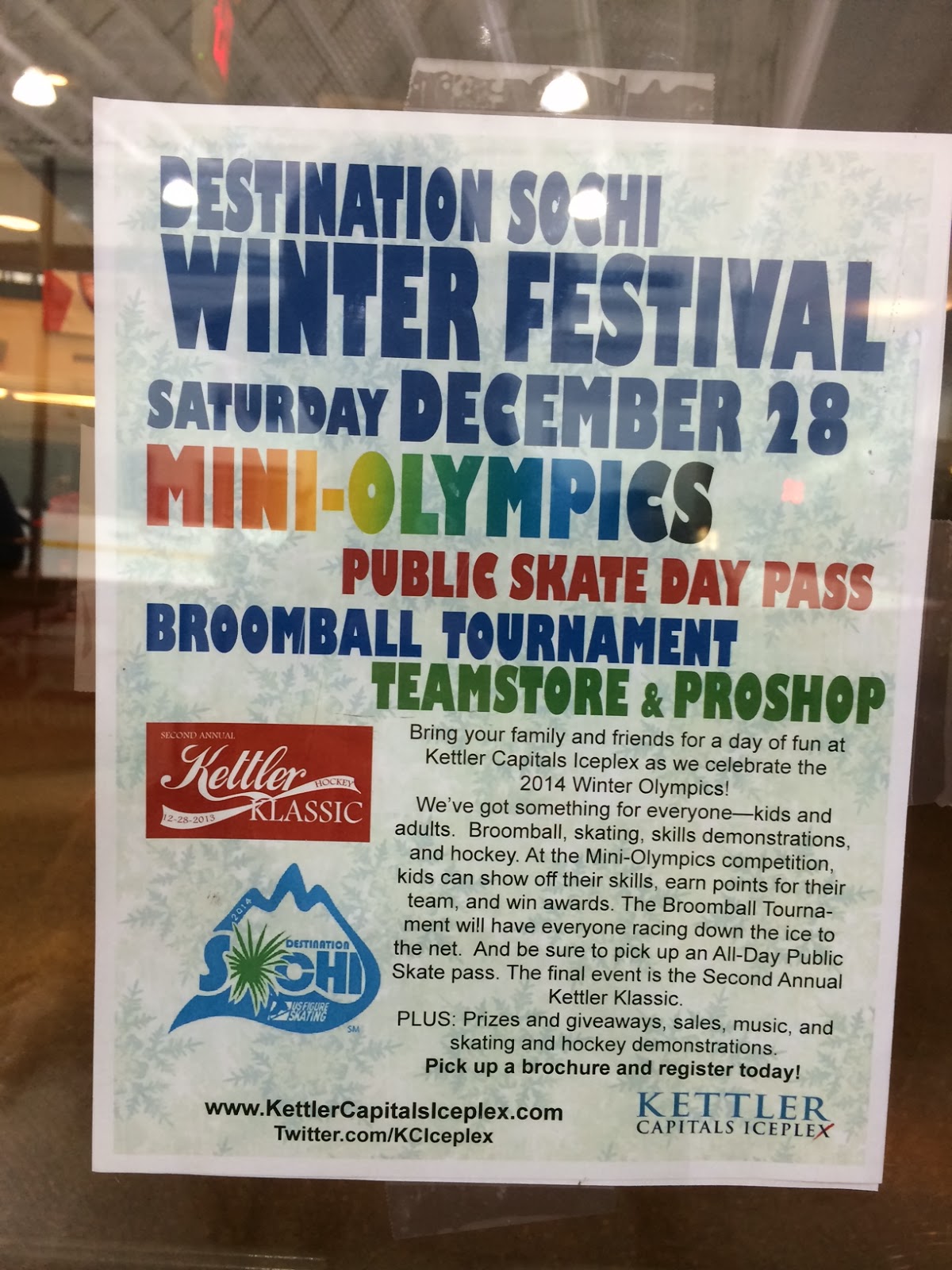
Kettler Capitals Iceplex ad, courtesy of Zach Schrag:

After Charbucks, is the Kettler Klassic dilutive?

Posted in dilution, trademark | Leave a comment

A story about creativity and standing on the shoulders of midgets

From Dave Freeman, via Simon de la Rouviere:

Let me tell you a little story about innovation and creativity. Years ago, I worked on a wiki-based project to find the first instance of ideas/techniques in video games (like the first game to use cameras as weapons, or the first game to have stealth as a play element). It excited me to dig to give credit to those who laid the foundations of ideas that we now take for granted. I couldn’t wait to show the world how creative and innovative these unknown game designers/developers were.

I went into it with much passion and excitement, but unexpectedly, it turned out that there were almost no “firsts”. Every time someone put up a game that was the first to do/contain something, there was another earlier game put up to replace it with a SLIGHTLY less sophisticated, or SLIGHTLY different version of the same thing. The gradient was so smooth and constant that eventually, the element we were focusing on lost meaning. It became an unremarkable point to address at all. We ended up constantly overwriting people’s work with smaller, less passionate articles, containing a bunch of crappy games that only technically were the first to do something in the crudest manner. Sometimes only aesthetically.

After a lot of time sunk into this project, I came to the conclusion that I was mistaken about innovation/creativity. It would have been a better project to track the path of ideas/techniques than to try to find the first instance of an idea/technique. I held innovation so highly for years before that, but after this project, I saw just how small it was. How it was but a tiny extension of the thoughts of millions before it. A tiny mutation of a microscopic speck that laid on top of a mountain. It was a valuable experience that helped me very much creatively.

Posted in copying | Leave a comment

Briefly noted: consumers challenging express substantiation claims

McCrary v. Elations Co., No. EDCV 13–0242, 2013 WL 6403073 (C.D. Cal. July 12, 2013)

While rejecting claims based on defendant’s supplement’s general ad claims to support joint health and the like, the court allows McCrary to challenge the explicit claim that the Elations product was a “clinically proven combination.” McCrary alleged that this claim was false because the combination of ingredients in Elations had never been tested.  Elations argued that private plaintiffs can’t bring lack of substantiation claims, but McCrary could allege that no credible scientific evidence supported a representation “when Defendant puts the clinical proof for its product at issue.” Given the express claim for clinical proof, McCrary plausibly alleged falsity when he alleged the absence of such proof.
Posted in california, http://schemas.google.com/blogger/2008/kind#post | Leave a comment

Uber’s "tips included" claims lead to driver lawsuit

O’Connor v. Uber Technologies, Inc., 2013 WL 6354534, No. C-13-3826 EMC (N.D. Cal. Dec. 5, 2013)

Plaintiffs sued Uber on behalf of a putative nationwide class of drivers for Uber, alleging, among other things, that Uber falsely represents to customers that drivers will get tipped.  I’ll only discuss the consumer protection claims, but some others survive this motion to dismiss (including claims from non-California drivers; Uber chose California law in its agreements with drivers).  The court dismissed the UCL “unfair” claims for want of specific allegations, but allowed the “fraudulent” claims to survive.

The standard is whether members of the public are likely to be deceived.  The complaint satisfied Rule 9(b).  It alleged that Uber advertises “on its website and in marketing materials, that gratuity is included and there is no need to tip the driver.” As a result, reasonable customers would expect that drivers would receive that gratuity.  But Uber does not remit the entirety of the gratuity to drivers, making the statements “deceptive and misleading.” These allegations were sufficiently plausible and plaintiffs provided the necessary particularity.  (Among the other claims that survived were a claim for breach of implied in fact contract with drivers as third-party beneficiaries.)
Posted in california, http://schemas.google.com/blogger/2008/kind#post | Leave a comment

Trader Joe’s versus HT Traders from Harris Teeter

Is this evidence of confusion?

Posted in trademark | Leave a comment

TM infringement no matter how dissimilar the marks?

Surface Supplied, Inc. v. Kirby Morgan Dive Systems, Inc., No. C 13–0575, 2013 WL 6354244 (N.D. Cal. Dec. 5, 2013)

Sometimes I think Iqbal/Twomblyis for people who don’t own trademarks.  Here, Kirby Morgan sought to amend its counterclaims for trademark infringement, federal dilution, and false advertising. The court allowed the amendment.

The legally interesting parts: First, because the infringement test is a multifactor test, there’s no lower threshold for similarity between the marks for infringement.  Brookfield’s statement that “[w]here the two marks are entirely dissimilar, there is no likelihood of confusion,” such as “Pepsi” and “Coke,” is mere dicta.  One would hope a court would be generous with a prevailing defendant’s attorneys’ fees given such an easy intake standard, but somehow I doubt it.

Second, the same is true for federal dilution, also a multifactor test.  That’s not really Kirby Morgan’s problem, though.  Kirby Morgan’s problem is that it doesn’t have a federally famous, household name mark.  I do not understand how it could plausibly plead that it does. This appears to be a specialized diving company, by definition not federally famous.

(Unsurprisingly, the court also declines to resolve functionality at this stage.)

Finally, although SSI argued that no false advertising claim could fly because Kirby Morgan didn’t allege any actual confusion or lost sales—because SSI hasn’t made any sales yet—the standard is likely deception plus likely injury by lessening goodwill, so Kirby Morgan could plead a false advertising claim.
Posted in http://schemas.google.com/blogger/2008/kind#post, procedure, trademark | Leave a comment

Learned intermediary doctrine doesn’t bar claim at pleading stage

Saavedra v. Eli Lilly and Co., 2013 WL 6345442, No. 2:12–cv–9366 (C.D. Cal. Feb. 26, 2013)

Plaintiffs brought a putative class action under the consumer protection laws of California, Massachusetts, Missouri, and New York, and Saavedra also brought individual causes of action for breach of warranty, strict product liability, etc. under California law.  The claims were based on Eli Lilly’s marketing of Cymbalta, an antidepressant. 

Cymbalta users risk significant withdrawal symptoms when they stop taking it, including dizziness, nausea, headache, fatigue, paresthesia, vomiting, irritability, nightmares, insomnia, diarrhea, anxiety, hyperhidrosis, and vertigo.  The label warns that these (except for nightmares) occurred in 1% or more of patients who tapered or stopped Cymbalta. Plaintiffs alleged that this label didn’t accurately inform consumers or healthcare professionals of the frequency, severity, and duration of withdrawal.  They alleged that studies from at least 2005 have found that 44-50% of users experience withdrawal, and about half of those are moderate or persistent while 10% experience severe symptoms. The plaintiffs alleged that they wouldn’t have begun taking Cymbalta had they known the truth.

Eli Lilly tried to get rid of the class claims using the learned intermediary doctrine, which provides that “a drug manufacturer has no duty to warn the ultimate consumer of potential side-effects of prescription medication, so long as adequate warnings are given to the prescribing physician.”  (Why this should be so in an age of DTC drug marketing is left for the reader.)  This precludes recovery for strict liability and negligence when manufacturers fail to warn consumers about side effects if the warning given to doctors is adequate.  Traditionally, the doctrine is applied either at summary judgment or at trial, not at the motion to dismiss stage.  One Pennsylvania case found that consumers couldn’t state a claim under Pennsylvania’s consumer protection law for failing to disclose known side effects.  But “this holding is grounded in a significant extension of the learned intermediary doctrine, one that has not been applied to any of the consumer protection claims at issue in this case.”  The Pennsylvania court ruled that defendants had no duty to disclose any prescription drug information directly to the consumer plaintiff.

The court here declined to follow this ruling.  “Every claim susceptible to the learned intermediary doctrine has the chain of relationships described by the court: the duty owed by the manufacturers is to adequately warn physicians, who in turn must warn their patients.” But most of the case law doesn’t go that far; instead, the cases hold that proof that a manufacturer adequately warned a doctor provides immunity from liability.  The court was unwilling to “bar every cause of action by a consumer against a drug manufacturer, even if the manufacturer had inadequately warned physicians.” 

It is true that all the consumer protection laws at issue, like Pennsylvania’s, have a causation element, or, in some jurisdictions, “justified reliance.”  But, though some federal courts interpreting Pennsylvania law have reasoned that justifiable reliance/causation can’t be present when the pharmaceutical company didn’t sell directly to the patient, this “threatens to swallow up any cause of action brought against a drug manufacturer for failure to warn, as every claim—whether derived from statute or common-law tort—includes an element of causation or justified reliance.”  Instead, the court predicted that the various jurisdictions would not bar plaintiffs’ consumer protection claims.  California law by its terms is to be “liberally construed” to protect consumers beyond traditional torts (and so are the other relevant laws).  The court emphasized that this was not a ruling that the learned intermediary doctrine didn’t apply; there was a good argument that it did, so plaintiffs would lose if Eli Lilly adequately warned the prescribing physicians.

The court also rejected Eli Lilly’s preemption and primary jurisdiction arguments.  Buckman Co. v. Plaintiffs’ Legal Comm., 531 U.S. 341 (2001), which found preemption of certain claims related to medical devices, wasn’t directly on point, and there’s a presumption against preemption of state laws operating in traditional state domains.  Eli Lilly tried to characterize plaintiffs’ claims as “fraud on the FDA” claims. “Yet Defendant inexplicably ignores the Supreme Court’s subsequent, and more relevant decision in Wyeth v. Levine, 555 U .S. 555 (2007).”  Wyeth allowed a state failure-to-warn claim based on an allegedly inadequate label; the manufacturer could be liable for failing to update the label based on newly acquired information.

Likewise, the primary jurisdiction doctrine would only apply if a claim required resolution of an issue of first impression, or of a particularly complicated issue that Congress committed to the FDA, and if protection of the integrity of the regulatory scheme dictated preliminary resort to the FDA. The claims at issue here presented neither “an issue of first impression” nor a “particularly complicated issue,” but rather a straightforward failure-to-warn/misleadingness claim.

Eli Lilly then argued that a reasonable consumer wouldn’t be misled because the warning complied with FDA regulations—but Wyeth is clearly to the contrary.  And Lilly’s argument that the “reasonable consumer” here is the prescribing doctors was just a restatement of the already-rejected learned intermediary argument.

However, the court did hold that plaintiffs lacked standing to seek injunctive and declaratory relief, because they knew the truth now.  (I continue to think this is wacky in a class action.  Something very strange has happened to standing in general in the past decade, and it invites a comprehensive examination, which perhaps some scholar is carrying on now.)
Posted in class actions, consumer protection, fda, http://schemas.google.com/blogger/2008/kind#post, preemption, standing | Leave a comment