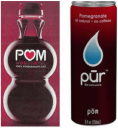
Trademark question of the day, zoo edition

Spotted by an eagle-eyed correspondent (no pun intended) at the New Orleans zoo:

Straight Outta Audubon Zoo

Just Voodoo It

from Blogger http://ift.tt/29KZlwL

Posted in Uncategorized | Tagged , | Leave a comment

TM/false advertising interface: “same formulation” statement w/o more infringes

De Simone v. VSL Pharmaceuticals, Inc., No. TDC-15-1356, 2016
WL 3466033 (D. Md. Jun. 20, 2016)
This case sends us deep into the weeds of the distinctions
between trademark and false advertising, and approves rather onerous
requirements for apparently truthful statements about the relationship between
the parties’ products.
De Simone was one of the inventors of a probiotic that he
then brought to the US market through a partnership with VSL, marketed under
the trademark VSL#3.  In 2015, De Simone
parted ways with VSL and began a partnership with ExeGi Pharma to bring his
formulation to market under the name Visbiome. 
VSL alleged that De Simone and ExeGi infringed the VSL#3 mark and
falsely advertised that VSL#3 was no longer on the market or that Visbiome was
the rebranded version of that product.  The court previously granted a preliminary
injunction in favor of VSL barring certain conduct by the De Simone parties as
infringing, including depictions of Visibiome that referred to it as “Original
Formula VSL#3 Probiotic Blend” and “Visbiome/VSL#3 blend”; the phrase “Same as
Original Formula VSL#3 Probiotic Blend”; references to clinical studies as
“Reported as VSL#3”; and the general statement that Visbiome is “the same” as
VSL#3.
The court also provided safe harbor language that was likely
fair use: (1) “Compare to Ingredients in VSL#3,” as long as it was accompanied
in close proximity by the disclaimers that VSL#3 was a registered trademark of,
and manufactured exclusively for, VSL, and that Visbiome wasn’t affiliated
with, endorsed by, or distributed by VSL; (2) the statement that “Visbiome
contains the same strains, in the same concentrations and proportions, as the VSL#3
probiotic blend as produced before [Date],” one time in the Visbiome materials,
accompanied by the same disclaimer; (3) accurate information about De Simone’s
role in developing VSL#3 that made clear that there was no current affiliation
between Visbiome/ExeGi and VSL#3/VSL. 
E.g.,

In the mid-1990s, Professor Claudio De Simone, M.D. invented a proprietary
blend of probiotic strains and collaborated with VSL Pharmaceuticals, Inc. to
produce and market it as ‘VSL #3,’ a trademark owned by VSL Pharmaceuticals,
Inc. In 2014, Professor De Simone decided to leave VSL Pharmaceuticals and is
now collaborating with ExeGi Pharma, LLC to produce Visbiome, a probiotic using
the same proprietary blend of probiotic strains that De Simone originally
invented.
ExeGi launched Visbiome on February 1, 2016, the day after
the agreement between VSL and Danisco, the original manufacturer of VSL#3 and
current manufacturer of Visbiome, expired on January 31, 2016.   ExeGi issued a press release and a LinkedIn
posting using the safe harbor language with a disclaimer in a footnote.  The press release also redefined the strains
and concentrations in VSL#3 as the “De Simone Formulation,” to indicate a
continuity with VSL#3 without the actual use of that trademark, and asserted
that the De Simone Formulation had undergone numerous scientific trials and was
the subject of “over 60 peer-reviewed studies.”
The press release also said: “The license agreement between
Professor De Simone and VSL Pharmaceuticals, Inc., which provided VSL
Pharmaceuticals, Inc. the rights to market the De Simone Formulation using the
‘VSL#3’ trademark, expired on January 31, 2016.”  Likewise, on LinkedIn, ExeGi sent a message
to its 85 LinkedIn followers stating: “Have you prescribed the medical food
VSL#3 in the past to your patients with IBS, Pouchitis or Ulcerative Colitis?
The De Simone formulation you’ve been prescribing to your patients will now be
available as Visbiome.”  The posting did
not contain the disclaimer.
After further infighting, the court issued an additional
order requiring ExeGi to remove the language about license expiration from
future communications and generally refrain from stating or suggesting that the
license agreement had expired or that VSL#3 wouldno longer be on the market,
and include the disclaimer in close proximity. 
VSL objected to statements on the Visbiome website (multiple
uses of the safe harbor statements, references to clinical trials that included
VSL#3 in their titles, and claims to exclusivity of the formulation), ads that
appeared in response to Google searches, and statements made by ExeGi sales
representatives and the sales training materials they received and used.  [I note, with respect to the clinical trials,
if they really did use VSL#3 in their titles, and if ExeGi really is using the
formulation tested, there would appear to be a severe First Amendment problem
with banning any references to those trials. 
The court focused on the fact that the
webpage listing studies didn’t contain a disclaimer or explain why VSL#3 was
being referenced.]
ExeGi used both static and dynamic AdWords ads. Static ads
display pre-drafted text, while dynamic ads incorporate searched-for keywords
into the text of an otherwise pre-drafted ad. “A line of code for a dynamic ad
might read ‘Best treatment for {keyword},’ with the user’s search term to be
inserted in place of ‘{keyword}’ when the ad appears.”  For its static ads, ExeGi used ads such as
one beginning “Have You Ever Used VSL#3?/If So, Check Out Visbiome….”  For dynamic ads, it used ads such as one
beginning “{ Keyword: Have You Ever Used VSL#3}/If So, Check Out Visbiome….”  The ads didn’t have a disclaimer, and some of
the ads actually appeared as “VSL#3/www.visbiome.com/If So, Check Out Visbiome
High-Potency Probiotic….”  VSL’s expert
witness on AdWords and SEO testified that this truncation to the keyword alone occurs
“when the proposed dynamic headline, including the keyword, would exceed 25
characters.”  ExeGi maintained that it
never intended for VSL#3 to appear by itself without the question, and it paused
the ads when Google was unable to explain the truncation.
VSL’s expert witness also said that Visbiome’s website showed
“keyword stuffing”: repeatedly using VSL#3 to increase the likelihood that
Google’s search algorithm will associate the website with that term and thereby
increase the prominence of that site in search results relating to that term. “VSL”
was the second most frequently used term on the Visbiome website, used even
more frequently than “ExeGi.” “VSL#3” frequently appeared “below the fold,” “a
placement that may indicate that the term is used more to influence the search
algorithm than as text intended for website users.”  ExeGi responded that it put the Disclaimer on every page of the website to be responsive to
VSL’s concerns, at the bottom of the page in a “black box” to signal its
importance to medical professionals.
VSL also complained that ExeGi sales reps told people in at
least three doctors’ offices that VSL#3 was no longer being sold.
VSL moved to hold the De Simone parties in civil contempt,
which requires violation of the terms of a valid decree that caused harm to the
movant. There is no requirement that the violation be willful.  But, because intent is irrelevant, the order
allegedly violated must be one that sets forth in “specific detail an
unequivocal command.”  
VSL argued that the use of the safe harbor statements on the
Visbiome website was excessive and the disclaimer wasn’t close enough to the
use of the mark.  The court found that it
was unreasonable for the De Simone parties to interpret the term “only once in
the Visbiome materials” as permitting multiple uses on the Visbiome website, up
to once on each individual page of the website. 
Thus, they violated the spirit of the order, though not its letter, because
the order never expressly barred any particular number of uses of VSL#3 or
other approved language.  The multiple
uses went outside the safe harbor, which was for a single use, but didn’t
violate the order.  The order also
required the disclaimer to be in “close proximity” to use of VSL#3, and the court
found no violation there—sometimes the disclaimer was in text shortly after the
reference to VSL#3, and when it was in a footnote, it had the same font, same
size, and same color as the main text. “The use of a footnote and placement of
the Disclaimer ‘below the fold’ may reduce the likelihood that a user will read
it, but with Visbiome’s own content at times requiring the reader to scroll
down, the Court cannot say that there is clear and convincing evidence that
ExeGi has placed its required disclaimers at a distance too far from the VSL#3
mark to satisfy the requirement of ‘close proximity.’”
However, the court was “troubled” by the lack of footnote
reference markers next to the term VSL#3 when it was used in study names.  This appears to me to be excessively
formalistic.  Anyone looking at the
references would likely have plenty of opportunity to see the disclaimer
already, and as the court itself noted, readers would need to understand the
relationship between VSL#3 and Visbiome to understand why these were listed as
references. But the court reasoned otherwise: “The failure to direct the reader
to the Disclaimer substantially decreased the likelihood that it would be
noticed, so this omission could be viewed as indicating an intent to obfuscate
the fact that the clinical trials were performed on a product offered by a
different company.”  Still, the
disclaimer was at the bottom of the clinical references page, and so there was
no violation of the order.
The court did find the De Simone parties in contempt for the
AdWords ads.  “While the Court agrees
that the headline ‘VSL#3,’ accompanied by no other text, would appear to be an
aggressive attempt to co-opt the VSL#3 mark, the Court has issued no orders
barring advertising through Google AdWords, employing dynamic ads, or using
VSL#3 as a keyword for such ads, so the fact that a dynamic ad resulted in such
a headline, intentionally or unintentionally, does not specifically implicate
any of the Court’s prior orders.”  But
the disclaimer was required, and several of the AdWords ads didn’t have it.  Even if AdWords text didn’t have enough space
for the disclaimer, the court’s order provided no exceptions for space
limitations in particular advertising media. 
Nor was “close proximity” satisfied by having the disclaimer available
once someone clicked on the ad.  “The De
Simone Parties’ interpretation of proximity as ‘one click away’ defines that
term as a physical act, not a measure of distance, and thus cannot be deemed a
reasonable interpretation of the language of the February 2016 Order.”  (I think it’s a bit odd for the court to say
that proximity requires physical distance in this context, but ok.)  This shifted the burden of compliance to
Google’s users, who needed to click to see the disclaimer. 
The court also found that the initial use of the statement
that the De Simone formulation was “exclusively available” from ExeGi, coupled
with the website’s assertion that the De Simone Formulation is the same as that
used in VSL#3, led to “the unmistakable conclusion that VSL#3 is no longer
available for sale,” thus violating the court’s order.  The De Simone parties might have intended
only to go up to the acceptable line, but they crossed it.  By contrast, statements that De Simone was
“collaborating exclusively” with ExeGi “merely states that De Simone has
changed companies and does not suggest that VSL#3 is no longer on the market.”  (Interesting how thinly the court is slicing
this, given that the targeted consumers probably don’t make these distinctions—or
care.)
The court then turned to VSL’s false advertising claims,
which turned on ExeGi’s claims to exclusivity/claims that VSL#3 had been
discontinued.  Given that VSL had
stockpiled the older formulation of VSL#3 and could still sell it, plus the
fact that VSL was going to reformulate the product, these claims were false or
misleading.  De Simone’s statement “my
formulation is now exclusively available from ExeGi Pharma” as Visbiome was
likely literally false while VSL’s plentiful stockpiles were available.  This was likely to harm VSL; the court noted
that when an ExeGi sales rep made similar statements to one gastroenterologist’s
office, that office accepted Visbiome samples and declined to accept any more
VSL#3 samples.  
However, the court found that the sales reps’ statements
weren’t likely to constitute advertising or promotion.  The Fourth Circuit hasn’t interpreted that
language in the Lanham Act.  The court
cited the Seventh Circuit’s since-renounced holding that for purposes of a
false advertising claim, “[a]dvertising is a form of promotion to anonymous
recipients, as distinguished from face-to-face communication.” First Health
Group Corp. v. BCE Emergis Corp., 269 F.3d 800, 803 (7th Cir. 2001).  [See Neuros Co., Ltd. v. KTurbo, Inc., 698
F.3d 514 (7th Cir. 2012)]. But the court here agreed with the Second Circuit that
such a reading “collapsed the disjunctive statutory language ‘commercial
advertising or promotion’ into only commercial advertising.”  Using the relevant parts of Gordon & Breach, the court followed
the Second Circuit’s lead, looking for (1) commercial speech; (2) for the
purpose of influencing consumers to buy defendant’s goods or services; (3) disseminated
sufficiently to the relevant purchasing public to constitute “advertising” or
“promotion” within that industry.  Element (3) was not satisfied on the present
record.  Since Visbiome’s launch, ExeGi
sales reps had made sales calls at about a thousand doctors’ offices; three
alleged instances of false statements weren’t sufficient in that context.
VSL argued that the court should consider the sales reps’ statements
as part of an organized campaign along with the website statements and find
them collectively to qualify as “widespread dissemination.”  The court here declined to hold that “face-to-face
statements could be combined with distinct forms of commercial advertising,
such as websites or press releases, to satisfy this requirement.”
The court presumed irreparable harm because the literally
false statements were functionally comparative advertising. The public interest
is against misleading advertising, and so a more expansive preliminary
injunction was warranted.
“The evidence presented has amply established that the De
Simone Parties’ activities in all three areas continue to be likely to cause
confusion over whether Visbiome and VSL#3 are the same product.”  I note that stated this way, this is purely
false advertising, not confusion over source or sponsorship—and if they have
the same formulation, reasonable consumers might well consider them to be the “same
product.” Nonetheless, the court proceeded as if this were a trademark
case, holding that the repeated use of VSL#3 on the Visbiome website went too
far.  The court cited 15 U.S.C.
§1115(b)(4) and descriptive fair use cases, not nominative fair use cases, even
though the use is very clearly not descriptive in the ordinary trademark sense.  Also, this result highlights the silliness
that the “too much” inquiry can lead to—the ultimate question should be “is this
use confusing?” and the fact that a website has a single footer that it uses on
every page doesn’t plausibly increase the likelihood of confusion. 
The court also didn’t like that the disclaimer frequently
appeared only in a footnote at the bottom of the page, “barely within ‘close
proximity’ to the VSL#3 mark.”  So too with the references to clinical trials, which the court previously allowed “so
long as the VSL# 3 trademark was not used in such references,” and the De
Simone parties’ use of the added parenthetical “Reported as VSL#3” in
connection with clinical studies was expressly barred by the prior court order.
 In the court’s view,
the combination of the repeated
claim throughout the website that the De Simone Formulation has been the
subject of over 60 clinical trials and this listing of numerous clinical
studies with VSL #3 in the title without a cross-reference to the Disclaimer
creates significant confusion whether VSL#3 and Visbiome are the same product.
Even if ExeGi has a reason to refer to those studies because Visbiome is, as a
scientific matter, the same formulation that was subjected to those trials,
that scientific equivalence cannot be used as an opportunity or excuse to erode
VSL’s trademark.
And here we have the guts of the problem: “eroding” a
trademark isn’t actually a claim under the Lanham Act.  If the use causes confusion as to source or
sponsorship, that’s trademark infringement, but the court seems to think that
confusion over what’s in Visbiome
(which might be understanding, not confusion!) is also trademark
infringement.  The classic Smith
v. Chanel case
, like many others,
makes clear that the remedy for this latter claim, if it’s false, is in false advertising. 
In fairness, the fact that trademark now is so expansive and
covers immaterial confusion makes it easy for the court to conflate the
two.  The court appealed to testimony
from one staff member in a doctor’s office who apparently came to believe that
VSL#3 had changed its name to Visbiome, which “implicates not just false
advertising concerns, but also trademark infringement concerns, because the
staff member appears to have believed that Visbiome was the same product, made
by the same company, as VSL#3.”  I do
note that this testimony appears to have been submitted by an affidavit
solicited by VSL, without too much inquiry into how much the staff member distinguished
between the two propositions (what’s in the product/who sold the product in the US) or cared.  
One useful feature of nominative fair use, for all its
flaws, is that it insists on the basic right of people in the market to make
truthful claims.  If, as I expect is the
case, some set of consumers will always understand “Visbiome has the
formulation that used to be available in VSL#3” to indicate some continuity
between the responsible companies (which is at least true-ish in this case!),
that shouldn’t prevent the seller from stating the truth of that fact.  We can pile on further disclaimer
requirements, but most disclaimers don’t work, so this is often just courts
making themselves feel better about inevitable confusion.  In this situation, perhaps, doctors will have
an incentive to listen and learn that “VSL#3 is still on the market, but with a
new formulation, and we’ll be the only supplier of the formulation you know and
love once stockpiles of existing VSL#3 run out.” But that’s probably rare.
The court also found that prior statements on the website, “asserting
that the formulation used in VSL#3 was now ‘exclusively available’ as Visbiome,
created additional confusion whether VSL#3 had simply been renamed as Visbiome.”  Again, the court is mushing together two
questions—who produces Visbiome (a particularly tricky inquiry given that, in
fact, VSL#3 used to get its formulation from the same manufacturer now
providing it only to ExeGi in the US) and what’s in Visbiome.  A reasonable consumer could easily understand
these claims to be about what’s in Visbiome, and as far as I can tell from what’s
written in the opinion, that interpretation renders the claim true, with the exception
of the stockpiled VSL#3. The court doesn’t even indicate that the inactive
ingredients differ.
The court found that ExeGi’s use of this language was “a
telling indicator of ExeGi’s market posture,” which was to use VSL#3 “to define
what Visbiome itself is. The Court therefore can draw no other conclusion than
that ExeGi has and continues to use the VSL#3 mark on the Visbiome website in a
way that creates confusion and thereby enables Visbiome to impermissibly ‘profit
from another’s reputation.’”  Why this
isn’t the same mechanism used in Smith v.
Chanel
is an open question.
For AdWords, VSL didn’t argue that mere use of VSL#3 as a
keyword would be infringing, and there wasn’t enough evidence to find that the
De Simone parties were “keyword stuffing”; search results showed Visbiome
appearing as part of one of ExeGi’s Google AdWords ads, but not as a result of
organic search results, and the court noted that, in recent years, courts have
understood that such conduct probably doesn’t improve search ranking anyway.  However, the Google ads using just VSL#3 in
the top line “exacerbated the confusion in the marketplace between Visbiome and
VSL#3.”
The court declined to treat the De Simone parties as
adjudicated infringers required to keep a “safe distance” from VSL’s mark, in
the absence of a final ruling on the merits. 
The court declined to prohibit use of VSL#3 entirely, but expanded the
injunction given the De Simone parties’ demonstrated willingness to “go as
close as possible to any line drawn by this Court.”
As a result, the De Simone parties were allowed to use the “same
strains” language and “De Simone history” language only once on the entire
Visbiome website, with the disclaimer in immediately adjacent text, not a
footnote.  [I wonder if you could change
the website so that it was just frames for other parts, so that these always
stayed on top ….] “Any other phrases using VSL#3 must be approved by the Court
and may appear only once on the website, again with the Disclaimer in the
immediately adjacent text.”  They had to
remove the footer from any page that didn’t use VSL#3 in text.
Further, the website couldn’t claim that any clinical study
using “VSL#3” in the study title constituted a study relating to the “De Simone
Formulation” and couldn’t not list such studies on the website or the package
inserts.  [Hold on!  I take it that all the studies, whether or
not they used VSL#3 in their titles, used VSL#3 on their subjects.  Thus, the parties
seem to agree that it’s truthful to refer to studies that used VSL#3 to show
the likely effect of Visbiome on patients. 
Given these predicates, how is this injunction compatible with the First
Amendment?  Either it’s truthful to
attribute VSL#3 results to the formulation, or it’s not; that can’t turn on the
study’s name.]
AdWords text couldn’t include VSL#3 unless the court
approved text including the substance of the disclaimer.  And the DeSimone Parties had deliver to each
medical office on its sales list a letter, with language pre-approved by the court,
stating that VSL#3 has not been discontinued or scheduled to be discontinued,
that VSL#3 did not change its name to Visbiome, and that Visbiome is a
competing probiotic produced by a different company. The letter couldn’t
address the status of licensing agreements or rights to produce a probiotic
using the same formulation as VSL#3 prior to January 31, 2016.  [But could the letter say that VSL#3’s formulation
will change?  Because that seems like
really, really important information for people to know, if they have patients
who are doing well on the formulation.]
While the case was pending, “all Visbiome promotional and
marketing materials, including the website, package inserts, sales scripts, and
any other materials to be provided to or used in discussions with potential
customers or medical offices” had to be submitted to VSL’s counsel and, if
there were disputes, preapproved by the court.

As for false advertising, the De Simone parties were
enjoined from misleading customers and medical professionals into believing
that (1) VSL#3 is or will in the future no longer be on the market; (2) that
the De Simone Parties were the exclusive provider of the De Simone Formulation
or the probiotic formulation in VSL#3; (3) that VSL#3’s license to sell this
formulation has expired or would expire; (4) that VSL#3 had a new name or that
Visbiome was a rebranded version of VSL#3. 

from Blogger http://ift.tt/29bpeI9

Posted in Uncategorized | Tagged , , | Leave a comment

Copyright/TM question of the day, politics edition

Analyze the linked Buzzfeed public service announcement about registration (warning: link will likely autoplay).

from Blogger http://ift.tt/298KRKR

Posted in Uncategorized | Tagged , , | Leave a comment

Judge McKeown on copyright, and responses (including mine)

Hon. M. Margaret McKeown,  Censorship in the Guise of Authorship: Harmonizing Copyright and the First Amendment, 15 Chi.-Kent J. Intell. Prop. 1 (2016)

Margaret Chon, Copyright’s Other Functions, 15 Chi.-Kent J. Intell. Prop. 364

Edward Lee, Suspect Assertions of Copyright, 15 Chi.-Kent J. Intell. Prop. 379

Rebecca Tushnet, Fair Use’s Unfinished Business, 15 Chi.-Kent J. Intell. Prop. 399

Alfred C. Yen, The Challenges of Following Good Advice About Copyright and the First Amendment, 15 Chi.-Kent J. Intell. Prop. 412

from Blogger http://ift.tt/293xGKb

Posted in Uncategorized | Tagged , , , , , | Leave a comment

Allegations of undisclosed sponsorship defeat anti-SLAPP motion at pleading stage

Woodard v. Labrada, 2016
WL 3436434, No. 16-00189 (C.D. Cal. May 12, 2016)
Woodard brought a
putative class action alleging that various defendants (Media Defendants) misrepresented
the weight loss benefits of weight loss supplement products made by the
Manufacturing Defendants. Woodard alleged that Dr. Oz fraudulently promoted and
marketed the weight loss benefits of the products on his daytime television
show “The Doctor Oz Show.” Dr. Oz was allegedly “paid by Defendants Labrada,
Interhealth, and/or Naturex in exchange for promoting Green Coffee Bean
Extract, Garcinia Cambogia, and Raspberry Ketones on The Dr. Oz Show.”  Media defendants Zoco, Harpo, and Sony produce
The Doctor Oz Show and that Sony distributes the show. Woodard alleged that Dr.
Oz, Zoco, Harpo, and Sony were jointly liable for Dr. Oz’s misrepresentations.
The court found that
Woodard didn’t allege sufficient facts showing Zoco, Harpo, and Sony engaged in
a joint venture or civil conspiracy with Dr. Oz to fraudulently promote the products,
or that they were liable through an agency relationship or aiding and abetting.
However, the court declined to dismiss various consumer protection claims
against Dr. Oz.
The court briefly
dealt with the argument that Dr. Oz’s statements weren’t commercial speech,
because Dr. Oz didn’t propose a commercial transaction in any of his challenged
statements and repeatedly told viewers of his television show that he did not
promote or sell any of the Products. However, the complaint alleged that Dr. Oz
informed viewers of his show that specific brands of commercial weight loss
products were effective. Moreover, the Complaint alleged that Dr. Oz was paid by the
manufacturing defendants in exchange for promoting the products. That was
enough under Kasky v. Nike.
Although defendants
argued that California’s anti-SLAPP law applied, FRCP 56(d) overrode it for
discovery purposes.  Woodard was entitled
to discovery about the relationships between Dr. Oz, the other media
defendants, and the manufacturers, to determine whether the speech at issue was
in fact commercial speech.  The court
thus declined, at this point, to shift fees under the anti-SLAPP law.

from Blogger http://ift.tt/28YbZqW

Posted in Uncategorized | Tagged , , | Leave a comment

EFF/OTW/library/etc. comments on Copyright Office proposal on DMCA registration renewals

Read them here.  The Copyright Office has indicated, unwisely, an intent to make DMCA registrants re-register every three years, which will set up another hurdle for ISPs and encourage copyright trolls.

from Blogger http://ift.tt/28T3w9h

Posted in Uncategorized | Tagged , , | Leave a comment

class action complaint survives GNC in 4th Cir. by pleading misleadingness

Midwestern Midget
Football Club Inc. v. Riddell, Inc., 2016 WL 3406129, No. 2:15-00244 (S.D. W.
Va. Jun. 17, 2016)
Midwestern is a
nonprofit youth football organization, and Riddell makes helmets for football
players.  Midwestern bought 12-24 Riddell
Revolution Helmets per year; the market price allegedly reflects Riddell’s
claim to provide greater concussion reduction compared to other helmets.
Midwestern sued for false advertising under the West Virginia Consumer Credit
and Protection Act.  Initially, the court
dismissed the claim because “marketing statements that accurately describe the
findings of duly qualified and reasonable scientific experts are not literally
false ….” In re GNC Corp., 789 F.3d 505, 509 (4th Cir. 2015).  (Ugh.)
Midwestern refiled,
claiming misleadingness and unjust enrichment. 
[Discussion of GNC’s
wrongheaded description of state consumer protection statutes omitted.]  Given GNC,
Midwestern’s amended complaint alleged misleadingness, claiming that ads that
cited the study on which Riddell relied were misleading because the youth
helmets at issue were not examined in the study.
Riddell argued that
Midwestern’s theory of misleadingness contradicted its earlier claims of literal
falsity (since Midwestern had to concede that the claims were “literally true”
but misleading). The court disagreed, because that’s not how allegations in superseded
complaints work.  Also, Midwestern didn’t
need to identify any particular statement as “literally true”; it was enough
under GNC to identify a statement
that was misleading.  “This central
allegation, that Riddell used the Pittsburgh study to suggest a safety benefit
for youth Revolution Helmets even though it was a different class of helmets
that was subject to testing, provides enough basis to plausibly support a claim
for false advertising.”  Midwestern didn’t
need to plead with more specificity what the differences between the helmets
were.
For causation,
reliance, and injury, it was enough to plead that,
[b]ecause Riddell’s claims were included in advertisements, marketing,
and sales presentations, a reasonable consumer would likely be misled into
believing that the Revolution Helmet will reduce concussions, and may do so by
31%. This allowed Riddell to capitalize on consumer confusion and charge a
premium price of approximately $50 for the Revolution Helmet, which reflected
the illusory safety benefit of its “Concussion Reduction Technology.”
The complaint also
satisfied Rule 9(b) by alleging that Midwestern purchased Revolution Helmets on
an annual basis since 2002 and that Riddell made concussive reduction
technology claims through a number of advertising channels at that time and up
to the present day.

Likewise Midwestern plausibly
stated a claim for unjust enrichment under West Virginia law by alleging that a
benefit was conferred on the defendant when it knowingly collected a market
premium for its youth helmets thanks to its misleading marketing claims. 

from Blogger http://ift.tt/28SpUTS

Posted in Uncategorized | Tagged , | Leave a comment

Reading List: The Copyright Wars

Peter Baldwin, The
Copyright Wars: Three Centuries of Trans-Atlantic Battle (2014)
Baldwin’s basic
proposition is that there has been a long history of struggles between creators,
distributors and the public, and a related struggle between the idea of
Continental authors’ rights (fundamentally moral) and UK/US copyrights (fundamentally
economic).  The book is full of tidbits
about copyright and authors’ rights.  For
example, I did not know that the French word for ghostwriters is “nègres,”
which is amazing.  More detail, from JakeLamar at The Root: 

The French started calling ghost writers nègres back in the 1700s, just as
colonialism and the slave trade were gaining momentum. The idea was that
writing under someone else’s name, erasing your own identity, was thankless
servitude on a par with the labor of colonialism’s black subjects and victims.  

Speaking of slavery, the US was a pirate
nation for a long time, refusing to grant rights to foreign authors, and during
the Civil War the South found time to enact a more protective copyright law,
“[t]o distinguish itself from the North, cultivate an aristocratic and
nonmercantile national identity, and appeal to the British.”  It didn’t work.
I liked Baldwin’s
argument that, if, as some authors claim, the ability to own Blackacre in perpetuity
justifies the ability to own Black Beauty
in perpetuity, then authors should also have to pay property tax every year. He’s
trying to understand what might seem to be a perplexing phenomenon: While
authors gained more rights over the past few centuries, our commitment to
absolutism in real property rights has declined with the acceptance of the
social aspects of private property, operationalized in zoning, rent control,
health and safety regulation, etc.
Other things I
didn’t know: German composers were free to set poems to music until 1965, when
the poets’ lobby achieved a law preventing this, perhaps connected to the
decline of Lieder, “the once archetypical German musical art form.”  The US’s refusal to protect foreign authors
made American edition print runs as big or bigger than British print runs even
when the US had only half Britain’s population. 
In 1775, almost as many copies of Blackstone’s Commentaries had been
sold in America as in England, and Dickens was later serialized on the back of
railroad times tables.  Baldwin suggests
that higher prices in the UK were somewhat offset by its lending libraries,
whereas the greater distances separating people in the US meant that books had
to be bought rather than borrowed.  I
loved the statement of Senator John Daniel of Virginia, opposing international
copyright in 1891: “It is a bastile [sic] of letters which is here constructed,
and not a republic.”  Separately, but not
unrelatedly, Wordsworth insisted that his friends not lend copies of his books
to anyone who could afford to buy them.
Moral rights,
Baldwin shows, emerged in fascist Europe, part of the self-contradictory
conception fascists had of authors as cultural icons of the state, both worth
protecting (when they produced the right stuff) and ultimately subordinate to
the needs of the community.  Authors’
honor deserved protection, but honor was defined by the community rather than
by the individual.  Baldwin doesn’t
consider this a knockout strike against moral rights; after all, he notes,
Germany outlawed the death penalty at the prompting of a far-right party hoping
to spare Nazis.  Moral rights were in
part a response to technological change, holding out hope for the author to fix
meaning.  They were also, especially in
France, a response to specific legal issues, like divorce and
inheritance—surely a child, an ex-wife, or a creditor shouldn’t just get to
change an artist’s work to make it more marketable!  This relatively autonomous legal character
may be connected to the fact that the authors’ rights/copyright conflict
doesn’t map well onto any traditional left/right divide: copyright loves the
ideology of the market, but also the public domain; authors’ rights sneer at
the market but support cultural conservatism.
But perpetual moral
rights lead to bizarre situations.  “In
1988 the sole lineal descendant of the painter Achille Deveria (died 1857)
secured a court decision against the French magazine L’Express for printing a
portrait of Franz Liszt from 1832, removing its bottom part and adding some
color.”  Also, the Danish director Jens
Jørgen Thorsen made a film on the life of Christ, enhanced “in the tediously
predictable way of would-be provocateurs—with brothels and orgies, Mao and
Uncle Sam.”  Result? “The Danish parliament
and public asked whether the project was blasphemous and if it violated the
moral rights of the authors of the gospels of Matthew, Mark, Luke, and John
(whoever they were).”
This leads Baldwin
to a more significant theoretical point: moral rights begin as highly
individualistic, reinforcing “the author’s claim to enforce the singularity of
his vision even after death.”  But time
marches on, despite the claims of descendants and heirs.  Ultimately, some representative of the
broader society steps in “to preserve what by now—if he remained of
interest—had become the author’s position in a canon.… [C]ultural bureaucrats
safeguarded not his individual vision, but a socialized understanding of where
he fit in the pantheon.”  Authors’ rights
hardened in Europe in the 1950s and 60s, when “France and Germany sought to
distinguish their nascent postwar democracies both from their totalitarian
predecessors and from what they and their facist forbears alike saw as the
Anglophone world’s crass commercialization of culture.”  They abandoned the fascists’ populism and
embraced a moral rights of elitism, preventing any debate on balancing the
interests of the author and the audience for a long time after WWII. 
By contrast, Britain
and America had an audience focus; “[r]ights of aesthetic control were shunned
as fanciful and needless concessions to foppish artistes.”  Only when the US became such a major content
producer that economic realities drove us to accede to Berne did we pretend to
recognize moral rights.  Hollywood
enthusiastically embraced the strong rights and long terms of Europe, without
moral rights.  But, though expansive
copyright is often considered an American export, it can also be seen as a
Europeanization of rights, just as the U.S. ultimately adopted the European
first-to-file patent regime (and, though he doesn’t mention it, a more
registration-based trademark system).  As
Baldwin points out, American positions actually lost out in GATT on performers’
rights (included) and favoritism for local cultural productions (preserved, as
a bastion against American media intrusion). 
Meanwhile, the magpie/collaborative nature of film forced Europe to
adjust its former model of the individual author and the printer, bringing
Continental and Anglo approaches closer together.  And then digitization unsettled balances all
over—including on the Continent, where skeptics such as the Pirate Party have
finally asked whether authors’ rights have gone too far.
Baldwin takes the
long view, arguing that technological disruptions have occurred before, as has
the democratization of media, often to the same laments/predictions of utopia
just around the corner.  Washington Irving’s
“The Mutability of Literature” announced the age of “excessive multiplication,”
where freedom from parchment and quill made “every one a writer, and enabled
every mind to pour itself into print, and diffuse itself over the whole
intellectual world”—in 1819.  In 1933, a
French observer lamented that recorded music was omnipresent, yet authors
hadn’t been “rewarded in proportion to this enormous expansion of consumption.”
Truly, there is nothing new under the sun.
Baldwin sees the aim
of Google Books as Dionysian—to dissolve all books into a greater carnival of
knowledge, and he’s a bit suspicious, though not condemnatory.  In fact, he’s suspicious of all sides, who
generally look out for their own interests as readers, authors, publishers,
intermediaries, etc. and not for the overall good.  And watch out, Twilight and Fifty Shades
critics: “At no moment do we more date our selves than when we draw the line
between culture and barbarism. Your artistic abuses are your children’s
classics.”
One nit to pick when
he gets to American academics, whose generally restrictionist views he
attributes to not needing to sell books to make a living—Carol Rose is not, as
he strongly implies, a “retooled humanities PhD[], refugee[] from the academic
downturn of the 1980s and ‘90s,” nor would I consider her “heavily influenced
by literary theories from English and comparative literature departments.”  She’s one of our most eminent property
scholars and as hard-nosed a realist as one might hope to find.  
In Baldwin’s view,
the lack of elite/academic support for less expansive authors’ rights regimes
in Europe meant that resistance, when it did come, was even more populist, in the
form of Pirate Parties.  Of course, the U.S.
also got Google arguing in more corporatist terms in favor of “balanced”
copyright.  To Baldwin, the Anglo
perspective is not just that of crass commerce, but also populist/democratic;
both of those  features lead to pressure
to limit authors’ rights and see copyright as an economic bargain.  I’m reminded of the time I heard proud
expansionist Hugh Hansen decry the expansion of the
franchise
from white male
property owners because the rest of us were more likely to want to limit IP
rights. 
Somewhat inexplicably
to my mind, Baldwin claims that in the U.S., “it was the salaried
intelligentsia which dominated the airwaves” in discourse about copyright,
since “[n]o well-organized class of literati had sprung forth in
nineteenth-century America.”  But that’s
only true if you only focus on writers of texts, as opposed to performers,
directors, etc., who do very well for themselves in arguing for more
rights.  And, as he later points out,
most authors can’t survive on royalties in any Western country, no matter how
strongly it protects authors’ rights; patronage and self-patronage is the usual
name of the game, so that can’t really explain the Anglo/Continental divide in
academic perspectives.  His conclusion
that only the salaried can advocate for freedom misses voices like Cory
Doctorow and Becky Boop, and appears tied to his apparent belief that
self-interest underlies everyone’s positions. 
(Because claims about the economic impact of copyright are so common, I
did like his point that “American colleges and universities employ ten times as
many people as the motion picture and recording industries.”)
I also liked
Baldwin’s point that, in fighting English hegemony online, the French turned to
claims for “diversity” rather than claims for the preeminence of French
language and culture. Ironically, American films fund French ones because the
French government taxes media, then subsidizes French media; that intertwines
the two cultures in a very practical way. 
In another irony, French objections to Google Books meant that the project
became even more English-heavy, rather than more evenhanded—German books make
up more than 12% of Harvard’s collection, and if fully digitized would match
the entire University of Heidelberg library. 
But French and German books were removed because of publishers’
objections.  Google’s project violates
French law because its short quotation exception didn’t apply to random
snippets, and presenting excerpts violated the moral right of integrity; in a bit
of hypocrisy, the French court determined that publishers, not authors, held
the rights to digital dissemination and thus could sue even though such blanket
transfers are generally not approved in European law.  
Baldwin reserves his greatest condemnation
for the greediness of the big publishers, mostly European, who monopolize
scientific publishing, with profit margins of 35-40%, as well as for the German
publishers who charge large amounts to publish Ph.D dissertations, since
publication is required to make the dissertation official.  He doesn’t have very nice words for the
French version of orphan works legislation, either; the stringent requirements
make the provision essentially useless, since it’s limited to certain
institutions, who must first conduct a diligent search, and must still pay
writers and publishers (somebody else’s money, by definition).  Authors could refuse permission to digitize,
and a senator explained that an author who’d written something regrettable
during the occupation by the Nazis should be able to prevent it from reappearing.  “Rarely had the unappetizing aspects of moral
rights been so baldly stated.” Ultimately, he concludes rather mildly that there’s room for more pro-public reform, but the real value here is in the journey.

from Blogger http://ift.tt/28PfJza

Posted in Uncategorized | Tagged , , | Leave a comment

Bank of No Confusion: BNC National Bank fails to enjoin Bank of North Carolina rebranding

BNC Bancorp v. BNCCORP,
Inc., 2016 WL 3365428, No. 15-cv-793 (M.D.N.C. Jun. 16, 2016)
Bank of North
Carolina sought a declaratory judgment against BNC National Bank to settle
rights in the BNC mark, and BNC National Bank sought a preliminary injunction
to keep Bank of North Carolina from rebranding its North Carolina operations
from “Bank of North Carolina” to “BNC Bank.”
Bank of North
Carolina, a commercial bank incorporated and chartered under the laws of North
Carolina, opened its doors in North Carolina in 1991.  In 2010, it opened branches in South Carolina
and Virginia. In 2011, Bank of North Carolina it registered a BNC BANK word and
design mark in connection with banking services:

In South Carolina and
Virginia, Bank of North Carolina is known as “BNC Bank,” and it announced plans
to rebrand its North Carolina operations from “Bank of North Carolina” to “BNC
Bank” as well.
BNC National Bank is
a federally chartered bank with branches in North Dakota, Minnesota, and
Arizona. It adopted its current name in 1995. In December 2014 and January
2015, BNC National Bank filed federal trademark applications for the word marks
BNC and BNC NATIONAL BANK, in connection with banking and financial services. Bank
of North Carolina’s opposition was suspended for this case.
BNC National Bank,
the court concluded, couldn’t show likely success as to its prior ownership of
a valid mark in North Carolina.  Use
requires deliberate and continuous use. 
BNC National Bank’s evidence was as follows: by 1996, it had three
general banking accounts linked to addresses in Norh Carolina.  In 2001, it had 13 such accounts.  In 2016, it had 54 such accounts.  BNC National Bank closed its first mortgage
loan in North Carolina in 2008 and consistently closed mortgage loans in the
state every year thereafter. BNC National Bank also had at least one wealth
management customer in North Carolina in 2007. 
BNC National Bank argued that it used the BNC marks in North Carolina
when it communicates with its North Carolina customers through account
statements, notices, brochures, and business cards, delivered through mail,
email, and BNC National Bank’s website, as well as its mobile banking
application. The earliest communication BNC National Bank may have mailed to
North Carolina was a brochure informing customers of BNC Bank Line, a free
service that allows customers to make account inquiries and transactions over
the phone, mailed in either December 1995 or January 1996.
  
Bank of North
Carolina claimed to have used the BNC mark “[a]t least as early as 1995.” Shortly
after opening in 1995, it introduced BNC Free (a free checking account) and BNC
Mortgage (a small mortgage business). In September 1992, when Bank of North
Carolina moved from a temporary location to its headquarters, a VP testified
that he remembered hanging BNC Free and BNC Mortgage banners on the front of
the new building. BNC Free and BNC Mortgage were also part of the marketing for
a new branch opened in 1995.
Given this evidence,
BNC National Bank didn’t meet its burden of demonstrating it was likely to
succeed in proving ownership of the BNC marks in North Carolina. The evidence
as of 1996 boiled down to three general banking accounts with North Carolina
addresses plus regular communications with customers bearing the BNC marks.  But BNC National Bank presented no evidence
that its North Carolina customers actually received communications bearing the
marks. Furthermore, Bank of North Carolina’s evidence called into question
whether even 1996 would suffice to give BNC National Bank priority.  The court also questioned whether BNC
National Bank’s use of the marks was either deliberate or continuous. BNC
National Bank didn’t know how it has acquired customers in North Carolina, or whether
it had any customers in North Carolina in the years immediately following 1996.
 “This showing does not suggest
deliberate and continuous use; rather, it appears more sporadic, casual, and
transitory.”
In a footnote, the
court noted that Belmora didn’t
require ownership of trademark rights to bring a §43(a)(1) claim.  However, Belmora
emphasized that it was “not a trademark infringement case,” and this is.
Then, even if BNC
National Bank could claim priority, the court found that it couldn’t show
likely success on confusion.  When
evaluating likelihood of confusion, “it is important to remember that
‘trademark infringement protects only against mistaken purchasing decisions and
not against confusion generally.’ ”
Similarity of the
marks weighed in favor of finding confusion, since BNC was the dominant portion
of each mark, and the parties directly competed, also favoring a confusion
finding.  However, BNC National Bank didn’t
show that its marks had any strength in North Carolina, and there was no intent
to confuse, weighing against likely confusion.
BNC National Bank focused
on evidence of actual confusion.  However, “[i]f there is a very large volume of
contacts or transactions which could give rise to confusion and there is only a
handful of instances of actual confusion, the evidence of actual confusion may
receive relatively little weight.”
BNC National Bank claimed
that, from July 2015 to March 2016, its employees kept track of over one
hundred instances of alleged confusion. The court found many of these entries
to be incomprehensible.  “Several of
these entries state only ‘N/A.’ Others include short phrases like ‘North
Carolina’ or ‘Looked on internet,’ which convey little information and require
the Court to speculate as to what happened in each instance.”  But they seemed to involve instances where a
Bank of North Carolina customer mistakenly called BNC National Bank or visited
BNC National Bank’s website.
Also, a Twitter user
posted a tweet complaining that “BNC has the worst online banking setup ever.” She
tagged BNC National Bank in her post, but clarified that she was talking about
“BNC National Bank located in SC.” A vendor emailed Bank of North Carolina but
mistakenly copied BNC National Bank employees on the email. A professional
auditing company seeking to verify confidential information related to a Bank
of North Carolina customer mailed its request to BNC National Bank instead. And
a South Carolina resident applied on BNC National Bank’s website to open a
checking account, thinking she was applying to open an account with Bank of
North Carolina.
Was this the type of
confusion against which the Lanham Act was designed to protect?  The Fourth Circuit has cautioned, “trademark
infringement protects only against mistaken purchasing decisions and not
against confusion generally.” When there are mistaken calls and letters from
people attempting to reach a different party with a similar name, there still
needs to be evidence linking “the confusion evinced by the calls to any
potential or actual effect on consumers’ purchasing decisions.”  There wasn’t any here:
While these individuals contacted the wrong bank, there is no evidence
they were confused about the source of their banking services. That is, while
these individuals may have believed BNC National Bank’s phone number, website,
and Twitter handle belonged to Bank of North Carolina, there is no indication
that they believed they were banking with BNC National Bank, rather than Bank
of North Carolina. Similarly, there is no indication that the vendor and
professional auditing company emailed or mailed information meant for Bank of
North Carolina to BNC National Bank under the belief they were doing business
with BNC National Bank. At most, this evidence suggests perhaps a lack of
careful attention on the part of the companies, not confusion in the minds of
consumers.

The only relevant evidence
was the individual in South Carolina who attempted to open a checking account
with Bank of North Carolina by submitting an application on BNC National Bank’s
website. “This evidence may suggest a mistaken purchasing decision.”  But, given that both banks had opened
thousands of bank accounts, a single instance of confusion carried little
weight. “Quite simply, there is little indication that consumers are likely to
be confused about ‘the origin of the goods or services’ offered by each bank.”  [Another instance of a court shrinking the
concept of confusion to reach a result it considers just. I have no quibble
with this result! But compare the broad concept of confusion over
affiliation/association recently reemphasized by the Second Circuit.]

from Blogger http://ift.tt/28QrdPL

Posted in Uncategorized | Tagged | Leave a comment

TM/design patent question of the day

Consider the iPhoney:

Does this infringe any rights Apple might have?  We know the trade dress is functional for phones; I would argue that the trade dress is functional for realistic toys as well (and possibly more so, given what a kid could do with a sharp edge).  And the design patents?  What about dilution for the name “iPhoney”?

from Blogger http://ift.tt/28MADjd

Posted in Uncategorized | Tagged , | Leave a comment