-
Recent Posts
- State barber board wins battle against “Barber Shop” bar
- compounding pharmacies lose a round with Lilly on personalized medicine and GLP-1 comparison claims
- Bayer can’t enjoin J&J’s cancer superiority claims by showing methodological disputes
- “higher standard of safety” is puffery even as to child car seats
- phthalates could be “ingredient” for purposes of falsifying “only natural ingredients”
Recent Comments
Archives
- April 2026
- March 2026
- February 2026
- January 2026
- December 2025
- November 2025
- October 2025
- September 2025
- August 2025
- July 2025
- June 2025
- May 2025
- April 2025
- March 2025
- February 2025
- January 2025
- December 2024
- November 2024
- October 2024
- September 2024
- August 2024
- July 2024
- June 2024
- May 2024
- April 2024
- March 2024
- February 2024
- January 2024
- December 2023
- November 2023
- October 2023
- September 2023
- August 2023
- July 2023
- June 2023
- May 2023
- April 2023
- March 2023
- February 2023
- November 2021
- October 2021
- September 2021
- August 2021
- July 2021
- June 2021
- May 2021
- April 2021
- March 2021
- February 2021
- January 2021
- December 2020
- November 2020
- October 2020
- September 2020
- August 2020
- July 2020
- June 2020
- May 2020
- April 2020
- March 2020
- February 2020
- January 2020
- December 2019
- November 2019
- October 2019
- September 2019
- August 2019
- July 2019
- June 2019
- May 2019
- April 2019
- March 2019
- February 2019
- January 2019
- December 2018
- November 2018
- October 2018
- September 2018
- August 2018
- July 2018
- June 2018
- May 2018
- April 2018
- March 2018
- February 2018
- January 2018
- December 2017
- November 2017
- October 2017
- September 2017
- August 2017
- July 2017
- June 2017
- May 2017
- April 2017
- March 2017
- February 2017
- January 2017
- December 2016
- November 2016
- October 2016
- September 2016
- August 2016
- July 2016
- June 2016
- May 2016
- April 2016
- March 2016
- February 2016
- January 2016
- December 2015
- November 2015
- October 2015
- September 2015
- August 2015
- July 2015
- June 2015
- May 2015
- April 2015
- March 2015
- February 2015
- January 2015
- December 2014
- November 2014
- October 2014
- September 2014
- August 2014
- July 2014
- June 2014
- May 2014
- April 2014
- March 2014
- February 2014
- January 2014
- December 2013
- November 2013
- October 2013
- June 2013
Categories
- 230
- acpa
- advertising
- antitrust
- art law
- attribution
- blogging
- california
- cfaa
- cfps
- class actions
- cmi
- comics
- commercial speech
- conferences
- consumer protection
- contracts
- copying
- copyright
- counterfeiting
- cultural property
- damages
- dastar
- defamation
- design patent
- dilution
- disclosures
- disparagement
- dmca
- drm
- fan fiction
- fanworks
- fda
- fees
- first amendment
- ftc
- geographic indications
- http://schemas.google.com/blogger/2008/kind#post
- insurance
- jurisdiction
- libraries
- misappropriation
- music
- my lawsuits
- my writings
- parody
- patent
- patents
- preemption
- presentations
- privacy
- procedure
- reading list
- remedies
- right of publicity
- secondary liability
- securities
- standing
- surveys
- teaching
- tortious interference
- trade secrets
- trademark
- traditional knowledge
- Uncategorized
- unconscionability
- unfairness
- warranties
Meta
returned goods sold as new were infringing, false advertising
RFA Brands, LLC v. Beauvais, No. 13–14615, 2014 WL 7780975 (E.D. Mich. Dec. 23, 2014)
Plaintiffs make various electronics and accessories, with various registered marks. They use the same warehouse to distribute their products, which is in Commerce Township, Michigan. They found their products on sale on Amazon by “Joe Roof” (later “1 Man’s Trash”), sold as new with prices well below retail and wholesale prices. The total variety of products offered for sale had never been available from any single distributor or retailer; only the warehouse held them all. Plaintiffs ordered a product and alleged that inspection revealed that it was used, not new. They concluded that the product had been returned to the warehouse as damaged or defective and should never have been re-sold to the public. The purchased product had stickers on it that weren’t applied by plaintiffs, including a sticker placed by a particular retailer, ShopHQ, confirming that this was a returned item as damaged or defective.
The SKUs and quantities changed significantly over time and were frequently replenished, indicating a continuous supply. Beauvais admitted that “products were mostly identified as being new and/or unused,” and but asserted that he misrepresents the number of products that he has available as “a marketing technique” because no one will buy a single item but the listing of multiple items gives the appearance of a retail “king,” and he can then remove the additional items once a consumer is induced to purchase the single item. He argued that the photos of the products were provided by Amazon.com to storefronts. He also admitted that he lacked knowledge whether the product he sold to plaintiffs as a new product was actually used.
Beauvais claimed that all the products he sold came from an auction of two storage units. Pictures of the contents obtained from the storage company prior to auction didn’t show the goods in question, and no one witnessed the product in the units at the time that he came into possession of the units. The prior owner of the units testified that he never kept products with plaintiffs’ marks in the units, but only household goods, and that nothing in his storage units could have been sold as new, unused, unopened items.
Beauvais’s Facebook page showed a photo of a van parked at plaintiffs’ warehouse, allegedly in an area only visible from the warehouse property. Plaintiffs concluded that the majority of the products had come from the returns section of the warehouse, given that the products bore various retailer stickers, and some of the goods showed indications of having been opened and improper packaging. Beauvais offered red and blue versions of one product, but those colors were a special order for one retailer, further indicating that the products were customer returns. Nearly all of the packaging of the inspected inventory showed signs of wear, sometimes significant. Some of the products were much older models, and many bore indications of re-sealing with non-factory stickers.
At least nine of the items weren’t available in the United States until after March 25, 2013, the date after which the prior owner of the storage unit could’ve put stuff into it. Beauvais’s records also showed that inventory that was “sold out” in October was replenished in November. And, in another sale, defendant represented that the unpackaged product for sale had been “refurbished” and “showcased display models,” a statement that would be hard to make honestly if Beauvais had found this product in the storage units.
Plaintiffs alleged a policy against the sale of returned goods as a matter of quality control. Instead of refurbishing or reconditioning, products are returned to the manufacturing site. Plaintiffs alleged that the sale of returned goods caused a significant risk of negative internet word of mouth, harming the brands and plaintiffs’ reputation. Also, plaintiffs’ warranty does not extend to older models and products that were subject to prior returns, though they may choose to accommodate customers at its discretion on a case-by-case basis.
Amazon requires “new” to be new: “Just like it sounds. A brand-new, unused, unopened item in its original packaging, with all original packaging materials included. Original protective wrapping, if any, is intact. Original manufacturer’s warranty, if any, still applies, with warranty details included in the listing comments.” But Beauvais testified that he opened everything that he sold to verify that it was new and working.
Trademark infringement: there was no question about likely confusion. The only question was first sale. Importantly, “when a defendant sells a product that is materially different … it is presumed that the undisclosed difference between the products will confuse consumers.” The threshold of materiality is low “to include even subtle differences between products.” And, the defendant bears the burden of proving lawful purchase to invoke first sale.
Plaintiffs challenged Beauvais’s story about buying storage units, and also argued that “[m]ysterious found goods of an unknown origin and unknown nature does not prove a first sale enabling [d]efendant to sell product as new[.]” The court agreed. Even assuming that Beauvais found the products in the storage units, at best he could only speculate about their origin, and didn’t rebut plaintiffs’ evidence that the products were returned and not to be resold. Thus, he didn’t establish that the first sales were “authorized.” (Hmm. Let’s say title did pass to the retailers, who subsequently returned them or passed on customer returns. Why isn’t that first sale? The fact that it’s retransferred to the original manufacturer doesn’t undo the initial sale, does it? If I keep my malfunctioning electronic item rather than returning it, surely I can sell it as used?)
Plus, even if the first sale was authorized, the undisputed evidence was that the products offered for sale were materially different and inaccurately represented as new. Thus, the products weren’t genuine because they were sold as new rather than used. And plaintiffs don’t allow distribution of returned goods; they never authorized resale. “[R]eselling products with inferior warranties constitutes a material difference negating the first sale defense.”
The court rejected Beauvais’s argument that the products could be “deemed new” because customers were not complaining. That didn’t change the products into “new” products; also, Beauvais sold some products as “refurbished” or as purported “show case models,” but those claims were precluded by his story that he bought the items at a storage locker auction; given his alleged chain of title he couldn’t know that.
Along with infringement, the court also found false advertising based on the sale of used and returned products as “new.” Beauvais also misrepresented a product as “refurbished” and admitted to misrepresenting the number of units available for sale. The court accepted that these actions “detract[ed] from the value of plaintiffs’ mark.”
Plaintiffs successfully asked for disgorgement of $20,000 in profits.
(So, where did those products come from? I wonder if an internal investigation revealed any culprits.)
New article on innovation in copyright licensing
Rebecca Tushnet, All of this Has Happened Before and All of this Will Happen Again: Innovation in Copyright Licensing, Berkeley Technology Law Journal, Vol. 28, pp. 1447-1488, 2014
Abstract:
Claims that copyright licensing can substitute for fair use have a long history. This article focuses on a new cycle of the copyright licensing debate, which has brought revised arguments in favor of universal copyright licensing. First, the new arrangements offered by large copyright owners often purport to sanction the large-scale creation of derivative works, rather than mere reproductions, which were the focus of earlier blanket licensing efforts. Second, the new licenses are often free. Rather than demanding royalties as in the past, copyright owners just want a piece of the action—along with the right to claim that unlicensed uses are infringing. In a world where licenses are readily and cheaply available, the argument will go, it is unfair not to get one. This development, copyright owners hope, will combat increasingly fair use–favorable case law.
This article describes three key examples of recent innovations in licensing-like arrangements in the noncommercial or formerly noncommercial spheres—Getty Images’ new free embedding of millions of its photos, YouTube’s Content ID, and Amazon’s Kindle Worlds—and discusses how uses of works under these arrangements differ from their unlicensed alternatives in ways both subtle and profound. These differences change the nature of the communications and communities at issue, illustrating why licensing can never substitute for transformative fair use even when licenses are routinely available. Ultimately, as courts have already recognized, the mere desire of copyright owners to extract value from a market—especially when they desire to extract it from third parties rather than licensees—should not affect the scope of fair use.
Allegations of trademark "theft" falsifiable; other epithets puffery
Candyland, Inc. v. Cornfields, Inc., No. 14-3119 (D. Minn. Feb. 5, 2015)
Candyland, which sells popcorn, candy, and chocolate, sued Cornfields and Snyder’s Lance for trademark infringement and unfair competition based on their use of the mark Chicago Mix. Candyland uses the registered mark CHICAGO MIX for a mixture of traditional, caramel, and cheddar popcorn. Defendants also sell popcorn called Chicago Mix. Defendants counterclaimed for violations of the state deceptive trade practices law, false advertising under the Lanham Act, and defamation. Candyland was partially successful in its motion to dismiss the counterclaims.
Defendants challenged Candyland’s website statement, Chicago mix Trademark Information, that they were “‘corporate sharks’ and ‘shameful companies’ out to ‘steal the trademark and use it at their discretion, punishing the entire nation with over-priced, bad tasting, unappetizing, tainted mixtures of popcorn.’” Candyland also called Cornfields’ product an “infringing” “knock off,” and wrote, “Snyders of Hanover aka Jay’s Potato Chips aka Okedoke aka Gross! I mean lets [sic] be honest, is it even popcorn?” In an article on another website, Candyland accused Cornfields of producing “inferior products” that “degrade the brand,” and accused Cornfields and others of “stealing the name” in a book. A Candyland email to bloggers said “We are doing whatever we can to protect the origin, history and integrity of the Chicago Mix® trademark—We are just protecting something that is being stolen from us, as would anyone else!” Defendants alleged that these statements were defamatory and constituted false advertising in violation of state and federal law.
The court first asked whether the statements were falsifiable, considering 1) the precision and specificity of the disputed statement; 2) verifiability; 3) literary and social context; and 4) public context. Most of Candyland’s statements could not be proven false because they were neither precise nor verifiable. There was no objective standard for judging what’s a “corporate shark” or a “shameful company.” Calling the defendants’ popcorn “over-priced,” “bad tasting,” “unappetizing,” “gross,” “inferior,” or “degrad[ing] the brand” were statements of judgment, not empirically verifiable facts.
The epithet “tainted” also couldn’t be proven false. Though it could mean spoiled or rotten, in context, the term “emphasize[d] Candyland’s disrespect for the general quality of Cornfields’ and Snyder’s-Lance’s popcorn.” It followed derogatory terms such as “bad tasting,” “unappetizing,” and “punishing the nation,” and preceded the “hyperbolic” “is it even popcorn?” Thus, the term indicated dislike, not an accusation of unfitness for human consumption. Similarly, the “knock off” accusation was opinion.
Only one type of statement could be proven false: Candyland’s claims that the defendants were “stealing” its trademark. (Not “infringing”?) Courts have disagreed whether statements about the legality of a party’s action are opinions or can be proven false; context is key. A statement is provably false if “a speaker is aware that statements are either untrue or unsupported conclusions not based on the prevailing law” but it is opinion if “the speaker is only opining on unsettled areas of the law.” Here, the statements allegedly implied an illegal activity. Whether they were provable or mere interpretation depended on context, and on the result of the trademark litigation. The statements weren’t necessarily falsifiable; they might also be true. But at the motion to dismiss stage the allegations sufficed for defamation. A similar result obtained for the state and federal false advertising claims.
AU IP/Gender conference (with a keynote from me)
Reimagining IP/Gender: The Next Ten Years of Feminist Engagement with Intellectual Property Law
Presented with the Women and the Law Program
American University Washington College of Law
February 27, 2015
At the 11th Annual IP/Gender, presenters will address the production of knowledge, commodification, definition, and valuation of women’s work, and other areas of feminist and queer inquiry. We hope to spur intellectual property scholars to explore how the tools of deliberately intersectional feminist and queer theory can shed new light on the challenge of creating intellectual property law that fosters social justice.
9:30 am – Welcome – Michael Carroll, American University Washington College of Law
9:35 – Opening Keynote
Ann Shalleck, American University Washington College of Law – Introduction
Rebecca Tushnet, Georgetown University Law Center- IP, Gender, and Creative Communities
10:00 – Panel I
Community Structure and Women’s Leadership in Traditional Cultural Production – Moderator – Margaret Chon, Seattle University School of Law
Helen Chuma Okoro, Nigerian institute of Advanced Legal Studies – Traditional Knowledge, Intellectual Property Protection, and Matriarchal Dominance: The Case of Traditional Textiles in South Western Nigeria
Lorraine Aragon, University of North Carolina – Cut From the Same Cloth? Reimagining Copyright’s Relationship with TCEs and Gender in Indonesia
11:00 Coffee 11:15 – Panel II Documenting Communities of Practice – Moderator – Meredith Jacob, American University Washington College of Law
Jhessica Reia, Center for Technology and Society at Fundacao Getulio Vargas (CTS-FGV) – DIY or Die! Gender and Creation in Marginal Music Production
Betsy Rosenblatt, Whittier Law School (and Rebecca Tushnet) – Transformative Works: Young Women’s Voices on Fandom and Fair Use
12:30 Lunch
1:00 – Lunch Keynote: Kara Swanson, Northeastern University School of Law – IP and Gender: Reflections on Methodology and Accomplishments
1:30 Panel III
Gendered Understandings of the Role and Scope of Intellectual Property Law – Moderator – Irene Calboli, Marquette Law School and National University of Singapore
Carys Craig, Osgoode Hall Law School, York University – Deconstructing Copyright’s Choreographer: the Power of Performance (and the Performance of Power)
Charles Colman, New York University School of Law – Patents and Perverts
2:30 Coffee
2:45 Panel IV
Gender and Intellectual Property in the U.S. Federal Courts – Moderator – Christine Farley, American University Washington College of Law
Jessica Silbey, Suffolk University Law School – Intellectual Property Reform Through the Lens of Constitutional Equality
Sandra Park, ACLU Women’s Rights Project – A Feminist Challenge to Gene Patents: Association for Molecular Pathology v. Myriad Genetics
3:45 – Looking Forward: the Next Ten Years – Peter Jaszi, American University Washington College of Law, Daniela Kraiem, American University Washington College of Law, and community
4:30 – Close
Third Circuit affirms competitor’s victory in college course copying case
CollegeSource, Inc. v. AcademyOne, Inc., — Fed.Appx. —-, 2015 WL 469041, No. 12–4167 (3d Cir. Feb. 5, 2015)
CS and A1 compete in the market for college credit-transfer information. CS alleged that A1 misappropriated the contents of CS’s main product, its CollegeSource Online database, to stock its own fledgling database. After various proceedings, the District Court granted summary judgment on all claims in favor of A1, and the court of appeals affirmed. CS’s database contains over 50,000 digital course catalogs and related documents from the offerings of colleges across the country. CS tried to prevent or detect copying or use of its materials by potential competitors. It embedded an unavoidable “splash page” in its catalog files alerting the user that the catalog originated from CS, and a full-page “Copyright and Disclaimer,” which states that “CollegeSource digital catalogs are derivative works owned and copyrighted by CollegeSource, Inc. …. Catalog content is owned and copyrighted by the appropriate school.” The notice also declares that distribution and noncommercial use are prohibited.
Users of CollegeSource Online must check a box that states, “By signing in above, I agree to be bound by the terms of the … Subscription Agreement.” The agreement also states that commercial use of the data is prohibited. CS also offered a service known as “CataLink,” allowing colleges to store their catalog information on CS’s servers and link to that information from their websites, rather than hosting the information themselves; 110 schools have paid to use that service.
A1 was founded in 2005 as a free online alternative to CS. It was rebuffed in attempts to buy or license the contents of CS’s database, then hired an independent Chinese subcontractor to obtain course catalogs by downloading them directly from individual schools’ websites. A1 also pursued an in-house effort to obtain course catalogs in the same way. At its launch in 2007, A1 had course catalogs from roughly 4,000 schools, most of which were from the independent contractor. CS swiftly sent a C&D claiming over 700 copyright infringements and demanding removal of infringing material. A1 conducted a brief review and concluded that CS was largely correct. A1 immediately disabled acces to the database and made efforts to remove materials that originated with CS [NB that a lot of this might well have been copyright misuse], but this proved technically challenging. As late as 2010, A1 discovered additional documents on its servers that contained CS’s Copyright and Disclaimer.
In late 2008, A1 was the winning bidder for a contract with the State of South Carolina that had also been sought by CS, which prompted CS to sue.
Breach of contract: CS argued that A1 entered into a contract with CS when it created trial accounts for CollegeSource Online. There was a limited agreement between the parties arising from those trial accounts. But there was no evidence that A1 downloaded any of CS’s course catalogs pursuant to those trial subscriptions, and thus there was no breach.
CS argued that some of A1’s initial documents came from websites of schools that subscribed to CataLink, and that by its terms the contract also governed the use of those documents because the contract by its own terms covered the use of all CS services. However, a user of CollegeSource Online “could not have reasonably interpreted the Agreement to cover the attenuated scenario in which that same user obtains a course catalog from a link embedded in the website of a third-party college that happened to be a CataLink subscriber.” Plus, the contract itself used the term “service” in ways inconsistent with CataLink’s characteristics, “for instance, by referring to the ‘Help section’ of a service, which CataLink does not have, and by noting that individuals access ‘services’ with a user name and password, neither of which CataLink requires.”
Finally, CS argued that, no matter how A1 obtained the digital files, it was bound by the Copyright and Disclaimer barring use for a commercial purpose. “The Copyright and Disclaimer, however, explicitly identifies itself not as a contract, but as a declaration of copyright, and purports to describe the parties’ respective entitlements—i.e., what the viewer ‘may’ and ‘may NOT’ do.” It wasn’t a contract. Summary judgment affirmed.
Unjust enrichment: This claim was preempted by the Copyright Act. CS, however, disavowed any claim of copyright over the materials at issue, and thus claimed it fell outside §301. [Note that this argument is wrong on its face: preemption is broader than copyright protection; a claim based on copying materials in the public domain would be preempted because it covers the subject matter of copyright. A defendant need not admit infringement to take advantage of preemption.] Even assuming that this was true, the claim failed on the merits. On being notified of its “transgression,” A1 took extensive efforts to purge the materials from its database, and there was no evidence of direct or indirect profit from their use. “These facts preclude a finding that an injustice would result if recovery is denied.” CS also failed to show damages.
CFAA: A CFAA claim requires proof that the defendant accessed information “without authorization” or “exceed[ed] authorized access.” Though courts have divided on the scope of this protection, there’s agreement that “without authorization” should be given its “common usage, without any technical or ambiguous meaning.” There was no evidence that A1 accessed CS’s servers without authorization. At least two A1 employees created trial accounts for CollegeSource Online, using a process available to the general public. But there was no evidence that those employees downloaded catalogs for commercial use in violation of the contract, “hacked into technologically sequestered portions of the database, or even so much as viewed any particular document.” Course catalogs obtained from CataLink “were available without precondition to any member of the general public who clicked the link on the subscribing school’s website and was thereby directed to CS’s servers.” That again was not without authorization.
Trademark infringement: A1 bought AdWords for terms including “college source,” and “collegesource.” The district court found no likely confusion using the Third Circuit’s multifactor test, guided by Network Automation. The district court’s “careful” analysis concluded that the strength of CS’s mark was outweighed by: “(1) the lack of evidence of actual confusion; (2) the expected savviness of internet users seeking out college-transfer information; and (3) the distinct labeling of Google’s advertisements.” Affirmed.
False advertising: CS argued that A1 falsely represented the contents of its catalog database as current, reliable, and accurate, and that it emailed colleges in July 2010 with the false statement that CS regarded itself as the owner of the course catalogs in its database and was aggressively pursuing lawsuits containing “copyright claims” against competitors. The district court found that CS failed to show literal falsity or a tendency to deceive. CS didn’t provide admissible evidence that A1’s database was out of date.
As for the email, CS argued that it mischaracterized CS’s legal claims, which weren’t based on copyright or on asserted ownership of the underlying course catalog data. The email, “viewed in light of CS’s aggressive prosecution of its alleged statutory and contractual rights, was at worst ambiguous regarding its description of the instant legal action.” At the time it was sent, “CS had sued or threatened to sue A1 under the Copyright Act, the Lanham Act, RICO, the CFAA, the California Computer Crimes Act, the California Business and Professions Code, and the contract law of both Pennsylvania and California.” Many of its claims were based at least in part on CS’s position that users were bound by the Copyright and Disclaimer in each of its documents, which asserted entitlements under the Copyright Act and claimed ownership of the “digital catalogs” at issue. No jury could reasonably find the email false or misleading.
False advertising claims over music licensing survive
Tresóna Multimedia LLC v. Legg, 2015 WL 470228, No. CV–14–02141 (D. Az. Feb. 4, 2015)
Tresóna is a music copyright licensing company that sells custom arrangement licenses for particular pieces of music, allowing the purchaser to arrange a piece of music for a client (typically a music organization or a “show choir”). Defendant David Legg applied for a custom arrangement license for the song “Black Sheep” and signed a “Work for Hire Agreement” for the song. Tresóna alleged that the Agreement gave Legg the right to arrange Black Sheep for one client—“Nitro Show Choir”—and nothing more, but Legg then breached the Agreement by allowing the other defendants (CALLC) to sell his custom arrangement as a “stock arrangement” on their website.
The court found that it had personal jurisdiction over the defendants, at least at the motion to dismiss stage. Tresóna’s claims arose out of defendants’ forum-related activities: the false advertising claim would not have arisen but for the alleged false advertising, and the intentional interference claims likewise.
False advertising: Tresóna alleged that defendants’ website falsely advertised their ability to grant exclusive rights to use musical arrangements in a specific geographical area for a specific period of time, and that it can accept and sell arrangements licensed by Tresóna. Tresóna also alleged materiality: the ability to grant exclusive rights in a particular arrangement is important because “[s]how choirs often purchase these arrangements so they can use them in a competition, and want to ensure that other show choirs will not be using the same arrangement.”
Intentional interference with contract: The other defendants allegedly induced Legg to breach his Tresóna contract by telling him he could license to them. Defendants argued that no breach was possible in the way Tresóna argued, because Tresóna itself had no rights in Legg’s arrangement or in the original copyrighted song. At this stage, the court wasn’t going to decide whether the breach of contract claim was actually a veiled copyright infringement claim. The contract could be read as prohibiting resale of Legg’s arrangement. If, as alleged, the other defendants intentionally lied to Legg about the royalty rates they could give him for an arrangement licensed by Tresóna, then that was wrongful conduct with an improper motive sufficient to state a claim for intentional interference with contract (and business expectancy). CALLC allegedly dishonestly obtained an 85%–15% royalty split from music publishers by falsely representing itself as a print publisher, when in fact it was a digital publisher. This enabled it to offer a higher royalty for the Black Sheep arrangement than Tresóna could with its 50/50 digital publisher split, thus inducing Legg to breach its contract and Tresóna to lose the opportunity to sell the arrangement to thousands of choirs in the US. Defendants argued that Tresóna failed to identify a specific business expectancy. However, courts have allowed a plaintiff to allege a business expectancy with a class of individuals, as long as they’re specifically identifiable. At the pleading stage, Tresóna had done enough, but to survive summary judgment, it would need to present evidence showing more than a mere “hope” that its business expectancy would have been realized.
Defendants also argued copyright preemption. In return for the right to arrange “Black Sheep” for the Nitro Show Choir, Legg agreed to grant all rights in his arrangement of Black Sheep to the original copyright owner of the song if his arrangement did not qualify as a work for hire. The contract also specified that “neither the [Legg] nor [Nitro Show Choir] has any right to sell, resell, reproduce, disseminate, lease, rent and/or use the Arrangement in any manner whatsoever beyond the scope of the grant of rights hereunder.” Tresóna sufficiently stated a claim for breach of contract. The court declined to find copyright preemption. Tresóna alleged that it had the right to allow arrangers to make limited-use arrangements of “Black Sheep” on behalf of the copyright owner. “As a party to the contract, Tresóna clearly has standing to enforce it. Legg cites no authority to suggest that an entity in Tresóna’s position is somehow foreclosed from enforcing a contract to which it is a party.” As to whether breach of contract contained an extra element here, as required to avoid §301 preemption, the parties failed to adequately brief the issue, and the court denied the motion to dismiss.
Legg argued that the contract couldn’t limit his ability to get further permission from the copyright owner, and that the contract didn’t allege that defendants failed to get permission from the copyright owner. If the copyright owner allowed it, then arguably Legg didn’t breach his contract, but this affirmative defense couldn’t be resolved at the motion to dismiss stage.
gay conversion therapy as NJCFA violation
Slate on “gay conversion therapy” as a violation of the New Jersey Consumer Fraud Act, not to mention human dignity.
fake reviews actionable; unflattering comparison not
Homeland Housewares, LLC v. Euro-Pro Operating LLC, 2015 WL 476287, No. CV 14–03954 (C.D. Cal. Feb. 5, 2015)
The parties compete in the market for home blenders. Homeland makes the Bullet line, and Euro-Pro makes the Nutri Ninja Pro. Previous proceedings discussed here. Homeland sued for false advertising and also claimed the Nutri Ninja’s packaging infringed Homeland’s trade dress by copying the “color scheme, fonts, phraseology, and overall look and feel” of the Nutribullet packaging. As for the falsehoods, Homeland alleged false comparisons on the packaging, “a campaign to plant false reviews on the Internet making false claims of defects in NUTRIBULLET blenders and touting the NUTRI NINJA as a superior alternative,” and false claims in Nutri Ninja infomercials.
Homeland alleged that certain negative consumer reviews online were actually planted by Euro-Pro. It identified a specific review and a comment on that review, allegedly making particular false statements about the Nutribullet’s performance. “Assuming, as seems reasonable, that placing a review on a widely-available website is placing a statement into interstate commerce, these allegations suffice to state a claim for false advertising.”
As to the infomercial, it included a head-to-head comparison of the two blenders attempting to blend the same “ice, frozen fruits, and … fibrous, difficult to extract vegetables, nuts, and seeds.” One host declared that the Nutribullet had “trouble” blending those ingredients, and that the Nutri Ninja didn’t, but Homeland alleged that the comparison test failed to use the Nutribullet properly and didn’t fill it with enough liquid. So the comparison test allegedly didn’t show “trouble” blending when the Nutribullet was operated according to its instructions. However, Homeland didn’t allege differences in the power provided to the products, or that some component of the Nutribullet had been removed, or that the Nutribullet was actually effective in blending that particular combination of ingredients. “[N]ot adding liquid does not result in a literally false impression on the part of the viewer. Rather, it creates the literally true impression that the NUTRI NINJA can blend this particular set of ingredients without adding any liquid, while the NUTRIBULLET cannot.” This could still be misleading, but the court didn’t find that plausible here. The demonstration “merely demonstrates that the products perform differently.”
Turning to the trade dress claim, Homeland tried to fix the defects in its earlier pleading by specifying more carefully the trade dress claimed: “predominantly” green packaging; block-font, all-capital lettering in white or green; the product’s “trademark logo” in the top left hand corner; photo of the product against “a cornucopia of fruits and vegetables”; pictures of blender container filled with blended contents; wattage of the blender on the right side; a “band of text” on the bottom of the package; and distinctive “phraseology,” including “Nutri,” “Pro,” “Extractor,” “Watt,” “Power” and “Extractor Blade.” Homeland also pled that the overall look and feel was the same.
Euro-Pro argued that Homeland failed to plead secondary meaning. Homeland alleged that it had spent several hundred million dollars on promoting the Bullet line and its associated trade dress. By alleging specific promotional channels, including infomercials, it probably pled distinctiveness for purposes of a motion to dismiss.
Euro-Pro also argued functionality, in that most of the details described features and functionality of the Nutribullet. The court determined that “at least some of the elements of the trade dress are commonly used by others in the industry, and Plaintiffs could not be given exclusive use of them: e.g., photographs of fruits and vegetables; photos of blended juice; and references to the wattage of the blender’s motor.” But multiple functional features can be combined into a nonfunctional whole. “[I]t is possible to arrange photographs of fruits and vegetables, photos of blended juice, and claims about wattage, along with other purely arbitrary elements like color, typeface, and layout, into a non-functional trade dress.”
It was at the confusion stage that the allegations failed. (Very interesting to see a dismissal on likely confusion grounds in a non-expressive use case.) Homeland alleged high similarity, identical goods, and identical marketing channels. Euro-Pro argued that Homeland’s allegations were conclusory and implausible given the obvious differences in packaging, especially Euro-Pro’s use of the Nutri Ninja mark.
Not all of the factors in the multifactor test have equal weight; strength and uniqueness of the trade dress and actual similarity are paramount. Here, the claimed elements of the trade dress were largely functional—photos of fruit, product photos, product descriptions—arranged in a unique way. This was protectable but not strong; the predominant nonfunctional element was color, which wasn’t enough by itself to justify strong protection. Thus, the court required substantial similarity to find likely confusion plausible.
The two packages were “plainly” not substantially similar. Though the packages used a quite similar green background color, the Nutribullet package offset the green with black bands at the top and bottom. Both trademark logos were in the upper left corner of the front of the box, but the marks themselves had different fonts/design elements. Features were mentioned in different places, and the Nutri Ninja showed a cyclone of fruits and ice being drawn down into a cup, with three other cups in the background, while the Nutribullet box showed two cups, much larger and closer in scale, and their lids. Examining the two packages as a whole, “the Court finds that there is no plausible claim that the two are substantially similar, and this is determinative of the question of likelihood of consumer confusion.” Plus, one whole side of the Nutri Ninja is devoted to a comparison with the Nutribullet, “which would also tend to alleviate consumer confusion.”
Homeland argued trade libel based on its claims above; Euro-Pro argued it hadn’t sufficiently pled special damages. Homeland needed to allege facts “showing an established business, the amount of sales for a substantial period preceding the publication, the amount of sales subsequent to the publication, and facts showing that such loss in sales were the natural and probable result of such publication.” This time around Homeland alleged somewhat more specific facts about its established business and the dropoff in sales: in stores where the Nutri Ninja Pro appeared, sales declined about 31%, but increased 14.5% where it wasn’t sold. Homeland also alleged a dollar amount of loss. Though these numbers weren’t “well-tethered to specifics,” that was enough at the pleading stage to allege special damages.
Shore loser: "shorebilly" mark invalid for fraud
Teal Bay Alliances, LLC v. Southbound One, Inc., 2015 WL 401251 (D. Md. Jan. 26, 2015)
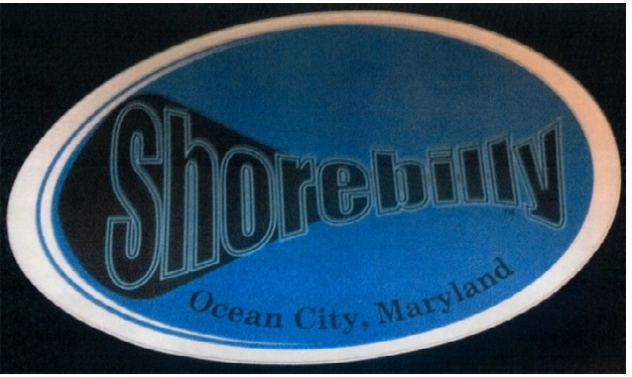
It’s never good to have the court’s first sentence describe a plaintiff’s claims as “specious claims that—as exposed once the evidence was tested in the crucible of trial—are utterly meritless.” Specifically, Teal Bay obtained a trademark registration by false statements to the PTO, requiring Southbound to defend itself against “baseless” claims. Likewise, there was no valid common-law infringement claim based on the parties’ use of the word “shorebilly,” over which Teal Bay had no monopoly.
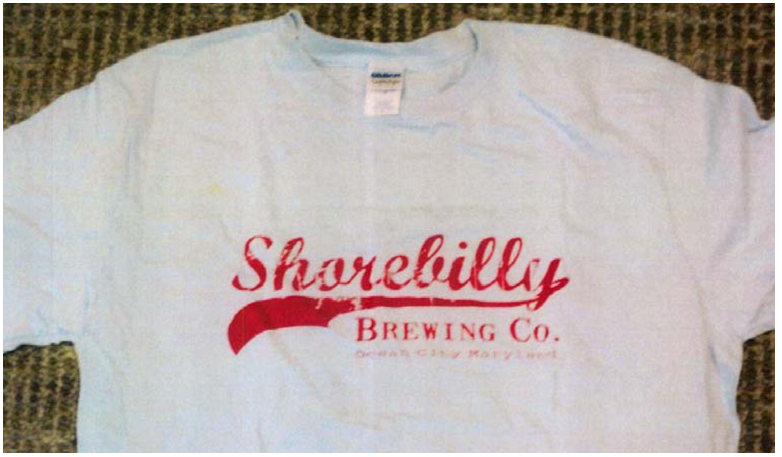
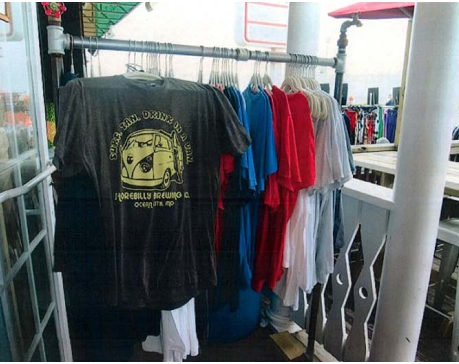
Teal Bay falsely represented to the PTO that it used “shorebilly” as a mark on T-shirts, rather than ornamentally. Thus, it didn’t acquire any trademark rights in advance of Southbound’s first use of the term. Regardless, it didn’t show likely confusion. Thus, Teal Bay lost its claims and its registration was cancelled. (This was also an “extraordinary” case, unsurprisingly, entitling Southbound to attorney’s fees.)
Since Southbound first used the name “Shorebilly Brewing Company” in commerce no later than October, 2012, that’s our key date. Teal Bay is run by the Rogersons, who in 2010 considered developing a business selling t-shirts and vacation mementos in Ocean City stores. They intended to name the business “Shorebilly,” “a word that is the seashore context equivalent of ‘hillbilly.’” At that time, there were several ongoing commercial uses of the name in the Ocean City area and elsewhere: e.g., Shorebilly Camping, Shorebilly Restoration & Fabrication, a fertilizer company using shorebilly.com, and a musical band named “Shorebilly.” Also, “Shorebilly” was a common username on a variety of online forums. The Rogersons thought that Ocean City tourists might identify with the shorebilly lifestyle and thus buy shorebilly-themed merchandise.
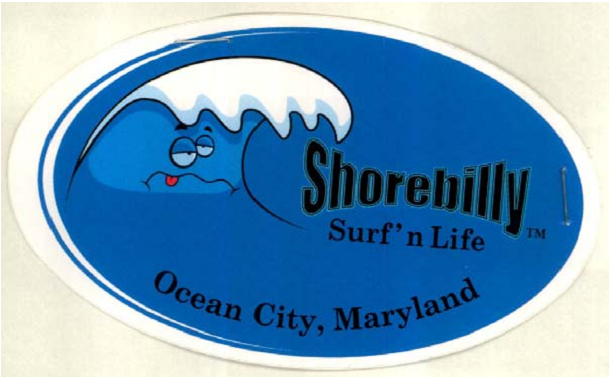
In May 2010, Teal Bay created a car bumper sticker referring to “Shorebilly Surf’n Life” that it provided at no cost to some Ocean City businesses to give to their customers. The artwork was freely available clip art, and the bumper sticker said “TM” but didn’t refer to any particular service or product.
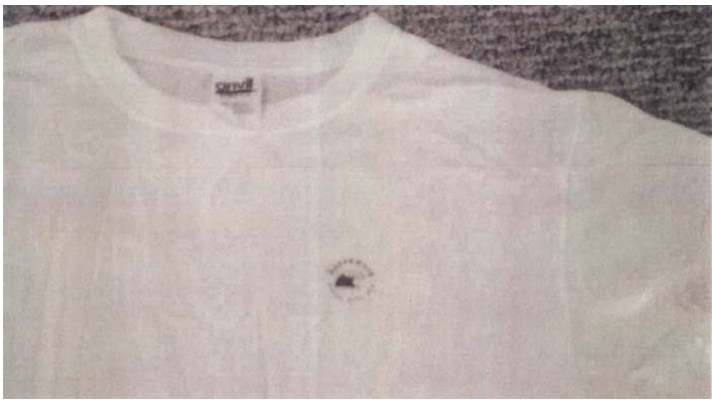
Teal Bay argued that the mark as shown on the substitute specimen was the same mark as used on t-shirts actually sold in commerce, though smaller and located differently. But the size and location were exactly what materially misled the PTO. The validity of a specimen generally doesn’t constitute a valid ground for cancellation, where the PTO determined that a specimen reflected a trademark use. But where, as here, the PTO was prevented by the applicant from making a determination based on actual use, the registration had no validity and needed to be cancelled.
Teal Bay also produced, and gave away, another 1,000 car bumper stickers that used the word “shorebilly” in a form suggestive of a fish.
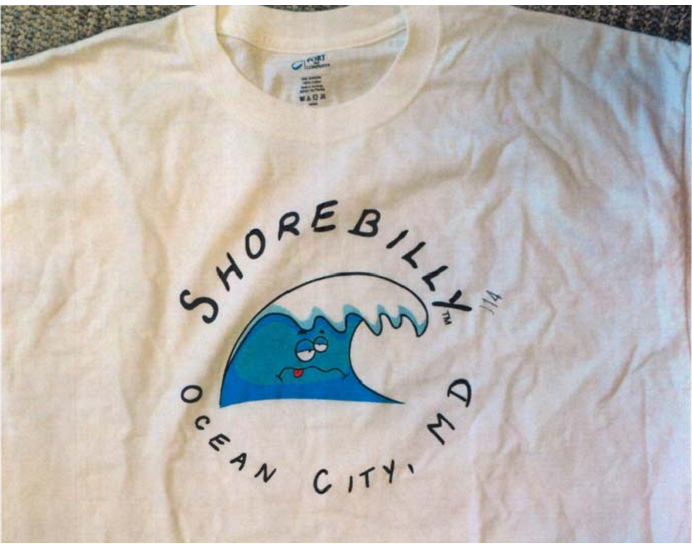
Teal Bay decided to produce T-shirts using the wave artwork and apply to register SHOREBILLY. In March 2011, Teal Bay ordered 1,000 t-shirts from Logo Dogz Printz using the clipart wave artwork. The t-shirts were made by Port & Company and carried a Port & Company label.
Teal Bay gave about 30 T-shirts to Mike’s Shell, an Ocean City gas station and store, to be sold on consignment. The Rogersons also sold a few t-shirts to family, friends, and neighbors directly, either by mail or from the trunk of their car. In November 2011, Teal Bay delivered a second consignment of 100 t-shirts to Mike’s Shell. There were other minor marketing efforts, including some networking and the creation of a Shorebilly Facebook page.
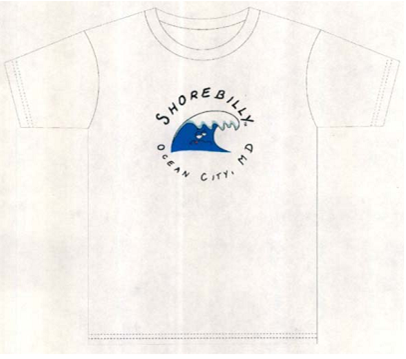
In April 2010, Teal Bay filed an ITU for “shorebilly” to identify clothing items including hats, t-shirts, sweatshirts, and golf shirts, as well as bumper stickers, coffee mugs, cups, drink huggies, and posters, later modified to clothing (Class 25). The PTO issued a notice of allowance in December 2010, and in June 2011, Teal Bay filed its Statement of Use. Its specimen was the design drawing of the t-shirt from its Logo Dogz order, stating “shirts in retail stores now,” though really that should have been “store.” Teal Bay claimed first use in May 2010 (the bumper sticker, later corrected to March 2011, the date of consignment to Mike’s Shell) and first use in commerce March 2011 (when t-shirts were sold to Mrs. Rogerson’s mother in Virginia).
The PTO rejected the statement as unacceptable because it didn’t show use in commerce. At that time, Mr. Rogerson spoke with an examiner and learned of the difference between ornamental use and trademark use of a brand name. “The examiner specifically referred to the use of the Polo and Izod trademarks on shirts as illustrative of trademark rather than ornamental use.” As a result, Mr. Rogerson ordered three sample t-shirts from Vistaprint using the proffered “Shorebilly” mark in the Polo and Izod fashion that the examiner had told him was illustrative of a proper trademark use. He took a photo of one and submitted it as if it were a genuine specimen of the March 2011 use in commerce. But “[t]here has never been any commercial use of these samples, nor have there ever been any t-shirts produced pursuant to the samples.” Instead, Teal Bay continued to offer for sale the t-shirts it had in inventory. (The court noted that, in March 2014, during this lawsuit, “Teal Bay falsely stated to the State of Maryland that it had no inventory in order to evade its business personal property tax liability.”) The PTO duly issued the registration for clothing, “namely, hats, t-shirts, sweatshirts, and golf shirts.”
There was no plausible explanation for Teal Bay’s failure to provide the PTO with an actual specimen or its statement that a photo of the sample t-shirts was a genuine specimen of the March 2011 use. The court found an intent to deceive the PTO about trademark use, as opposed to ornamental use, based on a specimen showing a materially different use than was on the actual goods that were sold in commerce.
Meanwhile, Southbound operated a restaurant/bar on the Ocean City boardwalk, and began to make plans to expand with a nano-brewery (smaller than a micro-brewery). Unaware of Teal Bay’s use, Southbound chose “Shorebilly Brewing Company.” Its informal research—Google searches [NB court did not capitalize Google], checking domain names, and asking others for feedback—discovered several local commercial uses of the word “shorebilly,” including a campground, a skeet-shooting site, an eastern shore blog called “Shorebilly’s Swill,” and Teal Bay’s trademark application for clothing. Southbound didn’t believe any of these uses affected its freedom to use the name. In November 2011, Southbound registered six domain names for future promotional use; all were variations of ShoreBilly Beer or ShoreBilly Brew.
By February 2012, Southbound had created a placeholder Shorebilly Beer Facebook page, which was not yet public. In March, Southbound’s counsel filed an ITU with the PTO for “shorebilly” for Class 43: bar, nightclub, brew pub, brewery, and restaurant services. Southbound then published the Shorebilly Beer Facebook and, in late March 2012, ordered 288 t-shirts to use promoting Shorebilly Brewing Company.
In June, the PTO issued an Office Action rejecting the Southbound application because of its similarity to Teal Bay’s registered trademark. Counsel had warned Southbound of this possibility but promised to respond with the clarification that the names were being used in different categories of goods—clothing v. beer—and advised that it was reasonable to expect that such a response would be satisfactory to the PTO. Counsel, local Erik Pelton, filed a lengthy response to the PTO and Southbound continued its promotional efforts.
In September 2012, a local newspaper article included photos of the then-current version of a Shorebilly Brewing Company t-shirt and Shorebilly Brewery beer bottles and growlers (containers with beer produced on site that customers are allowed to take out). This was when Teal Bay discovered Southbound’s efforts and sent a C&D referencing the PTO rejection.
Counsel responded that the goods were different, that Teal Bay’s use was ornamental, and that “shorebilly” was widely in use. Nonetheless, Southbound was willing to amend to SHOREBILLY BREWING COMPANY, to agree not to use a similar logo, and to agree never to use “Shorebilly” without “Brewing Company” on clothing if Teal Bay consented to the use and registration and provided evidence of its use in commerce. Teal Bay did not reply. The PTO approved Southbound’s application in January 2013. Southbound then selected a logo with no similarity to Teal Bay’s proffered mark. Teal Bay did not oppose the approved application, which was allowed in April 2013. Southbound then ordered more t-shirts and other merchandise using the Shorebilly Brewing Company name and proceeded to sell them on its premises. The brewery opened in May 2013.
Teal Bay wrote in June 2013 expressing concern over reverse confusion, then sued. When it became clear that the dispute would take a while to resolve and be expensive, Southbound made the business decision to select a new name and abandon the pending trademark application, choosing Backshore Brewing Company as the new name. Teal Bay persisted in the lawsuit, claiming damages. The court commented that “[n]o purpose would be served by detailing herein the implausibility of the damage theories Teal Bay has presented.”
Registration creates a presumption of validity, which shifts the burden to the challenger to produce sufficient evidence to rebut the presumption. The evidence established that Teal Bay failed to file a genuine specimen, which is required to show the manner in which the mark is seen by the public. A picture such as an artist’s drawing or printer’s proof is not enough; that “merely illustrates what the mark looks like and is not actually used on or in connection with the goods in commerce.” “[W]ith the intent to mislead the PTO, Teal Bay created and filed a purported specimen (never used in commerce) that presented a Polo or Izod type of use of the proffered mark rather than the actual use in commerce.” There was therefore no genuine administrative filing that the mark was valid.
Teal Bay argued that the mark as shown on the substitute specimen was the same mark as used on t-shirts actually sold in commerce, though smaller and located differently. But the size and location were exactly what materially misled the PTO. The validity of a specimen generally doesn’t constitute a valid ground for cancellation, where the PTO determined that a specimen reflected a trademark use. But where, as here, the PTO was prevented by the applicant from making a determination based on actual use, the registration had no validity and needed to be cancelled.
The TTAB has said that the sufficiency of specimens is a technical question and not something for the TTAB to supervise, but also that “it is not the adequacy of the specimens, but the underlying question of [trade] mark usage which would constitute a proper ground for opposition.” Rejection of a mark on such grounds is not about the inadequacy of the specimen as such, but about failure to function as a mark. The TTAB has found a registration void because the specimens didn’t show use in commerce, and another district court has found that an invalid specimen justified cancellation; cancellation was also appropriate here.
Even if the registration had been properly obtained and its validity were presumed, the court would still find that Teal Bay had no valid rights before Southbound’s first use in commerce. Had the burden of producing sufficient evidence to rebut the presumption of validity been shifted to Southbound, Southbound would amply have carried it, for the reasons noted above. Teal Bay’s use prior to October 2012 was ornamental, not trademark use, though thereafter Teal Bay “took some actions—such as using hangtags and labels—that could be considered to be trademark, rather than ornamental, usage of the name ‘Shorebilly.’”
McCarthy says: “Trademark usage is typically immediately evident. Usually, when viewed in context, if it is not immediately obvious that this ornamental design is being used as an indication of origin, then probably it is not.” There’s no bright-line rule; trademark use is a question of fact. A recognizable logo of a clothing designer can be immediately recognized as trademark use even if it’s also a decorative design. And use of a mark as ornamentation (basically, promotional goods—apparel licensed by a non-apparel maker) can be trademark use as long as the mark also serves to identify source.
This is what happens with college insignia. But purely ornamental designs can’t be marks. The commercial impression of the alleged mark is a key factor, which is affected by the size, location, and dominance of the design as applied to the goods. “The larger the display relative to the size of the goods, the more likely it is that consumers will not view the ornamental matter as a mark.”
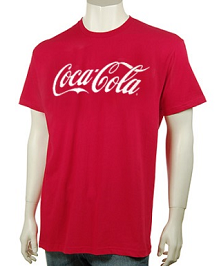
Teal Bay used the TM symbol on the shirts, but that’s not enough to make a mark. Moreover, the fact that the symbol might have been a trademark for some product or service didn’t lead to the conclusion that the trademark was for the t-shirt being sold. Rather, it most reasonably looks like the display of a mark for a product other than a t-shirt, like a Coca-Cola branded shirt. The t-shirts had a Port & Co. label, indicating that Port & Co. was the source of the shirt, as distinct from the source of whatever Shorebilly was a mark for.
Teal Bay sought, but was not entitled to, patent- or copyright-like protection for “shorebilly.” It was not using the term as a mark before Southbound’s first use. A design used as ornamentation may ultimately acquire secondary meaning, but Teal Bay didn’t prove it had done so by October 2012. “[B]y the time Teal Bay filed the instant lawsuit, it had sold or given away no more than about 150 t-shirts and spent only a little more than $100 on promotion and advertising, including the cost of t-shirts given away.”
And, even if Teal Bay had priority, the court would still find noninfringement. The mark was commercially weak given Teal Bay’s limited sales/promotion and the term’s use in the Ocean City area by others. The marks as used weren’t very similar given Southbound’s use of different graphics and “Brewing Company.” The goods weren’t similar, even though Southbound sold T-shirts with the company logo. There was no reason to think someone who bought a Shorebilly Brewing Co. promotional t-shirt would likely think that the source was Teal Bay, “the producer of totally dissimilar t-shirts that did not refer to the brewing company.” Sales channels: both marketed to tourists and local consumers, but Southbound sold only at its bar/restaurant and its t-shirts were strongly identified with its brewery, while Teal Bay sold only at a Shell station, which weighed against likely confusion. There was no similarity in advertising, given that Teal Bay had little, if any, advertising and promotion. There was no bad intent.
Actual confusion: “Teal Bay presented testimony of two individuals who stated that they were confused about whether there was a relationship between Teal Bay and the Shorebilly Brewery, evidence of telephone calls to Mrs. Rogerson asking about the brewery’s location or hours, and examples of a few in-person comments made to Mrs. Rogerson indicating some confusion about whether there was an affiliation between Teal Bay and Shorebilly Brewery.” But there was no evidence of confusion about a purchase decision, so that didn’t weigh in favor of finding confusion. Sophistication of consumers wasn’t relevant because the consuming public was the general public. Overall, there was no likely confusion.
Teal Bay argued reverse confusion. Where the factors differ, courts consider the commercial strength of the junioruser’s mark (counterfactually treating Southbound as the junior user). Southbound invested in advertising and promotion, and received a fair amount of media coverage; its mark was commercially stronger than Teal Bay’s. But this factor was totally outweighed by the other factors.
Intent: in reverse confusion, knowledge or reckless disregard of the senior user’s right matters, not intent to trade on goodwill. Southbound was aware of Teal Bay’s ITU, but Teal Bay was doing little, if anything, more than offering a few t-shirts for sale at a Shell station and out of the trunk of an automobile. This weighed strongly against reverse confusion. For actual reverse confusion, Teal Bay pointed to misdirected telephone calls and comments indicating confusion about whether the Rogersons owned the brewing company. But there was no evidence indicating that consumers believed that Southbound was the source of Teal Bay’s Shorebilly t-shirts. “Moreover, it is unlikely in the extreme that any consumer buying a Teal Bay t-shirt would believe, or even contemplate, that Southbound—selling promotional t-shirts bearing the Shorebilly Brewing Company name and logo—would be the source of t-shirts having no reference to its business and presenting a totally different logo.” Even if the Fourth Circuit were to recognize this cause of action, which it has yet to do, it wouldn’t matter here.
Posted in trademark
Leave a comment
Another keyword defendant victory, among other tort claims
M-Edge Accessories LLC v. Amazon.com Inc., 2015 WL 403164, No. MJG–11–3332 (D. Md. Jan. 29, 2015)
M-Edge started selling Kindle accessories soon after the Kindle was released. The parties’ relationship began well, but began to sour by 2011. M-Edge sued, alleging patent infringement and tort claims. The court granted summary judgment on patent claims against one Kindle cover and denied it on claims against another. I will only discuss the various false advertising/unfair competition torts.
Under Maryland unfair competition principles, “all dealings must be done on the basis of common honesty and fairness, without taint of fraud or deception.” But the tort isn’t boundless; it doesn’t protect against mere competition.
M-Edge was a member of the “Kindle Compatible Vendor” program, which allowed it to label its products as “Kindle Compatible” and sell them online through Amazon.com. By the end of 2009, “M–Edge was Amazon’s largest third-party Kindle accessories seller.” Amazon underestimated the market for Kindle accessories, and wanted to increase its margin. Thus, Amazon initiated the “Made for Kindle” (MfK) program. Amazon’s partners would get special benefits, including being sold in the Kindle Store area of Amazon.com, permission to use the “Made for Kindle” trademark, pre-launch access to new Kindle products, and inclusion on Amazon’s list of “Made for Kindle” vendors. MfK members paid a royalty on their sales of Kindle-related products.
M-Edge rejected the MfK program at least in part due to the high royalty rates. The court found that the MfK program was not actionable unfair competition. M-Edge made an informed business decision not to participate, and any harm to it was caused by its decision that the costs outweighed the benefits. Plus, there were valid business reasons for the MfK program—Amazon was justified in seeking to promote quality merchandise for the Kindle, and there was nothing wrong with charging a royalty to manufacturers who benefited from Amazon’s endorsement. Nor was there anything wrong with boosting a smaller M-Edge competitor as part of the MfK program, encouraging it to adopt features of other successful products, including M-Edge accessories. There was no evidence that any copied features were legally protected.
The court rejected M-Edge’s claim that Amazon misused confidential information about M-Edge sales to design its own accessories. Amazon copied M-Edge’s best-selling colors, but this wasn’t confidential: it was from Amazon’s own sales records. Likewise, while a former Best Buy executive gave Amazon M-Edge’s offline margin (information about what offline retailers paid), there was no evidence that this damaged M-Edge.
Amazon also offered discounts and sold related products as bundles, amounting to below-cost pricing. But there was no evidence of a motive to harm a competitor or destroy competition. The specific promotions at issue were undertaken to get rid of excess inventory, some of which were related to an obsolete product. Maryland law permitted below-cost sales where “the merchandise … [m]ust be sold promptly in order to prevent loss.”
M-Edge also challenged Amazon search strategies, like running an ad for “M Edge TM–Official Site … Kindle.Amazon.com Buy Kindle or Kindle DX at Amazon….” as a search result for “M-Edge” on the WSJ’s site. But there was no evidence this damaged or jeopardized M-Edge’s business. Though Amazon discussed using the keyword M-Edge to promote competitors, M–Edge engaged in the same practice with its competitors’ keywords, and the practice was permissible under 1–800 Contacts, Inc. v. Lens.com, Inc., 722 F.3d 1229 (10th Cir. 2013) and Network Automation, Inc. v. Advanced Sys. Concepts, Inc., 638 F.3d 1137 (9th Cir. 2011). “Therefore, this conduct cannot serve as a basis for a claim of unfair competition.”
Nor did Amazon make actionable “threats” in the course of contract negotiations. While Amazon demanded increased rates, M-Edge successfully resisted its demand for retroactive fees. An Amazon employee allegedly told M–Edge’s Vice President of Sales when M-Edge expressed discomfort with MfK: “That’s a path you really don’t want to go down, because we are going to be putting pressure on retail to use the preferred partners. It will cause damage to you if you’re not part of the program.” But Amazon had a valid reason to discourage M-Edge from rejecting MfK, since M-Edge was a successful and popular merchant—at least one Amazon executive’s “favorite brand.”
M-Edge also didn’t prove that Amazon deceived it by not fulfilling a promise to provide M-Edge with pre-launch access to the third generation Kindle. M-Edge didn’t identify any contract obligation on Amazon’s part, and it only renewed its merchant contract with Amazon eight days before the launch—even if it had a contractual right to prelaunch specifications, there was no evidence that a one-week delay harmed it. Also, in a 2011 meeting, Amazon allegedly “pumped” M-Edge for product information after already deciding to shut it out. “But asking a competitor who has agreed to meet with you about their products is not deceit.”
Tortious interference claims also failed. M-Edge alleged that Amazon made misrepresentations about M–Edge’s status as an Amazon-approved vendor and performed “unlawful acts of coercion against retailers.” Amazon allegedly spread false messages that only MfK vendors had ‘High quality products: Amazon approved and tested,’ and that only MfK vendors were ‘highly capable, honest, and trusted.’” But Amazon had a right to promote MfK vendors; it didn’t say “only” Amazon vendors were high-quality or disparage M-Edge. There was no evidence of deliberate disparagement. For example, one Amazon employee in an email described responding to an accessory buyer’s question about M–Edge as follows: “I stuck to the script and focused on our partners abilities, leaving risk on M–Edge.”
False advertising: No luck here either. M-Edge challenged (1) ads on third-party search engines that resulted in Amazon advertising Amazon.com as the “official site” of M–Edge; (2) statements on Amazon.com that M–Edge’s products are “no longer available”; and (3) Amazon’s use of the approved vendor list in connection with the MfK program.
Third-party ads directing users who used M-Edge keywords to the Amazon accessories page is fine, see, e.g. Judge Berzon’s concurrence in Playboy. Amazon’s use of such ads wasn’t literally false and there was no extrinsic evidence of confusion. As for “no longer available,” that was literally true because M-Edge products weren’t available on Amazon. “Moreover, in the modern world, with ready availability of eBay and numerous sources for products discontinued by a manufacturer, a consumer would not reasonably conclude that a message of unavailability on Amazon.com would constitute a statement that a product was not available from any other source.” M-Edge didn’t show materiality.
Finally, as for the approved vendor list, Amazon allegedly engaged in false advertising by “approach[ing] M–Edge’s existing and prospected offline retail customers with a list of ‘approved’ vendors and messages about the MfK program.” Amazon’s message that M–Edge was not an “approved” vendor was allegedly “literally false” because “[w]hen Amazon contrived the [MfK] program, M–Edge was already an Amazon-approved vendor of Kindle covers.” That is, M-Edge was part of the Kindle-Compatible Vendor program, allowed to label its products as Kindle Compatible and sell them through Amazon. Still, Amazon’s statements weren’t literally false, since the MfK approved list and the earlier KCV list were separate programs.
One side note: Amazon proffered the testimony of Dr. Allyn Strickland as a damages expert. M-Edge sought to exclude “character” testimony that “Amazon … seeks to be Earth’s most customer-centric company,” that Amazon announced that it would be opening a fulfillment center in a previously inactive area in Baltimore that would create over 1000 jobs; that Amazon’s founder/CEO was named Time Magazine’s Person of the Year in 1999 and “America’s Best Leader” by USNWR; and that the Kindle won consumer awards. “The Court finds a considerable degree of potential undue prejudice—and an effort to pander to a local jury—in Dr. Strickland’s purported character or ‘background’ evidence. At least two days prior to offering any “background” testimony (and preferably prior to trial), Amazon would need to proffer the testimony for an advance ruling on admissibility. Also, because the tort claims were gone, Dr. Strickland’s opinions regarding Amazon and M-Edge’s respective responsibility for M-Edge’s losses due to the MfK issues described above were irrelevant and inadmissible.