"strictest industry standards" can be false when performance is bad enough

Muhler Company, Inc. v. Window World of N. Charleston LLC, 2014 WL 4269078, No. 2:11–cv–00851 (D.S.C. Aug. 28, 2014)
This is a default judgment.  The parties compete to supply and install replacement windows in Charleston County, South Carolina, and in neighboring coastal counties. Defendant WWNC advertised that it adhered to the “strictest industry standards” in the conduct of its replacement window installation services. It advertised that it provided the “best for less” and that it was “lead certified.” However, Muhler contended, WWNC installed windows without legally required permits, contrary to its claims to meet the “strictest industry standards.”  It also frequently neglected to notify homeowners of lead-based paint concerns, neglected to check or perform testing to determine if lead-based paint was present, or failed to perform lead remediation when installing replacement windows, contrary to its representations to be “lead certified.”
The court found that WWNC’s failure to obtain permits or meet lead-based paint requirements “forecloses any possibility that it complied with the ‘strictest industry standards.’”  Indeed, “no industry standard could allow WWNC to ignore governmental permitting requirements and lead-based paint requirements.”  (There are other cases, though not many, finding that even claims that are generally puffery can be actionable when no reasonable person could agree with the puff.)  Plus, WWNC’s representation that it was “lead certified” and recommendation that consumers hire a “Window World certified professional” to check for lead-based paint because they are “certified risk assessors or inspectors, and can determine if your home has lead or lead hazards” implied that WWNC complies with federal and state regulations associated replacing with windows in homes with lead-based paint. These claims, the court found, were false and deceptive.  Muhler showed that in over 1700 instances WWNC didn’t apply for or receive the required governmental permit for the installation. It often charged homeowners for permit fees, but just kept the funds.  Muhler provided similar evidence about widespread noncompliance with good lead abatement practices.
The court then found WWNC’s conduct had been willful, given its extent, and that Muhler lost contracts of nearly $160,000 during the relevant period due to WWNC’s misrepresentations; the court also found that there were likely to be other lost sales that hadn’t been identified. The court awarded Muhler its average profits for the proven lost contracts, a little under $83,000, and then trebled the damages.  It also considered disgorgement of WWNC’s gross revenue from more than 1700 jobs done without a permit, a over $5.7 million; while WWNC didn’t show up to prove any discussions, a full recovery “would almost certainly penalize WWNC instead of compensating Muhler.” Instead, the court used Muhler’s profit margin to reasonably approximate WWNC’s profits, resulting in an award of nearly $2.9 million.
The court also awarded attorneys’ fees, considering that the misconduct was willful.  The award was over $118,000, considering that Lanham Act and unfair competition “are generally recognized as complex areas of the law” and that proving the claims here required extensive investigation of public records through FOIA requests as well as discovery.  The default made things easier, but it came late in the case.

Posted in http://schemas.google.com/blogger/2008/kind#post, remedies | Leave a comment

Business consumer can’t bring Lanham Act claim after Lexmark

Locus Telecommunications, Inc. v. Talk Global, LLC, No. 14–1205, 2014 WL 4271635 (D.N.J. Aug. 28, 2014)
Defendant Expansys allegedly made a false statement on a website promoting its product, personal identification numbers (“PINs”) used to add minutes to prepaid cell phones. Locus resells such PINS to distributors, who sell them to retailers.  Expansys allegedly operated a website through which consumers would be able to redeem their PINs to refill prepaid plans with various wireless carriers, marketing Expansys PINs as “The Easiest Way To Refill a USA PrePay Plan.”  Locus allegedly relied on this claim, but the PINs didn’t work on the website, precluding Locus, its retailers, and PIN buyers from being able to redeem them. This allegedly hurt Locus’s sales and goodwill, and Locus sued for violation of the Lanham Act as well as state law claims.
The court determined that “the injury of which Locus complains does not stem from conduct by Expansys which unfairly diminished Locus’s competitive position in the marketplace.”  Instead, it stemmed from the inducement to buy the Expansys PINs, and Lexmarkexcluded injury to entities “hoodwinked into purchasing a disappointing product” from its explanation of the Lanham Act’s scope.  Even though Locus bought for resale, it was still a purchaser.  As Lexmark said, “[e]ven a business misled by a supplier into purchasing an inferior product is, like consumers generally, not under the [Lanham] Act’s aegis.”  But “a Lanham Act claim for false advertising requires some deception by the defendant which causes consumers to withhold trade from the plaintiff.”  (Note that Locus alleged exactly that, but only by the mechanism of Locus believing the falsehood and acting on it, as opposed to others believing it.)
The Lanham Act claim had to be dismissed with prejudice, and the court declined to exercise supplemental jurisdiction over the state law claims.  The court also declined to impose Rule 11 sanctions on Locus and its counsel, because the circumstances weren’t exceptional.  “[T]he Court cannot conclude that Locus filed the claim upon frivolous grounds for contending that it fell within the Lanham Act’s zone of interest, as articulated in Lexmark. At most, Locus and its counsel may have sought to expand the breadth of the Lexmark holding, and Rule 11 is not designed to deter good faith efforts to extend or modify existing law.”

Posted in http://schemas.google.com/blogger/2008/kind#post, standing | Leave a comment

religious catalog doesn’t have a prayer on trade dress claims

Gerffert Co., Inc. v. Dean, — F.Supp.2d —-, 2014 WL 4258275, No. 09–CV–266 (E.D.N.Y. Aug. 29, 2014)
Gerffert sued Dean for infringement of its trade dress in catalogs for religious products, catalogs that featured the “iconic” artwork of Fratelli Bonella, an Italian company that produces religious artwork.  The court found no protectable trade dress and dismissed the remaining state law claims.
Gerffert distributed Catholic-themed religious products, including prayer cards and framed prints.  Dean was a former independent sales rep/employee, until 2005.  For about 50 years, Gerffert was the sole distributor of Bonella artwork in the US, and allegedly devised a “unique numbering system” for Bonella-related products, consisting of (i) a “series” identifier for the type of product (e.g., “81” for prints in 10–inch by 12–inch walnut frames; “800” for English-language laminated holy cards; “M” for non-gold micro-perforated prayer cards; “FM” for magnetic framed prints; “KC” for key chains) followed by (ii) a three-digit “image” number for the Bonella artwork.  Gerffert alleged that it spend millions of dollars on publicity and promotion, but didn’t provide evidence of this or show what portion of its ad expenses went to catalogs for Bonella-related products.
The Bonella-related Gerffert catalogs used some basic elements consistently: “a decorative cover; general descriptions of the products in the series, including their dimensions and composition, atop every page; individual photographs for the products, arranged in rows on a solid background; and a series identifier and image number below each photograph.”  (So it was a catalog.)  However, the catalogs also varied widely in other ways.  Some used the Gerffert and Bonella logos and Bonella slogan; another only the Bonella logo/slogan; another only the Gerffert logo though referencing the “Bonella Line”; and another with only the Geffert logo and no mention of Bonella.  They differed in whether and how they attributed copyright to Bonella.
Gerffert provided no evidence of its success in generating sales from Bonella-related products in particular, and sales declined starting around 2000, losing money in 2004.  In 2007, Dean and others created a new company, “New Hirten,” which became the sole distributor of Bonella products.  Both parties catered to institutional customers—sellers of religious products—and not individual customers.  New Hirten sent a letter to potential customers, identifying itself as the “new distributor of the Bonella line” and indicating that “much of the stock available to you now was out of stock by the previous distributor.”  It also began sending out catalogs for Bonella-related products.  These catalogs contained similar or even the same products as Gerffert’s catalogs, and nearly identical product descriptions, photos, and series identifiers and image numbers.
Examples of parties’ catalogs

The court found that there was a triable issue of fact on whether the catalog trade dress was nonfunctional.  Unfortunately, the court framed the issue as whether the catalogs affected the use or purpose, or cost or quality, of Bonella-related products. It would be better to have analyzed whether the trade dress at issue—for catalogs—affected the cost or quality of catalogs for religious products.  But the defendant doesn’t seem to have argued the issue and the court concluded that it was “tenuous” to claim that the catalogs improved the value or sales price of the Bonella-related products.
The court deemed aesthetic functionality a closer call. The catalogs “primarily contained design elements that are competitively necessary, at least in the abstract, e.g., Bonella-related product descriptions, numbering, and photographs.” Yet “the specific descriptions, numbering, and photographs of such products by Gerffert are not competitive necessities.”  Nor were the particular arrangements of these elements—rows and solid backgrounds—competitively necessary.  (Here, by contrast, the court is looking at the right thing—what’s functional for catalogs, not for religious-themed products.) So a reasonable jury could find nonfunctionality.
However, no reasonable jury could find distinctiveness.  The catalogs weren’t inherently distinctive. The Second Circuit has disapproved of summary judgment on non-inherent distinctiveness, but has still allowed it “when the possibilities of the ultimate trade dress for a product are limited.” So here.  Gerffert’s use of catalogs wasn’t an unfamiliar or newly invented method.  There are common constraints on how catalogs can present products.  Nor did the catalogs demand “imagination, thought and perception” to discern what they are actually selling, i.e., Bonella-related products.  The catalogs weren’t generic either.  Instead, “these catalogs are bound to look similar, but not necessarily identical, to catalogs for Bonella-related products sold by other companies.”
Other courts have implicitly held catalogs to be descriptive by requiring secondary meaning.  And in Blau Plumbing, Inc. v. S.O.S. Fix–It, Inc., 781 F.2d 604 (7th Cir.1986), Judge Posner said that ads that provided “schematic, graphic, or metaphoric” information about services were descriptive. “Gerffert’s catalogs in this case are collections of representations—graphic, numeric, or otherwise—which informed potential customers about the Bonella-related products that it was offering to sell them. Such informative, and not symbolic, representations about a company’s products and services are nothing more than descriptive trade dress.”
After that, the court readily concluded that Gerffert hadn’t shown secondary meaning.  There was no evidence of “consumer studies” equating Gerffert with its catalogs for Bonella-related products, “unsolicited media coverage” of these products [the court means “of the alleged trade dress”], or other “attempts to plagiarize” these catalogs, apart from defendants’ conduct.  Sales success at best was unhelpful and at worst counseled against finding secondary meaning.  A mere allegation that Gerffert spent “millions of dollars” on advertising could not defeat summary judgment, especially since Gerffert failed to specify how much was spent by Gerffert on its catalogs. Length and exclusivity of sales of Bonella-related products was insufficient in itself, especially given inconsistencies in the catalogs througout their period of production (the last two decades).  These inconsistencies could have led consumers to associate the catalogs with Bonella, and not attribute their primary significance to Gerffert. Ultimately, as the First Circuit said:
Proof of secondary meaning requires at least some evidence that consumers associate the trade dress with the source. Although evidence of the pervasiveness of the trade dress may support the conclusion that a mark has acquired secondary meaning, it cannot stand alone. To find otherwise would provide trade dress protection for any successful product, or for the packaging of any successful product.
Yankee Candle Co., Inc. v. Bridgewater Candle Co., LLC, 259 F.3d 25, 44 (1st Cir.2001).
The court also commented that, even if it were to consider likely confusion, that wouldn’t go well for Gerffert.  The weakness of the trade dress, the temporal divide in competition (they never overlapped in sales), the sophistication of the parties’ customers, and the lack of actual confusion all favored defendants.

Posted in trademark | Leave a comment

Breaking (season) bad: Apple’s season pass promise could violate UCL

Lazebnik v. Apple, Inc., 2014 WL 4275008, No. 5:13–CV–04145 (N.D. Cal. Aug. 29, 2014)
The plaintiff sued Apple for misrepresenting its Breaking Bad “season pass.”  As the court explained, “[f]rom the time Season 5 of Breaking Bad was first announced, it was referred to as the ‘Final Season’ and was slated to include 16 episodes.”  When the first episode became available, Apple offered a season pass costing $21.99 for high definition (“HD”) and $13.99 for standard definition (“SD”), and in exchange they were promised: “[t]his Season Pass includes all current and future episodes of Breaking Bad, Season 5.” Apple also claimed that “[p]urchasing a Season Pass gets you every episode in that season and at a better price than if you were to purchase it one at a time.”  But when the second half of season 5 started to air, season pass holders didn’t get it.  Apple deemed the second half to be a “Final Season” (apparently not “Season 6.”).  Apple refused to provide Lazebnik access to the remainder of Season 5 if he didn’t pay more.  Lazebnik alleged reliance on Apple’s claims.  
Standing (sigh): Lazebnik alleged that he received less than he was promised.  Apple argued that because Lazebnik’s son-in-law communicated Apple’s claim to him and completed the purchase for him, he couldn’t plead reliance.  Though Lazebnik didn’t specifically allege that, in reliance on his son-in-law’s transmission of Apple’s statement, he told his son-in-law to buy the season, he still plausibly pled reliance.  Whether the son-in-law accurately conveyed Apple’s (false) statement is a fact issue for the jury.  “A jury could reasonably find that Defendant had reason to expect that its representations would be transmitted to others, particularly in the case of statements made to a wide audience such as iTunes users.”
However, breach of contract claims failed because any contract was between Apple and the son-in-law.  Also, CLRA claims failed because an iTunes season pass wasn’t “goods,” defined as tangible chattels, and the complaint didn’t allege that the season pass constituted “services.”
UCL claims did survive.  Apple argued that its statements couldn’t deceive a reasonable consumer because it never promised all 16 episodes of season 5.  Although it did say “[p]urchasing a Season Pass gets you every episode in that season and at a better price than if you were to purchase it one at a time,” it never explicitlypromised that there would be 16 episodes in Season Five, and a customer could therefore draw no conclusions about how many episodes she or he was buying without checking with AMC and the makers of Breaking Bad.  (Seriously, Apple?  This is real ‘a word means what I say it means’ territory.  When I buy a “book,” I may not count the pages beforehand, but I certainly notice when someone rips out the back half and I would consider providing just the first half to break our deal.)  Anyway, Apple said, no reasonable consumer could believe that he or she would get 16 episodes for $21.99.
None of this was appropriate on a motion to dismiss.  This wasn’t the “rare situation” in which a statement was unlikely to deceive a reasonable consumer as a matter of law.  Plus, the complaint cited a number of similarly angry consumers posting on an Apple discussion website.
Apple argued that this was AMC’s fault because AMC decided to market the last 16 episodes of Breaking Bad as Season 5.  (I would suggest that Apple consult its indemnification agreement with AMC, which surely exists, and fulfill its promises to consumers.)  That’s not plaintiff’s problem: the test is whether Apple’s representations were likely to deceive a reasonable consumer, and whether the likelihood of deception arose from Apple’s conduct or that of its contractual partner AMC “is not relevant to this inquiry, and Defendant cites no case that states otherwise. The UCL does not impose a scienter requirement.”

Posted in california, class actions, consumer protection, http://schemas.google.com/blogger/2008/kind#post | Leave a comment

Distributor can be sued for direct false advertising under Lexmark

Toddy Gear, Inc. v. Navarre Corp., 2014 WL 4271631,  No. 13 CV 8703 (N.D. Ill. Aug. 26, 2014)
Toddy Gear makes the Toddy Smart Cloth, “a double-sided microfiber cloth with an antimicrobial coating crafted for scratch-free cleaning of extremely sensitive surfaces such as handheld electronics.”  Toddy Gear alleged that Navarre distributed a knockoff of the Toddy Smart Cloth with the exact same size, dimensions, color and other characteristics, called the Schatzii.  (Yet there’s no trade dress claim; perhaps Toddy Gear feared an expensive functionality battle.)  In addition, Toddy Gear alleged that the “product markings for the Schatzii state that the product is ‘designed and produced by Cleer Gear in the United States,’” while Cleer Gear has only one employee in the United States and imports the product from China.  Toddy Gear sued for false advertising and violation of the Illinois Uniform Deceptive Trade Practices Act.
Navarre argued that Toddy Gear didn’t fall within the Lanham Act’s zone of interests under Lexmarkbecause it was really asserting a claim under the Textile Fiber Products Identification Act, which doesn’t provide for a private right of action.  This was essentially a Pom Wonderful preclusion issue.  The TFPIA bars the misbranding or false or deceptive advertising of textile fiber products, and deems a product misbranded if, inter alia, a label does not show “in words and figures plainly legible, the following: … [i]f it is an imported textile fiber product the name of the country where processed or manufactured.”  By its express terms, the law “shall be held to be in addition to, and not in substitution for or limitation of, the provisions of any other Act of the United States.” The Lanham Act bars false and misleading advertising. Per Pom Wonderful, “[n]o other provision in the Lanham Act limits that understanding or purports to govern the relevant interaction between the Lanham Act and the [FTC].” So there’s no preclusion.
In addition, the court rejected Navarre’s argument that Toddy Gear didn’t allege a “discernable competitive injury,” since Toddy Gear alleged that the competing product at issue was “manufactured and distributed by Cleer Gear” and Navarre only allegedly marketed the Schaatzii to retailers.  Lexmarkrejected a categorical direct competition test, but rather required economic or reputational injury “flowing directly from the deception wrought by the defendant’s advertising; and that that occurs when deception of consumers causes them to withhold trade from the plaintiff.”  Toddy Gear’s complaint, alleging that Navarre distributed an exact replica of its product, but with materially false statements on the packaging, to retail stores where Toddy Gear also sells, and that this injured Toddy Gear, was sufficient to allege a direct injury to its commercial interest.
Did Toddy Gear allege that Navarre made a false statement in an ad?  Yes, by alleging that “Navarre has caused the Schatzii product, which includes false statements on the product packaging, to enter interstate commerce.”  Labels, package inserts, or other promotional ads are commercial advertising under the Lanham Act.  And Toddy Gear alleged the relevant statements and their falsity (since the product was allegedly made in China) with the necessary particularity to satisfy Rule 9(b).  The court wasn’t going to get into implied versus explicit falsity on a motion to dismiss.
The state law claims therefore also survived.

Posted in http://schemas.google.com/blogger/2008/kind#post, standing | Leave a comment

Irreparable harm after Herb Reed

E. & J. Gallo Winery v. Grenade Beverage LLC, No. 1:13-cv-00770 (E.D. Cal. Aug. 15, 2014)
Via the Trademark Blog, this case applying Herb Reed but finding irreparable harm based on the same reasoning rejected in Herb Reed shows just how poorly we think about trademark harm.  The court first found that plaintiff showed likely success on the merits of its confusion claim based on Gallo wines versus El Gallo energy drinks, including the highly-plaintiff-friendly ruling that inquiries about whether two parties are related evidence confusion (when really they evidence some awareness that the two don’t ‘fit’ in some way; this might however be some reason to think that other people would be confused in the case of very cheap mass consumer goods like these).  The court also denied an injunction as to defendant’s plan to use El Gallito for energy drinks, finding that Gallo didn’t submit any evidence about confusion as to that mark though emphasizing that it wasn’t finding that confusion was not likely either.
Turning to irreparable injury: the court found the declaration of Gallo’s director of marketing, Anna Bell, sufficient.  She stated:
Plaintiff does not want to associate its GALLO trademark with energy drinks because it believes that mixing energy drinks with alcoholic beverages promotes irresponsible drinking behavior, which is directly contrary to Gallo’s philosophy. Therefore, if consumers are likely to or actually do believe that Defendant’s EL GALLO energy drinks are in some way associated with or condoned by Plaintiff, Gallo as a company would suffer damage to its reputation. And because there have been some reports that drinking excessive amounts of alcoholic beverages mixed with energy drinks could cause physical harm, the harm to Plaintiff’s reputation could be devastating.
… Further, as explained in this Declaration, Gallo as a company is very proud of its GALLO mark and GALLO products, and therefore exerts an enormous amount of time, energy and money on how these marks are used in the marketplace. Gallo ensures that licensees of its marks, like those marketing GALLO meat products and cheese, follow certain quality standards. If Defendant is permitted to use the EL GALLO and EL GALLITO marks for energy drinks, as mixers for tequila or otherwise, Gallo’s name and reputation are put at risk. This harm would be irreparable to Plaintiff.
Though Bell wasn’t qualified to opine that mixing energy drinks with alcohol promotes irresponsible drinking, that didn’t matter, because she was qualified to testify that Gallo believed that an association with energy drinks would be harmful to its reputation because it believed that consumers would perceive such an association as endorsing harmful and irresponsible drinking behavior.  Courts (pre-Herb Reed) have said that the injury from infringement stems from lost control over a business’s reputation, which lost control has the “potential” to damage its reputation.  Of course, potential and likelihood are usually very different things for injunctive relief purposes.
The court found that, though Gallo didn’t introduce admissible evidence that association with energy drinks would harm its reputation, “it is enough that Plaintiff has introduced evidence of loss of control over [its] own business reputation.”    But the only “evidence” of lost control, as opposed to the consequences of that lost control, was the evidence of likely confusion.  And if “lost control” is irreparable injury regardless of whether that lost control results in any actual change to reputation, then we’re back to presuming irreparable harm from likely success on the merits, since it’s the likely confusion that produces the lost control.  This is the argument INTA would like courts to agree with.  (Compare Purdum v. Wolfe, which rejected the “lost control” argument in the absence of evidence about poor quality/other actual harm to plaintiff.)  Here’s the court’s summary, which makes clear that this is just the pre-Herb Reed rationale: “[T]rademark law affords Plaintiff the right to control its branding and image via the legal right to control the usage of the GALLO mark. Defendant’s actions rob Plaintiff of this control, which is a sufficient showing of irreparable harm.”
Then the court found that, even after eBay, money damages are inadequate to remedy infringement.  Gallo’s licensing agreements for use of the mark didn’t show that damages here would be readily calculable or adequate. And Gallo abandoned its claim for money damages, which “suggests that monetary damages are inadequate because they are too difficult to calculate and prove.”

Posted in http://schemas.google.com/blogger/2008/kind#post, trademark | Leave a comment

Redefining fan fiction down

Neal Pollack’s article defending Amazon has many points of interest.  The only one I’ll engage with is that, contrary to the marketing, Amazon is still seeding Kindle Worlds with pro authors under contract–and apparently given advances as well as editorial assistance–to produce “fan fiction” in various authorized Worlds, while anyone else who takes Amazon up on its offer will not get an advance.  Again, I don’t think Kindle Worlds is inherently bad.  I do think that calling it “fan fiction” is misleading; this is not an organic, community-based set of works.  I think it’s important to recognize, when Amazon says that it’s happy with the performance of Kindle Worlds, that it’s very different to write from an advance than not. 

Posted in fan fiction, fanworks | Leave a comment

taking control: Honeywell TM, ad claims lose, (c) continue

Honeywell International Inc. v. ICM Controls Corp., No. 11–569, 2014 WL 4248434 (D. Minn. Aug. 27, 2014)
Honeywell sued ICM for patent infringement, copyright infringement, violation of the Lanham Act, and violation of state law.  (I will ignore the patent issues.)  The claims relate to ICM’s sales of allegedly “direct knockoffs” of four Honeywell combustion control products used for controlling heating appliances.  The products are two “oil primary controls,” which control the fuel oil for an oil-based furnace, water heater, or boiler; and gas ignition controls, ditto for gas.  Honeywell sells oil primary controls in residential and light commercial markets as OEM and replacement units; the gas ignition controls are only replacement units.
ICM received summary judgment on Honeywell’s false advertising claim, which challenged ICM’s advertising of its combustion control products as “Made in the USA.”  ICM’s expert reports indicated that a significant part of the manufacturing of the relevant products—including the final assembly—occurs at a facility in Syracuse, NY. So does conceptualization, design, testing, and other production activities also occur there. Some foreign components are incorporated into the products, but their value ranged from between 10.4 and 23.8 %, depending on the product.  The foreign materials cost ranged between 33.6 and 80.2 %, and with labor and other costs added in, ICM’s expert placed the foreign content of various ICM products at between 19.4 and 52.9 %.  Honeywell argued that “Made in the USA” (along with  “100% American Made” and “American Made”) was a false designation of origin.
“The standard for proving literal falsity is rigorous” and “only an unambiguous message can be literally false.” (Ambiguity, the court determined, was a question of law, whereas falsity was a question of fact; falsity by necessary implication wasn’t at issue.)  In the context of this case, the court found “Made in the USA” not unambiguous enough to be literally false.  The FTC has guidelines for US origin claims, but Lanham Act plaintiffs have to show literal falsity/misleadingness, not merely violation of FTC guidelines, so the court wasn’t going to look at whether the products violated the FTC guidelines.  (This finesses an extremely difficult question: when the government sets a standard, aren’t consumers likely to believe that producers are complying with the government standard, whatever it is, even if they don’t know the details of the standard?  They could then be deceived by an idiosyncratic definition.)  Plus, the FTC’s own policy statement showed that “Made in the USA” was not unambiguous enough to support a literal falsity theory.  The statement requires, at a minimum, that “the final assembly or processing of the product must take place in the United States,” because that’s so important to consumers.  But beyond that threshold the FTC considers other factors, “including but not limited to the portion of the product’s total manufacturing costs that are attributable to U.S. parts and processing; and how far removed from the finished product any foreign content is.”  The FTC doesn’t have a fixed proportion, but says it’s evaluated on a case by case basis. Thus the phrase was not sufficiently unambiguous to find literal falsity here, where there was no dispute that final processing and assembly occurred in the US.  (Plus, other laws use different definitions to identify a country of origin.)
Without literal falsity, Honeywell lost because it couldn’t show misleadingness; it didn’t offer consumer or market research showing the relevant consumers’ understanding of the phrase. Honeywell offered the testimony of a professor of marketing, who opined that “contractors,” who the parties treat as the relevant consumers, “are likely to believe” that a “Made in the USA” claim “implies that 100% of the product and its components are manufactured” in the United States.  But Honeywell didn’t show that the professor conducted any research on actual contractors or had any relevant experience with them.  That wasn’t enough. 
Nor could Honeywell rely on FTC studies about general consumers’ perception of the phrase, performed in 1991 and 1995. Those studies “do not address what a contractor in the present-day understands by the phrase and whether that understanding is inconsistent with ICM’s use of it.”  Plus, the FTC itself acknowledged that many consumers just had a general sense of what the phrase “Made in the USA” means rather than a highly specific view of how to evaluate costs, processing, etc.  Beyond the final processing requirement, “a customer’s understanding of the accuracy of a U.S. origin claim would depend on the product and the type of content that was foreign sourced”—and Honeywell lacked evidence about that.
ICM also prevailed against Honeywell’s trade dress infringement claims.  Honeywell claimed an interest in a combination of identified elements.  For one product, and representatively, they were: 
• a gray case;
• a raised and ridged circular bezel formed out of the case, located on the left side of the “face” of the product;
• a red circular reset button set inside the raised/ridged bezel;
• a black-and-white label with an orange warning bar immediately to the right of the red button;
• an LED indicator light nestled in the housing and located between the thermostat and flame-sensor connections along the right side of the unit; and
• the location and order of the thermostat and flame sensor quick-connect terminals on the right side of the unit.

Honeywell controllers
The court began by acknowledging the striking similarity between the Honeywell and corresponding ICM products. But copying is often ok, and the Supreme Court has cautioned against overprotecting trade dress, especially product designs and configurations.  Honeywell had the burden of showing nonfunctionality. If the feature affects the cost and quality of the article, it’s functional; if the feature would put competitors at a significant non-reputation-related disadvantage, it’s functional—but competitive necessity isn’t required in non-aesthetic functionality cases.

Comparison between Honeywell and ICM
For each product, the elements identified by Honeywell were part of components on the exterior of the controllers, each of which served a function.  “[T]he case serves to protect the internal components, the reset button is used to reset the device, the raised bezel protects the button, the label provides information (including manufacturer identity) or warnings, and the LED light operates as an indicator.”  However, Honeywell argued that its trade dress covered “the gray color of the case, the red color of the reset button, and the location relative to each other of the various components on the external body of the unit”—which reduced to shape, color, and configuration. 
The court found that a reasonable jury couldn’t find that Honeywell met its burden of overcoming the presumption of functionality. Honeywell sought to show that there were other design choices and thus no competitive necessity.  But “TrafFix makes clear that treating the competitive necessity test as the sole and comprehensive gauge—without consideration of the purpose, use, cost, and quality aspects relevant to the primary inquiry—is error.”
Though Honeywell’s witnesses called the shape, color, and configuration “arbitrary,” they weren’t using it in the trademark sense, but merely meant that multiple options existed for the particular shape, color, or configuration at issue.  “Critically missing from the evidence that Honeywell puts forward in its opposition to ICM’s motion is a demonstration that its claimed trade dress is not essential to the use or purpose of the products and does not affect their cost or quality.”  Though it emphasized the feasibility of alternative designs, it did not show that those designs didn’t have cost or quality consequences compared to the Honeywell designs.  Nor did it show that the design elements were selected with an eye to identification and individuality rather than utility. This failure of proof warranted summary judgment.
The court also commented that “common experience confirms the functionality of many of the elements that make up Honeywell’s claimed trade dress. For example, although alternatives may be possible, black and gray are common choices for housings for technical equipment, especially equipment meant to be in the background, so that they do not stand out.”  The use of common use of red and orange to draw attention suggests that “their use for an important button or warning label serves a function. Common sense also suggests manufacturing, storage, and transportation efficiencies of simple shapes, such as a generally rectangular shape for the overall product or for a round button.”  Plus, some design constraints come from the locations where the controllers are mounted, the wiring needed, and the install space.  But Honeywell didn’t provide evidence showing its product configurations and shape didn’t stem from those requirements.

Other competitors’ designs
Given that the controllers were “little more than a set of ‘individual functional components’ that have been “combined in a nonarbitrary manner to perform an overall function,” Honeywell couldn’t claim that the overall trade dress was nonfunctional.  Moreover, had Honeywell shown that the claimed elements didn’t affect cost or quality, it still wouldn’t have shown that control over these “basic colors and shapes, as well as their nondescript combination” didn’t put competitors at a non-reputation-related disadvantage. This wasn’t like the “eccentric” use of green-gold on a laundry press pad, “the unexpected placement of red on a shoe’s outsole that contrasts with the upper part,” or the “purposefully-striking contours of a Ferrari.” Honeywell didn’t show that the possible variations were “sufficiently great in number—especially in light of the size, installation space, and wiring constraints for controllers—that they would not significantly disadvantage competitors.”  Though Honeywell showed alternative designs from other competitors, “some do not differ so significantly as to make it clear that no concern of an infringement claim would exist.”
If the court accepted Honeywell’s configuration as valid trade dress, “the overall appearance of practically any everyday appliance or piece of generic equipment would meet the nonfunctionality test, because as long as the item is large enough or has at least a few external components, some variation in the configuration is bound to be possible.”  Other producers would be entitled to the same protection, and new entrants would quickly face an “undue burden” to steer clear of predecessors.  For example, if Honeywell could protect having “thermostat and flame sensor quick-connect terminals on the right side,” competitors would be limited to the other three sides, which would then run out.  “That burden seems especially onerous when imposed on suppliers of technical equipment for mundane applications that are purchased almost exclusively, if not entirely, for the functionality that they provide.”
Note: Honeywell also styled its infringement claim as a false advertising claim, alleging that the similar appearance created the false impression that ICM’s products were affiliated with Honeywell and violated §43(a)(1)(B).  The court didn’t think that trade dress infringement should be styled as a false advertising claim, and questioned the validity of “construing a product’s appearance as a ‘statement of fact’ that can form the basis for a claim under subsection (a)(1)(B).” Color or shape can absolutely be statements of fact—for example, that’s what it means to say that green on a soda can signifies that it contains lime/lime flavor and thus green is descriptive for lime soda—but I agree that restating the trade dress claim as one for false advertising doesn’t help.  The standard for “does this configuration constitute a statement that this product comes from Honeywell?” should be the same as “is this configuration a valid trade dress?”
Honeywell also sought to exclude the testimony of ICM experts, including that of Adam Vaczek, who would opine on the copyright infringement claims that remained in the case.  Honeywell alleged that the installation manuals and product labels of ICM’s accused products infringed copyrights.  Vaczek had over 30 years of experience in the HVAC industry as a service technician and service manager for a large contractor, with considerable exposure to installation manuals and product labels. He opined that Honeywell’s manuals and labels “contain little, if any content that is unique to Honeywell or that is not determined by the features or functions of the controls themselves. The organization of the information contained in the manuals and labels is standard industry information, common directives, fact-based communications, methods of operation and universally shared graphics. Many of the instructions and methods, use simple ways to convey factual messages.”  He concluded that the manuals’ chapter headings and organization followed a typical format; that the manuals’ content was factual, dictated by the features of the control, and used industry-standard lanuage; and that the labels too were functional and standard in the industry.  In the second part of his report, he identified differences between the parties’ works and opined that the similarities resulted from product features or industry standards.
Honeywell argued that Vaczek wasn’t a copyright expert and thus his testimony wasn’t relevant.  Substantial similarity requires both extrinsic and intrinsic analysis, the first of ideas and the second of expression.  (Pause to note how weird and wrong this is.)  Factual works may have thinner or thicker copyrights; and any copyrighted work includes unprotectable elements.  Merger and scenes a faire, for example, identify standard features that everyone is free to use.  Given this law, the court found that Vaczek’s report was not admissible in its entirety, to the extent that it went to the intrinsic test.  Expert opinion evidence may be considered in connection with the extrinsic test for substantial similarity, because it depends on objective criteria, but it can’t be used to show or rebut similarity of expression under the intrinsic test.  Vaczek’s conclusions such as “The visual impression of these two manuals is different,” “The chapters in the S8610U manual and sections in the ICM290 manual differ in length, width and layout,” and “The ICM290 and Honeywell S8610U manuals contain different content and overlapping content is presented differently,” went too far.  (Even critics of the extrinsic/intrinsic divide for expert testimony might not disagree with this conclusion as long as the factual discussion comes in; Mark Lemley’s criticisms, I think, go to other problems with the division.)
The first part of Vaczek’s report was admissible and covered most of the same facts.  That part was relevant to the strength and scope of the protected elements in Honeywell’s works, including the application of merger and scenes a faire.  Vaczek’s discussion of information that needed to be in the manuals and labels in light of the products’ functions and industry expectations was “especially relevant as some of the registrations of the items at issue reflect that the copyright interest is in the compilation of the information.” Vaczek’s experience gave him specialized knowledge about the functional, technical, and other requirements for content included on the works, which would help the jury. However, Vaczek was not a linguist and didn’t have experience drafting manuals or labels, so his claims that there were “limited ways” to say something, the words used are “simple ways to convey the message,” or the language uses the “most basic words” were not appropriate opinions. The court would carefully oversee the presentation of his testimony.
The proposed expert testimony of Professor Justin Hughes didn’t fare as well, despite his impressive qualifications and experiences. The report explained, among other things, that (1) facts and data do not prevent copyrightability; (2) analysis of “concepts” is not relevant to copyrightability; (3) “uniqueness” is not relevant to copyrightability; and (4) use of common expressions and terms do not prevent copyrightability. Honeywell argued that his report merely stated his understanding of the law, which guided his analysis of Vaczek’s report, and didn’t instruct the jury on the law.  “But the analysis that Professor Hughes proffers is inextricably linked with his articulation of the nature of copyright law and his opinion about its correct application. The entire thrust of his analysis is an identification of the copyright law that should apply and an assessment that Mr. Vaczek’s opinions disregard the law or are irrelevant in light of it.”  Allowing him to testify would impermissibly invade the province of the court and the jury. Honeywell didn’t show that he had technical or industry expertise that would enable him to challenge Vaczek’s opinions about how much functional and other requirements drive the content of the manuals and labels at issue.

Posted in copyright, http://schemas.google.com/blogger/2008/kind#post, trademark | Leave a comment

#1 with a bullet: Nutribullet wins false advertising claim, but its green isn’t inherently distinctive

Homeland Housewares, LLC v. Euro-Pro Operating LLC, 2014 WL 4187982, No. CV 14–03954 (C.D. Cal. Aug. 22, 2014)
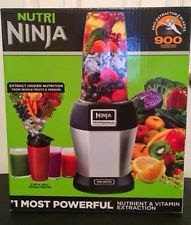
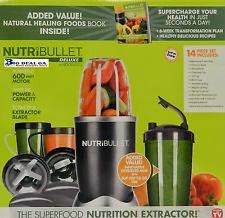
Homeland and Euro-Pro compete in the home blender market. Homeland sells three Nutribullet products: Classic, Sport, and Pro.  Euro-Pro sells Ninja blenders, including the Nutri Ninja Pro, which is sold near Nutribullet blenders on retailers’ shelves.  Homeland challenged a comparison chart, “Nutri Ninja v. Nutribullet,” with lists of various features: “Nutrient & Vitamin Extraction,” “900 Watts,” “21,000 RPMs,” “Finer Consistency,” “Ice Crushing,” “Pulse Technology,” “Sip & Seal Lids,” and “Fits in Cupholders.”  The chart indicates that the Nutri Ninja Pro operates at 900 Watts, produces 21,000 RPMs, has ice crushing capability, has pulse technology, has sip & seal lids, and fits in cupholders, but that the Nutribullet does not.  Homeland alleged that each of these factual assertions was false as to each product in its line.
In addition, the Nutri Ninja Pro package says “# 1 MOST POWERFUL*,” which Homeland likewise contended was false. The asterisk corresponded to a small-print disclaimer on the bottom of the box, which states: “ *Based on wattage of single serve blenders and nutrition extractors MSRP under $100.”  (Here’s a related case against Euro-Pro for making a “More Powerful” claim with a similarly hidden small print limitation.)  Homeland also argued trade dress infringement.
Homeland sought a preliminary injunction.  On false advertising, Euro-Pro argued that the comparison chart covered only the Nutribullet Classic, since it was undisputed that three statements (900 watt motor, 21,000 RPMs, and “sip and seal”) were false if applied to the Sport and Pro.  The court agreed with Homeland that the comparison chart covered each Nutribullet model.  Nutribullet is prominently displayed on the packaging of all three, and is the dominant feature.  A consumer viewing the products would “naturally consider each to be a ‘NUTRIBULLET.’”  But the chart didn’t differentiate, with the effect of lumping them all together.
Euro-Pro argued that the products were displayed near each other, and that consumers would resolve the contradiction between Euro-Pro’s chart and the statements on a Nutribullet Pro box by concluding that the statement must refer to a different model.  Shifting the burden to the consumer to investigate was inconsistent with the Lanham Act’s consumer protection function, and was also unrealistic.  The parties agreed that the products were often sold alongside many other competing brands.  “[T]here is strong reason to doubt that a typical consumer would make a one-to-one comparison between the features of the parties’ products and then have the realization Euro–Pro envisions.” Having trusted the Nutri Ninja Pro statements and concluded that it was superior, they might not bother to seek out the Nutribullet models.
Euro-Pro argued that the chart only referred to the lower-end Nutribullet because Homeland’s trade dress claim only alleged infringement of the Classic trade dress, which uses a green background, unlike the Sport and Pro.  The court disagreed—the shared background color didn’t establish that the reference to Nutribullet in the chart would cause a consumer to understand that the comparison was limited to only one model.  Nor did the price differences between the under-$100 Nutri Ninja and Classic versus the over-$100 Sport and Pro clarify matters.  The price range, from about $90 to $130, wasn’t so great that the reference could only be to the Classic.
Because the chart claimed to cover each Nutribullet model, it was literally false. The statements were plainly material.  “Indeed, that the statements relate to key factors informing consumer decisions is evidenced by the fact that Euro-Pro itself felt the features were significant enough to consumers to highlight prominently in comparing its goods to those of its competitor.” And given the direct competition, “there is little basis for doubt that Homeland is likely to be injured as a result of the false statements in the form of diverted sales or diminished goodwill.”
Thus, Homeland was likely to succeed on the merits on the wattage, RPMs, and “sip & seal” functionality claims, though the record was presently insufficient on the other allegedly false statements on the packaging.
The court then found that Homeland showed likely irreparable harm.  Damage to goodwill qualifies as irreparable harm.  (No Herb Reed citation?)  Euro-Pro effectively accused Homeland of making inferior products, which self-evidently would tend to diminish consumer goodwill.  Plus, Euro-Pro’s claim that the Pro and Sport lacked features that Homeland’s packaging specifically claims to have “carries the implication that Homeland is lying about its product’s features, an assertion with obvious reputational consequences.”
The balance of equities and the public interest also favored an injunction.  The injunction didn’t require immediate recall and would allow Euro-Pro four months to liquidate its inventory and phase in new packaging.
No relief was warranted on Homeland’s trade dress claim, however. Homeland failed to show inherent distinctiveness or secondary meaning.  The packaging wasn’t inherently distinctive, which required a “design, shape or combination of elements [ ] so unique, unusual or unexpected in this market that one can assume without proof that it will automatically be perceived by customers as an indicator of origin” (quoting McCarthy).
Nutri Ninja

Nutribullet Classic
Homeland alleged that Euro-Pro infringed by copying “(a) phraseology (“Nutri,” “Pro,” “Extractor,” “Watts”), (b) layout of texts and pictorial elements, (c) selected orange lettering, and (d) most conspicuously, its depiction of a blender with an inverse container against a predominantly green background, showing a cornucopia of fruits and vegetables in similar position[s].”  Setting aside the vagueness of some of this description, “Homeland’s trade dress claim fails because most of the elements it contends comprise its trade dress are not, in fact, arbitrary or unexpected given the nature of the product.”  “Nutri,” “watts,” “extractor,” and “pro” all described or implied aspects of the product.  “Nor is the presentation of an arrangement of fruits and vegetables behind the blender arbitrary given that the product’s primary function is to create drinks by blending fruits and vegetables.”  The “inverse container” was just an image of the product itself, which, like other similar products, operates with the container upside down.  The green background wasn’t arbitrary given Homeland’s emphasis in its marketing on the nutritional benefits of the product.
Nor was there convincing evidence of secondary meaning.  Homeland’s only evidence was its claim to have spent “several hundred million dollars on advertising and promoting the NUTRIBULLET line of kitchen appliances and associated trade dress to single itself [out] as the producer of the NUTRIBULLET line.” But the effectiveness of the advertising is the key, and Homeland offered no evidence that its ads effectively created a secondary meaning for its trade dress, or even that its ads were focused on the packaging trade dress instead of promoting the Nutribullet products themselves.

Posted in http://schemas.google.com/blogger/2008/kind#post, trademark | Leave a comment

What does reputational harm mean? Lessons from Apple v. Samsung

Apple, Inc. v. Samsung Electronics Co., No. 12-CV-00630 (N.D. Cal. Aug. 27, 2014)
Others will doubtless have much to say about the patent-specific aspects of this case, but I want to talk about what the court said about the relationship between alleged injury to reputation from (patent) infringement and irreparable harm.  Apple won some patent infringement claims against Samsung and sought a permanent injunction, which requires a showing of irreparable harm with a “sufficiently strong causal nexus” to the infringement.  Without the causal nexus, the patentee will suffer the same harm with or without an injunction.
Apple argued that Samsung’s infringement would cause it irreparable damage to its reputation as an innovator, similar to the harm suffered by the patentee in Douglas Dynamics, LLC v. Buyers Products Co., 717 F.3d 1336 (Fed. Cir. 2013). Apple also argued that it would suffer irreparable harm from sales-based losses.
The court first brushed aside Apple’s contention that its allegations of reputation-based harm ought to excuse it from showing a causal nexus with the infringement, since irreparable harm to the patentee’s reputation “necessarily” flows from infringement. The Federal Circuit has made clear that a causal nexus is always required, since it’s actually part of establishing irreparable harm.  We want to distinguish irreparable harm caused by infringement from irreparable harm caused by “otherwise lawful competition,” with reputational harm as well as other types of harm.  “For example, it is possible that Apple’s reputation as an ‘innovator’ could be harmed if Samsung’s noninfringing features are perceived as innovative, but that would not justify an injunction.”
So, Apple argued that an injunction was necessary to avoid irreparable harm to its “reputation and brand.” Samsung’s infringement allegedly harmed Apple’s reputation “by tainting Apple’s reputation as an innovator, by leading customers and competitors to believe that Apple is not entitled to enforce its patent rights (even when it prevails on its infringement claims), and by disrupting Apple’s attempts to maintain exclusivity over its patented inventions.”  While the court found that Apple established that it had a reputation for innovation among consumers that could be the subject of damage, that wasn’t enough. 
Apple argued that the appearance of its patented innovations in “competing and allegedly inferior products” showed harm, along with its reputation for enforcing its IP rights and its general refusal to license its patents.  Douglas Dynamics involved similar factors, and the Federal Circuit found irreparable harm, but that case didn’t require a finding of irreparable harm whenever those factors were present.  Rather, Douglas Dynamicsrejected a district court’s refusal to find irreparable harm where there was no consumer confusion between the patentee and the infringer.  The Federal Circuit concluded that harm to a company’s reputation can occur “even absent consumer confusion.”  But it didn’t create a per se rule in cases where the patentee is an innovative company (which would be at odds with eBay/Winter).
As to the presence of patented features in competing products, Apple argued that its reputation for innovation was damaged when “customers [find] the same ‘innovations’ appearing in competitors’ [products],” including products considered less prestigious and innovative, and that the harm was particularly acute for the two patents Apple practices.  Anyway, even for the unpracticed patents, Apple continued to sell products that competed with infringing Samsung products.  But Apple didn’t show irreparable reputational harm due to Samsung’s infringement.  There was “limited” evidence of actual injury. While the evidence showed Apple’s reputation for innovation and its fierce competition with “follower” Samsung, that evidence didn’t show Apple’s reputation suffered.  There was no evidence that consumers have begun to question Apple’s role as an innovator or have difficulty differentiating Samsung and Apple products due to the infringing features.  
Indeed, Samsung persuasively argued that Apple’s reputation was extremely robust (as that of many famous brands is), making it unlikely that Apple would suffer irreparable harm due to infringement of only three patents.  Other evidence indicated that Apple’s reputation derived from products and features other than the three patents at issue. In fact, “Apple executives testified that highly publicized problems with its hardware and software have had little or no effect on Apple’s reputation.”  That demonstrably robust reputation made irreparable harm less likely.  Further, Apple didn’t show harm stemming from consumer association of Apple’s patented innovations with Samsung’s allegedly “less prestigious” products. The record indicated that Samsung’s products were also reputable, in contrast to the the infringing products in Douglas Dynamics, which were of substantially inferior quality to those sold by the patentee. (I’m still confused about this patent dilution theory, by the way.) 
In addition, Apple did license [redacted] to competing smartphone companies, while the patentee in Douglas Dynamics had never licensed the infringed patents, “so it was reasonable to conclude that an injunction would prevent those features from appearing in competitors’ products and eroding the patentee’s reputation for innovation.” By contrast, Apple’s claim to harm to its reputation as an innovator would be undermined by the presence of the patented features in licensed non-Apple products even with an injunction.  These licenses were the result of litigation settlements/patent pools etc., unlike the Samsung infringements here, but “[c]onsumers are unlikely to understand that certain features appear in competing products due to licenses as opposed to unauthorized infringement.” The licensing made any consumer perception of exclusivity unlikely, regardless of its reasons.

Nor did Apple show a causal nexis between the specific patents at issue and the alleged harm.  The patents at issue covered three features in complex phones containing many different inventions.  A causal nexus requirement may more easily be satisfied with relatively simple products, but here the products were “extraordinarily complex and multi-featured.”  There was not much to show that Apple’s reputation as an innovator was related to the patented/infringing features; Apple didn’t even practice one of the patents.
Apple also argued that, without an injunction, it could lose its reputation for enforcing its IP rights.  “Apple provides no evidence that smartphone consumers make purchasing decisions based on Apple’s reputation for enforcing its intellectual property rights.”  Further, Apple is a vigorous IP enforcer across the country, and it didn’t show a causal nexus between these three patents and any perception of slack IP enforcement.  (Rather the contrary, I’d imagine.)
The court then found that lost market share and downstream sales didn’t entitle Apple to an injunction. The parties’ competition affects downstream sales because of “ecosystem” effects, where one company’s customers will continue to buy that company’s products and recommend them to others.  Being forced to compete against infringing products can be irreparable harm, so the parties’ direct competition weighed in favor of finding irreparable harm. But Apple still needed to show a causal nexus between harm and infringement.  Samsung heavily criticized Apple’s conjoint analysis purporting to show consumer demand for the patented features (e.g., its implausible conclusion that the patented word correction feature was worth $102 for a $149 phone), and pointed out that none of the patented technologies appeared in an independent review of online smartphone advertising.  So Apple didn’t meet its burden of showing a causal nexus. 
The court also addressed an issue that comes up in Lanham Act cases: if a jury ultimately awards damages, does that mean that no injunctive relief is allowed because the harm is demonstrably reparable with money damages?  No, the jury’s ability to put a number on the harm Apple suffered doesn’t necessarily mean that number captured the full extent of Apple’s harm, including irreparable harm stemming from sources other than lost sales (e.g., market share).  There is, however, an inherent tension between showing the likelihood of market harm and its incalulability.  Comment: While one approach would be to resolve that tension by finding that market harm isn’t irreparable, courts haven’t been willing to say that outright even if some cases achieve that practical result. 
Ultimately, Apple failed to prove that the infringing features drive consumer demand for the accused products. 
Query: How would this analysis work in a design patent case, where damages are assessed based on the entire product?  If a patentee is entitled to the profits from the entire article, is it also entitled to measure irreparable harm by the sales potential of the entire article?  If not, why not?
Turning to the other injunctive relief factors, the court considered whether Apple’s alleged harms can be quantified.  Other cases have found damages inadequate for lost reputation, but they all involved evidence.  Here, Apple didn’t offer evidence that its reputational harm couldn’t be remedied.  (I haven’t reviewed the records of the cited cases, but I wonder how truly evidentiary that evidence was.)  However, Apple did offer evidence that it couldn’t completely quantify the ecosystem effects of purchases of infringing phones. Thus, lost sales would be hard to quantify and remedy with damages. But that still didn’t show a causal nexus between infringement and harm. Irreparable harm remains an independent requirement for an injunction; thus, to award an injunction here would “ignore the Federal Circuit’s warning that a patentee may not ‘leverage its patent for competitive gain beyond that which the inventive contribution and value of the patent warrant.’”
The ease of designing around/removing the infringing features showed that the balance of hardships favored Apple. The public interest favors the enforcement of patent rights, but also product choice.  The narrowness of Apple’s proposed injunction here meant less threat to product choice, and Samsung’s design-around remedy might spur innovative alternatives to the patented features.  Thus, the public interest favored Apple.
Weighing all the factors, a permanent injunction was inappropriate.

Posted in design patent, http://schemas.google.com/blogger/2008/kind#post, patent | Leave a comment