Court applies Lexmark to TM case, in the alternative

Ahmed v. Hosting.com, 2014 WL 2925292, Nos. 13–13117, 14–10026 (D. Mass. June 27, 2014)

This isn’t a difficult case, but it represents the first move towards applying Lexmark to §43(a) in its entirety.  Only time will tell whether this will be an eBay v. MercExchange-like change in the way trademark litigation works, or a diversion.
Ahmed sued Hosting, Facebook, and some John Does for infringement of the marks “The News International,” “the Jang,” and “Geo.” (These marks apparently are in use in Pakistan by a company known as Jang.)  Hosting and Facebook moved to dismiss.  Ahmed claimed an interest due to trademark applications filed by a company called Axact, but alleged no connection between Axact and himself.  When Jang learned of Axact’s applications, Jang sued it in Pakistan, and the High Court of Sindh at Karachi issued an injunction ordering Axact to refrain from trying to undermine Jang’s trademarks; Jank also filed an application in the US for “The News International.”  Axact assigned its applications to Ahmed; the PTO refused registration.
Obviously there was no standing to sue for infringement of a registered mark. What about §43(a)?  The First Circuit has used a “reasonable interest” test, looking for some degree of commercial injury to the plaintiff.  Ahmed lacked standing under this test.  He claimed damages to his business and goodwill, but failed to allege “specific facts that establish any causal link between Hosting’s use of the mark and the alleged injury.”  He didn’t identify his type of business or his products and services, or how they were adversely affected by defendants’ use.  Nor did he allege his own use in commerce; the rejected trademark application wasn’t enough to establish a protectable interest.
In the notable part of the holding, the court commented that the Supreme Court “may have supplanted the reasonable interest test” in Lexmark.  Though the court acknowledged that the Supreme Court was interpreting §43(a), it found it “unclear” whether the holding extended to §43(a)(1)(A) false association claims.  Fortunately, it didn’t matter, since Ahmed failed to show standing under the Lexmark test too.  (This reminds me of early cases applying eBay only in the alternative.)  Lexmark requires “a two-step process: a zone of interests inquiry and a proximate cause analysis.”  The zone of interests covers those who “allege an injury to a commercial interest in reputation or sales.” Proximate cause requires “economic or reputational injury” that isn’t “‘too remote’ from the defendant’s unlawful conduct.”
Here, Ahmed’s allegation of damage to his business might “hint at” a commercial interest, but there weren’t enough facts alleged that, if true, would substantiate his assertions. A mere legal conclusion of injury wasn’t enough in the absence of facts establishing either a commercial interest in the mark or a commercial injury caused by the alleged infringement. (And here is where Lexmark might have some bite, depending on how it’s read: other plaintiffs may also have difficulty telling the story of how confusion harmsthem, even if it occurs.) 
Posted in procedure, trademark | Leave a comment

spy in the house of conservative IP thought

American Enterprise Institute Center for Internet, Communications, and Technology Policy
Copyrights and innovation: Understanding the debate
Moderator: Jeffrey Eisenach, AEI: 80% of market cap of Fortune 500 is from various forms of intangible property.  Different from traditional capital.  (RT: Well, it was never the mills alone; the knowledge of how to run them always mattered a lot.)  What is a free marketer to think?
Panelists:
Jerry Brito, Mercatus Center, GMU: Divides us because seen in moral terms: for/against property.  He doesn’t have strong moral © convictions, more pragmatic.  © is a tool that governs uses to promote a public good: access to expressive works.  Without ©, we’d have movies and poems, but fewer.  Same reaction as to other tools of gov’t to promote a public good: like cap and trade, or taxi medallions. As conservatives, we should apply the same critical thinking to © as to those things.  How do we know that the gov’t when setting the boundaries of the property right isn’t screwing it up?  A central planner has a difficult time getting the right combination of institutional rules.  Public choice: when you have a gov’t tool, interests will organize to ask for boundaries in their own favor. 
First © act after the Constitution was limited to maps, charts, and books.  Framers knew about music and art; just thought that they’d get enough of such works without the subsidy.  Today: fashion designs are excluded; is that the right balance?  First Act had 14 year renewable term, and required registration etc.  Today the term is life + 70. How do we know if that’s not enough or too much?  As conservatives, we should agree that retroactive term extension is bad.
Mark Schultz, George Mason University School of Law: Compatibility of © with free markets, in principle and as applied.
In principle, if you like free markets you should like ©.  As a property right, it supports liberty.  Property rights support independence: when people can own the fruits of their productive labor, they can support themselves and lead a truly productive existence. Owing your existence to others leaves you constantly in peril.  (Oh for a feminist reading of this.)  Finding willing buyers, not gov’t or powerful patrons = independence, allowing development of ideas freely and perfection of craft, flourishing culture. Property rights also free sphere of private action. Rights to exclude etc. help you live a private life: our own homes, phones, churches, businesses, and other private spaces facilitates economic freedom as well as cooperation, or simply being left alone as we choose.  © facilitates millions of mutually beneficial transactions.  Litigation is unfortunate exception to peaceful rule of productive cooperation. Investment/security enables private market where people engage in free expression for their own edification and entertainment (I thought it was for $ if © was the reason, but ok).  Third, property gives you a stake in self-government.  Copyright is an engine of free expression: helps generate the works that lead to reflective democracy and self-gov’t; leads to class of people who support free expression b/c they make a living from it.  Gov’t doesn’t do as well as property rights for liberty.
As applied: the institutional and legal details matter. ©’s scope is actually very narrow, protecting expression and not ideas.  It’s a force multiplier for multiplication of ideas, allowing them to proliferate freely.  © is a narrow property right, as popular entertainment shows.  (Why shouldn’t it be a broad one, given the above?)  Modern © as a product of lobbying: misidentifies the problem; it’s a problem of overregulation—© has too many price controls, compulsory licenses, and people lobby to protect themselves.  Statutory rate for music under 1909 act was 2 cents, and lasted 70 years. We’ve never had a free market in this part of the music industry. When you live under price controls, of course you’re going to lobby in self-defense.  To the extent © deviates from free markets, the problem is not enough property.  (But still a narrow one?  I am confused.)
Tom Palmer, Atlas Economic Research Foundation: Labor/desert theory—he’s skeptical of this. Hard work can lead to nothing deserving of reward if it’s not of value; hard to capture the value of a reputation. Personality theory: artist has claim against patron if art is put in ugly frame. Not a fan.  Utilitarian claims: we get more of something value.  He’s also skeptical. Did IP generate hip-hop? 
Skeptical of liberty claim. Property claim in a song is that Mark can say I can’t sing it. But that infringes on my liberty in a way that saying that you can’t go into Mark’s home and use his typewriter doesn’t. Restricts my body, my own equipment.  That’s not a silver bullet; people can innovate around all the stupid things policymakers do. © law is driven by rentseeking: term extension as clear example. Perpetual extension of right?
Doesn’t believe patent promotes innovation either, where patent mills are shaking down companies systematically. Forced to sign nondisclosure agreements after shakedowns.  Does not promote innovation.  Not much evidence it works in the arts either.  Asian meeting with lobbyists from Hollywood etc., trying to convince them that US IP law was essential to economic growth—but the one plausible thing they didn’t talk about was TM law, which is important because it protects against bad drugs. Not so much Hollywood and Silicon Valley—protectionism.  Software industry/Hollywood arguments about lack of US standard laws—harm is calculated on unreasonable basis, their market price rather than what would have been paid in reality. What we really need is good model for price discrimination, not US IP. Extending ©—there’s little evidence supporting that.
Stan Liebowitz, University of Texas at Dallas: Not sure why he’d view interference w/use of © work as any different than not being able to drive my car. Either way, it’s something you want to do that I don’t want you to do.  Free marketers do have surprising divergence on these.  Markets are better than government; should © be treated differently than real property? It always has been. But it’s not clear that it needs to be.  © is just property, relatively recent property.  People still look at it as new and created by gov’t. But we take for granted the fact that the gov’t protects property; without gov’t protection of property we’d have anarchy/chaos.  (Cf. claim a few sentences ago: markets are better than gov’t.) 
© as monopoly: fact is that © doesn’t provide any more monopoly than owning my car provides me a monopoly. Just owning a particular piece of IP. 
© as restriction of creativity: people want to use other people’s work, but you can create a work from scratch and then you don’t need to worry. If you want to borrow someone’s characters, ideas, or thoughts, you shouldn’t be allowed to use it for free any more than you should be allowed to use someone else’s land.  (Yes, he said ideas, though I presume that was a slip of the tongue, possibly a Freudian one.)
© as for corporations: Sure, some corporations benefit. Small guys benefit as well, just as in most other markets.
© as lasting forever: Crazy. Lasts longer than it used to, but it won’t reach infinity, and that wouldn’t necessarily be a bad thing anyway.
© as limiting free speech: No, it just eliminates plagiarism. (I’m embarrassed for AEI.)  You can use others’ ideas, just not their words.
Brito: There wasn’t much disagreement, though Liebowitz’s argument about the song/car ignores rivalry.  There’s still a song left over to sing.  Still broad agreement that © is property and generating innovation is good.  What we need to get deeper into is the contours.  Compatible with the free market, but what’s the difference between © and taxi medallions, also property?  Restricts people who don’t have them from driving; inheritable/transferable; lobby gov’t to protect it.  Sure they’re compatible with the free market, but why are we more skeptical of medallions than of ©?
Schultz: That’s not hard. No one created taxi medallions; they’re a gov’t entitlement. People create expressive works through expressive labor. (BUT NOT COPYRIGHT; people do create taxis too.) When one labors, all labor is ultimately productive intellectual labor when we create something new in the world.  We say people deserve to own copyrighted works because they contributed something and because they need to own that thing to live flourishing lives.  Ownership as rivalry—but all property rights impose burdens on others’ liberty. Your ownership of land makes me walk around it.  Proves too much.  Liberty is not “I do what I want”; grown up understanding is ordered liberty, reconciling competing claims/rights, and that’s what property/copyright does.
Palmer: Rivalrous v. nonrivalrous: good reason to have property, because it avoids conflict over rivalry. When there’s no property as in developing world, people fight over claims.  Property allows us to live together in peace. But that doesn’t carry over to someone in another country singing a song I wrote.  Comes down to a theory of labor as desert. People work hard in the fashion industry; how horrible they don’t get IP protection—why not?  We didn’t have © protection for foreigners until late in history, but Dickens made a bunch more in the American market than in Britain anyway through contracts.  Similar story with Tolkien, who didn’t register.  People could support him as a living by buying an authorized edition, and they did.
Free speech: Scientology showed that copyright claims can suppress free speech by controlling texts.
Liebowitz: you can sing a song without violating ©, but you can’t record it. (Um… Why is the lack of a private performance right/exception for certain noncommercial public performance ok to him, anyway?)  Nonrivalry: true, it doesn’t get used up, but the question is whether that should be crucial.  Let’s say your car depreciates over time, and not by use.  Should someone be allowed to use your car while you’re sleeping because there’s no interference with your use and no harm to you? 
Palmer: the option to use a car at any time is valuable because of the rivalry.  (E.g., you wake with an emergency!)  Embedded in sleeping is the possibility that you awake.  (Liebowitz really does insist you must sleep in his hypothetical, because that is what makes his hypothetical work, or not work, in that once the car is entirely nonrivalrous it is difficult to see why this magic car is indeed any different from copyright.)
Liebowitz: yes, there are ways around ©, but if you read the work you see British authors’ payment was less than they could’ve gotten by a considerable margin.  Dickens hated it.  Being first to market doesn’t work as well as it used to.
Atkinson (?): we snuck on to plane because it wasn’t full, and snuck into hotel because it wasn’t full, and snuck into movie because it wasn’t full: no harm because nonrivalrous?  Taxi medallion: gov’t could produce a medallion for moviemakers, and you could only make a movie if you buy the medallion. That’s not what we have here.
As a VC if they’re willing to fund a startup without IP. Vast majority are unwilling—no IP, no monetization.
Incentive component v. rights: basically no incentive effect on individuals like him—not writing for money. But has a pro writer friend who supports his family by writing; without © he wouldn’t be an author.  Rights: would be upset if someone were to take his book and publish it under their own name, though he doesn’t make money.  (Why “under their own name”?)  It’s still his property and he has a right.  Seems like a race to the bottom: who can agree to get rid of the most gov’t. He doesn’t like air quality and taxi medallions.  Isn’t less gov’t on © even more libertarian?  No, it’s not, because without it you end up with more gov’t and not less.
Jay Rosenthal, National Music Publishers Ass’n: Songwriters—in Nashville, about 30,000 standalone songwriters 20 years ago. Problems with © and piracy: only a couple hundred. We’ve lost a whole generation. Framers weren’t thinking about amateurs or YouTube—they were thinking about pro authors.  © has come full circle—it’s supposed to protect property, and he believes the empirical story in that a songwriter who gets paid will continue to write songs while one who doesn’t, including by being unsuccessful, will choose another job. You can support a © property interest while being critical of how gov’t has been bought.
We should repeal §115 compulsory license.  Led to incredible disparity of value/undervaluation of musical compositions.  Right now 9.1 cents per record; labels tried to get it down to 6. Labels aren’t subject to compulsory license.  Conservative theory should focus on compulsory licenses.  There might be argument for noninteractive public performance of sound recordings, but in other areas it’s time for the free market to work. We’ve never had a free market, and conservative theory could help here.
Jeff Bloom, Dignetwork: comparisons to car are oversimplifying. We wouldn’t be here for a seminar on trespass. The unique thing is not what © is but how you infringe.  © owners deserve compensation, but look at history of how content community has gone after tech offers very important lesson. They challenged the phonograph, the VCR, the DVR, the remote DVR, the commercial-skipping remote; won only against Aereo; courts recognized there has to be a balance. If the consumer is legitimately paying for content, shouldn’t you have the right to record it when you want? Skip ads? Watch remotely on iPad?  Impact on economics of consumer and tech are really important. 
Tom Sydnor: Would like to see debates moved past tired and inaccurate examples.  © is not like cap and trade.  Congress does not have to act like a central planner—it doesn’t prescribe outcomes/outputs. It’s a tradeable property right. If you create something with value, then you have control over how it’s disseminated. If you create something without value, your © is worthless. (Unless you use it to block someone else, of course.)
Framers protected books of plays and musical compositions—it’s not new.  Also, it was the first market focused copyright act, not the Statute of Anne which had a general compulsory licensing provision.  1790 Act didn’t have compulsory license; Framers trusted markets and we should follow their lead.  (But for life + 70, and with performance rights?)  Framers used international norm for term.  Our current norms for copyright terms are prescribed by treaty—Berne Convention, negotiated by Europeans, not by Hollywood.  US was not party to that treaty.  France & Germany wanted life + 70, so they had a departure from national treatment.  (Note the misdescription about life + 70 versus life + 50.) We can make this system work by ensuring that people have enforceable rights.
Neil Fried, MPAA: Constitutional principle behind © is that it is ultimately good for the consumer: rewarding people who make things gets you more of them. Creating a marketplace. Allows infinite variety of market relationships—consumers, producers, distributors can arrange their own relationships as tech changes. Working remarkably well.  100 online legal video services; consumers accessed 5.7 billion movies in 2013. © drives innovation to generate a marketplace. The notion that we need a balance with consumer welfare is a mistake.
Schultz: Push back against narrative that creative industries are at odds with innovation.  Creative industries’ content serve as a platform for innovation.  Motion pictures are licensing widely (if you can’t beat them…); so are publishers and music industry. Individual creators like George Lucas and James Cameron invest to create new tech to create movies we all enjoy.  There is no inherent conflict. 
Larry Spivak, Keynes Center: ability to make costless copy is part of the issue, but free is never the right price.  (I’m sure glad the AEI didn’t know that when it hosted this free event!) Our studies show that theft is not costless to society. We put out a paper looking at the giants of conservative and libertarian thought: Von Mises, Hayek, Friedman—© is completely consistent with laissez-faire economics and doesn’t create monopoly. Justice Dep’ts IP guidelines say IP doesn’t create monopoly.
Ryan [x] from Competitive Enterprise Institute: gov’t develops rules to limit property where it’s harmful, like numerus clausus. Makes property better with limits. ©: the goal is not to subsidize industry but to bring us closer to optimal amount of creation, because DRM and contracts aren’t good enough.  Q whether we should propertize something is fact-specific. Many things people create could be propertized but shouldn’t be because costs are too high/things work pretty well most of the time. With nearly perfect DRM, we might not need much ©, but right now it’s a legit tool.
[x], Federalist Society: Standup comic; jokes not subject to ©. Standup is harder than it looks—1 hour act takes a year to develop. Easy to steal. Rivalrousness: he thinks jokes are rivalrous because they can be told too many times. Comedy/creative work can depend on novelty/reaching the market first/association with your brand.  Don’t we have to consider the relationship with the public as we don’t do with other property?
Palmer: there’s a lot of innovation w/out IP and the burden of proof is on those who would demand propertization. 
Brito: comedy is an example of where you don’t need IP. There’s no dearth of comedy available. (Guy says it’s stolen; Brito asks what that means.) There are internal sanctions; we see a lot of innovative comedy without copyright. Does more copyright get us more expression remains a question.
Liebowitz: he hears the argument that people produce anyway. Maybe more songs are created now every year, but they’re garage band versus professionally created.  Burden of proof should be: every other market has IP.  Increased payments = increased supply. So the burden of proof should be on the anti-copyright.  IP supports professional careers; you get paid.
Shultz: Comedy markets are not bereft of IP; aspects are protected by © and TM. So there are ways of protecting intellectual labor. Sometimes norms can work, but two sad things: (1) sometimes when the system fails there are actual fights—that’s not a good thing. Property rights exist to stop violence. (2) They work with people with equal power, but people with more power get away with flouting the norms. Normative systems don’t always protect the weak against the strong.
Jared Myer, Manhattan Institute: Miley Cyrus owns her rights to her songs longer than if I cured cancer. Doesn’t that seem out of whack?  Retroactive extensions: are those ok?
Tom Sydnor: If © owners could get 20 years of exception-proof protection, no limitations or exceptions, idea and expression both, they would take that. © and patent differ fundamentally because scope of rights is radically different. Historical differences also matter. Rights of author approach has always mattered.  Not just a term picked out of a hat; differs from patent context.  (Actually the multiples of 7 approach historically applied to both, possibly arising from Biblical/apprenticeship heritage, as a great unpublished paper I once read argued.)
Eisenach: length of term issue—Walt Disney isn’t more likely to have created Mickey because the copyright term might someday be extended, but that’s the economic event we’re trying to affect. Instead it’s whether Disney continues to invest in things people value, which is enabled by ability to appropriate part of value created by Mickey.  (Um, that makes no sense. Why shouldn’t other people be able to acquire capital for their new works by using Mickey? You first have to decide that Disney is a better user of Mickey-related capital than any other possible producer, and that is really not a “free market” position at all.)
Atkinson (?): Nobody really cares if you can’t access Miley Cyrus.  Patents are different because we want to spur innovation and then open it up to other people, allowing others to develop derivatives. That’s very different than ©; we don’t care whether Miley Cyrus is open or closed from a societal perspective; by contrast there’s a big societal benefit from opening patents up after a short period.  (Whoa.  Also, again, my kingdom for a feminist reading; again this was a pretty direct quote.)
Liebovitz: we don’t often talk about it, but something underneath markets makes them work, and that something is government.  Gov’t is what we expect to be in place making sure the property right exists and functions.  It’s not the gov’t creating/interfering.  No easy resolution to this clash of perspectives.
Palmer: Would a VC invest in a firm without IP? No, because we have an IP system. A great deal of activity is response to the law, which should be surprising to no one. People do respond to incentives; we shouldn’t raze them, but should be skeptical of constant extension. Retroactivity was a violation of the rule of law. If you want a new incentive, do it going forward.  The industry capture that produced term extension is a good warning bell of the dangers here.
Claims made about innovation are often in a particular institutional setting. Aircraft patents: had a compulsory patent pool for a long time.  Same as no patent system at all. Hard to say there was no innovation 1970-1985. Same thing for art, books, etc. Maybe we get more.  The law should be about establishing clear rights that everyone should understand. Don’t screw around with it with extensions or retroactivity in response to concentrated interests. That’s why he’s a skeptic.
Schultz: Some of this is a reaction to the role of gov’t.  Heterodoxy: gov’t does good.  Work in developing world: a lot of free market advocates/libertarians in developing countries are not anarchists. They know anarchy and don’t like it. Gov’t is good/legit when it enforces property, contracts, rule of law. Smearing something with the gov’t brush doesn’t end the argument. We have to ask why we have the right, when should gov’t act. That’s when you look to the moral basis of the right.  That’s what distinguishes the taxi medallion from ©: people engaging in productive labor, living flourishing lives through their ability to control their property.  (Taxi drivers by contrast are apparently unworthy and do not perform productive labor.)
Term is a red herring, just prudential. Not a fundamental justification issue, but a matter of trade policy.  Reasonable argument for it as well as reasonable argument it’s too long.  We should have that argument after the effective term is longer than 5 minutes given inability to enforce.  (If it weren’t fundamental, then you should fully commit to the idea that © and patent, as property, should never end any more than property in a car/land.)  Empirical evidence for IP exists.
Brito: he was as shocked by the term argument as I was! Though for somewhat different reasons. He thinks © is obviously property and fosters innovation, but the contours of that right matter a lot. Term, whether you need registration, etc. Where we set the dial is the crux of the debate. 
Taxi medallions: the key distinction is that some on the right see it as property v. privilege—and © is absolutely a privilege.  Congress can, tomorrow, repeal copyright statute.  Congress cannot write a law that repeals property rights in your self or your personal property.  The real question is where to fix the limits.

Posted in http://schemas.google.com/blogger/2008/kind#post | Leave a comment

correcting false advertising before money changes hands isn’t enough

Helde v. Knight Transportation, Inc., 982 F. Supp. 2d 1189 (W.D. Wash. 2013)
This is mostly a wages case, but it provides a reminder that bait and switch advertising is generally actionable under consumer protection law.  Here, plaintiffs claimed a violation of Washington’s Consumer Protection Act based on representations allegedly made to them before employment about the pay rate available to them as long-haul drivers.  They alleged that Knight advertised a per mile pay rate that was higher than that actually paid and that they reviewed the advertisements and accepted positions in reliance thereon. Knight argued that there was no reliance, and that any misstatements were corrected during orientation and before plaintiffs accepted their first driving assignment.
The court found that a reasonable factfinder could conclude that the alleged misrepresentations were material and affected plaintiffs’ decision to apply.  Though neither plaintiff bringing the claim could remember, years later, the full amount of information in the ads, one remembered a claim that drivers could make up to 41 cents per mile.  “[I]t is reasonable to infer that, when looking for employment opportunities in a multi-employer environment such as line haul trucking, the effective pay rate would be a, if not the, material consideration.”  Knight could not escape liability for correcting misrepresentations during orientation:
By that time, plaintiffs had committed time and resources to the application and orientation processes and had abandoned their search for employment in order to pursue the allegedly fictitious benefits offered by defendant. Injury under the CPA includes time spent and expenses incurred in unwinding the deceptive and unfair statements. If plaintiffs can prove that defendant advertised jobs paying 33¢ per mile and subsequently reduced that offer once it got people in the door, the factfinder could reasonably conclude that the alleged misrepresentations forced plaintiffs to choose between attempting to absorb the time and expenses incurred while they start the job search anew or accepting less than what was originally offered in order to get a paycheck. Either way, injury to business or property causally related to the misrepresentations may be shown.
Posted in consumer protection, http://schemas.google.com/blogger/2008/kind#post | Leave a comment

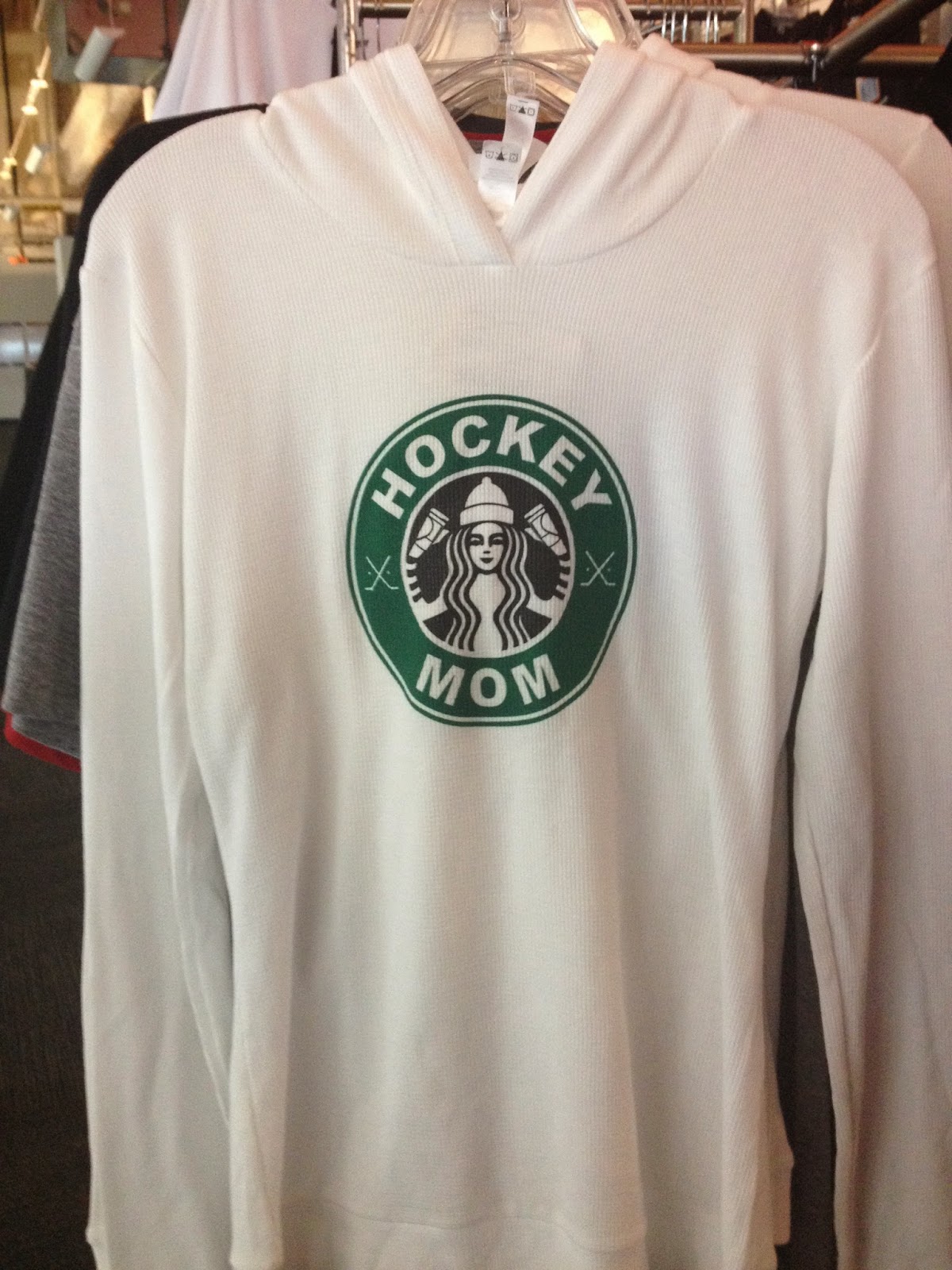
Hockey or coffee?

How about this “Hockey Mom” shirt in Starbucks style?

Posted in dilution, trademark | Leave a comment

Paint or baseball?

This Sherwin Williams T-shirt uses a logo that seems awfully familiar …. Dilution?

Posted in dilution, trademark | Leave a comment

Website statements aren’t trade dress for insurance purposes

Test Masters Educational Services, Inc. v. State Farm Lloyds, 2014 WL 2854536, No. H–13–1706 (S.D. Tex. June 23, 2014)
Test Masters offers test prep services.  It was involved in a series of lawsuits by and against third party competitor Singh.  In the underlying case here, Singh filed counterclaims alleging that Test Masters’ website purported to offer LSAT preparation courses across the country under the “Test Masters” name and mark, mimicked a map on Singh’s website, and made material misrepresentations in an effort to trick consumers into believing that Plaintiff’s services were associated with Singh’s.  State Farm agreed to defend the counterclaims, but when Singh dropped the accusation that Test Masters mimicked Singh’s map, it ultimately withdrew its defense because the absence of a trade dress claim meant there was no potential coverage under the advertising injury policy it provided Test Masters. This suit followed.
Texas uses the “eight corners” rule, under which the duty to defend considers only the pleadings, liberally construed, and the policy language, focusing on the factual allegations in the pleading rather than the legal theories.  Here, the only question for the court was whether the underlying complaint alleged infringement of “trade dress.”
Test Masters argued that Singh’s citation of §43(a) and allegations that Test Masters used a similar name, mark, and website constituted allegations of trade dress infringement.  But §43(a) covers more than trade dress, and statutory citation isn’t enough to trigger coverage.  The underlying complaint alleged that Test Masters “changed its website so that it was confusingly similar to Singh’s, purporting to offer LSAT preparation courses in every state,” and “represents on its website that it offers live LSAT classroom courses in 100 cities and in all 50 states,” and that its actions “as described above (in particular, [Plaintiff’s] use of the TESTMASTERS name and mark and testmasters.com domain name) are likely to cause confusion, mistake, or deception … and thus constitute trademark infringement and false designation of origin in violation of Section 43(a) of the Lanham Act.”
This wasn’t trade dress, which is a product’s total image and overall appearance. The complaint didn’t allege anything about any “look and feel” of the website.  (The court mistakenly says “inherently distinctive” here but of course acquired distinctiveness can also—indeed only, in this case since website design would be product design—produce protectable trade dress.) “Absent some allegation of aesthetic similarity to another’s advertisement, a claim that defendant infringed a trademark does not itself comprise a claim for trade dress infringement.”  Allegations that the website was “confusingly similar” to Singh’s because Test Masters copied some of Singh’s course locations and purported to have taught “thousands of LSAT students” said nothing about the distinctive aesthetics of Test Master’s website as compared to Singh’s.  Advertisement of the locations in which one actually does business isn’t trade dress, so falsely advertising locations wouldn’t be copying trade dress. And even if a list of locations where courses are offered did constitute trade dress, the underlying counterclaims didn’t allege that the locations were copied—rather they alleged false advertising of Test Masters locations.
State Farm was entitled to summary judgment on Test Masters’ claim for breach of contract.
Posted in http://schemas.google.com/blogger/2008/kind#post, insurance, trademark | Leave a comment

multiplicity of products and labels makes class unascertainable

Bruton v. Gerber Products Co., No. 12-CV-02412, 2014 WL 2860995 (N.D. Cal. June 23, 2014)
Bruton brought the usual California claims against Gerber for mislabeling certain food products intended for children under 2. She challenged Gerber’s nutrient content claims and failure to label certain products labeled with a “No Added Sugar” or “No Added Refined Sugar” with a disclosure statement warning of the high caloric value of the products.  The court denied class certification on ascertainability grounds.
A class is ascertainable if it is defined by “objective criteria” and if it is “administratively feasible” to determine whether a particular individual is a member of the class.  Bruton proposed to certify a class of buyers of foods within Gerber’s “2nd Foods” category.  There were seven product sub-categories and multiple flavors within each sub-category.  In total, of the 93 varieties of baby food available in the 2nd Foods product category, 69 products were part of the proposed class.
The court first rejected Gerber’s argument that the class was unascertainable because Gerber doesn’t track who buys its products.  That may be the law of the Third Circuit, but not the Ninth. See Carrera v. Bayer Corp., 727 F.3d 300 (3d Cir. 2013) (rejecting affidavits from class members as means of identification where defendant kept no purchase records). “In this Circuit, it is enough that the class definition describes a set of common characteristics sufficient to allow a prospective plaintiff to identify himself or herself as having a right to recover based on the description.”
However, labeling variation proved a fatal flaw. Gerber sold multiple versions of the same products during the class period. Most, if not all, consumers likely discarded the product packaging, forcing them to rely on memory alone, and it was too much to ask them to remember not just whether they bought 2nd Foods products within the class period, but what the flavors and labels were.
Of the 69 products at issue, 66 were labeled both with and without challenged labels during the class period.  Because of production and distribution realities, “a new label produced by Gerber may appear for sale on a store shelf anywhere between three and thirteen months after the new label is approved.” Gerber submitted evidence that at some times during the class period, there were two different labels simultaneously for sale in one store ,”such that on a given day one consumer may have purchased a product with a challenged label statement while another purchaser of the same product did not.” The court—Judge Koh—had recently certified other consumer classes, where all products in the class definition contained the allegedly problematic statements throughout the class period, but this was different.
While self-identification with affidavits can be enough for ascertainability, sometimes it isn’t.  In a case seeking certification of a class of consumers who had smoked twenty “Pack–Years,” or at least 146,000, Marlboro cigarettes over the class period, which spanned several decades, the court reasoned that this asked too much of class members’ prospective members’ memories. “Swearing ‘I smoked 146,000 Marlboro cigarettes’ is categorically different from swearing ‘I have been to Paris, France,’ or ‘I am Jewish,’ or even ‘I was within ten miles of the toxic explosion on the day it happened.’”  Likewise, another food case involving multiple products and labels was found unascertainable because the defendant “produced and sold multiple versions of each of the contested product labels during the class period, some bearing the allegedly misleading statements and others not.”  Consumers would have difficulty remembering whether or not they bought a product with an allegedly misleading label statement.
So too here.  Identifying class membership required consumers to remember whether they purchased a 2nd Foods product in a qualifying flavor; whether the product was in the appropriate packaging; and whether the product was labeled with a challenged label statement. But because Gerber sold more flavors of 2ndfoods than included in the class definition, and because Gerber’s flavors were very similar in name, it was likely that consumers would have difficulty remembering whether or not they purchased a qualifying product. (For example, Apples and Bananas with Mixed Cereal or Apples and Cherries flavors were included, but Apple Peach Squash, Apple Berry with Mixed Cereal, and Apples and Chicken flavors were not.)
The multiple different labels further complicated the issue.  “Nearly all of the Gerber 2nd Foods products included in the class definition did not contain any challenged label statements during a portion of the class period.” Some of the labels were changed to remove challenged statements; some statements were moved from the front of the package to less prominent places.  The Apples and Cherries flavor, for example, had six different labels during the class period, one with a challenged statement on the top, five with challenged statements on the top and front, and one with no challenged statements.  That made accurate recall even less likely.
In sum: “[t]he number of products at issue in this case, the varieties included and not included in the class definition, the changes in product labeling throughout the class period, the varied and uncertain length of time it takes for products with new labels to appear on store shelves, and the fact that the same products were sold with and without the challenged label statements simultaneously make Plaintiff’s proposed class identification method administratively unfeasible.” Under these circumstances, affidavits would be unreliable, especially since Bruton sought money damages and the availability thereof might “encourage consumers to submit affidavits even though they cannot remember which products they purchased.”
Posted in california, class actions, consumer protection, http://schemas.google.com/blogger/2008/kind#post | Leave a comment

Class can be certified when product is allegedly worthless

Ortega v. Natural Balance, Inc., 2014 WL 2782329, No. CV 13–5942  (C.D. Cal. June 19, 2014)
The court granted class certification for a California class of consumers of Cobra Sexual Energy, a dietary supplement containing various herbs, extracts, and other plant-based materials, which was allegedly falsely marketed as having beneficial health and aphrodisiac properties and being scientifically formulated to improve virility.  Plaintiffs alleged the usual California claims.
The court found the class ascertainable by objective criteria: whether they purchased the products during the class period in California for personal use (and weren’t persons connected to Natural Balance). Only those who lost money buying Cobra were included, so the class was defined as people who’d have standing.  The fact that there were no purchase records was irrelevant; “identifying individual class members is not germane to ascertainability.”
Typicality: Natural Balance argued that the class representatives’ claims weren’t typical because they had unrealistic expectations of the product and unreasonably interpreted the packaging.  But the particulars of their understanding didn’t make them atypical: “even if each Plaintiff and class member had somewhat varying conceptions of the results he could expect from a product marketed as virility-enhancing, each had the same marketing-induced expectation that the product would be virility-enhancing.”  Plaintiffs alleged that it wasn’t.  That made their claims typical, except as to class members whose claims would be barred by the statute of limitations. They couldn’t add to the period by arguing delayed discovery that tolled the limitations period, because that would add “a significant dimension in which the named Plaintiffs have no personal interest.”
Common issues predominated: falsity/misleadingness of the packaging itself, which would be determined based on a reasonable consumer standard and not on an individual basis.  “Plaintiffs’ other evidence—consumer surveys and expert testimony regarding the inefficacy of Cobra’s ingredients—is also applicable on a class-wide basis.” 
Classwide causation could be presumed upon a showing of materiality.  The allegedly misleading statements were nearly all of the statements on Cobra’s packaging, and it strained credulity to think that a manufacturer would put only immaterial statements on its packaging.  Thus, if plaintiffs chould show misleadingness, they could likely show materiality as well; certainly this couldn’t be ruled out as a matter of law.  It could be determined classwide because the packaging was uniform over the entire class period.
Natural Balance argues that individual questions predominated because plaintiffs couldn’t show that everyone was misled by the exact same statements—the named plaintiffs allegedly relied on the package’s image of a cobra snake and not on other statements.  But both plaintiffs testified to other statements on which they relied.  And the presumption of reliance and causation could moot any issue about which component any individual plaintiff read or remembered.
Nor did individualized damages defeat predominance.  Even if that could, by itself, defeat certification—which it can’t—plaintiffs had a tenable theory of how to ascertain classwide monetary relief.  What they spent on Cobra could be readily calculated using Defendant’s sales numbers and an average retail price.  Natural Balance argued that this didn’t take into account the actual value of the product to each individual. But plaintiffs argued that the product was valueless because it provided none of the advertised benefits and was illegal, entitling them to recover the full price.  Natural Balance’s “theoretically available defense” to this relief didn’t render damages an individualized issue that predominates over the common issues. 
The challenge of identifying class members was also insufficient to make individual issues predominate.  “[G]iven that one of the purposes of the class action procedure is to facilitate small claims, that it is likely Defendant’s aggregate liability could be reliably determined without imposing excess liability, and that all parties would be bound by the litigation, individual issues arising out of identifying class members do not predominate over common issues and the class procedure does not unfairly prejudice Defendant.”
Unsurprisingly, the court also found superiority.  Small individual claims would be difficult, wasteful, and unlikely.  Overall, certification was appropriate.
However, the court did reject two unusual features of the proposed notice—that Natural Balance be required to pay for it, and that it also be required to include the notice within Cobra’s packaging.  Nothing justified departing from the ordinary plaintiff-pays rule, and requiring notice within Cobra’s packaging “would be akin to issuing a mandatory injunction, a drastic step not warranted by the record before the Court.”
Posted in california, class actions, consumer protection, http://schemas.google.com/blogger/2008/kind#post | Leave a comment

UK ASA finds ad for journalistic Free Speech Network misleading

Tragedy or farce?  I’ll take “couldn’t happen in the US” for $500, Alex.

Posted in advertising, commercial speech, http://schemas.google.com/blogger/2008/kind#post | Leave a comment

Nonprofit’s former chapter has false advertising, not TM, claims against parent

Alzheimer’s Disease Resource Center, Inc. v. Alzheimer’s Disease and Related Disorders Association, Inc. 981 F. Supp. 2d 153 (E.D.N.Y. 2013)
Plaintiff ADRC is the former Long Island chapter of defendant Association, dedicated to fighting Alzheimer’s.  In 1998, the parties entered into a “Statement of Relationship” (SOR) contemplating that they could part ways and providing that the distribution of chapter assets would be subject to binding arbitration in case of disagreement.  ADRC alleged that, over time, the Association breached the SOR by, among other things, permitting the Association’s NYC chapter to fundraise on Long Island.  They disaffiliated in 2012, and ADRC demanded arbitration, seeking to retain funds previously raised for the Association. 
ADRC sued the Association for unfairly competing with ADRC by sending out 15 mass mailings under the name “Alzheimer’s Association—Long Island Chapter” (ADRC’s former operating name) and for breaching an agreement between the parties by using donor information it previously obtained from the ADRC prior to the disaffiliation.  ADRC alleged that the Association lacked any presence on Long Island when the letters were sent, and that the Association forged the signature of ADRC’s leader in those mailings. Multiple donors allegedly mailed checks to the Association based on the mistaken belief that the donations were going to ADRC.
Lanham Act claim: the court dismissed the §43(a)(1)(A) aspect of the claim because ADRC conceded that it had no valid trademark in the name “Alzheimer’s Association—Long Island Chapter” or a related expression.  However, §43(a)(1)(B) was still available.  (This strikes me as an excellent use of channeling principles.  It’s true that the name is part of the confusion, but ADRC abandoned the name.)  The court found that ADRC plausibly alleged that the use of confusing addresses, coupled with the inclusion of ADRC’s leader’s name on the mailings, had the capacity to deceive a substantial portion of the intended audience about the recipient of their donations.  ADRC alleged the identity of one such donor who was actually deceived.  The Association argued that ADRC failed to allege materiality, but the identified donor indicated that she “felt deceived” by the mailings.  Facts regarding the identity of other donors were peculiarly within the knowledge of the Association, meriting discovery.
The NY GBL §349 claim: ADRC successfully pled a claim for deceptive acts and practices. “Donors are the consuming public for charitable fundraising activities and are deceived, when a check intended for one charity is cashed by another.” There was a public interest in knowing who was receiving charitable donations.  Punitive damages could be available on this claim, though not on the others.
There was no common law unfair competition claim, because there was no protectable mark at issue, nor was there misuse of a trade secret in using publicly available information like a name or ADRC’s address. “In the Court’s view, the name of an organization’s executive and address does not neatly fit within the categories typically associated with a common law claim for unfair competition.” A conversion claim failed because there was no specific identifiable fund to which ADRC was entitled. And tortious interference with prospective economic advantage failed because there was no sufficiently alleged “business injury,” as required.  ADRC alleged injury in the form of lost donations, but didn’t particularize the damage to its relationships with its donors.  And there was no fraud because ADRC didn’t reasonably rely on any misrepresentations; allegations of third party reliance were insufficient under New York law.  The court also dismissed claims for breach of contract based on the Association’s continued use of donor information after disaffiliation.  The Association’s contractual obligations under the SOR ceased after disaffiliation, and what counted as assets—including donor information—was expressly reserved for arbitration.  Likewise, even if the donor lists constituted a trade secret, ADRC failed to allege that the information was used “in breach of an agreement, confidential relationship or duty, or as a result of discovery by improper means,” or in such a way as to constitute common law unfair competition.
An unjust enrichment claim, however, survived (based on the donations).
Posted in http://schemas.google.com/blogger/2008/kind#post, trademark | Leave a comment