Securities law and advertising law

Ann Lipton (Duke) has a post up on the import of Halliburton II, a securities case about the fraud on the market doctrine, with at least potential relevance to advertising law.   Another of her posts considers the securities law distinctions among facts, opinions, and puffery.   (Cert in the case she discusses was in fact granted.)   Lanham Act cases distinguish between fact and nonfact.  While opinions are actionable under securities law and Lanham Act cases generally put opinions on the nonactionable side of the line, the differences aren’t really as great as they might seem, as Lipton details, because courts call so much in securities an opinion.   Also, the FTC and state consumer protection laws are more willing to recognize liability for “opinions,” using reasoning similar to the defamation standard, which also allows liability when an opinion implies the existence of undisclosed defamatory facts.  The classic situation in advertising law is when the speaker claims special expertise in an area and the audience is not sophisticated in that area, and those mostly come up in FTC cases, or in state consumer protection law cases where a pitch is individualized and thus purportedly customized for the individual’s needs.

Posted in advertising, http://schemas.google.com/blogger/2008/kind#post, securities | Leave a comment

Glass houses: incidental use of sculpture in photo is fair

Neri v. Monroe, No. 11-cv-429 (W.D. Wis. Feb. 26, 2014) (magistrate judge), on remand from 726 F. 3d 989 (7th Cir. 2013)

From the outside, this doubtless expensive dispute looks like it resulted from an artist whose outrage over a (contested) failure of attribution converted to a doomed copyright fight, to no one’s benefit except that of the ever-growing law of fair use.  After a trip to the 7th Circuit finding plaintiffs’ copyright registration valid, the court on remand considered fair use and other defenses and found them dispositive.

Facts set out by the court: plaintiff Quincy Neri is a glassblowing artist who worked with another local artist (and defendant until he settled), Fritz Schomburg.  The other plaintiff co-owns the two copyrights at issue. Melinda Monroe and codefendant Steven Larson own Architectural Building Arts (ABA), a general contractor design/build firm. Defendant Leslie Sager is an interior designer who was employed by ABA during the condominium remodel at issue and is also an adjunct faculty member of the University of Wisconsin-Madison Design Studies program. Defendant Eric Ferguson is a professional photographer.

In 2008, Linda Hughes hired ABA to remodel her condo and remove a large mural from the dome of her entryway, replacing it with more modern artwork.  This required rebuilding the ceiling. Hughes hired an interior designer, Amy Radspinner, to assist with the remodeling and to handle decorating. Radspinner contacted Neri; Neri and Schomburg worked together to create a composition comprised of about 60 individual blown glass pieces that eventually were installed onto the remodeled ceiling of the entryway. 

There’s a factual dispute about Neri and Schomburg’s hiring that doesn’t matter to the outcome; in addition, the court mentions that the court of appeals rejected the argument that Schomburg was the true author; in what seems to have been a lightly-considered aside that has new resonance after Google v. Garcia, the court of appeals commented, “To the extent that Schomburg added features in the course of blowing the glass, he has a separate claim of intellectual property in a derivative work, but this does not detract from Neri’s rights.”

ABA hired a professional engineer to help design the ceiling and met several times with Schomburg (sometimes accompanied by Neri) about the design and construction of the ceiling in order to ensure it would support the weight of the glass and complement the artwork aesthetically.  Neri made suggestions about various materials that could support the weight, but she didn’t design, engineer, or build it.  ABA’s design team, including Sager, worked with Schomburg to find the best lighting for the artwork, which was ultimately installed in a custom-designed alcove.  When the pieces were mounted, the lighting cast spiral shadows onto the ceiling and walls.  Both Neri and Schomburg considered the spiral shadows to be an integral feature of the artwork. Neri testified that she could not reproduce the artwork without reproducing an exact copy of the ceiling. 

Consistent with industry practice, Monroe got Hughes’ permission to take photos of the remodeling project to document ABA’s work, to advertise ABA’s services and to apply for industry awards on ABA’s behalf. Ferguson took a series of photographs of the interior of Hughes’s condominium, including two photographs of the completed entryway and ceiling. Neither photograph depicts all of the glass pieces, although some pieces appear in both.  Ferguson’s goal was to showcase the design work and changes, and the photos show the glass pieces, the barrel-vault ceiling, a waterfall designed by ABA, the furniture, other art and decorative accessories.  ABA paid Ferguson for unlimited usage rights in the photos.

ABA posted some photos, including the two depicting the entryway, in a newsletter and on its website, and submitted them as part of its application for “Contractor of the Year” awards sponsored by the National Association of the Remodeling Industry.  These awards are what you probably think they are; they aren’t art awards.  ABA got two NARI Contractor of the Year awards for its interior design and its construction work at the Hughes’ condominium, including its reconstruction of the entryway’s ceiling and its fireplace redesign (and others for its work in the bathroom specifically).  ABA didn’t claim to have made or to own the glass in the photos, nor did it sell the photos.

With Ferguson’s permission, Sager posted a photo of the entryway ceiling on her own website, along with two “before” images showing the dome that had been replaced, with the text:

A LITTLE BIT OF GLASS

A large dome with a painting of the four seasons of Wisconsin by Richard Hass [sic] did  not appeal to the new residents of this condominium.  They were able to donate the painting and dome to the Madison Children’s museum for a tax deduction.  With the help of Amy Radspinner, I converted the dome into a smaller barrel vault with an integrated cover to conceal the LED spot lights. Local Glass blower Fritz Schomburg, designed a series of large aquatic glass pieces to hang from the vault in keeping with the lake view.

During a field trip to the Hughes residence with students from a class she was teaching at the University of Wisconsin, Sager took a photo of her students looking at the vault ceiling where the artwork was installed.

Again, the photo captured only a portion of the 60 glass pieces. She posted the photo on the University of Wisconsin’s Design Studies website “for the purpose of showing students engaged in an enrichment experience and not for any specific reason related to the glass artwork.

According to Neri, it was not until she found the photos on ABA’s website and discovered that the artwork had “won” NARI awards that she began to think of it as anything but “just another project.” (The court rejected her claim that the sculpture “won” an award for which she received no credit, since NARI awards are not art awards.)  After she sued, ABA and Sager removed the allegedly infringing photographs from their websites.

Fair use: first, the court noted that factor one is the “heart of the fair use inquiry,” citing Cariou. [Compare the later citation to Harper & Row saying that Factor 4 is the most important.]  Transformativeness requires change in the work or the context such that the plaintiff’s work is transformed into a new creation.  Ferguson’s photos were “highly transformative.” The sculpture was 3-D “art for art’s sake…. Its purpose, presumably, is to beautify the Hughes condominium and to provide visual and aesthetic pleasure to those who view it as they walk under it through the entryway.” The photos were 2-D, realistic photos of an interior with a “commercial aesthetic.” “Their purpose is not to beautify but to document (albeit to document the pleasing aesthetics and transformative power of the project as a whole) and to inform the public about the remodeling work performed by ABA on Hughes’s condominium, in order to showcase the firm’s design and construction work.”  Ferguson wasn’t trying to photograph the sculpture itself or to create an “artistic” photo that “capitalizes on the sculpture,” but rather he attmpted “to show as accurately and realistically as possible what the condominium’s entryway–the entire entryway–looked like after it was redesigned and rebuilt. Ferguson’s intended and actual photographic subject was the room, not the ceiling sculpture.”  (One way of reading this is that fair use is substituting or supplementing the incidental use exception for works caught in photos or video of a more general subject.)  The partial images of the sculpture were given a new purpose, meaning, or message in the photos, given that “the medium, composition, scale, character, expression and intended use of Ferguson’s photographs are completely different from those of the sculpture itself.”  This factor weighed heavily in defendants’ favor.

While the sculpture was creative, and that factor favored plaintiffs, it doesn’t help. 

Factor three: in evaluating the amount used, the court noted that the sculpture was mounted onto another work—the new barrel-vaulted ceiling—and that it was impossible to take pictures of the ceiling without also capturing images of the sculpture.  There’s no per se rule about the amount that may be copied if the amount is necessary to the purpose and character of the use. Given defendants’ proper aim to publish photos of their own work, and that neither picture shows all 60 glass pieces of the sculpture, but rather shows portions “along with other equally important features of the redone hallway, including the waterfall, furniture and decorative accessories,” the amount copied was reasonable. And here the court quotes the court of appeals, which agreed that the copying was “incidental” and necessary to show what ABA had done.  

Plaintiffs argued that ABA could’ve just had Ferguson take photos before the glass pieces were installed.  He could have done that, but ABA redesigned and rebuilt the ceiling and the lighting specifically to accommodate and illuminate the sculpture.  (Plus there’s a “persuasive argument that the ceiling design was so integral to the artwork that ABA is a joint author of the work,” but that’s unnecessary because of fair use—add another issue to the things fair use can avoid decisions on!)  As a result, “ABA was entitled to take photos of the ceiling depicting how the ceiling served the purpose for which ABA had designed and built it.”  A photo of the finished installation, with the entire entryway in place, was necessary for ABA to show its capabilities to potential clients and to apply for industry awards.

Also, the medium change was relevant to factor three, since it went to substitution (which seems like factor four, but ok): “no one interested in viewing or purchasing a glass sculpture … would be satisfied by mounting a copy of one of Ferguson’s photographs to his or her ceiling.”  Neri acknowledged that the photos didn’t accurately depict the color of the glass or the shadows cast by the special lighting.  This qualitative difference, plus the incidental status of the glass pieces to the true subject of the photo, the entryway, made factor three weigh in defendants’ favor.

Market effect: “the single most important element of fair use.”  (Except for transformativeness.  Amongst the important factors …)  Courts must consider substitution, including substitution for potential markets.  Here, there was no evidence of any harm to the market for the sculpture or other original Neri works.  There’s no market for the already-installed sculpture, which can’t be publicly displayed; and no one would consider a photo a substitute for the sculpture anyway.  Neri didn’t attempt to sell photos of her own work; she only charged an initial fee for the physical sculpture.  Without evidence that a market for the sculpture or derivative works thereof existed, defendants’ activities couldn’t have affected it, so factor four also weighed in defendant’s favor.

Since this was true of Ferguson’s photos, it was also true of Sager’s candid, posted on a university website for educational purposes. “On a common-sense level, it is difficult to find that the use is ‘unfair,’ where plaintiffs have not been deprived of any value in the sculpture and in fact, could only have benefitted by the publication of the photographs. Clearly, this is a case where the goals of copyright law are better served by permitting the use rather than denying it.”

The court also addressed damages, just in case.  Plaintiffs weren’t entitled to statutory damages, since the work was unpublished (it was located in a private residence, and the allegedly infringing acts, being unauthorized, couldn’t constitute publication) and registration did not take place until long after the photos went up on the respective websites.  Though they may have stayed up briefly after the registration issued, that doesn’t change statutory damages eligibility, which depends on when an infringement commenced.

As for actual damages, Neri proved none—neither a loss to her or a gain to defendants. “Although a plaintiff need not prove exactly the amount of damages from the infringement, the fact or existence of such damages must be shown with more than mere speculation.”  There was no evidence of any profit or other financial benefit to defendants attributable to the use of photos that contained incidental images of part of the sculpture, and no evidence of diverted sales.  Plaintiffs’ primary argument was they were deprived of the knowledge that ABA won a NARI award for its work, which thereby deprived them of an opportunity to market the sculpture.  But a NARI award isn’t an art award, and anyway there was no evidence that their ability to market the sculpture was in any way harmed. “Indeed, even if plaintiffs somehow could market the sculpture–which is not theirs to sell–or derivative works of some sort, there is no evidence that they have made any real attempt to do so.”

Plaintiffs argued that they were deprived of a licensing fee for the right to photograph the sculpture.  “This is unsupported conjecture.” The question isn’t what the owner would’ve charged, but what the fair market value was.  “Plaintiffs have never sold a license for anything related to this sculpture; Neri has never sold a license to utilize any rights to any of her artwork; and plaintiffs have adduced no evidence of any benchmark licenses, that is, what licensors have paid for use of similar work.” The only record evidence was that there was no such market; Ferguson testified “that he did not consider the incidental appearance of the glass pieces in the photographs to be of any value, and for that reason he would not have considered paying a licensing fee for the benefit of such use.” Monroe testified that “based on her knowledge and experience in the design/build remodeling industry, she is not aware of a single instance of licensing of a piece of art in a residence. On this record, plaintiffs’ claim for licensing fees is wishful thinking.” Damages “must be proved, and not just dreamed.”

Posted in damages, http://schemas.google.com/blogger/2008/kind#post | Leave a comment

Reading list: Copyright equality

Peter DiCola, Copyright Equality: Free Speech, Efficiency, and Regulatory Parity in Distribution. Abstract:

Copyright law treats webcasters like Pandora, on-demand streaming services like Spotify, the satellite radio company Sirius XM, and traditional radio broadcasters like Clear Channel in vastly different ways. The total royalties paid by each type of music distribution service to copyright owners can vary from five to seventy percent of revenue. This and other forms of differential treatment have slowed or deterred innovation while limiting consumer choice. The disparities have become a pressing problem for policymakers. Two recently proposed bills, the Internet Radio Fairness Act and the competing Interim FIRST Act, both address the disparate treatment across webcasters, satellite radio, and cable radio. But each bill contains only fragments of a real solution. Copyright law needs a new approach grounded in the reasons for equal treatment of different distribution technologies. This Article presents an equality principle based on both economic efficiency considerations and First Amendment principles. These two theories of copyright policy are often thought to conflict. But this Article shows that efficiency and free speech values can align and reinforce each other. The economic argument focuses on barriers to entry for new music distribution technologies and the distortions to consumer choice that result from unequal treatment. The First Amendment argument is both an extension and new application of longstanding jurisprudence that guards new communications media from discriminatory treatment, with an eye toward allowing the information environment to evolve to the public’s benefit. The Article closes with policy recommendations in line with the equality principle and specific proposals for implementation.

Interesting entrant into the genre of “if we were serious about applying even minimal First Amendment scrutiny to copyright, some things would have to change.”  (My entry.)  This one is notable because it gets into the grimy details of what is very clearly an economic regulatory/distributional policy, not a speech policy (to the extent those two can be distinguished), and hammers home that we have to pick whether our frame of reference will be the post-Lochner settlement or the First Amendment.  Of course the Court has already, in practice, picked, but the sections of the Copyright Act DiCola discusses make clear that its shallow analysis was inadequate.

Posted in copyright, http://schemas.google.com/blogger/2008/kind#post, reading list | Leave a comment

Class action objection in the form of a dialogue

Sample (footnotes omitted):

CytoSport has agreed to donate whatever is left over to charitable athletic events, like Susan G. Komen’s Race for the Cure.
Class Member. That’s nice of them. Are they funding the costs of running the event?
Counsel: No, they are going to give out free Muscle Milk.
Class Member: Isn’t that the kind of thing they’d want to do anyway for publicity reasons? I’m pretty  sure  Muscle  Milk tries  to  give  away  its  products  to  sports  teams  and  at  athletics  events, not  just because that’s a good thing to do, but also because it’s good for the brand profile. … Anyway, are you at least discounting the value of the donated products? After all, CytoSport’s cost per unit has to be pretty low, and given that they are getting all these reputation benefits…
Counsel: No, the donations are valued at the retail value of the donated products.

Read the whole thing at Above the Law.  Will Chamberlain was a student in my Property class, but I can’t take any credit for this, though the Center for Class Action Fairness apparently can.

Posted in california, class actions, consumer protection, http://schemas.google.com/blogger/2008/kind#post | Leave a comment

Topside Pom Wonderful briefs

I was unfortunately unable to work on an amicus brief in Pom Wonderful, but the good news is that INTA did participate.

Petitioner’s brief.

Generic Pharmaceutical Association (in support of neither party).

INTA.

United States (in support of neither party).

Posted in fda, http://schemas.google.com/blogger/2008/kind#post, preemption | Leave a comment

Oscar selfies and bad copyright analysis

Paul Fakler points out that a number of things I’ve also seen said about copyright in Oscar selfies aren’t true.  This one got me the most:

Per­haps the most silly “analy­sis” I have seen so far has been the sug­ges­tion that because Ellen had the idea to take the photo and asked Bradley to take the pic­ture, she owns the copy­right as a work for hire. Any­one with even a pass­ing famil­iar­ity with the actual copy­right law would know this is a non-starter. …  First, pho­tographs are not among the types of works that can pos­si­bly be a work for hire when cre­ated by a non-employee (unless they are com­mis­sioned as con­tri­bu­tions to col­lec­tive works, which is not the case here). Sec­ond, as far as I have read, there was no writ­ten work for hire agree­ment. Con­trary to some of the “analy­sis” float­ing around out there, there is no “indus­try cus­tom” or “he’s an actor” excep­tion to these statu­tory requirements.

Thanks for the debunking!  (Though I would note that there is a “teacher exception” to the WFH doctrine, and that has no statutory basis either; but since it operates in the opposite direction than these arguments by preventing WFH status rather than conferring it, and since it favors me, I don’t think that’s a big problem.)

Posted in http://schemas.google.com/blogger/2008/kind#post | Leave a comment

Slate on the branding of spelling (or the spelling of branding)

Marketers address unusual and downright awful grammar and spelling choices in brand names.  Strange spelling may sometimes help memorability, a desired brand feature, but the law ignores bad spelling.

Posted in advertising, trademark | Leave a comment

ABA call-in tomorrow: Lanham Act developments for antitrust lawyers

Antitrust, Unfair Competition, & the Lanham Act: Recent Intersections in Litigation

March 6, 2014—1:30 pm to 2:30 pm Eastern
With the U.S. Supreme Court poised to decide whether antitrust standing should apply to
Lanham Act claims in the Static Control litigation, as well as the scope of FDCA
preemption of Lanham Act and state consumer protection claims in Pom Wonderful,
there is plenty for consumer protection and competition litigators to watch at the high
court this Term. This program will provide an overview of those cases, as well as other
notable matters in which antitrust and consumer protection laws such as the Lanham Act
have intersected, including the recent $113 million jury verdict in the Retractable
Syringes case currently on appeal to the Fifth Circuit.

This is a dial-in program; register using the link above.  Free for Antitrust section members; $25 otherwise. 

Moderator
• Robert Wierenga, Schiff Hardin LLP
Panelists
• Rebecca Tushnet, Professor,
Georgetown University Law Center
• Randy Miller, Venable LLP

Posted in antitrust, http://schemas.google.com/blogger/2008/kind#post | Leave a comment

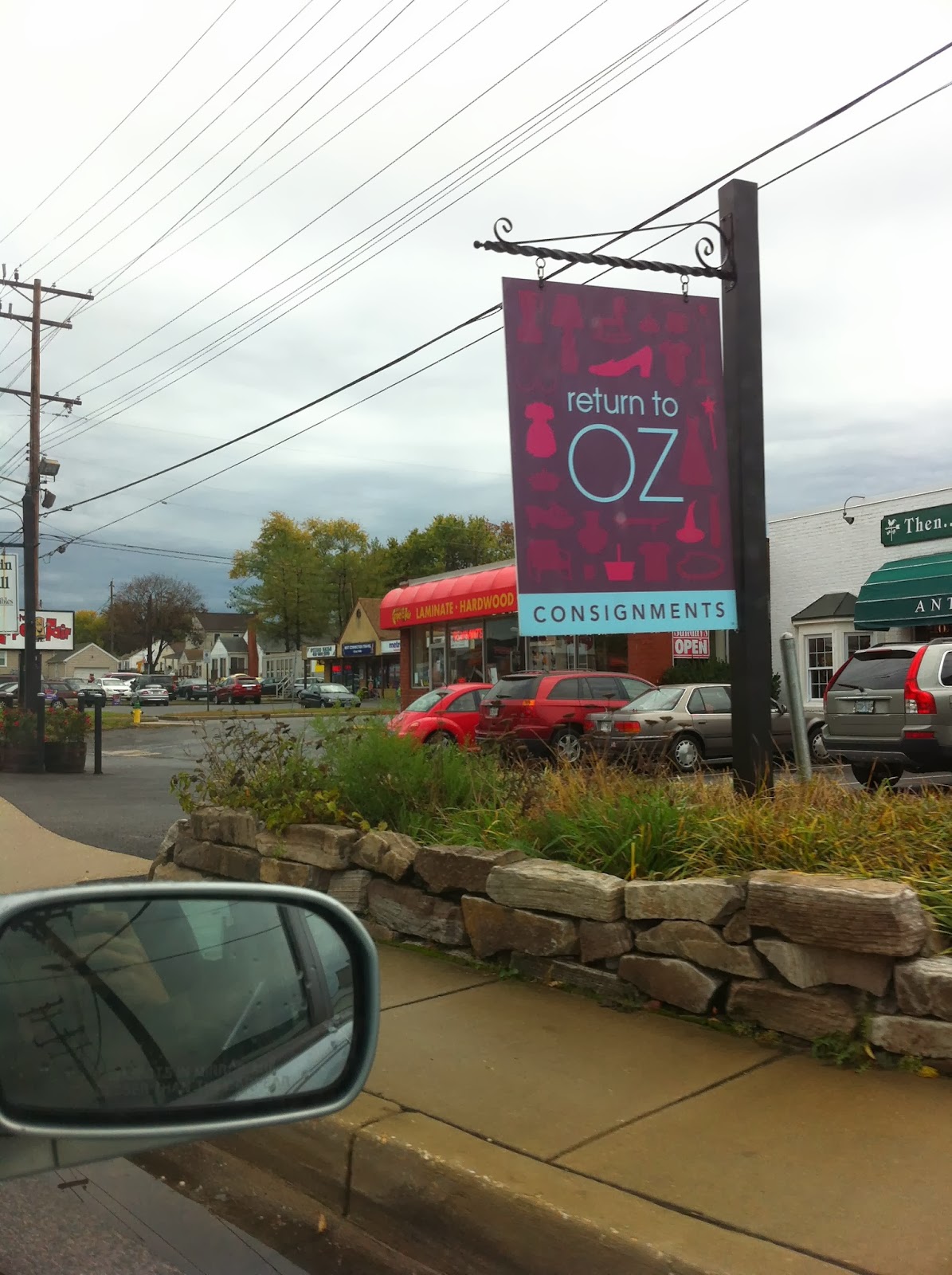
The lost rights of Oz?

We know from X One X that putting public domain images on a red sequined shoe would infringe Warner’s character copyright in movie Dorothy Gale.  How about this picture?  Any trademark issues?

Posted in http://schemas.google.com/blogger/2008/kind#post, trademark | Leave a comment

Price claims are puffery, but fake Facebook page could be actionable

Imagine Medispa, LLC v. Transformations, Inc., 2014 WL 770810, No. 2:13–26923 (S.D. W. Va. Feb. 26, 2014)

The parties compete in the medical weight-loss and skin care industry, in overlapping geographic areas. Plaintiff David Rubio owns Imagine. Plaintiffs alleged that the defendants knowingly published false advertisements claiming that Transformations was “West Virginia’s Lowest Price Weight Loss & Skin Care Clinic.” Imagine’s prices for substantially identical products and services were allegedly lower. In addition, defendants allegedly “falsely advertised that they offered three weight loss drugs for $65.00 when in fact two of the so-called drugs offered were merely an over-thecounter nutritional supplement and a diuretic.”

Plaintiffs also claimed that the defendants created a fake Facebook profile using Rubio’s name, falsely stating that Rubio was formerly an Imagine employee and indicating that Rubio “liked” Transformations. In addition, defendants allegedly created a fake ad for a 2010 Chevrolet Camaro on Craigslist, which resulted in Rubio receiving scores of unwanted calls.

And defendants allegedly “contacted Imagine employees in an effort to learn trade secrets or other confidential information and/or to lure some of those employees away,” and also “falsely told Imagine’s clients and potential clients that Imagine used unlicensed doctors and had to change its name due to issues with the authorities.” Plaintiffs alleged that the false ads and fake Facebook profile diverted customers and lessened Imagine’s goodwill. (In their papers, plaintiffs also alleged that defendants created a second fake Facebook page under the name “Imagine Medispa,” which fraudulently induced Facebook members, including one Imagine employee, to “like” Transformations’ Facebook page—the court refused to consider those allegations absent amendment of the complaint.)

Plaintiffs sued for violation of the Lanham Act, tortious interference, defamation, and invasion of privacy. The court granted the motion to dismiss the false advertising claims, but left the others (though in a separate opinion I won’t say more about, it denied a preliminary injunction, mostly because of factual disputes, including whether defendants were in any way involved with the Facebook/Craigslist incidents—I wonder if subpoenas to those entities are forthcoming).

As for the price ads, defendants argued that they were just puffery. Some courts hold that “bald assertions of price superiority constitute puffery if they are so sufficiently general that a consumer is unlikely to rely on the statement.” The statements here—“West Virginia’s Virginia’s Lowest Price Weight Loss and Skin Care Clinic” and “Lowest Prices in WV!”—didn’t refer to any specific services or products, and drew no direct comparisons to Imagine or any other competitor. Instead, they were “broad, vague exaggerations or boasts on which no reasonable consumer would rely.” The claim about the three drugs for $65 failed because there was no allegation that the ad was distributed in interstate commerce.

False endorsement: the allegations about the fake Facebook profile in Rubio’s name which suggested that Rubio was a former Imagine employee and that Rubio “liked” Transformations did, however, state a claim for false endorsement. (Note that the court didn’t require Rubio to show secondary meaning of his name.) Assuming all factual allegations to be true, “it is plausible that the fictitious Facebook Profile misled Imagine clients and potential customers into thinking that Rubio was no longer affiliated with Imagine, and that he instead endorsed Transformations’ services.”

Tortious interference: defendants argued that the claims about attempting to learn trade secrets/disparaging Imagine were too vague. Notably, “wantonly and maliciously” inducing a competitor’s employees to break an employment contract by resigning may give rise to a claim for tortious interference under West Virginia law. However, the plaintiffs didn’t allege that defendants were successful in luring employees or obtaining trade secrets. Thus, they didn’t explain how these acts harmed Imagine: they didn’t allege, for example, that they were required to undertake efforts to persuade Imagine employees not to defect. Without a link between the challenged conduct and the alleged harms, there was no claim. These claims were dismissed without prejudice.

As to statements to Imagine clients, those too could ground a tortious interference claim. And though the allegations were thin, they were sufficient: it was plausible that existing Imagine clients who were told that Imagine was using unlicensed doctors could have been deterred from continuing to use Imagine’s services. Defendants argued that any claim was time-barred by the two-year statute of limitations, but that wasn’t apparent on the face of the complaint.

Defamation: as against one defendant, plaintiffs alleged that he made defamatory statements by publishing the fake Camaro ad and telling people that Rubio had had trouble with the authorities. The fake Camaro ad wasn’t defamatory, as it wouldn’t tend to harm his reputation. A false statement that Imagine had to change its name due to issues with the authorities, if focused on Rubio, would likely be defamatory; the same issue of the statute of limitations arose but also wasn’t apparent on the face of the complaint.

The invasion of privacy claim also survived. West Virginia recognizes various privacy torts, including unreasonable intrusion on seclusion, as allegedly occurred when unknown, unsolicited people called Rubio at all hours of the day and night about the Camaro. Although occasional telephone calls cannot constitute an intrusion upon seclusion, repeated, persistent calls at inconvenient hours can, as long as they rise to the level of what a reasonable person would find highly offensive. The allegations here were sufficient.

Plaintiffs also alleged that the fake Facebook profile appropriated Rubio’s name or likeness. The complaint sufficiently alleged an attempted commercial advantage and thus stated a claim. They further alleged that the fake Facebook profile gave unreasonable publicity to Rubio’s private life, and unreasonably placed him in a false light. Unreasonable publicity requires that the private facts disclosed were highly offensive and objectionable to a reasonable person of reasonable sensibilities. But here the allegations weren’t about disclosure of private facts, but rather about disinformation, and so the complaint failed to state a claim for unreasonable publicity. But false light was an acceptable theory: the false light must also be “offensive to a reasonable person,” and the subject of “widespread publicity.” On these allegations, creating a fake profile to associate Rubio’s name with Transformations, a competitor with which he had no reasonable connection, met that standard. (Annoying to a reasonable person, but offensive? How is this not defamation that doesn’t rise to the level of being defamatory?)

Posted in defamation, http://schemas.google.com/blogger/2008/kind#post, right of publicity, tortious interference, trademark | Leave a comment