lawyer doesn’t make use in commerce by negotiating for client

Big
Ligas, LLC v. Yu, 2021 WL 1518993, No. 20-23719-Civ-Scola (S.D. Fla. Apr. 16,
2021)

Big
Ligas is owned by three members equally: Daniel Echavarria, also known as Ovy;
Christian Andres Salazar; and Paulo Londra. Ovy and Salazar are the managing
members, and defendant Yu is an entertainment attorney who represents Londra,
an Argentinian “rapper and reggaeton/trap singer.” The parties signed a deal
memorandum “to help Londra launch his career as a singer and songwriter.”

Things
went well, and then as Londra’s success increased, the parties’ relations
deteriorated. Amidst negotiations with other parties about Londra’s second
album, Londra hired Yu.

Big
Ligas alleged that, among other things, Yu “falsely claimed that she and/or
Paulo owned the copyrights that are in fact owned by Big Ligas.”  She allegedly falsely represented that she was
authorized to deliver Londra’s “recording artist and songwriting services …
when in fact, any compositions or recordings created under publishing or record
deals not authorized by Big Ligas, including those negotiated by Yu, are not
commercially exploitable without Big Ligas’[s] authorization, under Paulo’s
name or otherwise.”

Big
Ligas sued for tortious interference and for false advertising and trademark
infringement under the Lanham Act. The tortious interference claims failed for
contractual reasons and because Londra’s lawyer was his agent, not a stranger
to the contract.

Lanham
Act claims: Along with the alleged misrepresentations about authority, Big
Ligas alleged that Yu used Londra’s “name and likeness … to promote his
recording services to Warner (and others) and his songwriting services to
Kobalt (and others), without Big Ligas’[s] approval or authorization,” confusing
third parties.

Yu
rejoined that she was, in fact, Londra’s counsel, and using his name was “classical
fair use” (that is, descriptive fair use) because “she is not using the name
Paulo Londra in the trademark sense, but only to identify her client and
describe his relationship to her.” Of course, descriptive fair use requires
good faith which sure sounds like it’s hard to decide on a motion to dismiss,
but that’s no barrier here. Londra’s stage name and given name are the same
[should the result be different if they weren’t?], “and the Plaintiff’s
allegations do not prove that Ms. Yu used the Plaintiff’s mark in commerce by
referring to and describing her relationship with her client by using his given
name.” [Of course this was a use in commerce; in a different situation, this
argument would be laughable. Trademark law has ruthlessly been stripped of the
tools it needs to say “this is not a trademark claim,” and that’s why the
Seventh Circuit approach of just reaching the equitable result can appeal.]

Even
if we needed to do a descriptive fair use analysis, Yu would win:

The
Court finds that, as Londra’s attorney, Ms. Yu’s use of his name to
identify him as her client was other than as a mark, used in the primary
descriptive sense, and was undertaken in good faith, that is without the intent
to trade on the good will of Big Ligas. To the extent the use of the name Paulo
Londra creates some risk of confusion, Big Ligas assumed that risk by
establishing Paulo Londra, Londra’s given name by birth, as his stage name.
(emphasis added)

This
isn’t motion to dismiss language, although it is clearly the right result.

False
advertising: “That Ms. Yu contacted third parties and stated she is Londra’s
attorney with authority to negotiate on his behalf is not a false or misleading
statement insofar as Ms. Yu was acting on behalf of her client, Londra.” This
was a contract dispute, not a Yu problem.

from Blogger https://ift.tt/2X1nE6g

Posted in Uncategorized | Tagged , , | Leave a comment

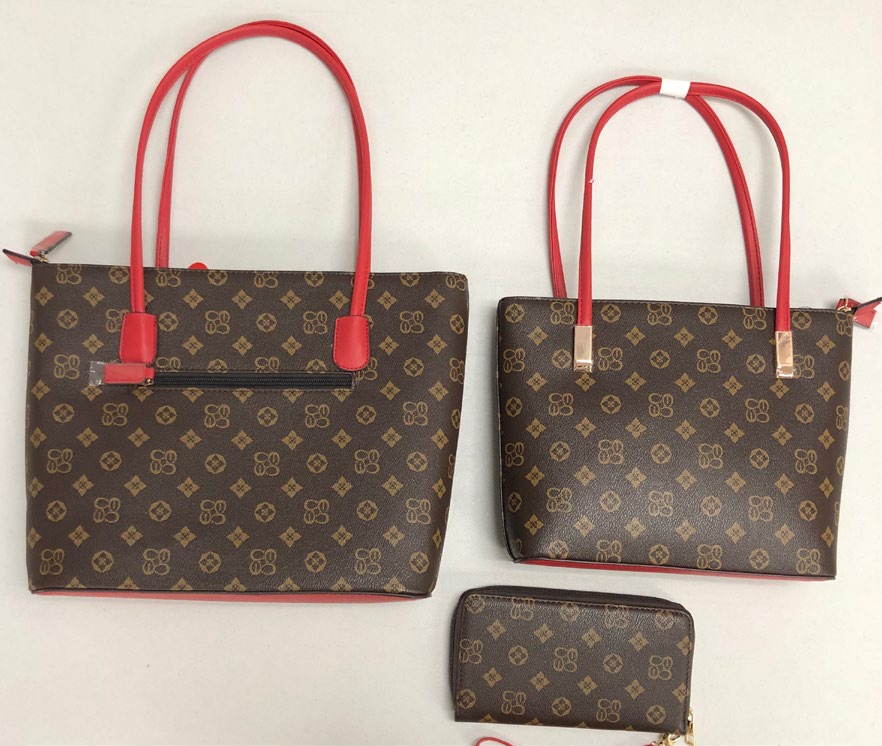
Coach narrowly alleges grounds for cancellation of similar marks

Tapestry,
Inc. v. Chunma USA, Inc., 2021 WL 1534988, No. 20-CV-0271 (JMF) (S.D.N.Y. Apr.
19, 2021)

Tapestry
(Coach) sued Chunma for trademark infringement, false designation of origin,
false advertising, and cancellation of Chunma’s registered trademarks under the
Lanham Act, unfair competition and trademark infringement under New York state
common law; and injury to business reputation under New York’s GBL, based on
Chunma’s products bearing logos that allegedly infringe upon Coach’s
trademarks, including Coach’s well-known “Signature C” mark. Chunma’s motion to
dismiss the cancellation claims was denied.  

The claim
for cancellation of the ‘675 Mark was based on fraud in obtaining the trademark
registration and misrepresentation of source, whereas their claim for
cancellation of the ’549 and ’077 Marks was based on misrepresentation of
source alone.

077

549

675

For
fraud, Coach alleged that Chunma made a material misrepresentation in its
trademark registration application, in particular that the mark was in use as
of the application date, when in fact there was no bona fide use until years
later. Chunma also allegedly misrepresented the specimen that it submitted
alongside its application as a “SCANNED ACTUAL TAG” when, in fact, it was
merely a “computer illustration, digital image, or similar mockup” that the PTO
would not have accepted.

As for
false suggestion of a connection, Coach explicitly alleged that Chunma’s marks
“falsely suggest a connection with Plaintiffs.”

However,
with respect to the ’549 and ’077 Marks, the misrepresentation of source claim
was “a close question.”  “[I]t is well
established that “allegations … of the type that typically support a claim of
likelihood of confusion under Section 2(d)” do not suffice to state a claim for
cancellation of an incontestable mark based on misrepresentation of source
under Section 14(3).” (I note that, looking at TSDR, Coach requested an
extension of time to oppose at least one of these marks, but does not seem to
have actually opposed them.) “Significantly, even intentional copying of a
plaintiff’s trademark does not, standing alone, state a misrepresentation
claim.” Instead, a plaintiff must plead “specific facts reflecting [the
defendant’s] activity that, if proved, would amount to an attempt to create the
impression that [the plaintiff] is the source of [the defendant’s] services” or
goods, such as conduct outside use of the registered mark itself.

The
complaint did “narrowly” state a claim. Coach pled that Chunma sells “products
bearing logos and source-identifying indicia and design elements that are
studied imitations of [Plaintiffs’ well-known] Signature C Mark,” with
“reckless disregard or willful blindness to Plaintiffs’ rights, and/or with bad
faith, for the purpose of trading on the goodwill and reputation of the
Signature C Mark” and to “deceive consumers, the public, and the trade into
believing that there is a connection or association between [Chunma] … and
[the] Coach” brand. The complaint also showed images showing close similarities
between Coach’s trademarks and some of Chunma’s products. Viewed in the light
most favorable to plaintiffs, that sufficed for now, though Coach would “ultimately
bear a heavy burden to prove this claim by clear and convincing evidence.”

accused product

another

another

The
subsequent stipulation to a permanent injunction did not cover the
registrations, but there is apparently a confidential settlement agreement that
may have covered them.

from Blogger https://ift.tt/3BU4Zc5

Posted in Uncategorized | Tagged | Leave a comment

There’s no such thing as “leasing real estate in violation of the Lanham Act”

Wakefern Food Corp. v. Marchese, 2021 WL 3783259, No. 2:20-cv-15949-WJM-MF (D.N.J. Aug. 26,
2021)

Always
something new in trademark! Wakefern, the largest retailer-owned supermarket
coop in the US, sued Marchese for attempting “to lease commercial real estate
in violation of the Lanham Act … and New Jersey common law.” 

Wakefern
operates approximately 353 supermarkets under various brands such as ShopRite and
Fairway Market across several states, and has a registration for ShopRite.

Marchese
formed defendant Family Markets for the stated purpose of carrying out a retail
supermarket business. I
n mid-2020, Marchese allegedly contacted Wakefern about the possibility of
joining the Wakefern cooperative. He allegedly told Wakefern’s representative
that he owned both Family Markets and a number of “Foodtown” supermarket
locations across New Jersey, including a specific Foodtown location in
Plainsboro. Wakefield told Marchese to submit a summary of his qualifications
in writing, but he didn’t follow up. The supposed Plainsboro location was allegedly vacant.

“Marchese
also contacted a real estate broker to inquire about a listing of a vacant
50,000 square foot supermarket in Middlesex, New Jersey.” He allegedly informed
the broker “that he was interested in leasing the vacant space, that he was the
owner/operator of an active supermarket business in Family Markets, that he had
an ownership interest in several members of the Wakefern cooperative, including
four ShopRite® supermarkets in New Jersey, and that he had started the process
of becoming a Wakefern member himself.” Afterwards, the broker contacted
Wakefern and was told that Marchese wasn’t a member and had no
Wakefern/ShopRite affiliation.

Perhaps
overreacting, Wakefern sued for trademark infringement and false advertising in
violation of the Lanham Act and violation of state unfair competition law,
which is coextensive and thus disappears from our story.

Trademark
infringement: This just wasn’t use in commerce. Whether confined to the §1114
definition of “use in commerce” or using some other broader standard for §1127,
Marchese’s statement didn’t qualify:

Plaintiff is correct that Marchese’s conduct in invoking
Wakefern and the ShopRite® brand may have been an affirmative act ultimately
designed to achieve some sort of commercial benefit (i.e. the acquisition of
commercial space from which to operate a supermarket). However, there are no
allegations that Defendant has ever offered, distributed, possessed, sold, or
advertised any goods or services of any kind bearing or imitating Plaintiff’s
marks, or even had the capacity to do so. Nor are there any allegations that,
had Marchese been successful in securing the vacant commercial property, he
would have engaged in any infringing conduct in the actual operation of a
supermarket. Indeed, Plaintiff’s allegations suggest that Marchese made false
representations to the broker in order to take advantage of the broker’s
services rather than to sell or promote his own. Moreover, Plaintiff has not
cited any case, and the Court is aware of none, in which a single, private
business conversation, without any corresponding dissemination or marketing to
the broader purchasing public, has been found to constitute a “use in commerce”
for purposes of trademark infringement.

False
advertising: Not commercial advertising or promotion. There was no organized
campaign to penetrate the market alleged; there was also no targeting of a
class of potential purchasers. “Marchese’s allegedly false statements regarding
his relationship with Wakefern were made in the context of a private
conversation with a targeted individual acting in his capacity as a broker
rather than shared more broadly to a class of potential supermarket consumers.
Such isolated, private statements, particularly to non-consumers, do not
constitute the sort of dissemination to the relevant purchasing public
necessary to state a false advertising claim under Section 43(a) of the Lanham
Act.” Wakefield did allege that Marchese engaged in “similar conduct with
respect to multiple Westside Market stores in New York City.” But there were no
other details. “Regardless, even assuming Plaintiff intended to allege that
Marchese has continued to claim a relationship with Wakefern to various real
estate brokers in order to obtain a commercial lease to operate a supermarket,
Plaintiff’s claim would fail: such statements would still be discrete
communications targeted to specific non-consumers rather than promotions or
advertisements disseminated to a segment of the purchasing public.”

from Blogger https://ift.tt/3tlSkLH

Posted in Uncategorized | Tagged , | Leave a comment

Is disgorgement the new normal in Lanham Act cases?

Grasshopper
House, LLC v. Clean & Sober Media, LLC, 2021 WL 3702243, No. 19-56008, No.
19-56072, — Fed.Appx. —- (9th Cir. Aug. 20, 2021)

The
TMA’s injunctive relief changes are probably going to make it even more clear
that courts aren’t entirely sure whether damage is part of the cause of action
for false advertising; since it isn’t for trademark infringement, trademark
plaintiffs never have to show damage at all to get relief and even
disgorgement, which has now become much more readily available. Is that true
for false advertising plaintiffs?

Here,
the parties compete in the market for addiction treatment. A jury found
defendants liable for false advertising through a purportedly unbiased,
independent site. The district court entered a permanent injunction against defendants
but denied disgorgement of profits, attorneys’ fees and costs. The panel, over
two separate dissents, sends it back for reassessment of disgorgement,
attorneys’ fees and costs (and still doesn’t publish the opinion).

The
district court excluded the plaintiff’s damages expert, finding that he didn’t
apply a reliable methodology in assessing causation of damages because he
discounted competing causal factors without an adequate basis and lacked the
necessary expertise to make those judgments. The district court acted within
its discretion in doing so, and properly cancelled the damages phase of the
jury trial because no other witness had been disclosed on damages. Plaintiff
argued that it should have been able to use the testimony of its principal, but
even during deposition, plaintiff’s counsel stated that he “was not [there] to
talk about causation and damages” and objected to questions directed to him
about damages, declaring that this topic would be exclusively “within the scope
of expert opinion.” He himself acknowledged at his deposition that it was
“beyond his scope of understanding” to explain how plaintiff was damaged.

Disgorgement
had to be sent back because the law on willfulness being required for
disgorgement changed after the court ruled. But watch this language: “On
remand, the district court should consider Defendants’ mental state — whatever
that may be — when determining what award of profits is appropriate.” So
plaintiff is apparently entitled to disgorgement without ever having shown that
it was damaged by the false advertising. So, is damage to the plaintiff part of
the cause of action or no?

The
court said further: “it was an abuse of discretion for the district court to
deny Plaintiff’s request for disgorgement on the ground that Plaintiff had not
established causally, and to a reasonable certainty, the ‘financial benefit’ that
Defendants received from their false advertisement as to Plaintiff.” The trial
court was certain that the defendants had profited to some degree from false
statements about the neutrality of the review and from a review that
represented that it was “based on surveys of former [Plaintiff] clients.” Both
parties’ experts calculated that each of the 192,434 visits to the relevant
webpage had some value, though they disagreed about whether it was $40
or $1.80 per click. Even the lower bound would yield a disgorgement amount at
least five times that of the ‘hypothetical’ alternative amount of $60,000
reached by the district court.” Because even defendants’ expert recognized some
benefit to defendants, it was an abuse of discretion to find that the financial
benefit to them could not be established to a reasonable certainty.

One of
the dissents argued that, because the plaintiff’s theory of falsity was focused
on the falsity of the process by which the review was repaired, the
disgorgement theory needed to account for the possibility that the plaintiff’s
facility deserved its review. That overstates a plaintiff’s burden. “Having
presented sufficient evidence to show that the highly negative review was not
generated by the process that was represented, Plaintiff amply established that
the review was unreliable and therefore false and misleading. At the very
least, Plaintiff demonstrated that the review falsely augmented its own
trustworthiness and persuasiveness.”

The
court vacated the attorneys’ fees award in case its ruling on disgorgement on
remand affected its ruling on the award of attorney fees. And it reversed the
denial of costs because successful plaintiffs are entitled to them; it wasn’t
enough to say that the litigation was “excessively-protracted” or that they
weren’t entitled to attorneys’ fees, which are judged by a different standard.

One
partial dissent thought the district court prejudicially erred in cancelling
the damages phase of the trial for civil procedure reasons.

The
other partial dissent was on disgorgement. In its view, the jury only found
falsity as to the procedure followed by the review and the statement of the
process by which it was developed, not by any particular statement in the
review itself or its ultimate star rating. Thus, damages would have to relate “to
relate to people who were dissuaded from seeking treatment at [plaintiff’s
facility] because of the failure to base the review on former clients’
assessments of the services, as set forth in the Process Statement.” 

from Blogger https://ift.tt/3zRZSbz

Posted in Uncategorized | Tagged , , | Leave a comment

Pandemic ski resort closures allow both contract and advertising claims

Goodrich v. Alterra Mountain Co., 2021 WL 2633326, No.
20-cv-01057-RM-SKC (D. Colo. Jun. 25, 2021)

Unlike the education cases so far, this pandemic case
sustains both consumer protection and contract claims. “Plaintiffs purchased
Ikon ski passes for the 2019-20 ski season but, due to the COVID-19 pandemic,
Defendants closed their ski resorts on March 15, 2020.” Defendants declined to
refund their money. The passes were allegedly offered as offering “unlimited
access” to “ski or ride as many days as you want” with (in some instances) some
blackout dates at covered resorts during the 2019/20 ski season.

California UCL, CLRA, FAL: First, defendants argued that
under Sonner v. Premier Nutrition Corp., 971 F.3d 834 (9th Cir. 2020) and its
progeny, everything but the CLRA claim for damages should be dismissed because
these equitable claims were only available if legal claims failed. Plaintiffs
argued that they were allowed to plead in the alternative, but the court found
that they had failed to do so. Thus, Sonner “dooms the claim for equitable
relief at any stage.”

Did the CLRA damages claim survive? Defendants first argued
that passes didn’t not qualify as “goods or services” under the CLRA, but were
only temporary licenses, with services provided only ancillary to the license.
The court found that plaintiffs plausibly showed that ski passes were
encompassed within the definition of “services.” Ski pass holders plausibly
purchased more than just a license to be on the slopes, including services such
as providing groomed trails and ski lifts and gondolas to reach the trails,
which were “at heart of what a ski pass holder purchased.”

Deception: Assuming Rule 9(b) applied, plaintiffs satisfied
it. Defendants argued that the alleged promise of “unlimited access” for a
“complete season” (the 2019/20 ski season) was not a “ ‘specific and measurable
claim, capable of being proved false or of being reasonably interpreted as a
statement of objective fact’ ” because they made no representations about the
length of the 2019/20 ski season. But “a reasonable consumer would understand
this was a promise for a definite period: the period of the 2019/20 year
‘during which snow conditions allow for skiing and when people typically go
skiing.’”

Defendants argued that their statement wasn’t deceptive when
made because they couldn’t have known about the pandemic or ensuing governmental
closure orders. The court was persuaded that plaintiffs were plausibly misled
about what would happen if the resorts closed, for whatever reason: defendants
kept all their money. Defendants argued that they disclosed the payments were
“non-refundable,” but that plausibly didn’t apply to these circumstances.

Was there an actionable omission? Previous cases hold that
“to be actionable the omission must be contrary to a representation actually
made by the defendant, or an omission of a fact the defendant was obliged to
disclose,” in particular a safety hazard/physical defect going to central
functionality. With services, though, matters were less clear, and the court
found that omission claims shouldn’t be dismissed. And the relevant knowledge,
for the omission claim, is knowledge that they’d keep the money if they had to
close before the end of the “ski season,” that is, the period “during which
snow conditions allow for skiing and when people typically go skiing.”

Loss causation: Plaintiffs alleged that they wouldn’t have
purchased the ski passes on the terms offered had they known that, if
defendants did not provide the promised resort access during the 2019/20 ski
season, they would nonetheless retain all pass fees. That was sufficient.
Illinois and Wisconsin consumer claims shook out similarly: no equitable
relief, but where damages were available, those claims survived.

from Blogger https://ift.tt/2WKRPia

Posted in Uncategorized | Tagged , , | Leave a comment

competition in the market of ideas isn’t commercial competition

Children’s
Health Defense v. Facebook Inc., 2021 WL 2662064, No. 20-cv-05787-SI (N.D. Cal.
Jun. 29, 2021)

CHD,
an anti-vaccination group (that also considers pesticides and wireless tech
dangerous), sued Facebook and other defendants for violating the First and
Fifth Amendments, Lanham Act false advertising, and RICO violations. It didn’t
like having some of its content on its FB page labeled “false,” out of date, or
unreliable. Prepandemic, FB also allegedly barred CHD from disputing any
actions taken by FB, and allegedly began to demote its content
(“shadowbanning”). FB deactivated the “donate” button on CHD’s page and barred
it from buying new ads. After repeated violations, FB put a Warning Label at
the top of its page: “This Page posts about vaccines. When it comes to health,
everyone wants reliable, up-to-date information. The Centers for Disease
Control (CDC) has information that can help answer questions you may have about
vaccines. Go to CDC.gov.” Then, after the pandemic hit, CHD shared an article
about the flu vaccine written by a third party website. PolitiFact labeled the
title of the article as “false,” noting that the title is “ambiguous and
misleading,” and the site changed the title to clarify that it was not about
the novel coronavirus.

CHD
alleged the usual fringe argument that the United States government — through
Congressman Adam Schiff, the Centers for Disease Control (CDC), and the World
Health Organization (“WHO”), as the CDC’s “proxy” — has “privatized” the First
Amendment by “teaming up” with Facebook to censor CHD’s vaccine safety speech.

The
court spent a bunch of time on the state action issues; I will only mention the
theory that “government immunity [under Section 230 of the CDA] plus pressure
(Rep. Schiff) … should turn Facebook and Zuckerberg’s private-party conduct
into state action.” The pressure included an alleged threat to rethink §230 if
FB didn’t take more action. No, because “Section 230 does not require private
entities to do anything, nor does it give the government a right to supervise
or obtain information about private activity.” Nor did the general “threat” to
revisit §230 constitute direction to a specific entity to take a specific
allegedly unconstitutional action against a specific person such as CHD.

Lanham
Act: the warning labels and fact checks allegedly told consumers to abandon CHD
and “instead to follow CDC’s recommendations to get the vaccines produced by
its major advertisers, Merck, GSK, Sanofi, and Pfizer, who buy $1 billion per
annum in advertisements from Facebook.” Thus, CHD alleged, “Facebook and CHD
may reasonably be considered commercial competitors with respect to the
messaging regarding vaccines and 5G that they promulgate to Facebook users.”

But
if this is a political speech case, as CHD alleged, it was hard to see how it
fell in the Lanham Act’s zone of interests. “[T]he warning label and fact-checks
are not disparaging CHD’s ‘goods or services,’ nor are they promoting the ‘goods
or services’ of Facebook, the CDC, or the fact-checking organizations ….” They
didn’t encourage users to donate to anyone, but to look for reliable
information at the CDC. “Thus, all of the alleged misrepresentations – the
warning label and the fact-checks – are simply providing information, albeit
information with which CHD disagrees.” “Information” was not a relevant
service; “[u]nder CHD’s expansive and novel theory of false advertising, any
Facebook warning label identifying an alternative source of information and any
fact-check with an explanation would constitute false advertising under the
Lanham Act because of an injury to ‘messaging.’”

Courts
have held that “[t]he mere fact that the parties may compete in the marketplace
of ideas is not sufficient to invoke the Lanham Act.”  In past suits where nonprofits’ Lanham Act
claims were entertained, “the non-profit alleged an injury to a commercial
interest in sales or reputation.” Thus, CHD was neither within the Lanham Act’s
zone of interests nor did it allege that the warning label and fact-checks constituted
“commercial advertising or promotion,” even assuming that Lexmark
abrogated a commercial competition requirement in the test for the latter.

RICO
claims failed because they were RICO claims.

from Blogger https://ift.tt/3BJoCn5

Posted in Uncategorized | Tagged | Leave a comment

Amazon pulls further ahead of possible competitors in TM secondary liability wars

Ohio State Univ. v. Redbubble, Inc., No. 19-3388 (6th Cir.
Feb. 25, 2021)

“Because Amazon’s marketplace operates as a neutral
intermediary between consumers and third-party vendors, courts have typically
not found it liable for trademark-infringing goods sold through its platform.”
But Redbubble wasn’t entitled to the same treatment.  “Because Redbubble’s marketplace involves
creating Redbubble products and garments that would not have existed but for
Redbubble’s enterprise, we find that the district court erred by entering
summary judgment for Redbubble under an overly narrow reading of the Lanham
Act.” The description:

Independent artists, not employed
by Redbubble, upload images onto Redbubble’s interface. Consumers then scroll
through those uploaded images and place an order for a customized item.

Once a consumer places a purchase
on its website, Redbubble automatically contacts the artist and arranges the
manufacturing and shipping of the product with independent third parties. So
Redbubble never takes title to any product shown on its website. And Redbubble
does not design, manufacture, or handle these products. But the shipped
packages bear its logo, and Redbubble handles customer service duties such as
returns.

Aside from managing the website,
Redbubble plays a larger role in overseeing and executing sales made on its
marketplace. For example, Redbubble helps market products listed on its
website. And it markets those goods as Redbubble products to consumers; for
instance, it provides instructions on how to care for “Redbubble garments.”
When customers receive goods from Redbubble’s marketplace, they often arrive in
Redbubble packaging and contain Redbubble tags. And if there are excess goods,
Redbubble has the right to dispose of those items.

Some of Redbubble’s artists uploaded trademark-infringing
images. When OSU sent Redbubble a C&D, Redbubble asked it to “specifically
identify each infringing design.” OSU sent Redbubble a letter containing photos
of nine offending items, but Redbubble told OSU that pictures, asking for URLs
or other identifying information. There was apparently no reply, and Redbubble didn’t
remove the offending products from its website. OSU sued for Lanham Act
violations and a violation of Ohio’s ROP for use of the persona of a former
employee who had transferred his rights to OSU.

The district court found that Redbubble did not “use” OSU’s
trademarked images in operating its business model under the Lanham Act because
it only acted as a “transactional intermediary” between buyers, sellers,
manufacturers, and shippers.

OSU didn’t preserve a theory of vicarious liability, so the
court considered only direct liability. (OSU claimed not to have known about Redbubble’s
relationship with third-party vendors, but it could have amended the complaint
once it learned more.)

Fortunately for OSU, the court of appeals held that the
Lanham Act extends direct liability beyond manufacturers, sellers, and those
“who apply infringing marks to sales displays or other related advertising
materials.” eBay and Amazon are not subject to direct liability, and neither
are sellers of domain names, but there’s a line to be drawn.

“[O]ne key distinction between a
direct seller who “uses” a trademark under the Act and a mere facilitator of
sales who does not is the degree to which the party represents itself, rather
than a third-party vendor, as the seller, or somehow identifies the goods as
its own. A retailer who sells products directly to a customer at a
brick-and-mortar store is indisputably a seller to whom the Lanham Act applies.
An online marketplace like eBay that clearly indicates to consumers that they
are purchasing goods from third-party sellers is not. … Here, although the
record is sparse, it appears that products ordered on Redbubble’s website do
not yet exist, come into being only when ordered through Redbubble, and are
delivered in Redbubble packaging with Redbubble tags. Under those facts, the
district court erred in affirmatively placing Redbubble on the passive end of
the liability spectrum.

Use of a third party to manufacture goods sold on the site,
and the degree of control and involvement exercised by Redbubble over the
manufacturing, quality control, and delivery of goods to consumers, were
relevant to “whether the offending goods can fairly be tied to Redbubble for
the purpose of liability.” The record needed further development. Still, “it
appears that Redbubble brings trademark-offending products into being by
working with third-party sellers to create new Redbubble products, not to sell
the artists’ products.” That’s more than just being a passive facilitator.
Plus, it calls the goods “Redbubble products” and “Redbubble garments,” so it
goes beyond Amazon.

As for the ROP claims, the question was whether Redbubble
used “any aspect” of the ex-employee’s persona for a “commercial purpose.”  While Amazon doesn’t make editorial choices
about book covers [note judicial factfinding that seems both untethered to any record and somewhat improbable as a blanket statement], Redbubble is different. “Redbubble interweaves its brand
with the products it sells.” Plus, the text of Ohio’s ROP statute prohibits
using a persona in connection with a product, advertising a product, or
soliciting the purchase of a product. “That broad language expands liability
beyond directly selling trademark-infringing goods.” So even if Redbubble was
passive, the ROP would apply. [And also it seems that cases letting Amazon off
the hook wouldn’t apply to Ohio ROP claims either. More First Amendment
conflicts coming!]

Record development was required because it wasn’t clear that
OSU could win. It wasn’t clear what “Redbubble products” and “Redbubble
garments” really meant. Redbubble never takes title. Factual gaps: “facts
regarding the precise nature of Redbubble’s contractual relationships with
third-party manufacturers and shippers”; “the precise degree to which Redbubble
is involved in” selecting and imprinting trademark-infringing designs upon its
products; “details as to Redbubble’s involvement in the process for returning
goods”; “detail[s] on how Redbubble characterizes its own services”; and facts
about “defenses to liability[,] such as possible fair use defenses or defenses
that confusion is not likely.”

from Blogger https://ift.tt/3DL6Y44

Posted in Uncategorized | Tagged , , | Leave a comment

Homeopathy claims weren’t unfair in the absence of proven falsity

Allen v. Hyland’s, Inc., 2021 WL 718295, No. CV 12-1150-DMG
(MANx) (C.D. Cal. Feb. 23, 2021)

This class action, about whether certain homeopathic
products didn’t perform as indicated on the packaging, went to a jury trial
that ended in Hyland’s favor on breach of warranty, Magnuson-Moss Warranty Act,
and CLRA claims. The court then ruled for Hyland’s on the equitable UCL/FAL
claims, guided by the jury verdict. However, the court of appeals reversed in
part because “[t]he UCL’s prohibition of unfair business practices sweeps more
broadly than the CLRA, Magnuson-Moss Warranty Act, or express warranty.” The UCL
claim in fact “encompassed both a deceptive advertising theory and an unfair
business practices theory.” Because UCL unfairness applies to practices that
are against public policy; that are “immoral, unethical, oppressive,
unscrupulous or substantially injurious”; or that cause unforeseeable injuries
to consumers that are not outweighed by countervailing benefits, “[t]he jury’s
narrow findings as to deceptive advertising do not resolve [Plaintiffs’]
broader unfair practices theory” in their equitable UCL claim.

The court deferred to the jury’s implicit factual
determination that plaintiffs failed to prove by a preponderance of the
evidence that the products cannot relieve the symptoms represented on
Defendants’ products’ packaging. Plaintiffs failed to submit “evidence of
definitive scientific research to meet their burden of proof as to the products
at issue.” Though several did testify that they wouldn’t have bought the
products if they knew the products had only a placebo effect, they didn’t meet
their burden to prove by a preponderance of the evidence that the only medical
benefit was via the placebo effect. Defendants’ products followed FDA labeling
regulations (or lack thereof), indicating numeric dilution levels, ingredient
names, and the word “homeopathic,” which by definition means the administration
of remedies in minute doses. Defendants didn’t disclose the absence of
controlled clinical trials or other medical testing, but they weren’t required
to do so, despite the FTC’s determination that many consumers mistakenly
believe manufacturers of homeopathic products test their products on people to
show their effectiveness.

“While aspects of homeopathy are inconsistent with modern
understandings of physics and chemistry, Defendants presented evidence that
some clinical trials have shown favorable results from homeopathic treatment,
as compared to a placebo or conventional treatment.” And there was evidence
that “homeopathically prepared materials have an effect on animals and on human
cells,” and that consumers are generally satisfied with the products.

Starting with an unfairness test borrowed from the FTCA, the
factors that define unfairness are: “(1) the consumer injury must be
substantial; (2) the injury must not be outweighed by any countervailing
benefits to consumers or competition; and (3) it must be an injury that
consumers themselves could not reasonably have avoided.” Because the jury found
either that defendants’ products may perform as promised for some people or
that plaintiffs failed to show otherwise, the court couldn’t find on this
record that “the only conceivable benefit the products provide is as a
placebo.” Thus, plaintiffs didn’t show substantial injury, especially with the evidence
showing high levels of consumer satisfaction.

An alternative balancing test asks whether the alleged
business practice “is immoral, unethical, oppressive, unscrupulous or
substantially injurious to consumers and requires the court to weigh the
utility of the defendant’s conduct against the gravity of the harm to the
alleged victim.” This too hadn’t been shown. The ingredients are safe and the
FDA doesn’t require randomized controlled trials for homeopathic products.
There was scientific controversy over whether they worked.

Under a final test, “that the public policy which is a
predicate to a consumer unfair competition action under the ‘unfair’ prong of
the UCL must be tethered to specific constitutional, statutory, or regulatory
provisions.” And plaintiffs couldn’t do this either. The FTC’s recent
Enforcement Policy was issued after the trial.

from Blogger https://ift.tt/3zKSLl9

Posted in Uncategorized | Tagged , , | Leave a comment

Rogers test protects name of online news publication

Punchbowl, Inc. v. AJ Press LLC, — F.Supp.3d —-, 2021 WL
3356848, No. 21-cv-03010-SVW-MAR (C.D. Cal. Jul. 16, 2021)

This Rogers case about the name of an online
publication involves a motion to dismiss that was converted to a motion for
summary judgment.

Plaintiff Punchbowl “is a technology company that develops
online communications solutions for consumers, including online event
invitations and greetings cards, with a focus on celebrations, holidays, and
events.” It allegedly used its Punchbowl mark since April 2006, and it has a
2013 registration for “Punchbowl” in connection with online communications
services.

AJ operates “Punchbowl News,” “an online news publication
that provides newsletters, podcasts, and videos in the fields of government,
politics, public policy, and current events.” It uses “Punchbowl” because that
is the Secret Service nickname for the U.S. Capitol (a fact that Punchbowl
didn’t contest), and its logo also invokes the Capitol building. Punchbowl sued
it for trademark infringement and related claims.

The court concluded: “[N]o reasonable juror could find that
Defendant’s use of Plaintiff’s mark either (1) is not artistically relevant to
the underlying work, or (2) explicitly misleads consumers as to the source or
content of the work.” Part (1) was simple; the geographic/political reference
to the Capitol was analogous to the geographic reference to the “Empire State”
in Empire.

(2) is a “high bar that requires the use to be an explicit
indication, overt claim, or explicit misstatement about the source of the
work.” Use of a mark, even a well-known mark, isn’t explicitly misleading if it
only implicitly suggests endorsement or sponsorship. The recent Dr. Seuss
case found that Rogers applied even when the defendant’s work was not a
copyright fair use, and the work used Seussian font, Seussian illustration
style, and a similar title. Under Ninth Circuit precedent, explicit
misleadingness is assessed contextually [a contradiction, but here we are],
considering also “(1) the degree to which the junior user uses the mark in the
same way as the senior user; and (2) the extent to which the junior user has
added his or her own expressive content to the work beyond the mark itself.”

No reasonable juror could find that either consideration
weighed in favor of Punchbowl. More broadly, no reasonable juror could find an
explicit misrepresentation.

For (1): The parties’ services, though both online, were
entirely distinct: events/parties versus journalism, targeting respectively
“families and, specifically, mothers with young children” versus “individuals
who follow politics closely.”

But, Punchbowl argued, they both used the mark in the same
way: as a source identifier. First, that argument “is effectively an argument
that mere use of the mark itself is sufficient for a finding that a defendant
uses the mark in an explicitly misleading manner.” But we know that’s not the Rogers
test. Second, Punchbowl was really arguing that the parties both operate
commercially and sell services to consumers, so the name was explicitly
misleading; Empire foreclosed such an argument since that’s also what
happened there (and was arguably more confusing since the parties were both
related to hip-hop music production). [This discussion really highlights that
getting rid of the title v. title exception to Rogers actually ended up
complicating the doctrine much more. You don’t need the extra contextual
considerations of Gordon if you just treat titles of works versus titles
of other works separately, and that would have been a much better path. Under
plain old Rogers, this is an easier case.] Finally, the facts refuted
Punchbowl’s argument, since AJ consistently used “Punchbowl News” and not
“Punchbowl.” And it added its own expressive content with every use.

This case was unlike Gordon, where the parties sold,
“at least in part,” the same product: greeting cards. That overlap was the
primary reason the court found a triable issue on explicit misleadingness, and
it wasn’t present here.

Finally, alleged evidence of actual confusion didn’t show
explicit misleadingness. Under Rogers, “[the] focus [is] on the nature
of the junior user’s behavior rather than on the impact of the use.” Thus,
evidence of actual confusion wasn’t “particularly relevant.” The recent Dr.
Seuss case, for example, rejected the relevance of a survey purporting to show
24% confusion.

No reasonable juror could find that the parties use
Punchbowl in the same way, and even if they could, that wouldn’t be enough, as
in Dr. Seuss where both parties used marks for graduation-themed books
but the defendant added expressive content to the work beyond the mark itself.
No reasonable juror could find that defendant failed to add its own expressive
content to the work beyond the mark itself. Punchbowl was not used “as the
centerpiece of an expressive work itself, unadorned with any artistic
contribution.” Even in the mark, “Punchbowl News” appears, “almost always, next
to the image of the Capitol dome, upside down and filled with punch.” And the
publication was consistently explicitly connected to its founders, highly
credentialed journalists; this was similar to the Dr. Seuss case, which
empashized that the use there wasn’t explicitly misleading in part because the
cover “conspicuously lists” the authors of the book and not the plaintiff.

Finally, Punchbowl argued that there was no interference
with AJ’s First Amendment rights because it could select any non-infringing
mark and still report and comment on the news. But Rogers applies to all
“expressive works.” Accepting Punchbowl’s argument would eviscerate Rogers
because one could always create a different work or different title. As Rogers
itself says, “[i]n the context of titles, this ‘no alternative’ standard
provides insufficient leeway for literary expression.”

from Blogger https://ift.tt/38BdaNI

Posted in Uncategorized | Tagged , | Leave a comment

failure to allege comparative performance dooms falsity claim

Ruiz v. Owlet Baby Care, Inc., 2021 WL 3370259, No.
2:19-cv-00252 (D. Utah Aug. 3, 2021)

A proposed class action against Owlet’s Smart Sock pulse
oximeter sought to cure earlier defects by alleging that other pulse oximeters
were used differently (and not on babies’ feet). Nonetheless, plaintiffs sought
to allege, “Owlet deliberately and misleadingly aligns itself with both medical
grade devices and consumer wellness products, seemingly whenever it was
convenient for sales.”  Owlet’s
representations thus allegedly led “consumers to reasonably expect the Owlet
Smart Sock to be at least as accurate as hospital grade pulse oximeters” and
that Owlet took advantage of “consumer expectations by their use of hospital
grade and similar terminology in their advertisements.”

Amendment would be futile. Plaintiffs didn’t sufficiently
allege differences in accuracy and reliability between medical pulse oximeters
and consumer products incorporating pulse oximeter technology—let alone between
medical pulse oximeters and the Smart Sock or between other consumer products
incorporating pulse oximeter technology and the Smart Sock. They also failed to
allege that Owlet’s failure to disclose “frequent and unnerving false alarms,
inaccurate readings, and complete failure to detect and alert to abnormal
oxygen levels and heart rates” was material, “because it is not clear what the disclosure
means, and thus whether it differs from what a reasonable consumer would expect
from a consumer product incorporating pulse oximeter technology.” The magnitude
and persistence of alleged problems with accuracy and reliability were not
specified. Was the Smart Sock inaccurate twice in two weeks, twice in one week,
or something else? Based on the allegations, it was impossible to compare that
with what a reasonable consumer would expect from pulse oximeter devices.

Cherry-picking consumer reviews didn’t help. Most of the
reviews didn’t distinguish among false alerts and other errors, or indicate
expectations about medical pulse oximeters—although plaintiffs sought to omit
one reviewer’s statement that “[p]ulse oximeters in the hospital also have false
alarms all the time, not sure why I thought this would be any different.”
Anyway, the reviews were “far from a representative sample.” On Owlet’s own
site, the Smart Sock had more than 3,226 reviews, with 2,489 five-star reviews
and an average rating of 4.6 stars. On Amazon.com, the version of the Smart
Sock used by Ruiz has more than 5,250 ratings, with 4,013 5-star ratings, 1,658
5-star reviews, and an average rating of 4.5 stars. The court said it would’ve
taken judicial notice of these facts, which strikes me as troubling, given the
well-known problems with fake reviews. What would the judicial notice be,
exactly?

from Blogger https://ift.tt/3t7yi7M

Posted in Uncategorized | Tagged , | Leave a comment