Star Trekkin’ across the universe of fair use

I like Star Trek better than Dr. Seuss, ok?
Dr. Seuss Enters., L.P. v. ComicMix LLC, No. 16-CV-2779 JLS
(BGS) (S.D. Cal. Mar. 12, 2019)
DSE owns the copyrights to the works of Theodor S. Geisel, better
known as Dr. Seuss. It licenses additional works under the Dr. Seuss brand,
including Oh, the Things You Can Do That Are Good For You!; Oh, the Pets You
Can Get!; Oh, Baby! Go, Baby!; Oh, the Places I’ll Go! By ME, Myself; Oh, Baby,
the Places You’ll Go!; and Oh, the Places I’ve Been! Journal. Seuss’s Oh, the
Places You’ll Go! is a very popular gift for graduates, is DSE’s best-selling
book, and is the perennial number one selling book on The New York Times Best
Sellers list each spring during graduation season.  DSE also extensively licenses other
entertainment products and merchandise, including “The Wubbulous World of Dr.
Seuss, a television and book series with The Jim Henson Company that featured ‘muppetized’
Dr. Seuss characters; Grinch Panda Pop, a digital game that combines Jam City’s
Panda character with the Grinch character; Dr. Seuss Funko figurines, which
combine Funko Inc.’s distinctive toy designs with Dr. Seuss characters; and a
line of Comme des Garçons clothing combining Comme des Garçons’ well-known
heart design with Grinch artwork.”
David Gerrold has written Star Trek episodes (including some
of the most beloved), and suggested to defendant Hauman that, “if we could get
a license, we should do a Star Trek Primer.” The original idea was to combine
Star Trek themes with Pat the Bunny, “although they also considered using Fun
with Dick & Jane, Goodnight Moon, and The Very Hungry Caterpillar, before
finally settling on Go!” Hauman invited defendant Templeton to join the project:
“this would be Seuss-style [(Star Trek: The Original Series)] backgrounds,” and
that “we’re going to want the cover and at least a background art piece for
promotions, as well as be able to use the cover for posters, mugs, and all the
merchandise that will push this thing over the top.” Templeton responded, “Holy
CRAP that’s a cool idea. The title is like printing money. I’m totally in.”
Each of the three testified that they considered Boldly a parody, a mash-up,
and a transformative work.  
Hauman scanned a copy of Go! because he wanted to “parallel [Go!]
as close as [he] c[ould]” Although Gerrold wrote his first draft “from scratch”
and without access to Go!, he later rewrote the text to more closely match Go!
Hauman created a side-by-side comparison of the text, to assist in their effort
“to parallel the structure of [Go!].” Templeton’s illustration of one page took
him about seven hours because he “painstakingly attempted to make” his
illustration “nearly identical” in certain respects to one illustrated by Dr.
Seuss.  He testified that this was “essential
to the parody . . . that people recognize the source material in poses since
they WON’T be seeing the Grinch or the Whos or the Gox” or any other character
from Dr. Seuss, and Templeton was therefore “concerned if we try to completely
ignore everything about the source material the gags fall apart.”
Defendants included two disclaimers on the copyright page of
the unpublished draft. The first read: “This is a work of fair use, and is not
associated with or endorsed by CBS Studio or Dr. Seuss Enterprises, L.P.” Id.
The second stated, “Copyright Disclaimer under section 107 of the Copyright Act
1976, allowance is made for ‘fair use’ for purposes such as criticism, comment,
news reporting, teaching, scholarship, education, research, and parody.”
Along with working on a deal with ThinkGeek to distribute
the book, defendants launched a Kickstarter for Boldly. The “Risks and
Challenges” section included: “While we firmly believe that our parody, created
with love and affection, fully falls within the boundary of fair use, there may
be some people who believe that this might be in violation of their
intellectual property rights. And we may have to spend time and money proving
it to people in black robes. And we may even lose that.” They raised nearly
$30,000.
An editor at publisher Andrews McMeel Publishing (AMP) saw
the Kickstarter page, reached out to defendants, and subsequently presented a
proposal to AMP’s Acquisitions Committee for publishing Boldly, describing the
intended audience as “Graduates and parents of graduates (college, high school,
8th grade); fans of Star Trek; fans of Dr. Seuss.” AMP’s VP of Sales advised seeking
“an on-sale date” that would allow them to “try and capture some grad biz.”
After the lawsuit begain, Gerrold suggested that re-drawing
the illustrations could be a “way out” of the litigation and Templeton offered
to revise the artwork to follow Go! less closely. Later, ThinkGeek contacted
Hauman for an update, as it would “LOVE to be able to offer [Boldly] for
Graduation.” Mr. Hauman replied, “I would LOVE to offer it to you, but the
lawsuit grinds on.” Boldly remained unpublished.
Previous rulings in the case held that Boldly was
transformative, but DSE urged the court to reconsider in light of Oracle
America, Inc. v. Google LLC, 886 F.3d 1179 (Fed. Cir. 2018), which held that Google’s
use of Oracle’s Java program was not transformative, despite the fact that
Google only used 37 of the 166 Java SE API packages and created its own
implementing code. But Google copied those 37 packages wholesale, while in
Boldly “the copied elements are always interspersed with original writing and
illustrations that transform Go!’s pages into repurposed, Star-Trek-centric
ones.”  There was no verbatim copying of
text or illustrations; the borrowed elements were always adapted or
transformed. This was highly transformative. Nor did Boldly have “the same
intrinsic purpose and function as Go!,” i.e., “providing an illustrated book,
with the same uplifting message that would appeal to graduating high school and
college seniors.” DSE holds no monopoly over an illustrated book with an
uplifting message, and defendants’ is tailored to fans of Star Trek’s Original
Series. As to good/bad faith, discussing the necessity of a license and
determining that Boldly was a “fair use parody” without seeking the advice of
counsel isn’t bad faith. Even if it’s a derivative work under §101, it can
still be a fair use, since all the §106 rights—including the right to
create/authorize derivative works—are limited by §107.
Nature of the work: weighs only slightly in DSE’s favor
because Go! is creative but long and widely published.
Amount used: though “there is no dispute that Boldly copies
many aspects of Go!’s and other Dr. Seuss illustrations[,] . . . Boldly does
not copy them in their entirety[,]” but rather “infuse[s each] with new meaning
and additional illustrations that reframe Seuss images from a unique Star-Trek
viewpoint.” Nor did Boldly “copy more than is necessary to accomplish its
transformative purpose.” DSE pointed to defendants’ emails weighing the
possibility of creating “whole new artwork, not specifically based on any
individual drawing by Seuss, but close enough to his style to match the text”
as evidence that Defendants “could have taken far less from Go! to create a
‘mash-up.’”  The court disagreed. It’s
always possible to argue that an infringement defendant could have used less.  Here, defendants sought to “mash up” the Star
Trek original series with Go! in particular, rather than “Dr. Seuss” in
general.
The court found Leibovitz v. Paramount Pictures Corp., 137
F.3d 109 (2d Cir. 1998), analogous. That case cautioned that, “[i]n assessing
the amount and substantiality of the portion used, [the court] must focus only
on the protected elements of the original.” For the cover of each work, for
example, DSE could claim copyright protection in “the unique, rainbow-colored
rings and tower,” but not “any disc-shaped item tilted at a particular angle.”  And on Boldly’s cover, “Defendants drew a
similarly-shaped but decidedly non- Seussian spacecraft—the USS Enterprise—at
the same angle and placed a red-and-pink striped planet where the larger of two
background discs appears on the original cover.” Boldly’s cover also features a
figure whose arms and hands are posed similarly to those of Go!’s narrator “and
who sports a similar nose and eyes, but Boldly’s narrator has clearly been
replaced by Captain Kirk, with his light, combed-over hair and gold shirt with
black trim, dark trousers, and boots.” Captain Kirk was not the unnamed “boy”
protagonist of Go! “Finally, instead of a Seussian landscape, Boldly’s cover is
appropriately set in space, prominently featuring stars and planets.” To sum up,
“portions of the old work are incorporated into the new work but emerge imbued
with a different character.” Indeed, defendants here took less from DSE both
quantitatively and qualitatively than Paramount did in Liebovitz, which “incorporated nearly the entirety of the
plaintiff’s photograph, except for superimposing a different face onto the body.”
Here, defendants took only “discrete elements”: “cross-hatching, object
placements, certain distinctive facial features, lines written in anapestic
tetrameter.” Those are indeed significant, but defendants didn’t use Dr. Seuss’
words, his character, or his universe. This was no more than necessary for
their purposes: a “mash-up” of Go! and Star Trek.
Market effect: where a work is highly transformative, market
harm could not be presumed, and it hadn’t been shown. DSE didn’t meet its
burden by showing that it licensed a lot of other stuff and arguing that if
mash-ups were okay, “the entire market for authorized collaborative works would
be threatened.” Instead, the “potential harm to [Plaintiff]’s market remains
hypothetical.” The court found that Boldly didn’t substitute for the original
and served a different market function than Go!, targeting “consumers who have
already read and greatly appreciated Go! and Dr. Seuss’s other works, and who
simultaneously have a strong working knowledge of the Star Trek series.”
Although Boldly was supposed to be “safe” for kids, it wasn’t targeted at them.
It still “touches on more adult subjects, including ‘lovers . . . [who]’ll
never be back for an episode two.’ Even the illustrations are imbued with
sexual innuendo, with one page depicting a number of women (and possibly one
man) with whom Captain Kirk has slept,” showing him pulling on his boots as a
signifier of post-coital status.  As
Gerrold testified, Boldly was intended “for adults who are familiar with all
the episodes [of Star Trek]” and “would not work for kids who have not seen the
episode[s].”
Go!’s graduation and derivative markets were a closer
question, but DSE still introduced no evidence that graduation substitution
purchases were likely. And these defendants clearly intended to market Boldly
to fans of Star Trek. “Although it is certainly conceivable that some would-be
purchasers of Go! would instead purchase Boldly for a Trekkie graduate, there
is a dearth of evidence or expert testimony permitting the Court to extrapolate
the likely effect—if any—that Boldly may have on Plaintiff’s sales of Go!”
So too with DSE’s derivative market. There was no evidence
tending to show that it would lose licensing opportunities or revenues as a
result of publication of Boldly or similar transformative works. DSE’s argument
“risks circular reasoning,” in that “it is a given in every fair use case that
plaintiff suffers a loss of a potential market if that potential is defined as
the theoretical market for licensing the very use at bar.” DSE’s proprietary “Style
Guide” supported defendants’ argument that Boldly was not part of a traditional
or likely to develop argument. DSE instructs its licensees not to show
characters with items “not from [the Seuss] world” and not to “use Seuss
characters with third party’s characters.” Licensees are also not supposed to
“make up Seuss-like rhymes.” Boldly broke those rules, e.g., “Your big ship
will take you to alien skies. / It’s the best that we’ve got for your great
enterprise.” Licensing derivative works doesn’t allow a copyright owner to
squelch transformative ones.
On balance, this was a fair use, and defendants won summary
judgment on the copyright claims.
Surviving trademark claims: the court previously kicked out
claims based on Boldly’s title, but did not rule on defendants’ alleged
misappropriation of “the stylized font that [Plaintiff] uses consistently
throughout the Dr. Seuss books” and “Dr. Seuss’s unique illustration style.” The
court determined that these were not protectable elements under trademark
law.  DSE’s survey purported to show that
“24% of consumers are confused as to origin [of Boldly] because Defendants
deliberately used [Plaintiff’s distinctive illustration style and font].” But
“[c]ourts have almost uniformly said no” trademark protection exists for an
artistic style.  [Citing McCarthy; a see
also for Dastar.]  This is copyright’s job.
Typeface: As Jacqueline Lipton explains, “a typeface is the
artistic creation of a typeface designer, while a font is the result of an
industrial process to enable the reproduction of typefaces in the printing
process.” Jacqueline D. Lipton, To (c) or Not to (c)? Copyright and Innovation
in the Digital Typeface Industry, 43 U.C. Davis L. Rev. 143, 148 (2009)
(footnote omitted). A typeface is no more susceptible of trademark protection
than a general style. “Although The New Yorker may trademark the name of the
typeface or its mark in that stylized typeface, see THE NEW YORKER,
Registration No. 0844606, it cannot trademark (or copyright, see 37 C.F.R. §§
202.1(a), (e)) the typeface itself.”  It
couldn’t, therefore, turn to trademark to protect against another’s use of its
typefaces, even if there was de facto secondary meaning.  The court was bolstered in its conclusion by
evidence that “Boldly does not use th[e] ‘Seuss font[s]’” DSE urges licenses to
use in its Style Guide.  [This isn’t
fully played out in the opinion, but the reason that defendants’ use of a
different typeface matters is that trademark protection in a style or typeface
would be essentially boundless—as long as confusion was allegedly likely,
people could be sued for getting too close in their own expressive works.]
Previously, the court had first concluded that defendants
hadn’t made a nominative use because they’d taken too much of the Go! trade
dress in lettering the titles, including the shape of the exclamation point.
But on review of Twentieth Century Fox Television v. Empire Distributions,
Inc., 875 F.3d 1192 (9th Cir. 2017), it then found that “the title of Boldly .
. . is relevant to its own content” and didn’t explicitly mislead as to source.
Now, it reasoned that use of Seussian typefaces, not in conjunction with an
enforceable mark, couldn’t support a claim for violation of the Lanham Act or
California’s UCL. It therefore didn’t need to address defendants’ Rogers argument.
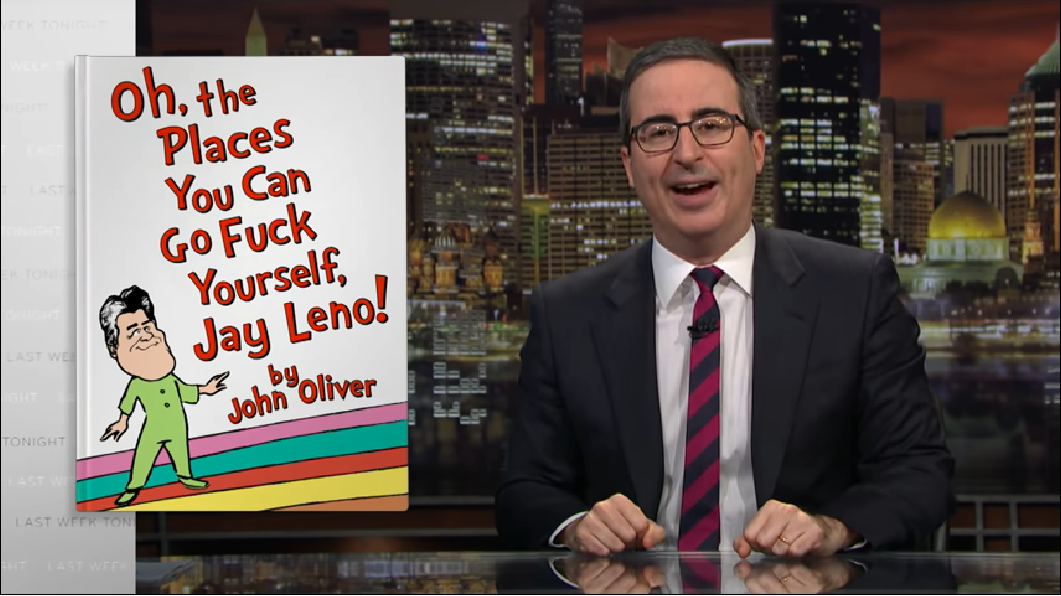
Bonus: here’s John Oliver’s Oh! parody from his recent segment on online shaming:

from Blogger https://ift.tt/2Fr18IO

Posted in Uncategorized | Tagged , , | Leave a comment

court, while uncomfy with some Amazon techniques, declines to grant PI

Comphy Co. v. Amazon.com, Inc., NO. C18-1460RSM (W.D. Wash.
Mar. 12, 2019)
The Comphy Company markets itself as a luxury company,
historically supplying its linens to luxury spas. Ultimately, Plaintiff decided
to start retailing its products online through its own website, though it
doesn’t market directly to customers and instead relies upon word of mouth and
first-hand exposure at hotels, spas, and bed and breakfasts utilizing its
products.
Amazon solicited Comphy several times to sell its products
on Amazon’s platforms, but Comphy declined based on its luxury strategy.
Nonetheless, Amazon bought keyword advertising utilizing keywords including
COMPHY from several search engines, resulting in ads for, e.g., “Comfy Sheets
Queen”; “Shop Comfy Sheets” “Comphy Co Sheets”; and “Comphy Company Sheets at
Amazon.” Likewise, if consumers use Amazon’s own-site search and start typing “comph,”
Amazon’s search bar provides possible searches including for “comphy sheets,”
“comphy company sheets,” and “comphysheets” along with seven other unrelated
possible searches. Because Comphy’s products are not available through Amazon,
a search for “comphy sheets” provides products similar to Plaintiff’s products,
including bedding offered for sale by “Comfy.” On one product advertised in
response to a search for “comphy sheets,” Amazon prominently displayed
“Amazon’s Choice for ‘comphy sheets,’” though Amazon represented that it had
stopped doing that specifically (but didn’t agree to an injunction requiring
that cessation).
Comphy projected a significant increase in its online sales
in 2018 but hadn’t met that growth rate. It requested an injunction against
Amazon’s allowing third parties’ unauthorized use of COMPHY or highly similar
terms such as COMFY to promote bedding, sheets, pillows and related products;
selling merchandise under the COMPHY COMPANY, COMPHY SHEETS or COMFY SHEETS
storefront in connection with those products; using “Comphy Company Sheets”, “Comphy”
(either alone or with other words), or “Comfy” applied to allegedly infringing
products (either alone or with other words) to display “infringing and
unlabeled third-party sheets”; autosuggesting searches for “Comphy”, “Comphy
Sheets”, “Comphy Company” and “Comfy Sheets” when users begin to type the first
few letters; using “Comphy” on product search result pages in phrases like
“Amazon’s Choice for Comphy Sheets”; and using COMPHY or COMFY SHEETS as
keywords with online advertising networks. The breadth of Comphy’s claims and
its failure to segregate particularly disturbing uses from the other behavior
it challenged doomed its request for injunctive relief.
Comphy’s failure to disaggregate Amazon’s uses made it
unlikely to succeed on the merits overall.
First, it wasn’t clear whether or to what extent Comphy had
a valid mark in “Comphy” alone. Its registrations were for stylized versions of
its name. The presumptive validity of the registration was rebutted for these
purposes because, first, the registration was for goods other than those at
issue here, specifically: “Linens and bedding for health spas, namely, towels,
pads in the nature of bed pads, mattress pads and table pads, sheets, duvets,
comforters, pillow cases, pillow shams, and table skirts.” That didn’t cover the
consumer bedding at issue here; Amazon wasn’t alleged to infringe on the spa
market. Second, the registration didn’t cover the “bare” word mark, which
matters because “comphy” is a mere misspelling of the descriptive-for-linens
term “comfy.” Comphy itself testified that it consistently used the
design/logo.

The registered marks

Comphy didn’t succeed in establishing rights in “comphy” as
a text mark. Plaintiff may not “remove a common descriptive word from the
public domain by investing his goods with an additional quality, thus gaining
the exclusive right to call his wine ‘rose,’ his whisky ‘blended,’ or his bread
‘white.’” “Similarly, Plaintiff does not have the exclusive right to call its
goods ‘comfy.’” Comphy didn’t establish commercial strength; it argued that it
was the “brand standard” for luxury hotels, spas, and bed and breakfasts and
that it has “expended extensive sums annually since 2003 on advertising to
promote its Comphy brand and branded products, via trade shows and other advertising
and marketing in industry publications targeting bed and breakfasts.” But that
all involved use of the stylized “C” mark, “which lends distinctiveness to the
mark.” Nor did strength in the luxury spa market indicate strength in the
consumer retail market, especially since Comphy doesn’t market to consumers but
relies on personal exposure and word of mouth.
Nor was Amazon’s use clearly confusingly similar. Whether
the use was confusingly similar depended, in part, on the strength of the mark.
Network Automation thought that having
an inherently distinctive mark could lead to an inference that a consumer who
uses the mark is searching only for that particular source (an assumption that
is itself often unwarranted), but that reasoning didn’t apply here. Amazon
argued that COMPHY is a common misspelling of “comfy”: within Amazon reviews,
COMPHY is used in reference to bedding only 9% of the time and used in
reference to Comphy’s goods only slightly more than 1% of the time. The court
agreed that use of “comphy” as a search term didn’t necessarily indicate an
intent to search for Comphy’s products, even when it was used in reference to
bedding. Amazon’s survey also determined that 13% of consumers regarded COMPHY
as referring to a particular source for bedding, but that more than 12% of
those consumers also regarded “comfort”—a non-existent control—as also
referring to a particular source for bedding. [Clever control, since there are
“comfort + other word” marks out there.]
Proximity of goods and similarity of marks did weigh in
Comphy’s favor. In a footnote, the court indicated that its analysis might
differ “profoundly” if Comphy had focused only on Amazon’s search engine ads for
“Comphy Co Sheets” at Amazon, which makes sense to me, or on Amazon’s use of
the search term “comphy sheets” within its own website to offer consumers
“comfy” brand sheets or other sheets marketed as comfy or comfortable, which as
stated doesn’t—if the sheets are plausibly comfy, then descriptive use should
be just fine. (Though admittedly that isn’t easy to show in the Ninth Circuit,
given its defiance of the Supreme Court’s view in KP Permanent.) Anyway, Comphy “elected to lump the contexts and
uses together, and the Court declines the invitation to scour the limited
record to craft a legally defensible injunction.” In particular, only uses of
“comphy” by an Amazon customer who perceived that word as a mark but who
confusedly bought “comfy” sheets instead would involve confusion; other
scenarios involved no confusion at all, or at most diversion. “And, the Court
can only determine whether a customer knows of Plaintiff’s sheets based upon
the strength of the mark.”
There was evidence of actual confusion, including Amazon
reviews referring to Comphy and a declaration from an Amazon consumer who
intended to purchase Comphy sheets, bought “Comfy Sheets” on Amazon, realized
his mistake when the sheets arrived, and returned the Comfy Sheets. The court
found the evidence of actual confusion “often compelling,” but this was only a
small percentage, and Amazon pointed out that people who pick descriptive terms
invite a certain amount of confusion. “The Court agrees that some actual
confusion may exist even if a reasonably prudent consumer would not be
confused.”
Marketing channels: favored Comphy. Degree of care: Comphy’s
self-positioning as a luxury company meant its consumers weren’t “wholly
unsophisticated”; neutral.
Amazon’s intent: Amazon’s prior solicitation of Comphy’s business
didn’t indicate a bad intent; there was no evidence that the prior business inquiries
were related to Amazon’s current actions. Intent was “essentially neutral.”
Balancing the factors, there wasn’t a likelihood of success
on the merits.
Separately, Comphy didn’t show irreparable harm. Sales
growth short of Comphy’s ambitions wasn’t irreparable harm, nor did Comphy
adequately tie its lower-than-desired rate of increase to Amazon’s actions. Nor
would money damages be inadequate to remedy this “mainly financial” harm.
Lost control over reputation: “misuse of a trademark no
longer results in a presumption of irreparable harm.” Comphy showed evidence of
consumer confusion and dissatisfaction, but dissatisfaction with Amazon’s
offerings in the absence of confusion wasn’t relevant. Only if dissatisfaction
were attributed to Comphy would there be harm to its brand, and there wasn’t
evidence of that. Nor did Comphy explain why final remedies wouldn’t be
adequate. “Indeed, this case appears quite distinct from prior cases where
interaction with confused consumers cannot be remedied because those consumers
are unknown to the parties. Here, there seems to be a much higher chance that,
if liable, Defendant could contact almost every purchaser of the allegedly
inferior products and seek to repair any damage that may have been done to
Plaintiff’s brand.”
In conclusion, the court suggested that Amazon was very
close to (and perhaps even over) the legal line in some of its acts (“Comphy
Co.” in keyword-triggered ad text!), but still declined to grant relief on this
record.

from Blogger https://ift.tt/2ugp0IU

Posted in Uncategorized | Tagged , , , | Leave a comment

Apple’s misleading use of “episode” to describe promo clips could lead to liability (w/o its contract)

Zaragoza v. Apple Inc., 2019 WL 1171161, No. 18-cv-06139-PJH
(N.D. Cal. Mar. 13, 2019)
Plaintiffs sued Apple for how it sells TV seasons on its
iTunes store. The home page for each season “provides general information about
the season and three purchasing options,” which include buying individual
episodes, buying an existing full season, and buying all current and future
episodes of an as-yet-to-be-completed season (Season Pass). Apple represents
the number of “Episodes” available in a season on each season’s home page, with
individual video clips in a horizontally scrolling list along the bottom, with
cost information and text along with a thumbnail image.

Plaintiffs alleged that Apple delivers fewer than the
advertised number of episodes with its “Buy Season” or “Season Pass” options,
because Apple counts both promotional videos and what consumers allegedly
understand the word “episode” to mean—plot-based episodes of a television
show—in its advertised number of episodes. Plaintiffs thus received fewer
episodes than they believed they were purchasing, and also received a smaller
discount by buying the entire season than they believed they were getting
compared to buying individual episodes. For example, plaintiff Zaragoza
purchased a season of “Genius: Edison” that advertised “13 Episodes” at the
time of purchase, but only six of those 13 were plot-based episodes, and seven
were promotional videos. By season’s end, Zaragoza received only four more plot-based
episodes and iTunes was advertising “22 Episodes,” which included ten
plot-based episodes and 12 promotional videos. Likewise, iTunes ultimately advertised
“17 Episodes” for the first season of “Killing Eve,” but only eight of those
videos were actually “episodes,” as plaintiffs allegedly understood the term.
Each “episode” can also be selected, which then presents
more detail about it, including a title, the “episode number,” the length of
the video clip, its individual price, and a written description.
Apple argued that plaintiffs’ interpretation of “episode”
was implausible and that a reasonable consumer had to understand that “episode”
includes advertisements, trailers, promotional videos, and other videos that
are not part of the show’s narrative. Apple contended that its scrollable list
of videos appearing immediately below the word “Episode” provided context that
necessarily dispels any belief to the contrary.
This was not the “rare situation” where plaintiffs’ alleged
understanding of the word “Episodes” was implausible as a matter of law. “It is
plausible that consumers understand the word ‘Episode’—particularly in the
context of a description of a season of a television series—to mean an episode
that is part of the television show’s season, and not a commercial for the show
or another type of promotional or behind-the-scenes video. Reviewing the word’s
definition in readily-available dictionaries confirms that plaintiffs’ alleged
understanding could be found reasonable by a trier of fact.” [Notably, those
dictionary definitions didn’t suggest that Apple’s interpretation was also
reasonable.] Though context does matter, the court wasn’t willing to hold that,
as a matter of law, a reasonable consumer must scroll through the list of
videos in sufficient detail to view the curative information. Moreover, there
was a factual issue about what consumers of the Season Pass feature would be
able to view in the list of videos when making their purchases. “The Apple TV
appears to make no representation about how many future episodes there will be,
but rather reports only on the total number of video clips associated with a
show’s season at the time the consumer views that season’s home page.” If it
said there were 10 episodes at the time of purchase and there were 5 narrative
episodes and 5 promo videos at the time, a reasonable consumer might expect
that 10 episodes was the total number of narrative episodes in the season.
Moreover, there were factual questions “concerning how much a consumer would
have to investigate into the Apple TV menu structures to be exposed to much of
the allegedly-curative information Apple describes.”
Apple also argued that it didn’t sell “goods or services”
within the meaning of the CLRA, but only licenses to view content. The CLRA definitions
say “(a) “Goods” means tangible chattels bought or leased for use primarily for
personal, family, or household purposes, … (b) “Services” means work, labor,
and services for other than a commercial or business use….” And it provides that
it “shall be liberally construed and applied to promote its underlying
purposes, which are to protect consumers against unfair and deceptive business
practices and to provide efficient and economical procedures to secure such
protection.” The complaint alleged that the “Season Pass” was a service, including
a promise to offer current and future episodes for viewing on an ongoing basis
as the season progresses. The court refused to take judicial notice of the
alleged contract between the parties. Though these purchases weren’t “tangible
chattels,” plaintiffs plausibly alleged a purchase of services and there was at
least a factual dispute. [We call VOD a service, even if it inherently involves
“licenses” as well.]
Warranty claims survived for similar reasons, though the
California U.C.C. applies only to contracts for the sale of “goods.” Unlike
under the CLRA, goods are “all things (including specially manufactured goods)
which are movable at the time of identification to the contract for sale[.]” Courts
look to the “essence of the agreement” and “have generally found that
‘mass-produced, standardized, or generally available software, even with
modifications and ancillary services included in the agreement, is a good that
is covered by the UCC.’ ” Plaintiffs adequately alleged that the essence of the
agreement concerned the sale of the episodes. (See also the “Buy Now” button
and this
very helpful article by Aaron Perzanowski & Chris Jay Hoofnagle
.)
“Episode” could be an affirmation of fact or promise relating to the goods sold
and therefore a warranty.

from Blogger https://ift.tt/2FjurMo

Posted in Uncategorized | Tagged , | Leave a comment

Lanham Act claim based on patent threats fails even with invalidation of the patent

American Fireglass v. Moderustic, Inc., — F.Supp.3d —-,
2019 WL 1227963, No. 15-CV-2866 JLS (BGS) (S.D. Cal. Mar. 15, 2019)
The parties compete in the market for pieces of broken
tempered glass for use in fireplaces and fire pits (Moderustic also sells
“fireglass” for use in aquariums), where it apparently gives an appealing
visual effect (fire on ice). Moderustic obtained a patent for a method of
creating tumbled tempered glass and began contacting American Fireglass, its
dealers, and other glass sellers alleging infringement. In a newspaper article,
its principal stated that “he hopes to shut down competition and bring his
annual sales up.”
American Fireglass originally tumbled many of its products,
but by November 2014 it had completely “stopped tumbling the tempered glass
fragments that it sold because tumbling slowed production and caused the glass
fragments to become scratched and dull and less desirable.” It “began removing
references to tumbling its fireglass from its advertising and promotional
material, including its web site.” However, it “mistakenly overlooked some
products that appeared on its website” but “removed these remaining references
to tumbling … immediately after it was brought to [Plaintiff’s] attention in
August 2016.”
American Fireglass sued Moderustic to invalidate the patent
and for its patent-related threats; Moderustic counterclaimed for false
advertising about tumbling. The court invalidated the Moderustic patent as
obvious. Its remaining counterclaim, false advertising, survived summary
judgment because the claims on the website were literally false as to some
products, and there is no “de minimis damage” exception to the Lanham Act. [The
real issue here sounds like it might be materiality.] “[A]n inability to show
actual damages does not alone preclude [ ] recovery” under the Lanham Act, but
the real issue was American Fireglass’s lack of evidence on lack of harm.
Moderustic sought summary judgment on the patent-based
Lanham Act/UCL claims. In the Ninth Circuit, “where Lanham Act claims … are
based on a defendant’s representation that someone infringed his patent,
plaintiff must show that defendant’s representation was made in bad faith.” Moderustic’s
statements in letters that it had been issued patents covering its methods
weren’t literally false—it had an issued patent at the time, and while the PTO
had rejected a different patent, “it was technically being reconsidered by the
Federal Circuit at that time the letters were sent” and the letter clearly
indicated its status. Thus, no reasonable jury could find the statements
misleading, especially since the second patent was duplicative of the first.
Nor was there evidence of bad faith. “Without a showing that
Defendant had some malicious intent, rather than simply asserting its rights as
the patentholder, the Court cannot find bad faith present here.” The same
result obtained under California’s UCL.

from Blogger https://ift.tt/2uj8aZR

Posted in Uncategorized | Tagged , | Leave a comment

commercial speech requirement defeats Lanham Act claim against competing news channel

Tang v. Guo, No. 17 Civ. 9031 (JFK), 2019 WL 1207859
(S.D.N.Y. Mar. 14, 2019)
Plaintiff Tang is a political activist, author, and “one of
the leading Chinese political dissidents.” He currently runs two pro-democracy
nonprofit organizations and co-founded the online, independent media outlet
“Conscience Media,” which are supported with donations. Tang also “conducts and
host[s] conferences and fundraising events.”
In early to mid-2017, defendant Kwok, “a Chinese
multi-billionaire and real estate mogul,” began to market a YouTube series,
“Everything Is Just Beginning.” Tang alleged that the real purpose of
“Everything Is Just Beginning” “was to compete with Mr. Tang personally and
socially, as well as professionally, in the online media business.” Kwok
allegedly “began to contact Tang’s potential donors” to dissuade them “from
doing business with or contributing to … Tang or his online media outlet,
Conscience Media.” Kwok also began posting “taunting material and defamatory statements”
about Tang and his wife Jing on YouTube and Twitter, accusing them of being
spies and accusing Tang of defrauding donors and of being a “swindler” and
convicted rapist. As a result, many individuals allegedly cancelled their
upcoming trips to Tang’s Democratic Revolutionary Conference and Tang lost
donors to his organizations and website.
Tang sued for violation of the Lanham Act and brought
various state law claims for slander, tortious interference, and the like. The
court dismissed the Lanham Act claim for want of commercial speech, and
declined to retain jurisdiction over the pendent state claims.
Tang argued that Kwok’s web postings were commercial speech
because he made them to divert viewers and donors from Tang’s media platform to
“Everything Is Just Beginning.” In addition, Kwok allegedly presented links to
his real estate properties alongside his videos. The court found that Tang
failed to adequately allege economic motivation from his communications on
YouTube, Twitter, and to individual donors. Though Kwok allegedly sought to
gain viewers, they didn’t allege that he intended to profit from that increase
by, for example, ad revenue or donations. As to links to Kwok’s Chinese
properties, there were no allegations that Kwok’s communications were made with
the intent of gaining potential customers to his real estate ventures. As the
court noted, the subject matter of the videos didn’t relate to Kwok’s hotel
business.

from Blogger https://ift.tt/2FfZJUm

Posted in Uncategorized | Tagged , | Leave a comment

Expedia’s “sold out” labels and diversionary phone numbers for hotels lead to class certification

Buckeye Tree Lodge & Sequoia Village Inn, LLC v.
Expedia, Inc., No. 16-cv-04721-VC, 2019 WL 1170489 (N.D. Cal. Mar. 13, 2019)
Really interesting false advertising class action, with a
smaller-than-plaintiffs-wanted class of hotels certified against Expedia, which
offers hotel bookings on its websites. The plaintiffs own hotels that are not
available through Expedia. Apparently, the information of a hotel that hasn’t
contracted with Expedia sometimes “finds its way onto one of the numerous
websites Expedia operates, including Expedia.com, Hotels.com, Orbitz.com, and
Travelocity.com.”  When customers search
for their hotels on Google or within one of Expedia’s websites, Expedia
allegedly falsely suggests that these hotels can generally be booked on the
websites, but that they are “sold out” for the period that the customer wants
to book them. Expedia then allegedly steers customers to similar hotels that
are, in fact, available on its websites. 
I’m interested in what Eric Goldman will think—he generally doesn’t like
holding websites liable for design features, but “sold out” sure seems likely
to mislead consumers. The Lanham Act is strict liability, and it may make sense
to require advertisers to bear the costs of mistakes like this one–as this case indicates, they lack nonlegal incentives to fix the problem on their own.
An ad on Google may offer a customer the chance to book a room at the searched
hotel through Expedia’s websites. When the customer clicks on the ad and
navigates to the “infosite” page for that hotel on Expedia’s sites, they will
see a picture of the hotel, a map of where it’s located, a star rating, and
details about the property’s amenities, like parking, wifi, and breakfast. Sounds
pretty standard for a website that can provide bookings, but … “Next to the
hotel’s name and information, the website will communicate some variation of
the message: ‘We are sold out.’” The same basic thing happens to a customer who
starts searching on an Expedia site and picks a specific not-carried hotel from
the list of search results.
Expedia also lists a phone number with each hotel, both on
the infosite and search results pages. But “[t]he numbers simply connect to the
Expedia call center,” and call center employees are trained on how to handle
“customers [who] think they are calling the hotel directly,” “[b]ecause … the
placement of our phone numbers within the hotel search results or on the hotel
details page of the website[ leads] some customers [to] think they are calling
the hotel directly.” The employees are instructed to encourage callers to book
at hotels that have booking agreements with Expedia.  (Okay, even I think an initial interest
confusion claim passes the laugh test here.)
For named plaintiff Buckeye Tree Lodge, from January 2015
through August 2016, 149 people landed on the Buckeye infosite page on Expedia;
four of those people subsequently made a reservation with another hotel during
the same visit to the website.  Only one
of the named plaintiffs was able to get itself removed from Expedia before
joining the lawsuit; the others weren’t until they sued/joined the suit.
To certify a Rule 23(b)(2) class to pursue injunctive
relief, the plaintiffs needed to show standing, including a likelihood of
future injury for the class. Expedia argued that the named plaintiffs lacked
standing because they weren’t listed on the websites anymore. But defendants can’t
“rob a court of jurisdiction by taking strategic unilateral action to moot a
plaintiff’s claims before the plaintiff has had the opportunity to seek class
certification.” Expedia’s reform wasn’t “genuine, irrefutably demonstrated, and
comprehensive”: there was no evidence that it had “made a meaningful attempt to
ensure that its website will stop suggesting that hotels it cannot book are
sold out.” Indeed, the court thought that the named plaintiffs themselves could
end up on Expedia’s websites again because Expedia hadn’t taken measures to
stop that.
Rule 23(a)’s numerosity, commonality, typicality, and
adequacy of representation requirements were satisfied, as was Rule 23(b)(2)’s
condition that the plaintiffs seek “uniform relief from a practice applicable”
to the whole class, but only for a specific class: “owners of hotels that do
not have booking agreements with Expedia and are not capable of being booked
through Expedia, but appear on Expedia’s websites.”  Commonality was the only serious question,
and proceeding as a class would generate common answers to the false advertising
requirements given the facts above. Did the phone numbers mislead consumers? Did “We are sold out” mislead the reasonable consumer
to think that the hotels are fully booked? If so, were the hotels likely to
lose business due to Expedia’s conduct? Classwide evidence could be provided,
including through surveys.
Expedia argued that it used different language during the
class period, including “We have no rooms available for your selected dates
…”, “No rooms available on our site for the selected dates …”, or “Sorry,
the [hotel name] is not available on Hotels.com for your travel dates. You may
choose alternative travel dates OR select from the hotels below.” It didn’t
track which unavailability messages were displayed to which customers. However,
three of the websites used the same unavailability message on their search
results page throughout the class period: “We are sold out.” Further, the
messages weren’t so different or so numerous that they couldn’t be evaluated
through common proof. And because a class was being certified only for
injunctive relief, the plaintiffs might only need to evaluate the current messages.
Expedia also argued that typicality was defeated by the
myriad unique ways through which the plaintiffs’ information landed on the
websites. For example, named plaintiff Buckeye had begun the onboarding process
to create an account with Expedia, but ultimately did not go through with the
agreement. Plaintiff Mansion’s information got to Expedia because the hotel had
contracted to share its information with a third party, TravelClick, that
itself disseminated the information to three distribution systems, which in
turn gave the information to Expedia. When the Mansion ended its relationship
with TravelClick, two of the distribution systems failed to tell Expedia that
it would no longer be providing the Mansion’s data, and the other named
plaintiffs had similarly complicated stories of data-sharing.
But the plaintiffs were all not capable of being booked through
Expedia, which made the Lanham Act question of deception uniform.  Other common questions included: “Given the
automated-but-disorganized nature of the online travel industry, does the
Lanham Act impose on Expedia an affirmative obligation to institute controls to
ensure that its systems are not causing customers to be misled about
availability at unaffiliated hotels? And if so, is Expedia satisfying this
affirmative obligation?”
And injunctive relief would uniformly benefit the class
members. “Expedia could also be required to clearly indicate when listed phone
numbers connect directly to its call centers. It could be enjoined to ensure
that Google ads pertaining to unbookable hotels clearly say as much. And … Expedia
could be ordered to take measures to better comb its system to ensure that
unaffiliated hotels are not being listed in the first place.”
The court declined, however, to certify a Rule 23(b)(3)
class to seek disgorgement Expedia’s profits for want of predominance. Plaintiffs
“failed to proffer a model or a legitimate theory for how those damages would
be estimated, let alone disseminated among class members.” They couldn’t
explain how they’d prove sales related to Expedia’s false advertising. An
earlier model estimated the percentage of all hotels in Expedia’s inventory
that were actually unaffiliated and were marked, like the plaintiffs’ hotels
were, as “sold out.” Plaintiffs’ counsel previously proposed that their
disgorgement award should be that percentage of Expedia’s total revenue, but
that percentage wasn’t logically connected to consumers’ reaction to the false
advertising here.  Nor would the court certify
a limited class action to decide common issues of liability under Rule 23(c)(4)
class, because that wouldn’t advance the disposition of the litigation as a
whole.

from Blogger https://ift.tt/2HvoBuK

Posted in Uncategorized | Tagged | Leave a comment

consumer successfully pleads falsity for “weight management” supplement

Nathan v. Vitamin Shoppe, Inc., 2019 WL 1200554, No. 17-cv-01590-BEN-KSC
(S.D. Cal. Mar. 12, 2019)
Vitamin Shoppe sells Garcinia Cambogia Extract with a label
promising “Weight Management” and “Appetite Control.” Nathan alleged that this
was false and misleading, since GCE (also known as HCA) can’t deliver those
benefits over placebo. Dismissing a previous complaint, the court emphasized a
distinction between “Weight Management” and “Appetite Control” and the alleged
misrepresentations about weight loss, which the court thought was completely
different. (Given the reasons most, perhaps all, people take supplements to
manage their weight and control their appetites, I consider that exactly the
kind of legalistic distinction that consumer protection law is supposed to
protect consumers against.)
In the amended complaint, Nathan added references to more
studies and alleged misrepresentations about weight management and appetite
control specifically.  
First, this wasn’t a pure lack of substantiation claim.  “[A]n advertising claim is false if it has ‘actually
been disproved,’ that is, if the plaintiff can point to evidence that directly
conflicts with the claim.” Nathan did so here because her cited studies tested,
among other things, whether the supplement might affect body weight regulation
by inducing satiety and reducing food intake, and found no statistically
significant difference from placebo, showing that it was ineffective “with
respect to satiety and energy intake.” 
The study measured variables relevant to “Appetite Control” and “Weight
Management” (e.g., hunger, appetite, anticipated food intake, desire to eat,
fullness, satiety, and thirst) and reached a conclusion contradicting the label
claims.
Nathan further alleged that, “for a supplement to be
effective in aiding weight management, it must help users either (1) lower
their energy intake, (2) increase their energy output, or (3) otherwise alter
the manner in which the body processes the energy they consume.” As pled, her
cited studies indicated that the supplement did none of these things: the
supplement didn’t change calorie intake, metabolism or energy expenditure, or
fat oxidation (the only relevant mechanism for (3)).  The court declined to parse the studies
further on a motion to dismiss.
Vitamin Shoppe argued that no reasonable consumer would be
deceived because the label didn’t include words like “weight loss” or “appetite
reduction,” and provided a disclaimer: that its “statements have not been
evaluated by the Food and Drug Administration,” and it “is not intended to
diagnose, treat, cure or prevent any disease.” Nonetheless, it was still
plausible that a consumer would be misled by “weight management” and “appetite
control.” Nor would the disclaimer (which of course doesn’t actually disclaim
any of the allegedly false/misleading parts of the statement, even if it goes
indirectly to the level of proof behind them) suffice on a motion to dismiss.
Vitamin Shoppe argued, as the awful and
now-rejected-in-the-9th-Circuit In
re GNC
case did, that “the mere existence of scientific support and an
acknowledgement that the issue is not settled are fatal to Plaintiffs claims.” That
was a weighing of the evidence inappropriate on a motion to dismiss.
The court also declined to stay the case under the primary
jurisdiction doctrine. This was “a typical false advertising case well within
the province of the courts,” and there was no evidence that the FDA had any level
of interest in regulating GCE products in this context.
Under settled law, though, Nathan couldn’t assert claims for
injunctive relief because she alleged the product was worthless, so she’d have
no reason to buy it if the labels were trustworthy.
Rule 9(b): it was enough to allege that in approximately
“February 2017 in San Diego,” she “purchased a 180-caplet bottle of [the
Product] for approximately $20 from Vitamin Shoppe” without identifying the
exact address, date of purchase, purchase price, or whether she paid cash or
credit. Nor was she required to allege that she consumed the product, that she
took it as directed, or her weight and exercise habits, none of which were
relevant to the alleged mislabeling.
For the reasons discussed above, she also properly alleged a
breach of express warranty claim: these were plausibly affirmations of fact or
promise, not “merely indications of use for the Product.” So too with the
implied warranty of merchantability; her claims plausibly indicated that the
product was “not ‘fit for the ordinary purposes for which such goods are used’
or fails to ‘conform to the promises or affirmations of fact made on the
container or label.’” She wasn’t required to try the product to bring these
claims.

from Blogger https://ift.tt/2OfhA1D

Posted in Uncategorized | Tagged , , | Leave a comment

mere market participation insufficient to allege standing in noncomparative advertising case

AAVN, Inc. v. Westpoint Home, Inc., 2019 WL 1168102, No.
17-CV-8329 (N.D. Ill. Mar. 13, 2019)
AAVN sells woven textile fabrics, including fabrics made
from a cotton-polyester blend. AAVN’s president owns patents that teach a
method of manufacturing a cotton-polyester blended textile to successfully
achieve high thread counts. WestPoint sells bed sheets it advertises as 1,200
thread count sheets, but that allegedly have a 257 or 236 thread count according
to a third-party laboratory test of two samples.
The court found that AAVN lacked standing.  AAVN didn’t allege that it markets or sells
high thread count sheets, and it didn’t connect how the alleged false
advertising on WestPoint’s sheet packaging harms AAVN. Nor did it allege how
deception of WestPoint customers would harm AAVN’s reputation for purposes of
proximate cause.  [Lexmark has the potential to contract standing in non-concentrated
markets, which this may well be.]  Even
if AAVN had a subsidiary selling high thread count textiles, that didn’t conver
standing on the parent corporation, and even if it could sue on behalf of a
subsidiary, there was still no link alleged between WestPoint’s alleged false
advertising and its own sales or reputation. “Although under some circumstances
a plaintiff may present a viable complaint without alleging specific damages,
AAVN’s failure to allege how influence of WestPoint’s customers actually
impacts AAVN’s business proves fatal.”
Then, and quite unnecessarily, the court said that AAVN “fails
to assert any specifics regarding the process by which Vartest determined that
WestPoint’s sheets had a lower thread count than advertised.” That doesn’t seem required by Twiqbal.

from Blogger https://ift.tt/2Hth6o9

Posted in Uncategorized | Tagged , | Leave a comment

misrepresentation that OSHA rules required certain tools was literally false

Louisiana-Pacific Corp. v. James Hardie Building Products
Inc., 2018 WL 7272047, No. 18-cv-00447-JPM (M.D. Tenn. Dec. 20, 2018)
“This is an unfair trade practices action between two fierce
competitors in the residential and multi-family home siding market.” Defendant JH
is the dominant producer of cement board (Hardie Board), though the court
redacted details about its percentage in that category. LP is the industry
leader for OBS, “a type of engineered wood siding and a product which is
synonymous with its brand.” It uses agents such third party defendants The
Kruse Brothers to provide training seminars across the U.S. that compare LP’s
products with others in the industry including JH.
The court granted a preliminary injunction against one LP
sales sheet but not against the other claims challenged by JH (both parties
were challenging each other’s ads).  Respirable
crystalline silica (RCS) is a potentially dangerous dust byproduct from cutting
fiber cement, and OSHA standards explain when levels of RCS require additional
safety measures. An Action Level (25 micrograms per cubic meter of air averaged
over an 8-hour work day) triggers a specific standard, which includes a
suggested table of safety measures meant to assess and limit exposure.  Some of the options include not using a
circular saw, warning other people nearby, and, in certain circumstances, using
a respirator.
LP and The Kruse Brothers made statements in English and
Spanish that circular saws are now prohibited and respirators are a requirement
when cutting fiber cement. LP’s OSHA sale sheet included a summary of the
requirements of new OSHA Regulations and included a heading “Special Tools Now
Required For Cutting Fiber Cement,” under which it listed specific anti-dust
features for saws and respirators. JH argued literal falsity because those
measures don’t apply if RCS does not rise to the Action Level or if the
employer assess and limits exposure below the permissible level. The court
agreed. “LP’s language conveys that a worker cannot comply with OSHA
regulations without following each of the bulleted requirements. Labeling those
bullets points as requirements is literally false” because an employer can do
other things to limit exposure (though the court doesn’t explain how likely
that is to be possible).  Without
qualifications such as “if an employer chooses to follow the Table 1 safe
harbor they may be required to…” the bulleted statements “would be understood
as categorical.”
An LP rep sent an email to various third parties, customers,
and potential customers after the new OSHA silica rule came out likewise
claiming that “OSHA regulations prohibit the utilization of a standard circular
saw for cutting fiber cement siding. Doing so, could result in an OSHA imposed
citation,” though he later acknowledged that a circular saw could be used with
a dust collection system to cut fiber cement siding.  OSHA gives specific recommendations as to how circular
saws can be used within the Table 1 safe harbor provisions; his statement was
literally false, though the statement that using a standard circular saw “could
result in an OSHA imposed citation” was neither literally false nor misleading.
Similar, but more disputed, claims were allegedly made by
the Kruse Brothers at LP training sessions. 
If phrased as absolutes, they’d be literally false, but statements that
workers might have to warn neighbors
or use respirators wouldn’t be literally false or misleading, and it was hard
to say because the people listening didn’t necessarily take exact notes.  [Interesting question: how does the court
know that statements about what might be necessary aren’t misleading, absent
more information about probabilities/the circumstances under which such
measures would be necessary?  More
interesting question: assume that they said “might,” but many people—like the
witnesses here—took away “must.”  Why
isn’t that misleading?  I think there’s a
possible answer having to do with the cost-benefit analysis of providing useful
information to people even if some misunderstand that information, but more is
needed than just assuming that the modality of the verb is dispositive.]
The court also found that it wasn’t literally false or
misleading to emphasize that no respirator was required to work with LP
products; nothing about that suggested that a respirator was required to install other materials.
JH also challenged various social media statements:
• We are definitely making Hardie
nervous (in response to one of its contractor’s statements that OSHA is
cracking down on the Silica dust created from cutting James Hardie Fiber Cement
Siding)
• Use of a circular saw could
result in an OSHA imposed citation
• Moral of the story. Don’t want to
be stung by OSHA. Use LP Smartside as your exterior cladding of choice (made
when forwarding an article stating that silica citations hit 116 in 6 months,
allegedly implying that those citations were issued to siding contractors using
fiber cement products)
But these weren’t shown to be literally false. “Making
Hardie nervous” was an opinion. And it was true that a circular saw could
result in an OSHA imposed citation if it is not used according to the Table 1
safe harbors and the exposure limit was exceeded. Likewise with the 116
citations—that was a factual assertion not disputed by JH, and LP didn’t itself
claim that the citations were issued for siding.
LP also used the slogan “the easiest way to operate safely
with silica dust is don’t create it.” The court also thought that was fine: “LP
is accurately describing one way of operating to avoid safety risks of silica
dust,” and it wasn’t saying that was the only
way.
Materiality: LP argued that its statements weren’t material
because they didn’t specifically mention fiber cement or JH. That’s not necessary.
Here, the evidence of deception also supported a finding of materiality; the
OSHA sale sheet was created to convince people to use LP products, and its internal
communications encouraged its sales team to distribute the LP OSHA sale sheet
“as much as possible.”
The individual rep’s statements also produced evidence of
actual deception; one person “informed JH that she intended to discontinue
future work with JH because she believed from LP’s email that circular saws
could not be used to cut fiber cement boards,” while another “forwarded the
Rose email to other potential customers to inform them that circular saws are
no longer an option when cutting fiber cement board.” That was evidence of
materiality. This same evidence showed harm causation.
Thus, there was a limited likelihood of success on the
Lanham Act claims, but not on the Tennessee Consumer Protection Act claims,
since they required showing “an ascertainable loss of money or property under
the TCPA.”  For this, “[s]tatements that
customers said they were thinking about leaving but ended up staying with JH”
were insufficient. Likewise, tortious interference claims require LP to know of
specific relationships under Tennessee law, “and not a mere awareness of the
plaintiff’s business dealings with others in general.” There wasn’t enough
evidence of that here.
The court presumed irreparable harm from the risk to JH’s
reputation from the OSHA sheet, specifically “due to an inability to quantify
it and the difficulty in returning the injured party to the pre-injury
position.” LP wouldn’t be prevented from talking about the OSHA standard, but
only “from making specific statements that are false or misleading when made
out of context.” Thus, an injunction wouldn’t unconstitutionally restrain its
speech and the public interest weighed in favor of an injunction for the sale
sheet. The court didn’t grant an injunction as to the rep’s email, which hadn’t
been shown to be likely to be resent.

from Blogger https://ift.tt/2OgyGfv

Posted in Uncategorized | Tagged | Leave a comment

can a retailer be directly liable for false advertising on packages?

two cases (out of several involving this plaintiff)
Outlaw Laboratory, LP v. Shenoor Enterprise, Inc., 2019 WL
1040644, No. 18-CV-2299-B (N.D. Tex. Mar. 4, 2019)
Outlaw, which makes male dietary supplements, sued
convenience stores because they “advertise and offer for sale” competing male
dietary supplements, the Rhino products, that were allegedly falsely labeled
“all natural” and state they contain “no harmful synthetic chemicals.” (The FDA
has announced that certain products, including the Rhino products, contained
potentially dangerous hidden drug ingredients.) The court found that displaying
and selling the products weren’t enough for [direct] Lanham Act liability. [Secondary
liability seems like a potential theory, though.]
Standing: the court expressed concerns about Article III
standing—whether plaintiff’s injury was traceable to the defendants’ alleged
conduct—as well as Lanham Act standing—whether the injury was proximately
caused by that conduct. I’m pretty surprised by the former, without more
discussion; if plaintiff allegedly lost sales when a consumer bought the products
defendants stocked, then defendants’ conduct was at least a but-for cause of
those losses. But the court disagrees: “it is difficult to see how merely
placing products on display and selling them qualifies as conduct that caused
Plaintiff’s injuries under Article III or the Lanham Act.”
Can a defendant “who merely sells a product at a retail
outlet” be held liable for false advertising under the Lanham Act? Start with
the text:
Any person who, on or in connection
with any goods or services, or any container for goods, uses in commerce
any…false or misleading description of fact, or false or misleading
representation of fact, which…in commercial advertising or promotion, misrepresents
the nature, characteristics, qualities, or geographic origin of his or her or
another person’s goods, services, or commercial activities, shall be liable in
a civil action by any person who believes that he or she is or is likely to be
damaged by such act.
The test has been reframed as requiring “that the defendant
made a false statement of fact about its product in a commercial advertisement.”
The court didn’t believe that it had been alleged that defendants “made” a false statement of fact by offering the falsely
labeled products for sale; only the nonparty manufacturer “made” statements in
commercial advertising or promotion, even with allegations that defendants knew
of the falsity.
Outlaw argued that selling the products necessarily involved
the “use[ ] in commerce” of a “false or misleading description of fact,
or…representation of fact” “in connection with any goods or services, or any
container for goods[.]” [A trademark case would have zero hesitation concluding
that defendants made a “use in commerce” of the Rhino mark, which was on the
very same packages as are at issue here.] But false advertising also requires a
misrepresentation “in commercial advertising or promotion.”
Outlaw didn’t cite binding caselaw supporting its
claim.  [Basically, the court rejects
trademark cases as inapplicable because in trademark cases it’s retailers’ “use”
(which is to say placing on sale) of an infringing mark that causes confusion.  The court doesn’t discuss any policy basis
for the divergent treatment, and if the retailers are “causing” confusion in
those cases even though they don’t create the infringing goods or copy the
infringing mark, then why aren’t they “causing” deception here?  But the court understandably returns to its
conclusion that the defendants must have “made” false statements.]
Another case, JST Distrib. v. CNV, et al., 2:17-cv-06264
(C.D. Cal. Mar. 7, 2018), was factually similar to this one, where the
defendant argued that it hadn’t made the allegedly falsely advertised products
or the ads, but just posted them on its website and sold the products. The
district court held that the website owner could still be held liable because
the plaintiff alleged that the website owner “disseminated the false
advertising through its website.” The court agreed that placing products on
sale in a brick-and-mortar store isn’t “disseminating” false advertising.

The court found other nonbinding cases more persuasive. Cohn v. Kind, LLC, 2015
WL 9703527 (S.D.N.Y. Jan. 14, 2015) (under NY law, retailers’ sale of allegedly
falsely labeled power bars wasn’t advertising); Optimum Technologies, Inc. v.
Home Depot USA, Inc., 2005 WL 3307508 (N.D. Ga. Dec. 5, 2005) (displaying a
competitor’s product under signs labeled with the plaintiff’s product name wasn’t
commercial speech for Lanham Act purposes); and a number of state false
advertising law cases that hold “that a defendant should not be liable,
whatever the cause of action, for merely selling a product affixed with a false
label, so long as the defendant had no role in creating the label.”  These were only minimally persuasive because
of the different legal regimes, but still better than plaintiff’s cases.  Burger v. Lowe’s Home Centers, LLC, 2016 WL
1182266 (Cal. App. 4th Dist., 2016), reh’g denied (Apr. 26, 2016) (“The trial
court agreed with [the retailer’s] argument a retailer cannot be held liable
for the statements of others by merely placing the product on its shelves for
resale. The court determined the false advertising claim was based solely on
the product’s packaging, which was produced by the manufacturer or distributor
and not [the retailer].”); In re Hydroxycut Mktg. & Sales Practices Litig.,
801 F. Supp. 2d 993 (S.D. Cal. 2011) (“Plaintiffs suggest that the Defendant
Retailers can be held liable under the consumer protection laws for placing the
falsely advertised Products on the shelf and failing to disclaim the
Manufacturer Defendants’ representations. However, none of the cases cited by
Plaintiffs…supports this legal proposition.”); Fagan v. AmerisourceBergen
Corp., 356 F. Supp. 2d 198 (E.D.N.Y. 2004) (drugstore was not liable for
negligent misrepresentation for selling mislabeled drugs without evidence that
it “itself, made any false statement or material misrepresentation” or that it
“affixed the label, which contained the alleged misrepresentation”).
The court also analogized to Baldino’s Lock & Key Serv.,
Inc. v. Google, Inc., 88 F. Supp. 3d 543 (E.D. Va. 2015) (Google not liable for
misrepresentations made by third parties in ads), aff’d, 624 F. App’x 81 (4th
Cir. Dec. 4, 2015), and Lasoff v. Amazon.com, Inc., 2017 WL 372948, at *8 (W.D.
Wash. Jan. 26, 2017) (Amazon could not be held liable for “truthfully
depict[ing]” products of third-party sellers that were labeled with false
representations). Lasoff involved a
party, Amazon, who was actually selling the third-party products, like the
defendants here, though it was also a summary judgment case and might not have
reached the same result if Amazon had actual knowledge of the falsity, as
alleged here. [Which is why secondary liability is a better theory.] But Lasoff involved little or no record
evidence, and the allegations of knowledge here were conclusory.
The court was more convinced by the policy implications: “Defendants
undoubtedly sell many products—should they be responsible for scrutinizing and
determining the veracity of every claim on every product label in their stores
simply because they sell the product?” 
[Who should be?  In a globalized
economy, are we so sure that we can always grab the manufacturer?]  The court answered “no” for false
advertising.  It’s not that retailers or
sellers can never be held liable for false advertising, but they can’t be held
liable based solely on display and sale of the Rhino products in their stores.
“[I]f these claims are permitted, the scope of the Lanham
Act would be dramatically expanded. False-advertising cases like this one would
turn retailers into the guarantors of manufacturers that falsely label their products.
The Court declines to construe the Lanham Act so broadly.” [Note that it’s all
right for some: contrast the trademark rule.]
The court allowed leave to replead, but cautioned that “re-litigating
the issues raised in the instant motions through future frivolous, repetitive
filings will result in the imposition of sanctions, including dismissal,
monetary sanctions, and restrictions on the ability to file pleadings in this
court.”
Outlaw Laboratory, LP v. Trepco Imports & Distribution,
Ltd., 2019 WL 1173347, No. 18-cv-00369-JAD-CWH (D. Nev. Mar. 11, 2019)
Outlaw sued two wholesalers and eight retailers of competing
male-enhancement products for falsely advertising “all natural” composition
while containing synthetic ingredients like sildenafil nitrate, aka Viagra.  The remaining defendants moved to dismiss on
standing grounds. The court found standing, but also that Rule 9(b) hadn’t been
satisfied, and dismissed the complaint without prejudice.
In the abstract, defendant-wholesaler Trepco could be sued
under the Lanham Act even though it didn’t  manufacture or make packaging. Disseminating
the false advertising on the products’ packaging could fall within the language
of the Lanham Act (relying on Grant Airmass Corp. v. Gaymar Indus., Inc., 645
F. Supp. 1507, 1512 (S.D.N.Y. 1986) (finding that defendant who independently
distributed and presented false report that it used against plaintiff
competitor could still be liable for false advertising)), a contributory
infringement case not cited by the other Outlaw opinion above.  Nonetheless, the specific allegations here
weren’t enough; the complaint lumped the defendants together too much and didn’t
specify which claims are made by which product or what products Trepco
allegedly sold.
Claims against the retailer defendants failed for similar
reasons, though the court also rejected their Article III standing argument. “In
a false advertising suit, a plaintiff establishes Article III injury if some
consumers who bought the defendant’s product under a mistaken belief fostered
by the defendant would have otherwise bought the plaintiff’s product.” To do
so, a plaintiff may “provide direct proof such as lost sales figures, or may
rely on ‘probable market behavior’ by establishing a ‘chain of inferences
showing how defendant’s false advertising could harm plaintiff’s business.’”  Outlaw’s allegations that the sales of the accused
products hurt sales of its competing products sufficed, even without “solid
data,” at the pleading stage.  It
properly alleged that the retailer-defendants’ acts of putting the accused
products out for sale harmed its own sales. 
Likewise, Outlaw pled statutory standing, even though the parties aren’t
direct competitors.  (Actually, it sounds
like they are—Outlaw alleged that it both made and sold its products directly
to consumers, which sounds like it’s in competition with anyone in the chain.)  The court accepted that, as manufacturer of
these sexual performance supplements, Outlaw was in direct competition with “those
who manufacture, sell, distribute[,] and market sexual performance enhancement
products” and targeted the same customers, which allegations were enough for
Lanham Act standing.
Outlaw, however, made insufficiently specific allegations
about how it knew the retailer-defendants sold the products, when the retailers
stocked them, or how they disseminated the allegedly false messages: “were the
products merely on a shelf available for purchase, or did the retailers display
them in some prominent way?” Rule 9(b) required more.

from Blogger https://ift.tt/2ObXPrX

Posted in Uncategorized | Tagged , | Leave a comment