reading list: parody takedowns on Google

Erickson, K. & Kretschmer, M. (2018) ‘This Video is
Unavailable’: Analyzing Copyright Takedown of User-Generated Content on
YouTube. Journal of Intellectual Property, Information Technology and ECommerce
Law (JIPITEC), 9(1).
From the abstract:
This research investigates factors
that motivate takedown of user-generated content by
copyright owners. We study
takedowns within an original dataset of 1,839 YouTube music video parodies observed between January
2012 and December 2016. We find an overall rate of takedowns within the sample
of 32.9% across the 4-year period. … The variables analysed include commercial
substitution, artistic/moral concerns, cultural differences between firms and
YouTube uploader practices. The main finding is that policy
concerns frequently raised by rightholders are not associated with
statistically significant patterns of action. For example, the potential for reputational
harm from parodic use does not appear to predict takedown behavior. Neither
does commercial popularity of the original music track trigger a systematic
response from rightholders. Instead, music genre and production values emerge
as significant factors.
In particular, lower production
values increase the risk of takedowns, contrary to the hypothesis that
substitution would be a more-feared risk for higher-production-value
parodies.  A clear intent either to
target the song itself or to use the parody to target some other entity both
decrease the risk of takedowns, showing again that the satire/parody
distinction is not a legally helpful one. 
From the conclusion: “The central finding is that rightholders appear to
make complex choices that are assisted by automatic detection mechanisms, with
little concern for the artistic integrity of the creative works they represent.
The significant difference between musical genres suggests that rightholders,
even in the same medium, behave quite differently from their peers.

from Blogger http://bit.ly/2J4MGGd

Posted in Uncategorized | Tagged , , | Leave a comment

Supplement review guide not disguised advertising despite cozy relationship with one manufacturer

Ariix, LLC v. Nutrisearch Corp., No. 17CV320, 2018 WL
1456928 (S.D. Cal. Mar. 23, 2018)
Ariix competes with Usana Health Sciences in the nutritional
supplement market.  NutriSearch publishes
the NutriSearch Comparative Guide to Nutritional Supplements, “a guide to
nutritional products that is relied on by consumers and professionals.” The
Guide’s Gold Medal of Achievement has gone to four different companies:
Ariix made a vigorous effort to
qualify for the Gold Medal, but was denied. According to the complaint,
NutriSearch admitted Ariix had met the standard, but refused to award the
company the Gold Medal because it was reworking its criteria for the
distinction. The existing Gold Medal holders, including Usana, were
“grandfathered” in during this period.
The allegedly false representations were (1) that Ariix or
its products are not as good as Usana or its products and (2) that NutriSearch claims
to be objective and neutral but is actually a shill for Usana.
However, “the legislative history of the Lanham Act suggests
Congress’ intent to avoid trying to regulate consumer reports or consumer
protection groups that review products,” and the benefit of the doubt must go
to “protecting rather than stifling speech” about “matters of public concern.” “The
Court therefore holds that the Lanham Act doesn’t apply to reviews of consumer
products, even if they are alleged to be biased, inaccurate, or tainted by
favoritism.”
But not every soi-disant “review” is actually a review.  “Caselaw is replete with examples of people
and entities positioning themselves as reviewers who were actually engaged in
some form of commercial product promotion.” Nor did the court’s holding apply
to other statutes, such as the FTC Act, which have their own requirements.
[Though given the First Amendment reasoning, it’s not clear why.]  But an actual consumer product review “falls
outside the scope of the Lanham Act’s false advertising provision.”
The court referred to, but didn’t exactly rely on, the
Lanham Act’s “commercial advertising or promotion” requirement.  The Ninth Circuit has adopted the Gordon
& Breach test: 1) commercial speech; 2) by a defendant who is in commercial
competition with plaintiff; 3) for the purpose of influencing consumers to buy defendant’s
goods or services, 4)  disseminated
sufficiently to the relevant purchasing public to constitute ‘advertising’ or
‘promotion’ within that industry.  As the
court noted, Lexmark requires tweaks
to 3), such as construing this element to require that the statements be made
for the purpose of influencing consumers to buy particular goods or
services—whether those are the defendant’s goods and services or someone
else’s. But 1) and 4) remain good law.
But the first and fourth elements were not implicated by
Lexmark’s holding.
Books and articles can sometimes be commercial speech, but if
their main purpose was not the proposal of a commercial transaction, that’s not
going to be commercial speech, even if parts promote sale of a product by the
author. “Where the general purpose of a book is not the promotion of a
commercial transaction, the book may nevertheless contain commercial speech”;
the question then is whether the  commercial
and non-commercial components are inextricably intertwined. Companies are not
allowed to “mask” the commercial nature of a publication “merely by adding
informational content.”
The court found that, based on the allegations of the
complaint, the Guide was noncommercial speech, with any arguably commercial
elements inextricably intertwined with the Guide’s “overriding noncommercial
purpose.” “NutriSearch itself does not sell any of the nutritional products reviewed
in the Guide, and does not have an ownership interest in the companies that
produce them…. [T]here is no allegation that NutriSearch solicits or accepts
paid advertising or that it was paid in any direct fashion for promoting
Usana’s or any other company’s products or disparaging Ariix’s.”  However, in case Ariix could allege additional
facts showing that at least some of the allegedly false or misleading
commercial statements were separable from the noncommercial ones, the Court continued.
Statements about NutriSearch’s neutrality applied to the
entire Guide as a whole:
This guide was not commissioned by
any public sector or private sector interest, or by any company whose products
may be represented herein. The research, development, and findings are the sole
creative effort of the author and NutriSearch Corporation, neither of whom is
associated with any manufacturer or product represented in this guide.
These statements were arguably commercial speech only
insofar as they encouraged people to buy the Guide. There was no allegation
that the statements appeared anywhere other than inside the Guide itself, and
thus they weren’t sufficiently disseminated to the relevant purchasing public
to constitute advertising or promotion within the publishing or bookselling
industry. Moreover, the court didn’t think they were commercial speech.
Furthermore, the Guide’s statements touting its neutrality and reliability could
only plausibly be connected with any harm to Ariix in connection with
statements about Usana and Ariix, so Ariix’s claim could only succeed if the
other statements were actionable.
The complaint didn’t plead facts plausibly suggesting that the
statements about Usana and Ariix were commercial speech, or even that they were
false or misleading. The sheer numbers of companies reviewed suggested that the
Guide was mainly in the business of reviewing a large number of different
products, rather than promoting the purchase of a particular product or even
one company’s products. The complaint plausibly suggested that the Guide was
biased, but not that it was commercial advertising or promotion.
The alleged ties between the Guide and Usana were that the
author and NutriSearch’s current CEO were former Usana employees, and that the
author originally conceived the Guide as a way to promote Usana’s products. “Given
that the Guide is now on its fifth edition, facts surrounding its genesis years
ago are not particularly suggestive of any current financial arrangement with
Usana.”  Favorability to Usana didn’t
mean they were being paid to advertise Usana.
The complaint alleged that Usana compensated NutriSearch
indirectly, because it heavily promotes the Guide and “encourage[es] its
representatives and consumers” to buy it. “In some circumstances, this might
plausibly point to some kind of quid pro quo, but here it does not. It is
entirely normal for a company whose products have been favorably reviewed in a
particular publication to seek to publicize that fact as widely as possible.”  In addition, the complaint alleged that the
author accepted paid speaking engagements for Usana, but has at least once
declined to speak at an Ariix convention.  This could suggest some economic motive, but
there were no factual allegations suggesting that the speaking fees were
under-the-table payments for advertising, and so this suggested at most an indirect
economic motive.  In fact, the author’s
decision to decline an opportunity to speak with Ariix indicated that he gave
up money, which was inconsistent with using speaking fees as payment for
advertising; Ariix implied that some kind of exclusivity arrangement existed,
but didn’t adequately allege such an agreement.
The court cautioned that unpaid advertising could be commercial speech or constitute
commercial advertising or promotion. But without plausible allegations of
payment or of some other kind of quid pro quo, these were noncommercial product
reviews.  “[A]ny alleged economic motive
is too indirect to transform what would otherwise be noncommercial product
reviews into commercial speech or disguised commercial advertising. Even if the
Guide is biased or its evaluations unfair, or Defendants’ objectivity is
tainted by the alleged economic relationships with Usana, there are no
plausible allegations that Defendants are engaged in commercial speech.”
Finally, some of the challenged claims were opinion, not
fact.  The complaint alleged that the
Guide’s ratings system was objective, but said almost nothing specific about
NutriSearch’s ratings process or criteria for the Gold Medal award.  “[T]he Guide’s role appears to be that of an
evaluator that awards ratings up to five ‘stars.’” Although the plaintiff might
not need to allege the exact way ratings were arrived at, without at least some
allegations, it wasn’t plausible that the decisions about how rating criteria were
selected and weighed were objective, making the ratings just opinion.

from Blogger https://ift.tt/2Gyrg60

Posted in Uncategorized | Tagged , | Leave a comment

Feud lawsuit foiled, but questions about transformativeness remain

De Havilland v. FX Networks, LLC, No. B285629 (Cal. Ct. App.
Mar. 26, 2018)
Reversing the trial court’s refusal to dismiss Olivia de
Havilland’s right of publicity and false light claims against FX’s show Feud, the California court of appeals
reasons, “[t]he First Amendment does
not require authors, filmmakers, playwrights, and television producers to
provide their creations to the public at no charge.”  [Now ask about sketch artists and video game
designers!]  Real people portrayed in
expressive works—at least “[b]ooks, films, plays, and television shows”–don’t “have
the legal right to control, dictate, approve, disapprove, or veto the creator’s
portrayal of actual people.”
Feud is a docudrama
about film stars Bette Davis and Joan Crawford, in which Academy Award-winning
actress Catherine Zeta-Jones plays de Havilland, a close friend of Davis.  The trial court found that the portrayal was
realistic and therefore not transformative. 
Noting that “this reasoning would render actionable all books, films, plays,
and television programs that accurately portray real people,” the court of
appeals reversed.
The de Havilland role takes up less than 17 minutes of the
392-minute, eight-episode miniseries. It’s mostly: (1) a fictitious interview
in which Zeta- Jones talks to an interviewer about Hollywood, its treatment of
women, and the Crawford/Davis rivalry; and (2) scenes in which Zeta-Jones
interacts with Susan Sarandon playing Bette Davis, her close friend.  De Havilland’s expert calculated the fair
market value of FX’s “use” in Feud of de Havilland’s “rights” to be between $1.38
and 2.1 million, or $84,000 and $127,000 per minute of screen time.  De Havilland also submitted declarations from
two men with “many years of experience in the entertainment business” claiming
that “standard practice” in the film and television industry is to obtain
consent from any “well-known living person” before her or his “name, identity,
character[,] or image” can be used in a film or television program.  FX contested these declarations, including
with a declaration from Casey LaLonde, Joan Crawford’s grandson, who is
portrayed in Feud although he neither
granted consent nor received any compensation for this portrayal.
The trial court said de Havilland had met her burden under California’s
anti-SLAPP law to show a likelihood of prevailing on her right of publicity
claims “because no compensation was given despite using her name and likeness.”
There was “nothing transformative about [Feud]” because FX admitted it “wanted
to make the appearance of [de Havilland] as real as possible.”  On de Havilland’s false light claim, the
court noted de Havilland asserted (1) she had not given an interview at the
1978 Academy Awards; (2) she had not referred to her sister Joan Fontaine as
“my bitch sister”; (3) she never told a director she didn’t “play bitches” and
he should call her sister; and (4) when asked where the alcohol in Frank
Sinatra’s dressing room had gone, she never said “Frank must have drunk it
all.” A viewer “may think [de Havilland] to be a gossip who uses vulgar terms
about other individuals, including her sister.” The court stated, “For a
celebrity, this could have a significant economic impact.”
Generally, only minimal merit is required to survive an
anti-SLAPP motion. But when the plaintiff is a public figure, as de Havilland
conceded she was, her prima facie case requires clear and convincing evidence
that the defendant acted with “actual malice.” 
[It wasn’t clear to me that the court meant to apply this to the right
of publicity claims too, but it does come as part of the introductory
discussion.]
Right of publicity: First, the court of appeals expressed
uncertainty whether a docudrama constituted a “product or merchandise” within
the meaning of the statutory right of publicity. “Many of the cases in this
area involve products and merchandise such as T-shirts and lithographs,
greeting cards, and video games, or advertisements for products and
merchandise.”  [Images on T-shirts,
lithographs, greeting cards, and video games, of course, are not protected by
the First Amendment any more than beer and cars … oh wait, they are, my bad.]  In the recent Hurt Locker case, the Ninth Circuit noted that the movie was “not
speech proposing a commercial transaction.”  [You know, not like T-shirts, lithographs,
greeting cards, and video games.] 
But the court here didn’t need to decide the issue, because Feud was constitutionally protected in
any event, both for the statutory cause of action and the misappropriation
tort.  “Our courts have often observed
that entertainment is entitled to the same constitutional protection as the
exposition of ideas.” FX didn’t have to buy the rights to use de Havilland’s
name or likeness.  Producers can buy such
rights “for a variety of reasons, including access to the person’s
recollections or ‘story’ the producers would not otherwise have, or a desire to
avoid litigation for a reasonable fee. But the First Amendment simply does not
require such acquisition agreements.”
 De Havilland relied
on Eastwood v. Superior Court, a 1983 California appellate case “which arose
from an unusual set of facts,” in which a tabloid  published an article about the supposed
involvement of famous actor Clint Eastwood in a “love triangle.” Eastwood
alleged the article was entirely false, and the court of appeals allowed him to
proceed with his right of publicity claims. “Here, by contrast, the expressive
work at issue is an eight-hour docudrama of which the de Havilland character is
but a small part. Moreover, as discussed below, the scenes and lines of which
de Havilland complains are permissible literary license and, in any event, not
highly offensive to a reasonable person. Unlike Eastwood, Feud’s creators did
not make out of whole cloth an entirely false ‘article’ for economic gain.”  This is a beautiful example of a set of
statements that identify factual
differences
between the cases, but do not explain why the differences matter to whether the right of publicity
(a distinct tort from defamation/false light) can be violated.  After all, Eastwood was also brought by a man, not a woman, and against a
tabloid, not a TV show—but so what?  This
discussion further strengthens my discomfort with the court’s later treatment
of transformativeness, which suggests that a character who is the focus of a
narrative may have a right of publicity claim even if de Havilland doesn’t.
De Havilland also argued that the fictitious interview “is
structured as an endorsement of [Feud].” The court of appeals disagreed, based
on the content of the miniseries itself. The court found no authority to
support the reasoning that “whenever a filmmaker includes a character based on
a real person, that inclusion implies an ‘endorsement’ of the film or program
by that real person.” Nor did the use of de Havilland’s name and photographs of
Zeta-Jones in advertising for the miniseries support a right of publicity
claim, since the constitutional protection of a publication extends to
advertising for the publication.
Anyway, the portrayal of de Havilland was
transformativeness.  Now here comes some
real nonsense: “Comedy III’s ‘transformative’ test makes sense when applied to
products and merchandise – ‘tangible personal property,’ in the Supreme Court’s
words. Lower courts have struggled mightily, however, to figure out how to
apply it to expressive works such as films, plays, and television programs.”  [Which, as we know, are never instantiated in
tangible personal property, and cannot be reduced to mere merchandise such as
books and DVDs, thus making them unlike the nonexpressive images found on
T-shirts and lithographs.  OK, just
imagine me making Charlie Brown aaaargh noises, because if the court can’t
write a meaningful sentence than neither can I.]  In a footnote, the court notes our amicus
brief expressing doubts about the transformativeness test.
Still, the court of appeals finds that here, the struggle is
not real. The trial court focused on the show’s attempt to create realism as nontransformative, but the court
of appeals found the “imagined” interview in which Zeta-Jones talks about
Hollywood’s treatment of women and the Crawford/Davis rivalry to be “a far cry
from T-shirts depicting a representational, pedestrian, uncreative drawing of
The Three Stooges.”  [On behalf of visual
artists and by extension photographers, not to mention copyright law, let me
express my dismay at this characterization.] 
The court of appeals focused on the fact that the de
Havilland role constituted only about 4.2% of Feud and noted the many other stories the show told, making the
likeness of de Havilland  “one of the
‘raw materials from which [the] original work [Feud] is synthesized.” The
show’s “marketability and economic value” does not “derive primarily from [de
Havilland’s] fame” but rather “comes principally from . . . the creativity,
skill, and reputation” of Feud’s creators and actors.  The court concludes that, “While viewers may
have ‘tuned in’ to see these actors and watch this Hollywood tale, there is no
evidence that de Havilland as a character was a significant draw.” By
implication, it seems, the analysis of Davis and Crawford’s publicity claims
would have to have proceeded differently, and a biopic focusing on a single
person ought to worry, which just goes to show that transformativeness is not a
good test.
The false light claim also failed; false light requires that
the falsity be highly offensive to a reasonable person.  “In light of the actual docudrama itself —
which we have viewed in its entirety — de Havilland cannot meet her burden.” First,
the court questioned whether a reasonable viewer would interpret a docudrama as
entirely factual, rather than as a form in which “scenes, conversations, and
even characters are fictionalized and imagined.” But even assuming the scenes
would be seen as literal statements of actual fact, Feud’s depiction wasn’t
defamatory nor would it “highly offend” a reasonable person.
“Granting an interview at the Academy Awards is not conduct
that would subject a person to hatred, contempt, ridicule, or obloquy.”  Generally, “Zeta-Jones acts as a guide for the
viewer through the tale, a Beatrice to the viewer’s Dante. Zeta-Jones plays de
Havilland as a wise, witty, sometimes playful woman,” characteristics de
Havilland displayed in actual interviews. “Taken in its entirety and in
context, Zeta-Jones’s portrayal of de Havilland is overwhelmingly positive….The
work itself belies de Havilland’s contention that Zeta-Jones portrays de
Havilland as a ‘vulgar gossip’ and ‘hypocrite.’” An offhand remark to de Havilland’s
good friend Bette Davis while they are alone in Sinatra’s dressing room that he
must have drunk the liquor wouldn’t be defamatory or highly offensive to a
reasonable person, given that Sinatra’s fondness for alcohol was well known.
As for the “bitch” remarks, given that de Havilland actually
described her sister as a “dragon lady,” they wouldn’t be highly offensive to a
reasonable person and they were also substantially truthful characterizations
of her actual words.  A statement is not
considered false unless it “would have a different effect on the mind of the
reader from that which the . . . truth would have produced.” The writers
submitted declarations that they used “bitch” instead of “dragon lady” because
the terms had the same meaning but “bitch” would be more recognizable to the
target audience.  The court found that
the effect on the mind of the audience was the same. “We must not permit juries
to dissect the creative process in order to determine what was necessary to
achieve the final product and what was not, and to impose liability . . . for
that portion deemed unnecessary. Creativity is, by its nature, creative.”
Nor could de Havilland prove by clear and convincing
evidence that Feud’s creators acted with actual malice, as required given her
public figure status. De Havilland argued that, because she did not grant an
interview at the 1978 Academy Awards or make the “bitch sister” or “Sinatra
drank the alcohol” remarks to Bette Davis, Feud’s creators acted with actual
malice. “But fiction is by definition untrue. … Publishing a fictitious work
about a real person cannot mean the author, by virtue of writing fiction, has
acted with actual malice.”  Thus, courts
require plaintiffs in cases like this to show that the defendant intended to
convey the defamatory impression, which de Havilland could not do, especially
since liability cannot be imposed for an implication that merely should have
been foreseen. In his sworn declaration, the main creator stated that he
intended Zeta-Jones’s portrayal of de Havilland to be that of “a wise,
respectful friend and counselor to Bette Davis, and a Hollywood icon with a
unique perspective on the past.”
In conclusion, the court of appeals summarized the Catch-22
created by the trial court’s ruling: “If [creators] portray a real person in an
expressive work accurately and realistically without paying that person, they
face a right of publicity lawsuit. [This part of the dilemma is apparently ok
for people who work in static representational art, per Saderup.] If they
portray a real person in an expressive work in a fanciful, imaginative — even
fictitious and therefore ‘false’ — way, they face a false light lawsuit if the
person portrayed does not like the portrayal.” 
The trial court was ordered to grant the anti-SLAPP motion and award
defendants their attorney fees and costs.

from Blogger https://ift.tt/2GAKJ67

Posted in Uncategorized | Tagged , , | Leave a comment

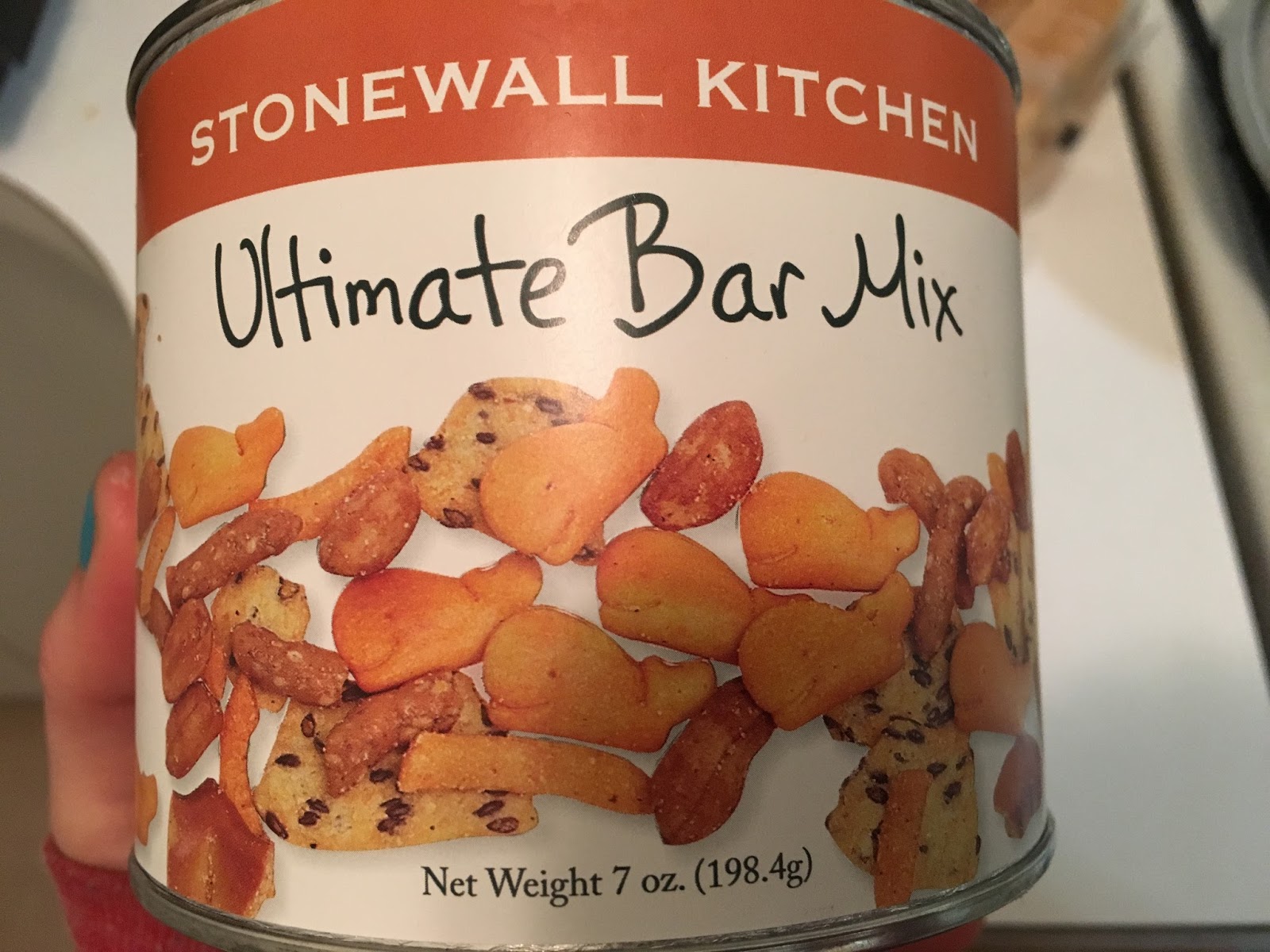
Crackers don’t matter? Goldfish v. whale

I bought these for a party and had a student indicate that she experienced initial misrecognition in the bowl (hard to say “interest” because she wasn’t the purchaser).  Would any orange cracker that isn’t square risk confusion with Goldfish crackers?  PS if you got the title reference, you are my people.

from Blogger https://ift.tt/2pHsgvb

Posted in Uncategorized | Tagged | Leave a comment

Transformative work of the day, admissions edition

An eagle-eyed (no pun intended) student spotted this admissions video from Boston College with a distinctly Harry Potter flavor.  Or maybe that ought to be Hermione Granger.

from Blogger https://ift.tt/2I5haqk

Posted in Uncategorized | Tagged , , | Leave a comment

Reading list: consumer search parsimony

More evidence, if more were needed, in the keyword wars:
given that consumers prefer shorter queries, and that they may assume that some
attributes need more search than others, we should expect that at least some
searches using trademarks are from consumers not actually looking for
trademark-only results.  This research
about strategic search behavior reinforces that conclusion.  Using examples from frequently-searched
food-related terms, for example, the authors explain that:
[A] consumer who is looking for
information on Kitchenaid and/or Cuisinart food processors[] may be better off
using the query “Kitchenaid food processor” rather than a longer query that
includes “Cuisinart.” This is because Cuisinart food processors are often
compared to Kitchenaid, and the shorter query will retrieve at least one search
result that contains all relevant terms. Including “Cuisinart” into the query
greatly increases the proportion of results that contain this term, but this
comes at the expense of other terms, in particular “Kitchenaid.” The shorter
query already performs better under our simple implementation of the
“Compensatory-Average” metric that weighs all terms equally, but the difference
would be more pronounced if the consumer were primarily interested in Kitchenaid
over Cuisinart. In that case, omitting “Cuisinart” from the query would ensure
that most results mention “Kitchenaid,” while some results still mention
“Cuisinart.”
In sum, our field data suggest that
consumers indeed stand to benefit from being strategic in query formation, as
shorter queries may be at least as effective at retrieving desired content,
compared to queries that contain all the terms the consumer is searching for.
The fact that consumers tend to prefer shorter queries makes these shorter
queries even more attractive….
But do consumers actually engage in strategic searching?  They also run some experiments:
To sum up, the behavior we observe
suggests that participants are able to strategically leverage activation
probabilities between words, at least to some extent. Because our study uses a
somewhat  artificial lab setting, we do
not claim that the extent to which consumers leverage activation probabilities
in the real world is the same as in our study. Instead, we view our results as
proof of existence that consumers have some ability to strategically formulate
queries that contain only a subset of the terms they are interested in, but
that are effective at retrieving the other terms….
Our fndings suggest that the
content that is of interest to consumers is not simply the content mentioned in
their search queries, but also the content retrieved by their search queries.

from Blogger https://ift.tt/2G7xMBf

Posted in Uncategorized | Tagged , | Leave a comment

Reminder that materiality is a matter of likely effect, not certainty

E-Imagedata Corp. v. Digital Check Corp., No. 15-CV-658,
2018 WL 1411226 (E.D. Wis. Mar. 21, 2018)
The parties compete in the market for hardware/software
systems used to view microform on a screen and convert it into digital files. [Microform!  Good to know some things are still around.] The systems cost thousands of dollars and are sold to institutions like
libraries, universities, and businesses. Each party uses resellers who compete
directly for many sales through a process that often includes bidding,
in-person product demonstrations, and hands-on customer testing.Plaintiff
e-Image sells the ScanPro and defendant ST Imaging sells the ViewScan, allegedly
falsely advertising its optical zoom capabilities and camera megapixel
capabilities, as well as its UL certification; “UL did not certify any of the
ViewScan devices until December 2015—when it certified the ViewScan III—but
brochures for all 3 devices, published months and years earlier, indicate UL
certification.”  e-Image also alleged
that ST Imaging falsely or deceptively equated its ViewScan devices with
e-Image’s competing ScanPro devices.
e-Image also asserted claims arising out of a failed bid
protest that it lodged with the GAO after the National Park Service awarded a
contract for “one camera microfilm scanner” to an ST Imaging reseller. e-Image
argued that ST Imaging’s product did not meet the terms of the government’s
solicitation, which required that the scanner’s “camera have a ‘minimum 25
megapixels.’ ” The GAO rejected e-Image’s proposed interpretation as
unachievable by any commercially available product. The GAO made two relevant published
findings: (1) e-Image “knew that the ordinary convention in the industry was to
represent camera megapixels in terms of the camera sensor itself” and, thus,
(2) the “camera sensor resolution” for the ScanPro 3000 is “6.6 megapixels,”
not “26 megapixel[s],” as e-Image continues to assert. ST Imaging then emailed its
authorized resellers: “If you are in a bid and your prospect says that the
competition has a 26 megapixel camera, please use [the GAO’s decision] to show
that they only use a 6.6 megapixel image sensor.” e-Image alleged that ST
Imaging attacked its reputation by claiming that e-Image lies about its own
products’ specifications.
Materiality: e-Image was not required to “prove that a
specific commercial statement by ST Imaging actually affected a specific
purchasing decision by a specific customer.” Courts “generally only require a
likely, as opposed to an actual, effect on consumer choice.” A reasonable jury
could find materiality, given record evidence that institutions looking to
purchase microform systems commonly set requirements for bids, including
minimum requirements for a scanner’s “optical zoom lens” and “camera
megapixels,” and that the proposed product be certified as meeting applicable
product safety standards, like UL’s. ST Imaging’s resellers represented
compliance with these standards, at least in part, by submitting prefabricated
marketing materials from ST Imaging. This raised a genuine dispute on
materiality.
Injury: the only customers deposed testified that price was “a
significant, and perhaps the dominant, factor in many of the purchasing
decisions at issue here,” while ease of use also mattered. But “a reasonable
jury could find that ST Imaging was able to adopt lower prices by falsely
claiming that its products were certified by UL and had capabilities that they
lacked without incurring the usual costs of certification or product
development. Similarly, a reasonable jury could find that by deceptively
equating its products with e-Image’s products, ST Imaging was able, in many
cases, to mislead potential customers into making purchasing decisions based on
price alone.”  
e-Image sought partial summary judgment on liability for
literally false representations, such as ST Imaging’s claims that its ViewScan
devices were certified by UL. But materiality and injury could also be found
against e-Image.  “[T]he record suggests
that a substantial majority of the parties’ customers make their purchasing
decisions after in-person product demonstrations that typically last one to two
hours, which may mitigate or eliminate whatever influence ST Imaging’s
promotional statements might otherwise have on customers’ purchasing decisions.”  [I wonder if the court will let e-Image make
a bait and switch argument, which would be consistent with the reasoning above:
if ST Imaging only got in the door by falsely representing that its products
met the bid standards, then its ultimate persuasiveness—especially if the
initial falsehoods were never corrected—probably shouldn’t break the causal
chain.]

from Blogger http://ift.tt/2G8pll2

Posted in Uncategorized | Tagged , | Leave a comment

Truthful identification of performance defeats Illinois publicity claim

Martin v. Wendy’s Int’l, Inc., — Fed.Appx. —-, 2018 WL
1225470, No. 17-2043 (7th Cir. Mar. 9, 2018)
“Guinness World Records lists Johannes “Ted” Martin as the
record holder for consecutive kicks of a footbag.” He sued Wendy’s
International and Guinness for urging families to play together and challenge
world records like Martin’s in a promotion. 
Each promotional kids’ meal, Guinness’s website explained, “will come
with one of six Guinness World Records record-breaking toys” that “provides fun
challenges and a chance for parents and kids to outdo each other for the title
of family’s best.” One of the toys was a footbag. Each kids’ meal also included
a link to a free Guinness World Records eBook, which provided “an exclusive
guide to records” for families to use. 
The words “Guinness World Records” were printed on the footbag and its
packaging. An in-store display showed the footbag, alongside the five other
toys, under the heading “Kids v. Parents” and the logos for Wendy’s and
Guinness. The text on the kids’ meal bag also referred to the six toys as
“record-breaking.” An instructional card with Guinness and Wendy’s logos asked
“Can You Break The Record?” The instructions included: “How many times in a row
can you kick this footbag without it hitting the ground? Back in 1997, Ted
Martin made his world record of 63,326 kicks in a little less than nine hours!”
Martin didn’t plausibly allege false endorsement:
No reasonable consumer would think
that Martin endorsed the footbags. The appearance of “Guinness World Records”
on the footbag might prompt a reasonable consumer to conclude that Guinness—not
Martin—is associated with the footbag. Martin’s name on the instruction card
simply identifies him as the holder of a record, not the endorser of any
product.
Nor was labeling the toys “record-breaking” false
advertising.  It was puffery. “[N]o
reasonable consumer would believe that free toys accompanying kids’ meals to
encourage intra-family play were the same types of items used to set world
records.”
The llinois Right of Publicity Act excludes the “use of an
individual’s name in truthfully identifying the person as the author of a
particular work or program or the performer in a particular performance.”
Martin argued that this exception didn’t apply because he didn’t perform in the
defendants’ promotion. “But Martin’s qualification is not in the statute. [The
statute] allows anyone to identify truthfully the performer of a particular
performance. And that is what the defendants did.”

from Blogger http://ift.tt/2G7tPMf

Posted in Uncategorized | Tagged , , | Leave a comment

Sock puppet reviews aren’t literally false absent additional non-identity literal falsity, court rules

Nunes v. Rushton, No. 2:14-cv-00627, — F.Supp.3d —-, 2018 WL 1271446 (D. Utah Mar. 9. 2018)

Every time I think I’ve seen it all, I’m reminded that humans are not only stranger than we imagine, they are stranger than we can imagine. Plaintiff sued defendant for copyright infringement, defamation, etc., mostly unsuccessfully except for the copyright claims, leaving for trial only the amount of the statutory damages award for copyright infringement.

Plaintiff published her novel A Bid for Love in 1998 and registered the copyright the same year. Defendant published a novel, The Auction Deal, between May and July 2014 by distributing between 80 and 90 free copies to reviewers and bloggers for promotional purposes. “With the exception of the addition of sex scenes, The Auction Deal is substantially similar to A Bid for Love and shares the same dialog, scenes, characters, themes, settings, and plot.”

In May 2014, defendant also created about fifteen “sock puppet” accounts on Google, Yahoo, Goodreads, and Facebook to post positive reviews of her previous two novels and negative reviews of plaintiff’s book. She also posted two negative Amazon reviews of A Bid for Love under her own name and two under sock puppet names.

After plaintiff learned of The Auction Deal, she attempted to obtain a copy by requesting it from one of defendant’s sock puppet accounts. In response, defendant sent plaintiff a series of disparaging comments, then pulled The Auction Deal from sale on Amazon after plaintiff contacted her. Other than copies she bought for herself, no other copies of the novel were ever sold.  Then defendant posted another negative review of A Bid for Love under her own name and nine more negative reviews of plaintiff’s books from sock puppet accounts. She also used sock puppets to give multiple one-star ratings of plaintiff’s books on Goodreads. On Facebook, her public comments about plaintiff accused her of “harassment.”

After plaintiff discovered defendant’s identity, she decided to sue and started a GoFundMe fundraiser to finance her lawsuit. Defendant posted several comments on the GoFundMe page using sock puppets, calling the solicitation a “fraud,” “hoax,” and/or “scam,” e.g., “This ‘fund me’ has got to be a hoax or scam. A publisher would be backing this if it were a real claim.”

In deposition, defendant conceded that her novel was substantially similar to plaintiff’s novel.  There was no factual dispute on her liability for copyright infringement, though there was enough to go to a jury on whether the infringement was willful, given that there was only circumstantial evidence of her state of mind when she infringed the copyright.  In an email, the defendant stated that, in her mind, she never published the book by selling copies to the public.  [Well, ok.  Seems kind of Trumpian to me, if she sent out review copies, but apparently she may argue that she was in a manic phase due to her bipolar disorder, so she lacked willfulness.]

The claim for actual damages failed. Plaintiff didn’t argue that the infringement caused the sales of her existing novels to suffer, and instead alleged that the copyright infringement caused her mental anguish and prevented her from writing two novels that she would have otherwise written during this timeframe. The court determined that “actual damages” as used in the statute didn’t include damages caused by the copyright owner’s emotional response to the infringement of a published work. “[T]he explicit provision for the recovery of the infringer’s economic profits in the Act strongly suggests that the copyright owner’s ‘actual damages’ must similarly be economic in nature,” and the case law agrees. Thus, only statutory damages remained for trial.

 The defamation/defamation per se claims failed because the online comments and emails were opinion about plaintiff’s books and personality traits, hyperbolic claims of “harassment,” “scam” or “fraud,” or unpublished communications sent only to plaintiff.  For example, in context, “readers would understand the use of the terms ‘fraud’ and ‘scam’ as exaggerated language expressing strong disapproval of Nunes’s efforts to raise money online, not as a charge of criminally fraudulent activity.”  As for “Ask your attorneys if in your quest to investigate and have people rally around you if you are guilty of harassment. I think the answer is yes,” that could be read to express a legal opinion, but even questionable opinions about the legal significance of plaintiff’s actions aren’t actionable as defamation.

 Some of defendant’s statements did contain false statements of fact, such as messages to book reviewers and bloggers claiming that plaintiff had given her permission to use elements of A Bid for Love or that plaintiff had co-written The Auction Deal with her. She also posted: “[Plaintiff] feels threatened because I told her I would be contacting my aunt, [apparently the CEO of plaintiff’s publisher], and letting her know how she is handling the situation—through reviewers and not through the author. [The publisher/a bookstore] are appalled at the way she is handling the situation.”  But the asserted facts weren’t defamatory: false claims about permission or collaboration don’t have a “tendency to injure a reputation in the eyes of its audience.” False claims about her aunt and of the bookstores’ alleged disapproval weren’t defamatory, even though they were likely intended to intimidate plaintiff; the statements weren’t about her, and “a falsehood concerning an opinion held by a third party is not sufficient to expose an individual to public hatred or ridicule.”

 False light claims failed for the same reasons as the defamation claims.

 Business disparagement/injurious falsehood: A business disparagement claim “concerns statements regarding the quality of the plaintiff’s product or the character of the plaintiff’s business,” and not “statements about an individual’s reputation.” Defendant disparaged the quality of plaintiff’s novels, giving them numerous one-star reviews and criticizing them for being “out of date” and “ridiculous.” These were constitutionally protected opinions, and defendant’s other online comments couldn’t be used to support her claim for the same reason the defamation claims failed.

 Tortious interference: Defendant allegedly interfered with plaintiff’s economic relations with the readers who purchase her books by way of two improper means: (1) posting defamatory comments on the internet and (2) infringing the copyright to A Bid for Love.  But the first wasn’t an improper means, given the result on the defamation claims, and the second was preempted by the Copyright Act.

 Plaintiff also alleged a violation of Utah’s electronic communication harassment statute. But the statute didn’t expressly create a civil cause of action, and the court wouldn’t imply one.

 Lanham Act false advertising: Plaintiff alleged that the use of multiple sock puppet accounts to post positive reviews of defendant’s books and negative reviews of her books constituted false advertising. First, defendant pretended to be an independent reader, not the author herself/the author’s competitor. Second, by using multiple sock puppet accounts, defendant allegedly created the false impression that multiple individuals liked her books and disliked plaintiff’s books.  Plaintiff didn’t submit evidence of actual deception, so she needed to show literal falsity.

The court relied on Romeo & Juliette Laser Hair Removal, Inc. v. Assara I LLC, 2016 WL 815205 (S.D.N.Y. Feb. 29, 2016), another case involving fake reviews.  There, the court found that fake bad experiences of non-existent customers were literally false because they described events that never occurred and fictitious customers that did not exist. But reviews posted under three separate pseudonyms by an owner of a competing business who was an actual customer of the plaintiff, claiming that the services was slow and that the plaintiff’s employees were rude, weren’t literally false because they were “largely matters of opinion and the plaintiff [had] not shown that they are actionable as false statements of fact.” But that’s not really the literal falsity part: the literal falsity is the misrepresentation about being someone else (and about having three separate experiences instead of one).  Whether that literal falsity is material is a separate matter, but it might well be so, and the FTC’s Endorsement Guidelines follow the principle that falsity/failure to disclose in these matters violates the FTCA even without other specific factual claims, because of the materiality of endorsers’ connections to the endorsee.  I certainly would find it highly material that the author of a review was a direct competitor, or was also the provider of the reviewed good/service.

 However, the court here found that the sock puppet reviews were just opinions: Defendant “did not misrepresent the essential characteristics of the books she reviewed. Instead, she claimed that her books were good while Nunes’s books were boring and outdated. Such statements are a matter of opinion and cannot be proven true or false.”

 Also, the Lanham Act claim failed separately because plaintiff didn’t show any damages or injury. Plaintiff offered the testimony of her expert that negative online reviews generally negatively affect book sales, and the lay opinion of a representative of Amazon, as evidence that she had been harmed. But the expert didn’t analyze her book sales and didn’t know whether her sales went up or down after defendant posted her reviews, nor could the expert assign a monetary value to the effect online reviews may have; her opinion was based on common sense. The Amazon rep also provided his lay testimony that bad reviews generally discourage sales.  [My understanding is that there is some research out there trying to quantify this, for those of you thinking about the future of these claims.]  Without evidence as to the specific effect that defendant’s online reviews had on plaintiff’s books, or about sales during the relevant period of time, or customer surveys or customer testimony, there was no proof to support the damages claim for lost sales. Damages caused by mental anguish also weren’t covered by the Lanham Act.

 Utah Truth in Advertising Act claims also failed; the law provides that a defendant who’s violated the law “shall” be enjoined, but also requires prior notice and an opportunity to correct the allegedly unlawful ad by the same media before injunctive relief is allowed.  Plaintiff’s prelitigation emails and a blog post complained about plagiarism and copyright infringement, not about the alleged violation of the Utah Truth in Advertising Act, and it didn’t provide defendant an opportunity to correct the record in order to avoid an injunctive relief action.  Damages failed for the same reason as they did for the Lanham Act claims.

from Blogger http://ift.tt/2FVp599

Posted in Uncategorized | Tagged , , , , | Leave a comment

Pop goes the kitty? registration and infringement are separate inquiries, court points out

SportPet Designs Inc. v. Cat1st Corp., No. 17-CV-0554 (E.D.
Wis. Mar. 2, 2018)
SportPet sued Cat1st for patent, trademark, and copyright
infringement and violations of Wisconsin’s Deceptive Trade Practices Act based
on its sale of pet products such as play structures for cats. SportPet alleged infringement of two registered trademarks: POP OPEN for collapsible containers
for household use [containers that … pop open?] and SPORT PET DESIGNS for pet
kennels, beds, and bedding and pet toys.
SportPet wasn’t assigned the POP OPEN mark until after it
brought this action, so it lacked standing to assert a claim for infringement. Even
if it could establish standing, the complaint didn’t plausibly suggest
infringement.  Not strengthening the
claim for the distinctiveness of the mark, the complaint alleged that “Cat1st
is violating SportPet’s . . . Pop Open trademark[]” by “using and advertising
the pop open design,” which “is a protectable mark.” But the word mark (if mark
it be) does not protect “the pop open design” (which presumably would have its own functionality issues if claimed as a mark).
The complaint also alleged that “Cat1st’s packaging and
advertising copies” language from SportPet, e.g., “pop open, sturdy and
lightweight, for travel, and convenient for carrying”—“almost word for word.”  That wasn’t enough here. Examples in the
complaint showed Cat1st’s use of similar terms to those used by SportPet—e.g., “sturdy,”
“lightweight,” “for travel,” and “for your carrying convenience”—none used the
specific phrase “pop open” (or a colorable imitation of it) in any way, much
less as a distinguishing and source-identifying mark.
SportPet’s second trademark claim did a lot better.  Here are the parties’ logos and packaging:
 

Plaintiff and defendant logos

Plaintiff and defendant packaging

Cat1st argued that the issue was whether its logo infringed SportPet’s
standard text mark.  But that’s not so:
trademark cases evaluate the marks “in light of what happens in the
marketplace.”  [citing me!]  The court also rejected as outside the
pleadings Cat1st’s argument that its uses were all “from packaging for products
sold in Japan under an exclusive license agreement” between the parties, “where
Cat1st lawfully owns the trademark registration for ‘Sport Pet Japan.’” Likely
confusion was sufficiently pled.
SportPet’s copyright infringement claim failed because it
had’t sought or received registration. 
[And might have a Kirtsaeng
issue, if Cat1st’s claims about Japan are true.]
The court also dismissed a claim under Wisconsin’s Deceptive
Trade Practices Act alleging that Cat1st misrepresented “to the public . . .
that [it is] selling SportPet’s products” and “misrepresent[ing] to [SportPet]
that [it] only sold the infringing products in Japan.” Cat1st’s
misrepresentations to the public allegedly caused SportPet to lose sales due to
customer confusion and Cat1st’s misrepresentations about where it was selling
its goods allegedly allowed it avoid legal action as it snuck into the U.S.
market. The court found that SportPet didn’t plausibly allege that the
misrepresentations caused SportPet any pecuniary losses recoverable under the DTPA, because
misrepresentations to consumers didn’t materially induce SportPet itself to
act, as required.  And Cat1st’s alleged
misrepresentations to Sport Pet didn’t contribute to SportPet’s decision to buy
anything or otherwise enter into any commercial transactions as a consumer of
goods or services, also required by the DTPA.

from Blogger http://ift.tt/2DlNylL

Posted in Uncategorized | Tagged , , , | Leave a comment