London visit, TM and cultural property edition

All of This Belongs to You sign at the V&A Museum: cultural patrimony (though often of other cultures …)


English Milky Way, apparently caramel-less, and Yorkie (note the Yorkie’s offer of Man Prizes, which I can only assume are paid more than Woman Prizes)

“Never Mind the Bollards” exhibit at New London Architecture

from Blogger http://ift.tt/1LKD0LR

Posted in Uncategorized | Tagged , | Leave a comment

it’s illegal to say that use of non-manufacturer accessories voids a warranty

EMED Technologies Corp.  v. Repro–Med Systems, Inc., No. 13–cv–1957, 2015 WL 3794967 (E.D. Cal. June 16, 2015)
 
The parties compete to supply components of medical devices used to administer immunoglobulin (human plasma and antibodies) to patients suffering from a particular immunodeficiency disorder.  This therapy is increasingly administered at home, instead of in medical offices and hospitals. Ten major customers in the U.S. purchase the majority of the devices, and EMED and RMS are the two primary U.S. manufacturers. 
 
The devices relevant to this lawsuit are: (1) mechanical infusion pumps; (2) rate sets; and (3) subcutaneous needle sets. RMS makes a Freedom 60 infusion pump, which was cleared by the FDA in 1994 and which has become the dominant pump in the market.  Pumps can last 10-15 years, but rate sets and needle sets are single-use accessories.  Rate sets are a type of tubing that regulate the flow of infusion between the pump and the needle sets, and the parties are the only two suppliers of rate sets for use with the Freedom 60.  EMED developed two different rate sets: (1) “Infusets,” intended to compete directly with RMS on design and price; and (2) “VersaRate,” which allow the user to adjust the flow rate. EMED claimed that Infusets were FDA cleared via 510(k)s from 1994 and May 2014, and that VersaRate sets were FDA cleared via a 2012 501(k).
 
EMED alleged that RMS tried to push it out of business through false and misleading statements, including a 2012 “Safety Bulletin” to customers claiming that when it learned of attempts to “encourage” use of non-RMS rate sets with the Freedom 60, it was
 
concerned because, to the best of our knowledge, such knock-off tubing has not been cleared by the FDA for use with the FREEDOM60 pump, nor tested in accordance with our stringent release criteria to confirm that it can be safely and effectively used in the RMS FREEDOM60 Syringe Infusion System. RMS believes this knock-off tubing, marketed as the same product, fails to meet RMS specifications. Furthermore, we believe that using such non-RMS tubing with the FREEDOM60 Syringe Infusion System could potentially result in uncontrolled flows that could lead to patient injury or death.
While RMS investigates whether legal action against unauthorized sets is necessary to protect customers and patients, we urge you to use caution and refer to the product labeling …:
Caution: Use only FREEDOM60 tubing sets manufactured by RMS Medical Products. Use of any other tubing may cause the syringe to eject from the pump and eventually cause internal damage to the pump. Use of any other flow rate control tubing set may cause over or under delivery or medication to the patient, which could result in injury or death.
Please keep in mind that patient safety may be compromised by the use of unapproved and incompatible flow control tubing sets to deliver drugs. In addition, regulatory, patent infringement, reimbursement, and other issues may also arise. Moreover, use of non-RMS flow rate tubing voids the warranty for the FREEDOM60 Syringe Infusion Pump….
 
RMS’ SEC Form 10-Q in 2013 mentioned the Safety Bulletin and said that any non-RMS product could be “unsafe” and even cause death.  Its 2014 SEC Form 10-Q said that it didn’t believe that EMED’s product had FDA clearance. Its website said that it had the “only tubing specifically designed and FDA-cleared to have the accuracy necessary for the safe, controlled, dynamically-responsive infusions of the FREEDOM 60.”  In addition, statements that use of non-RMS rate sets voids the warranty for the Freedom 60 appeared in RMS’ four most recent SEC Form 10–Q’s.  And the Freedom 60’s user manual contained a warranty provision saying that “use with non-approved accessories or disposable items” voids the warranty.  Similar statements appeared in a 2014 article on NASDAQ.com and used words like “knock-off.”
 
EMED alleged that these were false statements that harmed its sales.  For example, a customer wrote to EMED stating: “The Freedom 60 warranty is voided if we use sets other than the RMS products. This is documented in the user manual. Accordingly, the EMED sets have not been proven to be accurate with the use of the Freedom 60 pump. Taking these things into consideration, I have asked our locations to discontinue use of the EMED sets.”  Others expressed concerns about FDA approval and safety, based on RMS’ claims.  Others required EMED to indemnify them before agreeing to purchase rate sets.  EMED claimed a loss of roughly 33% in related revenue since January 2014.
 
RMS sued EMED for patent infringement; EMED counterclaimed for false advertising.  The court first found “serious questions going to the merits” (still an alternative to likely success on the merits in the 9th Circuit).  EMED claimed that, from 2002 to 2005, RMS contracted with EMED for the “manufacture of microbore tubing for RMS’ branded rate sets,” and during this time EMED sold at least 155,000 units of microbore tubing to RMS. RMS provided EMED with specifications necessary to manufacture the tubing, which allowed EMED to specifically design its rate sets for the Freedom 60 pump.  For years, RMS allegedly provided consumers with instructions for using EMED needle sets. Thus, the claim that EMED accessories couldn’t be used with RMS products was false.
RMS responded that, before issuing its Safety Bulletin, RMS tested EMED’s products and found that EMED’s Infuset products did not provide flow rates that are compatible with the advertised RMS equivalent.  RMS argued that EMED tested its products improperly, using fluids of the wrong viscosity.  EMED never made complete tubing sets, and thus didn’t have the complete specifications.  RMS attributed EMED’s revenue decline to RMS’ ability to sell a total system for treating patients. 
 
The court found that the facts were disputed as to whether EMED’s testing procedures were equivalent to RMS’, or whether the alleged superiority of RMS’ “total system” was the reason for EMED’s decline in revenue.
 
So what about those 510(k)s?  A 510(k) clearance means that there’s substantial equivalence to another legally marketed device, with either the same technological characteristics or differences that don’t raise new questions of safety and effectiveness.  EMED’s 2012 clearance didn’t specifically mention the Freedom 60, but the May 2014 clearance for Infusets did.  Internal EMED emails, construed in a light favorable to RMS, showed doubt over whether EMED previously had FDA clearance, though EMED’s position was that its VersaRate clearance covered a variety of pumps, including the Freedom 60; the court couldn’t make a definitive finding at this time, or a definitive finding that Infusets were covered by the 1994 510(k), even though RMS’ argument that Infusets weren’t covered was “unconvincing.” 
 
However, it was undisputed that there was clearance for Infusets to be used with the Freedom 60 as of May 2014. After that time, the Safety Bulletin warning of “death” was still available on RMS’ website, and showed up as the top Google search entry when typing in “Freedom60 customers.” It wasn’t clear how much RMS participated in the NASDAQ.com article, but the article tracked the statements in the Safety Bulletin, and those statements were false or misleading, because they contradict the fact that Infusets were FDA cleared to be used safely with the Freedom 60.  Likewise, as of September 2014, the RMS website still said “That’s why it has to be Precision—it’s the only tubing specifically designed and FDA-cleared to have the accuracy necessary for the safe, controlled, dynamically-responsive infusions of the FREEDOM 60.” RMS argued that even if Infusets received FDA clearance they still were not FDA cleared and designed for accuracy with the Freedom 60. Still, it was misleading in light of the 510(k). The court found that EMED raised serious questions going to the merits on falsity and misleadingness as of May 2014.
 
In addition, EMED argued that RMS’ claims about voiding the warranty violated the Magnuson–Moss Act, Section 2302(c) of which states:
 
No warrantor of a consumer product may condition his written or implied warranty of such product on the consumer’s using, in connection with such product, any article or service (other than article or service provided without charge under the terms of the warranty) which is identified by brand, trade, or corporate name …
 
Comment: News to me!  That is a very interesting provision, and I wonder if it’s underlitigated compared to other claims.  RMS said EMED didn’t have standing to enforce the law, which permits suits by the AG, the FTC, and consumers.  But California’s UCL converts violations of other laws into violations of the UCL, and RMS was allowed to sue under the UCL.
 
RMS argued that it didn’t know about the law, but that doesn’t change the fact that voiding the Freedom 60’s warranty based on use of non-RMS products would actually violate the Magnuson–Moss Act.  The Safety Bulletin thus described an unlawful warranty, apparently directed specifically at EMED, which again raised serious questions going to the merits of a claim for “unfair or fraudulent” practices or “unfair, deceptive, untrue, or misleading advertising.”
 
Turning to the remaining preliminary injunction factors: RMS argued that EMED had unclean hands because a draft user manual for its products had the same provision, but that was just a draft. The current user manual states: “Limited Warranty: EMED Technologies Corporation (“Manufacturer”) warrants the SCIg60 Infuser to be free from defects in materials and workmanship under normal use.”
 
The balance of hardships tipped “sharply” in EMED’s favor, given the evidence of negative customer response, indemnity agreements demanded by customers, and declining revenues.  Enjoining RMS to stop its false or misleading statements would cause minimal to no hardship.
 
RMS argued that EMED’s delay in seeking a preliminary injunction cut against a finding of irreparable harm.  EMED waited for nearly two years to use after receiving December 2012 customer emails expressing concerns; it waited over 16 months after sending its first cease-and-desist letter to RMS and one year aftter sending its second; and it waited 11 months after asserting its counterclaims. EMED argued that it acted after RMS continued to claim that only its products could be safely used with the Freedom 60 even after the May 2014 510(k).  The court agreed that the delay was long, given EMED’s position that its rate sets were FDA cleared even before May 2014, but delay is just a single factor and courts are reluctant to withhold relief solely on this ground.
 
EMED supported its irreparable harm claim with evidence that the Safety Bulletin raised customer concerns about safety and voiding the warranty, plus allegations of lost revenue.  Given all this, an injunction against false and misleading advertising was in the public interest.

Posted in http://schemas.google.com/blogger/2008/kind#post, warranties | Leave a comment

London visit, TM and cultural property edition

All of This Belongs to You sign at the V&A Museum: cultural patrimony (though often of other cultures …)


English Milky Way, apparently caramel-less, and Yorkie (note the Yorkie’s offer of Man Prizes, which I can only assume are paid more than Woman Prizes)

“Never Mind the Bollards” exhibit at New London Architecture

Posted in trademark | Leave a comment

visiting London: TM edition

The band Camel Anathema, with a familiar font and presentation

Spex in the City

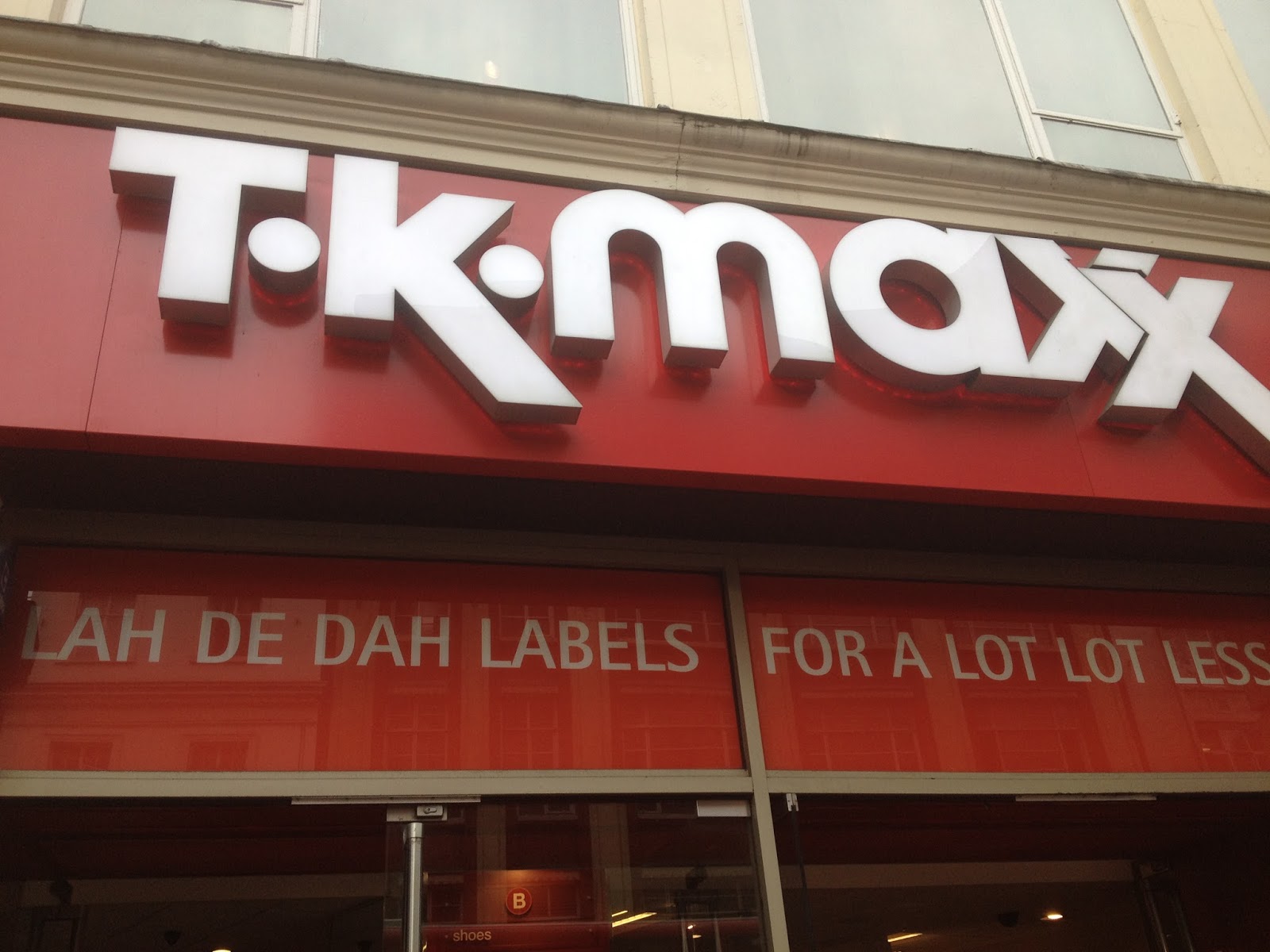
TK Maxx, aka TJ Maxx, apparently renamed in the UK to avoid conflict with retailer TJ Hughes

from Blogger http://ift.tt/1GAxIxQ

Posted in Uncategorized | Tagged | Leave a comment

visiting London: TM edition

The band Camel Anathema, with a familiar font and presentation

Spex in the City

TK Maxx, aka TJ Maxx, apparently renamed in the UK to avoid conflict with retailer TJ Hughes

Posted in trademark | Leave a comment

Fandom documentary: coming July 9

Donna Davies’ Fanarchy, a documentary for which I was
interviewed on the law relating to fanworks, will be making its US television
debut on EPIX, Thursday, July 9 at 8 pm ET.
 

Find out more: http://ift.tt/1GG0ctb
and @FanarchyFilm.

from Blogger http://ift.tt/1BKZCf9

Posted in Uncategorized | Tagged | Leave a comment

Fandom documentary: coming July 9

Donna Davies’ Fanarchy, a documentary for which I was interviewed on the law relating to fanworks, will be making its US television debut on EPIX, Thursday, July 9 at 8 pm ET.
 

Find out more: http://www.facebook.com/FanarchyFilm and @FanarchyFilm.

Posted in fanworks | Leave a comment

Reading list: advertising atypical results

Ahmed E. Taha, Selling the
Outlier
, forthcoming in the Journal of Corporation Law.
 
Advertisements for products ranging
from weight-loss programs to mutual funds regularly feature the results of
people who have used the product. 
However, these advertisements often present the results only of people
who had an atypically positive experience. 
These advertisements harm consumers and investors, who greatly
underestimate the advertised results’ atypicality.  Because advertisements of past results are
used in a wide range of products, they are regulated by a number of federal
agencies.  These agencies have taken
different regulatory approaches to advertisements of atypical results,
primarily requiring them to include additional disclosures.  This article presents evidence that these and
other disclosures cannot prevent advertisements of atypical results from
deceiving consumers and investors. 
Indeed, the very purpose of these advertisements is to mislead people
regarding their own likely results. 
Thus, in light of the harm these advertisements cause and the minimal
useful information they provide, the prohibition of advertisements of atypical
results should be seriously considered.
 
Good overview of the empirical evidence that testimonials
about top experience distort consumer understanding, and that disclosures of
atypicality generally don’t work because of various cognitive biases and
innumeracy.  Taha would prefer to ban advertising
atypical results at all; is there any room in that for Subway’s Jared
commercials touting extreme weight loss?

from Blogger http://ift.tt/1IawH5h

Posted in Uncategorized | Tagged , , | Leave a comment

Reading list: advertising atypical results

Ahmed E. Taha, Selling the Outlier, forthcoming in the Journal of Corporation Law.
 
Advertisements for products ranging from weight-loss programs to mutual funds regularly feature the results of people who have used the product.  However, these advertisements often present the results only of people who had an atypically positive experience.  These advertisements harm consumers and investors, who greatly underestimate the advertised results’ atypicality.  Because advertisements of past results are used in a wide range of products, they are regulated by a number of federal agencies.  These agencies have taken different regulatory approaches to advertisements of atypical results, primarily requiring them to include additional disclosures.  This article presents evidence that these and other disclosures cannot prevent advertisements of atypical results from deceiving consumers and investors.  Indeed, the very purpose of these advertisements is to mislead people regarding their own likely results.  Thus, in light of the harm these advertisements cause and the minimal useful information they provide, the prohibition of advertisements of atypical results should be seriously considered.
 
Good overview of the empirical evidence that testimonials about top experience distort consumer understanding, and that disclosures of atypicality generally don’t work because of various cognitive biases and innumeracy.  Taha would prefer to ban advertising atypical results at all; is there any room in that for Subway’s Jared commercials touting extreme weight loss?
Posted in advertising, http://schemas.google.com/blogger/2008/kind#post, reading list | Leave a comment

Next! Bonded leather maker loses false advertising claims against critics

Design Resources, Inc. v. Leather Industries of America, —
F.3d —-, 2015 WL 3775712 (4th Cir. June 18, 2015)
 
The Fourth Circuit affirmed the
district court’s summary judgment kicking out Lanham Act (and coordinate state)
false advertising claims against defendants LIA and Ashley Furniture
.  Plaintiff DRI alleged that Ashley’s ad in a
trade magazine, and two statements by Dr. Nicholas Cory, director of LIA’s
research laboratory, which ran in articles in the same publication, were false
and misleading.  Ashley is a furniture
maker and seller, and LIA is a leather industry trade association that owns (at
least for purposes of this appeal) the Leather Research Laboratory.  Cory is a leather chemist and the director of
the Laboratory, which provides “labeling advice to companies who market leather
and leather-look products, as well as testing services to determine such
products’ leather content for purposes of federally mandated disclosure to
consumers.”
 
DRI develops furniture coverings which hare sold to
furniture manufacturers. DRI developed a “synthetic leather-look furniture
covering product,” later renamed as NextLeather.  NextLeather is “composed of 61% polyurethane,
22% poly/cotton, and 17% leather.” “[I]t has a polyurethane face on a fabric
core and is backed with a thin layer of leather fibers adhered (i.e., bonded)
to its base or underside.” This allegedly improved its mimicking of real
leather by making the material more pliable and fluid in draping over
furniture.  DRI requested labeling advice
and composition from Cory, who advised that the product could “ABSOLUTELY NOT!”
be characterized or marketed as leather, citing the relevant FTC Guides, which
specify that products containing ground or shredded leather, rather than
comprising “wholly the hide of an animal[,] should not be represented, directly
or by implication, as being leather.”  Cory suggested that DRI could label
NextLeather as “[n]ot leather,” “[r]econstituted leather,” or “[b]onded
leather.”

DRI then began marketing NextLeather as bonded leather, disclosing the
product’s composition on a label in compliance with the FTC Guides. “In
preparation for the Spring High Point Market in North Carolina—an important,
annual furniture industry event—DRI sold samples of NextLeather to 25 leading
furniture manufacturers.” In the weeks leading up to and following the trade
event, though, Ashley put a series of full-page ads in Furniture Today, “a widely read trade magazine.” DRI alleged that
one of the ads falsely disparaged DRI and NextLeather with the text: “Is It
REALLY LEATHER? … Some upholstery suppliers are using leather scraps that are
mis-represented as leather …. Know What You Are Buying[.] REMEMBER … The
Overseas Manufacturer Has NO Liability In The U.S.A. You Do!”
 
Furniture Today
also published an article written by Joan Gunin, “Chemist fears confusion over
imitators may hurt category.” The Gunin article quoted Cory: “To call [leather
alternatives such as bonded leather] ‘leather’ is outright deception, outright
fraud…. It’s not leather…. It’s a synthetic that has leather fibers glued
to the underside.”   A later article written
by Susan Andrews was headlined, “For consumers’ sake, let’s not call it ‘bonded
leather.’”  The Andrews article referred
to “[n]ew composite fabrics now called ‘bonded leather,’” which “have a surface
layer of vinyl or polyurethane, a center layer of fabric, and a backing that
contains some leather fibers … glued onto the fabric for a look that is
similar to the back of a leather hide.” Andrews advocated against using the
term “bonded leather” for these products, saying that the term was “bound to
confuse consumers, who are likely to hear only the word ‘leather.’” The article
then quoted Cory, who said that calling these products bonded leather “is
deceptive because it does not represent its true nature. It’s a vinyl, or a
polyurethane laminate or a composite, but it’s not leather. If you tar and
feather someone, does that make them a chicken?”
 
The Fourth Circuit recognizes falsity by necessary
implication as part of explicit falsity, as well as implicit falsity (proven by
extrinsic evidence).
 
Here, the court of appeals agreed that DRI failed to show
that the Ashley Ad was either literally false or impliedly false. DRI argued
that the ad’s statement that “[s]ome upholstery suppliers are using leather
scraps that are misrepresented as leather” was literally false by necessary
implication, because the audience would recognize the reference to suppliers of
bonded leather generally and to DRI.  But
the ad refers unmistakably to products marketed as leather, not to products
marketed as bonded leather or NextLeather. 
The court was unwilling to accept that the ad meant the opposite of what
it said.  Where an ad only hints at or
merely suggests inferences, it’s not literally false, though an acceptable
false advertising claim can “depend on the consumer to draw conclusions that
are logically necessary from an ad’s statements.”

DRI argued that the relevant audience would recognize the claim it identified
because of: (1) another Furniture Today article,
published between the first and second publications of the Ashley ad, said that
“Ashley is urging buyers to ‘be aware’ of bonded leather,” (2) a survey by
Ashley’s expert witness showing that viewers of the ad understood it to refer
to bonded leather, (3) email exchanges between Ashley and Cory suggesting that
Ashley sought to disparage bonded leather, and (4) testimony by DRI’s owner and
president and by a furniture manufacturer to the effect that “DRI was the only
company offering a product like NextLeather® and marketing it as ‘bonded
leather.’” But all this was outside the face of the ad and deep into the
context.
 
What about implied falsity? 
DRI pointed to the survey, but DRI needed to show that the Ashley ad
confused consumers about NextLeather.  The survey asked consumers who had attended
the Spring High Point Market what message they thought the ad conveyed and to
which specific suppliers they thought the ad referred. The results showed that
“zero respondents gave an answer that could be interpreted as a belief that DRI
or NextLeather were specifically mentioned as[,] … [or] implied or suggested
to be[,] the supplier of the upholstery material described” in the ad.
 
Likewise, DRI failed to support its claim about Cory’s
statement in the Gunin Article. DRI argued that Cory’s statement that “[t]o
call [alternative leather products such as bonded leather] ‘leather’ is outright
deception, outright fraud” was is literally false by necessary implication. DRI
argued that any reasonable juror would conclude that Cory was calling DRI’s use
of the term “bonded leather” fraudulent. 
But the statement unambiguously communicated a message about unqualified use of “leather,” not about
the use of “bonded leather.”  Moreover,
DRI acknowledged that NextLeather was not leather, but a “synthetic
leather-look furniture covering product.” Cory’s statement was true, not false
or misleading.
 
Finally, the court of appeals agreed that Cory’s statement
in the Andrews article hadn’t been shown to be false or misleading.  The Andrews article did advocate against use
of the term “bonded leather” as “bound to confuse consumers,” and it quoted
Cory as saying that the term “is deceptive because it does not represent [the]
true nature” of the products it is used to describe. Instead, Cory said,
accurate descriptions would use “vinyl,” “polyurethane laminate,” or
“composite,” rather than with a term that includes the word “leather.”
 
The district court found this to be merely Cory’s opinion on
how consumers would react to the term. 
DRI cited Milkovich v. Lorain Journal Co., 497 U.S. 1 (1990), which held
that opinion statements are not automatically protected against defamation
claims if they imply knowledge of facts that underlie the opinion.  Accepting this extrapolation of the
defamation rule to the Lanham Act, DRI’s argument still didn’t work here.  Cory’s statement didn’t imply a basis in
facts leading to the conclusion that consumers were deceived by the term “bonded
leather.” It communicated only his hypothesis of the potential for deception.  Plus, Lanham Act cases have held that
statements of general opinion aren’t actionable; actionable claims must be
empirically disprovable.  A prediction
about the future is essentially opinion and not actionable.  In context of an article claiming that a
marketing term is “bound to confuse” consumers, “stating that the term is ‘deceptive’
is merely putting that point a different way.” A claim that the term had been
shown to deceive consumers might be falsifiable, but “merely calling a term ‘deceptive’
suggests only that it is the speaker’s view that the term has the potential to
deceive.” It was a prediction, not a representation of fact.

from Blogger http://ift.tt/1RhcsDe

Posted in Uncategorized | Tagged | Leave a comment