consumer’s bid to enjoin Redbubble’s sale of “counterfeits” fails

Vinluan-Jularbal v. Redbubble, Inc., No.
2:21-cv-00573-JAM-JDP, 2021 WL 4286539 (E.D. Cal. Sept. 21, 2021)

Plaintiff thinks Redbubble sells a lot of “counterfeits” and
wants that enjoined under the UCL and CLRA. Despite ruling in her favor on a
lot of predicate issues, the court nonetheless declines.

Vinluan-Jularbal bought two sweatshirts from Redbubble, one
with a UN symbol and the other with “the Dadalorian,” which she alleges are
counterfeit. (There are two pending applications for “Dadalorian,” both filed
by non-Disney entities, and no registrations, if you are wondering.)

Raising larger issues of conflict preemption that will
presumably be mentioned by Redbubble at some point, plaintiff believes that
there are a lot of counterfeits on Redbubble’s site because it doesn’t
proactively police against counterfeit or infringing items.

Plaintiff had Article III standing to seek injunctive relief
despite her statement that she “would never knowingly support a company selling
illegal products in violation of federal law.” “Because Plaintiff states that
she would make further purchases from Redbubble in the future if she could be
assured the products were not counterfeits, Plaintiff suffers a threat of
future harm of being ‘unable to rely on the product’s [authenticity], and so
will not purchase the product although she would like to.’”  (Compare the recent 9th Circuit Coca-Cola
case
, uncited here: “such an abstract interest in compliance with labeling
requirements is insufficient, standing alone, to establish Article III
standing,” and plaintiffs’ “desire for Coca-Cola to truthfully label its
products, without more, is insufficient to demonstrate that they have suffered
any particularized adverse effects.” The difference, if there is one, is
perhaps that plaintiff here claims she’d patronize Redbubble if she were sure
it didn’t have any counterfeit products, so she’s not asking for truthful
labeling but rather for fundamental changes in its business model.)

What about UCL/CLRA standing? Plaintiff argued that she
showed economic injury because she alleged that she paid more for the
sweatshirts than she would have if she had known they were counterfeit. But
Redbubble was making a different argument: she didn’t prove the items she
bought were counterfeit. “The Court refuses to reach any such conclusion or
finding regarding the items purchased by Plaintiff at this early stage of the
litigation.” Despite that, the court went on to consider other aspects of a
preliminary injunction.

She was asking for a mandatory injunction, not a prohibitory
injunction, because she wasn’t just seeking the removal of the two sweatshirts
but rather seeking to have Redbubble change its business model and sort through
51 million listings. “[B]ecause Plaintiff has not identified all the items that
are allegedly counterfeit, this would require Defendant to take on the affirmative
task of identifying which of its third-party product listings may be
counterfeit and ensure they are removed.” This was a mandatory injunction and
put a greater burden of justification on the plaintiff.

So, was there likely success on the merits (notwithstanding
that we don’t yet know whether the sweatshirts were actually counterfeit
[actually we do know that the Dadalorian wasn’t, but whatever]).

The CLRA prohibits the “[passing] off goods or services as
those of another,” and the UCL’s unlawfulness provision borrows violations of
other laws, including the Lanham Act, even if plaintiff wouldn’t have Lanham
Act standing. California courts have found that “[t]o forestall an action under
the unfair competition law, another provision must actually ‘bar’ the action,”
by providing for exclusive enforcement authority in someone else. [I don’t
think that can substitute for conflict preemption, but that’s not discussed
here.]

So was she likely to show a violation of the Lanham Act? “Plaintiff
asks the Court to conclude at this early stage of the litigation that these
items are in fact counterfeit without offering much to support this contention.”
Though she offered evidence that the UN had an active registration, she did not
provide evidence that the mark on the sweatshirt wasn’t genuine, that the mark
was registered for sweatshirts as required for counterfeiting, or that
defendant was not authorized to use the mark.


from Blogger https://ift.tt/3mtnWfy

Posted in Uncategorized | Tagged , , , | Leave a comment

Another pharma substitution case fails

Sebela Pharmaceuticals Inc. v. TruPharma, LLC, 2021 WL
4316750, No. 1:20-cv-1677-SB (D. Del. Sept. 8, 2021)

When a false advertising case starts this way, you can guess
how it will end: “Market competition is good. Competitors are free to copy
successful products as long as they do not steal, lie, or mislead.” Here, Sebela
didn’t plausibly allege anything false or deceptive in its rival’s sale of a
medical cream with the same active ingredients in the same strength. A pharma
database links the two as equivalent, which allegedly caused substitution of
TruPharma’s cream for Sebela’s cream. But Sebela didn’t point to any TruPharma
statement as false. TruPharma’s cream is not an FDA-approved generic and has
not been tested for bioequivalence, but Sebela never alleged that it claimed
that its creams “are AB-rated, therapeutically equivalent, bioequivalent,
and/or FDA-approved generics to [Sebela’s cream].”

The closest it came to alleging misleadingness was is a
screen shot of a database that lists Sebela’s cream as an “Equivalent Drug” for
TruPharma’s. “But TruPharma’s cream is indeed ‘pharmaceutically equivalent’: as
Sebela admits, it has the ‘exact same strength and active ingredients’ in the
same form.” Though Sebela argued that “equivalent” implied bioequivalence and
FDA approval, “Sebela gives no reason to think that pharmacists are confused,
let alone misled.” [This might be a survey problem: some plaintiffs have done
better with survey evidence.]

Sebela alleged substitution, but “substitution does not
imply deception. As Sebela’s own complaint shows, pharmacists substitute drugs
based on cost,” and TruPharma’s cream was cheaper. Sebela even pled that insurers
and pharmacy-benefit managers often “decide to only cover a cheaper drug that
is pharmaceutically equivalent, even where there has been no showing of
therapeutic equivalence.” Id. And Sebela admitted that “substitution will also
occur even if a Drug Database states that TruPharma’s [cream] is not an A- or
AB-Rated generic” approved by the FDA.

Confusion was possible, but that wasn’t enough under Twiqbal.
“I find it implausible that trained, licensed pharmacists are fooled. Far more
likely, they are just heeding frugal patients, insurers, and pharmacy-benefits
managers.”

Moreover, even if Sebela plausibly alleged misleading
statements, it didn’t plausibly allege that TruPharma (rather than the database
operators) made them.

from Blogger https://ift.tt/3a6t3wt

Posted in Uncategorized | Tagged | Leave a comment

Laches bars TM claims but what counts as “Made in the USA” merits trial

Illinois Tool Works Inc. v. J-B Weld Co., 2021 WL 4310576, No.
3:19-cv-1434 (JAM) (D. Conn. Sept. 22, 2021)

The parties compete in the market for “chemical bonding
products—like epoxies, adhesives, threadlockers, gasket makers, and silicone
sealants—that someone might buy at a hardware store to fix their car or for
other mechanical projects.” Illinois Tool is well-established in the market for
bonding products known as threadlockers and gasket makers; J-B Weld is a
relative newcomer. Most of Illinois Tool’s trademark-related claims were
time-barred by the statute of limitations and laches. But genuine fact issues remained
on whether J-B Weld’s advertising of “Made in USA” was false and whether
Illinois Tool had standing.

Illinois Tool has long sold threadlockers under the
trademark “Permatex.” J-B Weld began in 2010 to sell theadlockers under the
“Perma-Lock” name. Similarly, Illinois Tool has long sold gasket makers under names
such as “Ultra Black,” “Ultra Grey,” and “Ultra Copper.” J-B Weld began in 2014
to sell gasket makers as “Ultimate Black” and “Ultimate Grey.”

Illinois Tool sued in 2019. Connecticut state law claims for
common law trademark infringement, for common law unfair competition, and for
CUTPA were all subject to a three-year statute of limitations. Thus, the statute
of limitations barred the state law claims. Nor did Illinois Tool argue that it
could attack the continuation of the allegedly infringing conduct.

As for the Lanham Act claims, laches supplied the rule, with
a presumption triggered by the expiration of the analogous state law
limitations period. (Here, the court says it’s the analogous period for “fraud,”
but more generally it is “the closest state law cause of action.”) That was
also three years, so the burden shifted to Illinois Tool to show why it would
be inequitable to dismiss its Lanham Act claims.

It was undisputed that Illinois Tool actually knew about
these products more than three years before filing this lawsuit, including a
slide presentation about J-B Weld, mentioning Ultimate and Perma-Lock by name
and describing each as a “Competitive Threat.” In 2016, it even commissioned a
survey asking customers whether they preferred “J-B Weld Ultimate Black” or
Illinois Tool’s “Permatex Ultra Black.”

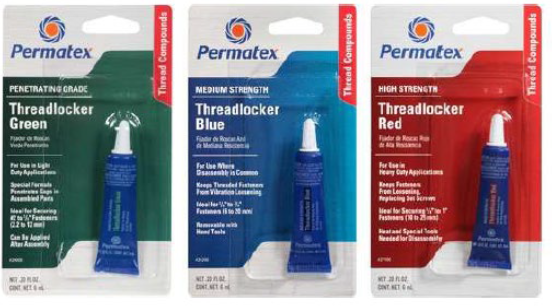
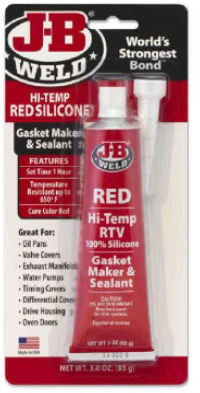
JB Weld product

Illinois Tool product

Nor was Illinois Tool justified in waiting to sue until J-B
Weld grew its market share:

The very point of laches is not for
the wait-and-see convenience of a plaintiff but to avoid unfair prejudice to a
defendant. Laches requires a plaintiff to file suit for a known trademark
infringement before the defendant foreseeably commits continuing resources year
after year to promoting a product and entrenching itself in the market. … While
Illinois Tool sat on its hands, not only did J-B Weld’s sales grow, but it
expanded its brands into more stores and launched new variants (like
“Perma-Lock Green”). So the fact that J-B Weld had low sales in 2015 is not an
excuse for delaying, but rather a reason why Illinois Tool should have acted
then.

This was not a case of progressive encroachment, which only
starts the laches clock when “the likelihood of confusion looms large.” “[T]hat
rule is just a reminder that not every use of a rival’s trademark violates the
Lanham Act. The use must also cause confusion.” If a defendant slowly comes
more directly into competition with the plaintiff, that can be progressive
encroachment, but here direct competition existed since at least early 2016. “Any
confusion loomed as large from the start as it did later on.” In other words, “[a]
junior user’s growth of its existing business and the concomitant increase in
its use of the mark do not constitute progressive encroachment.” Change over
time in likelihood of confusion, not change over time in market share, is the
key.

What about bad faith as precluding laches? There was no
evidence of intentional trademark infringement. The packaging featured a large
“J-B Weld” logo (in contrast to the large “Permatex” logo appearing on Illinois
Tool’s product), “and the packaging self-evidently differs from Illinois Tool’s
in other ways as apparent from the images below”:

These similarities in packaging “fall well short of
establishing bad faith.” The limited name similarity was based on their meaning—durability
of function, “the core value of any bonding product,” and didn’t meaningfully suggest
bad faith. It reflected only “[t]he intent to compete by imitating the
successful features of another’s product” rather than intent to deceive. Illinois
Tool asked for more discovery to show bad faith, but “[t]he mere fact that
discovery is incomplete is not enough to prevent summary judgment.” Illinois
Tool didn’t identify the evidence it hoped to find or how that evidence would
help.

False advertising claims as to “Made in USA”: First, J-B Weld
argued that Illinois Tool lacked standing because it didn’t advertise its own products
as being “Made in USA.” The court has a great answer:

This argument makes little sense.
What if J-B Weld falsely advertised that its bonding products cure cancer or
stopped global warming? If J-B Weld’s sales skyrocketed at the expense of its
competitors as a result of these false claims, would only those competitors who
also claim that their products cure cancer or stop global warming be allowed to
complain? What if none of J-B Weld’s competitors made the same outlandish
claim—does no one then have standing to complain?

Competitors who can satisfy the proximate cause requirement
have standing; “[t]here is no sub-rule that only a plaintiff competitor who
truthfully makes the same type of advertising claim as a defendant who falsely
makes such a claim has standing to complain.”

Here, “it is far from speculative to conclude that Illinois
Tool has not suffered lost sales due to J-B Weld’s ‘Made in USA’ claim. J-B
Weld features this claim very prominently on its packaging, presumably because
it understands the importance of this type of claim to consumers’ purchasing
decisions.”

Nor was there no factual issue on falsity. J-B Weld didn’t
dispute for summary judgment purposes that items such as the tubes, the caps,
and the syringe applicators weren’t made in the United States. J-B Weld argued
that the Lanham Act does not apply to acts that cause confusion about the
source of “container” items like tubes, caps, and syringes, as distinct from
the underlying “good” such as the chemical bonding product within the
container. Even assuming that the distinction was correct, there were genuine
fact issues about whether these parts were “goods” or “containers.” An item can
be both, depending on the circumstances.

J-B Weld also argued that customers realize that the “Made
in USA” claim does not refer to those items. “The evidence conflicts.” For example,
the syringes are standalone items that must be actively handled, and so a
customer “might think that they are a core part of the product and covered by
the ‘Made in USA’ label.” The caps were also vital to the function of the
product, since they “keep[ ] the two components of the epoxy product separated
until they are dispensed.” And J-B Weld singles out their special anti-waste
design on the packaging, right next to its “Made in USA” label. “A customer who
sees the two claims next to each other might well think that they are related.”

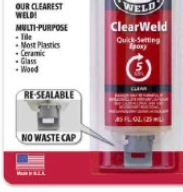
package closeup

standalone parts?

J-B Weld argued that staff lawyers at the FTC investigated
its use of the label but decided not to sue. “But the letter explaining the FTC
staff’s decision is thinly reasoned, and the discretionary enforcement
decisions of FTC staff members do not bind federal courts.” And it argued that
there was no survey evidence. But Illinois Tool might; the discovery period
wasn’t over, and anyway survey evidence isn’t always required to survive
summary judgment.

from Blogger https://ift.tt/3D9MGzX

Posted in Uncategorized | Tagged , | Leave a comment

Dastar prevents misrepresentation of source of IP from being material

Restellini v. Wildenstein Plattner Inst., Inc., 2021 WL
4340824, No. 20 Civ. 4388 (AT) (S.D.N.Y. Sept. 22, 2021)

This is an interesting application of Dastar to preclude certain theories of falsity–I’m not sure materiality is really the right characterization, but ok. Restellini alleged copyright infringement and related claims
in connection with WPI’s digitization of certain material about the artist
Amodeo Modigliani. WPI counterclaimed against Restellini and third-party
Institut Restellini SAS – Documentation Centre alleging copyright infringement and
false advertising. This opinion got rid of the counterclaims.

“In 1997, Restellini and the non-party Wildenstein Institute
(WI), a non-profit organization based in France, began working together to
create a catalogue raisonné of works by Amodeo Modigliani.” (A catalogue
raisonné “is a scholarly work identifying and describing all the known works by
an artist.”) They collaborated for the next 18 years. Restellini allgedly “offer[ed]
his opinions as to whether or not artworks should be included in the planned
catalogue raisonné” in “oral consultation” with WI employees, based on the
information and materials “researched, collected, synthesized, analyzed and
expressed by” the employees. For instance, WI employees “liaised with owners of
artworks being submitted for consideration for inclusion in the planned
catalogue raisonné, and, among other things, researched, compiled and reviewed
provenance materials associated with such artworks,” and “conducted substantive
academic research on exhibitions and provenance of artworks attributed to
Modigliani, including research, compilation and review of relevant information
from museums and other third-party institutions.”

In 2013, things began to go bad as Restellini began
attempting to purchase certain Modigliani material from WI, and in 2015,
Restellini and WI discontinued their collaboration before the catalogue was completed.

In 2017, WI granted WPI an automatically renewable,
exclusive license to use and exploit the content of all of WI’s materials,
including the Modigliani material. “WPI planned to utilize that license to
digitize the information to provide public online access to portions of the
Modigliani Material at no cost, but suspended that plan due to this litigation.”
Meanwhile, “Restellini incorporated the Modigliani Material into correspondence
and avis d’inclusion with third parties and a forthcoming catalogue raisonné by
Restellini, and disseminated the Modigliani Material to third parties.” (Avis
d’inclusion are “notices that a work would be included in the catalogue
raisonné.”) His Institut allegedly charges 30,000 euros per “Modigliani-based
inquiry.” The Institut published on its English-language website the statement
that:

After 18 years of exemplary
collaboration, Marc Restellini and the Wildenstein Institute decided, by a
mutual decision, to part, Marc Restellini wishing to evolve on his own. In
2015, the Catalogue Raisonné Amedeo Modigliani is henceforth transferred to
Institut Restellini, being taken up with new methods, even more modern and
scientifically extensive. It will be enhanced by the drawings, which had been
set aside with the Wildenstein Institute.

Copyright: WPI counterclaimed for infringement of its
collective work, but the counterclaim lacked sufficient specificity. Although
registration isn’t required for a foreign work, the other elements are still
present: the plaintiff must plead which specific works are the subject of the claim,
that it owns those works, and what acts of the defendant infringed. At the
motion to dismiss stage, it isn’t required to allege which elements of an
identified work were infringed. And if a plaintiff is alleging infringement of
a subset of a group of works, it doesn’t need to allege which specific one was
infringed, but it does need to allege an “exhaustive” list of the potentially
infringed copyrighted works to ensure the claims reach all those works. Here,
WPI alleged infringement of the “Modigliani Material,” “all of [WI’s] research
materials that its personnel assembled and analyzed in connection with the
Modigliani Project,” and“the information and materials researched, collected,
synthesized, analyzed and expressed by WI’s employees.” This included certain
dossiers containing “information gathered in relation to individual works
attributed to Modigliani.” It also alleged that it purchased “publications and
archival photographs from third parties to support the Modigliani Project.” It
claimed rights in the work product Restellini attempted to purchase from WI,
but not the preexisting material that Restellini had created prior to his
association with WI.

But “[n]one of these piecemeal allegations identify the work
at issue with sufficient specificity.” In particular, “[a]lthough WPI alleges
that the collective work at issue here is all the research materials assembled
in connection with the Modigliani Project, its allegations consist of a
collection of vague descriptors, which do not give Counterclaim Defendants—or the
Court—notice of the specific individual works merged into the larger collective
work.” The definition “the same work product that Restellini unsuccessfully tried
to buy from WI because he knew he did not already own it” was not enough for
the court to evaluate the claims. “[E]ven when large number of works are
allegedly infringed and the works are identified by category, plaintiffs in
this Circuit are required to give specific, concrete examples of the
copyrighted works.” So you need a list even if you allege specific facts only
as to some of the examples on the list.

WPI argued that the court should consider the procedural
posture: its primary argument is that none of the works over which Restellini
asserts copyright are copyrightable. Therefore, it reasoned, “the subject
matter of the counterclaims will be the amount of the Modigliani Material that
Restellini demonstrates is copyrightable to the Court, but WPI cannot know what
that material is until after the Court resolves the copyrightability question.”
But the court still needed at least “concrete, representative examples” of the
works and an exhaustive list to determine the merit of the claims. WPI could at
least have pled in the alternative to allow the court to determine the extent
of overlap with Restellini’s claimed materials and the alleged contours of the
collective work.

False advertising based on the Institut’s website statement
(emphasis added):

In 1997, invited by Daniel
Wildenstein, Marc Restellini decided to undertake the Catalogue raisonné of
Amedeo Modigliani’s works, imposing new scientific criteria never before used
in the field of research on works of art. After 18 years of exemplary
collaboration, Marc Restellini and the Wildenstein Institute decided, by a
mutual decision, to part, Marc Restellini wishing to evolve on his own. In
2015, the Catalogue Raisonné Amedeo Modigliani is henceforth transferred to
Institut Restellini, being taken up with new methods, even more modern and
scientifically extensive.
It will be enhanced by the drawings, which had
been set aside with the Wildenstein Institute.

WPI alleged that the statement was literally false because
WI “did not transfer the Modigliani Material, or the rights to use that
material to create a catalogue raisonné (or for any other purpose), to
Institut.” The statement didn’t mention the Modigliani Material, nor was there
an extant catalogue raisonné, so there was no literal falsity, though it could
imply falsity. At the motion to dismiss stage, “plaintiffs need only state that
there was confusion and offer facts to support that claim.” But WPI alleged no
facts to support the claim that there was confusion. Can pleading deceptive
intent substitute for that? Yes, sometimes, where the conduct was egregious.
WPI alleged that the Institut (1) knew that the Modigliani Material was not
transferred to the Institut, (2) made the statement to cause confusion, and (3)
intended to influence “potential purchasers and sellers of Modigliani art,
scholars and researchers of Modigliani, and the public in general to believe
that the important information contained within the Modigliani Material is
exclusively owned by, accessible through, and available from Institut,” as
opposed to it being publicly accessible through WPI. “Although a close call,
the Court concludes that these allegations are sufficient to plead that the
Institut made the Statement knowing it would be impliedly false, and did so for
commercial motives. Moreover, there is no indication that the Institut changed
its website when the possibly misleading implications came to light.” Thus,
deceptiveness was plausibly alleged.

But not materiality! WPI argued that it misrepresented the
materials as Restellini’s product, but that was a Dastar-barred
misrepresentation of authorship. Alleged misrepresentation of the materials as
copyrightable again “centers around the ownership and authorship of the ideas
in the Modigliani Materials, not any statements about the physical product
which contains those ideas” and was Dastar-barred.

The most persuasive argument was that the website misrepresented
Restellini and the Institut “as exclusive possessors of the Modigliani Material
in order to force individuals to pay them for access, when in fact WPI has the
right to make it known as well.” But WPI’s allegations still went to contested
ownership of the information contained in the Modigliani Material, rather than
the Modigliani Material as a physical product. “Although consumers may care
about who may provide access to that information, it is a distinction sounding
in copyright: whether the information is in the public domain, is WPI’s, or is
exclusively Restellini’s. And under Dastar, such a statement is not
actionable under the Lanham Act.” Cases about false advertising of the source
of “services” were inapposite. “[T]he Statement’s alleged falsity derives from
the transfer of the Modigliani Material, rather than any services Restellini
provided. And to the extent it derives from contesting who performed the work
in creating the Modigliani Material, that is, in essence, a debate over
authorship—and thus foreclosed by Dastar.”

Therefore, the statement, though plausibly false, wasn’t
material under the Lanham Act.

from Blogger https://ift.tt/3l76DBt

Posted in Uncategorized | Tagged , , | Leave a comment

Dastar doesn’t bar allegedly false advertising about source of planned development services

LStar Development Gp., Inc. v. Vining, 2021 WL 4344891, No. 5:20-CV-184-FL
(E.D.N.C. Sept. 23, 2021)

LStar, which manages and sells development communities, sued
defendants for trademark infringement, false designation of origin, and false
advertising under the Lanham Act, as well as state law claims for unfair and
deceptive trade practices, common law unfair competition and infringement, bad
faith, breach of fiduciary duty and conflict of interest, misappropriation of
trade secrets, breach of contract, tortious interference with contract,
tortious interference with prospective economic advantage, constructive trust,
trespass to chattels, conversion and accounting, money had and received, unjust
enrichment, and civil conspiracy. Many of these claims are dismissed without
prejudice.

When LStar was founded, its lawyer (defendant Vining) allegedly
implemented a scheme to take advantage of the founder, Corkum, persuading him
to issue Vining twenty percent of plaintiff’s stock and appoint him as the
vice-present, secretary, treasurer, and director.  Other individual defendants were high-level
employees with employment agreements covering trade secrets. They allegedly wrongfully
ousted Corkum and, when he asserted his rights, incorporated Oak City to
continue the business, allegedly with LStar’s equipment, money, and
intellectual property. For example, defendants allegedly issued a development
proposal to the City of Glenwood Springs, stating that Oak City was well
capitalized and had developed three real estate developments, which were
actually capitalized and developed by LStar.

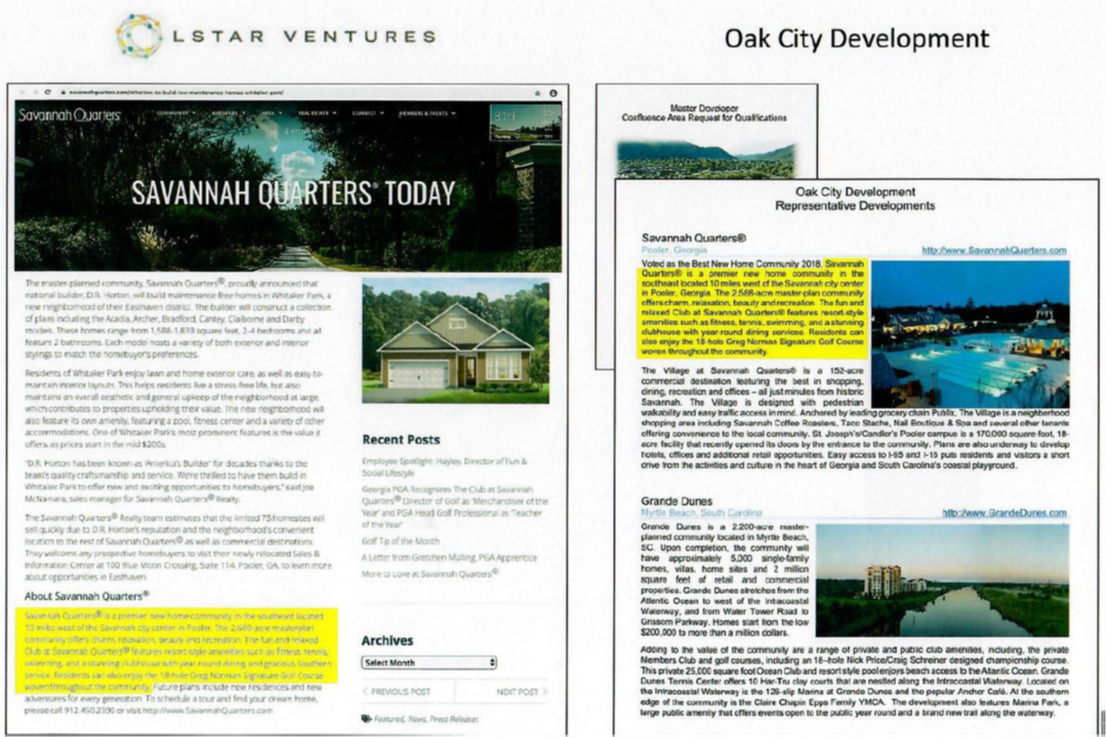
The proposal allegedly incorporated identical text and
pictures that LStar used to promote two other developments.

Defendants’ letter

allegedly copied text from LStar

Trademark infringement: LStar never specified what its
trademarks or service marks were. It argued that defendants copied, but didn’t
identify a particular word, name, or symbol, or combination thereof, within the
highlighted paragraphs, as the alleged trademark(s). Not every word on a label
or ad is a mark. LStar didn’t plead its own trademark use. Although “LStar
Ventures” on a website could qualify, there were no allegations that defendant
used that term.

False advertising: This one survived: By listing LStar
developments under the heading “Oak City Representative Developments,” “the
proposal necessarily implies that defendant Oak City developed those
properties.” This was unambiguous and literally false, and likely material
given its centrality. The court analyzed whether it was placed in interstate
commerce (yes), but not whether a single proposal constitutes “commercial
advertising or promotion,” which seems like a much bigger problem for the
claim.

Indeed, the proposal was submitted on behalf of Oak City in
partnership with another entity, and included biographies of the individual
defendants, which even “suggests a plausible inference of defendants’ knowing
or intentional participation in drafting and submitting the proposal, which is
sufficient to state a claim for contributory false advertising.”

What about injury?  “[H]ere
it can be reasonably inferred that defendants’ alleged false statement, taking
credit for the development of plaintiff’s projects in order to obtain the
business of a prospective client, is likely to harm plaintiff, either by direct
diversion of sales, a lessening of goodwill, or both.”

False designation of origin: 
Failed to state a passing off claim, but Dastar didn’t bar a
reverse passing off claim. “Thus, the plaintiff in a reverse passing off case
must plead and prove only that the work ‘originated with’ him—not that he used
the work (which may or may not be associated with a mark) in U.S. commerce.” [“Work”
is such a seriously problematic word to use here—not the court’s fault, it’s
quoting Belmora—because it implies that the Lanham Act should regularly
be involved in copyright-related claims.] LStar alleged that it financed and
developed the relevant projects, “allowing the inference that it is the origin
of these real estate development services.” [Some service/product confusion
also going on here.] “Moreover, by indicating that defendant Oak City developed
the real estate projects, defendants allegedly falsely designated the origin of
real estate development services.” And LStar plausibly alleged confusion and
harm: if there really is reverse passing off, then confusion about origin is
inherently likely, and it deprives the originator of the advertising value/goodwill
of the product.

However, Dastar precluded any claim based upon
defendants’ alleged plagiarism of plaintiff’s texts and pictures.

For similar reasons, the state unfair and deceptive trade
practices claim survived, though trade secret/tortious interference claims were
dismissed without prejudice.

from Blogger https://ift.tt/2YoJstQ

Posted in Uncategorized | Tagged , , | Leave a comment

USC IP year in review, TM/ROP

 My presentation, galloping across a bunch of developments. Slides here.

Begin with legislative action: Trademark Modernization Act, Which
introduces three of the big themes of the year: (1) trademark use, (2) the harm
of infringement, and (3) the role of the First Amendment in limiting the scope
of trademark rights. As harm showings become less important, both trademark use
and the First Amendment become relatively more important as the remaining
limits on liability once a theory of how consumers might possibly be confused
has been introduced.

Briefly, as to trademark use, under the TMA, Expedited
cancellation and nonuse proceedings are on the way, with the PTO finalizing
rules—still remains to be seen how and how often they will be used to clear up
deadwood on the register.

Right now the expedited cancellation and use proceedings
represent just one aspect of how attention to trademark use has become more
important as perhaps the biggest remaining limit on the scope of trademark
rights other than the First Amendment—Mark Lemley has called the question of
whether the defendant is making trademark use “step zero” in the infringement
inquiry, and whether the plaintiff is making trademark use is the flip side of
that question.

Indeed, the PTO has increased its focus on whether the use
an applicant is making is trademark use, as opposed to ornamental or
informational use, in its registration decisions. Annual number of TTAB
decisions under failure to function and related categories: 2000-2020—you can
see an increase with a fall in 2020 due to the fact of 2020; 2021 looks to have
regained the momentum of failure to function.

Professor Alexandra Roberts has written an excellent recent
article on this, Trademark Failure to Function. 
The PTO’s attention to failure to function as a mark is likely to
intensify, in part because some of the former grounds for denying a
registration are now unconstitutional. But even if the n-word isn’t
unregistrable because it’s scandalous or disparaging, it may still be
unregistrable because it already has so much expressive meaning that it’s
simply incapable of adding a trademark function.

failure to function can be significant in ordinary cases
with uncontroversial subject matter. In this recent case, Epic sought to
register this design for “downloadable video game software”—the Loot
Llama in Fortnite, which serves as a resource cache for players. The examiner
reasoned that the llama appears only as a character in the game, not as a
source identifier—the player clicks on it to get resources. The Board agreed: “The
repetition of the llama on the specimen in varying sizes, portions and vividity
detracts from Applicant’s claim that the single llama depicted in its drawing
would be recognized as its mark. In addition, consumers considering the source
of the webpage can look to the term FORTNITE which appears at the top left
portion of the specimen.” Thus, even though it would be possible to have a
registrable llama logo that functioned as a trademark, that’s not what Epic
had.

The past year also saw some media attention to another
puzzle of use as a trademark: registrations that are for unpronounceable,
unmemorable series of letters, not translated from another language, whose
registration apparently serves the lucrative purpose of allowing the registrant
to do better in Amazon search results because of the benefits Amazon gives to
registered trademark owners. My former student Grace McLaughlin has written an
excellent note about the fact that these putative trademarks don’t serve human
trademark functions—it’s very hard to remember them or distinguish one random
string from another random string in terms of knowing what you’ve seen
before—and has proposed some possible responses from the PTO.

At a more theoretical level, these algorithmically optimized
registrations help show why applications have spiked so much—other important
institutions, like Amazon and the Chinese government, are using the PTO for
their own purposes. Amazon gives registrants special powers over product pages,
while there reportedly have been various Chinese subsidies for entities that
secure US registrations as evidence of their productivity. But these other
insitutions don’t bear all the costs of effectuating their own purposes by
using US registrations as a marker, and that contributes to the load on the
PTO.  At this point, as Barton Beebe and
Jeanne Fromer have demonstrated with empirical research, crowding on the TM
register is a serious problem, both in the US and Europe, and nonuse
proceedings may not be able to do very much on the back end to deal with that.

Moving to the defense side, Lack of use as a trademark
doesn’t just limit attempts to claim TM rights. It can also limit attempts to
impose liability on defendants who aren’t using a symbol as a mark. In the
Redbubble case, the Ninth Circuit affirmed the rejection of LTTB’s trademark
claims against Redbubble for allowing artists to sell shirts and other items
that used the phrase LTTB as ornamentation. The Ninth Circuit framed this as a
matter of aesthetic functionality: giving exclusive use of the phrase as a
design for the front of shirts would put other competitors at a “significant non-reputation-related
disadvantage.” This analysis does make some sense, but raises the question of
what the how to identify what counts as a “significant” disadvantage. Another
way to put it is that aesthetic functionality requires you to have an
understanding of the definition of the market in which other clothing makers
should be free to compete. But the reason the phrase is aesthetically
functional as a prominent design on clothing and bags is that it is attractive
because of its message, not because of its source indicating significance, and
that may be more satisfyingly framed as a matter of ornamentality.

Interestingly, the court didn’t hold that the registered LTTB
marks were per se invalid—they could still be protectable if used on clothing
tags. That sounds like defense-side functionality: the defendant can win if its
use is functional, even if the plaintiff’s use is not functional.

Similarly, Sulzer Mixpac AG v. A&N Trading Co., No.
19-2951 (2d Cir. Feb. 18, 2021), held functional the defendant’s informational
use of colored mixing tips for dental equipment to show which mixing tip should
be used with which materials. The colors were arbitrary when initially chosen,
but the market had learned that colors corresponded to specific diameters and
lengths as required for specific mixing ratios. Informational use of color is
not trademark use for purposes of gaining trademark rights, and likewise
informational use by competitors is functional, meaning that claimed trademarks
over the informational matter are invalid.

Trademark use can show up in some surprising places. The
Fourth Circuit recently endorsed the idea that putting something in the
trademark “spot” on a product doesn’t mean it’s a trademark—in the course of
finding that certain uses didn’t have a significant effect on the market.

Perhaps ironically, the result was to give the plaintiff
claimant more rights in VAGI- as a formative for products for use in the
vagina, because products with noticeable market presence were disregarded
because their name was generic.

One lesson from these examples: use as a trademark is a
concept so useful that even after courts of appeals rejected a decade ago it as
a separate limit in cases involving keyword advertising, it is still constantly
being reinvented and applied to solve otherwise difficult problems: trademark
use is a simple way to explain why we shouldn’t do a complicated and expensive
and error-prone likely confusion analysis when defendants are engaging in
behavior that on its face seems pro-competitive and not likely to result in
material harm to consumers, despite the theoretical possibility of confusion.

Second big theme is harm and its relationship to the
scope of TM rights: Likely success on the merits, or success on the merits, now
justifies a presumption of irreparable harm for preliminary or permanent
injunctive relief, restoring the rule that many circuits used before eBay v
Mercexchange
, though the knowledge of this change is percolating through
the lower courts.

Things we don’t know yet: will things like voluntary
cessation under conditions where resumption of the challenged conduct would be
difficult be able to rebut the presumption? Before eBay, lots of courts
held that delay rebutted the presumption, and I expect that to resurrect, but
we will have to see—indeed, we don’t even know if the presumption has any
weight or simply shifts the burden of production. One commentator has written: Based
on Congress’s failure to address the issue, it may well be that Federal Rule of
Evidence 301 provides the default rule and that the shift is merely one of the
burden of production. However, how you produce evidence of lack of harm is an
open question even if the presumption is a very thin one.

This change in the ease of getting relief interacts with the
substantive scope of TM law in ways that may prove challenging.

Infringement keeps getting bigger and bigger. In fact, one
reason that this year in review says nothing about trademark dilution is that
trademark dilution protection for famous marks doesn’t do much to expand
trademark owners’ rights, since all conduct that plausibly causes dilution
plausibly causes confusion as confusion has been expansively defined.

Of particular note, in the past year, IIC returned from the
dead. For about a decade, courts had realized that IIC had gone way too far,
and had expanded liability in ways that didn’t protect consumers and
facilitated anticompetitive claims about false advertising. But we’ve seen a
swing back towards requiring a jury to determine each case, which increases the
risks for comparative advertising a lot

In one case, The Eighth Circuit had previously held that IIC
didn’t make sense where any confusion to sophisticated purchasers of expensive
goods would be quickly resolved. However, in Select Comfort, a case about
keyword and other online advertising, it held that because there was a question
of fact about how sophisticated mattress consumers are, the initial interest
confusion theory should be submitted to the jury. The court or appeals also
commented that relying on IIC might change the available damages and relief—but
how exactly?

Relatedly, the 2d Circuit reversed the FTC’s victory on
antitrust grounds against 1-800-Contacts’ anticompetitive settlements with
competitors that precluded them from running ads triggered by searches for
1-800-contacts, whether or not the ads themselves were confusing; because
1-800-contacts articulated its interest as one in protecting its trademark, the
Second Circuit held that its settlements were legitimate, even though they
deprived consumers of useful and nonconfusing comparative advertising, and even
though these settlements even precluded competitors from buying the word
“contacts” generally without including an exclusion for 1-800-contacts. This
ruling helped resurrect trademark owners’ interests in threatening others
engaged in competitive keyword advertising, despite no persuasive evidence that
keyword-triggered confuse consumers unless they have confusing ad text.

The Bayer v. Belmora case also continues to influence
courts, which are increasingly likely to say that 43(a) confusion claims don’t
require having a valid mark—but current courts have lost sight of whether there
are limits on that principle. There are different reasons one might not
have a valid mark. In particular, there are cases where it would be possible to
have a registered trademark in the claimed subject matter, but the plaintiff doesn’t—say,
a descriptive term without secondary meaning. There are other cases where it
would not be possible to have a registered trademark in the claimed subject
matter, and that can be meaningfully different depending on why it’s not
possible. For example, one might have de facto secondary meaning in a generic
term, which as then-Judge Ginsburg held several decades ago could justify
limited relief requiring the defendant to distinguish its use from that of the
plaintiff, but could not justify enjoining the defendant from using the generic
term, in sharp contrast to the usual remedies available in a trademark case. Or
one might have US secondary meaning in a trademark valid in another country but
not in use in the US, so the claimant could not register a trademark in the US.
That imported secondary meaning—usually imported via immigrants who remember a
mark from back home—might justify either restrictions on how a US defendant
with US rights could use the mark in the US or invalidation of the US rights as
a whole and a total prohibition on the defendant’s use—this is the question in
the Bayer v. Belmora case; the Fourth Circuit allowed Bayer to seek the
complete elimination of Belmora’s ability to use the challenged mark, though
Belmora has sought cert on this question.

The Zamfir case is then an example of how 43(a)’s detachment
from “trademark” as such is diffusing across the country. Zamfir is a
researcher in the field of cryptoeconomics and distributed systems; he was allegedly
one of two lead researchers of the proof-of-stake blockchain protocols known as
Casper. A blockchain company using these protocols adopted the name CasperLabs
and secured a registration; the court allowed Zamfir to bring a §43(a) claim
without proving that he had a valid trademark interest, because it reasoned
that ownership of a valid mark isn’t a requirement under §43(a)—skipping
straight over whether he had a commercial interest at least analogous to a
valid trademark! However, the court then reasoned that he would face a higher
barrier to prevail in his claims if CasperLabs had a valid registration, which
would at least weaken the strength of the mark as it related to Zamfir.

Beasley v. Howard, (3d Cir. Sept. 17, 2021)), is another
case about the breadth of §43(a). It began with trademark cancellation
proceedings before the TTAB, where the plaintiff failed to secure cancellation
of the defendant’s mark. The Third Circuit ruled that TTAB proceedings don’t
have claim preclusive effect against trademark infringement lawsuits in federal
district courts, because more remedies are available in federal court. What
this means is that you can bring a 43(a) claim against a defendant who has a
federal registration and still claim that your unregistered rights trump the
registration. To be clear, I don’t think this is a wrong result, but I invoke
it here to make the point that trademark rights can be quite amorphous whether
or not a registration is involved.

Even cases that deny a finding of infringement are cases
that might not have been worth bringing a few decades ago b/c doctrine is now
so broad:

For example, For over a century, PTRA has hosted the Rose
Parade and Rose Bowl Game. Under its agreements with the City of Pasadena, PTRA
is the exclusive owner of the Rose Bowl Game trademark. They worked together
for many years but Covid disrupted the relationship as PTRA decided to move the
Rose Bowl to a state that wasn’t as worried about Covid. It then sued the City
for this Instagram post, alleging that it would cause confusion about
affiliation or sponsorship.

The court found that this was nominative fair use, which
provides a defense in the Ninth Circuit when a trademarked product or service
isn’t readily identifable without use of the mark, the use is no greater than
necessary, and the defendant does nothing else to suggest confusion. The court
found those requirements were satisfied. Pasadena posted from its Instagram
account, @rosebowlstadium. “It did not use any express or implied language of
sponsorship or endorsement or ‘tag’ Plaintiff’s accounts.” Conclusory
allegations of possible confusion were “insufficient to plead there was a
suggestion of association or sponsorship.”

Some other notable edge cases: Big Ligas v. Yoo: Lanham Act claim
against a lawyer negotiating on behalf of her client, allegedly using her
client’s name in commerce to promote his songwriting and recording services in
violation of the client’s exclusivity agreement with the plaintiff. The claim
failed because, the court said, negotiating on behalf of a client isn’t use in
commerce. This is obviously wrong in one sense—Congress meant to define
commerce broadly and engaging in economic transactions crossing state lines is
commerce by any ordinary measure—but it’s right in the larger sense that of
course it shouldn’t violate the Lanham Act to negotiate on behalf of one’s
client even if the client is in fact breaching its contractual obligations.
What’s notable is the paucity of doctrinal tools available to the court to find
no Lanham Act coverage, leading it to just pretend that this wasn’t use in
commerce.

Wakefern Food Corp. v. Marchese, 2021 WL 3783259, No.
2:20-cv-15949-WJM-MF (D.N.J. Aug. 26, 2021)  Wakefern, the largest retailer-owned
supermarket coop in the US, sued Marchese for attempting “to lease commercial
real estate in violation of the Lanham Act … and New Jersey common law.” This
case was also resolved by holding that this wasn’t a use in commerce. The
plaintiff didn’t allege that there was ever any public infringing use, and the
allegations “suggest that Marchese made false representations to the broker in
order to take advantage of the broker’s services rather than to sell or promote
his own.”

Proactive Environmental Products Int’l, LLC v. Pine
Environmental Servs., LLC, No. 8:21-cv-250-CEH-CPT, 2021 WL 3025481 (M.D. Fla.
May 20, 2021) (R&R) renting existing equipment; Pine was formerly one of
Proactive’s licensed distributors for the pumps. The principal issue was whether
Pine can continue to rent Proactive’s pumps to its customers despite the
termination of that license, particularly where Pine has made or will make
repairs to the rented pumps.” In a system with a working first sale doctrine,
this would be an easy question, but TM’s definition of confusion has expanded
so far that it takes the judge work to conclude that Proactive probably
shouldn’t get an injunction. Ultimately, the court reasoned that Pine disclosed
that it wasn’t a licensed distributor, and that people expect rental equipment
to suffer wear and tear so they wouldn’t attribute any flaws in the rental
equipment to Proactive. If the result were otherwise, then Uber drivers could
be vulnerable to infringement suits by carmakers who alleged that the drivers
were driving around in dilapidated vehicles, and you wouldn’t be able to resell
a used car that had been repaired after an accident without infringing the
original manufacturer’s trademark.

quick excursion on first sale: The doctrine has long allowed
resale of legitimately produced goods, but courts have cut back on it
substantially where there have been alterations or allegations that defendants
held themselves out as authorized distributors—this year many of those cases
involved claims about N95 masks allegedly produced by 3M. The cause of first
sale was not advanced by those cases, which often involved allegations of
counterfeiting alongside the allegations that the defendants held themselves
out as authorized distributors. Where they were merely reselling legitimate
goods without making explicit claims to be authorized distributors, however,
first sale should protect that conduct—but first sale is not guaranteed to do
so under current doctrine.

The Second Circuit, in Hamilton International Ltd. v. Vortic
LLC, No. 20-3369-cv (2d Cir. Sept. 14, 2021), recently affirmed a finding that
vintage Hamilton pocketwatch movements converted to modern wristwatches were
not likely to cause confusion under the major first sale precedents. At most,
the Second Circuit refused to take further bites out of the doctrine as applied
to refurbished goods, and its emphasis on consumer sophistication may even make
things harder for Etsy jewelry makers. But the case’s larger significance may be
that the court apparently joined the Ninth Circuit in requiring likely
confusion before counterfeiting can be found.

Another interesting limit case:

D posting as an ASU student on Instagram. “Although it is
not uncommon for universities to attempt to appeal to students by imitating
their vernacular, no university would drop the f-bomb in an official party
invitation,” and a reasonable consumer would not have thought ASU was inviting
them to get drunk. Interesting to consider the language of the court, which
relies on simple assertion to explain why liability can’t be as broad as ASU
wanted, because there aren’t really doctrinal tools available:

The court stated: “[m]ore broadly, it cannot be the case
that every social media post written by a college student that happens to use
the school’s colors and/or logo in the post, and identifies the school’s
location as the location of the poster, creates initial interest confusion and
qualifies as an actionable trademark violation.” ASU is appealing to the Ninth
Circuit.

Final comment to make before I transition to part three is
about Art. III standing: In the recent TransUnion case, the Supreme Court held
that Congress can’t create standing just by enacting a law allowing a plaintiff
to sue without a real injury. Big question that recent cases are starting to
surface: Is nonharmful confusion that just amounts to free riding–unjust
enrichment to D without damage to P—sufficiently similar to existing common law
causes of action to be promoted to Article III-qualifying injury after
TransUnion? If courts notice this issue, which is a big if, it could create potential
problems for dilution, IIC and post-sale confusion, as well as false
endorsement theories, all of which are fundamentally about unjust enrichment
rather than any real risk of harm to the plaintiff. Example from recent case:

Abrahams v. Simplify Compliance, LLC, 2021 WL 1197732, No.
19-3009 (RDM) (D.D.C. Mar. 30, 2021)

Plaintiff Daniel Abrahams
formerly contracted with a publisher to author a series related to the Fair
Labor Standards Act. The publisher sold the publication rights and they ended
up in the hands of an entity that allegedly refused to pay him any fees or
royalties but continued sell his publications. He alleged that holding him out
to the public as the editor violated the Lanham Act. The court applied the
Lexmark zone of interests and proximate cause requirements, reasoning that “a
plaintiff may not prevail on a false association claim without alleging a
commercial injury.” But Abrahams failed to do so. It was insufficient to allege
that Simplify “has deprived [him] of the fundamental value of his name and
abilities with regard to editing the publication,” or that his inability to
control the quality of the work “depriv[ed] him of the ability to maintain his
reputation and standing in the marketplace.”

This case is interesting to me because
in standard trademark claims courts routinely accept similar allegations as
sufficient, and under the TMA lost control over reputation is now considered
irreparable harm—without ever having to be proved to be harm in the first
place! The court noted that Abrahams didn’t alleged that the publications were
low quality or that he disagreed with their contents. Nor did he allege any
lost business opportunities as the result of their presence on the market.
Although he alleged that confusion was likely, he did not allege that the
confusion would cause him a specific commercial injury.

Relatedly, Ice Cube’s Lanham Act
and right of publicity claim against Robinhood was dismissed because Robinhood
used an image from a movie in which he appears and a version of his
catchphrase, but only in a finance newsletter, which was noncommercial speech
rather than conventional advertising. The complaint was then refiled to allege
only a Lanham Act §43(a) claim. The renewed motion to dismiss points out that
the complaint alleges that Robinhood was unjustly enriched, but does not allege
that Ice Cube suffered any actual harm, bringing us back to the questions of standing.

Another thing that is likely to
ramp up the potential conflict between trademark law and Article III injury is
the continuing fallout from the recent Romag case, in which the Supreme Court
found that willfulness was not required to award disgorgement to successful
trademark plaintiffs. A few cases this year seem to suggest that disgorgement
should routinely be available to trademark plaintiffs—but disgorgement of
course is about the benefit to the defendant, not the harm to the plaintiff. A
plaintiff seeking disgorgement need not under current rules develop any
evidence that it was actually harmed by any confusion—which makes harm even
less relevant to TM cases in ways that seem to conflict with the Supreme
Court’s statements about constitutional standing.

Third and finally in my thematic overview, Congress
expressed its endorsement of Rogers v. Grimaldi as a test protecting
free speech against trademark liability. Under Rogers, uses of
trademarks in noncommercial speech are not subject to trademark liability
unless they are not artistically relevant to the speech or are explicitly
misleading about the source, sponsorship or endorsement of the speech. That
means that uses that merely imply that the trademark owner has endorsed the
speech are not actionable, even if there is consumer survey evidence suggesting
a relatively high level of confusion. This move is necessary because if you ask
consumers whether a trademark owner depicted in a fictional or factual work
consented to or approved of its appearance, a shockingly high number are likely
to say yes, and courts are unwilling to give trademark owners that much control
over public discourse.

The legislative history of the TMA represents Congress’s
first endorsement of Rogers, though only in legislative history and not in
statutory text the way that nominative fair use is now identified in the statutory
text as a defense to dilution.

It’s not clear whether there are enough judges left who care
about legislative history for this to matter; I would be surprised if the
Supreme Court gave any weight to this kind of statement if the issue reached
it.

But the Court turned down one opportunity to articulate a
rule for the trademark infringement/First Amendment interface this year—it
denied cert in the VIP v. Jack Daniel’s case, in which INTA and other large
trademark owners had invited the Court to adopt Rogers, but not for dog
toys. Denials of cert are not necessarily very meaningful, but in my view
taking up a Rogers case would require the Court to engage with extremely
difficult commercial speech questions that it would likely prefer to avoid.

A few Examples of Rogers’ breadth in protecting
noncommercial speech:

Miller v. Easy Day Studios Pty Ltd, 2021 WL 4209205, No.
20cv02187-LAB-DEB (S.D. Cal. Sept. 16, 2021): found that Rogers protected the
use of a skateboarder character in the game who strongly resembled a pro
skateboarder, who had actually allowed the game to do motion capture of him
allegedly on the representation that he wouldn’t appear in the game. Despite
the alleged contractual agreement, he didn’t have a Lanham Act false
endorsement claim because his appearance was artistically relevant to a
realistic skateboard game and there was no explicit claim of endorsement

Punchbowl, Inc. v. AJ Press LLC, — F.Supp.3d —-, 2021 WL
3356848, No. 21-cv-03010-SVW-MAR (C.D. Cal. Jul. 16, 2021). AJ operates
“Punchbowl News,” “an online news publication that provides newsletters,
podcasts, and videos in the fields of government, politics, public policy, and
current events.” It uses “Punchbowl” because that is the Secret Service
nickname for the U.S. Capitol (a fact that Punchbowl didn’t contest), and its
logo also invokes the Capitol building. Plaintiff Punchbowl “is a technology
company that develops online communications solutions for consumers, including
online event invitations and greetings cards, with a focus on celebrations,
holidays, and events.” Punchbowl sued AJ for trademark infringement and related
claims.

Rogers precluded liability: There was artistic
relevance because the term “Punchbowl” had political and geographic relevance
to the content of Punchbowl News. Question: is a political newsletter really
artistic? [One of the issues running underneath the disputes over Rogers is
what courts means when they say there’s a special test for ‘expressive’ or
‘artistic’ works. Of course, there are lots of expressive works that are purely
commercial, like standard advertising. What Rogers really is, is a test for
noncommercial speech: when the product itself being sold is speech, like the
New York Times or a painting or sculpture, as opposed to commercial speech,
which is speech that is used to sell a separate product or service distinct
from the speech itself.

Although the Ninth Circuit has complicated Rogers analysis
for cases in which the defendant competes directly with the plaintiff, no
reasonable juror could find that defendant failed to add its own expressive
content to the work beyond the mark itself.

Indeed, the recent Dr. Seuss case in the Ninth Circuit found
that the Rogers test applied and precluded trademark liability even when the
defendant’s work was not a copyright fair use, and the work used Seussian font,
Seussian illustration style, and a similar title. Both parties used marks for
graduation-themed books but the defendant added expressive content to the work
beyond the mark itself, so Rogers protected this book from trademark infringement
claims.

People do keep pushing the boundaries, including for
artistic reasons. This a Tom Sachs painting from his recent series of brand
paintings. Note that the only attribution on the painting is a TM claim
asserting Reeses’ TM rights. Is this explicitly misleading? Even if it is
explicitly misleading, could it be actionably confusing?

One limit on Rogers: it’s really not for ordinary
consumer goods that are quite detachable from their labels, like alcohol. Here,
the defendant’s Rogers defense failed as inapplicable to product labels,
although the plaintiff, which owned rights in the TV show Peaky Blinders,
didn’t show that it was entitled to a preliminary injunction, in part because
of its delay

Finally, to contrast with Rogers, here’s a case
involving political speech where the Eleventh Circuit found infringement
liability over a vigorous dissent. The case is complicated by procedural
issues, but still quite striking in its use of law to suppress political speech.
The district court found that the defendant, a nonprofit that endorsed
political candidates, was liable to its counterpart AGG for infringement;
joined CBG’s principal Darleen Jacobs post-judgment; and awarded attorneys’
fees to AGG. The court of appeals affirms over a dissent that would have held
that the First Amendment precluded application of the Lanham Act to political
speech.

The key passage in the majority opinion is: “even if
Coalition’s speech is rightly considered noncommercial speech, this Court has
not previously held that § 32(1) of the Lanham Act, the section at issue here,
applies only to commercial speech.” In a footnote, the majority acknowledged
that it has held that §43(a) applies only to commercial use, but it has not
extended that holding to §32. (I will note: There is no language in §32 that in
any way could be considered broader than §43(a) in its coverage of political
speech.) Also, the court of appeals pointed out that the Second Circuit has
found that §32 applies to “[a] political organization that adopts a platform
and endorses candidates under a trade name.” United We Stand Am., Inc. v.
United We Stand Am. N.Y., Inc., 128 F.3d 86 (2d Cir. 1997).

Judge Dennis dissented: he considered it a patent error to
hold that “the Lanham Act can be constitutionally applied to the noncommercial
political speech of a political organization, such as the political
endorsements made by Coalition in this case.” The result of this case law is
that political speech gets less First Amendment protection than entertainment,
which is fairly backwards.  This is the
kind of question that, if the Supreme Court did take up a Rogers v. Grimaldi
case, might give it some difficulties.

ROP: A less eventful year, but some trends that may be of
interest.

NY added a postmortem right of publicity, requiring
registration with the state, for people domiciled in NY at death, lasting 40
years after death. It leaves in place the existing statutory right of publicity
for the living and provides rights when a “deceased personality’s name, voice,
signature, photograph, or likeness” is used “on or in products, merchandise, or
goods, or for purposes of advertising or selling, or soliciting purchases” of
such items, largely tracking California’s statutory ROP.

Also prohibits the use of a “deceased performer’s digital
replica in a scripted audiovisual work as a fictional character or for the live
performance of a musical work . . . if the use is likely to deceive the public
into thinking it was authorized by the person” or her heirs (as specified in
the bill).  Notably, this provision
expressly states that a “conspicuous disclaimer in the credits” and in related
advertisements stating that the use is not authorized will insulate users from
liability.

Lots of model cases against strip clubs, with mixed results.
Apparently strip clubs often advertise by searching for images of sexy women
and putting them in their online ads, without regard to copyright or trademark.
States often have shorter statutes of limitation for ROP claims than for
trademark claims, which can leave the models relying on false endorsement
theories instead of ROP claims if they didn’t sue quickly, which is often the
case when the defendant is just one strip club that advertises on social media.
When the statute of limitations expires, the models can lose their false
endorsement claims on a variety of grounds: although courts in Arizona have
issued a series of plaintiff-favorable rulings, other courts have thought that
plaintiffs’ evidence isn’t good enough to show that their presence in ads is
likely to be perceived as an endorsement, as opposed to their images simply
being used as stock photos—after all, no one thinks that the average anonymous
actor in a conventional ad actually endorses the product they’re selling.
Interestingly, the FTC is quite explicit about this distinction for its own
endorsement guidelines: the guidelines do not apply to ordinary actors in
standard ads who would not be perceived as personally endorsing the products or
services in the ads. Only if there is some reason to think that the actor is
appearing in a personal capacity is there an endorsement according to the FTC,
which then means that the endorser must actually use the product, and the
endorsement must remain current so that if the endorser changes their mind the
ad has to be pulled. None of that has to happen with Flo the cheerful insurance
advocate or the Geico gecko. Anyway, with respect to the strip clubs, some
courts in Arizona have found confusion surveys persuasive, but other courts
especially in New York have excluded them because the plaintiffs’ survey expert
who does all these cases has a really bad, suggestive methodology.

Interestingly, other false endorsement Lanham Act claims
have been foundering on the Supreme Court’s statutory standing rules set out in
the Lexmark versus Static Controls case some years back. Courts increasingly
recognize that the Court was interpreting statutory standing for the entire
Lanham Act, not just for false advertising, meaning that a plaintiff who brings
confusion or false endorsement claims must come within the statute’s zone of
interest and plead a commercial, competitive injury proximately caused by the
defendant’s conduct. Some courts have held that models’ injury in not being
paid for their images is not a competitive injury for Lanham Act purposes, and
while it’s easy to assert that using a model’s image for a strip club ad hurts
her reputation, it turns out to be very hard to prove that at summary
judgment. This means that the ROP may be a person’s only avenue to recover for
unauthorized use of their images to promote products and services. 

The recent OSU v. Redbubble case was mostly about trademark
claims, but it also made some potentially momentous statements about ROP as
well. Ohio’s ROP statute prohibits using a persona in connection with a product,
advertising a product, or soliciting the purchase of a product. “That broad
language expands liability beyond directly selling trademark-infringing goods.”
So even if Redbubble was passive, the ROP would apply if people who used
Redbubble to create goods infringed the ROP.

But TM remains broader than ROP in many ways: Walkowicz v.
American Girl Brands, LLC, 2021 WL 510729, No. 20-cv-374-jdp (W.D. Wis. Feb.
11, 2021): the case involved TM false endorsement claims and ROP claims by Lucianne
Walkowicz, who “has achieved a measure of celebrity as an astronomer,” based on
the claim that defendants misappropriated distinctive aspects of their personal
identity into a space-themed American Girl doll named Luciana Vega. Because
Wisconsin law covers a person’s “name, portrait, or picture” but not their
identity in any aspect, the court rejected the ROP claims. But false
endorsement is more flexible, so the court found it plausible that people would
believe that Walkowicz endorsed American Girl despite the differences in name.

from Blogger https://ift.tt/3a2ojbb

Posted in Uncategorized | Tagged , , , | Leave a comment

emails to 12 customers weren’t commercial advertising or promotion

Elias Indus., Inc. v. Kissler & Co., 2021 WL 409835, No. 20-CV-01011-CCW (W.D. Pa. Feb. 5, 2021)

Elias is a wholesale distributor of plumbing parts that primarily sells OEM plumbing parts. Kissler is a plumbing repair part manufacturer and distributor that primarily sells non-OEM parts.

Elias allegedly uses an online client portal that allows customers to place and track orders and provides further information on product pricing, availability, and the customer’s order history. Kissler allegedly used login credentials from a Bronx-based customer to access Elias’ pricing and inventory information as well as Elias’s Bronx-based customer’s previous inquiries. Elias suspended those credentials, and then a former Elias employee who had switched to Kissler used his old credentials to give Kissler access, and 13 other customers’ credentials were used to access the client portal from Kissler’s location.

Elias sued for violations of the CFAA, tortious interference, and “procurement of information by improper means.”

Elias e-mailed copies of the complaint to twelve of its customers, putatively to make them aware of the litigation, to avoid them hearing of the litigation first from the media, and to make them aware that their credentials were compromised, since each of the recipients was a customer whose client portal log-in credentials had been used at a Kissler location.

Kissler counterclaimed that these emails were commercial speech that violated the Lanham Act’s prohibition on false advertising and caused Kissler to suffer irreparable harm, including loss of business opportunities and harm to its reputation.

The court found that Kissler couldn’t show likely success on the merits. Sending the complaint to twelve customers wasn’t “commercial advertising or promotion.” It wasn’t a solicitation, and the complaint wasn’t created to attract clients “but rather to right the perceived wrongs alleged therein.” There was no product reference and they were only sent to clients whose credentials had been used to log in.  “In sum, the e-mails fall outside the common sense understanding of speech that proposes a commercial transaction.”

In addition, Kissler didn’t show deception. It was literally true that the complaint had been filed, and the emails didn’t characterize the lawsuit’s contents.

from Blogger https://ift.tt/3ooTcyN

Posted in Uncategorized | Tagged | Leave a comment

maintaining outdated article on website about former supplier wasn’t false association

Archi’s Acres, Inc. v. Whole Foods Market Service, Inc., 2021
WL 424286, No. 19-CV-2478 JLS (MSB) (S.D. Cal. Feb. 8, 2021)

Plaintiffs are farmers and growers of high-quality living
organic basil. Whole Foods began purchasing small quantities of basil from them
and selling the product in Whole Foods Market stores in the San Diego area in
2007. In 2012, they allegedly signed a contract committing to purchase $573,000
in basil from plaintiffs per year, and then Whole Foods gave plaintiffs a
“local producer loan” to buy greenhouse equipment, presenting them with an
oversized check for $100,000 at the opening of a Whole Foods in Del Mar,
California. Whole Foods allegedly used and continued to use a photograph of
this event in its advertising materials “to show Defendants’ purported
commitment to local farms and giving back to the local community.” Yet, after
completing the greenhouse project, they abandoned plaintiffs, ultimately
ceasing orders from plaintiffs.

Lanham Act false association: Whole Foods argued that the
complaint was unrelated to any products. Plaintiffs argued initial interest
confusion: the ads and website allegedly confused consumers into thinking the
parties were associated, and that plaintiffs’ products were available for sale
in Whole Foods stores, luring them to those stores where they would have to buy
something other than plaintiffs’ products.

Honestly that seems more persuasive than most IIC claims,
and yet the court dismissed the claim as not sufficiently pled. Plaintiffs
alleged only a possibility of diversion. The uses were on the Whole Foods
website as an article from 2013 describing “[a] recent Local Producer Loan from
Whole Foods,” a picture of them receiving the oversized loan check, and videos
of plaintiffs/their farm. “These facts do not tend to mislead consumers about
the association between Plaintiffs and Defendants because Plaintiffs and
Defendants were associated at the time of the article; Defendants did issue
Plaintiffs a local producer loan.” And the article didn’t make specific
representations about when or in what quantities plaintiffs’ basil would be
available in Whole Foods stores; it was available for several years.

In addition, plaintiffs didn’t plausibly allege intended
diversion, which is vital to IIC. It was more plausible that Whole Foods was
promoting a specific event—the loan.

False advertising: Plaintiffs didn’t plausibly plead a false
or misleading statement in a commercial advertisement or promotion. The picture
and videos weren’t false or misleading; the article didn’t say that plaintiffs’
products were currently available for purchase in Whole Foods stores, but that
the loan “will help…bring Archi’s Acres basil into all Whole Foods Market
stores in Southern California.”

from Blogger https://ift.tt/3oobjoq

Posted in Uncategorized | Tagged , | Leave a comment

“Krab mix” plausibly misleads as to crab content

Kang v. P.F. Chang’s China Bistro, Inc., 844 Fed.Appx. 969, 2021
WL 463443, No. 20-55138 (9th Cir. Feb. 9, 2021)

Plaintiff plausibly alleged that reasonable consumers “are
likely to be deceived” by defendant’s use of the term “krab mix” on its
restaurant menus, so the court of appeals reversed the district court’s holding
to the contrary. (This is consistent with trademark doctrine, which considers misspellings identical in meaning because consumers can’t necessarily spell.) Likely deception is usually a question of fact.

We certainly agree with defendant
that reasonable consumers confronted with the fanciful spelling of “krab” on
the menu would not assume they were purchasing a sushi roll with 100% real crab
meat. But the menu uses the term “krab mix,” and Kang’s allegation is that
reasonable consumers would understand that term to mean the item contains a
mixture of imitation and real crab. Because the term “krab mix” lacks any
commonly understood contrary meaning, we cannot say, in the absence of evidence
bearing on the issue, that Kang’s allegation is implausible on its face.

Although some other recent cases have relied on price
disparities to disabuse consumers of the notion that they were getting anything
real, the court of appeals also disagreed that “the relative prices of the
sushi rolls at issue would prevent a reasonable consumer from assuming they
contained some real crab.” This just couldn’t be resolved on a motion to
dismiss.

Also, the fact that the fanciful spelling of “krab” appears
in the ingredient list, rather than in the menu item’s name, distinguished this
case from McKinnis v. Kellogg USA, 2007 WL 4766060 (C.D. Cal. Sept. 19, 2007), which
held that the “Froot” in “Froot Loops” was not misleading in part because it
“appear[ed] in the trademarked name of the cereal, not … as a description of
the actual ingredients.” Even if other menu items listed “crab,” reasonable
consumers are not required to read the whole menu to be disabused of a
misleading impression caused by one item, any more than they are required to read
the ingredients list when the front of a package misleads.

There was a dissenter who thought this was dumb. “Consumers
understand that fanciful spellings materially change the meaning of a word.”
Interesting how the dissent knows this; the PTO isn’t so sure.  

from Blogger https://ift.tt/2YcyM16

Posted in Uncategorized | Tagged , | Leave a comment

Reading list: The Powerpoint Channel

Lynn
M. Lopucki, The Powerpoint Channel

From
the intro: This article seeks to contribute to the development of the
PowerPoint channel by describing a theory and style for PowerPoint teaching of
law. By “style” I mean a particular combination of techniques for slide design
and content. I developed the style principally by experimentation in using
PowerPoint to teach secured transactions and business associ-ations over a
period of about twenty years. By “theory,” I mean a system of ideas as to how
PowerPoint can improve learning.

I really
enjoyed this article about maximizing the effectiveness of Powerpoint in law
teaching; extra bonus points for the sentence “Because the offending lights are
usually high on an inaccessible ceiling and on the same switch as essential
lights, I recommend that teachers bring a pellet gun whenever they must teach
in a new room.”

from Blogger https://ift.tt/39Vh7NI

Posted in Uncategorized | Tagged , | Leave a comment