Apple’s “buy” button that doesn’t result in ownership may mislead consumers

Andino
v. Apple, Inc., 2021 WL 1549667, No. 2:20-cv-01628-JAM-AC (E.D. Cal. Apr. 20,
2021)

iTunes
allows consumers to “Rent” or “Buy” movies, television shows, music and other
content. Renting is less expensive; buying leads the content to appear in a
consumer’s “Purchased” folder.

Plaintiff
alleged that this was deceptive, given that “Apple reserves the right to
terminate the consumers’ access and use of content at any time, and in fact,
has done so on numerous occasions.” He brought the usual California claims and
the court declined to dismiss the claim in full.

Injury
in fact: The issue was not whether he might one day lose the content in full,
but whether he spent money he wouldn’t have spent on something he didn’t “own.”
That was sufficiently alleged injury. Likewise, failure to rely on the “buy”
representation in the future was continuing threatened injury for injunctive
relief.

The
court also agreed—consistent with the
persuasive article by Aaron Perzanowski and
Chris Hoofnagle
—that
“buy” was plausibly deceptive. It commonly means to acquire possession. “It
seems plausible, at least at the motion to dismiss stage, that reasonable
consumers would expect their access couldn’t be revoked.” Apple also argued
that, because a user could download purchased content for full and irrevocable
access, the “Buy” and “Purchased” language was accurate. That was a factual
dispute inappropriate at the motion to dismiss stage.

While Sonner
directed the dismissal of CLRA etc. claims for equitable relief, money damages
weren’t an adequate remedy for future harm, so the inunctive relief claim
survived.


from Blogger https://ift.tt/3nlFoV4

Posted in Uncategorized | Tagged , , | Leave a comment

Coffee lawsuits brewing

Two cases, suggesting a newly discovered litigation vein.

Ashton v. J.M. Smucker Co., No. EDCV 20-992 JGB (SHKx), 2020
WL 8575140 (C.D. Cal. Dec. 16, 2020)

Plaintiffs alleged that representations on the front of
Folgers ground coffee cans, including “MAKES UP TO 240 6 FL OZ CUPS,” “MAKES UP
TO 210 6 FL OZ CUPS,” and “MAKES UP TO 360 6 FL OZ CUPS,” were false in
violation of NY and California laws.

On the back of all the products,
Defendants instruct consumers that they should use one tablespoon of ground
coffee to make one serving/cup of coffee. Based on standard measurements,
Plaintiffs allege that Defendants grossly overstate the number of servings the
Products can make. For example, Defendants represent that the 30.5 oz canister
“MAKES UP TO 240 6 FLZ OZ.” However, to make 240 servings, 240 tablespoons (or
1200 grams) of ground coffee are needed. However, the 30.5 oz canister only has
865 grams of ground coffee, 72% of the amount of ground coffee needed to make
up the represented amount of cups…. On average, the 39 different varieties of
Products at issue contain enough ground coffee to make only 68.25% of the
servings promised on the packaging.

Did plaintiffs suffer cognizable injury? They alleged that
they “would have paid significantly less for the Products had [they] known that
the Products did not contain enough ground coffee to make the represented
number of cups of coffee.” This was sufficiently concrete and particularized
injury. They need not allege that they actually attempted to make the
represented servings, because they alleged uniform underfilling. And they
alleged standing for injunctive relief because “they would like to continue
purchasing the Folgers ground coffee products because they like the taste.”

Deception was also plausible. “While it is certainly
possible that consumers would understand that the Products could make up to the
stated servings by using less ground coffee than recommended per cup, it is
also possible that consumers would expect to be able to make the represented
servings following the recommended brewing instructions.”

Breach of warranty claims also survived, because the “makes
up to” representations were plausibly affirmations or promises about the number
of cups that could be made.

Defendants sought dismissal of nationwide class allegations,
arguing that applying California’s laws to a nationwide class would violate their
due process rights. This was better resolved at the certification stage, since
defendants would have to show material differences in the treatment of this
specific claim; precedent does not hold that “nationwide classes are, as a
matter of law, uncertifiable under California’s consumer protection laws.”

Lorentzen
v. Kroger Co., 2021 WL 1573719,  No. 2:20-cv-06754-SB-RAO
(C.D. Cal. Apr. 2, 2021)

Kroger’s
private label coffee says on the front that it “makes about” a specified number
of cups of coffee (e.g., “Makes About 225 Cups”). Instructions on the back of
the packaging direct consumers “to use the following measurements: ‘[o]ne
rounded tablespoon of coffee for each 6 fl oz. of cold water’ or ‘1/2 cup of
coffee for every 10 servings.’ ” Lorentzen alleged that, if you did that, you
get “a 47-54% deficiency in the total number of servings per canister when
following the single serving instructions.” She brought the usual California
statutory claims.

Rejecting
most other California courts’ reasoning, the court didn’t allow her to
represent a class of purchasers of other sizes/flavors of the coffee, even if
it had the same allegedly misleading representations. “Substantial similarity,”
the court thought, was “inconsistent with the basic concept of standing,” even
though by definition every consumer bought a different bag of coffee with a
different iteration of the allegedly false claim on it; I don’t see why this
reasoning doesn’t make the class action form unconstitutional (and perhaps that
is coming next). She couldn’t bring claims based on false advertising on which
she did not rely. She couldn’t suffer injury based on products she didn’t buy.
(Again, including other bags of the same product in the same size, which she also
didn’t buy.)

For
the size/flavor she did buy, she plausibly pled deception and injury.

“Even
with the ‘qualifying language’ about a consumer’s preference for his or her ‘desired
strength’ of coffee, the Court cannot say as a matter of law that a reasonable
consumer would expect the yield to be cut in half when brewing coffee as
instructed.” Likewise, a reasonable consumer might not rely on the weight
disclosed on the front label to figure out the truth. This wasn’t an “up to”
claim about wi-fi speeds, which can be expected to vary, but a representation
about a specific number of cups from a product with a defined amount in a
package, and it wasn’t a case of missing by a few but by nearly half.

from Blogger https://ift.tt/38NtpHw

Posted in Uncategorized | Tagged , | Leave a comment

Informational functionality is a thing now

Sulzer Mixpac AG v. A&N Trading Co., No. 19-2951 (2d
Cir. Feb. 18, 2021)

The parties compete in the U.S. market for mixing tips used
by dentists to create impressions of teeth for dental procedures, such as
crowns. Reversing the district court, the court of appeals held that Mixpac’s
alleged trade dress—its use of yellow, teal, blue, pink, purple, brown, and
white on different mixing tips—was functional. The colors signify diameter and
enable users to match a cartridge to the appropriate mixing tip.

The full system consists of a dispenser-like caulking gun, a
cartridge containing two cylinders, and a mixing tip. Mixpac makes all three
parts of the system and is a leading supplier of mixing tips. A mixing tip
blends components as they pass through the tip from the cartridge. “To
accommodate different types of dental procedures, mixing tips vary in their
diameter, the length of the helixes that mix component materials, and cap
sizes.”

Mixpac owned twelve U.S. trademark registrations for
particular colors on mixing tips. It also had previously secured a default
judgment against one of the key defendants for trade dress infringement of a
different trade dress; the district court awarded $41,250 in damages and
imposed a $20,000 fine, which remain unpaid.

Mixpac’s Director of Technology and Innovation testified
that applying the colors to the mixing tips adds significant time and cost to
the production. He agreed with Mixpac’s Director of Market Segment Healthcare
that all mixing tips of a given color had the same diameter, and Mixpac’s
catalog uses color to identify the diameter. A general practice dentist
testified as an expert for Mixpac that he does “not use, or select, a
replacement mixing tip based on [c]olor alone because each of the two-component
materials used is unique.”

In connection with previous litigation, a Mixpac employee
declared that, “[t]o assist in identifying Mixpac’s product and to enable users
to quickly select a mixing tip that matches the proper cartridge, [Mixpac]
chose a unique and arbitrary color coding system.” He further declared that the
“colors of the cartridge cap are matched to the mixing tip to indicate the
proper size and mixing ratio for the dental materials.” Another employee
declared that “Mixpac uses a color code with its mixers to enable an end user
to quickly identify the appropriate [t]ip that is matched with the same colored
cartridge cap.” Mixpac’s advertising materials assert that “[i]n order to
simplify handling MIXPAC is using color-coded mixers and outlet caps. The color
of the outlet cap used for a certain dental product identifies the mixer best
suited for th[e] product.” Third-party websites advertise mixing tips based
primarily on their colors under Mixpac’s system, and materials manufacturers
rely on Mixpac’s color-coding in their product use instructions—Mixpac sells to
a lot of different manufacturers who fill its cartridges with their own
materials.

The district court found nonfunctionality because of the
added production cost of the tips and the fact that “[o]ther companies in the
industry use different colors or no colors for their dental products including
dental mixing tips.” “Most important of all with respect to functionality is
the fact that alternative designs are obviously and clearly available without
impairing the utility of the product.” It acknowledged that “a small minority”
of dentists “have [probably] asked for a yellow tip or a blue tip.”

Although there are colorless tips, A&N argued that color
coding helps users identify useful product characteristics, such as diameter,
thus affecting their quality. The evidence didn’t show that use of color was
“essential” to the product. However, the evidence “firmly establishes that the colors
signify diameter, which in turn assists users with selecting the proper
cartridge for their needs.” This ability to speed up matching tips with
cartridges “improve[d] the operation of the goods.” The colors served roughly
the same communicative function as the colors of flash-frozen ice cream in
Dippin’ Dots, Inc. v. Frosty Bites Distribution, LLC, 369 F.3d 1197 (11th Cir.
2004), or the colors of pills in Inwood v. Ives. The district court
erred by not asking, per Louboutin, whether the colors affected the
quality of the tips.

Though A&N’s expert witness testified that choosing a
mixing tip based on color alone would be “stupid,” “the functionality doctrine
does not require that a product’s functional feature be the only reason why
relevant consumers purchase it.” Functionality made secondary meaning
irrelevant.

from Blogger https://ift.tt/3l6FUnb

Posted in Uncategorized | Tagged | Leave a comment

organic protein is generic, but trade dress comes to the rescue

Orgain,
Inc. v. Northern Innovations Holding Corp., 2021 WL 1321653, No. 8:18-cv-01253-JLS-ADS
(C.D. Cal. Mar. 22, 2021)

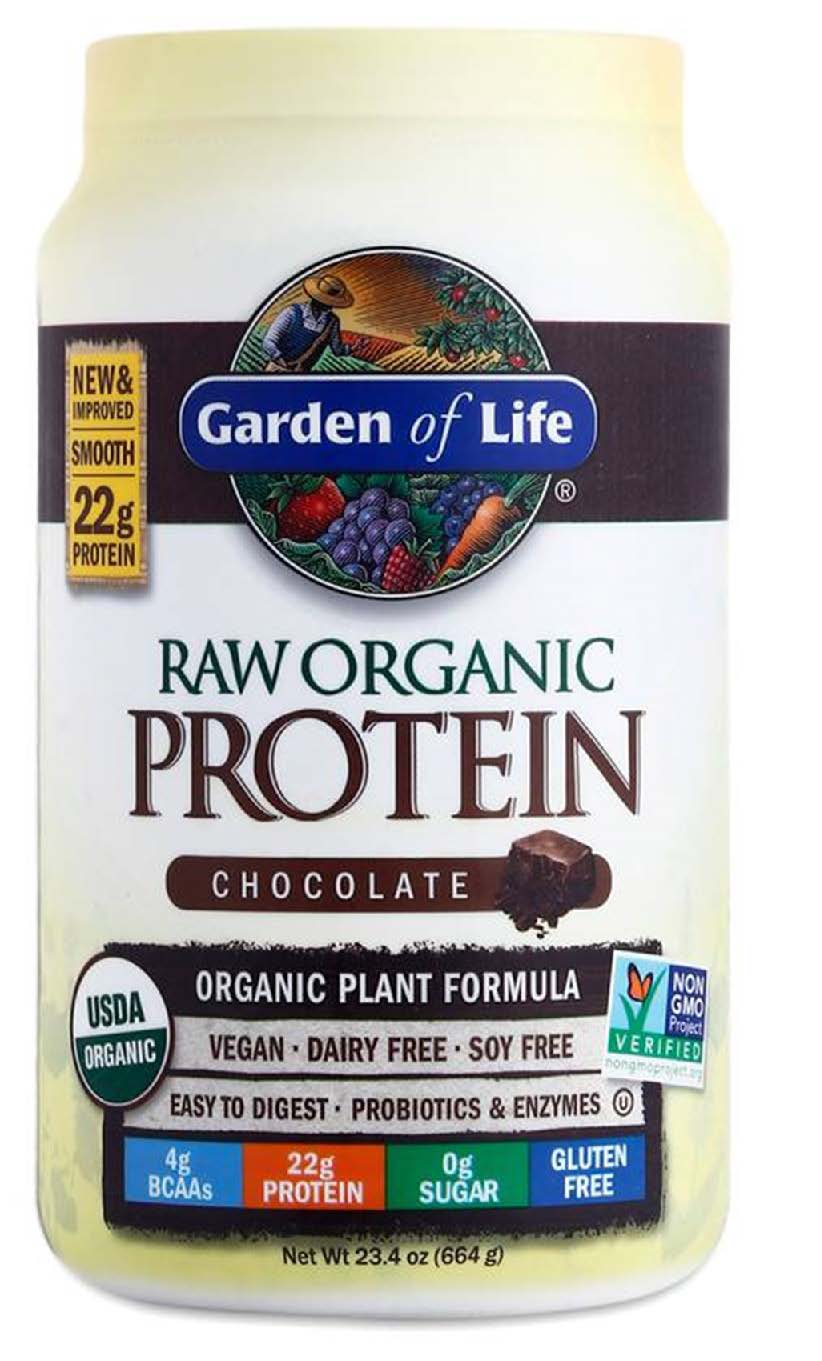
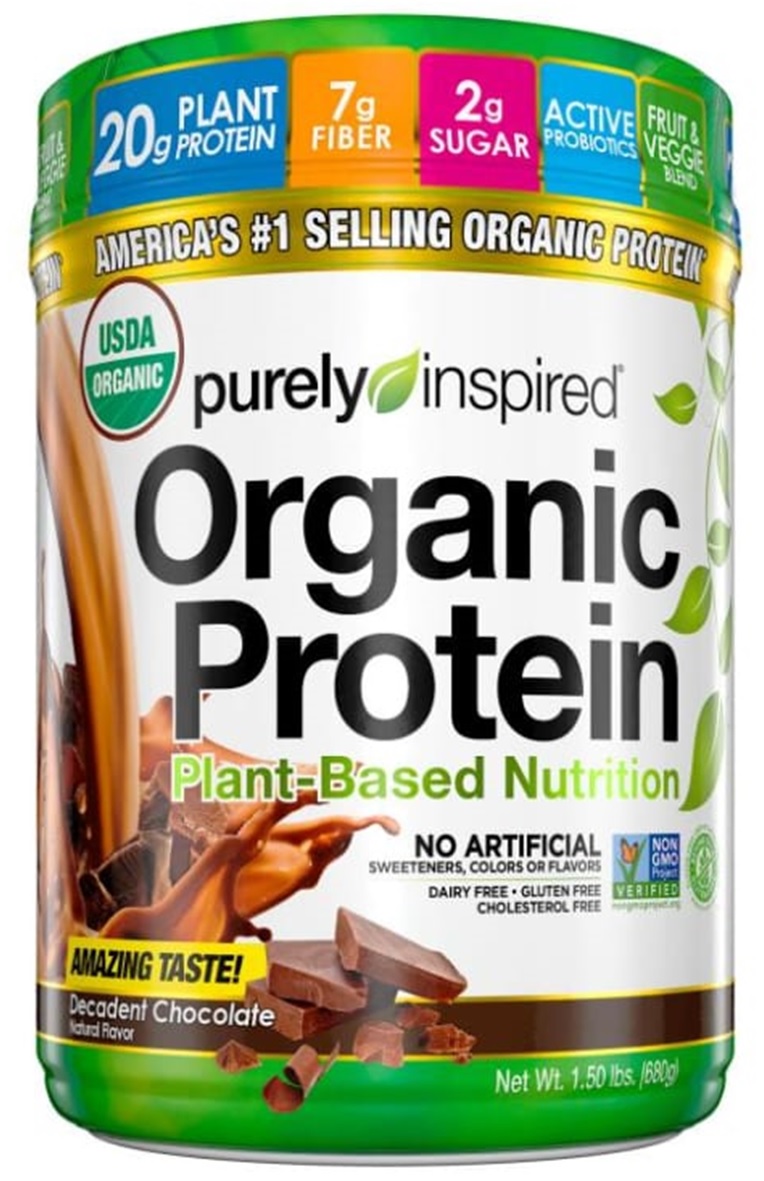
The parties compete in the market for nutritional supplements. Orgain
alleged that defendants infringed its trade dress in selling a competing
plant-based nutritional supplement adorned with the “organic protein” phrase in
black font against a white background, framed by green bands that circumscribe
the top and bottom of the packaging, as well as a green leaf motif and colored
boxes highlighting the dietary profile of the product. Defendants allegedly
altered the packaging of their nutritional supplement on multiple occasions to
more closely resemble Orgain’s packaging.

Orgain’s claimed trade dress

accused product

First,
defendants showed that “organic protein” is generic. Under the Ninth Circuit
“who-are-you/what-are-you” test, “organic protein” is a what.  Each word was
generic, and the combination didn’t add meaning (citing Booking.com).  And Orgain itself used the phrase
generically, e.g., “organic protein is the engine of all Orgain products.”
Orgain’s owner stated that “[he] made it [his] mission to formulate a drink
that would actually make a difference in [his] health. It had to be … high in
organic protein ….” Orgain’s website says: “Orgain™ provides 255
nutrient-dense calories with a perfect 2:1 ratio of organic carbohydrates to
organic protein,” and the FAQ answer to “what’s in Orgain?” is “16 grams of the
highest quality Organic Protein to help build lean muscle.”  Orgain
argued that these were merely descriptive uses, but didn’t explain why, and
Orgain had the burden of proof to show protectability.

Likewise,
there was evidence that other companies in the nutritional supplement market use
“organic protein” generically in connection with their products. Again, Orgain
couldn’t win by arguing that those uses were also descriptive. Indeed, in many
of the documented uses, “organic protein” was used as the title of the product,
just as Orgain used it; Orgain failed to explain why those uses were
descriptive and defendants’ use was allegedly infringing.  

Survey
evidence is the “ultimate test” for genericness, Booking.com (ugh), so
Orgain offered a “modified Teflon survey” from Hal Poret that concluded
that 74% of respondents believed the term “organic protein” was descriptive.
Defendants’ Teflon survey found that 88% of consumers understand
“organic protein” to be a category of products rather than a brand name. You
will not be surprised to hear that the dueling surveys did not manage to create
a genuine issue of material fact.

Poret
reasoned that the Teflon format, dealing with a term that started life
fanciful, had to be modified when the plaintiff was claiming rights in a
descriptive term. Thus, respondents were instructed that “[g]eneric terms
identify a type or category of product,” while “[d]escriptive terms describe an
ingredient, characteristic, quality, feature, or function of a product.”

The
survey listed “automobile,” “ice cream” and “allergy medicine” as examples of
generic terms and “hatchback,” “Rocky Road,” and “non-drowsy” as examples of
descriptive terms. To advance to the main questionnaire, respondents had to
identify “yogurt” and “bottled water” as generic and “lemon lime” and “natural”
as descriptive. Respondents who made it through were presented with a list of
words or terms to identify as “generic” or “descriptive”: organic protein,
creamy chocolate, lactose free, protein drink, and nutritional supplement.

But
the survey “side-stepped the key inquiry—namely, whether respondents understood
‘organic protein’ to refer to Orgain’s goods or whether they understood the
term to refer to a category of products.”

True,
“generic” and “descriptive” are separate legal definitions along the
distinctiveness spectrum. But the genericness inquiry is not about where
consumers categorize the mark along the distinctiveness spectrum. Rather, the
genericness inquiry asks whether consumers perceive the term as identifying a
common name for a certain type or class of products.

[I
think what this gets at is that surveys can detect secondary meaning, but
they’re not going to be great at distinguishing among conceptual categories,
and why would they be? But this means that Booking.com punts to surveys
in order to eliminate genericness whenever there is enough secondary meaning.
Some people like that result; I do not.] The Poret survey didn’t ask consumers
“is this a name of a type of product or is this a source-identifier?” It could
have done so. But instead, it provided “no evidence” of whether the consuming
public viewed “organic protein” as a mark that identifies Orgain’s products.

Even
if this evidence were relevant, the definitions of “generic” and “descriptive”
were overlapping and confusing. The supposedly descriptive examples “Hatchback”
for vehicle, “Rocky Road” for frozen dessert, and “Non Drowsy” for allergy
medication were

likely
to confuse survey participants when viewed in light of the definitions
provided. For example, “non-drowsy” is a type or category of cold medicine, and
“Hatchback” is a type or category of car. By the Poret Survey’s own definition,
those terms are therefore generic.

The
questions compounded the problem by asking respondents to categorize five terms
as descriptive or generic, but didn’t bother to tell them for what.

Defendants’
survey, on the other hand, was perfectly persuasive.

Even
if the evidence had created a fact issue on descriptiveness, Orgain failed to
show secondary meaning. Orgain had a survey that arguably showed secondary
meaning of its trade dress (though 36% net recognition is in *gulp* territory,
I would think), but it didn’t test “organic protein” separately.

Nonetheless,
there were triable issues of material fact on the overall trade dress claim.

Nonfunctionality:
Though individual elements like having a term in black font against a white
background might be functional, and green and a green leaf might commonly be
used to identify “organic” or healthy products, “[the] focus [is] not on the
individual elements [of the trade dress], but rather on the overall visual
impression that the combination and arrangement of those elements create.” And
since Orgain only claimed exclusive rights in the specific combination of
elements it listed, it could show nonfunctionality.

The
court found that Orgain didn’t show that its trade dress was inherently
distinctive; it was not enough to contend that “the specific combination of
elements in the [claimed trade dress] has not been adopted by anyone other than
[Defendants].” Defendants proffered evidence that Orgain’s competitors use
packaging with similar aesthetic elements, including jar-shaped containers;
labels using color block; the term “organic protein” on the label; a green leaf
to denote “organic” food; and color bands. This showed that the claimed trade
dress was “a mere refinement of a commonly-adopted and well-known form of
ornamentation for a particular class of goods” and not “unique or unusual in
[this] particular field.” Even without that, the claimed trade dress featured a
“common, basic” package shape and label design.

However,
Orgain created a fact issue on secondary meaning. “While some courts have,
indeed, found a 36% showing did not raise a factual issue precluding summary
judgment and instead weighed against a finding of secondary meaning,
other courts have found a 35% showing to be persuasive evidence of secondary
meaning.” There was also circumstantial evidence of secondary meaning,
including evidence of actual confusion. The evidence: 16 Amazon reviews, 23
social media posts, and 13 direct communications from consumers, some of which
tended to show actual confusion, e.g., an Amazon review stating, “DON’T BUY!!!
Bought this thinking it was Orgain on accident (which I use daily and absolutely
love)”  and others that involved
communications with Orgain itself: “Any chance you can look into the
similarities of ‘Purely Inspired’ packaging? I bought it on Amazon thinking it
was your company’s product and upon getting it realized it wasn’t Orgain!”
Also, marketing representatives mistakenly placed Orgain’s shelf talkers—the
advertisements that stick out from shelves in stores—on defendants’ products in
Walmart stores, or vice versa. This evidence was “substantial, but not
overwhelming given the size of the relevant market and the fact that the
parties’ products have co-existed on the market since 2015.”

There
was also a genuine dispute about copying. Orgain argued that “because Orgain’s
name came up in surveys that Defendants conducted in support of rebranding
their label, and because the rebranded labels look more like Orgain’s than
Defendants’ previous label, it must be inferred that Defendants copied Orgain’s
label to trade on its success.” Defendants’ survey indicated that 77% of those
surveyed preferred (what became) their new label, and that the new green theme
and the colorful display of nutrition facts, which are parts of Orgain’s
claimed trade dress, contributed to the new label’s popularity. In another of
defendants’ surveys, consumers were asked to write the names of all the
plant-based protein brands they knew of, and Orgain was a frequent response. And
a revised label used a more prominent “organic protein” mark on this the new
label, which Orgain pointed to as proof of intent to copy. Defendants pointed
to other evidence that tended to disprove copying and treat Orgain as one of
many competitors, including studies that didn’t even include Orgain in their
comparisons.

Even
without other circumstantial evidence, there was some direct and circumstantial
evidence meriting trial.

So too
with likely confusion; you can tell how the various factors went. On actual
confusion, there were dueling surveys: Defendants’ Eveready survey found 4% net
confusion, while Orgain’s Squirt survey found 17% net confusion. A trial should
determine which survey was better, the “more suggestive” Squirt survey or the
Eveready survey, which arguably didn’t do as much to measure what would happen
if the products were encountered together in the marketplace. Query: what happens
if the jury concludes that the confusion stemmed primarily or entirely from
generic use of “organic protein”?
one entrant in P’s Squirt lineup

Another in the Squirt lineup

test image for Squirt lineup

Control image for Squirt lineup

Query: is this a good control image if “organic protein” is generic? Isn’t it testing in part for the effect of “organic protein” in the big font at the center?

State
law claims: Aside from arguments above, Orgain argued that, “trademark and
trade dress rights notwithstanding, Defendants engaged in unfair competition
because they copied Orgain’s design.” The court found that “triable issues of
fact preclude summary judgment on the issue of actual copying.” [Disturbing
insofar as it doesn’t address the core problem with the claim, if not
coextensive with the trade dress claim: strong federal policies preclude state
laws that purport to bar copying itself, as Sears/Compco/Bonito Boats
all teach.]

from Blogger https://ift.tt/3BR4ejN

Posted in Uncategorized | Tagged , , | Leave a comment

Uber’s expansion into ads hits a TM hurdle

Uber Inc. v. Uber Technol., Inc., No. 20-cv-2320 (PKC)
(S.D.N.Y. Feb. 24, 2021)

Uber Inc. has offered design and marketing services under
the name “Uber” since 1999. Uber Technologies, the one you know about, was
incorporated in 2010. As it grew and expanded into new services, Uber Inc. “found
itself on the receiving end of customer complaints, misdirected product
shipments, legal and regulatory correspondence, and other communications
intended for Uber Technologies.” And Defendants began saying that they planned
to expand into the display-advertising business: putting ads on a vehicle’s
digital signage, a rider’s mobile app, and on digital screens like electronic
billboards. Uber Inc. also alleged that its 2019 application to register a
trademark was stalled based on a description of services that overlapped with a
pending, competing ITU application filed by Uber Technologies in connection
with advertising, marketing and promotional services, including “promoting
third party goods and services.”

The court declined to dismiss the Lanham Act/NY law
complaint, with the exception of the duplicative unjust enrichment claim.

Uber Inc. describes its business as including graphic design
like logos, stationery and brochures; promotional events and mailings; and
consumer-oriented campaigns, like magazine advertisements. It’s allegedly been
retained by well-known brands, including BMW and Macy’s, and by companies
headquartered throughout the United States, and promotes itself mainly through
the websites http://www.uber-inc.com and http://www.uber.nyc. 

Meanwhile, Uber OOH [Out of Home], whose corporate
relationship to Uber Technologies was a bit unclear, describes itself as “The
Official Uber Advertising Network.”

Starting in 2012, Uber Inc. received an increasing number of
calls and communications intended for Uber Technologies. Confusion allegedly
grew more frequent with time, becoming “constant” in the last three years.

[O]ne of plaintiff’s customers sent
plaintiff a large payment that was intended for Uber Technologies, while
separately sending a payment to Uber Technologies that was intended for
plaintiff. A vendor mistakenly granted Uber Technologies access to plaintiff’s
account, resulting in plaintiff’s temporary inability to access its own account
and giving Uber Technologies access to plaintiff’s business information.
Plaintiff alleges that it has stopped attending trade shows and sometimes does
not answer calls due to overwhelming call volume intended for Uber
Technologies. 

This really does seem like a good candidate for “junior
should pay senior to change its name,” and in 2015 Uber Technologies offered
Uber Inc. $80,000 to do so. Uber Inc. counteroffered with $800,000, and
rejected Uber Technologies’ $120,000 response, believing that they were still
in different fields. But in 2019, Uber Technology allegedly began preparatory
steps to enter the advertising business.

In 2020, a site published under the “Uber OOH” name allegedly
stated that the company would assist clients in creating advertising.

Unsurprisingly, the complaint plausibly alleged reverse
confusion. Even with differences between the parties’ core services, the
complaint plausibly alleged Uber Technology’s advertising-related expansion
plans put it in competitive proximity to Uber Inc’s graphic design and
marketing services. Though the complaint failed to identify instances of actual
confusion among “prospective customers who were seeking out plaintiff’s
advertising and design services,” that wasn’t required, and confusion among
others offered “some factual support for the plausibility of plaintiff’s
claims.”

Forward confusion was also plausible; on a motion to
dismiss, the court did not agree that no consumer could plausibly confuse
plaintiff’s graphic design-intensive business with the mobile, digitally oriented,
“out of home” advertisements offered by defendants. The complaint quoted Uber
Technologies statements expressing “broad ambitions for their advertising
services, and not just advertisements displayed on vehicles.”

Nor did the complaint plead itself out of court on laches.
The period in NY is six years, and the complaint didn’t establish that Uber
Inc. knew it had an actionable claim more than six years before suit was filed.
“[K]nowledge of Uber Technologies’s use of an ‘Uber; mark and the receipt of
misdirected calls does not equate to knowledge that plaintiff had an actionable
claim under the Lanham Act.” Plus, Uber Technology’s offer in 2015 might
constitute its awareness that it was “entering contested ground,” weighing
against laches.  

State-law dilution claims, which don’t require fame, also
survived.

from Blogger https://ift.tt/3n6s3QB

Posted in Uncategorized | Tagged | Leave a comment

lawyer doesn’t make use in commerce by negotiating for client

Big
Ligas, LLC v. Yu, 2021 WL 1518993, No. 20-23719-Civ-Scola (S.D. Fla. Apr. 16,
2021)

Big
Ligas is owned by three members equally: Daniel Echavarria, also known as Ovy;
Christian Andres Salazar; and Paulo Londra. Ovy and Salazar are the managing
members, and defendant Yu is an entertainment attorney who represents Londra,
an Argentinian “rapper and reggaeton/trap singer.” The parties signed a deal
memorandum “to help Londra launch his career as a singer and songwriter.”

Things
went well, and then as Londra’s success increased, the parties’ relations
deteriorated. Amidst negotiations with other parties about Londra’s second
album, Londra hired Yu.

Big
Ligas alleged that, among other things, Yu “falsely claimed that she and/or
Paulo owned the copyrights that are in fact owned by Big Ligas.”  She allegedly falsely represented that she was
authorized to deliver Londra’s “recording artist and songwriting services …
when in fact, any compositions or recordings created under publishing or record
deals not authorized by Big Ligas, including those negotiated by Yu, are not
commercially exploitable without Big Ligas’[s] authorization, under Paulo’s
name or otherwise.”

Big
Ligas sued for tortious interference and for false advertising and trademark
infringement under the Lanham Act. The tortious interference claims failed for
contractual reasons and because Londra’s lawyer was his agent, not a stranger
to the contract.

Lanham
Act claims: Along with the alleged misrepresentations about authority, Big
Ligas alleged that Yu used Londra’s “name and likeness … to promote his
recording services to Warner (and others) and his songwriting services to
Kobalt (and others), without Big Ligas’[s] approval or authorization,” confusing
third parties.

Yu
rejoined that she was, in fact, Londra’s counsel, and using his name was “classical
fair use” (that is, descriptive fair use) because “she is not using the name
Paulo Londra in the trademark sense, but only to identify her client and
describe his relationship to her.” Of course, descriptive fair use requires
good faith which sure sounds like it’s hard to decide on a motion to dismiss,
but that’s no barrier here. Londra’s stage name and given name are the same
[should the result be different if they weren’t?], “and the Plaintiff’s
allegations do not prove that Ms. Yu used the Plaintiff’s mark in commerce by
referring to and describing her relationship with her client by using his given
name.” [Of course this was a use in commerce; in a different situation, this
argument would be laughable. Trademark law has ruthlessly been stripped of the
tools it needs to say “this is not a trademark claim,” and that’s why the
Seventh Circuit approach of just reaching the equitable result can appeal.]

Even
if we needed to do a descriptive fair use analysis, Yu would win:

The
Court finds that, as Londra’s attorney, Ms. Yu’s use of his name to
identify him as her client was other than as a mark, used in the primary
descriptive sense, and was undertaken in good faith, that is without the intent
to trade on the good will of Big Ligas. To the extent the use of the name Paulo
Londra creates some risk of confusion, Big Ligas assumed that risk by
establishing Paulo Londra, Londra’s given name by birth, as his stage name.
(emphasis added)

This
isn’t motion to dismiss language, although it is clearly the right result.

False
advertising: “That Ms. Yu contacted third parties and stated she is Londra’s
attorney with authority to negotiate on his behalf is not a false or misleading
statement insofar as Ms. Yu was acting on behalf of her client, Londra.” This
was a contract dispute, not a Yu problem.

from Blogger https://ift.tt/2X1nE6g

Posted in Uncategorized | Tagged , , | Leave a comment

Coach narrowly alleges grounds for cancellation of similar marks

Tapestry,
Inc. v. Chunma USA, Inc., 2021 WL 1534988, No. 20-CV-0271 (JMF) (S.D.N.Y. Apr.
19, 2021)

Tapestry
(Coach) sued Chunma for trademark infringement, false designation of origin,
false advertising, and cancellation of Chunma’s registered trademarks under the
Lanham Act, unfair competition and trademark infringement under New York state
common law; and injury to business reputation under New York’s GBL, based on
Chunma’s products bearing logos that allegedly infringe upon Coach’s
trademarks, including Coach’s well-known “Signature C” mark. Chunma’s motion to
dismiss the cancellation claims was denied.  

The claim
for cancellation of the ‘675 Mark was based on fraud in obtaining the trademark
registration and misrepresentation of source, whereas their claim for
cancellation of the ’549 and ’077 Marks was based on misrepresentation of
source alone.

077

549

675

For
fraud, Coach alleged that Chunma made a material misrepresentation in its
trademark registration application, in particular that the mark was in use as
of the application date, when in fact there was no bona fide use until years
later. Chunma also allegedly misrepresented the specimen that it submitted
alongside its application as a “SCANNED ACTUAL TAG” when, in fact, it was
merely a “computer illustration, digital image, or similar mockup” that the PTO
would not have accepted.

As for
false suggestion of a connection, Coach explicitly alleged that Chunma’s marks
“falsely suggest a connection with Plaintiffs.”

However,
with respect to the ’549 and ’077 Marks, the misrepresentation of source claim
was “a close question.”  “[I]t is well
established that “allegations … of the type that typically support a claim of
likelihood of confusion under Section 2(d)” do not suffice to state a claim for
cancellation of an incontestable mark based on misrepresentation of source
under Section 14(3).” (I note that, looking at TSDR, Coach requested an
extension of time to oppose at least one of these marks, but does not seem to
have actually opposed them.) “Significantly, even intentional copying of a
plaintiff’s trademark does not, standing alone, state a misrepresentation
claim.” Instead, a plaintiff must plead “specific facts reflecting [the
defendant’s] activity that, if proved, would amount to an attempt to create the
impression that [the plaintiff] is the source of [the defendant’s] services” or
goods, such as conduct outside use of the registered mark itself.

The
complaint did “narrowly” state a claim. Coach pled that Chunma sells “products
bearing logos and source-identifying indicia and design elements that are
studied imitations of [Plaintiffs’ well-known] Signature C Mark,” with
“reckless disregard or willful blindness to Plaintiffs’ rights, and/or with bad
faith, for the purpose of trading on the goodwill and reputation of the
Signature C Mark” and to “deceive consumers, the public, and the trade into
believing that there is a connection or association between [Chunma] … and
[the] Coach” brand. The complaint also showed images showing close similarities
between Coach’s trademarks and some of Chunma’s products. Viewed in the light
most favorable to plaintiffs, that sufficed for now, though Coach would “ultimately
bear a heavy burden to prove this claim by clear and convincing evidence.”

accused product

another

another

The
subsequent stipulation to a permanent injunction did not cover the
registrations, but there is apparently a confidential settlement agreement that
may have covered them.

from Blogger https://ift.tt/3BU4Zc5

Posted in Uncategorized | Tagged | Leave a comment

There’s no such thing as “leasing real estate in violation of the Lanham Act”

Wakefern Food Corp. v. Marchese, 2021 WL 3783259, No. 2:20-cv-15949-WJM-MF (D.N.J. Aug. 26,
2021)

Always
something new in trademark! Wakefern, the largest retailer-owned supermarket
coop in the US, sued Marchese for attempting “to lease commercial real estate
in violation of the Lanham Act … and New Jersey common law.” 

Wakefern
operates approximately 353 supermarkets under various brands such as ShopRite and
Fairway Market across several states, and has a registration for ShopRite.

Marchese
formed defendant Family Markets for the stated purpose of carrying out a retail
supermarket business. I
n mid-2020, Marchese allegedly contacted Wakefern about the possibility of
joining the Wakefern cooperative. He allegedly told Wakefern’s representative
that he owned both Family Markets and a number of “Foodtown” supermarket
locations across New Jersey, including a specific Foodtown location in
Plainsboro. Wakefield told Marchese to submit a summary of his qualifications
in writing, but he didn’t follow up. The supposed Plainsboro location was allegedly vacant.

“Marchese
also contacted a real estate broker to inquire about a listing of a vacant
50,000 square foot supermarket in Middlesex, New Jersey.” He allegedly informed
the broker “that he was interested in leasing the vacant space, that he was the
owner/operator of an active supermarket business in Family Markets, that he had
an ownership interest in several members of the Wakefern cooperative, including
four ShopRite® supermarkets in New Jersey, and that he had started the process
of becoming a Wakefern member himself.” Afterwards, the broker contacted
Wakefern and was told that Marchese wasn’t a member and had no
Wakefern/ShopRite affiliation.

Perhaps
overreacting, Wakefern sued for trademark infringement and false advertising in
violation of the Lanham Act and violation of state unfair competition law,
which is coextensive and thus disappears from our story.

Trademark
infringement: This just wasn’t use in commerce. Whether confined to the §1114
definition of “use in commerce” or using some other broader standard for §1127,
Marchese’s statement didn’t qualify:

Plaintiff is correct that Marchese’s conduct in invoking
Wakefern and the ShopRite® brand may have been an affirmative act ultimately
designed to achieve some sort of commercial benefit (i.e. the acquisition of
commercial space from which to operate a supermarket). However, there are no
allegations that Defendant has ever offered, distributed, possessed, sold, or
advertised any goods or services of any kind bearing or imitating Plaintiff’s
marks, or even had the capacity to do so. Nor are there any allegations that,
had Marchese been successful in securing the vacant commercial property, he
would have engaged in any infringing conduct in the actual operation of a
supermarket. Indeed, Plaintiff’s allegations suggest that Marchese made false
representations to the broker in order to take advantage of the broker’s
services rather than to sell or promote his own. Moreover, Plaintiff has not
cited any case, and the Court is aware of none, in which a single, private
business conversation, without any corresponding dissemination or marketing to
the broader purchasing public, has been found to constitute a “use in commerce”
for purposes of trademark infringement.

False
advertising: Not commercial advertising or promotion. There was no organized
campaign to penetrate the market alleged; there was also no targeting of a
class of potential purchasers. “Marchese’s allegedly false statements regarding
his relationship with Wakefern were made in the context of a private
conversation with a targeted individual acting in his capacity as a broker
rather than shared more broadly to a class of potential supermarket consumers.
Such isolated, private statements, particularly to non-consumers, do not
constitute the sort of dissemination to the relevant purchasing public
necessary to state a false advertising claim under Section 43(a) of the Lanham
Act.” Wakefield did allege that Marchese engaged in “similar conduct with
respect to multiple Westside Market stores in New York City.” But there were no
other details. “Regardless, even assuming Plaintiff intended to allege that
Marchese has continued to claim a relationship with Wakefern to various real
estate brokers in order to obtain a commercial lease to operate a supermarket,
Plaintiff’s claim would fail: such statements would still be discrete
communications targeted to specific non-consumers rather than promotions or
advertisements disseminated to a segment of the purchasing public.”

from Blogger https://ift.tt/3tlSkLH

Posted in Uncategorized | Tagged , | Leave a comment

Is disgorgement the new normal in Lanham Act cases?

Grasshopper
House, LLC v. Clean & Sober Media, LLC, 2021 WL 3702243, No. 19-56008, No.
19-56072, — Fed.Appx. —- (9th Cir. Aug. 20, 2021)

The
TMA’s injunctive relief changes are probably going to make it even more clear
that courts aren’t entirely sure whether damage is part of the cause of action
for false advertising; since it isn’t for trademark infringement, trademark
plaintiffs never have to show damage at all to get relief and even
disgorgement, which has now become much more readily available. Is that true
for false advertising plaintiffs?

Here,
the parties compete in the market for addiction treatment. A jury found
defendants liable for false advertising through a purportedly unbiased,
independent site. The district court entered a permanent injunction against defendants
but denied disgorgement of profits, attorneys’ fees and costs. The panel, over
two separate dissents, sends it back for reassessment of disgorgement,
attorneys’ fees and costs (and still doesn’t publish the opinion).

The
district court excluded the plaintiff’s damages expert, finding that he didn’t
apply a reliable methodology in assessing causation of damages because he
discounted competing causal factors without an adequate basis and lacked the
necessary expertise to make those judgments. The district court acted within
its discretion in doing so, and properly cancelled the damages phase of the
jury trial because no other witness had been disclosed on damages. Plaintiff
argued that it should have been able to use the testimony of its principal, but
even during deposition, plaintiff’s counsel stated that he “was not [there] to
talk about causation and damages” and objected to questions directed to him
about damages, declaring that this topic would be exclusively “within the scope
of expert opinion.” He himself acknowledged at his deposition that it was
“beyond his scope of understanding” to explain how plaintiff was damaged.

Disgorgement
had to be sent back because the law on willfulness being required for
disgorgement changed after the court ruled. But watch this language: “On
remand, the district court should consider Defendants’ mental state — whatever
that may be — when determining what award of profits is appropriate.” So
plaintiff is apparently entitled to disgorgement without ever having shown that
it was damaged by the false advertising. So, is damage to the plaintiff part of
the cause of action or no?

The
court said further: “it was an abuse of discretion for the district court to
deny Plaintiff’s request for disgorgement on the ground that Plaintiff had not
established causally, and to a reasonable certainty, the ‘financial benefit’ that
Defendants received from their false advertisement as to Plaintiff.” The trial
court was certain that the defendants had profited to some degree from false
statements about the neutrality of the review and from a review that
represented that it was “based on surveys of former [Plaintiff] clients.” Both
parties’ experts calculated that each of the 192,434 visits to the relevant
webpage had some value, though they disagreed about whether it was $40
or $1.80 per click. Even the lower bound would yield a disgorgement amount at
least five times that of the ‘hypothetical’ alternative amount of $60,000
reached by the district court.” Because even defendants’ expert recognized some
benefit to defendants, it was an abuse of discretion to find that the financial
benefit to them could not be established to a reasonable certainty.

One of
the dissents argued that, because the plaintiff’s theory of falsity was focused
on the falsity of the process by which the review was repaired, the
disgorgement theory needed to account for the possibility that the plaintiff’s
facility deserved its review. That overstates a plaintiff’s burden. “Having
presented sufficient evidence to show that the highly negative review was not
generated by the process that was represented, Plaintiff amply established that
the review was unreliable and therefore false and misleading. At the very
least, Plaintiff demonstrated that the review falsely augmented its own
trustworthiness and persuasiveness.”

The
court vacated the attorneys’ fees award in case its ruling on disgorgement on
remand affected its ruling on the award of attorney fees. And it reversed the
denial of costs because successful plaintiffs are entitled to them; it wasn’t
enough to say that the litigation was “excessively-protracted” or that they
weren’t entitled to attorneys’ fees, which are judged by a different standard.

One
partial dissent thought the district court prejudicially erred in cancelling
the damages phase of the trial for civil procedure reasons.

The
other partial dissent was on disgorgement. In its view, the jury only found
falsity as to the procedure followed by the review and the statement of the
process by which it was developed, not by any particular statement in the
review itself or its ultimate star rating. Thus, damages would have to relate “to
relate to people who were dissuaded from seeking treatment at [plaintiff’s
facility] because of the failure to base the review on former clients’
assessments of the services, as set forth in the Process Statement.” 

from Blogger https://ift.tt/3zRZSbz

Posted in Uncategorized | Tagged , , | Leave a comment

Pandemic ski resort closures allow both contract and advertising claims

Goodrich v. Alterra Mountain Co., 2021 WL 2633326, No.
20-cv-01057-RM-SKC (D. Colo. Jun. 25, 2021)

Unlike the education cases so far, this pandemic case
sustains both consumer protection and contract claims. “Plaintiffs purchased
Ikon ski passes for the 2019-20 ski season but, due to the COVID-19 pandemic,
Defendants closed their ski resorts on March 15, 2020.” Defendants declined to
refund their money. The passes were allegedly offered as offering “unlimited
access” to “ski or ride as many days as you want” with (in some instances) some
blackout dates at covered resorts during the 2019/20 ski season.

California UCL, CLRA, FAL: First, defendants argued that
under Sonner v. Premier Nutrition Corp., 971 F.3d 834 (9th Cir. 2020) and its
progeny, everything but the CLRA claim for damages should be dismissed because
these equitable claims were only available if legal claims failed. Plaintiffs
argued that they were allowed to plead in the alternative, but the court found
that they had failed to do so. Thus, Sonner “dooms the claim for equitable
relief at any stage.”

Did the CLRA damages claim survive? Defendants first argued
that passes didn’t not qualify as “goods or services” under the CLRA, but were
only temporary licenses, with services provided only ancillary to the license.
The court found that plaintiffs plausibly showed that ski passes were
encompassed within the definition of “services.” Ski pass holders plausibly
purchased more than just a license to be on the slopes, including services such
as providing groomed trails and ski lifts and gondolas to reach the trails,
which were “at heart of what a ski pass holder purchased.”

Deception: Assuming Rule 9(b) applied, plaintiffs satisfied
it. Defendants argued that the alleged promise of “unlimited access” for a
“complete season” (the 2019/20 ski season) was not a “ ‘specific and measurable
claim, capable of being proved false or of being reasonably interpreted as a
statement of objective fact’ ” because they made no representations about the
length of the 2019/20 ski season. But “a reasonable consumer would understand
this was a promise for a definite period: the period of the 2019/20 year
‘during which snow conditions allow for skiing and when people typically go
skiing.’”

Defendants argued that their statement wasn’t deceptive when
made because they couldn’t have known about the pandemic or ensuing governmental
closure orders. The court was persuaded that plaintiffs were plausibly misled
about what would happen if the resorts closed, for whatever reason: defendants
kept all their money. Defendants argued that they disclosed the payments were
“non-refundable,” but that plausibly didn’t apply to these circumstances.

Was there an actionable omission? Previous cases hold that
“to be actionable the omission must be contrary to a representation actually
made by the defendant, or an omission of a fact the defendant was obliged to
disclose,” in particular a safety hazard/physical defect going to central
functionality. With services, though, matters were less clear, and the court
found that omission claims shouldn’t be dismissed. And the relevant knowledge,
for the omission claim, is knowledge that they’d keep the money if they had to
close before the end of the “ski season,” that is, the period “during which
snow conditions allow for skiing and when people typically go skiing.”

Loss causation: Plaintiffs alleged that they wouldn’t have
purchased the ski passes on the terms offered had they known that, if
defendants did not provide the promised resort access during the 2019/20 ski
season, they would nonetheless retain all pass fees. That was sufficient.
Illinois and Wisconsin consumer claims shook out similarly: no equitable
relief, but where damages were available, those claims survived.

from Blogger https://ift.tt/2WKRPia

Posted in Uncategorized | Tagged , , | Leave a comment