advertiser can amend complaint against Facebook for click fraud claims

DotStrategy Co. v. Facebook Inc., No. C 20-00170 WHA, 2020
WL 6591366 (N.D. Cal. Nov. 11, 2020)

The court grants plaintiff’s motion for leave to amend its
complaint in this putative class action alleging that FB’s statements about advertising
on FB violated the UCL. “The main issue presented here is whether or not a
reasonable advertiser would understand Facebook’s representation that it would
not charge advertisers for ‘clicks that are determined to be invalid’ to mean
that Facebook would not charge — or refund — advertisers for clicks made by
fake accounts, if at all, which Facebook identifies and removes from its
platform for violating its authenticity policies.” Plaintiff pled sufficient
facts to support this theory.

FB’s agreement said:

When serving your ad, we use best
efforts to deliver the ads to the audience you specify or to achieve the
outcome you select, though we cannot guarantee in every instance that your ad
will reach its intended target or achieve the outcome you select[.]

We do not guarantee the reach or
performance that your ads will receive, such as the number of people who will
see your ads or the number of clicks your ads will get.

* * *

We cannot control how clicks are
generated on your ads. We have systems that attempt to detect and filter
certain click activity, but we are not responsible for click fraud,
technological issues, or other potentially invalid click activity that may
affect the cost of running ads.

However, from 2013 through the present, FB’s Business Help
Center page represented that advertisers would “not be charged for clicks that
are determined to be invalid”: “If we detect or are alerted to suspicious or
potentially invalid click activity, a manual review is performed to determine
the nature of the activity. You will not be charged for clicks that are determined
to be invalid.” Facebook defines “invalid clicks” as “[c]licks from people that
do not indicate a genuine interest in the ad or show signs of ad testing. This
includes repetitive or accidental clicks or visits from the Facebook corporate
network” and “[c]licks generated through prohibited means, such as fake
accounts, bots, scrapers, browser add-ons or other methods that don’t follow
Facebook’s Terms.” FB’s terms of service and authenticity policy requires users
to use their “real identities,” so fake accounts violate Facebook’s policies.

The proposed complaint had a bunch of other FB statements
that were allegedly false and misleading, such as:

• “On Facebook, you’ll only pay to reach the right people
who’ll love your business.”

• “Facebook is a community where everyone uses the name they
go by in everyday life. This makes it so that you always know who you’re
connecting with.”

Nonetheless, FB allegedly charged for invalid clicks, which
includes “[c]licks generated through prohibited means, such as fake accounts,
bots, scrapers, browser add-ons or other methods that don’t follow Facebook
Terms.” When Facebook determined those clicks were generated through prohibited
means, it failed to provide a refund to plaintiff and the class members. Plaintiff
alleged that it reasonably believed that, because Facebook requires “everyone
to provide their real names,” it would not be charged for advertising that
interacted with fake accounts.

Plaintiff alleged that between 2013 and 2018, Facebook
charged it for clicks that were made by thirteen different fake accounts. Facebook
allegedly has since deleted eight of these thirteen accounts from its platform
“likely for violations of its ‘authenticity policy.’ ”

FB argued that no reasonable consumer could have been misled
by its allegedly false and/or misleading statements, particularly, in light of
the contractual disclaimers in the self-serve ad terms. The key issue was whether,
given FB’s statements, a reasonable advertiser would have believed that once
Facebook determines and removes an account for violating its authenticity
policies (e.g., a fake account), FB would then perform an audit to refund
advertisers for any invalid clicks that that account may have made, and for
which FB had charged advertisers for.

That is a question of fact not suitable for resolution on a
motion to dismiss. Plaintiff plausibly alleged deceptiveness to a reasonable
consumer.

The allegedly contradictory TOS stating that Facebook is not
“responsible for click fraud” was ambiguous; a reasonable advertiser could
construe that to mean that FB itself is not perpetuating any click fraud [and,
I’d add, couldn’t itself be held liable for damages—but that doesn’t mean it’s
clearly promising to hang on to the money it collected from the advertiser for
fraudulent clicks]. And the Ninth Circuit “has recognized that a UCL fraud
claim can be based on misleading representations in a solicitation even when
the plaintiff later signed a contract with provisions contradicting the earlier
falsehoods.” “The question, then, is not whether [Facebook’s] contractual terms
corrected the false statements in its advertising, but whether dotStrategy’s
reliance on the false advertising was reasonable even in light of the
contractual disclaimers.” That was properly alleged.

FB argued that none of its statements mentioned refunds, so
they couldn’t be deceptive. “But a refund is implied” for interactions FB knew
involved invalid clicks. FB tried to distinguish fake accounts from invalid
clicks, arguing that it only promised to provide manual review for “suspicious
or potentially invalid click activity,” and no charges for “clicks that are
determined to be invalid,” not audits every time a fake account was removed.

But the proposed complaint specifically alleged that
Facebook charged it and other advertisers for invalid clicks, such as clicks by
fake accounts and/or bots. “Second, a reasonable advertiser might also
reasonably believe that once Facebook determines an account is fake, Facebook
would be ‘alerted to suspicious or potentially invalid click activity’ and thus
would conduct a ‘manual review’ to determine the nature of the activity.” After
all, falsity/misleadingness “is analyzed from the perspective of a reasonable
consumer, not from the perspective of an attorney splitting hairs.”

This interpretation would not, as FB claimed, make it liable
if its platform was 100% secure against fake accounts. Rather, the advertiser’s
argument was that, once FB does stumble on fake accounts, it should then perform
an audit to refund advertisers for any invalid clicks committed by such
accounts, given what it said to advertisers.

FB then argued that, just because an account was fake in
2018 when plaintiff performed its survey, it doesn’t also follow that that
account was also fake in 2017, for example, when it clicked or engaged with
plaintiff’s ads. That was a factual issue, and the plausibility of the claims
was bolstered by various news reports suggesting that fake accounts on FB “are
rather ubiquitous.”

However, a number of the challenged statements hadn’t been
sufficiently pled to be false or even non-puffery:

• “Connect with people. Ads help
you reach the right people.”

• “Facebook can help you reach all
the people who matter most to your business.”

• “Facebook ads are optimized to
help you get more people to visit your website or increase conversion.”

• “Your business is for your
customers. Built relationships with them, reach new people and drive sales
using Facebook.”

• “Drive people to your website
with one click from the most engaging place on Facebook.”

• “Find new customers. Boost sales.
Facebook can help you meet your business goals.”

• “Meet the people who will love
your business.”

A reasonable consumer “would understand that not all users
on Facebook would adhere to Facebook’s authenticity policy or would be
interested in its ads.” And even people who didn’t use “true and full names”
might have provided accurate information concerning their age, gender, and
location, among other things; “it cannot be said that such an account is
categorically unable to be interested in plaintiff’s ads.”

But these statements were plausibly false/misleading:

• “On Facebook, you’ll only pay to
reach the right people who’ll love your business.”

• “Facebook is a community where
everyone uses the name they go by in everyday life. This makes it so that you
always know who you’re connecting with.”

And the plaintiff plausibly pled economic injury: the cost
of invalid clicks.


from Blogger https://ift.tt/36yynWW
Posted in Uncategorized | Tagged , | Leave a comment

timeshare exit lawyer wins a round: no harm causation shown

Club Exploria, LLC v. Aaronson, Austin, P.A., No. 18-cv-576-Orl-28DCI,
2020 WL 6585802 (M.D. Fla. Nov. 10, 2020)

Another timeshare v. timeshare exit lawyer case that goes
much better for the defendant than some others. Briefly, the plaintiff seems to
have relied heavily on favorable precedents without developing enough evidence
that this specific firm did the same bad things.

Defendant law firm specializes in timeshare owner grievances
against developers; its websites contain colorful statements and media aimed at
optimizing internet visibility, and clients are emailed a link to one of the
sites when their retainer agreement is sent to them. Exploria alleged that
Aaronson uses false and misleading website advertisements to convince timeshare
owners that they can easily cancel their timeshare contracts if they hire
Aaronson. Aaronson allegedly then advises owners to stop paying their loan and
fee obligations.

An example of the website statements:

Timeshare ownership often feels
like entrapment. At the Aaronson Law Firm, we know this because we hear our
Clients’ stories.

….

But chances are good that your
timeshare developer is exposed legally in ways that are relatively
straightforward and provable. You owe it to yourself to hire experienced,
competent counsel. At the Aaronson Firm, we have over 80 years of combined
legal experience. And we are willing to sue, if necessary, in the interest of
getting your timeshare cancelled….

YOUR LEGAL PROBLEMS ARE NOT
INSURMOUNTABLE!

If you need to cancel your
timeshare, the timeshare Attorneys of the Aaronson Law Firm stand ready and
able to help you!

The sites also explained that they would use formal demand
letters to “initiate” recission, with an attached proposed civil complaint in a
carrot/stick arrangement.

Its blog stated that “[q]uite often, one’s signature on a timeshare
contract is obtained by fraud.… But to address it properly, it is imperative
that you retain a licensed attorney.” Experienced counsel, it stated, “will
know how to exploit other points of vulnerability. For example, the developer
may well be perpetrating an ongoing conflict of interest. Improper handling of
trust funds are [sic] also a major issue.”

Its websites contained videos purporting to be testimonials
of Aaronson’s clients, but actors and Aaronson employees played the roles of
lawyers and owners. “In both instances, the role players read statements of
actual unhappy timeshare owners.” [Generally ok, if disclosed.] However, “[o]ne
of the websites also included two printed testimonials that were written by the
web designer and an Aaronson employee but attributed to timeshare owners.” [Not
ok.] The websites did mention some timeshare developers by name, but not Exploria,
and the court indicated that the focus of the criticism was the timeshare
industry in general.

Aaronson represented at least 22 Club Exploria owners
attempting to cancel their timeshare contracts, but Exploria sought damages for
six in particular. The court found, based on deposition testimony, that the
owners who stopped making payments did so of their own accord, without
instruction from the firm or before hiring the firm.

Tortious interference: Aaronson knew of the contract between
the parties, but Exploria didn’t show that defendants intentionally caused the
contract to be breached. Whether Aaronson’s legal theories were good ones didn’t
matter without causation. Exploria’s primary evidence was testimony given by a
different person in an unrelated litigation who testified that Aaronson advised
him to cease making payments as part of a legal strategy to terminate a
timeshare with Diamond Resorts. The fact that two of the six owners stopped
paying after hiring Aaronson wasn’t enough for a reasonable jury, especially
given the testimony of the only owners deposed that no one from the law firm told
them to stop paying, that they chose to stop paying for other reasons, and that
letters Aaronson sent to Exploria on their behalf did not lead them to believe
that they had been relieved of their payment obligations. Many Aaronson
retainer agreements stated: “To avoid the possibility of a counterclaim, it is
important that you remain current on your payments with the developer.”  Prior cases involved very different evidence,
and indeed Aaronson fixed one mess made in the unrelated Westgate
litigation.

FDUTPA prohibits “unfair or deceptive acts or practices in
the conduct of any trade or commerce.” The court concluded that, though nonconsumers
do have standing under FDUTPA, the practice of law was not “trade or commerce.”
While lawyers are not per se exempt from FDUTPA, lawyers acting to exercise a
legal remedy are typically not considered to be engaged in trade or commerce. That
was the case here with Aaronson’s website ads and representation of clients.
Aaronson actually went to litigation on a regular basis, unlike the lawyer in Westgate
who, the court there found, “actively avoid[ed] judicial involvement through
all of his work.”

Lanham Act: No showing of proximate causation: there wasn’t evidence
that the website ads caused owners to withhold business from Exploria.

The court nonetheless addressed other elements of the Lanham
Act claim. There were genuine issues of material fact on
falsity/misleadingness. Rather than deeming the accusations against the
timeshare industry as a whole to be puffery (“fraud,” “pack of lies,” “improper
handling of trust funds,” sociopathic sales associates, “ongoing conflicts of
interest,” and the owners “being taken for a ride”) the court found it couldn’t
determine the truth of those statements at this stage. And there was record
evidence that the sites’ claims that the timeshare developers are likely
“exposed legally in ways that are relatively straightforward and provable” and
that Aaronson’s strategies give timeshare owners “the best chance to have
[their] timeshare successfully rescinded” were false. The evidence was that, of
the 100–150 timeshare cases the lawyer has taken to litigation, the contracts
were found unenforceable roughly six times. And there was no record evidence
that any of the Affected Owners’ contracts were successfully rescinded. That
didn’t show there were no legal grounds to dispute the agreements or
that Aaronson was never successful, but a jury could find that Aaronson’s
website “falsely or misleadingly stated timeshare developers’ legal
vulnerability as well as the availability of remedies like rescission.” [There
is a line of cases about when legal claims are falsifiable v. puffery, but the
court does not cite them and might not have been directed by the parties to
them.]

Likewise, a jury might find the claims literally false; if
they found them misleading, the case would fail because Exploria had no
evidence of consumer reaction.

However, Exploria’s failure to show materiality was fatal
regardless. There was no expert testimony or other evidence that the website
advertisements were likely to be material to consumer purchasing decisions. The
record didn’t even show that every owner found Aaronson through its websites;
only one of the 6 named did so, and she wasn’t deposed. The rest were referred
by another lawyer. One had no recollection of visiting the site, and another’s
spouse told her nothing about the site. “Clearly the website statements were
not material to these owners even if they did indeed view them.”

Trade libel: also failed for want of materiality.

from Blogger https://ift.tt/3njxetj

Posted in Uncategorized | Tagged , , | Leave a comment

Peloton’s music troubles give it consumer protection troubles over “ever-growing library” claim

Fishon v. Peloton Interactive, Inc., 2020 WL 6564755, No. 19-cv-11711
(LJL) (S.D.N.Y. Nov. 9, 2020)

Peloton streams live and on-demand fitness classes requiring
a monthly subscription fee. Certain Peloton ads described the library of
fitness classes as “ever-growing.” But in March of 2019, however, in response to
a lawsuit from music publishers, Peloton removed approximately 5,739 classes,
or nearly 57% of the total available classes, from its library. Plaintiffs
alleged that the “ever-growing” claim was deceptive and misleading.

The court dismissed the NYGBL claim of the Michigan
plaintiff, but not of the NY plaintiff.  

First, the terms of service, which authorized Peloton to
remove content from its library at any time, did not protect Peloton. Statements
buried in contracts can’t, in general, avoid false advertising claims. “A
reasonable consumer, having viewed Peloton’s advertisements on its website and
having decided to purchase a Peloton product based on the understanding that
the library would grow ‘should not be expected to discover the truth’ and that
such understanding was false from the Terms of Service.” Moreover, being able
to remove content at any given time was not inconsistent with a promise of an “ever-growing”
library, and so the TOS didn’t dispel the alleged falsity. “The Terms of
Service do not disclose that Peloton might remove over half of its library
without simultaneously replacing that half with even more classes.”

Puffery: “Ever-growing” was objective and testable. “The
library either increased in size or it shrunk.”

Deceptive/misleading: This was a factual question not
appropriately resolved on a motion to dismiss, despite Peloton’s argument that
it was constantly adding new content, nearly 24 hours of live content per day. “Ever-growing”
is not the same thing as “ever-changing.” “A consumer attracted to a grocery
store by its advertisement of a growing selection of foodstuffs would be
surprised to learn on each visit that the number of products on sale was
decreasing, although the store was replacing the items it removed with a
smaller number of new products…. A reasonable consumer thus would not
understand as a matter of law when he or she purchased the Peloton product
based on the representation that the library was ever-growing that the library
was shrinking in size at the same time Peloton was adding new classes.”

Plaintiffs also properly pled causation even without
alleging that they saw the misleading ads, since reliance isn’t required and
Section 349/350 claims are not fraud claims that must be pled with
particularity. “[A]n allegation that the defendant was injured because she
relied on the misleading statement to her detriment is not a ‘[t]hreadbare
recital[ ] of the elements of a cause of action,’ but rather “an allegation of
fact as to how she came to be injured that—if proven—supports the establishment
of that element…. The manner in which the plaintiff came to rely upon the
deceptive act—and whether it can be proved—is a further issue of proof and not
something that needs to be pleaded in detail for a complaint to proceed.”

So too with injury: The complaint alleged that “Plaintiffs
attributed value to Peloton’s promises regarding the nature and characteristics
of its on-demand digital library and would not have purchased the hardware and
corresponding Peloton Membership, or would not have purchased it on the same
terms, if they knew the truth.” That was enough for now.


from Blogger https://ift.tt/3eXNFZd

Posted in Uncategorized | Tagged , | Leave a comment

misbehavior in Amazon reviews + false ingredient claims = $9.5 million award

Vitamins Online, Inc. v. HeartWise, Inc. 2020 WL 6581050,
No. 13-cv-00982-DAK (D. Utah Nov. 10, 2020)

This is a long-running supplement false advertising case
involving both ingredient and “review” claims; here the district court resolves
a number of issues, finding a fair amount of falsity. The plaintiff sells
NutriGold supplements and the defendant sells NatureWise supplements.

I’m skipping a lot of detail on the ingredient specifics but
will say a bit more about the review claims.

I should also note that, due to HeartWise’s failure to
preserve evidence, the court drew a number of adverse inferences about failure
to meet label claims.

The court found that, on Amazon, the number of positive
reviews and even slight differences in star ratings are important to consumers,
and good reviews improve search results and sales; it relied in part on VO’s
survey expert and on “very extensive and consistent literature that online
reviews are an important part of almost all online purchasing decisions.”

NatureWise’s First Green Coffee product page began receiving
product reviews before the product even launched, including reviews stating
that customers had been taking it for weeks/months, and losing pounds per week.
Several of the reviews had red flags—they were from unverified purchasers,
appeared within 14 minutes of one another, and gave the product 5 stars.
Fourteen five-star unverified reviews appeared within 25 minutes of one another
and had “a similar pattern of including an exclamation point in the title of
the review.” Other NatureWise products followed the same general pattern.

VO’s statistics and computer science expert authored a joint
report with its statistics and review manipulation expert; they were both
credible. Based on this testimony, the court found that NatureWise’s unverified
reviews had higher ratings than its verified reviews; the products had higher ratings
than a random sample of similar products; the unverified reviews were
significantly higher; there were an unusually high number of new reviewers; NatureWise
reviewers had written more prior reviews than the typical reviewers; new
NatureWise reviewers gave significantly higher ratings than customers who had
previously written reviews on Amazon; NatureWise reviewers had significantly
higher similarities compared to other reviewers; and there were periods in
which the NatureWise products had an unusually large ratio of unverified
reviewers and an unusually large ratio of reviewers that were highly positive.

NatureWise also manipulated reviews by (1) block voting on
the helpfulness of reviews and (2) offering free products in exchange for
reviews. Employees, at its direction, upvoted good reviews and downvoted bad
reviews. NatureWise’s principal testified that this was only defense to attacks
by unknown third parties, but he directed employes to downvote bad reviews without
mentioning purported attacks or distinguishing between “attacking” reviews and
legitimate reviews. “NatureWise management knew that their block voting was
interfering with Amazon reviews, and they were worried about customers finding
out,” and also worried about Amazon finding out, since they knew that this
violated Amazon’s policy.

As for products in exchange for reviews: “On several
occasions, NatureWise denied having offered free product in exchange for a
review, even though that was not true.” It also asked customers “to review
other products so that their reviews of NatureWise products would have more
credibility and so Amazon would not think NatureWise reviews were fake.” The
products-for-review scheme was also a violation of Amazon policies, and the
court found that it deceived consumers because review independence is material
to them. The court further found that review manipulation benefited NatureWise
financially.

Since the parties’ products competed directly, and since for
at least some part of 2012-end of 2013 they were the two major players in the
Amazon marketplace for garcinia cambogia and green coffee products, with only “minimal”
alternatives, this all hurt VO. NutriGold took the “#1 Amazon top seller” slots
for both. By 2014, however, “the markets for green coffee and garcinia cambogia
on Amazon were inundated with competitors such that Vitamins Online and
NatureWise were no longer the two major players in the relevant marketplace.”

Falsity/ingredients: Based on the adverse inference
mentioned above, the court found that certain claims were literally false and
VO was entitled to a presumption of deception, wich was unrebutted. As for the
products in general, NatureWise “failed to keep the necessary documentation to
keep track of the Green Coffees and the Garcinias that it was selling.” At
least as to certain lots, a number of claims about ingredients, ingredient
amounts, vegetarian status, lack of fillers/binders/artificial ingredients, and
clinical proof were literally false. “For much of 2012 and 2013, NatureWise’s
claims … that (1) each ingredient it used was verified for purity through
in-house testing; (2) it had implemented a strict set of FDA compliant
manufacturing procedures; and (3) its facilities were regularly inspected by
FDA officials were literally false because NatureWise did not know who was
making those products.”

Even if these claims had been only implicitly and not
explicitly false, VO would be entitled to a presumption of deception because
the court found that defendants acted with the intent to deceive consumers.

Review claims: the court found that the practice of block
voting was “the use of a device in connection with the commercial advertising
or promotion of its products.” And as a result, the number of “helpful” votes
on certain reviews were “artificially inflated and literally false.” NatureWise’s
representations that it did not offer free products in exchange for reviews
were also literally false. Even if this was only implicit falsity, again, there’d
still be a presumption of deception because of the intent to deceive.

NatureWise failed to rebut these presumptions of deception.

Materiality: The court quoted the Second Circuit’s statement
that, “in many cases the evidence and the findings by [a] court that a
plaintiff has been injured or is likely to suffer injury will satisfy the
materiality standard—especially where the defendant and plaintiff are competitors
in the same market and the falsity of the defendant’s advertising is likely to
lead consumers to prefer the defendant’s product over the plaintiff’s.” The
court concluded that both ingredient and review claims were material, and also
the court presumed materiality from literal falsity. Plus, because Vitamins
Online and NatureWise were direct competitors in a sparsely populated market,
the court presumed injury to VO. (Previously the court had declined to rely on
this rationale, but the evidence at trial showed that the market was in fact
sparsely populated during a key period.)

Injury: A “heightened level of … proof of causation and
specific injury” is required when the plaintiff is seeking money damages. And the
standard of proof required when a plaintiff is seeking disgorgement, as VO was,
is “somewhere between the standards for money damages and injunctive relief.”

For the years 2012 and 2013, VO was entitled to a
presumption of injury because of the sparsely populated market, but only of
economic injury and not of reputational injury. As to the remaining years, VO failed
to show economic or reputational injury proximately caused by NatureWise’s
misrepresentations once the market was flooded with competitors. At that point,
“a sale for NatureWise could have meant a lost sale for any of the other Amazon
competitors.”

The Utah common law unfair competition claim went the same
way.

Applying Romag Fasteners, Inc. v. Fossil, Inc., 140 S. Ct.
1492 (2020), the court noted that willfulness is still “a highly important
consideration in determining whether an award of profits is appropriate.” Other
equitable considerations may include, among other things, “(1) the degree of
certainty that the defendant benefited from the unlawful conduct; (2)
availability and adequacy of other remedies; (3) the role of a particular
defendant in effectuating the infringement; (4) plaintiff’s laches; and (5)
plaintiff’s unclean hands.”

Here, disgorgement of NatureWise’s profits from 2012 and
2013 was an appropriate remedy, given the clear benefit NatureWise received: it
“quickly rose to the top of Amazon sales rankings and made millions of dollars
in a matter of months despite having no previous experience in the industry.”
And, even though VO wasn’t seeking actual damages, those are difficult to
calculate accurately in a false advertising case. VO didn’t delay, and
NatureWise’s actions were willful. Indeed, “as a result of testing, NatureWise
had knowledge that certain lots of the Products did not match their label
claims. Yet, even with that knowledge, NatureWise continued selling those
products and never issued any recalls.” NatureWise’s discovery improprieties
additionally favored disgorgement.

NatureWise’s sales from the period were over $9.5 million, and
it didn’t provide reliable evidence of cost or other deductions, so the court
awarded the entire amount plus prejudgment interest. The award was the same
(not doubled) for the Utah common law claim.

The court declined to enhance the damages/profits awarded. The
disgorgement was adequate compensation, and enhanced profits would constitute a
penalty.

The court also declined to grant VO a permanent injunction,
since the disgorgement was adequate compensation. And VO’s requested relief
that NatureWise be compelled to remove all its product reviews on Amazon would
be against the public interest because “legitimate reviews of actual consumers
would also be removed.” [What about compelling NatureWise to remove/request removal of all paid-for reviews and employee helpfulness
votes? Would Amazon do that?]

The court also awarded attorneys’ fees and costs “in light
of NatureWise’s actions in willfully deceiving consumers, failing to produce
pertinent evidence, and abusing the discovery process” and in order to deter NatureWise
from further willful conduct.

from Blogger https://ift.tt/2IwXOjC

Posted in Uncategorized | Tagged , , | Leave a comment

Amicus brief in Stouffer v. Nat’l Geographic (a title v title infringement case)

With Mark Lemley, Mark McKenna, and a number of other IP professors, I submitted this amicus brief arguing that the 10th Circuit should adopt Rogers v. Grimaldi (without any exclusion for title v title claims) for assessing trademark claims against noncommercial speech such as TV shows.

from Blogger https://ift.tt/3kfc5yj

Posted in Uncategorized | Tagged , | Leave a comment

230 defense fails where speaker’s ownership/control of D is sufficiently alleged

Tang v. Guo, 2020 WL 6414371, No. 17 Civ. 9031 (JFK)
(S.D.N.Y. Nov. 2, 2020)

Further
on this case
about a dispute between a political activist and a rival. Plaintiffs
sued defendants including Guo a/k/a Kwok and four entities that Kwok allegedly
founded and controls, collectively the media defendants and the ROL defendants
(“Rule of Law” Society and Foundation). A media defendant and the ROL defendants
moved to dismiss the claims against them under §230 and the court denied the
motion because it was properly pled that they were owned/controlled by the speaker
who posted the challenged content on their websites, and thus not third parties
for §230 purposes.

Plaintiffs allege that Kwok owns, directs, and/or controls
the media Defendants and ROL defendants, which he allegedly created to promote
certain for-profit endeavors of his under the guise of advocating for greater
human rights and democracy in China. Each entity operates out of Kwok’s
residence; and Kwok is the sole agent and promoter of the corporations’
services, which are allegedly designed to compete with plaintiffs’ nonprofit
organizations and media outlet, which also advocate for greater human rights
and democracy in China.

Kwok, via the media defendants and other outlets such as
YouTube and Twitter, allegedly made and continues to make available, false and
defamatory statements about plaintiffs, as well as false or misleading
statements about the purported use of funds donated to the ROL defendants, in
order to garner attention for Kwok’s nonprofit and media organizations and
ultimately drive donors away from plaintiffs’ competing organizations.

After an initial dismissal, the court allowed plaintiffs
leave to file an amended complaint alleging Lanham Act, unfair competition,
defamation, and harassment claims to move forward, and adding media defendant
SMG and the ROL defendants to be added to this action. Relevant allegations:
(1) that the ROL defendants, which are owned and controlled by Kwok, use the media
defendants to publish Kwok’s false and misleading statements; (2) that the ROL defendants
engaged in false advertising regarding the foundations’ non-tax exemption for
certain charitable donations, and the foundations’ lobbying efforts and
non-charitable expenditures; and (3) that the media defendants promote Kwok’s
and the ROL defendants’ false statements and advertising by receiving funding
from the ROL defendants and publishing Kwok’s misleading infomercials on their
platforms.

Media defendant SMG argued that §230 shielded it from any
liability, and the ROL defendants argued that the complaint didn’t plausibly
allege a principal-agent relationship between Kwok and the ROL defendants, and
even if it did, the complaint didn’t allege how the ROL defendants’ purportedly
false advertising caused any harm to Plaintiffs.

Previously, the court found Lanham Act/unfair competition
claims permissible because the complaint plausibly alleged (1) a sufficient
economic motivation for Kwok’s speech based on the “DONATE” buttons he included
in certain video infomercials as well as the plausible allegation that Kwok sought
to increase viewership on the media defendants’ platforms in order to encourage
donations to the ROL defendants; (2) that Kwok and the entities he controls
have misled the public regarding the use of donated money; and (3) that Kwok’s
false statements were made for the purpose of influencing donors to make
contributions to his charitable organizations instead of to Plaintiffs’
competing organizations. [I suspect there’s a greater noncommercial speech
problem here than litigated out here, given Riley & progeny.]

CDA:  “[I]mmunity
pursuant to the CDA is generally only available where the complained of content
is provided by a third-party.” The complaint plausibly alleged that defendant
SMG itself published the false statements, because plaintiffs plausibly alleged
that Kwok owns and controls SMG and used it to violate the Lanham Act and
unfairly compete with plaintiffs’ fundraising efforts.

The ROL defendants: The complaint alleged that the two organizations
are essentially the same except that one is a 501(c)(4) entity which is allowed
to engage in lobbying, and the other is a 501(c)(3) entity which is not, and
that the two organizations compete with plaintiffs for donations, gifts, and
other contributions intended for promoting human rights and democracy in China.
They allegedly engaged in false advertising by soliciting charitable
contributions without distinguishing between the two or disclosing to potential
donors that the ultimate use of the funds was for non-charitable purposes, such
as lobbying efforts, funding Kwok’s personal asylum application, and funding
his for-profit media organizations, the media defendants.

The ROL defendants could be held directly liable based on
the plausible allegation that they failed to disclose that the use of certain
donations was for purposes other than the organizations’ stated objectives. And
proximate cause was plausibly pled because plaintiffs alleged that they derived
income from the same types of donations and gifts that were redirected to the
ROL defendants based, at least in part, on their false advertising.

Comment: Not every court would be so generous with this
proximate cause allegation—why would money be diverted from plaintiffs in
particular? Are there literally no other organizations doing similar work?

from Blogger https://ift.tt/34YYN4A

Posted in Uncategorized | Tagged , | Leave a comment

press release in supplement battle could be false advertising

ThermoLife Int’l LLC v. NeoGenis Labs Inc., 2020 WL 6395442,
No. CV-18-02980-PHX-DWL (D. Ariz. Nov. 2, 2020)

Plaintiff/counterdefendant ThermoLife and defendant/counterplaintiff
HumanN both hold patents related to the use of nitrate technology for
supplements. ThermoLife alleged that HumanN engaged in false advertising and
false marking by, among other things, marking three of its nitrate-related
products with inapplicable patent numbers. HumanN’s counterclaims were based in
part on a previous, unsuccessful lawsuit that ThermoLife filed against HumanN,
in part on a press release that ThermoLife’s principal Kramer issued after this
lawsuit was filed, and in part on ThermoLife’s alleged interference with
HumanN’s business relationship with Amazon.com.

This decision deals with ThermoLife’s motion to dismiss the
counterclaims.

The prior litigation was stayed when the PTO instituted
proceedings to reexamine the ThermoLife patent asserted in the suit. During
reexamination, Kramer allegedly sent a letter to HumanN to “open a dialogue for
possible resolution” of the litigation. He “threatened to bring a false
advertising suit” and another infringement suit based on two additional patents
if “HumanN did not…negotiate a deal.” Kramer and ThermoLife allegedly “promise[d]
to stifle competition for HumanN if HumanN agree[d] to a sub-license, and
alternatively threatened to drive HumanN out of business entirely if it [did]
not.” ThermoLife voluntarily dismissed the infringement suit, but allegedly
continued to demand that HumanN pay licensing fees despite HumanN’s contention
that it didn’t practice the patent.

ThermoLife also told Amazon that HumanN’s products infringed
another of ThermoLife’s patents, as a result of which Amazon took down some of
HumanN’s product listings. This allegedly caused HumanN to expend “significant
efforts to restore its product pages,” rendered HumanN “unable to sell three of
its top selling products on Amazon” for one month, and diminished HumanN’s
seller ranking.

ThermoLife ultimately sued again, and issued a press release
entitled “ThermoLife Serves HumanN A Beet Down For Selling Falsely Advertised
And Misbranded Products Including SuperBeets, BeetElite, And Neo40.”  

The Sherman Act attempted monopolization counterclaim was
dismissed because of failure to sufficiently define the relevant market, albeit
with leave to amend.

Lanham Act false advertising: This was based on the “Beet
Down” press release, which disclosed that ThermoLife had filed this action and
described ThermoLife’s basis for doing so.

ThermoLife argued that because the press release simply
repeated the allegations contained in its complaint in this action, while
prefacing each set of allegations with the phrase “has alleged,” the press
release was truthful. Not so. The headline was not qualified and affirmatively
stated that HumanN “sell[s] falsely advertised and misbranded products.” “Resolving
all reasonable inferences in favor of the non-movant, this is a statement of
fact.” Also, a quotation from Kramer included an assertion that “HumanN relies
on false representation after false representation to deceive consumers into
purchasing HumanN’s products.” This was also plausibly a statement of fact
rather than a statement of opinion.

Arizona’s state-law litigation privilege also didn’t bar
HumanN’s Lanham Act claim. And the press release wasn’t protected by Noerr-Pennington
immunity. It accused HumanN of falsely marking HumanN’s products with patents
the products do not practice; it didn’t mention ThermoLife’s patents except for
in Kramer’s quote, “ThermoLife holds the patents for the technology in HumanN’s
products, not HumanN.” But that seemed to be about ThermoLife’s earlier
contention that “contrary to HumanN’s false advertising, none of [the] patents
that HumanN licenses and falsely marks on its products protect ‘patented Nitric
Oxide technology.’ ” ThermoLife couldn’t claim Noerr-Pennington immunity
for asserting its patent rights “in a press release about a lawsuit that has
nothing to do with enforcement of its patents.”

The substantive analysis was the same for Arizona unfair
competition and trade libel claims, but the court had to analyze Arizona’s
litigation privilege. At this stage, ThermoLife hadn’t shown that it was
entitled to a qualified privilege. Although the general rule is that “[a]nyone
may describe what transpired at a public proceeding so long as the publisher
provides a fair and accurate rendition…[o]ne exception to this wide application
is the speaker who by design uses the privilege to republish defamation he
previously made during the public proceeding.” This was because “[t]he
privilege does not sanction self-serving re-publication.” That was exactly the
scenario alleged here. Arizona also holds that a speaker can forfeit its
entitlement to the qualified privilege via “abuse of that privilege,” such as by
“excessive publication…to an unprivileged recipient not reasonably necessary
to protect the interest upon which the privilege is grounded.” Given the posture,
it was vital that “whether the occasion for the privilege was abused is a
question of fact for the jury.”

Tortious interference with relations with Amazon: Federal
patent law preempts state tort law where the state tort is based on “conduct
that is protected or governed by federal patent law.” Thus, “patentees do not
violate the rules of fair competition by making accurate representations, and
are allowed to make representations that turn out to be inaccurate provided
they make them in good faith.” HumanN didn’t sufficiently allege that
plaintiffs acted in bad faith when they told Amazon that HumanN’s products
infringed. “HumanN has not identified any authority suggesting that a judicial
determination of infringement is a prerequisite to notifying a potential
infringer (or a third party) of infringement.” And, while HumanN alleged
specific facts suggesting that ThermoLife was aware that HumanN’s product
didn’t infringe the initially asserted patent yet chose to file suit anyway, it
didn’t provide any comparable allegations concerning the report to Amazon,
which involved different patents.

Arizona also has a Patent Troll Prevention Act (PTPA), which
prohibits “an assertion of patent infringement in bad faith.” The statute expressly
exempts civil actions “that include[ ] a demand or assertion of patent
infringement.” But HumanN sufficiently alleged that ThermoLife “threaten[ed]
HumanN with sham litigation, even after [ThermoLife] dismissed its sham
infringement suit.” As for bad faith, ThermoLife argued that the challenged
communications contained “a detailed infringement analysis” and that there is
“no dispute” that it provided information set out in the PTPA as relevant to
the bad faith analysis: the patent number, contact information of the patent
owner or assignee, infringement facts, and an explanation of standing. But on a
motion to dismiss HumanN plausibly alleged bad faith. HumanN alleged that
ThermoLife’s infringement analysis was unsupported, contradictory, and without
merit and that, after ThermoLife dismissed its infringement suit, ThermoLife still
“insisted” that HumanN grant a $1 per unit licensing fee and pay $1 million in
“back damages” within 10 days. Those could plausibly show bad faith, and providing
the information listed in the statute isn’t automatically sufficient to defeat
a PTPA claim. The statute made clear that the factors are “nonexclusive”—a
court may consider “[a]ny other factor that the court determines to be
relevant.”

The court found it unnecessary to resolve whether federal
law preempted the PTPA because ThermoLife raised the issue only in passing in a
footnote.

from Blogger https://ift.tt/3lc0H81

Posted in Uncategorized | Tagged , , | Leave a comment

solar flareup: Panasonic and Tesla successor in interest in false advertising battle

I know you want to read about a false advertising dispute that, for once, tries to work around the restrictions of trademark law and not the other way around!

Kinect Solar, LLC v. Panasonic Corp., No. 1:20-CV-378-LY, 2020
WL 6385292 (W.D. Tex. Oct. 30, 2020) (magistrate R&R)

Panasonic entered into a partnership with Tesla to
manufacture a line of solar panels known as “SolarCity” solar panels. Tesla
began liquidating its SolarCity panels in 2019, and Kinect bought them. It
began selling the SolarCity panels “through its normal channels” at a price
that was “substantially discounted” compared to the solar panels that Panasonic
sells directly through its own distribution network. Panasonic calls these
“grey market” sales, even though they … aren’t? And one reason we know this is
that there is no trademark counterclaim, despite trademark claims being much
easier to win than false advertising claims.

Kinect allegedly contained Panasonic’s authorized installers
“claiming that they were selling discounted SolarCity modules that were backed
by and warranted by Panasonic.” Panasonic allegedly received messages from its
authorized installers “inquiring whether the SolarCity solar panels were
subject to the same warranties as Panasonic solar panels and whether these
panels were part of Panasonic’s authorized installer program.”

A Panasonic rep told Kinect: “I just want to make sure that
you guys understand that these panels do not have Panasonic Warranty and only
Tesla is responsible for their warranty on those panels so the fact that we
make them has not value to them [sic]. We’ll soon communicate to all our
authorized installers about this to make sure they are aware of it.”

Kinect argued that this and related statements to installers
were false, because Panasonic issued an “OEM Warranty” on the SolarCity panels.
Panasonic acknowledged that Panasonic owed a 10-year workmanship warranty to
Tesla for the SolarCity panels.

Panasonic then sent a letter to “certain of its business
partners,” stating that the SolarCity panels “were not covered under any
warranty by Panasonic Life Solutions of America,” and allegedly disseminated
the letter to PV Tech, “an online news and trade company,” which published an
article titled “US solar installers of Tesla designated panels [are] on the
market with no warranties.” This allegedly harmed Kinect’s sales, and Kinect
sued for business disparagement, defamation, tortious interference with
prospective business relations, and unfair competition.

Panasonic counterclaimed for Lanham Act false advertising
and tortious interference with business relations. Panasonic alleged that
“there are significant differences in warranties and benefits associated with
the two brands of solar panels including the entity issuing and administering
the consumer warranty.” The Panasonic warranty only applies where the SolarCity
panels are included in a photovoltaic systems sold by SolarCity/Tesla. And the
SolarCity panels provide purchasers a 10-year limited warranty for workmanship
by Tesla, while Panasonic-brand panels are provided a 25-year workmanship
warranty. Kinect allegedly “knew that the limited warranty associated with the
SolarCity panels was provided to end consumers by Tesla,” but nonetheless
marketed the SolarCity panels under the Panasonic brand name and failed to
disclose the differences between the brands of panels, including the
warranties. Panasonic “is now inundated with installer and consumer questions
and complaints directly associated with the misinformation being spread by
Kinect.”

The magistrate largely recommended refusing to dismiss the
claims/counterclaims, with the exception of an undeveloped common-law unfair
competition claim.

Kinect’s business disparagement claim: Requires “(1)
publication of disparaging and false words, (2) with malice, (3) which cause
special damages, and (4) lack of privilege.”

Panasonic argued that it was literally true that the
SolarCity panels were not covered by warranties issued by Panasonic Life
Solutions Company of America, as it said, but Kinect sufficiently alleged
implied falsity because the panels were backed by another Panasonic
entity/division, and omitting that fact from the Panasonic letter created a
false impression that Kinect was falsely advertising the presence of a
Panasonic warranty. Kinect also sufficiently alleged the other elements,
including special damages by alleging that sales representatives “have had
prospective purchasers decline to purchase the [SolarCity panels], citing the
reason that they were informed that the panels were not covered by a Panasonic
warranty.”

Defamation: Requires that “(1) the defendant published a
false statement; (2) that defamed the plaintiff; (3) with the requisite degree
of fault regarding the truth of the statement (negligence if the plaintiff is a
private individual); and (4) damages, unless the statement constitutes
defamation per se.” Similarly, the challenged statements were capable of a
defamatory meaning. A plaintiff can bring a claim for defamation “when discrete
facts, literally or substantially true, are published in such a way that they
create a substantially false and defamatory impression by omitting material
facts or juxtaposing facts in a misleading way.”

Tortious interference with prospective business relations:
Here, Kinect didn’t identify specific prospective or existing clients with
which it would have done business but for Panasonic’s conduct, so the
magistrate recommended dismissal.

Panasonic’s false advertising counterclaim: Also facially
plausible. The court couldn’t resolve whether Panasonic was right on a motion
to dismiss. Panasonic alleged that Kinect marketed the solar panels with “a
doctored spec sheet … which completely removes the Tesla name and refers to the
SC-Series as “Panasonic SC Modules.” In fact, the only company identified on
the spec sheet is Panasonic with the words ‘manufactured by Panasonic’ at the
top of the sheet.” Although this was literally true, Panasonic plausibly
alleged misleadingness because “the panels were manufactured by Panasonic for
Tesla in accordance with Tesla’s specifications” and the original spec sheet “clearly
identified Tesla as the seller issuing the end consumer warranties.” The
revised specification sheet could plausibly lead a reasonable consumer to
believe Panasonic would be their contact for the warranties covering the
SolarCity panels. [Given what I said above, I should say that this does strike me as a perfectly coherent false advertising claim, and grey goods cases would benefit from being framed as false advertising cases so that courts would take materiality seriously, as they do in false advertising cases.]

The court’s own examination of the marketing spec
sheet—integral to the complaint and thus properly considered on a motion to
dismiss—showed that the words “Manufactured by Panasonic” had been added, while
this was deleted:

Modules are manufactured by
Panasonic to the specification of SolarCity. Modules are only warranted by Panasonic
if the modules are included in a PV system sold by SolarCity or Tesla.
SolarCity and Tesla make no warranties related to the modules, which are sold
as-is. SolarCity will handle any warranty claims on behalf of any purchaser.

Also, a reference to the module technology replaced “Manufactured
by Panasonic for SolarCity” with “Panasonic SC Series Modules.” This was enough
for a motion to dismiss.

Panasonic’s tortious interference claim was also sufficient,
which seems a little contradictory since Panasonic didn’t identify specific
customers, but it did allege that, “[w]hen the end-consumers and installers
discovered that Kinect misrepresented the product affiliation, warranties, and
benefits associated with the SolarCity panels, the end-consumers looked to
Panasonic to remedy the mistake. In order to protect the goodwill of the
Panasonic brand and maintain the loyalty of its customers, [Panasonic] assisted
with the replacement of the SolarCity panels with Panasonic branded panels for
these end-consumers,” which sufficed.


from Blogger https://ift.tt/3mSJsZt

Posted in Uncategorized | Tagged , , | Leave a comment

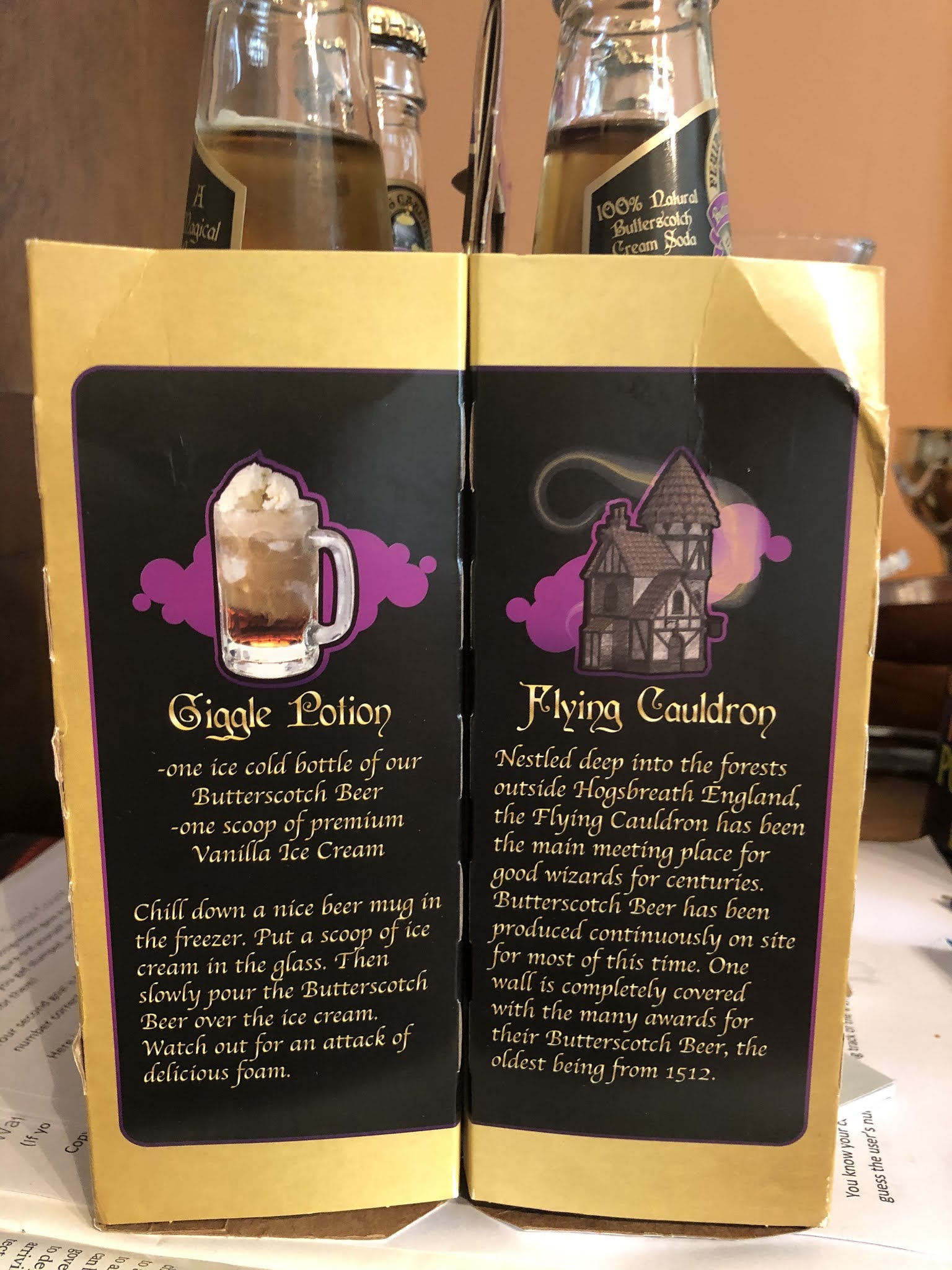
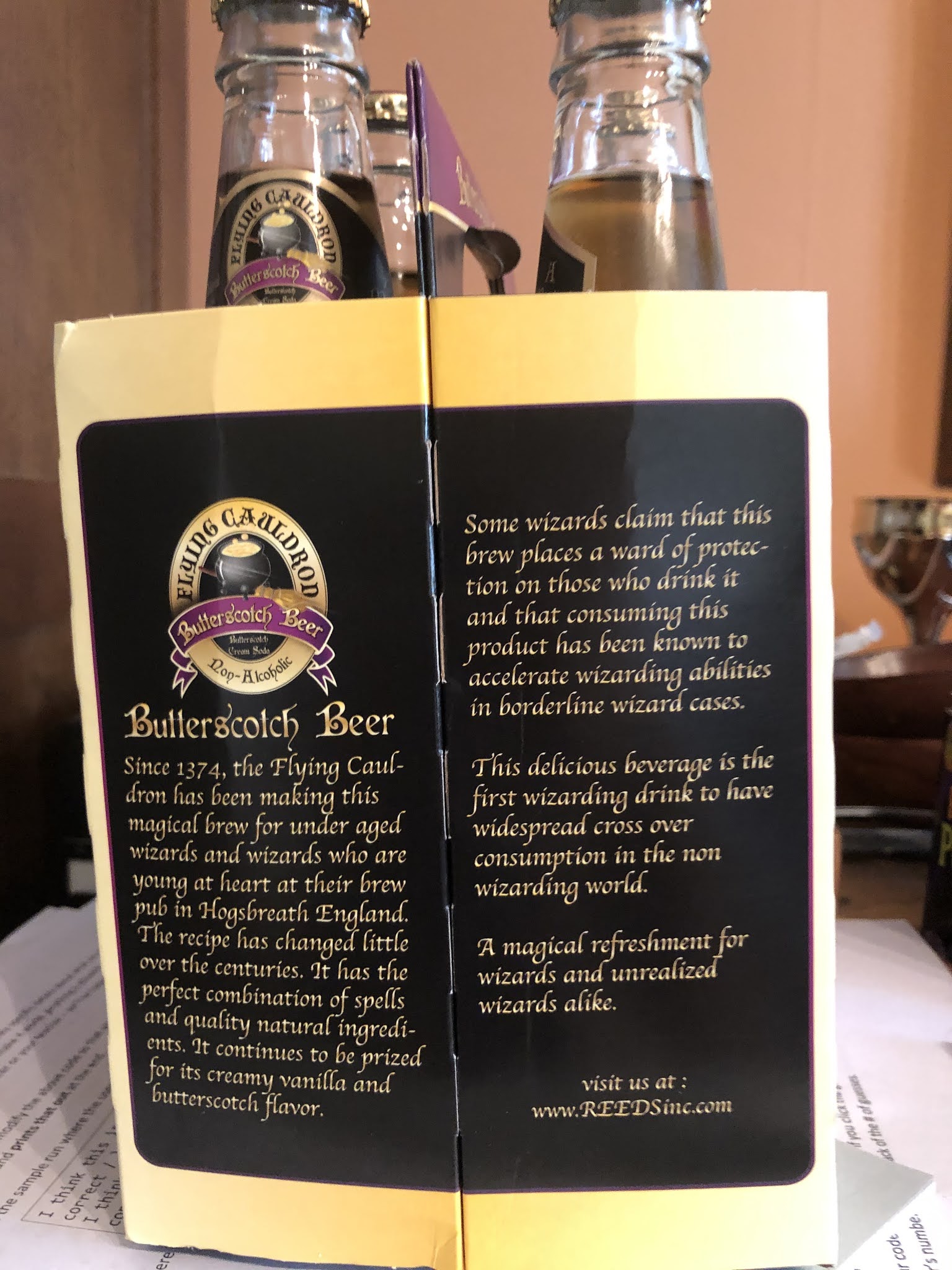
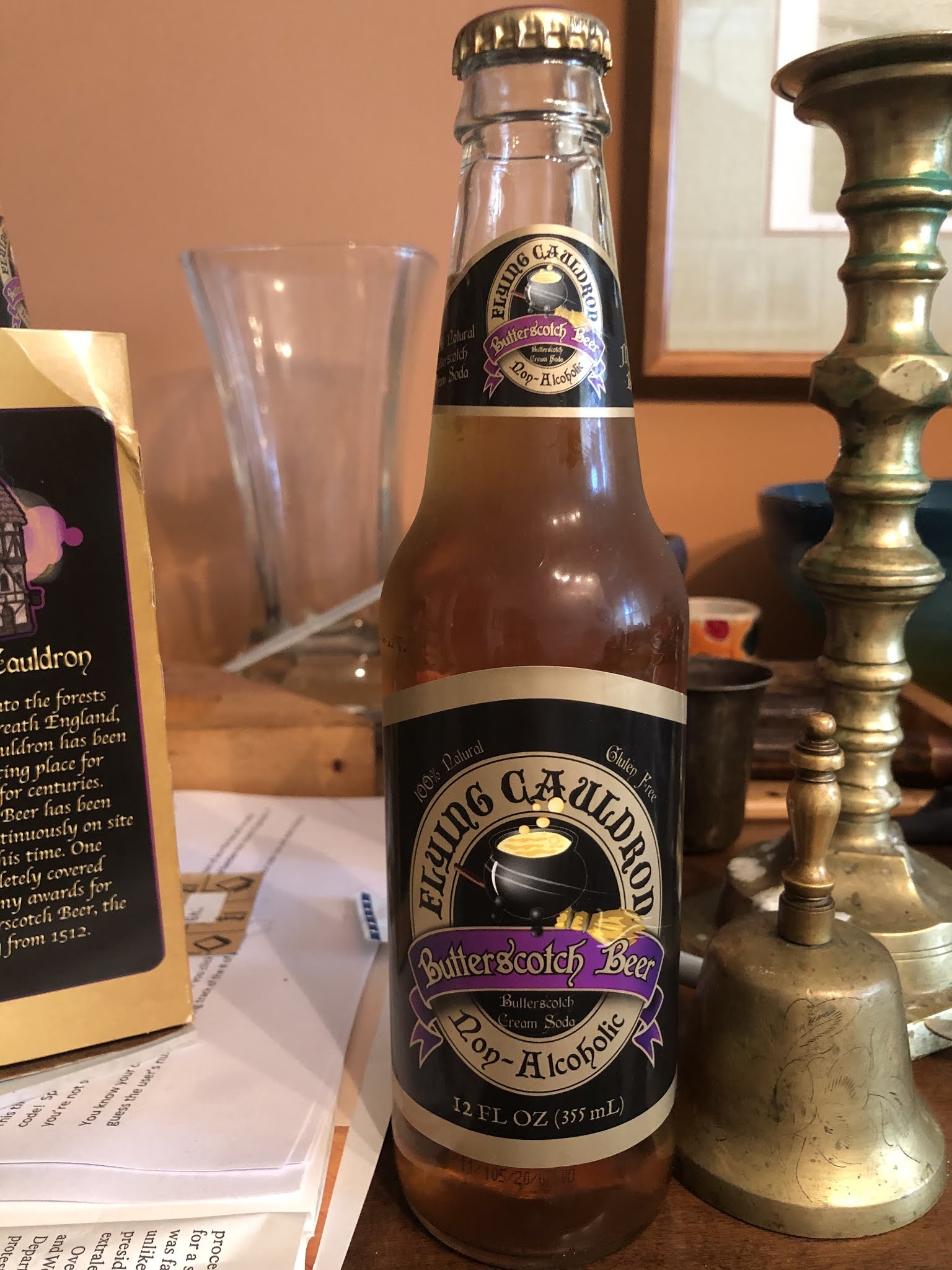
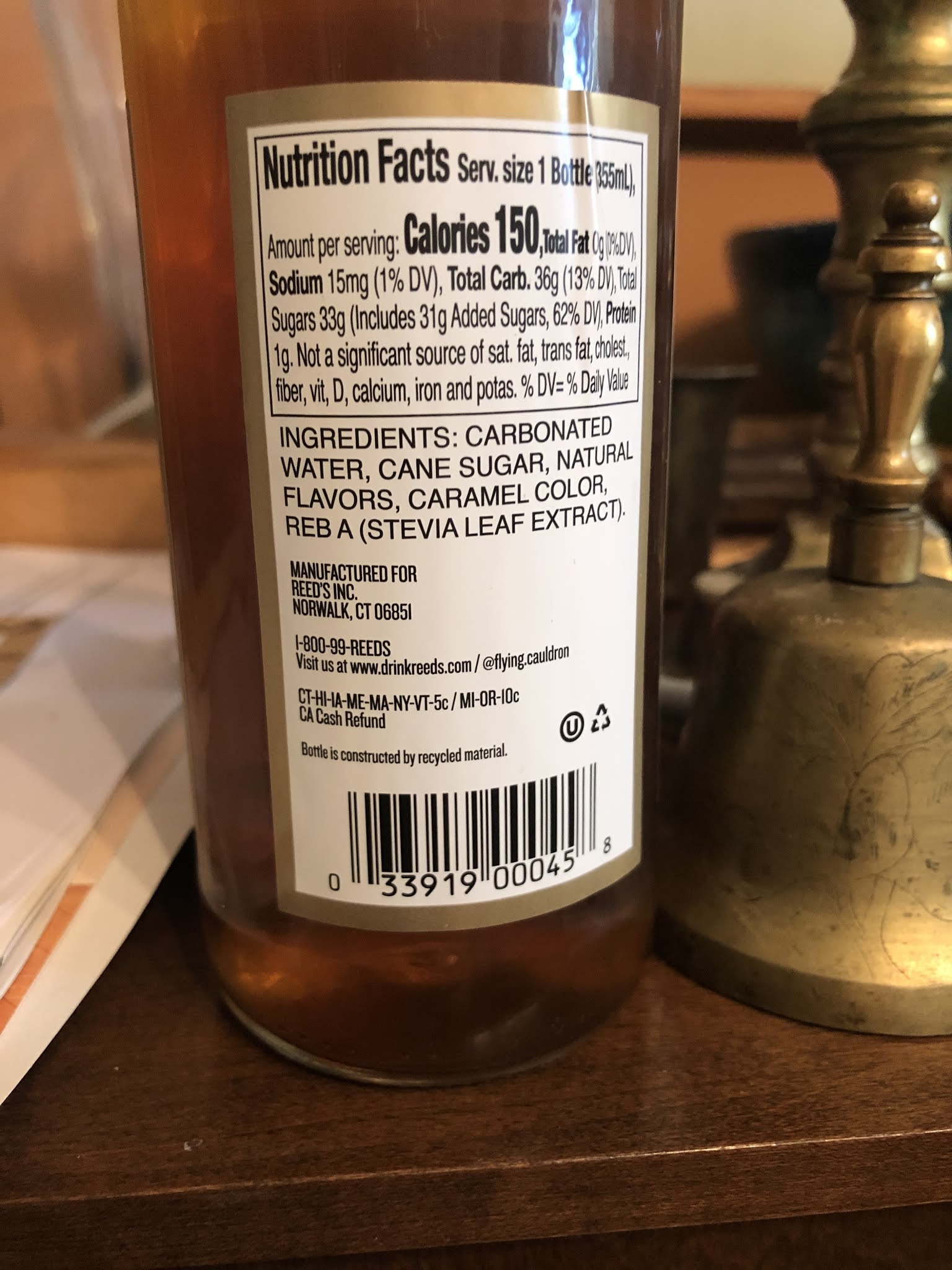
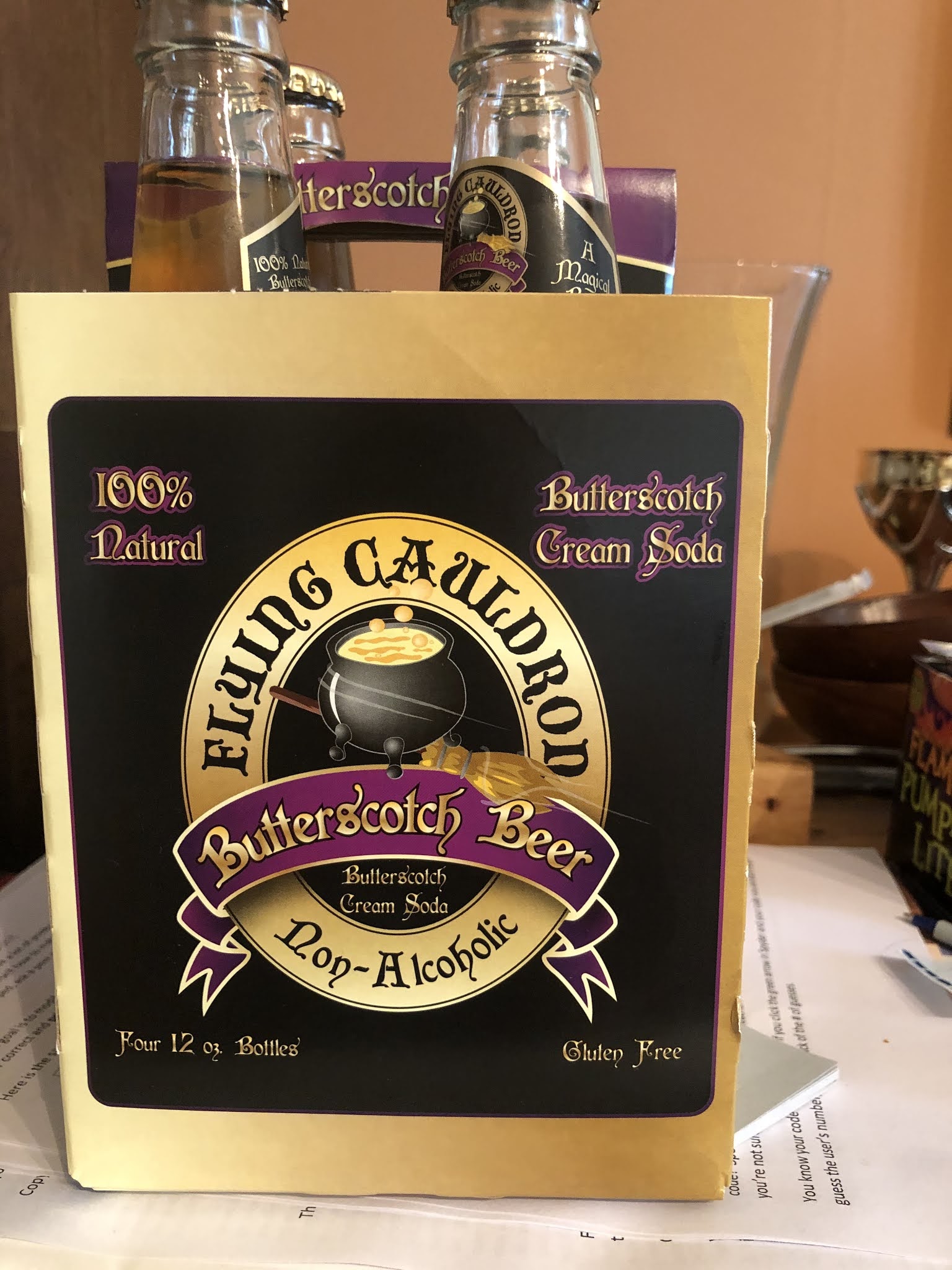
Trade dress question of the day, butterbeer–I mean butterscotch beer–edition

 Found this product, Flying Cauldron butterscotch cream soda:


Harry Potter fans (or former fans), what say you?

from Blogger https://ift.tt/3jD47ik

Posted in Uncategorized | Tagged , | Leave a comment

trademark law continues as 500 pound gorilla in glue case

J-B Weld Company,
LLC v. Gorilla Glue Co., — F.3d —-, 2020 WL 6144561, No. 18-14975 (11th
Cir. Oct. 20, 2020)

This case illustrates how much leeway trademark claims often get and how little false advertising claims do.

My daughter provided
the best summary of my take on the trademark part of this dispute: if you can’t
tell these two apart, you have no business working with powerful adhesives. But
the court found the evidence of copying was so strong as to allow a jury to
infer an intent to confuse. This triggered a concurrence emphasizing that
intentional copying isn’t necessarily evidence of intent to confuse. But if intentional
copying can always or usually reasonably allow an inference of intent to
confuse, which itself can be assumed to succeed, then ordinary competitors will
find it difficult to avoid a full jury trial, which is an anti-competitive
result. (Side note: the court also remanded the state law dilution claim
because dilution doesn’t require confusion and the court of appeals couldn’t
tell if the district court fully understood that, given that it focused on how
different the parties’ products looked, even though that’s also an excellent
reason there’d be no blurring either.)

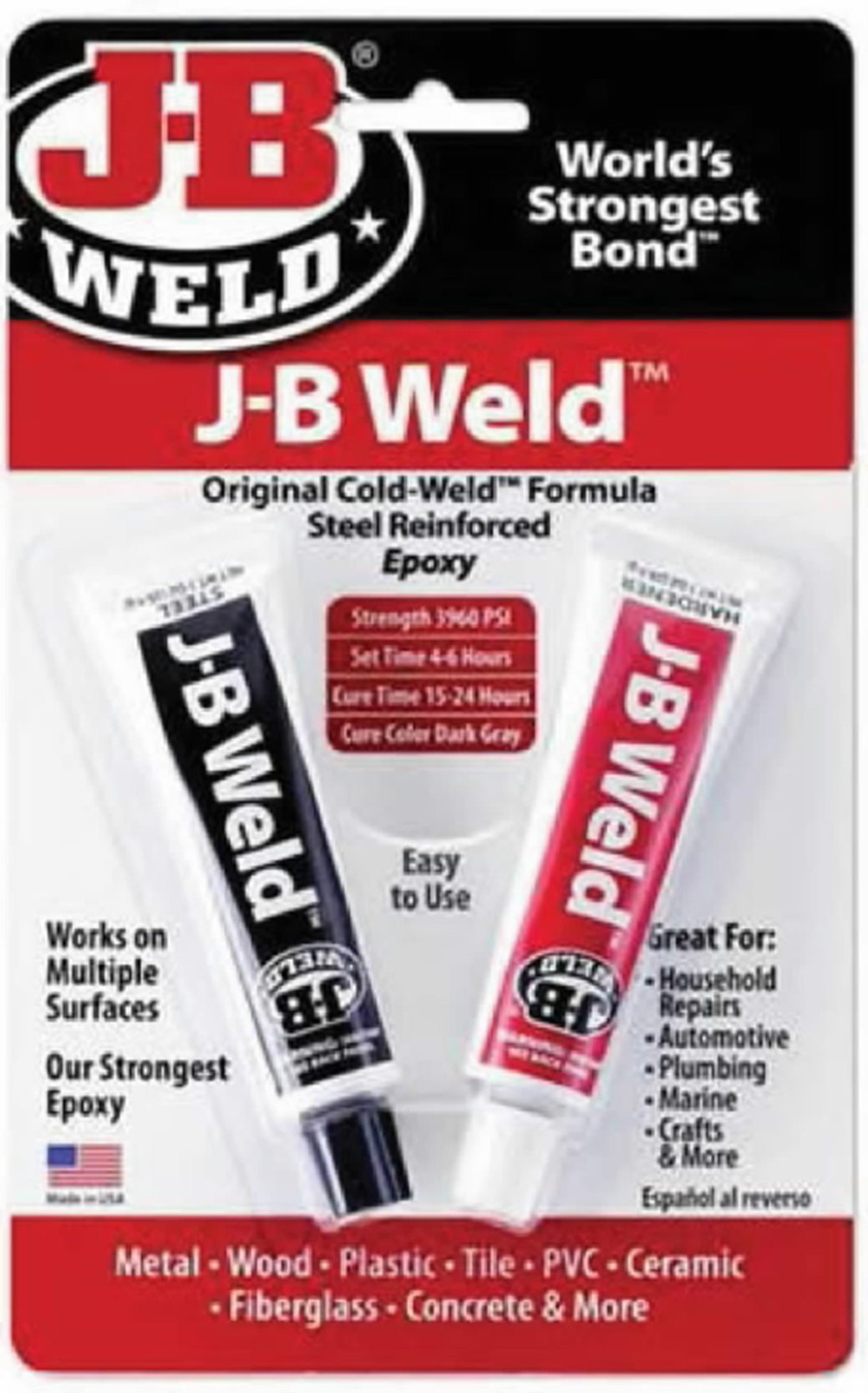
The parties compete
in the adhesive market. J-B Weld makes a two-part epoxy adhesive. “J-B Weld
Original’s epoxy resin paste also contains iron dust as a filler, purportedly
to strengthen and support the adhesive when cured, which J-B Weld recognizes by
referring to the product as a ‘steel reinforced epoxy.’” It describes its trade
dress as:

(1) two squeezable tubes in a blister package, with the tubes angled
inwardly to create a “V-shape;” (2) a black-bannered tube on the left side of
the package and a red-bannered tube on the right side of the package; (3) black
and white caps on each respective tube; (4) a clear “blister” style protective
package that angles inward in the same manner as the tubes; (5) a background
card with a width of five inches; (6) a “technical information box,” located in
between the two tubes on the background card, including four lines of
information separated by white lines; (7) colored banners stretching across the
top and bottom portions of the background card; (8) the capitalized/emphasized
word “WELD” inside the upper banner on the background card; (9) a list of
potential uses for the product in the bottom-right corner of the background
card

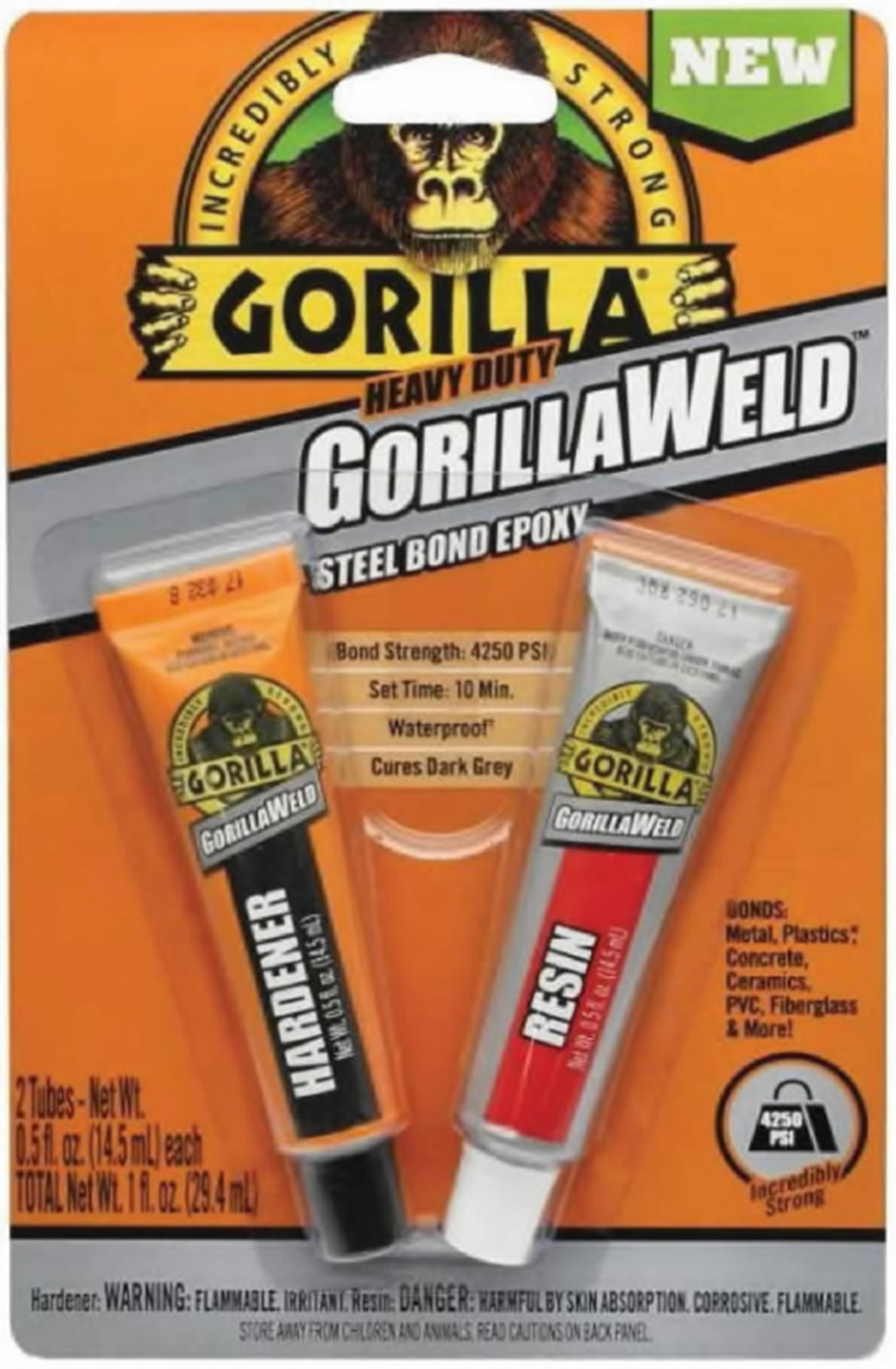
In 2017, Gorilla
Glue introduced a two-tube adhesive under the brand name “GorillaWeld.” GorillaWeld’s
adhesive differs from J-B Weld’s in that GorillaWeld uses methyl methacrylate
chemistry (MMA), which, chemically, is not an epoxy-group polymer.
GorillaWeld’s resin also does not contain any iron or steel. It’s still
marketed as an “epoxy” adhesive and, on its packaging, as a “steel bond epoxy.”

Gorilla Glue
recognized that it was entering the epoxy market to go head to head against J-B
Weld. Its graphic designer stated: “The objective of this project was to go
straight up against the top competitor (J-B Weld) and create packaging that
mimics the competitor’s architecture. I was able to pull subtle elements into
our package, but still keep the package looking tough and geared towards the
Gorilla brand.”

The district court
found confusion unlikely,  because the packages look so different, but
the court of appeals thought it had resolved disputed questions of fact against
J-B Weld on similarity, intent, and actual confusion.

Similarity:

Here, reasonable minds could disagree as to which of these features
contributes most to the overall impression conveyed by the two marks. Where one
consumer may think that the color scheme and Gorilla Glue logo are central to
the trade dress’s impression, another consumer may believe that the particular placement
and angling of the black-and-red labeled tubes, the identical location of
product specifications such as hold strength and set and cure time, and the
presence of “WELD” in large, bolded text comprised the primary impression of
the two products’ packaging. With this amount of conflicting evidence as to the
similarity of the two designs, it was error for the District Court to conclude
that, as a matter of law, J-B Weld had not shown that the two products’ trade
dress designs were similar.

Intent: Again, the
district court erred by failing to make J-B Weld’s “best case.” Intent to
confuse can be found based on circumstantial evidence, so a factfinder “may”
infer “intent to derive a benefit from a competitor’s goodwill—and,
accordingly, an intent to cause confusion—from evidence of intent to copy.” This
is especially true if there are substantial similarities.

J-B Weld’s evidence
included “communications from Gorilla Glue’s packaging design team that
repeatedly referenced J-B Weld Original’s packaging and expressed a desire to
use similar elements for GorillaWeld’s packaging.”  The team described certain GorillaWeld
packaging options as “[c]lose to JB Weld brand” and aspiring to “go[ ] directly
after [J-B Weld Original],” and the team stated their target market was
consumers that had used the J-B Weld Original product in the last six months. One
Gorilla Glue employee later called the GorillaWeld design a “knock off” of J-B
Weld. [Note that GG apparently didn’t choose the closest options, but
its consideration and rejection of them gets to weigh against it!]

The district court
wrongly relied on the graphic designer’s statement, “I was able to pull subtle
elements [of J-B Weld’s Dress] into our package, but still keep our package
looking tough and geared towards the Gorilla brand.” This was error because
there was evidence that Gorilla Glue intended to “mirror,” “copy,” and “knock
off” J-B Weld Original’s trade dress, not simply “construct a worthy
competitor.”

And “GorillaWeld was
designed with the knowledge that it would be sold on shelves near its
competitor in retail stores,” which is apparently evidence favoring likely
confusion instead of easily allowing consumers to recognize big differences
between them. “This evidence of Gorilla Glue’s intent to copy creates an
inference that Gorilla Glue intended to capitalize on J-B Weld’s goodwill, and
that evidence is probative of the likelihood of confusion issue.”

It was also improper
to impute innocuous motives from the testimony of Gorilla Glue’s employees that
the “V-shape” design of GorillaWeld’s packaging served purposes other than
mirroring J-B Weld’s trade dress. It’s true that “intentional copying does not
necessarily indicate a desire to capitalize on another’s goodwill,” but it can,
so it had to weigh in J-B Weld’s favor for summary judgment purposes.

Actual confusion: “J-B
Weld’s evidence indicated that other industry professionals, including a buyer
at a retailer that carries J-B Weld Original, asked J-B Weld representatives
whether J-B Weld ‘had anything to do with’ GorillaWeld, or if J-B Weld was
making or supplying Gorilla Glue with ‘private Label Epoxy Twin Tubes’ pursuant
to some sort of agreement.” The district court went with case law saying that
questions about affiliation show lack of confusion, not confusion—they
understand that the signals they’re receiving are at least ambiguous.

But this wasn’t the
only reasonable inference from this evidence. It would also be reasonable to
infer that “even if the industry professionals knew the two products were
different, they were confused as to whether GorillaWeld was the product of a
collaboration or other liaison between the two companies.” [Except they asked,
rather than assuming—they knew they didn’t know the answer to that question
based on what they’d seen. It’s not just that they differentiated the products,
which I can do with Diet Coke versus Coke, it’s that they didn’t presume that
they were joint productions based on the similarities.] Because affiliation
confusion is actionable, this confusion could be legally significant. The
question about whether there was a private label deal “leads to a reasonable
inference that the person was confused because he or she believed that the
similarities in packaging signified a business relationship or other agreement
between the companies. Asking if one company ‘had anything to do with’ another
company’s product would — or, at least, could — generate a similar inference.”

Plus, the district
court failed to consider “any of the circumstantial factors that we have held
are integral to determining how much weight should be assigned to any
individual instance of actual confusion,” such as “the extent of the parties’
advertising, the length of time for which the allegedly infringing product has
been advertised, or any other factor that might influence the likelihood that
actual confusion would be reported.” Since the GorillaWeld product was
introduced in 2017, and J-B Weld sued quickly thereafter, “in all likelihood
the number of reported instances of actual confusion would be on the lower
side, making each instance of reported confusion more probative.”

And finally, the
district court “failed to appropriately discuss four of the seven applicable
factors — the similarity of the products, the similarity of retail outlets and
purchasers, the similarity of advertising media used, and the strength of the
J-B Weld mark,” which was error. [Query: Pepsi and Coke are at least as similar
in appearance—they even use only the same colors. Would it be error to dismiss a
confusion claim by Coke against Pepsi based merely on dissimilarity because
these factors (product similarity, marketing channels, and mark strength) favor
Coke?] A court has to evaluate the weight given to the factors; though that
weight varies case by case, it was insufficient to discuss the facts
supporting, and weight due, only the three factors discussed above. It was
particularly error to rely on the court’s own determination that the trade
dress was only moderately strong because the jury could find otherwise given “J-B
Weld’s presentation of evidence that J-B Weld Original’s dress is recognizable
and has retained consistent features for decades.” [Even though neither of
those things are actually evidence of a strong mark as opposed to a mark
that works fine but is not particularly strong.]

False advertising:
The district court did correctly grant summary judgment on the claim that
GorillaWeld is falsely advertised as a “steel bond epoxy.” J-B Weld failed to
show materiality of either “steel bond” or “epoxy.”

J-B Weld argued that
“epoxy” was material because it refers to the chemical composition of an
adhesive, which constitutes an “inherent quality or characteristic” of the
product. “But the ‘inherent quality or characteristic’ formulation adopted by
this Circuit does not replace the consumer-oriented nature of the materiality
inquiry with a scientific one.” The mere fact that components or ingredients
are often found to be “inherent qualities or characteristics” that are
important to consumer purchasing decisions didn’t mean that they always are. [I
sense a bit of tension with the “it’s a jury question” treatment of
infringement above.]

While J-B Weld
argued that “consumer[s] know[ ] that ‘epoxy’ is a specific and desirable
category of adhesives,” it didn’t show that consumers would deem GorillaWeld’s
MMA-based adhesive not to be an “epoxy.” It didn’t present “any evidence that
consumers are so scrupulous about the chemicals in their adhesives.” Instead,
the evidence that there was indicated that consumers probably deemed all
two-part adhesives to be “epoxies” regardless of chemical composition. J-B
Weld’s survey didn’t ask consumers whether or not they understood epoxy
adhesive to have “a specific type of chemistry to it,” and its expert opined
that consumers likely only care about whether the product sticks two surfaces
together effectively. Gorilla Glue also pointed to evidence that MMA-chemistry
based adhesives, such as GorillaWeld, “are frequently marketed, and categorized
by retailers, as epoxies.”

Although J-B Weld
was correct that retail purchasers or middlemen could be considered in
assessing materiality, it didn’t manage to show a factual question as to them
either.  The speculation that retailer
demand for GorillaWeld increased in 2017 merely because GorillaWeld began
including “epoxy” on its labeling couldn’t succceed without proof that it was
the inclusion of “epoxy,” and not some other factor, that increased demand for
the product.

J-B Weld argued that
chemical epoxies and MMA chemistries have “different physical properties,”
including “safety and odor differences.” “Maybe so. But J-B Weld has not made
any showing that these differences would matter to a consumer.”

“Steel bond”: First,
the court was skeptical that Gorilla Glue was really using “steel bond” to
describe “a strong bond that works well on metal,” rather than “an adhesive
that physically contains iron or steel as a reinforcing agent.” But even so,
J-B Weld needed to show that the presence or absence of steel in GorillaWeld
resin would be material to a consumer’s purchasing decision, and it didn’t. Its
survey asked respondents to identify which of the products they believed
contained steel, but didn’t ask about materiality. Internal Gorilla Glue
documents showing that it very much wanted to make some reference to “steel” on
the package (e.g., “play up on steel”) also didn’t matter. [Now this is definitely
in tension with the treatment of intent in the trademark part of the case. Why
isn’t it the most reasonable inference that Gorilla Glue, which presumably
knows its customers better than the court does, knew what would likely
influence them?]

Judge Carnes
concurred, but wrote separately “to emphasize the distinction between ‘intentional
copying’ and ‘intentional copying with intent to cause confusion.’”
Unfortunately, despite celebrating fair competition involving copying, the
concurrence doesn’t actually explain when summary judgment for a partial trade
dress copier could be proper, making procompetitive copying a risky endeavor.
Perhaps if your internal documents don’t say that you seek to “mirror” or be
“close to” the competition, or call it a “knock off,” you can still be ok. The
concurrence said that the majority doesn’t “alter the well-established rule
that intentional copying does not — without more — permit an inference of
copying with intent to confuse,” but instead found evidence of that “more”
here. I wonder how many instances of copying will not involve people saying that
they copied (sorry, “mirrored”), and how people are supposed to talk about
their legitimate copying without generating the “more.” I also suspect that,
despite all that, product design trade dress copying will continue to get more
leeway than product packaging copying.


from Blogger https://ift.tt/3mylJxN

Posted in Uncategorized | Tagged , | Leave a comment