Hypo of the day, Denny’s edition

This might require a bit of background.  Tumblr is a social media platform very popular with a demographic of young users; Yahoo! bought Tumblr and is trying to figure out how to make it profitable through advertising.  As a result, Tumblr is trying out new ad formats in users’ let’s-call-them-newsfeeds.  One of these formats, for reasons best known to Yahoo!, was a blank picture frame that appeared mysteriously, without any other labeling.  Because this is Tumblr, a meme generator without equal, users soon started posting their own picture frames with content inside.  Denny’s, again for reasons that are unclear but probably have to do with the accident of the social media person assigned to Tumblr, is probably the most successful advertiser-user of Tumblr.  The Denny’s Tumblr regularly posts weird, amusing, much-reblogged  and -liked posts referring to Denny’s–like Jon Stewart, but less disparaging.  So Denny’s went and inserted a 2000s-style ad into the Yahoo! picture frame.  Denny’s didn’t pay for this, of course.  Would Yahoo! have a valid 43(a) false endorsement claim based on the theory that it looks like Denny’s did pay?

Posted in trademark | Leave a comment

Reading list: entertainment franchises and Drassinower

Law and Creativity in the
Age of the Entertainment Franchise
, ed. Kathy Bowrey & Michael
Handler: A collection of essays on the general theme, some much more specific
than others. The editors suggest that the things that the
“entertainment
industry
”
values don
’t
map very well onto the law, but that industry members nonetheless
deploy/interact with the law to get what they want.  I like their working definition of franchises:
franchises involve connected cultural content that some entity tries to exploit
and keep profitable over time.
 
David Lindsay contributes a pretty bad
defense of copyright in
“Franchises, imaginary worlds,
authorship and fandom,
” arguing that a hierarchy of ownership
is important to sustain the attractiveness of a cultural artifact, because
fandoms are like religions and religions need hierarchy
—yes,
multiple interpretations are inevitable, but polysemous meaning needs a claim
of authoritativeness against which to define itself.  (I was not aware of that, and nor I think
were the directors of many a Hamlet I have seen.  Polysemous meaning may well need other
interpretations against which to define itself, but I see no requisite
connection to hierarchy.)  In a world
where different kinds of content compete for limited attention, he argues, it
’s
important to have a combination of
“material that is familiar to an
audience
—both
in terms of its content and its
‘authorial’
reputation
—with
the potential for the generation of new meanings.
” 
These universes must be owned to ensure their
“authenticity
and integrity,
”
without which fans and audiences won
’t form an “ongoing
attachment.
”  (Citation needed.)  Within those controlled boundaries, then,
there
’s
room for experimentation/playing out the rules of the world.  But fans need to be kept in line:
“Just
as the ambiguous line between orthodoxy and heresy played a policing role in
the Middle Ages, uncertainty surrounding copyright
infringement is essential in constructing the terms of the relationship between
franchise owners and online communities.
” 
(Or not: see, e.g., transformativeworks.org.  I really wish people wouldn
’t
treat copyright uncertainty as so much more uncertain than other legal
regimes.  What does it take to avoid
driving a car negligently?) 
 
The fact that franchise owners “naturally
have a strong interest in being a source (although not
necessarily the sole source) of canonical meaning, and in
being perceived by a fan community as the responsible (and potentially responsive)
guardians (or co-guardians) of canonical meaning
” really says nothing about what the
law should give them.  These claims for
the necessity of some permanent meaning in order to preserve a community around
a work have been made many times before; I
’ve never been persuaded.
Lindsay even discusses affirmational v. transformative fandom, then proceeds
to ignore transformative fandom by saying that fan communities
“are
based upon defining themselves against
‘outsiders,’” and
therefore that fan communities do not protect the diversity of responses to
texts but rather foster exclusion and identity politics, based on claims about
their
“depth
of knowledge (and loyalty to) canonical meaning
” and “the enclosure of meaning.”  He might feel excluded from my fandoms, but I
am sure that none of them are recognizable in this description.
 
Of course fan/producer relations aren’t as
simple as
“the
contrast between franchise owners as over-zealous control freaks, and fans as
the virtuous creators of socially valuable meaning,
” but
that
’s
not where fan studies is (or really has been for a while, if it ever was–he misses the whole aspect of fan studies that is about recuperating fandom from the pathologization to which it was subject and to which Lindsay seems to be indifferent).  A key issue is
exploitation, and Lindsay just valorizes it instead of
critiquing it or attempting to understand the many ways in which it might play
out.  It
’s not helpful to insist that “[i]n
a commercial culture, content is a commodity
” and that economic law demands that
producers maximize profits
—not only is it empirically false
(there
’s
plenty of irrational behavior in the content sector, not to mention
noncommercial production), it
’s normatively bankrupt. 
 
What really galls me is the
evidence-free insistence that control is necessary to
preserve something called
“authenticity,” as
if authenticity weren
’t contingent and negotiable.  Lindsay even seems to acknowledge this,
retreating to the assertion that struggles over
authenticity are necessary to a franchise
—which gets us back to the religion
point.  It may well be true that such
struggles are a part of a healthy belief system, but that doesn
’t
mean that there needs to be any state-sponsored religion.  When you have to analogize copyright law to
the Inquisition, you might be on the wrong side of the
argument.  (Really! 
“[J]ust as when the uniform Christian
world view began to fray in the face of the proliferation of meanings spurred
by the Reformation the Church developed institutions such as the Inquisition to
police heretics, so, in the face of the proliferation of meanings through
online fan communities, the threat of copyright infringement
can be used by franchise owners to police meaning.
”)  I suppose it’s not surprising that the chapter
lacks any concrete examples of how he thinks this works.  Lindsay refuses to define the extent of legal
“control” he
thinks is necessary
—shall corporate owners wield the power
of excommunication? What does it even mean to require a
“threat” to
hang over fan activities?  Must that
threat ever be carried out?  Enforcement
is absent in this account
—though it definitely wasn’t in
his analogous Inquisition.
 
More gems: Hierarchy is important: “the
creative process, and the relationship between authors and audiences, is
necessarily asymmetrical
…. [E]veryone may be a creator, but
that does not mean that everyone is equally creative.
”  (Straw men, anyone?)  GRRM doesn’t like fan fiction, which means …
something.  But Lindsay doesn
’t
want to enter into
“the increasingly tendentious debates
over the pros and cons of fan fiction.
” 
Still, if we feel sympathy for an author who feels sad over the
“bowdlerization” of
her creation by a corporate licensee, why wouldn
’t we feel the same sympathy “when
it is digitally empowered fans that may be responsible for the bowdlerizing?
”  (I’d love to find this corner of fandom
that bowdlerizes. 
Of course, Congress has
legalized what CleanFlicks, which really did bowdlerize, sought to do, so again
I must wonder about relevance.) 
 
Really, Lindsay just wants to be clear
that neither side, corporate or fandom, has
“self-evidently better claims to higher
normative ground.
” 
In this environment, it
’s claims by individual authors like
GRRM for respect that might be the most desirable, because they can disrupt
both fandom and corporate constructions. 
Why this ability to intervene in debates over meaning requires the
threat of copyright infringement liability is an exercise left for the reader.
 
Johnson Okpaluba contributes a chapter
on digital sampling, arguing that licensing was prevalent in the US music
industry even before litigation established a rule of
“get a
license or don
’t
sample.
”
It
’s
true that it
’s
hard/impossible now to make commercial sample-heavy albums like Paul
’s
Boutique and It Takes a Nation of Millions to Hold Us Back, but those weren
’t
ever the most common uses of sampling, Okpaluba argues, and those albums
shouldn
’t
be seen as an artistic peak, since that
’s just a subjective aesthetic
judgment.  (Valuing the possibility of
variety isn
’t
part of this analysis.)  Producers
shifted to new sampling techniques and/or live instrumentation, so legal
constraints on sampling were productive of creativity.  Joseph Fishman recently made the same
argument in Creating Around Copyright.
I find it unpersuasive, since this thesis doesn’t
explain why the law is needed on top of artistic motives to experiment and
strike out in new directions, and the resulting legal suppression is not
neutral. 
 
David Rolph’s
chapter on defamation law and celebrities has an interesting case study of how
filing a defamation case harmed the public image of a celebrity, turning him
from nice guy into perceived bully. 
Celebrity
’s fluidity, Rolph suggests, may be
inconsistent with defamation law
’s understanding of the stolidity of
reputation.
 
Other chapters cover the
Disneyfication of theater; Australian film and TV practices relating to reality
show (and other) concepts; the codification of flamenco music; arts festivals;
and carnivals as franchise opportunities for locations with communities with a
strong connection to the Caribbean.  I
didn
’t
know that you can buy a carnival-in-a-box package to promote tourism to your
city!
 
Abraham Drassinower, What’s
Wrong with Copying?
: Really thought-provoking book that proceeds
from the thesis that copyright ought to be a true author
’s
right: a right to participate in a conversation, which entails a like right of
others, thus creating its own inherent limits (specifically the idea/expression
distinction and transformative fair use). 
Also, because copyright rights involve communication, non-uses
—including
database uses and private copying
—are not infringements of the
legitimate copyright rights.  I was about
half persuaded.  He convincingly argues
that the
“balance”
metaphor of copyright (balancing author and audience interests) doesn
’t
justify copyright because it doesn
’t tell us what is to be balanced.  It makes copyright’s
lack of coverage for ideas and facts, as well as fair use, into empirical
questions when they shouldn
’t be; balancing certainly can’t
tell you as a matter of first principle that copyright should protect
expression and only expression, or why copyright and patent are different. A
mousetrap may well involve creativity
– just not the kind of creativity
copyright protects.
 
He makes a good point about defending
the public interest versus the public domain; instrumentalist accounts of
copyright focus on the former, when we should defend the latter. In Drassinower
’s
view, only understanding copyright as dealing with communicative acts can
explain copyright: copyright is not a property right, but a right
“inhering
in persons as speaking beings.
” 
Because others need free access to ideas and transformative fair use, an
author
’s
claim can
’t
extend to those
—though Drassinower doesn’t
fully convince me that he
’s defended these needs (why is freedom
to copy ideas always necessary to the next author?). 
 
One quibble comes from his use of
Borges
’
“Pierre
Menard, Author of the Quixote
” to
defend the principle that independent creation can
’t be
infringement, since Menard is definitely an author
—but
Menard was also definitely not an independent creator in the sense of not
needing Cervantes as a but-for cause of his creation.  I also thought his distinction between
copyright and trademark was unpersuasive, since he defines trademark as the
right to completely control the meaning of a mark as applied to a good or
service, and a trademark is not and should not be that!  We
’re allowed to talk about a Mickey
Mouse operation, or a Cadillac health plan. 
 
As Drassinower recognizes, entailed in
his view is that the derivative works right is illegitimate, which would be a
big change
—though
he does allow for room for infringement via substantial similarity, at least in
some cases.  He also, in what I think is
a concession that
’s inconsistent with his theory but he
thinks necessary for practical purposes, allows for the existence of a
translation right.  Of course translation
also requires creative endeavor by the translator, but he argues that
“[u]nlike
fan fiction, which uses the work of another in one
’s
own, translation is not a speaking in one
’s own words but a rendering of another’s
words in another language. Unauthorized translation is therefore infringing.
” I’m not
sure I can go with him
—why isn’t then a movie version a translation
of a book into a different medium and therefore infringing, justifying at least
part of the derivative works right?  He
recognizes translation as authorial but also infringing; that opens the
possibility of other categories of authorial acts that are also infringing, and
now we
’re
back to fighting over the scope of the derivative works right.
 
Drassinower is trenchant in his
criticism of US parochialism, which dismisses rights-based accounts of
copyright law out of hand. 
Low-protectionists worry that an author-centered account of copyright
would give authors too much control, but not all authorial demands would be
plausible in his account
—respecting an author’s
autonomy doesn
’t
require us to diminish the autonomy of others. 
Only republishing her words without also transforming them to be one
’s own
expression, whether through commentary or otherwise, ought to count as
compelled speech (treating her like a puppet, working at the behest of others
without her consent) that she can suppress.

from Blogger http://ift.tt/1ItMI6T

Posted in Uncategorized | Tagged , | Leave a comment

“Handmade” is too vague to be actionable for bourbon

Salters v. Beam Suntory, Inc., 2015 WL 2124939, No. 14cv659
(N.D. Fla. May 1, 2015)
 
Plaintiffs alleged that Maker’s Mark bourbon was falsely
advertised as “handmade.” In a pithy opinion, the court found that they
couldn’t state a claim for falsity.  As support
for the allegations of falsity, plaintiffs alleged that “Maker’s Mark is not
made by hand but is instead manufactured with large machines in a highly
mechanized process.”
 
Handmade means “made by hand,” although that is of course
circular:
 
But the term obviously cannot be
used literally to describe bourbon. One can knit a sweater by hand, but one
cannot make bourbon by hand. Or at least, one cannot make bourbon by hand at
the volume required for a nationally marketed brand like Maker’s Mark. No reasonable
consumer could believe otherwise.
 
RT: Last I checked, knitting usually required tools, albeit simple tools.  (There is a method known as finger knitting,
also arm knitting, but it can’t, as far as I know, produce a sweater.)  It’s amazing how technology can be invisible
to us in particular ways.  Like making a
sweater, making bourbon requires tools—the question is whether they are hand
tools.
 
Plaintiffs didn’t argue that “handmade,” in the context of
bourbon, meant “literally made by hand.” They offered other possible meanings,
including “made from scratch or in small units.” But the defendants say they
made Maker’s Mark that way, and the plaintiffs didn’t allege otherwise, or
challenge the representation on the label that each batch consists of no more
than 19 barrels. Plaintiffs argued that “handmade” implies close attention by a
human being, not a high-volume, untended process. But the defendants again said
their human beings paid close attention and that they made their bourbon in
small, carefully tended batches. Plaintiffs alleged no contrary facts, nor
could they plausibly allege that they were unaware that Maker’s Mark is mass
marketed nationwide.
 
Then plaintiffs tried the argument that “handmade” means
made with only some kinds of machines, not others, and that defendants used
machines that were too big or too modern. 
“[I]t is hard to take from the word ‘handmade’ a representation about
the age, or even the size, of equipment used in the process.”  (This debate about authenticity occurs in
many “craft” spaces—I’ve seen woodworking
debates
over what counts as a “legitimate” hand tool.)
 
Then plaintiffs contended that “handmade” “connotes greater
value and trades on the current fashion that also brought us craft beer.”
Construed as such, “a general, undefined statement that connotes greater value,
detached from any factual representation” was mere puffery.

from Blogger http://ift.tt/1ItMHjr

Posted in Uncategorized | Tagged , | Leave a comment

Reading list: entertainment franchises and Drassinower

Law and Creativity in the Age of the Entertainment Franchise, ed. Kathy Bowrey & Michael Handler: A collection of essays on the general theme, some much more specific than others. The editors suggest that the things that the “entertainment industry”values don’t map very well onto the law, but that industry members nonetheless deploy/interact with the law to get what they want.  I like their working definition of franchises: franchises involve connected cultural content that some entity tries to exploit and keep profitable over time.
 
David Lindsay contributes a pretty bad defense of copyright in “Franchises, imaginary worlds, authorship and fandom,” arguing that a hierarchy of ownership is important to sustain the attractiveness of a cultural artifact, because fandoms are like religions and religions need hierarchy—yes, multiple interpretations are inevitable, but polysemous meaning needs a claim of authoritativeness against which to define itself.  (I was not aware of that, and nor I think were the directors of many a Hamlet I have seen.  Polysemous meaning may well need other interpretations against which to define itself, but I see no requisite connection to hierarchy.)  In a world where different kinds of content compete for limited attention, he argues, it’s important to have a combination of “material that is familiar to an audience—both in terms of its content and its ‘authorial’reputation—with the potential for the generation of new meanings.”  These universes must be owned to ensure their “authenticity and integrity,”without which fans and audiences won’t form an “ongoing attachment.”  (Citation needed.)  Within those controlled boundaries, then, there’s room for experimentation/playing out the rules of the world.  But fans need to be kept in line: “Just as the ambiguous line between orthodoxy and heresy played a policing role in the Middle Ages, uncertainty surrounding copyright infringement is essential in constructing the terms of the relationship between franchise owners and online communities.”  (Or not: see, e.g., transformativeworks.org.  I really wish people wouldn’t treat copyright uncertainty as so much more uncertain than other legal regimes.  What does it take to avoid driving a car negligently?) 
 
The fact that franchise owners “naturally have a strong interest in being a source (although not necessarily the sole source) of canonical meaning, and in being perceived by a fan community as the responsible (and potentially responsive) guardians (or co-guardians) of canonical meaning” really says nothing about what the law should give them.  These claims for the necessity of some permanent meaning in order to preserve a community around a work have been made many times before; I’ve never been persuaded. Lindsay even discusses affirmational v. transformative fandom, then proceeds to ignore transformative fandom by saying that fan communities “are based upon defining themselves against ‘outsiders,’” and therefore that fan communities do not protect the diversity of responses to texts but rather foster exclusion and identity politics, based on claims about their “depth of knowledge (and loyalty to) canonical meaning” and “the enclosure of meaning.”  He might feel excluded from my fandoms, but I am sure that none of them are recognizable in this description.
 
Of course fan/producer relations aren’t as simple as “the contrast between franchise owners as over-zealous control freaks, and fans as the virtuous creators of socially valuable meaning,” but that’s not where fan studies is (or really has been for a while, if it ever was–he misses the whole aspect of fan studies that is about recuperating fandom from the pathologization to which it was subject and to which Lindsay seems to be indifferent).  A key issue is exploitation, and Lindsay just valorizes it instead of critiquing it or attempting to understand the many ways in which it might play out.  It’s not helpful to insist that “[i]n a commercial culture, content is a commodity” and that economic law demands that producers maximize profits—not only is it empirically false (there’s plenty of irrational behavior in the content sector, not to mention noncommercial production), it’s normatively bankrupt. 
 
What really galls me is the evidence-free insistence that control is necessary to preserve something called “authenticity,” as if authenticity weren’t contingent and negotiable.  Lindsay even seems to acknowledge this, retreating to the assertion that struggles over authenticity are necessary to a franchise—which gets us back to the religion point.  It may well be true that such struggles are a part of a healthy belief system, but that doesn’t mean that there needs to be any state-sponsored religion.  When you have to analogize copyright law to the Inquisition, you might be on the wrong side of the argument.  (Really!  “[J]ust as when the uniform Christian world view began to fray in the face of the proliferation of meanings spurred by the Reformation the Church developed institutions such as the Inquisition to police heretics, so, in the face of the proliferation of meanings through online fan communities, the threat of copyright infringement can be used by franchise owners to police meaning.”)  I suppose it’s not surprising that the chapter lacks any concrete examples of how he thinks this works.  Lindsay refuses to define the extent of legal “control” he thinks is necessary—shall corporate owners wield the power of excommunication? What does it even mean to require a “threat” to hang over fan activities?  Must that threat ever be carried out?  Enforcement is absent in this account—though it definitely wasn’t in his analogous Inquisition.
 
More gems: Hierarchy is important: “the creative process, and the relationship between authors and audiences, is necessarily asymmetrical …. [E]veryone may be a creator, but that does not mean that everyone is equally creative.”  (Straw men, anyone?)  GRRM doesn’t like fan fiction, which means …something.  But Lindsay doesn’t want to enter into “the increasingly tendentious debates over the pros and cons of fan fiction.”  Still, if we feel sympathy for an author who feels sad over the “bowdlerization” of her creation by a corporate licensee, why wouldn’t we feel the same sympathy “when it is digitally empowered fans that may be responsible for the bowdlerizing?”  (I’d love to find this corner of fandom that bowdlerizes.  Of course, Congress has legalized what CleanFlicks, which really did bowdlerize, sought to do, so again I must wonder about relevance.) 
 
Really, Lindsay just wants to be clear that neither side, corporate or fandom, has “self-evidently better claims to higher normative ground.”  In this environment, it’s claims by individual authors like GRRM for respect that might be the most desirable, because they can disrupt both fandom and corporate constructions.  Why this ability to intervene in debates over meaning requires the threat of copyright infringement liability is an exercise left for the reader.
 
Johnson Okpaluba contributes a chapter on digital sampling, arguing that licensing was prevalent in the US music industry even before litigation established a rule of “get a license or don’t sample.”It’s true that it’s hard/impossible now to make commercial sample-heavy albums like Paul’s Boutique and It Takes a Nation of Millions to Hold Us Back, but those weren’t ever the most common uses of sampling, Okpaluba argues, and those albums shouldn’t be seen as an artistic peak, since that’s just a subjective aesthetic judgment.  (Valuing the possibility of variety isn’t part of this analysis.)  Producers shifted to new sampling techniques and/or live instrumentation, so legal constraints on sampling were productive of creativity.  Joseph Fishman recently made the same argument in Creating Around Copyright. I find it unpersuasive, since this thesis doesn’t explain why the law is needed on top of artistic motives to experiment and strike out in new directions, and the resulting legal suppression is not neutral. 
 
David Rolph’s chapter on defamation law and celebrities has an interesting case study of how filing a defamation case harmed the public image of a celebrity, turning him from nice guy into perceived bully.  Celebrity’s fluidity, Rolph suggests, may be inconsistent with defamation law’s understanding of the stolidity of reputation.
 
Other chapters cover the Disneyfication of theater; Australian film and TV practices relating to reality show (and other) concepts; the codification of flamenco music; arts festivals; and carnivals as franchise opportunities for locations with communities with a strong connection to the Caribbean.  I didn’t know that you can buy a carnival-in-a-box package to promote tourism to your city!
 
Abraham Drassinower, What’s Wrong with Copying?: Really thought-provoking book that proceeds from the thesis that copyright ought to be a true author’s right: a right to participate in a conversation, which entails a like right of others, thus creating its own inherent limits (specifically the idea/expression distinction and transformative fair use).  Also, because copyright rights involve communication, non-uses—including database uses and private copying—are not infringements of the legitimate copyright rights.  I was about half persuaded.  He convincingly argues that the “balance”metaphor of copyright (balancing author and audience interests) doesn’t justify copyright because it doesn’t tell us what is to be balanced.  It makes copyright’s lack of coverage for ideas and facts, as well as fair use, into empirical questions when they shouldn’t be; balancing certainly can’t tell you as a matter of first principle that copyright should protect expression and only expression, or why copyright and patent are different. A mousetrap may well involve creativity – just not the kind of creativity copyright protects.
 
He makes a good point about defending the public interest versus the public domain; instrumentalist accounts of copyright focus on the former, when we should defend the latter. In Drassinower’s view, only understanding copyright as dealing with communicative acts can explain copyright: copyright is not a property right, but a right “inhering in persons as speaking beings.”  Because others need free access to ideas and transformative fair use, an author’s claim can’t extend to those—though Drassinower doesn’t fully convince me that he’s defended these needs (why is freedom to copy ideas always necessary to the next author?). 
 
One quibble comes from his use of Borges’“Pierre Menard, Author of the Quixote” to defend the principle that independent creation can’t be infringement, since Menard is definitely an author—but Menard was also definitely not an independent creator in the sense of not needing Cervantes as a but-for cause of his creation.  I also thought his distinction between copyright and trademark was unpersuasive, since he defines trademark as the right to completely control the meaning of a mark as applied to a good or service, and a trademark is not and should not be that!  We’re allowed to talk about a Mickey Mouse operation, or a Cadillac health plan. 
 
As Drassinower recognizes, entailed in his view is that the derivative works right is illegitimate, which would be a big change—though he does allow for room for infringement via substantial similarity, at least in some cases.  He also, in what I think is a concession that’s inconsistent with his theory but he thinks necessary for practical purposes, allows for the existence of a translation right.  Of course translation also requires creative endeavor by the translator, but he argues that “[u]nlike fan fiction, which uses the work of another in one’s own, translation is not a speaking in one’s own words but a rendering of another’s words in another language. Unauthorized translation is therefore infringing.” I’m not sure I can go with him—why isn’t then a movie version a translation of a book into a different medium and therefore infringing, justifying at least part of the derivative works right?  He recognizes translation as authorial but also infringing; that opens the possibility of other categories of authorial acts that are also infringing, and now we’re back to fighting over the scope of the derivative works right.
 
Drassinower is trenchant in his criticism of US parochialism, which dismisses rights-based accounts of copyright law out of hand.  Low-protectionists worry that an author-centered account of copyright would give authors too much control, but not all authorial demands would be plausible in his account—respecting an author’s autonomy doesn’t require us to diminish the autonomy of others.  Only republishing her words without also transforming them to be one’s own expression, whether through commentary or otherwise, ought to count as compelled speech (treating her like a puppet, working at the behest of others without her consent) that she can suppress.
Posted in http://schemas.google.com/blogger/2008/kind#post, reading list | Leave a comment

"Handmade" is too vague to be actionable for bourbon

Salters v. Beam Suntory, Inc., 2015 WL 2124939, No. 14cv659 (N.D. Fla. May 1, 2015)
 
Plaintiffs alleged that Maker’s Mark bourbon was falsely advertised as “handmade.” In a pithy opinion, the court found that they couldn’t state a claim for falsity.  As support for the allegations of falsity, plaintiffs alleged that “Maker’s Mark is not made by hand but is instead manufactured with large machines in a highly mechanized process.”
 
Handmade means “made by hand,” although that is of course circular:
 
But the term obviously cannot be used literally to describe bourbon. One can knit a sweater by hand, but one cannot make bourbon by hand. Or at least, one cannot make bourbon by hand at the volume required for a nationally marketed brand like Maker’s Mark. No reasonable consumer could believe otherwise.
 
RT: Last I checked, knitting usually required tools, albeit simple tools.  (There is a method known as finger knitting, also arm knitting, but it can’t, as far as I know, produce a sweater.)  It’s amazing how technology can be invisible to us in particular ways.  Like making a sweater, making bourbon requires tools—the question is whether they are hand tools.
 
Plaintiffs didn’t argue that “handmade,” in the context of bourbon, meant “literally made by hand.” They offered other possible meanings, including “made from scratch or in small units.” But the defendants say they made Maker’s Mark that way, and the plaintiffs didn’t allege otherwise, or challenge the representation on the label that each batch consists of no more than 19 barrels. Plaintiffs argued that “handmade” implies close attention by a human being, not a high-volume, untended process. But the defendants again said their human beings paid close attention and that they made their bourbon in small, carefully tended batches. Plaintiffs alleged no contrary facts, nor could they plausibly allege that they were unaware that Maker’s Mark is mass marketed nationwide.
 
Then plaintiffs tried the argument that “handmade” means made with only some kinds of machines, not others, and that defendants used machines that were too big or too modern.  “[I]t is hard to take from the word ‘handmade’ a representation about the age, or even the size, of equipment used in the process.”  (This debate about authenticity occurs in many “craft” spaces—I’ve seen woodworking debates over what counts as a “legitimate” hand tool.)
 
Then plaintiffs contended that “handmade” “connotes greater value and trades on the current fashion that also brought us craft beer.” Construed as such, “a general, undefined statement that connotes greater value, detached from any factual representation” was mere puffery.
Posted in consumer protection, http://schemas.google.com/blogger/2008/kind#post | Leave a comment

NPR on The Slants, with appearance by me

Link to the show is here.

from Blogger http://ift.tt/1H8LSMC

Posted in Uncategorized | Tagged , , | Leave a comment

NPR on The Slants, with appearance by me

Link to the show is here.

Posted in first amendment, trademark | Leave a comment

Answer unclear in Clearly beverage infringement case

Clearly Food & Beverage Co. v. Top Shelf Beverages, Inc.,
No. C13–1763, 2015 WL 1926503 (W.D. Wash. Apr. 28, 2015)
 
Plaintiff Clearly Food owns, by a 2012 assignment from the
defunct Clearly Canadian corporation, a registration for Clearly Canadian for “flavored
mineral waters, fruit flavored mineral waters, non-flavored mineral waters,
carbonated mineral waters, noncarbonated mineral waters, bottled drinking
waters, spring waters, soft drinks and fruit juices.” By the time of the
assignment, the product was no longer being made, though Clearly Food intended
to “reintroduce Clearly Canadian” by “bringing back the original legacy line in
its premium glass teardrop bottle (6+ flavors).” Since then, Clearly Food
resumed manufacturing Clearly Canadian beverages in limited quantities, with
bottles of sparkling water sold online. Clearly Food has an online pre-sales
campaign directed at consumers, and also received larger-scale orders from
several beverage distributors. Its plan was to begin selling in retail grocery stores
in 2015.
 
Top Shelf sells a flavored kombucha beverage under the label
“Clearly Kombucha.” “Kombucha is a drink brewed from green tea and then
fermented with a symbiotic colony of bacteria and yeast.” Top Shelf’s kombucha
is unique because it is clear: their filtration process makes their kombucha “free
from solid ‘floaties’ typically associated with kombucha [that are] … caused
by the symbiotic colony of bacteria and yeast.” Its name was originally “Top
Shelf Kombucha,” marketed as a premium mixer and non-alcoholic drink; at the
end of 2010, Top Shelf changed marketing strategies and decided to
differentiate the product from competitors based on its “clear” quality. It
also decided that it wanted Top Shelf to be recognized as a socially conscious
brewer with transparent manufacturing practices. Thus, it changed the name to “Clearly
Kombucha.”
 
Top Shelf applied for a registration, and the mark was
published for opposition in April 2011. It was then launched in Ralph’s grocery
stores throughout California. Clearly Kombucha is now sold at various retailers
in California and the Pacific Northwest, and is also available on the internet.
 
When Clearly Canadian sued, Top Shelf first argued
abandonment, but couldn’t persuade the court to grant it summary judgment. “The
standard for non-use is high” and requires “complete cessation or
discontinuance of trademark use.” Even a single use is enough to avoid
abandonment if the use is made in good faith. Evaluating whether use is in the
ordinary course of trade is often intensely factual. Regardless of whether the
standard of proof was clear and convincing or preponderance, Top Shelf failed
to carry its burden.
 
The predecessor entity’s last full-scale production run of
Clearly Canadian beverages was sometime in 2009. In September 2009, it shipped 432
cases of Clearly Canadian 20–ounce bottles to Paw Paw Wine Distributor in
Michigan. Paw Paw sold these to retailers from 2009 through 2011. In August
2009, GrayCo Sales Limited, a beverages distributor in Ontario, Canada, also sold
approximately $225,000 worth of Clearly Canadian product to a retailer.
Intrastate Distributors, Inc., a beverage wholesale and manufacturing company
located in Michigan, bottled Clearly Canadian product during 2011 and 2012. GrayCo’s
president maintained a trade booth at the Canadian National Exhibition in 2010
and 2011 featuring Clearly Canadian products. (How are any of the Canadian
activities relevant to whether there was use in the US?)
 
In 2012, GrayCo negotiated a license with Clearly Food to
sell Clearly Canadian beverages. Also in 2012, Intrastate filled approximately
1,800 12–pack cases of 11–ounce bottles with Clearly Canadian product and sold
1,872 cases of Clearly Canadian beverages to GrayCo. GrayCo then displayed and
sold Clearly Canadian beverages during the 2012 Canadian National Exhibition,
which typically has over 1.5 million attendees. In October 2012, GrayCo sold
720 cases of Clearly Canadian beverages to an online retailer called Beverages
Direct, and transported the product to Beverages Direct in the United States. Beverages
Direct sold the product exclusively to retail purchasers located in the United
States. In 2013, Intrastate sold another approximately $10,000 worth of product
to GrayCo, several pallets of which went to Beverages Direct, and the balance to
the 2013 Canadian National Exhibition.
 
Clearly Food’s 2014 online pre-sales campaign generated over
10,000 orders, resulting in over 27,000 cases of product due to be shipped in
2015. Over 90% of those transactions are with US customers. Clearly Food also
received eight “full truckload” orders from seven different beverage
distributors, meaning that it will ship over 30,000 bottles of Clearly Canadian
product in 2015.
 
Thus, the evidence showed that “intermittent, yet
appreciable commercial sales” occurred from 2009 to now. A jury could
reasonably find that those sales were sufficient to preclude a finding of
abandonment. A jury could find that the scope of the activity was commercially
reasonable given the situation: “a brand transfer, during bankruptcy
proceedings, by a declining business to a start-up company seeking to
revitalize the brand.” Although Top Shelf had evidence indicating that the
sales made immediately after Clearly Food acquired the mark were made solely to
preserve trademark rights, that wasn’t sufficient for summary judgment here.
 
The court didn’t reach Top Shelf’s argument in its reply
brief that sales to third-party retailers or distributors weren’t sufficient “use
in commerce” because they weren’t uses by or for the benefit of the trademark
owner, because Top Shelf’s argument came too late. Top Shelf relied on two old
TTAB rulings that stated: “A party cannot defend against a claim of abandonment
by relying on some residual goodwill generated through post-abandonment sales
of the product by distributors or retailers.” Also, Top Shelf didn’t explain
how these rulings fit into Ninth Circuit case law. And anyway, there were sales
in the US by or on behalf of Clearly Canadian in September 2009, and to
Beverages Direct in October 2012. (Which is just over the three-year nonuse
period that leads to a presumption of abandonment.) A jury could reasonably
find that this gap gave rise to a presumption of abandonment, but even so, Clearly
Food raised a question of material fact regarding the second prong of
abandonment: intent to resume use of the mark. There was a lot of documentary
evidence of Clearly Food’s intent to resume use, from August 2011 to now. A
purely subjective desire to resume use, of course, isn’t enough, but Clearly
Food also provided evidence of affirmative steps it took during 2012 to resume
use, “including seeking out manufacturing and distribution retail partners,
lining up investors, and creating a business plan.”
 
Nor could Top Shelf prove on summary judgment that the
predecessor company abandoned the mark before Clearly Food purchased it. The
mark hadn’t been out of use for more than three years at the time of sale, and financial
troubles alone don’t prove intent to abandon. After all, “[s]ome business and
financial firms even specialize in rescuing troubled companies, rehabilitating
the business, and capitalizing on their goodwill and intellectual property,
including trademarks.”
 
Top Shelf argued that Clearly Canadian’s trademark
registration should be cancelled for fraud, but that’s hard to win. Clearly
Food’s CEO’s declaration attached to its Section 8 renewal declared that the
mark was in use, and used as a specimen a photograph of an empty plastic bottle
of Clearly Canadian peach-flavored sparkling water. This bottle was bought in
Michigan in 2011 by an affiliate. This evidence wasn’t enough to show fraud for
summary judgment purposes: Top Shelf didn’t show the deception was willful. The
CEO testified in deposition that, “although he knew Clearly Food itself was not
manufacturing plastic bottles of Clearly Canadian beverages at the time he
signed the declaration, he believed that the Clearly Canadian product was still
being sold by third parties in commerce through 2011 (as shown by his affiliate’s
then- recent purchase of the specimen bottle), and understood that such sales
were sufficient to satisfy the Section 8 standard of use in commerce.” Though
there was evidence that he understood that Clearly Canadian itself needed to
use the mark in order to avoid abandonment, credibility is a question for the
jury.
 
Nor did Top Shelf succeed in getting rid of the infringement
claims. The court noted that invalidating the registration would only shift the
burden to Clearly Food to show that its claimed mark was a mark, and found that
Clearly Food could do so.
  
Clearly Canadian logo

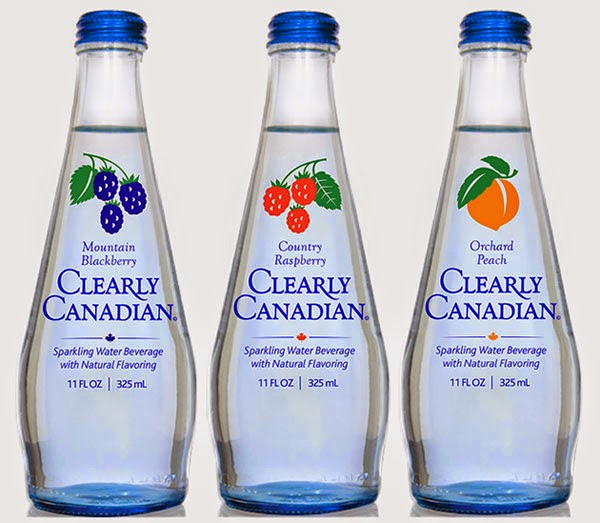
Clearly Canadian bottles

Similarity: the bottles were shaped differently and the mark’s
appearance on the labels wasn’t “overly similar.” The Clearly Canadian label
has horizontal text and a picture of the fruit that represents the beverage’s
flavor, while the Clearly Kombucha label has vertical text in a different font and
an apparently whimsical drawing. The logos as used separately from the bottles also
weren’t “overly similar”: Clearly Canadian’s logo consists of blue, horizontal
text, and a red bottle with a maple leaf; Clearly Kombucha’s label is a black,
oversized letter “C” with the word “Clearly” written vertically inside the “C”
and the word “kombucha” written in a different font outside of the “C.”
 

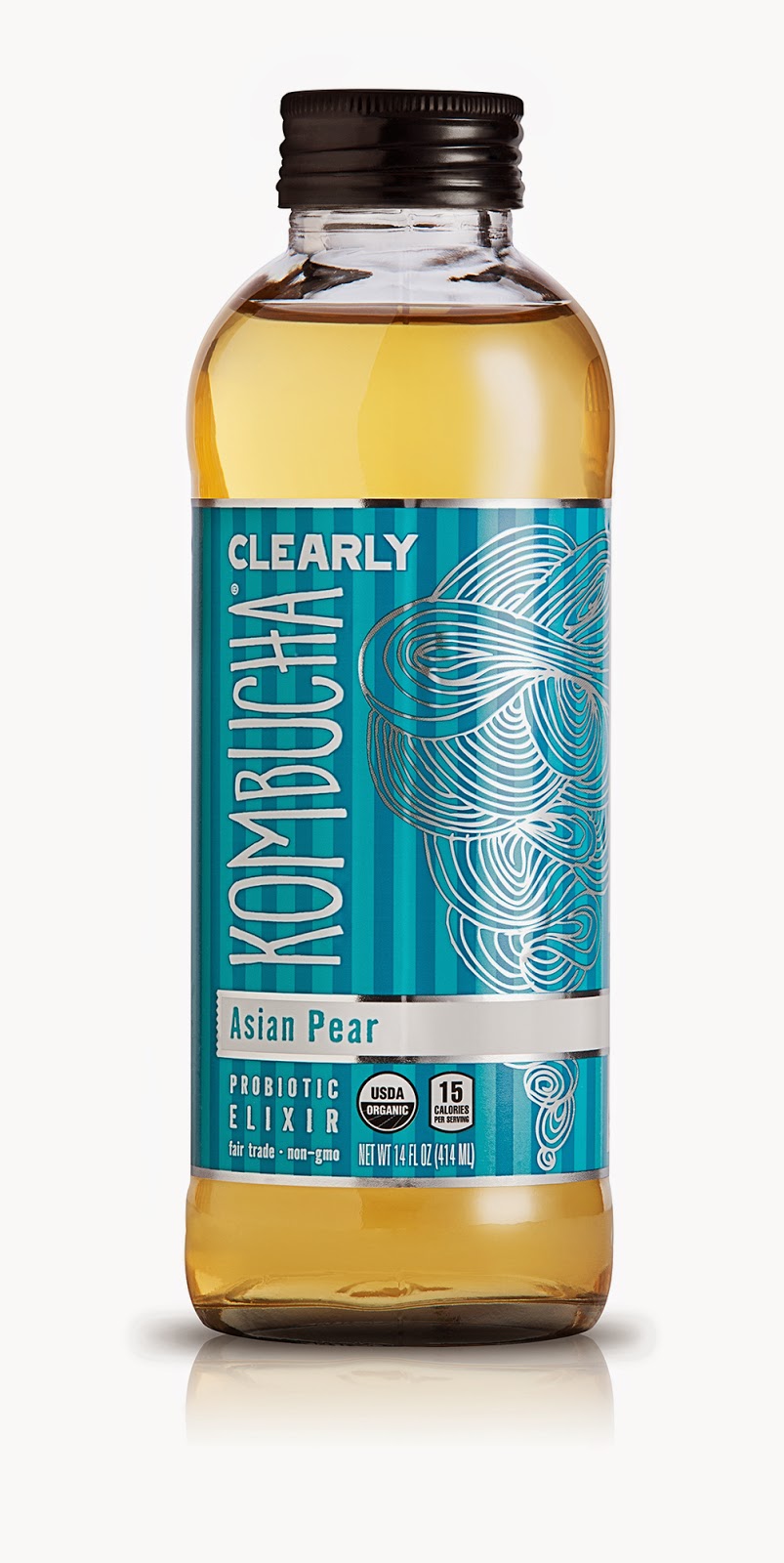
Clearly Kombucha bottle

Clearly Kombucha logo

But the sound was quite similar, and “clearly” was the
operative word in both trademarks. The PTO required both registrants to
disclaim rights “Canadian” and “kombucha” without the preceding word “clearly.”
And the meaning of the trademarks was also similar, insofar as they both relied
on “clearly” to describe an aspect of their product. The rule that similarities
weigh more heavily than differences controlled here: a reasonable jury could
find that similarity favored plaintiff.
 
Marketing channels: while use of the internet doesn’t
constitute overlapping marketing channels as a matter of law, the parties hotly
contested whether the two products would typically be stored in the same
shelves, aisles, or general areas of a retail store. Top Shelf argued that
Clearly Kombucha must be located in the refrigerated section, while Clearly
Food disagreed; on summary judgment, the court assumed that the products would
be displayed near each other. “The significance of the potential adjacent
storage, however, is blunted by the fact that Clearly Canadian is not currently
sold in any brick and mortar retail stores. … [I]t remains unclear whether
Clearly Canadian will be sold in similar retail stores as Clearly Kombucha, or
in the same geographic region as Clearly Kombucha, in the near or intermediate
future.” There’s no current significant overlap in marketing channels, and
future overlap was speculative. Thus, this factor deserved little weight, and
the weight it had favored Top Shelf.
 
Relatedness of goods: the products are single-serve, carbonated,
clear bottled beverages. Though Top Shelf emphasized the affirmative health
benefits allegedly associated with kombucha, a jury could find that the
products were related enough to associate them.
 
Strength of the Clearly Canadian mark: Puzzlingly, the court
held that a jury could reasonably find that the Clearly Canadian mark was descriptive
or suggestive, even though above the court said correctly that “clearly” describes a product feature (as does
Canadian)—how could it be otherwise? (The registration was filed on a 44(d)
basis and issued under 44(e), if you’re wondering.)
 
Clearly Food’s evidence of secondary meaning was lots of
sales (though they dwindled substantially after 1992); Clearly Canadian’s
Facebook page, which has received over 35,000 “likes”; and a November 2014
episode of a daily internet comedy show with over one million subscribers that
discussed the Clearly Canadian beverages for four-and-a-half minutes. A jury
could reasonably find that this strength favored Clearly Food, or that the mark
was weak. Clearly Food contended, but did not provide evidence that, the mark
was incontestable, which would be conclusive proof of secondary meaning. But
incontestability doesn’t make a mark strong; “the relative strength or weakness
of an incontestable mark is still relevant to the likelihood of confusion
analysis.”
 
There was conflicting evidence on actual confusion. Top
Shelf’s survey found that “the majority of respondents … said that Clearly
Kombucha is either not affiliated with or sponsored by any other company
organization, or they ‘don’t know.’” Clearly Food presented five written
comments from consumers encountering Top Shelf’s products online expressing a belief
that Clearly Kombucha and Clearly Canadian were affiliated: (1) “are you no
longer making Clearly Canadian, too?”; (2) a comment next to picture of Clearly
Kombucha bottles: “instead of clearly Canadian it’s clearly Kombucha!” (that
doesn’t seem clearly confused, if you’ll excuse the pun); (3) a similar
comment, “I’ve heard of (and loved) Clearly Canadian, but never Clearly
Kombucha!” (same); (4) a query on Clearly Kombucha’s Facebook page asking, “Are
you producing Clearly Canadian too? You are the same company yes?” (note that
the cases are split on whether clarifying questions are evidence of confusion
or evidence that consumers recognize that there’s a difference worth attending
to); and (5) another query “Why are you pushing only Clearly Kombucha? Your
Clearly Canadian should be on top! I used to drink you all the time growing
up.”  Clearly Food also attacked Top
Shelf’s survey.  A jury could reasonably
find Clearly Food’s evidence to be de minimis or more credible than Top Shelf’s
survey.
 
Clearly Food also claimed that it intended to release a
sparkling tea beverage in the United States that will overlap with the Clearly
Kombucha product, but it failed to provide any supporting evidence for that
assertion.
 
Consumer care: Top Shelf’s expert called kombucha a “niche
product” and opined that the price point of Clearly Kombucha is high enough,
relative to other bottled beverages, to foster a relatively greater degree of
care among consumers. Top Shelf’s founder also testified that its clients are
particularly health-conscious, and therefore are more discerning. Clearly Food
rebutted this with evidence showing that Top Shelf’s beverages have been sold
at a variety of price points, on the low end from $1.50 to $3.00. A jury could
reasonably find a low degree of consumer care.
 
Intent to confuse is of minimal importrance, but Top Shelf’s
awareness of the Clearly Canadian brand weighed in favor of infringement.  (Argh! 
Awareness isn’t intent to confuse! 
Awareness is awareness.) Top Shelf’s founder, however, testified that
the intent in changing the name of its product to Clearly Kombucha was both to
emphasize the “clear” nature of its product and to “reflect transparency in the
brewing process.”  This factor was
neutral.
 
Because of the intensely factual nature of trademark
disputes, summary judgment is generally disfavored, and that was true here.
 
Dilution, however, was a non-starter.  As of 2011, when Clearly Kombucha was
launched, there wasn’t sufficient evidence of fame:
 
A consulting group’s 2007 report on
the Clearly Canadian trademark showed that only 34 % of the survey respondents
who had consumed flavored soda or water within the last month (and only 22% of
the survey respondents overall) were aware of the Clearly Canadian brand. This
recognition rate was much lower than the rate for competitors such as Aquafina
(94%), Schweppes (77%), Perrier (76%), VitaminWater (61%), and Pellegrino
(43%).
 
Sales had declined steadily between 1992 and 2007, and
between 2007 and 2009 they dropped to a minimal amount. In 2009, production of
Clearly Canadian beverages ceased. “Cybersquatters had taken over the Clearly
Canadian website domains. Negligible sales of Clearly Canadian were occurring
on the secondary market.” Clearly Food did not raise a question of fact on
fame.  An internet comedy show discussion
plus 35,000 Facebook “likes” were simply insufficient to show that Clearly
Canadian was a “household name.”

from Blogger http://ift.tt/1IoQSLL

Posted in Uncategorized | Tagged , | Leave a comment

Answer unclear in Clearly beverage infringement case

Clearly Food & Beverage Co. v. Top Shelf Beverages, Inc., No. C13–1763, 2015 WL 1926503 (W.D. Wash. Apr. 28, 2015)
 
Plaintiff Clearly Food owns, by a 2012 assignment from the defunct Clearly Canadian corporation, a registration for Clearly Canadian for “flavored mineral waters, fruit flavored mineral waters, non-flavored mineral waters, carbonated mineral waters, noncarbonated mineral waters, bottled drinking waters, spring waters, soft drinks and fruit juices.” By the time of the assignment, the product was no longer being made, though Clearly Food intended to “reintroduce Clearly Canadian” by “bringing back the original legacy line in its premium glass teardrop bottle (6+ flavors).” Since then, Clearly Food resumed manufacturing Clearly Canadian beverages in limited quantities, with bottles of sparkling water sold online. Clearly Food has an online pre-sales campaign directed at consumers, and also received larger-scale orders from several beverage distributors. Its plan was to begin selling in retail grocery stores in 2015.
 
Top Shelf sells a flavored kombucha beverage under the label “Clearly Kombucha.” “Kombucha is a drink brewed from green tea and then fermented with a symbiotic colony of bacteria and yeast.” Top Shelf’s kombucha is unique because it is clear: their filtration process makes their kombucha “free from solid ‘floaties’ typically associated with kombucha [that are] … caused by the symbiotic colony of bacteria and yeast.” Its name was originally “Top Shelf Kombucha,” marketed as a premium mixer and non-alcoholic drink; at the end of 2010, Top Shelf changed marketing strategies and decided to differentiate the product from competitors based on its “clear” quality. It also decided that it wanted Top Shelf to be recognized as a socially conscious brewer with transparent manufacturing practices. Thus, it changed the name to “Clearly Kombucha.”
 
Top Shelf applied for a registration, and the mark was published for opposition in April 2011. It was then launched in Ralph’s grocery stores throughout California. Clearly Kombucha is now sold at various retailers in California and the Pacific Northwest, and is also available on the internet.
 
When Clearly Canadian sued, Top Shelf first argued abandonment, but couldn’t persuade the court to grant it summary judgment. “The standard for non-use is high” and requires “complete cessation or discontinuance of trademark use.” Even a single use is enough to avoid abandonment if the use is made in good faith. Evaluating whether use is in the ordinary course of trade is often intensely factual. Regardless of whether the standard of proof was clear and convincing or preponderance, Top Shelf failed to carry its burden.
 
The predecessor entity’s last full-scale production run of Clearly Canadian beverages was sometime in 2009. In September 2009, it shipped 432 cases of Clearly Canadian 20–ounce bottles to Paw Paw Wine Distributor in Michigan. Paw Paw sold these to retailers from 2009 through 2011. In August 2009, GrayCo Sales Limited, a beverages distributor in Ontario, Canada, also sold approximately $225,000 worth of Clearly Canadian product to a retailer. Intrastate Distributors, Inc., a beverage wholesale and manufacturing company located in Michigan, bottled Clearly Canadian product during 2011 and 2012. GrayCo’s president maintained a trade booth at the Canadian National Exhibition in 2010 and 2011 featuring Clearly Canadian products. (How are any of the Canadian activities relevant to whether there was use in the US?)
 
In 2012, GrayCo negotiated a license with Clearly Food to sell Clearly Canadian beverages. Also in 2012, Intrastate filled approximately 1,800 12–pack cases of 11–ounce bottles with Clearly Canadian product and sold 1,872 cases of Clearly Canadian beverages to GrayCo. GrayCo then displayed and sold Clearly Canadian beverages during the 2012 Canadian National Exhibition, which typically has over 1.5 million attendees. In October 2012, GrayCo sold 720 cases of Clearly Canadian beverages to an online retailer called Beverages Direct, and transported the product to Beverages Direct in the United States. Beverages Direct sold the product exclusively to retail purchasers located in the United States. In 2013, Intrastate sold another approximately $10,000 worth of product to GrayCo, several pallets of which went to Beverages Direct, and the balance to the 2013 Canadian National Exhibition.
 
Clearly Food’s 2014 online pre-sales campaign generated over 10,000 orders, resulting in over 27,000 cases of product due to be shipped in 2015. Over 90% of those transactions are with US customers. Clearly Food also received eight “full truckload” orders from seven different beverage distributors, meaning that it will ship over 30,000 bottles of Clearly Canadian product in 2015.
 
Thus, the evidence showed that “intermittent, yet appreciable commercial sales” occurred from 2009 to now. A jury could reasonably find that those sales were sufficient to preclude a finding of abandonment. A jury could find that the scope of the activity was commercially reasonable given the situation: “a brand transfer, during bankruptcy proceedings, by a declining business to a start-up company seeking to revitalize the brand.” Although Top Shelf had evidence indicating that the sales made immediately after Clearly Food acquired the mark were made solely to preserve trademark rights, that wasn’t sufficient for summary judgment here.
 
The court didn’t reach Top Shelf’s argument in its reply brief that sales to third-party retailers or distributors weren’t sufficient “use in commerce” because they weren’t uses by or for the benefit of the trademark owner, because Top Shelf’s argument came too late. Top Shelf relied on two old TTAB rulings that stated: “A party cannot defend against a claim of abandonment by relying on some residual goodwill generated through post-abandonment sales of the product by distributors or retailers.” Also, Top Shelf didn’t explain how these rulings fit into Ninth Circuit case law. And anyway, there were sales in the US by or on behalf of Clearly Canadian in September 2009, and to Beverages Direct in October 2012. (Which is just over the three-year nonuse period that leads to a presumption of abandonment.) A jury could reasonably find that this gap gave rise to a presumption of abandonment, but even so, Clearly Food raised a question of material fact regarding the second prong of abandonment: intent to resume use of the mark. There was a lot of documentary evidence of Clearly Food’s intent to resume use, from August 2011 to now. A purely subjective desire to resume use, of course, isn’t enough, but Clearly Food also provided evidence of affirmative steps it took during 2012 to resume use, “including seeking out manufacturing and distribution retail partners, lining up investors, and creating a business plan.”
 
Nor could Top Shelf prove on summary judgment that the predecessor company abandoned the mark before Clearly Food purchased it. The mark hadn’t been out of use for more than three years at the time of sale, and financial troubles alone don’t prove intent to abandon. After all, “[s]ome business and financial firms even specialize in rescuing troubled companies, rehabilitating the business, and capitalizing on their goodwill and intellectual property, including trademarks.”
 
Top Shelf argued that Clearly Canadian’s trademark registration should be cancelled for fraud, but that’s hard to win. Clearly Food’s CEO’s declaration attached to its Section 8 renewal declared that the mark was in use, and used as a specimen a photograph of an empty plastic bottle of Clearly Canadian peach-flavored sparkling water. This bottle was bought in Michigan in 2011 by an affiliate. This evidence wasn’t enough to show fraud for summary judgment purposes: Top Shelf didn’t show the deception was willful. The CEO testified in deposition that, “although he knew Clearly Food itself was not manufacturing plastic bottles of Clearly Canadian beverages at the time he signed the declaration, he believed that the Clearly Canadian product was still being sold by third parties in commerce through 2011 (as shown by his affiliate’s then- recent purchase of the specimen bottle), and understood that such sales were sufficient to satisfy the Section 8 standard of use in commerce.” Though there was evidence that he understood that Clearly Canadian itself needed to use the mark in order to avoid abandonment, credibility is a question for the jury.
 
Nor did Top Shelf succeed in getting rid of the infringement claims. The court noted that invalidating the registration would only shift the burden to Clearly Food to show that its claimed mark was a mark, and found that Clearly Food could do so.
  
Clearly Canadian logo

Clearly Canadian bottles

Similarity: the bottles were shaped differently and the mark’s appearance on the labels wasn’t “overly similar.” The Clearly Canadian label has horizontal text and a picture of the fruit that represents the beverage’s flavor, while the Clearly Kombucha label has vertical text in a different font and an apparently whimsical drawing. The logos as used separately from the bottles also weren’t “overly similar”: Clearly Canadian’s logo consists of blue, horizontal text, and a red bottle with a maple leaf; Clearly Kombucha’s label is a black, oversized letter “C” with the word “Clearly” written vertically inside the “C” and the word “kombucha” written in a different font outside of the “C.”
 

Clearly Kombucha bottle

Clearly Kombucha logo

But the sound was quite similar, and “clearly” was the operative word in both trademarks. The PTO required both registrants to disclaim rights “Canadian” and “kombucha” without the preceding word “clearly.” And the meaning of the trademarks was also similar, insofar as they both relied on “clearly” to describe an aspect of their product. The rule that similarities weigh more heavily than differences controlled here: a reasonable jury could find that similarity favored plaintiff.
 
Marketing channels: while use of the internet doesn’t constitute overlapping marketing channels as a matter of law, the parties hotly contested whether the two products would typically be stored in the same shelves, aisles, or general areas of a retail store. Top Shelf argued that Clearly Kombucha must be located in the refrigerated section, while Clearly Food disagreed; on summary judgment, the court assumed that the products would be displayed near each other. “The significance of the potential adjacent storage, however, is blunted by the fact that Clearly Canadian is not currently sold in any brick and mortar retail stores. … [I]t remains unclear whether Clearly Canadian will be sold in similar retail stores as Clearly Kombucha, or in the same geographic region as Clearly Kombucha, in the near or intermediate future.” There’s no current significant overlap in marketing channels, and future overlap was speculative. Thus, this factor deserved little weight, and the weight it had favored Top Shelf.
 
Relatedness of goods: the products are single-serve, carbonated, clear bottled beverages. Though Top Shelf emphasized the affirmative health benefits allegedly associated with kombucha, a jury could find that the products were related enough to associate them.
 
Strength of the Clearly Canadian mark: Puzzlingly, the court held that a jury could reasonably find that the Clearly Canadian mark was descriptive or suggestive, even though above the court said correctly that “clearly” describes a product feature (as does Canadian)—how could it be otherwise? (The registration was filed on a 44(d) basis and issued under 44(e), if you’re wondering.)
 
Clearly Food’s evidence of secondary meaning was lots of sales (though they dwindled substantially after 1992); Clearly Canadian’s Facebook page, which has received over 35,000 “likes”; and a November 2014 episode of a daily internet comedy show with over one million subscribers that discussed the Clearly Canadian beverages for four-and-a-half minutes. A jury could reasonably find that this strength favored Clearly Food, or that the mark was weak. Clearly Food contended, but did not provide evidence that, the mark was incontestable, which would be conclusive proof of secondary meaning. But incontestability doesn’t make a mark strong; “the relative strength or weakness of an incontestable mark is still relevant to the likelihood of confusion analysis.”
 
There was conflicting evidence on actual confusion. Top Shelf’s survey found that “the majority of respondents … said that Clearly Kombucha is either not affiliated with or sponsored by any other company organization, or they ‘don’t know.’” Clearly Food presented five written comments from consumers encountering Top Shelf’s products online expressing a belief that Clearly Kombucha and Clearly Canadian were affiliated: (1) “are you no longer making Clearly Canadian, too?”; (2) a comment next to picture of Clearly Kombucha bottles: “instead of clearly Canadian it’s clearly Kombucha!” (that doesn’t seem clearly confused, if you’ll excuse the pun); (3) a similar comment, “I’ve heard of (and loved) Clearly Canadian, but never Clearly Kombucha!” (same); (4) a query on Clearly Kombucha’s Facebook page asking, “Are you producing Clearly Canadian too? You are the same company yes?” (note that the cases are split on whether clarifying questions are evidence of confusion or evidence that consumers recognize that there’s a difference worth attending to); and (5) another query “Why are you pushing only Clearly Kombucha? Your Clearly Canadian should be on top! I used to drink you all the time growing up.”  Clearly Food also attacked Top Shelf’s survey.  A jury could reasonably find Clearly Food’s evidence to be de minimis or more credible than Top Shelf’s survey.
 
Clearly Food also claimed that it intended to release a sparkling tea beverage in the United States that will overlap with the Clearly Kombucha product, but it failed to provide any supporting evidence for that assertion.
 
Consumer care: Top Shelf’s expert called kombucha a “niche product” and opined that the price point of Clearly Kombucha is high enough, relative to other bottled beverages, to foster a relatively greater degree of care among consumers. Top Shelf’s founder also testified that its clients are particularly health-conscious, and therefore are more discerning. Clearly Food rebutted this with evidence showing that Top Shelf’s beverages have been sold at a variety of price points, on the low end from $1.50 to $3.00. A jury could reasonably find a low degree of consumer care.
 
Intent to confuse is of minimal importrance, but Top Shelf’s awareness of the Clearly Canadian brand weighed in favor of infringement.  (Argh!  Awareness isn’t intent to confuse!  Awareness is awareness.) Top Shelf’s founder, however, testified that the intent in changing the name of its product to Clearly Kombucha was both to emphasize the “clear” nature of its product and to “reflect transparency in the brewing process.”  This factor was neutral.
 
Because of the intensely factual nature of trademark disputes, summary judgment is generally disfavored, and that was true here.
 
Dilution, however, was a non-starter.  As of 2011, when Clearly Kombucha was launched, there wasn’t sufficient evidence of fame:
 
A consulting group’s 2007 report on the Clearly Canadian trademark showed that only 34 % of the survey respondents who had consumed flavored soda or water within the last month (and only 22% of the survey respondents overall) were aware of the Clearly Canadian brand. This recognition rate was much lower than the rate for competitors such as Aquafina (94%), Schweppes (77%), Perrier (76%), VitaminWater (61%), and Pellegrino (43%).
 
Sales had declined steadily between 1992 and 2007, and between 2007 and 2009 they dropped to a minimal amount. In 2009, production of Clearly Canadian beverages ceased. “Cybersquatters had taken over the Clearly Canadian website domains. Negligible sales of Clearly Canadian were occurring on the secondary market.” Clearly Food did not raise a question of fact on fame.  An internet comedy show discussion plus 35,000 Facebook “likes” were simply insufficient to show that Clearly Canadian was a “household name.”
Posted in dilution, trademark | Leave a comment

Transformative work of the day, Star Wars edition (expanded universe)

Courtesy of The Toast.

from Blogger http://ift.tt/1ISWUEZ

Posted in Uncategorized | Tagged , , , | Leave a comment