chilling effect: competitor’s name in text of keyword ad requires extreme care

TSI Prods., Inc. v. Armor All/STP Prods. Co., 2019 WL
4600310, Nos. 17-cv-01131, 18-cv-1682 (MPS) (D. Conn. Sept. 23, 2019)
TSI sued defendants for trademark infringement, unfair
competition, and false advertising under the Lanham Act; for Sherman Act
violations; and for violations of the Connecticut Unfair Trade Practices Act
(CUTPA). Astonishingly, all claims survived a motion to dismiss.
The parties compete in the market for do-it-yourself
refrigerant products and recharge kits, which permit car owners to recharge
their vehicle air conditioning (AC) systems on their own. They’re sold in
specialty automative stores and automotive departments of stores such as
Walmart. “[T]he non-value-added refrigerant category consists mainly of cans of
R-134a refrigerant, without any included additives, tools, gauges, or hoses….
[T]he category of value-added automotive AC recharge kits consist of cans of
R-134a refrigerant that also typically contain some combination of additives,
lubricants, hoses, gauges, or other tools.” The parties compete in both
categories.
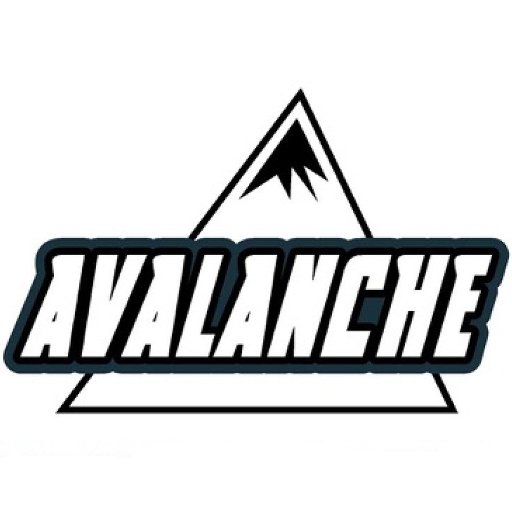
TSI sells its refrigerant and recharge kits under the brand
names AVALANCHE, AC AVALANCHE, and BLACK DIAMOND AVALANCHE. TSI has registrations
for AVALANCHE and BLACK DIAMOND AVALANCHE. It claims rights in the mountain
logos used with its word marks.
Armor All bought “AC AVALANCHE” as a Google ad word, putting
an Armor All ad at the top of the search results. Armor All allegedly “made no
effort to distinguish themselves and their products from TSI, either in the
Google ad itself or on the linked AC Pro Website webpage.”
Prior to 2017, Armor All allegedly did not “utilize any
mountain imagery in its packaging of ARCTIC FREEZE products,” but started using
one that allegedly “looks confusingly similar” to the mountain logo on TSI’s
products and “causes customer confusion as to the source of the goods.”
TSI also alleged that Armor All made a number of
misrepresentations about its own products, e.g. “Our kits come with everything
you need to recharge your system with no additional tools or equipment,” “fast,
easy and accurate recharging,” and “just three easy steps.” For its refrigerant,
it claimed “#1 Rated Coldest Air” and “#1 Coldest Air,” “Formula with 2X
cooling boosters vs. the next leading brand of AC recharge kits: independently
tested to deliver the coldest air from your vehicle’s AC,” and “A/C PRO ultra
synthetic refrigerant kit features a specially designed formula that helps a
vehicle’s A/C produce the coldest air.”
In the smaller “market for value-added auto AC recharge kits
in the United States,” Armor All had an estimated market share of 88% in 2017.
TSI is Armor All’s largest competitor in terms of market share, with
approximately 10% share , and prior to TSI’s entry into the value-added AC
recharge kit market in 2015, Armor All did not face substantial competition in
that market. Armor All allegedly paid off retailer Advance Auto “to renege on
its agreement with TSI and refuse to allocate shelf space to TSI’s products,”
and made a similar deal with Pep Boys. 
Armor All also sent TSI a letter alleging infringement of
two patents. TSI hired a lawyer and responded. Neither Armor All nor its predecessor allegedly had a “good
faith belief that TSI infringed” either patent. Armor All allegedly “notified
retailers within the relevant market” about the companion lawsuit consolidated
with this one, which Armor All filed against TSI in 2017.
Keyword ads: although this is worded broadly, Armor All used
TSI’s mark as the beginning of its ad text in a way that wasn’t explicitly
comparative, and that’s clearly vital.  Edible
Arrangements, LLC v. Provide Commerce, Inc., No. 3:14-CV-00250 (VLB), 2016 WL
4074121, at *11 (D. Conn. July 29, 2016), adopted the “perspective of a user of
the internet search engine at issue,” and focused particularly on “(i) the
strength of the plaintiff’s mark as a unique search term related to a distinct
line of products, … (ii) the similarity of the marks and whether the
defendant’s mark draws a clear distinction as a competing brand…. [and] (iii)
what the consumer saw on the screen and reasonably believed, given the
context.” Armor All contended that “the purchase of a competitor’s marks as
keywords alone, without additional behavior that confuses consumers, is not
actionable.” TSI alleged that the displayed ad looked like this:

To be clear, A/C Pro is the competing product.  Armor All argued that the result was
prominently labeled as an ad, that it was only one of several ads, and that the
webpage hosted at the link address didn’t “any reference to TSI or its
AVALANCHE products.” Mot. to Dismiss, ECF No. 102 at 16. Armor All it argued
that the structure of the advertisement itself (“AC Avalanche – A/C Pro Saves
You Time & Money – acprocold.com”) separated the search term (“AC
Avalanche”) from Armor All’s “comparative advertising slogan,” making confusion
unlikely.
The court disagreed, and I do too. Drawing all reasonable
inferences in favor of TSI, the combination of keyword purchases plus ad text
was plausibly confusing. “AC Avalanche” and “A/C Pro” weren’t presented as
competing brands in the context of the advertisement. This was not, as alleged,
a clear “three-part structure: ‘[search keyword] – [advertising slogan] –
[website address].’ ” As the court pointed out, in the example shown, other
sponsored advertisements use hyphens but follow different structures: the other
two sponsored ads didn’t use the “AC Avalanche” search term at all, and neither
appeared to use two competing brands or companies. “Try Pepsi – It is Better
than Coca-Cola” or “Stop Collection Calls—is Allied Interstate Calling You” have
been found nonconfusing, but the ad here made no clear distinction between the
terms. “The overall context makes it plausible that the hyphen implies
association rather than disassociation.”

Avalanche mountain logos

Armor All Arctic Freeze
The mountain logo unfair competition/infringement claim also
survived. This one is a harder sell for me on plausibility—I would think that absent
more similarity in the words, the use of the mountain concept in very different
forms isn’t plausibly confusing—but Armor All focused on ownership (not
suitable for resolution on a motion to dismiss) and argued that its 2014
registered copyright on its “ARCTIC FREEZE Mountain Label” used a mountain logo
and preceded TSI’s alleged first use of the mountain logos in 2015. That failed
because owning a copyright isn’t a defense to infringement (though that’s not
exactly the claim here, which is priority-based, not copyright-ownership-based;
the copyright registration is judicially noticeable evidence of use preceding plaintiff’s
claimed first use).  The court nonetheless
accepted the factual pleading that Armor All did not use any mountain imagery
on its refrigerant products until 2017. 
(I wonder about whether there’s any exposure to fees if in fact the 2014
use really reflects what was on the market and TSI persists in this claim.)
False advertising: The court can kick claims based on clearly
subjective opinions out on a motion to dismiss, but should dismiss false
advertising claims only if the statements “fall comfortably within the category
of non-actionable puffery.”
Recharge kit statements: Armor All’s kits consist of
refrigerant, a hose and trigger dispenser, and a gauge that measures the
“pressure on the low side of the AC system” and indicates a “suggested fill
range.” TSI alleged that measuring the pressure only on the low side of a car’s
AC system can “lead to unusable and inaccurate pressure readings” for the
“[m]any AC systems [that] use a BLOCK or TXV valve [to] regulate the flow of
refrigerant.” This can lead consumers to overcharge their systems, which is are
costly to repair. Based on these allegations, TSI alleged that statements such
as “Our kits come with everything you need to recharge your system with no
additional tools or equipment,” “Extends A/C/ Life,” “fast and accurate
recharging,” and “The trigger dispenser and measuring gauge make filling your
system to the proper level fast and easy” were literally false and misleading.
Some of these statements—such as “Extends A/C Life,”
“Protects [A/C] System,” “just three easy steps,” and “Easy as 1, 2 …
Squeeze”—were non-actionable puffery, as did use of the terms “fast,” easy,”
“convenient,” and “a breeze.” However statements were specific enough to be
actionable. “All-in-One Kit” and “Come with everything you need to recharge
your system with no additional tools or equipment” implied and outright stated,
respectively, that “no additional tools” were needed to recharge an AC system.
Based on TSI’s allegations, these statements were false because “[a]dditional
tools and equipment are required to safely recharge AC systems with BLOCK or
TXV valves” using Armor All’s kit.  Likewise,
claims to provide “accurate” recharging and “make filling your system to the
proper level fast and easy” were statements of measurable fact that were
allegedly false.
Refrigerant formula: Armor All’s products contain lubricants
and additives in addition to refrigerant. TSI alleged that other AC recharging
products sold in the United States contain only refrigerant (R-134a), and that
a can containing only refrigerant will create colder air than a can of equal
volume that contains refrigerant along with lubricant and/or additives. Thus,
it alleged that the following statements were false: “#1 Rated Coldest Air” and
“#1 Coldest Air,” “Formula with 2X cooling boosters vs. the next leading brand
of AC recharge kits: independently tested to deliver the coldest air from your
vehicle’s AC,” and “A/C PRO ultra synthetic refrigerant kit features a specially
designed formula that helps a vehicle’s A/C produce the coldest air.”
Armor All argued that many courts have found “referring to a
product or service as ‘#1’ with regard to an industry or quality” to be
puffery. But not so here. “#1” advertising statements are non-actionable “when
it is unclear how a property should be measured.” But “coldest” is a statement
of superiority in a specific, measurable attribute. Courts have indeed been skeptical
of superlatives, but “coldest” is not the same type of superlative as “best” etc.  It is objectively verifiable. Armor All’s
claims that its products ave been “independently tested to deliver the coldest
air from your vehicle” and contain “a specially designed formula that helps a
vehicle’s A/C produce the coldest air” stated even more specifics; “claims of
testing are typically actionable.”
The antitrust claims survived too—surprise!

from Blogger https://ift.tt/2n1dz7w

Posted in Uncategorized | Tagged , , | Leave a comment

Inability to quantify damages justifies finding irreparable harm

Harbor Breeze Corp. v. Newport Landing Sportfishing, Inc., 2019
WL 4570033, No. SACV 17-01613-CJC(DFMx) (C.D. Cal. Aug. 26, 2019)
Harbor Breeze won a jury verdict of false advertising
against Newport, a competitor in the whale watching tour business, but received
$0 in damages (and $0 in an advisory verdict on disgorgement).  The court declined to order disgorgement of
profits or award attorneys’ fees, but did grant a permanent injunction because
damage had been shown but wasn’t sufficiently quantifiable to allow legal
remedies, making injunctive relief appropriate.
Harbor Breeze operates in Long Beach and San Pedro in Los
Angeles County, and Newport operates in Newport Beach in Orange County.  The false advertising at issue: (1) A
consumer who searched online for “Long Beach whale watching” would get
Newport’s website, which made repeated use of the phrase “Long Beach residents
and visitors,” suggesting that its cruises depart from Long Beach, not Newport
Beach. (2) Newport advertised, for example, a “$10 whale watching special,” but
consumers could never get on its whale watching cruise for only ten dollars;
there was also a $2.50 fuel surcharge and a 2% wharfage fee. “There was also
evidence that calling these extra charges a ‘fuel surcharge’ or ‘wharfage fee’ was
misleading because these fees were a way to get extra revenue, not tied to
actual expenses, and Defendants did not disclose these fees until late in the
process.”
In the Ninth Circuit, unless and until the Supreme Court
changes things, disgorgement under the Lanham Act requires willfulness.  The court agreed with the jury.  It was reasonable to find no willfulness; one
of Newport’s owners testified that Newport made changes to websites and ads
following state court litigation in 2012 over false advertising and afterwards,
they thought they were in compliance. And the evidence indicated an intent to
optimize search results, not to deceive. One change was language on every webpage
that Newport’s boats departed from “beautiful Newport Beach.” Also, a jury
could reasonably find that Newport’s profits weren’t attributable to false
advertising. “There was evidence that, even including the extra fees,
Defendants offered cheaper whale watching cruises than Plaintiffs…. Consumers
might care more about getting a good deal than where the cruise departs or
whether a few dollars get added to the ticket cost.”  And there wasn’t evidence of intent to
mislead about ticket prices because they ultimately disclosed all the fees
prior to purchase, even if that turned out to be misleading.  [Note: this is terrible reasoning. The point
of bait and switch is that you draw the consumer in with one price, then
disclose the extra cost when they’re psychologically and perhaps otherwise
committed to the purchase.  This may not
be an appropriate case for disgorgement, but the fact that they successfully
carried out the bait and switch does not mean they had nondeceptive intent.]
Permanent injunction: The jury found that the false
advertising caused or was likely to cause damage to the plaintiffs. Harbor
Breeze’s VP of operations testified that they regularly received calls from
customers who are confused by the false advertising and who believed that Harbor
Breeze offers Newport’s $16 whale watching special. A customer once attempted
to board Harbor Breeze’s whale watching cruise with a Groupon voucher from Newport
and became upset enough at learning the truth that they let him take the cruise
for free. Other employees similarly testified about confused and angry
customers, harming Harbor Breeze’s business reputation and goodwill.
Legal remedies were inadequate because this kind of harm “is
difficult to quantify,” as the jury’s verdict denying damages demonstrated. The
balance of hardships/public interest also favored an injunction to keep
defendants from returning to their old ways.
However, to protect truthful commercial speech, the court
limited the relief granted. Rather than requiring Newport to put a statement of
its location on all ads or webpages, it would only require disclosure of
Newport’s location for “webpages and advertisements that repeatedly use the
name of another city, making it seem as if Defendants’ whale watching cruises
depart from a city other than Newport Beach. It is not misleading, for example,
for Defendants to state on their website that they are about twenty miles away
from Long Beach. But a repeated reference to Long Beach, without a clear
disclosure regarding Defendants’ location of departure, may mislead or confuse
consumers.”
Nor would Newport have to edit its webpages’ source code to
include the text “Newport Beach Cruise Operator” in the title tag or the phrase
“All Cruises Depart from Newport Beach” in the description tag. To do so, the
court thought, would “significantly burden protected speech,” though it didn’t
explain how.  The analogy was to the splash
screen in the Trafficschool.com case, but that case involved a
clickthrough that interfered with reaching any web page at all on the website;
the proposed mandatory language might not have done much good, but it’s a
standard disclosure that wouldn’t prevent search engine indexing or require a
consumer clickthrough and thus doesn’t appear burdensome at all. The court
thought that the required text would “unfairly impair Defendants’ ability to
optimize their search engine results,” but why? 
If they can only maximize their results by not using the name Newport,
that seems like it’s pretty closely connected to the falsehoods at issue here.
Nor would defendants have to give up domain names with other
city names. There were lawful uses for those; they might want to reserve a
particular domain name, for instance, in case they expand to other cities.
And Newport wouldn’t be enjoined from buying the names of
geographic locations other than Newport Beach on pay-per-click advertising
systems like Google AdWords. There was nothing wrong with that, “so long as
consumers understand the cruises depart from Newport Beach.” There was also
nothing wrong with outbidding other operators for ads.
Finally, the court was “concerned about the administrability
and feasibility of an injunction that attempts to enjoin what appears in
organic Google search results or third-party websites like Groupon,” and thus
the injunction wouldn’t hold Newport responsible for content created by third
parties.
Separately, Newport “must advertise a price for a ticket
that is the entire final cost of the ticket, excluding any legally collected
sales tax or any optional, add-on services or goods.”
For attorneys’ fees, this wasn’t an exceptional case;
defendants turned out to be right that plaintiffs couldn’t prove [the amount
of] any damages. “Although the injunction confers some public benefit, stopping
misleading advertising about whale watching does not ameliorate a serious
public harm.”

from Blogger https://ift.tt/2lju1Qf

Posted in Uncategorized | Tagged , | Leave a comment

“studies prove” as puffery?

Sorry for the photo quality, but I was quite struck by the claim:

“Studies Prove That Live Shows Add Years to Your Life. Who Are We to Argue with Science?”

Query whether reasonable consumers would receive a “tests prove” message.  I do note that there is industry-funded research claiming that live shows improve attendees’ well-being, which they then connect to lifespan–though “years to your life” is misleadingly based on the further claim that people with high well-being live nine years longer than people with low well-being, without any evidence that concert attendance takes people from high to low.  And of course it’s pure correlation, rather than causation–I suspect that people who are able to regularly see live music differ in some significant ways from people who don’t. But the advertising law question of perhaps broader interest: does the fact that there is a real study, however flawed, allegedly behind this bear on whether people are likely to receive a “tests prove” message?  As it turns out, this is a studyable thing.

from Blogger https://ift.tt/2lix5fu

Posted in Uncategorized | Tagged | Leave a comment

Laches bars Peloton Magazine’s claim against Peloton

Move Press, LLC v. Peloton Interactive, Inc., No. LA
CV18-01686 JAK (RAOx), 2019 WL 4570018 (C.D. Cal. Sept. 5, 2019)
It’s hard to prove reverse confusion!  Featuring a cameo by IP’s own Orly Lobel.
Move Press uses PELOTON in connection with its print/digital
magazine, Peloton, featuring articles designed to appeal to the cycling
community. The first issue was distributed nationally in 2011. Move Press also allegedly
uses the mark in connection with its website, blog, documentary films, mobile
applications and social media and sells clothing, bags, footwear, hats and
drinking containers on its http://www.pelotonshop.com website. The initial 2010 application
to register PELOTON for “magazines in the field of bicycles” was denied on
grounds of descriptiveness; it was added to the Supplemental Register in July
2011. Move Press filed again on August 14, 2014, and got PELOTON on the Principal
Register for magazines and online magazines “featuring cycling, racing, food,
travel, clothing shoes, sports equipment, sports apparel, health, nutrition,
film, and photography.”
Peloton is the Peloton you’ve heard of, established in
January 2012. “It sells indoor exercise equipment and subscriptions to its
on-demand fitness classes.” A peloton is “a group of riders working
collaboratively while bicycling together,” and the name was chosen to “evoke
the supportive group environment the company sought to foster through its
virtual group fitness classes.”
In November 2012, Peloton filed to register PELOTON for use
in connection with “stationary bicycles equipped with interactive computer
systems, video players, and body bars,” “downloadable software in the nature of
an application for use by individuals participating in exercise classes,
physical training, and exercise instruction,” and “streaming of audio and video
materials on the Internet featuring physical fitness classes, training, and
instruction.” The registration issued on the Principal Register on August 5,
2014.  Peloton has additional registrations
for (i) sports apparel; (ii) as a service mark for retail and online store
services in the field of sports apparel, fitness equipment, and fitness classes;
and (iii) for its stylized “P” logo.
Peloton’s Kickstarter accepting bicycle orders launched on
June 24, 2013, as did http://www.pelotoncycle.com. Peloton began shipping bicycles in
January 2014.
The court granted summary judgment to Peloton on laches. The
most analogous limitation period was the four-year statute of limitations under
California law. When did the period begin to run? The court noted that Peloton’s
2013 launch “received national media coverage in The Wall Street Journal and
Time Magazine,” and the application was published in September 2013. After the
launch, Move Press’s creative director received an email about it from a former
employee, and forwarded it to a principal in late 2013. The principal visited
Peloton’s website and saw that Peloton was using the PELOTON mark and offering
an indoor exercise bicycle with the name Peloton. 2013 was thus the point at
which the limitation period began. Anyway, even if it began only when Peloton
first shipped its products, that was also more than four years before this
action was filed. There was therefore a rebuttable presumption of laches.
Move Press argued that the doctrine of progressive
encroachment justified its delay in bringing this action because Peloton now
sells clothing and has a blog and digital content that was independent of its
stationary bicycles, and because Peloton now targets a broader audience with an
advertising budget that has at least doubled since it started its business
operations. But “[a] junior user’s growth of its existing business and the
concomitant increase in its use of the mark do not constitute progressive
encroachment.”  Peloton had been selling PELOTON-branded
apparel and accessories since it launched its Kickstarter campaign in 2013, and
producing video content in the form of fitness classes since its inception,
always targeting “almost everyone who has any interest in fitness.” That wasn’t
progressive encroachment.
Was the delay unreasonable? The Ninth Circuit has identified
six relevant factors: (i) strength and value of trademark rights asserted; (ii)
plaintiff’s diligence in enforcing mark; (iii) harm to senior user if relief denied;
(iv) good faith ignorance by junior user; (v) competition between senior and
junior users; and (vi) extent of harm suffered by junior user because of senior
user’s delay.
The first two factors weighed in favor of Peloton. The marks
were relatively weak: descriptive or suggestive. But Peloton’s mark was
substantially more valuable due to its “rapid and continuing growth” relative
to that of Move Press. And Move Press was not diligent in protecting its mark;
despite actual and constructive knowledge in 2013, Move Press did not file an
opposition or seek to cancel any of Peloton’s federal registrations. Move Press
also didn’t seek to enforce its rights in the PELOTON mark against other
companies using PELOTON in connection with bicycle-related goods and services
(there were a couple). And there was a three-and-a-half-year delay between July
13, 2014, when it sent Peloton a C&D, and initiation of suit on February
28, 2018.
As for the harm to Move Press if relief is denied, that
turned on likely confusion, on which there were genuine factual issues (see
below).  The same with factor five
(whether the parties compete). Those couldn’t be weighed either way.
Factor four “focuses on whether Peloton had prior knowledge
of Move Press when it decided to adopt the mark PELOTON.” There was an email to
Peloton’s founder and CEO from his mother, on August 18, 2012, stating, “Just
saw at my grocery store the magazine Peloton.” “Although this provides some
evidence as to Peloton’s awareness of the existence of Move Press in 2012 prior
to announcing or selling its products, there are undisputed facts showing that
Peloton selected the name PELOTON [in 2011] before it was aware of Move Press.”
The final factor was the harm to Peloton from Move Press’s
delay.  Peloton’s investment in the brand
was substantial during the period of delay. It had invested millions of
dollars, hired a lot of people, opened PELOTON-branded retail showrooms across
the US, received numerous awards and widespread media coverage, and overall
developed substantial good will and recognition in the fitness market. The
prejudice would be “substantial” if Peloton were to lose rights to the PELOTON
name.
Overally, the weighable factors weighed heavily in favor of
Peloton, entitling it to summary judgment on whether the delay was unreasonable.
For the same reasons, Peloton would be prejudiced by allowing suit.  “[A]t least some reliance on the absence of a
lawsuit” is necessary to show prejudice.
When Peloton filed its trademark
application for PELOTON, the PTO initially rejected it, citing Schwinn’s
PELOTON registration for outdoor bicycles. Thereafter, Peloton contacted
Schwinn, which led to an agreement between the two that allowed Schwinn to
maintain its registration for its mark for its outdoor bicycle while allowing
Peloton to use the mark in connection with home fitness products and services. The
PTO then approved Peloton’s amended application. This evidence supports an
inference that Peloton would have acted differently had Move Press challenged
Peloton’s use of the PELOTON mark when Peloton filed its trademark application.
There was also no triable issue on prejudice.
Move Press argued that willful infringement wasn’t subject
to laches. This requires knowledge on the defendant’s part that its conduct
constitutes infringement. The record was insufficient to allow a jury to conclude
that there was willful infringement. Numerous courts have found that “[p]rior
knowledge of a senior user’s trademark does not necessarily give rise to an inference
of bad faith and may be consistent with good faith.” There was no evidence of
wrongful intent to capitalize on Move Press’s goodwill, and when the founder learned
of Move Press, he believed there was no likelihood of confusion between PELOTON
Magazine and Peloton’s goods and services. “[A] knowing use in the belief that
there is no confusion is not bad faith.”  Nor was it bad faith to continue using PELOTON
after receiving the C&D.  Peloton
responded by rejecting Move Press’s claims and concluded by stating “[w]e trust
that this resolves the matter; however, if you have questions, please contact
the undersigned.” There was no response, until Move Press sued three and a half
years later. “By failing to respond to Peloton’s response letter, Move Press
reinforced Peloton’s belief that it was not infringing on the Move Press mark.”
Turning to Move Press’s motion for summary judgment, Peloton
argued that Move Press couldn’t establish priority, which would have to be
based on common law rights preceding Peloton’s Nov. 9, 2012 filing date. “According
to Move Press, by the end of 2011, 25,000 print copies had been distributed
nationwide and Move Press had 15,000 digital subscribers.” Move Press also
relied on statements by Peloton’s founder’s mother about seeing a copy of the
PELOTON magazine in a grocery store in Texas.
Move Press was not entitled to summary judgment on whether
it had sufficient nationwide market penetration to give it common-law rights.
The evidence of use included only copies of 2014 magazines, not 2011 magazines.
Internal emails about promotional reach weren’t enough to show that the use was
“sufficiently public” as of 2011. Sufficient penetration had to be assessed
considering “volume of sales and growth trends, the number of persons buying
the trademarked product in relation to the number of potential purchasers, and
the amount of advertising.”  There wasn’t
any evidence about the actual location of its subscribers or the actual sales
in each state.
There were also triable issues on likely confusion sufficient
to reject Move Press’s motion for summary judgment on confusion.
Even if the Move Press mark was suggestive, “suggestive
marks are presumptively weak,” and there were several other PELOTON-related
marks in the cycling market.  Although there
was some evidence of Move Press’s commercial strength (in 2018, it distributed
12,000 printed copies of the magazine, and the number of digital subscribers
dropped to 7000; over eight years it had “approximately one billion online
responses to its social media content”), Peloton’s was substantially stronger.
There was a potential for reverse confusion, making the strength of the mark
factor favor Move Press. [Other courts would say that higher-than-suggestive
conceptual strength is required to make the strength factor favor the plaintiff
in a reverse confusion case.]
Relatedness/proximity of goods: triable issues on how close
they were.
Similarity of the marks: though the words were the same, the
visual appearances differed. Move Press began with a serif font in all
lowercase letters, underlined with the caption “fuel the ride” beneath it. It later
changed to a non-serif font and in all capital letters. At all times, it was black
and white and was often preceded by “Move Press” and followed by “Magazine.” Peloton,
meanwhile, uses a san serif font in all capital letters, frequently in
conjunction with its registered “P” logo in bright red. This was enough to create
a triable issue of fact on visual dissimilarity. And a reasonable jury could
find a difference in meaning between PELOTON alone (used as a metaphor for a
body of riders) and PELOTON Magazine (which could be reasonably understood as a
publication about bicycle races).
 

Peloton with logo

Peloton Magazine with slogan

Actual confusion: Move Press cited nine examples of customer
confusion, five of them Peloton Magazine being tagged in posts about
Peloton.  E.g., Orly Lobel tweeted “Hugh
giving all the rest of us in the #Peloton family goals to aspire to @onepeloton
@pelotonmagazine though I bet he doesn’t have near 500 @classpass classes yet!”;
in response to the tweet “Follow us for cycling news, photos, features and RT’s
of intrigue,” a user wrote “I think I will pass.. You pulled your ads from
@Hannity #diseasedLiberals don’t get my $$$$”; “Stay away from Peloton spin
bikes … worst customer service ever @pelotonmagazine #peloton #spinning
@PelotonBikes Paid for now two weeks with no show appointments…. shop
elsewhere.”  One person wrote to Move
Press seeking to feature a Peloton spin bicycle on a show; one entity sent a
vehicle for review to the magazine along with a personal note stating, “My
coworker just took delivery of a new Peloton bike today.” The owner of a
cycling industry insurance agency asked about PELOTON Magazine’s affiliation
with the PELOTON bicycle and whether Peloton paid Move Press a licensing fee to
use PELOTON, and one talent/media agency approached Move Press to discuss
providing PELOTON-branded cycling packages and global live racing; when Move
Press said there was no affiliation, the executives ended the meeting.
This wasn’t enough to avoid a triable issue on actual confusion.
“Given that the two marks have been in the market for more than four years and
that both parties use Twitter, ‘a handful of examples of anecdotal confusion
are insufficient to support a finding confusion.’” The four non-Twitter
examples were insufficient show “persuasive evidence that a significant number
of consumers have formed a similar mental association” to demonstrate actual
confusion.
Marketing channels: it wasn’t enough to both advertise on
the internet (everyone does) or at the Tour de France (only one marketing
channel among many for both parties). Weighed against likely confusion.
Degree of care: Although Move Press argued that its
consumers were unsophisticated, it also contended that its magazine “is trying
to reach a high-end cycling male-dominated base of consumers” with an “average
household income of 175 [thousand]” who are “highly-educated.” And Peloton’s
customers “exercise a higher standard of care when deciding whether to spend
$2000 on an exercise bicycle or $4,000 on a treadmill.” Triable issue of fact.
Peloton’s intent: in a reverse confusion case, bad intent
could be shown with “evidence that a defendant deliberately intended to push
the plaintiff out of the market by flooding the market with advertising to
create reverse confusion,” or that “the defendant knew of the mark, should have
known of the mark, intended to copy the plaintiff, failed to conduct a
reasonably adequate trademark search, or otherwise culpably disregarded the
risk of reverse confusion ….”  But
there was no particularized evidence of purposeful disregard for the risk of
reverse confusion. Peloton’s declaration said that it discovered several
companies that were using “Peloton” as their brand name or in connection with
their products and services, but none used “Peloton” for interactive home
fitness products. There was a triable issue on bad faith.
Product expansion: The triable issue of fact as to the
relatedness of the goods made this factor neutral.
Overall, Move couldn’t prevail on summary judgment of likely
confusion.

from Blogger https://ift.tt/2lsoA1i

Posted in Uncategorized | Tagged | Leave a comment

pharmaco gets summary judgment against compounder on falsity/unlawfulness

Allergan USA, Inc. v. Imprimis Pharmaceuticals, Inc., 2019
WL 4545960, No. 17-cv-01551-DOC-JDE (C.D. Cal. Mar. 27, 2019)
The parties compete in the market for ophthalmic drugs. Imprimis
sells its ophthalmic drugs pursuant to Sections 503A and 503B of the FDCA
(compounding and outsourcing). None of its ophthalmic drugs are approved
by the FDA. Imprimis has exceeded FDA limits on compounding/outsourcing
in various ways, including by using the unapproved component artesunate to
prepare drugs until it received a letter from FDA and by using bulk drugs that
weren’t on the FDA-issued lists of bulk drugs for 503B.
Imprimis advertised that its pharmacies “only use
FDA-approved ingredients,” and that its Cyclosporine-based formulations are
“made from FDA-approved drug components,” and told a potential customer in
Kansas that “In simpler terms, FDA found our products and services to be safe
and effective.” A video on its Go Dropless website included the statement, “The
patient is protected from infection and inflammation even more effectively than
can be achieved with expensive, inconvenient and irritating topical
medications.” Also, a press release claimed “Imprimis Pharmaceuticals Go
Dropless™ Video Interview Survey Reveals 95% of Leading Cataract Surgeons
Surveyed Would Prefer Dropless Therapy.” Though Imprimis didn’t have the
details of the survey, it “understands” that survey participants were asked
“Would you prefer your patients not to have to take topical eye drops following
an ocular surgery,” rather than identifying a specific formulation such as its
Dropless Therapy injectables. When the survey was conducted, Imprimis “probably
had less than ten customers” for its injectable Dropless formulations, and, of
the 21 surgeons surveyed, only “a handful” had used them. Up to 20 months
later, Imprimis was advertising these “recent” survey results and indicated
that they referred to Imprimis’s product specifically.
Allergan sued for false advertising under the Lanham Act and
violations of the UCL’s unlawful and unfair prongs. A related
case
shows how this is going to go.   Previously, even in the presence of unlawful
statements regarding “FDA approval” that generated Lanham Act liability, the
Court declined to hold the defendants liable under the Sherman Law and UCL “so
long as the compounder complied with FDA’s interim guidance, especially in
light of the agency’s ongoing implementation efforts.” Where it didn’t comply
with the interim guidance, there could also be Sherman Act/UCL liability.  There was noncompliance here—among other
things, Imprimis wasn’t requiring individual prescriptions before compounding
when it should’ve been.
However, Allergan couldn’t get restitution under the UCL
based on disgorgement of Imprimis’s profits. “The profits obtained by Imprimis
come from third parties rather than from Allergan. They were never in
Allergan’s possession.” Only injunctive relief was available for this claim.
Lanham Act claims: Imprimis claimed that its pharmacies
“only use FDA-approved ingredients” and were “made from FDA-approved drug
components.” That was literally false because FDA does not approve individual
“ingredients” or “components” of drugs. “In simpler terms, FDA found our
products and services to be safe and effective” was also literally false
because Imprimis “does not subject its drugs to the FDA approval process that
would support such a finding.”  Likewise,
Imprimis’s claim that it “Meets requirements under Section 503B of the FD&C
Act” was literally false based on the findings above.
Superiority claims: The survey/surgeon preference claim was
a “tests prove” claim that could be falsified by showing that “such tests ‘are
not sufficiently reliable to permit one to conclude with reasonable certainty
that they established’ the claim made.” Even without expert testimony, the
court found literal falsity.  “No
reasonable jury could determine the survey was sufficiently reliable to
conclude with reasonable certainty that 95% of cataract surgeons surveyed
prefer Dropless Therapy.” The survey didn’t even ask about Imprimis’s specific
product. So too with the video claiming “the patient is protected from
infection and inflammation even more effectively than can be achieved with
expensive, inconvenient, and irritating topical medications.”  This wasn’t “merely a professional opinion; it
is a promotional statement published by the company, and Dr. Lewis appears to
have been a consultant paid by Imprimis to speak with ophthalmologists and
investors.” Imprimis’s witnesses knew of no basis for the video’s claim.
Literal falsity created a rebuttable presumption of actual,
material deception. “Regardless, the uncontroverted facts also establish that
the statements were material. Some of the false commercial promotions were even
made in direct follow-up to consumer questions about quality and FDA
compliance.”
Whether there was harm to Allergan, and the extent of that
harm, was for the jury.

from Blogger https://ift.tt/2mb4yIC

Posted in Uncategorized | Tagged , | Leave a comment

scientific debates can ordinarily be resolved in false advertising cases

Pax Water Technologies, Inc. v. Medora Corp., 2019 WL
4390567, No. LA CV18-09143 JAK (AGRx) (C.D. Cal. Aug. 5, 2019)
The parties compete in the market for water treatment
technologies for municipalities, public water agencies and districts, and
private parties.  Using chlorine to
disinfect water causes a reaction with organic matter in the water, resulting the
formation of THMs [trihalomethanes], which is itself a public safety and health
risk. The parties compete to sell systems
to remove THMs from drinking water.
Pax challenged two Medora documents: a “THM Removal Systems
Comparison Table” and a White Paper, “Misrepresentations by PWT of the 2012
Camarillo, CA Potable Tank Mixing Study.” Camarillo conducted a head to head
text comparing Pax’s tripod vortex mixer with Medora’s mixer; a mixer is one
component of a THM removal system. After the
test was completed, Camarillo continued to use Pax’s tripod mixer, but
discontinued the use of Medora’s mixer, and Pax talked up the results.  Medora then wrote to Pax stating that Pax falsely
represented the results of the comparison and provided a competing
interpretation of the results. Pax disagreed.
The White Paper stated that “[a] truthful analysis would
conclude that” (i) Medora’s mixer outperformed Pax’s mixer; and (ii) Pax’s
mixer performed “so poorly that its mixing data would have been the same even
if the mixer had not been turned on during the study.” The White Paper also
includes “a summary of the study, a comparison of the data generated based on
use of the competing products, and an analysis of the results in support of
these conclusions.” Pax alleged that the analysis was based on false scientific
premises about what the chlorine concentration in the test tank should’ve been.  The White Paper listed the size and cost of the competing
products, as well as the method for installing them and claimed that “most
customers have figured out that the GS-12 is a much better value than the [Pax]
mixer” based on features including its price, design, installation,
performance, reliability, modeling, and customer data.  Pax alleged that Medora’s mixer cost $15,000,
not $7800 as stated in the White Paper, and that the White Paper falsely
claimed that the Pax mixer is “[n]ormally deployed with divers” and is “tied
down,” whereas the mechanical attachment of the device “is not recommended by
Plaintiffs, is not required to keep the tripod mixers from moving within the
tank, and is not common.”
As for the comparison table, it didn’t include Pax’s name
but Pax alleged that, “based on the products’ characteristics,” “[a]ny person
familiar with THM removal systems would recognize that” the products described
in the latter two columns of the table are both “manufactured and sold by
Plaintiffs, which are the sole source of” products of these types that met the
identified product standards.  It made
several allegedly false representations and comparisons.
Both the documents were on Medora’s website and were
allegedly provided to actual or potential customers, and their claims were allegedly
verbally repeated.
Medora argued that its claims were protected under ONY, Inc.
v. Cornerstone Therapeutics, Inc., 720 F.3d 490 (2d Cir. 2013), as
“non-actionable scientific conclusions.” The court here pointed out that ONY
limited its holding to scientific conclusions that had been “presented in
publications directed to the relevant scientific community” through
“peer-reviewed academic journals.” Following Eastman Chemical Co. v.
Plastipure, Inc., 775 F.3d 230 (5th Cir. 2014), the court declined to
extend ONY to the use of “snippets” of a study that were included in
“statements made in commercial advertisements and directed at customers.” As Eastman
noted, “Advertisements do not become immune from Lanham Act scrutiny simply
because their claims are open to scientific or public debate. Otherwise, the
Lanham Act would hardly ever be enforceable — ‘many, if not most, products may
be tied to public concerns with the environment, energy, economic policy, or
individual health and safety.’ ”
In a nice formulation, the court here explained, “The scientific
nature of a conclusion does not mean that it is not actionable per se. Instead,
the question is whether a scientific conclusion was stated within a commercial
advertisement.” At that point, the fact/opinion distinction became dispositive,
and that is typically an issue not suited for resolution on a motion to
dismiss.  “To be sure, to prevail on
their claim, Plaintiffs may need to prove that the conclusions stated in the
White Paper are contrary to the ‘well accepted science of water chemistry.’ However,
such a determination can be made through the normal processes of civil
litigation.” Separately, factual statements about the parties’ products, e.g.,
cost and whether they needed to be tied down, aren’t like those in ONY. 
Commercial advertising or promotion: Obligatory note that Gordon
& Breach
probably doesn’t survive Lexmark untouched, but the key
prongs here are whether the claims were (1) commercial speech and (4) disseminated
sufficiently to the relevant purchasing public to constitute advertising or
promotion within that industry.
The complaint adequately alleged that White Paper was
commercial speech. Its language could reasonably support an inference that it
proposed a commercial transaction. Its introduction claimed that Medora’s product
“outperformed” Pax’s competing product during the head-to-head comparison; it
included information on the comparative price and features of the competing
products; it summarized its contents as showing that Pax’s communications improperly
discredited Medora’s product; and it stated that it was a response to Pax’s
“marketing documents.” It then encourages readers to conclude — as “most
customers” have — that Medora’s product “is a much better value” than Pax’s,
citing specific features and providing Medora’s logos, phone number and website
address. The complaint further alleged that the White Paper was in fact used to
persuade actual or potential customers to purchase Medora’s product, by posting
the White Paper on its website and by stating its contents and/or providing
copies of it when Medora’s agents and employees met “with actual or potential
customers of the parties’ products.”
This was plausibly advertising because it was “speech about
a product or service by a person who is offering that product or service at a
price, directed to persons who may want, and be willing to pay for, that
product or service.” Kasky v. Nike, Inc., 27 Cal. 4th 939 (2002). It was
plausibly directed toward potential customers. Its title, “Misrepresentations
by [Plaintiffs] of the 2012 Camarillo, CA Potable Tank Mixing Study,” made it part
of the parties’ commercial dispute. It referred to two specific products, and Medora
had an economic motivation to persuade readers to buy its product instead of
Pax’s.
The parties disputed whether allegations of sufficient
dissemination to the relevant consumers had to meet the heightened pleading
standards of FRCP 9(b). Assuming without deciding that they did, it was enough
to plead that the White Paper had been accessible on Medora’s public website
since at least May 2018; that, through this posting, it “reached a significant
number of actual or potential customers of the parties’ products”; and that Medora
provided copies of the White Paper to actual or potential customers of the
parties’ products and/or has made the false and misleading statements and
claims to them that are contained in the White Paper. Given that the market was
allegedly specialized and limited, this was enough. “[I]nformation about the
particular employees of Defendant who disseminated the White Paper, and the names
of the potential customers to which it was provided, are ‘peculiarly within the
opposing party’s knowledge’ and therefore can be alleged based upon information
and belief.”
Medora then argued that there weren’t enough allegations of
harm from the comparison table, because it didn’t contain any “direct
reference” to Pax’s product. Even assuming that Pax needed to allege actual
injury, it was enough to allege that “Medora’s actions have caused harm and damage
to Plaintiffs and have resulted in a corresponding improper financial benefit
and gain to Medora,” given the allegations of a limited market for the products
and the importance of every single customer.

from Blogger https://ift.tt/2l6AQ7w

Posted in Uncategorized | Tagged , , | Leave a comment

“Hawaiian” plus imagery isn’t deceptive indication of origin (or is it?)

Maeda v. Kennedy Endeavors, Inc., No. 18-00459 JAO-WRP, 2019
WL 4544272 (D. Hawai’i Sept. 19, 2019)
Kennedy sells “Hawaiian” brand snacks; plaintiffs alleged
that the name and packaging misled them into thinking that the snacks were made
in Hawai’i from local ingredients, in violation of Hawai’i and California law.  (They’re made in Washington state, which it
says on the back of the package.) Kennedy argued that its uses of “Hawaiian”
and Hawai’i imagery were puffery.  The
court found that, for purposes of a motion to dismiss, plaintiffs pled deceptiveness
to a reasonable person for the Hawai’i claims, except with respect to
injunctive relief based on future harm. However, and somewhat puzzlingly, it
reached a different result with respect to California claims (reasoning that there was no Hawai’i precedent about finding lack of deceptiveness on a motion to dismiss).
 

some of the accused packages with Hawaiian name and imagery
Williams doesn’t require consumers to look at the
back of the package to the nutrition label, but the court distinguished it because
that case involved fruit juice snacks and alleged misrepresentation about
ingredients. This is a case involving alleged misrepresentation about
origin.  The court apparently believes
that “an origination label readily identifies location to correct potential
misconceptions about geographic origin, while an ingredient list requires an
examination to ascertain whether representations about a product are true.” (The
court also said it wasn’t relying on the Washington origin disclosed on the
back, though.)
While the front of the package isn’t necessarily puffery, no
reasonable Californian consumer could be deceived. “Other than the word ‘HAWAIIAN’
there are no assertions, phrases, or claims to assess on the packaging at
issue.” [Kind of depends on what the images imply, doesn’t it?]  The court thought that “Hawaiian” isn’t
general, “[b]ut neither is it a specific assertion or concrete statement about
a product.”  That seems like a misguided
conclusion—there may be some room for dispute about definitions, but origin
statements are treated as factual all the time. Still, the package bore no more
specific identification of a place in Hawai’i as the origin of the products: “merely
referencing Hawaii and its culture on the packaging is not enough on its own to
confuse a reasonable consumer regarding the origin” of these products, without
additional representations. Also, “unlike products such as macadamia nuts or
coffee, chips are not inherently associated with Hawai‘i.”

from Blogger https://ift.tt/2l8VnZ9

Posted in Uncategorized | Tagged , | Leave a comment

Southern Poverty Law Center’s “hate group” designation isn’t false advertising, false association

Coral Ridge Ministries Media, Inc. v. Amazon.com, Inc., No. 17cv566-MHT,
2019 WL 4547064 (M.D. Ala. Sept. 19, 2019)
Coral Ridge sued the Southern Poverty Law Center (SPLC),
Amazon.com, and the AmazonSmile Foundation. It alleged that, “because of its
religious opposition to homosexual conduct, SPLC has designated it as a ‘hate
group’ and that, because of this designation, Amazon and AmazonSmile have
excluded it from receiving donations through the AmazonSmile charitable-giving
program.” This allegedly constituted defamation, false association [!] and
false advertising under the Lanham Act; Coral Ridge also alleged that it had been
excluded from the AmazonSmile charitable-giving program based on religion, in
violation of Title II of the Civil Rights Act of 1964.  The court granted defendants’ motion to
dismiss.
The court considered whether “anti-LGBT hate group” was defamatory—the
“anti-LGBT” part wasn’t contested, but the court considered it as an
inseparable part of SPLC’s use of “hate group” and thus it mattered to whether “hate
group” was defamatory: SPLC made clear that Coral Ridge’s designation was with respect
to LGBT people specifically. Coral Ridge was a public figure.
Coral Ridge pled that “A hate group is legally and commonly
understood as one that engages [in] or advocates crime or violence against
others based on their characteristics.” Whether the categorization was false/falsifiable
thus depended on whether a required trait of “hate groups” is engaging in or
advocating crime or violence.  Here, the
allegation was conclusory and not supported by any facts, e.g. dictionary or other
definitions.  “If courts considering
motions to dismiss were obligated to accept as true plaintiffs’ factually
unsupported definitions of words, concepts, and terms, it would make a mockery
of Federal Rule of Civil Procedure 12(b)(6)’s pleading standard. Requiring
courts to accept as true plaintiffs’ pleaded definitions of words would be
particularly inappropriate in public-figure defamation suits such as this one,
where ‘there is a powerful interest in ensuring that free speech is not unduly
burdened by the necessity of defending against expensive yet groundless
litigation.’”
In addition, Coral Ridge’s definition was contradicted by
other facts that it pled/cited/sought judicial notice of.  The variety of uses of the term from judicial
opinions, the FBI, and the Anti-Defamation League directly contradicted Coral
Ridge’s allegation limiting the term to advocates/committers of violence. The
FBI defines “hate group” as, “An organization whose primary purpose is to
promote animosity, hostility, and malice against persons of or with a race,
religion, disability, sexual orientation, ethnicity, gender, or gender identity
which differs from that of the members or the organization, e.g., the Ku Klux
Klan, American Nazi Party.” The ADL defines a “hate group” as “an organization
whose goals and activities are primarily or substantially based on a shared
antipathy towards people of one or more different races, religions,
ethnicities/nationalities/national origins, genders, and/or sexual identities.
… “  Neither required crime or
violence.
The SPLC itself defines “hate groups” as those groups that
“have beliefs or practices that attack or malign an entire class of people,
typically for their immutable characteristics.” This itself undermined Coral
Ridge’s conclusory allegation about how “hate group” is “commonly understood,”
given that Coral Ridge also pled that, “[a]s a result of SPLC’s position as the
alleged ‘premier U.S. nonprofit organization monitoring the activities of domestic
hate groups and other extremists,’ … SPLC’s Hate Map [and other ‘hate group’
materials, goods, and services] reach a large number of people in every state
in the United States and beyond.” This prominence made it less plausible that
some other definition of “hate group” was controlling. 
And Coral Ridge’s definition was inconsistent with common
sense.  The FBI and ADL definitions also showed
that there wasn’t a single, commonly understood meaning.  The ADL, for example, didn’t require
promotion of the views at issue, while the FBI did.
For related reasons, Coral Ridge couldn’t plausibly allege that
“hate group” was falsifiable; was actually false; or that SPLC made the
designation with “actual malice.” “Similar to the terms ‘fascism,’ ‘radical
right,’ and ‘political Marxist,’ the term ‘hate group’ also suffers from a ‘tremendous
imprecision of the meaning and usage … in the realm of political debate.’”  It might be possible to falsify in some
circumstances—if aimed at “a middle-school chess team with no views on anything
other than chess strategy”—but not here, where Coral Ridge loudly touts its
opposition to recognizing LGBT equality.
For the same reasons of openness in definition, the facts
pled didn’t allow the court to draw the reasonable inference that the
defendant, “instead of acting in good faith, actually entertained serious
doubts as to the veracity of the published account, or was highly aware that
the account was probably false.” Even if the court accepted that there was a
single, commonly understood meaning of “hate group” requiring that the group
engage in or advocate crime or violence, creating a significant discrepancy
between the commonly understood meaning and SPLC’s definition, that still
wouldn’t be enough, given that Coral Ridge also pled that SPLC held itself out
as an expert on hate groups and widely disseminated its own definition. That was
far more consistent with sincere belief than with actual malice.  “[E]ven if the term had achieved a commonly
understood meaning, that meaning would not be fixed forever, but rather could
evolve through public debate. To sanction a speaker for promoting a genuinely
held dissenting view of the meaning of ‘hate group’ would be akin to punishing
a speaker for advocating new conceptions of terms like ‘terrorist,’ ‘extremist,’
‘sexist,’ ‘racist,’ ‘radical left wing,’ ‘radical right wing,’ ‘liberal,’ or ‘conservative.’
Punishing speakers to preserve status quo ideas would be anathema to the First
Amendment.”
Lanham Act claims: SPLC allegedly engaged in false advertising
by falsely designating Coral Ridge a “hate group” on its Hate Map,
disseminating the Map and “hate group” designation in connection with reports
and trainings, and engaging in fundraising focused on the Hate Map and “hate
group” designations. And Coral Ridge alleged that the use of its trademarked
name on the Hate Map was likely to cause confusion as to Coral Ridge’s
“association” with other hate groups on the Map, such as the Ku Klux Klan and
the American Nazi Party. Unsurprisingly, neither of these worked.
The court’s treatment of Coral Ridge as a public figure and
this dispute as involving a matter of serious public interest structured its
Lanham Act analysis. “[W]hen Coral Ridge, as a public figure, entered the
public debate about gay rights, it took on the risk that it and its goods and services
would be adversely affected.” And simply because a public figure sells goods or
services shouldn’t give it an advantage over public figures that don’t. Thus,
even in asserting Lanham Act claims, Coral Ridge would have to show actual
malice. [This reasoning conflicts with the Third Circuit’s Blue Cross/Blue
Shield case, which says that the substantive limits on the Lanham Act—specifically
the commercial speech part—are sufficient to protect the speech interests of
those targeting public figures, but the result is perfectly consistent.]
Coral Ridge argued that SPLC used the Hate Map and “hate
group” designations to promote and make money from Hate-Map-related “goods and
services.” But reports, trainings, and other informational services aren’t
commercial speech, even if they are sold. Nor did use of the Hate Map and “hate
group” designations in fundraising mean that SPLC’s designations should receive
a lesser level of First Amendment protection. The Supreme Court has often treated
fundraising speech as deserving of the highest level of protection, based on
“the reality that solicitation is characteristically intertwined with informative
and perhaps persuasive speech …, and … that without solicitation the flow
of such information and advocacy would likely cease.”
The legislative history behind requiring both “commercial
advertising and promotion” and false or misleading representations “of fact”
further supported these conclusions. As one representative said, the categories
of speech excluded from the coverage of the Act “are the type which raise free
speech concerns, such as a Consumer Report which reviews and may disparage the
quality of stereo speakers or other products, misrepresentations made by
interested groups which may arguably disparage a company and its products
because of the company’s failure to divest its South African holdings, and
disparaging statements made by commentators concerning corporate product
liability and injuries to the public (e.g., A.H. Robins and the Dalkon shield
cases, or the Manville Corporation asbestos cases). All of these would be
judged by first amendment law (including New York Times v. Sullivan) and not
section 43(a) law ….”  [Note that none
of this required actual malice, which is a really bad idea to require just
because the target of false advertising is a public figure; the commercial
advertising/promotion limit is far better.]
Anyway, regardless of constitutional limits, the false
advertising and false association claims weren’t even plausible. False advertising:
not falsifiable; not in commercial advertising or promotion because not
commercial speech.  Neither the Hate Map
nor the “hate group” designations plausibly propose a commercial transaction.
Nor were they plausibly “expression related solely to the economic interest of
the speaker and its audience.” Even if the Hate Map is a “fundraising tool,”
the complaint alleged that SPLC wanted to shut “hate groups” down, which isn’t
an economic interest. The complaint also alleged that the audience for the Hate
Map includes government agencies that seek information about “hate groups,” presumably
not solely or even primarily for economic reasons but instead for law
enforcement.  Even assuming there was an “economic
element” related to SPLC’s fundraising, that wasn’t enough.  Charitable fundraising is often highly
protected because it’s inextricably intertwined with fully protected speech, and
so it was here. Likewise, even assuming that SPLC generates fees from trainings
and has sold the contents of the Hate Map to other organizations, that still
wasn’t commercial speech.
Nor was the “hate group” designation plausibly made for the
purpose of influencing consumers to buy defendant’s goods or services, which is
an additional part of the Lanham Act test for commercial advertising or
promotion. Rather, the complaint alleged that SPLC’s “very purpose for placing
the Ministry on the Hate Map was to harm the reputation of the Ministry as to
lower it in the estimation of the community and to deter third persons from
associating or dealing with the Ministry.” 
Coral Ridge conclusorily alleged that the purpose of using Coral Ridge’s
mark was “to influence the relevant consumers to buy SPLC’s goods and services,
in advancement of SPLC’s publicly stated goal of destroying the Ministry and
the other organizations that SPLC has placed on its Hate Map.” But that wasn’t
enough; it contained its own refutation.
Nor did the complaint allege sufficient dissemination to the
relevant purchasing public. [This holding, like the actual malice holding,
makes me itch. It can and will be cited by ordinary defendants in ordinary
false advertising cases.]  Coral Ridge alleged
that the “relevant purchasing public” was “those people and those organizations
that engage in charitable giving to tax-exempt organizations.” But that was too
high a level of generality, given the variety in the nonprofit world “just as
it would make no sense to consider the relevant purchasing public the same for
a subway-car manufacturer and a health-food store simply because they are both
for-profit organizations.” Given the allegations of the complaint, Coral Ridge’s
industry was Christian television and media. There was no allegation of
sufficient dissemination through that relevant purchasing public, or of
explicit targeting of that public.
False association: Coral Ridge didn’t plausibly plead likely
confusion as to association.  Coral Ridge’s
argument is a little different here, because it’s not claiming false association
with SPLC—the usual false association claim.  Still, the same First Amendment concerns
weighed heavily on the court. “The Lanham Act must be construed narrowly to
avoid impinging on speech protected by the First Amendment.” Furthermore,
citing the Radiance Foundation v. NAACP case, the court noted that §
1125(a)(1)(A) “is not designed to protect mark holders from consumer confusion
about their positions on political or social issues…. Actual confusion as to a
non-profit’s mission, tenets, and beliefs is commonplace, but that does not
transform the Lanham Act into an instrument for chilling or silencing the
speech of those who disagree with or misunderstand a mark holder’s positions or
views.”
Thus, the proper meaning of the Lanham Act’s requirement of likelihood
of confusion as to the “association of a person with another” means “confusion
as to whether the seller or the trademark holder is associated with another
person or organization by virtue of a legal or other relationship—not whether
the trademark holder belongs in the same category as, or might be associated in
some other vague sense with, another person or organization.”  Not just any “mental association” is enough.
For example, we don’t want a health food producer to be able to sue for false
association “because a supermarket advertised the health food company’s
products next to those of a company that produces junk food on the theory that
consumers might falsely ‘associate’ the junk food with the health food
company’s trademark. Furthermore, such a broad interpretation of ‘association’
could be applied to a wide range of protected speech, and would allow companies
to shield themselves from valid criticism.”
Thus, Coral Ridge didn’t plausibly plead that the public was
likely to be confused into believing, based on SPLC’s use of Coral Ridge’s
trademark on the Hate Map and in its “hate group” designation, that Coral Ridge
had an actual relationship any other group on the Map.
Title II discrimination claim against Amazon: These are public
accommodation claims.  Even assuming that
the Amazon defendants were places of public accommodation, Coral Ridge didn’t
plausibly plead that admission to AmazonSmile was protected by the statute, or
that it was subject to discrimination on the basis of religion.  Specifically, the AmazonSmile program wasn’t
a service, privilege, etc. that “serves the public” and thus covered by Title
II; among other things, it excluded all natural persons and allowed in only
approved 501(c)(3) entities. Constitutional avoidance also supported this
holding, since the court didn’t want to essentially force Amazon to donate to
Coral Ridge. The Amazon defendants don’t want to donate money to organizations
that SPLC classifies as “hate groups.” Even if it’s Amazon’s customers choosing
the organization they support, they choose from among Amazon’s offerings, and
it’s Amazon that sends the money.
Separately, it wasn’t plausible that Coral Ridge was
discriminated against based on its religion, rather than on its anti-LGBT stances.  Coral Ridge argued a disparate impact theory;
even if Title II recognizes such claims, Coral Ridge didn’t allege even an
elementary statistical disparity between religious and nonreligious, or
Christian and non-Christian, entities in the SPLC classifications. It was not
enough to allege that 501(c)(3) groups not deemed “hate groups” by SPLC were allowed
into AmazonSmile, because being deemed a hate group isn’t a protected trait.
Nor did Coral Ridge plausibly allege intentional
discrimination by alleging that “Amazon specifically chose SPLC’s on-its-face
religiously discriminatory hate group criteria as its eligibility standard.” This
allegation was contradicted by Coral Ridge’s more specific allegation that SPLC
defines a “hate group” as one that has “beliefs or practices that attack or
malign an entire class of people, typically for their immutable
characteristics.” That’s not “on-its-face religiously discriminatory.” It wasn’t
sufficient to allege that the “SPLC placed [Coral Ridge] on the Hate Map
because of [Coral Ridge’s] religious beliefs regarding LGBT issues.” “[T]he
fact that Coral Ridge’s opposition to homosexual conduct happens to be rooted
in its religious beliefs does not mean that SPLC targeted Coral Ridge because
of its religious beliefs, as opposed to its belief, full stop, regardless of
whether that belief is religiously rooted.” The Amazon defendants’ failure to let
Coral Ridge in after this case began didn’t convert its exclusion into
intentional discrimination.

from Blogger https://ift.tt/2mewGuk

Posted in Uncategorized | Tagged , , , , , | Leave a comment

coconut milk could mislead by claiming “no cholesterol” where it’s too high fat for that label

Marshall v. Danone US, Inc., No. 19-cv-01332-RS, 2019 WL
4509045, — F. Supp. 3d — (N.D. Cal. Sept. 13, 2019)
Marshall brought a putative class action alleging false
advertising (the usual California claims) against Silk coconut milk, which on
its back lists substances that Silk does not contain, including, e.g., “dairy,”
“gluten,” and “cholesterol,” with “cholesterol” in larger font than some of the
other listed items. The symbol beside “cholesterol-free” is a heart allegedly
intended to show it is “broken,” which is also crossed out with a line
(allegedly indicating that, because the product is cholesterol-free, it will
not be damaging to heart health).  The nutrition
panel states that a serving of Silk contains 0 mg cholesterol, but 3 or more
grams of saturated fat, depending on the specific variety of the product.
However, under 21 C.F.R. § 101.62(d)(1), to bear the nutrient content claim “no
cholesterol,” “cholesterol-free,” or similar claims, a food must, among other
things, contain less than 2 grams of saturated fat per “Reference Amount
Customarily Consumed.”
“While there is no direct private right of action under 21
C.F.R. § 101.62(d)(1), it is at a minimum relevant for determining what can
plausibly be alleged to be deceptive under state law.”  Danone argued that consumers could only be
confused if they knew about the regulation, saw the cholesterol-free
statements, then didn’t see the nutrition panel.  Nope.  “What
section 101.62 serves to show is that the FDA, which has expertise in, and
responsibility for, determining what food labeling practices may mislead
consumers, believes that consumers may understand ‘cholesterol-free’ to convey
certain health benefits that in fact do not exist if the product contains
saturated fats above a certain level. Whether the FDA is right or wrong on that
point, or whether Danone may ultimately prevail on the merits for any number of
reasons, there simply is no doubt that plaintiff has stated a plausible claim
that the labels are misleading.”
Danone also argued that consumers generally understand
excessive consumption of saturated fat may impact cholesterol and
cardiovascular health. Nope.  “The FDA
apparently believes consumers will draw unwarranted conclusions about health
benefits of ‘cholesterol-free’ products despite that general understanding, and
therefore prohibits use of the term on products with saturated fat levels
exceeding 2 grams per serving.”  Nor was
Danone successful in arguing that the alleged implication of healthiness was
too vague.  “The precise conclusions consumers
might draw are not critical, at least at this stage,” given the FDA’s
conclusion.

from Blogger https://ift.tt/2V6agc2

Posted in Uncategorized | Tagged , , | Leave a comment

outdated website uses preserve TM infringement claim; false use of (R) doesn’t matter if it doesn’t cause harm

Max Rack, Inc. v. Core Health & Fitness, LLC, 2019 WL
4451698, No. 16-cv-01015 (S.D. Ohio Sept. 17, 2019)
Sloppy website maintenance likely denies defendant what
otherwise would have been summary judgment victory on its ex-partner/now-competitor’s
trademark infringement claims; meanwhile, false advertising claims based on a
false use of “®” go nowhere.
Max Rack sells weightlifting equipment, including a machine
known as the Max Rack, for which it owns a registered trademark.  Max Rack used to contract with defendant Star
Trac for it to exclusively make and distribute the Max Rack; after the
associated patents expired in 2015, the agreement would terminate and Star Trac
would have a 6-month sell-off period. 
Star Trac’s successor Core Fitness told Max Rack that, when the
agreement terminated, it would continue selling a product identical to the Max
Rack but under the name Freedom Rack. Although it began implementing the name
change on its company website, in associated printed materials, with its
manufacturer, and with its independent dealers and distributors, “as late as
November 2017, Core Fitness had failed to remove every reference to MAX RACK
from its website.” Core Fitness also sold 24 Max Rack units after the six-month
run-off period had expired (and agreed to pay gross revenues for those).
Max Rack sued for state and federal trademark infringement
and false advertising.
Trademark infringement: No evidence of particular strength
within the field (against confusion); goods and marketing channels are identical
(pro confusion); Freedom Rack and Max Rack aren’t similar but continued use of “Max
Rack” on the website could weigh in favor of confusion, though it wasn’t clear
how often this happened (didn’t weigh in favor of anybody).  Plaintiff’s COO claimed to have received “less
than ten” calls from customers who claim to own a Max Rack bought from
defendants that turned out to be a Freedom Rack, which was minimal evidence of
confusion in light of the market size (more than 5000 Max Rack units sold
during the licensing term, and nearly 800 Freedom Rack units sold quickly after
the expiration of the agreement), weighing against likely confusion. The likely
degree of purchaser care was high: the products cost around $2,000, and are
typically purchased by fitness equipment dealers, health clubs, hotels, and
other establishments operating fitness centers.
Intent: Freedom Rack was a fine name; “Rack” is not
protectable. There was an issue of fact over whether retained references to Max
Rack were human error or intentional, considering that the references remained “for
at least a year and a half after the parties’ agreement terminated.”
Ultimately, “[a] reasonable juror considering Defendants’
unauthorized references to MAX RACK, coupled with the similarity of the
parties’ products, could come out on either side of this question.”  Clean up your websites!
False advertising: “For some unspecified period of time,
Defendants displayed a registered trademark symbol alongside its advertisements
for the FREEDOM RACK prior to the United States Patent and Trademark Office
issuing such a trademark.” Even if this was literally false, the court couldn’t
find a connection between the falsity and any harm to Max Rack’s business
reputation, its reputation with its customers, or its loss in sales. No
causation, no liability. Nor was there a separate private right of action for
trademark misuse.
State law claims followed the same pattern: yes to
infringement, no to any other false advertising claim.

from Blogger https://ift.tt/34Oo2Vg

Posted in Uncategorized | Tagged , | Leave a comment