calling NBC’s lawyers: gold company can claim #1 rank by Today Show, can’t make additional misrepresentations

Express Gold Cash, Inc. v. Beyond 79, LLC, 2019 WL 4394567,
No. 18-cv-00837 EAW (W.D.N.Y. Sept. 13, 2019)
The parties are two of the top competitors in the market for
nationwide mail-in precious metals purchases. When a customer mails in items, they receive an offer; if
the offer is declined, the items are returned free. “In 2010, the Today Show, a
nationally televised morning show on the NBC network, aired a segment in which
it ‘claimed to have compared the prices offered by ten different mail-in
precious metals dealers by mailing a single item of gold to each one,’ and
further claimed that it received the highest offer from Defendant, which ‘offered
90% of market value.’”
“Beginning in 2011 and continuing into the present,” defendant
“published variations of an advertisement that it is ‘ranked [or rated] #1 on
[or by] NBC’s Today Show.” This was allegedly misleading because it (1)
concealed the date of the segment, (2) conveyed a false impression that
Defendant is currently and actually “ranked #1” by Today, (3) falsely indicated
Today and NBC’s current or former endorsement, (4) and falsely suggested that
Today really evaluated the services overall rather than a single sale of gold.  [This last is a classic “false establishment claim” argument.]
Defendant’s website also used “the sound of three tones that
are reasonably identical to the famous three tones used by NBC to identify its
broadcasting service.” [It seems to me that contact with someone at NBC legal
might be at least as effective as suing directly; I can’t imagine NBC loves
these ads.] Separately, Express Gold alleged that “Defendant’s website displays
stock photographs allegedly depicting its ‘latest payouts’ to customers,” and
that these “stock photographs are false and misleading because they grossly
exaggerate the kind, quality and quantity of recently purchased items[.]” The
stock photographs in question have captions stating that “photos are
illustrative and depict items of similar kind, quality and quantity to actual
items purchased.”
Express Gold brought NY state and federal false advertising
claims and claims for unjust enrichment.
Laches: The Second Circuit has held that for claims alleging
unfair competition or false advertising under the Lanham Act, the analogous
statute of limitations is New York State’s six-year statute of limitations for
fraud. Laches couldn’t be resolved at the motion to dismiss stage; not only
might the continuing wrong doctrine apply, it wasn’t clear when Express Gold knew
of defendant’s conduct, and it wasn’t clear from the complaint that defendant
suffered prejudice from the delay.
The Second Circuit has cautioned courts not to “permit
overextension of the Lanham Act to intrude on First Amendment values,” ONY,
Inc. v. Cornerstone Therapeutics, Inc., 720 F.3d 490, 496 (2d Cir. 2013)
(quotation omitted), and “generally a false advertising claim will not lie
where the defendant has done nothing more than accurately present a study’s
conclusions, even if those conclusions are flawed.”  That’s not a Cornerstone quote, but
the court’s phrasing of the case.  But Cornerstone
is about reprints of studies, disseminated to doctors expert in the field
capable of seeing the study’s weaknesses for themselves, not a situation in
which an advertiser incorporates a third party’s non-scientific study into its
advertising to the general public. 
Rather than recognizing this limit, the court noted that it was possible
to have liability if the defendant misstated and misrepresented the Today
Show’s methodology and findings, which is also true but not the same thing (if
the Today Show used an unreliable methodology, it couldn’t be liable for doing
so, but the defendant shouldn’t be able to launder a bad study in its own
advertising).
Anyway, based on Cornerstone, use of the statement
“ranked #1 by NBC’s Today Show,” or variants thereof, wasn’t literally false,
and also wasn’t a misrepresentation of the Today Show’s conclusions. Nor was it
false to use the present tense even though the segment was eight years old.
Board-Tech Elec. Co. v. Eaton Corp., 737 F. App’x 556 (2d Cir. 2018), affirmed
a district court decision dismissing a Lanham Act false advertising claim in a
similar arguably-stale-but-not-replaced-by-a-more-current-finding situation.  
Nor was the use of “ranked #1” and the accompanying use of
NBC’s name and logo misleading.  This was
an appropriate conclusion on a motion to dismiss because misleadingness was
conclusorily pleaded: “[u]pon information and belief, based on online customer
reviews, Defendant has lured consumers into sending their items by publishing
the Today Segment and the Deceptive Advertising.” There was no detail about the
“online customer reviews” or how they supported the misleadingness allegation; “information
and belief” was only appropriate for facts particularly within the defendant’s
possession and control, or where the belief is based on facts making an inference
of culpability plausible.  Comment: can
you imagine a court rejecting NBC’s false endorsement claim as implausible,
even without anything about customer reviews?
However, there were some things beyond “ranked #1,” such as
falsification of the Today Show’s broadcast date—a printout from its website
stated a 2015 date; screenshots of a video description posted by defendant on
YouTube allegedly falsely stating that the Today Show “investigated dozens of
Cash for Gold companies” (it tested 10); and letters to customers stating that
the Today Show “found that Sell Your Gold offered the highest payout of any
competitor.” These statements were both false/plausibly false and plausibly
material. “The Court cannot say, as a matter of law, that a reasonable consumer
would not be influenced by the claim that Defendant offered the highest price
of any competitor, or of ‘dozens’ of competitors. Similarly, a reasonable
consumer could find it material whether Defendant had been found to offer the
highest payouts in 2010 or 2015, because a reasonable consumer could conclude
that a more recent ranking is more likely to be representative of the current
status of Defendant’s services.”  These
claims were neither mere opinion nor so exaggerated as to be unreliable.
Claims based on the “latest payout” photos failed. Express
Gold didn’t allege any facts about “the actual kind, quality, or quantity of
items that have recently been purchased by Defendant, and therefore provides no
basis to conclude that the ‘latest payouts’ stock photographs are either
literally false or likely to mislead consumers. Plaintiff cannot state a false
advertising claim by picking a statement from Defendant’s website and alleging,
with no factual support, that it is untrue.”
The same things happened to the NY GBL and unfair
competition claims; unjust enrichment failed because the complaint didn’t
plausibly allege that defendant was unjustly enriched by money taken from
Express Gold. Specifically, it failed to allege any facts from which a
fact-finder could conclude that, but for defendant’s deceptive conduct,
consumers would have done business with Express Gold rather than with someone
else.

from Blogger https://ift.tt/2LVb5As
Posted in Uncategorized | Tagged , | Leave a comment

Use of under 10% of photos in catalogue raisonné was fair use

De Fontbrune v. Wofsy, No. 5:13-cv-05957-EJD (N.D. Cal.
Sept. 12, 2019)
De Fontbrune first sued defendants in France in the late
1990s for publishing a book, The Picasso Project, which reproduced photographs
of Picasso’s works. (Defendants allegedly used over 1400 of 16,000 of these
photos, which had been assembled into the Zervos Catalogue; it appears that
rights are held in the catalogue rather than primarily in the individual photos.)
In 2001, the French court issued an “astreinte,” which would subject defendants
to damages for any further acts of infringement. “About ten years later, de
Fontbrune discovered copies of The Picasso Project in a French bookstore and initiated
legal proceedings in France to liquidate the astreinte.” An award of €2 million
issued; de Fontbrune then sued in Alameda County seeking recognition of the
judgment; it was duly removed.  Now the
court, while rejecting other barriers to enforcement (at least for purposes of defendants’
summary judgment motion), finds that fair use protects the relevant conduct and
thus the judgment is unenforceable in the US on public policy grounds.
Under the uniform recognition of judgments act, a court is
not required to recognize a foreign judgment when “[t]he judgment or the cause
of action or claim for relief on which the judgment is based is repugnant to
the public policy of this state or of the United States.” This is a high bar: “[T]he
public policy exception … does not apply unless a foreign-country judgment or
the law on which it is based is so antagonistic to California or federal public
policy interests as to preclude the extension of comity.”  First Amendment-based public policy counts,
but only where there are “stark differences” between foreign and domestic law.
Such direct conflicts are more likely to be found where foreign law directly
targets speech/expression, rather than incidentally affecting it.  (By contrast, the SPEECH Act prevents
recognition of defamation judgments unless they’d be ok under domestic law.)
The court adopted the Second Circuit’s approach: identify the constitutional
protections for the unauthorized use of the IP at issue, and then determine
whether French intellectual property laws provide comparable protections
“It is well accepted that the fair use doctrine implicates
the First Amendment.” If defendants’ use wouldn’t be fair, then enforcing the
judgment would be no problem.  But it was
fair.
First, defendants’ books were “reference works intended for
libraries, academic institutions, art collectors and auction houses, and such
institutions find it an attractive reference due to its price point.” The Picasso
Project also “includes information about the photographed works, such as their
titles, literary references, provenance, current ownership and sales
information, that is generally not included in the Zervos Catalogue.”  Commerciality didn’t defeat the fact that
this factor weighed strongly in favor of fair use (mentioning the preamble of
§107, but not transformativeness).
Second, defendants argued that the photos were unoriginal
and documentary in nature, but a French court found them creative because of “the
deliberate choice of lighting, the lens, filters, framing or angle of view.”  As Eva Subotnik has written, this reasoning
calls photos creative because of the technical features that make them
photographs rather than some other kind of object or representation, and that’s
not particularly well-justified.  But
that didn’t turn out to be dispositive because the Zervos Catalogue itself was “documentary
in nature. The Zervos Catalogue is a catalogue raisonné, and the purpose of a
catalogue raisonné is to faithfully reproduce an artist’s work, not to showcase
the original artistic expression of the photographer.” Disfavored fair use, but
only slightly.
Amount and substantiality: The French court already found
that The Picasso Project didn’t copy the “sequences and the specific representations
which, coming from the personal choices of Mr. ZERVOS . . . cause [the Zervos
Catalouge] to be [an] original work[].” Defendants copied less than ten percent
of the photos, and there was no evidence that those photos were “the heart” of
the work, so this favored fair use.
Market effect: “undoubtedly the single most important
element of fair use,” and heavily favored fair use. The parties’ books didn’t
compete. The Picasso Project cost about $150 per volume, or $2,780, $3,400, or
$3,780 for all 28. The original Zervos Catalogue is only available second-hand,
and a 2013
reprint is only available as a complete set for $20,000 (an
original is a lot more). “The Picasso Project is intended for libraries, academic
institutions, art collectors, and auction houses, whereas the Zervos Catalogue
has a niche market due to its historic nature and high price.”
After The Picasso Project was published, the price of the
Zervos Catalogue rose significantly, going for over $100,000 at no fewer than three
auctions from 2007 to 2011, and for $74,200 at an auction in 2012; the later
decline was apparently attributable to the 2013 reprint.  There was no evidence indicating that defendants’
use had “any effect—let alone a negative one” on the market for the Zervos
Catalogue.  Unmentioned: derivative works
rights—though it sounds like the Catalogue is valuable as a whole rather than
in parts, so perhaps there’s no derivative market as such.
Although factor two slightly favored plaintiffs, the fair
use doctrine “exists to promote criticism, teaching, scholarship, and research,”
and defendants’ product, unlike the Zervos Catalogue, was “intended for a
market serving those interests.” Thus, defendants’ use was fair.
Moreover, French law doesn’t have fair use. Thus, the French
judgment was “at odds to the U.S. public policy promoting criticism, teaching, scholarship,
and research” and repugnant to U.S. public policy. But the judgment wasn’t
separately repugnant to public policy favoring the arts, given the French
finding that the photographs are themselves original works of art, a finding
the court wouldn’t revisit (though I think there’s justification for
questioning it, especially given the finding about the Catalogue as a whole).

from Blogger https://ift.tt/2ZZIJPo

Posted in Uncategorized | Tagged , | Leave a comment

Not worth a hill of beans: can label showing mound of beans plausibly misleads

Beckman v. Arizona Canning Co., 2019 WL 4277393, No. 16-cv-02792-JAH-BLM
(S.D. Cal. Sept. 9, 2019)
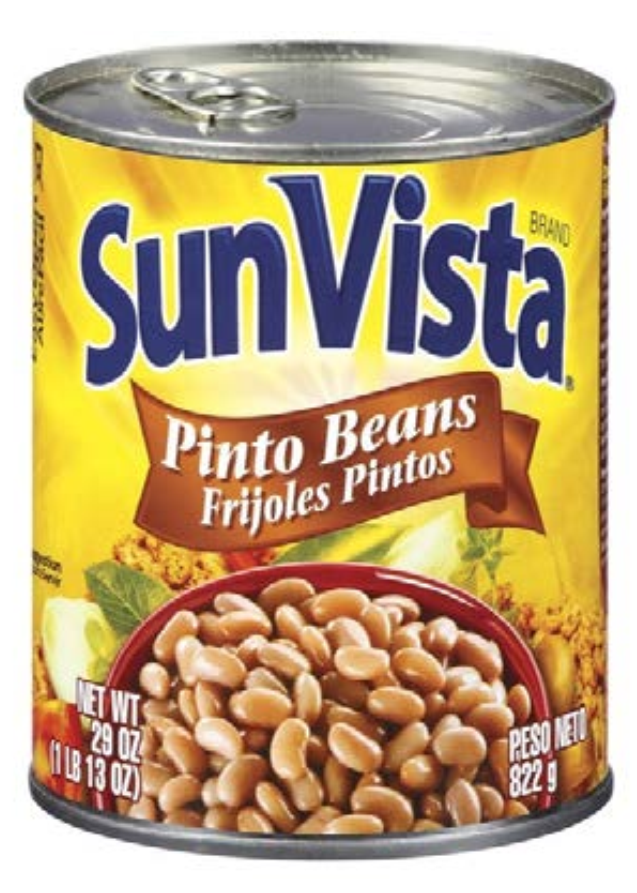
If the can shows lots of whole, plump beans, but the
ingredients list puts water first, is there a plausible deception claim? The
court here answers yes. “Unlike the image advertised on the principal display
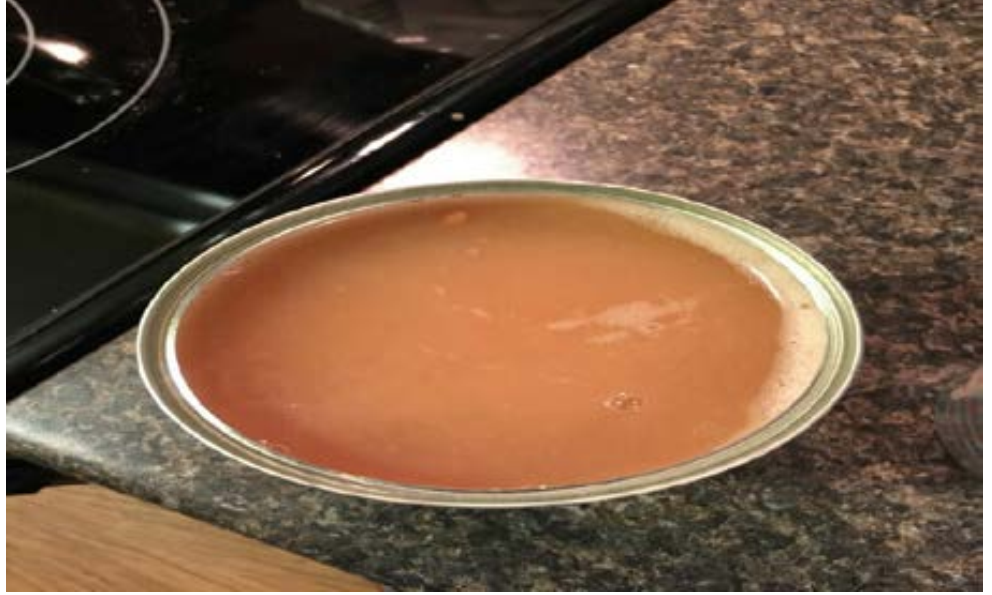
panel, consumers receive mostly water, with a portion of beans fully submerged
and undetectable at first sight.” Plaintiffs brought the usual California
claims.
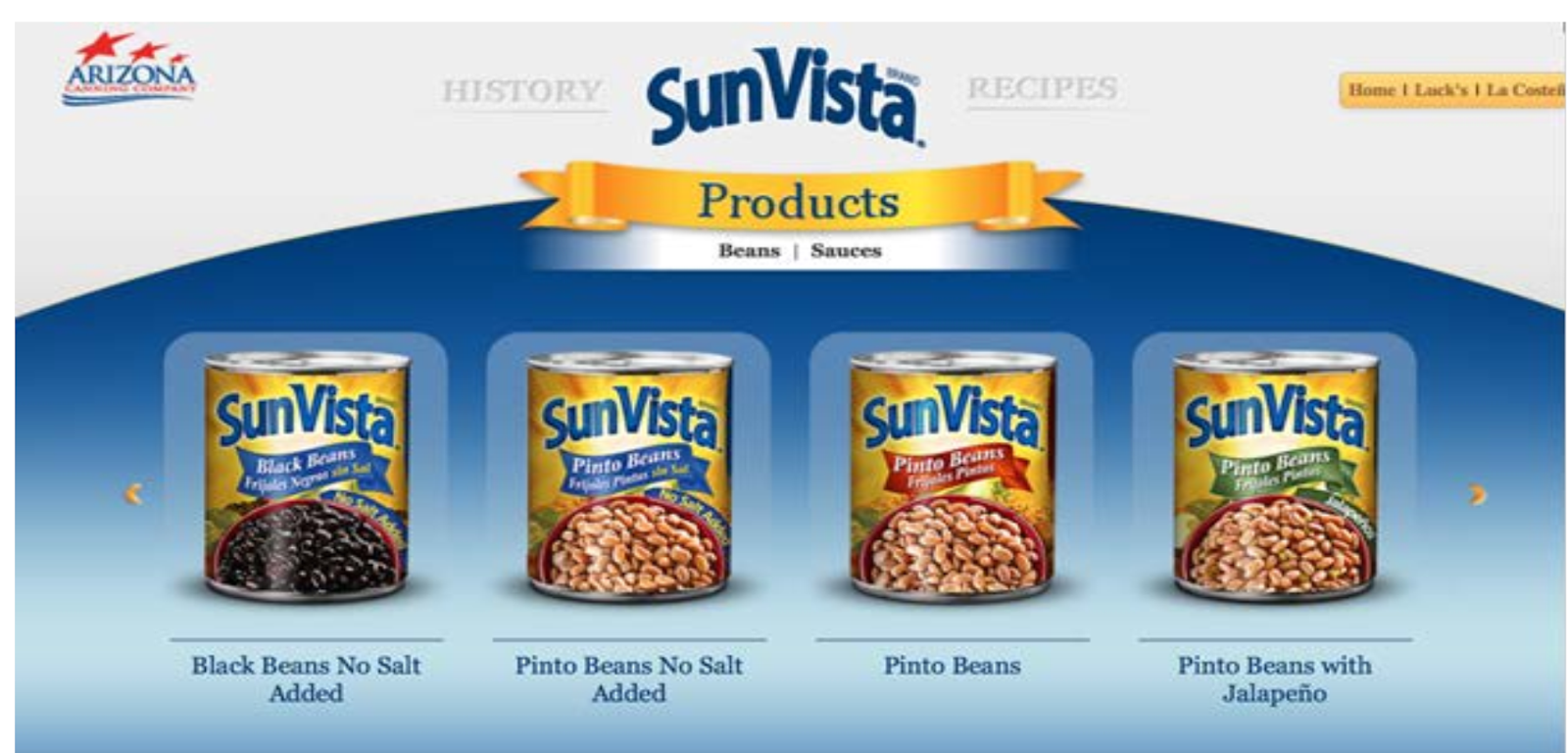
can with beans

website showing can labels
 

Actual contents, per pleading

Arizona Canning argued that, of about 361 bean products
listed by the USDA branded food products database, which contains information
provided voluntarily by food producers, at least 15 bean products list water as
a primary ingredient. But that couldn’t be taken to show the existence of an
industry standard, which was a factual dispute.
“Based on an informal survey, Plaintiffs allege that when
consumers were asked to look at a can of Defendant’s Sun Vista Beans, each
consumer expressed a belief that the can was predominantly filled with beans.”  Arizona Canning argued that it was
unreasonable to look at the picture to determine the ingredients, instead of
the ingredients label. Williams v. Gerber Product Co., 552 F.3d 934 (9th Cir.
2008), is a problem for that argument, and plaintiffs alleged that because Sun
Vista Beans are sold in opaque canned containers, consumers depend upon the
product advertisement, label, and the fill of the can to conduct product
comparisons and make purchasing decisions.
The court began with the proposition that “images can
reasonably be interpreted to have various meanings.” Context, “judicial
experience’ and “common sense” all play roles in whether a misleadingness claim
is plausible. Here, the plausible meanings of the image of cooked beans is
either: (1) identifying the type of bean being sold or (2) depicting the can’s
contents. In this specific context, the dehydrated beans in the background and
the placement of the bowl of hydrated beans in the forefront of the image
supported (2), and so did comparing the image of this product with Arizona
Canning’s other bean product – pinto beans with jalapenos – which showed
chopped jalapenos sprinkled throughout the bowl of beans. 
Arizona Canning argued that the image was “a picture of
beans as they are suggested for serving.” “While this interpretation seems
reasonable, it is contrary to the detailed information offered within the
nutrition fact panel, which indicates the primary ingredient is water. For this
‘suggestion’ to be accepted, consumers must drain more than half of the can’s
contents – leaving the consumer with either a smaller serving size or
significantly less servings than represented.”
Unlike the products in other image cases, “beans are not
made up of various heterogenous ingredients.” Thus, a consumer “could
reasonably believe that a can labeled ‘pinto beans,’ with no additional
descriptor, is primarily filled with just that.”
Plaintiffs also alleged that the net weight, serving size,
and number of servings per container were deceptive because, for example, a 29
oz. can of Sun Vista whole pinto beans advertised “about 6 servings.” The label
also defined a serving as one half cup, or 4 oz., which a consumer would think meant
that the can contained 24 oz. beans and 5 oz. water. But that contradicted the
ingredient label. “It is not plausible that a reasonable consumer would believe
the entire 4oz serving consisted of only one ingredient,” but—based on “common
experience”—it was plausible that consumers would believe that one serving of
cooked ready-to serve “pinto beans” “typically does not have the same
consistency as soup.”  Thus, if the
serving size x number of servings listed was relatively close to the can’s
capacity, a consumer could reasonably believe that the can was filled nearly to
capacity with the ingredient advertised and reflected in the name of that
product—here, pinto beans.
Defying Williams, Arizona Canning argued that
consumers should look at the ingredient list. But “most shoppers digest the
information on the back after seeing the pretty picture on the front,” and the entirety
of the advertising had to be considered. Consumers often look for whether
specific ingredients are present or absent, but they are less likely to
consider which ingredient is most predominant, “especially if it appears
obvious from the name of the product or the label’s display panel.”
UCL unfairness: Under the balancing test (more often used in
cases brought by consumers, like this one), “courts must examine the practice’s
impact on its alleged victim, balanced against the reasons, justifications and
motives of the alleged wrongdoer. In short, this balancing test must weigh ‘the
utility of the defendant’s conduct against the gravity of the harm to the
alleged victim.’” The harm was selling consumers a less-than-half-full product,
depriving them of the benefit of the bargain. Arizona Canning argued that, if
the case succeeded, food manufacturers would be “unnecessarily stifled from
displaying their product on the label.” The Court didn’t agree. “Countless food
manufactures have successfully displayed and marketed their product without
consumer confusion or a likelihood of deception… [A]ny utility derived from
Defendant’s practice and desire to display an image of a ‘suggested serving’ of
beans, that omits or abates the predominant ingredient, is outweighed by the
alleged negative impact on Plaintiffs and other putative class members.”
Under the competing tethering test (usually used when claims
are brought by competitors, “unfair means conduct that threatens an incipient
violation of an antitrust law or violates the policy or spirit of one of those
laws because its effects are comparable to or the same as a violation of the
law…”  Ignoring the antitrust part of
this, plaintiffs alleged (and the court agreed) that they also satisfied the
tethering test because defendants violated the spirit of the FDCA and the Sherman
Food, Drug, and Cosmetic Law. Arizona Canning rejoined that, as a matter of
public policy, it is common for food/beverage products to indicate items on the
principal display panel that are not the predominant ingredient. That’s true,
but even then, false advertising is not ok, and complying with the FDCA isn’t
enough to preclude a false advertising claim. “It is quite possible to comply
with FDA regulations and still violate the policy or spirit underlying those
regulations.”

from Blogger https://ift.tt/2O2Xud2

Posted in Uncategorized | Tagged , , | Leave a comment

ownership/control of whole company isn’t enough for individual liability under FTCA

F.T.C. v. Quincy Bioscience Holding Co., 389 F. Supp. 3d 211
(S.D.N.Y. 2019)
On remand from the Second Circuit, which
fixed the mistaken earlier dismissal of this claim against a supplement seller
,
a principal gets off the hook (for now) but otherwise the case continues.
Defendants Underwood and Beaman are Quincy’s co-founders and
two largest shareholders; Underwood is Quincy’s President and Mr. Beaman is its
CEO and former President. Each is also a director of related companies.  Prevagen allegedly falsely advertises that “Prevagen
improves memory,” that it “has been clinically shown to improve memory,” and so
on, in defiance of a placebo-controlled test that showed no such effects (but
was subsequently p-hacked to suggest improvements in specific subgroups on
specific tasks). In addition, the FTC alleged that defendants’ claims about
Prevagen rely on the theory that its dietary protein enters the human brain to
supplement proteins that are lost during the aging process. But the FTC alleged
that defendants’ studies show that it is rapidly digested in the stomach and
broken down into amino acids and small peptides like any other dietary protein.
“An individual may be held liable under the FTCA for a
corporation’s deceptive acts or practices if, with knowledge of the deceptive
nature of the scheme, he either participate[s] directly in the practices or
acts or ha[s] authority to control them.” And under the relevant state consumer
protection laws, NY Exec. Law § 63(12) and NYGBL §§ 349 and 350, “Officers and
directors of a corporation may be held liable for fraud if they participate in
it or have actual knowledge of it.”
The complaint adequately alleged that Underwood had the requisite
involvement. Along with the previously cited facts, he is allegedly “the final
decision maker on advertising claims across all channels of distribution and
media platforms” and participated in other ways in disseminating the relevant
claims, including by appearing in ads. “The statements that Mr. Underwood made
final decisions on advertising claims, wrote advertising materials, and
appeared in Prevagen advertisements sufficiently allege that Mr. Underwood
participated directly in the alleged false advertising of Prevagen.”  In addition, allegations that he directed the
research, translated scientific data into marketing language, and wrote a user
guide explaining the science behind Prevagen “support an inference that he knew
what the research and studies concluded and thus had knowledge of the deceptive
nature of the advertisements.” The standard is “actual knowledge of material
misrepresentations, reckless indifference to the truth or falsity of such
misrepresentations, or an awareness of a high probability of fraud along with
an intentional avoidance of the truth,” and that was satisfied.
By contrast, despite Beaman’s alleged central ownership/control
interests, the complaint merely alleged that Beaman “has given media
interviews, signed research agreements, pre-approved research proposals, and
reviewed Defendants’ advertising.” That was insufficient to allege that he “knew
the results of the research or participated in the false advertising,” though
the governments were granted leave to amend.

from Blogger https://ift.tt/2ZSVb2x

Posted in Uncategorized | Tagged , | Leave a comment

9th Circuit drives big hole through 230(c)(2) immunity

Enigma Software Group USA, LLC v. Malwarebytes, Inc., —
F.3d —-, 2019 WL 4315152, No. 17-17351 (9th Cir. Sept. 12, 2019)
Section 230(c)(2) “immunizes computer-software providers
from liability for actions taken to help users block certain types of unwanted,
online material,” including sex, violence, and material that is “otherwise
objectionable.” “We have previously recognized that the provision establishes a
subjective standard whereby internet users and software providers decide what online
material is objectionable.”
The parties compete in the market for software that help
internet users filter unwanted content from their computers. Enigma alleged
that Malwarebytes violated the Lanham Act and New York state law by configuring
its software to block users from accessing Enigma’s software in order to divert
Enigma’s customers. The district court found this covered by 230(c)(2), but
because the parties are competitors, the majority (over a dissent)
disagreed.  “Otherwise objectionable” isn’t
broad enough to encompass an anticompetitive motive.  Malwarebytes argued that its reasons were legitimate,
but Enigma’s allegations of anticompetitive animus were sufficient to avoid a
motion to dismiss.
Eric Goldman is gonna hate that.
The court also, correctly, held that just because the Lanham
Act claim was a Lanham Act claim didn’t bring it within §230’s exception for “any
law pertaining to intellectual property.” The Lanham Act covers trademarks and
false advertising; the former fall within the IP exception and the latter doesn’t.
In its recitation of the legislative history and caselaw,
the majority drops a line that is going to prove particularly destructive of (c)(2)
immunity: “What is clear to us from the statutory language, history and case
law is that the criteria for blocking online material must be based on the
characteristics of the online material, i.e. its content, and not on the
identity of the entity that produced it.” 
(What happens when a provider says “this entity has produced
objectionable content in the past and we are therefore going to screen material
from this entity”?  Does the majority
really mean that screening has to be applied on an item by item basis?  Does that mean you can’t block an entire
website, perhaps even for things that are explicitly listed in (c)(2) like violent content, unless each page has objectionable content, since blocking an entire
website focuses on the entity?  Honestly,
I can see a case for that rule—but it seems like something we should talk
about.)  Where the OSP at issue is a
host, however, the identity of the identity that produced content is a classic
publisher consideration and (c)(1) immunity should be unaffected.  Eric Goldman has identified a shift from
§230(c)(2) to (c)(1) in many situations where (c)(2) could in theory apply;
this language will only harden that shift.
Facts: Malwarebytes software searches for what it calls
Potentially Unwanted Programs (PUPs), including software that contains
“obtrusive, misleading, or deceptive advertisements, branding or search
practices.” If the user tries to download a program that Malwarebytes has
determined to be a PUP, a pop-up alert warns the user of a security risk and
advises the user to stop the download and block the potentially threatening
content. “In their first eight years as competitors, neither Enigma nor
Malwarebytes flagged the other’s software as threatening or unwanted. In late
2016, however, Malwarebytes revised its PUP-detection criteria to include any
program that, according to Malwarebytes, users did not seem to like…. Malwarebytes’s
software immediately began flagging Enigma’s most popular programs—RegHunter
and SpyHunter—as PUPs.” Enigma alleged that its programs are “legitimate”,
“highly regarded”, and “pose no security threat,” and that it’s lost customers
and goodwill from Malwarebytes’ deceptive practices.
Judge Fisher’s concurring opinion in the 9th Circuit’s
previous case considering §230(1)(c), Zango, warned that extending
immunity beyond the facts of that case could “pose serious problems,” allowing
a content provider to “block content for anticompetitive purposes or merely at
its malicious whim.” District courts have disagreed on whether Malwarebytes can
be sued for its blocking and how expansive Zango is. Allowing
Malwarebytes to block based on “anticompetitive” motives would be “contrary to
CDA’s history and purpose,” which included an express congressional aim “to
preserve the vibrant and competitive free market that presently exists for the
Internet and other interactive computer services” and to “remove disincentives
for the development and utilization of blocking and filtering technologies.”
The point was to help consumers, who “must trust that the
provider will block material consistent with that user’s desires. Users would
not reasonably anticipate providers blocking valuable online content in order
to stifle competition.” Immunizing anticompetitive blocking would therefore [?]
also conflict with the express policy of “removing disincentives for the
utilization of blocking and filtering technologies.”
However, “otherwise objectionable” was broader than the rest
of the categories in the statutory list: “obscene, lewd, lascivious, filthy,
excessively violent, harassing or otherwise objectionable.” Thus, the majority
rejected Enigma’s argument that its software has no such content, and that
Malwarebytes definitively couldn’t claim immunity for blocking it. Under
ejusdem generis, when a generic term follows specific terms, “the generic term
should be construed to reference subjects akin to those with the specific
enumeration.” But the specific categories listed in § 230(c)(2) “vary greatly:
Material that is lewd or lascivious is not necessarily similar to material that
is violent, or material that is harassing. If the enumerated categories are not
similar, they provide little or no assistance in interpreting the more general
category.”  Anyway, even if ejusdem
generis did apply, Enigma’s interpretation failed. Congress identified “harassing”
as one of the problematic categories, and spam, malware and adware are close
enough. [So if Malwarebytes  succeeds in showing that it reasonably categorized Enigma’s software as such, that’s enough to win.] But the majority wasn’t making a
final ruling on the relationship between “otherwise objectionable” and the
other listed categories. It’s merely that “if a provider’s basis for objecting
to and seeking to block materials is because those materials benefit a
competitor, the objection would not fall within any category listed in the
statute and the immunity would not apply.” Key takeaway: now we fight about what else is like “anticompetitive” and thus not legitimately “otherwise objectionable,” since the majority has left the issue open (except to the extent you think identity v. content is the holding).
Malwarebytes argued that it had legitimate reasons for its
acts and that Enigma’s programs, SpyHunter and RegHunter, use “deceptive
tactics” to scare users into believing that they have to download Enigma’s
programs to prevent their computers from being infected. This is a factual
dispute.
Judge Rawlinson dissented. The CDA is broadly worded;
Congress hasn’t acted to clarify it; and the statute should be applied
according to its provisions. “[N]othing in the statutory provisions or our
majority opinion in Zango supports” limiting (c)(2) when the parties are
competitors. “The majority’s real complaint is not that the district court
construed the statute too broadly, but that the statute is written too broadly.
However, that defect, if it is a defect, is one beyond our authority to
correct.” The dissent pointed out that, although the parties in Zango weren’t
direct competitors, the plaintiff asserted similar anti-competitive effects,
but that didn’t matter there.

from Blogger https://ift.tt/31jZ91L

Posted in Uncategorized | Tagged , | Leave a comment

Reading list: Cheating Pays

Emily Kadens, Cheating Pays, 119 Columbia Law Review 527 (2019)

Common private-ordering theories predict that merchants have an incentive to act honestly because if they do not, they will get a bad reputation and their future businesses will suffer. In these theories, cheating is cheating whether the cheat is big or small. But while reputa­tion-based private ordering may constrain the big cheat, it does not necessarily constrain the small cheat because of the difficulty in discover­ing certain types of low-level cheating and the consequent failure of the disciplining power of reputation. Yet the small cheat presents a signifi­cant challenge to modern contracting, both between businesses and in the contracts of adhesion imposed on consumers. To encourage private law scholars to address the unique governance challenges posed by low-level cheating, this Essay describes the conditions under which low-level cheating can flourish and become widespread. It demonstrates this so-called “Cheating Pays” scenario using a historical case study in which a seventeenth-century London grocer, trading under precisely those condi­tions that private-ordering theories predict will incentivize honesty, not only cheated extensively but also successfully remained in business after having been caught and publicly punished. Identifying the scenarios in which cheating pays has implications for how firms use contracts and how consumers might use the courts to try to reduce opportunistic behavior.

from Blogger https://ift.tt/2ZUsbYh

Posted in Uncategorized | Tagged , , | Leave a comment

You know antitrust law is failing when …

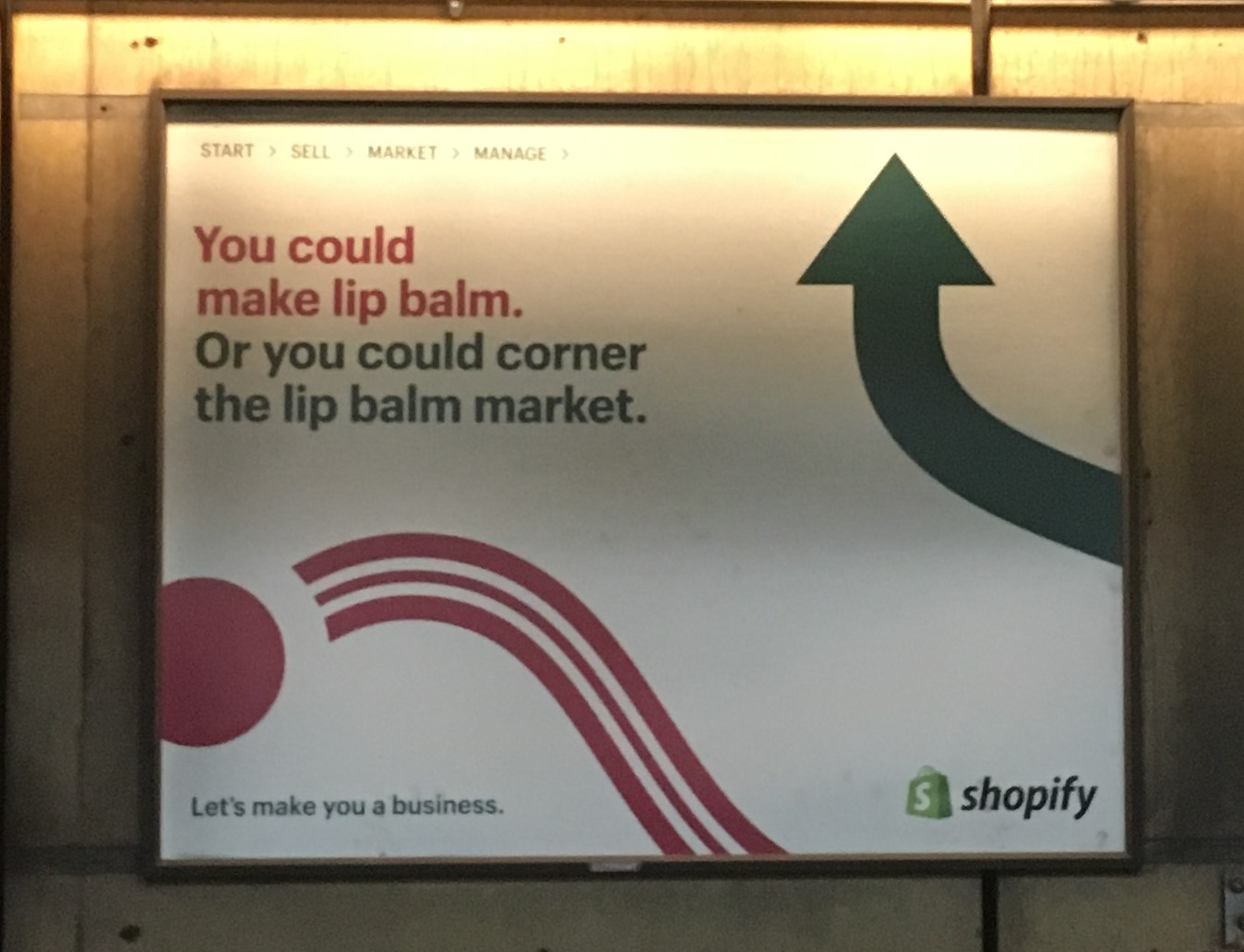
This ad runs:

Shopify ad: You could make lip balm. Or you could corner the lip balm market.

from Blogger https://ift.tt/2PWJ1lo

Posted in Uncategorized | Tagged | Leave a comment

false patent marking and implicit claims of Nobel connection in a supplement case

ThermoLife Int’l, L.L.C. v. NeoGenis Labs, Inc., 2019 WL
4193968, No. 18-cv-2980-HRH (D. Ariz. Sept. 4, 2019) 
ThermoLife allegedly holds a number of patents related to
dietary supplement/food ingredients, including those related to “the use of
amino acids in combination with nitrates to increase performance.” It allegedly
“licenses the use of its patented technology…to many of the largest dietary
supplement companies” and “supplies the raw materials necessary to practice its
patented inventions.”
NeoGenis “sells nitric oxide test strips and dietary
supplements[,]” and was allegedly “a dominant force in the beet supplementation
market.” NeoGenis products allegedly competed with products that use TL’s raw
materials and products produced with its patented nitrate technology. TL
doesn’t currently market oxide testing strips, though it’s trying to get into
that market.
NG allegedly falsely advertised “that it has developed a
‘patent pending’ method to determine ‘if you are N-O [nitric-oxide] deficient’
and/or ‘if you’re getting enough dietary nitrate through the foods that you
eat’: HumanN’s nitric oxide Indicator Strips.” But the patent, while applied
for in 2013, was allegedly rejected in its entirety. In addition, NG allegedly
falsely advertised that its strips “can determine whether an individual is
nitric oxide deficient[.]” A one time saliva test allegedly can’t do that.  NG also allegedly engaged in false patent
marking because the listed six (later three) patents weren’t practiced in the
marked products (the patents allegedly required a nitrite salt not present in
the products, and anyway they failed to include a sufficient quantity of
nitrites of any sort to practice the listed patents). Similarly, NG allegedly falsely
claimed that its “licensed patents protect ‘patented Nitric Oxide technology’”
and that its research was “Nobel-Prize winning.”  Finally, NG allegedly falsely claimed that
its products were foods or dietary supplements.
After dismissal for want of standing, TL filed an amended
complaint.
False marking: “Title 35 section 292(a) prohibits, in part,
‘mark[ing] upon…in connection with any unpatented article, the word ‘patent’
or any word or number importing that the same is patented, for the purpose of
deceiving the public.’ … Section 292(b) provides a private right of action to
enforce § 292(a) to any ‘person who has suffered a competitive injury as a
result of a violation of this section.’ ”
A “competitive injury” is “ ‘[a] wrongful economic loss
caused by a commercial rival, such as the loss of sales due to unfair
competition,’ ” but someone who’s attempted to enter the market (in intent and
action) can have standing.  
TL alleged that, since at least October 2018, it had been
working with someone on testing/monitoring nitric oxide over “several face-to-face
meeting[s] and numerous phone conferences” and that “when the deal is reached,
[it] will be in…direct competition with HumanN’s Nitric Oxide Test Strip[s].”
This was too late, since TL sued in September 2018 and standing is measured at
the time suit is filed and not later. [Is this correct where the issue is
statutory “standing,” a la Lexmark, rather than Article III standing?]
As for the beet supplements, TL alleged that NG was still
showing pictures of these products on the internet that list six patents on the
products’ labels even though defendant removed three of the patents from the
actual product labels, and also that that these products do not practice the
three patents which are still listed on the products’ actual labels. As for the
internet claims, NG argued that the claim wasn’t plausible because, when a
product carries both proper and false patent markings, a plaintiff must show
specifically that the falsely marked patents caused it harm, and that it
definitely practiced one patent, the ‘999. However, it was still plausible
injury “because a consumer might be more likely to purchase a product that
lists several patents as opposed to a product that lists only one patent.”
As for the other patents: TL argued that some relevant
patents required a ‘nitrite salt’ to practice the patented inventions, and
alleged that the accused products didn’t contain a nitrite salt.  NG offered a Certificate of Analysis showing
that the product being tested, “NEO Dry Blend BC Flavor w/ Vit C[,]” contained
sodium nitrite, which it said was a nitrite salt. But even if the court took
judicial notice of the certificate, it wasn’t clear that product was used in
the accused products. Also, TL alleged that, regardless, it did lab tests on
two of the products in two separate months and found insufficient nitrites to
practice the patent. NG made a bunch of arguments about the proper chemicals
and their measurement that weren’t appropriate for a motion to dismiss.  (But as for a product as to which TL didn’t
allege tests, just alleged that the product didn’t practice the patents, that
was too conclusory to be plausible yet.)
NG next argued that the complaint flunked Rule 9(b) because
it wasn’t plausible that NG, a sophisticated business, would license patent
rights from the University of Texas, presumably paying some royalties therefor,
without even bothering to practice the patents. The court disagreed.
Lanham Act false advertising: There was the same problem
with the N-O Indicator Strips. TL was not a competitor; a potential competitor
didn’t have Lexmark standing.
Specific claims: it was plausible that claims that NG’s
products use “patented Nitric Oxide technology” constituted false advertising,
see above. NG argued that it never claimed it had won the Nobel Prize, just
referred to the prize awarded to 1998 for discoveries concerning nitric oxide as a
signaling molecule in the cardiovascular system, more than ten years before NG’s
predecessor company was founded. You can see why this might be an implicit
falsity claim—defendant allegedly used this website text:
[o]ur research on Nitric Oxide
first began with the discovery of its unique impact on cardiovascular health.
Its immense importance as a biological signaling molecule resulted in the
awarding of the Nobel Prize in 1998. Realizing that the discovery of Nitric
Oxide had immense potential, it didn’t take long for our interest in N-O to
become our passion.
TL also alleged that NG asserted a connection to “Nobel
Prize-winning research” and advertised that “the discovery of Nitric Oxide, the
first gas to be identified as such, won the Nobel Prize in 1998. This discovery
is what HumanN is built on.” This was sufficient to allege a false implication
of connection to Nobel Prize winning research.
TL alleged that NG falsely advertised that it was “the only
company that can practice ‘patented N-O platform technology.’ ” But the only alleged
example didn’t say that; it said “ ‘there is not any product out there, despite
dozens if not hundreds of…nitric oxide products on the market, food or
supplement, that do[es] what our technology does.’ ” That’s not the same thing
(and seems like puffery), so the claim was dismissed.
TL’s claim that defendant falsely advertised its products
as foods or dietary supplements failed insofar as it was just alleging
misbranding in violation of the FDCA, which doesn’t provide a private cause of action.
It would be possible to plead a plausible claim that defendant was falsely
advertising that its products were foods or dietary supplements, as those terms
are defined by the FDA, but the allegations here were too conclusory.
State law claims fared exactly the same.

from Blogger https://ift.tt/2HWXiYN

Posted in Uncategorized | Tagged , | Leave a comment

ex-employees with new company trigger false advertising dispute (and submarine patent invalidity argument)

AlterG, Inc. v. Boost Treadmills LLC, 2019 WL 4221599, No.
18-cv-07568-EMC (N.D. Cal. Sept. 5, 2019)
The wildest allegation here involves former AlterG employees
(who founded defendant Boost), one of whom allegedly got a journalist to write
an article disclosing a machine, which article was published more than a year
before AlterG filed for a relevant patent, thus creating an invalidity problem,
all allegedly in breach of his duty to AlterG/so defendants could claim invalidity
if AlterG came after them. Submarine invalidity instead of submarine patents? I won’t otherwise discuss the patent infringement/breach
of contract/trade secret parts of the case, but they exist.
AlterG is a medical device company that is the “leading
provider of impact reduction treadmills,” also known as “Anti-Gravity
Treadmills,” that are used for orthopedic rehabilitation and training. It
allegedly devoted substantial resources to develop “a lower cost, bare bones
AlterG machine” but ultimately decided not to “immediately commercialize” or
sell any products from this project.  You
won’t be surprised that two of the former employees worked on this project.
AlterG alleged that defendants falsely claimed superiority
to AlterG products “at a fraction of the cost,” and otherwise denigrated
AlterG, for example claiming that AlterG was going out of business and was in
poor financial health and thus consumers wouldn’t be able to get AlterG
treadmills any more.
For deception/harm, it was sufficient to allege that, by
falsely representing the capabilities of the Boost One treadmill relative to
AlterG products, defendants succeeded in selling “over 20 [Boost] units to date
to customers considering an AlterG unit.” The “where” was on defendant’s
website and on another website that was allegedly an “affiliate and sales
partner” of Boost, from which it could be reasonably inferred that Boost is
responsible for the statements about Boost products on the website.  However, the “who” was still problematic. AlterG
alleged that “Defendants, either individually or collectively” made the
statements, but that wasn’t enough.  However,
recognizing that there’s no need to plead the identity of the people acting for
the corporation if the statements on the websites were made by “Boost” in the
sense that agency law requires, the court granted AlterG leave to amend the
claim “by specifying that only Boost was responsible for the false advertising.”
Trade libel was sufficiently pled because it detailed an
instance: “[I]n or around May 2018, sales representatives of the Boost One
treadmill falsely told the University of Tennessee that Woodway would stop
selling treadmill [sic] to AlterG.” It was enough to allege that AlterG lost
two sales to that client “at least in part” due to the misrepresentation; trade
libel doesn’t require the misrepresentation to be the sole cause of the harm.
California UCL “unlawful” claims survived because of the survival
of the predicate trade secret misappropriation and breach of fiduciary claims.

from Blogger https://ift.tt/2PX6zqn

Posted in Uncategorized | Tagged , , | Leave a comment

even more corn syrup

MillerCoors, LLC v. Anheuser-Busch Cos., No. 19-cv-218-wmc
(W.D. Wisc. Sept. 4, 2019)
My
discussion of the prior opinion
, in which the court preliminarily enjoined
AB from suggesting that corn syrup is in Miller Lite and Coors Light, “including
emphasizing that corn syrup is not in its Bud Light beer in light of a massive
advertising campaign intended to suggest” that ML and CL contain corn syrup. At
that time, the court didn’t rule on whether the injunction should cover BL’s
packaging, which does not explicitly make comparative statements and instead says
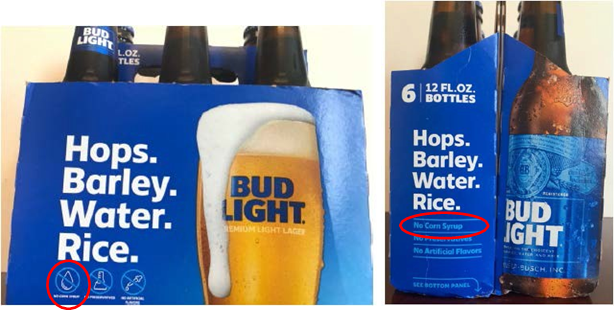
“No Corn Syrup.” Here, the court extended its injunction to cover packaging,
but AB could sell products using the packaging it had on hand as of June 6,
2019, or until March 2, 2020, whichever occurs first.
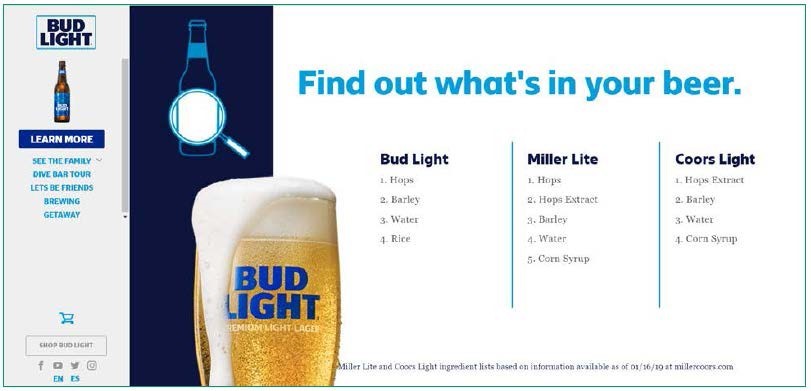
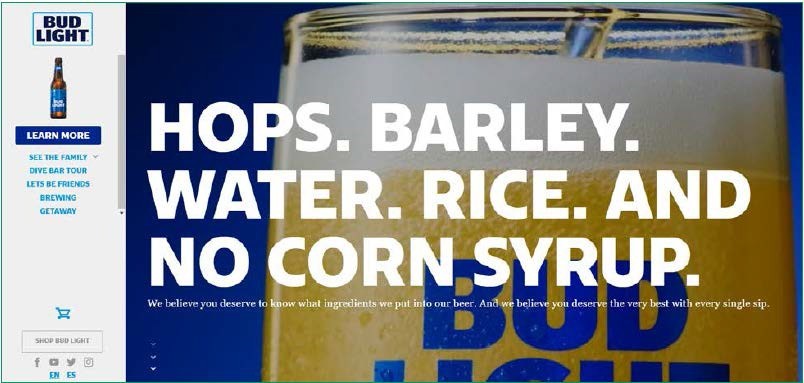
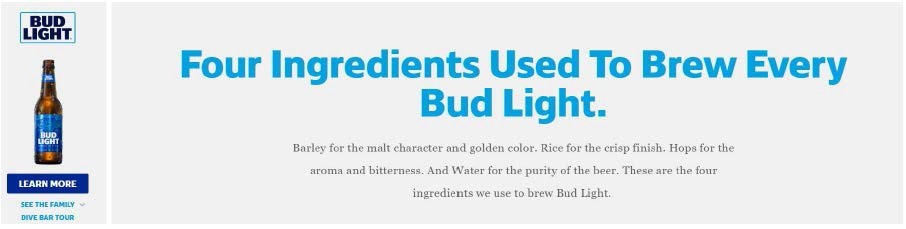
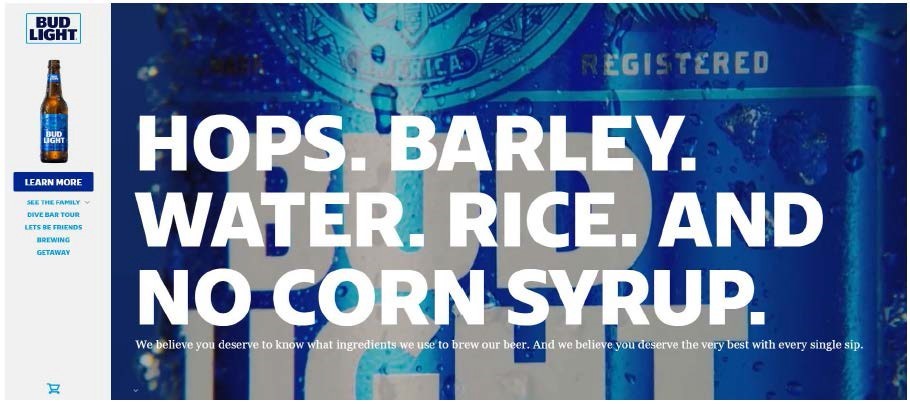
For some additional context, perhaps, the court explains that the Bud Light website used to say “We believe you deserve to
know what ingredients we put into our beer.” Given the existing injunction, it
was changed to: “We believe you deserve to know what ingredients we use to brew
our beer.”
 

old website

more old website

Add caption

new website
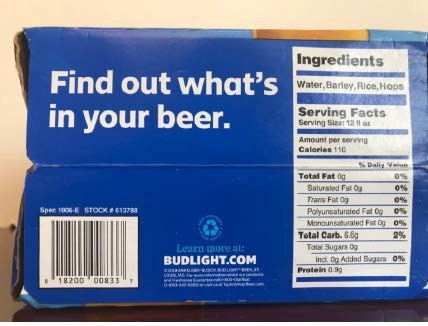
Current packaging says “no corn syrup” on the front and side
panels, and has “see bottom panel” language on the side panels. The bottom
panel states “find out what’s in your beer” (emphasis added) and “learn
more at: budlight.com.”  Despite some
quibbling by AB, it was pretty clear that Bud Light is displayed at retail
locations alongside packages of Miller Lite and Coors Light. The three beers
comprise 100% of the national premium light beer market. 

There was also testimony that packaging “is an effective way
to drive purchasing decisions because it communicates claims about the product
to consumers at the point-of-purchase.” MillerCoors also submitted a Neilsen
report indicating that between 32-60% of consumers (varying by age) haven’t yet
decided which brand of beer to purchase when they enter a store. AB submitted a
2018 consumer research report on beer and craft beer, finding that packaginging
isn’t an important factor in deciding what beer to purchase for 91% of beer
purchasers and for 94% of non-craft beer drinkers including drinkers of light
beer.
AB also commissioned a survey showing consumers either the Bud
Light packaging or a control that had the “no corn syrup” language and icon
removed. After reviewing the front image for 10 seconds and the side image for
10 seconds, participants were asked a series of open ended questions,
including: “In your own words, what as the main message, if any, on the package
you just saw?” Zero respondents in either group mentioned Miller Lite or Coors
Light; the majority identified Bud Light’s ingredients as the main message. If
respondents correctly identified Bud Light or Budweiser as the brand, they were
then asked, “Did the package say or suggest OR did the package not say or
suggest something about any other brand or brands of beer?” 28% of the test
group and 23% of the control group answered that the packaging did say or
suggest something about other brands, but only one respondent in the test group
identified Miller Lite or Coors Light in the followup to that question.  When asked what the packaging says or
suggests about other brands, 3% of the test respondents who reported receiving
any message about other brands of beer mentioned having or using corn syrup.
AB also submitted evidence that its printed but as yet
unused packaging for BL containing the “no corn syrup” icon and language had a
value of $27 million, which amounts to 69 million packages. AB also has 1.3
million finished cases that have been packaged into secondary containers but
that have not yet left A-B’s breweries or warehouses with a value of $5
million.  AB represented that its quality
control policy requires secondary packaging be used within 270 days. MillerCoors
suggested that stickers could be used instead of destroying the packaging; AB
said this would cost $1.10 per package—three times the cost of the packaging
itself, or $76 million.  “This strikes
the court as an absurdly high estimation,” but the decision didn’t turn on
that.
The court applied the pre-eBay presumption that false
advertising injuries are presumed to be irreparable, “even if the plaintiff
fails to demonstrate a business loss.”
AB argued that its packaging was noncomparative and nonactionable.  Neither of these things are necessarily true
(citing a case about highly concentrated markets). “Viewed in context of the
full advertising campaign, a reasonable jury could find that the implicit
message of the packaging is that other beers contain corn syrup. Moreover, in
light of the limited number of beers in the light beer market, with Bud Light,
Miller Lite and Coors Light accounting for almost 100% of sales, that same jury
could also find a substantial segment of consumers would infer that Bud Light’s
principal competitors contain corn syrup, especially after a hundred million
dollar television and print campaign misleadingly suggesting the same thing.”  It was reasonable to consider the overall
campaign because of the unity of message.
As for defendant’s survey, the court thought that a reasonable
jury might accept some of MillerCoors’ criticisms, though it was skeptical of
the argument that the survey also should’ve shown them the bottom of the package
“at least absent some evidence that a substantial segment of beer purchasers
examine the bottom of packaging in deciding which beer to purchase (or at least
that retailers regularly stack product to display the bottom of packaging).” But
the more intuitive objection, that the survey should’ve been conducted in a
retail setting next to Miller Lite and Coors Light packaging, might well
convince a jury, and “the limited time (ten seconds per image) respondents had
to examine an image of the packaging cuts against the weight of the survey
findings.” There were also issues with how the open-ended questions were coded.
There was at least “some likelihood of success in proving to a reasonable jury
that the Bud Light packaging’s continued use of the now-well-known tag lines ‘no
corn syrup’ and ‘find out what is in your beer’ when on display next to Miller
Lite and Coors Lite packaging is likely to be misleading, at least viewed in
the context of defendant’s full advertising campaign.”
Although previously the court didn’t want to rely on intent,
it pointed out that AB spent “tens of millions of dollars on special packaging
closely attuned to its larger advertising effort,” which implicitly made AB’s
argument that packaging wasn’t material to consumer decisions somewhat less
credible.  Moreover, AB’s argument that
consumers wouldn’t tolerate stickering on packages contradicted its
immateriality argument. And AB’s evidence about lack of reliance on “label /
packaging design” focused on the relevance of cosmetic issues such as choice of
font, color or layout of the packaging, not on “substantive concerns about
nutritional value.” MillerCoors’ contrary evidence was sufficient for a reasonable
factfinder to find materiality (and implicitly, it was likely to prevail on
this issue).
The court balanced the equities by giving AB the opportunity
to use up all its existing packaging as of June 6, 2019, or to use the packaging
until March 2, 2020 (270 days from June 6, 2019), whichever occurs first. The
court was open to modifying the injunction if MillerCoors could either show
that a sticker was feasible or that it was practical to get replacement packaging
without interrupting AB’s ability to offer Bud Light for sale.

from Blogger https://ift.tt/2ZW4bQm

Posted in Uncategorized | Tagged | Leave a comment