
good faith defense to false advertising may waive attorney/client privilege

In re Keurig Green Mountain Single Serve Coffee Antitrust
Litig., 2019 WL 2724269, No. 14 MD 2542 (VSB)(HBP) (S.D.N.Y. Jul. 1, 2019)
In this antitrust claim, Keurig counterclaimed against
plaintiff JBR for marketing its competing pods with allegedly false
representations that its cups contain “no plastic” and are “biodegradable,”
“compostable” and similar statements, in violation of the Lanham Act, Section
349 and 350 of New York’s General Business Law, and California’s Business and
Professional Code. JBR asserted a number of affirmative defenses including that
the counterclaims against it “are barred, in whole or in part, because JBR’s
actions, if any, respecting the subject matters alleged therein were undertaken
in good faith, with the absence of malicious intent, and constitute lawful,
proper and justified means.” As the court pointed out, “it is doubtful that
good faith is a defense to Keurig’s Lanham Act counterclaim,” but “it does
appear to be relevant to Keurig’s counterclaim alleging a violation of Section
349 of New York’s General Business Law” (citing Samiento v. World Yacht Inc.,
10 N.Y.3d 70, 81, 883 N.E.2d 990, 996, 854 N.Y.S.2d 83, 89 (2008) (“In order to
assert a prima facie cause of action under General Business Law § 349, a
plaintiff must be able to establish that a defendant intended to deceive its
customers to the customers’ detriment and was successful in doing so.”).
The court found that JBR had to withdraw its good faith
defense or hand over a bunch of otherwise privileged materials. During their
depositions, JBR principals were asked about events in 2011 or 2012, when JBR
was considering using the terms “biodegradable,” “compostable,” “ecofriendly”
and similar terms on its packaging. JBR lacked expertise in the use of these
terms and it hired an attorney — Abrahamson — for advice. JBR initially
marketed its packaging as “compostable,” but switched to “biodegradable” upon
the attorney’s advice, thinking “[it was] in the clear, because of the
extensive research [it] had done and the extensive communication with this
attorney.” JBR came to conclude that the advice was wrong (it was contacted by
the Alameda County DA and told that its use of the term violated California
law) and later asserted a claim against Abrahamson for malpractice that was
resolved in arbitration.
Keurig argued that there had been a subject-matter waiver of
the attorney-client privilege with respect to advice JBR received concerning
the marketing of its cups as environmentally friendly and sought documents and
testimony regarding that subject, as well as documents exchanged in the
malpractice arbitration against Abrahamson. Under United States v. Bilzerian,
926 F.2d 1285 (2d Cir. 1991), “the attorney-client privilege cannot at once be
used as a shield and a sword. A defendant may not use the privilege to
prejudice his opponent’s case or to disclose some selected communications for
self-serving purposes. Thus, the privilege may implicitly be waived when
defendant asserts a claim that in fairness requires examination of protected
communications.” Under that rule,  “forfeiture
of the privilege may result where the proponent asserts a good faith belief in
the lawfulness of its actions, even without expressly invoking counsel’s
advice.”  Here, the good-faith defense—if
maintained—would result in waiver with respect to advice JBR received
concerning whether it could advertise its products as “compostable” or
“biodegradable” or as having other similar characteristics. JBR’s only basis
for that defense seems to have been advice from the lawyer, rather than, for
example, its own testing, making communications with counsel essential to
evaluate its good faith.
JBR argued that there was no need for disclosure because the
nature of the lawyer’s advice could be inferred from the chronology of events
and the nature of its actions. But the existence of waiver doesn’t depend on
what other evidence is available or what inferences can be drawn from the other
evidence. Second, “[a] client does not always follow its lawyer’s advice.…
Finally, the accuracy of a lawyer’s advice depends on both the lawyer’s
knowledge and the accuracy and completeness of the information provided by the
client. If, for example, JBR deliberately or negligently provided Ms.
Abrahamson with material mis-information or omitted material information
concerning the physical characteristics of its products, her advice might
provide little support for a good faith defense.”  To evalute good faith, a fact finder would
need to know both what JBR told the lawyer and what the lawyer told JBR>
Because JBR determined in 2015 to cease marketing its
compatible cups with language describing them as environmentally friendly, the
waiver applies to “all communications between JBR and any attorney concerning
the marketing of JBR’s compatible cups or packaging as environmentally friendly
that occurred prior to the date on which JBR made the determination to cease
marketing its cups in that manner.”  JBR
couldn’t claim good faith after that date so there was no waiver thereafter,
and any advice it received in 2016 couldn’t bear on its good faith in 2015.
Finally, the court found that the waiver was revocable at
this stage of the proceedings. “Waiver of the attorney-client privilege is, of
course, a serious matter, and JBR may not have foreseen its waiver when it
served its reply.” If JBR withdrew the defense asserted in the answer to the counterclaims,
there’d be no waiver.
Finally, there was no waiver as a result of JBR principals’
deposition testimony.  Rule 502(a)
provides that a waiver of the attorney-client privilege as a result of an
intentional disclosure extends to undisclosed communication only if the
disclosed and undisclosed communications “ought in fairness be considered
together.” JBR wasn’t, at this stage, making any use of the deposition
testimony; specifically, it wasn’t “attempting to use the testimony to tell
part of the story while preventing Keurig from telling the whole story.” Most
deposition testimony never goes before any decisionmaker.  “Thus, the mere fact that a party makes a
partial disclosure of privileged or protected information in a deposition does
not result in a subject-matter waiver because there is no use of the testimony
by the party holding the privilege.”

from Blogger https://ift.tt/2FQXw2L
Posted in Uncategorized | Tagged | Leave a comment

dueling fake “independent” websites leads to unclean hands finding, but some injunctive relief

Grasshopper House, LLC v. Clean & Sober Media LLC, 2019
WL 2762936, No. 18-cv-00923-SVW-RAO (C.D. Cal. Jul. 1, 2019)
Previous
discussion
. A jury found in plaintiff Passages’ favor on its claims under
the Lanham Act about false reviews of its addiction treatment services and on the
Lanham Act counterclaim asserted against it by defendants (Cliffside) about Passages’
advertisements representing the existence of a “cure” for addiction.
In 2013, Richard Taite, the former CEO of Cliffside Malibu,
created the entity Clean & Sober Media LLC, which purchased the website The
Fix at a bankruptcy auction. The Fix published a Mission Statement saying “The Fix
is the world’s leading website about addiction and recovery …. We also offer
rigorously reported Rehab Reviews, with input from thousands of alumni…. Our stated editorial mission – and
sole bias – is to destigmatize all forms of addiction and mental health
matters, support recovery, and assist toward humane policies and resources.”  Its Process Statement said “To create our
reviews, we invite selected centers to solicit former clients to complete a
detailed, 20-question survey. The Fix requires at least five completed surveys
before a review is generated. The surveys include questions about
accommodations, meals, residents, staff, activities, and more. Alumni respond
anonymously and confidentially, and reviews are written based on their
responses and follow-up questions where applicable.”
When the acquisition occurred, there was a preexisting
review of Passages Malibu, written by the previous editorial staff of The Fix
in 2011.  It included quotes from people
described as an “alum,” “former resident,” or “former client.” The review gave Passages an overall rating of 1 out of 5 stars. Over time, this rose to 2.5 stars. Passages
made unsuccessful attempts to get the page changed. In response to Passages’
complaints, The Fix tried to find records of the reviews on which the rating was based,
but couldn’t.
In addition, shortly after acquiring The Fix, Taite manually
changed the overall star rating for Cliffside Malibu from 4 to 5 stars, without
conducting any additional surveys of former Cliffside clients. Taite exercised
other types of control but didn’t want his fingerprints on anything. 
The Fix also began to display banner ads for Cliffside
Malibu at the top of the Passages review page and displayed links to the
corresponding Rehab Review page for Cliffside Malibu.  This review made the first page of Google
search results (at least for Passages’ CEO), and internal Cliffside emails
revealed that Cliffside urged prospective clients to read the Passages review
before making a decision as to whether to enroll with Passages or Cliffside; some
of these clients chose Cliffside Malibu after reading the Passages review. Cliffside
characterized other clients it received as “stolen” from Passages, including
one who had believed she was calling Passages Malibu but instead had called the
number for Cliffside Malibu.
Defendants concealed the relationship between Taite, Cliffside,
and The Fix, including from editors at The Fix. The EIC (who was later replaced) sent an email bemoaning Taite’s
“intention to manipulate the reviews” of addiction rehab centers on The Fix and
Taite’s efforts to “pick and choose who can advertise” on The Fix and warned, “the likelihood is it would permanently crash ad sales and may even
invite FTC investigation and lawsuits.” Taite successfully instructed the new EIC to remove an
entire paragraph of an article The Fix had written regarding Cliffside Malibu. That EIC admitted that The Fix intentionally did not disclose its affiliation with
Cliffside because “if people knew [The Fix] was associated with the rehab
[Cliffside Malibu], they might question our articles.” 
In 2017, The Verge website exposed the financial connection
between Cliffside and The Fix. Shortly thereafter, The Fix added a disclaimer
to its websites.
Between 2014 and 2018, Cliffside paid C&S Media
approximately $5 million for banner ads throughout The Fix’s domain. During that period, there were
over 192,000 organic visitors to the Passages review (arriving via organic
search results, not ads). The number of visitors to the Passages review page
sharply increased following C&S Media’s acquisition of The Fix, as did Cliffside’s
net income. Only a few hundred people viewed both the Passages
review page and the Process Statement, the Terms and Conditions Page, or the Mission Statement.
Passages, meanwhile, ran its own unbranded website campaign.  A principal expressed his intent to “overcome”
Cliffside’s alleged tactics and proposed that Passages “create our own referral
sites, and get Fix off our back.” In response, an employee proclaimed, “We’ll
beat them at their own game.” One of the unbranded websites Passages created
was “baltimorehealth.org,” a webpage purporting to be the Baltimore Health
Resource Center that included a picture of the seal of the City of Baltimore. Another
was “denverijournal.com,” which purported to be an independent newspaper and
published an article entitled “Passages Malibu – Revolutionizing Addiction
Treatment.” There were a number of others; some provided directories of phone
numbers to rehab centers and even included supposed referral services for
addiction treatment, which were actually phone numbers connected to Passages. One
such site received more organic traffic than Passages’
website for Passages Malibu as of October 2009.
Most of Passages’ unbranded websites didn’t mention
Cliffside at all, but one featured an article entitled “Top 5 Luxury Rehab
Centers in Malibu, California”; its list of treatment centers was
allegedly “[b]ased on reviews” but did not claim to rank the five centers from
best to worst. The only comparison was the assertion that Cliffside’s
facilities are “home-like and attractive without aspiring to the heights of
interior décor you’ll find at the super-smart Passages center.” After Cliffside filed
its counterclaims, Passages added disclaimers to their unbranded websites to
disclose Passages’ ownership. 
In the post-trial briefs, the parties argued four equitable
issues: (1) whether laches applies to bar any of Passages’ claims on timeliness
grounds; (2) whether Passages is precluded from relief due to unclean hands;
(3) whether and to what extent Passages is entitled to injunctive relief; and
(4) whether Passages has provided sufficient evidence to recover equitable
monetary relief.
Laches: The analogous California statute of limitations
period, for claims of fraud, is three years. The central question was how much
information a plaintiff must “know” about the existence of a Lanham Act cause
of action to trigger the statute of limitations period. Generally, it is enough
for the plaintiff to know about the general “essence” of its claim.
Laches didn’t bar the claims based on the Passages review not
actually being based on alumni surveys; based on the review not complying with the
site’s Process Statement; or based on The Fix’s claim of editorial independence. Passages didn’t have actual or constructive knowledge
that Cliffside owned The Fix until 2017, and sued shortly thereafter. This is
important because it is key to whether The Fix’s statements were made “in
commercial advertising or promotion.” “[I]f The Fix maintained its status as an
independent journal, unaffiliated with Cliffside, it is unclear to the Court
how any false or misleading statements made by The Fix could ever be considered
actionable ‘wrongdoing’ under the Lanham Act.” 
It might be true that Passages could have sued for defamation in 2011,
but “the focus is not on when the plaintiff knew that the defendant generally
engaged in some ‘wrongdoing’ in the abstract,” but rather on the wrongdoing “at
the heart of the particular cause of action to which the statute of limitations
period applies,” which is false advertising.
Cliffside took the position that
even an independent review could be “commercial speech,” but the court didn’t
agree. Demetriades v. Yelp, Inc., 228 Cal. App. 4th 294, 310 (2014), held that
the defendant’s representations about a review filter software, used to ensure
that webpages for restaurants and other public establishments only showed
customers “the most trusted reviews,” constituted commercial speech for
purposes of an exception to California’s anti-SLAPP law because the statements were
designed to get customers to use the defendant’s website and businesses to buy
ads on the website. That wasn’t a Lanham Act case, and not all “commercial
speech” is “commercial advertising or promotion.” [Even if The Fix’s statements
about its own editorial policies were in some relevant sense commercial speech,
that wouldn’t have made the statements about Passages—the key source of harm—commercial
speech.]
And “even if Passages could have
been more diligent in its investigation, Cliffside’s fraudulent intent in its
efforts to conceal its affiliation with The Fix constituted clear and
convincing evidence of unclean hands in reference to Cliffside’s laches defense.”
Even though Passages suspected that there was something fishy about The Fix before
2017, “[h]ad Passages hastily sued The Fix under the Lanham Act and named many
Doe defendants in the hopes of identifying The Fix’s ‘co-conspirator’ through
discovery, a federal court rightfully would have dismissed Passages’ case on a
motion under Rule 12(b)(6), because The Fix would not be a proper defendant to
a Lanham Act cause of action as merely an independent journal not engaging in
commercial advertising or promotion.”
Anyway, Cliffside didn’t show
prejudice from the delay; had Passages sued in October 2017—three years from
the publication of the Process Statement—no evidence would have been lost
compared to when it did file, in February 2018, given that the core problem was
that defendants couldn’t remember anything about/had no records of the surveys on
which they claimed the review had been based.
Unclean hands: For a false advertising claim, “the defendant
must demonstrate that the plaintiff’s conduct is inequitable and that the
conduct relates to the subject matter of its claims.” A finding of
“inequitable” conduct requires clear and convincing evidence that the plaintiff
engaged in “wrongfulness, willfulness, bad faith, or gross negligence.” The
defendant must also show that the plaintiff’s inequitable conduct caused injury
to the defendant; harm to the public interest isn’t enough, but may be
considered. “Factual similarity between the misconduct that forms the basis for
an unclean hands defense and the plaintiff’s allegations in the lawsuit is not
sufficient.” Instead, the plaintiff’s misconduct must be “directly related to
plaintiff’s use or acquisition of the right in suit.”
Passages was indeed, by clear and convincing evidence,
guilty of unclean hands as to the third Lanham Act theory (misrepresentations
of independence) because of its own manipulation of internet sites. “Passages
willfully intended for its websites to accomplish the same thing as what
Passages correctly perceived The Fix to be—a purportedly independent website
providing addiction treatment resources that was actually owned and operated by
a competitor in the addiction treatment industry.” [I think the court overweighted the fact that Passages hid the ownership of the domain names rather than using its own or the names of people associated with Passages; even if it had done that, it would have fooled ordinary consumers who don’t check things like that.] The success of these
techniques—outstripping visits to Passages’ branded website in some months—was enough
to establish some injury to Cliffside; no quantification was required. The
late-added disclaimers weren’t enough to solve the problem.
However, unclean hands didn’t apply to the claims related to
the review of Passages’ facility on The Fix and the representations in the
Process Statement about how reviews were written. Nothing Passages said about
Cliffside, or about how its sites created their reviews, was sufficiently similar
to those misrepresentations. Although Passages behaved badly, it didn’t engage
in the same level of culpable conduct as Cliffside. In addition, there was no evidence that there were even any
visitors to the particular pages that actually mentioned the names of both
Passages and Cliffside.
Injunctive relief was justified; the court found that the
harm to Passages was irreparable, without further discussion.  Cliffside invoked the First Amendment, but
there’s no First Amendment right to advertise falsely.  Passages’ unclean hands didn’t defeat the
equitable considerations in favor of injunctive relief. 
Scope of relief: Cliffside was enjoined from continuing to
publish the review of Passages’ facility on The Fix and all Cliffside-owned
sources, but not enjoined to ensure that the review is not posted anywhere on
the internet, which might be infeasible or outside of Cliffside’s control. In
addition, the URL formerly associated with the review should contain no
substantive content and instead should display a 404 error message “to
communicate unequivocally to visitors that The Fix does not maintain any review
of Passages Malibu whatsoever.”  However,
Cliffside should be able to publish a future review that didn’t otherwise
violate the representations it made in the Process Statement.  [What if it disavows the Process
Statement? Can it make stuff up then?]  Nor was Passages entitled to
an injunction about Cliffside’s use of metadata keywords, which wasn’t part of
the jury’s findings.
Passages sought to recover its damages in the form of lost
profits and to force Cliffside to disgorge its profits and pay attorneys’ fees.  But its damages expert had been
excluded.  The only issue was disgorgement of
Cliffside’s profits.  Passages showed
willful violation of the Lanham Act as to journalistic independence but, because
Passages acted with unclean hands with respect to that claim, it would be
inequitable to award Passages any disgorgement for such a violation.
Also, Passages didn’t show the amount of Cliffside’s sales
or profits that were attributable to Cliffside’s Lanham Act violations with
respect to the Process Statement/the Passages review. And it didn’t show that
Cliffside’s violation with respect to the Passages review was willful—Cliffside
didn’t author the original review, which was written before Cliffside acquired The
Fix. True, Cliffside actively maintained the Passages review and affirmatively
changed Passages’ star rating in the review on several occasions, indicating that
Cliffside deliberately intended to keep the Passages review on the website as a
bona fide, factually-supported review. But that didn’t mean that Cliffside
intended to deceive; “willfulness is measured in terms of whether Cliffside
deliberately published a negative review of Passages’ facility without having a
factual basis to support the statements made in the review, with the intent to
cause harm to Passages’ brand.”  In
response to Passages’ repeated requests for The Fix to remove the review, the
then-EIC attempted to look for the original surveys but couldn’t find evidence
they existed.  “The fact that [she]
actually performed a search for surveys supports the conclusion that The Fix did
not simply maintain the Passages review without caring about whether surveys
were actually conducted, weighing against a finding that Cliffside deliberately
intended to publish false statements in connection with the Passages review.”
At most, leaving the review up was negligence, perhaps even gross negligence,
but didn’t rise to the level of deliberateness required to find willfulness.
The strongest evidence was the email from Taite stating that
he knew that Cliffside’s competitors “are trained to simply talk shit about
Cliffside and why Cliffside is a piece of shit why they are better, … because
before I had a commercial, I did the same thing, to promises and passages, that’s
how I filled Cliffside!” This email was admission that Taite may have disparaged Passages in order to promote Cliffside, but the timeframe
of Taite’s actions was unknown and couldn’t be attributed to the review. Although
The Fix had actual knowledge that the Passages review didn’t conform to the
Process Statement, its refusal to take down the Passages review after Passages’
repeated requests to do so wasn’t shown to have the deliberate intent to harm
Passages and deceive visitors to The Fix as to the nature of the Passages
review; it wasn’t required to believe Passages’ claims about who to ask for a
review.
For now anyway (pending Supreme Court guidance), without willfulness, disgorgement wasn’t an
available remedy. For extra certainty/guidance if there’s an appeal, the court went
on to discuss causation. Although a plaintiff need only show defendant’s
profits from the false advertising, shifting the burden to the defendant to show
what wasn’t caused by the false advertising, a disgorgement award is limited to
“the financial benefit [the defendant] received because of the advertising”
constituting a Lanham Act violation.
Passages argued for a presumption of causation, arguing that
the Passages review was comparative. The court didn’t agree, which I think is
exceedingly strange.  It’s true that “the
review itself did not juxtapose Passages’ services against those of Cliffside
to conclude that Cliffside’s services are comparably better,” but it did
directly disparage Passages’ services, and the webpage also included ads for
Cliffside and links to (better) reviews of Cliffside—I can’t see why you wouldn’t
analyze the webpage as a whole, at a minimum.  To do otherwise rewards Cliffside for feigning The Fix’s independence. 
Not every comparative ad succeeds—and yet the Ninth Circuit presumes
causation in comparative advertising cases, even though it’s theoretically
possible that the consumer would decide to go to a third party, or patronize
the defendant for independent reasons. 
The court pointed out that The Fix also reviewed other addiction
treatment centers in its Rehab Reviews section aside from Passages and
Cliffside, which is certainly worth considering, but I would say that’s what
burden shifting is for. The court also rejected Passages’ argument that they
were “functionally” the only two competitors in the local addiction treatment
market; the parties repeatedly
elicited testimony from witnesses during trial about Promises Malibu, a third
treatment center.
Anyway, even if this were a comparative advertising case,
Passages still had an obligation “to establish some causal link between the
conduct underlying Cliffside’s Lanham Act violations and Cliffside’s profits
for which Passages seeks disgorgement.” [I would think the testimony about reps
using the review to convince customers to choose Cliffside should probably
suffice to establish some causal link.] It wasn’t enough to show a sharp
increase in Cliffside’s net income after the acquisition, since that was
attributable at most to the overall acquisition, not specifically to the
Passages review and the Process Statement. There was no evidence showing how
much of Cliffside’s net income was derived in any way from The Fix compared to
other sources of acquiring clients, and Cliffside advertised in other media and
mostly got clients from sources other than The Fix. Nor was it enough to point
to Cliffside’s ad expenses on The Fix (again, for the website as a whole rather
than for the false parts).
The court also rejected a theory based on how much it would
theoretically have cost in advertising to reach the same number of consumers as
there were visitors to the Passages review. There was testimony that the
average cost per click Passages paid for the keywords “Passages Malibu” since
March 2017 was $40.00 per click. But it wasn’t correct to conclude
that every visitor to the review was a consumer of an ad for Cliffside; there
was no evidence suggesting how many people who read the review would have clicked
on an advertisement for Cliffside Malibu had the viewer instead searched for “Passages
Malibu” on Google. And this calculation had nothing to do with falsity; even if
the review was truthful, it would still rely on the same assumption that
Cliffside was benefitting from the Passages review the same as if a viewer had
clicked on a link for a Cliffside advertisement.  Separately, the range of bids for a “top tier”
advertising placement for “Passages Malibu” was between $7.99 and $35, and a
bidder might be able to receive a lesser advertising placement for “a couple of
dollars,” so the $40 amount wasn’t fair. 
What about adjusting the award, if the amount of recovery
otherwise would be excessive or inadequate, to reflect “such sum as the court
shall find to be just, according to the circumstances of the case”?  Well,  “Cliffside
undoubtedly profited from its Lanham Act violations regarding the Passages
review posted on The Fix in some manner.” Its expert testified that The Fix’s
average revenue from a visitor to The Fix was always below $0.30 per click from
2014 to 2018. [This seems to be based on The Fix’s ad revenues rather than Cliffside’s revenues, but I’m not clear on that.] Multiplying that figure by the 192,434 organic visitors to the
Passages review between 2014 and 2018, “The Fix could not have benefitted more
than $60,000.” This was a sensible number: if Cliffside hadn’t violated the
Lanham Act, “the Passages review would not have been posted at all during that
time period, so any visitors to that website were unjustly benefitting The Fix.”
Thus, the court awarded Passages $60,000 in disgorgement of The Fix’s profits.
No attorneys’ fees, though. 
Cliffside’s defense wasn’t frivolous and its legal arguments weren’t
objectively unreasonable. Nor were its (non-unclean hands-barred) violations
willful.  (The court also noted that
Passages had its own unclean hands and also didn’t litigate in the most
pristine of ways, which further supported denying attorneys’ fees.)
Disturbingly, the court commented that “the public’s
interest implicated in this case is less significant than a typical false
advertising case” because the ads weren’t presented in a way that consumers
couldn’t avoid, but instead could only be found by internet searches or
deliberately clicking on links to the article. 
This has to be wrong, since consumers performing searches are likely to be
particularly interested in the subject matter rather than passively exposed to
things they don’t care much about and thus more vulnerable to material deception; moreover, addiction treatment is a pretty
significant topic.  The court concluded
that “very few visitors to the Passages review on The Fix were exposed to a
false advertising statement against their will,” but that’s silly—given the
factual findings, they neither knew it was advertising, which is itself a
problem, nor did they know that the review was false.  Both those problems violated consumers’
autonomy by interfering with their ability to decide for themselves what weight
to give factual claims, and the fact that they could have not searched for
addiction treatment should be no defense. 
The court’s ultimate conclusion—that injunctive relief adequately
protects the public—is sounder, but makes even clearer that the weird
statements about the public interest were unnecessary. 
I was a bit surprised that there were remaining, un-tried state
law claims for libel per se, false advertising under Cal. Bus. & Prof. Code
§ 17500, and unfair competition under Cal. Bus. & Prof. Code § 17200; the
court remanded those claims to state court, which means that the parties can
apparently go again if they want to.

from Blogger https://ift.tt/2Yx9xS8

Posted in Uncategorized | Tagged , , | Leave a comment

Third Circuit requires showing irreparable harm in (c) case, rejects “compelled speech” argument

TD Bank N.A. v. Hill, No. 16-2897 (3d Cir. Jul. 1, 2019)
Commerce Bank, which merged with TD Bank, has been in a
“bitter feud” with its former CEO, Vernon Hill II. TD Bank sued Hill, alleging
that a portion of his 2012 book infringes a neglected manuscript that Hill
co-authored while CEO of Commerce Bank. The trial court agreed, and granted a
permanent injunction because there was irreparable harm inherent in violating
the Bank’s “right to not use the copyright.” The court of appeals agreed that
the bank owned the copyright (with a highly employer-friendly ruling that a
failed WFH agreement evinced an intent to assign the copyright) and that Hill
infringed, but found that the trial court abused its discretion in relying on a
theory of irreparable harm that would apply to any infringement, in the process
pointing out that infringers don’t compel copyright owners to speak in any way
that implicates a First Amendment interest.
Hill was, according to American Banker, “the closest thing
that the staid banking industry has to a rock star,” and in 2006 he decided to
write a book about his business philosophy and more than 30-year tenure at the
Bank. Commerce Bank supported him by hiring a business book author to
collaborate with Hill in drafting the manuscript. Hill mostly worked on it
during evenings and weekends; other Commerce Bank employees sometimes assisted
by answering inquiries and providing feedback. “Resembling both an
autobiography and a marketing tool, the 2007 manuscript included both a
personal dedication to Hill’s wife and ‘the entire Commerce team,’ and a $20
gift certificate to open an account at Commerce Bank.” Commerce entered into an
agreement with a division of Penguin Books as the “Author,” representing and
warranting that it was the exclusive owner of all rights in the manuscript: “The
Author [i.e., Commerce Bank] hereby represents and warrants . . . that Vernon
Hill is the sole author of the Work; that the Work is or will be Vernon Hill’s next
book length work . . . ; that the Author is the sole and exclusive owner of all
rights granted to the Publisher … ; . . . that the Author has full power to
enter into this Agreement and to make the grants herein contained.”  Hill also signed a guarantee that this was a
WFH.
Hill and Commerce Bank broke up and, the 2007 manuscript was
never published.  Commerce Bank terminated
the publishing agreement.  Eventually,
Hill sought to use portions of the manuscript in a 2012 book describing “Hill’s
experiences founding Metro Bank UK, the British banking system, and Hill’s pet
insurance company, Petplan USA.”  [This
list is an example of how the Oxford comma does not in fact remove all
ambiguity and you might be better off rewriting than relying on the comma for
help; I’m guessing Hill did not actually found the British banking system.]  TD Bank admitted that, at most, 16% of the
book infringed the 2007 manuscript, and that it has never published the 2007
manuscript or any competing work and has no interest in doing so. Still, the
district court granted a permanent injunction when Hill apparently kept
promoting the 2012 book.
First, the Copyright Act’s three-year statute of limitations
doesn’t apply to Hill’s defense that he’s the co-owner of the copyright,
regardless of whether it applied to his counterclaim for ownership; a statute
of limitations precludes claims, not defenses.
Second, the WFH agreement failed as a WFH but succeeded as a
written transfer of ownership. The book manuscript didn’t fall within the
listed statutory categories that could be WFH by written agreement, so using
the magic words was no help.  “Had
Congress intended to permit parties to ‘deem’ works by employees as ‘for hire,’
it would have so specified in subsection 101(1), just as it did for independent
contractors in subsection 101(2).” It might be a WFH as the work of an
employee within the scope of his employment, but the district court did not so
find; the parties could litigate the matter on remand if they cared to figure
out the term of the copyright or whether Hill owned termination rights.
However, the Bank still won the issue because the agreement
“operated as an assignment.” Hill “unconditionally guarantee[d] that the Work
is a work made for hire within the meaning of the United States Copyright Law
and that the Author is the owner of copyright in the Work and has full power
and authority to enter into the Agreement.” His agreements “convey[ed] an
unmistakable intent to effect a present transfer of any interest he possessed
in the manuscript. Hill’s assurance that the manuscript ‘is a work made for hire,’
though insufficient to actually render it for hire, denotes an intent to
relinquish his interest in the copyright.” 
This strikes me as a reasonable, albeit not mandatory, interpretation of
the parties’ intent.  A regime that would
provide more protection to natural persons as authors would be a penalty for
overreach: a failed WFH agreement would just disappear, not get reconceived of
as an intent to transfer (the partial dissent seems to lean in this direction).
To avoid just this problem, some contracts I’ve seen express the intent to (1)
deem a work a WFH but (2) in the alternative, if it’s not, express the intent
to transfer to the corporate owner. 
Given that the Bank could’ve written that contract, I have some sympathy
for the dissent.
Next, the court of appeals quickly disposed of merger/fair
use arguments.  There were numerous ways
for Hill to express his life story and business philosophy, and the 2012 book
wasn’t transformative— “it did not imbue the prior work with ‘new expression,
meaning, or message’—so the permissible scope of fair use is more
circumscribed. Given this, as well as Hill’s commercial sales of the 2012 work,
the unpublished nature of the 2007 manuscript, and the potential harm to the
market for the original manuscript if TD Bank ever elected to publish it, the
District Court correctly granted summary judgment to TD Bank on Hill’s fair-use
defense.”
Nonetheless, the district court abused its discretion in
granting a permanent injunction. First, eBay abrogated any presumption
of irreparable harm in copyright cases. The district court found irreparable
harm because the Bank was deprived of the “right to not use the copyright.” We
get a very clear statement: “Neither the prospect of continued infringement nor
the ‘right to not use’ a copyright establish irreparable harm.” Continuing
infringement doesn’t itself make future injury irreparable. And “[h]olding
that a violation of ‘the right to not use the copyright’ necessarily amounts to
irreparable harm would not only resurrect the presumption of irreparable harm,
but make it irrebuttable, even where, as here, the infringement bears only a
tangential relation to the copyright holder’s business.”  Copyright protects incentives to create and
publish, not privacy, reputation, or other interests.
The district court relied on dicta in the Second Circuit Salinger
case, which mused that “a copyright holder might . . . have a First Amendment
interest in not speaking” and later asserted that “‘[t]he loss of First Amendment
freedoms,’ and hence infringement of the right not to speak, ‘for even minimal
periods of time, unquestionably constitutes irreparable injury.’” The Third
Circuit declined to take this musing seriously. 
First, Salinger vacated a preliminary injunction and
required a showing of irreparable harm. 
“Equating copyright infringement with compelled speech would justify an
injunction whenever, as in Salinger, an author chooses not to distribute
a work.” Salinger also reiterated that copyright law aims to protect
“the commercial interest of the artist/author” and “not to coddle artistic
vanity or to protect secrecy.” The Third Circuit noted that “secrecy is exactly
what would be protected if the unauthorized distribution of a work were deemed
an irreparable violation of the original author’s right not to speak.”
A footnote pointed out that the “compelled speech” argument
doesn’t make sense.  “Most obviously,
copyright infringement generally lacks the state action needed to implicate the
First Amendment.”  And even if there was
state action, infringement wouldn’t be compelled speech because “regardless of
whether the author takes offense, the infringer’s use does not coerce the
copyright owner to ‘personally speak the government’s message’ or ‘to host or
accommodate another speaker’s message’ so that ‘the complaining speaker’s own
message was affected.’” Indeed, fair use provides special protection to uses
like parodies, and the Copyright Act also provides for compulsory licensing; as
the court of appeals pointed out, neither of these have ever been (or should
ever be) seriously challenged as compelled speech for First Amendment purposes.
It was abuse of discretion to rely on a “right not to use”
for irreparable harm.
Likewise, the district court was mistaken to conclude that
there was no adequate remedy at law because Hill was handing out the 2012 book
for free.  Actual damages would permit a
reasonable royalty remedy, and statutory damages might also be available. TD
Bank argued that it abandoned its request for statutory damages, so it lacks an
adequate remedy at law. But where an adequate remedy at law exists, “the party
seeking redress must pursue it.”
There’s no categorical rule that all infringement can be
adequately remedied through damages. “But, at a minimum, where the copyright
holder presents no evidence of actual harm and relies solely on the exclusive
nature of the rights conferred by the Copyright Act, a district court abuses
its discretion by concluding that the copyright holder lacks an adequate remedy
at law.”
The balance of equities analysis was also flawed: It relied
solely on TD Bank’s “property interest in its copyrighted material”—the right
to exclude—and dismissed any interest that Hill might have because he had a
property interest in the 2012 book only to the extent that it wasn’t
infringing. “But by that measure, the balance of hardships would always favor the
copyright holder.”  At least three
factors go into a defendant’s claimed hardship: (1) whether the defendant’s own
financial investment, effort, or expressive contribution eclipses the infringing
aspect, (2) how easily the infringing content could be separated from the
defendant’s product, and (3) the degree to which the defendant reasonably
believed his conduct was non-infringing.  (Footnote: (2) differs from merger; merger is
an ex ante issue about whether there was a different way to say the thing.  Separability for hardship purposes is about
how hard it would be to extricate the infringing content, given obstacles such
as sunk costs and path dependence.) 
Here, the balance of equities favored neither party. There was no
evidence of actual harm to the Bank and no more than 16% of the 2012 book
infringed, while Hill’s unsuccessful ownership defense had “considerable
merit,” but there was not much favoring Hill either. Late in the appeal process,
the Bank conceded that a 2016 version of the book didn’t infringe, which
suggested that the book could be noninfringingly rewritten in about a month
(with the benefit of hindsight).
The public interest, however, favored access to the
book.  “Copyright leaves a narrow but
important role for weighing the public’s right to access expressive works, at
least where a copyright owner pursues an injunction not to safeguard the
commercial marketability of a work but merely to suppress unwelcome speech.”  Copyright isn’t “categorically immune from
challenges under the First Amendment,” given its “built-in free speech
safeguards.”  Still, “in exercising its
remedial discretion, a court [need not] ignore whether an injunction would
indefinitely preclude the public from accessing a work.”  In fact, the Supreme Court has suggested that
injunction isn’t always consistent with copyright’s speech-generative
functions; it and other courts of appeal “have emphasized the right of access
to works of public interest.”
None of this was to “countenance blatant piracy or indulge
in second-guessing of a copyright holder’s business model.”  Even with the public interest in access,
injunctive relief might be appropriate. “But, at least where a copyright holder
wields its exclusive rights to suppress unwelcome speech, a district court’s
public-interest analysis should consider a work’s continued availability.”  Hill may not be a great author, but he had
something to say and an audience that wanted to hear him. Meanwhile, the Bank
wasn’t protecting the commercial value of its manuscript with this litigation:
“By its own admission, TD Bank has no real intention of ever publishing or
licensing that work.”
And the injunction—which was granted before the Bank
conceded that the 2016 version didn’t infringe— “also inflicted a far more
subtle and insidious harm on the public by placing Hill in jeopardy of a
contempt finding for sharing anything that ‘sound[s] too much like himself in
the 2007 manuscript.’” [Citing an amicus I worked on.] “In this manner, a
copyright injunction can limit the public’s access to expressive content well
beyond the work at issue in a lawsuit. Far from hypothetical, that danger came
true here when TD Bank threatened to bring a contempt motion against Hill for
the 2016 book, which it did not retract until its appellate response brief. A less
financially secure defendant may well have given up.”
Ultimately, “no invocation of abstract principles can
obscure that TD Bank suffered no actual harm from Hill’s infringement and the
Bank had adequate remedies at law.”
A partial dissent by Judge Cowen would have found that the
Bank waived any argument that there was an assignment.  In addition, Hill’s commitments failed to
“convey an unmistakable intent to effect a present transfer of any interest he
possessed in the manuscript”—the letter, written to a third party and using the
language of “guarantee,” was “doubtful and ambiguous.” There was no
manifestation of an intent to make a present transfer of rights.  WFH and assignment are very different things,
with different consequences.

from Blogger https://ift.tt/2RRuKDL

Posted in Uncategorized | Tagged , , | Leave a comment

When is a photoshopped picture not false? when it’s basically accurate

Louisiana-Pacific Co. v. James Hardie Building Products, Inc.,
No. 18-5913, — F.3d –, 2019 WL 2710225 (6th Cir. Jun. 28, 2019)
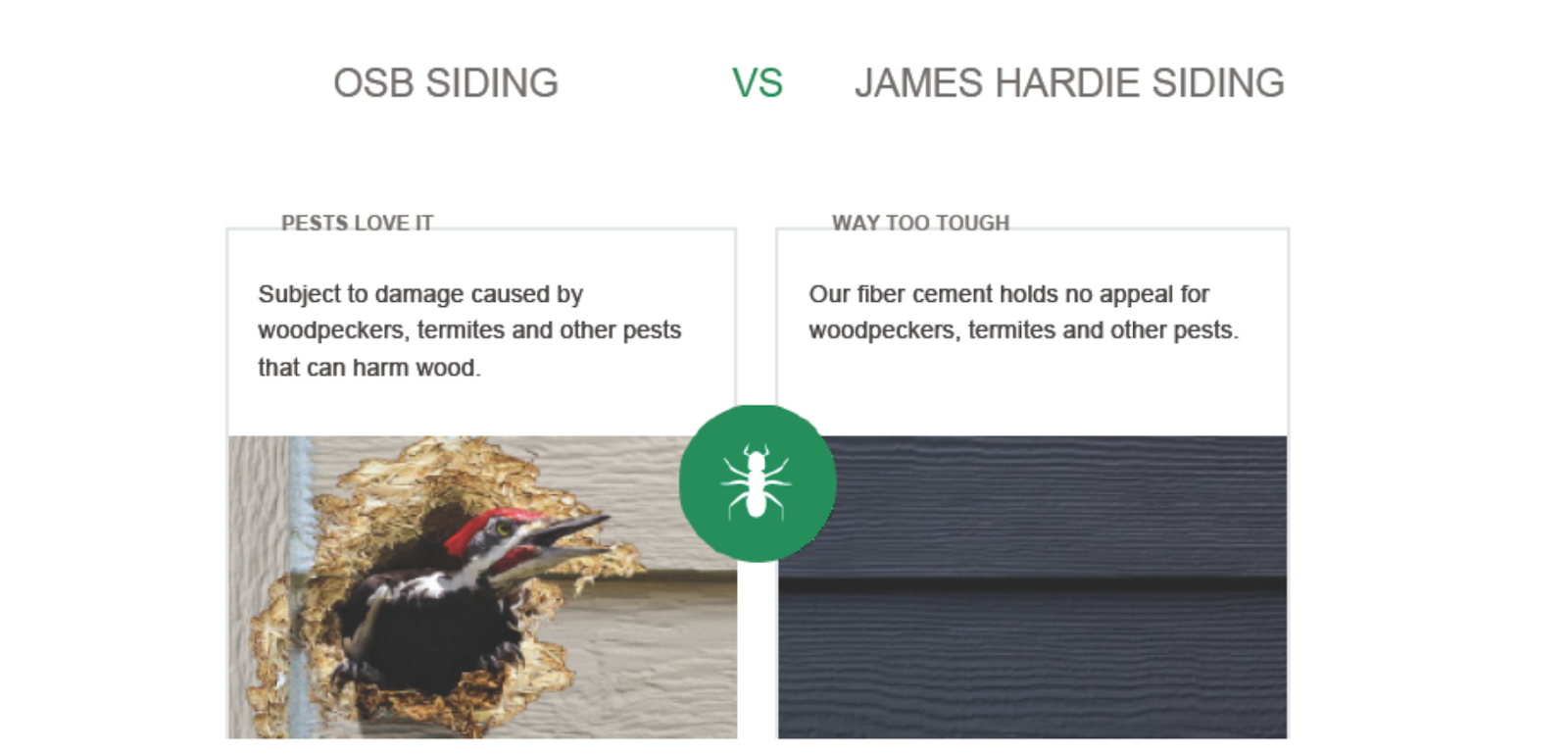
Because termites, woodpeckers, and other pests may be able
to damage engineered-wood building siding such as that which LP sells, the district
court correctly denied LP a preliminary injunction
to stop its competitor Hardie
from advertising LP’s siding as vulnerable to pest damage.
LP makes “engineered-wood” siding—wood treated with zinc
borate, a preservative that poisons termites; Hardie sells fiber-cement siding.
Hardie advertised that “No Wood Is Good,” claiming that all wood siding—however
“engineered”—is vulnerable to damage by pests. Its marketing materials included
(1) digitally-altered images and video of a woodpecker perched in a hole in
Louisiana-Pacific’s siding; and (2) nearby text boasting both that “Pests Love
It,” and that engineered wood is “[s]ubject to damage caused by woodpeckers,
termites and other pests.”

Was the digitally altered image/video literally false? A
Hardie rep noticed that a home fitted with LP siding had a fist-sized hole; he
photographed the damage and the photos ended up with Hardie’s ad agency. The
agency used one photo in “No Wood Is Good,” “sharpening the image’s colors,
darkening the interior of the hole to make it appear deeper, and superimposing
a woodpecker.” Still, this wasn’t literally false. “The Lanham Act doesn’t
require advertisers to lie in wait, cameras in hand, for an actual woodpecker
to drum away at a house’s siding. Reasonable consumers know that marketing
involves some level of exaggeration, and some amount of digital retouching to
tell a story. Here, neither party contests that the photograph depicts a real
hole in Louisiana-Pacific’s siding. And no reasonable consumer would expect
that Hardie caught a woodpecker in flagrante delicto.” (Footnote: LP challenged
Hardie’s expert’s qualifications to opine on the source of the hole, but he
testified to 35 years of experience involving wildlife and human structures,
including thousands of woodpecker cases. The district court didn’t abuse its
discretion in crediting the expert.)
Additionally, “the advertisement fairly represents engineered
wood’s susceptibility to woodpecker damage.” LP’s rep testified that the
company had never tested its siding’s woodpecker resilience, had no data to
support any assertion “that our product is resistant to some level against
woodpecker damage,” and “can’t say [woodpecker damage] won’t happen …. [I]t’s
possible.” Hardie’s expert evidence was the picture conveyed an accurate
message— “namely, that a woodpecker probably created the photographed hole, and
that woodpeckers often damage wood-based siding. Thus, though its digital
enhancements might, colloquially speaking, render the image ‘false,’ they are
not the sort of literal falsity the Lanham Act targets.” [Inaccurate, not
false?] In other words, LP “proffered no evidence that the photographs
misrepresent woodpecker behavior,” so it didn’t show literal falsity.
Nor did LP show misleadingness. It wasn’t enough to offer
(1) testimony that Hardie intended the advertisements to affect
consumer-purchasing decisions, (2) documentation that the campaign’s
advertisements reached a large audience, and (3) a Hardie study demonstrating
that consumers rely on manufacturers’ websites for product information, and
that an ad featuring a woodpecker nesting in a hole would be more likely to
persuade consumers than just a photo of a hole. None of the evidence showed
that that Hardie’s ads “tricked buyers into believing an untruth (here, that
woodpeckers peck holes in Louisiana-Pacific siding when they actually do not).”
LP also challenged the tagline “Pests Love It,” but that was
just puffery. “No reasonable purchaser would believe that Hardie knows—or could
discover—whether pests ‘love’ engineered-wood siding” or that it conveyed a
quantifiable, objective fact about pest preference. Context can turn puffery
into empirically verifiable claims; LP argued that the accompanying phrase, “[s]ubject
to damage caused by woodpeckers, termites and other pests that can harm wood,”
had been proved false by tests that rated both engineered-wood and fiber-cement
siding as completely resistant to termite damage.
Hardie disputed the interpretation of the tests, and noted
that LP’s siding resists damage because it’s treated with zinc borate, but
termites must still eat small amounts before the zinc borate poisons the
termites. Hardie argued that its statement was truthful, or at least ambiguous.
LP rejoined that such grazing causes no structural or obvious aesthetic damage,
but its own experts admitted that grazing results in some damage. And LP’s
warranty explicitly excluded non-structural termite damage. Under the
circumstances, the question was whether reasonable consumers would interpret
Hardie’s use of the word “damage” to unambiguously mean structural damage. LP
didn’t show that they would. And again, LP didn’t show that consumers were
misled with extrinsic evidence.

from Blogger https://ift.tt/2KTvR5q

Posted in Uncategorized | Tagged | Leave a comment

Court formulates survey question in consumer protection case

Moorer v. Stemgenex Medical Group, Inc., No.
16-cv-2816-AJB-NLS, 2019 WL 2602536 (S.D. Cal. Jun. 25, 2019)
This “complex and troubling case” involves allegedly false
advertising of stem cell treatments; the court found it “narrowly” certifiable
and—unusually—specified the consumer survey questions to be asked by an expert
seeking to test materiality/damages. Plaintiff brought the usual California
claims, and an elder abuse claim, against defendants, alleging that they falsely
and without support claimed that the treatments “effectively treat a multitude
of diseases.” [Sounds like the FDA should be taking notice, too, as it has for other
stem cell promoters.]  They allegedly
advertised that “100% of its prior consumers are satisfied with its service” (“Patient
Satisfaction Ratings” or “PSR”), while omitting material information about its
services, including consumer dissatisfaction and complaints regarding the
ineffectiveness of the treatments. Plaintiff Moorer, suffering from lupus, and plaintiff
Gardener, suffering from diabetes, each allegedly relied upon the customer
satisfaction statistics and paid $14,900 for the treatment, did not benefit
from the treatment, and told defendants. They alleged that they would “not have
paid for the Stem Cell Treatment had they known that the statistics on the
StemGenex website regarding consumer satisfaction were false, and that
StemGenex had no reasonable basis for its marketing claim that the Stem Cell
Treatments were effective to treat diseases as advertised.”
Defendants sought to strike an expert report analyzing what
effect the PSR had on a consumer’s decision to purchase the treatment. The
court denied the motion; the expert had relevant expertise in consumer behavior
and marketing.  The proposed survey to
determine damages would ask, in essence, (1) how important is the recommendation
of previous customers to your decision to pursue a medical procedure, and (2)
how important are price differentials in out-of-pocket expenses for a procedure.  Then it proposed to ask:
Assume that there was a procedure
that could substantially improve [their medical condition]. The procedure costs
$14,900, all of which you would have to pay yourself. Everyone who has had the
procedure (100% of all patients receiving the procedure) report satisfaction
with the results, that is, all patients reported that the procedure met or
exceeded their expectations and were satisfied or extremely satisfied with the
outcome. Now assume that you are considering this procedure and learn that not
all patients were satisfied. In fact, you learn that only 50% of all patients
who obtained the procedure reported any major improvement. Would you still
consider this procedure given what you now know about the potential benefit?
The proposed answers were: Yes, I’ll try anything that might
help; Yes, if I were offered a discount on the price; No; or Don’t know. For
those who indicated they required a discount, the respondents would then be
asked how much of a discount they would want, starting with a minimum discount
of 5% and up to “more than 65%.”
The court found that this was a relevant question, but
directed that it be changed to match the actual language defendants used, with
this as an example (it could be changed but had to follow the court’s basic
directions):
Assume that there was a procedure
that could substantially improve [their medical condition]. The procedure costs
$14,900, all of which you would have to pay yourself. The providers of the
procedure report that 100% of its prior consumers were satisfied with the provider’s
service. Now assume that you are considering this procedure and learn that the
patient’s statements of satisfaction were obtained in exit interviews following
receiving the procedure. Further you learn that only 50% of all patients who
obtained the procedure reported any major improvement following the procedure.
Would you still consider this procedure given what you now know about the
potential benefit?
Comment: The court didn’t explain the legal or factual basis
for the change, but it might well have some interesting effects on the
answers.  In particular, the revision
makes it much clearer—without saying as much—that the providers misleadingly
advertised satisfaction.  (“Satisfaction”
itself can be misleading because reasonable consumers are likely to focus on
the medical effects of the procedure, not on whether the procedure seemed to go
as planned, which is the only question patients can answer at an exit interview.)
The extra element of learning that the providers overclaimed might have independent
effects on consumers’ willingness to trust the underlying procedure, as
compared to a question (perhaps in a control group) in which the consumers are
given the truth at the outset and the 100% satisfaction claim never appears.  There is no neutral baseline from which to
assess the appropriate question; I definitely see the case for asking people
whether it would matter that the provider misstated the truth, because that can
and probably should matter to consumers in taking a chance on an unproven medical
treatment.
Another expert report purportedly showed that a pie chart in defendants’
advertising was material and misleading. 
In a survey, respondents were shown screenshots of the
defendants’ web homepage on two different dates. One group saw four pie charts regarding satisfaction with overall experience, the medical
team, if StemGenex was a trusted partner, and whether patients would recommend
StemGenex. The other group saw a screenshot with nine pie
charts, however, in this version all pie charts included a disclaimer stating,
“patient satisfaction ratings above represent data received from patient exit
surveys evaluating patient experience and care, accommodations, staff and
facilities.” The survey asked respondents to rank various statements which
appeared on the screenshots to show which statement “most generated [their]
interest in StemGenex stem cell therapy.” There was only one specific option
based from factual information, selected from the overall experience Pie Chart;
the others were puffery. Anything ranked in the top four was considered material.
The next part of the survey asked respondents what they
thought patients were referring to in the Overall Experience Pie Chart.
Respondents were given five options, one of which being effectiveness of the
product. Defendants argued that only 38% stated the Pie Chart meant
effectiveness, though that would be a pretty big number in a Lanham Act case. Without
a control group, defendants argued, the survey couldn’t determine causation.  Plaintiffs argued that the survey compared
two versions of the same page—which is true; the survey does effectively test
whether the disclaimer does any work to change the meaning consumers take away
from the pie charts/diminish the message that the procedure is medically
effective.  But they also argued that
there was no control group (as to the pie charts) because the research goal was
to examine “the presence or absence” of the patient satisfaction ratings to
causally establish the impact the charts had on the consumers’ decisions
whether to undergo stem cell therapy.  Plaintiffs, and possibly everyone, got a
little mixed up about distinguishing what the control should be from whether
there is a control
.  As I noted
above, choice of proper control is a normative decision; the best discussion is
Richard Craswell, “Compared to What?”: The Use of Control Ads in Deceptive
Advertising Litigation, 65 Antitrust L.J. 757 (1997).  Anyway, the court said that the report couldn’t
be used to show causation, but could be used to show materiality of the pie
chart.  “The simple fact is that
Defendants put out an overly vague statement and created confusion where
different interpretations might lie. Defendants cannot then turn around and use
that confusion as a shield.”
As for certification, though there were concerns about
variation among patients, “this is a marketing case, not a medical one,” and even
though damages might differ that wouldn’t prohibit class treatment.  Similarly, defenses such as whether consent
forms cured any misrepresentations before the treatment [consumer protection
law answers no by prohibiting bait and switch techniques] were applicable to
the entire class.  Defendants argued that
consumer motivations for the therapy were highly varied and individualized, but
the common questions weren’t affected by those motivations: (1) whether
Defendants misrepresented the PSRs; and (2) whether the misrepresentation was
likely to deceive a reasonable consumer. 
Under the relevant laws, the plaintiffs only need to show that members
of the public were likely to be deceived—no proof of individualized reliance would
be necessary. Although there was varying testimony about what named plaintiffs
remembered about the PSR/pie charts, only exposure was necessary classwide, not
reliance. And under the CLRA, reliance is inferred for fraudulent and negligent
misrepresentation claims if material misrepresentations are made to an entire
class.

from Blogger https://ift.tt/31Z4tID

Posted in Uncategorized | Tagged , , , | Leave a comment

law firm raises significant 1A questions over nursing home-specific advertising law

Wilkes & McHugh, P.A. v. LTC Consulting, L.P., —
S.E.2d —-, 2019 WL 2570982 (Ga. Jun. 24, 2019)
Georgia revised its anti-SLAPP law to be more like
California’s (though apparently without the exception for commercial
advertising) and the state supreme court here interprets the revised version
for the first time, sending the case back to the trial court for some actual
findings about whether the law at issue violates the First Amendment.
LTC Consulting sued law firm Wilkes & McHugh, P.A. and
one of its attorneys for violations of a Georgia statute governing nursing
home-related advertising, deceptive trade practices, and false advertising
after the defendants ran full-page advertisements in local newspapers targeting
patients of plaintiffs’ nursing homes.
The ads arose “from acts that could reasonably be construed
as acts in furtherance of the defendants’ right of free speech under the United
States Constitution in connection with an issue of public interest or concern,”
triggering the anti-SLAPP law and shifting the burden to the plaintiffs to
establish that there was a probability that they would prevail on their claims.
But “the parties and the trial court overlooked certain preliminary questions,
which also have not been adequately briefed here.” Specifically, the trial
court thought plaintiffs had sufficiently shown a likelihood of success on
violation of the nursing home advertising law, but that law itself (1) might
not cover defendants’ ads (though it sure looks like it would) and (2) might be
unconstitutional if it did.  Those issues
had to be resolved before likelihood of prevailing could be assessed. Back to
the trial court they go!
I’m much more interested in the underlying First Amendment
question than the anti-SLAPP part.  Defendants
ran ads referring to specific nursing homes and to the results of one or more
legally required government “surveys,” or inspections, of the nursing home
named in the ad.  Each ad stated across
the top in a large font and all capital letters, “THIS IS A LEGAL
ADVERTISEMENT,” followed by a larger, reverse-background stripe stretching all
the way across the page and containing the contrasting words “IMPORTANT NOTICE”
in a still larger font.
The ads stated, “If your loved one has been a resident at” [nursing
home name/address, with the name very large], “[t]his facility has been cited
for multiple deficiencies* including” multiple paragraphs, each beginning with
the word “FAILURE.” The text “purported to recount the deficiencies for which
each nursing home had been cited in a government survey conducted on one or
more dates listed. The text also stated the date by which each deficiency was
corrected and described the level of harm from each deficiency and the number
of residents affected.” Then there was a “densely worded” asterisked paragraph
“that, among other things, said that the ads were not authorized or endorsed by
any government agency, provided information on the survey process and average
numbers of cited deficiencies at nursing homes in Georgia and in the United
States, and listed a government website where those interested could find
additional information.”  The ad then
said, in large font, “POOR CARE AND UNDERSTAFFING CAN LEAD TO: BEDSORES,
CHOKING, FALLS, BROKEN BONES, DEHYDRATION, INFECTIONS/ SEPSIS, MALNUTRITION, OR
UNEXPLAINED DEATH” and solicited people with loved ones who were residents to
contact defendants.
Plaintiffs alleged that 91% of nursing homes surveyed are
found to have “deficiencies” and that the defendants did not include in the ads
all the information required by the law, and also that the ads deceptively
omitted important facts and falsely implied that residents of the plaintiffs’
nursing homes had suffered “BEDSORES,” “BROKEN BONES,” and “DEATH” from the
cited deficiencies. One ad allegedly falsely stated that four of the
deficiencies “constituted minimal harm or the potential for actual harm,” when
in reality those four deficiencies were cited at the “D” level, meaning that
there was no actual harm.
Plaintiffs alleged violation of OCGA § 31-7-3.2’s recently
enacted subsection (j), which imposes limitations on advertisements that use or
reference the results of federal or state surveys or inspections of nursing
homes, as well as Georgia’s Uniform Deceptive Trade Practices Act and two state
false advertising statutes, one specific to ads for legal services.  The trial court granted a TRO, which enjoined
the defendants from publishing “any false, fraudulent, deceptive and misleading
advertisements concerning the Plaintiffs”; the existing ads, and other ads not
complying with the nursing home-specific law.
The nursing home law says:
(j)(1) The results or findings of a
federal or state survey or inspection of a nursing home facility, including any
statement of deficiencies or reports, shall not be used or referenced in an
advertisement or solicitation by any person or any entity, unless the
advertisement or solicitation includes all of the following:
(A) The date the survey was
conducted;
(B) A statement that the Department
of Community Health conducts a survey of all nursing home facilities at least
once every 15 months;
(C) If a finding or deficiency
cited in the statement of deficiencies has been substantially corrected, a
statement that the finding or deficiency has been substantially corrected and
the date that the finding or deficiency was substantially corrected;
(D) The number of findings and
deficiencies cited in the statement of deficiencies on the basis of the survey
and a disclosure of the severity level for each finding and deficiency;
(E) The average number of findings
and deficiencies cited in statements of deficiencies on the basis of surveys
conducted by the department during the same calendar year as the survey used in
the advertisement;
(F) A disclosure of whether each
finding or deficiency caused actual bodily harm to any residents and the number
of residents harmed thereby;  and
(G) A statement that the
advertisement is neither authorized nor endorsed by any government agency.
(2) In addition to any other
remedies and damages allowed by law, a party found to have violated paragraph
(1) of this subsection shall be liable for attorney fees and expenses of
litigation incurred in an action to restrain or enjoin such violation;  provided,
however, that damages, attorney fees, and expenses of litigation shall not be
recoverable against any newspaper, news outlet, or broadcaster publishing an
advertisement or solicitation submitted by a third party for a fee.
RT: The newly enacted provision is pretty clearly enacted to
protect nursing homes against negative reputational consequences from
surveys/inspections, and I understand why—no one likes dirty laundry aired, and
it is also the case that things labeled deficiencies might not necessarily be
all that bad—risky, or diagnostic of imperfect procedures, which is itself not
a great thing but may be common enough that no nursing home could expect to be
above reproach. And one might further conclude that consumers are likely to
overweight officially reported deficiencies compared to their actual
seriousness—but that conclusion will have a hard time weathering current First
Amendment scrutiny.  Doing this as a
disclosure regime helps, but courts vary in the degree of rigor with which they
evaluate how burdensome a disclosure like this can be. I wonder if the
regulators could instead relabel minor deficiencies as “concerns” (or, heck,
“fizzbins”), leaving the same regulatory consequences (if you don’t remediate
concerns sufficiently, you can lose your license, etc.) without requiring as
much regulation of advertising.
Anyway, lawyer advertising has some First Amendment
protection, and “the alleged existence of serious injuries and deaths at local
nursing homes resulting from deficiencies known to a government agency
certainly qualifies as a public issue or an issue of public concern. Thus,
running the ads could reasonably be construed as an act in furtherance of the
defendants’ constitutional right of free speech in connection with a public
issue or an issue of public concern,” so the anti-SLAPP law’s threshold
requirements had been met.  Plaintiffs were
thus required to demonstrate that their claims were both legally sufficient and
supported by a sufficient prima facie showing of facts to sustain a favorable
judgment if their evidence is credited. In doing that, the plaintiffs’ evidence
is accepted as true, and the defendants’ evidence is evaluated only to
determine if it defeats the plaintiffs’ showing as a matter of law.
The trial court said only that plaintiffs demonstrated a
probability of prevailing “by submitting a verified complaint citing to the
Georgia statute limiting the use of survey data and by prevailing on their
temporary restraining order on the same issue before this Court.”  The transcript revealed no further
explanation. That wasn’t enough.  First,
the court thought that the law establishing Georgia’s regulatory framework for
hospitals and related institutions was “an unlikely place to find a statute
regulating attorney advertising” and might contemplate enforcement only by the
AG, not private parties.  “If the most
natural reading of the statutory text is that the cited statutes do apply to
the defendants’ ads, there is a constitutional separation of powers issue that
might require reading them not to apply. There is also a significant First
Amendment issue with respect to the application of each statute here,” which
wasn’t adequately addressed. Given that “the particular claims at issue in this
case implicate complex and important questions of statutory interpretation and
constitutional law,” the trial court should go back and do that.

from Blogger https://ift.tt/2YgHgiB

Posted in Uncategorized | Tagged , , , | Leave a comment

failure to show causation dooms duelling flange false advertising claims

Boltex Mf’g Co. v. Galperti, Inc., 2019 WL 2568338, No.
H-17-1439 (S.D. Tex. Jun. 21, 2019)
This is a false advertising and unfair competition case
about normalization, “a costly heat treatment process that changes the physical
composition of carbon steel to increase its toughness and ductility.” ASTM standards
require heat treatment for certain types of flanges; normalization is one
available method, and though the standards don’t require it,  many customers do.  Boltex alleged that defendants advertised
their flanges as normalized when they aren’t. Galperti counterclaimed that: (1)
plaintiffs Boltex and Weldbend falsely advertised their products as “Made in
the USA” and/or “American Made”; (2) Weldbend made misrepresentations regarding
the “traceability” of its flanges from manufacture in the US through to the
customer and yield strength; and (3) Boltex made misrepresentations in the
Reference Manual published on its website.
Defendants argued that plaintiffs couldn’t show harm. Plaintiffs
argued that this was a comparative advertising case in which harm could be
presumed, but it wasn’t enough to argue that Galperti sells the same type of
flanges or uses “Boltex’s own price list in describing [their] flanges” in an email
exchange, where there was no explicit comparison.  There was evidence that Boltex is one of the
few companies that offers a price sheet and that many competitors may use
Boltex’s price sheet as a guideline to set their prices.
Anyway, it wouldn’t make sense to presume harm here. The
presumption exists because “[a] misleading comparison to a specific competing
products necessarily diminishes that product’s value in the minds of the
consumer.” There is no reason to suggest that the value of plaintiffs’ flanges was
diminished by use of the price sheet.
There was no admissible evidence of injury. Plaintiffs offered
only hearsay from their salespeople who said that customers told them they’d
gone with defendants instead.  [Note that
it’s not hearsay when the salespeople testify that customers told them that
defendants had offered the same product for less, because those customer
statements are not submitted for the truth of the matter asserted.]  Motion for summary judgment granted.  I find this result a bit surprising, assuming
the underlying correctness of the falsity allegations, but it gives plaintiffs
a hell of an advertising tool.
Fortunately for plaintiffs, I guess, defendants also couldn’t
show causation in their counterclaims.  “In
some cases, a party need not provide direct evidence of injury if the party
provides evidence that the parties were competitors and that the plaintiff was
in some way injured.” But the jury still needs sufficient evidence to make the
inference.  [I would have thought that
the vital materiality of normalization would have counted in this case; if
there’s a real subset of customers that won’t buy without it, and if plaintiffs
set the standards in the industry with their price sheet as the reference
point, I would’ve let the jury see it.]  There wasn’t evidence that would allow a jury
to infer that the parties compete in the market for US-sourced flanges [which
is to say that the alleged misrepresentations most obviously harm other,
truthful “made in the USA” advertisers—though that itself seems dubious; it’s
easy to imagine people who prefer made in the USA if they don’t have to pay too
much of a premium for it but do choose between multiple national origins.]  It wasn’t enough to have Boltex’s president’s
statement that he “generally considers flanges that are made from U.S. material
and flanges made from non-US material to be competing with each other.” [Again,
seems like grist for an ad campaign, if the charges are accurate.]

from Blogger https://ift.tt/2YcZTE1

Posted in Uncategorized | Tagged | Leave a comment

The probiotic worm turns: previous PI loser wins $15 million in Lanham Act case

De Simone v. VSL Pharmaceuticals, Inc., No. TDC-15-1356, 2019
WL 2569574 (D. Md. Jun. 20, 2019)
Previous
discussions.  The parties compete in offering a probiotic
product; De Simone used to license his formulation to VSL, then went out on his
own.  VSL had done well in previous iterations
of this case in preventing the De Simone parties from, among other things, truthfully
referring to scientific studies of the De Simone formulation where the studies
used the then-current VSL trademark to identify the object of study, a
restriction I think violates the First Amentment.  But before a jury, De Simone did well, and the
court declined to disturb that result. The jury awarded $15 million against
Alfasigma for Lanham Act false advertising. 
De Simone’s new partner, ExeGi, sought a permanent injunction against
defendants Leadiant and Alfasigma, and they also asked for attorney’s fees,
costs, and pre- and post-judgment interest.
ExeGi asked the jury to award it nearly $28 million,
representing Alfasigma’s profits from sales of VSL#3 from July 1, 2016 through the
end of trial.  A court has discretion to
enter judgment for a “just” sum of the defendant’s profits, as long as it’s
compensation and not a penalty.  Relevant
factors, derived from trademark cases, are: (1) whether the defendant had the
intent to confuse or deceive, (2) whether sales have been diverted, (3) the
adequacy of other remedies, (4) any unreasonable delay by the plaintiff in
asserting his rights, (5) the public interest in making the misconduct
unprofitable, and (6) whether it is a case of palming off. The court declined
to disturb the jury verdict.
The evidence established that the VSL parties’ senior
management “knew that in producing a new version of VSL#3 in Italy (“Italian
VSL#3”), they had not been able to precisely replicate the original proprietary
mix,” so the false advertising was deployed with the intent to confuse or
deceive. There was testimony supporting a finding of sales diversion, and the
false advertising “had the effect of ‘palming off’ Italian VSL#3 as the same as
the original VSL#3 product now sold by ExeGi as Visbiome.”  [VSL can’t truthfully advertise based on the older
scientific studies; as I noted before, to say that ExeGi can’t use those
studies either because the trademark no longer matches the formulation is
perverse.]  ExeGi was a new company so
its own lost profits weren’t adequate compensation; it didn’t delay in asserting
its claims; there’s a public interest in not being misled “into believing that
a particular product offered to address health needs will have the same
efficacy as a trusted product when that has not been established.” However,
there wasn’t definitive evidence that differences between the formulations
rendered new VSL #3 “unsafe or clinically ineffective for all of its users,”
which strikes me as a pretty high standard (would you be happy with a
formulation switch that was unsafe/ineffective for 25% of users?).  The jury award wasn’t excessive, but was “sufficiently
substantial,” given ExeGi’s status as a startup with limited marketing
resources.
Permanent injunction: In passing off new VSL #3 as the De
Simone formulation, defendants deprived the De Simone parties “of a legitimate
competitive advantage and reduced consumers’ incentive” to purchase their
product Visbiome, which actually contains the De Simone formulation, which
constituted irreparable injury: it led consumers not even to consider
switching. The monetary remedy was inadequate compensation, because past awards
didn’t prevent the offender “from infecting the marketplace with the same or
similar claims in different advertisements in the future.” Plaintiffs argued
that Alfasigma continued to advertise a continuity between new VSL#3 and the De
Simone formulation, and ExeGi’s CEO provided uncontradicted trial testimony that
this false claim was hampering ExeGi’s ability “to leverage the benefits of the
brand,” so money was inadequate.  The balance
of hardships also favored an injunction; ExeGi, “cannot fairly compete” until
Alfasigma and Leadiant “stop[ ] infecting the marketplace with misleading
advertising.” And stopping false advertising is in the public interest,
especially for health-related products.
However, defendants wouldn’t be required to make affirmative
statements about ExeGi’s Visbiome and to issue corrective advertising. Instead,
the injunction would target defendants repeated false assertions in their
advertising that new VSL#3 continued to be composed of the De Simone formulation,
including but not limited to statements claiming that VSL#3 continues to
contain the “original proprietary blend” or the “same mix in the same
proportions.”  This was false vecause new
VSL#3 was an attempt to reverse engineer the original formulation and wasn’t an
exact replication.  The VSL parties were
also enjoined from citing any clinical study performed on the De Simone formulation
or implying that any such study was conducted on new VSL#3.  [Thought experiment: assume the FTC/FDA
argued that VSL couldn’t engage in such advertising.  What First Amendment standard would you expect
a court to employ?  Should a court accept
“they’re not the same” as enough evidence of falsity without proof that the
differences made a clinical difference?]
Attorneys’ fees: ExeGi prevailed on its false advertising
claims, and the VSL parties voluntarily dismissed their Lanham Act
trademark/false advertising claims with prejudice, making the De Simone parties
prevailing parties for all the Lanham Act claims in the case.  Still, under Octane Fitness, a fee
shift was unwarranted; “there was no unusual discrepancy in the merits of the
parties’ positions,” especially given that the VSL parties got two preliminary
injunctions. And even though the jury didn’t credit the VSL parties’ evidence on
the equivalence of the parties’ products, that didn’t mean their arguments were
frivolous or objectively unreasonable, and the jury didn’t necessarily find bad
faith.
As for the manner of litigation, neither party covered itself
in glory.  Nor was a fee award necessary
for compensation and deterrence given the damages and injunctive relief
achieved.
De Simone v. VSL Pharmaceuticals, Inc., No. TDC-15-1356, 2019
WL 2570068 (D. Md. Jun. 20, 2019)
Here’s the related Rule 50/Rule 59 decision, rejecting defendants’
motions.  Along with the $15 million to
ExeGi from Alfasigma, the jury awarded almost $1 million to De Simone from VSL
for breach of contract and almost $1.9 million for unjust enrichment from VSL
and defendant Leadiant, and rejected VSL’s counterclaim against De Simone
alleging breach of fiduciary duty.
Rule 50: A district court may overturn a jury verdict by
rendering judgment as a matter of law only if there is no “legally sufficient
evidentiary basis to find for the [prevailing] party on that issue.”  Alfasigma argued that none of its challenged
ads met all the elements of a Lanham Act claim. The claim turned largely on
three challenged items: a page of the VSL#3 website entitled “VSL#3: new
formula dairy-free,” a similar press release, and statements made on the VSL#3
Facebook page.  Viewed in the light most
favorable to ExeGi, the evidence was enough to show that, at a minimum, the webpage
satisfied all the elements of false advertising, since it claimed that the
manufacturer had “revert[ed] back to an established process that removes all
dairy while maintaining the original proprietary mix of eight strains of live
bacteria.” Likewise, Leadiant’s letter to healthcare providers, which was sent
to hundreds of doctors around the United States, also constituted false advertising
when it stated that “VSL#3 is the same quality product, containing the same
genus and species of bacteria, in the same proportions that you have come to
expect.” Both the webpage and the letter “were disseminated in a manner
sufficient to constitute commercial advertising placed in interstate commerce.”  There was sufficient evidence of literal
falsity. ExeGi submitted expert testimony that the new version of VSL#3 had
only seven strains of live bacteria, not eight, and that based on a
fermentation analysis, the two products would degrade compounds differently and
thus function differently. VSL’s president/CEO also acknowledged that in
reverse engineering the formulation, “you can determine a certain range of the
presence of the strains but you cannot precisely assess the exact quantity of
the strains,” so its scientists were “not able to give a precise indication of
the percentage of each strain[ ] contained” in VSL#3, or a “formal” range for
such proportions, but instead could only measure the amount of each strain with
a margin of error of 30 percent.
Alfasigma argued that, under the terrible In re GNC Corp.,
789 F.3d 505 (4th Cir. 2015) decision, “when the statement underlying a Lanham
Act false advertising claim is based on scientific representations, the
statement cannot be found to be literally false unless ‘all reasonable experts
in the field agree that the representations are false.’” VSL’s expert testified
that VSL#3 had eight strains of bacteria, and that the relative ratios of
strains was “indistinguishable within one percent,” but he didn’t testify that
the ratio of the strains in Italian VSL#3 were the same as the “original
proprietary mix” of the De Simone formulation.  The court misdescribed GNC as involving
a Lanham Act false advertising claim—it was a California state law claim and
thus GNC’s mangling of Lanham Act distinctions was dicta as to Lanham
Act claims—but also emphasized the language that “[w]hen litigants concede that
some reasonable and duly qualified scientific experts agree with a scientific
proposition, they cannot also argue that the proposition is ‘literally false.’
” The court here concluded: “GNC thus does not broadly hold that a false
advertising claim based on a statement grounded in science must fail if the
defendant presents an expert witness supporting its position. In the absence of
a concession that the statement is the subject of reasonable scientific debate,
that question is properly decided by the jury.” 
Indeed, the court [unnecessarily] gave a defendant-friendly
jury instruction that: “If an alleged false statement states a scientific
proposition, and you find that there is a reasonable difference of scientific
opinion about that proposition, that is, duly qualified experts in the field
have a reasonable disagreement about the accuracy or validity of the
proposition, the challenged statement is not ‘literally false.’” The jury could
reasonably conclude that to the extent there was a disagreement about the
number of strains in Italian VSL#3, or whether Italian VSL#3 contained the same
original proprietary mix as the De Simone formulation, it wasn’t a reasonable
disagreement. The plaintiffs presented other evidence and experts beyond those
already described: an expert in the field of proteomics, the study of how genes
produce proteins and what proteins they produce, stated that based on his
comparative proteomic testing of VSL#3 and Visbiome, “the two products were
very different,” with a 25 percent difference in the protein expression of new
VSL#3 and Visbiome, meaning that of the approximately 4,000 proteins identified
in the two products, about 1,000 of them were different. The expert concluded
that this difference in protein expression would “result in different
performance.” A Professor of Gut Physiology and Pediatric Gastroenterology at
Harvard Medical School who testified as an expert in the use of probiotics for
the management of gastroenterological and immunological disorders stated that
based on his review of various scientific studies comparing the De Simone formulation
with new VSL#3 that “the new formulation from Italy is not … comparable to
the formulation that is from the United States.”
Plus, the jury could have concluded that the number of
strains or the proportion of those strains were different based on “non-scientific
evidence,” to wit, regulatory filings made by VSL to Health Canada in 2013 and
2018 describing the composition of VSL#3 differently (with eight strains and
seven strains respectively).  What makes
this “non-scientific”?  GNC is
nonsense, and nonsense decisions create nonsense distinctions.
Anyway, there was also evidence that the challenged
materials were literally false when they said that the manufacturing of VSL#3
would be “moving back to “the original manufacturing facility in Italy,” and produced
“in the same facility that [VSL#3] was originally produced,” since VSL#3 had
“always” been produced for commercial sale in manufacturing facilities in the
United States.
Materiality: The false statements on the number and
proportions of strains were “plainly” material because they related to an
“inherent quality or characteristic” of VSL#3. Plaintiff’s expert testified
that new VSL#3 was not comparable to the De Simone formulation; that, based on
those differences it was “not appropriate” to conclude that Italian VSL#3 is
the same product studied in prior clinical trials; and that no doctor would prescribe
a product that was not itself the subject of clinical tests. And the jury could
reasonably infer that the false claim that new VSL#3 was being made in the
“original manufacturing facility” could influence purchasing decisions by
causing purchasers to mistakenly believe that new VSL#3 and the De Simone formulation
were actually the same and that new VSL#3 was supported by the history of
clinical trials relating to the De Simone formulation.  Because of the literal falsity, deception was
presumed.
Injury/proximate causation: The jury could reasonably find
this too. ExeGi’s CEO testified that Alfasigma’s advertising made it hard for
ExeGi to leverage the fact that it had the “real” De Simone formulation.  Plaintiff’s expert testified that the change
in manufacturing locations for VSL#3 and the move to a dairy-free formulation
meant it was neither appropriate nor accurate to claim that VSL#3 continued to
be the “same quality product containing the same genus and species of bacteria
in the same proportions that you have come to expect,” and that to make such a
claim would require VSL#3 to be subjected to efficacy testing to ensure
continuity of outcomes. In total, it was reasonable to conclude that false advertising
about the continuity between original VSL#3 and new VSL#3 was leading
physicians to continue to prescribe VSL#3, and thereby fail to prescribe
ExeGi’s product.
Alfasigma argued that ExeGi showed only correlation, not
causation.  But the evidence about
doctors’ demand for clinical trials, and evidence that it was important to dieticians
to know what strains of bacteria were in VSL#3 and whether those strains
matched up with the product that was the subject of clinical tests so that they
could make informed recommendations to her clients, was enough for the jury to
reasonably find injury/likely injury. 
Unlike in cases cited by Alfasigma, there was no evidence from
purchasers about other reasons they chose new VSL#3 over Visbiome, or
other competitors over Visbiome.  More
fundamentally, unlike in those cases, the false statements at issue weren’t
just one reason among many to buy the product; they were “passing off” of one
product for another. The jury could conclude that there was demand for the De
Simone formulation specifically and that Alfasigma falsely promised to satisfy
that demand.
The profits award was also ok.  A plaintiff who seeks defendant’s profits
must show that the defendant benefited from the false advertising, and the
evidence supported such a finding.
The court likewise upheld the unjust enrichment verdict
based on continued sales of original VSL#3 past the exclusive license date.
Under Kimble v. Marvel Entertainment, LLC, 135 S. Ct. 2401 (2015), licensing
provisions providing for “post-expiration royalties are allowable so long as
tied to a non-patent right—even when closely related to a patent.” Here, the
situation was exactly like Kimble’s example of a post-patent royalty
tied to trade secrets. De Simone’s exclusive licenses covered first his patent
and later his know-how even after the expiration of the patent; although the royalty
amount didn’t decrease post-patent, at most that would render the royalty
provision unenforceable. But the jury found defendants liable not for breach of
contract, but for unjust enrichment, because they were able to continue to sell
VSL#3 without paying royalties to De Simone for his know-how.
For similar reasons, the court declined to grant defendants’
motion for a new trial. Alfasigma argued that it was error for ExeGi’s false
advertising claim to be submitted to the jury because, as ExeGi sought
disgorgement, the claim was equitable in nature. But Dairy Queen, Inc. v. Wood,
369 U.S. 469 (1962), held that the plaintiff in a trademark infringement claim
who sought the remedy of an “equitable accounting” of the defendant’s profits
was entitled to a jury trial. “Although disgorgement may have some history in
equity, ExeGi’s claim required nothing more than the adding up of unjustly
earned profits, a task well within the ken of the jury.”

from Blogger https://ift.tt/31UQtzx

Posted in Uncategorized | Tagged , , , | Leave a comment

The Supreme Court and the Tone Argument (Iancu v. Brunetti)

Iancu v. Brunetti, No. 18–302, 588 U.S. — (Jun. 24, 2019)
Unlike in Tam, we get an opinion for the Court (and
unanimity that the bar on registering “immoral” marks is unconstitutionally
viewpoint-based), which manages to find consensus by (1) not saying very much
and (2) backing away from some of the things in Tam that treated the
case like one involving a penalty for an applicant’s speech rather than a
failure to give a government benefit to the applicant.  Still doesn’t mention unconstitutional
conditions, but because it goes off on viewpoint discrimination the majority
doesn’t have to; the concurrence/dissents could have but don’t.  In my opinion, this was the best result given
Tam: the Court recognizes, at least implicitly, that much of what the
various opinions in Tam said was corrosive of trademark registration
generally, and it would have been really ugly to declare that disparagement
(which protected all sorts of groups) was viewpoint-based while scandalousness
(which protected the sensibilities of the majority only) wasn’t.
Some observations: The distinction the concurrence/dissents
would like to make between whether the core message of the applied-for mark is
scandalous, or whether the manner of conveying the message is scandalous, could
be made, but could benefit from grappling with what registration is.  That is, in theory we’re looking for symbols
that perform a source-identifying function. 
To the extent that we are distinguishing between FUCT and HAD SEX WITH,
however, it’s not their ability to perform a source-identifying function that
differs.  Implications: (1) The
government’s interest in tone policing isn’t related to the basic purpose of
trademark law; this might matter if we did an unconstitutional conditions  analysis, but might not if the Court, as the
concurrence/dissents suggested, was willing to accept “incentivize the use of
decorous marks” as a legitimate interest. 
(2) As a number of others have noted, if we took functioning as a
trademark
more seriously, many of the parade of horribles that the Court
wouldn’t even mention shouldn’t be registrable anyway because their semantic (“informational”
or “ornamental”) content overwhelms their ability to serve as source
identifiers.
Relatedly, I think it matters that nobody on the Court was willing
to say “fuck” or even “the n-word,” resorting to linguistic workarounds that
probably do as much as anything else to prove that specific words can have
outsized power.  Did they expect a lot of
kids to be reading?  And this prurience has
doctrinal implication, as multiple opinions shied away from offensive words while
insisting that non-offensive versions would convey the same (non-trademark)
meanings, such that a ban on registering those words wouldn’t affect
meaning.  Although I call bullshit on that
as a factual claim, I also don’t think the factual claim is the end of the
story.  Only the Sotomayor (partial) dissent
cited Cohen v. California, and that was to make the point that Cohen
involved a content-based restriction rather than a viewpoint-based restriction.  This is a reasonable argument, but it’s not
the end of a real analysis of when a government program of allocating speech
rights can engage in content-based restrictions.  And since the Court didn’t bother to reject
the Federal Circuit’s reasoning—which relied on the bars at issue being content
based and subject to intermediate scrutiny—we are far from done with this issue.
Specific thoughts on Kagan’s opinion for the Court: The opinion
rejects the government’s attempt to rewrite the statute to focus on whether the
way in which the applicant’s (non-source-identifying) message is expressed is
scandalous, regardless of whether the message itself gives wide offense.  It’s perhaps not surprising that the opinion
doesn’t discuss deference to executive branch interpretations of long standing;
instead, it suggests that the PTO wasn’t mistaken to interpret the bar more
broadly, given the facially broad language of the Lanham Act.  The majority doesn’t opine on a hypothetical
statute that covered only “marks that offend by their mode of expression” or “lewd,
sexually explicit, and profane marks.” Note that these aren’t the same thing—in
particular, the n-word is probably not included in the latter, under an
ordinary meaning of profane or profanity (probably a better word given the
religious meaning of profane).
The opinion seems on particularly solid ground when it
points out that overbreadth analysis is a bad fit for viewpoint-based laws. “Once
we have found that a law ‘aim[s] at the suppression of’ views, why would it matter
that Congress could have captured some of the same speech through a
viewpoint-neutral statute?”
Alito’s concurrence: Vague reference to “viewpoint discrimination”
being tolerated in other countries (insert your own example) and “increasingly
prevalent” in this country, which is pretty perplexing if you think he’s
talking about viewpoint discrimination with the force of law.  (Though perhaps he thinks it’s viewpoint
discrimination if the government removes Christian crosses from public memorials
or bans discrimination against LGBTQ+ people.) 
He’s concurring not because of “moral relativism” (did anyone think he
was?) but because “a law banning speech deemed by government officials to be ‘immoral’
or ‘scandalous’ can easily be exploited for illegitimate ends,” so he’s not
done treating a registration bar like a speech ban.  FUCT could be denied registration under a
more targeted statute, because “fucked” “is not needed to express any idea and,
in fact, as commonly used today, generally signifies nothing except emotion and
a severely limited vocabulary. The registration of such marks serves only to
further coarsen our popular culture.”  So,
some content-based regulations are cool.
Roberts, concurring (on “immoral”)/dissenting: Would accept
the government’s rewrite of “scandalous” to bar marks that offend only because
of their mode of expression.  Notices now,
as he didn’t in Tam, that denial of registration is not denial of a
right to use—it’s not even a denial of a right to use as a mark—and thus a
registration bar requires different First Amendment treatment than a ban
on “vulgar” or “profane” marks.  Argues
now that the government “has an interest in not associating itself with
trademarks whose content is obscene, vulgar, or profane,” without explaining
what “associating itself” means in this context, again contra Tam.  Does not want to give “aid and comfort” to
those using such marks.
Breyer, concurring (on “immoral”)/dissenting: Would do the
same thing, but writes separately to be more of a technocrat and less of a
moralist.  Consistent with his long-held
views, wouldn’t put as much emphasis on the line between content and viewpoint
based regulation, commercial and noncommercial speech, etc.  He would ask whether the regulation at issue
“works speech-related harm that is out of proportion to its justifications.”
Maybe trademark registration is simply commercial speech
regulation, but he’s not sure, because trademarks have “an expressive component
in addition to a commercial one,” though the statute regulates the commercial
function of trademarks. Registration isn’t really government speech, though the
government “may be loosely associated with the mark because it registers the
mark and confers certain benefits upon the owner.”  [Hey, did you know there’s actually empirical
research on this by Daniel Hemel & Lisa Larrimore Oullette
?  Ordinary citizens apparently are roughly
split on whether registration is endorsement, which puts it in the middle of their
reactions to what the case law says is clearly government speech and to what is
clearly not government speech.]  Also, registration
isn’t really a limited public forum, though it has some vague resemblance to
one, and also it resembles cases involving government subsidies for private
speech.  It’s all a big pudding.
Anyway, he didn’t think that a bar on registration of highly
vulgar or obscene words discriminated based on “viewpoint.”  Though these words “often evoke powerful emotions,”
they don’t “typically convey any particular viewpoint.”  And though such a bar would be “arguably” content-based,
trademark law is content-based (citing Sonia Katyal,
Trademark Intersectionality). A registration bar wouldn’t harm First Amendment
interests much, because businesses would remain free to use the terms, even as
marks, and could still register other marks. 
Anyway, trademark is already highly regulated because its mission is to
help consumers identify the source of goods or services, which requires limits
on speech.  “For that reason, an
applicant who seeks to register a mark should not expect complete freedom to
say what she wishes, but should instead expect linguistic regulation.” [Have to
admit, I find this a non sequitur: it regulates speech for a particular purpose,
so it can add in limits for other purposes? 
This is the strength of unconstitutional conditions analysis: it asks
for a program-related justification rather than just allowing the government to
disincentivize speech it doesn’t like because of the accident of having a
benefit to hand out.]
What, then, are the government’s competing interests?  (1) Registration makes the government “necessarily
‘involv[ed] in promoting’” the mark. “The Government has at least a reasonable
interest in ensuring that it is not involved in promoting highly vulgar or
obscene speech, and that it will not be associated with such speech.”  (2) “[S]cientific evidence suggests that
certain highly vulgar words have a physiological and emotional impact that
makes them different in kind from most other words….  These vulgar words originate in a different
part of our brains than most other words. And these types of swear words tend
to attract more attention and are harder to forget than other words.”  [Citing a book about swearing (which, in
fairness, may have actual citations) and a study, since this is not in the
record.] Such words may today include “race-based epithets.” He continues:

These attention-grabbing words, though financially valuable to some businesses
that seek to attract interest in their products, threaten to distract consumers
and disrupt commerce. And they may lead to the creation of public spaces that
many will find repellant, perhaps on occasion creating the risk of verbal
altercations or even physical confrontations. (Just think about how you might
react if you saw someone wearing a t-shirt or using a product emblazoned with
an odious racial epithet.) The Government thus has an interest in seeking to
disincentivize the use of such words in commerce by denying the benefit of
trademark registration.
Finally, although some consumers
may be attracted to products labeled with highly vulgar or obscene words,
others may believe that such words should not be displayed in public spaces
where goods are sold and where children are likely to be present. They may
believe that trademark registration of such words could make it more likely
that children will be exposed to public displays involving such words. To that
end, the Government may have an interest in protecting the sensibilities of
children by barring the registration of such words.
Thoughts: (1) if your goal is deterrence, then ordinary
First Amendment jurisprudence does ask (a) does the government have a
legitimate interest in deterring, as opposed to not being associated with, the
speech at issue? and (b) will it work?  The
parenthetical explicitly collapses the freedom to use the term with the freedom
to register the mark—and imagines what is likely a non-trademark use, to boot.  Given that Breyer has already rested a lot of
weight on continued freedom of use, and also argued that private
companies have incentives to use these terms to attract attention to their
wares despite overall harm to society, this reasoning is incoherent.  I am generally sympathetic to Breyer’s desire
not to be so rigid in categories, but there is a point to asking about whether
the speech suppressive measure at issue actually addresses the harm the government
has posited.  (2) The second paragraph is
even worse.  Some people “may believe” normative
and causal claims—well, are they right? 
Even if they’re not right, did we come to have the “scandalous” bar by
some process in which the legislature reasonably accepted their arguments or evidence,
to which the Court should defer?  [Answer:
No, that’s not what happened because that’s not what Congress thought it was doing
or needed to do.]  
Anyway, he would’ve accepted the government’s narrowing
construction for this facial challenge, trusting to internal agency review to
make sure that the PTO didn’t fall back on its old, bad ways of considering
meaning.
Sotomayor, concurring (on “immoral”)/dissenting, joined by
Breyer: Would have accepted the government’s proposal to limit “scandalous” to obscenity,
vulgarity, and profanity/terms that are offensive because of their mode of
expression and not their content (because she’s outvoted, she doesn’t need to
reconcile the differences between these or explain how the n-word would be
covered).  I don’t have much background
in the law of limiting constructions; the opinion reads to me as coherent and
plausible on this point even if I don’t find the specific project to be worth
very much.
Sotomayor recognizes that these would be content-based limits,
with possibly incidental effects on viewpoints, but that is ok when the content
is sufficiently bad (e.g., a ban on fighting words). [More to the point, it can
also be ok when there’s a government program involved.]  “Governments regulate vulgarity and
profanity, for example, on city-owned buses and billboards, on registered
vessels, and at school events.”  Cohen
v. California
was no help to Brunetti because that was a content-based
speech prohibition.  It’s true
that “without the profanity, the message is not quite the same,” but that just
gets profanity into the loving arms of the First Amendment.  [Sotomayor’s excellent discussion of past
precedent highlights why Tam didn’t involve viewpoint discrimination: it
prohibited disparagement of anyone, rather than aiding a particular side in any
debate, just as she explains that other restrictions of “mode” are
content-based rather than viewpoint-based.]
Once we aren’t talking about viewpoint-based discrimination,
it matters that registration is a discretionary government program.  Although four Justices in Tam [wrongly]
refused to analogize to other government subsidy programs, we can usefully
understand registration as a “beneficial, noncash governmental program,” or as something
like a limited public forum.  Either way,
“reasonable, viewpoint-neutral content discrimination is generally permissible
under either framework.”  (Footnote: not
every registration system would deserve the same treatment, “whether because
not every such system invites expressive content like trademarks or simply
because other forms of registration may not be so ancillary as to qualify
solely as a ‘benefit.’”  I’d think this
was aimed at copyright in particular, but the reference to “expressive” is
unfortunate for that.)
What are the government interests making this content-based
regulation reasonable?Apart from any interest in regulating commerce
itself, the Government has an interest in not promoting certain kinds of
speech, whether because such speech could be perceived as suggesting
governmental favoritism or simply because the Government does not wish to
involve itself with that kind of speech. While ‘there is no evidence that the public
associates the contents of trademarks with the Federal Government,’ registration
nevertheless entails Government involvement in promoting a particular mark.
Registration requires the Government to publish the mark, as well as to take
steps to combat international infringement. The Government has a reasonable
interest in refraining from lending its ancillary support to marks that are obscene,
vulgar, or profane.”
Sotomayor, less a technocrat than Breyer, would want courts
and not just the PTO to police refusals for overextension of “scandalousness”
on an as-applied basis. Sotomayor also identified some other provisions that
could be next on the chopping block: §1052(b) (no flags or insignias); §1052(c)
(no unapproved markers of deceased U. S. Presidents during the lives of their
spouses).  But since the majority goes
off on viewpoint discrimination, they’re likely safe from the Supreme Court’s
holding here, if not from the Federal Circuit’s reasoning below.

from Blogger https://ift.tt/2YeXOrg

Posted in Uncategorized | Tagged , | Leave a comment

lack of specifics, even with certification involved, dooms falsity claim

Hydro-Blok USA LLC v.
Wedi Corp., 2019 WL 2515318, No. C15-671 TSZ (W.D. Wash. Jun. 18, 2019)
Wedi and Hydro-Blok
compete in the market for construction materials and sealants for use in
bathroom systems, including showers. Wedi accused Hydro-Blok of infringing a
patent in 2014; Hydro-Blok filed a declaratory judgment of non-infringement;
this was dismissed after Wedi represented that it didn’t own and wasn’t a
licensee under the patent.  Meanwhile,
Wedi sued defendants for breach of contract and a variety of other claims. The
parties were directed to arbitrate claims for breach of contract, breach of
fiduciary duty, civil conspiracy, and unjust enrichment claims, and also
arbitrated a claim under Washington’s Uniform Trade Secrets Act, which is,
delightfully, known as WUTSA. The arbitrator mostly found against Wedi, and
awarded it $1 in nominal damages on its contract claim.
What remained were
tortious interference, Lanham Act, abuse of process, and Consumer Protection Act
claims against various related defendants. 
Wedi’s abuse of process claims failed. 
Among other things, given its attorneys’ “repeated representations that
wedi owned the ’900 Patent and intended to take legal action to protect ‘its
patent rights,’ Hydro-Blok was not, as a matter of law, required to
independently investigate whether wedi owned or was a licensee under the ’900
Patent before initiating the declaratory judgment action. Moreover, in asking
wedi and wedi GmbH to identify the owners or licensees of the ’900 Patent,
refusing to dismiss the declaratory judgment action in the absence of a
covenant not to sue, and waiting until after wedi and wedi GmbH declared under
oath that they did not own and were not licensees under the ’900 Patent to
forego the litigation, Hydro-Blok did not, as a matter of law, engage in acts ‘to
accomplish an end not within the purview of the suit.’” Gotta admit, none of that
sounds even noticeably aggressive, much less an abuse of process. Nor was it abuse of
process to counterclaim for abuse of process. 
(This sounds like a fun litigation.)
False advertising
under state and federal law:  The key
issues here were puffery and falsity. 
The following claims were puffery: “Cutting of product is dust free and
quick”/“Environmentally friendly lightweight products with CFC-free XPS foam
core”—both of which had to be understood as relative claims, since cutting
mostly produces some dust or debris, and “environmentally friendly” implied
a comparison as opposed to a promise to have no negative impact on the ecosystem.  [These seem like reasons to go for possible
misleadingness over falsity, not reasons these claims are unprovable or even
unbelievable.]  Also puffery because not
measurable: “modified cement coating for maximum adhesion of tile & stone”/“When
laid on a floor with your favourite tile or stone, it is commercially rated.”  I was a little surprised by the last—there was
declaration testimony that “commercially rated” had meaning in the industry relating
to specific ASTM standards and that the Hydro-Blok products were never tested
using the relevant standard, which would indicate it’s not puffery, but the
court concluded that more was required, since the claim didn’t say outright
that it had passed ASTM testing and didn’t include the quantified rating
language used by other competitors (indicating how many cycles of testing the
tile survived), and there was no evidence that customers had been misled.
Other claims were
puffery because they were general opinions of superiority: “the easiest,
quickest and most user-friendly way to build a water-proof shower or tub
surround at a price you can afford.”/ “the better, easier & more
cost-effective way to build complete shower systems”/ “the most efficient,
light-weighted [sic], 100% water-proof, tile-ready shower system, which can be
installed within [sic] couple hours instead of days, by one person”/. “Speed
and ease of installation for commercial applications can not [sic] be beat”/ “The
BETTER Shower System.”
The remaining
factual assertions, “All HYDRO-BLOK products are IAPMO tested & certified” and
“100% WATERPROOF • HCFC-FREE XPS CLOSED-CELL FOAM CORE,” weren’t proven false.
Although the IAPMO certification claim was made before the certification was officially
issued, it did issue before any Hydro-Blok products arrived in the US.  Wedi didn’t show deception or injury
associated with the premature announcement. 
Nor did Wedi show that the IAPMO certification was either obtained or
maintained improperly; the certification agreement barred Hydro-Blok from
making any “substantial change” without prior written approval, which was
defined as any change that would make any of the information on the IAPMO certification
documents false or misleading, or would reasonably be deemed to cause the
product to fail to conform to the applicable standards.  Wedi provided evidence of quality control
issues and use of some different equipment and components, but didn’t show (or
provide expert testimony) that they resulted in a “substantial change.”  With a later certifier, Wedi argued that it
was false/misleading for the new certifier to rely on IAPMO testing and not its
own independent testing, but the certification did in fact issue.  A “challenge to the method by which
certification was granted does not form a basis for a false advertising claim
under the Lanham Act or the CPA.”
HCFC-FREE XPS:
Hydro-Blok products contain HBCD, a fire-retardant banned in Canada, but not in
the United States, but HCFC seems to stands for hydrochlorofluorocarbons, substances
composed of hydrogen, chlorine, fluorine, and carbon. HBCD or
hexabromocyclododecane contains bromine and no chlorine or fluorine, and it is
not an HCFC. Thus, the presence of HBCD didn’t make “HCFC-FREE XPS” false or
misleading.  One test report did show
testing for 62 CFCs and HCFCs; the test came back “not detected” for all but
two, which had levels of 1.0 and 7.3 μg/g. “Although these levels are above the
detection limit of 0.1 μg/g, they are nominal amounts,” and the testing entity
concluded that the product had “—” ozone-depleting substance, making it “essentially
‘HCFC-free.’” 
There was still a
triable issue on tortious interference, given that one individual concededly
shared with some of the defendants confidential information, including
financial data and customer lists, that he acquired while serving as Wedi’s sales
agent.

from Blogger http://bit.ly/31L8tMM

Posted in Uncategorized | Tagged , , , | Leave a comment