TRO against insurer to provide information during open enrollment

PeaceHealth v. Health Net Health Plan, Inc., 2019 WL 5386474,
No. 6:19-cv-01648-MK (D. Ore. Oct. 21, 2019)
Here, the court worries about granting a TRO as compelled
speech even though the speech is quintessentially commercial and the need to
protect consumers great. And then the court goes into great, and perhaps counterproductive, detail about the specifics of the disclosure, go figure.
PeaceHealth “operates hospitals and other healthcare
services in the Northwest, including Oregon and Washington.” It’s “the largest
health care provider in Lane County, Oregon and Clark County, Washington.” Defendants
offer Medicare Advantage (MA) plans to eligible consumers and made statements
that PeaceHealth would be an in-plan provider on defendants’ 2020 MA plans,
which it will not be. On this record, and because it’s open enrollment now and
the information is vital to consumers now but will soon be unhelpful for a
year, the court granted a TRO. (Side note: the state law claim might be better than the Lanham Act claim here, given that it’s not super clear how the conduct at issue affects PeaceHealth’s commercial interest in sales/reputation, but maybe there is mileage in the idea that being wrongly labeled as being in-network is like disparagement in its effects on reputation.)
The parties did have agreements for PeaceHealth to be
in-network for MA enrollees from 2004; in April 2019, Kimberly Hodgkinson,
PeaceHealth’s Executive VP and CFO, informed defendants’ president that PeaceHealth
would terminate the agreements effective January 1, 2020. Similar conversations
in June and July 2019 confirmed this. On September 30, 2019 and again on
October 1, 2019, Hodgkinson called defendants’ newly appointed President and
“reiterated that PeaceHealth would not be an in-network provider under the 2020
MA Plans. I expressed concern that Health Net and Trillium appeared to be
representing to brokers that PeaceHealth would be in-network under the 2020 MA
Plans.” PeaceHealth also sent letters to defendants on Oct. 1 telling them to
stop listing PeaceHealth as in-network on their websites and telling brokers
that PeaceHealth was in-network. “With open enrollment beginning October 15,
2019, time is of the essence.” They met again on October 8, 2019, and
Hodgkinson testifed that, after that, defendants “could not have reasonably
believed that there was any possibility that PeaceHealth would contract with
Health Net or Trillium for the 2020 MA Plans.” [The Lanham Act usually gives no
solace to reasonable but wrong beliefs, but I understand why PeaceHealth is
taking this tack, especially since predictions about the future have a liminal
status.]
The accused statements to brokers “generally acknowledged
that the parties were in negotiations, but implied defendants would remain ‘in-plan’
on January 1, 2020. … At this stage, especially as the two sides continued to
meet until October 8, 2019, it is difficult to find that defendants made false
or misleading statements to the brokers.” [This is how being conciliatory can
backfire—possibly declining the meeting would’ve been more persuasive to the
court?]
The court was far more concerned with statements to the
public. Portions of defendants’ webpages, up to oral argument, indicated that
PeaceHealth hospitals and providers were “in plan” for defendants’ 2020 plans.
When searching for “PeaceHealth” in the 2020 provider search portal, the
results displayed “Inactive after 12/31/2019 in multiple networks” under each
result. But a consumer searching for a specific PeaceHealth doctor wouldn’t see
that notice. A consumer seeking to confirm whether a specific doctor was “in
plan” for Health Net’s 2020 offering was likely to be misled.
Especially considering the plans at
issue cover society’s most vulnerable (i.e., disabled and elderly individuals),
the confusion noted above is quite concerning. Additionally, when open
enrollment closes in another month or so, any deceived consumers will be stuck
until the following year’s open enrollment. Consumers misled by Health Net’s
2020 provider search function would arrive at a PeaceHealth provider in 2020
only to then realize PeaceHealth is no longer “in plan.” This confusion will
likely lead to increased administrative costs to PeaceHealth, in addition to
reputational damage in the form of lost goodwill. Additionally, the Court
presumes the misleading statements would cause some consumers who would have
switched plans to instead remain with defendants’ plans. When those consumers
are not covered—and likely unable to afford out-of-pocket costs to see an
out-of-plan provider—PeaceHealth will experience the loss of providing care to
those consumers.
The grave risks to individuals and the temporary nature of
open enrollment made injunctive relief necessary. The court ordered that
defendants had to post notices on their websites and send email notification to
brokers. Example:
IMPORTANT NOTICE – PEACEHEALTH NOT
IN-NETWORK AS OF 1/1/2020
HEALTH NET HEALTH PLAN OF OREGON,
INC. WILL NOT HAVE A CONTRACT WITH PEACEHEALTH BEGINNING JANUARY 1, 2020. AS A
RESULT, PEACEHEALTH IS NON-CONTRACTED AND WILL NOT BE IN-NETWORK WITH ANY
HEALTH NET HEALTH PLAN OF OREGON MEDICARE ADVANTAGE PLANS. NON- CONTRACTED
PROVIDERS MAY NOT ACCEPT HEALTH NET INSURANCE.
[My understanding of all caps notices is that they don’t
necessarily work any better, and may be worse, than alternatives. At the least,
I would’ve stopped the all caps after the first line.]
The court further directed: “On each URL, all text must be
in banner format, CAPITALIZED and in 18-point Arial font. The banner must
include a red background with the text of the message in white lettering. The
headline must be in bold font. The notice must be inserted between one and two
inches below the top of the screen.” [Ed. note: which screens? Mobile, desktop,
both?  I also expect some accessibility
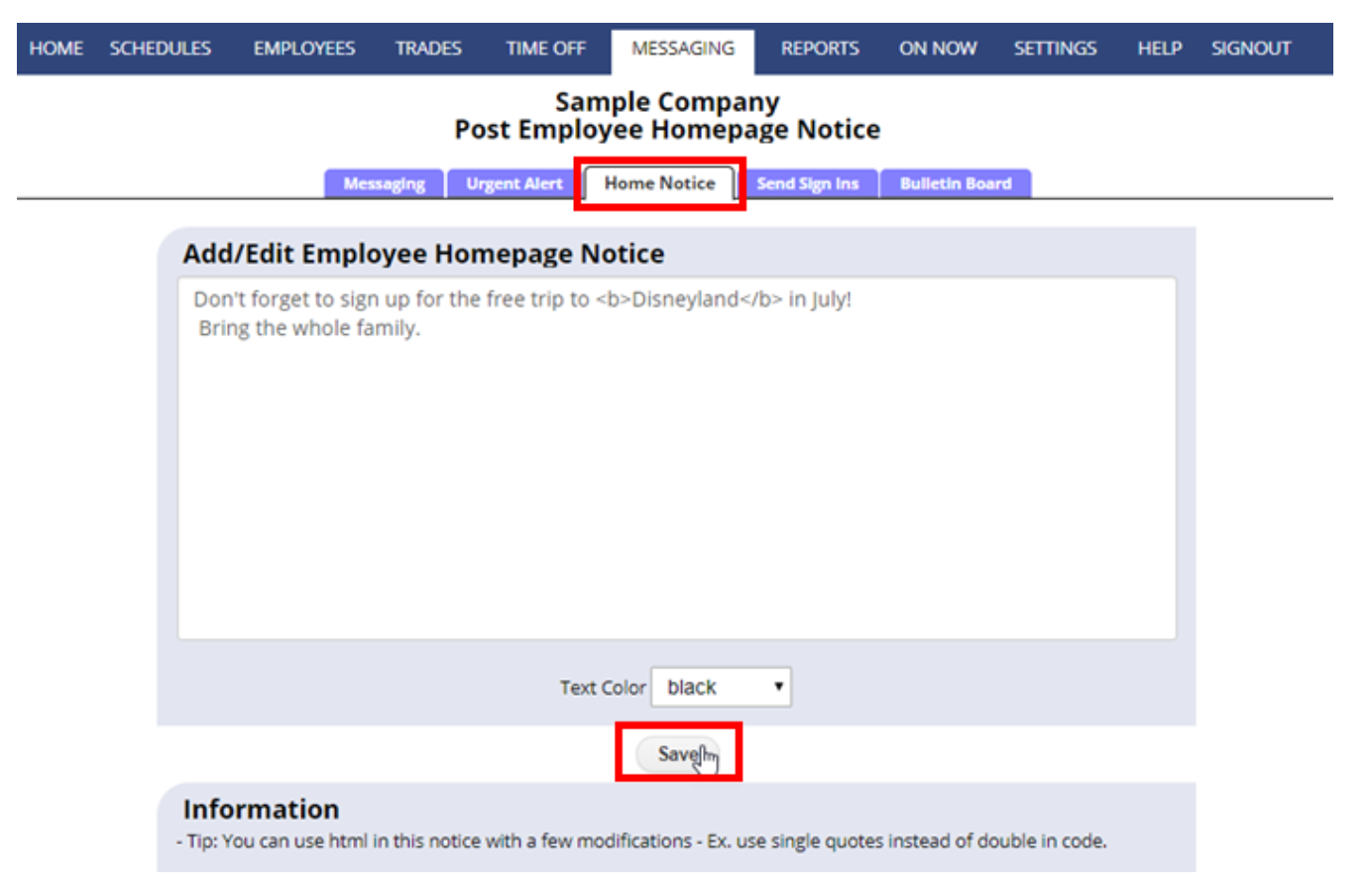
fail.] The text was to go where the words “Sample Company Post Employee Homepage
Notice” appear here:

Emailed notices were to be the same.
The court acknowledged “First Amendment issues,” but the
compelled speech here was “purely factual and not in dispute. The public has a
right to know that the largest provider in the regions at issue will no longer
be ‘in plan,’ and the time to be so informed is during open enrollment.” But
given the constrained time period, defendants could brief the issue further.

from Blogger https://ift.tt/33YUumD

Posted in Uncategorized | Tagged , | Leave a comment

putative falsity about medical test not material to labs, but maybe to doctors

Quidel Corp. v. Siemens Medical Solutions USA, Inc., No.
16-cv-3059-BAS-AGS, 2019 WL 5320390 (S.D. Cal. Oct. 21, 2019)
A pair of opinions shows the importance of (1) defining the
market and (2) being able to show materiality.
The parties compete in the market for assays (blood tests)
used for measuring thyroid stimulating immunoglobins, which can aid in the
detection of Graves’ disease. There are two relevant types of assays: (1) TSH
receptor antibody (TRAb) assays, which detect both stimulating and blocking
thyroid immunoglobins (TSI and TBI) and (2) TSI only assays.  Quidel entered the market first with Thyretain,
advertised as a “TSI only” assay that produces a positive (qualitative) result
if TSI is detected. Siemens entered with Immulite, using Thyretain as the
predicate device for their 510(k) application to the FDA.
While Thyretain is a bioassay, Immulite is an immunoassay
that Siemens says may be measured “in a ‘semi-quantitative’ manner, depicting
the concentration of TSI in a sample, rather than just a binary ‘qualitative’
result.”
Quidel argued that, as an immunoassay, Immulite didn’t
distinguish between stimulating or blocking antibodies, and thus detects TBI as
well as TSI. After Quidel’s protest, Siemens dropped the “TSI only” claim, but
Quidel argued it suffered damages: out of four US laboratories, two switched to
Immulite.
The court found that “TSI only” was not ambiguous,
especially in context and given the advertising targeted to sophisticated
consumers. Siemens argued that it wasn’t false because its statements were
always made in conjunction with a claim of 98% specificity (where the remaining
2% apparently might come from detecting TBI). Given conflicting expert
testimony over whether Immulite actually detected TSI only, there was a
question of fact.
However, there was no question of fact on materiality to
laboratories. The evidence showed that the two labs that switched didn’t rely
on Siemens’s advertising.  A
representative for one lab testified that the decision about whether or not to
adopt the new assay “involved months of discussion and deliberation,” including
“a review of the relevant literature” and “a validation study” after FDA
approval. Ultimately, the lab concluded that Immulite “was a superior assay for
use in the laboratory.” The witness testified that he didn’t remember any press
releases or statements on Siemens’s website; his lab “is not guided by
manufactures’ sales and marketing collaterals on a website.”  The other lab rep testified similarly. He
testified that he understands that when vendors give him papers regarding the
product, “they’re likely to provide [him] only papers that are positive for
their test.” He found this lawsuit to be “frivolous” and “personally offensive”
because it assumes that his lab doesn’t “do a very, very rigorous job of
vetting our assays and that we can be swayed by marketing.” Based on this
testimony, the court found that it wasn’t enough to show that the labs reviewed
the allegedly false statements; that didn’t show that the statements “had any
material impact on their decision-making process.”
The fact that the labs now believed that Immulite detects
TSI only (and advertised same on their own websites) didn’t mean that the false
advertising drove that belief, which could have come from internal testing. Nor
did the fact that TSI-only capability was an inherent/core chracteristic of the
product make it material given the other evidence. “No matter what the false
advertising pertains to, if the customer is not likely to be influenced by the
statement, it is not material.”
Matters were different with respect to doctors. A jury could
find that doctors were relevant purchasers; there was evidence on both sides.
Siemens’s employee testified that it previously contracted a marketing agency
to conduct a marketing campaign aimed at clinicians because “it’s really
important to educate the physicians…[b]ecause if they don’t order the test,
then there’s…no point of having it in the laboratory.” A lab director also
testified that the clinicians are “substantially” in charge of deciding which
type of assay to run. testified the clinicians “have the capability of and ask
for [the assay] by name…and in some circumstances they will specify.” And a
Siemens representative received an email from a doctor who asked if IMMULITE
“is specific to TSI or if it potentially can detect TBI’s directed towards the
N-terminal part of the thyroid receptor.” “This shows the physicians are aware
of the details of the test, and therefore may be interested in how the product
is marketed.”  However, a different
Quidel expert stated that at her institution, “when a TSI is ordered [by a
clinician], there is no indication on the report of which assay (Roche,
Thyretain, Immulite, etc.) was utilized” and the physician only receives the
results from the test, i.e. the measurement of TSI.
The court also partially rejected Siemens’s unclean hands
defense.  That Quidel was allegedly
billing the tests wrongly was unrelated to the misconduct here now that the
labs were out of the case. However, that Quidel’s Thyretain also allegedly
detected TBI and that the presence of TBI could “interfere with Thyretain’s
measurement of TSI, and result in a false ‘negative’ reading” was related, and
there was a genuine issue of material fact on the question. Even if the
misconduct occurred and was related, it had to be balanced against the wrong at
issue, which couldn’t be done at this stage of the case.
Quidel Corp. v. Siemens Medical Solutions USA, Inc., No.
16-cv-3059-BAS-AGS, 2019 WL 5328730 (S.D. Cal. Oct. 21, 2019)
Here, the court denies Siemens’s motion to exclude
plaintiff’s survey expert’s report/testimony. Mr. Ezell surveyed “physicians
that specialize in endocrinology and who, as part of their practice, order
assay tests to assist in patient diagnosis.” He showed test and control
materials:

They were asked screening questions and then about whether
Immulite does or doesn’t detect TSI only, in both closed- and open-ended
questions. They were then asked whether they were likely to order both a TSI
only and TRAb assay, and why. The expert concluded that approximately 67.42% of
the relevant universe was likely to be misled or deceived by the message that IMMULITE
is a TSI assay, detects TSI only, or is not a TRAb assay (assuming, as he
should given his role in the litigation, that these statements are false).
As noted above, doctors could be relevant purchasers. “This
is not a situation where all physicians blindly use whatever assay the
laboratory happens to carry, with no input into what assay they use on
patients. Given the conflicting testimony, it is possible the physicians’
opinions regarding the products are relevant and their opinions could be
influenced by marketing or website information.”
Criticisms of the questions as ambiguous also failed—it was
for the jury to decide whether it was troubling that Ezell used the terms “TSI
only” and “TRAb assay” in the survey without defining the terms. So too for
whether the questions led and biased the respondents, which goes weight rather
than admissibility. “Surveys can be admitted even if they contain ‘highly
suggestive’ questions, as long as the survey is ‘conducted according to
accepted principles and [is] relevant.’”  Nor was the control group excerpt biased
because it used “gratuitous language.” The differences between test and control
stimulus were “not so great that they predetermined the result of the survey,”
and this argument was for the jury.  (To
me, very much a nonexpert, the control statement seems self-contradictory: a
test that does not differentiate, but nonetheless detects TSI only at 98.5%
specificity?)  Nor did it matter that
counsel drafted the control statement; Ezell reviewed it and agreed it was
appropriate. That differs from surveys “entirely designed and conducted by
counsel ‘who is not qualified to design or interpret surveys.’” (Citing McCarthy:
“Attorney cooperation with the survey professional in designing the survey is
essential to produce relevant and usable data.”).  Disputes over whether control group answers
were properly coded as not confused, allegedly resulting in nearly 25%
confusion in the control group, were also for the jury.

from Blogger https://ift.tt/2BDQ9sP

Posted in Uncategorized | Tagged , , | Leave a comment

Amicus in Dr. Seuss v. ComicMix

Here. With Mark Lemley, Jessica Litman, Lydia Loren, Pam Samuelson, and Erik Stallman. 

from Blogger https://ift.tt/2OMxfrJ

Posted in Uncategorized | Tagged , | Leave a comment

incentivized reviews/targeted upvoting can be false advertising, court reiterates

Vitamins Online, Inc. v. HeartWise, Inc., No. 13-CV-982 (D.
Utah Sept. 24, 2019)
Supplement industry behavior is wild.  
Vitamins Online sells dietary supplements online, including
on Amazon, using the name NutriGold. HeartWise, aka NatureWise, competes with
NutriGold, including on Amazon, with products that contain an extract of
garcinia cambogia and green coffee. NatureWise had its employees upvote
positive reviews on its product pages and downvote negative reviews, increasing
the likelihood that potential customers would see positive reviews of its
products first and negative reviews last. “NatureWise also encouraged customers
to post or repost their positive reviews on Amazon by offering them free
products or gifts cards.  NatureWise
would review and, in some cases, make minor edits to the reviews before asking
the customers to post them on Amazon.” Such reviews could affect NatureWise’s
placement in results. Vitamins Online sued NatureWise for false advertising
based on: (1) manipulating Amazon’s customer review system and (2) falsely
advertising and misrepresenting the content and characteristics of its green
coffee and garcinia cambogia products.
NatureWise counterclaimed, alleging among other things that
VO’s principal bought over one thousand bottles of one of its garcinia cambogia
products and then resold those bottles with an insert that was entitled “AS IS”:
The insert cautioned purchasers to
read it before opening the bottle or else the purchaser would unable to return
it for a refund. The insert then explained that the product did “not contain
inside the bottle what is claimed on the outside label,” that a third-party
laboratory had tested and concluded that the label did not entirely match the
content of the bottle, and that NatureWise’s online product reviews were not
genuine. The insert also claimed that the manufacturer was being sued for its
scams and purported fraudulent practices.
Review claims: Rather than taking the relatively more simple
path of saying that manipulating reviews can imply false facts and thus constitute
a false or misleading representation of fact, the court instead (and
ahistorically) seized on the word “device” in §43(a) to say that review
manipulation could be a misleading “device.” 
(As Graeme Dinwoodie has extensively documented, “device” to the Lanham
Act’s drafters meant essentially “badge/logo.” I think the court’s holding is
right but its statutory construction is both unnecessary and overelaborate.)
Could review manipulation be falsifiable instead of
puffery?  The court pointed to a “well-established
exception [to the rule that only factual claims are actionable:] that an
opinion by a speaker who lacks a good faith belief in the truth of the
statement is actionable.” And an intent to deceive can be presumed to have
succeeded even for implied claims.  There
was a genuine factual issue about whether NatureWise acted with the intent to
deceive consumers. The evidence showed that NatureWise discussed contracting
with individuals in the Philippines “to use a rotating IP service and multiple
accounts to reduce the effect” of their competitor’s attempts to lower their
market share, which could be effective because the conduct was “not connected
to NatureWise.” A NatureWise employee expressed that he was “wary of tipping
our hand to our customers that we have anything to do with interfering with
reviews.” In response, NatureWise’s principal stated that his “only concern”
was that Amazon would investigate the positive changes in NatureWise’s product
reviews and realize that the accounts voting up NatureWise’s products may not
belong to real people. He also expressed the importance of having more
third-party sellers so that it would be impossible for Amazon to know which
company was behind the up and down voting of reviews.
Second, even without a presumption of deception, Vitamins
Online produced a survey that supported its claims. It showed that that a
majority of consumers: read reviews when shopping for weight loss products; rely
upon those reviews; and believe that product reviews are genuine and done by
real customers. A review’s number of stars and its helpfulness rating play
influential roles in a consumer’s purchasing decision.
NatureWise argued that these were all just opinions. But
there was extrinsic evidence that the reviews mattered, and also some of the
reviews might not have been from “real people,” making them literally false.
Injury: this wasn’t a comparative advertising case where
injury could be presumed even though there was some evidence of NatureWise
targeting VO and even though the parties’ products could appear against each
other on Amazon. “[I]t would be unjust and improper for the court to apply a
presumption of injury based on a third party’s conduct instead of the
defendant’s. The comparison captions found on Vitamins Online’s and
NatureWise’s Amazon product pages are a function of Amazon’s website—not a
result of NatureWise’s conduct.” VO argued that a presumption of injury was
appropriate because the parties dominated the market: one of its witnesses
found 17 market participants on Amazon for the products at issue, but approximately
92% of the reviews appear on Vitamins Online’s and NatureWise’s product pages. That
wasn’t enough to show market domination.
Although this issue is presently before the Supreme Court,
the Tenth Circuit presently holds that either actual damages or willfulness must
be shown for disgorgement; VO thus argued that it didn’t need to show actual damages
to establish injury. But that conflates injury with entitlement to disgorgement,
which only matters once liability has already been established.  That leaves the puzzling question: what is
the burden for showing injury when the plaintiff seeks disgorgement? “Bearing
in mind that there is a higher burden for seeking money damages and a lower
burden for seeking injunctive relief, the court concludes that the standard for
disgorgement is somewhere between the two.”
VO introduced evidence that sales plummeted after NatureWise
entered the Amazon market, and argued that its survey showed injury.  There were genuine issues of material fact,
but VO wasn’t entitled to summary judgment on injury. Outside a two-player
market and in the absence of comparative advertising, the parties weren’t
necessarily taking each other’s sales; this was better left for the finder of
fact (though how the finder of fact is supposed to sort that out is a bit of a
mystery).
Inredient claims: VO argued that NatureWise made various
false statements about its ingredients/efficacy/etc. Some of the products no longer
had existing samples to test; the court concluded that NatureWise had destroyed
those products; that VO was prejudiced by that destruction; and that NatureWise
acted in bad faith. VO was thus entitled to an adverse inference instruction
that this product subset bore all of the allegedly false ingredient claims and
that they were false.

NatureWise sought summary judgment on certain challenged statements.
“100% Pure” and “Sourced, Formulated, . . . and Guaranteed
to be the Highest Quality Available”: “Particularly in the context of health
supplements, a claim that something is ‘100% Pure’ is a measurable statement of
fact…. It seems likely that a reasonable consumer viewing such a phrase would
expect exactly what the phrase suggests—an unadulterated product consisting
purely of the listed ingredients.”  The “sourced
etc.” claim was a closer call. In context, however, it immediately followed
NatureWise’s label claim that its garcinia cambogia consisted of “Vegetarian
Capsules and Absolutely Nothing Else! ZERO Fillers, ZERO Binders, and ZERO
Artificial Ingredients.” And there were genuine issues of material fact about
whether NatureWise’s products had fillers, binders, and artificial ingredients.
So too with other challenged claims: “For each remaining
statement, NatureWise employs an exercise of identifying specific words within
each statement that it claims can be interpreted or defined, by dictionary or
otherwise, in multiple ways thus rendering the entire statement ambiguous.” The
court found that this ignored the requirement of considering the ad context.
Combined with the other label statements, “the alleged ambiguities dissipate.”
Moreover, “NatureWise’s exercise of suggesting that several
of its own statements are ambiguous seemingly cuts against what a corporation
would want when promoting and advertising its health supplement products. That
a company deliberately markets its products in an ambiguous and
difficult-to-understand manner is anomalous to say the least ….”
The court also found that NatureWise wasn’t entitled to
summary judgment on VO’s request for disgorgement.  NatureWise argued that VO didn’t show what
sales were attributable to false advertising. But “[t]he language of the Lanham
Act is clear: ‘In assessing profits the plaintiff shall be required to prove
defendant’s sales only; defendant must prove all elements of cost or deduction
claimed.’” “To require Vitamins Online to not only distinguish all sales based
on false advertising from all sales based on legitimate conduct, but also
require it to apportion its sales among all the various categories and subsets
of its claims, would be to violate the plain terms of the statute.”  VO had provided evidence of NatureWise’s
sales, as well as some evidence of willfulness, as discussed above, and evidence
that NatureWise “discussed stealing the design of Vitamins Online’s labels.”
NatureWise relied on Retractable Techs., Inc. v. Becton
Dickinson & Co., 842 F.3d 883, 901 (5th Cir. 2016), but even that case
accepted the district court’s finding that some of the defendant’s profits were
attributable to its false advertising. The appropriate rule: “a plaintiff need
only demonstrate that the defendant has benefitted from the alleged false
advertising (which Vitamins Online has done), then the defendant has the burden
to reduce its profits by the elements of cost and deduction, which will result
in the plaintiff recovering only those profits attributable to the false
advertising.”  That’s a pretty generous
reading of Becton Dickinson, but ok. 
NatureWise argued that disgorgement would result in a penalty instead of
compensation, but the defendant “has the power to ensure that the plaintiff
does not recover any profits that are not attributable to the false advertising”
by meeting its burden; the alternative gives a windfall to the wrongdoer. And the
court in its equitable discretion can further protect against bad outcomes.  False advertising cases should be treated no differently
than trademark infringement cases for purposes of disgorgement.
By contrast, NatureWise wasn’t entitled to disgorgement on
the counterclaims because it neglected to produce evidence of VO’s sales. It
also failed to show that it could get injunctive relief. On irreparable injury,
although its sales of garcinia cambogia fell after VO sent out the “AS IS”
flyer, “NatureWise returned to the top sales ranking on Amazon for garcinia
cambogia within only a few months.”  Money
damages might well have been sufficient, but for NatureWise’s choice to
withdraw its claim for actual damages. Without evidence relating to the only
remaining remedies it sought, the counterclaims were dismissed.
The court also struck VO’s jury demand because the only
remedies left in the case, disgorgement and injunctive relief, were equitable
in nature. VO argued that disgorgement was a surrogate for damages and thereby
a legal remedy, but that’s not what the cases say. But even if damages and profits
are related, they have distinct purposes and natures; disgorgement focuses on
unjust enrichment/deterrence, while damages redress an injury.
Some courts have held that “an accounting of profits can act
as a proxy for a legal claim in some circumstances.” The idea is that, “because
proving actual damages is difficult, trademark law creates an alternative form
of relief—profits as a proxy for damages— which is governed by a less
challenging evidentiary regime.”  Under
this theory, a plaintiff may be entitled to a jury trial if “1) the case
involves similar products, 2) there is no adequate remedy at law and 3) the
products compete directly.” The court was unpersuaded.  Anyway, even under this theory, the market
would have to be such that a loss for one party was almost automatically a gain
for the other, and the market here wasn’t a two-player market.

from Blogger https://ift.tt/2VMxp3J

Posted in Uncategorized | Tagged , , , | Leave a comment

incentivized reviews/targeted upvoting can be false advertising, court reiterates

Vitamins Online, Inc. v. HeartWise, Inc., No. 13-CV-982 (D.
Utah Sept. 24, 2019)
Supplement industry behavior is wild.  
Vitamins Online sells dietary supplements online, including
on Amazon, using the name NutriGold. HeartWise, aka NatureWise, competes with
NutriGold, including on Amazon, with products that contain an extract of
garcinia cambogia and green coffee. NatureWise had its employees upvote
positive reviews on its product pages and downvote negative reviews, increasing
the likelihood that potential customers would see positive reviews of its
products first and negative reviews last. “NatureWise also encouraged customers
to post or repost their positive reviews on Amazon by offering them free
products or gifts cards.  NatureWise
would review and, in some cases, make minor edits to the reviews before asking
the customers to post them on Amazon.” Such reviews could affect NatureWise’s
placement in results. Vitamins Online sued NatureWise for false advertising
based on: (1) manipulating Amazon’s customer review system and (2) falsely
advertising and misrepresenting the content and characteristics of its green
coffee and garcinia cambogia products.
NatureWise counterclaimed, alleging among other things that
VO’s principal bought over one thousand bottles of one of its garcinia cambogia
products and then resold those bottles with an insert that was entitled “AS IS”:
The insert cautioned purchasers to
read it before opening the bottle or else the purchaser would unable to return
it for a refund. The insert then explained that the product did “not contain
inside the bottle what is claimed on the outside label,” that a third-party
laboratory had tested and concluded that the label did not entirely match the
content of the bottle, and that NatureWise’s online product reviews were not
genuine. The insert also claimed that the manufacturer was being sued for its
scams and purported fraudulent practices.
Review claims: Rather than taking the relatively more simple
path of saying that manipulating reviews can imply false facts and thus constitute
a false or misleading representation of fact, the court instead (and
ahistorically) seized on the word “device” in §43(a) to say that review
manipulation could be a misleading “device.” 
(As Graeme Dinwoodie has extensively documented, “device” to the Lanham
Act’s drafters meant essentially “badge/logo.” I think the court’s holding is
right but its statutory construction is both unnecessary and overelaborate.)
Could review manipulation be falsifiable instead of
puffery?  The court pointed to a “well-established
exception [to the rule that only factual claims are actionable:] that an
opinion by a speaker who lacks a good faith belief in the truth of the
statement is actionable.” And an intent to deceive can be presumed to have
succeeded even for implied claims.  There
was a genuine factual issue about whether NatureWise acted with the intent to
deceive consumers. The evidence showed that NatureWise discussed contracting
with individuals in the Philippines “to use a rotating IP service and multiple
accounts to reduce the effect” of their competitor’s attempts to lower their
market share, which could be effective because the conduct was “not connected
to NatureWise.” A NatureWise employee expressed that he was “wary of tipping
our hand to our customers that we have anything to do with interfering with
reviews.” In response, NatureWise’s principal stated that his “only concern”
was that Amazon would investigate the positive changes in NatureWise’s product
reviews and realize that the accounts voting up NatureWise’s products may not
belong to real people. He also expressed the importance of having more
third-party sellers so that it would be impossible for Amazon to know which
company was behind the up and down voting of reviews.
Second, even without a presumption of deception, Vitamins
Online produced a survey that supported its claims. It showed that that a
majority of consumers: read reviews when shopping for weight loss products; rely
upon those reviews; and believe that product reviews are genuine and done by
real customers. A review’s number of stars and its helpfulness rating play
influential roles in a consumer’s purchasing decision.
NatureWise argued that these were all just opinions. But
there was extrinsic evidence that the reviews mattered, and also some of the
reviews might not have been from “real people,” making them literally false.
Injury: this wasn’t a comparative advertising case where
injury could be presumed even though there was some evidence of NatureWise
targeting VO and even though the parties’ products could appear against each
other on Amazon. “[I]t would be unjust and improper for the court to apply a
presumption of injury based on a third party’s conduct instead of the
defendant’s. The comparison captions found on Vitamins Online’s and
NatureWise’s Amazon product pages are a function of Amazon’s website—not a
result of NatureWise’s conduct.” VO argued that a presumption of injury was
appropriate because the parties dominated the market: one of its witnesses
found 17 market participants on Amazon for the products at issue, but approximately
92% of the reviews appear on Vitamins Online’s and NatureWise’s product pages. That
wasn’t enough to show market domination.
Although this issue is presently before the Supreme Court,
the Tenth Circuit presently holds that either actual damages or willfulness must
be shown for disgorgement; VO thus argued that it didn’t need to show actual damages
to establish injury. But that conflates injury with entitlement to disgorgement,
which only matters once liability has already been established.  That leaves the puzzling question: what is
the burden for showing injury when the plaintiff seeks disgorgement? “Bearing
in mind that there is a higher burden for seeking money damages and a lower
burden for seeking injunctive relief, the court concludes that the standard for
disgorgement is somewhere between the two.”
VO introduced evidence that sales plummeted after NatureWise
entered the Amazon market, and argued that its survey showed injury.  There were genuine issues of material fact,
but VO wasn’t entitled to summary judgment on injury. Outside a two-player
market and in the absence of comparative advertising, the parties weren’t
necessarily taking each other’s sales; this was better left for the finder of
fact (though how the finder of fact is supposed to sort that out is a bit of a
mystery).
Inredient claims: VO argued that NatureWise made various
false statements about its ingredients/efficacy/etc. Some of the products no longer
had existing samples to test; the court concluded that NatureWise had destroyed
those products; that VO was prejudiced by that destruction; and that NatureWise
acted in bad faith. VO was thus entitled to an adverse inference instruction
that this product subset bore all of the allegedly false ingredient claims and
that they were false.

NatureWise sought summary judgment on certain challenged statements.
“100% Pure” and “Sourced, Formulated, . . . and Guaranteed
to be the Highest Quality Available”: “Particularly in the context of health
supplements, a claim that something is ‘100% Pure’ is a measurable statement of
fact…. It seems likely that a reasonable consumer viewing such a phrase would
expect exactly what the phrase suggests—an unadulterated product consisting
purely of the listed ingredients.”  The “sourced
etc.” claim was a closer call. In context, however, it immediately followed
NatureWise’s label claim that its garcinia cambogia consisted of “Vegetarian
Capsules and Absolutely Nothing Else! ZERO Fillers, ZERO Binders, and ZERO
Artificial Ingredients.” And there were genuine issues of material fact about
whether NatureWise’s products had fillers, binders, and artificial ingredients.
So too with other challenged claims: “For each remaining
statement, NatureWise employs an exercise of identifying specific words within
each statement that it claims can be interpreted or defined, by dictionary or
otherwise, in multiple ways thus rendering the entire statement ambiguous.” The
court found that this ignored the requirement of considering the ad context.
Combined with the other label statements, “the alleged ambiguities dissipate.”
Moreover, “NatureWise’s exercise of suggesting that several
of its own statements are ambiguous seemingly cuts against what a corporation
would want when promoting and advertising its health supplement products. That
a company deliberately markets its products in an ambiguous and
difficult-to-understand manner is anomalous to say the least ….”
The court also found that NatureWise wasn’t entitled to
summary judgment on VO’s request for disgorgement.  NatureWise argued that VO didn’t show what
sales were attributable to false advertising. But “[t]he language of the Lanham
Act is clear: ‘In assessing profits the plaintiff shall be required to prove
defendant’s sales only; defendant must prove all elements of cost or deduction
claimed.’” “To require Vitamins Online to not only distinguish all sales based
on false advertising from all sales based on legitimate conduct, but also
require it to apportion its sales among all the various categories and subsets
of its claims, would be to violate the plain terms of the statute.”  VO had provided evidence of NatureWise’s
sales, as well as some evidence of willfulness, as discussed above, and evidence
that NatureWise “discussed stealing the design of Vitamins Online’s labels.”
NatureWise relied on Retractable Techs., Inc. v. Becton
Dickinson & Co., 842 F.3d 883, 901 (5th Cir. 2016), but even that case
accepted the district court’s finding that some of the defendant’s profits were
attributable to its false advertising. The appropriate rule: “a plaintiff need
only demonstrate that the defendant has benefitted from the alleged false
advertising (which Vitamins Online has done), then the defendant has the burden
to reduce its profits by the elements of cost and deduction, which will result
in the plaintiff recovering only those profits attributable to the false
advertising.”  That’s a pretty generous
reading of Becton Dickinson, but ok. 
NatureWise argued that disgorgement would result in a penalty instead of
compensation, but the defendant “has the power to ensure that the plaintiff
does not recover any profits that are not attributable to the false advertising”
by meeting its burden; the alternative gives a windfall to the wrongdoer. And the
court in its equitable discretion can further protect against bad outcomes.  False advertising cases should be treated no differently
than trademark infringement cases for purposes of disgorgement.
By contrast, NatureWise wasn’t entitled to disgorgement on
the counterclaims because it neglected to produce evidence of VO’s sales. It
also failed to show that it could get injunctive relief. On irreparable injury,
although its sales of garcinia cambogia fell after VO sent out the “AS IS”
flyer, “NatureWise returned to the top sales ranking on Amazon for garcinia
cambogia within only a few months.”  Money
damages might well have been sufficient, but for NatureWise’s choice to
withdraw its claim for actual damages. Without evidence relating to the only
remaining remedies it sought, the counterclaims were dismissed.
The court also struck VO’s jury demand because the only
remedies left in the case, disgorgement and injunctive relief, were equitable
in nature. VO argued that disgorgement was a surrogate for damages and thereby
a legal remedy, but that’s not what the cases say. But even if damages and profits
are related, they have distinct purposes and natures; disgorgement focuses on
unjust enrichment/deterrence, while damages redress an injury.
Some courts have held that “an accounting of profits can act
as a proxy for a legal claim in some circumstances.” The idea is that, “because
proving actual damages is difficult, trademark law creates an alternative form
of relief—profits as a proxy for damages— which is governed by a less
challenging evidentiary regime.”  Under
this theory, a plaintiff may be entitled to a jury trial if “1) the case
involves similar products, 2) there is no adequate remedy at law and 3) the
products compete directly.” The court was unpersuaded.  Anyway, even under this theory, the market
would have to be such that a loss for one party was almost automatically a gain
for the other, and the market here wasn’t a two-player market.

from Blogger https://ift.tt/2VMxp3J

Posted in Uncategorized | Tagged , , , | Leave a comment

ingredient supplier has standing against disparagement of products/false claims about competing product

ThermoLife Int’l LLC v. Vital Pharms. Inc., No.
19-cv-61380-BLOOM/Valle, 2019 WL 4954622 (S.D. Fla. Oct. 8, 2019)
ThermoLife licenses/sells a patented creatine nitrate used
in dietary supplements, which is allegedly included in many top-selling dietary
supplements. VPX allegedly attacked ThermoLife’s creatine nitrate in its own
advertising, including with false and misleading statements about VPX’s own “Super
Creatine,” because products including ThermoLife’s creatine nitrate compete
directly with VPX’s products.
The court found that Thermolife was within the zone of
interests protected by the Lanham Act: it alleged that its business,
reputation, goodwill, sales and profits were harmed “when consumers are misled
to purchase a falsely advertised product that competes with products containing
creatine nitrate sourced from Thermolife. These are the type of commercial
interests the Lanham Act seeks to protect.” 
And disparagement means that direct competition isn’t required for proximate
cause: it was plausible that disparagement of creatine nitrate would affect
sales of competing products containing creatine nitrate sourced from
Thermolife. (though here the court didn’t distinguish the disparaging parts
from the allegedly false self-promotion about VPX’s own product; I support the
result but would have appreciated more clarity that it’s not just disparagement
that can create proximate cause).
VPX next argued that the complaint didn’t satisfy FRCP 9(b)’s
heightened pleading standard. Since there was no controlling precedent, the
court declined “to expand Rule 9(b) absent instruction from the Eleventh Circuit
or persuasive guidance from its sister districts.”
Nor were the alleged misstatements clearly opinions or
nonactionable puffery: VPX allegedly advertised that creatine nitrate was “minimally
effective,” “useless,” “can be dangerous,” and “that there is ZERO scientific
evidence it can increase performance.” VPX also allegedly falsely and
misleadingly compared the solubility of “Super Creatine” to creatine nitrate; blurred
the concepts of dissolution rate and solubility; and claimed that “Super
Creatine is the world’s only water-stable creatine,” that it is “much more bioavailable
than regular creatine,” that it can “beef up your muscles and your brain,” that
it can cross the blood brain barrier “twenty times more efficiently than
regular creatine,” and that it helps with “all forms of dementia, including
Alzheimer’s, Parkinson’s, Huntington’s, and other forms of dementia.” Those
were actionable. VPX’s analysis of why its statements were true went to denials
of the alleged facts and weren’t a basis for dismissal.

from Blogger https://ift.tt/2M1IWsC

Posted in Uncategorized | Tagged , | Leave a comment

medical influencers show up in false advertising case

Wright Medical Technology, Inc. v. Paragon 28, Inc., 2019 WL
4751807,  No. 18-cv-00691-PAB-STV (D.
Colo. Sept. 30, 2019)
Wright is a medical device developer, manufacturer, and
distributor; its products include surgical plates and other instruments used to
repair bones in the foot and ankle areas. Paragon, founded by three former
high-level Wright employees, makes competing orthopedic plate systems and other
devices used to repair bones in the foot and ankle. Trade secret claims ensued.
Also, Paragon allegedly promoted a “cadaver course” intended
to teach surgeons to perform procedures of the foot and listed Dr. Christopher
Hyer, a Wright “Key Opinion Leader” (KOL, a common term for a medical
influencer), as “anticipated course faculty” on the course’s promotional
material. It also allegedly engaged in unfair competition by submitting a
patent application that was nearly identical to a patent application that
Wright had filed a month prior and by offering several KOLs equity or ownership
interests in Paragon, leading to the KOLs using Paragon products in surgical
procedures without disclosing their interests.
As to false advertising, Paragon argued that predictions (here,
about who would teach the course) couldn’t be false advertising. But Wright alleged
that there was never any consent for the use of the doctor’s name in
advertising, and that Paragon was aware of this lack of consent, which was
enough.  (But that reasoning has to be
incomplete: did Wright allege that Paragon never even asked the doctor to teach
the course/that he turned them down before they started promoting it? If he had
agreed to teach the course, even without specifically consenting to use of his name
in advertising the course, it shouldn’t be false advertising, though the right
of publicity result might be different (given the First Amendment-implicating nature of the course, though, it might not).) 
Anyway, the rule is that, while “[a]n honest or sincere statement of
belief about a future event is not actionable,”…a statement known at that
time by the speaker to be false, or a statement by a speaker who lacks a good
faith belief in the truth of the statement, may constitute an actionable
misrepresentation.”
However, Wright failed to adequately plead that the lack of
disclosure from KOLs was deceiving the public, and therefore didn’t adequately
plead unfair competition as to that.
Nor did Wright adequately plead passing off (or false
advertising) based on the dueling patent applications. A patent application is
not a tangible good offered for sale and it didn’t constitute commercial
advertising or promotion. 

from Blogger https://ift.tt/2nfWEi0

Posted in Uncategorized | Tagged , | Leave a comment

Lexmark is super-clear: business customers can’t sue for Lanham Act false advertising

Jiaherb, Inc. v. MTC Indus., Inc., 2019 WL 4785784, Civil
No. 18-15532 (KSH) (CLW) (D.N.J. Sept. 30, 2019)
Brief but very clear statement: after Lexmark,
business customers can’t bring Lanham Act claims. Jiaherb makes herbal extracts
and other natural products, including saw palmetto oil and powder. MTC is a nutritional
ingredient supplier and distributor of saw palmetto extract, from whom Jiaherb
purchased all of its saw palmetto extract, totaling thousands of kilograms.  Apparently, saw palmetto has limited
availability and to enhance profit, harvesters may dilute their product by
adding vegetable oils that contain some of the same components and are thus
hard to detect. Jiaherb alleged that this happened, and MTC misrepresented its saw
palmetto products as unadulterated, comprehensively tested and certified
according to various industry standards. Although Jiaherb did test, one of
Jiaherb’s customers performed a more sophisticated Nuclear Magnetic Resonance
examination and concluded that the MTC product did in fact contain coconut oil.
This customer thus cancelled two purchase orders, representing over $200,000 in
lost profits.
Jiaherb’s injury didn’t “stem from MTC’s false advertising
or conduct by MTC which unfairly diminished Jiaherb’s competitive position in
the marketplace. Rather, Jiaherb is harmed as a consumer of MTC’s product;
Jiaherb’s lost profits and goodwill stem from its purchase of a product which
it cannot sell. The injury of a consumer-entity that was misled into purchasing
a ‘disappointing product’ is precisely the type that the Lexmark Court
excluded from Lanham Act relief.”
Claims based under the UCC/state law remained; the court retained
subject matter jurisdiction because of the diversity of the parties and the amount
in controversy (Jiaherb was seeking a refund of over $400,000 it paid).

from Blogger https://ift.tt/2AKg2Xv

Posted in Uncategorized | Tagged , | Leave a comment

Bad definition of suggestiveness in a sad TM case about anti-hate groups

Life After Hate, Inc. v. Free Radicals Project, Inc., 2019
WL 4825072, No. 18 C 6967 (N.D. Ill Sept. 30, 2019)
“At a time when people—particularly young people—are being
radicalized online with alarming frequency, nonprofit organizations like Life
After Hate and Free Radicals Project provide critical outreach services to help
individuals disengage from violence-based extremism. Unfortunately, these two
organizations now find themselves in an ugly trademark dispute that can only
distract them from the important work they perform.”  LAH sued Christian Picciolini (formerly high
ranking at LAH) and his Free Radicals Project for infringement of the mark ExitUSA
and a related slogan.  LAH secured a
preliminary injunction limiting defendants to fair use of the mark to describe
Picciolini’s former work. 
In the process, the court demonstrates that judicial
misunderstanding of the standard for descriptiveness versus suggestiveness continues
to grow—here it is in the Seventh Circuit.  It probably wouldn’t change the outcome here
(though note the description of the parties’ services below), but it’s a bad
idea to state the standard as “a suggestive mark requires some imagination to guess
the goods/services covered.”  The correct
standard, as applied by the PTO, is that a suggestive mark requires imagination
to link with the goods/services, knowing the goods/services.  Otherwise QUICK is suggestive for food delivery,
printing services, and anything else one might want done quickly.
LAH is an Illinois nonprofit “that follows the model of ‘exit’
programs developed in Europe in the 1990’s to help individuals exit hate groups
through education, interventions, academic research, and outreach.” Picciolini
helped found LAH in 2009 and left the organization in 2017. In 2018, Picciolini
founded Free Radicals Project.
In 2011, LAH’s principals formed a nonprofit.  When one of the founders left LAH, Picciolini
informed him that “the assets of LAH and KNW [a LAH program, Kindness not
Weakness] belong to the organization,” including “the Youtube and your
arno@lifeafterhate.org email address.” Picciolini told him “[w]e’ll need the
youtube account back, as well as the KNW twitter credentials.” Picciolini said
that LAH needed the YouTube account because “the domain is the organization’s
and belongs to us,” and the former founder keeping the account for himself “will
be confusing.” He also told the departing founder to turn over access to “all
LAH and KNW associated domains” to Picciolini’s GoDaddy account.
In 2014, another principal traveled to Europe and met with a
number of “Exit”-branded groups, including Exit Sweden, Exit Germany, Exit
Norway, Exit U.K., and Exit Slovakia, that provide similar disengagement and
deradicalization services in their respective countries. He decided that LAH
should start calling itself “ExitUSA” to more accurately convey the outreach
services it was offering and improve its recognition among peer organizations
in Europe. LAH began doing business as “ExitUSA,” which became a “program” of
LAH. They developed a logo for ExitUSA, a new logo for LAH, and the tagline “No
Judgment. Just Help.” The logos were based on Picciolini’s designs. Picciolini said
he bought www.ExitUSA.org with his
personal funds and was later reimbursed by LAH. The domain was transferred to
LAH’s GoDaddy account, which lists Picciolini as the administrator. He also
created an “ExitUSA” YouTube channel.
Eventually, conflicts between the principals led to Picciolini’s
exit; first he proposed that LAH “spin off” ExitUSA to be run as a separate
nonprofit led by Picciolini, but that didn’t happen, though he did resign from
LAH’s board and just served as a director of ExitUSA for some time. He was
terminated in 2017; again LAH rejected his idea of a “spin off” to avoid
“confus[ing] people and rais[ing] questions.” LAH declined in part because
ExitUSA was such a “significant part” of LAH and was “associated with [LAH’s]
identity.”
Shortly thereafter, LAH’s members learned that they could
not control or access the ExitUSA.org domain, which began automatically
redirecting users to a different webpage— ChristianPicciolini.com/ExitUSA,
which featured ExitUSA logos and slogans, along with Picciolini’s photo and
posts about his books. LAH also learned that it could not access the Twitter
account @ExitUSATeam, which it had been previously using, or the ExitUSA
Youtube channel, which was “attached to [Picciolini’s] email.” Picciolini registered
the domain “Exit.us.”  
In 2018, Picciolini started an Illinois nonprofit called
Free Radicals Project that used the phrases “No Judgment. Just Help.” and “Free
Radicals: There is life after hate.” Four videos created primarily by
Picciolini as part of a grant LAH received, which had been posted on the
ExitUSA YouTube channel were also posted on the Free Radicals Project site. At
some point, ExitUSA.org began automatically redirecting users to a website for
Free Radicals Project. The description of the @ExitUSATeam Twitter handle was
changed to “ExitUSA (now @FreeRadicalsOrg),” inviting users to visit the
@FreeRadicalsOrg Twitter page.
Various people in the industry asked “what was happening
with Life After Hate,” “what was happening with…[Exit]USA,” etc. A journalist
asked if LAH controlled ExitUSA or if Picciolini did, or if LAH and Picciolini
controlled it as partners. [Note that some courts would interpret similar evidence
as consumer understanding that there’s uncertainty, rather than consumer
confusion.]
LAH retained a lawyer and applied to register “EXITUSA” and
“LIFE AFTER HATE,” which were registered in 2018 with a 2017 priority date. It
sent a C&D demanding that Picciolini stop using the “ExitUSA” and “Life
After Hate” marks; Picciolini then filed a trademark application for “EXITUSA,”
which was eventually abandoned. LAH’s officers also tried to reclaim the
ExitUSA.org domain through GoDaddy and Google. After the registration, LAH
applied to an organization that connects non-profit groups with law firms
providing pro bono legal assistance, but after five or six weeks, it learned
that it wasn’t selected for services. LAH couldn’t afford the fees of the first
lawyer it used. It finally retained counsel in September 2018, and filed suit October
17, 2018.
Around November 2018, the ExitUSA.org domain stopped
redirecting to Picciolini’s website; in January 2019, Picciolini stopped using
the @ExitUSATeam Twitter account; and in February 2019, the ExitUSA YouTube
channel was disabled. Picciolini and Free Radicals Project still allegedly used
the “No Judgment. Just Help.” and “Life After Hate” phrases on the Free
Radicals Project website and posted links to the four videos LAH produced.
Defendants tried to rebut the presumption of validity for the
registered marks, arguing that “Life After Hate” merely describes LAH’s
services: namely, helping people with their life after leaving a hate group. The
court disagreed, first because of infrequent use of the term by similar
organizations in the US. Second, and here’s the wrong part, “[u]nderstanding
exactly what services ‘Life After Hate’ provides requires a leap of
imagination.” It wasn’t readily apparent that it helped people after they left
hate groups, and anyway LAH provided other services (another wrong turn: QWIK
PRINT is descriptive for a print store that also sales copy paper and other
office supplies, because the term describes one service it provides). Since “a
consumer would need to use their imagination to determine the nature of
services provided by an organization called Life After Hate,” it was
suggestive.  
The same test also deemed ExitUSA suggestive, though a
closer call. Defendants noted the existence of other geographic “Exit” groups
and argued that “USA” was merely a geographic designation and “exit” merely a
type of group. But the record didn’t show that the use of “exit” was so
widespread in the US as to make it descriptive or generic.  Likewise, “ExitUSA” didn’t immediately convey “disengagement
and deradicalization services.” It “literally sounds like a group that helps
people exit the United States—not a group that helps people in the United
States exit extremist hate groups. It takes a degree of thought and imagination
to make that leap.” 
Finally, “No Judgment. Just Help.” was similarly suggestive
because it didn’t immediately convey any ideas, characteristics, or qualities
about LAH’s services. (That’s just not true, though—it immediately conveys that
the providers won’t judge you—it just doesn’t say what they won’t judge
you for, which is the QUICK issue.) And anyway only two parties used it,
indicating that the phrase was suggestive.
Sadly, all of this could easily have been done with “descriptive
plus secondary meaning,” which the court later says exists.
After that, ownership and likely confusion were mostly not particularly
interesting analyses.  One point of note
is consumer care:
[I]n this context, the price (or
lack thereof) of the services is much less important than the nature of the
services. As LAH’s own witness testified, “providing private and confidential
services is really the basis of the trust we’re establishing with the people we
serve…The people we’re trying to help are already very paranoid and afraid
and skittish. They’re trying to hide the idea that they’re trying to change.” …
LAH’s services are sensitive, private, and required LAH to establish trust with
its clients. This testimony makes clear that consumers of these services are
likely to exercise a high degree of care when choosing a service provider. This
factor weighs in Defendants’ favor.
The court also deemed three instances of industry people asking what was up to weigh “heavily” against
defendants as instances of actual confusion.
In a fairly weird description of the standard for a
preliminary injunction, the court found that LAH had a “greater than negligible
chance” of showing that it owned valid marks and of showing a likelihood of
confusion, resulting in a “good chance” of succeeding on the merits.  Of course, the preliminary injunction
standard isn’t math, but “greater than negligible” is really not the standard
for likely success on the merits. Clearly that’s just underselling the
evidence in this case (the court then says “[i]ndeed, [given the factors,] LAH
has a strong likelihood of succeeding”), but it’s still weird.
The court then presumed irreparable injury, despite eBay.
Delay can rebut the presumption. Here, LAH learned in August 2017 that ExitUSA.org
was automatically redirecting users to ChristianPicciolini.com/ExitUSA, which
featured ExitUSA logos and slogans, but it didn’t sue for 14 months. This was
again a close call, but here the delay wasn’t too long given LAH’s explanations
for the delay. It quickly hired an attorney to help it submit applications to
the USPTO, hired another attorney who sent Picciolini a C&D, and attempted
to regain control of the ExitUSA.org domain. “More time passed while LAH waited
on the results of its USPTO applications and found a third set of attorneys to
assist it in bringing its claims, but once it secured new counsel, it promptly
brought this suit. Though 14 months is certainly pushing the limit, LAH
demonstrated that it was making good faith efforts during that time to
investigate and prosecute its trademark rights.” Given the C&D, defendants
couldn’t have been lulled into a false sense of security.  (This seems to conflate laches and delay that rebuts a presumption of irreparable harm for purposes of preliminary relief, but it is taken directly from prior cases.)
Defendants argued that an injunction would damage
Picciolini’s goodwill and reputation in the anti-extremism community, but that
was speculative.
The injunction prohibited use of “LIFE AFTER HATE,” and/or
“EXITUSA,” or “No Judgment. Just Help.” (or any variation thereof) “in
connection with any goods or services online or offline.” For exitusa.org, defendants
could do nothing with it but create a landing page that states: “For those
seeking Life After Hate, Inc., please go to www.lifeafterhate.org/exitusa”
(though it’s not clear they have to do so); they also couldn’t use the
Twitter handle/account or YouTube channels. They couldn’t use LAH videos
without a disclaimer conspicuously stating “This video is owned by and is used
with the permission of Life After Hate, Inc. Free Radicals Project, Inc. is not
in any way affiliated with Life After Hate, Inc.” 
Despite the language of total prohibition that leads off the
injunction, they couldn’t use or permit the relevant phrases “on any website or
social media account, except for in the limited, fair use manner that
sufficiently limits and/or dispels any likelihood of confusion (e.g.,
Defendants may state in Picciolini’s biography that he co-founded Life After
Hate, Inc., but he must also explicitly state that he ‘no longer works for and
is no longer affiliated with “Life After Hate, Inc.” or “ExitUSA.”’).” Can he
say these things offline under the terms of the injunction? I think he has a
First Amendment right to do so. The last part of the injunction suggests that
he can by saying that, if defendants mention “Life After Hate” or “ExitUSA,” “they
shall explicitly communicate that Defendants are no longer associated with or
affiliated with Life After Hate, Inc. or ExitUSA.”

from Blogger https://ift.tt/2AGSz9V

Posted in Uncategorized | Tagged , | Leave a comment

“use in a TM way” just creates another fact issue in the 6th circuit

Ford Motor Co. v. InterMotive, Inc., No. 17-CV-11584-TGB, 2019
WL 4746811 (E.D. Mich. Sept. 30, 2019)
Ford sued InterMotive for trademark infringement, false
designation of origin, trademark dilution, cancelation of trademark
registration, and declaratory judgment for using Ford’s trademarks in various
InterMotive ads; defendants counterclaimed for a bunch of things including misappropriation
of trade secrets and trademark infringement based on Ford’s launch of a
competing product of the same name:
In 2011 and early 2012, Ford and
InterMotive explored a potential business relationship wherein InterMotive
would design an “Upfitter Interface Module” (“UIM”) for Ford to use on its
vehicles. The UIM, as described in the record, is a product that allows its
user to modify a vehicle for special applications such as in the police, fire,
and utility truck market. For example, it can program a truck to flash a light
if exceeds 65 miles per hour, or program a police vehicle to automatically lock
its doors unless certain conditions are met.
Ford alleged that its relationship with InterMotive ended in
May 2012; it announced a different design
from a different vendor in 2016.  In June
2013, InterMotive and Ford executed a licensing agreement governing the Police
Surveillance Mode Module, which Ford argued (and InterMotive disputed) was an
express agreement not to use Ford’s marks, regardless of Ford’s alleged
acquiescence to InterMotive’s use throughout 2012.
Along with the trade secret claims, InterMotive argued that
Ford began using the name “Upfitter Interface Module” with full knowledge of InterMotive’s
use of the same name to market its product. After the announcement, InterMotive
applied to register UPFITTER INTERFACE MODULE, but it was placed on the
Supplemental Register.
The dispute over this triggered Ford’s own trademark claims.
First, InterMotive allegedly used the distinctive “Ford Oval” mark on the
“splash screen” of InterMotive’s UIM software, in a UIM brochure for Ford, and in
a promotional and training video on InterMotive’s website under the heading
“The Ford Competitive Advantage.” They also allegedly used the Ford Oval and “Go Further”
trademarks in a video on InterMotive’s website describing the “Ford Police
Interceptor Surveillance Mode.” InterMotive argued that its uses showed that
InterMotive is the source of the UIM product, as evidenced, e.g., by
InterMotive’s logo, phone number and web address printed on the bottom of the
brochure for prospective buyers, and merely showed that the product operates on
Ford vehicles.  (After Ford objected, the
oval mark was removed from the splash screen but a Ford mark remained.)
In August 2016, InterMotive’s engineering manager reviewed
Ford’s recently-released user manual for the Ford UIM, stating that the user
manual “is pretty much a knock off of [InterMotive’s], with different screen
layouts”; Ford argued that its UIM was thus not a “blatant copy” of
InterMotive’s UIM.
The court found that there was a question of fact whether
InterMotive used Ford’s marks “in a trademark way,” which is a predicate question
in the Sixth Circuit. 
First, the court noted that on the splash screen, Ford’s
mark appeared between the logos of Ram, Chevrolet, GMC and GM below the heading
“InterMotive UIM.” InterMotive also argued that the “splash screen” only
appears after the customer has downloaded InterMotive’s UIM from the
InterMotive website by clicking on an InterMotive software icon—none of which
display Ford marks. Ford argued “post-sale” or “marketplace” confusion, but didn’t
explain how this would happen.
Second, Ford challenged use of the Ford Oval and “Go Further”
trademarks in a video on InterMotive’s website describing the “Ford Police
Interceptor Surveillance Mode.” InterMotive responded that it merely posted a
link to the video on its website, but Ford hosted (and continued to host) the
video on YouTube. Ford just argued that it didn’t authorize InterMotive to use
the marks.
Third, Ford argued that InterMotive used the Ford Oval
trademark in a UIM brochure for Ford created on July 23, 2013. The heading of
the brochure states: “Ford Upfitter Interface Module” followed by the Ford Oval
mark below it. InterMotive points to its use of its logo, phone number and web
address printed on the bottom of the brochure for prospective buyers. InterMotive
argued that “Ford knew about the brochure and actually used it” at trade shows
or otherwise and InterMotive used it to demonstrate how InterMotive’s UIM
supported Ford vehicles.
Fourth, there was a “Ford Competitive Advantage” video,
which InterMotive argued was designed with Ford when they were actively working
together; InterMotive’s witness said that Ford provided a high-resolution image
of the Ford Oval mark for use in the video and InterMotive argued that the
overall video made clear it was from InterMotive.
Ford argued that these uses create a “presumption of
confusion” because InterMotive used a “precise replica” of Ford’s marks and
because InterMotive’s product competed directly with Ford’s product. But that
didn’t matter if there was non-trademark use. Also, the allegedly infringing
uses were all from 2012-13—up to four years before Ford had a competing
product.
Despite this very favorable description taken straight from
the court’s opinion, there’s still a genuine issue of material fact on
whether InterMotive only used Ford marks to show that its UIM was compatible
with Ford vehicles, which suggests something about the utility of many TM defenses.
A jury could accept that “the relationship between Ford and InterMotive ended
well before the advertisements were produced and the advertisements give the
incorrect impression that Ford, not InterMotive, is either the source of
InterMotive’s UIM or otherwise endorses the UIM.” Whether Ford really did
provide a high-resolution photo of the Ford Oval mark for InterMotive to use in
the “Competitive Advantage” video, whether Ford used and played the video at
trade shows, whether Ford welcomed and encouraged the production of the
brochure so that InterMotive could inform Ford at trade shows that its UIM was
optimized for Ford vehicles, and whether Ford gave InterMotive previous
approval to use the Ford Oval mark on InterMotive’s “splash screen” were all
issues of fact.  [Query: if all this is
true, should InterMotive get its fees?]
Also: why are these facts relevant to whether it was non-trademark
use, as opposed to a defense of consent? The court said that “[i]f Ford knew
that InterMotive was using its marks to advertise InterMotive’s products’
functionality on Ford vehicles, then Ford—in effect—concedes the … threshold
inquiry by saying that InterMotive was not using Ford’s marks to show that Ford
was the creator of the UIM.”  But even if
Ford contests the threshold inquiry, shouldn’t we ask if there really is a
question of fact posed by these uses? 
And what Ford “knew” is highly unlikely to have been framed by Ford at
the time as an issue of non-TM use, as opposed to “an ok thing a partner is
doing”; when they were working together, it wasn’t false to suggest they
were working together
.  So figuring out
what Ford thought isn’t really that helpful in identifying a non-TM use.
Anyway, Ford’s agreements with InterMotive didn’t prohibit
InterMotive from using the marks (again, super unclear why that would matter to
whether the use was infringing, as opposed to a breach of contract).
There was also, sigh, an issue of fact on trademark
dilution, because non-trademark use can’t dilute. There was a genuine issue of
material fact on whether InterMotive used Ford marks “only to describe some
aspect of the [InterMotive UIM] product.”
As for InterMotive’s claim based on “upfitter interface
module,” the PTO characterized the term as “(at best) highly descriptive,” but
that examiner statement “does not constitute a finding by the Patent and
Trademark Office.” Though Ford argued that the term was generic, a jury could
find otherwise. The PTO considered a number of “web page screen captures”
showing that the term “upfitter” was being used in a “highly descriptive” way
by Dodge, Ram, and Ford. “But a number of those examples are efforts by Ford to
market its ‘Ford upfitter interface module,’ which is the subject of
InterMotive’s trademark infringement claim.” And, alleged direct, intentional
copying of InterMotive’s mark was “strong evidence” of secondary meaning. “InterMotive
also presents Ford-affiliated publications where InterMotive advertised its
Upfitter Interface Module, demonstrating that it was a brand that Ford
associated with InterMotive.”  [Or demonstrating
that InterMotive made an upfitter interface module?]
Also, there was an email from a Ford employee who worked on
developing Ford’s UIM, which stated that the term “Upfitter Interface Module”
was already being used by an existing supplier and recommended changing Ford’s
UIM name to one of three suggestions: Programmable Upfitter Interface Module
(PUIM),19 Programmable Interface Module (PIM), or Programable Upfitter Module
(PUM). The existence of three alternative ways to refer to the product was,
InterMotive argued, evidence that “Upfitter Interface Module” wasn’t generic or
highly descriptive. This argument has a decidedly mixed record in the courts—there
are lots of ways to describe restaurants and hotels, but that doesn’t make “house”
or “inn” protectable; there can be multiple generic names for a thing.  But that’s a fact issue here.
InterMotive also provided possible evidence of confusion: “at
a 2016 trade show, Ford dealers and trade show personnel were confused over whether
Ford’s product came from InterMotive—as prior tradeshows demonstrated that
InterMotive was marketing an Upfitter Interface Module that was optimized for
Ford vehicles.” [But did that confusion come from the name or the terminated
partnership?]
InterMotive also challenged two claims in Ford’s ads as false
advertising.  In a promotional video
titled “Ford Programmable Upfitter Interface Module ‘Critical’ to Industry,” available
on YouTube, a Ford representative states: “Ford is the only product that is
actually programmable in these upfitter interface modules.” InterMotive alleged
that it did too. Ford argued that this claim was puffery, but it’s a specific claim.  Ford also argued that the statement was immaterial
and de minimis, given the video had been viewed less than 300 times at the time
Ford’s motion for summary judgment was filed. InterMotive’s witness declared
that this wasn’t small “because the work truck market is not very big” and “a
single viewer could make the decision to buy thousands of vehicles.” Moreover, the
views count didn’t include people at a trade show who viewed the video when it
was played; trade shows are an important market for InterMotive. In addition, InterMotive
argued that programmability was material because a product that is not
programmable “has much less use to the customer.” There were genuine fact
issues on materiality.
The second alleged false advertisement came from Ford’s
“What You Get” brochure: “[U]nlike aftermarket upfitter modules currently on
the market, [Ford’s UIM] is warranted by Ford and will not interrupt the
Computer Area Network (CAN).” In a classic caveat emptor argument, Ford contended
that its statement was true if taken as conjunctive (it’s the only one that is
both warranted by Ford and also won’t interrupt the CAN). Without ruling on
this bad argument, the court found that InterMotive hadn’t shown materiality/travel
in interstate commerce.

from Blogger https://ift.tt/2VdY09v

Posted in Uncategorized | Tagged , , | Leave a comment