Post-sale statements that prevent return of items can constitute advertising & promotion

Boltex Manufacturing Co. v. Galperti, Inc., 2018 WL 1535199,
No. H-17-1439 (S.D. Tex. Mar. 29, 2018)
The parties compete in the market for carbon steel
flanges.  Normalization is a heat
treatment process that changes the physical composition of carbon steel to
increase its machinability and toughness; it’s more expensive to make
normalized flanges than non-normalized (or forged) ones. Boltex sells
normalized flanges, made with processes compliant with ASTM standards, which
require heat treatment for certain types of flanges. Several processes are
available, but many customers will only purchase certain flanges if they are
normalized.  Boltex stamps its normalized
flanges to indicate their compliance with ASTM standards and provide a Mill
Test Report (“MTR”)—an industry-standard report “used to promote and certify a
material’s compliance with the appropriate ASTM standards, applicable
dimensions, and physical and chemical specifications.” Boltex charges more for
normalized flanges than for forged ones.
Defendants allegedly advertise some flanges as normalized
and as meeting the the ASTM standards in the same way as Boltex touts
normalization, but their flanges are allegedly not normalized and not
ASTM-compliant.
Defendants argued that stamping flanges and providing MTRs
wasn’t “advertising or promotion,” 
because MTRs and stamped flanges are “post-sale communications to
consumers who have already purchased a product[.]” Further, because the
statements are “only seen by the specific customer who has already purchased
the product” the statements weren’t disseminated sufficiently to the relevant
purchasing public within the carbon steel flange industry.
However, previous cases about package inserts weren’t
binding and were distinguishable. Here, the stamping and inclusion of MTRs,
rather than containing new false statements, allegedly confirmed the assumption
that consumers made when purchasing the flanges.  Stamping and MTRs allegedly allowed defendants
to “convince their distributors to ship and their end use customers to accept
non-compliant shipments” rather than returning them.  This was enough to state a plausible claim.

from Blogger https://ift.tt/2GryHNl

Posted in Uncategorized | Tagged , | Leave a comment

YouTube’s claims about allowing free speech are merely puffery, court holds

Prager University v. Google LLC, No. 17-CV-06064, 2018 WL
1471939 (N.D. Cal. Mar. 26, 2018)
Prager’s “mission” is to “provide conservative viewpoints
and perspectives on public issues that it believes are often overlooked or
ignored” by creating educational videos, though, despite its name, Prager “is
not an academic institution and does not offer certifications or diplomas.”
Google allegedly “hold[s] YouTube out to the public as a
forum intended to defend and protect free speech where members of the general
public may speak, express, and exchange their ideas.” However, Google allegedly
discriminated against Prager’s viewpoint by censoring certain videos that it
uploaded on YouTube by putting age restrictions on some of Plaintiff’s videos
and/or excluding them from YouTube’s “Restricted Mode” setting, which helps
schools and other content-screeners by keeping out content that violates
YouTube’s guidelines.  Although YouTube
has insisted in the past that Restricted Mode and age restriction filtering
aren’t supposed to filter out content based on political viewpoints, Google
allegedly restricted access to some of Prager’s videos “based on [Defendants’]
animus towards [Plaintiff’s] political identity and viewpoint.” Additionally,
Google allegedly “demonetized” some of Plaintiff’s videos—by preventing
advertisements from running on those videos—in a viewpoint-discriminatory manner.
 For example, Prager’s “Are 1 in 5 women
in college raped?” has been restricted by YouTube, but “Author Jon Krakauer on
new book ‘Missoula’ and college rape epidemic” uploaded by “CBS This Morning” has
no such restriction. Prager further alleged that content from some of its
restricted videos “was not restricted after it was copied and posted by other
content providers or vloggers.”
Prager asserted violations of the First Amendment, the
California Constitution, the California Unruh Civil Rights Act, the UCL, and
the Lanham Act, as well as breach of the implied covenant of good faith and fair
dealing.  The court kicked out the
federal claims and declined to exercise supplemental jurisdiction over the
state claims.
First Amendment: Google isn’t a state actor. Marsh v. Alabama “plainly did not go so
far as to hold that any private property owner ‘who operates its property as a
public forum for speech’ automatically becomes a state actor who must comply
with the First Amendment.”
Lanham Act: The alleged implication that Prager’s videos
were “inappropriate” was, first, pure implication; Prager didn’t identify any
Google statements about YT’s classification of those videos. The mere
implications arising from decisions to restrict access couldn’t constitute “commercial
advertising or promotion” within the meaning of the Lanham Act. Prager alleged
no facts that remotely suggested that Google restricted access to Prager’s
videos for any “promotional purpose” or “as part of an organized campaign to
penetrate the relevant market,” or that the implications of Google’s
restriction decisions regarding Prager’s videos was “disseminated sufficiently
to the relevant purchasing public to constitute ‘advertising’ or ‘promotion.’ ”
YT’s policies and guidelines setting forth what videos will
be restricted also didn’t constitute commercial advertising or promotion. They
were more akin to instruction manuals for physical products, which “are not
advertisements or promotions.”
Nor did Prager sufficiently allege harm resulting from the allegedly
false policies and guidelines. Although Prager alleged decreased viewership, ad
revenue, and advertiser relationships, nothing suggested that this harm flowed
from Google’s publication of its guidelines, as opposed to the decision to restrict
Prager’s videos.
Google’s allegedly false statements about its viewpoint
neutrality (“voices matter” and YouTube is “committed to fostering a community
where everyone’s voice can be heard,” YouTube’s “mission” is to “give people a
voice” in a “place to express yourself” and in a “community where everyone’s
voice can be heard,” and YouTube is “one of the largest and most diverse
collections of self-expression in history” that gives “people opportunities to
share their voice and talent no matter where they are from or what their age or
point of view”) were all puffery.  They
weren’t quantifiable or specific enough to be measurable.  Thus these statements were neither “[ ]likely
to induce consumer reliance,” nor “capable of being proved false.”
In addition, Prager didn’t sufficiently allege harm from these
statements, for the reasons given above.
Prager also alleged that it relied on false representations
contained in the parties’ agreements: YT’s representations that Google endeavors
to “help you grow,” “discover what works best for you,” and “giv[e] you tools,
insights and best practices for using your voice and videos.” First, these
claims were no more than puffery. Second, Prager lacked standing under the
Lanham Act as a consumer.

from Blogger https://ift.tt/2pRyhVY

Posted in Uncategorized | Tagged , , , , | Leave a comment

YouTube’s claims about allowing free speech are merely puffery, court holds

Prager University v. Google LLC, No. 17-CV-06064, 2018 WL
1471939 (N.D. Cal. Mar. 26, 2018)
Prager’s “mission” is to “provide conservative viewpoints
and perspectives on public issues that it believes are often overlooked or
ignored” by creating educational videos, though, despite its name, Prager “is
not an academic institution and does not offer certifications or diplomas.”
Google allegedly “hold[s] YouTube out to the public as a
forum intended to defend and protect free speech where members of the general
public may speak, express, and exchange their ideas.” However, Google allegedly
discriminated against Prager’s viewpoint by censoring certain videos that it
uploaded on YouTube by putting age restrictions on some of Plaintiff’s videos
and/or excluding them from YouTube’s “Restricted Mode” setting, which helps
schools and other content-screeners by keeping out content that violates
YouTube’s guidelines.  Although YouTube
has insisted in the past that Restricted Mode and age restriction filtering
aren’t supposed to filter out content based on political viewpoints, Google
allegedly restricted access to some of Prager’s videos “based on [Defendants’]
animus towards [Plaintiff’s] political identity and viewpoint.” Additionally,
Google allegedly “demonetized” some of Plaintiff’s videos—by preventing
advertisements from running on those videos—in a viewpoint-discriminatory manner.
 For example, Prager’s “Are 1 in 5 women
in college raped?” has been restricted by YouTube, but “Author Jon Krakauer on
new book ‘Missoula’ and college rape epidemic” uploaded by “CBS This Morning” has
no such restriction. Prager further alleged that content from some of its
restricted videos “was not restricted after it was copied and posted by other
content providers or vloggers.”
Prager asserted violations of the First Amendment, the
California Constitution, the California Unruh Civil Rights Act, the UCL, and
the Lanham Act, as well as breach of the implied covenant of good faith and fair
dealing.  The court kicked out the
federal claims and declined to exercise supplemental jurisdiction over the
state claims.
First Amendment: Google isn’t a state actor. Marsh v. Alabama “plainly did not go so
far as to hold that any private property owner ‘who operates its property as a
public forum for speech’ automatically becomes a state actor who must comply
with the First Amendment.”
Lanham Act: The alleged implication that Prager’s videos
were “inappropriate” was, first, pure implication; Prager didn’t identify any
Google statements about YT’s classification of those videos. The mere
implications arising from decisions to restrict access couldn’t constitute “commercial
advertising or promotion” within the meaning of the Lanham Act. Prager alleged
no facts that remotely suggested that Google restricted access to Prager’s
videos for any “promotional purpose” or “as part of an organized campaign to
penetrate the relevant market,” or that the implications of Google’s
restriction decisions regarding Prager’s videos was “disseminated sufficiently
to the relevant purchasing public to constitute ‘advertising’ or ‘promotion.’ ”
YT’s policies and guidelines setting forth what videos will
be restricted also didn’t constitute commercial advertising or promotion. They
were more akin to instruction manuals for physical products, which “are not
advertisements or promotions.”
Nor did Prager sufficiently allege harm resulting from the allegedly
false policies and guidelines. Although Prager alleged decreased viewership, ad
revenue, and advertiser relationships, nothing suggested that this harm flowed
from Google’s publication of its guidelines, as opposed to the decision to restrict
Prager’s videos.
Google’s allegedly false statements about its viewpoint
neutrality (“voices matter” and YouTube is “committed to fostering a community
where everyone’s voice can be heard,” YouTube’s “mission” is to “give people a
voice” in a “place to express yourself” and in a “community where everyone’s
voice can be heard,” and YouTube is “one of the largest and most diverse
collections of self-expression in history” that gives “people opportunities to
share their voice and talent no matter where they are from or what their age or
point of view”) were all puffery.  They
weren’t quantifiable or specific enough to be measurable.  Thus these statements were neither “[ ]likely
to induce consumer reliance,” nor “capable of being proved false.”
In addition, Prager didn’t sufficiently allege harm from these
statements, for the reasons given above.
Prager also alleged that it relied on false representations
contained in the parties’ agreements: YT’s representations that Google endeavors
to “help you grow,” “discover what works best for you,” and “giv[e] you tools,
insights and best practices for using your voice and videos.” First, these
claims were no more than puffery. Second, Prager lacked standing under the
Lanham Act as a consumer.

from Blogger https://ift.tt/2pRyhVY

Posted in Uncategorized | Tagged , , , , | Leave a comment

Open legal question doesn’t preclude fees award where manner of litigating is exceptional

Tobinick v. Novella, 884 F.3d 1110 (11th Cir.
2018)
The court of appeals held that the Octane Fitness standard
for “exceptional cases” applied to Lanham Act cases, and that the District
Court here didn’t abuse its discretion in awarding attorney’s fees to Novella.  As you may recall, Tobinick claimed that a
treatment he created works for spinal pain, neurological dysfunction, and
Alzheimer’s disease.  Novella, a
neurologist at Yale New Haven Hospital, wrote a blog post criticizing Tobinick’s
treatment as unsupported by medical evidence, so Tobinick sued for (1) false
advertising under the Lanham Act, and (2) unfair competition, trade libel, libel
per se, and tortious interference with business relationships, all under state
law.  After pretrial motions, the
district court granted summary judgment to Novella, holding that the blog posts
weren’t commercial speech as required by the Lanham Act.
Previously, the court of appeals had said that an
exceptional case under the Lanham Act was one “where the infringing party acts
in a malicious, fraudulent, deliberate or willful manner.” The District Court initially
denied a motion for fees by one defendant (a nonprofit associated with Novella),
determining that Tobinick had not pursued his Lanham Act claim maliciously or
fraudulently. Novella also successfully brought a special motion to strike the
state law claims under California’s anti-SLAPP statute, which was granted, entitling
him to fees and costs as to those claims. 
The district court held
that this was now an exceptional case, since a showing of subjective bad faith
or fraud was no longer required under Octane Fitness. The court noted that it had twice before ruled
against the plaintiffs on the issue of commercial speech, and even after this,
plaintiffs repeatedly sought to multiply the proceedings by adding new parties
and claims, moving for sanctions, and accusing Novella of perjury. The court
awarded fees as to those expenses incurred after the order granting summary
judgment for the nonprofit, over $220,000 (added to a smaller amount for the
anti-SLAPP claims for a total of almost $260,000).
Unsurprisingly, the court of appeals joined its fellows in
holding that Octane Fitness’s interpretation
of the identical patent statutory language applied equally to the Lanham Act. An “exceptional
case” under the Lanham Act thus requires only that a case “stands out from
others,” either based on the strength of the litigating positions or the manner
in which the case was litigated.
The court of appeals held that the district court didn’t
abuse its discretion.  That court had ruled
against Tobinick in three separate orders, and “[p]laintiffs repeatedly failed
to produce new arguments or evidence to distinguish the Court’s prior rulings.”
After two adverse rulings on commercial speech, and more than eleven months,
plaintiffs “repeatedly sought to multiply the proceedings by adding new parties
and claims,” creating 131 new docket entries in 6 ½ months after that summary
judgment, and bringing what the trial court viewed as baseless motions for
sanctions and accusations of perjury.  The court of appeals, however, didn’t place
much weight on the fact that Tobinick continued litigating his case even in the
face of a number of adverse rulings on whether the blog posts qualified as
“commercial speech,” because that was an open question in this circuit,
resolved by a published decision on the merits in this case. Even so, Tobinick’s
manner of litigating his suit was enough to make it an exceptional case.

from Blogger https://ift.tt/2IibeKC

Posted in Uncategorized | Tagged , , | Leave a comment

Walmart’s allegedly secret customer return blacklist could be misleading, unfair

Maestas v. Wal-Mart Stores, Inc., No. 16-cv-02597-KJM-KJN, 2018
WL 1518762 (E.D. Cal. Mar. 28, 2018)
Maestas allegedly bought a car battery from Wal-Mart that
purportedly came with a replacement and refund warranty. When the battery
malfunctioned and he tried to return it, Wal-Mart allegedly refused to give
plaintiff a replacement or refund because his name appeared on an internal
fraud database (based on allegations that he tried to use a bad check at a
Colorado Wal-Mart in 2000, thirteen years before his purchase).  Because he wasn’t warned of his ineligibility
for the warranty, he sued under the usual California statutory claims on behalf
of two putative classes of California consumers whose names also appear in
Wal-Mart’s fraud database. The court denied a motion to dismiss. 
Maestas adequately alleged an unfair business practice under
Rule 8(a). He explained how the alleged unlawful business act or conduct was
“immoral, unethical, oppressive, unscrupulous, or substantially injurious to
consumers.” The applicable test asks whether “the consumer injury is
substantial, is not outweighed by any countervailing benefits to consumers or
to competition, and is not an injury the consumers themselves could reasonably
have avoided.”  Maestas clearly
identified the practice at issue: Consumers on the fraud database buy products
in reliance on express replacement and refund warranties without any warning
that the policies do not apply to them, then Wal-Mart refuses to honor the agreements
when the consumers try to use those policies. He alleged that this practice of
profiting from false promises didn’t benefit consumers, and that consumers
cannot reasonably discover and avoid the injury because only Wal-Mart knows the
information that will lead it to reject warranty claims.
For alleged fraudulent practices, Maestas also satisfied
Rule 9(b). The question was whether the public was likely to be deceived.
Maestas identified what specific misrepresentations and omissions allegedly
deceived him: his ineligibility for the warranties was omitted from all
receipts and contracts, and he bought in reliance on the warranties.  When he tried to return the battery, a
Wal-Mart employee allegedly told him his ineligibility covered “any products” for
as long as he remained in the fraud database.
Wal-Mart also argued that, because the proposed class
entitled to refunds included consumers who bought products other than the battery
Maestas purchased, he hadn’t suffered an injury similar enough to his proposed
class members to confer class standing. The court disagreed: the injury wasn’t
based on the battery, it was based on the list and allegedly covered all
product lines. Nor would the court strike class allegations; the certification
stage was the more appropriate time to do that if appropriate.

from Blogger https://ift.tt/2pX41cz

Posted in Uncategorized | Tagged , , , | Leave a comment

reasonable consumers might not know just how big Apple iOS 8 is

Orshan v. Apple Inc. 2018 WL 1510202, No. 14-cv-05659-EJD (N.D.
Cal. Mar. 27, 2018)
The plaintiffs bought iPhones and iPads with 16 GB capacity running
earlier versions of iOS, which they later upgraded to iOS 8, which used
anywhere from 18.1%-23.1% (2.9-3.7 GB) of the capacity and made it unavailable
for personal storage. They alleged that, had they known this, they “would not
have upgraded to iOS 8,” “would not have purchased the 16 GB of storage
capacity or would not have been willing to pay the same price for it.” Further,
Apple allegedly exploits this discrepancy between represented and available
capacity by selling iCloud storage subscriptions and not allowing users to use
cloud storage from other vendors. They brought the usual statutory California
claims.
The court found plaintiffs failed to state a claim, though
one theory might be repleadable.  First, it
wasn’t reasonable to think that all advertised storage capacity would be
available for personal use.  In all its
materials, Apple clarified that the “actual formatted capacity” of these
devices would be “less” than the full 16 GB. Also,
iPhones and iPads are not hard
drives; they are fully functional devices that come pre-installed with an
operating system and applications. Consumers know and expect this. No
reasonable consumer would buy an iPhone or iPad and not expect that it would
not already include this software. Although an average consumer is not an
engineer, software and computers are pervasive enough in the modern world that
a reasonable consumer would at least expect that software would require some
storage space.
Second, a reasonable consumer might not have thought that
iOS 8 would be so bulky.  Apple didn’t make specific statements about
its size either absolutely or in comparison to iOS 7.  “In addition, a reasonable consumer is not a
software engineer and would not be expected to know, as a matter of common
knowledge, how much space iOS consumes or the relative size differences between
iOS 7 and iOS 8.” However, plaintiffs didn’t sufficiently plead their claims
with particularity. Their general statements about deceptiveness didn’t let
Apple pinpoint which of its statements, or its materials containing omissions,
gave rise to plaintiffs’ alleged expectations.

from Blogger https://ift.tt/2Glvx9x

Posted in Uncategorized | Tagged , | Leave a comment

reading list: parody takedowns on Google

Erickson, K. & Kretschmer, M. (2018) ‘This Video is
Unavailable’: Analyzing Copyright Takedown of User-Generated Content on
YouTube. Journal of Intellectual Property, Information Technology and ECommerce
Law (JIPITEC), 9(1).
From the abstract:
This research investigates factors
that motivate takedown of user-generated content by
copyright owners. We study
takedowns within an original dataset of 1,839 YouTube music video parodies observed between January
2012 and December 2016. We find an overall rate of takedowns within the sample
of 32.9% across the 4-year period. … The variables analysed include commercial
substitution, artistic/moral concerns, cultural differences between firms and
YouTube uploader practices. The main finding is that policy
concerns frequently raised by rightholders are not associated with
statistically significant patterns of action. For example, the potential for reputational
harm from parodic use does not appear to predict takedown behavior. Neither
does commercial popularity of the original music track trigger a systematic
response from rightholders. Instead, music genre and production values emerge
as significant factors.
In particular, lower production
values increase the risk of takedowns, contrary to the hypothesis that
substitution would be a more-feared risk for higher-production-value
parodies.  A clear intent either to
target the song itself or to use the parody to target some other entity both
decrease the risk of takedowns, showing again that the satire/parody
distinction is not a legally helpful one. 
From the conclusion: “The central finding is that rightholders appear to
make complex choices that are assisted by automatic detection mechanisms, with
little concern for the artistic integrity of the creative works they represent.
The significant difference between musical genres suggests that rightholders,
even in the same medium, behave quite differently from their peers.

from Blogger http://bit.ly/2J4MGGd

Posted in Uncategorized | Tagged , , | Leave a comment

Supplement review guide not disguised advertising despite cozy relationship with one manufacturer

Ariix, LLC v. Nutrisearch Corp., No. 17CV320, 2018 WL
1456928 (S.D. Cal. Mar. 23, 2018)
Ariix competes with Usana Health Sciences in the nutritional
supplement market.  NutriSearch publishes
the NutriSearch Comparative Guide to Nutritional Supplements, “a guide to
nutritional products that is relied on by consumers and professionals.” The
Guide’s Gold Medal of Achievement has gone to four different companies:
Ariix made a vigorous effort to
qualify for the Gold Medal, but was denied. According to the complaint,
NutriSearch admitted Ariix had met the standard, but refused to award the
company the Gold Medal because it was reworking its criteria for the
distinction. The existing Gold Medal holders, including Usana, were
“grandfathered” in during this period.
The allegedly false representations were (1) that Ariix or
its products are not as good as Usana or its products and (2) that NutriSearch claims
to be objective and neutral but is actually a shill for Usana.
However, “the legislative history of the Lanham Act suggests
Congress’ intent to avoid trying to regulate consumer reports or consumer
protection groups that review products,” and the benefit of the doubt must go
to “protecting rather than stifling speech” about “matters of public concern.” “The
Court therefore holds that the Lanham Act doesn’t apply to reviews of consumer
products, even if they are alleged to be biased, inaccurate, or tainted by
favoritism.”
But not every soi-disant “review” is actually a review.  “Caselaw is replete with examples of people
and entities positioning themselves as reviewers who were actually engaged in
some form of commercial product promotion.” Nor did the court’s holding apply
to other statutes, such as the FTC Act, which have their own requirements.
[Though given the First Amendment reasoning, it’s not clear why.]  But an actual consumer product review “falls
outside the scope of the Lanham Act’s false advertising provision.”
The court referred to, but didn’t exactly rely on, the
Lanham Act’s “commercial advertising or promotion” requirement.  The Ninth Circuit has adopted the Gordon
& Breach test: 1) commercial speech; 2) by a defendant who is in commercial
competition with plaintiff; 3) for the purpose of influencing consumers to buy defendant’s
goods or services, 4)  disseminated
sufficiently to the relevant purchasing public to constitute ‘advertising’ or
‘promotion’ within that industry.  As the
court noted, Lexmark requires tweaks
to 3), such as construing this element to require that the statements be made
for the purpose of influencing consumers to buy particular goods or
services—whether those are the defendant’s goods and services or someone
else’s. But 1) and 4) remain good law.
But the first and fourth elements were not implicated by
Lexmark’s holding.
Books and articles can sometimes be commercial speech, but if
their main purpose was not the proposal of a commercial transaction, that’s not
going to be commercial speech, even if parts promote sale of a product by the
author. “Where the general purpose of a book is not the promotion of a
commercial transaction, the book may nevertheless contain commercial speech”;
the question then is whether the  commercial
and non-commercial components are inextricably intertwined. Companies are not
allowed to “mask” the commercial nature of a publication “merely by adding
informational content.”
The court found that, based on the allegations of the
complaint, the Guide was noncommercial speech, with any arguably commercial
elements inextricably intertwined with the Guide’s “overriding noncommercial
purpose.” “NutriSearch itself does not sell any of the nutritional products reviewed
in the Guide, and does not have an ownership interest in the companies that
produce them…. [T]here is no allegation that NutriSearch solicits or accepts
paid advertising or that it was paid in any direct fashion for promoting
Usana’s or any other company’s products or disparaging Ariix’s.”  However, in case Ariix could allege additional
facts showing that at least some of the allegedly false or misleading
commercial statements were separable from the noncommercial ones, the Court continued.
Statements about NutriSearch’s neutrality applied to the
entire Guide as a whole:
This guide was not commissioned by
any public sector or private sector interest, or by any company whose products
may be represented herein. The research, development, and findings are the sole
creative effort of the author and NutriSearch Corporation, neither of whom is
associated with any manufacturer or product represented in this guide.
These statements were arguably commercial speech only
insofar as they encouraged people to buy the Guide. There was no allegation
that the statements appeared anywhere other than inside the Guide itself, and
thus they weren’t sufficiently disseminated to the relevant purchasing public
to constitute advertising or promotion within the publishing or bookselling
industry. Moreover, the court didn’t think they were commercial speech.
Furthermore, the Guide’s statements touting its neutrality and reliability could
only plausibly be connected with any harm to Ariix in connection with
statements about Usana and Ariix, so Ariix’s claim could only succeed if the
other statements were actionable.
The complaint didn’t plead facts plausibly suggesting that the
statements about Usana and Ariix were commercial speech, or even that they were
false or misleading. The sheer numbers of companies reviewed suggested that the
Guide was mainly in the business of reviewing a large number of different
products, rather than promoting the purchase of a particular product or even
one company’s products. The complaint plausibly suggested that the Guide was
biased, but not that it was commercial advertising or promotion.
The alleged ties between the Guide and Usana were that the
author and NutriSearch’s current CEO were former Usana employees, and that the
author originally conceived the Guide as a way to promote Usana’s products. “Given
that the Guide is now on its fifth edition, facts surrounding its genesis years
ago are not particularly suggestive of any current financial arrangement with
Usana.”  Favorability to Usana didn’t
mean they were being paid to advertise Usana.
The complaint alleged that Usana compensated NutriSearch
indirectly, because it heavily promotes the Guide and “encourage[es] its
representatives and consumers” to buy it. “In some circumstances, this might
plausibly point to some kind of quid pro quo, but here it does not. It is
entirely normal for a company whose products have been favorably reviewed in a
particular publication to seek to publicize that fact as widely as possible.”  In addition, the complaint alleged that the
author accepted paid speaking engagements for Usana, but has at least once
declined to speak at an Ariix convention.  This could suggest some economic motive, but
there were no factual allegations suggesting that the speaking fees were
under-the-table payments for advertising, and so this suggested at most an indirect
economic motive.  In fact, the author’s
decision to decline an opportunity to speak with Ariix indicated that he gave
up money, which was inconsistent with using speaking fees as payment for
advertising; Ariix implied that some kind of exclusivity arrangement existed,
but didn’t adequately allege such an agreement.
The court cautioned that unpaid advertising could be commercial speech or constitute
commercial advertising or promotion. But without plausible allegations of
payment or of some other kind of quid pro quo, these were noncommercial product
reviews.  “[A]ny alleged economic motive
is too indirect to transform what would otherwise be noncommercial product
reviews into commercial speech or disguised commercial advertising. Even if the
Guide is biased or its evaluations unfair, or Defendants’ objectivity is
tainted by the alleged economic relationships with Usana, there are no
plausible allegations that Defendants are engaged in commercial speech.”
Finally, some of the challenged claims were opinion, not
fact.  The complaint alleged that the
Guide’s ratings system was objective, but said almost nothing specific about
NutriSearch’s ratings process or criteria for the Gold Medal award.  “[T]he Guide’s role appears to be that of an
evaluator that awards ratings up to five ‘stars.’” Although the plaintiff might
not need to allege the exact way ratings were arrived at, without at least some
allegations, it wasn’t plausible that the decisions about how rating criteria were
selected and weighed were objective, making the ratings just opinion.

from Blogger https://ift.tt/2Gyrg60

Posted in Uncategorized | Tagged , | Leave a comment

Feud lawsuit foiled, but questions about transformativeness remain

De Havilland v. FX Networks, LLC, No. B285629 (Cal. Ct. App.
Mar. 26, 2018)
Reversing the trial court’s refusal to dismiss Olivia de
Havilland’s right of publicity and false light claims against FX’s show Feud, the California court of appeals
reasons, “[t]he First Amendment does
not require authors, filmmakers, playwrights, and television producers to
provide their creations to the public at no charge.”  [Now ask about sketch artists and video game
designers!]  Real people portrayed in
expressive works—at least “[b]ooks, films, plays, and television shows”–don’t “have
the legal right to control, dictate, approve, disapprove, or veto the creator’s
portrayal of actual people.”
Feud is a docudrama
about film stars Bette Davis and Joan Crawford, in which Academy Award-winning
actress Catherine Zeta-Jones plays de Havilland, a close friend of Davis.  The trial court found that the portrayal was
realistic and therefore not transformative. 
Noting that “this reasoning would render actionable all books, films, plays,
and television programs that accurately portray real people,” the court of
appeals reversed.
The de Havilland role takes up less than 17 minutes of the
392-minute, eight-episode miniseries. It’s mostly: (1) a fictitious interview
in which Zeta- Jones talks to an interviewer about Hollywood, its treatment of
women, and the Crawford/Davis rivalry; and (2) scenes in which Zeta-Jones
interacts with Susan Sarandon playing Bette Davis, her close friend.  De Havilland’s expert calculated the fair
market value of FX’s “use” in Feud of de Havilland’s “rights” to be between $1.38
and 2.1 million, or $84,000 and $127,000 per minute of screen time.  De Havilland also submitted declarations from
two men with “many years of experience in the entertainment business” claiming
that “standard practice” in the film and television industry is to obtain
consent from any “well-known living person” before her or his “name, identity,
character[,] or image” can be used in a film or television program.  FX contested these declarations, including
with a declaration from Casey LaLonde, Joan Crawford’s grandson, who is
portrayed in Feud although he neither
granted consent nor received any compensation for this portrayal.
The trial court said de Havilland had met her burden under California’s
anti-SLAPP law to show a likelihood of prevailing on her right of publicity
claims “because no compensation was given despite using her name and likeness.”
There was “nothing transformative about [Feud]” because FX admitted it “wanted
to make the appearance of [de Havilland] as real as possible.”  On de Havilland’s false light claim, the
court noted de Havilland asserted (1) she had not given an interview at the
1978 Academy Awards; (2) she had not referred to her sister Joan Fontaine as
“my bitch sister”; (3) she never told a director she didn’t “play bitches” and
he should call her sister; and (4) when asked where the alcohol in Frank
Sinatra’s dressing room had gone, she never said “Frank must have drunk it
all.” A viewer “may think [de Havilland] to be a gossip who uses vulgar terms
about other individuals, including her sister.” The court stated, “For a
celebrity, this could have a significant economic impact.”
Generally, only minimal merit is required to survive an
anti-SLAPP motion. But when the plaintiff is a public figure, as de Havilland
conceded she was, her prima facie case requires clear and convincing evidence
that the defendant acted with “actual malice.” 
[It wasn’t clear to me that the court meant to apply this to the right
of publicity claims too, but it does come as part of the introductory
discussion.]
Right of publicity: First, the court of appeals expressed
uncertainty whether a docudrama constituted a “product or merchandise” within
the meaning of the statutory right of publicity. “Many of the cases in this
area involve products and merchandise such as T-shirts and lithographs,
greeting cards, and video games, or advertisements for products and
merchandise.”  [Images on T-shirts,
lithographs, greeting cards, and video games, of course, are not protected by
the First Amendment any more than beer and cars … oh wait, they are, my bad.]  In the recent Hurt Locker case, the Ninth Circuit noted that the movie was “not
speech proposing a commercial transaction.”  [You know, not like T-shirts, lithographs,
greeting cards, and video games.] 
But the court here didn’t need to decide the issue, because Feud was constitutionally protected in
any event, both for the statutory cause of action and the misappropriation
tort.  “Our courts have often observed
that entertainment is entitled to the same constitutional protection as the
exposition of ideas.” FX didn’t have to buy the rights to use de Havilland’s
name or likeness.  Producers can buy such
rights “for a variety of reasons, including access to the person’s
recollections or ‘story’ the producers would not otherwise have, or a desire to
avoid litigation for a reasonable fee. But the First Amendment simply does not
require such acquisition agreements.”
 De Havilland relied
on Eastwood v. Superior Court, a 1983 California appellate case “which arose
from an unusual set of facts,” in which a tabloid  published an article about the supposed
involvement of famous actor Clint Eastwood in a “love triangle.” Eastwood
alleged the article was entirely false, and the court of appeals allowed him to
proceed with his right of publicity claims. “Here, by contrast, the expressive
work at issue is an eight-hour docudrama of which the de Havilland character is
but a small part. Moreover, as discussed below, the scenes and lines of which
de Havilland complains are permissible literary license and, in any event, not
highly offensive to a reasonable person. Unlike Eastwood, Feud’s creators did
not make out of whole cloth an entirely false ‘article’ for economic gain.”  This is a beautiful example of a set of
statements that identify factual
differences
between the cases, but do not explain why the differences matter to whether the right of publicity
(a distinct tort from defamation/false light) can be violated.  After all, Eastwood was also brought by a man, not a woman, and against a
tabloid, not a TV show—but so what?  This
discussion further strengthens my discomfort with the court’s later treatment
of transformativeness, which suggests that a character who is the focus of a
narrative may have a right of publicity claim even if de Havilland doesn’t.
De Havilland also argued that the fictitious interview “is
structured as an endorsement of [Feud].” The court of appeals disagreed, based
on the content of the miniseries itself. The court found no authority to
support the reasoning that “whenever a filmmaker includes a character based on
a real person, that inclusion implies an ‘endorsement’ of the film or program
by that real person.” Nor did the use of de Havilland’s name and photographs of
Zeta-Jones in advertising for the miniseries support a right of publicity
claim, since the constitutional protection of a publication extends to
advertising for the publication.
Anyway, the portrayal of de Havilland was
transformativeness.  Now here comes some
real nonsense: “Comedy III’s ‘transformative’ test makes sense when applied to
products and merchandise – ‘tangible personal property,’ in the Supreme Court’s
words. Lower courts have struggled mightily, however, to figure out how to
apply it to expressive works such as films, plays, and television programs.”  [Which, as we know, are never instantiated in
tangible personal property, and cannot be reduced to mere merchandise such as
books and DVDs, thus making them unlike the nonexpressive images found on
T-shirts and lithographs.  OK, just
imagine me making Charlie Brown aaaargh noises, because if the court can’t
write a meaningful sentence than neither can I.]  In a footnote, the court notes our amicus
brief expressing doubts about the transformativeness test.
Still, the court of appeals finds that here, the struggle is
not real. The trial court focused on the show’s attempt to create realism as nontransformative, but the court
of appeals found the “imagined” interview in which Zeta-Jones talks about
Hollywood’s treatment of women and the Crawford/Davis rivalry to be “a far cry
from T-shirts depicting a representational, pedestrian, uncreative drawing of
The Three Stooges.”  [On behalf of visual
artists and by extension photographers, not to mention copyright law, let me
express my dismay at this characterization.] 
The court of appeals focused on the fact that the de
Havilland role constituted only about 4.2% of Feud and noted the many other stories the show told, making the
likeness of de Havilland  “one of the
‘raw materials from which [the] original work [Feud] is synthesized.” The
show’s “marketability and economic value” does not “derive primarily from [de
Havilland’s] fame” but rather “comes principally from . . . the creativity,
skill, and reputation” of Feud’s creators and actors.  The court concludes that, “While viewers may
have ‘tuned in’ to see these actors and watch this Hollywood tale, there is no
evidence that de Havilland as a character was a significant draw.” By
implication, it seems, the analysis of Davis and Crawford’s publicity claims
would have to have proceeded differently, and a biopic focusing on a single
person ought to worry, which just goes to show that transformativeness is not a
good test.
The false light claim also failed; false light requires that
the falsity be highly offensive to a reasonable person.  “In light of the actual docudrama itself —
which we have viewed in its entirety — de Havilland cannot meet her burden.” First,
the court questioned whether a reasonable viewer would interpret a docudrama as
entirely factual, rather than as a form in which “scenes, conversations, and
even characters are fictionalized and imagined.” But even assuming the scenes
would be seen as literal statements of actual fact, Feud’s depiction wasn’t
defamatory nor would it “highly offend” a reasonable person.
“Granting an interview at the Academy Awards is not conduct
that would subject a person to hatred, contempt, ridicule, or obloquy.”  Generally, “Zeta-Jones acts as a guide for the
viewer through the tale, a Beatrice to the viewer’s Dante. Zeta-Jones plays de
Havilland as a wise, witty, sometimes playful woman,” characteristics de
Havilland displayed in actual interviews. “Taken in its entirety and in
context, Zeta-Jones’s portrayal of de Havilland is overwhelmingly positive….The
work itself belies de Havilland’s contention that Zeta-Jones portrays de
Havilland as a ‘vulgar gossip’ and ‘hypocrite.’” An offhand remark to de Havilland’s
good friend Bette Davis while they are alone in Sinatra’s dressing room that he
must have drunk the liquor wouldn’t be defamatory or highly offensive to a
reasonable person, given that Sinatra’s fondness for alcohol was well known.
As for the “bitch” remarks, given that de Havilland actually
described her sister as a “dragon lady,” they wouldn’t be highly offensive to a
reasonable person and they were also substantially truthful characterizations
of her actual words.  A statement is not
considered false unless it “would have a different effect on the mind of the
reader from that which the . . . truth would have produced.” The writers
submitted declarations that they used “bitch” instead of “dragon lady” because
the terms had the same meaning but “bitch” would be more recognizable to the
target audience.  The court found that
the effect on the mind of the audience was the same. “We must not permit juries
to dissect the creative process in order to determine what was necessary to
achieve the final product and what was not, and to impose liability . . . for
that portion deemed unnecessary. Creativity is, by its nature, creative.”
Nor could de Havilland prove by clear and convincing
evidence that Feud’s creators acted with actual malice, as required given her
public figure status. De Havilland argued that, because she did not grant an
interview at the 1978 Academy Awards or make the “bitch sister” or “Sinatra
drank the alcohol” remarks to Bette Davis, Feud’s creators acted with actual
malice. “But fiction is by definition untrue. … Publishing a fictitious work
about a real person cannot mean the author, by virtue of writing fiction, has
acted with actual malice.”  Thus, courts
require plaintiffs in cases like this to show that the defendant intended to
convey the defamatory impression, which de Havilland could not do, especially
since liability cannot be imposed for an implication that merely should have
been foreseen. In his sworn declaration, the main creator stated that he
intended Zeta-Jones’s portrayal of de Havilland to be that of “a wise,
respectful friend and counselor to Bette Davis, and a Hollywood icon with a
unique perspective on the past.”
In conclusion, the court of appeals summarized the Catch-22
created by the trial court’s ruling: “If [creators] portray a real person in an
expressive work accurately and realistically without paying that person, they
face a right of publicity lawsuit. [This part of the dilemma is apparently ok
for people who work in static representational art, per Saderup.] If they
portray a real person in an expressive work in a fanciful, imaginative — even
fictitious and therefore ‘false’ — way, they face a false light lawsuit if the
person portrayed does not like the portrayal.” 
The trial court was ordered to grant the anti-SLAPP motion and award
defendants their attorney fees and costs.

from Blogger https://ift.tt/2GAKJ67

Posted in Uncategorized | Tagged , , | Leave a comment

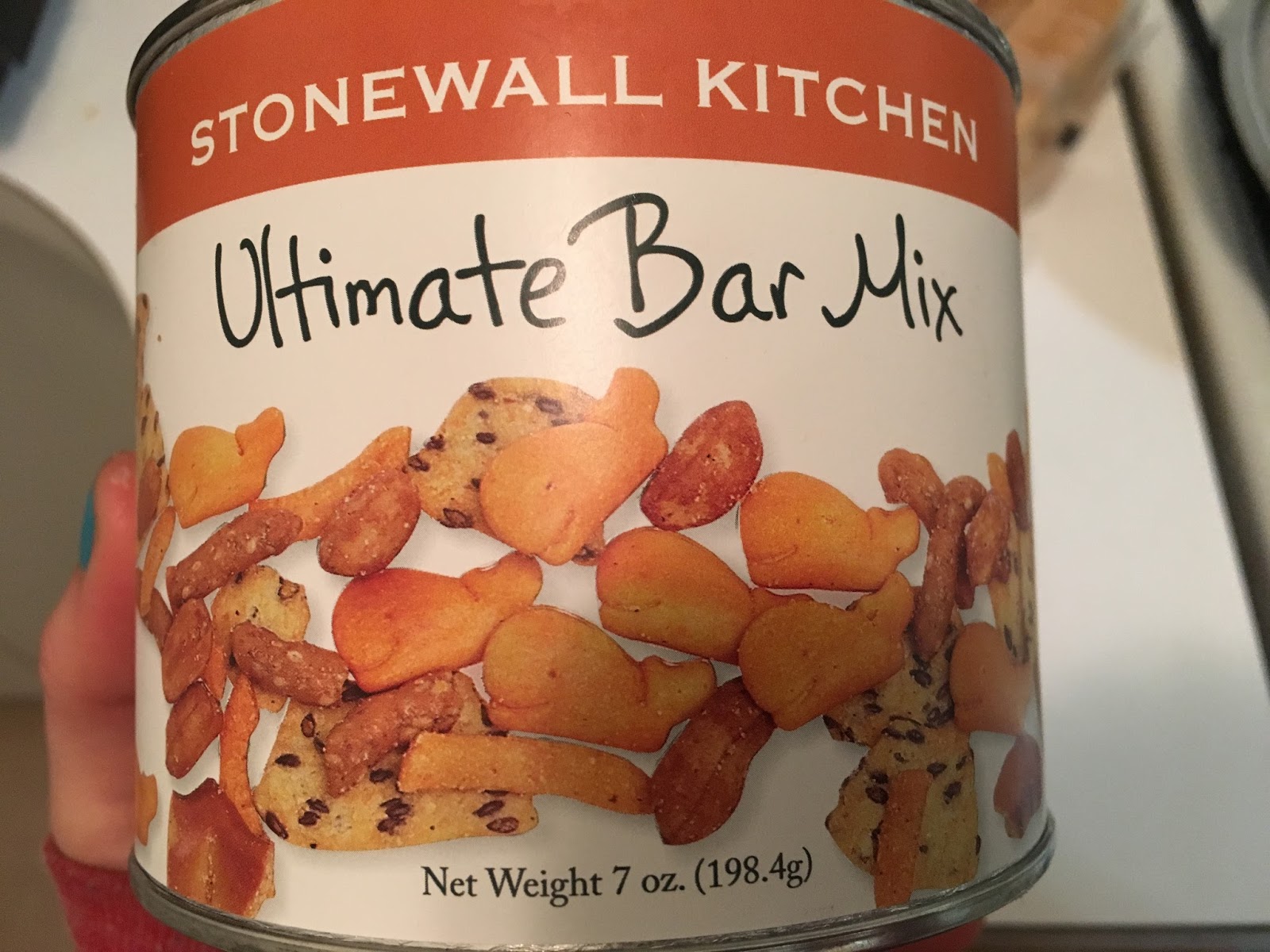
Crackers don’t matter? Goldfish v. whale

I bought these for a party and had a student indicate that she experienced initial misrecognition in the bowl (hard to say “interest” because she wasn’t the purchaser).  Would any orange cracker that isn’t square risk confusion with Goldfish crackers?  PS if you got the title reference, you are my people.

from Blogger https://ift.tt/2pHsgvb

Posted in Uncategorized | Tagged | Leave a comment