TrueNorth not truly famous, court rules on motion to dismiss

TrueNorth Companies, L.C. v. TruNorth Warranty Plans, LLC,
No. C17-31, 2018 WL 794700 (N.D. Iowa Feb. 8, 2018)
TrueNorth sued TruNorth for trademark infringement and
dilution based on their respective marks; here the court dismisses the dilution
claim for failure to plausibly plead fame.
TrueNorth alleged that it consistently used the word
“TrueNorth” and two specific logo designs in commerce in connection with its
business since 2000. Since 2001, TrueNorth invested well over $30 million in
marketing efforts to strengthen the TrueNorth brand.  It alleged that its brand was “well-known and
recognized in the transportation industry as a leader in insurance and
financial strategies, as evidenced by TrueNorth’s partnerships with some of the
nation’s leading motor carriers, as well as TrueNorth’s work with
transportation associations.” It also had three registered marks.

TrueNorth argued that it had done enough to plausibly plead
fame under Twiqbal, and cited cases
allowing minimal pleading, including a case accepting that BoatU.S. and
TowBoatU.S. were plausibly pled to be famous marks.  Nope. 
Dilution fame requires fame beyond a niche market. “While the pleading
standard itself is not rigorous and this type of claim is not subject to a
heightened pleading standard (such as claims that fall under Rule 9(b)), the
nature of a dilution claim itself makes it difficult to ‘state a claim to
relief that is plausible on its face.’”  
Even accepting TrueNorth’s allegations, they fell well short
of plausible fame, a rigorous standard. 
Allegations of $30 million in marketing efforts since 2001, with no
further details regarding the extent or geographic reach of its advertising and
publicity, were too vague.  TrueNorth
alleged that it has offices in six states, provides financial and insurance
services to a wide variety of client types across the United States, and
services clients around the country, but that wasn’t enough detail in terms of
“amount, volume, and geographic extent of sales of goods or services offered under
[its] mark.”
Conclusory allegations that the brand was well-known and
recognized in the transportation industry, as evidenced by its partnerships,
were insufficient because a mark’s fame must go beyond a niche market, such as
the transportation industry. And registration alone was insufficient to
establish plausibility of dilution fame: “[o]ne cannot logically infer fame
from the fact that a mark is one of the millions on the Federal Register.”  Dilution claim dismissed.
[Comment: given the similarity of the parties’ marks, is
dilution likely to be an important issue?]

from Blogger http://ift.tt/2BXDALq

Posted in Uncategorized | Tagged , , | Leave a comment

Tiger, tiger burning bright: Did he who made the Lokai make thee?

Lokai Holdings LLC v. Twin Tiger USA LLC, No. 15-CV-9363, 2018
WL 739435 (S.D.N.Y. Feb. 6, 2018)
Lokai sued Twin Tiger for trade dress infringement, unfair
competition, and false advertising based on Twin Tiger’s sale of bracelets
similar to those of Lokai; both parties’ bracelets include dark and light beads.
 Lokai alleged that “the contrasting
beads of its bracelets are intended to represent balance and the cycle of life
with the dark bead filled with mud from the Dead Sea, the lowest point on
earth, and the light colored bead filled with water from Mount Everest, the
highest point on earth.”  Here, the court
dismissed Twin Tiger’s counterclaims based on failure to disclose that the
water could leak out of the beads and that endorsers were compensated for
social media promotion. In addition, Twin Tiger counterclaimed based on letters
Lokai sent to Twin Tiger’s customers, requesting that they cease selling Twin
Tiger’s bracelets and threatening litigation based on infringement of Lokai’s
intellectual property rights.
Lokai bracelet

Twin Tiger bracelet

The court found both alleged falsehoods insufficient to make out a Lanham Act
claim.  Lokai’s website says “The white
bead carries water from Mt. Everest, and the black bead contains mud from the
Dead Sea.” The idea that the water would always stay in the white bead wasn’t
the only reasonable interpretation of the statement, and thus it couldn’t be
literally false.  Nor did Twin Tiger
sufficiently plead implicit falsity; at the pleading stage, the plaintiff must “offer
facts” to support the allegation that consumers or retailers were misled or
confused by the challenged ad, though consumer survey or other extrinsic
evidence isn’t required to be incorporated into the complaint.  [What would
suffice?  Is an allegation that
“reasonable consumers believe that the water would stay in the bead for the
working life of the bracelet” an allegation of fact, or is it conclusory?  What about allegations that leak-resistant
containers this size do exist, and that reasonable consumers would expect that
their jewelry would be leak-resistant? 
Courts are not always too clear about what they want here.]
As for failure to disclose that Lokai compensates certain
influences, celebrities, and media outlets for their endorsement of Lokai
products in online and social media advertising, Twin Tiger argued that this
violated FTC guidelines.  The FTC directs
that “a connection between the endorser and the seller of the advertised
product that might materially affect the weight or credibility of the
endorsement (i.e., the connection is not reasonably expected by the audience)
… must be fully disclosed.” There’s no private right of action under the FTC
Act, though its interpretation “can and should inform what constitutes false
advertising under the Lanham Act.” 
However, “the Lanham Act requires an affirmative misrepresentation or an
omission that renders an affirmative statement false or misleading—not a
failure to disclose something material.” [What about the implicit
misrepresentation that the celebrities/influencers chose to promote the
bracelets because they liked them, rather than because they were paid to do so?
That’s the premise of the FTC Endorsement guidelines, after all.]
           
The California and New York state law claims failed too,
though with some details differing. Under California law, “the presence of a
disclaimer or similar clarifying language may defeat a claim of deception.” On
Lokai’s website, albeit not on the same webpage, Lokai states: “Injected with
water sourced by sherpas from the heights of Mt. Everest, the white bead
represents life’s highest moments … The water may evaporate over time.” This
disclosure made it unreasonable “for any consumer or retailer to believe that
water will remain permanently in the bracelet.” [This reasoning seems to
contradict the general rule that the disclaimer has to be one that reasonable
consumers will perceive—under Williams v.
Gerber Products
, will reasonable
consumers read through multiple webpages to find qualifications?]
Likewise, “Twin Tiger cannot engineer [a private cause of
action under the FTCA] through California law.” 
[What about California law’s “unlawful” component, which does exactly
that, though perhaps not with Endorsement Guides that lack the force of formal
rules?]  “More important, outside of
conclusory allegations of a violation of the FTC Guidelines, Twin Tiger has not
alleged any facts that plausibly raise an inference that the non-disclosure of
paid endorsements is likely to lead consumers to believe that the endorsements
are unpaid.”
Finally, and failing to note the developing split on this
issue, the court ruled that the New York § 349 claim didn’t allege sufficiently
“consumer-oriented” conduct, because harm to competitors was the core of the
claim here, even though the FTC regulations were relevant to § 349, which is
“substantially modeled on the Federal Trade Commission Act.”
The tortious interference counterclaims were dismissed
because Twin Tiger didn’t allege sufficient facts on the specific contracts or
business relationships at issue. The names of the entities weren’t enough
without details about when the contracts were formed, when they took place, and
what the major terms were; attaching the contracts to the complaint might have
worked.
Furthermore, the court struck Twin Tiger’s affirmative
defense of unclean hands because the alleged misconduct wasn’t sufficiently
related to the subject matter of the litigation.  Trade dress infringement was distinct from
advertising about the bracelets or alleged inequitable misconduct in obtaining
a design patent.

from Blogger http://ift.tt/2CfAqy0

Posted in Uncategorized | Tagged , , , | Leave a comment

repeating a tested claim about later product editions isn’t literally false without relevant differences between editions

Strategic Partners, Inc. v. Vestagen Protective
Technologies, Inc., No. 16-CV-05900, 2017 WL 5951881 (C.D. Cal. Nov. 13, 2017)
Vestagen makes Vestex scrubs, a product made with a fabric
containing a fluid barrier and antimicrobial agent that inhibits the growth of
bacteria on the fabric. SPI sued for false advertising, and a jury returned a
verdict in favor of Vestagen, finding that SPI failed to prove its false
advertising case. (Previous
discussion of SPI’s claims
.) The court denied SPI’s motion for judgment as
a matter of law/for a new trial. 
Post-verdict JMOL is proper if the evidence presented at trial “permits
only one reasonable conclusion, and that conclusion is contrary to” the jury’s
verdict.  Here, there was evidence that
could have favored Vestagen on each claim. 
Among other things, SPI argued that Vestagen changed the
composition of the fabric used in Vestex scrubs in 2015, but continued to cite
to a 2012 study as showing that Vestex scrubs reduce the amount of harmful
bacteria on the fabric. SPI argues that “advertising is ‘literally false’ if it
makes claims regarding the findings of a study wherein the study did not test
the same product as advertised.” However, to take advantage of this rule, SPI
would have to show that there were relevant design differences between the
tested product and “later editions” of the same product.  “Both editions of the scrubs incorporated the
Vestex antimicrobial technology. SPI cited no evidence showing that the change
in fabric negatively affected its antimicrobial properties,” and indeed there
was evidence to the contrary.
SPI also argued that Vestagen falsely advertised that
“Vestex fabric is currently registered with the FDA,” even though the FDA does
not permit registration of a fabric and the fabric itself is not in fact
registered. But Vestagen introduced evidence that the surgical scrub that is
made out of that fabric is registered with the FDA, and that it made the claim
only in the context of the scrub. This was enough to allow the jury to reject a
literal falsity argument.  Likewise, the
situation didn’t justify a new trial.

from Blogger http://ift.tt/2EnKJ9u

Posted in Uncategorized | Tagged | Leave a comment

Cal’s anti-SLAPP law protects some commercial speech, especially when it’s not really commercial

Dean v. Friends of Pine Meadow, 2018 WL 774065, No. A149735
(Cal. Ct. App. Feb. 8, 2018)
Dean (shorthand here for Dean & other plaintiffs) sued
defendants for allegedly false statements and publications regarding Dean’s
plan to construct a housing development on the Pine Meadow Golf Course in
Martinez. The trial court granted defendants’ special motion to strike under
the anti-SLAPP law and the court of appeals affirmed.
Pine Meadow Golf Course was owned by individual members of
the Dean and Coward families, who executed a contract to sell the golf course
to plaintiff DeNova, a “leading community-oriented, family-owned private
homebuilder with deep-seeded roots in local philanthropy and community
service.” The city of Martinez then approved a development application, which
“allowed for the development and construction of a 99-unit single-family home
subdivision.”  Dean alleged that the
named defendants consistently “opposed any development on the Pine Meadow
Golf Course property.” “Using the name ‘Friends of Pine Meadow’ for the first
time,” defendants circulated a petition for a referendum to reverse the City’s
resolution approving a general plan amendment to allow for the planned
development.

The alleged deception was using the name “Friends of Pine Meadow” “in order to
deceive fellow citizens into believing they were friends with the golf course
owners, including Dean who is a prominent citizen, and that they represented
the interests of these owners and the golf course.”  [Wow, all else aside, that doesn’t even pass
the laugh test, inasmuch as I snorted when I read that.  The “Friends of” formulation is widely used
to identify people who support keeping a place in a particular condition.]  When Dean and the other golf course owners
attempted to inform people “about the true nature of the Friends of Pine
Meadow,” defendants allegedly responded by publishing allegedly false
accusations that some or all of the plaintiffs were “ ‘hassling’ the signature
gatherers” and using “ ‘intimidation, threats, and obscene, derogatory name
calling.’ ”  There were further alleged
misrepresentations, including ones related to the idea that without development
the golf course would be kept as open space, ones about the scope of the development
plan, and ones about the scope of opposition.
The court of appeals first agreed with the trial court that
all Dean’s causes of action arose from protected activity. “Most, if not all,
the material allegations pertain to statements that were made during or in
connection with proceedings to amend the City’s general plan,” which made it
petitioning activity, and all the challenged conduct was “speech or petitioning
activity relating to an issue of public interest.”  Indeed, “the plaintiffs’ complaint is a
paradigm of the problem that [the anti-SLAPP law] was designed to address. ‘The
typical SLAPP suit involves citizens opposed to a particular real estate
development. The group opposed to the project, usually a local neighborhood,
protests by distributing flyers, writing letters to local newspapers, and
speaking at planning commission or city council meetings. The developer
responds by filing a SLAPP suit against the citizen group alleging defamation
or various business torts’” [citing a law review article about SLAPPs].
On appeal, Dean argued that defendants’ claims were
commercial speech, which couldn’t constitute protected activity.  First, no. The complaint targeted “individuals
who formed a community group in order to oppose an amendment to the City’s
general plan. On its face, this type of speech is political rather than
commercial in nature.”  Dean argued that defendants
acted like competitors by proposing
that the golf course be used for some purpose other than a housing development/be
bought by someone else.  That’s not what
competition means. 
Second, not all commercial speech is categorically excluded
from anti-SLAPP protection.  Defendants’ speech
and petitioning activity were covered “because the challenged statements were
made during or in connection with an official City proceeding authorized by
law, in public forums, and in connection with a matter that was both a public
issue and an issue of public interest.” 
That’s different from excluded commercial speech, which occurs in false
or misleading advertising pertaining to the business of the speaker or his or
her competitor, as delineated by Nike v.
Kasky
.  “[A] plaintiff cannot
preclude a defendant from establishing that a cause of action arises out of
protected activity simply by alleging there is some commercial element to the
parties’ dispute.”  [As I read this, the
court is saying that Nike’s statements to legislators and regulators would thus
have been protected by the anti-SLAPP law.] 
Even if the constitutional definition of commercial speech is broader
than advertising about the speaker or its competitor, the anti-SLAPP law does
not limit its protections to the contours of the First Amendment commercial
speech doctrine.  As the California
Supreme Court explained, “the anti-SLAPP statute is to be ‘construed broadly’
so as to ‘encourage continued participation in matters of public significance,’”
so statutory protection “may extend beyond the contours of the constitutional
rights themselves.”  The statute itself
provides “objective guidelines that lend themselves to adjudication on pretrial
motion.”
After that, the court of appeals found that Dean didn’t meet
the burden of showing that the claims were legally sufficient and factually
substantiated. The absolute litigation privilege in California extends to any
communication with some relation to a “legislative proceeding,” a “judicial
proceeding,” or “any other official proceeding authorized by law.”  Dean argued that the litigation privilege
didn’t apply because the complaint was seeking to hold defendants liable for an
unlawful course of conduct evidenced by their speech, but the record showed
otherwise: “Every claim in the complaint seeks to punish and/or suppress speech
that relates to an official proceeding about a public issue.” 
Nor did the Noerr-Pennington
exception to immunity for petitioning activities for sham petitions aid
Dean.  Dean argued that they’d alleged
facts to show that defendants’ petitioning activity was part of a misleading
campaign, pursuant to which they “deliberately” chose a deceptive name for
their group, mischaracterized the “current status” of the golf course property
and the plaintiffs’ development plan, and falsely accused plaintiffs of misconduct.
 Given defendants’ concededly genuine
opposition to the general plan amendment, their petitioning activity, no matter
how deceptive, wasn’t a sham. 

from Blogger http://ift.tt/2CeyZA0

Posted in Uncategorized | Tagged , , , | Leave a comment

Lexmark allows false advertising claim against law firm for soliciting timeshare clients

Diamond Resorts Int’l, Inc. v. Aaronson, 2018 WL 735627, No.
17-cv-1394 (M.D. Fla. Jan. 26, 2018)
Diamond is a timeshare developer managing more than 420
membership resorts worldwide. The Aaronson defendants are an Orlando-based
attorney and his law firm focusing on soliciting Diamond’s timeshare members to
become clients of Aaronson’s services to free them from financial obligations
under their purchase and financing contracts. Diamond alleged false
advertising, resulting in members ceasing to pay under their timeshare
contracts, and subjecting Diamond to baseless arbitration proceedings.  Diamond sued for (1) violations of the Lanham
Act; (2) tortious interference with a contractual relationship; (3) trade libel;
(4) violations of Florida’s Deceptive and Unfair Trade Practices Act; (5)
malicious prosecution; and (6) RICO violations (of which no more will be said,
because they’re RICO claims).
The court rejected Aaronson’s argument that its speech
wasn’t “commercial advertising or promotion” under the Gordon & Breach test, because it wasn’t in competition with
Diamond.  The court unsurprisingly
rejected that argument in light of Lexmark
(which functionally amended the Gordon
& Breach
test).  Where, as here,
“a party claims reputational injury from disparagement, competition is not
required for proximate cause; and that is true even if the defendant’s aim was
to harm its immediate competitors, and the plaintiff merely suffered collateral
damage.”
Nor could the court resolve whether the advertising was
merely opinion or puffery at the pleading stage.  (Indeed, it wasn’t clear from the court’s
analysis whether Diamond alleged specific statements, or merely “ ‘material
false and misleading statements,’ which have deceived Plaintiffs’ timeshare
members into believing that Plaintiffs have engaged in unlawful activity and
caused them to stop making payments on their Timeshare Contracts.”  The court also cited precedent holding that an
opinion may be actionable under the Lanham Act “if it fairly implies a factual
basis.”
The state-law claims weren’t precluded by Florida’s
litigation privilege, which provides absolute immunity for acts or statements:
(1) made or committed in the course of judicial or quasi-judicial proceedings;
and (2) “connected with, or relevant or material to, the cause in hand or
subject of inquiry.” This includes “conduct that is ‘necessarily preliminary’
to a judicial proceeding,” which is confined to pre-suit communications that
are a statutory or contractual condition precedent to suit.  Diamond’s claims arose out of the challenged
advertising, which wasn’t required by, permitted by, or even related to the
subsequent arbitration proceedings.
For similar reasons, the court rejected Aaronson’s argument
that, when they rendered legal services to Diamond’s timeshare members, they
were agents of those members and couldn’t be a third party for purposes of
tortious interference claims, which require a third party to interfere.
The trade libel claims sufficiently alleged special damages:
(1) the costs of arbitrations; (2) the costs of defending arbitrations; and (3)
members’ unpaid promissory notes.  FDUTPA
claims also survived.
The malicious prosecution claim failed, however, because malicious
prosecution claims are generally disfavored under Florida law, and other
jurisdictions have rejected malicious prosecution claims based on arbitration
proceedings. Thus, the court would not predict that the Florida Supreme Court
would expand this claim to arbitration proceedings.

from Blogger http://ift.tt/2EnKlYA

Posted in Uncategorized | Tagged , | Leave a comment

A trace of deceptiveness in bourbon age labeling

Penrose v. Buffalo Trace Distillery, Inc., 2018 WL 705054,
No. 17CV294 (E.D. Mo. Feb. 5, 2018)
Plaintiffs brought a putative class action claiming that BT misrepresented
that  Old Charter bourbon has been “aged
8 years.” The court mostly refused to dismiss the complaint.
closeup on neck label, before and after

the whole bottle

Old Charter used to be aged for 8 years; as of 2014, it isn’t,
but the bottle still says 8 prominently. 
(See a discussion
at
this link.)  “Eight” or “8” appears
three places on the bottle: on the neck, on its own label on the top of the
body, and in the text portion which reads “gently matured for eight seasons in
century old brick warehouses.” All BT did was remove “aged” and “years” from around
the 8 on the label.  “Seasons” means
years to reasonable consumers, plaintiffs alleged, given BT’s prior eight-year
and ten-year Old Charter products, which claimed to be matured for “eight
seasons” and “ten seasons,” respectively. The number isn’t part of the name; BT’s
own website used “Old Charter,” as did BT’s application for the label with the Alcohol
and Tobacco Tax and Trade Bureau (TTB). 
Published reviews indicate a significant decline in quality, such as:
“for Old Charter 8 the NAS [non age-stated] release was strikingly inferior to
the age-stated product.”  Consumers have
complained, e.g., “what’s said is deceptive, very deceptive in fact…It’s
still hogwash though and deceptive…because what you’re really doing is
selling younger whisky while pretending it’s older.” Nonetheless, BT receives a
price premium for its apparently age-stated bourbon, as shown by premiums paid
for other age-stated versions.
BT argued that no reasonable consumer would infer that Old
Charter is aged for 8 years because of the number 8 alone. “The Court cannot
conclude as a matter of law and at this stage of the litigation that the
packaging is not misleading, particularly in light of Plaintiffs’ allegations
that previously, Old Charter was aged 8 years. Consumers may just as likely
have seen the 8, and based on previous purchase, thought the 8 represented the
years of aging.”  Nor did state law safe
harbor provisions apply despite the TTB’s approval of the Old Charter label; “deceptive
conduct, viewed as a whole, is often broader than the otherwise regulated
conduct; therefore, in those circumstances, the doctrine does not apply.”
Claims based on the Magnuson-Moss Warranty Act failed
because bourbon’s age is a description of the product and in no way promises
any level of performance for any period of time, as required under the MMWA. Nor
was there a breach of the implied warranty of merchantability pled, because
even un-aged bourbon is merchantable: it’s are “fit for the ordinary purposes
for which such goods are used.”
Fraud claims, however, were pled with the requisite
particularity (I must admit to always being a bit amused by the “where” in
these cases—on the label!)  Plaintiffs
also stated a claim for unjust enrichment, in the alternative to their properly
pleaded breach of contract/express warranty claims.

It was too early to decide any class action issues, but the
court did dismiss claims for injunctive relief, since the named plaintiffs wouldn’t
be fooled again even if they expressed willingness to buy properly labeled Old
Charter bourbon.

from Blogger http://ift.tt/2GTLS6j

Posted in Uncategorized | Tagged | Leave a comment

It’s an ex-Lanham Act case without evidence of materiality

Not Dead Yet Manufacturing Inc. v. Pride Solutions, LLC, 2018
WL 688324, No. 13 C 3418 (N.D. Ill. Feb. 2, 2018)
Previous
discussion.
  The court reconsidered
its summary judgment decisions on plaintiff’s motion for reconsideration, but
left the false advertising result the same. 
The parties make “stalk stompers”—that is, “devices that attach to the
front of a combine or tractor to flatten cornstalks after they have been cut.”  The allegedly false statements at issue
concerned defendants’ ads claiming to have the “original” stalk stomper, when
in fact plaintiff introduced the innovation at issue (thus also bringing about
related patent claims).  Not Dead Yet
argued that literal falsity was a factual issue to be determined at trial, and
that the court should not have held that the challenged claims were at least
ambiguous and thus not literally false. Without evidence of actual consumer
confusion, the court granted summary judgment for defendants.
Summary judgment on a fact issue can still be appropriate if
the evidence wouldn’t allow a reasonable jury to return a verdict for the
nonmoving party on that issue.  Moreover,
“[t]he Seventh Circuit appears to recognize that a district court may make the
initial determination regarding a statement’s ambiguity and the need for
evidence of actual consumer confusion. See Schering-Plough Healthcare Prod.,
Inc. v. Schwarz Pharma, Inc., 586 F.3d 500, 513 (7th Cir. 2009) (“[A plaintiff]
cannot just intone ‘literal falsity’ and by doing so prove a violation of the
Lanham Act.”).”  [I’m teaching this case
tomorrow!] “Determining whether a statement is clear or ambiguous is the type
of exercise that courts routinely conduct,” and other cases have done so as a
matter of law.

Regardless—and contributing to continued uncertainty on exactly
what a matter of law/matter of fact is when interpreting advertising—the court
reaffirmed its prior result based on Not Dead Yet’s failure to show likely
injury because it failed to show that the “original” claim would have any
effect on consumers’ purchasing decisions. 

from Blogger http://ift.tt/2nM58d4

Posted in Uncategorized | Tagged | Leave a comment

Equinox in equipoise: no preliminary injunction for hotel mgmt co against fitness co’s expansion to hotels

Equinox Hotel Management, Inc. v. Equinox Holdings, Inc., No.
17-cv-06393, 2018 WL 659105 (N.D. Cal. Feb. 1, 2018)
Equinox Hotel, a “San Francisco-based hospitality company
specializing in developing, operating, and revitalizing hotel properties,” provides
hotel management services as well as consulting for hotel development
projects.  It sought but didn’t get a
preliminary injunction against Equinox Holdings, a sports club hoping to expand
into the market for the operation or promotion of hotels or the performance of
hotel-related services.
Equinox Hotel has a registered mark for the management of
others’ hotels.

It also has pending applications for “hotels; hotel
development services; hotel management services; restaurant services; and hotel
consulting and advisory services.”

Equinox Holdings is a “ ‘fitness giant’ operating
EQUINOX-branded luxury health clubs nationwide, in addition to PURE Yoga, Blink
Fitness, and Soul Cycle Facilities.” Between 2007 and 2009, Equinox allegedly
attempted to register two “EQUINOX word mark[s] for ‘Hotels’ ” with the PTO,
which were rejected due to “a likelihood of confusion” with the registered
Equinox Hotel mark and ultimately abandoned by defendant.  In 2014, Equinox Holdings applied again to
register a mark for ‘Hotels focused on lifestyle, wellness, and fitness”:
  

That application has been published for opposition. Equinox Holdings
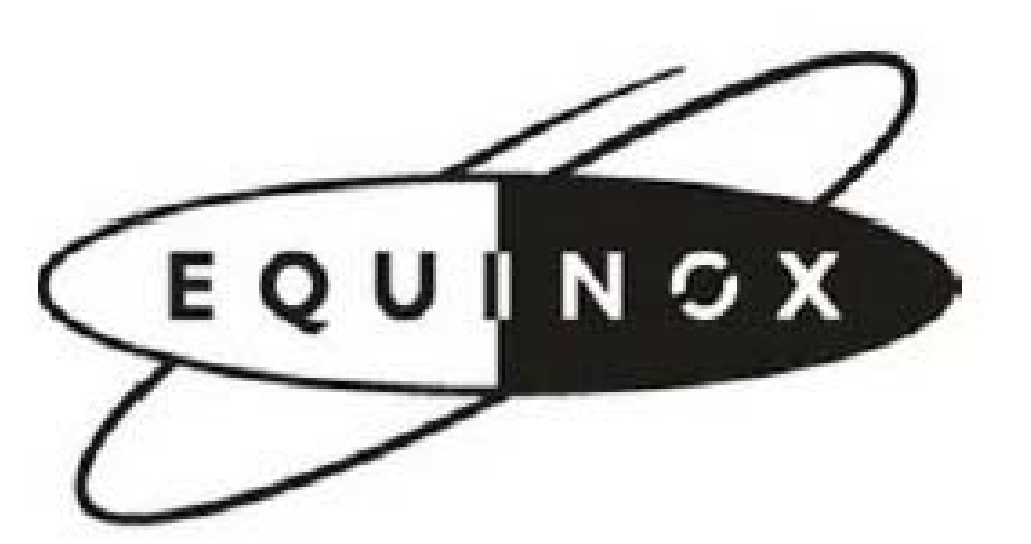
also has a new logo and registration application for that logo, which has been
the primary logo at its fitness centers since 2000.

Equinox Holdings allegedly “plans to open at least 50
hotels” under its mark, and “has begun construction on its first hotel in New
York City and plans to open this hotel in 2018 or 2019.”
The court found that likely confusion couldn’t be found on
this record.  “Equinox” is conceptually
strong for hotels, and Equinox Holdings has substantial marketplace strength, so
the strength factor favored Equinox Hotels.  The proximity of the parties’ services,
however, was unclear because the parties disagreed over the relevant
consumers.  Equinox Hotel markets its
hotel management services primarily to businesses such as third-party branded
hotels, which Equinox Holdings doesn’t intend to do.  But the services required to run Equinox Holdings
hotels will be the same “services” which plaintiff provides. “On this record,
the Court cannot determine whether this is a distinction without a difference.”
Equinox Hotel would like to brand its own Equinox hotels.  But it had insufficient evidence of likely
expansion. It has offered hotel-related services to third-party branded hotels
for over twenty years yet has never developed an Equinox-branded hotel.  Its desire to do so, and alleged ability to do
so “at any moment,” was insufficient under the circumstances.  Ultimately, the court found the services “moderately
related,” but the record left the court unpersuaded either way and so this
factor was neutral. Relatedly, “in a reverse confusion case…the degree of
care exercised is determined with reference to the senior user’s customers.” The
record was mixed with respect to the type of services and nature of customer to
whom the parties market, so this was also neutral.  And the same lack of evidence of expansion
also meant that the likelihood of expansion factor favored Equinox Holdings.
The court found that similarity only “narrowly” favored
Equinox Hotel because of the extra words in that party’s mark and visual
differences between the marks.  I’m going
to call this an instance of what Barton Beebe calls “stampeding”—given the
arbitrary nature of the mark and the predominance of the word in both marks, I’d
think Equinox Hotel would do better than “narrowly” prevailing on this factor.
Equinox Hotels identified eleven instances of alleged actual
confusion, including: a trade show attendee who stated that that he found it
“interesting to see what you guys are doing with starting your new hotel
fitness brand”; emails from Hotel Management Magazine and Hotel Business Design
to Equinox Hotels seeking to discuss Equinox Holding’s “growth from a wellness
brand to a hotel brand”; a prospective partner who believed Equinox Hotel was
associated with Equinox Holdings; an email from one of Equinox Hotel’s current
vendors which requested contact information regarding Equinox Holdings; and an
email supposedly showing that a marketing manager responsible for listing
attendees at an industry summit was confused as to whether the parties were
related.  Eleven instances over the
thirty months in which Equinox Holdings announced its intention to expand was
too sporadic to support a finding of actual confusion.  Again, I’m a bit surprised by this
conclusion, though I’m not convinced it’s wrong, either—with defendant not yet
even operating any hotels, a more receptive court might have found that confusion
even before Equinox Holdings actually expanded was probative of much more actual
confusion once it started doing hotel business.
As for marketing channels, Equinox Hotel argued that the
parties “attend industry trade shows and conferences to promote the company” and
“use the same trade publications to promote their services, including Hotel
Business and Hotel Management Magazine.”  Equinox Holdings rejoined that it advertised
its Equinox-branded luxury hotels primarily “on social media and through
stylish print ads in consumer magazines that target its customer base, and has
no plans to advertise in trade journals.” There was no evidence that it
advertised in industry journals, or that Equinox Hotel advertised on social
media or in consumer magazines. This factor tipped in favor of Equinox Holdings
on the current record.
Intent favored Equinox Hotel because Equinox Holdings was
aware of the former’s marks based on the latter’s prior rejected trademark
applications and an unsuccessful attempt to buy the Equinox Hotels marks in
2014, but “as this is a reverse confusion case intent plays a less critical
role.”
Despite its finding of lack of likely success on the merits
(and not even bothering with the old “serious questions going to the merits”
alternative), the court proceeded to analyze irreparable harm, and also found
none had been shown.  In a reverse
confusion case, the junior user overwhelms the senior user. While Equinox
Hotel argued that  its corporate
identify “will be washed away by the rising tide of publicity associated with” the
defendant’s Equinox-branded hotels, eleven confusion incidents over the course
of 30 months was insufficient to a “threat of being driven out of business” if
the motion for a preliminary injunction were denied, especially given the court’s
intention to hold a prompt, pre-opening trial.
Similarly, “potential loss of goodwill or loss of control
over one’s reputation…may constitute irreparable harm for purposes of
preliminary injunctive relief.” But to show this, a plaintiff “must do more
than simply submit a declaration insisting that its reputation and goodwill
have been harmed.” It didn’t; again, the limited instances of confusion failed
to show a “total” loss of control over its business reputation without an injunction.
Equinox Hotel argued that Equinox Holdings lacks a “track
record as a hotel operator,” and if it performed badly, its poor reputation
“will become Equinox Hotels’ reputation.” However, other record evidence
suggested that Equinox Holdings had a strong reputation for customer service, and
there was also evidence indicating that Equinox Hotel’s reputation for customer
service wasn’t strong. Given the lack of any record, and the absence of a hotel
opening before trial, harm arising from poor performance by Equinox Holdings
was too remote to warrant preliminary injunctive relief.
Specifically addressing one of Mark McKenna’s points about
the actual harm of confusion, the court also found that the potential loss of
business opportunities wasn’t irreparable harm. Equinox Hotel offered one
declaration that a prospective partner did not reach out to it because the
prospective partner believed that it was associated with Equinox Holdings, which
was “too large an entity for the type of deals he works on.”  This was a weak showing of one potential loss
across the over two years since Equinox Holdings announced its plans, and even
that didn’t show that the prospective partner ultimately declined to do the
deal.
Finally, the balance of the hardships favored Equinox
Holdings, because it announced its hotel plans in April 2015, but Equinox
Hotel didn’t sue until November 2017, then waited three more weeks to seek a
preliminary injunction. Because of the delay, Equinox Holding spent 30 months
developing and promoting its hotel brand, and delay, “standing alone,
constitutes grounds for rejecting [a] motion for preliminary injunction.”

The court also dismissed California UCL and FAL claims with
prejudice. They were based on fraud, and in fraud-based cases, the plaintiff
has to assert its own reliance rather
than the reliance of third parties, even though consumer confusion is the kind
of harm at which these laws are directed.

from Blogger http://ift.tt/2GRpnij

Posted in Uncategorized | Tagged , | Leave a comment

Claims to “introduce” product to US not untrue just because of prior minimal sales

LuxSoma LLC v. Leg Resource, Inc., 2018 WL 583119, No. 15
Civ. 4838 (S.D.N.Y. Jan. 25, 2018)
LuxSoma sued defendant ORI for breach of an implied contract
that allegedly granted it exclusive rights to distribute ORI legwear in the US,
induced by defendants Leg Resource and its President.  The court granted summary judgment to Leg
Resource on LuxSoma’s false advertising claim.
LuxSoma argued that the Leg Resource made material
misstatements when it announced in 2012, that (1) it would introduce ORI
products to the U.S. market and (2) it was ORI’s exclusive distributor.  An ad in Women’s Wear Daily also stated that
ORI was “gearing up for a journey to North America” and that Leg was ORI’s
exclusive distributor. LuxSoma alleged falsity because LuxSoma was ORI’s
exclusive distributor and had previously sold ORI merchandise at kiosks in
Dallas, Texas.

The court disagreed. 
The “introducing” statement couldn’t have deceived a substantial portion
of the intended audience.  “When the
statement was made, LuxSoma’s sales were minimal and geographically confined to
Dallas, Texas. As ORI stated, ‘the U.S. market was still open’ ‘because
[LuxSoma’s] sales were so small,’ and ‘[t]he sales in the U.S. were so small
there was no[t] really a presence of the product.’”  LuxSoma admitted that it had sold a “paltry”
500 to 1,000 pairs of ORI legwear in Dallas, sales that were “far too small and
much too geographically concentrated to raise a triable dispute” on
deceptiveness.  And the exclusive
distributorship statement was true when made.

from Blogger http://ift.tt/2E66hXe

Posted in Uncategorized | Tagged | Leave a comment

Allegedly false statements on package/instructions didn’t plausibly harm competitors, court rules

Telebrands Corp. v. Everstar Merchandise Co., No. 17-2878, 2018
WL 585765 (D.N.J. Jan. 29, 2018) (magistrate judge)

Telebrands sells novelty stuff; Everstar, a competitor, allegedly copied its
stuff in unlawful ways.  Relevant to this
blog, Telebrands alleged that Everstar engaged in false advertising under
§43(a) by printing false information on the packaging of its GALAXY LASER and
NORTHERN LIGHTS LASER products, as well as within the operating instructions
for those products.  The statements
allegedly understated the maximum power output of the lasers (whose output was
actually in excess of that allowed by the FDA), misleading consumers into
thinking the lasers would be safe to use. 
Rather than dealing with this as a matter of “commercial advertising or
promotion,” as I would have guessed, the court used Lexmark and proximate cause.

First, the court reasoned, Telebrands didn’t allege that
Everstar characterized the statements on the packaging in any way that
indicated safety.  [Necessary implication
much?]   Nor were there any alleged comparisons or
references to Telebrands products, nor were there any allegations about how consumers
“might have acted differently had the packaging information been accurate, or,
alternatively, if the packaging did not include any representations regarding
power output.” Thus, there were no allegations about how the misstatements
persuaded consumers to purchase Everstar’s products.  Likewise, Telebrands didn’t allege that the
safety instructions were available to consumers before purchase, so they couldn’t
affect purchasing decisions.  Telebrands
suggested in its argument that “[t]he dangerous nature of Defendants’ products
will harm Telebrands’ sales and may ultimately destroy the market for decorative
holiday laser lighting products,” but this wasn’t in the complaint, which
referenced sales diversion.  “If
Plaintiffs intend to plead injuries suffered as a result of harm to the
industry in general, they must add allegations making that clear.”

from Blogger http://ift.tt/2Fv2DTF

Posted in Uncategorized | Tagged , , | Leave a comment