"Commercial advertising and promotion" can’t be conclusorily alleged

Jus Punjabi, LLC v. Get Punjabi Inc., 2015 WL 2400182, No. 1:14–cv–3318 (S.D.N.Y. May 20, 2015)
 
Jus Punjabi, a cable and satellite television network serving the U.S. Punjabi community, sued Get Punjabi, a rival television network.  Jus Punjabi allegedly introduced daily live programming—otherwise unavailable to Punjabi viewers in the U.S.—covering news and current events, swiftly building a reputation as a premium channel.  Defendants allegedly undertook a scheme to defraud and destroy Jus Punjabi, stealing confidential information and trying to appropriate Jus Punjabi’s business, including broadcasting “copycat” live call-in news shows, each starting 30 minutes before each of Jus Punjabi’s identically-formatted shows aired.
 
Jus Punjabi sued for violations of RICO, the Lanham Act, and state law tortious interference and breach of contract.  The RICO claims failed because they were RICO claims.
 
The court turned to whether Jus Punjabi had alleged “advertising or promotion.”  The touchstone is an organized campaign to penetrate the relevant market.  “Proof of widespread dissemination within the relevant industry is a normal concomitant of meeting this requirement.” Interestingly, the court reformulated the usual test to completely eliminated the now-dubious “by a competitor” requirement, making it into: “(1) commercial speech; (2) for the purpose of influencing consumers to buy defendant’s goods or services; and (3) although representations less formal than those made as part of a classic advertising campaign may suffice, they must be disseminated sufficiently to the relevant purchasing public.”
 
Jus Punjabi failed to plead “advertising or promotion.”  It alleged that three people gossiped about Jus Punjabi’s founder and that one told others in the Get Punjabi offices that she was “scamming everyone, she is slick and a cheat.” Those statements were plainly not commercial advertising or promotion.  Jus Punjabi also alleged that defendants “defamed and maligned Ms. Sandhu and Jus Punjabi with its advertisers and with cable and satellite providers in order to divert revenue to defendants.” Even assuming that the relevant “consumers” were advertisers and cable and satellite providers [which I think is a reasonable assumption], Jus Punjabi didn’t allege any particular false statements made, nor did they allege sufficiently widespread dissemination to qualify as “commercial advertising or promotion.”
 
Jus Punjabi alleged that “[d]efendants’ corrupt activities also included extensive advertising and marketing campaigns to disparage plaintiffs’ good[s], services and business operations and integrity,” but these were mere “[t]hreadbare recitals of the elements of a cause of action, supported by mere conclusory statements” that the Supreme Court has said are insufficient to state a claim.
 
Without federal claims, the court dismissed the state claims.
Posted in http://schemas.google.com/blogger/2008/kind#post | Leave a comment

DMCA hearings, LA: Guest post by Betsy Rosenblatt

Guest post from Betsy Rosenblatt
 
The triennial Copyright Office DMCA exemption hearings began
on May 19 for three days in Los Angeles before moving next week to Washington,
D.C. for four more days.  I attended the
first two days, which addressed a wide range of topics.  Some were exactly the sort of thing one would
expect the Copyright Office to be thinking about:  space-shifting and format-shifting of
audiovisual works; incorporating clips of audiovisual works into narrative and
documentary films.  But more of them
concerned what might be described as “tinkering”:  jailbreaking smart TVs and video game
consoles; re-enabling authentication for no-longer-supported multi-player video
games; conducting automotive safety research; and diagnosing, repairing and
modifying motor vehicles such as agricultural machinery and cars.   And that’s only two days’ worth of topics;
the sheer diversity of the
rulemaking agenda
reflects just how many corners of business and industry
are now touched by the growing tendrils of copyright law.
 
Several times over the course of the proceedings, the
Copyright Office representatives expressed wonder that we’d gotten to this
point; even a decade ago, I doubt many people would have expected that over
half a day of copyright hearings would be dedicated to motor vehicle safety and
repair.   This, in turn, led to a lot of
talk—especially during the motor vehicle sessions—about what is and isn’t a
“copyright interest.” The automotive industry representatives provided a lot of
scary hypotheticals about pollution, malicious misuse, and other horrible
things that could result from hacking car software, closing with, essentially,
“lives are at stake.”  Proponents,
reasonably, countered that while all of those things were indeed scary and bad,
they weren’t the sorts of ills copyright law was designed to prevent.  Noninfringing activity that harms people or
society is still noninfringing.  Most of
the time that sort of harmful or malicious activity violates other laws, and
those laws—not copyright—should be used to prevent it.  This reasoning is echoed in the recent Garcia
v. Google en banc opinion.
 
To my surprise, the Copyright Office didn’t seem entirely
convinced.  Office representatives asked
a number of questions about whether it had a responsibility to protect the
public from non-copyright ills.  Several
times, they probed the idea that by making it easier to do something illegal or
dangerous by allowing people to bypass TPMs, the Copyright Office might in some
way be endorsing or putting its seal of approval on those illegal or dangerous
activities.  Proponents objected to this characterization.  The question Congress instructed the
Copyright Office to ask was whether section 1201 interfered with a significant
amount of noninfringing activity—not to do a cost-benefit analysis.  (Compare NAM v. SEC, where the SEC was
instructed to make a rule about conflict minerals, not to determine if a rule
about conflict minerals was justified.) 
If 1201 interferes with noninfringing activities, then the Copyright
Office is neither statutorily empowered to inquire further nor does it have the
expertise to opine on the larger cost benefit analysis.  Other agencies—NHTSA, the EPA, or whoever
else has that specific expertise can and should opine, and if there’s a problem
with a particular function it’s going to be a problem whether or not the car makers
(etc.) authorized it.   Noninfringing
activities are noninfringing, and the fact that people could choose to
not-infringe in a way that is otherwise harmful or illegal makes no difference
from a copyright perspective.  (To
wit:  the law allows people to own and
operate cars even though it’s possible to do very harmful or illegal things
with them.  Those things are governed by
laws about operating cars, not by preventing people from owning them.)  
 
I’ll add to this that the existence or non-existence of an
exemption is, as a practical matter, extremely unlikely to have any impact on
malicious or illegal circumvention. 
People who are going to do malicious or illegal things will do them
regardless of whether there’s a copyright exemption along the way.  They’ve already established that they’re
willing to break laws—what’s one more? 
So the only people who will be chilled by a lack of copyright exemption
are the people who want to be law abiding and do good (or at least not
malicious!) things with their circumvention.
 
But back to the point: 
This led to a debate over whether proponents could discuss the benefits
of the noninfringing activities—in the vehicle case, safety improvements,
technological innovations, personal benefits such as enabling someone to make
their vehicle more suited to its purpose, and such.  Auto companies said that what was good for
the goose was good for the gander, and if they couldn’t rely on the risks that
might arise from breaking TPMs, then the proponents couldn’t rely on the benefits.  On the surface, this argument sounds
logical.  But on probing, I think it
doesn’t hold up.  The default state of
the world without 1201 is that copyright law permits people to do anything that
doesn’t infringe.  The Copyright Act
doesn’t necessarily endorse those things, and they may be harmful or illegal,
but the Copyright Act still allows them. 
In allowing them, the Copyright Act presumably takes into account many
benefits of carving certain types of activity out of infringement:  free expression, innovation, communication,
education, community-building, self-actualization…while entirely and
appropriately ignoring the myriad and diffuse ills that can arise from
noninfringing activity (a list too long to enumerate, since all of the ills in
the world except for copyright infringement arise from noninfringing activity,
and many of them are governed by non-copyright law).  Therefore, in considering whether section
1201 unduly chills noninfringing activity, it seems wholly appropriate to
consider the benefits of that noninfringing activity without considering its
potential ills, which can and should be governed by non-copyright law when
appropriate.
 
But the auto companies cast themselves in the role of
protector:  by holding the keys to
encryption, they are preventing the ills that may result from malicious
hacking, and the fact that they’re also preventing tinkerers from creating
benefits was (to their minds, slight) collateral damage.  And they no doubt believe that they actually
do have everyone’s best interests at heart. 
We should, the car companies imply, trust them to do all of the
beneficial things themselves, so the tinkerers are unnecessary.  This of course ignores all of the
community-building and self-actualization benefits of tinkering, the benefits
of independent research and development, and the benefits of disruptive or
non-market-driven creation and innovation, but in a larger sense it also
reveals the fundamental culture clash at the heart of this exemption process.
 
There is a cultural gulf between manufacturer and tinkerer,
big and small, outsider and incumbent, and it ran like a canyon through the
proceedings.  (It was notable, and to my
mind quite telling, that over the course of the two days, the opponents to the
exemptions were, with one exception out of eleven, all white and male.  I’m not saying the proponents were exactly a
rainbow of races and genders, but they were a lot more diverse.)  The proponents and opponents were, perhaps
necessarily, talking past each other.  Over
and over, the proponents explained they just wanted to be able to do what they
wanted with a physical object they had lawfully purchased.  In response, every opponent told the
Copyright Office that they provide official channels for allowing some people
to do some of what the proponents are asking to do.  Automotive companies “partner with” hired
researchers and sell tools to authorized repairers and modifiers to do some
things.  Film studios license some clips
for inclusion in films (even when using those clips without licensing would be
fair use).  Some smart-TV makers provide
tools that allow people to build some of their own applications.  Film and TV studios allow people to space-
and format-shift some things using paid services like Ultraviolet.  Video game publishers have given permission
to some museums and libraries to preserve some multiplayer video games.
 
But allowing “some” isn’t the same as allowing all, and each
of these limited permissions comes with a catch.  Two catches, actually.  First, for each one, the users had to ask
permission.  But people who want to do
these things might not feel empowered enough to take the risk of asking for
permission.  And even if they do, that
permission can be denied if the encryption holder doesn’t like what the user is
doing—if they don’t like what the user/creator’s film is saying, if they don’t
like that the researcher might be revealing a safety vulnerability in their
vehicle, if they want to make money by charging for format-shifting or
modification/repair tools.  And second,
none of the underlying activities is copyright infringement.  So even though the underlying activity
doesn’t infringe copyright, section 1201 allows the encryption holder to decide
who does and doesn’t participate in creation, innovation, research, or play,
and exactly what they get to do.  The
opponents, of course, relish this control, because they can use it to protect
their brands and make higher profits. 
They defend their opposition by explaining that they’re generously
allowing people to do good things, while protecting the world from the dangers
of unregulated tinkering (such as pollution, copyright piracy, and malicious
exploitation of technology).  But why do
they get to be the gatekeepers, when the activity isn’t infringing copyright,
and the malicious stuff is mostly governed by other laws (such as environmental
regulations and criminal copyright law)? 
Why do they get to choose who does safety research; who preserves video
games; who develops new after-market automotive innovations; who repairs
tractors; who controls the closed captioning print size for televisions; who
makes films? 
 
And that gatekeeper function is at the core of the culture
clash: the opponents think they’re fantastic at guarding henhouses, and don’t
seem to understand why the (yummy, yummy) chickens inside don’t trust them to
protect the chickens’ best interests. 
The proponents just want not to be ogled by foxes.

from Blogger http://ift.tt/1FMVRVS

Posted in Uncategorized | Tagged , , , | Leave a comment

DMCA hearings, LA: Guest post by Betsy Rosenblatt

Guest post from Betsy Rosenblatt
 
The triennial Copyright Office DMCA exemption hearings began on May 19 for three days in Los Angeles before moving next week to Washington, D.C. for four more days.  I attended the first two days, which addressed a wide range of topics.  Some were exactly the sort of thing one would expect the Copyright Office to be thinking about:  space-shifting and format-shifting of audiovisual works; incorporating clips of audiovisual works into narrative and documentary films.  But more of them concerned what might be described as “tinkering”:  jailbreaking smart TVs and video game consoles; re-enabling authentication for no-longer-supported multi-player video games; conducting automotive safety research; and diagnosing, repairing and modifying motor vehicles such as agricultural machinery and cars.   And that’s only two days’ worth of topics; the sheer diversity of the rulemaking agenda reflects just how many corners of business and industry are now touched by the growing tendrils of copyright law.
 
Several times over the course of the proceedings, the Copyright Office representatives expressed wonder that we’d gotten to this point; even a decade ago, I doubt many people would have expected that over half a day of copyright hearings would be dedicated to motor vehicle safety and repair.   This, in turn, led to a lot of talk—especially during the motor vehicle sessions—about what is and isn’t a “copyright interest.” The automotive industry representatives provided a lot of scary hypotheticals about pollution, malicious misuse, and other horrible things that could result from hacking car software, closing with, essentially, “lives are at stake.”  Proponents, reasonably, countered that while all of those things were indeed scary and bad, they weren’t the sorts of ills copyright law was designed to prevent.  Noninfringing activity that harms people or society is still noninfringing.  Most of the time that sort of harmful or malicious activity violates other laws, and those laws—not copyright—should be used to prevent it.  This reasoning is echoed in the recent Garcia v. Google en banc opinion.
 
To my surprise, the Copyright Office didn’t seem entirely convinced.  Office representatives asked a number of questions about whether it had a responsibility to protect the public from non-copyright ills.  Several times, they probed the idea that by making it easier to do something illegal or dangerous by allowing people to bypass TPMs, the Copyright Office might in some way be endorsing or putting its seal of approval on those illegal or dangerous activities.  Proponents objected to this characterization.  The question Congress instructed the Copyright Office to ask was whether section 1201 interfered with a significant amount of noninfringing activity—not to do a cost-benefit analysis.  (Compare NAM v. SEC, where the SEC was instructed to make a rule about conflict minerals, not to determine if a rule about conflict minerals was justified.)  If 1201 interferes with noninfringing activities, then the Copyright Office is neither statutorily empowered to inquire further nor does it have the expertise to opine on the larger cost benefit analysis.  Other agencies—NHTSA, the EPA, or whoever else has that specific expertise can and should opine, and if there’s a problem with a particular function it’s going to be a problem whether or not the car makers (etc.) authorized it.   Noninfringing activities are noninfringing, and the fact that people could choose to not-infringe in a way that is otherwise harmful or illegal makes no difference from a copyright perspective.  (To wit:  the law allows people to own and operate cars even though it’s possible to do very harmful or illegal things with them.  Those things are governed by laws about operating cars, not by preventing people from owning them.)  
 
I’ll add to this that the existence or non-existence of an exemption is, as a practical matter, extremely unlikely to have any impact on malicious or illegal circumvention.  People who are going to do malicious or illegal things will do them regardless of whether there’s a copyright exemption along the way.  They’ve already established that they’re willing to break laws—what’s one more?  So the only people who will be chilled by a lack of copyright exemption are the people who want to be law abiding and do good (or at least not malicious!) things with their circumvention.
 
But back to the point:  This led to a debate over whether proponents could discuss the benefits of the noninfringing activities—in the vehicle case, safety improvements, technological innovations, personal benefits such as enabling someone to make their vehicle more suited to its purpose, and such.  Auto companies said that what was good for the goose was good for the gander, and if they couldn’t rely on the risks that might arise from breaking TPMs, then the proponents couldn’t rely on the benefits.  On the surface, this argument sounds logical.  But on probing, I think it doesn’t hold up.  The default state of the world without 1201 is that copyright law permits people to do anything that doesn’t infringe.  The Copyright Act doesn’t necessarily endorse those things, and they may be harmful or illegal, but the Copyright Act still allows them.  In allowing them, the Copyright Act presumably takes into account many benefits of carving certain types of activity out of infringement:  free expression, innovation, communication, education, community-building, self-actualization…while entirely and appropriately ignoring the myriad and diffuse ills that can arise from noninfringing activity (a list too long to enumerate, since all of the ills in the world except for copyright infringement arise from noninfringing activity, and many of them are governed by non-copyright law).  Therefore, in considering whether section 1201 unduly chills noninfringing activity, it seems wholly appropriate to consider the benefits of that noninfringing activity without considering its potential ills, which can and should be governed by non-copyright law when appropriate.
 
But the auto companies cast themselves in the role of protector:  by holding the keys to encryption, they are preventing the ills that may result from malicious hacking, and the fact that they’re also preventing tinkerers from creating benefits was (to their minds, slight) collateral damage.  And they no doubt believe that they actually do have everyone’s best interests at heart.  We should, the car companies imply, trust them to do all of the beneficial things themselves, so the tinkerers are unnecessary.  This of course ignores all of the community-building and self-actualization benefits of tinkering, the benefits of independent research and development, and the benefits of disruptive or non-market-driven creation and innovation, but in a larger sense it also reveals the fundamental culture clash at the heart of this exemption process.
 
There is a cultural gulf between manufacturer and tinkerer, big and small, outsider and incumbent, and it ran like a canyon through the proceedings.  (It was notable, and to my mind quite telling, that over the course of the two days, the opponents to the exemptions were, with one exception out of eleven, all white and male.  I’m not saying the proponents were exactly a rainbow of races and genders, but they were a lot more diverse.)  The proponents and opponents were, perhaps necessarily, talking past each other.  Over and over, the proponents explained they just wanted to be able to do what they wanted with a physical object they had lawfully purchased.  In response, every opponent told the Copyright Office that they provide official channels for allowing some people to do some of what the proponents are asking to do.  Automotive companies “partner with” hired researchers and sell tools to authorized repairers and modifiers to do some things.  Film studios license some clips for inclusion in films (even when using those clips without licensing would be fair use).  Some smart-TV makers provide tools that allow people to build some of their own applications.  Film and TV studios allow people to space- and format-shift some things using paid services like Ultraviolet.  Video game publishers have given permission to some museums and libraries to preserve some multiplayer video games.
 
But allowing “some” isn’t the same as allowing all, and each of these limited permissions comes with a catch.  Two catches, actually.  First, for each one, the users had to ask permission.  But people who want to do these things might not feel empowered enough to take the risk of asking for permission.  And even if they do, that permission can be denied if the encryption holder doesn’t like what the user is doing—if they don’t like what the user/creator’s film is saying, if they don’t like that the researcher might be revealing a safety vulnerability in their vehicle, if they want to make money by charging for format-shifting or modification/repair tools.  And second, none of the underlying activities is copyright infringement.  So even though the underlying activity doesn’t infringe copyright, section 1201 allows the encryption holder to decide who does and doesn’t participate in creation, innovation, research, or play, and exactly what they get to do.  The opponents, of course, relish this control, because they can use it to protect their brands and make higher profits.  They defend their opposition by explaining that they’re generously allowing people to do good things, while protecting the world from the dangers of unregulated tinkering (such as pollution, copyright piracy, and malicious exploitation of technology).  But why do they get to be the gatekeepers, when the activity isn’t infringing copyright, and the malicious stuff is mostly governed by other laws (such as environmental regulations and criminal copyright law)?  Why do they get to choose who does safety research; who preserves video games; who develops new after-market automotive innovations; who repairs tractors; who controls the closed captioning print size for televisions; who makes films? 
 
And that gatekeeper function is at the core of the culture clash: the opponents think they’re fantastic at guarding henhouses, and don’t seem to understand why the (yummy, yummy) chickens inside don’t trust them to protect the chickens’ best interests.  The proponents just want not to be ogled by foxes.
Posted in dmca, drm, http://schemas.google.com/blogger/2008/kind#post | Leave a comment

False claims of FDA approval actionable under Lanham Act and state law

Innovative Health Solutions, Inc. v. DyAnsys, Inc., 2015 WL
2398931, No. 14-cv-05207 (N.D. Cal. May 19, 2015)
 
IHS sells a medical device called P–STIM.  DyAnsys used to be the distributor of P-STIM
in the US, but after it lost the distributorship it allegedly started selling a
knockoff device, first using the P-STIM name (which allegedly has secondary
meaning) and misrepresenting the device as having the same §501(K) clearance as
P-STIM.  IHS alleged that defendants
lacked FDA clearance for the “knockoff,” but used the §501(K) number assigned
to P-STIM and misrepresented that their device was FDA-approved.  The FDA published an import alert that
allegedly effectively prohibited the importation of defendants’ device because
it doesn’t have FDA clearance, but defendants continued to misrepresent its
clearance status.  In addition, defendants’
sales representatives allegedly used an official FDA document – FDA’s Summary
of Safety and Effectiveness for the FDA 510(K) number assigned to the P–STIM
medical device – “as a marketing tool to confuse, deceive and steal away IHS’
customers.”  The inferiority of defendants’
device allegedly damaged IHS’s reputation and goodwill.
 
In addition, DyAnsys allegedly appeared before the Centers
for Medicare and Medicaid Systems (CMS) and “falsely claim[ed] standing as the
‘manufacturer’ and seller of the P–STIM medical device.” They told CMS that
“the billing codes for P–STIM are unclear or ambiguous, and that they need to
be revised or clarified.” In fact, defendants allegedly knew that this argument
would cause reimbursement concerns within CMS, which led CMS to determine that
there was no justification for reimbursing P-STIM use through insurance
payments.  This decision allegedly effectively
drove IHS out of the P–STIM business. 
Then, defendants allegedly created a new name, AnsiStim, for their
device and applied for their own FDA 510(K) clearance number.
 
The complaint alleged false designation of origin, false
advertising, and related state law claims including trade libel.
 
Defendants argued that the false advertising claims should
be dismissed to the extent they were based upon defendants’ alleged misuse of
an FDA clearance number or violations of the FDCA.  They argued that PhotoMedex, Inc. v. Irwin,
601 F.3d 919 (9th Cir. 2010), meant that—“especially in the medical device
field – claims that require the court to interpret FDA regulations stray too
close to the exclusive enforcement domain of the FDA and should not be
permitted to proceed.” IHS responded that it wasn’t trying to prove FDCA
violations, but rather that defendants falsely advertised that their device was
interchangeable with the approved P-STIM.  JHP Pharms., LLC v. Hospira, Inc., 52 F. Supp.
3d 992 (C.D. Cal. 2014), held that the FDCA did not bar a Lanham Act claim
alleging that the defendant misrepresented its products as being FDA-approved
because “where the issue of FDA approval is straightforward, a Lanham action is
viable.” The court here agreed.  Further,
although PhotoMedex was not
specifically overruled by POM Wonderful,
its precedential value may be limited.
 
However, IHS also alleged that the DyAnsys P–STIM device
“undercuts the FDA regulatory framework,” was “unsafe and hazardous,” was
“mislabeled,” was “ineffective,” posed “numerous health risks,” endangered
patients, and violated the FDCA. The claims not about misrepresenting FDA
approval were dismissed with leave to amend to clarify.
 
Defendants also received Noerr–Pennington immunity for
claims based on their petitioning CMS and related communications with the
government agency, because these were constitutionally-protected activities  seeking relief from a government agency. IHS didn’t
allege facts showing that the activity was objectively baseless and a sham.

from Blogger http://ift.tt/1ITBWFQ

Posted in Uncategorized | Tagged , , | Leave a comment

False claims of FDA approval actionable under Lanham Act and state law

Innovative Health Solutions, Inc. v. DyAnsys, Inc., 2015 WL 2398931, No. 14-cv-05207 (N.D. Cal. May 19, 2015)
 
IHS sells a medical device called P–STIM.  DyAnsys used to be the distributor of P-STIM in the US, but after it lost the distributorship it allegedly started selling a knockoff device, first using the P-STIM name (which allegedly has secondary meaning) and misrepresenting the device as having the same §501(K) clearance as P-STIM.  IHS alleged that defendants lacked FDA clearance for the “knockoff,” but used the §501(K) number assigned to P-STIM and misrepresented that their device was FDA-approved.  The FDA published an import alert that allegedly effectively prohibited the importation of defendants’ device because it doesn’t have FDA clearance, but defendants continued to misrepresent its clearance status.  In addition, defendants’ sales representatives allegedly used an official FDA document – FDA’s Summary of Safety and Effectiveness for the FDA 510(K) number assigned to the P–STIM medical device – “as a marketing tool to confuse, deceive and steal away IHS’ customers.”  The inferiority of defendants’ device allegedly damaged IHS’s reputation and goodwill.
 
In addition, DyAnsys allegedly appeared before the Centers for Medicare and Medicaid Systems (CMS) and “falsely claim[ed] standing as the ‘manufacturer’ and seller of the P–STIM medical device.” They told CMS that “the billing codes for P–STIM are unclear or ambiguous, and that they need to be revised or clarified.” In fact, defendants allegedly knew that this argument would cause reimbursement concerns within CMS, which led CMS to determine that there was no justification for reimbursing P-STIM use through insurance payments.  This decision allegedly effectively drove IHS out of the P–STIM business.  Then, defendants allegedly created a new name, AnsiStim, for their device and applied for their own FDA 510(K) clearance number.
 
The complaint alleged false designation of origin, false advertising, and related state law claims including trade libel.
 
Defendants argued that the false advertising claims should be dismissed to the extent they were based upon defendants’ alleged misuse of an FDA clearance number or violations of the FDCA.  They argued that PhotoMedex, Inc. v. Irwin, 601 F.3d 919 (9th Cir. 2010), meant that—“especially in the medical device field – claims that require the court to interpret FDA regulations stray too close to the exclusive enforcement domain of the FDA and should not be permitted to proceed.” IHS responded that it wasn’t trying to prove FDCA violations, but rather that defendants falsely advertised that their device was interchangeable with the approved P-STIM.  JHP Pharms., LLC v. Hospira, Inc., 52 F. Supp. 3d 992 (C.D. Cal. 2014), held that the FDCA did not bar a Lanham Act claim alleging that the defendant misrepresented its products as being FDA-approved because “where the issue of FDA approval is straightforward, a Lanham action is viable.” The court here agreed.  Further, although PhotoMedex was not specifically overruled by POM Wonderful, its precedential value may be limited.
 
However, IHS also alleged that the DyAnsys P–STIM device “undercuts the FDA regulatory framework,” was “unsafe and hazardous,” was “mislabeled,” was “ineffective,” posed “numerous health risks,” endangered patients, and violated the FDCA. The claims not about misrepresenting FDA approval were dismissed with leave to amend to clarify.
 
Defendants also received Noerr–Pennington immunity for claims based on their petitioning CMS and related communications with the government agency, because these were constitutionally-protected activities  seeking relief from a government agency. IHS didn’t allege facts showing that the activity was objectively baseless and a sham.
Posted in fda, http://schemas.google.com/blogger/2008/kind#post, preemption | Leave a comment

FDA pre-approval doesn’t bar Lanham Act false advertising claim against device

Church & Dwight Co. v. SPD Swiss Precision Diagnostics,
GMBH, No. 14 Civ. 00585, 2015 WL 2359467 (S.D.N.Y. Mar. 24, 2015)
 
Earlier
discussion
.  SPD argued that the FDCA
barred Lanham Act false advertising claims against it because the FDA had
preapproved its pregnancy test and the labeling thereof.  Applying POM
Wonderful
, the court here disagrees. 
SPD sold a home pregnancy test kit called the “Clearblue Advanced
Digital Pregnancy Test with Weeks Estimator” that estimates the number of weeks
that have passed since the woman last ovulated. However, C&D contended that
the Weeks Estimator couldn’t provide a pregnancy duration estimate, because the
medical profession doesn’t define pregnancy with respect to ovulation but
rather at the time of a woman’s last menstrual period. Thus, the name and
advertising of the product falsely conveyed the message that the product could
tell a woman how many weeks she’d been pregnant.
 
The Weeks Estimator was a Class II medical device subject to
the 510(k) process, which requires the party seeking to market a device to notify
the FDA prior to marketing it.  The
notification requires “a description of the device and a statement of the
intended use of the device, the proposed labeling to be included on the device,
and the information necessary for the FDA to determine if the device is
‘substantially equivalent’ to a pre-existing device.”  The evidence revealed that, “unlike the
situation in POM Wonderful in which
the challenged product labeling was merely consistent with existing FDA regulations,
the Weeks Estimator’s product packaging and at least one internet commercial
(though not all of its advertising) were subject to extensive FDA pre-approval.” 
 
The court found that the FDA’s involvement lay somewhere in
between “full control” and “permission.” 
For example, the FDA issued a “Hold Letter” due to a concern that women
could misinterpret the results of the Weeks Estimator, with potentially adverse
health consequences because the Weeks Estimator would under-estimate
gestational age by an average of 2 weeks. The FDA identified specific changes
it desired to the Indications for Use and labeling, including removal of the
claim “Also Tells You How Far Along You Are.” The Hold Letter also rejected “Conception
Indicator,” which was SPD’s initial name for the product.  The FDA ultimately accepted “Weeks Estimator,”
but there was no indication that it would have rejected a third alternative.  Ultimately, SPD received clearance.  The Clearance Letter stated that “a new
510(k) is required before these limitations are modified in any way or removed
from the device’s labeling.” Further, it said that “FDA’s issuance of a
substantial equivalence determination does not mean that FDA has made a
determination that your device complies with other requirements of the Act or
any Federal statutes and regulations administered by other Federal agencies.”
 
C&D wrote to the FDA asking it to take “corrective
action” against SPD for alleged violations of the Clearance Letter’s labeling
restrictions. Its arguments overlapped with its claims in this lawsuit.  The FDA reached out to SPD and SPD submitted
a “mitigation proposal” for changes in some of its labeling and
advertising.  The FDA accepted some but
not all of these suggestions. The FDA ordered SPD to stop airing its TV
commercial because the commercial “still does not convey the limitations of
your Week[s] Estimator completely, nor does it clearly state that the device
can only estimate weeks since ovulation (and not weeks of pregnancy) and
therefore does not present a balanced and accurate description of your device
to consumers.” The FDA ultimately approved a modified commercial for internet
use only, which “display[s] the [Indications for Use] statement in its
entirety, in text and against a blank screen with sufficient time to allow the
statement to be read by the viewer.”
 
The court concluded that there was no doubt that the FDA
applied “an extensive pre-approval process.” 
But did that preclude Lanham Act claims? 
No. POM Wonderful applies with
equal force to medical device labeling.  Fruit juice receives less oversight than
medical devices, true, but the Supreme Court’s reasoning wasn’t limited to a
specific area of the FDCA, and much of its analysis applied with equal force to
the rest of the FDCA.

First, POM Wonderful focused on the
two statutes as a whole,” emphasizing that they serve different, but
complementary, purposes.” The Lanham Act is for competitors, and the FDCA is
designed to protect the public health and safety. The Lanham Act uses private
enforcement and the FDCA doesn’t. There is an overlap, but not a conflict.  Neither statute expressly limits the other,
which is important because the two have coexisted since 1946, and Congress knew
how to preclude other claims if it wanted to. 
“By taking care to mandate express pre-emption of some state laws,
Congress if anything indicated it did not intend the FDCA to preclude
requirements arising from other sources.” Also, the FDA doesn’t have the same
expertise as day-to-day competitors do, and those competitors may be more
effective at getting rid of unfair competition. 
“Allowing Lanham Act suits takes advantage of synergies among multiple
methods of regulation.”
 
All these reasons applied with equal force to medical
devices, regulation of which has coexisted with the Lanham Act for nearly 40
years.  Plus, “Congress amended the FDCA
to include a pre-emption provision for medical devices that is substantially
similar to the pre-emption provision for food labeling discussed in POM Wonderful.”  And “the FDA’s perspective and expertise as
compared to the knowledge of day-to-day competitors is at least as limited with
respect to medical devices as it is for food and beverage labeling.”
 
SPD argued that the POM
Wonderful
opinion carved out Lanham Act claims that challenge labeling the
FDA has pre-approved because the opinion noted that “[u]nlike other types of
labels regulated by the FDA, such as drug labels, it would appear the FDA does
not preapprove food and beverage labels under its regulations and instead
relies on enforcement actions, warning letters, and other measures.” However, the
Supreme Court rejected almost identical arguments in two separate cases: First,
in POM Wonderful itself, the Court
rejected the Government’s position as amicus that distinguished label elements
specifically authorized or required by FDA regulations from other label
elements.  In addition to practical
line-drawing concerns, that argument wrongly assumed that the FDCA was a
ceiling on food and beverage regulation, but in fact the Lanham Act
complemented the FDCA, making FDA pre-approval beside the point. 
 
Second, the Court rejected an almost identical pre-approval
argument in Wyeth v. Levine, 555 U.S.
555 (2009), a preemption case otherwise on all fours with the facts here.  The Court declined to find pre-approval enough
to preempt state claims, because state law remedies further consumer
protection, and because Congress’s decision to expressly preempt medical device
claims contrasted with its silence on drugs. 
As in POM Wonderful, Congress’s
silence in the face of its awareness of these causes of action, plus the FDA’s
limited monitoring resources, justified the non-preemption of tort suits. “Since
the FDA’s pre-approval of medical device packaging is at least as rigorous as
its pre-approval of drug labeling, Wyeth’s
pre-emption analysis informs this Court’s approach to FDCA preclusion of the
Lanham Act.”
 
Although POM Wonderful
didn’t involve pre-approval, the fact that the FDCA is not a ceiling on medical
device regulation means that pre-approval isn’t a distinguishing element.  SPD argued that the FDA’s Hold and Clearance
Letters indicated the FDA’s intent to be the final word, but “[i]t is for
Congress, not the FDA, to determine whether the FDCA and its regulations are a
ceiling on the regulation of medical devices.” Plus, the court doubted the FDA
would agree with SPD’s position: the Clearance Letter expressly says that “FDA’s
issuance of a substantial equivalence determination does not mean that FDA has
made a determination that your device complies with other requirements of the
Act or any Federal statutes and regulations administered by other Federal
agencies.” There was no other indication that the FDA intended to preclude
Lanham Act claims.
 
SPD finally invoked Geier v. American Honda Motor Co., 529
U.S. 861 (2000), which held that an “action was barred because it directly
conflicted with the agency’s policy choice to encourage flexibility to foster
innovation.” But, as in POM Wonderful,
SPD couldn’t find FDA actions discussing the Lanham Act, and there was no
indication that the FDA considered “the full scope of the interests the Lanham
Act protects.”
 
Two post-POM cases
raised similar issues.  Catheter
Connections, Inc. v. Ivera Medical Corp., No. 2.T4–CV–70–TC, 2014 U.S. Dist.
LEXIS 98206 (D.Utah July 17, 2014), found that the only precluded claim was an
assertion that the defendant “has not complied with FDCA Section 510(k),” which
would require the court to decide in the first instance whether Section 510(k)
clearance is required—a determination left exclusively to the FDA. Claims
focused on the “substance of [defendant’s] representations in the context of
the medical device market and what drives buyers’ purchasing decisions” were
not precluded—consistent with the holding here.
 
JHP Pharmaceuticals, LLC v. Hospira, Inc., No. CV 13–07460,
2014 U.S. Dist. LEXIS 142797 (C.D.Cal. Oct. 7, 2014), suggested that
pre-approval could justify preclusion, but the court here disagreed; JHP didn’t address the Court’s rejection
of the Government’s argument in POM or
the similarity to Wyeth.
 
The only remaining question was whether C&D was trying
to enforce the FDCA (not okay) or bringing a separate Lanham Act claim. C&D’s
claims would only require the Court to “determine the message conveyed to
consumers by SPD’s marketing and then determine whether that message is either
literally false or likely to mislead and confuse consumers.” Nothing “requires
the Court to interpret, apply, or enforce the FDCA, the FDA’s regulations, or
the Clearance Letter.” SPD argued that, by challenging these claims, C&D
inherently challenged the FDA’s approval of the safety/accuracy of the
device.  But C&D wasn’t trying to
overturn clearance of the device for pregnancy detection and estimation of
weeks since ovulation.  The FDA didn’t
indicate that SPD couldn’t change the label or the name (other than calling it “Conception
Indicator”). 
 
True, SPD “might find itself stuck between a rock and a hard
place, trying to honor the FDA’s wishes while avoiding Lanham Act liability.”
But Wyeth indicates that’s not
dispositive: “A mere finding that a medical device is falsely advertised does
not necessarily proscribe use of a device that the FDA has pre-approved or
labeling that the FDA has required … [T]here may be any number of ways to
advertise the product that do not mislead consumers and comply with FDA
requirements.”  SPD can make changes to
the labeling with FDA approval, and there was no clear evidence that the FDA
wouldn’t approve a change, which means that complying with both laws wouldn’t
be impossible.
 

from Blogger http://ift.tt/1EmocwZ

Posted in Uncategorized | Tagged , , | Leave a comment

FDA pre-approval doesn’t bar Lanham Act false advertising claim against device

Church & Dwight Co. v. SPD Swiss Precision Diagnostics, GMBH, No. 14 Civ. 00585, 2015 WL 2359467 (S.D.N.Y. Mar. 24, 2015)
 
Earlier discussion.  SPD argued that the FDCA barred Lanham Act false advertising claims against it because the FDA had preapproved its pregnancy test and the labeling thereof.  Applying POM Wonderful, the court here disagrees.  SPD sold a home pregnancy test kit called the “Clearblue Advanced Digital Pregnancy Test with Weeks Estimator” that estimates the number of weeks that have passed since the woman last ovulated. However, C&D contended that the Weeks Estimator couldn’t provide a pregnancy duration estimate, because the medical profession doesn’t define pregnancy with respect to ovulation but rather at the time of a woman’s last menstrual period. Thus, the name and advertising of the product falsely conveyed the message that the product could tell a woman how many weeks she’d been pregnant.
 
The Weeks Estimator was a Class II medical device subject to the 510(k) process, which requires the party seeking to market a device to notify the FDA prior to marketing it.  The notification requires “a description of the device and a statement of the intended use of the device, the proposed labeling to be included on the device, and the information necessary for the FDA to determine if the device is ‘substantially equivalent’ to a pre-existing device.”  The evidence revealed that, “unlike the situation in POM Wonderful in which the challenged product labeling was merely consistent with existing FDA regulations, the Weeks Estimator’s product packaging and at least one internet commercial (though not all of its advertising) were subject to extensive FDA pre-approval.” 
 
The court found that the FDA’s involvement lay somewhere in between “full control” and “permission.”  For example, the FDA issued a “Hold Letter” due to a concern that women could misinterpret the results of the Weeks Estimator, with potentially adverse health consequences because the Weeks Estimator would under-estimate gestational age by an average of 2 weeks. The FDA identified specific changes it desired to the Indications for Use and labeling, including removal of the claim “Also Tells You How Far Along You Are.” The Hold Letter also rejected “Conception Indicator,” which was SPD’s initial name for the product.  The FDA ultimately accepted “Weeks Estimator,” but there was no indication that it would have rejected a third alternative.  Ultimately, SPD received clearance.  The Clearance Letter stated that “a new 510(k) is required before these limitations are modified in any way or removed from the device’s labeling.” Further, it said that “FDA’s issuance of a substantial equivalence determination does not mean that FDA has made a determination that your device complies with other requirements of the Act or any Federal statutes and regulations administered by other Federal agencies.”
 
C&D wrote to the FDA asking it to take “corrective action” against SPD for alleged violations of the Clearance Letter’s labeling restrictions. Its arguments overlapped with its claims in this lawsuit.  The FDA reached out to SPD and SPD submitted a “mitigation proposal” for changes in some of its labeling and advertising.  The FDA accepted some but not all of these suggestions. The FDA ordered SPD to stop airing its TV commercial because the commercial “still does not convey the limitations of your Week[s] Estimator completely, nor does it clearly state that the device can only estimate weeks since ovulation (and not weeks of pregnancy) and therefore does not present a balanced and accurate description of your device to consumers.” The FDA ultimately approved a modified commercial for internet use only, which “display[s] the [Indications for Use] statement in its entirety, in text and against a blank screen with sufficient time to allow the statement to be read by the viewer.”
 
The court concluded that there was no doubt that the FDA applied “an extensive pre-approval process.”  But did that preclude Lanham Act claims?  No. POM Wonderful applies with equal force to medical device labeling.  Fruit juice receives less oversight than medical devices, true, but the Supreme Court’s reasoning wasn’t limited to a specific area of the FDCA, and much of its analysis applied with equal force to the rest of the FDCA.
First, POM Wonderful focused on the two statutes as a whole,” emphasizing that they serve different, but complementary, purposes.” The Lanham Act is for competitors, and the FDCA is designed to protect the public health and safety. The Lanham Act uses private enforcement and the FDCA doesn’t. There is an overlap, but not a conflict.  Neither statute expressly limits the other, which is important because the two have coexisted since 1946, and Congress knew how to preclude other claims if it wanted to.  “By taking care to mandate express pre-emption of some state laws, Congress if anything indicated it did not intend the FDCA to preclude requirements arising from other sources.” Also, the FDA doesn’t have the same expertise as day-to-day competitors do, and those competitors may be more effective at getting rid of unfair competition.  “Allowing Lanham Act suits takes advantage of synergies among multiple methods of regulation.”
 
All these reasons applied with equal force to medical devices, regulation of which has coexisted with the Lanham Act for nearly 40 years.  Plus, “Congress amended the FDCA to include a pre-emption provision for medical devices that is substantially similar to the pre-emption provision for food labeling discussed in POM Wonderful.”  And “the FDA’s perspective and expertise as compared to the knowledge of day-to-day competitors is at least as limited with respect to medical devices as it is for food and beverage labeling.”
 
SPD argued that the POM Wonderful opinion carved out Lanham Act claims that challenge labeling the FDA has pre-approved because the opinion noted that “[u]nlike other types of labels regulated by the FDA, such as drug labels, it would appear the FDA does not preapprove food and beverage labels under its regulations and instead relies on enforcement actions, warning letters, and other measures.” However, the Supreme Court rejected almost identical arguments in two separate cases: First, in POM Wonderful itself, the Court rejected the Government’s position as amicus that distinguished label elements specifically authorized or required by FDA regulations from other label elements.  In addition to practical line-drawing concerns, that argument wrongly assumed that the FDCA was a ceiling on food and beverage regulation, but in fact the Lanham Act complemented the FDCA, making FDA pre-approval beside the point. 
 
Second, the Court rejected an almost identical pre-approval argument in Wyeth v. Levine, 555 U.S. 555 (2009), a preemption case otherwise on all fours with the facts here.  The Court declined to find pre-approval enough to preempt state claims, because state law remedies further consumer protection, and because Congress’s decision to expressly preempt medical device claims contrasted with its silence on drugs.  As in POM Wonderful, Congress’s silence in the face of its awareness of these causes of action, plus the FDA’s limited monitoring resources, justified the non-preemption of tort suits. “Since the FDA’s pre-approval of medical device packaging is at least as rigorous as its pre-approval of drug labeling, Wyeth’s pre-emption analysis informs this Court’s approach to FDCA preclusion of the Lanham Act.”
 
Although POM Wonderfuldidn’t involve pre-approval, the fact that the FDCA is not a ceiling on medical device regulation means that pre-approval isn’t a distinguishing element.  SPD argued that the FDA’s Hold and Clearance Letters indicated the FDA’s intent to be the final word, but “[i]t is for Congress, not the FDA, to determine whether the FDCA and its regulations are a ceiling on the regulation of medical devices.” Plus, the court doubted the FDA would agree with SPD’s position: the Clearance Letter expressly says that “FDA’s issuance of a substantial equivalence determination does not mean that FDA has made a determination that your device complies with other requirements of the Act or any Federal statutes and regulations administered by other Federal agencies.” There was no other indication that the FDA intended to preclude Lanham Act claims.
 
SPD finally invoked Geier v. American Honda Motor Co., 529 U.S. 861 (2000), which held that an “action was barred because it directly conflicted with the agency’s policy choice to encourage flexibility to foster innovation.” But, as in POM Wonderful, SPD couldn’t find FDA actions discussing the Lanham Act, and there was no indication that the FDA considered “the full scope of the interests the Lanham Act protects.”
 
Two post-POM cases raised similar issues.  Catheter Connections, Inc. v. Ivera Medical Corp., No. 2.T4–CV–70–TC, 2014 U.S. Dist. LEXIS 98206 (D.Utah July 17, 2014), found that the only precluded claim was an assertion that the defendant “has not complied with FDCA Section 510(k),” which would require the court to decide in the first instance whether Section 510(k) clearance is required—a determination left exclusively to the FDA. Claims focused on the “substance of [defendant’s] representations in the context of the medical device market and what drives buyers’ purchasing decisions” were not precluded—consistent with the holding here.
 
JHP Pharmaceuticals, LLC v. Hospira, Inc., No. CV 13–07460, 2014 U.S. Dist. LEXIS 142797 (C.D.Cal. Oct. 7, 2014), suggested that pre-approval could justify preclusion, but the court here disagreed; JHP didn’t address the Court’s rejection of the Government’s argument in POM or the similarity to Wyeth.
 
The only remaining question was whether C&D was trying to enforce the FDCA (not okay) or bringing a separate Lanham Act claim. C&D’s claims would only require the Court to “determine the message conveyed to consumers by SPD’s marketing and then determine whether that message is either literally false or likely to mislead and confuse consumers.” Nothing “requires the Court to interpret, apply, or enforce the FDCA, the FDA’s regulations, or the Clearance Letter.” SPD argued that, by challenging these claims, C&D inherently challenged the FDA’s approval of the safety/accuracy of the device.  But C&D wasn’t trying to overturn clearance of the device for pregnancy detection and estimation of weeks since ovulation.  The FDA didn’t indicate that SPD couldn’t change the label or the name (other than calling it “Conception Indicator”). 
 
True, SPD “might find itself stuck between a rock and a hard place, trying to honor the FDA’s wishes while avoiding Lanham Act liability.” But Wyeth indicates that’s not dispositive: “A mere finding that a medical device is falsely advertised does not necessarily proscribe use of a device that the FDA has pre-approved or labeling that the FDA has required … [T]here may be any number of ways to advertise the product that do not mislead consumers and comply with FDA requirements.”  SPD can make changes to the labeling with FDA approval, and there was no clear evidence that the FDA wouldn’t approve a change, which means that complying with both laws wouldn’t be impossible.
 
Posted in fda, http://schemas.google.com/blogger/2008/kind#post, preemption | Leave a comment

4th Circuit adopts Rogers, lifts injunction against disparaging reference to NAACP

Radiance Foundation, Inc. v. National Association for the
Advancement of Colored People, No. 14-1568 (4th Cir. May 19, 2015)
 
The Radiance Foundation published
an article online entitled “NAACP: National Association for the Abortion of
Colored People” that criticized the NAACP’s stance on abortion. In response to
a cease-and-desist letter from the NAACP, Radiance sought a declaratory
judgment that it had not infringed any NAACP trademarks. The NAACP then filed
counterclaims alleging trademark infringement and dilution.
 
The district court granted an injunction and the court of
appeals reversed, saying some very useful things about trademark that I hope
they’ll remember in other cases.  As
usual, the conceptual tension between what gets said about First Amendment
protections against confusion liability and what gets said about dilution was
unaddressed, but that’s a small sour note. 
On the plus side, the Fourth Circuit resoundingly endorses Rogers v. Grimaldi, I think for the first
time.
 
The NAACP is the “oldest and largest civil rights
organization” in the US, “and one that holds a place of honor in our history.” The
Radiance Foundation is also a non-profit organization “focused on educating and
influencing the public about issues impacting the African American community”
from a Christian perspective. It runs two websites, TheRadianceFoundation.org
and TooManyAborted.com, along with a billboard campaign for TooManyAborted.com.
Radiance funds itself through licensing its artwork and through PayPal donations
from visitors to its websites.
 
Radiance posted an article criticizing the NAACP’s annual
Image Awards, entitled “NAACP: National Association for the Abortion of Colored
People.” The article “lambasted the NAACP for sponsoring an awards event to
recognize Hollywood figures and products that Radiance alleged defied Christian
values and perpetuated racist stereotypes,” and criticized other NAACP
positions, particularly its ties to Planned Parenthood and its position on
abortion. Contrary to the NAACP’s claims of neutrality on abortion, Radiance contended
that the NAACP’s actions actually demonstrate support for abortion.
 

National Association for the Abortion of Colored People next to billboard for TooManyAborted.com

Bumper sticker style “Civil Wrong” with “National Association for the Abortion of Colored People” label

The article appeared on Radiance’s site and the third-party
site Lifenews.com.  On
TheRadianceFoundation.com was also an image of a TooManyAborted billboard with
the headline “NAACP: National Association for the Abortion of Colored People” repeated
next to it. TooManyAborted.com used a graphic below of a red box with the words
“CIVIL WRONG” followed by the modified NAACP name. Adjacent to the article on
both pages was an orange button with “CLICK HERE TO GIVE ONE-TIME GIFT TO THE
RADIANCE FOUNDATION” printed around the word “DONATE.” On LifeNews.com, the NAACP’s
Scales of Justice appeared as a graphic underneath the headline.
 
This lawsuit resulted, and ultimately this appeal.  The court of appeals began with first
principles.  “Much like advertising
regulations that prohibit using false or misleading information, trademark
infringement laws restrict speech in order to promote the government’s interest
in protecting consumers from confusing misappropriations of product
identifications.” [And dilution?] But this doesn’t impinge on the First
Amendment rights of critics and commentators “so long as the Act hews
faithfully to the purposes for which it was enacted.”  The use of trademarks to convey ideas,
criticism, comparison, and social commentary must be carefully protected,
through the use of the canon of constitutional avoidance.  Thus, an actionable use of a mark in commerce
must also be “in connection with” goods or services in a manner that is “likely
to cause confusion” among consumers as to the goods’ or services’ source or
sponsorship.
 
So, was Radiance’s use of the NAACP’s marks was “in
connection with the sale, offering for sale, distribution, or advertising of
any goods or services”? To broadly construe this requirement would risk
liability for many noncommercial expressive and charitable activities, risking
a constitutional conflict.  At least five
other circuits use this element to protect all noncommercial uses of marks
against liability, though the Second Circuit doesn’t.  But at the very least, “in connection with”
shouldn’t cover “broad swaths” of noncommercial speech.  (Here we get one of many cites to Rogers.)   “[T]his provision must mean something more
than that the mark is being used in commerce in the constitutional sense,
because the infringement provisions in § 1114(1)(a) and § 1125(a)(1) include a
separate Commerce Clause hook.”
 
Thus, while the court did not hold that “commercial speech”
according to First Amendment doctrine would always
be coterminous with “in connection with,” it was the best guidance for applying
the Act.  [I take it the hesitation is in
order to provide some leeway for another United
We Stand
-type case, so that the Lanham Act could cover nonprofits using confusingly
similar names to fundraise.]  “The ‘in
connection with’ element in fact reads very much like a description of different
types of commercial actions: ‘in connection with the sale, offering for sale,
distribution, or advertising of any goods or services.’”  Thus, “if in the context of a sale,
distribution, or advertisement, a mark is used as a source identifier, we can
confidently state that the use is ‘in connection with’ the activity.” Even the
Second Circuit, which rejects noncommerciality as a complete defense, held that
a crucial factor was use not as commentary, but instead as a source identifier
for the infringer.  Thus, a mere “strained
or tangential association with a commercial or transactional activity” is
insufficient, given the First Amendment risks.
 
Okay, but then the Act is designed to cover a wide range of
products, and “goods or services” “remains a broad and potentially fuzzy
concept.”  Thus, there must be “a real
nexus” with goods or services to avoid a fatal First Amendment problem. 
 
Second, the use of a mark must be “likely to cause
confusion” among consumers regarding the
source or sponsorship of the goods or services
. “Here it is important to
remember that ‘trademark infringement protects only against mistaken purchasing
decisions and not against confusion generally.’”  There are lots of tests for assessing this “inherently
fact-bound and context dependent” question, but one must always bear in mind
that specific purpose.  “When the
infringer’s intent is something other than piggybacking off a mark holder’s
success by tricking consumers into purchasing his goods instead, the other
factors must be evaluated in light of that intent and purpose.”  That might not change the factors, but it
does influence their application. “For example, the strength of the mark and
the similarity between the marks often work in reverse for cases of parody and
satire as compared to a standard infringement case.”  Similarity (as long as there are also
differences) between a mark and a parody may only enhance the parody’s effect,
and the strong mark’s strength is the mechanism by which confusion is avoided. 
 
When a mark is only being used to describe, rather than to
identify the source of defendant’s things, “restricting speech does not serve
the purpose of the Lanham Act.” As a result, “[e]ven some amount of ‘actual
confusion’ must still be weighed against the interest in a less fettered marketplace
of social issues speech.”
 
Given this background, the district court erred in several
ways.  First [and this error was invited
by prior Fourth Circuit precedent], the district court held that because the
Radiance article appeared in a Google search for the term “NAACP,” it diverted
“Internet users to Radiance’s article as opposed to the NAACP’s websites,”
which created a connection to the NAACP’s goods and services. “But typically
the use of the mark has to be in connection with the infringer’s goods or services, not the trademark holder’s.”  If the rule were otherwise, “even the most
offhand mention of a trademark holder’s mark could potentially satisfy the ‘in
connection with’ requirement,” which would make it equal or surpass the
jurisdictional “in commerce” element, making the jurisdictional requirement
superfluous and threaten the First Amendment.
 
True, in People for
the Ethical Treatment of Animals v. Doughney
, the Fourth Circuit stated
that an infringer “need only have prevented users from obtaining or using [the
trademark holder’s] goods or services, or need only have connected the
[infringing] website to other’s goods or services” in order to satisfy the “in
connection with” requirement. “But that rule applies specifically where the
infringer has used the trademark holder’s mark in a domain name.” [Because
why?]  That didn’t happen here.  [Translation: PETA was and remains wrong, as we already recognized in Lamparello, but we still don’t want to
go en banc to tidy this up.]
 
The district court then found that Radiance’s use of the
NAACP marks was also in connection with Radiance’s
goods or services, but it failed to show a sufficient nexus between Radiance’s
specific use of the marks and the sale, offer for sale, distribution, or
advertisement of any Radiance goods or services. The district court first found
that there was a sufficient nexus “with Radiance’s own information services”
because Radiance “provided information” on its website. “That ruling, however,
neuters the First Amendment. The provision of mere ‘information services’ without
any commercial or transactional component is speech — nothing more.”  Then the district court reasoned that
Radiance’s use was “part of social commentary or criticism for which they
solicit donations and sponsorship.”
 
While the court of appeals declined to make an “absolute”
rule,
 
the specific use of the marks at issue
here was too attenuated from the donation solicitation and the billboard
campaign to support Lanham Act liability. Although present on the article page,
the Donate button was off to the side and did not itself use the NAACP’s marks
in any way. The billboard campaign was displayed on a different page
altogether. A visitor likely would not perceive the use of the NAACP’s marks in
the article as being in connection with those transactional components of the
website.
 
[Query: So would a Radiance campaign raising money to fight
this case against the NAACP qualify for protection against infringement
liability?  My sense is no, not on this
rationale, but what the court says later may make that kind of salami-slicing
irrelevant.]  The court of appeals noted
that the article was just one piece of Radiance’s larger content. “That the
protected marks appear somewhere in the content of a website that includes
transactional components is not alone enough to satisfy the ‘in connection with’
element.” Charitable appeals for funds are within the protection of the First
Amendment, and not pure commercial speech. Courts should thus “tread cautiously
when a trademark holder invokes the Lanham Act against an alleged non-profit
infringer whose use of the trademark holder’s marks may be only tenuously
related to requests for money.”
 
Not all solicitations by nonprofits are categorically immune
from Lanham Act liability, if there’s a sufficient nexus between the
unauthorized use of the protected mark and clear transactional activity. “Such
a nexus may be present, for example, where the protected mark seems to denote
the recipient of the donation.”  But
here, the “in connection” requirement wasn’t met.
 
The district court further erred in its likely confusion
analysis.  First, it found confusion
based in large part on whether consumers thought “NAACP” actually stood for
“National Association for the Abortion of Colored People.” But trademark
infringement doesn’t protect against confusion about the marks themselves. “Thus
confusion about what a particular trademark says or looks like is not relevant
for infringement claims.” Nor is infringement law designed to protect mark
holders from confusion about their positions.  If people took issue with the NAACP’s
supposed support for abortion as a result of Radiance’s articles, that’s not
trademark infringement.  More speech is
the trademark owner’s only remedy.  The
NAACP has a big megaphone of its own by which to correct any errors about its
position by virtue of its status.  “‘Actual
confusion’ as to a non-profit’s mission, tenets, and beliefs is commonplace,
but that does not transform the Lanham Act into an instrument for chilling or
silencing the speech of those who disagree with or misunderstand a mark
holder’s positions or views.”
 
The district court also found potential confusion about
affiliation between Radiance and the NAACP. 
But that’s bizarre, given the article’s strong criticism of the
NAACP.  The mark was used “primarily to
identify the NAACP as the object of Radiance’s criticism, resembling a
descriptive or nominative fair use albeit by employing a modified version of the
name.”  True, internet attention spans
may be short, “but the briefest familiarity with the article would quickly
create the impression the author was no friend of the NAACP.”  Criticism isn’t confusion (citing New Kids).  Purpose is always essential; the district
court stopped when it found that Radiance hadn’t engaged in successful parody. 
But if “National Association for the Abortion of Colored People” isn’t
parody, it’s still akin to satire, which “works by distort[ing] . . . the
familiar with the pretense of reality in order to convey an underlying critical
message.”  That may be distortion, but it’s
effective distortion.  “[P]arody or
satire or critical opinion generally may be more effective if the mark is
strong and the satirical or critical version is similar to the original. The
critical message conveyed by the satirical mark itself and in the commentary
that follows ensures that no confusion about the source of the commentary will
last, if in fact it is generated at all.”
 
Moreover, the full context diminished any likely confusion
even further.  The domain names and
webpage headings clearly denoted other organizations: The Radiance Foundation
or TooManyAborted, and each site carried dozens of articles on social and political
issues. But even if a viewer only caught the title, “NAACP: National
Association for the Abortion of Colored People,” the claim would still
fail.  “Titles, as part of expressive
works, ‘require[] more protection than the labeling of ordinary’ goods.” Rogers. 
Consumers understand titles to refer to the contents of a work rather
than its author or publisher.  Under Rogers, if there’s a connection to the
contents and no use in a way to clearly suggest authorship, use of a mark in a
title won’t generally be confusing in the Lanham Act sense.  Here, the title conveyed the subject of the
article.  The “satirical modification” of
the NAACP’s name “was designed, as many titles are, to be eye-catching and
provocative in a manner that induces the reader to continue on.” That didn’t
create likely confusion.
 
Dilution: Radiance’s use fell squarely within the statutory
exceptions.  Infringement protects
consumers; dilution “defends the trademark itself.” [And survives First
Amendment scrutiny because … never mind.] Tarnishment, alleged here, is an
association “that harms the reputation of the famous mark.”
 
Unfortunately, the court of appeals accepted the idea that
Radiance’s conduct did create a likelihood of tarnishment, because similarity
between Radiance’s mark [which the court held above was not being used as a mark by Radiance] and the NAACP’s mark was
likely to harm the reputation of the famous mark, because harming a famous mark’s
reputation means “creat[ing] consumer aversion to the famous brand.”  That can happen when the famous mark is
“linked to products of shoddy quality, or is portrayed in an unwholesome or
unsavory context.” Radiance didn’t challenge the finding of likely harm to the
NAACP’s marks. “Indeed, the whole point of the article was to criticize the
NAACP [note: not to criticize the NAACP’s marks!], and Radiance attempted to
accomplish that goal in part by playing off the NAACP’s name.”
 
But Radiance’s speech fell plainly within the fair and
noncommercial use exclusions.  The fair
use exclusion covers “[a]ny fair use, including a nominative or descriptive
fair use,” and “including use in connection with,” among other things, “identifying
and parodying, criticizing, or commenting upon the famous mark owner or the goods
or services of the famous mark owner,” as long as it’s not a designation of
source of the diluter’s own goods or services. 
Radiance used the NAACP’s marks to comment on what it deemed the NAACP’s
policies.  Even taking the title out of
context, the use was still nominative, because it explicitly referred to what Radiance
believed the NAACP stands for.  Even if
the use wasn’t a parody, it was still criticism or commentary, also covered by
the exclusion.
 
The noncommercial use exclusion also applied.  The district court held that because Radiance
“offered various opportunities for visitors . . . to donate to Radiance, pay to
sponsor billboards, secure license content, or erect state-specific webpages
for a fee,” the use of the NAACP’s marks was commercial. But the article itself
wasn’t an ad and didn’t mention Radiance’s services, even if the websites
generally provided opportunities to engage in financial transactions. “The key
here is the viewpoint of a reasonable reader. A person navigating to the
article, even if through a Google search for ‘NAACP,’ is highly unlikely to
read the article as advertising a Radiance service or proposing a transaction
of any kind.”
from Blogger http://ift.tt/1LgLdGY

Posted in Uncategorized | Tagged , , , , | Leave a comment

4th Circuit adopts Rogers, lifts injunction against disparaging reference to NAACP

Radiance Foundation, Inc. v. National Association for the Advancement of Colored People, No. 14-1568 (4th Cir. May 19, 2015)
 
The Radiance Foundation published an article online entitled “NAACP: National Association for the Abortion of Colored People” that criticized the NAACP’s stance on abortion. In response to a cease-and-desist letter from the NAACP, Radiance sought a declaratory judgment that it had not infringed any NAACP trademarks. The NAACP then filed counterclaims alleging trademark infringement and dilution.
 
The district court granted an injunction and the court of appeals reversed, saying some very useful things about trademark that I hope they’ll remember in other cases.  As usual, the conceptual tension between what gets said about First Amendment protections against confusion liability and what gets said about dilution was unaddressed, but that’s a small sour note.  On the plus side, the Fourth Circuit resoundingly endorses Rogers v. Grimaldi, I think for the first time.
 
The NAACP is the “oldest and largest civil rights organization” in the US, “and one that holds a place of honor in our history.” The Radiance Foundation is also a non-profit organization “focused on educating and influencing the public about issues impacting the African American community” from a Christian perspective. It runs two websites, TheRadianceFoundation.org and TooManyAborted.com, along with a billboard campaign for TooManyAborted.com. Radiance funds itself through licensing its artwork and through PayPal donations from visitors to its websites.
 
Radiance posted an article criticizing the NAACP’s annual Image Awards, entitled “NAACP: National Association for the Abortion of Colored People.” The article “lambasted the NAACP for sponsoring an awards event to recognize Hollywood figures and products that Radiance alleged defied Christian values and perpetuated racist stereotypes,” and criticized other NAACP positions, particularly its ties to Planned Parenthood and its position on abortion. Contrary to the NAACP’s claims of neutrality on abortion, Radiance contended that the NAACP’s actions actually demonstrate support for abortion.
 

National Association for the Abortion of Colored People next to billboard for TooManyAborted.com

Bumper sticker style “Civil Wrong” with “National Association for the Abortion of Colored People” label

The article appeared on Radiance’s site and the third-party site Lifenews.com.  On TheRadianceFoundation.com was also an image of a TooManyAborted billboard with the headline “NAACP: National Association for the Abortion of Colored People” repeated next to it. TooManyAborted.com used a graphic below of a red box with the words “CIVIL WRONG” followed by the modified NAACP name. Adjacent to the article on both pages was an orange button with “CLICK HERE TO GIVE ONE-TIME GIFT TO THE RADIANCE FOUNDATION” printed around the word “DONATE.” On LifeNews.com, the NAACP’s Scales of Justice appeared as a graphic underneath the headline.
 
This lawsuit resulted, and ultimately this appeal.  The court of appeals began with first principles.  “Much like advertising regulations that prohibit using false or misleading information, trademark infringement laws restrict speech in order to promote the government’s interest in protecting consumers from confusing misappropriations of product identifications.” [And dilution?] But this doesn’t impinge on the First Amendment rights of critics and commentators “so long as the Act hews faithfully to the purposes for which it was enacted.”  The use of trademarks to convey ideas, criticism, comparison, and social commentary must be carefully protected, through the use of the canon of constitutional avoidance.  Thus, an actionable use of a mark in commerce must also be “in connection with” goods or services in a manner that is “likely to cause confusion” among consumers as to the goods’ or services’ source or sponsorship.
 
So, was Radiance’s use of the NAACP’s marks was “in connection with the sale, offering for sale, distribution, or advertising of any goods or services”? To broadly construe this requirement would risk liability for many noncommercial expressive and charitable activities, risking a constitutional conflict.  At least five other circuits use this element to protect all noncommercial uses of marks against liability, though the Second Circuit doesn’t.  But at the very least, “in connection with” shouldn’t cover “broad swaths” of noncommercial speech.  (Here we get one of many cites to Rogers.)   “[T]his provision must mean something more than that the mark is being used in commerce in the constitutional sense, because the infringement provisions in § 1114(1)(a) and § 1125(a)(1) include a separate Commerce Clause hook.”
 
Thus, while the court did not hold that “commercial speech” according to First Amendment doctrine would alwaysbe coterminous with “in connection with,” it was the best guidance for applying the Act.  [I take it the hesitation is in order to provide some leeway for another United We Stand-type case, so that the Lanham Act could cover nonprofits using confusingly similar names to fundraise.]  “The ‘in connection with’ element in fact reads very much like a description of different types of commercial actions: ‘in connection with the sale, offering for sale, distribution, or advertising of any goods or services.’”  Thus, “if in the context of a sale, distribution, or advertisement, a mark is used as a source identifier, we can confidently state that the use is ‘in connection with’ the activity.” Even the Second Circuit, which rejects noncommerciality as a complete defense, held that a crucial factor was use not as commentary, but instead as a source identifier for the infringer.  Thus, a mere “strained or tangential association with a commercial or transactional activity” is insufficient, given the First Amendment risks.
 
Okay, but then the Act is designed to cover a wide range of products, and “goods or services” “remains a broad and potentially fuzzy concept.”  Thus, there must be “a real nexus” with goods or services to avoid a fatal First Amendment problem. 
 
Second, the use of a mark must be “likely to cause confusion” among consumers regarding the source or sponsorship of the goods or services. “Here it is important to remember that ‘trademark infringement protects only against mistaken purchasing decisions and not against confusion generally.’”  There are lots of tests for assessing this “inherently fact-bound and context dependent” question, but one must always bear in mind that specific purpose.  “When the infringer’s intent is something other than piggybacking off a mark holder’s success by tricking consumers into purchasing his goods instead, the other factors must be evaluated in light of that intent and purpose.”  That might not change the factors, but it does influence their application. “For example, the strength of the mark and the similarity between the marks often work in reverse for cases of parody and satire as compared to a standard infringement case.”  Similarity (as long as there are also differences) between a mark and a parody may only enhance the parody’s effect, and the strong mark’s strength is the mechanism by which confusion is avoided. 
 
When a mark is only being used to describe, rather than to identify the source of defendant’s things, “restricting speech does not serve the purpose of the Lanham Act.” As a result, “[e]ven some amount of ‘actual confusion’ must still be weighed against the interest in a less fettered marketplace of social issues speech.”
 
Given this background, the district court erred in several ways.  First [and this error was invited by prior Fourth Circuit precedent], the district court held that because the Radiance article appeared in a Google search for the term “NAACP,” it diverted “Internet users to Radiance’s article as opposed to the NAACP’s websites,” which created a connection to the NAACP’s goods and services. “But typically the use of the mark has to be in connection with the infringer’s goods or services, not the trademark holder’s.”  If the rule were otherwise, “even the most offhand mention of a trademark holder’s mark could potentially satisfy the ‘in connection with’ requirement,” which would make it equal or surpass the jurisdictional “in commerce” element, making the jurisdictional requirement superfluous and threaten the First Amendment.
 
True, in People for the Ethical Treatment of Animals v. Doughney, the Fourth Circuit stated that an infringer “need only have prevented users from obtaining or using [the trademark holder’s] goods or services, or need only have connected the [infringing] website to other’s goods or services” in order to satisfy the “in connection with” requirement. “But that rule applies specifically where the infringer has used the trademark holder’s mark in a domain name.” [Because why?]  That didn’t happen here.  [Translation: PETA was and remains wrong, as we already recognized in Lamparello, but we still don’t want to go en banc to tidy this up.]
 
The district court then found that Radiance’s use of the NAACP marks was also in connection with Radiance’s goods or services, but it failed to show a sufficient nexus between Radiance’s specific use of the marks and the sale, offer for sale, distribution, or advertisement of any Radiance goods or services. The district court first found that there was a sufficient nexus “with Radiance’s own information services” because Radiance “provided information” on its website. “That ruling, however, neuters the First Amendment. The provision of mere ‘information services’ without any commercial or transactional component is speech — nothing more.”  Then the district court reasoned that Radiance’s use was “part of social commentary or criticism for which they solicit donations and sponsorship.”
 
While the court of appeals declined to make an “absolute” rule,
 
the specific use of the marks at issue here was too attenuated from the donation solicitation and the billboard campaign to support Lanham Act liability. Although present on the article page, the Donate button was off to the side and did not itself use the NAACP’s marks in any way. The billboard campaign was displayed on a different page altogether. A visitor likely would not perceive the use of the NAACP’s marks in the article as being in connection with those transactional components of the website.
 
[Query: So would a Radiance campaign raising money to fight this case against the NAACP qualify for protection against infringement liability?  My sense is no, not on this rationale, but what the court says later may make that kind of salami-slicing irrelevant.]  The court of appeals noted that the article was just one piece of Radiance’s larger content. “That the protected marks appear somewhere in the content of a website that includes transactional components is not alone enough to satisfy the ‘in connection with’ element.” Charitable appeals for funds are within the protection of the First Amendment, and not pure commercial speech. Courts should thus “tread cautiously when a trademark holder invokes the Lanham Act against an alleged non-profit infringer whose use of the trademark holder’s marks may be only tenuously related to requests for money.”
 
Not all solicitations by nonprofits are categorically immune from Lanham Act liability, if there’s a sufficient nexus between the unauthorized use of the protected mark and clear transactional activity. “Such a nexus may be present, for example, where the protected mark seems to denote the recipient of the donation.”  But here, the “in connection” requirement wasn’t met.
 
The district court further erred in its likely confusion analysis.  First, it found confusion based in large part on whether consumers thought “NAACP” actually stood for “National Association for the Abortion of Colored People.” But trademark infringement doesn’t protect against confusion about the marks themselves. “Thus confusion about what a particular trademark says or looks like is not relevant for infringement claims.” Nor is infringement law designed to protect mark holders from confusion about their positions.  If people took issue with the NAACP’s supposed support for abortion as a result of Radiance’s articles, that’s not trademark infringement.  More speech is the trademark owner’s only remedy.  The NAACP has a big megaphone of its own by which to correct any errors about its position by virtue of its status.  “‘Actual confusion’ as to a non-profit’s mission, tenets, and beliefs is commonplace, but that does not transform the Lanham Act into an instrument for chilling or silencing the speech of those who disagree with or misunderstand a mark holder’s positions or views.”
 
The district court also found potential confusion about affiliation between Radiance and the NAACP.  But that’s bizarre, given the article’s strong criticism of the NAACP.  The mark was used “primarily to identify the NAACP as the object of Radiance’s criticism, resembling a descriptive or nominative fair use albeit by employing a modified version of the name.”  True, internet attention spans may be short, “but the briefest familiarity with the article would quickly create the impression the author was no friend of the NAACP.”  Criticism isn’t confusion (citing New Kids).  Purpose is always essential; the district court stopped when it found that Radiance hadn’t engaged in successful parody.  But if “National Association for the Abortion of Colored People” isn’t parody, it’s still akin to satire, which “works by distort[ing] . . . the familiar with the pretense of reality in order to convey an underlying critical message.”  That may be distortion, but it’s effective distortion.  “[P]arody or satire or critical opinion generally may be more effective if the mark is strong and the satirical or critical version is similar to the original. The critical message conveyed by the satirical mark itself and in the commentary that follows ensures that no confusion about the source of the commentary will last, if in fact it is generated at all.”
 
Moreover, the full context diminished any likely confusion even further.  The domain names and webpage headings clearly denoted other organizations: The Radiance Foundation or TooManyAborted, and each site carried dozens of articles on social and political issues. But even if a viewer only caught the title, “NAACP: National Association for the Abortion of Colored People,” the claim would still fail.  “Titles, as part of expressive works, ‘require[] more protection than the labeling of ordinary’ goods.” Rogers.  Consumers understand titles to refer to the contents of a work rather than its author or publisher.  Under Rogers, if there’s a connection to the contents and no use in a way to clearly suggest authorship, use of a mark in a title won’t generally be confusing in the Lanham Act sense.  Here, the title conveyed the subject of the article.  The “satirical modification” of the NAACP’s name “was designed, as many titles are, to be eye-catching and provocative in a manner that induces the reader to continue on.” That didn’t create likely confusion.
 
Dilution: Radiance’s use fell squarely within the statutory exceptions.  Infringement protects consumers; dilution “defends the trademark itself.” [And survives First Amendment scrutiny because … never mind.] Tarnishment, alleged here, is an association “that harms the reputation of the famous mark.”
 
Unfortunately, the court of appeals accepted the idea that Radiance’s conduct did create a likelihood of tarnishment, because similarity between Radiance’s mark [which the court held above was not being used as a mark by Radiance] and the NAACP’s mark was likely to harm the reputation of the famous mark, because harming a famous mark’s reputation means “creat[ing] consumer aversion to the famous brand.”  That can happen when the famous mark is “linked to products of shoddy quality, or is portrayed in an unwholesome or unsavory context.” Radiance didn’t challenge the finding of likely harm to the NAACP’s marks. “Indeed, the whole point of the article was to criticize the NAACP [note: not to criticize the NAACP’s marks!], and Radiance attempted to accomplish that goal in part by playing off the NAACP’s name.”
 
But Radiance’s speech fell plainly within the fair and noncommercial use exclusions.  The fair use exclusion covers “[a]ny fair use, including a nominative or descriptive fair use,” and “including use in connection with,” among other things, “identifying and parodying, criticizing, or commenting upon the famous mark owner or the goods or services of the famous mark owner,” as long as it’s not a designation of source of the diluter’s own goods or services.  Radiance used the NAACP’s marks to comment on what it deemed the NAACP’s policies.  Even taking the title out of context, the use was still nominative, because it explicitly referred to what Radiance believed the NAACP stands for.  Even if the use wasn’t a parody, it was still criticism or commentary, also covered by the exclusion.
 
The noncommercial use exclusion also applied.  The district court held that because Radiance “offered various opportunities for visitors . . . to donate to Radiance, pay to sponsor billboards, secure license content, or erect state-specific webpages for a fee,” the use of the NAACP’s marks was commercial. But the article itself wasn’t an ad and didn’t mention Radiance’s services, even if the websites generally provided opportunities to engage in financial transactions. “The key here is the viewpoint of a reasonable reader. A person navigating to the article, even if through a Google search for ‘NAACP,’ is highly unlikely to read the article as advertising a Radiance service or proposing a transaction of any kind.”
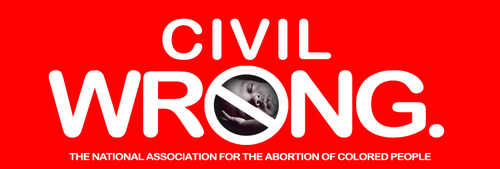
Posted in commercial speech, dilution, first amendment, trademark | Leave a comment

Pop goes the lawsuit: “original” ice pop claim could be false advertising

Conopco Inc. v. Wells Enterprises, Inc., No. 14 Civ. 2223, 2015
WL 2330115 (S.D.N.Y. May 13, 2015)
 
Wells makes the Bomb Pop, the first red-white-and-blue
rocket-shaped ice pop sold in the US, created in 1955, and markets it as the “original
Bomb Pop,” with “original” prominent on the packaging.  Wells owns nine trademark registrations for
the name and design elements of the bomb pop. 
Conopco (Unilever) sells a rocket pop, the Firecracker, which strongly
resembles the Bomb Pop, but was introduced nearly thirty years after the Bomb
Pop.  I found a blog post with some
interesting background, including design
patents for the pops and previous package designs
. 
 

Bomb Pop “The Original” with blue package

Bomb Pop “The Original” with blue and yellow package

Popsicle “The Original Firecracker” yellow package

In 2014, Unilever sued Wells for trademark infringement
etc., arguing that the Bomb Pop packaging was confusingly similar to the
Firecracker trade dress.  Wells
counterclaimed, alleging that Unilever “recently altered its Firecracker
product packaging to prominently feature the phrase ‘The Original,’ knowing
that the Bomb Pop was the first red-white-and-blue rocket shaped frozen ice
treat,” and therefore engaged in false advertising. Wells argued that if a
likelihood of confusion does exist, it does so as a “result of Unilever’s
infringement of Wells’ trademarked Bomb Pop design.” [Given the long duration
of both parties’ use, this strikes me as almost like a Shredded Wheat
situation: given that both might be entitled to use their own rocket shapes,
what duties to avoid other similar trade dress elements might they have?]
 
Wells argued that the words and pictures of the Firecracker
packaging necessarily and falsely implied that the Firecracker was the first
rocket ice pop. Unilever argued that “original” literally, clearly and
truthfully indicated only that the product was the original Firecracker. Wells
rejoined that, in the context of the whole package, “original” wouldn’t apply
solely to the noun Firecracker, but would necessarily be associated with the
rocket ice pops prominently displayed on the package.  The court found this sufficient to state a
claim for falsity. “While it is true that manufacturers often deploy the term ‘original’
in a brand-specific way, to modify only the product name, it is not evident
from the face of the pleadings that the word ‘original’ must be read in this
manner.”  When used in a brand-specific
way, “original” generally distinguishes between different versions, so “original”
differs from, e.g., “diet,” “low-salt,” “baked,” “creamy,” or “fun-shaped”
versions.  On the pleadings, the
“original Firecracker” was the only Firecracker that existed, which made the
brand-specific interpretation of the phrase tautological and suggested that
“original” might differentiate “the original Firecracker” from other rocket ice
pops instead of from other varieties of Firecracker.  This interpretation was further supported by
Unilever’s use of “original” elsewhere on the package to indicate—truthfully—that
Unilever’s “Popsicle” was “The Original Brand” of ice pop, that is, the first
of its type.  The court found further
support for its conclusion in other cases that found that “original” could be
literally false in similar circumstances.
 
In the alternative, Wells sufficiently pleaded misleadingness,
because it was plausible that consumer studies would show that consumers
interpret “original” on the Firecracker’s packaging to indicate that Unilever’s
“Firecracker” is the original rocket ice pop. Note that the court did not
require Wells to have such studies in hand for plausibility—Wells was simply
allowed to develop facts supporting its theory.
 
Unilever disputed materiality, but that’s generally a fact
question.  Plus, “Unilever’s own decision
to highlight the word ‘original’ on its packaging, at the forefront of the box
and as the largest word other than the product’s name, suggests the relative
importance, and hence materiality, of the claim to originality in its marketing
of rocket ice pops.” Also, “given that very little distinguishes one rocket ice
pop from another, it is plausible that such a claim to originality could sway a
consumer, either by intimating that the manufacturer has a proficiency in
producing ice pops that has withstood the test of time or by intimating that
these ‘original’ ice pops are the ones the consumer remembers fondly from his
childhood.”
 
Unilever argued that Wells failed to allege injury
proximately caused by the alleged misrepresentation.  But Wells alleged that it had touted its own
originality for 19 years, amassing goodwill, and Unilever’s claim could
jeopardize that. At the pleading stage, this was enough.
 
NY GBL §§ 349 & 350: these provisions require consumer
injury or harm to the public interest. Trademark infringement alone isn’t
enough to state a claim.  Wells argued
that its claims were about false advertising, but the harm wasn’t sufficiently
directed at or borne by consumers to constitute the gravamen of Wells’s
complaint.  False advertising claims come
within the GBL when they pose a danger to consumers, but not when they “merely
encourage consumers to buy an inferior product or buy a product from one
company where they may have preferred to buy it from another.”  The harm alleged here wasn’t the type that
would trigger FTC intervention or involve governmental functions or agencies,
as has been found sufficient in other cases. The “lessened enjoyment of a confection
of sugar, water, and flavoring from a company other than the one intended” just
wasn’t significant; the primary injury was to Wells’s business.
 
Trademark infringement: Unilever argued that Wells failed to
state a claim in that it was arguing only conditionally that, if likely
confusion existed, the fault was Unilever’s. Wells was free to assert a
counterclaim conditional on the outcome of Unilever’s infringement claim.
Nonetheless, Wells didn’t make an affirmative allegation of consumer confusion;
it could do so “by simply denoting that any allegations of consumer confusion
are limited solely to this particular counterclaim.” Thus, the court dismissed the
counterclaim without prejudice and with leave to amend.

from Blogger http://ift.tt/1FAIDgE

Posted in Uncategorized | Tagged , | Leave a comment