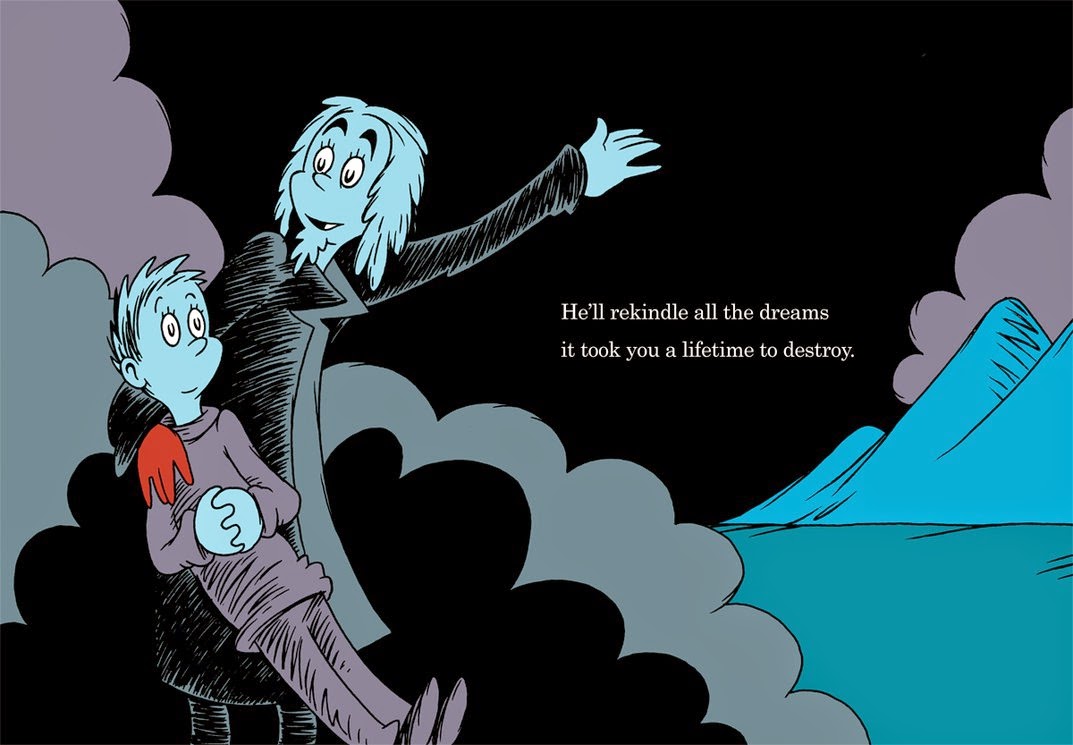
His red (copy)right hand

Transformative work of the day, Dr.
Seuss meets Nick Cave and the Bad Seeds edition
.

“He’ll rekindle all the dreams it took you a lifetime to destroy.”

from Blogger http://ift.tt/1K0Il0p

Posted in Uncategorized | Tagged , | Leave a comment

Pop goes the lawsuit: "original" ice pop claim could be false advertising

Conopco Inc. v. Wells Enterprises, Inc., No. 14 Civ. 2223, 2015 WL 2330115 (S.D.N.Y. May 13, 2015)
 
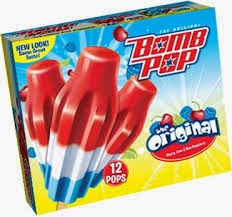
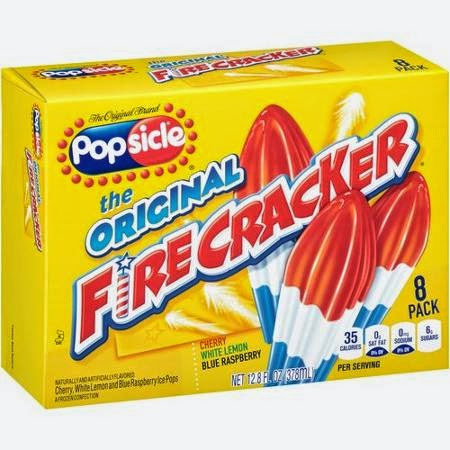
Wells makes the Bomb Pop, the first red-white-and-blue rocket-shaped ice pop sold in the US, created in 1955, and markets it as the “original Bomb Pop,” with “original” prominent on the packaging.  Wells owns nine trademark registrations for the name and design elements of the bomb pop.  Conopco (Unilever) sells a rocket pop, the Firecracker, which strongly resembles the Bomb Pop, but was introduced nearly thirty years after the Bomb Pop.  I found a blog post with some interesting background, including design patents for the pops and previous package designs. 
 

Bomb Pop “The Original” with blue package

Bomb Pop “The Original” with blue and yellow package

Popsicle “The Original Firecracker” yellow package

In 2014, Unilever sued Wells for trademark infringement etc., arguing that the Bomb Pop packaging was confusingly similar to the Firecracker trade dress.  Wells counterclaimed, alleging that Unilever “recently altered its Firecracker product packaging to prominently feature the phrase ‘The Original,’ knowing that the Bomb Pop was the first red-white-and-blue rocket shaped frozen ice treat,” and therefore engaged in false advertising. Wells argued that if a likelihood of confusion does exist, it does so as a “result of Unilever’s infringement of Wells’ trademarked Bomb Pop design.” [Given the long duration of both parties’ use, this strikes me as almost like a Shredded Wheat situation: given that both might be entitled to use their own rocket shapes, what duties to avoid other similar trade dress elements might they have?]
 
Wells argued that the words and pictures of the Firecracker packaging necessarily and falsely implied that the Firecracker was the first rocket ice pop. Unilever argued that “original” literally, clearly and truthfully indicated only that the product was the original Firecracker. Wells rejoined that, in the context of the whole package, “original” wouldn’t apply solely to the noun Firecracker, but would necessarily be associated with the rocket ice pops prominently displayed on the package.  The court found this sufficient to state a claim for falsity. “While it is true that manufacturers often deploy the term ‘original’ in a brand-specific way, to modify only the product name, it is not evident from the face of the pleadings that the word ‘original’ must be read in this manner.”  When used in a brand-specific way, “original” generally distinguishes between different versions, so “original” differs from, e.g., “diet,” “low-salt,” “baked,” “creamy,” or “fun-shaped” versions.  On the pleadings, the “original Firecracker” was the only Firecracker that existed, which made the brand-specific interpretation of the phrase tautological and suggested that “original” might differentiate “the original Firecracker” from other rocket ice pops instead of from other varieties of Firecracker.  This interpretation was further supported by Unilever’s use of “original” elsewhere on the package to indicate—truthfully—that Unilever’s “Popsicle” was “The Original Brand” of ice pop, that is, the first of its type.  The court found further support for its conclusion in other cases that found that “original” could be literally false in similar circumstances.
 
In the alternative, Wells sufficiently pleaded misleadingness, because it was plausible that consumer studies would show that consumers interpret “original” on the Firecracker’s packaging to indicate that Unilever’s “Firecracker” is the original rocket ice pop. Note that the court did not require Wells to have such studies in hand for plausibility—Wells was simply allowed to develop facts supporting its theory.
 
Unilever disputed materiality, but that’s generally a fact question.  Plus, “Unilever’s own decision to highlight the word ‘original’ on its packaging, at the forefront of the box and as the largest word other than the product’s name, suggests the relative importance, and hence materiality, of the claim to originality in its marketing of rocket ice pops.” Also, “given that very little distinguishes one rocket ice pop from another, it is plausible that such a claim to originality could sway a consumer, either by intimating that the manufacturer has a proficiency in producing ice pops that has withstood the test of time or by intimating that these ‘original’ ice pops are the ones the consumer remembers fondly from his childhood.”
 
Unilever argued that Wells failed to allege injury proximately caused by the alleged misrepresentation.  But Wells alleged that it had touted its own originality for 19 years, amassing goodwill, and Unilever’s claim could jeopardize that. At the pleading stage, this was enough.
 
NY GBL §§ 349 & 350: these provisions require consumer injury or harm to the public interest. Trademark infringement alone isn’t enough to state a claim.  Wells argued that its claims were about false advertising, but the harm wasn’t sufficiently directed at or borne by consumers to constitute the gravamen of Wells’s complaint.  False advertising claims come within the GBL when they pose a danger to consumers, but not when they “merely encourage consumers to buy an inferior product or buy a product from one company where they may have preferred to buy it from another.”  The harm alleged here wasn’t the type that would trigger FTC intervention or involve governmental functions or agencies, as has been found sufficient in other cases. The “lessened enjoyment of a confection of sugar, water, and flavoring from a company other than the one intended” just wasn’t significant; the primary injury was to Wells’s business.
 
Trademark infringement: Unilever argued that Wells failed to state a claim in that it was arguing only conditionally that, if likely confusion existed, the fault was Unilever’s. Wells was free to assert a counterclaim conditional on the outcome of Unilever’s infringement claim. Nonetheless, Wells didn’t make an affirmative allegation of consumer confusion; it could do so “by simply denoting that any allegations of consumer confusion are limited solely to this particular counterclaim.” Thus, the court dismissed the counterclaim without prejudice and with leave to amend.
Posted in http://schemas.google.com/blogger/2008/kind#post, trademark | Leave a comment

His red (copy)right hand

Transformative work of the day, Dr. Seuss meets Nick Cave and the Bad Seeds edition.

“He’ll rekindle all the dreams it took you a lifetime to destroy.”
Posted in http://schemas.google.com/blogger/2008/kind#post, trademark | Leave a comment

Garcia v. Google reversed; many sigh in relief

Garcia v. Google, Inc., No. 12-57302, — F.3d – (9th Cir.
May 18, 2105) (en banc)
 
Judge McKeown wrote the majority opinion. Garcia was fooled
into taking part in a movie that turned out to be the awful Innocence of Muslims, and received death
threats because of it. She sought an injunction on copyright grounds, which was
first denied, then granted, now lifted as the en banc court affirms the
district court’s denial of an injunction.
 
The court began by describing Garcia’s burden as “doubly
demanding: Because Garcia seeks a mandatory injunction, she must establish that
the law and facts clearly favor her position, not simply that she is likely to
succeed.” It’s a mandatory injunction because it requires Google to take
affirmative action to remove, and keep removing, Innocence of Muslims from Google sites. Mandatory injunctions are
disfavored except on strong showings of entitlement.
 
Starting with likely success on the merits: Garcia’s
five-second “acting performance” didn’t give her a claim in a copyright. She
might have publicity, defamation, or contract claims, but not copyright.
 
Copyright subsists “in original works of authorship fixed in
any tangible medium of expression . . . [including] motion pictures.” Fixation
must be done “by or under the authority of the author.” Here, Innocence of Muslims is a motion picture
and a derivative work of the script. Garcia was the author of neither, but
instead claimed separate protection for her five-second performance. The
Copyright Office found that her performance was not a copyrightable work of its
own, explaining that its “longstanding practices do not allow a copyright claim
by an individual actor or actress in his or her performance contained within a
motion picture.” For copyright purposes, “a motion picture is a single
integrated work.” The court credited this expert opinion, which “reflects a
‘body of experience and informed judgment to which courts and litigants may
properly resort for guidance.’”
 
By contrast, the dissent’s invocation of the Beijing Treaty
on Audiovisual Performances was misplaced. First, the treaty is not in force;
only six of the necessary thirty countries have ratified it. Second, though the
US signed the treaty, the Senate has not ratified it. Though the PTO issued a
fact sheet saying that performers’ performances were protected by copyright
law, the PTO lacks legal authority to interpret the Copyright Act. (RT: Also,
it may still be the case that primary performances
make performers co-authors or even sole authors where they control the
recording—Garcia didn’t rely on joint authorship or sole authorship claims as
to the film as a whole.)
 
Aalmuhammed v. Lee, 202 F.3d 1227 (9th Cir. 2000), was a
useful starting point; the meaning of “work” is the first step in analyzing
joint authorship.  When a work is
“prepared by two or more authors with the intention that their contributions be
merged into inseparable or interdependent parts of a unitary whole,” the work
becomes a “joint work.” But Garcia disclaimed joint authorship of the film.  Defining a “work” based upon “some minimal
level of creativity or originality . . . would be too broad and indeterminate
to be useful.”  Aalmuhammed’s animating concern was that a broad definition of “work”
“would fragment copyright protection for the unitary film Malcolm X into many little pieces.” We shouldn’t splinter a film
into many different “works” in the absence of independent fixation. “Treating
every acting performance as an independent work would not only be a logistical
and financial nightmare, it would turn cast of thousands into a new mantra:
copyright of thousands.”
 
The dissent’s hypotheticals could be addressed with careful
application of statutory definitions. 
(The IP profs are still going at this, but I’m with the majority here.)  The dissent’s reliance on Effects Associates,
Inc. v. Cohen, 908 F.2d 555 (9th Cir. 1990) ([pointedly] Kozinski, J.), was
inapposite, because no one in that case challenged the existence of an
independent copyright on the special-effects footage that was independently
fixed. 

Contracts and WFH govern “much of the big-budget Hollywood performance and
production world,” and implied licenses often take care of the rest (the district
court found one here). “But these legal niceties do not necessarily dictate
whether something is protected by copyright, and licensing has its limitations.
As filmmakers warn, low-budget films rarely use licenses.” Plus, contracts aren’t
perfect, especially for third-party distributors like YouTube and Netflix, who won’t
have easy access to any licenses; “litigants may dispute their terms and scope;
and actors and other content contributors can terminate licenses after thirty
five years. Untangling the complex, difficult-to-access, and often phantom
chain of title to tens, hundreds, or even thousands of standalone copyrights is
a task that could tie the distribution chain in knots.”  And filming group scenes “like a public
parade, or the 1963 March on Washington, would pose a huge burden if each of
the thousands of marchers could claim an independent copyright.”
 
In a footnote, the court of appeals found that the district
court’s implied license finding wasn’t clearly erroneous.  “Although Garcia asked Youssef about Desert
Warrior’s content, she in no way conditioned the use of her performance on
Youssef’s representations.”
 
In addition, the court held, Garcia didn’t fix her acting
performance in a tangible medium.  She
wasn’t the one who did the fixation. 
(The court noted the Copyright Office’s distinction between acting
performances “intended to be an inseparable part of an integrated film” and “standalone
works that are separately fixed and incorporated into a film,” the latter of which
could be protected by copyright.) 
Youssef and his crew did the fixation. 
And Garcia claimed that she never agreed to the film’s ultimate
rendition “so she can hardly argue that the film or her cameo in it was fixed ‘by
or under [her] authority.’”
 
The district court didn’t err, and the law didn’t clearly
favor Garcia.  But just in case, the
court went on to address irreparable harm, because of the alleged threat to
Garcia’s life. “Garcia understandably takes seriously the fatwa and threats
against her and her family, and so do we.” 
The problem was that there was no match between these risks and her
substantive copyright claim. 
 
For irreparable harm in a copyright claim, as opposed to a
fraud or false light claim, her harm needed to be “harm to her legal interests
as an author.”  Copyright is supposed to
promote progress and create an incentive to disseminate works; its justification
is the protection of an author’s commercial interest, not the protection of
secrecy.  Garcia’s “severe emotional
distress, the destruction of her career and reputation,” and receipt of
credible death threats, were “untethered from—and incompatible with—copyright
and copyright’s function as the engine of expression.”  Copyright’s function is not to protect
privacy or to guard against emotional distress: “such damages are unrelated to
the value and marketability of [authors’] works.” US law doesn’t provide a
right to be forgotten or moral rights. “We do not foreclose that in a different
circumstance with a strong copyright claim, a court could consider collateral
consequences as part of its irreparable harm analysis and remedy. But such a
case is not before us.”
 
In addition, Garcia waited months to seek an injunction, and
it wasn’t an abuse of discretion to weigh this delay undercut her irreparable
harm claim.  Garcia acted once the film
was translated into Arabic and sparked death threats against her. “But that
proves the point: the gravamen of Garcia’s harm is untethered from her
commercial interests as a performer, and instead focuses on the personal pain
caused by her association with the film.”
 
The panel’s injunction, which ordered Google to take down
all copies of the film from all platforms under its control, and take “all
reasonable steps” to prevent further uploads, was wrongly granted.  Even in its amended form, which allowed the
posting of any version of the film without Garcia’s performance, was wrong,
putting the court “in the uneasy role of film editor.”  It would only matter if Google (or someone
else) decided to edit another’s copyrighted film.  “To no one’s surprise, the end result was the
same: the entire film remained removed from YouTube.”  Not only was this order incorrect as a matter
of law, it disserved the First Amendment by suppressing a politically significant
film.  Copyright isn’t categorically
immune from First Amendment challenge, and the takedown order directed at “a
film of substantial interest to the public” was a classic prior restraint.  A thin copyright claim was no warrant for
such action.
 
Judge Watford concurred, and would have ruled solely on
irreparable harm, reserving touchy copyright issues for later.  He would have accepted that the risk of death
qualified as irreparable injury, but concluded that Garcia couldn’t prove a
causal connection between the irreparable injury and the conduct she sought to
enjoin: she couldn’t show that removing the film from YouTube would materially
reduce the risk of death she faced. “Garcia is subject to the fatwa because of
her role in making the film, not because the film is available on YouTube.”  Correcting misperceptions about her role in
the film—she was duped into participating, she never said the offensive words
her character speaks in the film, and she strongly opposed the film’s message—could
help, but she’s already done everything within her power to dissociate herself
from the film.  Garcia’s expert on
Islamic and Middle Eastern law didn’t claim that removing the film from YouTube
would likely cause the fatwa against her to be lifted, but merely opined: “If
she is successful in pulling the content down from the internet, it will likely
help her in terms of believability of her message condemning the film and its
message.” That was too little in the way of evidence of likely impact on the
key audience, especially given that demanding
the takedown alone spoke of her sincerity.
 
Judge Kozinski dissented. Garcia’s dramatic performance had
the minimal creativity to be copyrightable subject matter, it was original, and
it was fixed at the moment it was recorded. 
That’s enough.  [That’s enough to
make it at least part of a work … but who’s the author of that work?]  The majority says that Garcia’s performance
wasn’t a work, “apparently because it was created during the production of a
later-assembled film. But if you say something is not a work, it means that it
isn’t copyrightable by anyone.” So the majority’s definition of work means that
no one has a copyright in any part of Garcia’s performance, “even though it was
recorded several months before Innocence
of Muslims
was assembled.” If only the film is a work, then the
copyrightability of “vast swaths of material created during production of a
film or other composite work” is in doubt, such as every take that doesn’t
become part of a final movie. “If some dastardly crew member were to run off with a copy
of the Battle of Morannon [from Lord of the Rings], the dastard would be free
to display it for profit until it was made part of the final movie. And, of
course, the take-outs, the alternative scenes, the special effects never used,
all of those things would be fair game because none of these things would be ‘works’
under the majority’s definition.”  The same
for draft chapters of books, or parts thereof.
 
RT: There may be unusual cases, but most takes, for example,
should be at least derivative works or reproductions of the script, which is
copyrightable, so I don’t see a practical problem developing. The question is
which hypotheticals you find most troubling/plausible, and I think the risk of
making every five seconds into its own work—with corresponding effects on
substantial similarity and fair use analysis—justifies taking the risks
Kozinski identifies instead.
 
Effects Associates
dictates a contrary result, because it held that a special effects company
retained a copyright interest in its footage even though it became part of the
film.  Like the special effects shots,
Garcia’s performance was also “separately fixed and incorporated into” Innocence of Muslims.  Youssef could’ve sold the clip featuring Garcia
to someone else; it might not have had much value, but then neither did the
special effects from The Stuff. 
 
Here I think Kozinski cleverly equivocates between “Garcia’s
performance” and “the footage.”  Garcia’s
performance was not separately fixed
from the other elements that made up the movie that were in the shots with her;
it was fixed along with them.  That wasn’t
true of the distinct shots created in a different place and at a different time
in Effects Associates.  If (as Kozinski ten suggests) the effects had
been later added into a greenscreened performance where the actors were staring
at tennis balls, I think you’d get the Garcia result and not the Effects Associates result.  I don’t think we’ll ever get a perfectly pure
rule here, but that’s copyright for you.
 
This isn’t an unfamiliar question. Statutory damages cases
ask us to identify how many “works” are at issue, and while the statute
provides an answer for compilations that are infringed, it doesn’t provide all
the answers.  For example: suppose someone
makes a for-profit, nontransformative, non-fair use Batman movie—alley, gunshot, pearls falling into a puddle, all that
jazz.  I take it we wouldn’t want to say
that the infringer had infringed each of the gazillion registered works that
make up the Batman corpus and recount
their own versions of this story.  What
the infringer has done is infringe the Batman
story (we can also count characters, but then we have to ask whether the characters are registered; anyway,
counting by number of characters is a very different thing than counting by
number of registered works).  By
contrast, someone who reproduces the Dark
Knight
movies has copied specific works and the statutory damages should be
calculated that way (and not as an infringement of all the other registered works that also tell the Batman story).  Of course we get
slightly different definitions of “works” from the different situations,
because we have different concerns about the interests invaded. But I don’t think
that makes the whole edifice illegitimate.
 
Anyhow, back to the dissent: the majority erred in saying
that Garcia couldn’t be an author because she didn’t play a role in the
fixation.  A work is fixed when the
fixation is by or under the authority of
the author.  She’s an author because
without her, there was only a script. 
Her performance had at least “some minimal degree of creativity.” “To
dispute this is to claim that Gone With the Wind would be the same movie if
Rhett Butler were played by Peter Lorre.” (RT: Okay, that’s overblown. Innocence of Muslims is surely no GWTW,
and Garcia’s 5-second character no Rhett Butler.  Actually, now that I’m thinking about this,
isn’t Kozinski’s argument here a workaround for the rule that a character has
to be sufficiently defined to be protected by copyright?  After all, Garcia’s physical characteristics
aren’t “creative” or “original” in the copyright sense, so it’s just what she
does in those five seconds that he argues makes her an author.)

Because Garcia didn’t sign away her rights, she acquired a copyright in her
performance the moment it was fixed. “It’s not our job to take away from
performers rights Congress gave them.” The Register of Copyrights was a member
of the U.S. delegation that signed the Beijing Treaty on Audiovisual
Performances, which would recognize Garcia’s rights in her performance because
it provides that “performers” have the “exclusive right of authorizing . . .
the fixation of their unfixed performances,” and “reproduction of their
performances fixed in audiovisual fixations, in any manner or form.”  The PTO said that U.S. law was “generally
compatible” with the Treaty, as “actors and musicians are considered to be
‘authors’ of their performances providing them with copyright rights.” The
Copyright Office surely wouldn’t have signed on if it believed that the
Treaty’s key provisions were inconsistent with U.S. copyright law. (Surely!
After all, US negotiators are never
captured
and never
engage in policy laundering
of that type.)
 
The Copyright Office said “an actor or an actress in a
motion picture is either a joint author in the entire work or, as most often is
the case, is not an author at all by virtue of a work made for hire agreement.”
But Garcia isn’t in either category, so she must be an author.  (It’s the “so” where we part company.  This really should be fixed by a better
understanding of joint authorship.)
 
There’s not much risk of harm from Kozinski’s position,
since “[t]he vast majority of copyright claims by performers in their
contributions are defeated by a contract and the work for hire doctrine. And
most of the performers that fall through the cracks would be found to have
given an implied license to the film’s producers to use the contribution in the
ultimate film.”  The remaining few wouldn’t
be able to claim the “valuable” rights of joint authorship. (RT: Yeah, only
total ownership of a chunk!  That doesn’t pose any problems at all!) That’s why Effects
Associates
didn’t cause filmmaking to grind to a halt. Anyway, the Supreme
Court said in Tasini that
“speculation about future harms is no basis for [courts] to shrink authorial
rights,” and neither the predicted database disasters or the disasters
predicted by amici in CCNV took
place.  (Actually, the Tasini situation is rather more
complicated than that, and the case just ended after two decades—but at least
that was susceptible to class treatment!)
 
The risks that this rule imposes on producers and ISPs is
for them to fix by contract.  “Google
makes oodles of dollars by enabling its users to upload almost any video
without pre-screening for potential copyright infringement. Google’s business
model, like that of the database owners in Tasini,
assumes the risk that a user’s upload infringes someone else’s copyright, and
that it may have to take corrective action if a copyright holder comes forward.”  (Takeaway: Kozinski really, really doesn’t
like ISPs.)
 
Doomsday claims are overstated: “our injunction has been in
place for over a year; reports of the internet’s demise have been greatly
exaggerated.” Garcia’s copyright claim was likely to succeed and she made an
ample showing of irreparable harm. “It’s her life that’s at stake.”

from Blogger http://ift.tt/1GmIUmh

Posted in Uncategorized | Tagged , , | Leave a comment

Garcia v. Google reversed; many sigh in relief

Garcia v. Google, Inc., No. 12-57302, — F.3d – (9th Cir. May 18, 2105) (en banc)
 
Judge McKeown wrote the majority opinion. Garcia was fooled into taking part in a movie that turned out to be the awful Innocence of Muslims, and received death threats because of it. She sought an injunction on copyright grounds, which was first denied, then granted, now lifted as the en banc court affirms the district court’s denial of an injunction.
 
The court began by describing Garcia’s burden as “doubly demanding: Because Garcia seeks a mandatory injunction, she must establish that the law and facts clearly favor her position, not simply that she is likely to succeed.” It’s a mandatory injunction because it requires Google to take affirmative action to remove, and keep removing, Innocence of Muslims from Google sites. Mandatory injunctions are disfavored except on strong showings of entitlement.
 
Starting with likely success on the merits: Garcia’s five-second “acting performance” didn’t give her a claim in a copyright. She might have publicity, defamation, or contract claims, but not copyright.
 
Copyright subsists “in original works of authorship fixed in any tangible medium of expression . . . [including] motion pictures.” Fixation must be done “by or under the authority of the author.” Here, Innocence of Muslims is a motion picture and a derivative work of the script. Garcia was the author of neither, but instead claimed separate protection for her five-second performance. The Copyright Office found that her performance was not a copyrightable work of its own, explaining that its “longstanding practices do not allow a copyright claim by an individual actor or actress in his or her performance contained within a motion picture.” For copyright purposes, “a motion picture is a single integrated work.” The court credited this expert opinion, which “reflects a ‘body of experience and informed judgment to which courts and litigants may properly resort for guidance.’”
 
By contrast, the dissent’s invocation of the Beijing Treaty on Audiovisual Performances was misplaced. First, the treaty is not in force; only six of the necessary thirty countries have ratified it. Second, though the US signed the treaty, the Senate has not ratified it. Though the PTO issued a fact sheet saying that performers’ performances were protected by copyright law, the PTO lacks legal authority to interpret the Copyright Act. (RT: Also, it may still be the case that primary performances make performers co-authors or even sole authors where they control the recording—Garcia didn’t rely on joint authorship or sole authorship claims as to the film as a whole.)
 
Aalmuhammed v. Lee, 202 F.3d 1227 (9th Cir. 2000), was a useful starting point; the meaning of “work” is the first step in analyzing joint authorship.  When a work is “prepared by two or more authors with the intention that their contributions be merged into inseparable or interdependent parts of a unitary whole,” the work becomes a “joint work.” But Garcia disclaimed joint authorship of the film.  Defining a “work” based upon “some minimal level of creativity or originality . . . would be too broad and indeterminate to be useful.”  Aalmuhammed’s animating concern was that a broad definition of “work” “would fragment copyright protection for the unitary film Malcolm X into many little pieces.” We shouldn’t splinter a film into many different “works” in the absence of independent fixation. “Treating every acting performance as an independent work would not only be a logistical and financial nightmare, it would turn cast of thousands into a new mantra: copyright of thousands.”
 
The dissent’s hypotheticals could be addressed with careful application of statutory definitions.  (The IP profs are still going at this, but I’m with the majority here.)  The dissent’s reliance on Effects Associates, Inc. v. Cohen, 908 F.2d 555 (9th Cir. 1990) ([pointedly] Kozinski, J.), was inapposite, because no one in that case challenged the existence of an independent copyright on the special-effects footage that was independently fixed. 
Contracts and WFH govern “much of the big-budget Hollywood performance and production world,” and implied licenses often take care of the rest (the district court found one here). “But these legal niceties do not necessarily dictate whether something is protected by copyright, and licensing has its limitations. As filmmakers warn, low-budget films rarely use licenses.” Plus, contracts aren’t perfect, especially for third-party distributors like YouTube and Netflix, who won’t have easy access to any licenses; “litigants may dispute their terms and scope; and actors and other content contributors can terminate licenses after thirty five years. Untangling the complex, difficult-to-access, and often phantom chain of title to tens, hundreds, or even thousands of standalone copyrights is a task that could tie the distribution chain in knots.”  And filming group scenes “like a public parade, or the 1963 March on Washington, would pose a huge burden if each of the thousands of marchers could claim an independent copyright.”
 
In a footnote, the court of appeals found that the district court’s implied license finding wasn’t clearly erroneous.  “Although Garcia asked Youssef about Desert Warrior’s content, she in no way conditioned the use of her performance on Youssef’s representations.”
 
In addition, the court held, Garcia didn’t fix her acting performance in a tangible medium.  She wasn’t the one who did the fixation.  (The court noted the Copyright Office’s distinction between acting performances “intended to be an inseparable part of an integrated film” and “standalone works that are separately fixed and incorporated into a film,” the latter of which could be protected by copyright.)  Youssef and his crew did the fixation.  And Garcia claimed that she never agreed to the film’s ultimate rendition “so she can hardly argue that the film or her cameo in it was fixed ‘by or under [her] authority.’”
 
The district court didn’t err, and the law didn’t clearly favor Garcia.  But just in case, the court went on to address irreparable harm, because of the alleged threat to Garcia’s life. “Garcia understandably takes seriously the fatwa and threats against her and her family, and so do we.”  The problem was that there was no match between these risks and her substantive copyright claim. 
 
For irreparable harm in a copyright claim, as opposed to a fraud or false light claim, her harm needed to be “harm to her legal interests as an author.”  Copyright is supposed to promote progress and create an incentive to disseminate works; its justification is the protection of an author’s commercial interest, not the protection of secrecy.  Garcia’s “severe emotional distress, the destruction of her career and reputation,” and receipt of credible death threats, were “untethered from—and incompatible with—copyright and copyright’s function as the engine of expression.”  Copyright’s function is not to protect privacy or to guard against emotional distress: “such damages are unrelated to the value and marketability of [authors’] works.” US law doesn’t provide a right to be forgotten or moral rights. “We do not foreclose that in a different circumstance with a strong copyright claim, a court could consider collateral consequences as part of its irreparable harm analysis and remedy. But such a case is not before us.”
 
In addition, Garcia waited months to seek an injunction, and it wasn’t an abuse of discretion to weigh this delay undercut her irreparable harm claim.  Garcia acted once the film was translated into Arabic and sparked death threats against her. “But that proves the point: the gravamen of Garcia’s harm is untethered from her commercial interests as a performer, and instead focuses on the personal pain caused by her association with the film.”
 
The panel’s injunction, which ordered Google to take down all copies of the film from all platforms under its control, and take “all reasonable steps” to prevent further uploads, was wrongly granted.  Even in its amended form, which allowed the posting of any version of the film without Garcia’s performance, was wrong, putting the court “in the uneasy role of film editor.”  It would only matter if Google (or someone else) decided to edit another’s copyrighted film.  “To no one’s surprise, the end result was the same: the entire film remained removed from YouTube.”  Not only was this order incorrect as a matter of law, it disserved the First Amendment by suppressing a politically significant film.  Copyright isn’t categorically immune from First Amendment challenge, and the takedown order directed at “a film of substantial interest to the public” was a classic prior restraint.  A thin copyright claim was no warrant for such action.
 
Judge Watford concurred, and would have ruled solely on irreparable harm, reserving touchy copyright issues for later.  He would have accepted that the risk of death qualified as irreparable injury, but concluded that Garcia couldn’t prove a causal connection between the irreparable injury and the conduct she sought to enjoin: she couldn’t show that removing the film from YouTube would materially reduce the risk of death she faced. “Garcia is subject to the fatwa because of her role in making the film, not because the film is available on YouTube.”  Correcting misperceptions about her role in the film—she was duped into participating, she never said the offensive words her character speaks in the film, and she strongly opposed the film’s message—could help, but she’s already done everything within her power to dissociate herself from the film.  Garcia’s expert on Islamic and Middle Eastern law didn’t claim that removing the film from YouTube would likely cause the fatwa against her to be lifted, but merely opined: “If she is successful in pulling the content down from the internet, it will likely help her in terms of believability of her message condemning the film and its message.” That was too little in the way of evidence of likely impact on the key audience, especially given that demandingthe takedown alone spoke of her sincerity.
 
Judge Kozinski dissented. Garcia’s dramatic performance had the minimal creativity to be copyrightable subject matter, it was original, and it was fixed at the moment it was recorded.  That’s enough.  [That’s enough to make it at least part of a work … but who’s the author of that work?]  The majority says that Garcia’s performance wasn’t a work, “apparently because it was created during the production of a later-assembled film. But if you say something is not a work, it means that it isn’t copyrightable by anyone.” So the majority’s definition of work means that no one has a copyright in any part of Garcia’s performance, “even though it was recorded several months before Innocence of Muslims was assembled.” If only the film is a work, then the copyrightability of “vast swaths of material created during production of a film or other composite work” is in doubt, such as every take that doesn’t become part of a final movie. “If some dastardly crew member were to run off with a copy of the Battle of Morannon [from Lord of the Rings], the dastard would be free to display it for profit until it was made part of the final movie. And, of course, the take-outs, the alternative scenes, the special effects never used, all of those things would be fair game because none of these things would be ‘works’ under the majority’s definition.”  The same for draft chapters of books, or parts thereof.
 
RT: There may be unusual cases, but most takes, for example, should be at least derivative works or reproductions of the script, which is copyrightable, so I don’t see a practical problem developing. The question is which hypotheticals you find most troubling/plausible, and I think the risk of making every five seconds into its own work—with corresponding effects on substantial similarity and fair use analysis—justifies taking the risks Kozinski identifies instead.
 
Effects Associatesdictates a contrary result, because it held that a special effects company retained a copyright interest in its footage even though it became part of the film.  Like the special effects shots, Garcia’s performance was also “separately fixed and incorporated into” Innocence of Muslims.  Youssef could’ve sold the clip featuring Garcia to someone else; it might not have had much value, but then neither did the special effects from The Stuff. 
 
Here I think Kozinski cleverly equivocates between “Garcia’s performance” and “the footage.”  Garcia’s performance was not separately fixed from the other elements that made up the movie that were in the shots with her; it was fixed along with them.  That wasn’t true of the distinct shots created in a different place and at a different time in Effects Associates.  If (as Kozinski ten suggests) the effects had been later added into a greenscreened performance where the actors were staring at tennis balls, I think you’d get the Garcia result and not the Effects Associates result.  I don’t think we’ll ever get a perfectly pure rule here, but that’s copyright for you.
 
This isn’t an unfamiliar question. Statutory damages cases ask us to identify how many “works” are at issue, and while the statute provides an answer for compilations that are infringed, it doesn’t provide all the answers.  For example: suppose someone makes a for-profit, nontransformative, non-fair use Batman movie—alley, gunshot, pearls falling into a puddle, all that jazz.  I take it we wouldn’t want to say that the infringer had infringed each of the gazillion registered works that make up the Batman corpus and recount their own versions of this story.  What the infringer has done is infringe the Batmanstory (we can also count characters, but then we have to ask whether the characters are registered; anyway, counting by number of characters is a very different thing than counting by number of registered works).  By contrast, someone who reproduces the Dark Knight movies has copied specific works and the statutory damages should be calculated that way (and not as an infringement of all the other registered works that also tell the Batman story).  Of course we get slightly different definitions of “works” from the different situations, because we have different concerns about the interests invaded. But I don’t think that makes the whole edifice illegitimate.
 
Anyhow, back to the dissent: the majority erred in saying that Garcia couldn’t be an author because she didn’t play a role in the fixation.  A work is fixed when the fixation is by or under the authority ofthe author.  She’s an author because without her, there was only a script.  Her performance had at least “some minimal degree of creativity.” “To dispute this is to claim that Gone With the Wind would be the same movie if Rhett Butler were played by Peter Lorre.” (RT: Okay, that’s overblown. Innocence of Muslims is surely no GWTW, and Garcia’s 5-second character no Rhett Butler.  Actually, now that I’m thinking about this, isn’t Kozinski’s argument here a workaround for the rule that a character has to be sufficiently defined to be protected by copyright?  After all, Garcia’s physical characteristics aren’t “creative” or “original” in the copyright sense, so it’s just what she does in those five seconds that he argues makes her an author.)
Because Garcia didn’t sign away her rights, she acquired a copyright in her performance the moment it was fixed. “It’s not our job to take away from performers rights Congress gave them.” The Register of Copyrights was a member of the U.S. delegation that signed the Beijing Treaty on Audiovisual Performances, which would recognize Garcia’s rights in her performance because it provides that “performers” have the “exclusive right of authorizing . . . the fixation of their unfixed performances,” and “reproduction of their performances fixed in audiovisual fixations, in any manner or form.”  The PTO said that U.S. law was “generally compatible” with the Treaty, as “actors and musicians are considered to be ‘authors’ of their performances providing them with copyright rights.” The Copyright Office surely wouldn’t have signed on if it believed that the Treaty’s key provisions were inconsistent with U.S. copyright law. (Surely! After all, US negotiators are never captured and never engage in policy laundering of that type.)
 
The Copyright Office said “an actor or an actress in a motion picture is either a joint author in the entire work or, as most often is the case, is not an author at all by virtue of a work made for hire agreement.” But Garcia isn’t in either category, so she must be an author.  (It’s the “so” where we part company.  This really should be fixed by a better understanding of joint authorship.)
 
There’s not much risk of harm from Kozinski’s position, since “[t]he vast majority of copyright claims by performers in their contributions are defeated by a contract and the work for hire doctrine. And most of the performers that fall through the cracks would be found to have given an implied license to the film’s producers to use the contribution in the ultimate film.”  The remaining few wouldn’t be able to claim the “valuable” rights of joint authorship. (RT: Yeah, only total ownership of a chunk!  That doesn’t pose any problems at all!) That’s why Effects Associates didn’t cause filmmaking to grind to a halt. Anyway, the Supreme Court said in Tasini that “speculation about future harms is no basis for [courts] to shrink authorial rights,” and neither the predicted database disasters or the disasters predicted by amici in CCNV took place.  (Actually, the Tasini situation is rather more complicated than that, and the case just ended after two decades—but at least that was susceptible to class treatment!)
 
The risks that this rule imposes on producers and ISPs is for them to fix by contract.  “Google makes oodles of dollars by enabling its users to upload almost any video without pre-screening for potential copyright infringement. Google’s business model, like that of the database owners in Tasini, assumes the risk that a user’s upload infringes someone else’s copyright, and that it may have to take corrective action if a copyright holder comes forward.”  (Takeaway: Kozinski really, really doesn’t like ISPs.)
 
Doomsday claims are overstated: “our injunction has been in place for over a year; reports of the internet’s demise have been greatly exaggerated.” Garcia’s copyright claim was likely to succeed and she made an ample showing of irreparable harm. “It’s her life that’s at stake.”
Posted in first amendment, google, http://schemas.google.com/blogger/2008/kind#post | Leave a comment

Close but no cigar: “worked closely” claim is puffery

Springbrook Software, Inc. v. Douglas County, 2015 WL
2248449, No. 13–cv–760 (W.D. Wis. May 13, 2015) (magistrate judge)
 
Springbrook sued Douglas County and the City of Superior for
breach of contract and related claims after they stopped paying fees owed under
a contract for Springbrook’s financial system software for local governments. Defendants
counterclaimed for misrepresentation, fraudulent inducement, false advertising,
breach of the covenant of good faith and fair dealing and unjust enrichment. The
magistrate judge granted Springbrook’s motion for summary judgment on the
breach of contract claim and got rid of the counterclaims except for the counterclaim
for breach of the duty of good faith and fair dealing.
 
Defendants issued a formal Request for Proposals seeking
bidders from qualified firms “to supply and install Financial System Software.”
Springbrook, meanwhile, was developing a one-page flyer to promote its work
specific to the needs of Wisconsin county highway departments, which it had
done with assistance from the Wisconsin Department of Transportation.
Springbrook’s product manager emailed Doug Meek at the state Department of
Transportation to ask if Meek “would object to [Springbrook] including verbiage
like ‘We worked closely with Doug Meek at the Wisconsin Department of
Transportation to ensure our software meets the needs of Wisconsin county
highway departments?’” Meek responded: “I don’t object to your referencing
working with me, but I don’t think that ‘working closely’ is accurate.” In
response to Meek’s request, the product manager replied that he would be happy
to share a draft document and would use Meek’s name only in a manner that Meek
approved.
 
However, Springbrook’s RFP response to the City included a one-page
ad, “Highway Department Solutions,” in which Springbrook stated that it had
“worked closely with the Wisconsin Department of Transportation to develop a
highway department solution that is fully compliant with state requirements.”  Springbrook won the contract, but the
relationship broke down and the defendants stopped paying, resulting in a
lawsuit.
 
The court found that defendants’ claim under the Wisconsin
Deceptive Trade Practices Act survived the economic loss doctrine, but failed
on other grounds.  Defendants alleged
that the “worked closely” claim was false, and provided affidavits from the
City and County finance directors declaring that the ad was the “tipping point
and the reason Springbrook was selected.”
 
First, the judge found this testimony “not specific enough
to create a genuine dispute on the element of causation,” since the only thing
Springbrook allegedly misrepresented was the closeness of its working
relationship with the Wisconsin DOT. “After all, Meek did not deny that he had
worked with Springbrook; he took issue only with the adverb ‘closely.’” Neither
affiant stated that she would have voted against awarding the bid to
Springbrook if she had been told simply that Springbrook had “worked with”
WisDOT, rather than “worked closely” with it.
 
Relatedly, “worked closely” was puffery.  “The adverb ‘closely’ is not a term of art
and it can mean different things to different people.” It expressed “only
Springbrook’s judgment as to the nature of the relationship, not a specific
fact that can be substantiated or refuted.” Even Meek has acknowledged that the
question was a matter of opinion by stating that “I would not characterize my involvement as ‘working
closely’ with Springbrook ….. [l]imited emails and phone calls answering
questions is not my definition of ‘working closely’” (emphasis added). This “difference
of opinion” wasn’t enough to constitute false advertising.
 
By contrast, Springbook’s representation that it had a
highway department solution that was “fully compliant” with state reporting
requirements arguably could have been substantiated or refuted, but the City
didn’t press its argument about this claim.
 

from Blogger http://ift.tt/1Aa8s56

Posted in Uncategorized | Tagged , | Leave a comment

Close but no cigar: "worked closely" claim is puffery

Springbrook Software, Inc. v. Douglas County, 2015 WL 2248449, No. 13–cv–760 (W.D. Wis. May 13, 2015) (magistrate judge)
 
Springbrook sued Douglas County and the City of Superior for breach of contract and related claims after they stopped paying fees owed under a contract for Springbrook’s financial system software for local governments. Defendants counterclaimed for misrepresentation, fraudulent inducement, false advertising, breach of the covenant of good faith and fair dealing and unjust enrichment. The magistrate judge granted Springbrook’s motion for summary judgment on the breach of contract claim and got rid of the counterclaims except for the counterclaim for breach of the duty of good faith and fair dealing.
 
Defendants issued a formal Request for Proposals seeking bidders from qualified firms “to supply and install Financial System Software.” Springbrook, meanwhile, was developing a one-page flyer to promote its work specific to the needs of Wisconsin county highway departments, which it had done with assistance from the Wisconsin Department of Transportation. Springbrook’s product manager emailed Doug Meek at the state Department of Transportation to ask if Meek “would object to [Springbrook] including verbiage like ‘We worked closely with Doug Meek at the Wisconsin Department of Transportation to ensure our software meets the needs of Wisconsin county highway departments?’” Meek responded: “I don’t object to your referencing working with me, but I don’t think that ‘working closely’ is accurate.” In response to Meek’s request, the product manager replied that he would be happy to share a draft document and would use Meek’s name only in a manner that Meek approved.
 
However, Springbrook’s RFP response to the City included a one-page ad, “Highway Department Solutions,” in which Springbrook stated that it had “worked closely with the Wisconsin Department of Transportation to develop a highway department solution that is fully compliant with state requirements.”  Springbrook won the contract, but the relationship broke down and the defendants stopped paying, resulting in a lawsuit.
 
The court found that defendants’ claim under the Wisconsin Deceptive Trade Practices Act survived the economic loss doctrine, but failed on other grounds.  Defendants alleged that the “worked closely” claim was false, and provided affidavits from the City and County finance directors declaring that the ad was the “tipping point and the reason Springbrook was selected.”
 
First, the judge found this testimony “not specific enough to create a genuine dispute on the element of causation,” since the only thing Springbrook allegedly misrepresented was the closeness of its working relationship with the Wisconsin DOT. “After all, Meek did not deny that he had worked with Springbrook; he took issue only with the adverb ‘closely.’” Neither affiant stated that she would have voted against awarding the bid to Springbrook if she had been told simply that Springbrook had “worked with” WisDOT, rather than “worked closely” with it.
 
Relatedly, “worked closely” was puffery.  “The adverb ‘closely’ is not a term of art and it can mean different things to different people.” It expressed “only Springbrook’s judgment as to the nature of the relationship, not a specific fact that can be substantiated or refuted.” Even Meek has acknowledged that the question was a matter of opinion by stating that “I would not characterize my involvement as ‘working closely’ with Springbrook ….. [l]imited emails and phone calls answering questions is not my definition of ‘working closely’” (emphasis added). This “difference of opinion” wasn’t enough to constitute false advertising.
 
By contrast, Springbook’s representation that it had a highway department solution that was “fully compliant” with state reporting requirements arguably could have been substantiated or refuted, but the City didn’t press its argument about this claim.
 
Posted in consumer protection, http://schemas.google.com/blogger/2008/kind#post | Leave a comment

Reading list: James Grimmelmann on Lauren Willis

Two great tastes that taste great together: The always-entertaining James Grimmelmann on the always-enlightening Lauren Willis:

Two decades ago, contract law ran headlong into online terms of service, looked around briefly in confusion, and announced that it needed to go take a nap. It has not been heard from since. In its place we have something that looks like contract law, and claims to be contract law, but is oddly ignorant of things that the real contract law would know. This usurper, part Martin Guerre and part pod person, is formalistic to a fault, obsessed with meaningless details, lazy beyond belief, and utterly devoid of human feeling.

from Blogger http://ift.tt/1Gc5Jcl

Posted in Uncategorized | Tagged , | Leave a comment

ascertainability defeats class but EULA doesn’t

Perrine v. Sega of America, Inc., No. 13-cv-01962, 2015 WL
2227846 (N.D. Cal. May 12, 2015)
 
Gearbox developed and Sega produced the game “Aliens: Colonial
Marines,” “held out as the canon sequel to James Cameron’s 1986 film ‘Aliens.’”
 The named plaintiffs purchased
prerelease copies.  The complaint alleged
a bait-and-switch in which defendants developed a “non-retail but technically
superior version” of the game that featured, among other things, “advanced
artificial intelligence programming, certain gameplay sequences drawn from the
Aliens movie,” and “a highly advanced graphics engine (the ‘Demo Engine’),” and
presented this version and described it to the public as “actual gameplay.” The
retail version ultimately sold, however, allegedly “utilized different
programming altogether and a different—and much less advanced—graphics engine
(the ‘Retail Engine’).” Plaintiffs alleged the usual California claims.
 
The court adopted an ascertainability requirement for class
certification and held that plaintiffs failed it. Defining the class as pre-release
purchasers of the game would pose individualized questions of reliance.  A presumption of reliance “does not arise
when class members ‘were exposed to quite disparate information from various
representatives of the defendant.’” Limiting the class to people who saw an ad
wouldn’t work because the court didn’t want to rely on affidavits from putative
class members that they saw an ad.  (I
wonder if there’s anything to be said about distrust of consumers versus moves
towards voter ID.)  Here, the non-retail
version was allegedly advertised in a series of demonstrations and an ongoing
ad campaign. Many trailers and ads were released, and several pre-release
videos contained footage from only the final retail version.
 
The named plaintiff moving for certification could not
“answer … with any degree of certainty” a question regarding which videos he
saw before he preordered his copy of the game. Given the problems of subjective
memory at issue, self-identification through affidavits was impermissible. As
Judge Alsup noted, “[s]wearing ‘I smoked 146,000 Marlboro cigarettes’ is
categorically different from swearing ‘I have been to Paris, France,’ or ‘I am
Jewish,’ or even ‘I was within ten miles of the toxic explosion on the day it
happened,” and the “memory problem is compounded by incentives individuals
would have to associate with a successful class or dissociate from an
unsuccessful one.” (Interestingly enough, that importance-based claim is completely
inconsistent with what memory researchers say about memory.)
 
Certification was denied. 
Separately, in an attempt to get nationwide application of California
law, plaintiffs invoked Gearbox’s EULA, which had a California choice of law
provision incorporated by reference from Sega’s EULA. Gearbox’s EULA, though,
also has a mandatory arbitration provision and class action waiver.  The court found that this case fell outside
the scope of those provisions. As used in the EULA, “dispute” is defined to
mean “any dispute, claim, demand, action, proceeding, or other controversy
between you and Gearbox concerning the Licensed Works….” “Licensed Works” referred
to “the online features of Gearbox games and products.” 
 
Gearbox’s argument that “Licensed Works” included “Gearbox
games and products” failed because the EULA stated that “Gearbox may limit or
prohibit access to the Licensed Works in its discretion.” As the court noted, “[t]his
makes sense only if ‘Licensed Works’ means the online features, which Gearbox
could presumably control access to via log-in credentials, IP addresses, and
the like. It makes no sense at all if it refers to Gearbox games and products
already purchased and in the living rooms of consumers. Gearbox definitely does
not have the right to go into consumers’ homes and remove their copies.” So
Gearbox couldn’t win dismissal or judgment on the pleadings.

from Blogger http://ift.tt/1B12azA

Posted in Uncategorized | Tagged , , , , | Leave a comment

Reading list: James Grimmelmann on Lauren Willis

Two great tastes that taste great together: The always-entertaining James Grimmelmann on the always-enlightening Lauren Willis:

Two decades ago, contract law ran headlong into online terms of service, looked around briefly in confusion, and announced that it needed to go take a nap. It has not been heard from since. In its place we have something that looks like contract law, and claims to be contract law, but is oddly ignorant of things that the real contract law would know. This usurper, part Martin Guerre and part pod person, is formalistic to a fault, obsessed with meaningless details, lazy beyond belief, and utterly devoid of human feeling.

Posted in contracts, reading list | Leave a comment