Dogged determination: PTO corrects mistaken incontestability

You can read the notice for the design mark here.  Following up on my previous bead dog related post. Also as a result, my children have learned how to make Mardi Gras bead dogs and leave them around the house.

from Blogger http://ift.tt/1DFe5Yy

Posted in Uncategorized | Tagged | Leave a comment

Dogged determination: PTO corrects mistaken incontestability

You can read the notice for the design mark here.  Following up on my previous bead dog related post. Also as a result, my children have learned how to make Mardi Gras bead dogs and leave them around the house.

Posted in trademark | Leave a comment

Loked and loaded: are bag closures famous to the general consuming public?

Schutte Bagclosures Inc. v. Kwik Lok Corp., 48 F. Supp. 3d 675 (S.D.N.Y. 2014)
 
Kwik Lok makes clips to close bags in the US, and Schutte does so in Europe and is seeking to expand to the US.  Schutte sought a declaratory judgment of noninfringement of Kwik Lok’s product design trademarks, and Kwik Lok counterclaimed for infringement and dilution; the court here declines to dismiss the counterclaims as to the Schutte design that Schutte has made active steps to disseminating in the US.
 
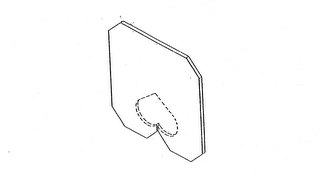
In 2010, the Court of Appeal of the Hague invalidated Kwik Lok’s European Community Trade Dress Registration No. 55848429 as functional and held that Kwik Lok didn’t have valid patent, trademark, or trade dress claims against Schutte.   Kwik Lok Corporation v. Schutte Bagclosures, BV, Court of The Hague, March 30, 2010, case no. 105 007 842/01 (Dutchopinion) (short summary which Google can sort of translate).  Kwik Lok has two incontestable US registered marks. One is for “a thin, rectangular plastic bag closure with two arched edges along the top and bottom, parallel edges on the sides, and a beveled triangular slot opening at the center of one of the arches”; the second is for “a thin, square plastic bag closure with beveled portions on each corner, and a beveled triangular slot opening at the center of one side.” Kwik Lok also claimed unregistered trade dress rights in similarly configured products.
 

Kwik Lok closers

One of Kwik Lok’s registered designs

Another registered Kwik Lok design

Schutte Inc.’s products are generally square or rectangular, with four rounded corners with four small jagged protrusions near each rounded corner, a “v” shaped opening along one side, and a concave side opposite the side with the opening.  In 2012, Schutte shipped samples of over 100,000 Clipps G–Series bag closure products for use in New York. As of December 2013, Schutte Inc. hadn’t designed, manufactured, or offered any products for sale in the United States. It was promoting the Clipps G–Series on the Schutte website, clippsamerica.com.  The court found that there was an actual controversy over the G-series, but not over other models.
 

Schutte Clipps G Series

Schutte argued that Kwik Lok’s rights in one of the registrations was invalid for failure to identify Kwik Lok as the source, genericity, and abandonment. Incontestability was a barrier to some of this, and many of Schutte’s arguments seemed directed at Kwik Lok’s unregistered trade dress claims.  Schutte argued that Kwik Lok’s claims were so vague and overbroad that the trade dress was generic. But Kwik Lok produced evidence showing that its design was unique in the industry and that it went to great lengths to promote this design as its own, creating factual disputes precluding summary judgment.
 
Schutte argued that Kwik Lok abandoned the registration by using the mark in a generic way, advertising the functional benefits; again there was a factual dispute.  Finally, Schutte argued that Kwik Lok abandoned its trademark rights by engaging in uncontrolled or “naked” licensing by allowing third party distributors and consumers, such as bakeries, to print their own trademarks, prices, and other promotional messages on Kwik Lok’s bag closures. But naked licensing only causes abandonment if it causes a mark to lose its source significance.  Here, despite the third party labeling, “Kwik Lok’s product configurations still retain their significance to the relevant market of distributors,” at least to avoid summary judgment.
 
As for Kwik Lok’s unregistered trade dress, Kwik Lok produced evidence that it sold the Beveled Notched Square exclusively and successfully from 1996 to 2013 and spent millions of dollars on advertising and promoting its trade dress rights. (Someone has made art out of them.) A principal target of Kwik Lok’s extensive marketing and sales was a knowledgeable group of specialized wholesale buyers, who bought large quantities of bag closures and then marketed them to bakeries and grocers. Schutte didn’t produce evidence that this group didn’t recognize the design as indicating source, so again it couldn’t win summary judgment.
 
Nor could it win on likely confusion.  The court quoted decades-old precedent supporting the claim that “[w]hen the likelihood of confusion is in doubt, the question will be resolved in favor of the senior user.”  I seriously doubt this comports with the Supreme Court’s current understanding of the Lanham Act (see, e.g., KP Permanent), but regardless there wasn’t enough evidence in the record to warrant summary judgment.  Though there was no direct evidence of strength, Kwik Lok had shown that it invested a significant amount of resources into advertising and promotion, and that its sales success produced acquired distinctiveness in the relevant market. Plus, a reasonable factfinder could find that similarity favored Kwik Lok in the overall impression of the marks.  (Given the sophistication of the relevant consumers?)  The competition was direct, and actual confusion isn’t required and wouldn’t be expected given that Schutte was just starting to try to enter the market; the same for quality issues.
 
The court found that good faith weighed against Schutte, because Schutte “was well aware of Kwik Lok’s products and sought to compete directly against them by introducing a similar product.”  It quoted a Schutte memo: “Schutte has been in the market with ‘a copy’ of the Kwiklok closure. Smartly done, and just a little bit different from Kwiklok” The court found this “some evidence” of bad faith.
 
Although the high level of consumer sophistication favored Schutte, and one factor could be dispositive, Schutte failed to carry its burden on “three of the most important factors: strength, similarity, and proximity.”
 
Surely, you’d think, federal dilution must go?  Though Kwik Lok sold five to six billion of its bag closures per year, and spent millions of dollars in advertising, “sales and advertising numbers alone are generally insufficient to show that a product has become sufficiently famous to be protected by the TDRA.”  Niche fame won’t do.  Kwik Lok also appealed to “publication and circulation of product brochures and catalogs, attendance at industry trade shows, and advertisements in trade publications.”  (Note that all of these are at most evidence of niche fame, not general consuming public fame.)  Yet Schutte apparently conceded fame, and argued that any fame didn’t depend on the design’s distinctiveness.  But that raised at least an issue of fact on fame.
 
[I don’t get why Schutte didn’t argue fame more aggressively.  The theory of infringement directly contradicts the theory of fame: reasonable end consumers aren’t likely to think that these tags, many bearing other parties’ marks, are distinctive.  The secondary meaning and confusion is explicitly argued to exist in the distributor purchasers; these are also the only ones who could experience dilution.  But that’s niche fame.]
 

from Blogger http://tushnet.blogspot.com/2015/04/loked-and-loaded-are-bag-closures.html

Posted in Uncategorized | Tagged , | Leave a comment

Loked and loaded: are bag closures famous to the general consuming public?

Schutte Bagclosures Inc. v. Kwik Lok Corp., 48 F. Supp. 3d 675 (S.D.N.Y. 2014)
 
Kwik Lok makes clips to close bags in the US, and Schutte does so in Europe and is seeking to expand to the US.  Schutte sought a declaratory judgment of noninfringement of Kwik Lok’s product design trademarks, and Kwik Lok counterclaimed for infringement and dilution; the court here declines to dismiss the counterclaims as to the Schutte design that Schutte has made active steps to disseminating in the US.
 
In 2010, the Court of Appeal of the Hague invalidated Kwik Lok’s European Community Trade Dress Registration No. 55848429 as functional and held that Kwik Lok didn’t have valid patent, trademark, or trade dress claims against Schutte.   Kwik Lok Corporation v. Schutte Bagclosures, BV, Court of The Hague, March 30, 2010, case no. 105 007 842/01 (Dutchopinion) (short summary which Google can sort of translate).  Kwik Lok has two incontestable US registered marks. One is for “a thin, rectangular plastic bag closure with two arched edges along the top and bottom, parallel edges on the sides, and a beveled triangular slot opening at the center of one of the arches”; the second is for “a thin, square plastic bag closure with beveled portions on each corner, and a beveled triangular slot opening at the center of one side.” Kwik Lok also claimed unregistered trade dress rights in similarly configured products.
 

Kwik Lok closers

One of Kwik Lok’s registered designs

Another registered Kwik Lok design

Schutte Inc.’s products are generally square or rectangular, with four rounded corners with four small jagged protrusions near each rounded corner, a “v” shaped opening along one side, and a concave side opposite the side with the opening.  In 2012, Schutte shipped samples of over 100,000 Clipps G–Series bag closure products for use in New York. As of December 2013, Schutte Inc. hadn’t designed, manufactured, or offered any products for sale in the United States. It was promoting the Clipps G–Series on the Schutte website, clippsamerica.com.  The court found that there was an actual controversy over the G-series, but not over other models.
 

Schutte Clipps G Series

Schutte argued that Kwik Lok’s rights in one of the registrations was invalid for failure to identify Kwik Lok as the source, genericity, and abandonment. Incontestability was a barrier to some of this, and many of Schutte’s arguments seemed directed at Kwik Lok’s unregistered trade dress claims.  Schutte argued that Kwik Lok’s claims were so vague and overbroad that the trade dress was generic. But Kwik Lok produced evidence showing that its design was unique in the industry and that it went to great lengths to promote this design as its own, creating factual disputes precluding summary judgment.
 
Schutte argued that Kwik Lok abandoned the registration by using the mark in a generic way, advertising the functional benefits; again there was a factual dispute.  Finally, Schutte argued that Kwik Lok abandoned its trademark rights by engaging in uncontrolled or “naked” licensing by allowing third party distributors and consumers, such as bakeries, to print their own trademarks, prices, and other promotional messages on Kwik Lok’s bag closures. But naked licensing only causes abandonment if it causes a mark to lose its source significance.  Here, despite the third party labeling, “Kwik Lok’s product configurations still retain their significance to the relevant market of distributors,” at least to avoid summary judgment.
 
As for Kwik Lok’s unregistered trade dress, Kwik Lok produced evidence that it sold the Beveled Notched Square exclusively and successfully from 1996 to 2013 and spent millions of dollars on advertising and promoting its trade dress rights. (Someone has made art out of them.) A principal target of Kwik Lok’s extensive marketing and sales was a knowledgeable group of specialized wholesale buyers, who bought large quantities of bag closures and then marketed them to bakeries and grocers. Schutte didn’t produce evidence that this group didn’t recognize the design as indicating source, so again it couldn’t win summary judgment.
 
Nor could it win on likely confusion.  The court quoted decades-old precedent supporting the claim that “[w]hen the likelihood of confusion is in doubt, the question will be resolved in favor of the senior user.”  I seriously doubt this comports with the Supreme Court’s current understanding of the Lanham Act (see, e.g., KP Permanent), but regardless there wasn’t enough evidence in the record to warrant summary judgment.  Though there was no direct evidence of strength, Kwik Lok had shown that it invested a significant amount of resources into advertising and promotion, and that its sales success produced acquired distinctiveness in the relevant market. Plus, a reasonable factfinder could find that similarity favored Kwik Lok in the overall impression of the marks.  (Given the sophistication of the relevant consumers?)  The competition was direct, and actual confusion isn’t required and wouldn’t be expected given that Schutte was just starting to try to enter the market; the same for quality issues.
 
The court found that good faith weighed against Schutte, because Schutte “was well aware of Kwik Lok’s products and sought to compete directly against them by introducing a similar product.”  It quoted a Schutte memo: “Schutte has been in the market with ‘a copy’ of the Kwiklok closure. Smartly done, and just a little bit different from Kwiklok” The court found this “some evidence” of bad faith.
 
Although the high level of consumer sophistication favored Schutte, and one factor could be dispositive, Schutte failed to carry its burden on “three of the most important factors: strength, similarity, and proximity.”
 
Surely, you’d think, federal dilution must go?  Though Kwik Lok sold five to six billion of its bag closures per year, and spent millions of dollars in advertising, “sales and advertising numbers alone are generally insufficient to show that a product has become sufficiently famous to be protected by the TDRA.”  Niche fame won’t do.  Kwik Lok also appealed to “publication and circulation of product brochures and catalogs, attendance at industry trade shows, and advertisements in trade publications.”  (Note that all of these are at most evidence of niche fame, not general consuming public fame.)  Yet Schutte apparently conceded fame, and argued that any fame didn’t depend on the design’s distinctiveness.  But that raised at least an issue of fact on fame.
 
[I don’t get why Schutte didn’t argue fame more aggressively.  The theory of infringement directly contradicts the theory of fame: reasonable end consumers aren’t likely to think that these tags, many bearing other parties’ marks, are distinctive.  The secondary meaning and confusion is explicitly argued to exist in the distributor purchasers; these are also the only ones who could experience dilution.  But that’s niche fame.]
 
Posted in dilution, trademark | Leave a comment

Primary jurisdiction didn’t warrant dismissal of “natural” claims, 9th Cir. says

Astiana v. Hain Celestial Group, Inc., No. 12-17596 (9th Cir. Apr. 10, 2015)
 
As the court of appeals introduced the case:
 
A product labeled “all natural” or “pure natural” likely evokes images of ground herbs and earth extracts rather than chemicals such as “Polysorbate 20” or “Hydroxycitronellal.” This class action alleges that false or misleading product labels duped consumers seeking natural cosmetics into purchasing products that were chock-full of artificial and synthetic ingredients. Although the underlying question of what constitutes a “natural” cosmetic poses a fascinating question, it is not the one we answer. Instead, this appeal requires us to decide whether federal preemption or the primary jurisdiction doctrine prevents the district court from deciding when a “natural” label on cosmetic products is false or misleading.
 
It does not.  The district court erred in dismissing the case instead of staying it for potential agency action.  On remand, the district court was to consider whether post-ruling events made FDA proceedings unnecessary.
 
Hain labels various cosmetic products “All Natural,” “Pure Natural,” or “Pure, Natural & Organic.”  Plaintiffs filed the usual California and warranty claims. The court of appeals first analyzed Hain’s preemption argument.  The FDCA bars states from imposing new or additional labeling “requirements,” “but is silent with regards to states’ ability to provide remedies for violations of federal law.” Given the similarity between this situation and that in Medtronic, the court of appeals concluded, the FDCA doesn’t preempt state laws that allow consumers to sue cosmetics manufacturers that label or package their products in violation of federal standards. 
 
Astiana wasn’t asking Hain to modify or “enhance” any aspect of the labels required by federal law.  “Rather, she claims deception as a result of advertising statements that contradicted the true ingredients listed on the FDA-mandated label,” a claim consistent with the 9th Circuit’s ruling in Williams v. Gerber Prods. Co., 552 F.3d 934 (9th Cir. 2008). FDA regulations didn’t require Hain to label its products as “All Natural” or “Pure Natural,” so if Hain were required to remove those allegedly misleading statements, that wouldn’t violate the FDCA’s ban on “requirement[s]” that are “different from,” “in addition to,” or “not identical with” federal rules.
 
Hain noted that the FDA has never regulated “natural” on cosmetic labels. But that is not equivalent to “a conscious decision by the agency to permit any use of this term a manufacturer sees fit.” Under Hain’s logic, a manufacturer could make any claim—“wild, untruthful, or otherwise—about a product whose contents are not addressed by a specific regulation.” But the FDCA bars statements that are “false or misleading in any particular,” not just statements that are “prohibited by specific FDA regulations.” That reinforced the court of appeals’ conclusion that “natural” was not a labeling free-for-all.
 
Turning to primary jurisdiction, Astiana pointed to FDA correspondence during the pendency of the appeal.  After the court dismissed the claims, her counsel sent a letter to the FDA. The letter did not comply with the FDA’s requirements for initiating a citizen petition; it was never assigned a docket number, and the FDA’s response was neither posted to its website nor published in any other capacity.  The FDA responded by outlining the procedures for establishing the meaning of the term “natural,” absent a pre-existing definition. The letter noted that “making the requested determination without adequate public participation would not be in keeping with FDA’s commitment to the principles of openness and transparency.” It also said that “priority cosmetic public health and safety matters are currently fully occupying the resources that FDA has available for proceedings on cosmetics matters” and “proceedings to define ‘natural’ do not fit within [the agency’s] current health and safety priorities.”
 
The court of appeals refused to consider this correspondence on appeal. That was for the district court, which properly invoked primary jurisdiction but erred by dismissing the case rather than staying it.  The definition of “natural” for cosmetics was clearly an area within the FDA’s expertise and also not yet addressed by the agency. However, courts also must consider whether invoking primary jurisdiction would “needlessly delay the resolution of claims,” and efficiency is the key factor. “Common sense tells us that even when agency expertise would be helpful, a court should not invoke primary jurisdiction when the agency is aware of but has expressed no interest in the subject matter of the litigation.”
 
Obtaining advice from the FDA would help resolve the issue presented by Astiana. Though the FDA had been reluctant to define “natural,” the district court here wasn’t alone in thinking new guidance would be forthcoming; other courts had responded similarly to a flood of “natural” litigation.  In response, the FDA declined to address the issue, specifically with respect to labeling genetically engineered ingredients as “natural.”
 
When a court invokes primary jurisdiction to allow parties to pursue administrative remedies, dismissal without prejudice is normally appropriate.  But when further judicial proceedings are contemplated, jurisdiction should be retained by means of a stay, because the 9th Circuit hasn’t clearly adopted equitable tolling in such cases.  A stay is justified when there’s a possibility that the statute of limitations could run. On remand, the district court could consider whether events during the pendency of this appeal—including “Astiana’s informal letter, the FDA’s website publication of a Small Business Fact Sheet regarding cosmetics labeling, and the FDA’s response to the other courts”—affected the claims here or showed that another referral to the agency would be futile.
 
The court also reinstated Astiana’s quasi-contract claims for restitution.  California doesn’t have a standalone cause of action for “unjust enrichment,” which is synonymous with “restitution.”  But those concepts underpin a claim that a defendant has been unjustly conferred a benefit “through mistake, fraud, coercion, or request.” So, when a plaintiff alleges unjust enrichment, a court may construe the cause of action as a quasi-contract claim seeking restitution.

from Blogger http://tushnet.blogspot.com/2015/04/primary-jurisdiction-didnt-warrant.html

Posted in Uncategorized | Tagged , , , , | Leave a comment

Primary jurisdiction didn’t warrant dismissal of "natural" claims, 9th Cir. says

Astiana v. Hain Celestial Group, Inc., No. 12-17596 (9th Cir. Apr. 10, 2015)
 
As the court of appeals introduced the case:
 
A product labeled “all natural” or “pure natural” likely evokes images of ground herbs and earth extracts rather than chemicals such as “Polysorbate 20” or “Hydroxycitronellal.” This class action alleges that false or misleading product labels duped consumers seeking natural cosmetics into purchasing products that were chock-full of artificial and synthetic ingredients. Although the underlying question of what constitutes a “natural” cosmetic poses a fascinating question, it is not the one we answer. Instead, this appeal requires us to decide whether federal preemption or the primary jurisdiction doctrine prevents the district court from deciding when a “natural” label on cosmetic products is false or misleading.
 
It does not.  The district court erred in dismissing the case instead of staying it for potential agency action.  On remand, the district court was to consider whether post-ruling events made FDA proceedings unnecessary.
 
Hain labels various cosmetic products “All Natural,” “Pure Natural,” or “Pure, Natural & Organic.”  Plaintiffs filed the usual California and warranty claims. The court of appeals first analyzed Hain’s preemption argument.  The FDCA bars states from imposing new or additional labeling “requirements,” “but is silent with regards to states’ ability to provide remedies for violations of federal law.” Given the similarity between this situation and that in Medtronic, the court of appeals concluded, the FDCA doesn’t preempt state laws that allow consumers to sue cosmetics manufacturers that label or package their products in violation of federal standards. 
 
Astiana wasn’t asking Hain to modify or “enhance” any aspect of the labels required by federal law.  “Rather, she claims deception as a result of advertising statements that contradicted the true ingredients listed on the FDA-mandated label,” a claim consistent with the 9th Circuit’s ruling in Williams v. Gerber Prods. Co., 552 F.3d 934 (9th Cir. 2008). FDA regulations didn’t require Hain to label its products as “All Natural” or “Pure Natural,” so if Hain were required to remove those allegedly misleading statements, that wouldn’t violate the FDCA’s ban on “requirement[s]” that are “different from,” “in addition to,” or “not identical with” federal rules.
 
Hain noted that the FDA has never regulated “natural” on cosmetic labels. But that is not equivalent to “a conscious decision by the agency to permit any use of this term a manufacturer sees fit.” Under Hain’s logic, a manufacturer could make any claim—“wild, untruthful, or otherwise—about a product whose contents are not addressed by a specific regulation.” But the FDCA bars statements that are “false or misleading in any particular,” not just statements that are “prohibited by specific FDA regulations.” That reinforced the court of appeals’ conclusion that “natural” was not a labeling free-for-all.
 
Turning to primary jurisdiction, Astiana pointed to FDA correspondence during the pendency of the appeal.  After the court dismissed the claims, her counsel sent a letter to the FDA. The letter did not comply with the FDA’s requirements for initiating a citizen petition; it was never assigned a docket number, and the FDA’s response was neither posted to its website nor published in any other capacity.  The FDA responded by outlining the procedures for establishing the meaning of the term “natural,” absent a pre-existing definition. The letter noted that “making the requested determination without adequate public participation would not be in keeping with FDA’s commitment to the principles of openness and transparency.” It also said that “priority cosmetic public health and safety matters are currently fully occupying the resources that FDA has available for proceedings on cosmetics matters” and “proceedings to define ‘natural’ do not fit within [the agency’s] current health and safety priorities.”
 
The court of appeals refused to consider this correspondence on appeal. That was for the district court, which properly invoked primary jurisdiction but erred by dismissing the case rather than staying it.  The definition of “natural” for cosmetics was clearly an area within the FDA’s expertise and also not yet addressed by the agency. However, courts also must consider whether invoking primary jurisdiction would “needlessly delay the resolution of claims,” and efficiency is the key factor. “Common sense tells us that even when agency expertise would be helpful, a court should not invoke primary jurisdiction when the agency is aware of but has expressed no interest in the subject matter of the litigation.”
 
Obtaining advice from the FDA would help resolve the issue presented by Astiana. Though the FDA had been reluctant to define “natural,” the district court here wasn’t alone in thinking new guidance would be forthcoming; other courts had responded similarly to a flood of “natural” litigation.  In response, the FDA declined to address the issue, specifically with respect to labeling genetically engineered ingredients as “natural.”
 
When a court invokes primary jurisdiction to allow parties to pursue administrative remedies, dismissal without prejudice is normally appropriate.  But when further judicial proceedings are contemplated, jurisdiction should be retained by means of a stay, because the 9th Circuit hasn’t clearly adopted equitable tolling in such cases.  A stay is justified when there’s a possibility that the statute of limitations could run. On remand, the district court could consider whether events during the pendency of this appeal—including “Astiana’s informal letter, the FDA’s website publication of a Small Business Fact Sheet regarding cosmetics labeling, and the FDA’s response to the other courts”—affected the claims here or showed that another referral to the agency would be futile.
 
The court also reinstated Astiana’s quasi-contract claims for restitution.  California doesn’t have a standalone cause of action for “unjust enrichment,” which is synonymous with “restitution.”  But those concepts underpin a claim that a defendant has been unjustly conferred a benefit “through mistake, fraud, coercion, or request.” So, when a plaintiff alleges unjust enrichment, a court may construe the cause of action as a quasi-contract claim seeking restitution.
Posted in consumer protection, fda, http://schemas.google.com/blogger/2008/kind#post, preemption | Leave a comment

Click click boom: affiliate marketing network liable for affiliates’ false advertising

FTC v. LeanSpa, LLC, No. 11-CV-1715 (D. Conn. Mar. 5, 2015)
 
The FTC challenged the use of fake news (and no, they don’t mean The Daily Show) to sell LeanSpa’s weight-loss and colon-cleanse products online. LeanSpa sold its products through websites it owned and operated, and also hired LeadClick to advertise its products on LeadClick’s affiliate marketing network.  “Affiliate networks gather ‘offers,’ which are the products and services sold by various merchants, and recruit affiliate marketers to drive Internet traffic to those offers on merchants’ websites.” Affiliates promote merchants’ products in various ways, including by email, banner ads, and search engine placement, as well as by creating their own webpages to advertise the products.
 
“LeanSpa paid LeadClick a set amount – between $35 and $45 – each time a consumer enrolled in LeanSpa’s free-trial program after having been directed to LeanSpa’s website by a LeadClick affiliate.” LeadClick would then pay the affiliate whose site drove the consumer to LeanSpa’s site, after keeping 10-20% of the money as its share.  Some affiliate marketers used fake news sites to promote the products; at the time, fake news sites were “fairly common” in the affiliate marketing industry, and LeadClick employees knew this.  LeadClick chose which publishers to allow as affiliates and which to deny; it hired affiliates who used fake news pages.
 

Sample fake news page
LeadClick staff occasionally discussed fake article pages, fake news pages, or “news style” pages among themselves and with affiliates and merchants. Sometimes, LeadClick allowed or at least failed to object to the use of fake news pages. LeadClick employees referred to a particular set of terms for the weight loss program—“Step 1” and “Step 2”—used on some fake news sites.  LeadClick employees also sometimes suggested that affiliates alter their websites, such as by not mentioning a free trial or by providing ingredient information for affiliates’ use. Once, an affiliate manager checked in with an affiliate to make sure his webpage was “set up good [sic],” without any “crazy miss leading [sic] info.” The affiliate manager agreed that it would be a “good idea” for the affiliate to remove references to the webpage being a news site, and the affiliate manager suggested that he could “just add advertorial.”
 
LeadClick also bought ad space for its merchants and affiliates at other publishers’ sites, spending between $1-2 million/month at its peak. Some of this space contained banner advertisements linking to fake news pages that promoted LeanSpa’s products. “Sometimes LeadClick identified fake news sites as destination pages for the banner advertisements when negotiating with media sellers,” and sometimes it even emailed the seller versions of the sites or sent links.
 
Further, the plaintiffs contended that LeadClick’s role in helping LeanSpa to overcome its financial woes contributed to a violation of Section 5 and Connecticut’s Unfair Trade Practices Act (CUTPA).  LeanSpa had trouble because of high chargebacks—charges disputed by consumers—and LeadClick helped it find new credit card processors overseas, and also tried to help it to increase sales volume so that the percentage of transactions that were chargebacks would decrease.
 
LeanSpa eventually became LeadClick’s top producer—billings increased from over $30,000 in September 2010 to over $2,000,000 in December 2010.  But LeanSpa didn’t pay its full debt.  It owed LeadClick $6.4 million by March 2011 and around $10 million by June 2011. LeadClick continued to provide it ads in order to collect from it, though CoreLogic—which bought LeadClick—ultimately decided to sue LeanSpa for the unpaid amount, and the business relationship ended.
 
As for CoreLogic, LeadClick closed its bank account and put its money into CoreLogic’s account. This was part of CoreLogic’s consolidation of administrative founctions for its subsidiaries.  Previously, CoreLogic had advanced $16 million to LeadClick, of which $8.2 million was repaid by the end of August 2011.  “There was no agreed upon repayment schedule or repayment deadline, no security for those advances, no written loan agreement, and no interest due in connection with the funds CoreLogic provided to LeadClick in 2011.”  Then CoreLogic’s Board of Directors voted to cease LeadClick’s operations.
 
LeadClick argued that it did not directly violate the FTCA or CUTPA (the state statute, also allegedly violated) and that there was no aiding and abetting liability under CUTPA. Initially, the court found the fake news sites deceptive, using logos of genuine news outlets and formatting as if they were news articles.  E.g., a caption under a picture of a reporter reads, “Julie investigates the Acai Berry diet to find out for herself if this super diet works.” The articles said, “[W]e here at [purported news station] are a little skeptical and aren’t sure that we’ve seen any real proof that these pills work for weight loss. So we decided to put these products to the test. What better way to find out the truth than to conduct our own study?” The article then goes on to describe a week-by-week analysis of the reporter’s results in using LeanSpa products, and concludes, “After conducting our own personal study we are pleased to see that people really are finding success with it (myself included 🙂 ).” These were express claims of independent investigation. 
 
In addition, “[w]hile there is no express statement that the comments [in the supposed comment sections of these sites] are made by independent consumers, the implication is so clear that no reasonable jury could conclude otherwise.”  E.g.,
 
My friends and I have all been waiting for the hca cleanse diet to hit the news. Atleast [sic] 5 of us have all done the diet (costing us upwards of $300+) and we all lost a bunch of weight. This stuff truley [sic] is incredible and has changed all of our lives. Good luck to everyone who takes advantage of this wonderful opportunity.
 
False testimonials are deceptive. Deception results simply from the fact that “the seller has told the public that it could rely on something other than his word.”  And these claims were also material; the independent investigation claims were express and presumed material, while “the claim that the comments were provided by independent consumers is so strongly implied that it is essentially express, so it can also be presumed material.” Even without a presumption, “no reasonable juror could find that claims of independent testing – by consumers or reporters – were not important to consumers’ choice.” 
 
LeadClick argued that the material misleadingness of the parts it was allegedly responsible for was a uniquely factual inquiry that couldn’t be decided on summary judgment, especially given the involvement of other misrepresentations made by LeanSpa. But “one material misrepresentation is not excused by the existence of another misrepresentation.”  Indeed, misrepresentations that are corrected before purchase can violate §5 if they generate consumer interest, and “[i]f full information does not save a deceptive claim from violating Section 5, neither does an additional deceptive claim.”
 
LeadClick didn’t create the fake news sites. Can it be held liable?  The FTC described its theory as an agency theory of liability, which I have elsewhere advocated. It argued that LeadClick’s liability came from its control and knowledge of the affiliate marketers’ activities, and thus from its own conduct. Further, “[u]nder the FTC Act, a principal is liable for misrepresentations made by his/her agents (i.e., those with the actual or apparent authority to make such representations) regardless of the unsuccessful efforts of the principal to prevent such misrepresentations.” Sometimes, a seller may be held responsible even when the “salespersons were what might have been considered at common law independent contractors.” Courts have held individual defendants liable for a corporation’s conduct where they “(1) participated in the acts or had authority to control the corporate defendant and (2) knew of the acts or practices,” and the court found the same logic persuasive here.
 
It was undisputed that LeadClick employees knew about the fake news sites.  As for participation or control, that can be shown by “involvement in business affairs” or “role in the development of corporate practices,” including the “ability to review and approve advertisements.” “[D]irect participation can be demonstrated through evidence that the defendant developed or created, reviewed, altered and disseminated the deceptive marketing materials.” Here, no reasonable jury could fail to find that LeadClick both participated in, and had the authority to control, the affiliate marketers’ conduct relating to the fake news sites. LeadClick solicited and hired affiliate marketers who were using fake news sites to advertise LeanSpa’s products, after screening them. LeadClick claimed that, “in practice, affiliate marketers were not required to submit their ‘websites’ for approval unless [it] specifically requested to see the page,” but LeadClick still had the authority to review pages. After the FTC began suing affiliate marketers for using fake news sites, LeadClick started to screen fake news pages, and thus it had the authority to control them.
 
Although merchants like LeanSpa may also have had authority to approve or disapprove the use of fake news sites, LeadClick had authority of its own.  “Just as LeanSpa would be liable for approving requests to advertise with fake news sites, LeadClick, as LeanSpa’s agent, is liable for its own decision to effectuate that decision.”
 
LeadClick also participated in the deception by buying ad space on genuine news sites and selling it to affiliates who advertised with fake news.  That “provided a way for consumers to browse directly from a genuine news site to a fake one,” and LeadClick clearly knew this was happening, because it sometimes identified fake news pages “as destination pages for the banner ads when negotiating with media sellers.”  LeadClick also affected the products advertised on the fake news sites, which contained a purported test of a two-step product combination. LeadClick implemented a rule that affiliates had to pair LeanSpa products with other LeanSpa products.  “No reasonable jury could find that LeadClick did not have the authority to control affiliates’ use of fake news pages or that LeadClick did not participate in the deception.”
 
CDA §230 did not change the outcome.  The FTC’s claims were not based on “information provided by another information content provider.”  “[A] service provider is ‘responsible’ for the development of offensive content only if it in some way specifically encourages development of what is offensive about the content,” or “‘contributes materially to the alleged illegality of the conduct,” Moreover, “there may be several information content providers with respect to a single item of information (each being ‘responsible,’ at least ‘in part,’ for its ‘creation or development’).” Notice of the unlawful nature of the information is not itself enough to make the service provider responsible.  But entities can be information content providers when “the nature of the service provider’s product virtually requires, or makes extremely likely, that users will create unlawful conduct.”  In the Subway v. Quiznos case, the court held that a jury could find that defendants were information content providers where they “actively solicited disparaging representations about [the plaintiff] and thus were responsible for the creation or development of the offending contestant videos.”
 
I suspect Eric Goldman will be unhappy: Here, LeadClick solicited and hired the affiliate marketers to advertise LeanSpa’s products, knowing that affiliates used fake news pages and advised them about which products should be advertised in the fake investigations.  Plus, its media buys materially contributed to the unlawful nature of the fake news sites “by providing affiliates running fake news sites with a way to direct consumers from genuine news sites to fake news sites.” Because the deception came from the misrepresentation that independent testing was being conducted by genuine news reporters, LeadClick’s media buying “contributed to that deception by providing consumers with yet another reason to think that the news site was genuine.”
 
LeadClick also lost its arguments against the requested monetary remedies. First, LeadClick argued that there were genuine factual disputes about consumer reliance.  While proof of reliance is required for a traditional common law fraud claim, the FTCA is not that.  “Requiring proof of subjective reliance by each individual consumer would thwart effective prosecutions of large consumer redress actions and frustrate the statutory goals of the section.” The FTC raised a presumption of reliance by showing that LeadClick made material misrepresentations, those misrepresentations were widely disseminated, and consumers bought the advertised products. LeadClick did not rebut that presumption.
 
LeadClick then argued that the FTC’s equitable authority under §13(b) of the FTCA only allowed injunctive relief.  Making an argument we’ve seen before, it contended that “the FTC’s federal court enforcement and litigation authority is predicated solely on the language in § 53(b) providing that ‘in proper cases the Commission may seek, and after proper proof, the court may issue, a permanent injunction,’” and since LeadClick has been shut down, the FTC would be unable to obtain a permanent injunction. No, because “courts have consistently held that ‘the unqualified grant of statutory authority to issue an injunction under [S]ection 13(b) carries with it the full range of equitable remedies, including the power to grant consumer redress and compel disgorgement of profits’” even when there’s no likelihood of recurrence.
 
LeadClick then contested the amount sought as disgorgement, arguing that it could only be held liable for the amount it received from LeanSpa and didn’t distribute to affiliates, which was zero. That also failed because LeadClick received the money the FTC sought from LeanSpa. “[I]t is well established that defendants in a disgorgement action are not entitled to deduct costs associated with committing their illegal acts.”  It doesn’t have to disgorge money it never received, but it did receive over $11.9 million from LeanSpa. Its choice to pay the affiliates didn’t matter.
 
Finally, the court found that CoreLogic was liable as a relief defendant.  CoreLogic advanced over $13 million to pay LeadClick’s invoices, and then took LeadClick over, but “ownership itself does not create a legitimate claim to the proceeds of an owned entity if those proceeds originally come from unlawful activity.”  If the advances were essentially investments, and the $4 million transfer from LeadClick to CoreLogic was essentially return on investment, then CoreLogic didn’t have a legitimate claim to the funds, which did indeed come from the unlawful activity.  The court investigated whether the advance should be considered debt (creating a bona fide claim) or equity (not), and used bankruptcy law as an analogy.  Under the factors considered in other cases, the advance was properly described as an investment, not a bona fide arms’-length loan. CoreLogic advanced funds to LeadClick “as part of its corporate policy to fund any ongoing business.” It was undisputed that “there was no agreed upon repayment schedule or repayment deadline, no security for those advances, no written loan agreement, and no interest due in connection with the funds CoreLogic provided LeadClick in 2011.” Thus, no reasonable jury could find a bona fide debt.

from Blogger http://ift.tt/1CqIshk

Posted in Uncategorized | Tagged , , , | Leave a comment

Click click boom: affiliate marketing network liable for affiliates’ false advertising

FTC v. LeanSpa, LLC, No. 11-CV-1715 (D. Conn. Mar. 5, 2015)
 
The FTC challenged the use of fake news (and no, they don’t mean The Daily Show) to sell LeanSpa’s weight-loss and colon-cleanse products online. LeanSpa sold its products through websites it owned and operated, and also hired LeadClick to advertise its products on LeadClick’s affiliate marketing network.  “Affiliate networks gather ‘offers,’ which are the products and services sold by various merchants, and recruit affiliate marketers to drive Internet traffic to those offers on merchants’ websites.” Affiliates promote merchants’ products in various ways, including by email, banner ads, and search engine placement, as well as by creating their own webpages to advertise the products.
 
“LeanSpa paid LeadClick a set amount – between $35 and $45 – each time a consumer enrolled in LeanSpa’s free-trial program after having been directed to LeanSpa’s website by a LeadClick affiliate.” LeadClick would then pay the affiliate whose site drove the consumer to LeanSpa’s site, after keeping 10-20% of the money as its share.  Some affiliate marketers used fake news sites to promote the products; at the time, fake news sites were “fairly common” in the affiliate marketing industry, and LeadClick employees knew this.  LeadClick chose which publishers to allow as affiliates and which to deny; it hired affiliates who used fake news pages.
 

Sample fake news page
LeadClick staff occasionally discussed fake article pages, fake news pages, or “news style” pages among themselves and with affiliates and merchants. Sometimes, LeadClick allowed or at least failed to object to the use of fake news pages. LeadClick employees referred to a particular set of terms for the weight loss program—“Step 1” and “Step 2”—used on some fake news sites.  LeadClick employees also sometimes suggested that affiliates alter their websites, such as by not mentioning a free trial or by providing ingredient information for affiliates’ use. Once, an affiliate manager checked in with an affiliate to make sure his webpage was “set up good [sic],” without any “crazy miss leading [sic] info.” The affiliate manager agreed that it would be a “good idea” for the affiliate to remove references to the webpage being a news site, and the affiliate manager suggested that he could “just add advertorial.”
 
LeadClick also bought ad space for its merchants and affiliates at other publishers’ sites, spending between $1-2 million/month at its peak. Some of this space contained banner advertisements linking to fake news pages that promoted LeanSpa’s products. “Sometimes LeadClick identified fake news sites as destination pages for the banner advertisements when negotiating with media sellers,” and sometimes it even emailed the seller versions of the sites or sent links.
 
Further, the plaintiffs contended that LeadClick’s role in helping LeanSpa to overcome its financial woes contributed to a violation of Section 5 and Connecticut’s Unfair Trade Practices Act (CUTPA).  LeanSpa had trouble because of high chargebacks—charges disputed by consumers—and LeadClick helped it find new credit card processors overseas, and also tried to help it to increase sales volume so that the percentage of transactions that were chargebacks would decrease.
 
LeanSpa eventually became LeadClick’s top producer—billings increased from over $30,000 in September 2010 to over $2,000,000 in December 2010.  But LeanSpa didn’t pay its full debt.  It owed LeadClick $6.4 million by March 2011 and around $10 million by June 2011. LeadClick continued to provide it ads in order to collect from it, though CoreLogic—which bought LeadClick—ultimately decided to sue LeanSpa for the unpaid amount, and the business relationship ended.
 
As for CoreLogic, LeadClick closed its bank account and put its money into CoreLogic’s account. This was part of CoreLogic’s consolidation of administrative founctions for its subsidiaries.  Previously, CoreLogic had advanced $16 million to LeadClick, of which $8.2 million was repaid by the end of August 2011.  “There was no agreed upon repayment schedule or repayment deadline, no security for those advances, no written loan agreement, and no interest due in connection with the funds CoreLogic provided to LeadClick in 2011.”  Then CoreLogic’s Board of Directors voted to cease LeadClick’s operations.
 
LeadClick argued that it did not directly violate the FTCA or CUTPA (the state statute, also allegedly violated) and that there was no aiding and abetting liability under CUTPA. Initially, the court found the fake news sites deceptive, using logos of genuine news outlets and formatting as if they were news articles.  E.g., a caption under a picture of a reporter reads, “Julie investigates the Acai Berry diet to find out for herself if this super diet works.” The articles said, “[W]e here at [purported news station] are a little skeptical and aren’t sure that we’ve seen any real proof that these pills work for weight loss. So we decided to put these products to the test. What better way to find out the truth than to conduct our own study?” The article then goes on to describe a week-by-week analysis of the reporter’s results in using LeanSpa products, and concludes, “After conducting our own personal study we are pleased to see that people really are finding success with it (myself included 🙂 ).” These were express claims of independent investigation. 
 
In addition, “[w]hile there is no express statement that the comments [in the supposed comment sections of these sites] are made by independent consumers, the implication is so clear that no reasonable jury could conclude otherwise.”  E.g.,
 
My friends and I have all been waiting for the hca cleanse diet to hit the news. Atleast [sic] 5 of us have all done the diet (costing us upwards of $300+) and we all lost a bunch of weight. This stuff truley [sic] is incredible and has changed all of our lives. Good luck to everyone who takes advantage of this wonderful opportunity.
 
False testimonials are deceptive. Deception results simply from the fact that “the seller has told the public that it could rely on something other than his word.”  And these claims were also material; the independent investigation claims were express and presumed material, while “the claim that the comments were provided by independent consumers is so strongly implied that it is essentially express, so it can also be presumed material.” Even without a presumption, “no reasonable juror could find that claims of independent testing – by consumers or reporters – were not important to consumers’ choice.” 
 
LeadClick argued that the material misleadingness of the parts it was allegedly responsible for was a uniquely factual inquiry that couldn’t be decided on summary judgment, especially given the involvement of other misrepresentations made by LeanSpa. But “one material misrepresentation is not excused by the existence of another misrepresentation.”  Indeed, misrepresentations that are corrected before purchase can violate §5 if they generate consumer interest, and “[i]f full information does not save a deceptive claim from violating Section 5, neither does an additional deceptive claim.”
 
LeadClick didn’t create the fake news sites. Can it be held liable?  The FTC described its theory as an agency theory of liability, which I have elsewhere advocated. It argued that LeadClick’s liability came from its control and knowledge of the affiliate marketers’ activities, and thus from its own conduct. Further, “[u]nder the FTC Act, a principal is liable for misrepresentations made by his/her agents (i.e., those with the actual or apparent authority to make such representations) regardless of the unsuccessful efforts of the principal to prevent such misrepresentations.” Sometimes, a seller may be held responsible even when the “salespersons were what might have been considered at common law independent contractors.” Courts have held individual defendants liable for a corporation’s conduct where they “(1) participated in the acts or had authority to control the corporate defendant and (2) knew of the acts or practices,” and the court found the same logic persuasive here.
 
It was undisputed that LeadClick employees knew about the fake news sites.  As for participation or control, that can be shown by “involvement in business affairs” or “role in the development of corporate practices,” including the “ability to review and approve advertisements.” “[D]irect participation can be demonstrated through evidence that the defendant developed or created, reviewed, altered and disseminated the deceptive marketing materials.” Here, no reasonable jury could fail to find that LeadClick both participated in, and had the authority to control, the affiliate marketers’ conduct relating to the fake news sites. LeadClick solicited and hired affiliate marketers who were using fake news sites to advertise LeanSpa’s products, after screening them. LeadClick claimed that, “in practice, affiliate marketers were not required to submit their ‘websites’ for approval unless [it] specifically requested to see the page,” but LeadClick still had the authority to review pages. After the FTC began suing affiliate marketers for using fake news sites, LeadClick started to screen fake news pages, and thus it had the authority to control them.
 
Although merchants like LeanSpa may also have had authority to approve or disapprove the use of fake news sites, LeadClick had authority of its own.  “Just as LeanSpa would be liable for approving requests to advertise with fake news sites, LeadClick, as LeanSpa’s agent, is liable for its own decision to effectuate that decision.”
 
LeadClick also participated in the deception by buying ad space on genuine news sites and selling it to affiliates who advertised with fake news.  That “provided a way for consumers to browse directly from a genuine news site to a fake one,” and LeadClick clearly knew this was happening, because it sometimes identified fake news pages “as destination pages for the banner ads when negotiating with media sellers.”  LeadClick also affected the products advertised on the fake news sites, which contained a purported test of a two-step product combination. LeadClick implemented a rule that affiliates had to pair LeanSpa products with other LeanSpa products.  “No reasonable jury could find that LeadClick did not have the authority to control affiliates’ use of fake news pages or that LeadClick did not participate in the deception.”
 
CDA §230 did not change the outcome.  The FTC’s claims were not based on “information provided by another information content provider.”  “[A] service provider is ‘responsible’ for the development of offensive content only if it in some way specifically encourages development of what is offensive about the content,” or “‘contributes materially to the alleged illegality of the conduct,” Moreover, “there may be several information content providers with respect to a single item of information (each being ‘responsible,’ at least ‘in part,’ for its ‘creation or development’).” Notice of the unlawful nature of the information is not itself enough to make the service provider responsible.  But entities can be information content providers when “the nature of the service provider’s product virtually requires, or makes extremely likely, that users will create unlawful conduct.”  In the Subway v. Quiznos case, the court held that a jury could find that defendants were information content providers where they “actively solicited disparaging representations about [the plaintiff] and thus were responsible for the creation or development of the offending contestant videos.”
 
I suspect Eric Goldman will be unhappy: Here, LeadClick solicited and hired the affiliate marketers to advertise LeanSpa’s products, knowing that affiliates used fake news pages and advised them about which products should be advertised in the fake investigations.  Plus, its media buys materially contributed to the unlawful nature of the fake news sites “by providing affiliates running fake news sites with a way to direct consumers from genuine news sites to fake news sites.” Because the deception came from the misrepresentation that independent testing was being conducted by genuine news reporters, LeadClick’s media buying “contributed to that deception by providing consumers with yet another reason to think that the news site was genuine.”
 
LeadClick also lost its arguments against the requested monetary remedies. First, LeadClick argued that there were genuine factual disputes about consumer reliance.  While proof of reliance is required for a traditional common law fraud claim, the FTCA is not that.  “Requiring proof of subjective reliance by each individual consumer would thwart effective prosecutions of large consumer redress actions and frustrate the statutory goals of the section.” The FTC raised a presumption of reliance by showing that LeadClick made material misrepresentations, those misrepresentations were widely disseminated, and consumers bought the advertised products. LeadClick did not rebut that presumption.
 
LeadClick then argued that the FTC’s equitable authority under §13(b) of the FTCA only allowed injunctive relief.  Making an argument we’ve seen before, it contended that “the FTC’s federal court enforcement and litigation authority is predicated solely on the language in § 53(b) providing that ‘in proper cases the Commission may seek, and after proper proof, the court may issue, a permanent injunction,’” and since LeadClick has been shut down, the FTC would be unable to obtain a permanent injunction. No, because “courts have consistently held that ‘the unqualified grant of statutory authority to issue an injunction under [S]ection 13(b) carries with it the full range of equitable remedies, including the power to grant consumer redress and compel disgorgement of profits’” even when there’s no likelihood of recurrence.
 
LeadClick then contested the amount sought as disgorgement, arguing that it could only be held liable for the amount it received from LeanSpa and didn’t distribute to affiliates, which was zero. That also failed because LeadClick received the money the FTC sought from LeanSpa. “[I]t is well established that defendants in a disgorgement action are not entitled to deduct costs associated with committing their illegal acts.”  It doesn’t have to disgorge money it never received, but it did receive over $11.9 million from LeanSpa. Its choice to pay the affiliates didn’t matter.
 
Finally, the court found that CoreLogic was liable as a relief defendant.  CoreLogic advanced over $13 million to pay LeadClick’s invoices, and then took LeadClick over, but “ownership itself does not create a legitimate claim to the proceeds of an owned entity if those proceeds originally come from unlawful activity.”  If the advances were essentially investments, and the $4 million transfer from LeadClick to CoreLogic was essentially return on investment, then CoreLogic didn’t have a legitimate claim to the funds, which did indeed come from the unlawful activity.  The court investigated whether the advance should be considered debt (creating a bona fide claim) or equity (not), and used bankruptcy law as an analogy.  Under the factors considered in other cases, the advance was properly described as an investment, not a bona fide arms’-length loan. CoreLogic advanced funds to LeadClick “as part of its corporate policy to fund any ongoing business.” It was undisputed that “there was no agreed upon repayment schedule or repayment deadline, no security for those advances, no written loan agreement, and no interest due in connection with the funds CoreLogic provided LeadClick in 2011.” Thus, no reasonable jury could find a bona fide debt.
Posted in 230, ftc, http://schemas.google.com/blogger/2008/kind#post, secondary liability | Leave a comment

No dog in this fight: PTO makes a cancelled mark incontestable

Nola Spice Designs, LLC v. Haydel Enterprises Inc., No. 13-30918, — F.3d – (5th Cir. Apr. 8, 2015)
 
Opinion below, rejecting trademark and copyright claims based on competing Mardi Gras bead dog designs. (And a reminder: sending a DMCA notice is not risk-free: that’s what triggered the sequence of events ultimately leading to the invalidation of Haydel’s so-called marks.)
 
Mardi Gras in New Orleans features parade krewes that throw strands of plastic beads to onlookers, who in turn sometimes twist those strands into the shape of a dog, known unsurprisingly as a bead dog. In 2008, Haydel commissioned an artist to design a mascot, which was named “Mardi Gras Bead Dog.” In 2009, Haydel successfully registered “MARDI GRAS BEAD DOG” and its bead dog design for king cake pastries, jewelry, and clothing (shirts, hats, and baby jumpsuits). The bead dogs in Haydel’s jewelry are made of sterling silver. It also registered a copyright to a work called “Bead Dog” in “photograph(s), jewelry design, 2-D artwork, sculpture.”
 
 
Haydel’s Mardi Gras Bead Dog sculpture

Haydel’s initial design mark as registered

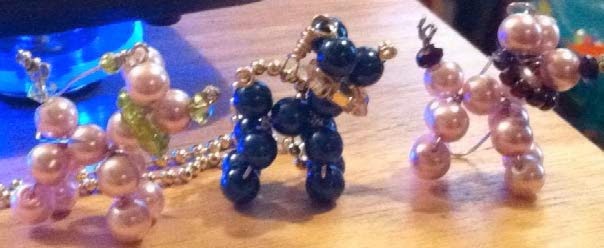
In May 2012, Raquel Duarte formed Nola Spice Designs, which sells necklaces and earrings featuring bead dog trinkets twisted by hand from beads and wire, following the same general method that Duarte used to make bead dogs as a child during Mardi Gras.
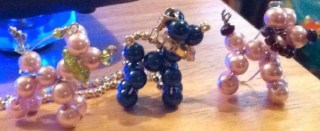
Nola Spice bead dogs

Haydel sent Nola Spice a C&D; Nola Spice sought a declaratory judgment of noninfringement, cancellation of Haydel’s bead dog marks, and relief from unfair competition. Haydel counterclaimed for copyright and trademark infringement, unfair trade practices, and trademark dilution.

The court of appeals began with the proposition that the registrations were prima facie evidence of inherent distinctiveness. (In a footnote, the court clarified that the registrations issued based on a finding of inherent distinctiveness, without examination of secondary meaning. I will have more to say both about Haydel’s conduct before the PTO and the PTO’s conduct in a moment, but particularly the allowance of the word mark on that basis is disappointing.) Nola Spice could rebut this presumption by showing lack of inherent distinctiveness, which would have to be analyzed separately for the word mark and the design mark.
 
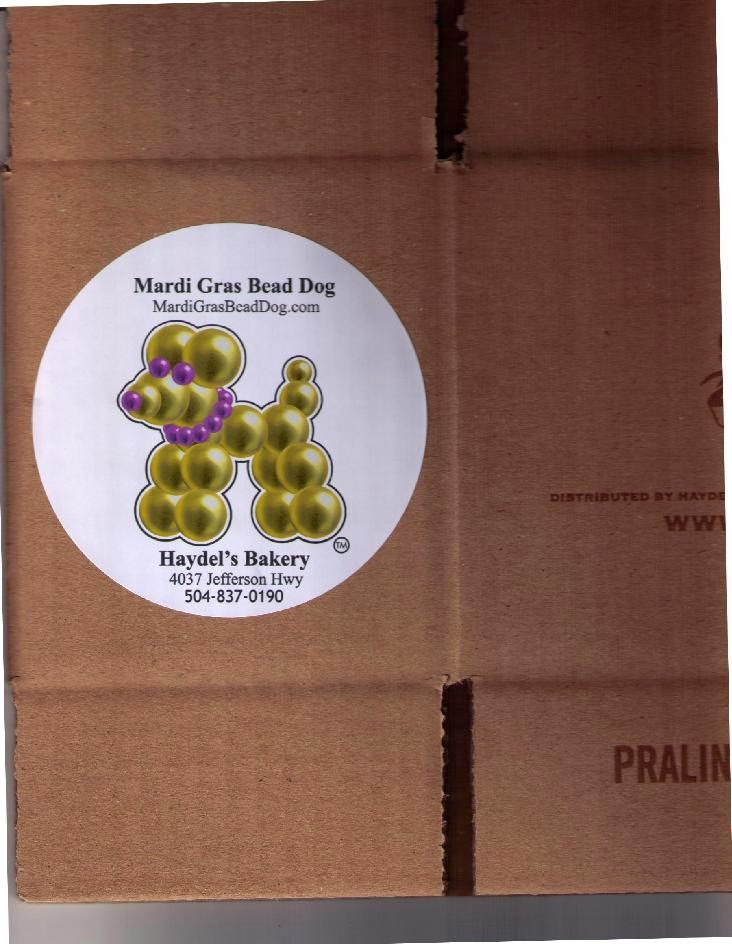
Note that if the PTO had registered a product design without evidence of secondary meaning, it would plainly have erred after Wal-Mart. Haydel’s claims here conflated “design mark” as in “two-dimensional drawing applied to a portion of a product to indicate its source” with “product design.” Haydel had a registered design mark, not a registered product design, and extending its rights over one to the other would be deeply problematic, given the resultant evasion of Wal-Mart. Its initial specimen clearly showed a design mark (although how that mark qualifies as being applied to the claimed products is an exercise left for the reader).
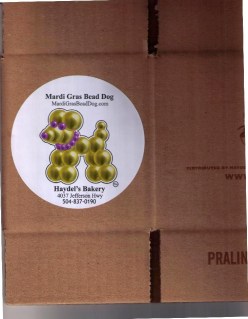
Initial Haydel specimen of use (note that carton apparently contains or contained “pralines”)
 
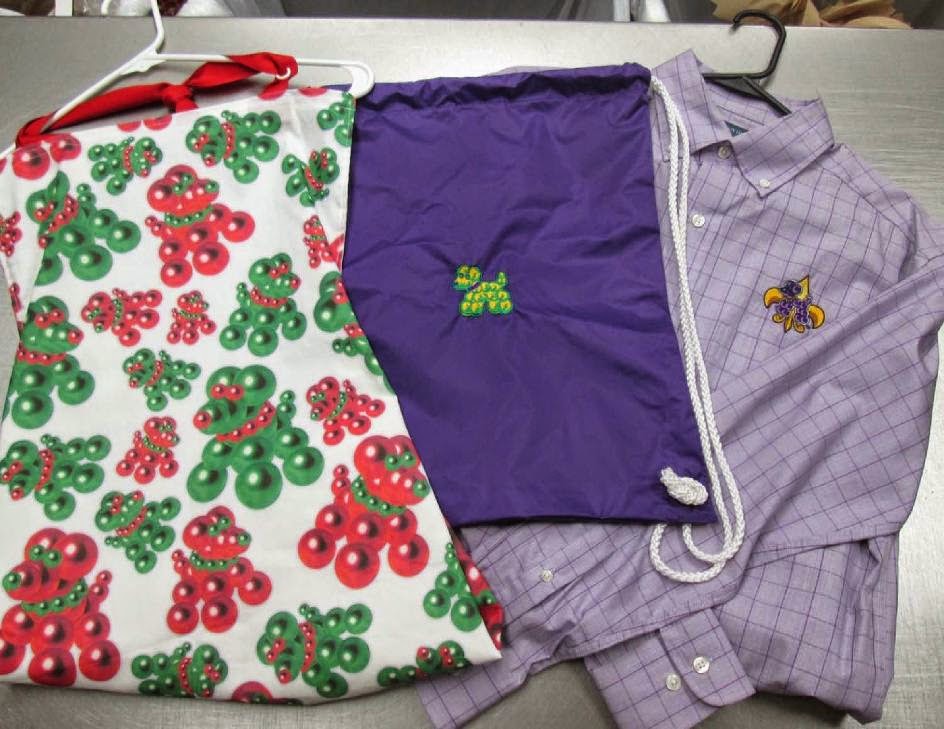
Haydel’s 2015 specimen for the design mark for jewelry, by contrast, is consistent with the claim it made here: the product design.
Haydel 2015 specimen for clothing

Haydel 2015 specimen for jewelry
Close-up of Haydel jewelry
 
It is a mystery to me how the 2015 specimen was acceptable evidence of “use” of the design mark, which bears only a general family resemblance to the shape of the jewelry. How many practitioners find this acceptable? I also wonder how often this kind of 2D design/3D design bootstrapping occurs. Another reason to worry about (1) deadwood on the Register, and (2) deference to PTO findings.
 
And speaking of which! The PTO’s online database (TSDR) is very clear that, as of Oct. 2013, the marks had been ordered cancelled by the district court. Nonetheless, the very next entries in TSDR for both marks are the Jan. 2015 Section 8/15 declaration and accompanying specimen. A Section 15 incontestability declaration requires the declarant to attest that “no final decision adverse to the owner’s claim of ownership of such mark for those goods or services exists, or to the owner’s right to register the same or to keep the same on the register; and, no proceeding involving said rights pending and not disposed of in either the U.S. Patent and Trademark Office or the courts exists.”  I’m not sure what should be done about the Section 8 renewals while the district court had ordered the marks cancelled, but there’s no question that the Section 15 incontestability declarations should not have been filed.
 
Haydel’s attorney signed the declarations. In fairness to him, the litigation seems to have been conducted by a different firm. Nonetheless, one must question whether he adequately (1) checked TSDR to see whether there was in fact a pending or final decision (he’s attorney of record—shouldn’t he have learned about the case when it was entered into TSDR?), (2) counseled his client about the requirements of Section 15 to ensure that the declaration he was going to file was accurate (if he did so, his client has done him a great disservice), or (3) otherwise investigated the facts surrounding the marks himself. I do not see how this declaration could have been filed by a lawyer and client working together properly.
 
This should be merely an embarrassing mistake, since the Section 15 declarations are so obviously wrong … except that the PTO too apparently made no effort to see if there was anything in its own records that would mandate rejection of the Section 15 declarations. Instead, the PTO accepted the declarations. As a result, marks that had been ordered cancelled, and whose cancellations were just affirmed by the Fifth Circuit on the grounds of lack of distinctiveness, were deemed incontestable in January 2015.
 
Now what? I presume that the actual invalidation of the marks trumps the erroneous incontestability as well as the Section 8 renewal, but shouldn’t the PTO sort this out of its own accord?  The Lanham Act makes actual lack of pending challenge/invalidation into separate requirements from the requirement that the registrant file its declaration of incontestability.  Compare 15 U.S.C. §1065(1) & (2) with§1065(3).  Thus, I’d say the fact that the PTO responded positively to Haydel’s invitation to err should not benefit Haydel, even in the absence of fraud.  (This differs from the argument “the PTO shouldn’t have granted incontestability because there was no secondary meaning,” which won’t (park ‘n) fly, in that incontestability doesn’t require any additional evidence of secondary meaning beyond the initial registration; it does require that there be no pending/final challenge to the validity of the mark.)
 
OK, let’s get back to the litigation. The word mark: The court of appeals found that “Mardi Gras Bead Dog” was not generic for jewelry, clothing, or king cakes. The record, in the light most favorable to Haydel, showed that the term meant a dog made from Mardi Gras beads. Haydel’s proprietor testified that “[b]ead dog, beaded dog, a dog made of beads are all common terms for describing” a dog made from Mardi Gras-style beads. The artist who created Haydel’s bead dog design agreed at his deposition that the terms “Mardi Gras” and “bead dog” “naturally go together:” “You know, it’s a bead dog. It’s kind of hard . . . not [to] put them together, Mardi Gras.” The Copyright Office likewise noted that “Mardi Gras bead dogs . . . have apparently become well-known and traditional parts of Mardi Gras.” But Haydel doesn’t sell Mardi Gras bead dogs; it sells silver jewelry in the shape of bead dogs, clothing with the image of a bead dog, and king cakes containing or accompanied by bead dog figurines. Thus, the words were descriptive of a characteristic of the products, not the products themselves.
 
[Side note: this constitutes at least deceptive misdescriptiveness as to the jewelry, no? Separately: If I sold a foam block shaped like a piece of cheese, would “cheese” be merely descriptive of my product? I would think that “Mardi Gras bead dog” is generic for anything that portrays Mardi Gras bead dogs. That is, “this is a Mardi Gras bead dog T-shirt” seems like a perfectly good answer to the question “what is it” when the “it” looks like the shirts in the 2015 clothing specimen.  But much of that depends on how the bead dog design is used—as a mark or as decoration for the shirt.]
 
But that does mean the term was descriptive. “[T]he concept of descriptiveness must be construed rather broadly.” No imagination is required to see that the term conveys information about Haydel’s clothing, jewelry, and king cake: “The bead dog design embodied in each of these products is, in Haydel’s words, a ‘rendering of the old time bead dog.’” Haydel’s own public statements closely linked these products to the traditional Mardi Gras bead dog. No reasonable juror could find the phrase suggestive or arbitrary for these goods.
 

Traditional Mardi Gras bead dog trinket
Moreover, competitors would likely need these terms to describe their own products; a magazine published by Haydel described the traditional bead dog as “a fond memory of Mardi Gras’ past and symbol of the City’s youth.” Another magazine article called the traditional bead dog as “an iconic Mardi Gras symbol.” “Given the bead dog’s popularity and its close connection to Mardi Gras, common sense indicates that other vendors would need to use the term ‘Mardi Gras bead dog’ to describe their own Mardi Gras-themed clothing, accessories, and baked goods containing the image of a bead dog.”
Haydel failed to raise a genuine issue of material fact on inherent distinctiveness, as was its burden once the presumption of inherent distinctiveness had been rebutted.
 
The design mark fared similarly, under a different test. The design mark was described in the registration as “a stylized dog wearing a beaded necklace, with the dog being formed by a series of spheres designed to look like Mardi Gras style beads. The dog has two eyes and a nose, all formed by smaller beads.” The Seabrook Foodstest for design mark distinctiveness asks
 
[1] whether it was a “common” basic shape or design, [2] whether it was unique or unusual in a particular field, [3] whether it was a mere refinement of a commonly-adopted and well-known form of ornamentation for a particular class of goods viewed by the public as a dress or ornamentation for the goods, or [4] whether it was capable of creating a commercial impression distinct from the accompanying words.
 
Nola Spice did not argue that the bead dog design was product design trade dress under Wal-Mart, though it should’ve with respect to the jewelry. I’ve argued elsewhere that courts should embrace defendant-side functionality in appropriate circumstances, like Louboutin v. YSL, and I’d say the same is true here: Because defendant’s products are alleged to infringe in their design, not in the application to a separate product of a two-dimensional image as an indicator of source, only secondary meaning should let plaintiff proceed.
 
Anyway, in the relevant market context, Nola Spice’s evidence overcame the presumption of inherent distinctiveness and indeed showed lack of inherent distinctiveness as a matter of law. The parties fought over the definition of the relevant market (pastries, clothing, and jewelry, said Haydel, while Nola Spice said “bead dogs”). The court of appeals chose “the market for Mardi Gras-themed products.” This definition was consistent with Haydel’s advertising, which described its clothing as “Mardi Gras Bead Dog parade gear” and its jewelry as a way to “[s]how your Mardi Gras spirit year round.” King cake is also a Mardi Gras tradition.
 
In that market, the design was not “so unique, unusual or unexpected” that it would “automatically be perceived by customers as an indicator of origin.” Instead, the record was full of evidence that Haydel’s design was “substantially similar to the traditional bead dog that parade-goers have long crafted from Mardi Gras beads.” Haydel’s principal testified that every bead dog that could be made would “look like” Haydel’s trademarked design, and another witness associated with Haydel likewise testified that there was not “any other way to make a bead dog” besides Haydel’s bead dog design. The record showed traditional bead dogs similar to Haydel’s design. Haydel argued that its design was distinct because its design has eyes, a nose, a tail, and a necklace. So did others in the record, and anyway that was a mere “refinement.” No reasonable juror could find inherent distinctiveness.
 
With the presumption of inherent distinctiveness gone, Haydel had the burden of showing secondary meaning (or a genuine issue of fact, to avoid summary judgment). The burden of demonstrating secondary meaning “is substantial and requires a high degree of proof.” The court of appeals accepted the idea that “Haydel began using its marks in October 2008, when it placed a statue of its mascot in front of its bakery, three-and-a-half years before Nola Spice began selling bead dog jewelry.” Notice that this idea of “use” is pretty flexible, since it’s a more general “we have a dog statue” and not “we are applying this image and phrase to specific goods.” Anyhow, this was relatively brief as length of use went.
 
Haydel sold bead dog-related items worth approximately $30,500 between January 2007 and May 2013, about 80 clothing items and 300 jewelry items. These numbers were low compared to other sales found to support secondary meaning, e.g., 916,385 cases of Fish-Fri between 1964 and 1979 in one case and recent sales of over $93 million in another. Haydel’s affidavit said that it spent more than $594,000 between October 2008 and August 2013 on “the development and promotion and expanding the use” of Haydel’s bead dog mascot, but “development” may not have affected public perception, and just spending money doesn’t itself cause secondary meaning.
 
The most significant promotional effort was “Paws on Parade,” an exhibit coordinated with the Louisiana Society for the Prevention of Cruelty to Animals to raise awareness about animal welfare. About 74 bead dog sculptures “embody[ing]” the design mark, each about 54 inches long and 42 inches tall, were displayed throughout New Orleans from January to September 2012.  Each had a plaque with various names, including the SPCA, Haydel, the artist, and the organization that sponsored the sculpture.  The court of appeals found that this had little probative value on secondary meaning.  The statues didn’t feature the word mark, and the record didn’t “raise an inference” that the exhibit caused the consuming public to associate the design mark with a single source.  Haydel’s name on the plaque was no more prominent than names of other people and organizations involved in the exhibit, and the plaques weren’t highly noticeable.
 
Haydel also put one or two bead dog statues outside its bakery, atop a pedestal that reads “Haydel’s Mardi Gras Bead Dog.” Haydel’s principle testified that “hundreds of people” take pictures with the bead dog statue every day. But again, there was no evidence that the sculptures led consumers to make a source identification. “Indeed, Haydel’s inclusion of its own name before ‘Mardi Gras Bead Dog’ on the pedestal suggests a generic use of that phrase.” Plus, a single sculpture was “necessarily limited” in ability to connect with consumers, and anyway Haydel didn’t claim a mark for sculptures, but for clothing, jewelry, and king cake. “Given the bead dog’s popularity in New Orleans and the similarities between Haydel’s design and a traditional bead dog, even a consumer who associated the large bead dog sculptures with a single source would not automatically associate other merchandise bearing a bead dog image with a single source.” And Haydel’s promotions with respect to those products were limited—on its website and in its annual magazine. Press coverage was also slim, and there was no identified coverage of the claimed marks in connection with clothing, jewelry, or king cake. 
 
Haydel argued that Nola Spice’s copying supported a finding of secondary meaning, but Nola Spice didn’t use the claimed word mark, and the evidence of intent to copy the design mark was pretty bad.  Duarte briefly posted images of statues from the Paws on Parade exhibit on Nola Spice’s webpages on Facebook, Pinterest, and Twitter. But the record didn’t support an inference that Duarte knew Haydel provided the mold for these statues, or that she intended to copy Haydel’s design in crafting her bead dog jewelry.
 
There was no consumer testimony or survey evidence. Given all that, Haydel failed to raise a fact issue on secondary meaning.  Thus, the infringement claims were properly rejected and the marks were properly cancelled. Likewise with federal dilution, and state dilution (does not require fame, but does require distinctiveness).
 
Haydel also argued that Nola Spice engaged in passing off by putting a photo on Facebook (and Twitter and Pinterest) of Duarte posing with a bead dog sculpture from the Paws on Parade exhibit. Only the sculpture’s ears, eyes, and part of its nose were visible in the photograph. Duarte later replaced the photograph on Facebook with a photograph of herself posing with another Paws on Parade statue, which has the head of a crawfish and the body of a bead dog. Next to the photograph was an image of a poster created by Haydel portraying about thirty miniature versions of the bead dog sculptures from Paws on Parade. This didn’t violate §43(a), because though §43(a) covers more than trademark infringement, the bead dog lacked distinctiveness and doesn’t act as a source identifier. Thus, using the image on Nola Spice’s webpages couldn’t cause confusion “as to the origin, sponsorship, or approval” of Nola Spice’s goods.
 
Copyright infringement: Nola Spice didn’t argue that Haydel’s work as a whole was unprotectable, and it also didn’t dispute factual copying for these purposes.  Instead, it rested its defense on lack of substantial similarity, and the court of appeals agreed.  The record showed that the idea of a bead dog could be expressed in various ways, so merger didn’t itself preclude a finding of infringement, but no reasonable jury could find substantial similarity of protectable expression here.
 
The viewpoint at issue was that of an ordinary observer, considering the importance of the copied protectable elements to the copyrighted work as a whole.  Given the presence of unprotectable elements, the analysis was similar to abstraction/filtration/comparison used for computer programs; there was no reason to limit that test to software.
 
Haydel conceded that the bead dog design was a derivative work of traditional bead dogs, and that the body was unprotectable.  It argued that its “original contributions include, among other things, the selection and arrangement of a necklace, nose, eyes, and a tail, all made of
smaller beads.” But “anatomical features on replicas of animals are ideas not entitled to copyright protection.” And the “necklace” could also be seen as a “collar,” another public domain idea as applied to dogs. The manner of expression could be protectable.
 
From the protectable elements, the similarity between the parties’ bead dogs was “the expression of the collar as a ring of small spheres.”  The torso of Haydel’s dog had three spheres, while Nola Spice’s dog had one.  Haydel’s bead dog was made of pressed-together spheres, while Nola Spice used visible wire.  The tail of Haydel’s bead dog was two spheres and no wire, while the tales of Nola Spice’s bead dogs include a curled wire, alone or with one or two spheres. The nose of Haydel’s bead dog was a single sphere, while the noses of Nola Spice’s bead dogs include a curled wire.  And Nola Spice’s bead dogs didn’t have eyes. “No reasonable juror could conclude that Nola Spice’s bead dogs bear a substantial similarity to the way in which the eyes, nose, and tail are expressed in Haydel’s bead dog.”  That left only the collar.  “As a threshold matter, we question whether using bead-shaped spheres for a bead dog’s collar is sufficiently original to merit copyright protection.” At least, its minimal originality counseled against a finding of substantial similarity.The collar was both qualitatively and quantitatively insignificant in relation to Haydel’s work as a whole, and no reasonable jury could find substantial similarity based solely on Haydel’s expression of a collar.
 
Haydel argued that its evidence of substantial similarity came from confused customers.  Haydel’s principal said he “personally heard several customers of Haydel’s Bakery asking whether Nola Spice Designs sells Haydel’s MARDI GRAS BEAD DOG jewelry and telling our staff that they (the customers) believed that Nola Spice Designs sold Haydel’s MARDI GRAS BEAD DOG jewelry.” “This vague allegation of consumer confusion by a self-interested party possesses little probative value.”  But more important, any confusion would have come from the two designs in their entirety, “and would therefore have been based largely on unprotectable elements.”


from Blogger http://ift.tt/1CBWtYh

Posted in Uncategorized | Tagged , | Leave a comment

No dog in this fight: PTO makes a cancelled mark incontestable

Nola Spice Designs, LLC v. Haydel Enterprises Inc., No. 13-30918, — F.3d – (5th Cir. Apr. 8, 2015)
Opinion below, rejecting trademark and copyright claims based on competing Mardi Gras bead dog designs. (And a reminder: sending a DMCA notice is not risk-free: that’s what triggered the sequence of events ultimately leading to the invalidation of Haydel’s so-called marks.)
Mardi Gras in New Orleans features parade krewes that throw strands of plastic beads to onlookers, who in turn sometimes twist those strands into the shape of a dog, known unsurprisingly as a bead dog. In 2008, Haydel commissioned an artist to design a mascot, which was named “Mardi Gras Bead Dog.” In 2009, Haydel successfully registered “MARDI GRAS BEAD DOG” and its bead dog design for king cake pastries, jewelry, and clothing (shirts, hats, and baby jumpsuits). The bead dogs in Haydel’s jewelry are made of sterling silver. It also registered a copyright to a work called “Bead Dog” in “photograph(s), jewelry design, 2-D artwork, sculpture.”
Haydel’s Mardi Gras Bead Dog sculpture

Haydel’s initial design mark as registered

In May 2012, Raquel Duarte formed Nola Spice Designs, which sells necklaces and earrings featuring bead dog trinkets twisted by hand from beads and wire, following the same general method that Duarte used to make bead dogs as a child during Mardi Gras.

Nola Spice bead dogs

Haydel sent Nola Spice a C&D; Nola Spice sought a declaratory judgment of noninfringement, cancellation of Haydel’s bead dog marks, and relief from unfair competition. Haydel counterclaimed for copyright and trademark infringement, unfair trade practices, and trademark dilution.

The court of appeals began with the proposition that the registrations were prima facie evidence of inherent distinctiveness. (In a footnote, the court clarified that the registrations issued based on a finding of inherent distinctiveness, without examination of secondary meaning. I will have more to say both about Haydel’s conduct before the PTO and the PTO’s conduct in a moment, but particularly the allowance of the word mark on that basis is disappointing.) Nola Spice could rebut this presumption by showing lack of inherent distinctiveness, which would have to be analyzed separately for the word mark and the design mark.
Note that if the PTO had registered a product design without evidence of secondary meaning, it would plainly have erred after Wal-Mart. Haydel’s claims here conflated “design mark” as in “two-dimensional drawing applied to a portion of a product to indicate its source” with “product design.” Haydel had a registered design mark, not a registered product design, and extending its rights over one to the other would be deeply problematic, given the resultant evasion of Wal-Mart. Its initial specimen clearly showed a design mark (although how that mark qualifies as being applied to the claimed products is an exercise left for the reader).
Initial Haydel specimen of use (note that carton apparently contains or contained “pralines”)
Haydel’s 2015 specimen for the design mark for jewelry, by contrast, is consistent with the claim it made here: the product design.
Haydel 2015 specimen for clothing

Haydel 2015 specimen for jewelry
Close-up of Haydel jewelry
It is a mystery to me how the 2015 specimen was acceptable evidence of “use” of the design mark, which bears only a general family resemblance to the shape of the jewelry. (There’s a picture of the sculpture at the bottom of the page cut off by the submission process, which comes closer, I guess.)  How many practitioners find this acceptable? I also wonder how often this kind of 2D design/3D design bootstrapping occurs. Another reason to worry about (1) deadwood on the Register, and (2) deference to PTO findings.
And speaking of which! The PTO’s online database (TSDR) is very clear that, as of Oct. 2013, the marks had been ordered cancelled by the district court. Nonetheless, the very next entries in TSDR for both marks are the Jan. 2015 Section 8/15 declaration and accompanying specimen. A Section 15 incontestability declaration requires the declarant to attest that “no final decision adverse to the owner’s claim of ownership of such mark for those goods or services exists, or to the owner’s right to register the same or to keep the same on the register; and, no proceeding involving said rights pending and not disposed of in either the U.S. Patent and Trademark Office or the courts exists.”  I’m not sure what should be done about the Section 8 renewals while the district court had ordered the marks cancelled, but there’s no question that the Section 15 incontestability declarations should not have been filed.
Haydel’s attorney signed the declarations. In fairness to him, the litigation seems to have been conducted by a different firm. Nonetheless, one must question whether he adequately (1) checked TSDR to see whether there was in fact a pending or final decision (he’s attorney of record—edited: I’m told that doesn’t mean he’d be automatically notified of new entries in TSDR, which seems like a flaw), (2) counseled his client about the requirements of Section 15 to ensure that the declaration he was going to file was accurate (if he did so, his client has done him a great disservice), or (3) otherwise investigated the facts surrounding the marks himself. I do not see how this declaration could have been filed by a lawyer and client working together properly.
This should be merely an embarrassing mistake, since the Section 15 declarations are so obviously wrong … except that the PTO too apparently made no effort to see if there was anything in its own records that would mandate rejection of the Section 15 declarations. Instead, the PTO accepted the declarations. As a result, marks that had been ordered cancelled, and whose cancellations were just affirmed by the Fifth Circuit on the grounds of lack of distinctiveness, were deemed incontestable in January 2015.
Now what? I presume that the actual invalidation of the marks trumps the erroneous incontestability as well as the Section 8 renewal, but shouldn’t the PTO sort this out of its own accord?  The Lanham Act makes actual lack of pending challenge/invalidation into separate requirements from the requirement that the registrant file its declaration of incontestability.  Compare 15 U.S.C. §1065(1) & (2) with§1065(3).  Thus, I’d say the fact that the PTO responded positively to Haydel’s invitation to err should not benefit Haydel, even in the absence of fraud.  (This differs from the argument “the PTO shouldn’t have granted incontestability because there was no secondary meaning,” which won’t (park ‘n) fly, in that incontestability doesn’t require any additional evidence of secondary meaning beyond the initial registration; it does require that there be no pending/final challenge to the validity of the mark.)
OK, let’s get back to the litigation. The word mark: The court of appeals found that “Mardi Gras Bead Dog” was not generic for jewelry, clothing, or king cakes. The record, in the light most favorable to Haydel, showed that the term meant a dog made from Mardi Gras beads. Haydel’s proprietor testified that “[b]ead dog, beaded dog, a dog made of beads are all common terms for describing” a dog made from Mardi Gras-style beads. The artist who created Haydel’s bead dog design agreed at his deposition that the terms “Mardi Gras” and “bead dog” “naturally go together:” “You know, it’s a bead dog. It’s kind of hard . . . not [to] put them together, Mardi Gras.” The Copyright Office likewise noted that “Mardi Gras bead dogs . . . have apparently become well-known and traditional parts of Mardi Gras.” But Haydel doesn’t sell Mardi Gras bead dogs; it sells silver jewelry in the shape of bead dogs, clothing with the image of a bead dog, and king cakes containing or accompanied by bead dog figurines. Thus, the words were descriptive of a characteristic of the products, not the products themselves.
[Side note: this constitutes at least deceptive misdescriptiveness as to the jewelry, no? Separately: If I sold a foam block shaped like a piece of cheese, would “cheese” be merely descriptive of my product? I would think that “Mardi Gras bead dog” is generic for anything that portrays Mardi Gras bead dogs. That is, “this is a Mardi Gras bead dog T-shirt” seems like a perfectly good answer to the question “what is it” when the “it” looks like the shirts in the 2015 clothing specimen.  But much of that depends on how the bead dog design is used—as a mark or as decoration for the shirt.]
But that does mean the term was descriptive. “[T]he concept of descriptiveness must be construed rather broadly.” No imagination is required to see that the term conveys information about Haydel’s clothing, jewelry, and king cake: “The bead dog design embodied in each of these products is, in Haydel’s words, a ‘rendering of the old time bead dog.’” Haydel’s own public statements closely linked these products to the traditional Mardi Gras bead dog. No reasonable juror could find the phrase suggestive or arbitrary for these goods.
 

Traditional Mardi Gras bead dog trinket
Moreover, competitors would likely need these terms to describe their own products; a magazine published by Haydel described the traditional bead dog as “a fond memory of Mardi Gras’ past and symbol of the City’s youth.” Another magazine article called the traditional bead dog as “an iconic Mardi Gras symbol.” “Given the bead dog’s popularity and its close connection to Mardi Gras, common sense indicates that other vendors would need to use the term ‘Mardi Gras bead dog’ to describe their own Mardi Gras-themed clothing, accessories, and baked goods containing the image of a bead dog.”
Haydel failed to raise a genuine issue of material fact on inherent distinctiveness, as was its burden once the presumption of inherent distinctiveness had been rebutted.
The design mark fared similarly, under a different test. The design mark was described in the registration as “a stylized dog wearing a beaded necklace, with the dog being formed by a series of spheres designed to look like Mardi Gras style beads. The dog has two eyes and a nose, all formed by smaller beads.” The Seabrook Foodstest for design mark distinctiveness asks
[1] whether it was a “common” basic shape or design, [2] whether it was unique or unusual in a particular field, [3] whether it was a mere refinement of a commonly-adopted and well-known form of ornamentation for a particular class of goods viewed by the public as a dress or ornamentation for the goods, or [4] whether it was capable of creating a commercial impression distinct from the accompanying words.
Nola Spice did not argue that the bead dog design was product design trade dress under Wal-Mart, though it should’ve with respect to the jewelry. I’ve argued elsewhere that courts should embrace defendant-side functionality in appropriate circumstances, like Louboutin v. YSL, and I’d say the same is true here: Because defendant’s products are alleged to infringe in their design, not in the application to a separate product of a two-dimensional image as an indicator of source, only secondary meaning should let plaintiff proceed.
Anyway, in the relevant market context, Nola Spice’s evidence overcame the presumption of inherent distinctiveness and indeed showed lack of inherent distinctiveness as a matter of law. The parties fought over the definition of the relevant market (pastries, clothing, and jewelry, said Haydel, while Nola Spice said “bead dogs”). The court of appeals chose “the market for Mardi Gras-themed products.” This definition was consistent with Haydel’s advertising, which described its clothing as “Mardi Gras Bead Dog parade gear” and its jewelry as a way to “[s]how your Mardi Gras spirit year round.” King cake is also a Mardi Gras tradition.
In that market, the design was not “so unique, unusual or unexpected” that it would “automatically be perceived by customers as an indicator of origin.” Instead, the record was full of evidence that Haydel’s design was “substantially similar to the traditional bead dog that parade-goers have long crafted from Mardi Gras beads.” Haydel’s principal testified that every bead dog that could be made would “look like” Haydel’s trademarked design, and another witness associated with Haydel likewise testified that there was not “any other way to make a bead dog” besides Haydel’s bead dog design. The record showed traditional bead dogs similar to Haydel’s design. Haydel argued that its design was distinct because its design has eyes, a nose, a tail, and a necklace. So did others in the record, and anyway that was a mere “refinement.” No reasonable juror could find inherent distinctiveness.
With the presumption of inherent distinctiveness gone, Haydel had the burden of showing secondary meaning (or a genuine issue of fact, to avoid summary judgment). The burden of demonstrating secondary meaning “is substantial and requires a high degree of proof.” The court of appeals accepted the idea that “Haydel began using its marks in October 2008, when it placed a statue of its mascot in front of its bakery, three-and-a-half years before Nola Spice began selling bead dog jewelry.” Notice that this idea of “use” is pretty flexible, since it’s a more general “we have a dog statue” and not “we are applying this image and phrase to specific goods.” Anyhow, this was relatively brief as length of use went.
Haydel sold bead dog-related items worth approximately $30,500 between January 2007 and May 2013, about 80 clothing items and 300 jewelry items. These numbers were low compared to other sales found to support secondary meaning, e.g., 916,385 cases of Fish-Fri between 1964 and 1979 in one case and recent sales of over $93 million in another. Haydel’s affidavit said that it spent more than $594,000 between October 2008 and August 2013 on “the development and promotion and expanding the use” of Haydel’s bead dog mascot, but “development” may not have affected public perception, and just spending money doesn’t itself cause secondary meaning.
The most significant promotional effort was “Paws on Parade,” an exhibit coordinated with the Louisiana Society for the Prevention of Cruelty to Animals to raise awareness about animal welfare. About 74 bead dog sculptures “embody[ing]” the design mark, each about 54 inches long and 42 inches tall, were displayed throughout New Orleans from January to September 2012.  Each had a plaque with various names, including the SPCA, Haydel, the artist, and the organization that sponsored the sculpture.  The court of appeals found that this had little probative value on secondary meaning.  The statues didn’t feature the word mark, and the record didn’t “raise an inference” that the exhibit caused the consuming public to associate the design mark with a single source.  Haydel’s name on the plaque was no more prominent than names of other people and organizations involved in the exhibit, and the plaques weren’t highly noticeable.
Haydel also put one or two bead dog statues outside its bakery, atop a pedestal that reads “Haydel’s Mardi Gras Bead Dog.” Haydel’s principle testified that “hundreds of people” take pictures with the bead dog statue every day. But again, there was no evidence that the sculptures led consumers to make a source identification. “Indeed, Haydel’s inclusion of its own name before ‘Mardi Gras Bead Dog’ on the pedestal suggests a generic use of that phrase.” Plus, a single sculpture was “necessarily limited” in ability to connect with consumers, and anyway Haydel didn’t claim a mark for sculptures, but for clothing, jewelry, and king cake. “Given the bead dog’s popularity in New Orleans and the similarities between Haydel’s design and a traditional bead dog, even a consumer who associated the large bead dog sculptures with a single source would not automatically associate other merchandise bearing a bead dog image with a single source.” And Haydel’s promotions with respect to those products were limited—on its website and in its annual magazine. Press coverage was also slim, and there was no identified coverage of the claimed marks in connection with clothing, jewelry, or king cake. 
Haydel argued that Nola Spice’s copying supported a finding of secondary meaning, but Nola Spice didn’t use the claimed word mark, and the evidence of intent to copy the design mark was pretty bad.  Duarte briefly posted images of statues from the Paws on Parade exhibit on Nola Spice’s webpages on Facebook, Pinterest, and Twitter. But the record didn’t support an inference that Duarte knew Haydel provided the mold for these statues, or that she intended to copy Haydel’s design in crafting her bead dog jewelry.
There was no consumer testimony or survey evidence. Given all that, Haydel failed to raise a fact issue on secondary meaning.  Thus, the infringement claims were properly rejected and the marks were properly cancelled. Likewise with federal dilution, and state dilution (does not require fame, but does require distinctiveness).
Haydel also argued that Nola Spice engaged in passing off by putting a photo on Facebook (and Twitter and Pinterest) of Duarte posing with a bead dog sculpture from the Paws on Parade exhibit. Only the sculpture’s ears, eyes, and part of its nose were visible in the photograph. Duarte later replaced the photograph on Facebook with a photograph of herself posing with another Paws on Parade statue, which has the head of a crawfish and the body of a bead dog. Next to the photograph was an image of a poster created by Haydel portraying about thirty miniature versions of the bead dog sculptures from Paws on Parade. This didn’t violate §43(a), because though §43(a) covers more than trademark infringement, the bead dog lacked distinctiveness and doesn’t act as a source identifier. Thus, using the image on Nola Spice’s webpages couldn’t cause confusion “as to the origin, sponsorship, or approval” of Nola Spice’s goods.
Copyright infringement: Nola Spice didn’t argue that Haydel’s work as a whole was unprotectable, and it also didn’t dispute factual copying for these purposes.  Instead, it rested its defense on lack of substantial similarity, and the court of appeals agreed.  The record showed that the idea of a bead dog could be expressed in various ways, so merger didn’t itself preclude a finding of infringement, but no reasonable jury could find substantial similarity of protectable expression here.
The viewpoint at issue was that of an ordinary observer, considering the importance of the copied protectable elements to the copyrighted work as a whole.  Given the presence of unprotectable elements, the analysis was similar to abstraction/filtration/comparison used for computer programs; there was no reason to limit that test to software.
Haydel conceded that the bead dog design was a derivative work of traditional bead dogs, and that the body was unprotectable.  It argued that its “original contributions include, among other things, the selection and arrangement of a necklace, nose, eyes, and a tail, all made of
smaller beads.” But “anatomical features on replicas of animals are ideas not entitled to copyright protection.” And the “necklace” could also be seen as a “collar,” another public domain idea as applied to dogs. The manner of expression could be protectable.
From the protectable elements, the similarity between the parties’ bead dogs was “the expression of the collar as a ring of small spheres.”  The torso of Haydel’s dog had three spheres, while Nola Spice’s dog had one.  Haydel’s bead dog was made of pressed-together spheres, while Nola Spice used visible wire.  The tail of Haydel’s bead dog was two spheres and no wire, while the tales of Nola Spice’s bead dogs include a curled wire, alone or with one or two spheres. The nose of Haydel’s bead dog was a single sphere, while the noses of Nola Spice’s bead dogs include a curled wire.  And Nola Spice’s bead dogs didn’t have eyes. “No reasonable juror could conclude that Nola Spice’s bead dogs bear a substantial similarity to the way in which the eyes, nose, and tail are expressed in Haydel’s bead dog.”  That left only the collar.  “As a threshold matter, we question whether using bead-shaped spheres for a bead dog’s collar is sufficiently original to merit copyright protection.” At least, its minimal originality counseled against a finding of substantial similarity.The collar was both qualitatively and quantitatively insignificant in relation to Haydel’s work as a whole, and no reasonable jury could find substantial similarity based solely on Haydel’s expression of a collar.
Haydel argued that its evidence of substantial similarity came from confused customers.  Haydel’s principal said he “personally heard several customers of Haydel’s Bakery asking whether Nola Spice Designs sells Haydel’s MARDI GRAS BEAD DOG jewelry and telling our staff that they (the customers) believed that Nola Spice Designs sold Haydel’s MARDI GRAS BEAD DOG jewelry.” “This vague allegation of consumer confusion by a self-interested party possesses little probative value.”  But more important, any confusion would have come from the two designs in their entirety, “and would therefore have been based largely on unprotectable elements.”
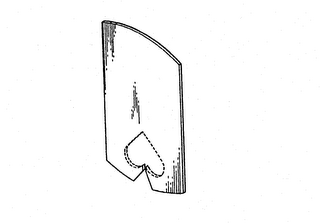
Posted in http://schemas.google.com/blogger/2008/kind#post, trademark | Leave a comment