Thermolife sues critic’s blog for cybersquatting

A reader pointed me to this lawsuit, alleging cybersquatting against https://ronkramermusclebeach.wordpress.com/ based on Thermolife’s Muscle Beach marks.  You may notice that this isn’t really a domain name, but a blog hosted on WordPress.  In an in rem proceeding, will the court be able to recognize both the problem with the ACPA claims in terms of “domain name” and the problem with alleging cybersquatting?  The site appears to be highly critical and classic fair use.

Posted in http://schemas.google.com/blogger/2008/kind#post, trademark | Leave a comment

resources spent correcting false advertising provide business standing in California

Underground Solutions, Inc. v. Palermo, No. 13 C 8407, 2015 WL 1594189 (N.D. Ill. Apr. 7, 2015)
 
Previous ruling on this dispute between Underground Solutions and a person who basically served as an expert supporting its competitor. Related case about a website impersonating Palermo.  In its amended complaint, Underground Solutions alleged trade libel, violation of the Lanham Act, intentional interference with prospective economic advantage, and violation of California’s UCL. Palermo moved to dismiss the last two, and the court denied the motion.
 
For intentional interference, a plaintiff has to show “that it is reasonably probable that the lost economic advantage would have been realized but for the defendant’s interference.” This usually means alleging “a lost contract, failed negotiation, or ongoing business relationship.”  This time around, Underground Solutions alleged that an engineer had approved its pipe for a bid on a project in Santa Clara, but the local water district expressed concern about the pipe after reviewing materials authored by Palermo, and the engineer subsequently withdrew his approval, precluding Underground Solutions from bidding on the project. In addition, Underground Solutions alleged that it was the sole supplier of the relevant pipe in the US. The court found that the business discussions about a specific construction project, resulting in an approved use, formed a relationship sufficient to give rise to a tortious interference claim. 
 
Palermo argued that he didn’t now about any particular prospective deal, but it sufficed to allege that “Palermo knew that UGSI’s Fusible PVC® pipe was being considered by several municipalities for upcoming projects, and knew or should have known that his false and misleading statements would reflect negatively on UGSI’s Fusible PVC® pipe, causing the contractors considering UGSI’s Fusible PVC® pipe to reject said pipe.”  Palermo further argued that other competitors were still being considered for the project. But including Underground Solutions’ pipe in a narrowed set of approved pipes was sufficient—all that’s required is reasonably probable benefit, not certain benefit.
 
As for the state law false advertising claim, Underground Solutions had standing because it allegedly lost money or property by virtue of being “forced to expend time, effort, and funds to correspond and meet with potential clients to debunk the misstatements….” Nor did Underground Solutions need to allege that itrelied on the false advertising; this is a competitor suit and not a consumer suit.  “Requiring a competitor to allege reliance … would effectively read unfair competition claims out of the statute. That would be contrary to the legislature’s express intent.” Proposition 64’s express intent was to protect “California businessesand consumers from unlawful, unfair, and fraudulent business practices” (emphasis added).

from Blogger http://ift.tt/1FTK6vv

Posted in Uncategorized | Tagged , , | Leave a comment

resources spent correcting false advertising provide business standing in California

Underground Solutions, Inc. v. Palermo, No. 13 C 8407, 2015 WL 1594189 (N.D. Ill. Apr. 7, 2015)
 
Previous ruling on this dispute between Underground Solutions and a person who basically served as an expert supporting its competitor. Related case about a website impersonating Palermo.  In its amended complaint, Underground Solutions alleged trade libel, violation of the Lanham Act, intentional interference with prospective economic advantage, and violation of California’s UCL. Palermo moved to dismiss the last two, and the court denied the motion.
 
For intentional interference, a plaintiff has to show “that it is reasonably probable that the lost economic advantage would have been realized but for the defendant’s interference.” This usually means alleging “a lost contract, failed negotiation, or ongoing business relationship.”  This time around, Underground Solutions alleged that an engineer had approved its pipe for a bid on a project in Santa Clara, but the local water district expressed concern about the pipe after reviewing materials authored by Palermo, and the engineer subsequently withdrew his approval, precluding Underground Solutions from bidding on the project. In addition, Underground Solutions alleged that it was the sole supplier of the relevant pipe in the US. The court found that the business discussions about a specific construction project, resulting in an approved use, formed a relationship sufficient to give rise to a tortious interference claim. 
 
Palermo argued that he didn’t now about any particular prospective deal, but it sufficed to allege that “Palermo knew that UGSI’s Fusible PVC® pipe was being considered by several municipalities for upcoming projects, and knew or should have known that his false and misleading statements would reflect negatively on UGSI’s Fusible PVC® pipe, causing the contractors considering UGSI’s Fusible PVC® pipe to reject said pipe.”  Palermo further argued that other competitors were still being considered for the project. But including Underground Solutions’ pipe in a narrowed set of approved pipes was sufficient—all that’s required is reasonably probable benefit, not certain benefit.
 
As for the state law false advertising claim, Underground Solutions had standing because it allegedly lost money or property by virtue of being “forced to expend time, effort, and funds to correspond and meet with potential clients to debunk the misstatements….” Nor did Underground Solutions need to allege that itrelied on the false advertising; this is a competitor suit and not a consumer suit.  “Requiring a competitor to allege reliance … would effectively read unfair competition claims out of the statute. That would be contrary to the legislature’s express intent.” Proposition 64’s express intent was to protect “California businessesand consumers from unlawful, unfair, and fraudulent business practices” (emphasis added).
Posted in california, http://schemas.google.com/blogger/2008/kind#post, tortious interference | Leave a comment

Preemption and dormant commerce clause challenges to Cal. Made in US law fail

Clark v. Citizens of Humanity, LLC, No. 14–CV–1404, 2015 WL 1600679 (S.D. Cal. Apr. 8, 2015)
 
Plaintiffs bought Citizens of Humanity jeans marked with “Made in the USA,” but alleged that the products contained component parts made outside the US, including the fabric, thread, buttons, subcomponents of the zipper assembly, and/or rivets.  Plaintiffs alleged that the jeans therefore were “of inferior quality” and “less reliable” than jeans actually made entirely in the United States and that they overpaid in reliance on the claims. They brought the usual California claims.
 
Defendants argued that California’s Made in the USA law was conflict preempted by virtue of the FTC’s Made in the USA regulations and that it violated the dormant commerce clause; the court disagreed.
 
Preemption: California law provides:
 
It is unlawful for any person, firm, corporation, or association to sell or offer for sale in this State any merchandise on which merchandise or on its container there appears the words ‘Made in the U.S.A.,’ ‘Made in America,’ ‘U.S.A.,’ or similar words when the merchandise or any article, unit or part thereof, has been entirely or substantially made, manufactured, or produced outside of the United States.
 
Cal. Bus. & Prof.Code § 17533.7. California courts have interpreted this section strictly: “if the merchandise consists of separate, identifiable components, section 17533.7 requires ‘any article, unit, or part’ of the merchandise to be ‘entirely or substantially made, manufactured, or produced domestically to qualify for use of a ‘Made in U.S.A.’ or similar label.” So, “a product, like [the aircraft carrier] the U.S.S. Ronald Reagan, can be overwhelmingly and substantially ‘made in the United States’ but could not be claimed to have been ‘made in the United States’ unless is contained absolutely 100 percent American parts, down to the last screw.”
 
The FTCA says:
 
To the extent any person introduces, delivers for introduction, sells, advertises, or offers for sale in commerce a product with a ‘Made in the U.S.A.’ or ‘Made in America’ label, or the equivalent thereof, in order to represent that such product was in whole or substantial part of domestic origin, such label shall be consistent with decisions and orders of the Federal Trade Commission issued pursuant to section 45 of this title.
 
15 U.S.C. § 45a. The FTC’s standard, as adopted, is that “manufacturers shall be permitted to use the ‘Made in the U.S.A.’ label on products that are ‘all or virtually all’ made in the United States.” There is no bright line, but if foreign-made component parts comprise a “negligible portion of the product’s total manufacturing costs and are insignificant parts of the final product,” then the item will be considered to have been made in the United States.
 
Defendants argued that this regulation had two purposes: preventing consumer deception and encouraging manufacture in the US by allowing manufacturers to use the powerful “Made in the USA” label.  California’s law conflicted with the latter.  The FTCA, however, says that “[n]othing in this section shall preclude the application of other provisions of law relating to labeling.” §45(a).  Nor is compliance with both laws impossible.  Also, plaintiffs argued that the second alleged purpose wasn’t actually a purpose, and that the goal of consumer protection was served by California’s more vigorous law.
 
The court found that it wasn’t impossible to comply with both laws; they could use the “Made in the USA” label only to items entirely made in this country, or by using a distinct label for clothing sold in California. In addition, the court agreed that both laws were aimed at preventing consumer deception. And even if promoting US manufacture was a secondary objective, “it cannot be said that § 17533.7 stands as an obstacle to promoting it because surely § 17533.7 encourages some manufacturers to complete all of their manufacturing in the United States.”  (I’ve written about this problem before with respect to “organic.”  The trouble is figuring out the balance between manufacturers who find it worthwhile to meet the purity standard because of the greater payoff, and those who would be willing to invest extra in a lesser standard but just give up and go fully conventional/foreign if they can’t use the label.)
 
In addition, the regulation doesn’t bar use of “Made in the USA,” only the use of an unqualified label in California unless the product is 100 percent made in the United States. Manufacturers can still use the unqualified label in other states.
 
Separately, the Federal Textile Fiber Products Identification Act (TFPIA) requires that any garment that is “processed or manufactured” in the United States include a “Made in the U.S.A.” label, regardless of whether component parts are manufactured outside of the United States. Such labels may be accompanied by additional language such as “of imported fabric.” Defendants argued that the TFPIA required what California law barred, and that California law didn’t allow qualified labels.  Plaintiffs argued that California law would allow qualified claims such as “Made in USA of globally sourced component parts.” The court agreed: “using detailed labels that indicate which component parts are foreign and which are domestic allow a manufacturer or retailer to comply with both state and federal law.”  The law’s goal, after all, was accurate labeling to protect and inform consumers, and qualified labels promoted that objective.  Manufacturers who chose to employ a qualified label nationwide “would not be able to avail themselves of the lower standard required by the FTC regulation as the labels would have to comply with the stricter California standard,” but they could use different labels in California. Compliance with both standards might be inconvenient, but wasn’t impossible.
 
As for the dormant commerce clause, evenhanded regulation with indirect effects on interstate commerce is okay if the state’s interest is legitimate and the burden on interstate commerce does not clearly exceeds the local benefits. For a court to find that a facially neutral statute violates the dormant commerce clause, “the burdens of the statute must so outweigh the putative benefits as to make the statute unreasonable or irrational.”
 
Defendants argued that the California law had no public benefit, given that, according to the FTC’s findings, a significant portion of consumers around the country are willing to accept that products labeled “Made in the USA” may contain component parts made in foreign countries. Plus, the California law might encourage manufacturers to give up and move everything overseas, harming the public. The burden on interstate commerce was significant because manufacturers had to choose among (1) not selling in California, (2) labeling all their products for sale to California, thus losing the benefits of the “Made in the USA” label, or (3) labeling separately for California.
 
Plaintiffs responded that there was a fourth alternative: qualified “Made in the USA” labels. That alternative put a minimal burden on interstate commerce.
 
The court first found that there was a legitimate state interest in combating deceptive advertising. Defendants’ disagreement with the California legislature over whether consumers were protected by limiting the use of unqualified “Made in the USA” labels was insufficient.
“[T]he California legislature decided that there is an important difference between items completely or substantially made in this country.”
 
Once qualified labels were allowed, there was no undue burden on interstate commerce. Manufacturers could use a qualified label nationwide, or a different label for products sold in California.

from Blogger http://ift.tt/1zgBSbL

Posted in Uncategorized | Tagged , , , | Leave a comment

Preemption and dormant commerce clause challenges to Cal. Made in US law fail

Clark v. Citizens of Humanity, LLC, No. 14–CV–1404, 2015 WL 1600679 (S.D. Cal. Apr. 8, 2015)
 
Plaintiffs bought Citizens of Humanity jeans marked with “Made in the USA,” but alleged that the products contained component parts made outside the US, including the fabric, thread, buttons, subcomponents of the zipper assembly, and/or rivets.  Plaintiffs alleged that the jeans therefore were “of inferior quality” and “less reliable” than jeans actually made entirely in the United States and that they overpaid in reliance on the claims. They brought the usual California claims.
 
Defendants argued that California’s Made in the USA law was conflict preempted by virtue of the FTC’s Made in the USA regulations and that it violated the dormant commerce clause; the court disagreed.
 
Preemption: California law provides:
 
It is unlawful for any person, firm, corporation, or association to sell or offer for sale in this State any merchandise on which merchandise or on its container there appears the words ‘Made in the U.S.A.,’ ‘Made in America,’ ‘U.S.A.,’ or similar words when the merchandise or any article, unit or part thereof, has been entirely or substantially made, manufactured, or produced outside of the United States.
 
Cal. Bus. & Prof.Code § 17533.7. California courts have interpreted this section strictly: “if the merchandise consists of separate, identifiable components, section 17533.7 requires ‘any article, unit, or part’ of the merchandise to be ‘entirely or substantially made, manufactured, or produced domestically to qualify for use of a ‘Made in U.S.A.’ or similar label.” So, “a product, like [the aircraft carrier] the U.S.S. Ronald Reagan, can be overwhelmingly and substantially ‘made in the United States’ but could not be claimed to have been ‘made in the United States’ unless is contained absolutely 100 percent American parts, down to the last screw.”
 
The FTCA says:
 
To the extent any person introduces, delivers for introduction, sells, advertises, or offers for sale in commerce a product with a ‘Made in the U.S.A.’ or ‘Made in America’ label, or the equivalent thereof, in order to represent that such product was in whole or substantial part of domestic origin, such label shall be consistent with decisions and orders of the Federal Trade Commission issued pursuant to section 45 of this title.
 
15 U.S.C. § 45a. The FTC’s standard, as adopted, is that “manufacturers shall be permitted to use the ‘Made in the U.S.A.’ label on products that are ‘all or virtually all’ made in the United States.” There is no bright line, but if foreign-made component parts comprise a “negligible portion of the product’s total manufacturing costs and are insignificant parts of the final product,” then the item will be considered to have been made in the United States.
 
Defendants argued that this regulation had two purposes: preventing consumer deception and encouraging manufacture in the US by allowing manufacturers to use the powerful “Made in the USA” label.  California’s law conflicted with the latter.  The FTCA, however, says that “[n]othing in this section shall preclude the application of other provisions of law relating to labeling.” §45(a).  Nor is compliance with both laws impossible.  Also, plaintiffs argued that the second alleged purpose wasn’t actually a purpose, and that the goal of consumer protection was served by California’s more vigorous law.
 
The court found that it wasn’t impossible to comply with both laws; they could use the “Made in the USA” label only to items entirely made in this country, or by using a distinct label for clothing sold in California. In addition, the court agreed that both laws were aimed at preventing consumer deception. And even if promoting US manufacture was a secondary objective, “it cannot be said that § 17533.7 stands as an obstacle to promoting it because surely § 17533.7 encourages some manufacturers to complete all of their manufacturing in the United States.”  (I’ve written about this problem before with respect to “organic.”  The trouble is figuring out the balance between manufacturers who find it worthwhile to meet the purity standard because of the greater payoff, and those who would be willing to invest extra in a lesser standard but just give up and go fully conventional/foreign if they can’t use the label.)
 
In addition, the regulation doesn’t bar use of “Made in the USA,” only the use of an unqualified label in California unless the product is 100 percent made in the United States. Manufacturers can still use the unqualified label in other states.
 
Separately, the Federal Textile Fiber Products Identification Act (TFPIA) requires that any garment that is “processed or manufactured” in the United States include a “Made in the U.S.A.” label, regardless of whether component parts are manufactured outside of the United States. Such labels may be accompanied by additional language such as “of imported fabric.” Defendants argued that the TFPIA required what California law barred, and that California law didn’t allow qualified labels.  Plaintiffs argued that California law would allow qualified claims such as “Made in USA of globally sourced component parts.” The court agreed: “using detailed labels that indicate which component parts are foreign and which are domestic allow a manufacturer or retailer to comply with both state and federal law.”  The law’s goal, after all, was accurate labeling to protect and inform consumers, and qualified labels promoted that objective.  Manufacturers who chose to employ a qualified label nationwide “would not be able to avail themselves of the lower standard required by the FTC regulation as the labels would have to comply with the stricter California standard,” but they could use different labels in California. Compliance with both standards might be inconvenient, but wasn’t impossible.
 
As for the dormant commerce clause, evenhanded regulation with indirect effects on interstate commerce is okay if the state’s interest is legitimate and the burden on interstate commerce does not clearly exceeds the local benefits. For a court to find that a facially neutral statute violates the dormant commerce clause, “the burdens of the statute must so outweigh the putative benefits as to make the statute unreasonable or irrational.”
 
Defendants argued that the California law had no public benefit, given that, according to the FTC’s findings, a significant portion of consumers around the country are willing to accept that products labeled “Made in the USA” may contain component parts made in foreign countries. Plus, the California law might encourage manufacturers to give up and move everything overseas, harming the public. The burden on interstate commerce was significant because manufacturers had to choose among (1) not selling in California, (2) labeling all their products for sale to California, thus losing the benefits of the “Made in the USA” label, or (3) labeling separately for California.
 
Plaintiffs responded that there was a fourth alternative: qualified “Made in the USA” labels. That alternative put a minimal burden on interstate commerce.
 
The court first found that there was a legitimate state interest in combating deceptive advertising. Defendants’ disagreement with the California legislature over whether consumers were protected by limiting the use of unqualified “Made in the USA” labels was insufficient.
“[T]he California legislature decided that there is an important difference between items completely or substantially made in this country.”
 
Once qualified labels were allowed, there was no undue burden on interstate commerce. Manufacturers could use a qualified label nationwide, or a different label for products sold in California.
Posted in consumer protection, ftc, http://schemas.google.com/blogger/2008/kind#post, preemption | Leave a comment

Dogged determination: PTO corrects mistaken incontestability

You can read the notice for the design mark here.  Following up on my previous bead dog related post. Also as a result, my children have learned how to make Mardi Gras bead dogs and leave them around the house.

from Blogger http://ift.tt/1DFe5Yy

Posted in Uncategorized | Tagged | Leave a comment

Dogged determination: PTO corrects mistaken incontestability

You can read the notice for the design mark here.  Following up on my previous bead dog related post. Also as a result, my children have learned how to make Mardi Gras bead dogs and leave them around the house.

Posted in trademark | Leave a comment

Loked and loaded: are bag closures famous to the general consuming public?

Schutte Bagclosures Inc. v. Kwik Lok Corp., 48 F. Supp. 3d 675 (S.D.N.Y. 2014)
 
Kwik Lok makes clips to close bags in the US, and Schutte does so in Europe and is seeking to expand to the US.  Schutte sought a declaratory judgment of noninfringement of Kwik Lok’s product design trademarks, and Kwik Lok counterclaimed for infringement and dilution; the court here declines to dismiss the counterclaims as to the Schutte design that Schutte has made active steps to disseminating in the US.
 
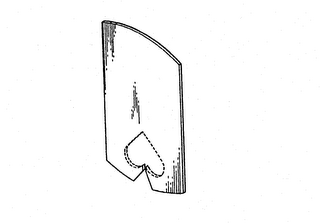
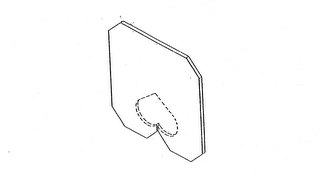
In 2010, the Court of Appeal of the Hague invalidated Kwik Lok’s European Community Trade Dress Registration No. 55848429 as functional and held that Kwik Lok didn’t have valid patent, trademark, or trade dress claims against Schutte.   Kwik Lok Corporation v. Schutte Bagclosures, BV, Court of The Hague, March 30, 2010, case no. 105 007 842/01 (Dutchopinion) (short summary which Google can sort of translate).  Kwik Lok has two incontestable US registered marks. One is for “a thin, rectangular plastic bag closure with two arched edges along the top and bottom, parallel edges on the sides, and a beveled triangular slot opening at the center of one of the arches”; the second is for “a thin, square plastic bag closure with beveled portions on each corner, and a beveled triangular slot opening at the center of one side.” Kwik Lok also claimed unregistered trade dress rights in similarly configured products.
 

Kwik Lok closers

One of Kwik Lok’s registered designs

Another registered Kwik Lok design

Schutte Inc.’s products are generally square or rectangular, with four rounded corners with four small jagged protrusions near each rounded corner, a “v” shaped opening along one side, and a concave side opposite the side with the opening.  In 2012, Schutte shipped samples of over 100,000 Clipps G–Series bag closure products for use in New York. As of December 2013, Schutte Inc. hadn’t designed, manufactured, or offered any products for sale in the United States. It was promoting the Clipps G–Series on the Schutte website, clippsamerica.com.  The court found that there was an actual controversy over the G-series, but not over other models.
 

Schutte Clipps G Series

Schutte argued that Kwik Lok’s rights in one of the registrations was invalid for failure to identify Kwik Lok as the source, genericity, and abandonment. Incontestability was a barrier to some of this, and many of Schutte’s arguments seemed directed at Kwik Lok’s unregistered trade dress claims.  Schutte argued that Kwik Lok’s claims were so vague and overbroad that the trade dress was generic. But Kwik Lok produced evidence showing that its design was unique in the industry and that it went to great lengths to promote this design as its own, creating factual disputes precluding summary judgment.
 
Schutte argued that Kwik Lok abandoned the registration by using the mark in a generic way, advertising the functional benefits; again there was a factual dispute.  Finally, Schutte argued that Kwik Lok abandoned its trademark rights by engaging in uncontrolled or “naked” licensing by allowing third party distributors and consumers, such as bakeries, to print their own trademarks, prices, and other promotional messages on Kwik Lok’s bag closures. But naked licensing only causes abandonment if it causes a mark to lose its source significance.  Here, despite the third party labeling, “Kwik Lok’s product configurations still retain their significance to the relevant market of distributors,” at least to avoid summary judgment.
 
As for Kwik Lok’s unregistered trade dress, Kwik Lok produced evidence that it sold the Beveled Notched Square exclusively and successfully from 1996 to 2013 and spent millions of dollars on advertising and promoting its trade dress rights. (Someone has made art out of them.) A principal target of Kwik Lok’s extensive marketing and sales was a knowledgeable group of specialized wholesale buyers, who bought large quantities of bag closures and then marketed them to bakeries and grocers. Schutte didn’t produce evidence that this group didn’t recognize the design as indicating source, so again it couldn’t win summary judgment.
 
Nor could it win on likely confusion.  The court quoted decades-old precedent supporting the claim that “[w]hen the likelihood of confusion is in doubt, the question will be resolved in favor of the senior user.”  I seriously doubt this comports with the Supreme Court’s current understanding of the Lanham Act (see, e.g., KP Permanent), but regardless there wasn’t enough evidence in the record to warrant summary judgment.  Though there was no direct evidence of strength, Kwik Lok had shown that it invested a significant amount of resources into advertising and promotion, and that its sales success produced acquired distinctiveness in the relevant market. Plus, a reasonable factfinder could find that similarity favored Kwik Lok in the overall impression of the marks.  (Given the sophistication of the relevant consumers?)  The competition was direct, and actual confusion isn’t required and wouldn’t be expected given that Schutte was just starting to try to enter the market; the same for quality issues.
 
The court found that good faith weighed against Schutte, because Schutte “was well aware of Kwik Lok’s products and sought to compete directly against them by introducing a similar product.”  It quoted a Schutte memo: “Schutte has been in the market with ‘a copy’ of the Kwiklok closure. Smartly done, and just a little bit different from Kwiklok” The court found this “some evidence” of bad faith.
 
Although the high level of consumer sophistication favored Schutte, and one factor could be dispositive, Schutte failed to carry its burden on “three of the most important factors: strength, similarity, and proximity.”
 
Surely, you’d think, federal dilution must go?  Though Kwik Lok sold five to six billion of its bag closures per year, and spent millions of dollars in advertising, “sales and advertising numbers alone are generally insufficient to show that a product has become sufficiently famous to be protected by the TDRA.”  Niche fame won’t do.  Kwik Lok also appealed to “publication and circulation of product brochures and catalogs, attendance at industry trade shows, and advertisements in trade publications.”  (Note that all of these are at most evidence of niche fame, not general consuming public fame.)  Yet Schutte apparently conceded fame, and argued that any fame didn’t depend on the design’s distinctiveness.  But that raised at least an issue of fact on fame.
 
[I don’t get why Schutte didn’t argue fame more aggressively.  The theory of infringement directly contradicts the theory of fame: reasonable end consumers aren’t likely to think that these tags, many bearing other parties’ marks, are distinctive.  The secondary meaning and confusion is explicitly argued to exist in the distributor purchasers; these are also the only ones who could experience dilution.  But that’s niche fame.]
 

from Blogger http://tushnet.blogspot.com/2015/04/loked-and-loaded-are-bag-closures.html

Posted in Uncategorized | Tagged , | Leave a comment

Loked and loaded: are bag closures famous to the general consuming public?

Schutte Bagclosures Inc. v. Kwik Lok Corp., 48 F. Supp. 3d 675 (S.D.N.Y. 2014)
 
Kwik Lok makes clips to close bags in the US, and Schutte does so in Europe and is seeking to expand to the US.  Schutte sought a declaratory judgment of noninfringement of Kwik Lok’s product design trademarks, and Kwik Lok counterclaimed for infringement and dilution; the court here declines to dismiss the counterclaims as to the Schutte design that Schutte has made active steps to disseminating in the US.
 
In 2010, the Court of Appeal of the Hague invalidated Kwik Lok’s European Community Trade Dress Registration No. 55848429 as functional and held that Kwik Lok didn’t have valid patent, trademark, or trade dress claims against Schutte.   Kwik Lok Corporation v. Schutte Bagclosures, BV, Court of The Hague, March 30, 2010, case no. 105 007 842/01 (Dutchopinion) (short summary which Google can sort of translate).  Kwik Lok has two incontestable US registered marks. One is for “a thin, rectangular plastic bag closure with two arched edges along the top and bottom, parallel edges on the sides, and a beveled triangular slot opening at the center of one of the arches”; the second is for “a thin, square plastic bag closure with beveled portions on each corner, and a beveled triangular slot opening at the center of one side.” Kwik Lok also claimed unregistered trade dress rights in similarly configured products.
 

Kwik Lok closers

One of Kwik Lok’s registered designs

Another registered Kwik Lok design

Schutte Inc.’s products are generally square or rectangular, with four rounded corners with four small jagged protrusions near each rounded corner, a “v” shaped opening along one side, and a concave side opposite the side with the opening.  In 2012, Schutte shipped samples of over 100,000 Clipps G–Series bag closure products for use in New York. As of December 2013, Schutte Inc. hadn’t designed, manufactured, or offered any products for sale in the United States. It was promoting the Clipps G–Series on the Schutte website, clippsamerica.com.  The court found that there was an actual controversy over the G-series, but not over other models.
 

Schutte Clipps G Series

Schutte argued that Kwik Lok’s rights in one of the registrations was invalid for failure to identify Kwik Lok as the source, genericity, and abandonment. Incontestability was a barrier to some of this, and many of Schutte’s arguments seemed directed at Kwik Lok’s unregistered trade dress claims.  Schutte argued that Kwik Lok’s claims were so vague and overbroad that the trade dress was generic. But Kwik Lok produced evidence showing that its design was unique in the industry and that it went to great lengths to promote this design as its own, creating factual disputes precluding summary judgment.
 
Schutte argued that Kwik Lok abandoned the registration by using the mark in a generic way, advertising the functional benefits; again there was a factual dispute.  Finally, Schutte argued that Kwik Lok abandoned its trademark rights by engaging in uncontrolled or “naked” licensing by allowing third party distributors and consumers, such as bakeries, to print their own trademarks, prices, and other promotional messages on Kwik Lok’s bag closures. But naked licensing only causes abandonment if it causes a mark to lose its source significance.  Here, despite the third party labeling, “Kwik Lok’s product configurations still retain their significance to the relevant market of distributors,” at least to avoid summary judgment.
 
As for Kwik Lok’s unregistered trade dress, Kwik Lok produced evidence that it sold the Beveled Notched Square exclusively and successfully from 1996 to 2013 and spent millions of dollars on advertising and promoting its trade dress rights. (Someone has made art out of them.) A principal target of Kwik Lok’s extensive marketing and sales was a knowledgeable group of specialized wholesale buyers, who bought large quantities of bag closures and then marketed them to bakeries and grocers. Schutte didn’t produce evidence that this group didn’t recognize the design as indicating source, so again it couldn’t win summary judgment.
 
Nor could it win on likely confusion.  The court quoted decades-old precedent supporting the claim that “[w]hen the likelihood of confusion is in doubt, the question will be resolved in favor of the senior user.”  I seriously doubt this comports with the Supreme Court’s current understanding of the Lanham Act (see, e.g., KP Permanent), but regardless there wasn’t enough evidence in the record to warrant summary judgment.  Though there was no direct evidence of strength, Kwik Lok had shown that it invested a significant amount of resources into advertising and promotion, and that its sales success produced acquired distinctiveness in the relevant market. Plus, a reasonable factfinder could find that similarity favored Kwik Lok in the overall impression of the marks.  (Given the sophistication of the relevant consumers?)  The competition was direct, and actual confusion isn’t required and wouldn’t be expected given that Schutte was just starting to try to enter the market; the same for quality issues.
 
The court found that good faith weighed against Schutte, because Schutte “was well aware of Kwik Lok’s products and sought to compete directly against them by introducing a similar product.”  It quoted a Schutte memo: “Schutte has been in the market with ‘a copy’ of the Kwiklok closure. Smartly done, and just a little bit different from Kwiklok” The court found this “some evidence” of bad faith.
 
Although the high level of consumer sophistication favored Schutte, and one factor could be dispositive, Schutte failed to carry its burden on “three of the most important factors: strength, similarity, and proximity.”
 
Surely, you’d think, federal dilution must go?  Though Kwik Lok sold five to six billion of its bag closures per year, and spent millions of dollars in advertising, “sales and advertising numbers alone are generally insufficient to show that a product has become sufficiently famous to be protected by the TDRA.”  Niche fame won’t do.  Kwik Lok also appealed to “publication and circulation of product brochures and catalogs, attendance at industry trade shows, and advertisements in trade publications.”  (Note that all of these are at most evidence of niche fame, not general consuming public fame.)  Yet Schutte apparently conceded fame, and argued that any fame didn’t depend on the design’s distinctiveness.  But that raised at least an issue of fact on fame.
 
[I don’t get why Schutte didn’t argue fame more aggressively.  The theory of infringement directly contradicts the theory of fame: reasonable end consumers aren’t likely to think that these tags, many bearing other parties’ marks, are distinctive.  The secondary meaning and confusion is explicitly argued to exist in the distributor purchasers; these are also the only ones who could experience dilution.  But that’s niche fame.]
 
Posted in dilution, trademark | Leave a comment

Primary jurisdiction didn’t warrant dismissal of “natural” claims, 9th Cir. says

Astiana v. Hain Celestial Group, Inc., No. 12-17596 (9th Cir. Apr. 10, 2015)
 
As the court of appeals introduced the case:
 
A product labeled “all natural” or “pure natural” likely evokes images of ground herbs and earth extracts rather than chemicals such as “Polysorbate 20” or “Hydroxycitronellal.” This class action alleges that false or misleading product labels duped consumers seeking natural cosmetics into purchasing products that were chock-full of artificial and synthetic ingredients. Although the underlying question of what constitutes a “natural” cosmetic poses a fascinating question, it is not the one we answer. Instead, this appeal requires us to decide whether federal preemption or the primary jurisdiction doctrine prevents the district court from deciding when a “natural” label on cosmetic products is false or misleading.
 
It does not.  The district court erred in dismissing the case instead of staying it for potential agency action.  On remand, the district court was to consider whether post-ruling events made FDA proceedings unnecessary.
 
Hain labels various cosmetic products “All Natural,” “Pure Natural,” or “Pure, Natural & Organic.”  Plaintiffs filed the usual California and warranty claims. The court of appeals first analyzed Hain’s preemption argument.  The FDCA bars states from imposing new or additional labeling “requirements,” “but is silent with regards to states’ ability to provide remedies for violations of federal law.” Given the similarity between this situation and that in Medtronic, the court of appeals concluded, the FDCA doesn’t preempt state laws that allow consumers to sue cosmetics manufacturers that label or package their products in violation of federal standards. 
 
Astiana wasn’t asking Hain to modify or “enhance” any aspect of the labels required by federal law.  “Rather, she claims deception as a result of advertising statements that contradicted the true ingredients listed on the FDA-mandated label,” a claim consistent with the 9th Circuit’s ruling in Williams v. Gerber Prods. Co., 552 F.3d 934 (9th Cir. 2008). FDA regulations didn’t require Hain to label its products as “All Natural” or “Pure Natural,” so if Hain were required to remove those allegedly misleading statements, that wouldn’t violate the FDCA’s ban on “requirement[s]” that are “different from,” “in addition to,” or “not identical with” federal rules.
 
Hain noted that the FDA has never regulated “natural” on cosmetic labels. But that is not equivalent to “a conscious decision by the agency to permit any use of this term a manufacturer sees fit.” Under Hain’s logic, a manufacturer could make any claim—“wild, untruthful, or otherwise—about a product whose contents are not addressed by a specific regulation.” But the FDCA bars statements that are “false or misleading in any particular,” not just statements that are “prohibited by specific FDA regulations.” That reinforced the court of appeals’ conclusion that “natural” was not a labeling free-for-all.
 
Turning to primary jurisdiction, Astiana pointed to FDA correspondence during the pendency of the appeal.  After the court dismissed the claims, her counsel sent a letter to the FDA. The letter did not comply with the FDA’s requirements for initiating a citizen petition; it was never assigned a docket number, and the FDA’s response was neither posted to its website nor published in any other capacity.  The FDA responded by outlining the procedures for establishing the meaning of the term “natural,” absent a pre-existing definition. The letter noted that “making the requested determination without adequate public participation would not be in keeping with FDA’s commitment to the principles of openness and transparency.” It also said that “priority cosmetic public health and safety matters are currently fully occupying the resources that FDA has available for proceedings on cosmetics matters” and “proceedings to define ‘natural’ do not fit within [the agency’s] current health and safety priorities.”
 
The court of appeals refused to consider this correspondence on appeal. That was for the district court, which properly invoked primary jurisdiction but erred by dismissing the case rather than staying it.  The definition of “natural” for cosmetics was clearly an area within the FDA’s expertise and also not yet addressed by the agency. However, courts also must consider whether invoking primary jurisdiction would “needlessly delay the resolution of claims,” and efficiency is the key factor. “Common sense tells us that even when agency expertise would be helpful, a court should not invoke primary jurisdiction when the agency is aware of but has expressed no interest in the subject matter of the litigation.”
 
Obtaining advice from the FDA would help resolve the issue presented by Astiana. Though the FDA had been reluctant to define “natural,” the district court here wasn’t alone in thinking new guidance would be forthcoming; other courts had responded similarly to a flood of “natural” litigation.  In response, the FDA declined to address the issue, specifically with respect to labeling genetically engineered ingredients as “natural.”
 
When a court invokes primary jurisdiction to allow parties to pursue administrative remedies, dismissal without prejudice is normally appropriate.  But when further judicial proceedings are contemplated, jurisdiction should be retained by means of a stay, because the 9th Circuit hasn’t clearly adopted equitable tolling in such cases.  A stay is justified when there’s a possibility that the statute of limitations could run. On remand, the district court could consider whether events during the pendency of this appeal—including “Astiana’s informal letter, the FDA’s website publication of a Small Business Fact Sheet regarding cosmetics labeling, and the FDA’s response to the other courts”—affected the claims here or showed that another referral to the agency would be futile.
 
The court also reinstated Astiana’s quasi-contract claims for restitution.  California doesn’t have a standalone cause of action for “unjust enrichment,” which is synonymous with “restitution.”  But those concepts underpin a claim that a defendant has been unjustly conferred a benefit “through mistake, fraud, coercion, or request.” So, when a plaintiff alleges unjust enrichment, a court may construe the cause of action as a quasi-contract claim seeking restitution.

from Blogger http://tushnet.blogspot.com/2015/04/primary-jurisdiction-didnt-warrant.html

Posted in Uncategorized | Tagged , , , , | Leave a comment