43(a)(1)(A) claims are hard to win against a TM registrant

Zamfir v. CasperLabs, LLC, 2021 WL 1164985, No. 21cv474-GPC(AHG)
(S.D. Cal. Mar. 26, 2021)

Zamfir is a researcher in the field of cryptoeconomics and
distributed systems; he and Vitalik Buterin are allegedly the two lead
researchers of the proof-of-stake blockchain protocols known as Casper (name adopted
around 2015). Zamfir’s branch of this research, carried out in the US, became
known as “CBC Casper,” aka “Casper.”

CasperLabs was founded in October 2018 under that name. The
parties soon discussed collaborating on the research and development of a new
blockchain adopting a version of Plaintiff’s CBC Casper PoS protocol. Though
they entered into a limited agreement, Zamfir alleged that that soon after he
began working with CasperLabs, he became concerned that it was misappropriating
his name and leveraging his reputation to mislead investors. Their agreements
terminated in late 2019.

By August 2020, CasperLabs had begun referring to its
blockchain protocol and forthcoming token as “Casper.” According to CasperLabs,
Zamfir was well-aware of its intent to use the Casper name as early as June
2019. It filed an application to register CASPER as a trademark in connection
with blockchain technology; the registration issued in November 2020. Zamfir
alleged that CasperLabs had agreed to register the marks on his behalf and to
transfer the marks to him, but didn’t do so; CasperLabs denied any such agreement.
Zamfir alleged that the resulting confusion harmed his reputation, made it more
difficult to market the genuine products of his research, and gave the false
impression that his research is being financed by a relationship with CasperLabs,
which made it harder for him to secure sponsorship. CasperLabs, meanwhile, alleged
that “Casper” and “CasperLabs” had become widely recognized on social media to
refer to its network.

Without assessing whether Zamfir owned any valid interest, reasoning
that ownership of a valid mark is not a requirement under §43(a), the court jumped
straight to the Sleekcraft factors. [This is the worst of both worlds
from an unfair competition perspective: plaintiffs neither have to show that they
have a mark nor are they bound by the extra proof requirements that used to
apply for unfair competition claims, like intent and real harm.]

(1) The marks were identical. (2) Though they didn’t compete,
the marks were both used in connection with blockchain tech and “the fact that
Defendant’s product purportedly built on the CBC Casper protocol confirms that
consumers may see the ‘products’—Plaintiff’s research and Defendant’s token and
network—as related.” (3) Actual confusion: Zamfir submitted evidence from an
online forum and a newspaper article “suggesting that some in the blockchain
community mistakenly believe he is associated with Defendant’s network and
token launch.” But some of that confusion might stem from the fact that he was
associated with it in the past.

(4) Strength: Casper is conceptually strong, but Zamfir didn’t
clearly show “either that he has used the mark in a commercial manner, or that the
mark is strongly associated with him among potential cryptocurrency consumers,
which may be broader than those who are familiar with the underlying
technology.”

(5) Intent: could go either way. Though it apparently chose Casper
to suggest association with the CBC Casper protocol, it used that name throughout
its working relationship with Zamfir without objection and “it is difficult for
the Court to conclude, based on the sparse record regarding the purported
agreement, that Defendant agreed to transfer the trademark to Plaintiff without
any expectation that it would retain any right to use the Casper name at all.”

So Zamfir didn’t show likely success on the merits.

Then and only then, somewhat puzzlingly, the court proceeded
to analyze whether Zamfir had a protectable interest; he didn’t need to use a
mark in US commerce to bring a §43(a) claim, following Belmora, but he
might not be able to prevail if CasperLabs had a valid registration. The
registration was prima facie evidence of the registrant’s right to use the
mark, and “a party using a mark that they are lawfully permitted to use cannot
make a false designation by using that mark in a permitted manner.” Thus, to
prevail, Zamfir would need to rebut the presumptions created by the
registration, and he didn’t.

At the very least, the existence of the registration “would
factor into the likelihood of confusion” by “weaken[ing] the commercial
strength of the mark in connection to Plaintiff” [what] and complicating the
question of intent.

“Ultimately, given the Lanham Act’s intent to provide some
modest protections to holders of registered trademarks, the Court finds that
Plaintiff would only be likely to succeed on his false designation of origin
claim were he to overcome Defendant’s prima facie evidence that it has the
right to use the mark, whether by showing that the mark was fraudulently
registered, that Plaintiff is the owner of the mark, or otherwise demonstrating
the trademark registration is invalid or that Defendant lacks the right to use
the trademark.”

Without likely success on the merits, Zamfir wasn’t entitled
to a presumption of irreparable harm, and he couldn’t show such harm using the
sliding scale approach that applies when there are “serious questions” on the
merits (to which Herb Reed still applies even after the TMA). “A
plaintiff must present case-specific evidence of irreparable harm, rather than
relying on generic factors that are present whenever a trademark is infringed.”
Comments indicating confusion did little to “demonstrate any actual or
threatened damage to his business reputation, difficulty marketing the products
of his research, or difficulty securing sponsoring for his research.” Given the
duration of the use, he should have been able to come up with some extrinsic
evidence if it existed. “Although the question is close [why?], the Court is
doubtful that Plaintiff’s declaration alone, generally alluding to potential
reputational effects, suffices to establish that he will experience irreparable
harm absent an injunction.” Plus, he delayed seeking an injunction until less
than a week before the network launch and its token sale were set to begin, even
though he knew about it for at least seven months.

from Blogger https://ift.tt/2UBXere

Posted in Uncategorized | Tagged | Leave a comment

D’s own ads prove materiality of difference between Fraser and balsam firs

Evergreen East Cooperative v. Bottomley Evergreens &
Farms, Inc., 2021 WL 1163799, No. 20-cv-184 (AJN) (S.D.N.Y. Mar. 26, 2021)

“Christmas tree distributor Evergreen East Cooperative claims
that its rival Bottomley Evergreens & Farms sold mislabeled trees through
retail partners including Home Depot and Whole Foods.” Defendants moved to
dismiss, relevantly arguing that consumers would not care whether their trees
were the more desirable Fraser firs (as advertised) or cheaper, faster-drying, more-shedding
balsam firs (as they were in fact). Defendant Whole Foods wasn’t adequately
alleged to be liable, but the other claims survived.

Evergreen allegedly paid more for Fraser firs because of
their scarcity, and so was forced to market them to consumers for higher
prices. Bottomley allegedly imported thousands of balsam firs from Canada,
labeled them as Fraser firs, and sold them to consumers throughout the New York
area, undercutting Evergreen’s prices for genuine Fraser firs and making
consumers believe that its prices were unreasonable.

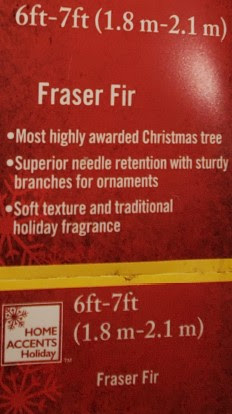
The labels at Home Depot used the words “Fraser Fir” printed
in large letters, followed by three bullet points: “Most highly awarded
Christmas tree”; “Superior needle retention with sturdy branches for
ornaments”; “Soft texture and traditional holiday fragrance.” Home Depot’s
in-store signage and advertising also identified the trees as Fraser firs. Evergreen
notified Home Depot of the problem, but it took no action for the rest of the
Christmas season. However, it didn’t allege that Whole Foods used misleading
labels or that it notified Whole Foods of the problem.

Materiality: “Accepting Evergreen’s allegations as true and
drawing all reasonable inferences in its favor, there are significant
differences between balsam and Fraser firs that affect their desirability to
consumers and drive the Fraser fir’s higher price…. Bottomley and Home Depot
offer no argument as to why shorter shelf life and inferior durability would
not influence the purchasing decisions of consumers.” Instead, they argued that
shoppers examine individual trees, so they’d pick the one they wanted
aesthetically. Even if that were appropriate on a motion to dismiss, “[a]s
between two trees that look the same, consumers might prefer (and pay more for)
one that will retain its needles longer.”

Plus, their own advertising also refuted their immateriality
argument.

The trees’ labels prominently
identify them as Fraser firs—twice on just the front of the label. The label
then lists qualities of Fraser firs as selling points to consumers. In
isolation, a statement like “superior needle retention” might amount to no more
than puffery. But the label does not present this claim as a vague boast about
the quality of the seller’s trees. Instead, it lists it as a bullet point
beneath the heading “Fraser Fir” along with other statements that appear to
describe that variety of tree, conveying the message that consumers should
select Fraser firs over other Christmas trees because of their particular
qualities. Puffery or not, the label reflects that consumers should—and do—care
about the difference between Fraser firs and balsam firs.

As for causation, this was “the classic Lanham Act
false-advertising claim in which one competitor directly injures another by
making false statements about his own goods or the competitor’s goods and thus
inducing customers to switch.” “This Court disagrees with Bottomley and Home
Depot that a plaintiff needs to plead an encyclopedic set of details about the
Christmas tree market, their inventory, and the characteristics of their trees to
plausibly allege causation under this well established theory.”

State claims: Was this consumer-oriented conduct or merely
private harm? § 349 doesn’t require harm to public safety. “Where the allegedly
deceptive communication is made directly to consumers, it is self-explanatory
that the conduct is ‘consumer-oriented,’ and thus no further showing on this
element is required.” Also, “consumers are harmed when they do not get what
they pay for.” Contrary district court holdings were “plainly inconsistent with
subsequent pronouncements of the New York Court of Appeals.”

from Blogger https://ift.tt/3xZapA8

Posted in Uncategorized | Tagged | Leave a comment

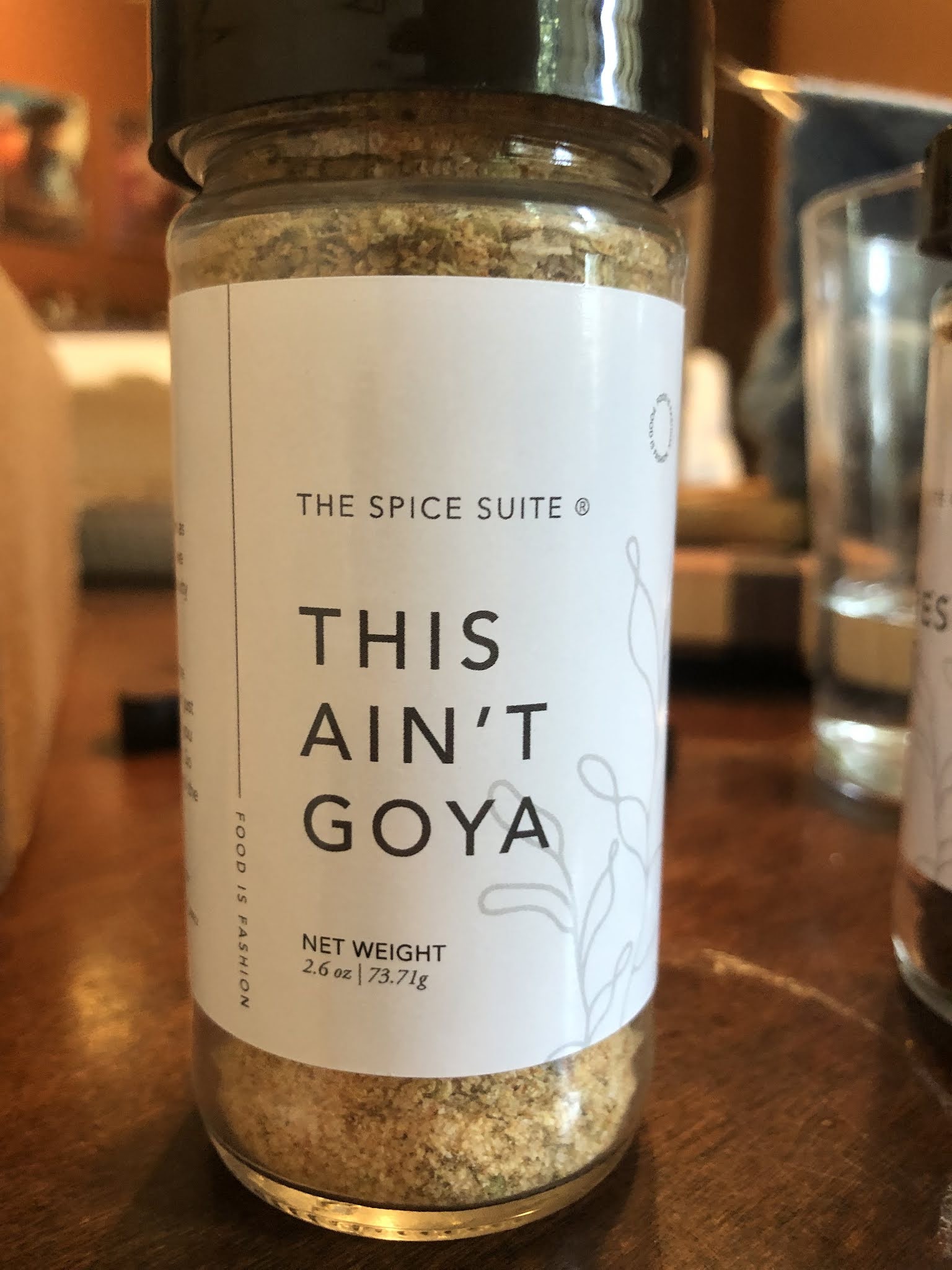
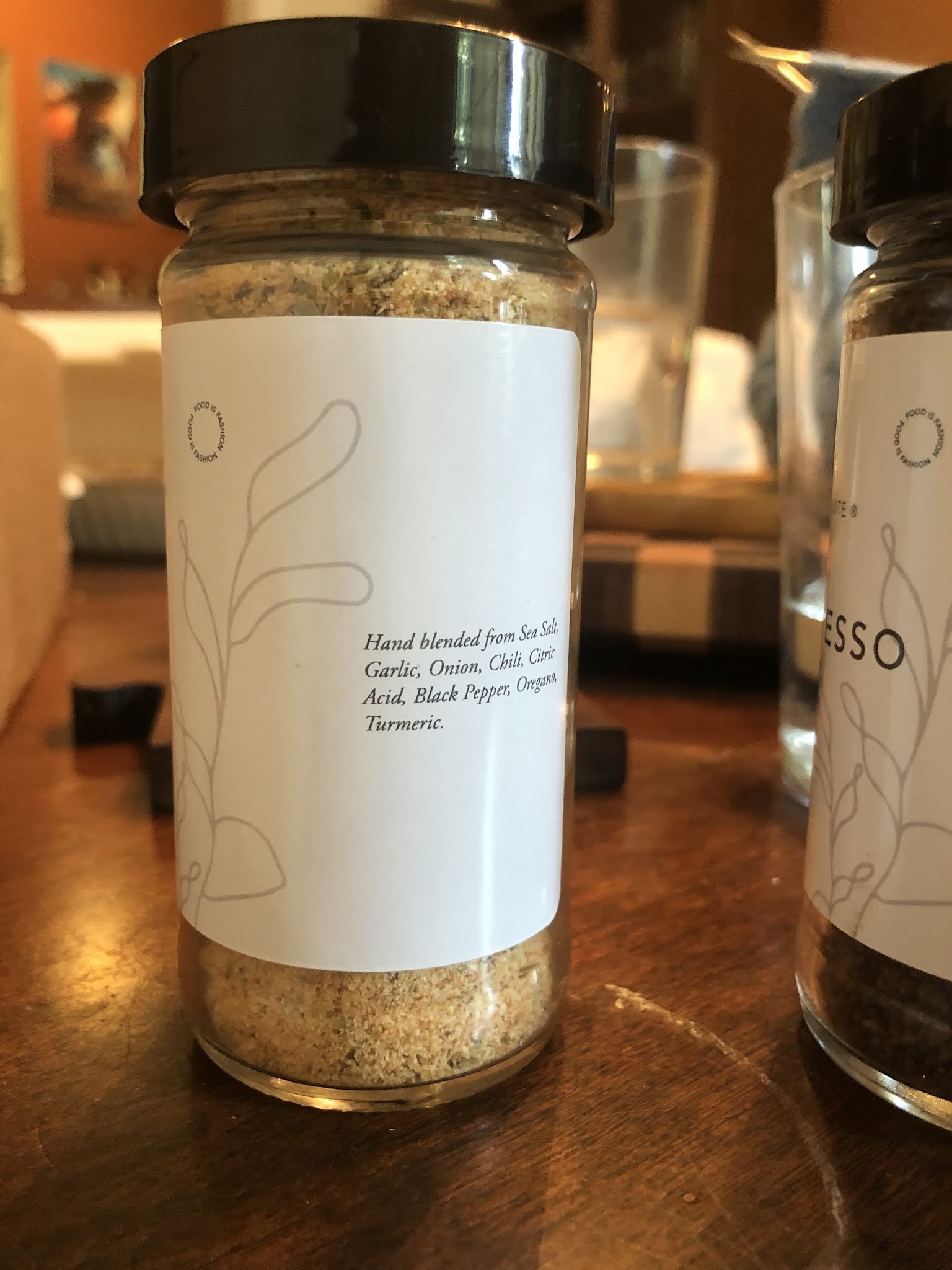
TM question of the day: This Ain’t Goya spice blend

 This Ain’t Goya spice blend.

Suppose the makers sought registration for this as a trademark for spice blends. Would prohibiting registration violate the First Amendment?

from Blogger https://ift.tt/2XEU0Er

Posted in Uncategorized | Tagged | Leave a comment

Overreaching and delay lead to defeat of TM owner’s claims

Sturgis Motorcycle Rally, Inc. v. Rushmore Photo &
Gifts, Inc., 2021 WL 1176242, No. CIV. 11-5052-JLV (D.S.D. Mar. 29, 2021)

This is part of a long-running trademark case, now over 10
years old. After a jury verdict for SMRI and a partial reversal thereof by the
court of appeals, the status is this: STURGIS and STURGIS MOTORCYCLE RALLY for
motorcycle rallies (etc.) were invalid; defendants didn’t infringe on TAKE THE
RIDE TO STURGIS mark; STURGIS BIKE WEEK and BLACK HILLS MOTOR CLASSIC STURGIS
RALLY & RACES BLACK HILLS S.D. were valid and infringed, but the latter
wasn’t counterfeited; SMRI’s dilution victory was vacated, but not its victories
on deceptive trade practices, ACPA, false advertising, and unfair competition.

Here the court considers acquiescence and laches. For
example (the details vary a little depending on defendant, but you get the
picture): The STURGIS BIKE WEEK registration dates to 1997; defendants’ “Sturgis
Motor Classic” came from 1997-98. SMRI’s predecessor in interest did business
with the relevant defendants from at least 1999-2009; resold products bearing “Sturgis
Motor Classic” in its own retail store; and never complained about the use of
“Sturgis” or “Sturgis Motor Classic” on rally products. During this period,
defendants continued to grow and develop their inventory and marketed “Sturgis”
and “Sturgis Motor Classic” rally products. SMRI ultimately sent one C&D in
August 2006, and filed suit in June 2011.

One defendant’s principal testified that it “specifically
tried very hard to differentiate” its products with a disclaimer expressly
disavowing any affiliation with SMRI and a separate color scheme on its tags,
which SMRI copied. After the complaint was filed, that defendant permitted its
state trademark applications and domain name registrations to lapse and
abandoned its federal trademark application for “Sturgis Motorcycle Classic.” It
also stopped using “Officially Licensed Sturgis,” “Licensed Sturgis,” and
“Authentic Sturgis.”  

Acquiescence requires (1) knowledge by SMRI or its
predecessors in interest of the defendant’s use; (2) implied or express consent
to that use; (3) defendant’s change in position in reliance on that conduct.

Since the jury made no relevant findings of fact, the court
was free to make findings. It doesn’t start well for SMRI:

While the 2006 cease and desist
letter’s statement [that SMRI had a registered mark] was true as it relates to
the Composite Design Mark [the long one above + design], SMRI’s suggestion that
registration for STURGIS had been approved was not true and was deceptive. … The
Composite Design Mark registration specifically acknowledged that it made “no
claim … to the exclusive right to use ‘MOTOR CLASSIC’ or ‘RALLY & RACES
BLACK HILLS S.D.’ apart from the mark as shown.”

Also:

It is incomprehensible that for
over 10 years no one at [the predecessor] would have knowledge of these rally
products being purchased at wholesale from [defendant] RP&G and then being
resold at retail in its own store. By purchasing “Sturgis” and “Sturgis Motor
Classic” items from RP&G and then reselling them through its own retail
locations, [the predecessor] expressly or impliedly represented that it would
not assert a right or exclusive claim to use those terms.

Even after the first transfer, to the Sturgis Chamber of
Commerce, the Chamber did the same thing back into the 1990s, buying these
products and reselling them at its own store. There was acquiescence, and the
defendants changed their position in reliance on it by continuing to build
their Sturgis product line, which they likely wouldn’t have done had SMRI or
its predecessors acted earlier, as they showed by scaling back various
activities when the suit began.

Laches: This is about passive consent, not active consent as
with acquiescence. It requires inexcusable delay and prejudice. The laches
defense is not available “when the defendant knew that the plaintiff objected
to the use of the mark,” as “[a]ny acts after receiving a cease and desist
letter are at the defendant’s own risk.” Also: “When a defendant has invested
generally in an industry, and not a particular product, the likelihood of
prejudicial reliance decreases in proportion to the particular product’s role
in the business.”

This is basically the same; SMRI didn’t explain why it
waited 4 years and 10 months to sue. Even after the C&D, the RP&G defendants
continued to sell “Sturgis” rally products in the good-faith belief that the
term “Sturgis” was generic, a belief validated by the Eighth Circuit’s
endorsement. It expanded its employee workforce and invested millions of
dollars in its Sturgis-related rally products. Thus, defendants also established
laches.

Laches also applied to the state law deceptive trade
practices claim.

What about unclean hands? The RP&G defendants “willfully
and intentionally infringed the Composite Design mark” on a single product, a
shot glass. But, “the differences between the glass’s design and the [SMRI]
mark are so obvious,” the Eighth Circuit ruled “the jury did not have any basis
in the record [to support a] finding [the shot glass was] a counterfeit.” When
the RP&G Defendants used “Sturgis” and “STURGIS MOTOR CLASSIC,” they did so
“in the face of [SMRI’s] disputed title” and they did so in good faith. They
used their own labels and tags to differentiate their products, and disclaimed
affiliation with SMRI. Thus, “[t]he record … fails to reveal the subjective
and knowing bad faith necessary to foreclose the equitable defenses.” Even if
they did have unclean hands, it wasn’t particularly egregious and the court
would decline to apply the doctrine.

Wal-Mart, which carried RP&G products, was also not a
willful infringer. The first year it carried them, a manager observed the
RP&G Defendants’ tags disclaiming any relationship with SMRI but
proclaiming the products to be “official Sturgis Motorcycle Rally products.” The
manager called SMRI’s licensing agent and learned the RP&G products were
not officially licensed by SMRI. “While this may have been bad business
judgment on the part of Wal-Mart, the conduct does not rise to the level of ‘subjective
… bad faith,’ or ‘particularly egregious conduct.”

What about SMRI’s own conduct? In 2001, an examiner rejected
the Sturgis Chamber’s attempt to register STURGIS as primarily geographically
descriptive. The Chamber fought back, and there were oppositions by other local
motorcycle/rally-related users. SMRI, as successor, eventually bought two major
opponents off. “In exchange for Sturgis Motorcycle’s withdrawal of its
opposition to the Chamber’s original TM application, SMRI agreed Sturgis
Motorcycle could use the STURGIS mark without any licensing agreement with
either the Chamber or SMRI. Another company owner agreed to dismiss his company’s
opposition and become the exclusive licensee of SMRI’s trademarks, while he
became a member of SMRI’s board of directors.  Its application was then successful.

The jury, applying a clear and convincing evidence standard,
concluded SMRI had not obtained the STURGIS trademark registration
fraudulently. But the Eighth Circuit said:

The only way that [the Chamber’s
declarant] Martin was able to assert that the Chamber had substantially
exclusively used the word “Sturgis” for decades to promote the rally was by
denying that virtually anyone else promoted it when they independently used the
word to sell their own rally-related goods and services…. Although it was
patently unreasonable for Martin to think that only Chamber-approved uses of
the mark counted as rally-related uses, it was this logic that enabled him to
tell the Trademark Office that the word “Sturgis” had become distinctive
through the Chamber’s substantially exclusive use of it in connection with the
marketing and promotion of the rally.

Martin’s logic was so incoherent
and self-serving that no reasonable jury could accept it…. The fact that
non-Chamber-affiliated producers were using the word [“Sturgis”] on their
rally-related products was directly relevant to whether the Chamber was its
substantially exclusive user. Martin, however, ignored those third-party uses
since he believed that only the Chamber actually promoted the rally. But he had
no right to declare that by fiat…. It is irrelevant to our conclusion here
that the jury also found that Martin did not “knowingly” lie in his affidavit:
A person can be indisputably, but sincerely, wrong.

Despite the Eighth Circuit’s holding that the STURGIS mark
was invalid, “SMRI continues to irrationally assert its STURGIS marks are valid,”
including in PTO proceedings. The trial court’s cancellation order was not an
interlocutory decision, as SMRI told the PTO it was. Nonetheless, through the
August 2020 rally and beyond, SMRI continued to hold itself out as the owner of
“Sturgis®,” “Sturgis® Motorcycle Rally™,” and “Sturgis Rally & Races™.” It
continued to sell STURGIS® products. “SMRI’s website intimidates or at least
impliedly intimidates Sturgis Rally venders to ‘Apply to Become a Sturgis®
Licensee.” This was a continuing “calculated attempt to confuse … the public
about the STURGIS Registrations.” Courts don’t like defiance! “[T]hose three
marks were invalided by the Eighth Circuit in 2018. The public has an interest
in respect for court orders and a ‘right not to be deceived or confused’ by
SMRI’s misrepresentations about its marks.”

SMRI had unclean hands. It was thus barred from equitable
relief for its trademark infringement, false advertising, and state deceptive
trade practices claims.

Separately, the court considered whether various other
defendants could assert acquiescence and laches, and found that they could. Money
judgments against them were vacated.

from Blogger https://ift.tt/2W7ErET

Posted in Uncategorized | Tagged , , | Leave a comment

industry group’s safety/risk/legality claims were plausibly false or misleading

Pharmacychecker.Com, LLC v. National Ass’n of Boards of
Pharmacy, 2021 WL 1199363, — F. Supp. 3d –, No. 19-CV-7577 (KMK) (S.D.N.Y. Mar.
30, 2021)

Plaintiff “offers an accreditation program for pharmacies and
provides drug price comparison information.” Unlike its competitors, it does
this for pharmacies worldwide and US online pharmacies. It does not itself sell
or import prescription drugs, but personal imports may sometimes be permitted. It
 alleged that defendants unlawfully
conspired to restrain trade in violation of the Sherman Act and that NABP engaged
in false advertising in violation of the Lanham Act.

NABP is an association of state boards of pharmacy and
competes with plaintiff in the pharmacy accreditation market through its
Verified Internet Pharmacy Practice Sites (VIPPS) program, its “.pharmacy”
Verified Websites program, and its Internet Drug Outlet Identification Program.
The other defendants allegedly competed in various ways and coordinated to shut
plaintiff out of the market, including by getting Bing to show users “a red
caution shield and a warning box when clicking on search results for pages from
Plaintiff’s website and blog, causing Plaintiff to lose 76% of its web traffic
from Bing.” I will not address the antitrust claims.

Lanham Act claims against NABP:  “NABP’s website claims that sites on its Not
Recommended List are unsafe and illegal, including Plaintiff’s website and
blog.” This is allegedly false or misleading.

Safety and risk statements: NABP says (1) that its Not
Recommended Sites list “includes websites that ‘are known to be unsafe’ or that
‘may: Dispense prescription medicine without a prescription; Dispense foreign
or unapproved medicine; or Refer/link patients to sites that facilitate the
dispensing of prescription medications in violation of state or federal law or
NABP standards.’ ” (2) “[o]rdering drugs from these websites put you and your
family at risk.” (3) “[t]he following sites are all known to be unsafe.” (4)
“[u]sing websites on the NRL to purchase drugs may put you or your loved ones
at risk.”

Though courts are divided on whether safety/risk statements
are opinion, “serious” safety concerns may be more than opinion if they are “expressing
an objective risk of serious consequences that fairly implies a basis for that
statement.” So here: these statements “appear to have a factual basis” by
saying, e.g., that the sites on the NRL are “known to be unsafe.” Plaintiff also
plausibly alleged misleadingness.

Illegality: The relevant statements were (1) “ ‘[a]void
[t]hese [w]ebsites’ [on the Not Recommended Sites list] because they ‘appear to
be out of compliance with state and federal laws or NABP patient safety and
pharmacy practice standards.’ ” (2) “websites on the list … are ‘acting
illegally or do not follow best practices.’ ” “Since both statements are
disjunctive, if one element of each statement is true, they cannot be literally
false.” However, plaintiff didn’t allege that the statements were literally
false as to best practices for one of its sites (PharmacyChecker.com). But it
did plausibly allege that “NABP’s statements about PharmacyCheckerBlog.com are
literally false, because it is a policy advocacy blog that does not even
arguably meet any criteria that NABP lists on the Not Recommended Sites list.” Conflating
plaintiff with illegal sites was plausibly misleading, especially as NABP
allegedly earlier said of plaintiff: “clearly they serve a purpose, and they
help consumers, and we serve a different purpose, or maybe just slightly
different.” This inconsistency justified a plausible inference of deliberate
deception. Indeed, it was plausible that this was egregious conduct, since “the
record does not suggest that such deception is common in the industry.”

Was this sufficiently alleged to be commercial speech? Yes. First,
NABP’s statements were plausibly ads, in that they included “Buy safely” with a
link to a list of NABP affiliates. Second, they therefore referred to specific
products. Third, plaintiff alleged that competition with it in the market for
pharmacy accreditation provided an economic motivation for NABP’s speech.
Plaintiff was not required to allege that NABP’s speech led to a specific
transaction.

from Blogger https://ift.tt/3yXPuyJ

Posted in Uncategorized | Tagged , | Leave a comment

Vegan butter wins again

Miyoko’s Kitchen v. Ross, No. 20-cv-00893-RS (N.D. Cal. Aug.
10, 2021)

Preliminary
injunction discussed here;
now it’s summary judgment time. The state is
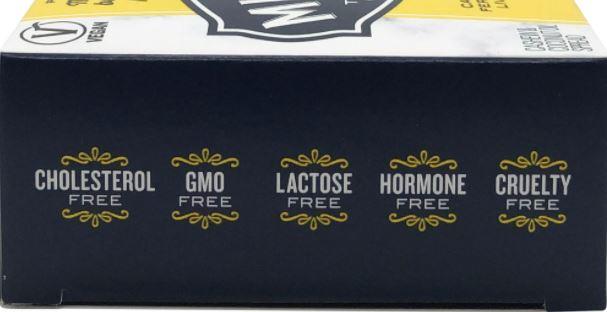
allowed to regulate “hormone free” on Miyoko’s “vegan butter,” but Miyoko’s is
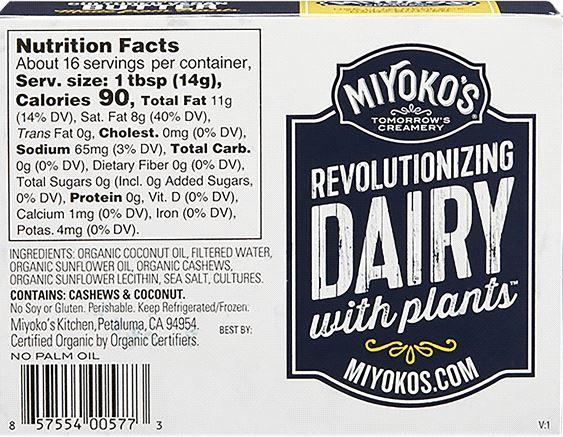
allowed to use the words/phrases “butter,” “lactose free,” “cruelty free,” and
“revolutionizing dairy with plants.” The state’s initial attempt to regulate
Miyoko’s website (which had images of cows), not just its label, was concededly
beyond its statutory authority and now that part of the case is moot.

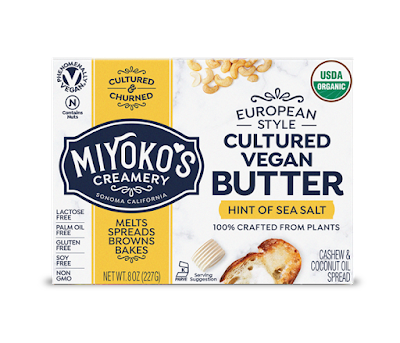
front of European Style Cultured Vegan Butter from Miyoko’s Creamery

side: the Hormone Free claim must go

back: “revolutionizing dairy with plants”

The key piece of evidence was a 2018 study by Silke Feltz
and Adam Feltz, “Consumer Accuracy at Identifying Plant-based and Dairy-based
Milk Items.” It didn’t involve “vegan butter,” but studied what happened when
producers combined dairy signifiers (e.g., “cheese” and “milk”) with dairy-disclaiming
language (e.g., “dairy free”). It indicates, in relevant part, that the public
“accurately identifie[s] the source of animal-based milk products 84% of the
time, plant-based milk-products 88% of the time, animal-based cheese products
81% of the time, and plant-based cheese products 74% of the time.”

This study could not justify the “heavy” burden imposed by Central
Hudson
on the state’s attempt to bar the use of these terms (except for “hormone
free”).

Hormone free: Miyoko’s “vegan butter” product contains
naturally occurring plant hormones;

“hormone free” is thus irrefutably false.

This was the state’s only victory.

It’s true that federal dairy and fat-content requirements
for “butter” exclude Miyoko’s “vegan butter.” But Central Hudson doesn’t
protect “only what the government leaves undefined.” Even the fact that this
definition had been unchallenged for 90 years wasn’t important; the court didn’t
agree that it was therefore “especially reflective of what consumers understand
‘butter’ to mean.” Indeed, the court thought that it defied “common sense” to
think that consumers’ understanding of “butter” had been shaped by 90 years of
seeing the term on its own applied only to dairy products. The state was required
to provide “more faithful indicators of present-day linguistic norms,” and it
didn’t.

The Feltz study didn’t help either. True, a confusion rate
of 26% for plant-based cheese products was “solid evidence” that using a dairy
product name/dairy-associated statements on a dairy-alternative product could be
confusing. But 19% were also confused by animal-based cheeses. This modest
difference didn’t suffice to make “vegan butter” inherently misleading.

Footnote of interest to TM folks: The state argued that,
because “the Lanham Act is constitutional,” and because “a handful” of federal
trademark plaintiffs have secured injunctions with “survey results where 15% of
customers” expressed confusion, the Feltz study should be given strong
pro-state weight. But those cases provided no justification for assigning “strong
First Amendment significance” to the Feltz’s study’s 26% result (especially
given that a 15% threshold would “bode ill for ‘milk’ and ‘cheese’ when used to
market dairy products”). [I do note that the concept of “net” confusion might
help everyone here. Also: the day is coming when courts in TM cases will note
that they have not really done Central Hudson balancing like this, especially
when they are dealing with low but nonzero net confusion results.]

Nor did the state show that is regulation served a
substantial interest in avoiding customer confusion. And having a “consistent
scheme” for the regulation of food labeling wasn’t enough of an interest, at
least at this level of generality. “[T]he First Amendment demands proof that
restricting Miyoko’s commercial speech will promote the State’s asserted
interest.” Result: Sure, you can have standards of identity for food … as long
as no one in the industry challenges them.

from Blogger https://ift.tt/3yXnivN

Posted in Uncategorized | Tagged , , | Leave a comment

malt “cocktails” with no wine or spirits were plausibly misleading

Cooper v. Anheuser-Busch, LLC, 2021 WL 3501203, No. 20-CV-7451
(KMK) (S.D.N.Y. Aug. 9, 2021)

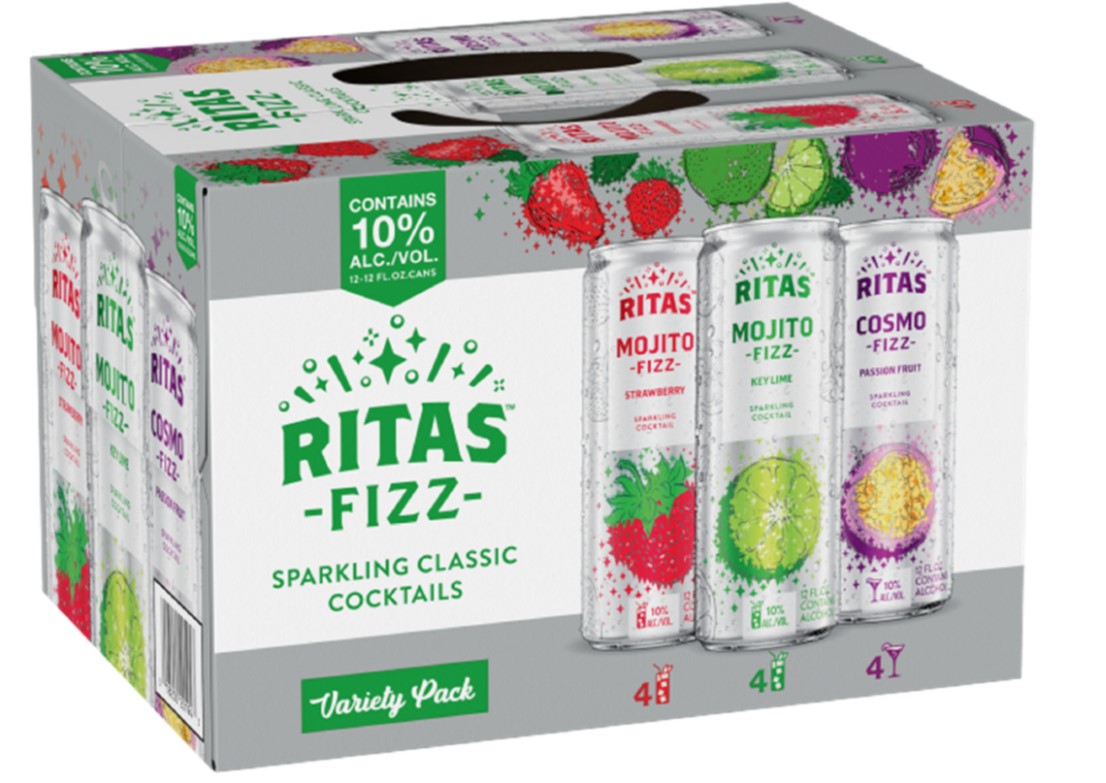
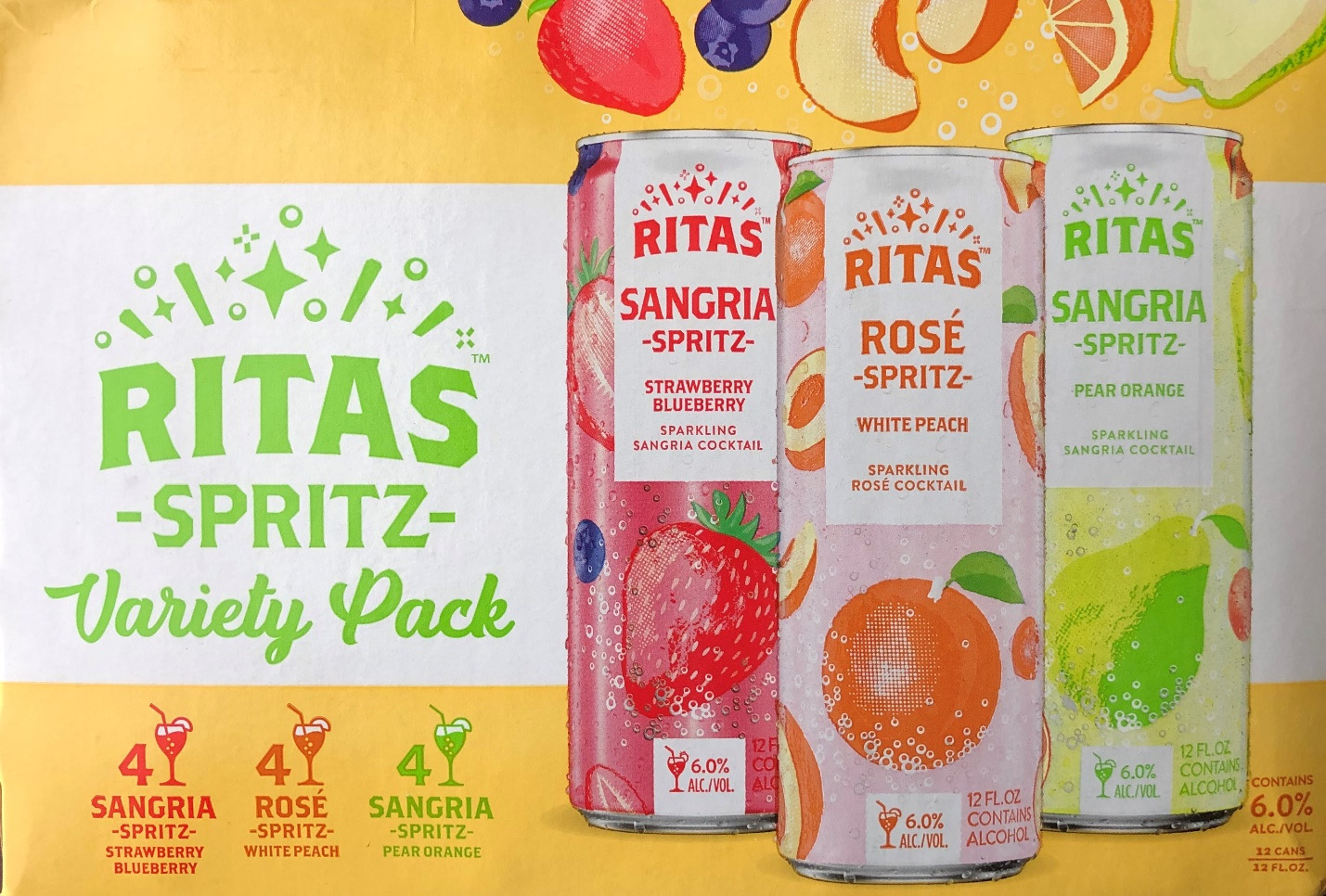
Plaintiffs alleged that the labels on the “Ritas” line of
beverages (Lime-A-Rita Sparkling Margaritas, Sangria Spritz Sparkling Sangria
Cocktail and Rosé Spritz Sparkling Rosé Cocktail, and Mojito Fizz Sparkling
Cocktail) were deceptive and misleading, generating claims for (1) violations
of §§ 349 and 350 of the New York General Business Law, (2) breach of express
warranty, (3) common law fraud, and (4) unjust enrichment. The court partially
granted and denied the motion to dismiss.

The Margarita Products allegedly prominently display
“LIME-A-RITA” and “SPARKLING MARGARITA,” with an image of a margarita served
with a salted rim and lime wedge in the fornt, but do not contain tequila;
plaintiffs allege that a reasonable consumer expects tequila in a margarita. The
fact that the products are malt beverages flavored to resemble a margarita are
only disclosed in “a small font statement” on the bottom panel of the
packaging. The allegations for the other products are similar. For example,
plaintiffs alleged that the term “Spritz” is “well known as a wine-based
cocktail.” The Mojito Products say “SPARKLING COCKTAIL,” and also have, e.g., small
images of Collins cocktail glasses and a martini glass next to a number
indicating how many cans of each flavor come in the package. (I have to admit,
as a cocktail fan, I’m offended.)

“sparkling margarita”

“sparkling classic cocktails” (mojito, cosmo)

“Spritz”: sangria, rosé

The plaintiffs also alleged that the misleadingness was enhanced
by the market context. Other companies allegedly sell canned beverages with
labeling such as “SPARKLING MARGARITA” (Jose Cuervo), “CLASSIC Margarita”
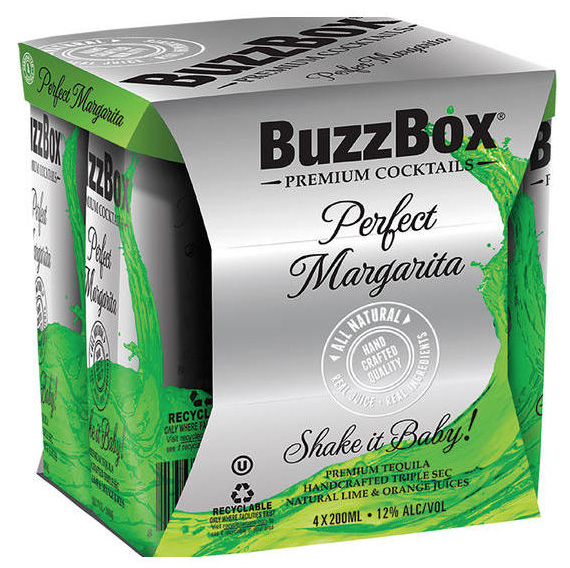
(Salvador’s), or “Perfect Margarita” (BuzzBox), but they do have tequila.
So too for canned mojitos, canned sangria, and canned rosé.

An actual canned margarita

The misleadingness arguments were not “patently implausible”
or “unrealistic.” “To the contrary, Plaintiffs have cogently explained how
reasonable consumers might be misled into thinking that the Products were canned
cocktails, instead of ‘Flavored Malt Beverage[s].’ Such a mistake is not hard
to imagine.” The dictionary agrees that a cocktail is a “usually iced drink of
wine or distilled liquor mixed with flavoring ingredients,” a “margarita” is as
“a cocktail consisting of tequila, lime or lemon juice, and an orange-flavored
liqueur,” “rosé” is as a type of wine, “sangria” is a wine-based “punch,” and a
“mojito” is a cocktail containing rum. It was “more than plausible” that a
reasonable consumer viewing a package labeled “SPARKLING MARGARITA” would
assume the beverage inside contained tequila, and so on. The imagery on the
packages did little to dispel misconceptions and, if anything, would reinforce
the impression of liquor/wine content.

Defendant argued that consumers would understand these merely
as “flavor designators.” That didn’t work at this stage.

Alleged misrepresentations of quantitative aspects may be
more easily dispelled by disclaimers than with qualitative characteristics.
What about the “truffle oil” case? Well, that was nonprecedential, and also in
the special context of “the most expensive food in the world.” Although the
ingredient list was a factor, it wasn’t dispositive, and binding Second Circuit
precedent says “[r]easonable consumers should not be expected to look beyond
misleading representations on the front of [a] box to discover the truth from
the ingredient list in small print on the side of the box.” Nor are the recent
vanilla cases similar, despite defendant’s argument that these too are merely
flavors with non-liquor/wine sources. Fairly construed, plaintiffs alleged that
the whole beverage “purports to be something—a ‘margarita’—which it is not,”
etc. Margaritas and mojitos can be distinguished from vanilla, “which generally
serves as a flavoring agent in other products, as opposed to a discrete item
one might order in a bar or restaurant.”
Defendants argued that context made deception implausible, including (1)
federal regulations, (2) the “full context” of the packaging, (3) the setting
in which plaintiffs purchased them, and (4) the labels of the comparator
products.

Defendants argued that federal regulations allowed it to use
“a cocktail name as a brand name or fanciful name.” But the regulations
prohibit a malt beverage label from containing “[a]ny statement, design,
device, or representation that tends to create a false or misleading impression
that the malt beverage contains distilled spirits or is a distilled spirits
product.” They don’t ban “[t]he use of a cocktail name as a brand name or
fanciful name of a malt beverage, provided that the overall label does not
present a misleading impression about the identity of the product.” Thus,
plaintiffs’ theory was fully consistent with federal regulations. The target of
this Action is not Defendant’s use of “a cocktail name as a brand name or
fanciful name.”

What about the full context of the packaging?  References to (1) “Ritas,” (2) “ ‘sparkling’
drinks,” and (3) a “wide variety of flavors in both words and images” did not
make it “obvious” that these were malt beverage. Anheuser-Busch suggested that
because it was “synonymous with beer,” reasonable consumers would conclude that
there was no wine or liquor in the products. [Hmm, I wonder if it wants to be
bound by that argument at the TTAB?] First, the court wasn’t about to accept
that claim as fact at this stage. Second, “Anheuser-Busch” or “A-B” didn’t
appear in the images in the complaint, so how would consumers know? Third, “Ritas”
and the other flavors/images in the packages wouldn’t obviously mean “no liquor/wine.”

What about the fact that NY doesn’t allow sales of wine and
liquor in convenience and drug stores like those in which plaintiffs purchased
the products? Although “reasonable consumer[s] do[ ] not lack common sense,” at
this stage, the court wasn’t going to resolve questions regarding “the
background knowledge, experience[,] and understanding of reasonable consumers”
as a matter of law. What consumers know about alcohol regulations “cannot be
resolved without surveys, expert testimony, and other evidence of what is
happening in the real world…. A consumer’s mistaken assumption that she can
purchase a beverage containing wine or distilled liquor in a drug or
convenience store is not comparable to a consumer’s putative belief that an ‘Angus’
breakfast sandwich sold for under $5 at Dunkin Donuts is an actual, ‘intact’ steak,
or that a ‘mass produced, modestly-priced olive oil [is] made with ‘the most
expensive food in the world.’ ” Contextual discrepancy based on price is
different from contextual discrepancy based on state alcohol laws, “something
that may be far less obvious to the reasonable consumer.”

Comparator products “expressly state that they contain
spirits and wine.” Thus, defendant argued, reasonable consumers expect a
product that does have liquor/wine to state as much explicitly. Surprising me,
the court is most sympathetic to this argument, but it still can’t be resolved
on a motion to dismiss. (I would think that instead, the fact that there are
actual canned cocktails out there means that consumers are far less likely to
read through the full label to see that this “mojito” is not.)

And, of course, putting “flavored malt beverage” on the
bottom of the package isn’t enough at this stage. The court wasn’t persuaded
that “disclosures aren’t dispositive” only applies when there’s an express
claim about ingredients or a suggestion that a particular ingredient dominates;
there’s no coherent distinction between those situations and these ones.

Materiality: Under GBL §§ 349–50, a material
misrepresentation is one that is “likely to mislead a reasonable consumer
acting reasonably under the circumstances.” “In other words, the materiality
requirement is incorporated in the legal standard courts use when evaluating
whether plaintiffs have adequately pled the second element of a deceptive
labeling claim. It does not form some quasi-distinct element that plaintiffs
must separately satisfy.” Certainly the court couldn’t say that the type of
alcohol was immaterial to a reasonable consumer.

Injury: Plaintiffs alleged that, had they known the products
were merely flavored malt beverages that did not contain tequila, wine, or rum,
they would not have purchased the them, or would have paid considerably less
for them. Defendant argued that more should be required here, especially since
plaintiffs brought comparator brands into the complaint without disclosing
their prices. At this stage, the allegations of a price premium were enough.  “Although plaintiffs sometimes point to
comparators in support of a price premium claim, a plaintiff is not required to
do so in order to allege injury.”

The breach of express warranty claims failed for lack of
sufficient pre-suit notice, and unjust enrichment was duplicative.

Fraud claims failed because the allegations didn’t establish
a “strong inference” of fraudulent intent. “[S]imply alleging a defendant’s
self-interested desire to increase sales does not give rise to an inference of
fraudulent intent,” and the complaint didn’t allege “strong circumstantial
evidence of conscious misbehavior or recklessness,” though this was a closer
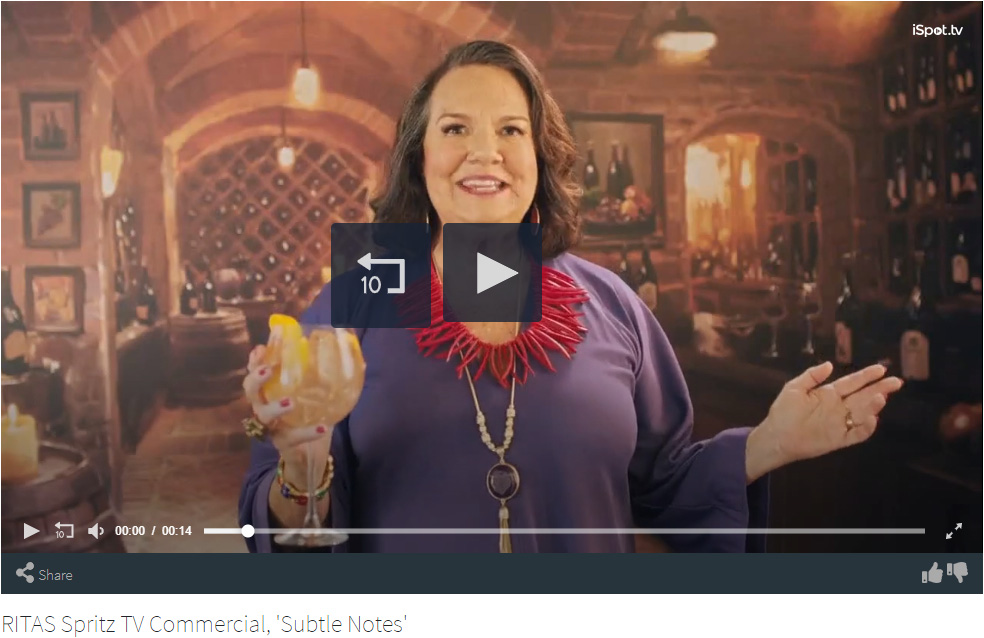
call. Plaintiffs alleged that defendant ran an ad in which the speaker appears
in front of a wine cellar, but that wasn’t enough. 

“The outcome might be
different, for example, if Plaintiffs had plausibly alleged that Defendant was
aware of consumers’ preferences for beverages with distilled liquor or wine,
and then deliberately marketed the Products as such in order to capitalize on
that market,” or that “Defendant was losing market share because of competition
from canned cocktail manufacturers, and then decided to market its malt
beverages deceptively as ‘cocktails’ to salvage its position in the market for
alcoholic beverages.” So maybe they’ll replead.

from Blogger https://ift.tt/2W43w3f

Posted in Uncategorized | Tagged , , | Leave a comment

Bank had no duty to disclose limits to PPP loan applicants

Elizabeth M. Byrnes, Inc. v. Fountainhead Commercial
Capital, LLC, 2021 WL 3501518, No. CV 20-04149 DDP (RAOx) (C.D. Cal. Aug. 6,
2021)

The CARES Act, among other things, established the Paycheck
Protection Program, a $349 billion loan program through which small businesses
could obtain forgivable loans backed by the Small Business Administration, but
administered by private lenders. As soon as it was enacted,

Fountainhead advertised that it
would “soon be tackling the loan inquiries lined up in our queue, providing
business owners with capital they need within days.” The next day, Plaintiff
submitted a PPP loan application to Fountainhead for a loan of less than
$25,000. Fountainhead responded with an e-mail stating that Plaintiff was “in
the queue,” and that “[h]elp is on the way,” and asking her to gather certain
documentation. The next day, Fountainhead told Plaintiff to expect “an
invitation to a secure portal for document upload within the next 48 business
hours.” Plaintiff did not receive any such invitation.

Fountainhead continued to promote
PPP loans, encouraging applications and stating that it “hope[d] to make these
loans within days.” Fountainhead executives made statements touting its
advantage over other, bank-based lenders, such as Fountainhead’s ability to
approve loans “within a few hours.” Fountainhead further represented that it
“require[d] no[ ] prior relationship, no special (money-making) criteria, and
[was] processing first come, first serve … no prioritization.”

Despite followup (and reassurance from Fountainhead) nothing
happened. Plaintiff alleged that, on the basis of its representations, it gathered
the requested documents, waited for the opportunity to upload them, refrained
from submitting a loan application to other lenders, and made other related
decisions regarding its small business.

Plaintiff alleged that Fountainhead was not even licensed to
engage in lending activities in California until April 21 and had not secured
any funding prior to that time, and therefore could not possibly have extended
loans “within days.” It also alleged that Fountainhead did prioritize favored
customers and higher-value loans that would yield higher fees to Fountainhead
than would relatively small loans, such as the one it sought. It sought to
represent a class bringing state law claims for fraudulent concealment, unfair
business practices, and false advertising.

The court granted the motion to dismiss.

There was no fraudulent concealment because Fountainhead
lacked any duty to disclose to the plaintiff.

A duty to disclose may arise in four circumstances: “(1)
when the defendant is in a fiduciary relationship with the plaintiff; (2) when
the defendant had exclusive knowledge of material facts not known to the
plaintiff; (3) when the defendant actively conceals a material fact from the
plaintiff; and (4) when the defendant makes partial representations but also
suppresses some material facts.” Although plaintiff alleged (2)-(4), all three
“presuppose the existence of some other relationship between the plaintiff and
defendant in which a duty to disclose can arise.”

The UCL and FAL claims were equitable, and under Sonner v.
Premier Nutrition Corp., 971 F.3d 834 (9th Cir. 2020), the plaintiff needed to
allege that it lacked an adequate remedy at law, which it did not allege.

from Blogger https://ift.tt/3gaPu6O

Posted in Uncategorized | Tagged , , , | Leave a comment

Models’ false endorsement claims fail for want of recognition, bad survey

Souza v. Exotic Island Enterprises, Inc., No. 18-CV-9448
(KMK), 2021 WL 3501162 (S.D.N.Y. Aug. 9, 2021)

Another in the burgeoning genre of models suing “adult”
clubs for using unauthorized images in online ads for the clubs. As this case
shows, the Second Circuit is not as favorable a jurisdiction for these claims
as some others, given the short ROP limitations period and the skepticism about
non-ROP claims. Lexmark has crept into §43(a)(1)(A) via false
endorsement; it will be interesting to see whether courts recognize that other
trademark claims are likewise subject to a proximate cause requirement by that
logic.

Facts in the light most favorable to the plaintiffs: Each of
the plaintiffs has a significant number of followers on various social media
platforms, ranging from greater than ten thousand to several million, and most
are “considered social media influencers.” “Because they rely on their
reputation to get work, Plaintiffs are selective about the jobs they take, and
exercise ‘complete control’ over the use of their images and likenesses,”
especially given the persistence of images online. Mansion runs a club where
nude or semi-nude women offer entertainment; “[p]romotions containing
Plaintiffs’ images were without Plaintiffs’ permission posted to Mansion’s
social media pages.” Plaintiffs sued for false advertising and false
endorsement under the Lanham Act, violation of their right to publicity,
deceptive trade practices under New York GBL Section 349, and defamation. 

The court was guided by Electra v. 59 Murray Enterprises,
Inc., 987 F.3d 233 (2d Cir. 2021), which considered all these claims except for
false advertising. Electra found that, even where models had transferred
all rights in the photos to a third party, they could still bring ROP claims:
the clubs didn’t claim to be beneficiaries of those agreements and the releases
didn’t constitute the necessary “written consent” for defendants’ uses, though “the
releases could provide a defense in an action against the releasees or those who
could assert lawful use by reason of assignment or license.” However, false
endorsement claims failed because they didn’t prove that they had the kind of
fame that meant that their appearance in an ad was an endorsement, as opposed
to an appearance by a model. There was no deceptive practices claim under
Section 349 because the conduct wasn’t consumer-oriented; this was “a private
dispute over a private injury visited on the individuals portrayed in the
photographs.” Defamation claims also failed: First, the ads didn’t
unambiguously indicate that the models would be appearing at the clubs and
might just indicate that they were in the ads, and second (and relatedly), plaintiffs
failed to show actual malice; at most, they failed to investigate whether
third-party contractors had the rights to the images, but that’s not actual
malice.

Given Electra, plaintiffs withdrew their GBL Section
349 and defamation claims.

False endorsement: Failed for similar reasons to the claims
in Electra. You can be really popular on social media without being
recognizable enough for the “strength” factor to favor likely confusion. Electra
quoted with approval a district court’s reasoning that “[t]he misappropriation
of a completely anonymous face could not form the basis for a false endorsement
claim, because consumers would not infer that an unknown model was ‘endorsing’
a product, as opposed to lending her image to a company for a fee.”

Plaintiffs didn’t show sufficient evidence of recognition.
Their affidavits that “[o]n any given day, regardless of where [they are] at,
[they are] recognized by complete strangers and [their] fans who follow [them]
on social media” were vague and conclusory. And their expert report was not good.
Martin Buncher’s putative testimony was based on a survey of 812 people who
were at least 21 years old living in the metropolitan area around Mansion, and
who had patronized a “Bikini Bar/Gentlemen’s Club/Strip Club” in the two years
prior to taking the survey. This survey showed that “almost half of the
respondents felt they recognized … Plaintiff[s’] images in the ads in some
manner having seen them prior to this research.” The court excluded this as
unreliable.

First, Buncher “used copies of the images annexed to the
Complaint with … [P]laintiffs’ names removed from the top, which resulted in
large parts of their faces and heads being removed.” The court found that “[s]urvey
respondents are highly unlikely to be able to accurately identify [plaintiffs]
based on photographs that do not show their face above their nose.” Yet, oddly,
his study “shows relatively uniform levels of recognition across the images of
all eight Plaintiffs, including those that show a Plaintiff’s face and those
that do not,” from 55-43% recognition. Perhaps this flaw was related to the
lack of a control group. Electra likewise rejected a Buncher survey and
his explanation that his survey was “a communications study, not a consumer
confusion study” as “insufficient to set aside the district court’s conclusion
that the Buncher Report was fatally flawed.

That the results bunch around 50%
recognition for each Plaintiff, regardless of whether her whole face is shown,
supports the view that many respondents were guessing. Another possibility is
that respondents—generally agreeable people who agreed to participate in the
survey—were yea-saying. Because Buncher made no effort to control for these
possibilities, he lacks good grounds for his conclusion that Plaintiffs were
recognizable, and the Court will not permit him to testify to this point based
on these survey questions.

Separately, the recognition questions were independently
defective because they “provided no opportunity for respondents either to
express uncertainty or to provide the identity of the [p]laintiff.” “As a
result, the Court has no way to verify whether respondents truly recognized any
of the Plaintiffs.” Yeah, that seems bad. Indeed, the survey responses didn’t
identify any plaintiff by name. That wasn’t absolutely required; a number of the
plaintiffs had modeled for Playboy, and there were at least 11 references to
Playboy in the responses, but “Playboy itself is a strong brand. No reasonable
jury could find that these references suggest that respondents recognized
Plaintiffs from their work with Playboy.”

Buncher has been allowed to testify with similar surveys in
other district courts, but those courts are in circuits that like to admit
surveys and then discount their probative value, almost whatever their flaws.
The Second Circuit is more discerning.

It was not enough for each plaintiff to be a “successful
model” with “substantial followers on their social media accounts.” In Electra,
while the successful Carmen Electra earned over $5 million modeling between
2009 and 2012, the unsuccessful plaintiffs made annual modeling incomes ranging
“from $400 … to $92,000,” and those amounts weren’t significant enough to
favor a finding of recognizability.  Electra
had “not just appeared in popular movies and television shows, but had regular and
starring roles in them.” While the other plaintiffs had “participated in
promotional campaigns for a wide variety of brands and appeared in magazines,
TV shows, and movies, their resumes [were] devoid of evidence that they
actually garnered recognition for any of their appearances.”

Here, plaintiffs didn’t establish their income, which was
their burden to do if they wanted it to weigh in their favor. In discovery, they
produced evidence that ranged from $107,000 in one year, when the plaintiff
earned $100,000 as Playmate of the Year, to “up to” $7000 for two roles. Nor
was the other evidence of prominence strong; though they provided “an extensive
list of the magazines and ad campaigns in which they were featured,” “[s]imply
listing brands or magazine titles is insufficient.” They were also seen in
additional roles, but their “resumes are devoid of evidence that they actually
garnered recognition for any of their appearances.” Only two showed a “starring
role[ ]” in something, but neither made any showing that these productions were
“popular” or that they had “regular” starring roles. No reasonable jury could
find that these facts supported strength. The court reasoned similarly with
respect to social media followings at the time the images at issue were
published.

Given their relatively weak marks, the absence of actual
confusion evidence was significant.

Plaintiffs relied on the Buncher report, which concluded
that “62% of survey respondents believed each Plaintiff had some affiliation,
connection[,] or association with Mansion; 75% believed Plaintiffs agreed to
sponsor, promote[,] or endorse Mansion; and 76% of respondents believed
Plaintiffs approved Mansion’s use of their images.” But that was excluded.

Buncher showed photos from the social media posts at issue,
and asked:

Considering that these are actually
real women shown in these ads and not just fictitious drawings, please indicate
using your strangest (sic) impression for each pair of opposing statements the
one you think is true based on your personal feelings. Remember, we want your
response based only on these ads you are seeing, and nothing else you might
have seen or heard previously.

• All of the women shown in these
ads have some affiliation, connection or association with those clubs in whose
ad they appear

• All of the women shown in these ads
do not have any affiliation, connection or association with those clubs in
whose ad they appear

[similar binary “all of the women” sponsorship/endorsement/approval/participation in the club events/women were paid to be in the ad questions]

It’s like a list of what not to do in surveys! There was no
anti-guessing instruction or “not sure” or “no opinion” options. These omissions
made the survey leading. Each question forced the respondent into binary
answers about “all” of the women. But there were three relevant possibilities:
(1) the ads suggest affiliation; (2) the ads suggest lack of affiliation (etc);
(3) the ads don’t suggest anything one way or another about affiliation. “By
failing to provide the third option, Buncher’s survey led respondents to
answers favoring Plaintiffs.” The court pointed out that (3) was the most
obvious answer for respondents who weren’t confused. “It is logically difficult
to see a person in an ad and draw the affirmative conclusion that she has no
affiliation whatsoever with the advertiser.” So a respondent who wasn’t confused
would especially need option (3).

At most, the evidence showed a possibility, not a
probability, of confusion.

Bad faith: In Electra, the Second Circuit held that
the plaintiffs “failed to establish … bad faith” where “the record merely
show[ed] that [the defendants] failed to investigate whether the third-party
contractor responsible for the advertisements secured legal rights to use [the
plaintiffs’] pictures in the promotional images—not that [the defendants]
intended to use the pictures without legal right to do so.” So too here.

Even if a reasonable jury could find that the remaining Polaroid
factors favored plaintiffs, they’d still lose, as in Electra.

Plaintiffs argued that they could still win on affiliation
confusion even if they failed to show endorsement confusion. First, Electra
was controlling. Second, “Plaintiffs’ distinction is immaterial.” It’s all Polaroid.
“The Court’s analysis applies with equal force to the claim that consumers were
likely confused about Plaintiffs’ association with Mansion as it does to the
claim that consumers were likely confused about Plaintiffs’ endorsement of
Mansion.”

False advertising: Plaintiffs didn’t come within the zone of
interests protected by §43(a)(1)(B). Their alleged harm, lost licensing fees,
was not the requisite type of harm—lost business to the defendants.The plaintiffs
argued that they directly competed with defendants, because “both seek to
attract customers and vie for the same dollar via the use of an image of a
beautiful woman.” But while they share a marketing strategy, Plaintiffs and
Defendants “each perform different functions within the marketplace.” “That two
products are sufficiently related that consumers could be confused about the
association between them does not suggest that these two products are direct
competitors.”

They didn’t show cognizable injury by asserting a right to
compensation from use of their images. “This assertion misunderstands the
nature of a false advertising claim, which is focused on how false assertions
in the market harm a plaintiff’s present and future prospects.” Lost wages “are
not within the zone of interests that the Lanham Act protects.”

Plaintiffs also alleged that use of their images hurts their
reputation and business. But the burden was on them to show that this was true,
and they did not. Evidence of lost opportunities wouldn’t be required if they
could show “other evidence of reputational or competitive harm,” but they didn’t.

Plaintiffs relied on Lexmark for the proposition that
“when a party claims reputational injury from disparagement, competition is not
required for proximate cause” and that “a defendant who seeks to promote his
own interests by telling a known falsehood to or about the plaintiff or his
product may be said to have proximately caused the plaintiff’s harm.” But that
was about proximate cause, not the zone of interests.

Finally, they argued that “a court may award a defendant’s
profits solely upon a finding that the defendant fraudulently used the plaintiff’s
mark.” But this rule requires first that a Lanham Act violation has been
established.

Finally, many but not all of the state ROP claims were
barred by a one-year statue of limitations (as established in Electra).
The court declined to exercise jurisdiction over the two remaining plaintiffs’
claims, which is an extra yikes. First, the court found that it lacked diversity
jurisdiction since the amount in controversy for each plaintiff didn’t exceed
$75,000. And because it was kicking out the federal claims, it declined to exercise
supplemental jurisdiction despite how far the litigation had progressed.

from Blogger https://ift.tt/3yXzuwn

Posted in Uncategorized | Tagged , , , , , | Leave a comment

data breaches can lead to a potpourri of claims

In re Blackbaud, Inc., Customer Data Breach Litig., No.
3:20-mn-02972-JMC, MDL No. 2972, 2021 WL 3568394 (D.S.C. Aug. 12, 2021)

Query whether this kind of case will come out differently as
TransUnion v. Ramirez gets further assimilated into the law.

Blackbaud (good name!) “provides data collection and
maintenance software solutions for administration, fundraising, marketing, and
analytics to social good entities such as non-profit organizations,
foundations, educational institutions, faith communities, and healthcare
organizations.”

It stores both PII and Protected Health Information from its
customers’ donors, patients, students, and congregants. Plaintiffs “represent a
putative class of individuals whose data was provided to Blackbaud’s customers
and managed by Blackbaud,” thus they weren’t direct customers of Blackbaud.

In early 2020, “cybercriminals orchestrated a two-part
ransomware attack on Blackbaud’s systems,” copying plaintiffs’ data and holding
it for ransom. The cybercriminals then attempted but failed to block Blackbaud
from accessing its own systems. “Blackbaud ultimately paid the ransom in an
undisclosed amount of Bitcoin in exchange for a commitment that any data
previously accessed by the cybercriminals was permanently destroyed.” [Um. That
commitment seems … hard to believe?]

Plaintiffs alleged that the attack resulted from Blackbaud’s
“deficient security program” and failure to comply with industry and regulatory
standards. Its forensic report found that “names, addresses, phone numbers,
email addresses, dates of birth, and/or SSNs” were disclosed in the breach but allegedly
improperly concluded that there was no credit card data taken. Plaintiffs also
alleged that Blackbaud failed to provide them with timely and adequate notice
of the attack and the extent of the resulting data breach. In its July 2020
disclosures, Blackbaud asserted that the cybercriminals did not access credit
card information, bank account information, or SSNs. But its September 2020
Form 8-K with the Securities and Exchange Commission said that SSNs, bank
account information, usernames, and passwords might have been taken. This
litigation followed.

This opinion addresses certain statutory claims, highlighting
variation around the country in both specific data breach and general consumer
protection claims.

California Consumer Privacy Act :

The CCPA

provides a private right of action
for actual or statutory damages to “[a]ny consumer whose nonencrypted and
nonredacted personal information … is subject to an unauthorized access and
exfiltration, theft, or disclosure as a result of the business’s violation of
the duty to implement and maintain reasonable security procedures and practices
appropriate to the nature of the information to protect the personal
information[.]”

Blackbaud argued that it was not a “business” regulated by
the Act. Short answer: it was adequately alleged to be one.

California Confidentiality of Medical Information Act: One
plaintiff plausibly alleged that her “medical information” was disclosed during
the attack, and that Blackbaud plausibly qualified as a “medical provider”
under the CMIA despite its lack of direct contact with her.

Florida Deceptive and Unfair Trade Practice Act: Monetary
recovery requires “(1) a deceptive act or unfair practice; (2) causation; and
(3) actual damages.” Blackbaud’s alleged bad practices were failing to adopt
reasonable security measures and adequately notify customers and Plaintiffs of
the data breach; misrepresenting that certain sensitive PII was not exposed
during the breach, that it would protect Plaintiffs’ PII, and that it would
adopt reasonable security measures; and concealing that it did not adopt
reasonable security measures. However, the Florida plaintiffs failed to sufficiently
allege actual damages, which under FDUTPA are “economic damages related solely
to a product or service purchased in a consumer transaction infected with
unfair or deceptive trade practices or acts.” A plaintiff may not recover for
“damage to property other than the property that is the subject of the consumer
transaction.” Here, Blackbaud’s data management software was “the property that
is the subject of the consumer transaction,” not the data itself. And these
plaintiffs didn’t allege damage to that property, only to their own bank
accounts, emotional well-being, and data.

However, the Florida plaintiffs did state a claim for
injunctive relief, since FDUTPA makes “declaratory and injunctive relief
available to a broader class of plaintiffs than could recover damages,” as long
as a plaintiff is “a person ‘aggrieved’ by the deceptive act or practice.” Plaintiffs
alleged that Blackbaud’s misrepresentations and omissions about its security
efforts and the scope of the Ransomware Attack “prompted them to take
mitigation efforts out of fear that they were at an increased risk for fraud or
identity theft.”

New Jersey Consumer Fraud Act: Blackbaud argued that its
services weren’t within the scope of the NJCFA because it sells services to
sophisticated businesses and entities, not the general public. The NJCFA prohibits
a person from using an “unconscionable commercial practice, deception, fraud,”
or the like “in connection with the sale or advertisement of any merchandise or
real estate.” Merchandise is defined as “any objects, wares, goods commodities,
services or anything offered, directly or indirectly to the public for sale.” New
Jersey courts have said that the law’s applicability “is limited to consumer
transactions which are defined both by the status of the parties and the nature
of the transaction itself.” Although the NJCFA does not define “consumer,” New
Jersey courts have interpreted the term to mean “one who uses economic goods
and so diminishes or destroys their utilities.” A plaintiff does not qualify as
a “consumer” if they do not purchase a product for consumption. Thus, the NJ
plaintiffs weren’t “consumers” entitled to the protection of the NJCFA. Nor
were donations to the entities that transacted with Blackbaud enough. Donors
are not “consumers” under the NJCFA because they are “not being approached in
their commonly accepted capacity as consumers” and a donation “involves neither
commercial goods nor commercial services.” Plaintiffs didn’t allege that they
purchased or used Blackbaud’s services, knew Blackbaud existed, or perceived
that Blackbaud managed their data.

New York General Business Law § 349: This requires a
consumer-oriented practice, which occurs if it has “a broader impact on
consumers at large,” or “something more than a single-shot consumer transaction
or a contract dispute unique to the parties.” However, GBL § 349 does “not
impose a requirement that consumer-oriented conduct be directed to all members
of the public[.]” Unsurprisingly, the allegations here adequately established
consumer-oriented conduct.

Privity isn’t required under GBL § 349, so it was irrelevant
that the NY plaintiffs weren’t direct consumers of Blackbaud. Section 349(h)
specifically empowers “[a]ny person who has been injured by reason of any
violation of this section” to bring an action. GBL § 349(h). “The critical
question, then, is whether the matter affects the public interest in New York,
not whether the suit is brought by a consumer or a competitor.”

Pennsylvania Unfair Trade Practices and Consumer Protection
Law: The UTPCPL provides a private cause of action to “[a]ny person who
purchases or leases goods or services primarily for personal, family or
household purposes and thereby suffers any ascertainable loss of money or
property, real or personal, as a result of the use or employment by any person
of a method, act or practice declared unlawful” by the Act. “It is the
plaintiff’s burden to prove justifiable reliance in the complaint.” Again
unsurprisingly, the Pennsylvania plaintiff failed to sufficiently allege
reliance on Blackbaud’s misrepresentations and omissions. She instead alleged
that she was “required to provide her PHI to her healthcare provider as a
predicate to receiving healthcare services[,]” and didn’t allege that she knew
that Blackbaud maintained her data or was that she was exposed to
representations Blackbaud made to her or her healthcare provider. Her
allegation that she “would not have entrusted her Private Information to one or
more Social Good Entities had she known that one of the entity’s primary cloud
computing vendors entrusted with her Private Information failed to maintain
adequate data security” was merely conclusory. Courts sometimes presume
reliance, but only in cases involving life-threatening defects.

South Carolina Data Breach Security Act: The provision plaintiffs
sued under covered only entities that “own[] or licens[e] computerized data or
other data that includes personal identifying information,” requiring them to
notify South Carolina residents in the event of a data breach; Blackbaud didn’t
own or license the data; its possession was insufficient. True, a separate
provision of the law required someone “maintaining computerized data or other
data that includes personal identifying information that the person does not
own” to notify the owner or licensee after a data breach, but plaintiffs didn’t
assert claims under that provision.  

from Blogger https://ift.tt/3gaEre8

Posted in Uncategorized | Tagged , , | Leave a comment