Rogers v Grimaldi doesn’t apply to alcohol, but Peaky Blinders still can’t get injunction

Caryn
Mandabach Prods. Ltd. v. Sadlers Brewhouse Ltd., 2021 WL 2497928, No. CV
20-10220-CBM-(JEMx) (C.D. Cal. May 19, 2021)

Mandabach
produces the TV series Peaky Blinders, and it alleged that it owned
trademarks and other intellectual property of the show “and certain
quotations/sayings/phrases from the show.” Defendants allegedly sold three
alcoholic beverages under the name “Peaky Blinder” and used quotations/sayings/phrases from
the show. Mandabach sued under §43(a) and coordinate state law claims and
sought cancellation of a trademark registration.

one of the beverages

Defendants
argued that their use “communicates messages and ideas to consumers such as
Defendant Sadler’s historical connection to the real Peaky Blinders gang,” so Rogers
should apply. Defendant Sadler’s managing director declared she “felt that
Peaky Blinder was an appropriate name” for Sadler’s new dark beer because the
Peaky Blinder gang’s “well-known dark history” “connected” with the dark beer
and she was interested in naming the beer after the Peaky Blinder gang in light
of her family and Sadler’s history with the gang.

The
court rejected the argument: “Such evidence does not demonstrate Defendants’
use of the mark conveys an idea or point of view, and therefore the Rogers
test does not apply.” Of course, this is both the right result (the name of the
beer is commercial speech on a nonspeech product) and completely bonkers
reasoning (the Supreme Court has twice held in the past few years that
trademarks often convey ideas and points of view). If we got rid of the bizarre
idea that Rogers was about artistic works and correctly labeled it as
being about commercial speech, courts would do much better.

Did
Mandabach have valid marks? The dictionary definitions of the words “Peaky” and
“Blinders” were not dispositive.  As
applied to a TV show about a group of persons named the Peaky Blinders, it was
descriptive or suggestive. (That doesn’t seem a helpful conclusion, but the
court seems to think that suggestive terms must have secondary meaning to be
protected.) And Mandabach failed to show actual association of the TV show with
a particular source. It submitted 14 social media posts “which it contends
shows consumers and retailers attributed a particular source to Defendants’
liquor and Plaintiff’s television show.” But there was no evidence that these
were actual purchasers of Sadler’s products, and only one actually stated that
they came from the same source (“I’m a MASSIVE fan of the Peaky Blinders TV
series so I had to try their Irish Whiskey and give it a review.”). By
contrast, another asks, “Are you a Peaky Blinders fan? Check out this awarding
[sic] winning gin and whiskey from @sadlersbrewco!” That didn’t show that the
person thought they both came from the same source.

What
about other evidence of sales etc.? Mandabach submitted evidence demonstrating
the show ranks as a top-5 Netflix original drama upon the release of each new
season, a “teaser” trailer for the fifth season of the show has been viewed 2.5
million times, and the show has 4 million followers on in its Instagram
account, 2.6 million followers on Facebook, and 686,000 followers on Twitter. There
was also coverage by The New York Times, The Wall Street Journal, LA Times,
Rolling Stone, Variety, Vox, and Mashable. But this didn’t show source
significance. And five years of use in the US was insufficient to show
secondary meaning.  Nor did Mandabach show
its use was exclusive, so it didn’t show likely success on secondary meaning.

Comment:
Meanwhile we have courts saying that even generic terms can be the foundation
of §43(a) claims and therefore allowing claims based on part number comparisons
to go forward.  

Anyway,
Mandabach also didn’t show likely confusion. The mark was weak; the goods were
not proximate; the marks were similar; one social media instance of confusion
was insufficient to show likely confusion; marketing channels didn’t favor likely
confusion because everyone uses the internet and social media; cost below $25
favored confusion.

As for
intent, an article from Sadlers’ sales director about Peaky Blinder Beer said:
“It’s been selling like mad and done exceptionally well; (2) The idea came from
our managing director Chris Sadler, who is also head brewer. To be honest, the
idea was inspired. And with a second series of Peaky Blinders set to hit the
screen in September, its popularity is only likely to increase; and (3) we are
confident it will be a success because of the popularity of the television
programme.” But that didn’t go to intent in initially selecting the mark. The
managing director declared “[a]t the time that I chose the name Peaky Blinder,
I had never heard of [Plaintiff’s] Peaky Blinders television program … and no
one at Sadler’s was familiar with the program as far as I was aware,” and
further declares she “felt that Peaky Blinder was an appropriate name” as
discussed above.

Product
line expansion: Though Sadler’s was unlikely to expand to TV, Mandabach’s
commercial director declared “there has been great interest from third parties
for licenses for wines and spirits,” in May 2020 Plaintiff executed a license
agreement with a third party for red wine featuring the Peaky Blinders mark,
and Mandabach “has been unable to complete a deal” with potential third-party
licensees “for other types of alcohol and spirits … as a result of the
dispute with Defendants and their continued unauthorized use of the Peaky
Blinders” marks. That favored a confusion finding.

On
balance, Mandabach failed to make a “clear showing” of a likelihood of
confusion at this stage.

False
advertising/passing off: Same basic problems.

Even
if the rebuttable presumption of irreparable harm applied, Mandabach had actual
knowledge of the use of the mark in April 2018, when its licensee sent a
warning letter to Sadler regarding its purported infringement. But Mandabach waited
until November 2020 to sue and moved for a preliminary injunction only in March
2021. This delay demonstrated an absence of irreparable harm.


from Blogger https://ift.tt/3Bvl9rT

Posted in Uncategorized | Tagged , | Leave a comment

Renting legitimate goods isn’t actionable, at least with disclaimer

Proactive Environmental Products Int’l, LLC v. Pine
Environmental Servs., LLC, No. 8:21-cv-250-CEH-CPT, 2021 WL 3025481 (M.D. Fla.
May 20, 2021) (R&R)

Proactive alleged that Pine infringed registered trademarks
associated with Proactive’s groundwater sampling pumps and their components and
engaged in counterfeiting. “Until recently, Pine served as one of Proactive’s
licensed distributors for the pumps. The principal issue in this lawsuit is
whether Pine can continue to rent Proactive’s pumps to its customers despite
the termination of that license, particularly where Pine has made or will make
repairs to the rented pumps.”

In a functioning system, this would be an easy question, but
TM’s definition of confusion has expanded so far that it takes the judge work
to conclude that Proactive probably shouldn’t get an injunction.

In prior litigation, Pine stipulated in a settlement that it
would not rent or sell pumps containing parts not purchased from Proactive,
including, but not limited to, “electrical contacts, contact blocks, and DC
Electric Motors.” Pine continued to purchase pumps from Proactive, many of
which it subsequently rented to end-users. The parties dispute how much
Proactive approved of Pine’s repairs; it did complain about allegedly poor
repair at least twice, but executed a new distributor agreement with Pine
nonetheless.

Pine denied wrongdoing, but removed Proactive’s name from
its website and sales catalog, stopped selling Proactive pumps, and “affixed to
the Proactive pumps it rents a laminated tag, which notifies customers of the
pumps’ used condition and disclaims any association between Pine and
Proactive.”  Its rental inventory
included over two hundred Proactive pumps, fifty-five of which it purchased
after entering into the final distributor agreement.

The judge first found that Proactive wasn’t likely to
succeed on its argument that Pine violated their earlier settlement agreement,
so Pine was entitled to the benefit of that agreement’s covenant not to sue.

Proactive, which licensed the trademarks from the other
plaintiff, did not have standing under §32 (which presumably also affects the
counterfeiting claims), but did have standing under §43(a), applying Lexmark. A
licensee of a trademark need not be expressly afforded a right to enforce the
marks in order to bring a claim under § 43. Here, Proactive had an exclusive,
oral license to use the Proactive trademarks and the licensor joined Proactive
in filing this action. Thus, it had a valid right under §43.

First sale: Even tiny differences can defeat a first sale
defense, including variations in quality control, and also first sale can’t
protect against claims that consumers think the defendant is an authorized
dealer, at least when there is a network of authorized dealers. The judge
recommended that the court find that Proactive failed to meet its burden of
showing that the doctrine didn’t apply at this stage.

As to material differences, rental mattered: “[C]ustomers
who rent a pump (or any product for that matter) are likely to assume that it
has been used before and therefore is not in pristine condition.” Pine
disclosed the condition of its pumps and disclaimed any association with
Proactive; Pine also provided evidence that differences between a rental pump
and an unmodified Proactive pump “do not affect the pump’s operation, amount to
normal wear and tear expected for a used rental pump, and/or were not caused by
Pine.” As for Proactive’s quality control, the agreement between the parties
didn’t address the degree to which Pine was authorized to make repairs, which
was an open question. [And if quality control can defeat the fact that everyone
knows the product is used, then there will be no more used goods market.]

Proactive argued that Pine couldn’t meet its quality control
standards because it can no longer purchase replacement parts from Proactive.
But Proactive failed to provide evidence about the current condition of the
pumps in Pine’s inventory, or other evidence that Pine was presently renting
pumps which do not meet Proactive’s standards, or evidence about the
comparative condition of the pumps rented by Proactive’s authorized
distributors. Without that, the judge couldn’t find harm to the trademarks.

Nor was the judge persuaded that consumers would think Pine
was an authorized distributor, given the changes it made to its site and to the
products.

Anyway, does renting cause likely confusion? Also not shown.
Pine’s rentals were not equivalent to selling counterfeit goods or continuing
to operate a franchise after the agreement expired. Pine operates under its own
name and sells/rents other products, some of which directly complete with
Proactive. And it bought most of the pumps it rents before the last distributor
agreement, and discloses that they’re used. This didn’t create a “certainty of
confusion” that would allow a court to skip over a multifactor analysis. Three
key factors—actual confusion, similarity of the products, and similarity of the
parties’ trade channels and customers—didn’t support an injunction.

Proactive failed to submit any evidence of actual confusion,
which was “particularly noteworthy” given Pine’s anti-confusion steps. Product
similarity didn’t support Proactive because of the differences between new and
refurbished goods, which were analogous to rental goods (citing Champion Spark
Plug). As Champion said: 

[I]nferiority is expected in most second-hand articles….
Inferiority is immaterial so long as the article is clearly and distinctively
sold as repaired or reconditioned rather than as new. The result is, of course,
that the second-hand dealer gets some advantage from the trade mark. But …
that is wholly permissible so long as the manufacturer is not identified with
the inferior qualities of the product resulting from wear and tear or the
reconditioning by the dealer. Full disclosure gives the manufacturer all the
protection to which he is entitled.

The Nitro Leisure golf ball case likewise rejected the
argument that material differences alone sufficed to defeat a first sale
defense if the used and refurbished nature of the goods was disclosed. With the
“re-sale[ ] of new goods,” material differences are vital and “any variation of
the product from a new condition … may signal imitation, counterfeiting,
falsity or some other irregularity affecting a customer’s decision whether to
purchase the product.” [Material differences can be disclosed for new goods
too; courts often skip straight to presuming confusion regardless.]

By contrast, for “used or refurbished goods,” “ ‘material
differences’ do not necessarily measure consumer confusion.” As Nitro Leisure
noted, “consumers are not likely to be confused by—and indeed
expect—differences in the goods compared to new, unused goods.” Thus, “the
question of likelihood of confusion in the context of used goods is whether
[they] are so different from the original that it would be a misnomer for them
to be designated by the original trademark.”

Proactive attempted to distinguish these cases by arguing
that “Pine’s replacement of genuine Proactive parts on Proactive’s pumps with
unauthorized components … will eventually [cause the pumps to] contain few of
the characteristics of the original device.” Proactive’s Ship of Theseus
argument was “both speculative and insufficiently supported at this stage.”
Proactive didn’t show that the differences in pumps actually rented by Pine
were anything more than would be expected for used pumps.

Proactive also attempted to use its network of authorized
distributors to distinguish the cases, but there was no evidence showing
consumer confusion about authorization or, indeed, about the condition of
authorized dealers’ pumps.

Though similarity of trade channels/customers weighed
“marginally” in Proactive’s favor, that wasn’t enough here.

from Blogger https://ift.tt/3gKzxok

Posted in Uncategorized | Tagged , | Leave a comment

innovative/”new technology” claims foiled by Dastar

Powerbahn, LLC v. Foundation Fitness LLC, 2021 WL 2689852,
No. 1:19-cv-1678-AT (N.D. Ga. Ma.r 26, 2021)

POWERbahn alleged that defendant Wahoo made false
representations in its ads by failing to disclose POWERbahn and its CEO as the
source of the technology behind Wahoo’s KICKR products, and by representing
“that its KICKR products were innovative and incorporated new technology when
they in fact were not and did not.” PowerBAHN to plead around Dastar by arguing
that Wahoo misrepresented the “inventive services” that “embody” the KICKR
products as Wahoo’s own, when those inventive services are actually
attributable to POWERbahn. That doesn’t work because Wahoo sold goods that it
made, and Dastar clearly prevents attempts to protect ideas “embodied in”
goods. The accused ads were clearly for goods, not services, let alone services
“qualitatively different” from anything necessarily done in connection with
selling the KICKR products.

False advertising: POWERbahn alleged that ads that the
KICKR’s road feel relies on “innovative technology” and “new algorithms” “to
improve responsiveness and better replicate the sensation of riding on the
road” were literally false because: (1) in designing the KICKR control system,
Wahoo followed the teachings of a patent application filed in the 1980s and (2)
the algorithms in Wahoo’s KICKR infringe on POWERbahn’s patent published in the
mid-2000s. 

Statements describing the KICKR technology as “innovative”
were nonactionable puffery, unlike similar claims that were combined with
specific claims about proprietary technology, “original,” or “first.” What
about “new algorithms” and another ad touting “advanced algorithms that
originated with the iconic KICKR smart trainer”? A claim based on failure to
attribute the technology to POWERbahn was clearly foreclosed by Dastar. But
POWERbahn further argued that the algorithms weren’t new and didn’t originate
with the KICKR product. Those statements were falsifiable.

However, POWERbahn provided no evidence that they were
actually false (even if pending patent infringement claims could show patent
infringement)—it didn’t show that the KICKR flywheel didn’t “use[ ] new
algorithms to improve responsiveness” or that the KICKR CORE does not use
advanced algorithms that “originated with the iconic KICKR smart trainer.”
Wahoo acknowledged that it built its products off of pre-existing technology,
stating that it “based its design for the control system of the KICKR on the
expired, prior art Sargeant patent.” But the court agreed with Wahoo that,
“[e]ven if one aspect of a new product is based on something else, it does not
mean that other aspects of the product, and the product as a whole, are not new
and innovative.”

POWERbahn’s expert opined that Wahoo’s products infringed on
the relevant patents, including by using equations disclosed by the patents.
But he didn’t opine that the algorithms weren’t new.  POWERbahn could have created a jury question
by comparing the algorithms in the KICKR with previously existing algorithms
from other products. But it didn’t.

from Blogger https://ift.tt/3ywOC2X

Posted in Uncategorized | Tagged , | Leave a comment

Robinhood’s newsletter isn’t commercial advertising

Jackson v. Robinhood Markets, Inc., 2021 WL 2435307, No.
21-cv-02304-LB (N.D. Cal. Jun. 15, 2021)

Jackson, known professionally as Ice Cube, sued after
Robinhood used his image and a paraphrase of a line from his song “Check Yo
Self” to illustrate an article that it published about a market correction for
tech stocks. In Robinhood’s hands, “Check yo self before you wreck yo self,”
became “Correct yourself before you wreck yourself.” “Check yo self” is Ice
Cube’s “catchphrase.” He sued for Lanham Act false endorsement, violation of
California’s ROP, and unfair competition.

The picture (screenshot?) used to illustrate the newsletter article

“The court dismisses the complaint for lack of standing
because the plaintiff did not plausibly plead that Robinhood’s use of his
identity suggested his endorsement of Robinhood’s products.” This was in a
newsletter, not a conventional ad.

The complaint called this an ad, and alleged that “Robinhood
has a demonstrable pattern and practice of using established celebrities, such
as Nas and Jay-Z, to endorse its products and services.” But the court could
consider the accused material itself as integral to the complaint, and it was
an article about market corrections. Using his picture/paraphrase to illustrate
an article about market corrections doesn’t suggest that Ice Cube endorsed
Robinhood, even if Robinhood uses celebrity endorsement in ads.  This was fatal to all of his claims.

The court characterizes this as a question of Article III
standing, though it seems more like failure to state a claim. But I do wonder
whether the sometimes outré theories of trademark harm we see can really
survive current Article III scrutiny. And indeed the motion to dismiss the
subsequently filed amended complaint, which alleges only a Lanham Act §43(a) claim,
leans into the difference between alleging the defendant’s unjust enrichment
and alleging that one has been harmed. The motion to dismiss also argues that
the First Amendment precludes a Lanham Act claim against a newsletter, using
both ROP precedents and a Rogers argument.

from Blogger https://ift.tt/2Y4zsFs

Posted in Uncategorized | Tagged , , , | Leave a comment

“Oregon” wine bottled in California might be confusing

Kay v. Copper Cane, LLC, — F.Supp.3d —-, 2021 WL
2953241, No. 20-cv-04068-RS (N.D. Cal. Jul. 14, 2021)

Plaintiffs challenged the labels on a line of CC’s pinot
noirs, alleging deception about the wine’s appellation of origin in Oregon
generally and three valleys in Oregon specifically, as well as the grapes’
purported coastal roots.

The Alcohol and Tobacco Tax and Trade Bureau prohibits
labeling likely to mislead a consumer and must approve all labels prior to use.
It also has the authority to create appellations of origin for wine grapes and
American viticultural areas. The TTB recognizes Oregon as an appellation of
origin and the Willamette Valley, Umpqua Valley, and Rogue Valley as separate
AVAs.

The labels describe the wine at issue here as an “Oregon
Pinot Noir.” The 2016 label references the “coastal hills” of Oregon as an
“ideal region to grow” this type of wine. The 2017 label also references the
“coast” and includes a map of Oregon with leaves denoting the locations of the
Willamette, Umpqua, and Rogue Valleys. It contains the phrase “Purely Oregon,
Always Coastal.” Marketing materials related to the 2016 version designate the
same three valleys as “Regions of Origin,” and describes them as “premiere
growing regions along Oregon’s coast.” The boxes in which both vintages were
shipped refer to the “Oregon Coast” and the three valleys.

Both back labels contain, however, two lines of text
referencing California. On both labels, the first line provides: “VINTED &
BOTTLED BY ELOUAN.” Below, the 2016 provides: “NAPA, CA • CONTAINS SULFITES.”;
the 2017 reads “ACAMPO, CA • CONTAINS SULFITES.” Id.

In 2018, the federal government forced Copper Cane to alter
the labels after determining that they were misleading. The new label omits any
overt reference to any of the Oregon AVA valleys and replaces “Purely Oregon,
Always Coastal.” with “Purely Elouan, Always Coastal.” It also clarifies that
the wine is “[m]ade in California in the signature Copper Cane style[.]”

Plaintiffs brought the usual California statutory claims.
First, the court dismissed the claim of a Louisiana citizen who purchased a
2017 bottle in New Orleans; applying California law would violate the
presumption against extraterritorial application even though CC is based in California.

The court then refused to hold that California’s safe harbor
doctrine precluded the claims claims because the labels at issue were
previously approved by the TTB. “Safe harbor” is a common law doctrine
insulating defendants from civil liability when the “[l]egislature has
permitted [the challenged] conduct or considered a situation and concluded no
action should lie.” Courts disagree about whether a COLA issued by the TTB
carries the force of federal law to create a safe harbor, and the court here determined
that, following the reasoning of the Supreme Court case Mead Johnson about
deference to agency action, the COLA hadn’t been shown to justify application
of the safe harbor rule.

Compared to the “rigorous” approval process for
prescription-drug labels, the TTB process “hinges on self reporting” and
reflects only the representations made to it by the distributor, not an
endorsement of those claims. There’s no notice-and-comment rulemaking before
processing COLAs and no reason to think they bind parties other than the
government and the beverage distributor. CC argued that the TTB reviewed its
labels three times, but didn’t show that they specifically reviewed for
falsity, and “[t]he quantity of reviews does not guarantee the quality of
review.”

Next, CC argued that the labels expressly disclosed that the
wine was bottled in California. This couldn’t be resolved at the pleading
stage, and the reference to California on the back-left corner of the label
didn’t even use the word “in” to link “VINTED & BOTTLED” with “NAPA, CA •
CONTAINS SULFITES.” “Whether the graphic design of the two lines of text are
sufficiently clear such that no reasonable consumer would be deceived is thus a
question of fact not properly resolved at this juncture.”

CC then contended that references to Oregon or its coast
were too unspecific to mislead.  “This
argument ignores the widely understood fact that the location where a wine is
produced has special significance.” Thus, “a geographic reference on a wine
label is understood to be an assertion about the origin of the product.”

Plaintiffs also had standing to seek injunctive relief.
“Discovering via litigation the true nature of an allegedly mislabeled product
is not analogous to gaining external information that contextualizes the label
in a way that avoids deception.” Plus, plaintiffs never alleged that they were
opposed to purchasing wine grown in Oregon but finished in California.

from Blogger https://ift.tt/3mLMzFR

Posted in Uncategorized | Tagged , , | Leave a comment

Rejected compliance offer to AG leads to fee shift after defense victory

State ex rel. Rosenblum v. Living Essentials, LLC, 313 Or.App. 176, A163980 — P.3d
—-, 2021 WL 2946172 (Jul. 14, 2021)

The
state alleged that LE falsely advertised its 5-hour Energy drinks,
misrepresenting (1) the effects of the noncaffeine ingredients in their
products and (2) the results of a survey of physicians in several “Ask Your
Doctor” advertisements, falsely implying that physicians recommended 5-HE to
their patients. Not only did the state lose, the court of appeals found that
the trial court erred in denying attorneys’ fees.

First,
the trial court didn’t err in requiring materiality to prove an unlawful trade
practice under Oregon statutes. The challenged claims were, for example, that
5HE “contains the powerful blend of B-vitamins for energy, and amino acids for
focus. The two-ounce shot takes seconds to drink and in minutes you’re feeling
bright, alert and ready for action. And the feeling lasts for hours—without the
crash or jitters.” As for the doctors claim, the ads said, e.g. “We asked over
3,000 doctors to review Five-Hour Energy and what they said is amazing. Over
73% who reviewed Five-Hour Energy said that they would recommend a low-calorie
energy supplement to their healthy patients who use energy supplements. 73%. …
Is Five-Hour Energy right for you? Ask your doctor. We already asked 3,000.”

The
court held that the state failed to prove materiality. As to the first, it
found defendant’s expert more persuasive. That expert “offered a consumer
survey demonstrating that the NCI blend in defendants’ caffeinated products is
not a significant factor in consumer purchasing decisions; that most consumers
were repeat customers who were satisfied with their experience with the
product; that consumer buying was influenced by a multitude of factors,
including product effectiveness, taste, convenience, and price.” And the court
also found that the Ask Your Doctor campaign wasn’t misleading or material. It
was persuaded that by expert and survey evidence “that advertising is not
highly influential to consumer purchasing decisions in general; that, in
particular, the cessation of the AYD advertising campaign did not cause a drop
in sales; that consumers expect bias in a survey touted in advertising; and
that the doctors’ survey was not represented to be conducted in a scientific or
unbiased manner.”

The
state argued that the legislature “did not intend to require specific proof of
materiality in each individual case, which can be difficult and expensive.” This
is not really the same thing as not requiring materiality at all, and the court
of appeals was unpersuaded. Reading the statutory requirement that a practice “cause[
] likelihood of confusion or of misunderstanding,” for example, it had to cause
something, and that something must necessarily be material; if it weren’t material,
it would be unlikely to create confusion or misunderstanding. Not only was that
consistent with the history of unfair competition laws, a statute without a
materiality requirement would risk running afoul of the state constitution’s
protection for free speech.

The
trial court also concluded that falsity about the non-caffeine ingredients
would be material, so that didn’t entirely resolve the case. The trial court
found was persuaded by the state’s view that those ingredients do not produce
feelings of energy and alertness “during the five hours following consumption.”
However, the specific presentation of each claim saved 5HE [as we all know that
consumers read ads like they’re looking for perjury.] For example, “
‘B-vitamins for energy,’ is not an inherently false representation, as the body
does require B-vitamins in order to produce energy.”

The
court thus found that Decaf 5HE’s claims had false implications, but only one
case of the product came to Oregon. It found that civil penalties weren’t
allowed because the falsity wasn’t willful and thus entered a verdict in favor
of 5HE. The state argued that the court should have found a violation even if
civil penalties weren’t appropriate. But the state didn’t show explicit
falsity, only false implications, so its theory of the case (that the other
ingredients had no effect at all, as opposed to no effect for 5 hours after
consumption) failed.

The
statute also provides: “If the defendant prevails in [an action brought by the
prosecuting attorney under the relevant statute] and the court finds that the
defendant had in good faith submitted to the prosecuting attorney a
satisfactory assurance of voluntary compliance [AVC] prior to the institution
of the suit ***, the court shall award reasonable attorney fees at trial and on
appeal to the defendant.” Defendants qualified. They submitted an AVC commiting
not to make false/misleading material representations and offering $250,000 be
used by the State of Oregon as allowed by law, including, but not limited to,
restitution and consumer education.

The
state rejected the AVC on the grounds that “it does not provide restitution for
Oregon consumers and because it does not provide sufficient assurances that
[defendants] will not re-offend.” It was merely a restatement of the legal
prohibition on false/misleading claims, and relative to defendants’ size and
income, the proposed payment was “insufficient to provide meaningful deterrence
to future misconduct.” Although defendants won at trial, the trial court agreed
that the AVC was not satisfactory “given the state’s claims and the relief that
they were seeking at the time.” Noting that the UTPA is subject to various
interpretations and “not a lot of developed case law,” the trial court found
that, despite not prevailing, not all of the state’s claims were unreasonable,
there were contested legal theories involved, and the case was one that
“probably needs to be litigated.”

But
even if it was reasonable for the state to litigate, defendants were still
entitled to fees. The AVC was concededly submitted in good faith; was it
“satisfactory”? This assessment must be made by a court based “on the
circumstances existing at the time the AVC was submitted, not through the lens
of hindsight.” The legislative history indicated that the mandatory attorney
fee provision was intended to protect sellers by deterring the state from
bringing “unjustified” actions. A later amendment specified that the
prosecuting attorney could reject as unsatisfactory any AVC that didn’t promise
specific restitution for people who lost ascertainable money/property or that
didn’t include certain recordkeeping or other requirements necessary to ensure
cessation. But that’s not exclusive; there can be other reasons for an AVC to
be unsatisfactory.

This
one, however, was satisfactory. It did offer restitution, even though the sum
it offered could also be used other ways at the state’s discretion. Given that
the case involved “a small-scale consumable product, in which it may be
difficult, if not impossible, to identify specific individuals who may have
been injured by the alleged violation, and in the absence of any argument by
the state that the restitution amount promised was inadequate,” this offer was
fine. Nor was the offer contrary to Oregon law—even assuming that 5HE’s promise
not to make material misrepresentations or omissions about 5-HE that consumers
would reasonably rely on to their detriment “would hold defendants to a less
demanding standard than what is required under the UTPA,” the AVC contained
other provisions promising to obey the UTPA in its entirety.  Even if it was “reasonable” for the state to
have rejected the AVC and proceeded to trial, the statute didn’t have a
reasonableness test.

from Blogger https://ift.tt/3gIIjTG

Posted in Uncategorized | Tagged , , | Leave a comment

Pom Wonderful applies to pharmaceuticals, but “implied FDA approval” claim still fails

Belcher
Pharms., LLC v. Hospira, Inc., 1 F.4th 1374 (11th Cir. 2021)

Belcher
alleged that the labels for two of Hospira’s drugs falsely implied that the
products and their uses were FDA-approved. The district court rejected that
claim on the grounds that resolving it would invade the FDA’s enforcement
authority under the FDCA. And anyway, it held, Belcher had failed to show that
Hospira made misleading statements.

Belcher
appealed, and the court of appeals found that its claim wasn’t precluded, but
it also wasn’t sufficiently supported by a showing of misleadingness, so
summary judgment was appropriately granted.

Injectable
ephinephrine is (for purposes of this litigation) grandfathered into the US
market, though there are also actual FDA-approved ampules; they just didn’t
push the grandfathered products out of the market.

Because
Belcher submitted an NDA to the FDA, its indications for use were limited to
those the FDA approved: for hypotension associated with septic shock; during
intraocular surgery; and emergency treatment of allergic reactions. Hospira,
being grandfathered (again, for purposes of this litigation), “listed additional
historical uses, claiming, among other things, that its products could be used
to treat cardiac arrest and to prolong the effects of anesthetics.”

Belcher
argued that Hospira’s inserts gave the false impression that Hospira’s
epinephrine products (along with their indications) were approved by the FDA. The
district court held that, to avoid FDCA preclusion, Belcher needed to “show
more than the mere fact that a drug has been placed on the market with standard
packaging and inserts.” Also, though Belcher offered evidence that “some
consumers believed Hospira’s epinephrine products were FDA-approved,” it was
“unable to tie those beliefs to actionable acts by Hospira.”

Does
the greater regulation of pharmaceuticals mean that Pom Wonderful
applies differently to them than to food and beverage labels? “[N]othing in the
text of the Lanham Act or the FDCA suggests a different rule for drug products.”
Nor is the extensiveness of FDA’s regulatory role matter—FDA’s role in
food/beverage labels is already detailed. But Pom Wonderful stated that
the FDA “does not have the same perspective or expertise in assessing market
dynamics that day-today competitors possess,” and the Lanham Act harnesses that
expertise by motivating competitors to challenge certain misleading labels. “Nothing
about those two points is different in the drug industry.”

There
are some reasons a court might “disallow label challenges involving certain
drug claims that call on courts to contradict a conclusion of the FDA or to
make an original determination on an issue committed to the FDA’s discretion.”
In particular “an original determination that is committed to the FDA,” such as
“whether a drug is ‘new,’ and whether it can be lawfully marketed under the
FDCA, may be for the FDA alone. But this case wasn’t like that.

For
one thing, these labels hadn’t been preapproved by the FDA. Nor was Belcher
asking for an original determination “that only the FDA could make—such as
whether the indications for use are safe or effective, or whether Hospira’s
drug is approved or grandfathered.”

So,
contrary to some previous cases, the court found that whether the package
inserts falsely implied FDA approval was cognizable under the Lanham Act.

But
the claim still failed: “Hospira’s inserts never claimed FDA approval, nor does
Belcher point us to any language that hints at it. As best we can tell, Belcher
relies solely on the existence of the drug and its inserts on the market. That
is simply not enough.” There was no consumer evidence. [Query what kind of survey
would have been appropriate. What if you showed relevant consumers the inserts
with a clear disclosure of lack of approval as a control—would that be ok?]


from Blogger https://ift.tt/3kBVF5r

Posted in Uncategorized | Tagged , , , | Leave a comment

FTC fails to show lack of substantiation because court reads ASTM standards as nonrestrictive

Federal
Trade Comm’n v. Innovative Designs, Inc., 2021 WL 3086188, — Fed.Appx. —-, No.
20-3379 (3d Cir. Jul. 22, 2021)

Another
FTC loss, this time for failing to prove that IDI’s claims about its Insultext
House Wrap were false or unsubstantiated. Insultex (which I can’t help reading
as “insult-ex”) is “a weather-resistant barrier used in building construction.”
IDI’s ads tout its R-value, a measure of the product’s ability to restrict the
flow of heat. The higher, the better it is at insulating. The standard test for
insulation is set forth in ASTM C518. 

“IDI
advertises that ASTM C518 testing revealed that Insultex has an R-value of
either R-3 or R-6, but “standard” ASTM C518 testing conducted on Insultex has
not yielded those results.” Instead, IDI used “modified” ASTM testing. “IDI
also advertises that Insultex provides energy savings to its users based upon
its claimed R-values, but it has conducted no energy savings studies.”

The
district court held that R-value testing results could be admitted only with
expert testimony explaining them; it then held that the FTC’s expert’s opinions
weren’t reliable or fit under Daubert. Because the FTC couldn’t show
that the modified testing didn’t conform to ASTM standards, it hadn’t shown
falsity, and because of that, it hadn’t shown that the energy savings claims
were unsubstantiated, because IDI relied on the Federal Register statement that
a high R-value leads to energy saving.

At
the time IDI made its advertising claims, relevant regulations provided that
R-values in labels and promotional materials “must be based on tests done under
the methods listed below.” The regulations stated stated one of those methods
is “ASTM C 518[ ],” and that such a test “must be done on the insulation
material alone (excluding any airspace).” (The modified test used an air gap.)

When
the FTC brings a lack-of-substantiation claim, it must show materiality and must
also “(1) demonstrate what evidence would in fact establish such a claim in the
relevant scientific community; and (2) compare [ ] the advertisers’
substantiation evidence to that required by the scientific community to see if
the claims have been established.” If an advertising claim “states a specific
type of substantiation,” as some of IDI’s claims at issue here, the “advertiser
must possess the specific substantiation claimed.”

The
problem here was that the FTC failed to prove “that use of a modified ASTM test
is not ASTM C518 testing.” The standard itself “sets forth a standard test and
explicitly contemplates that variations of the standard method may be
acceptable,” nor does it bar alternative tests with air gaps. [It doesn’t
actually say that variations would satisfy ASTM: The exact language is “[s]tandardization
of [the ASTM C518] test method is not intended to restrict in any way the future
development of improved or new methods or procedures by research workers
(emphasis added). That plus the “must” be done “excluding airspace” would have led me to the opposite conclusion. I suppose the rationale is that one needs an expert to interpret ASTM standards–no matter what?]

Thus,
“the use of such testing could provide substantiation that satisfies ASTM C518.”
The FTC would have had to prove that consumers believed otherwise to prevail,
and, in the absence of expert or even lay testimony, it couldn’t. The FTC
argued that the modification-permitting language of the ASTM Guidance was
intended to cover future standards developed by “standard-setting bodies” and
“research workers,” not any modifications that “individual marketers” might
wish to make.  That does seem to be the
far more natural reading of the guidance, but the court found that the FTC
didn’t meet its burden of proof, which I guess means that admissible expert
testimony about what ASTM C518 means could have fixed the problem.

The
burden was on the FTC to show that IDI’s substantiation evidence would not
satisfy the relevant scientific community, not on the defendant to do more than
possess evidence that plausibly was sufficient to satisfy the relevant
community.

Thus,
both the falsity and substantiation theories failed. The FTC failed to show
that the modified ASTM C518 unit did not accurately measure Insultex’s
R-values.

from Blogger https://ift.tt/38sfmXD

Posted in Uncategorized | Tagged , | Leave a comment

Duelling results in Mexican origin cases

Rodriguez
v. Olé Mexican Foods Inc., 2021 WL 1731604, No. EDCV 20-2324 JGB (SPx) (C.D.
Cal. Apr. 22, 2021)

Rodriguez
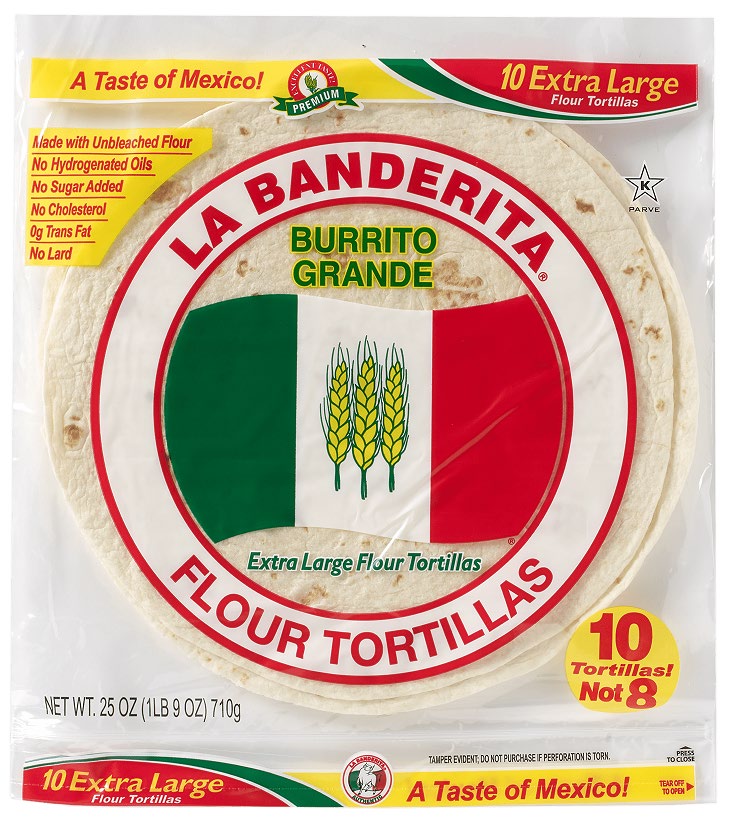
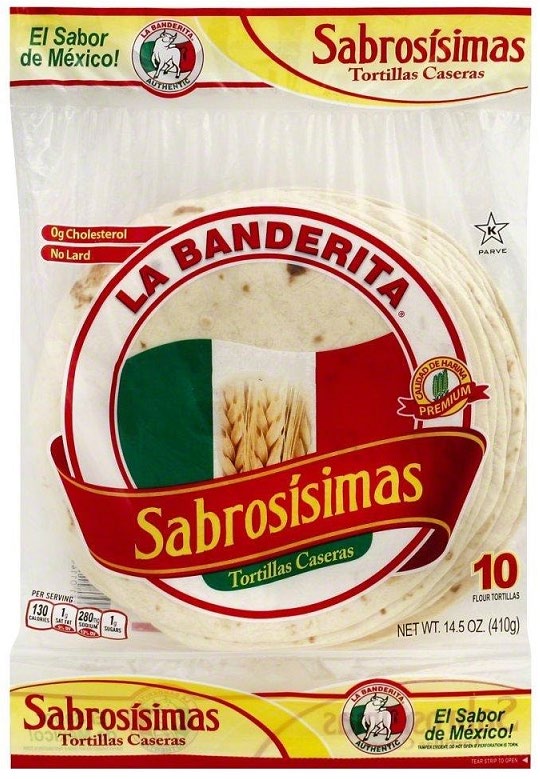
alleged that Olé’s La Banderita tortillas falsely advertised Mexican origin
based on  a Mexican flag front and center
on the packaging, the phrase “El Sabor de Mexico!” or “A Taste of Mexico!”, the
brand name “La Banderita” (“the flag”), and the Spanish phrase “Tortillas de
Maiz” on the label of the Corn tortillas. Some of the products also contain a
circular logo with the Mexican flag and the word “Authentic,” as well as other
Spanish words and phrases.  

Olé
argued that its products merely invoked the “spirit” of Mexico and didn’t make any
specific geographic references (other than “MADE IN U.S.A.” and “Manufactured
by: Olé Mexican Foods, Inc., Norcross, GA 30071” at other places on the
package, which properly disclosed origin). The court disagreed. Although a
previous case found that “The Taste of Jamaica” wasn’t plausibly misleading,
that product was prominently marked “Jamaican Style Lager,” and style or type
language strongly affects the meaning of a geographic term used on food or
drink.  Here, there was no such
indication about “style.” Moreover, deception was still plausible here in
context, even if some reasonable consumers would not be deceived. Though the
back disclosed the true origin, a reasonable consumer is not “expected to look
beyond misleading representations on the front of the box to discover the
truth.”
 

from the complaint; disclosure: I have purchased these and I have never given a second’s thought to their geographic origin one way or another

version with the “authentic” graphic

Govea
v. Gruma Corp, 2021 WL 1557748, No. CV 20-8585-MWF (JCx) (C.D. Cal. Mar. 1,
2021)

The
packaging here wouldn’t plausibly mislead a reasonable consumer into believing
that Guerrero Tortillas are produced in Mexico, though the court granted leave
to amend.

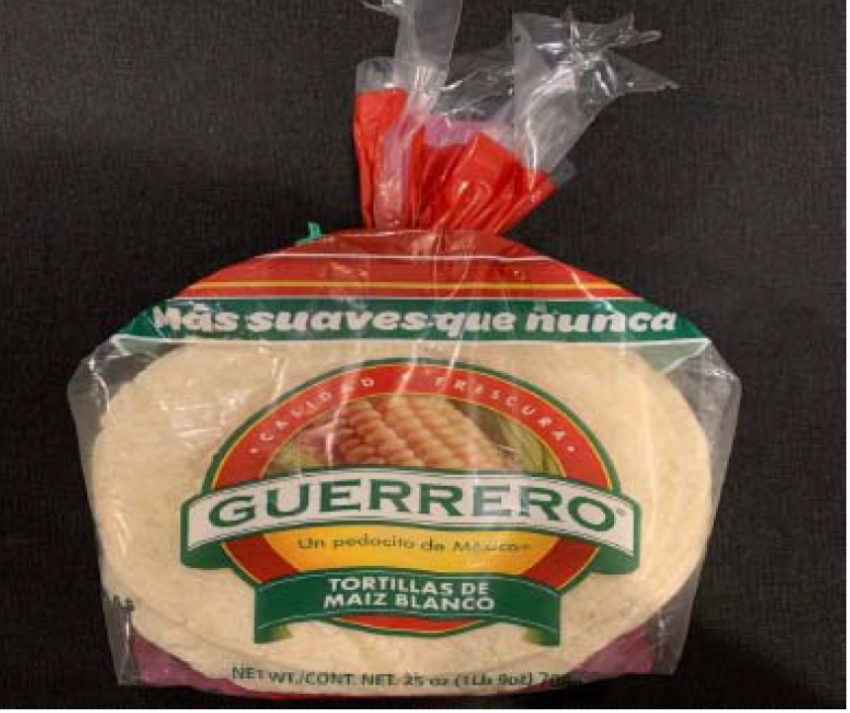
One of the accused packages

Plaintiffs
allegedly saw and relied on the word “Guerrero” (the name of a Mexican state,
also “warrior”) and the Spanish phrases on the packaging, which included: “Un
pedacito de México” and “Calidad Y Frescura” (“a piece of Mexico” and “quality
and freshness” respectively). They also allegedly relied on the Spanish descriptions
of the products they purchased: Tortillas De Maiz Blanco, Riquisimas Tortillas
De Harina, and Tortillas De Harina Integral. The rule is that “the language or
imagery of a product’s packaging is actionable if it falsely indicates a
specific place that the product is purportedly made.” “Originated in Germany,”
“Born in Brazil,” and “Belgium 1926” were plausibly false and misleading
statements of origin where the products at issue were not made in those
countries and lacked a visible origin disclaimer. In contrast, if the packaging
merely evokes the spirit of a generalized location or culture in a vague and
non-specific manner, such claims are properly dismissed at the 12(b)(6) stage.”

Here,
there were no “born in” statements, and “un pedacito de México,” was “a vague
and meaningless phrase” that is meant to “evoke the spirit or feeling of
[Mexico].” Nor did the packaging expressly describe the tortillas as Mexican.
All the packages disclosed that the Gruma Corporation was based in Irving,
Texas, and at least some of the Packaging also stated that the Tortillas are
“[l]ocally baked and delivered fresh from your Guerrero Bakery.” Nor did the
package name a specific address, city, or location in Mexico where the
tortillas were purportedly baked or invite a visit.

One of
the prior cases refusing to dismiss a complaint also noted allegations of
survey evidence that more than 85% of a “demographically representative U.S.
sample of over 1,000 adults” who viewed the accused beer or its packaging
believed that it was produced in Japan. There was no such evidence here. While
the court was dubious that it could be done, it did give plaintiffs a chance to
augment their allegations with a similar consumer survey, which might or might
not alter the court’s overall impression.

from Blogger https://ift.tt/3zwMLwe

Posted in Uncategorized | Tagged , , , | Leave a comment

Lexmark allows direct and contributory false advertising claims against certifier

U.S. Structural Plywood Integrity Coalition v. PFS Corp.,
No. 19-62225-CIV-ALTMAN, 2021 WL 810279 (S.D. Fla. Mar. 3, 2021)

Sometimes I worry that judicial writing is tending too much
towards the flip as it moves away from prolixity, but this is a lovely example
of how clear language can be deployed:

If you want to build with plywood
in the United States, you generally need a certification— called a PS 1-09
stamp. The Plaintiffs are a coalition of ten American structural-plywood mills
who manufacture and sell their plywood in the United States. The Defendants are
two companies that inspect structural plywood and, if it conforms to the PS
1-09 standard, stamp the wood as PS 1-09-compliant. According to the
Plaintiffs, the Defendants have been certifying 36 Brazilian plywood mills with
the PS 1-09 stamp—even though the Defendants know (or should know) that the
Brazilian wood doesn’t comply with the PS 1-09 standard. In the Plaintiffs’
view, this sham certification process has allowed the Brazilian mills to sell
their cheaper, non-compliant wood all over the United States—thus displacing
the Plaintiffs’ stronger, better, more expensive products.

Plaintiffs brought negligence and Lanham Act claims.

After a settlement with one defendant, the two remaining
defendants “are the sole licensors of the PS 1-09 stamp to 36 Brazilian plywood
mills that export structural plywood to the United States.” The US standards
for structural plywood are voluntary at the federal level, but customary, and “construction
codes across all 50 states require builders to use PS 1-09 structural-grade
plywood.” The stamps thus allegedly operate as powerful advertising, allowing Brazilian
plywood companies to market their products as conforming to an important
American safety standard. But, plaintiffs allege, “it is impossible to
consistently manufacture PS 1-09 compliant plywood from the extraordinarily
fast-growing loblolly and slash pine plantations in southern Brazil which are
the source of the raw materials for all of the Brazilian plywood producers in
southern Brazil.” Such accelerated growth rates allegedly “inevitably result in
weaker (and less dense) plywood, even when the plywood panels are produced from
the same pine species that are commonly found in North America.” These cheaper
imports drove down sales and profits of domestic manufacturers, causing the plaintiffs
some $75 million in alleged annual losses.

A few years back, the American Plywood Association, the
non-profit organization to which all of the plaintiffs belong, announced that defendants’
Brazilian licensees failed its PS 1-09 testing. Plaintiffs commissioned a
second test at Clemson University which, again, allegedly revealed shocking
failure rates.

Plaintiffs allegd both direct and contributory false
advertising, which requires (1) that the “third party in fact directly engaged
in false advertising that injured the plaintiff” and (2) “that the defendant
contributed to that conduct either by knowingly inducing, or causing the
conduct, or by materially participating in it.”

Were there allegedly false or misleading statements by the
defendants? Yes, the defendants made representations about the quality of the
Brazilian products by giving the Brazilian mills the authority to certify their
plywood with the defendants’ PS 1-09 stamps. And without the stamps, the mills
wouldn’t be able to sell in the US. This wasn’t like Google running a search
engine that putative locksmiths abused to sell fraudulent services. Google didn’t
attest to anything about the locksmiths; it was like a building that rents
space to business owners. Defendants, “by contrast, are like a state
medical-licensing board, which tests the doctors’ qualifications and, by
issuing them their licenses, allows them to practice medicine within the
jurisdiction. In doing so, the licensing board is making a powerful
statement—some would say, the most important statement—about the doctors’
qualifications.”

Defendants argued that they weren’t making any statements at
all, because it was the Brazilian mills stamping the wood. “But the Brazilian
plywood companies didn’t steal or forge the Defendants’ stamp. The Defendants
gave them the stamp and authorized them to use it…. These stamps are thus
unquestionably statements of the Defendants.” Even if the mills are the ones
touting the certification, the certification came from defendants, and it was
disingenuous to say otherwise, given that outside of this litigation, it would
be awful for defendants’ business for them to say that they weren’t doing the
certifications. “What value … would the certification hold if it were just the
self-affixed manifestation of any-old mill’s efforts at self-policing? No. The
Defendants’ stamps only have value—and the Defendants’ certification businesses
only exist— because the stamps are statements of the Defendants.”

Anyway, even if the stamps weren’t “statements” within the
meaning of the Lanham Act, plaintiffs also alleged other false statements by
defendants, such as letters to clients reassuring them about the APA report.

As for the contributory false advertising claim, it too was
well pled. Plaintiffs “allege that the Defendants knew or should have known about
the Brazilian mills’ lack of compliance; that, despite this knowledge, they
failed to stop it; and that they conspired with the mills to facilitate the
dissemination of faulty plywood throughout the United States.” Because it was
undisputed that the mills needed the stamp to sell in the US, “looking the
other way” “easily” sufficed as material participation.

Defendants argued that, because they neither stamped the plywood
nor profited directly from plywood sales, their stamps weren’t “commercial advertising.”
But “commercial speech encompasses not merely direct invitations to trade, but
also communications designed to advance business interests.” And the stamps
unquestionably “advance” their “business interests,” since their entire
certification business depended on the message conveyed by the stamps.

Defendants then argued that the stamps were mere statements
of opinion. But “subjective assessments by third-party entities that had no
control over market entrants” involved in other cases were not the same as “a
series of engineering tests susceptible of objective examination,” as here. A
licensor’s certification is a statement of fact—that the aspirant has met the
relevant standards—whereas a third-party evaluator that purports to assess
competency would just be offering an opinion. It’s true that a licensor, like a
medical board, can get it wrong. “But the possibility that the certifier might
get the tests wrong—or apply the tests improperly—doesn’t somehow render the
tests subjective. We can all agree that the answers to questions of math are
objective, even if, from time to time, a young student may erroneously believe
that two and two is five.”

Plus, plaintiffs weren’t merely alleging failure to meet the
PS 1-09 standards. They alleged that use of the stamp certified that defendants
had subjected the mills to certain quality-control processes—even though they
allegedly did no such thing. That isn’t subjective. “Either the Defendants
tested the wood—or subjected it to quality-control review—or they didn’t. In
all these ways, then, the stamp is an actionable statement of fact— not a mere
safety rating.” The court also noted that other professionals must of necessity
rely on the stamp for verification of quality, since they don’t test it
themselves. This too supported the characterization of the stamp as factual.

Next, defendants argued that their certification wasn’t the
proximate cause of the plaintiffs’ injuries. But Lexmark teaches that
direct sales diversion isn’t the only cognizable injury. Because (and only
because) of the allegedly false certification, the Brazilian mills can sell
their wood in the United States at a far lower price point, causing major
losses. This was proximate cause.

Finally, defendants argued that plaintiffs didn’t
sufficiently allege control or participation in the Brazilian mills’
noncompliance. But the plaintiffs adequately alleged close relationships with Brazilian
clients, including exclusive inspection service deals. And they alleged that defendants
knew or should have known of the defects based on biological facts and
independent studies.

The court also refused to dismiss the negligence claim.

from Blogger https://ift.tt/3gG6Mt3

Posted in Uncategorized | Tagged , | Leave a comment