smells bad? 9th Circuit approves tuna voucher settlement as not a coupon settlement

Hendricks v. Ference, 754 Fed.Appx. 510 (9th Cir.
2018)
Objectors appealed the approval of a class action settlement
over the alleged under-filling of Starkist tuna cans; over a partial dissent,
the court of appeals affirmed. In particular, the court affirmed the district
court’s determination that the award of tuna vouchers was not a form of coupon
relief under the Class Action Fairness Act (CAFA). “The vouchers did not
expire, they were freely transferrable, they could be used at a wide variety of
stores (any retailer selling Starkist products), and the vouchers had sufficient
value that class members could use them to purchase tuna without additional
out-of-pocket expense.”  The underlying claims
were about insufficient tuna, and the settlement supplied the missing tuna—using
a voucher instead of mailing cans to class members “does not transform the
settlement from a tuna settlement into a coupon settlement” (and is almost
certainly a better idea from an olfactory/health perspective).  CAFA’s restrictive coupon provisions don’t
apply to all non-cash settlements; this was an in-kind settlement and the in
kind redress could be provided with “a voucher that is sufficiently usable and
related to the harm suffered.”
A partial dissent would have found that this was a coupon
settlement. Judge Friedland doesn’t like the governing 9th Circuit
standard for determining what’s a coupon (and would find this to be a coupon even
under that standard).  These are coupons
within the common meaning of the term: they’re only good for buying canned
tuna. Lack of expiration and free transferability are important for things like
cash cards or even credit cards [debit cards? The case citation is to gift cards
redeemable at Walmart, a giant retailer] but not where the “vouchers” are “remarkably
inflexible.”  Canned tuna bought five
years from now is still canned tuna; you still have to buy the thing that was
the source of your problem to benefit. 
Transferability is also less relevant where the market for the vouchers
is dependent on the fact that they are vouchers for canned tuna. “After all,
Congress ‘targeted [coupon] settlements for heightened scrutiny out of a
concern that the full value of coupons was being used to support large awards
of attorney’s fees regardless of whether class members had any interest in
using the coupons.’”  The dissent also
pointed out that the vouchers were going to be in round dollar amounts; using
them might require the consumer to make an outlay or leave tuna money on the
table, which were coupon-like effects. “Even though many class members will
leave a portion unredeemed, and even though many class members will not redeem
the voucher at all—whether because they lose it, forget they have it, decide
they no longer like tuna, or for any other reason—the majority’s holding that
the vouchers are not coupons means all the distributed vouchers will be counted
at their full face value for purposes of calculating the settlement value and
the resulting attorney’s fees. This is exactly the sort of result Congress was
trying to prevent when it adopted the coupon provisions in CAFA.”
If writing on a blank slate, the dissent would treat “any
type of discount, credit, gift card, or voucher” as a coupon under CAFA, and
would also treat vouchers for replacements for the original product as coupons even
if the class member didn’t have to put in any more cash.  [The dissent doesn’t outright say that
mailing cans of tuna would be “coupons,” but why not under that logic? If you’re
concerned about overvaluation, Starkist would get to count the retail price of
the tuna as the value of the settlement even though the production cost is much
lower, so it’s possible to manipulate the final settlement value that way too.]  If the coupons were close-to-cash (e.g., Walmart
gift cards), redemption rates would be high and attorneys’ fees would be based
on those high rates. If not, then the fees wouldn’t be that high, which was
Congress’s goal.  A bright line rule
would also make things easier for district courts and for attorneys, who’d find
it easier to tell whether they’d crafted a coupon settlement.

from Blogger https://ift.tt/2OEFbsI

Posted in Uncategorized | Tagged , , | Leave a comment

Oklahoma’s Indian arts & crafts consumer protection law preempted by federal law

Fontenot v. Hunter, No. CIV-16-1339-G  (W.D. Okla. Mar. 28, 2019)
Oklahoma’s American Indian Arts and Crafts Sales Act of 1974
was amended in 2016 to exclude from its definition of “American Indian” all
persons but citizens or enrolled members of a federally recognized tribe.  Fontenot, a member of the Patawomeck Indian
Tribe of Virginia, a tribe recognized by the State of Virginia but not by the
United States, sued under a variety of theories including a general right to
engage in her trade; she lost on all of them except the Supremacy
Clause/federal preemption argument based on the Indian Arts & Crafts Act.
Oklahoma’s law is a specific false advertising statute whose
purpose “is to protect the public, under the police powers of the state, from
false representation in the sale of authentic and imitation American Indian
arts and crafts.”  The law makes it
“unlawful to distribute, trade, sell or offer for sale or trade within th[e]
[S]tate [of Oklahoma] any article represented as being made by American Indians
unless the article actually is made or assembled by American Indian labor or
workmanship.”
Fontenot is an artist who’s made her heritage part of her
art and her marketing for decades. Before 2000, Plaintiff marketed herself “as
a Cherokee artist” even though she is not a member of the Cherokee Nation and
the Cherokee Nation had not certified her as a tribal artisan. After 2000, Fontenot
changed statements on her event signs and business cards from “Cherokee artist”
to “Cherokee descent,” since she is “not certified by that tribe, and Cherokee
artist implied that [she] was.”  In 2006,
she became a tribal member of the Patawomeck Indian Tribe of Virginia, which
requires descent from a tribal member for membership.  Her current advertising describes her artwork
as “Native American” and she uses the designations “Patawomeck,” “Potawatomi,”
and “Cherokee Descent.”
Fontenot challenged the law as a violation of her Fourteenth
Amendment due process rights, “irrationally burden[ing] . . . [her] right to
earn a living,” and “protect[ing] artists who are members of federally
recognized tribes from economic competition,” without a legitimate government
interest. The state law was an economic regulation that didn’t affect
fundamental rights. It passed rational basis review: Consumer protection is a
traditional area of state concern and the law here was rationally related to a
legitimate government purpose. “[N]otwithstanding Plaintiff’s disagreement with
the definition of American Indian reflected in the State Act, there is no
reasonable dispute that the Oklahoma legislature could rationally have
concluded that, to meet the purpose of the State Act, some definition must be
drawn and the definition it adopted was a reasonable one.”
Equal protection: Fontenot argued that the law “creat[ed] an
irrational and arbitrary distinction among American Indian artists.”  Again, this passed rational-basis
review.  “As the State has argued, that
distinction ‘prevents consumers from being misled as to the status of the
artist as “American Indian,” given the rigorous process associated with federal
tribal recognition and membership.’” Rational basis review is especially forgiving
when linedrawing is necessary, and defining “American Indian” for the purpose
of a consumer-protection statute must “‘inevitably require[] that some persons
who have an almost equally strong claim to favored treatment be placed on
different sides of the line.’” That’s a matter for the legislature.
Dormant Commerce Clause: Fontenot argued that the law “discriminates
against and excessively burdens interstate commerce in American Indian art by
favoring in-state American Indian artists at the expense of out-of-state
artists.”  She failed to show
discrimination between in-state artists and out-of-state artists, either on the
law’s face or in its direct effects. Nor was there an undue burden. Undue
burden analysis requires balancing (1) the nature of the putative local
benefits advanced by the [statute]; (2) the burden the [statute] imposes on
interstate commerce; (3) whether the burden is “clearly excessive in relation
to” the local benefits; and (4) whether the local interests can be promoted as
well with a lesser impact on interstate commerce.  There was no genuine issue of material fact that
could avoid summary judgment here. “The State Act does not prohibit an artist
from offering his or her art and crafts for sale in Oklahoma; it restricts the
manner of how these goods are marketed,” and it did so equally for
in-state and out-of-state artists. There was no evidence
that the burden on out-of-state artists was clearly excessive in relation to
the local benefit of protecting the public from improperly identified goods.
First Amendment: Fontenot argued that this law constituted
impermissible content-based and identity-based discrimination.  Although Central
Hudson
excludes false/misleading commercial speech from any First Amendment
protection, the court nonetheless ran through the remaining three part test for
nonmisleading commercial speech. First, there’s substantial interest in
“protect[ing] the public . . . from false representation in the sale of
authentic and imitation American Indian arts and crafts.” Second, there’s “a
reasonable fit” between the law and the state’s “consumer protection
interests,” meaning that the law “directly advances those interests and is narrowly
tailored.”  The fact that there were
other reasonable definitions of “American Indian” didn’t change that, as long
as this definition was reasonable,
which it was. Central Hudson requires
a reasonable fit between the legislature’s ends and its means, not a perfect
fit.
But all is not lost! 
Under the Supremacy Clause, IACA had to control. Congress passed IACA “to
protect Indian artists from unfair competition from counterfeits.” It provides
for liability for any “person who, directly or indirectly, offers or displays
for sale or sells a good . . . in a manner that falsely suggests it is Indian
produced, an Indian product, or the product of a particular Indian or Indian
tribe or Indian arts and crafts organization.” For purposes of this prohibition,
IACA expressly includes in its definition of “Indian tribe” any Indian group
that has been formally recognized as an Indian tribe by “a State legislature; a
State commission; or another similar organization vested with State legislative
tribal recognition authority.”
Although there was no express preemption provision, and no
field preemption (“Congress expressly contemplated continuing state regulation”),
the court found conflict preemption.
What constitutes a sufficient obstacle to the federal
objectives depends on Congress’s intent, which itself is primarily evidenced by
its statutory language.  The statutory
language and legislative history of IACA reflect a struggle with the definition
of “Indian.”  The initial draft was
narrow and included only federally recognized tribes and their members, but
even then the drafters noted their belief that these definitions would “have to
be broadened.”
By excluding from the state definition of “American Indian”
members (or certified artisans) of tribes that are recognized by a state but
not the federal government, the state law constituted “an obstacle to the
accomplishment and execution of the full purposes and objectives of” IACA,
whose express purpose was “to promote the economic welfare of the Indian tribes
and Indian individuals through the development of Indian arts and crafts and
the expansion of the market for the products of Indian art and craftsmanship.” The
state’s narrower definition prohibited the marketing and sale of works by some
artists that would otherwise be protected by IACA, harming the market IACA was
supposed to promote and develop. The state’s definitions weren’t unreasonable
or unconstitutional in the abstract; they just conflicted with the federal law.

from Blogger https://ift.tt/2FOPrMe

Posted in Uncategorized | Tagged , , , | Leave a comment

Bad argument of the day: potential registration should count as (R) because opposer is accused infringer

Herman Miller, Inc. v. Blumenthal Distributing, Inc., 2019
WL 1416472, No. LA CV17-04279 JAK (SPx) (C.D. Cal. Mar. 3, 2019)
Lots of stuff going on here. 
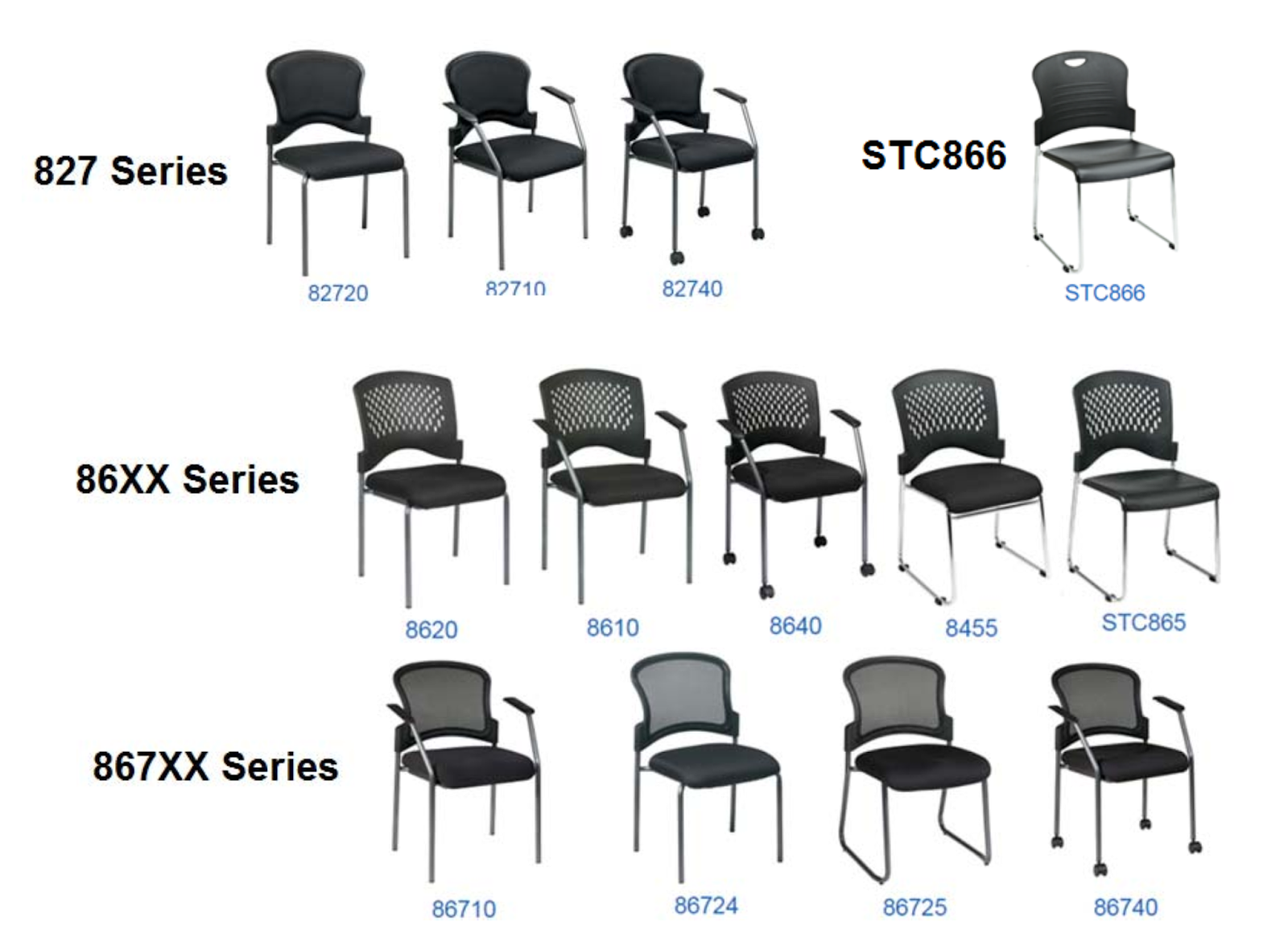
Herman Miller sued Blumenthal for infringing on the trade dress of one
of its office chairs, the Caper, with a “distinctive bowler-hat-like backrest.”  The court found a factual issue on
nonfunctionality, relying in part on the existence of design patents as
evidence of nonfunctionality even though that’s not right given the mismatch
between “functionality” for design patent and “functionality” for trademark
purposes.  The court found the other
evidence also admitted of different interpretations—the advertising touted
functional benefits, but a jury could find that the particular configuration of
the whole chair, especially the specific perforations in the backrest, was
distinctive and nonfunctional.

Caper chair

accused designs
Herman Miller whinily argued that it had applied to register
the trade dress, had the application published for opposition, and then had been opposed
by defendant.  If not for defendant’s
opposition, then the registration would have issued and Herman Miller would
have a presumption of validity/nonfunctionality in this infringement litigation.  So, Herman Miller reasoned, it should have a presumption of validity
and nonfunctionality.  This argument has
chutzpah, but little else to recommend it. 
As the court noted, the law requires the registration to issue before it
can provide favorable presumptions, and it provides for the mechanism of
opposition to prevent a registration from issuing.
The court also deemed it too late for Herman Miller to add,
after the close of discovery, unfair competition claims based on a defendant’s
alleged use of its reputation as a seller of “knock-off goods” to “position the
accused chairs as substitutes for real Caper chairs,” and that it “target[ed]”
and “interfere[d] with” Herman Miller dealers who were “contractually obligated
to not sell Caper knock-offs.” This was not a trade dress infringement theory
and it came too late.

from Blogger https://ift.tt/2ODwZJo

Posted in Uncategorized | Tagged , , | Leave a comment

making claims against counsel’s advice could be willful for disgorgement remedy

Dependable Sales & Service, Inc. v. Truecar, Inc., No. 15-cv-1742
(PKC), 2019 WL 1407440 (S.D.N.Y. Mar. 27, 2019)
“Plaintiffs are 108 new-car dealerships located throughout
the United States.”  TrueCar is a lead
generator: online, it puts consumers in contact with a car dealership that
contracted with TrueCar. TrueCar allegedly falsely advertised by promising
consumers a negotiation-free, haggle-free buying experience through the TrueCar
website. Customers were allegedly channeled toward a TrueCar-affiliated
dealership with a pledge of “guaranteed savings” on vehicles that often were
not available on the dealership’s lot, then put into the negotiation process
typically associated with buying a new car. TrueCar’s website also generated a
graphic called the “TrueCar Curve,” which allegedly misled consumers about
vehicles’ pricing data, specifically as to the “factory invoice” price paid by
dealers to manufacturers.
TrueCar moved for summary judgment on the issue of harm. Plaintiffs’
consumer surveys went to falsity, not harm; their deposition testimony “describes
only vague, general perceptions of injury.” This was insufficient to avoid
summary judgment as to plaintiffs’ damages. However, there was evidence of
willfulness, which meant that equitable disgorgement might be an appropriate
remedy.
The evidence of falsity (and willfulness) included TrueCar’s
generation of a “Certificate” showing a “guaranteed savings” off the MSRP,
which the consumer could then take to a dealer and apply toward the purchase
price of a specific make, model and trim of car from a specific dealership. But
plaintiffs argued that “TrueCar-affiliated dealerships seldom honored the
Certificate’s terms, and the particular make and model of vehicles searched by
consumers were rarely available on the dealerships’ lots. In an internal
TrueCar presentation, one of the Company officer’s discussed findings that 80%
of consumers reported that TrueCar-affiliated dealers did not honor the
Certificate price.”  [That’s bad—that’s a
level that might attract state AGs/the FTC.] 
A TrueCar co-founder and former officer described the Certificate as
highly successful in attracting consumer business, and also as going toward
“bullshit virtual vehicle[s]” that were seldom available on dealer lots.
TrueCar’s ads also touted a negotiation-free, haggle-free
purchasing experience; TrueCar didn’t dispute literal falsity for the purposes
of this motion, which seems like a good idea insofar as “No negotiation” was a
big part of the ads, e.g. this
anti-traditional-dealers ad
with the happy guy indicating: “Because I used
TrueCar, there was no haggling about the price.” “TrueCar’s market research
concluded that a promise of ‘no negotiation’ was a ‘magic bullet for people’ because
negotiations were generally challenging to consumers.”  TrueCar’s outside counsel advised the Company
against using the “No Negotiation” claim given the claim’s “lack of clarity,
concerns with regulators and the likelihood that dealers and consumers would
negotiate.” TrueCar chose not to follow this advice, though it stopped
advertising a haggle-free buying experience in 2016; some of the plaintiffs in
this case were affiliated with TrueCar for some of the false advertising
period.
Separately, TrueCar’s “Curve” was allegedly false to the
extent that it showed a “TrueCar Price” lower than a “factory invoice” price,
implying that the dealer paid a factory invoice price and misled consumers into
thinking that TrueCar allows them to pay “less than the dealer paid.” TrueCar
argued that “factory invoice” doesn’t mean the dealer’s cost to buy a car,
while plaintiffs argued that consumers understand the term to mean just that.
Although a disclaimer defined the term “factory invoice” as the price a
manufacturer initially charges a dealer, excluding discounts, dealer incentives
and money allocated to the dealer upon a sale, plaintiffs argued that this
definition was not conveniently displayed or easily accessible to consumers.

The court found that the parties weren’t direct competitors and TrueCar’s ads
weren’t specifically comparative to them, thus preventing any presumption of
injury and causation. Although “[t]he type and quantity of proof required to
show injury and causation has varied from one case to another depending on the
circumstances,” ads that “do not draw direct comparisons,” or products “that
are not obviously in competition,” will “require a more substantial showing” of
injury.  Here, the parties occupied
different positions in the marketplace, since TrueCar didn’t sell cars at all
(though there was evidence that TrueCar’s former CEO considered non-TrueCar dealerships
“competitors”).  The key was that “[a]
sale made through TrueCar is not necessarily a sale lost by a plaintiff
dealership, as opposed to some other competing dealership in the same market.” Where
a plaintiff “operates in a large market” that includes numerous types of
retailers, injury “may well be difficult to prove” where it “depends upon the
idea that [plaintiff’s] sales are specifically affected by [defendant’s]
behavior.” Famous Horse Inc. v. 5th Ave. Photo Inc., 624 F.3d 106 (2d Cir.
2010), abrogated on other grounds by Lexmark.
Plaintiffs’ proposed expert on damages was successfully
excluded, so that evidence couldn’t be used to show harm causation. The expert
didn’t weigh the “no-haggle” claim against other features on the TrueCar site, didn’t
account for other factors that influenced a consumer’s choice of dealerships,
and didn’t consider what portion of TrueCar-generated sales could have gone to
other competing dealerships in the same geographic markets.  Nor could evidence of falsity, including
consumer survey evidence showing that more than half of consumers received a
no-haggling/you’ll know the price when you show up message, substitute for evidence
of harm.  Individual witnesses “articulated
only a vague impression of lost sales and damage to reputation, and did not
identify a discernable harm that would permit a reasonable trier of fact to
find injury.”  None of the witnesses identified
a specific actual sale lost to a TrueCar-affiliated dealership, or evidence of
harm to the business reputation of their respective dealers.
TrueCar argued that it should win summary judgment on
materiality. The court understandably disagreed. TrueCar argued that consumers
who purchased through TrueCar after haggling were obviously not affected by the
no-haggle promise, and consumers who were turned off by the surprise haggling
wouldn’t buy from TrueCar.  “TrueCar does
not cite evidence to support of its description of consumer behavior, and for
that reason alone has not met its burden as summary judgment movant. Even if
the scenario TrueCar describes is assumed to be accurate and complete, it
describes a bait-and-switch transaction … which sometimes led to a sale by a
TrueCar-affiliated dealer.”
The Second Circuit has identified “three categorically
distinct rationales” for ordering disgorgement of a defendant’s profits: “The
rule in this circuit has been that an accounting for profits is normally
available ‘only if the defendant is unjustly enriched, if the plaintiff
sustained damages from the infringement, or if the accounting is necessary to
deter a willful infringer from doing so again.’ No matter what the theory,
willful deceptiveness is required. The first two rationales require some sort
of showing of injury, whereas disgorgement based on deterrence “is not
compensatory in nature, but rather seeks to protect the public at large.” Disgorgement
can be partial or full, depending on the need to satisfy a relevant rationale.
Willfulness is necessary, but not always sufficient. Along
with the egregiousness of the conduct, other relevant factors include “(1) the
degree of certainty that the defendant benefited from the unlawful conduct; (2)
availability and adequacy of other remedies; (3) the role of a particular
defendant in effectuating the infringement; (4) plaintiff’s laches; and (5)
plaintiff’s unclean hands.”
There was enough evidence of willfulness to proceed.  First, “failure to follow the advice of
counsel … must factor into an assessment of … bad faith.” TrueCar’s outside
counsel stated in email, “I strongly advise against using the phrase
‘negotiation-free’ in any form in our ads or other self-attributed public
communications …. In my view it is a much greater risk than we should bear at
this point.” The CEO, responded in part, “I am inclined to take some practical
risk here.” Counsel noted that use of the phrase “negotiation free” “was over
my objection, but that is an historical footnote that will hopefully be
irrelevant over time ….”  [Narrator: It
wasn’t.]  Another email: “I do not
believe we should talk about being ‘negotiation free’ in the present tense
because we are not (both for the reasons we have debated at length and
additionally because in nearly 20% of our jurisdictions we cannot even promise
a guaranteed savings, meaning in those states nothing about the experience is
‘negotiation-free’.)” Although counsel approved “no hassle,” he rejected “no haggle”
because TrueCar couldn’t assure users that they would not be expected to
bargain about price and because consumers would believe that TrueCar would take
an “active role” in arranging for sales terms.
Second, TrueCar was “separately aware that its ads left
consumers with a false impression about the process of purchasing a new vehicle
through TrueCar,” as shown by evidence from several years before it
discontinued the claim. Its Chief Product Officer told the CEO that customers
were using TrueCar to “configure a virtual vehicle that has less than a 2%
chance of existing on a dealer’s lot.” He continued: “when we send in our
prospects with a certificate of a bullshit virtual vehicle, we don’t arm them
with the proper tools to ensure they know we have their back at the most
critical moment.” In deposition, he walked back the 2% figure, but yikes.  Separately, a TrueCar executive noted a
consumer survey finding that 80% of respondents stated that TrueCar-affiliated
dealers did not honor the “Guaranteed Savings” certificate.
There was also evidence that TrueCar acted against the
advice of counsel in listing a factory invoice price on the TrueCar Curve. And
a dealer from TrueCar-affiliated dealership that was active in an advisory
committee called the “TrueCar dealer council” told TrueCar that certain
manufacturers “strictly prohibited” their dealerships “from advertising a price
below dealer invoice” as a way “to prevent ‘bait and switch’ advertisements.” He
stated, “Many car buyers believe that the dealer invoice is the true cost of
the car; it is not.”

There was evidence that weighed against a finding of willfulness. TrueCar
stopped running the disputed advertisements in 2016 (the evidence above was
mostly from 2013). The homepage included a disclaimer stating that “[e]ach
dealer sets its own pricing. Your actual purchase price is negotiated between
you and the dealer.” Disappointingly, although TrueCar’s chief marketing
officer described the text as “mouse print,” the court considered the
disclaimer to be “some evidence” that TrueCar qualified its “negotiation-free”
claim on its homepage, rather than simply contradicting the explicit, key claim
in ads. 
TrueCar argued that it didn’t profit from its
advertisements, meaning that “there are no profits to disgorge” after accounting
for its operating expenses. But a court of equity “has considerable discretion
in deciding whether operating expenses during a start-up period ought to be netted
against profits in a later period.”
A reasonable trier of fact could conclude that TrueCar
willfully violated the Lanham Act’s prohibition against false advertising and
profited therefrom.  Injunctive relief
and corrective advertising also remained remedies on the table.
State law claims were stayed pending resolution of the
Lanham Act claim—which sounds like it’s headed for a bench trial.

from Blogger https://ift.tt/2FQWzrD

Posted in Uncategorized | Tagged , , | Leave a comment

claim to cure addiction can be false advertising, as can hidden bias

Grasshopper House, LLC v. Clean and Sober Media LLC, 2018 WL
6133710, No. 18-cv-00923-SVW-RAO (C.D. Cal. Oct. 18, 2018)
This is a dispute about addiction treatment. Counterclaim plaintiff
Cliffside alleged that counterdefendant Passages violated the Lanham Act (1) by
maintaining and operating websites with the appearance of neutrality or
independence that actually promote Passages’ services without disclosing the
affiliation to Passages, and (2) by representing that Passages possesses a
“cure” for addiction via its treatment program and that a specific person was
fully “cured” of addiction after completing the treatment program. Passages
moved to dismiss and invoked California’s anti-SLAPP law, but both measures failed.
The court held that “websites violate the Lanham Act when
they take advantage of their purported lack of bias to disseminate false or
misleading information,” and that the “failure to disclose bias can be
actionable under the Lanham Act ‘where that failure renders some other
affirmative statement false or misleading.’ ” Cliffside sufficiently alleged
that Passages operated websites that conveyed a lack of bias in order to
disseminate information promoting Passages’ services, including direct links to
Passages’ website.
Anti-SLAPP motion: “While Passages’ statements generally
proclaiming that addiction can be ‘cured’ could be considered to be an issue of
public interest,” those statements were part of its advertising.  Passages’ website repeatedly promised a cure,
e.g., “we want to help you identify why you are using so that you can be cured
of addiction, forever,” and
Our team of highly skilled
therapists will show you or your loved one how to completely cure your
dependency. I want you to notice that I do not mince words. I do not say
“however,” “maybe,” “although,” “perhaps,” or use other qualifying terms or
conditions. We will show you how to bring about a cure. That statement is based
on the results we achieve at Passages, the world’s most effective center for
the treatment of substance abuse, where our success rate at the time of this
writing is 84.4%.
A “promotional book” claims that, through Passages’
treatment plan as detailed in the book, “[o]nce the underlying problems are
discovered and cured, the need for drugs, alcohol, or addictive behavior will
disappear—along with the craving.” And Passages repeatedly made statements that
a specific person had been cured of addiction through Passages’ treatment
program, e.g., “Pax has come out the other side whole, healed, and cured …”
These statements were commercial speech and thus not covered
by the anti-SLAPP law. The statements weren’t simply informative; they
pertained to Passages’ specific “product”—addiction treatment programs at
Passages’ facilities—and were made for the purpose of promoting Passages’
product and soliciting new clients. Even if Passages’ statements advertising
its services were “intermingled with noncommercial speech” regarding the
general curability of addiction, Passages “may not immunize false or misleading
product information … simply by including references to public issues.” Kasky
v. Nike, Inc., 27 Cal. 4th 939, 966 (2002). Somewhat confusingly, the court
says that “Passages’ ‘opinion’ that addiction is curable is merely an ‘opinion’
about the nature of Passages’ own product, which is sufficient to constitute
commercial speech exempt from anti-SLAPP analysis,” conflating the fact/opinion
divide with the commercial/noncommercial divide.  Apparently Passages also argued that addiction
could be cured, probably contributing
to the court’s mashup of issues: Passages submitted a declaration and purported expert report that
the court thought “further bolsters Cliffside’s argument of false advertising.”
Along with other problems, the report’s definition of a “cure” was that the
former addict no longer consumes substances for the foreseeable future, even if
the former addict “might still think about the substance, desire it, or dream
about it.” This definition directly contradicted Passages’ statements that,
following the completion of Passages’ treatment program, “[o]nce the underlying
problems are discovered and cured, the need for drugs, alcohol, or addictive
behavior will disappear—along with the craving.”

Even without the commercial speech exemption, Cliffside sufficiently
demonstrated a probability of success on its false advertising claims against
Passages. In a related case, another judge found that statements that a
facility possesses a “cure” to addiction through its treatment program were
clearly actionable as distinct from statements about “treatment” of addiction.
See Grasshopper House, LLC v. Accelerated Recovery Ctrs., LLC, No. CV 09-08128
DMG (PLAx), 2010 WL 11549437, at *5-7 (C.D. Cal. Mar. 23, 2010).  The court here agreed.

from Blogger https://ift.tt/2Fy5XiG

Posted in Uncategorized | Tagged , , | Leave a comment

Amazon case shows profound difference between DMCA safe harbor & 230 immunity

Kangaroo Mfg. Inc. v. Amazon.com Inc., No.
CV-17-01806-PHX-SPL, 2019 WL 1280945 (D. Ariz. Mar. 20, 2019)
The Amazon
Chronicles
often asks “what is Amazon?” 
An interesting question to build a law school course around might be “what
can Amazon do?”  Here, the DMCA doesn’t
let it avoid an infringement claim on a motion to dismiss or partial summary judgment,
suggesting that Eric Goldman has a point when he says the DMCA is useless in
actual litigation, whereas §230 gets rid of other claims about Amazon’s alleged
practice of merging counterfeit and legitimate listings for the same product.
Kangaroo sells emoji beach balls. On Amazon, third-party
sellers create their own listing for a product that they plan to sell,
including uploading their own images of the product, and set their own prices
for the product.
Each product is identified with a
universal product code (“UPC code”) and an Amazon Standard Identification
Number, and each product also receives its own product detail page (“PDP”). Multiple
sellers can list the same product for sale on the same PDP. However, only one
seller may be awarded the “Buy Box” on a PDP, which makes the seller’s item the
default for a customer’s purchase. When a seller signs up to sell products on
the Defendant’s website, it agrees to the terms of the Amazon Services Business
Solutions Agreement (the “BSA”) and the policies incorporated by the BSA.
Kangaroo alleged that Amazon, and third party sellers, sold
unauthorized/counterfeit products in violation of Kangaroo’s trademark and
copyright, including reselling some of the counterfeit product that it
re-purchased from Kangaroo as reimbursement for unauthorized sales.
Amazon didn’t seek summary judgment on the trademark
infringement claim or counterfeiting claim to the extent that Kangaroo alleged
that Amazon itself sold the accused products.
Copyright infringement: Amazon argued that third parties uploaded
the accused images and that it had a license to use Kangaroo’s images—the court
doesn’t address the licensing argument.  For
the DMCA, the court found genuine disputes “on when and whether the Defendant
knew of the infringing material on its website and whether the Defendant took
reasonable steps to quickly remove that content” because Kangaroo alleged that it
filed several complaints, while Amazon stated that Kangaroo “never submitted an
infringement report regarding the images used” for the emoji beach balls. [Can’t
both of these be true? Kangaroo complained generally, which isn’t enough, but
didn’t file a complaint about images?  This
seems like a sloppy treatment of the evidence for summary judgment; the court
is clearly annoyed that Amazon isn’t specific enough about when it’s seeking
summary judgment and when dismissal in its papers.]  Further, Amazon contended that it removed
infringing content “usually within days” of Kangaroo’s complaints, but Kangaroo
disagreed.  [I don’t understand this.  Did Kangaroo submit evidence that content
remained past “days”?  There are cases
finding that a period of days is expeditious as a matter of law.]  Amazon also allegedly continued to use the
protected images to sell counterfeit products after the notifications of
infringement.  This created disputed
issues of fact. 
Negligence: dismissed because of §230. The negligence
allegedly stemmed from Amazon’s improper merger of the UPC code assigned to Kangaroo’s
product with the code assigned to a competitor’s product. Amazon argued that
any content listed on a PDP is provided by third-party sellers, but the court
looked to Amazon’s contract, which made it clear that Amazon “had full control
over the content displayed on its websites. The Defendant’s pleadings
demonstrate that it took the responsibility of managing and cultivating the
content provided to it. Therefore, the issue is not the content that was
provided to the Defendant, but the Defendant’s alleged mismanagement of the
content through conflating UPC codes in a manner that harmed the Plaintiff.”  Nonetheless, Amazon was acting as an
interactive computer service under §230 when it took the challenged acts and
was immune.
Unjust enrichment: unavailable because of the contract
between the parties.
Unfair competition: not dismissed to the extent it was an
infringement/counterfeiting claim. But dismissed to the extent it was based on
allegations that Amazon harmed Kangaroo by earning fees related to sales made
by unauthorized competitors and counterfeiters.

from Blogger https://ift.tt/2UQHv2a

Posted in Uncategorized | Tagged , , | 1 Comment

failure to show damages from literal falsity still allowed injunctive relief

Nutrition Distribution LLC v. IronMag Labs, LLC, No. CV
15-8233-R, 2018 WL 6264986 (C.D. Cal. Nov. 16, 2018(
“This is a false advertising case between two competitors in
the business of selling fitness supplements.” IronMag allegedly unlawfully
marketed its products as “dietary supplements” and as having no side effects.” The
accused products allegedly contain Ostarine, a type of Selective Androgen
Receptor Modulator (SARM), deemed dangerous to human health by the FDA. ND sought
an injunction and damages under the Lanham Act, California’s UCL, and
California’s FAL.
The court granted summary judgment in IronMag’s favor on the
money damages claims.  This was a
noncomparative false advertising case, meaninig that actual evidence of some
injury was essential to recover damages. 
ND had no evidence of damages, and it also couldn’t recover profits
without proof of harm, again because this wasn’t a comparative advertising or
disparagement case, and it wasn’t a misappropriation case involving noncompeting
goods (where disgorgement also might be appropriate to deter). “Rather, the
parties are two of many competitors in an industry comprised of a broad range
of products, and Plaintiff has provided no basis to infer that any profits made
by Defendants would have otherwise gone to Plaintiff partially or in full…. The
Lanham Act requires that damages awards be compensatory and not designed to
punish. Because Plaintiff has offered no proof of actual injury, the Court has ‘no
way to determine with any degree of certainty what award would be compensatory.’”
Nor was this an exceptional case for purposes of a fee
award.
However, injunctive relief remained possible. It was
literally false to claim that products with Ostarine have “basically
non-existent” side effects.  No further
evidence of a tendency to deceive was required; IronMag didn’t rebut the presumption
of deception from literal falsity.  “Even
without this presumption, common sense requires a finding that statements
denying the existence of negative health effects in a fitness product have a
tendency to deceive a substantial segment of interested consumers.”
Common sense also showed materiality.  [There is a lurking contradiction—not a split—in
courts about this: some say that additional evidence is required, but I think
the court here is right.  Often the content
of the literal falsity itself can provide all the information required to find materiality.]
“It can naturally be assumed that consumers of fitness supplements take into
account the existence and extent of negative side effects when deciding whether
to buy them and in comparing different products.”
Even without showing past injury, there was a likelihood of
future injury if IronMag could keep selling Ostarine products with deceptive
advertising. As the Ninth Circuit has said, “competitors vie for the same
dollars from the same consumer group, and a misleading ad can upset their
relative competitive positions.”  The
injury was irreparable because of the presumption of deception.  “Monetary damages have not been awarded here
and in any case would be inadequate to protect the public in the absence of an
injunction due to the possibility of Defendants selling products in the future
which may pose a risk to public health and safety.” An injunction would issue.
The result was the same under state law.  Monetary relief is allowed under the FAL “to
restore to any person in interest any money or property, real or personal,
which may have been acquired by means of such unfair competition.” This “allows
awards of restitution, but not awards of non-restitutionary disgorgement,” which
was all ND was seeking here.

from Blogger https://ift.tt/2FrRUw8

Posted in Uncategorized | Tagged , , | Leave a comment

survey isn’t evidence of actual deception, court says in First Amendment case w/TM relevance

Express Oil Change, L.L.C v. Mississippi Board of Licensure
for Professional Engineers & Surveyors, No. 18-60144 (5th Cir. Feb. 19,
2019)
Just as a matter of client advocacy, it is time for these
First Amendment cases about the government’s near-inability to regulate based
on the meaning of words to start being cited in run-of-the-mill trademark and
false advertising cases.  I don’t think
the results will be good policy, but at the very least we will see whether
courts mean what they say, or instead mean “legislative and administrative
entities shouldn’t get to regulate but it’s ok when private parties sue under
the same theories.”  In particular, where
trademark and false advertising treat “false and misleading” as the regulable
category (albeit with different standards of proof for “misleadingness” in
§43(a)(1)(B) cases than for falsity), First Amendment commercial speech law has
for decades made a distinction
between actually/inherently misleading speech and potentially misleading
speech.  Here the Fifth Circuit applies
that distinction to disregard a survey showing 55% deception—that’s just
“potential”—and hold that, without actual consumer deception, only a disclaimer
remedy is allowable.  (Among other
things, the First Amendment doctrine has yet to engage with what we know in
TM/advertising law about the ineffectiveness of disclosures and the range of
responses among consumers—a few actually confused consumers out of millions
don’t necessarily justify liability, especially where the challenged use provides
useful information to other consumers. 
The libertarian anti-statistical bent of this crop of judges may have
additional implications for their reactions to those arguments in trademark and
other First Amendment cases.)
Mississippi legally restricts the use of the term
“engineer.” Express Oil Change operates several automotive service centers in
Mississippi under the name “Tire Engineers.” In 2015, the Mississippi Board of
Licensure for Professional Engineers & Surveyors determined that the name
“Tire Engineers” violated the pertinent statutes and requested that Express
cease using it.  Express sued for a
declaratory judgment that its use was ok; the trial court ruled against it.
The district court found that “Tire Engineers” was inherently
likely to deceive consumers that the services performed at Tire Engineers are
performed by tire engineers or under the supervision of tire engineers.” The
court accepted “substantial evidence” that “the term ‘tire engineers’ is used
by courts, universities, tire manufacturers, tire manufacturers, general
periodicals, specialized periodicals, and the general public to refer to actual
engineers who have expertise in the manufacture, selection, and repair of
tires.” A survey conducted by the Center for Research and Public Policy found
that “[s]ixty-six percent of the respondents expected that Tire Engineers ‘has
professional engineers on staff,’” and “[f]ifty-eight percent [of respondents]
expected Tire Engineers to use engineers to service tires.” Additionally, the
Board highlighted an Express advertisement claiming that “[a]ll of our Express
Oil Change & Tire Engineers have tire engineers who are qualified to
[service] . . . tires . . . .”  (Express
discontinued use of “Tire Engineers have tire engineers” in 2017, but the court
didn’t indicate that Express couldn’t bring the phrase back.)
“The party seeking to uphold a restriction on commercial
speech carries the burden of justifying it.” This “burden is a ‘heavy’ one,”
and may not be “satisfied ‘by mere speculation or conjecture.’” Commercial
statements that are actually or inherently misleading aren’t protected by the
First Amendment. “[A] statement is actually or inherently misleading when it
deceives or is inherently likely to deceive.” Joe Conte Toyota, Inc. v. La.
Motor Vehicle Comm’n, 24 F.3d 754, 756 (5th Cir. 1994). Statements that are
only potentially misleading, however, are within the scope of the First
Amendment, and their regulation is judged by Central Hudson (or, though the court doesn’t say so here, by Zauderer when the state’s remedy is
requiring an additional disclosure).
Express argued that “[t]he term ‘engineer’ is commonly used
to describe jobs and trades other than professional engineering” and pointed
out that the Fifth Circuit had already rejected the “circular” reasoning that a
term “is inherently misleading because it does not conform to [a state actor’s]
definition . . . of the term.”  The court
of appeals agreed with Express: “Because its essential character is not
deceptive, Tire Engineers is not inherently misleading. The name, first
trademarked in 1948, apparently refers to the work of mechanics using their
skills ‘not usu[ally] considered to fall within the scope of engineering’ to
solve ‘technical problems’ related to selecting, rotating, balancing, and
aligning tires.”  “Engineer” “can mean
many things in different contexts, and it is certainly not limited to those
professionals licensed by Mississippi to practice engineering.”  Since it was not “devoid of intrinsic meaning,”
it wasn’t inherently misleading.  [That
formulation, though derived from earlier cases, seems particularly unhelpful
here. Even if we think that non-onomotopoeiac words had “intrinsic” meaning,
that meaning would seem determine whether a use was inherently misleading—is
the use consistent with its meaning, or contradictory?  Words without
intrinsic meaning, by contrast, would seem more readily
non-false/non-misleading, as we hold in puffery cases.]
Lanham Act lawyers, pay attention: The court thought that
the survey cut both ways, given that it asked: “The company ‘Tire Engineers’
advertises that it has ‘qualified personnel’ to repair tires. As a result of
this advertising how strongly do you expect the following[:] . . . That the
company, Tire Engineers, is performing engineering services.” “Just over
one-half of all respondents with an opinion, [fifty-five percent], suggested
they believed a company that uses the name ‘Tire Engineers’ performs
engineering services for tires,” but nearly 45% percent of respondents stated
that they did not share this belief or were unsure. “While this suggests that
the name is potentially misleading, it also suggests that the name is not
inherently—that is, its essential character is not—misleading.”  If 55% deception isn’t enough for
actual/inherent deceptiveness, then no survey will be. 
In addition, the district court failed to account for the
way the Tire Engineers mark is used: “on the company’s website, which describes
its automotive services (not any professional engineering services), and at its
retail stores, which appear like any other store that performs automotive
services . . . .”
The district court separately determined that “Tire
Engineers” was actually misleading, based on a phone poll commissioned by the
Board, which found that “[a]lmost half of the respondents (47.8%) believed that
a company [using] the name ‘Tire Engineers’ performs engineering services for
tires.” This wasn’t evidence that any actual consumer had been misled, which is
required for “actual” misleadingness. 
But the court of appeals decided that Supreme Court and circuit precedent
required “evidence of deception” to find actual misleadingness, even though
none of those cases actually addressed whether survey evidence could be
“evidence of [actual] deception.”  [I am
even more convinced after this case that the rejection of probabalistic
evidence is a core aspect of today’s conservative jurisprudence, which
conveniently allows the rejection of all kinds of regulation/legislation that
is based on probabalistic calculations.]
The district court wasn’t wrong that the name was potentially
misleading, but its remedy—the ban on the use of “engineers”—flunked Central Hudson because it was more
extensive than necessary.  Express wanted
at most “a simple point-of-sale disclaimer that ‘Tire Engineers does not employ
professionally-licensed engineers or provide engineering services.’” [Express
has no worries about initial interest confusion/bait and switch,
apparently.]  The court of appeals didn’t
rule on what kind of disclaimer would be sufficiently tailored, but the Board
needed to consider less restrictive means such as a disclaimer.
Because of all this, the court of appeals didn’t reach
whether INS v. Sorrell trumped Central Hudson.

from Blogger https://ift.tt/2HNfGEb

Posted in Uncategorized | Tagged , , , , | Leave a comment

Star Trekkin’ across the universe of fair use

I like Star Trek better than Dr. Seuss, ok?
Dr. Seuss Enters., L.P. v. ComicMix LLC, No. 16-CV-2779 JLS
(BGS) (S.D. Cal. Mar. 12, 2019)
DSE owns the copyrights to the works of Theodor S. Geisel, better
known as Dr. Seuss. It licenses additional works under the Dr. Seuss brand,
including Oh, the Things You Can Do That Are Good For You!; Oh, the Pets You
Can Get!; Oh, Baby! Go, Baby!; Oh, the Places I’ll Go! By ME, Myself; Oh, Baby,
the Places You’ll Go!; and Oh, the Places I’ve Been! Journal. Seuss’s Oh, the
Places You’ll Go! is a very popular gift for graduates, is DSE’s best-selling
book, and is the perennial number one selling book on The New York Times Best
Sellers list each spring during graduation season.  DSE also extensively licenses other
entertainment products and merchandise, including “The Wubbulous World of Dr.
Seuss, a television and book series with The Jim Henson Company that featured ‘muppetized’
Dr. Seuss characters; Grinch Panda Pop, a digital game that combines Jam City’s
Panda character with the Grinch character; Dr. Seuss Funko figurines, which
combine Funko Inc.’s distinctive toy designs with Dr. Seuss characters; and a
line of Comme des Garçons clothing combining Comme des Garçons’ well-known
heart design with Grinch artwork.”
David Gerrold has written Star Trek episodes (including some
of the most beloved), and suggested to defendant Hauman that, “if we could get
a license, we should do a Star Trek Primer.” The original idea was to combine
Star Trek themes with Pat the Bunny, “although they also considered using Fun
with Dick & Jane, Goodnight Moon, and The Very Hungry Caterpillar, before
finally settling on Go!” Hauman invited defendant Templeton to join the project:
“this would be Seuss-style [(Star Trek: The Original Series)] backgrounds,” and
that “we’re going to want the cover and at least a background art piece for
promotions, as well as be able to use the cover for posters, mugs, and all the
merchandise that will push this thing over the top.” Templeton responded, “Holy
CRAP that’s a cool idea. The title is like printing money. I’m totally in.”
Each of the three testified that they considered Boldly a parody, a mash-up,
and a transformative work.  
Hauman scanned a copy of Go! because he wanted to “parallel [Go!]
as close as [he] c[ould]” Although Gerrold wrote his first draft “from scratch”
and without access to Go!, he later rewrote the text to more closely match Go!
Hauman created a side-by-side comparison of the text, to assist in their effort
“to parallel the structure of [Go!].” Templeton’s illustration of one page took
him about seven hours because he “painstakingly attempted to make” his
illustration “nearly identical” in certain respects to one illustrated by Dr.
Seuss.  He testified that this was “essential
to the parody . . . that people recognize the source material in poses since
they WON’T be seeing the Grinch or the Whos or the Gox” or any other character
from Dr. Seuss, and Templeton was therefore “concerned if we try to completely
ignore everything about the source material the gags fall apart.”
Defendants included two disclaimers on the copyright page of
the unpublished draft. The first read: “This is a work of fair use, and is not
associated with or endorsed by CBS Studio or Dr. Seuss Enterprises, L.P.” Id.
The second stated, “Copyright Disclaimer under section 107 of the Copyright Act
1976, allowance is made for ‘fair use’ for purposes such as criticism, comment,
news reporting, teaching, scholarship, education, research, and parody.”
Along with working on a deal with ThinkGeek to distribute
the book, defendants launched a Kickstarter for Boldly. The “Risks and
Challenges” section included: “While we firmly believe that our parody, created
with love and affection, fully falls within the boundary of fair use, there may
be some people who believe that this might be in violation of their
intellectual property rights. And we may have to spend time and money proving
it to people in black robes. And we may even lose that.” They raised nearly
$30,000.
An editor at publisher Andrews McMeel Publishing (AMP) saw
the Kickstarter page, reached out to defendants, and subsequently presented a
proposal to AMP’s Acquisitions Committee for publishing Boldly, describing the
intended audience as “Graduates and parents of graduates (college, high school,
8th grade); fans of Star Trek; fans of Dr. Seuss.” AMP’s VP of Sales advised seeking
“an on-sale date” that would allow them to “try and capture some grad biz.”
After the lawsuit begain, Gerrold suggested that re-drawing
the illustrations could be a “way out” of the litigation and Templeton offered
to revise the artwork to follow Go! less closely. Later, ThinkGeek contacted
Hauman for an update, as it would “LOVE to be able to offer [Boldly] for
Graduation.” Mr. Hauman replied, “I would LOVE to offer it to you, but the
lawsuit grinds on.” Boldly remained unpublished.
Previous rulings in the case held that Boldly was
transformative, but DSE urged the court to reconsider in light of Oracle
America, Inc. v. Google LLC, 886 F.3d 1179 (Fed. Cir. 2018), which held that Google’s
use of Oracle’s Java program was not transformative, despite the fact that
Google only used 37 of the 166 Java SE API packages and created its own
implementing code. But Google copied those 37 packages wholesale, while in
Boldly “the copied elements are always interspersed with original writing and
illustrations that transform Go!’s pages into repurposed, Star-Trek-centric
ones.”  There was no verbatim copying of
text or illustrations; the borrowed elements were always adapted or
transformed. This was highly transformative. Nor did Boldly have “the same
intrinsic purpose and function as Go!,” i.e., “providing an illustrated book,
with the same uplifting message that would appeal to graduating high school and
college seniors.” DSE holds no monopoly over an illustrated book with an
uplifting message, and defendants’ is tailored to fans of Star Trek’s Original
Series. As to good/bad faith, discussing the necessity of a license and
determining that Boldly was a “fair use parody” without seeking the advice of
counsel isn’t bad faith. Even if it’s a derivative work under §101, it can
still be a fair use, since all the §106 rights—including the right to
create/authorize derivative works—are limited by §107.
Nature of the work: weighs only slightly in DSE’s favor
because Go! is creative but long and widely published.
Amount used: though “there is no dispute that Boldly copies
many aspects of Go!’s and other Dr. Seuss illustrations[,] . . . Boldly does
not copy them in their entirety[,]” but rather “infuse[s each] with new meaning
and additional illustrations that reframe Seuss images from a unique Star-Trek
viewpoint.” Nor did Boldly “copy more than is necessary to accomplish its
transformative purpose.” DSE pointed to defendants’ emails weighing the
possibility of creating “whole new artwork, not specifically based on any
individual drawing by Seuss, but close enough to his style to match the text”
as evidence that Defendants “could have taken far less from Go! to create a
‘mash-up.’”  The court disagreed. It’s
always possible to argue that an infringement defendant could have used less.  Here, defendants sought to “mash up” the Star
Trek original series with Go! in particular, rather than “Dr. Seuss” in
general.
The court found Leibovitz v. Paramount Pictures Corp., 137
F.3d 109 (2d Cir. 1998), analogous. That case cautioned that, “[i]n assessing
the amount and substantiality of the portion used, [the court] must focus only
on the protected elements of the original.” For the cover of each work, for
example, DSE could claim copyright protection in “the unique, rainbow-colored
rings and tower,” but not “any disc-shaped item tilted at a particular angle.”  And on Boldly’s cover, “Defendants drew a
similarly-shaped but decidedly non- Seussian spacecraft—the USS Enterprise—at
the same angle and placed a red-and-pink striped planet where the larger of two
background discs appears on the original cover.” Boldly’s cover also features a
figure whose arms and hands are posed similarly to those of Go!’s narrator “and
who sports a similar nose and eyes, but Boldly’s narrator has clearly been
replaced by Captain Kirk, with his light, combed-over hair and gold shirt with
black trim, dark trousers, and boots.” Captain Kirk was not the unnamed “boy”
protagonist of Go! “Finally, instead of a Seussian landscape, Boldly’s cover is
appropriately set in space, prominently featuring stars and planets.” To sum up,
“portions of the old work are incorporated into the new work but emerge imbued
with a different character.” Indeed, defendants here took less from DSE both
quantitatively and qualitatively than Paramount did in Liebovitz, which “incorporated nearly the entirety of the
plaintiff’s photograph, except for superimposing a different face onto the body.”
Here, defendants took only “discrete elements”: “cross-hatching, object
placements, certain distinctive facial features, lines written in anapestic
tetrameter.” Those are indeed significant, but defendants didn’t use Dr. Seuss’
words, his character, or his universe. This was no more than necessary for
their purposes: a “mash-up” of Go! and Star Trek.
Market effect: where a work is highly transformative, market
harm could not be presumed, and it hadn’t been shown. DSE didn’t meet its
burden by showing that it licensed a lot of other stuff and arguing that if
mash-ups were okay, “the entire market for authorized collaborative works would
be threatened.” Instead, the “potential harm to [Plaintiff]’s market remains
hypothetical.” The court found that Boldly didn’t substitute for the original
and served a different market function than Go!, targeting “consumers who have
already read and greatly appreciated Go! and Dr. Seuss’s other works, and who
simultaneously have a strong working knowledge of the Star Trek series.”
Although Boldly was supposed to be “safe” for kids, it wasn’t targeted at them.
It still “touches on more adult subjects, including ‘lovers . . . [who]’ll
never be back for an episode two.’ Even the illustrations are imbued with
sexual innuendo, with one page depicting a number of women (and possibly one
man) with whom Captain Kirk has slept,” showing him pulling on his boots as a
signifier of post-coital status.  As
Gerrold testified, Boldly was intended “for adults who are familiar with all
the episodes [of Star Trek]” and “would not work for kids who have not seen the
episode[s].”
Go!’s graduation and derivative markets were a closer
question, but DSE still introduced no evidence that graduation substitution
purchases were likely. And these defendants clearly intended to market Boldly
to fans of Star Trek. “Although it is certainly conceivable that some would-be
purchasers of Go! would instead purchase Boldly for a Trekkie graduate, there
is a dearth of evidence or expert testimony permitting the Court to extrapolate
the likely effect—if any—that Boldly may have on Plaintiff’s sales of Go!”
So too with DSE’s derivative market. There was no evidence
tending to show that it would lose licensing opportunities or revenues as a
result of publication of Boldly or similar transformative works. DSE’s argument
“risks circular reasoning,” in that “it is a given in every fair use case that
plaintiff suffers a loss of a potential market if that potential is defined as
the theoretical market for licensing the very use at bar.” DSE’s proprietary “Style
Guide” supported defendants’ argument that Boldly was not part of a traditional
or likely to develop argument. DSE instructs its licensees not to show
characters with items “not from [the Seuss] world” and not to “use Seuss
characters with third party’s characters.” Licensees are also not supposed to
“make up Seuss-like rhymes.” Boldly broke those rules, e.g., “Your big ship
will take you to alien skies. / It’s the best that we’ve got for your great
enterprise.” Licensing derivative works doesn’t allow a copyright owner to
squelch transformative ones.
On balance, this was a fair use, and defendants won summary
judgment on the copyright claims.
Surviving trademark claims: the court previously kicked out
claims based on Boldly’s title, but did not rule on defendants’ alleged
misappropriation of “the stylized font that [Plaintiff] uses consistently
throughout the Dr. Seuss books” and “Dr. Seuss’s unique illustration style.” The
court determined that these were not protectable elements under trademark
law.  DSE’s survey purported to show that
“24% of consumers are confused as to origin [of Boldly] because Defendants
deliberately used [Plaintiff’s distinctive illustration style and font].” But
“[c]ourts have almost uniformly said no” trademark protection exists for an
artistic style.  [Citing McCarthy; a see
also for Dastar.]  This is copyright’s job.
Typeface: As Jacqueline Lipton explains, “a typeface is the
artistic creation of a typeface designer, while a font is the result of an
industrial process to enable the reproduction of typefaces in the printing
process.” Jacqueline D. Lipton, To (c) or Not to (c)? Copyright and Innovation
in the Digital Typeface Industry, 43 U.C. Davis L. Rev. 143, 148 (2009)
(footnote omitted). A typeface is no more susceptible of trademark protection
than a general style. “Although The New Yorker may trademark the name of the
typeface or its mark in that stylized typeface, see THE NEW YORKER,
Registration No. 0844606, it cannot trademark (or copyright, see 37 C.F.R. §§
202.1(a), (e)) the typeface itself.”  It
couldn’t, therefore, turn to trademark to protect against another’s use of its
typefaces, even if there was de facto secondary meaning.  The court was bolstered in its conclusion by
evidence that “Boldly does not use th[e] ‘Seuss font[s]’” DSE urges licenses to
use in its Style Guide.  [This isn’t
fully played out in the opinion, but the reason that defendants’ use of a
different typeface matters is that trademark protection in a style or typeface
would be essentially boundless—as long as confusion was allegedly likely,
people could be sued for getting too close in their own expressive works.]
Previously, the court had first concluded that defendants
hadn’t made a nominative use because they’d taken too much of the Go! trade
dress in lettering the titles, including the shape of the exclamation point.
But on review of Twentieth Century Fox Television v. Empire Distributions,
Inc., 875 F.3d 1192 (9th Cir. 2017), it then found that “the title of Boldly .
. . is relevant to its own content” and didn’t explicitly mislead as to source.
Now, it reasoned that use of Seussian typefaces, not in conjunction with an
enforceable mark, couldn’t support a claim for violation of the Lanham Act or
California’s UCL. It therefore didn’t need to address defendants’ Rogers argument.
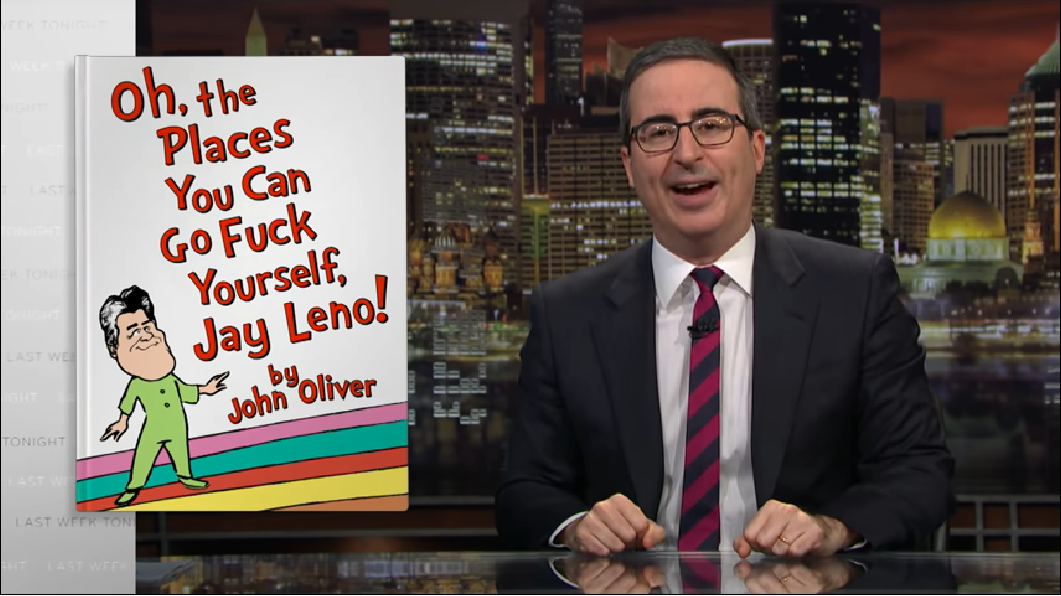
Bonus: here’s John Oliver’s Oh! parody from his recent segment on online shaming:

from Blogger https://ift.tt/2Fr18IO

Posted in Uncategorized | Tagged , , | Leave a comment

court, while uncomfy with some Amazon techniques, declines to grant PI

Comphy Co. v. Amazon.com, Inc., NO. C18-1460RSM (W.D. Wash.
Mar. 12, 2019)
The Comphy Company markets itself as a luxury company,
historically supplying its linens to luxury spas. Ultimately, Plaintiff decided
to start retailing its products online through its own website, though it
doesn’t market directly to customers and instead relies upon word of mouth and
first-hand exposure at hotels, spas, and bed and breakfasts utilizing its
products.
Amazon solicited Comphy several times to sell its products
on Amazon’s platforms, but Comphy declined based on its luxury strategy.
Nonetheless, Amazon bought keyword advertising utilizing keywords including
COMPHY from several search engines, resulting in ads for, e.g., “Comfy Sheets
Queen”; “Shop Comfy Sheets” “Comphy Co Sheets”; and “Comphy Company Sheets at
Amazon.” Likewise, if consumers use Amazon’s own-site search and start typing “comph,”
Amazon’s search bar provides possible searches including for “comphy sheets,”
“comphy company sheets,” and “comphysheets” along with seven other unrelated
possible searches. Because Comphy’s products are not available through Amazon,
a search for “comphy sheets” provides products similar to Plaintiff’s products,
including bedding offered for sale by “Comfy.” On one product advertised in
response to a search for “comphy sheets,” Amazon prominently displayed
“Amazon’s Choice for ‘comphy sheets,’” though Amazon represented that it had
stopped doing that specifically (but didn’t agree to an injunction requiring
that cessation).
Comphy projected a significant increase in its online sales
in 2018 but hadn’t met that growth rate. It requested an injunction against
Amazon’s allowing third parties’ unauthorized use of COMPHY or highly similar
terms such as COMFY to promote bedding, sheets, pillows and related products;
selling merchandise under the COMPHY COMPANY, COMPHY SHEETS or COMFY SHEETS
storefront in connection with those products; using “Comphy Company Sheets”, “Comphy”
(either alone or with other words), or “Comfy” applied to allegedly infringing
products (either alone or with other words) to display “infringing and
unlabeled third-party sheets”; autosuggesting searches for “Comphy”, “Comphy
Sheets”, “Comphy Company” and “Comfy Sheets” when users begin to type the first
few letters; using “Comphy” on product search result pages in phrases like
“Amazon’s Choice for Comphy Sheets”; and using COMPHY or COMFY SHEETS as
keywords with online advertising networks. The breadth of Comphy’s claims and
its failure to segregate particularly disturbing uses from the other behavior
it challenged doomed its request for injunctive relief.
Comphy’s failure to disaggregate Amazon’s uses made it
unlikely to succeed on the merits overall.
First, it wasn’t clear whether or to what extent Comphy had
a valid mark in “Comphy” alone. Its registrations were for stylized versions of
its name. The presumptive validity of the registration was rebutted for these
purposes because, first, the registration was for goods other than those at
issue here, specifically: “Linens and bedding for health spas, namely, towels,
pads in the nature of bed pads, mattress pads and table pads, sheets, duvets,
comforters, pillow cases, pillow shams, and table skirts.” That didn’t cover the
consumer bedding at issue here; Amazon wasn’t alleged to infringe on the spa
market. Second, the registration didn’t cover the “bare” word mark, which
matters because “comphy” is a mere misspelling of the descriptive-for-linens
term “comfy.” Comphy itself testified that it consistently used the
design/logo.

The registered marks

Comphy didn’t succeed in establishing rights in “comphy” as
a text mark. Plaintiff may not “remove a common descriptive word from the
public domain by investing his goods with an additional quality, thus gaining
the exclusive right to call his wine ‘rose,’ his whisky ‘blended,’ or his bread
‘white.’” “Similarly, Plaintiff does not have the exclusive right to call its
goods ‘comfy.’” Comphy didn’t establish commercial strength; it argued that it
was the “brand standard” for luxury hotels, spas, and bed and breakfasts and
that it has “expended extensive sums annually since 2003 on advertising to
promote its Comphy brand and branded products, via trade shows and other advertising
and marketing in industry publications targeting bed and breakfasts.” But that
all involved use of the stylized “C” mark, “which lends distinctiveness to the
mark.” Nor did strength in the luxury spa market indicate strength in the
consumer retail market, especially since Comphy doesn’t market to consumers but
relies on personal exposure and word of mouth.
Nor was Amazon’s use clearly confusingly similar. Whether
the use was confusingly similar depended, in part, on the strength of the mark.
Network Automation thought that having
an inherently distinctive mark could lead to an inference that a consumer who
uses the mark is searching only for that particular source (an assumption that
is itself often unwarranted), but that reasoning didn’t apply here. Amazon
argued that COMPHY is a common misspelling of “comfy”: within Amazon reviews,
COMPHY is used in reference to bedding only 9% of the time and used in
reference to Comphy’s goods only slightly more than 1% of the time. The court
agreed that use of “comphy” as a search term didn’t necessarily indicate an
intent to search for Comphy’s products, even when it was used in reference to
bedding. Amazon’s survey also determined that 13% of consumers regarded COMPHY
as referring to a particular source for bedding, but that more than 12% of
those consumers also regarded “comfort”—a non-existent control—as also
referring to a particular source for bedding. [Clever control, since there are
“comfort + other word” marks out there.]
Proximity of goods and similarity of marks did weigh in
Comphy’s favor. In a footnote, the court indicated that its analysis might
differ “profoundly” if Comphy had focused only on Amazon’s search engine ads for
“Comphy Co Sheets” at Amazon, which makes sense to me, or on Amazon’s use of
the search term “comphy sheets” within its own website to offer consumers
“comfy” brand sheets or other sheets marketed as comfy or comfortable, which as
stated doesn’t—if the sheets are plausibly comfy, then descriptive use should
be just fine. (Though admittedly that isn’t easy to show in the Ninth Circuit,
given its defiance of the Supreme Court’s view in KP Permanent.) Anyway, Comphy “elected to lump the contexts and
uses together, and the Court declines the invitation to scour the limited
record to craft a legally defensible injunction.” In particular, only uses of
“comphy” by an Amazon customer who perceived that word as a mark but who
confusedly bought “comfy” sheets instead would involve confusion; other
scenarios involved no confusion at all, or at most diversion. “And, the Court
can only determine whether a customer knows of Plaintiff’s sheets based upon
the strength of the mark.”
There was evidence of actual confusion, including Amazon
reviews referring to Comphy and a declaration from an Amazon consumer who
intended to purchase Comphy sheets, bought “Comfy Sheets” on Amazon, realized
his mistake when the sheets arrived, and returned the Comfy Sheets. The court
found the evidence of actual confusion “often compelling,” but this was only a
small percentage, and Amazon pointed out that people who pick descriptive terms
invite a certain amount of confusion. “The Court agrees that some actual
confusion may exist even if a reasonably prudent consumer would not be
confused.”
Marketing channels: favored Comphy. Degree of care: Comphy’s
self-positioning as a luxury company meant its consumers weren’t “wholly
unsophisticated”; neutral.
Amazon’s intent: Amazon’s prior solicitation of Comphy’s business
didn’t indicate a bad intent; there was no evidence that the prior business inquiries
were related to Amazon’s current actions. Intent was “essentially neutral.”
Balancing the factors, there wasn’t a likelihood of success
on the merits.
Separately, Comphy didn’t show irreparable harm. Sales
growth short of Comphy’s ambitions wasn’t irreparable harm, nor did Comphy
adequately tie its lower-than-desired rate of increase to Amazon’s actions. Nor
would money damages be inadequate to remedy this “mainly financial” harm.
Lost control over reputation: “misuse of a trademark no
longer results in a presumption of irreparable harm.” Comphy showed evidence of
consumer confusion and dissatisfaction, but dissatisfaction with Amazon’s
offerings in the absence of confusion wasn’t relevant. Only if dissatisfaction
were attributed to Comphy would there be harm to its brand, and there wasn’t
evidence of that. Nor did Comphy explain why final remedies wouldn’t be
adequate. “Indeed, this case appears quite distinct from prior cases where
interaction with confused consumers cannot be remedied because those consumers
are unknown to the parties. Here, there seems to be a much higher chance that,
if liable, Defendant could contact almost every purchaser of the allegedly
inferior products and seek to repair any damage that may have been done to
Plaintiff’s brand.”
In conclusion, the court suggested that Amazon was very
close to (and perhaps even over) the legal line in some of its acts (“Comphy
Co.” in keyword-triggered ad text!), but still declined to grant relief on this
record.

from Blogger https://ift.tt/2ugp0IU

Posted in Uncategorized | Tagged , , , | Leave a comment