Former supplier can sue supplement maker for falsely implying FDA approval & making claims based on old ingredients

In re Elysium Health-Chromadex Litig., 2018 WL 4907590,
No. 17 Civ. 7394 (CM) (S.D.N.Y. Sept. 27, 2018)
  
Elysium, which makes dietary supplements, sued Chromadex, a
former supplier, for false advertising under the Lanham Act, trade libel,
deceptive business practices under New York General Business Law § 349, and
tortious interference with prospective economic relations.  Chromadex argued that entertaining Elysium’s
lawsuit would violate the Noerr-Pennington doctrine, which protects a party’s
right to petition the government for redress, and filed a mirror image
complaint.
Elysium’s Basis is sold as an anti-aging product, and has
two main ingredients: nicotinamide riboside (NR) and pterostilbene (PT). Chromadex
sold these as Niagen and pTeroPure, respectively. In 2017, after the parties’
relationship soured, Chromadex filed a citizen petition with the FDA. A citizen
petition is “a means afforded by the FDA for raising concerns about products
the FDA reviews; any individual may file such a petition concerning scientific
or legal issues before or while the product is on the market.” Chromadex
asserted that it was the only NR supplier in the US, and that Niagen was sold
under a New Dietary Ingredient Notification (NDIN) filed with the FDA and has
obtained generally recognized as safe (GRAS) status. The petition further
alleged that Elysium was using a new, unknown supplier “for which no [NDIN] has
been filed with the FDA and which does not have GRAS status.” Chromadex claimed
that it had analyzed samples of the new Basis and found the solvent toluene in
them, but not in old Basis; this (and the lack of NDIN) made the new source of
NR “adulterated” in contravention of the law. The FDA hasn’t set any allowed
levels of toluene, but a CDC publication states that “Single exposures to
toluene or repeated exposures over a few weeks can cause headaches and
sleepiness, and can impair your ability to think clearly.”
Elysium’s suit alleged that the petition was false and
misleading and that it was filed for the sole purpose of harming Elysium,
rather than bringing any genuine concerns about Basis’ safety to the FDA’s
attention. In particular, Chromadex allegedly knew (or, as a regulatory consultant,
should have known) that the FDA does not grant citizen petitions like this one seeking
the commencement of enforcement actions. In addition, Elysium alleged that
Chromadex’s own Certificates of Analysis showed that its pTeroPure contains
similar levels of toluene, so Chromadex could not actually have believed that
Basis was unsafe. Further, the levels of toluene allegedly found in Basis were “far below the allowable
levels” accepted by the FDA. Finally, Elysium alleged a coordinated effort
to distribute claims in the citizen petition via an investor alert listserv
available on Chromadex’s website. 
The court declined to dismiss the complaint under Noerr-Pennington or under New York’s
anti-SLAPP law or litigation privilege. At this point, the court couldn’t
reject the sham exception: petitioning activity that is objectively baseless
and is a “mere sham to cover an attempt to interfere directly with the business
relationships of a competitor.” Chromadex itself, in its exhibits attached to
its motion to dismiss, submitted evidence in the form of a letter from the FDA that
it knew that the action it sought in its petition—a seizure order/injunction
against distributors—couldn’t be had through a petition; the letter was dated
well before the petition. Other courts have ruled that a petition is
objectively baseless when the petitioned agency lacks authority to take the
action requested or has a policy against doing so.
Chromadex argued that its petition could be granted in part,
by getting some other order or action from the FDA.  Elysium argued that a motivation to inform
the FDA of a potential health issue could have been carried out by a
(nonpublic) trade complaint; again, Chromadex’s filings demonstrated its
awareness of this possibility. That wasn’t enough to make the petition a sham.
But more “damning” was the allegation that pTeroPure contained comparable
levels of toluene, which if true would be good evidence of objective
baselessness.  The court wanted that
question resolved on summary judgment; otherwise there was enough for the complaint
to proceed under the sham exception to Noerr-Pennington
immunity.
Chromadex alleged false advertising by Elysium about the
scientific research, chemical composition, clinical testing, purported health
benefits, and FDA approval of Basis.  To
the extent the claims were based on toluene content, the court seemed to
decline to exercise jurisdiction because it wasn’t in a position to judge, and
the FDA could weigh in on, the precise acceptable level of toluene in a dietary
supplement. That alone doesn’t seem like a good enough reason to not resolve
the claim before the court in the absence of preemption/preclusion; courts
judge scientific matters like this all the time.
Other statements did survive the motion to dismiss, though
not a statement that Basis was now “even purer” and “consistently white”
instead of having color variations, which was made in response to a consumer
email inquiry and then posted to a Yahoo! message board by an anonymous poster.
That wasn’t enough to constitute advertising or promotion.
Chromadex alleged that Elysium misrepresented its FDA
approval. Elysium’s “Our Mission” page on its website says that all its
products go through various steps, including the “FDA NDI Submission” stage: “We
conduct rigorous safety studies for new dietary ingredient (NDI) submissions to
the FDA. The Federal Food, Drug, and Cosmetic Act (FD&C) requires that we
submit studies to demonstrate the safety of “new dietary ingredients.” It then
goes on to describe the “Safety Testing” stage (“Typically characterized as a
‘Phase 1’ clinical trial, this stage determines the safety and pharmacokinetics
of the compound in healthy individuals,”) and the “Efficacy Testing” phase
(“Typically characterized as a ‘Phase 2’ clinical trial, this human study looks
at the safety and efficacy of a given molecule.”). Chromadex argued that these
statements were misleading because they indicated that Basis – Elysium’s only
consumer product – has received FDA approval. The court agreed: “Statements
relating to the government approval process of nutritional supplements, coupled
with the fact that Elysium only sells one consumer product, gives rise to the
plausible conclusion that Elysium’s sole consumer product has undergone that
process.”
Chromadex also challenged statements touting the scientific
support for Basis, including a report of an Elysium-sponsored banner ad on
Facebook celebrating Basis as “the world’s first cellular health product
informed by genomics” and an interview with one of Elysium’s founders published
by Allure magazine quoting him: “With regard to Basis, the pill seems simple,
but the amount of science behind it is quite extensive…. [The science behind
Basis] began almost 30 years ago. The research progressed from studying aging
in yeast to the discovery of a family of proteins called sirtuins that control
aging. That led to the identification of two compounds, [PT] and [NR], that
activate sirtuins…. [Those sirtuin-stimulating compounds are the main
ingredients in Basis].”
Elysium argued that statements in news articles aren’t
commercial speech, but that’s not always true. 
Specific factual statements might still be actionable, and here the
statements “give rise to a plausible inference that they were part of a broader
advertising campaign intended to mislead consumers into believing that Elysium
developed the science behind a one-of-a-kind product.” Elysium’s statements on
its website celebrating the work of its Scientific Advisory Board and its
“Research Partnerships” could also create “an implied endorsement” about the
research undergirding Basis.
Similarly, Chromadex alleged that statements on Elysium’s
website about clinical trials conducted on Basis were misleading because the
only clinical trials were conducted while Basis was being produced with Chromadex’s
NR and PT products. This too supported a plausible inference that Elysium
misrepresented the clinical testing of the actual product it was now selling.
The court also found that competitive injury was plausibly
pled—so statements made by a former customer can now provide Lanham Act
standing, under appropriate circumstances. Chromadex could also bring a NY GBL
§ 349 claim for the same sets of statements. However, its § 350 claim failed
because that required the plaintiff to show actual reliance, which Chromadex
didn’t and couldn’t plausibly plead.
Tortious interference: Elysium allegedly interfered with Chromadex
prospective economic relationships by negotiating and enforcing an exclusivity
provision in the parties’ supply agreement, only to then “sabotage” Chromadex
by “refusing to pay for extraordinarily large orders of NR and conspiring” with
Chromadex employees.  But that wasn’t
enough: Chromadex needed to plead that Elysium “direct[ed] some activities
toward[ ] [a] third party and convince[d] the third party not to enter into a
business relationship” with Chromadex.

from Blogger https://ift.tt/2CJg3hm
Posted in Uncategorized | Tagged , , | Leave a comment

Court presumes failure to comply w/FDA labeling rules to be misleading

Campbell v. Freshbev LLC, 322 F.Supp.3d 330 (E.D.N.Y. 2018)
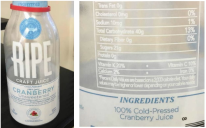
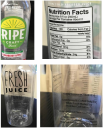
Campbell bought several bottles of Freshbev juices at Whole
Foods, allegedly relying on misrepresentations (1) that the juices were
unpasteurized; (2) that the juices were cold-pressed; (3) that the juices were
fresh; and (4) that the Cranberry Apple juice had more cranberry juice than
apple juice.

Initially, the court declined to resolve at this stage
whether Bristol–Myers Squibb Co. v. Sup. Ct. of Cal., ––– U.S. ––––, 137 S.Ct.
1773 (2017), meant that federal courts, not just state courts, lacked personal
jurisdiction for claims by out-of-state plaintiffs against an out-of-state
defendant that had no connection to the forum state, or whether that even
applied to nationwide classes. Without a motion to certify a nationwide class,
the issue wasn’t squarely before the court.
The court found Campbell hadn’t shown standing for
injunctive relief, because he didn’t plead a willingness to buy the juice again
if he could be confident about the truth.
Freshbev argued that the challenged statements weren’t
materially misleading. Campbell’s first argument was that “unpasteurized” was
misleading because the juices were treated with high pressure processing (HPP),
which was allegedly equivalent to pasteurization.  Freshbev responded that FDA regulations treat
pasteurization and HPP as two separate treatments and allow “unpasteurized” on
HPP-treated juice. The FDA has issued nonbinding guidance on treating juice
safely, and a proposed rule (1998!) that allowed an “unpasteurized” label as
long as that was truthful and nonmisleading. The problem was that “unpasteurized”
might be misleading insofar as it didn’t distinguish between “a product that
may contain harmful pathogens that could result in serious disease and one that
is treated using a method (other than pasteurization) that is capable of
achieving a 5–log reduction in the target pathogen.”  Thus, additional information was required on
such a label. Here, two of the labels showed that the juices were treated with
pressure, providing the requisite additional information, and the claim was
preempted. One label didn’t, so the claim was unpreempted. [Freshbev submitted
a graphic that allegedly represented the full label and had pressure
information, but that couldn’t be considered on a motion to dismiss.]
Cold-pressed: Campbell alleged that this was misleading
because the juices were treated with HPP after being cold-pressed. It was
implausible that a reasonable consumer would think that nothing had been done
to the juice except cold-pressing, in the absence of an “only” or “exclusively”
or similar modifier.
Fresh:  21 C.F.R. §
101.95 governs use of the word “fresh” on a label.  Of course there’s no private right of action
under the FDCA and its regulations, but NY “forbids the misbranding of food ‘in
language largely identical to that found in the FDCA.’” And also, “if FDA
regulations provide that a claim on a product’s label is misleading, that is
evidence that a reasonable consumer might be misled by the packaging.”  21 C.F.R. § 101.95(a) states that “[t]he term
‘fresh’ [in labeling] in a manner that suggests or implies that the food is
unprocessed, means that the food is in its raw state and has not been frozen or
subjected to any form of thermal processing or any other form of
preservation….” Syllogistically, HPP is a form of preservation, and thus juice
products treated with HPP shouldn’t be advertised as “fresh.”
There’s an exception if “the term [fresh] does not suggest
or imply that a food is unprocessed or unpreserved.” The FDA’s example was
pasteurized whole milk, which consumers understand to “nearly always” be pasteurized;
by contrast, “fresh” cannot be used to describe pasteurized pasta sauce because
pasta sauce is not always pasteurized, so consumers would assume that “fresh”
sauce is unprocessed.  Because juice is
widely sold with and without processing, the exception didn’t apply here.  Freshbev argued that the labels’ disclosure
of “pressure” would avoid any consumer confusion, but “because the term ‘fresh’
is misleading in isolation, it is not clear as a matter of law that confusion
generated by the misuse of the term would be resolved by additional statements
elsewhere on the label.”
“Cranberry Apple”: Campbell argued that this was misleading
because the product had more apple juice than cranberry. Freshbev argued that
that the name of the product wasn’t plausibly read as a proportion claim, and
that any confusion could be resolved by reading the ingredients list.
21 C.F.R. § 102.33(b) states that names “must be in descending
order of predominance by volume unless the name specifically shows that the
juice with the represented flavor is used as a flavor (e.g., raspberry-flavored
apple and pear juice drink).”  Defendants’
label was a pretty clear violation of this rule without the “flavored” caveat. “Because
it violates FDA labeling requirements, a reasonable consumer may be misled into
believing that Cranberry Apple juice has more cranberry juice than apple.”
However, a common law fraud claim against the failure to put
an unpasteurized warning label on the bottles failed; the most plausible reason
Whole Foods failed to do so was not an intent to defraud, but an understanding
that HPP avoided the risk of untreated, unpasteurized juice.

from Blogger https://ift.tt/2Cc9hzD

Posted in Uncategorized | Tagged , , | Leave a comment

Third Circuit holds that misrepresentation of safety isn’t actionable false advertising for consumables that didn’t cause individual harm

In re: Johnson & Johnson Talcum Powder Products
Marketing, Sales Practices & Liability Litig., 903 F.3d 278 (3d Cir. 2018)
Plaintiff Estrada alleged that perineal use of Johnson &
Johnson’s Baby Powder can lead to an increased risk of developing ovarian
cancer.  Over a dissent, the court of appeals held
that a plaintiff suffered no Article III injury when she bought a product that
she now believes she should never have bought: buyer’s remorse is not
cognizable, and a purchase is itself not an economic injury where the buyer got
the benefit of the bargain.
Estrada didn’t allege even an increased risk of cancer, or
emotional injury from the fear of developing cancer, or medical monitoring
costs.  Nor did she allege that the
product didn’t live up to its claims: “designed to gently absorb excess
moisture,” “keep[ ] skin feeling soft, fresh and comfortable,” and “reduce the
irritation caused by friction.” Nor did she allege that she still possessed a
durable but now-useless product; she’d consumed what she’d bought, so she also
didn’t allege transaction costs associated with reselling or returning Baby
Powder. The core allegation was that, if she’d known of the risk, she wouldn’t
have bought the powder in the first place.
She might have successfully pled economic injury by pleading
that she’d have bought a less expensive alternative, and her complaint did
suggest that alternative cornstarch-based products existed that didn’t pose the
same risk. But she failed to allege that cornstarch-based products would have
been cheaper, or that there was a price premium associated with J&J’s
superiority claims for its products.
On appeal, she argued that she hadn’t received the benefit
of the bargain: she paid for a product that didn’t increase the risk of ovarian
cancer but received one that did, which was worth less than what she paid. But
she got baby powder that “successfully did what the parties had bargained for
and expected it to do: eliminate friction on the skin, absorb excess moisture,
and maintain freshness.” But wasn’t she also, at least implicitly, promised
that the product would do that safely?
 To have Article III standing, a
plaintiff has to allege “facts that would permit a factfinder to value the
purported injury at something more than zero dollars without resorting to mere
conjecture.”
Although courts often “credit allegations of injury that
involve no more than ‘application of basic economic logic,’ … there is a
difference between allegations that stand on well-pleaded facts and allegations
that stand on nothing more than supposition.” References to future expert
opinions weren’t enough to establish constitutional standing, even though the majority
also said that “a plaintiff need not develop detailed economic models at the
pleading stage to establish that she has standing.”  Here, all Estrada alleged was that, although she
bought the product at a given price, she later wished that she hadn’t.
But what about that implied promise of safety? Why not
presume that Estrada would pay more for safe than unsafe powder?  First, to presume that “would turn the
standing question on its head” because federal courts lack jurisdiction unless
the record shows that it exists. [That’s a weird move. Not all allegedly
implied promises are promises of safety; especially since we can rely on other
economic theories in the standing inquiry, it seems very commonsensical to
infer the relevance of safety, which wouldn’t provide standing in every case even if it would provide
standing in every case about safety.] “[O]ur refusal to leap to such a
conclusion is supported by Estrada’s apparent desire to continue purchasing
Baby Powder in the future despite being aware of its alleged health risks.” That
desire apparently wasn’t conditioned on receiving a price discount in the
future.
Second, Estrada’s own allegations indicated that the powder
she received was safe for her, given
the absence of allegations about risk to her.
The majority clarified that there was no conflict with its
reading of Kwikset Corp. v. Superior Court, 51 Cal.4th 310, 120 Cal.Rptr.3d
741, 246 P.3d 877 (2011), which held that, “[f]or each consumer who relies on
the truth and accuracy of a label … the economic harm is the same: the
consumer has purchased a product that he or she paid more for than he or she
otherwise might have been willing to pay if the product had been labeled
accurately.” The key language was “paid more”: in Kwikset, there was a sufficient pleading that the plaintiffs didn’t
receive the benefit of their bargain.
Thus, Estrada’s claim for restitution also failed.  And her claims were “further weakened by her
alleged desire to purchase Baby Powder in the future despite knowing of its
alleged health risks,” which suggested that other consumers might want to do so
too. Also, “consumers are already highly informed of the alleged health risks
associated with Baby Powder given the numerous publicly available studies and
publications that she cites in her complaint. Estrada’s complaint refers to,
inter alia, … a pamphlet allegedly distributed ‘to all ovarian cancer patients
at nearly every medical facility in the United States.’ Wouldn’t such
widespread knowledge already have been factored into the current market price
of Baby Powder? And if so, how did Johnson & Johnson earn unlawful profits
by withholding information that the market might have already taken account of?”
[This argument is unworthy of a circuit court. 
As far as I can tell, Estrada never alleged that consumers of baby
powder are “highly informed” of the health risks, even if other people know
(ovarian cancer patients strike me as finding out too late, for example).]
And for injunctive relief, Estrada’s knowledge of the risks
made her unlikely to suffer future injury; the court wouldn’t allow a “stop me
before I buy again” claim.  “The law
affords Estrada the dignity of assuming that she acts rationally, and that she
will not act in such a way that she will again suffer the same alleged ‘injury.’”
Judge Fuentes dissented, beginning with the possibly relevant
fact that juries around the country have found J&J liable for its powder’s
propensity to increase ovarian cancer risks. Estrada alleged that, if she’d
known that, she wouldn’t have bought the powder. In the abstract, it was
correct that a plaintiff who gets the benefit of her bargain can’t claim injury
in fact. But the majority ignored key terms in that bargain, in the dissent’s
view, specifically safety. Estrada alleged that J&J held the product out as
safe.
The powder need not be unsafe as to Estrada in order for
safety to be part of her bargain. Her economic harm wasn’t an increased risk of
cancer. Her harm was the economic harm caused by purchasing a product due to
J&J’s misrepresentation about safety. 
She alleged that she wouldn’t have bought the product had she known the
truth, and that’s an Article III injury in fact.  Its actual safety as to her was non-economic
harm, not at issue.
The dissent addressed the majority’s hypothetical—what if
J&J had been able to go back in time 50 years, when Estrada first started
buying the product, and reassure her (based on what we know from her
allegations) that she personally wouldn’t be among the people harmed by the
product? The majority concluded that this “legal fiction” proved that she hadn’t
been harmed. 
But safety representations have two related meanings: First,
“is this going to hurt and/or kill me?” That was the realm of products
liability.  Second, “is this product safe
in general?”  Consumers might want to
know this because, among other things, they might be buying the product for
others’ use.  And they also might want to
know this simply because it’s among the reasons to choose one product over
others.  Kwikset showed why Estrada did suffer injury: she wanted something
that she didn’t get, despite the alleged misrepresentation that she would get
it. “I see no reason we should devote ourselves to understanding why a
plaintiff values what she values.”  We
don’t ask whether an observant Jew’s preference for kosher meat represents
anything real, or a Rolex consumer’s preference for a real Rolex over a
substantively identical counterfeit. All they had to do was plausibly allege
that they wouldn’t have bought a properly labeled product, or wouldn’t have
paid as much for it.  So too here.
Estrada alleged that she valued “safety.” That should be enough. [There is a
real basis for this preference, too.  Time-travel
fantasies aside, I want to know what general risks products pose when I buy
them. I don’t expect Dr. Who or J&J to pop out and reassure me that I’ll dodge a bullet, and
I doubt I’d believe them if they did.] 
There was no attenuated causal chain here; she alleged that she wouldn’t
have bought the product had she known the truth, making the injury the total
sum she paid.
The dissent would further hold that injury was “no more than
application of basic economic logic.”  “Dealing
only with the allegations of the pleadings, it seems sufficiently elementary
that a product held out as safe will command a higher price than a product held
out as markedly increasing a woman’s risk of developing ovarian cancer.”  As for allegations about willingness to
purchase again, the majority read her pleadings to state that she was willing to
buy the product as-is, but it made more sense that her pleaded desire to buy
baby powder in the future was contingent on J&J credibly offering a product
that met the terms of her bargain.  “She
is only unlikely to suffer future economic injury if we presume that Johnson
& Johnson has lied and will continue to lie in its labeling, or that
Estrada will assume that any label offered by Johnson & Johnson is
untruthful.”
Plus, the majority’s interpretation of lack of standing to
seek injunctive relief essentially struck down a part of California’s UCL,
which was not a good idea.

from Blogger https://ift.tt/2CGE5JQ

Posted in Uncategorized | Tagged , , | Leave a comment

it’s not defamatory to conflate 2 legally distinct entities when unity is what they wanted consumers to perceive

RainSoft v. MacFarland, No. 15-432 WES, 2018 WL 4696737
(D.R.I. Sept. 30, 2018)
MacFarland runs lazymanandmoney.com, where he blogs about
companies who provide consumer products and services. He and his wife “sat
through an in-home demonstration of RainSoft’s water-treatment products.” The
demo was  conducted by Oster, an employee
of Basement Technologies (a local RainSoft dealer) who used a script that was
written by RainSoft that didn’t mention Basement Technologies; the Basement Technologies/RainSoft
agreement was intended to foreground RainSoft’s brand name and reputation.
MacFarland’s first RainSoft post, “Is Home Depot’s Water
Test from RainSoft a Scam?” the post mixed narration – “The salesman was super
nice, and very friendly with our dog.” – and critique. McFarland called the
in-home presentation a “magic show”: the demo ostensibly showed RainSoft’s
products purifying McFarland’s tap water, but McFarland wondered if the bottles
used in the demo might have been doctored—“I’m not saying they were, but it’s
possible.” He also accused RainSoft of making “false promises,” using
“high-pressure sales tactics,” and other “slightly deceptive practices.”  The putatively “false promises” included that
RainSoft’s filtration system would save him $20,000 in appliance-replacement
costs over 20 years – this MacFarland “highly doubt[ed].”  The “high-pressure sales tactics” included
offering five years of free soap if MacFarland purchased a RainSoft system on
the spot. Because it did not include the cost of labor, MacFarland also found
RainSoft’s lifetime warranty deceptive. His first post concluded that the
products weren’t worth their price: “I don’t want to say that the RainSoft EC4
product doesn’t work…. From what I’m reading though, the quality is closer to
midlevel, but it is really high-priced ….” He ended by asking his readers for
more feedback on water purification systems, including any RainSoft experiences.
Despite his skepticism, MacFarland and his wife – who MacFarland “recognized
… was impressed by the product” – gave Oster a $100 check to keep the
free-soap option open.
His second post, “RainSoft Scam? (Part 2),” recounted a
conversation he had had with a “RainSoft representative” in which he haggled
$1,000 off the price Oster quoted him.  He
told the story of a trip he made to Lowes where a “representative in plumbing
was shocked” that Home Depot, where he learned of RainSoft, would “only connect
[MacFarland] to this shady RainSoft company,” rather than show him “a range of
filtration systems from various manufacturers.” The post again mentioned
Oster’s “magic tricks” and “bad logic,” before answering the scam question by
saying he was “leaning towards yes, but you are free to make your own
decisions.”
His third post, “Yep. RainSoft Scammed Me Out of $100,” reported
that Oster cashed the $100 check that had held open the free-soap option,
contrary to MacFarland’s expectations. He warned, “if you suspect a company to
be a scammer, don’t even give them an inch, they’ll take a mile.” He later
added an update to the top of this post: “RainSoft’s parent company, Aquion,
saw this and … sent me a $100 check to make it right.”
Finally, “How to Get Clean, Purified Water (at [t]he Best
Price)” “recounted a spat MacFarland had, in the comments section of one of his
other RainSoft posts, with someone he suspected was, though who denied being, a
RainSoft dealer. MacFarland called that glowing review a “comment scam.” The
post reiterated MacFarland’s previous complaints about RainSoft and added
another about the vagueness of RainSoft’s guarantee that if a customer finds a
better-performing product, the customer keeps the RainSoft system gratis. (“There’s
no real fine print[,] … and the terms are ambiguous ….”).) MacFarland then
summoned “a little common sense” to piece together a “formidable water
purification system” – hyperlinking to other companies’ products – “[t]hat’s
less than 1/6th the cost of what RainSoft was going to charge.”  “I’m not a water purification expert,”
MacFarland wrote, “but I know basic problem solving, scientific process, and
consumer scams ….”
MacFarland also reiterated in comments his position that
“RainSoft salesmen” were “selling fear” via “scammy sales tactics” and “magic
shows.”
After RainSoft sued, MacFarland posted “What is a Scam
Anyway?” stating that when he uses the word ‘scam’ he does not necessarily mean
to connote illegal activity, but instead, more colloquially, a “confidence
trick.” MacFarland’s reluctance to make legal claims stems, he said, from the
fact that he does not “possess a 100% understanding of all laws.” Discovery
revealed that he wrote this post to “cover [his] ass,” which is to say, to
circumvent MacFarland’s understanding of Illinois precedent (the original
location of the case) that treated the word ‘scam’ as “libel per se.”  Viewed in the light most favorable to RainSoft,
the evidence showed that MacFarland always knew that Basement Technologies and
RainSoft were distinct entities. He thought RainSoft had “a point” when it
attempted to educate him on the finer points of its relationship with Basement
Technologies, but that its argument was “most[ly] … bullshit.”
The court found that MacFarland’s negative statements could
be divided into two categories: nonactionable epithets (“scam,” “shady,” “magic
tricks,” “bad logic,” etc.) and “more-sober assessments” (“false promises,”
“high-pressure sales tactics,” and “slightly deceptive practices,” as well as
the implication that Oster worked for RainSoft, not Basement Technologies). The
first category was protected by the First Amendment as “imaginative expression”
or “rhetorical hyperbole.”  “Any reader
of his RainSoft posts would reasonably understand these as metaphor.” Though MacFarland’s
post on the meaning of “scam” had no legal import, it accurately described some
of the word’s many meanings. First Circuit precedent establishes that “the
assertion ‘X is a scam’ is incapable of being proven true or false.”
Category two was protected by “other First Amendment
overlays: the concept of false ideas, issues of public concern, and substantial
truths.” In particular, “[a]n opinion whose factual basis is expressed and
(substantially) true is protected speech.” Minor inaccuracies about an issue of
public concern are fine if the gist or sting is true. Here, MacFarland’s
opinions about “false promises,” “high-pressure sales tactics,” and “slightly
deceptive practices” were all accompanied by their factual bases. RainSoft didn’t
materially challenge MacFarland’s account of Oster’s presentation, and thus
failed to create a disputed factual issue on material falsity. Without
challenges to the factual account, “the law acts a bulwark against liability
for the opinions MacFarland draws from these facts, no matter how unwarranted.”
As for the Basement Technologies/RainSoft distinction, the
court still found substantial truth. A statement is substantially true unless
“it would have a different effect on the mind of the reader from that which the
pleaded truth would have produced.” Just as the difference between being a
member, rather than a mere friend, of the white supremacist Aryan Brotherhood
was immaterial to a reasonable member of the law-abiding contemporary
community, Bustos v. A & E Television Networks, 646 F.3d 762 (10th Cir.
2011) (even though this distinction was life-threatening to the wrongly portrayed
Hispanic inmate involved), the difference between Basement Technologies and
RainSoft was also immaterial.  “Basement
Technologies was under contract to sell only RainSoft products, and to ‘protect,’
‘embrace,’ and ‘promote’ the RainSoft brand ‘in every customer facing
opportunity” to ensure that someday ‘every person in the world [would]
recognize the RainSoft® trademark.’ … Basement Technologies was basically a de
facto arm of RainSoft.” The legal differences were “just too fine to have
piqued public concern.”
False advertising: This wasn’t commercial advertising or
promotion. MacFarland sold ad space (and there was no evidence that his alleged
misrepresentations deceived those
customers), and gained revenue from affiliate links, but his own “product” was
free advice, which hadn’t been shown to be commercial speech. Running ads and
receiving promotional kickbacks isn’t enough to turn content into commercial
speech.  The affiliate links “were
clearly incidental to his objective of providing consumers information.” Overstating
the matter (at least as to commercial speech), the court concluded that “[t]he
First Amendment … protects us while we freely discuss how we should live and
love, how to wage war and keep peace, how best to govern ourselves. And
equally, or almost, how to filter tap water on a budget.”

from Blogger https://ift.tt/2PbrGQM

Posted in Uncategorized | Tagged , , , | Leave a comment

allegedly perfidious salesman protected from passing off liability, but might have engaged in false advertising

Burton v. Label, LLC, No. 15-CV-5793 (VSB), 2018 WL 4759735
(S.D.N.Y. Sept. 30, 2018)
Label, founded by the Millers, sells bespoke and custom
men’s clothing throughout the United States. Schwartzman (for whom Burton is
the trustee) worked for Label as Vice President of Sales. While employed at
Label, he established his own bespoke tailoring and made-to-measure men’s
clothing company, named Trusgan, and thereafter provided his services to Label
as an employee of, and through, Trusgan. Label hired a company called ADP to
automate its employee payroll system, and began paying Trusgan for
Schwartzman’s services through ADP. Allegedly, as a result of an error, ADP
began paying Schwartzman’s salary twice through two payroll accounts, and
blamed him when it was discovered (after he told Label he was leaving). The
Label defendants allegedly began a “campaign of calumny” accusing Schwartzman
of fraud and embezzlement, and telling customers that Schwartzman’s claim that
he could offer Label’s products at a cheaper price is false because they’d
received commitments from their suppliers not to do business with Schwartzman.
Label counterclaimed, alleging various claims against
Schwartzman, including violation of the Lanham Act. The Millers allegedly began
receiving customer complaints about Schwartzman’s quality of service, and he
allegedly tried to steal customers for his own side business during Label work
hours and using Label resources. He allegedly surreptitiously contacted Label
clients, misrepresented that he was placing orders for them through Label, and
instead placed the orders through his own company. In one case, a supplier
asked whether the “orders were still under Label,” to which Schwartzman
replied, “all these orders are under me not Label,” and “I was only sending
them to you because I can’t risk them accidentally being sent through Label.” A
client allegedly complained to Label about the fit of the order, delivery
times, and customer service, believing that Label had been responsible.
Schwartzman allegedly told Label customers that he was opening up his own business
and that “he could continue to service these customers at this new business
where he would provide better customer service and pricing than Label, while
offering the same exact product.” The counterclaims told the alternate story in
which the salary double-dipping was indeed Schwartzman’s doing.
After Schwartzman left Label, Label allegedly discovered
that Schwartzman “represented … that he could easily handle former Label
clients through Trusgan, because Schwartzman had these Label clients’
measurements and other information regarding their previous orders from Label”
and that “he can beat LABEL’s pricing … by 20% to 30% while offering the
exact same product, from the same manufacturers and using the same fabrics.”
The Lanham Act counterclaims had two theories: first, while
employed by Label, Schwartzman sold what he represented to be Label products
but were not in fact Label products; second, after leaving Label, he told
customers that he could offer the same product, but cheaper. The court rejected
both claims on the pleadings.
False association: As an example, Schwartzman placed an
order with a Label supplier, explaining that the order was for Schwartzman, not
Label. Schwartzman’s client subsequently mistakenly complained to Label about
“the fit of the order, delivery times, and customer service.” Assuming that
Schwartzman was indeed using his position as a Label salesman to sell items
represented to be Label goods by placing orders with Label suppliers, “he was
simply unlawfully pocketing proceeds that belonged to his employer; he was not
falsely representing the origin of his own goods. Selling trademarked goods
under its trademarked name is not a violation of the Lanham Act.” Basically first sale, except not quite.
Label argued
that it offered not just clothes, but customer service, but that theory didn’t
work here. While “distribution of a product that does not meet the trademark
holder’s quality control standards” may result in devaluation of the mark and
thus not a genuine product, the trademark holder must allege that “(i) it has
established legitimate, substantial, and nonpretextual quality control
procedures, (ii) it abides by these procedures, and (iii) the non-conforming
sales will diminish the value of the mark.” Here, the quality-of-service
argument “makes no sense in light of the fact that Schwartzman was the Vice President
of Sales at Label, making the quality of service he provided one and the same
as the quality of service Label provided.” The complaint even alleged that
customer gripes about “the fit of the order, delivery times, and customer
service,” were of the type that “had become routine with respect to
Schwartzman’s work.” “Thus, there is no distinction between the goods
Schwartzman sold as Label goods and actual Label goods supplied under
Schwartzman’s watch.”
The false advertising claim had more purchase in theory, but
was inadquately pleaded. First, commercial advertising or promotion wasn’t
pled, merely “isolated disparaging statements” that “do not have redress under
the Lanham Act.” Label “makes no attempt to define the relevant market, but
claims to have over 750 clients,” and didn’t specify the number of the clients
Schwartzman allegedly contacted. 
Likewise, the allegations of falsity would need more specificity to
proceed; Label’s briefing indicated that it could replead to state that
Schwartzman lacked access to their fabrics and suit styles.

from Blogger https://ift.tt/2xYN31p

Posted in Uncategorized | Tagged , , , | Leave a comment

Amazon not liable for use of TM in review

Sen v. Amazon.com, Inc., 2018 WL 4680018, No. 16-CV-01486-JAH-JLB
(S.D. Cal. Sept. 28, 2018)
Sen owns the trademark “Baiden” for skin-exfoliation
products. Amazon bought “Baiden” through Google’s AdWords program and on other search
engines. In 2012, Sen sued Amazon for this conduct and settled; the parties couldn’t
agree on the terms of a long-form agreement, but the court enforced the terms
of a settlement Memorandum of Understanding.
Now Sen sued again for infringement and false designation of
origin/false advertising, alleging the unauthorized use of the Baiden mark in
advertising as well as in an online review that promoted a competing
product.  The infringement claim based on
keyword/pay-per-click ads was barred by claim preclusion.
Contributory/vicarious liability for use in a review: Amazon
user “Nanners” wrote that she initially purchased the Baiden Mitten, but she
declared that a competing product is cheaper and delivers similar benefits.  This claim was barred by nominative fair use.
Nanners’s review used the trademark to identify her subject; she used it “only
to the extent necessary to identify the product she is reviewing” and didn’t
use Baiden’s logo [query: could she have posted a picture of the product she
received? I think the answer has to be yes]. 
Nothing else in the review suggested sponsorship or endorsement and indeed
the idea that there are “monumentally cheaper” competitors suggested the
opposite.
Tortious interference based on pay-per-click ads: precluded;
the claim shared a transactional nucleus of facts with the initial trademark
claim.  Tortious interference based on
the review: barred by CDA §230.

from Blogger https://ift.tt/2PbBbzE

Posted in Uncategorized | Tagged , , , | Leave a comment

Defamation, but not false advertising, claim survives against niche publisher that added wrong info about allegations of wrongdoing

MiMedx Group, Inc. v. DBW Partners LLC, No. 17-1925 (JDB), 2018
WL 4681005 (D.D.C. Sept. 28, 2018)
MiMedx, a seller of medical products, sued DBW, which offers
business and regulatory analysis to paid subscribers, for libel, slander,
defamation, false light invasion of privacy, tortious interference with
business relations, and false advertising under the Lanham Act after defendants
published articles that questioned MiMedx’s sales practices.  One article, “MiMedx: Channel Stuffing
Accusations Resurface in Recent Counterclaim; Former Employees Corroborate
Allegations; A Close Look at Potential Risk,” outlined allegations MiMedx’s
former employees made in court filings against MiMedx claiming that the company
had artificially inflated its sales and revenue figures by distributing more
products to retailers than the retailers could sell. An email described the
article: “we detail channel stuffing allegations and recent counterclaims which
may pose as a regulatory risk for the company. The article examines the
allegations made by customers & former employees, the company’s response to
these claims, and the potential legal risks for MiMedx” and ended with an
invitation to “schedule a call” with DBW for more information. DBW now acknowledges
that the reference to “customers” was a mistake.
As part of its “ongoing examination of allegations of
channel stuffing made by former MiMedx employees,” DBW also submitted a FOIA
request to the Department of Veterans Affairs, Office of the Inspector General
(OIG), and dermined that an OIG investigation “involve[d] documents related to
MiMedx.” MiMedx allegedly informed DBW “off-the-record that MiMedx had
initiated contact with the OIG, that MiMedx was voluntarily working with the
OIG, and that MiMedx was specifically not a target of the investigation.” DBW
published another article titled “VA Office of Inspector General Confirms
Investigation Involving MiMedx Documents,” relaying DBW’s conclusions from its
FOIA request, and also promoted the article via email. Both emails reached at
least some MiMedx shareholders.
DBW allegedly served “as a ‘shill’ for bearish traders in
MiMedx stock” including “friends, family, affiliates, and/or even … [DBW]
themselves.” MiMedx’s stock price declined after the two articles were published.
Libel, slander, defamation: DBW argued that falsity wasn’t
pled; the single word “customers” wasn’t defamatory in that it didn’t render
the first email substantially false and it didn’t cause any incremental harm
compared to the unchallenged bulk of the publication. MiMedx argued that “the
use of the word ‘customers’ … substantively changed the meaning of the entire
communication” because “there is a significant difference between allegations
by a company’s customers and its disgruntled former employees” and further
because it “made it appear that the article contained new or additional allegations
that might corroborate the former employees’ allegations.”
The court concluded that adding “customers” was at least
“capable of defamatory meaning” under DC law and allegations of wrongful
commercial practice would “tend[ ] to injure” MiMedx’s “trade, profession or
community standing.” Under Georgia law, whether the statement was defamatory was
ambiguous, when construed in context of the entire publication as required.  Either way, this survived a motion to dismiss.
 DBW argued, citing case law, that “[c]orporate
plaintiffs are treated as public figures as a matter of law in defamation
actions brought against mass media defendants involving matters of legitimate
public interest,” but MiMedx argued that DBW wasn’t a mass media defendant and the
court declined to judicially notice otherwise. MiMedx might be able to show
facts indicating that it was a private figure for these purposes.
The court didn’t specifically address the FOIA related allegations; it seems to me that those should have to go, as not reporting MiMedx’s preferred interpretation of what seem like uncontested facts doesn’t seem defamatory.
False light: a corporation has no personal right of privacy
and therefore no cause of action for false light invasion of privacy.
Tortious interference: this requires allegations of specific
lost business.  Pleading “customers,
investors, and creditors” isn’t enough, so this claim was also dismissed.
Lanham Act false advertising: MiMedx failed to allege a competitive
injury related to MiMedx’s commercial interests, such as customers withholding
trade or lost revenue; it didn’t even allege that the misleading communications
reached customers (as opposed to shareholders).

from Blogger https://ift.tt/2y2LFKY

Posted in Uncategorized | Tagged , , , | Leave a comment

Non-TM owner can plead false advertising claim for confusing use of TM it used to own

Desmond v. Taxi Affiliation Services LLC, 2018 WL 4589999,
No. 17 C 8326 (N.D. Ill. Sept. 25, 2018)
Desmond is the Chapter 7 Trustee for the Bankruptcy Estate
of Yellow Cab Affiliation, a former Chicago taxicab affiliation with over 1600
dues-paying members who licensed the design mark from YCA. He sued a bunch of
defendants for allegedly engaging in a scheme to render YCA insolvent, so that
it could not pay its creditors, and then establishing a new company that
appropriated YCA’s valuable trade dress. After a passenger was injured in a
taxi and sued YCA as a defendant, some of the defendants here allegedly
established defendant TAS to prevent creditors from reaching YCA’s assets. For
example, TAS collected and retained all payments from YCA members pursuant to
their affiliation agreements with YCA, then transferred some of that money,
disguised as “management fees” and “referral fees,” to YCA’s officers and
directors; some defendants bought and sold taxicab medallions using YCA’s money
but failed to distribute any of the profit to YCA.
After the injured passenger got a $26 million judgment
against YCA in 2015, YCA filed for bankruptcy and TAS refused to provide
further services, forcing YCA to shut down. Certain defendants quickly formed
New YCA (Yellow Cab Association, Inc.) to solicit members away from YCA. New
YCA used mobile data terminals and other taxicab equipment that belonged to
YCA. New also YCA used the same color scheme and design mark that YCA had used,
merely replacing “Affiliation” with “Association.” This allegedly tricked
customers into believing that New YCA and YCA were one and the same.
Lanham Act and coordinate state claims: Trademark ownership
is required for a likely confusion claim, but not for a false advertising
claim. YCA doesn’t own the design mark at issue, so this was a false advertising
claim. The allegations here satisfied Rule 9(b): the use of the color yellow,
the design mark, and a similar name plausibly constituted a false statement of
fact implying YCA’s affiliation with New YCA, and the other elements were
sufficiently alleged, at least as against New YCA.

from Blogger https://ift.tt/2R57wJy

Posted in Uncategorized | Tagged , | Leave a comment

Another malware misattribution claim fails

PC Drivers Headquarters, LP v. Malwarebytes, Inc., 2018 WL
2996897, No. 18-CV-234-RP (W.D. Tex. Apr. 23, 2018)
PC Drivers “offers software designed to help customers
optimize the processing speed of their computers and identify software drivers
ready to be updated.” Malwarebytes sells software that blocks various programs
on its customers’ computers, including software deemed malicious or potentially
unwanted (the latter of which are called PUPs). PC Drivers contends that, in
January 2018, Malwarebytes inappropriately branded one or more of its programs
as a PUP, which can make PC Drivers’ software inoperable and block access to PC
Drivers’ website. This happened before, and when the software received
certification from a newly developed third-party certifier called AppEsteem,
Malwarebytes stopped labeling the programs as PUPs. PC Drivers alleged that it
continues to carry AppEsteem certification and that its programs have not
changed substantially.  PC Drivers sued
for false advertising, trademark infringement [what?], trademark dilution, tortious
interference with contractual relations; promissory estoppel; and related
claims.  (Similar
litigation against Malwarebytes discussed here:
§230 blocked liability.)
The court declined to grant a preliminary injunction, despite
evidence that Malwarebytes has not been cooperative with PC Drivers as PC
Drivers has attempted to figure out the problem. PC Drivers also argued that it
was the victim of an act of retaliation taken by Malwarebytes against AppEsteem
in response to AppEsteem’s threat to list Malwarebytes as a “deceptor.” But
that wasn’t enough.
Malwarebytes argued that §230’s statutory Good Samaritan protection
for blocking and screening of offensive material rendered it immune to all these
claims.
PC Drivers argued that Malwarebytes wasn’t an “interactive
computer service” under the statute, but it was, because the phrase is to be broadly
applied using the definition “any information service, system, or access
software provider that provides or enables computer access by multiple users to
a computer server ….” Malwarebytes “provide[s] users with access to the new
malware definition content that is available on its servers.”
PC Drivers also argued that the immunity didn’t apply to
Malwarebytes’ own statements, but “this requirement is present only in §
230(c)(1).”  I’m not sure this is
responsive: Malwarebytes might be immune for the blocking and any consequences
proximately caused by the blocking itself, but not immune for things it said
about the blocking, which could independently cause damage.
Finally, PC Drivers alleged that Malwarebytes did not act in
good faith. But § 230(c)(2)(A)’s good-faith requirement (for “any action
voluntarily taken in good faith to restrict access to or availability of
material that the provider or user considers to be obscene, lewd, lascivious,
filthy, excessively violent, harassing, or otherwise objectionable, whether or
not such material is constitutionally protected”) doesn’t extend to §
230(c)(2)(B) (“any action taken to enable or make available to information
content providers or others the technical means to restrict access to material
described in paragraph [A]”) under the statute.
Malwarebytes argued that PC Drivers’ federal unfair
competition claim fell under the safe harbor because it wasn’t an IP claim. “Although
the specific provision does not address intellectual property, it is a part of
the Lanham Act, which as a whole ‘pertain[s] to intellectual property,’” so
some courts call all 43(a) claims clawed back from §230 immunity, while others don’t.
The court didn’t resolve the issue because there was no likely success on the
merits regardless.
PC Drivers alleged that Malwarebyte’s designation of PC
Drivers’ software as a PUP was misleading. But this wasn’t false: the
designation “potentially unwanted program” “inherently carries with it the
acknowledgment that it is only a guess as to whether the program is or is not
unwanted,” and “unwanted” “looks more like a subjective opinion than a factual
assertion.”
Dilution: There was no evidence of fame.
Infringement: PC Drivers alleged that there was likely
confusion about association, authorization, endorsement, affiliation, or
sponsorship. Understating the matter, “the Court notes that this claim is
strange when viewed in conjunction with PC Drivers’ other claims.” Malwarebytes
invoked nominative fair use. There was no evidence that Malwarebytes used PC
Drivers’ mark in any way other than listing the name of the website to explain
what it is blocking. The PUP label “implies anything but endorsement; customers
told by Malwarebytes that PC Drivers’ software might be unwanted are not likely
to think that PC Drivers endorses Malwarebytes.” There was only one reference:
to the domain name download.driversupport.com. It was unclear how Malwarebytes could
the user of the name of the website it was blocking without using the domain
name. [Another case where “use as a mark” would also be useful to explain why
this is ok.]

from Blogger https://ift.tt/2xRWa2Y

Posted in Uncategorized | Tagged , , | Leave a comment

Blast from the past: nominative fair use avant la lettre

Polyglycoat Corp. v. Environmental Chemicals, Inc., 509
F.Supp. 36 (S.D.N.Y. 1980)

Found this in an unrelated search and it made me think about
the utility (if any) of the nominative fair use category. Plaintiff sued
defendant for advertising of defendant’s automotive silicone paint finish
remover called POLYCRACKER. Plaintiff’s Polyglycoat, a protective paint finish
sealant for automobiles, was heavily referenced on Polycracker’s label and its
launch ad in Auto Body Repair News, a trade journal:

The words “Polyglycoat TM Remover” appear conspiciously on
the POLYCRACKER label, one page of the ad consists solely of the bold-lettered
statement “WIPE AWAY POLYGLYCOAT TM”, and the body of the ad contains such
statements as “There’s nothing more troublesome for auto body shops than
silicone finishes like Polyglycoat” and “Take off Polyglycoat with the wipe of
a cloth.”
In terms of the Polaroid factors, the court found strong
secondary meaning in the relevant market, the use of an identical mark, product
relatedness sufficient to generate confusion, and an intent to “capitalize on
the popularity of the POLYGLYCOAT mark and product in the field.” There was no
evidence of actual confusion, but “a reasonable likelihood of confusion is
inferred from defendant’s use of plaintiff’s exact trademark to promote its
related product, the absence of a viable alternative explanation by defendant
for its appropriation of the POLYGLYCOAT mark, and other circumstances of the
relevant market.”
Thus, an injunction was warranted to keep Polyglycoat off
the Polycracker label “either as it now appears, or any other way by which the
mark is singled out as the generic, shorthand term standing for the species of
paint finish sealants which POLYCRACKER is said to remove.” Defendant was also
enjoined from singling out the mark in ads, e.g., “WIPE AWAY POLYGLYCOAT,”
“Take off Polyglycoat,” “normal prep solvents … do not remove polyglycoat,”
“The Polyglycoat wipes off easily,” and “say good-bye to Polyglycoat problems.”
However, in the absence of falsity or misleadingness,
defendant couldn’t be prevented from advertising that its product could remove
automotive silicone finishes including POLYGLYCOAT, “the most popular and
perhaps the most durable brand.” Thus, it could continue using the name “in
such conjunctive phrases as ‘silicone finishes like Polyglycoat R.’” In any
such use, the mark couldn’t appear in letters which distinguish it from the
other words in the conjunctive phrase by size, color, typeface or any other
characteristic. And a long disclaimer was required:
POLYGLYCOAT R is a registered trademark of the Polyglycoat
Corporation, Scarsdale, New York, for its protective coating and sealant for
automotive finishes. The term Polyglycoat as used herein means the product
manufactured and sold by that company, and is used without the permission of
Polyglycoat Corporation. POLYCRACKER is neither manufactured nor in any way
sponsored or authorized by Polyglycoat Corporation.
This disclaimer probably did nothing but increase
defendant’s advertising costs, since consumers weren’t particularly likely to
read it.  And aside from the required
disclaimer, this seems like pretty much the result you’d get from nominative
fair use today (since courts would probably interpret the initial ad, at least,
as using “too much” of the mark, as in the Playboy v. Welles case). 
What, if anything, does having nominative fair use as a
defined concept add?  The current Second
Circuit treatment is worse than nothing, since the NFU factors actually negate
the significance of the other key Polaroid factors, like strength and identity
of the marks, and can’t be weighed against them in an understandable way.  “Weighing” implies that enough strength and
similarity (always present in a NFU situation) ought to be able to overwhelm
the NFU factors, but they really don’t. The original concept from the Ninth
Circuit was a way to formalize the obvious fact that there are some cases in
which the multifactor test factors (particularly strength, similarity, and relatedness
of goods) don’t point to the correct result. 
In particular, the multifactor test doesn’t match our understanding of
cases in which the trademark is clearly being used as a comparator or subject
of discussion. I haven’t fully figured out my take on this, but I do think we
need some doctrinal indicator to judges that there are times when the
multifactor test is a bad idea, so that we don’t have to rely on the variable
common sense of individual judges and in particular district court judges’
understandable fear of getting reversed when courts of appeals say that you have
to use the multifactor test no matter what (except with Rogers, in the Second Circuit).

from Blogger https://ift.tt/2R4w9Gr

Posted in Uncategorized | Tagged | Leave a comment