make your own sexual reference: 9th Circuit partially reinstates male enhancement lawsuit

Sandoval v. PharmaCare US, Inc., No. 16-56301, No. 16-56710,
— Fed.Appx. —-, 2018 WL 1633011 (9th Cir. Apr. 5, 2018)
Sandoval brought a putative class action claim based on
PharmaCare’s statements about its “male enhancement” product IntenseX. The court
of appeals affirmed summary judgment on the false advertising and express
warranty claims based on the website, because reliance is required for those
claims and one named plaintiff testified that the website had no effect on his
purchase decision, while the other failed to submit sufficient evidence that he
viewed and relied on the website before his first purchase.
However, false advertising, express warranty, and implied
warranty of merchantability claims based on the IntenseX label were reinstated.
The label stated that the product would “intensify” a user’s “endurance,
stamina, and sexual performance,” and included a seal stating that IntenseX was
“Laboratory Quality Tested.” These were specific and concrete enough to be
treated as representations of fact.  “While
the word ‘intensify’ may have multiple meanings, when read in context, the
label’s statements could convey to a reasonable consumer that IntenseX will
increase the consumer’s endurance and stamina during sex and that its
effectiveness has been laboratory tested.”   Plaintiffs submitted evidence that lab tests
haven’t shown effectiveness.
The court of appeals also reversed summary judgment on the
UCL claim based on unlawfulness: PharmaCare’s alleged failure to comply with
federal law. A federal regulation requires any over-the-counter (“OTC”)
aphrodisiac drug to be approved by the FDA before marketing, and a product
marketed as a dietary supplement will be regulated as a drug “[i]f the label or
labeling of [the dietary supplement] bears a disease claim.” “Labeling” is
construed broadly and includes any article that “supplements or explains” the
product even if the article is not physically attached to it. The IntenseX
label refers consumers specifically to http://www.intensex.com, which contains information
about the ingredients’ ability to treat diseases. That was enough.
However, the court of appeals affirmed the denial of class
certification. The named plaintiffs’ claims weren’t typical of the proposed
class, “which included prospective members who, unlike [the named plaintiffs],
suffered sexual health problems and purchased IntenseX based on the website’s
representations that it can treat sexual-health conditions.” Along with
economic injury, these class members might have suffered additional harm (avoiding
medical treatment); their available claims and remedies, as well as their
incentives, might differ.

from Blogger https://ift.tt/2IFXkm2
Posted in Uncategorized | Tagged , , , | Leave a comment

Reading list: influencing juries in litigation hot spots

Megan M. La Belle, Influencing
Juries in Litigation “Hot Spots”
: The article argues that litigants and
attorneys sometimes use advertising to improperly sway the jury pool, sometimes
by making factual claims but sometimes by using image advertising to create
favorable background impressions, such as Samsung’s sponsorship of an ice rink
in Marshall, in the Eastern District of Texas. La Belle argues that this
conduct can violate the right to an impartial jury and thus can be regulated
despite the fact that the advertiser’s speech is non-false.  The examples are fascinating.

from Blogger https://ift.tt/2uTzBge

Posted in Uncategorized | Tagged , | Leave a comment

multi-million dollar award for trade secret theft & false advertising of “local” origin

Bimbo Bakeries USA, Inc. v. Sycamore, 2018 WL 1578115, No.
13-cv-00749-DN-DBP (D. Utah Mar. 29, 2018)
A relatively large trade secret/false advertising verdict in
this case.  Bimbo prevailed at trial on
its trade secret claim that Sycamore revealed Bimbo Bakeries’ secret recipe for
Grandma Sycamore’s brand “granny” style white bread, which U.S. Bakery obtained
and used in the production of its own granny bread. In addition, Bimbo
prevailed on its false advertising claim that U.S. Bakery’s use of the word
“local” in the tagline “Fresh. Local. Quality.” was misleading in markets,
including Utah, where U.S. Bakery’s bread was baked out of state.
The jury found that U.S. Bakery’s trade secret misappropriation
was willful and malicious (by clear and convincing evidence), and resulted in $1,578,942
in damages.  Syacamore was responsible $526,314
in damages, and the misappropriation was willful and malicious (by a
preponderance of the evidence).  The jury
also found that U.S. Bakery’s false advertising of “local” was willful and
resulted in $8,027,720 in profits (apparently all the profits from its sales
using the tagline, with no deductions).
The court declined to enhance damages on the false
advertising claim, because though the jury found actual damages, the verdict
form didn’t ask the jury to quantify those damages, at Bimbo’s request. Thus,
there was no basis on which the court could “enter judgment, according to the
circumstances of the case, for any sum above the amount found as actual
damages, not exceeding three times such amount,” as provided for in the statute—there
was nothing to multiply. Instead, the finding of actual damages allowed the
profit award.  The equitable factors
weighed in favor of disgorging profits, including (1) the jury’s finding that
the false advertising was willful, (2) evidence of Bimbo’s lost sales, (3) U.S.
Bakery’s direct role in marketing its products under the “Fresh. Local.
Quality.” tagline; and (4) the inadequacy of Bimbo Bakeries’ unquantified
actual damages.
The court declined to award attorneys’ fees for the false
advertising claim. This was not an “exceptional” case in terms of litigating in
an unreasonable manner, and the issues were close; U.S. Bakery “meaningfully
challenged” Bimbo on falsity and consumer confusion.
The trade secret award, however, did include exemplary
damages and fees due to the jury’s finding of “willful and malicious”
misappropriation. The court awarded a “less exacting” amount. Though the
misappropriation was willful and malicious and continued for nearly four years,
the issues were closely litigated and U.S. Bakery is the smaller company; nor
was a desire to harm Bimbo, apart from competing with it, shown.  The court also took into account the false
advertising disgorgement and awarded 50% of the compensatory damages, or
$789,471, along with reasonable attorneys’ fees.
The court also awarded a permanent injunction on the trade
secret claim, though the injunction did not extend to blocking U.S. Bakery from
producing a granny-style bread product as long as it didn’t use the trade
secret.

from Blogger https://ift.tt/2q87NQ9

Posted in Uncategorized | Tagged , , , | Leave a comment

“tougher” and “durable” aren’t puffery for shingles

Stern v. Maibec Inc., 2018 WL 1586323, No.
11-cv-3951(PGS)(TJB) (D.N.J. Apr. 2, 2018)
Maibec makes eastern white cedar shingles and offers a
50-year limited warranty against wood decay and a warranty against stain
failure. Its website touted eastern white cedar as “very durable and requires
very little maintenance.” Its brochures claimed: (1) “Timeless. Traditional.
And tougher than ever.”; (2) “At [M]aibec, we have spent the last four decades
improving the way white cedar shingles are made. Today, they are engineered to
be so durable that you just might consider them high tech.”; (3) “Best of all,
[M]aibec shingles are guaranteed to last”; and (4) “The fact that they are low
maintenance and look even better as they age is just an additional benefit.”
Plaintiff Stern alleged that she chose Maibec shingles over
a competitor’s based on her understanding that they offered the same warranties
and were maintenance free. She alleged that her shingles were warping, cupping,
and lifting three years after installation, and that a Maibec employee who inspected
her house concluded that the warping and other issues were not due to improper
installation. Plaintiff McCaffrey had a similar story.
As indirect purchasers, plaintiffs had no breach of contract
claims.  However, the court refused to
dismiss claims based on express warranties in Maibec’s ads. Maibec contended
that it never guaranteed “no maintenance” and the statements on its website
were mere puffery. The court identified “tougher than ever”; “they are
engineered to be so durable that you might consider them high tech”; and
“[they] are guaranteed to last” as statements that weren’t mere generalized
claims of superiority, but emphasized the shingle’s durability and low
maintenance.  These were objective
representations, not subjective. “Although not quantifiable, these statements
are not so grandiose or lofty as to be considered subjective; rather, these
statements leave a reasonable reader to expect the shingles to withstand the
elements of nature and last for an extended period of time.”  Nor were they incapable of influencing consumer
expectations due to how exaggerated they were.
Maibec next argued that the plaintiffs couldn’t show
reliance, since neither recalled reading or viewing the statements on the
website. However, they generally claimed to have relied on statements made on
Maibec’s website in deciding to purchase Maibec shingles. A reasonable
factfinder could find reliance.
Breach of implied warranty and merchantability claims failed
for lack of privity, which is required to recover for economic loss in New York.
 
GBL Section 349 claims were governed by a three-year statute
of limitations, and for its purposes, the injury occurs on the date that a
product is purchased, delivered, and installed. Thus, at least one plaintiff’s
claims fell outside the statute of limitations; further factfinding was
required for another, whose claims survived for the reasons noted above with
respect to the warranty claims.

from Blogger https://ift.tt/2uUytsm

Posted in Uncategorized | Tagged , | Leave a comment

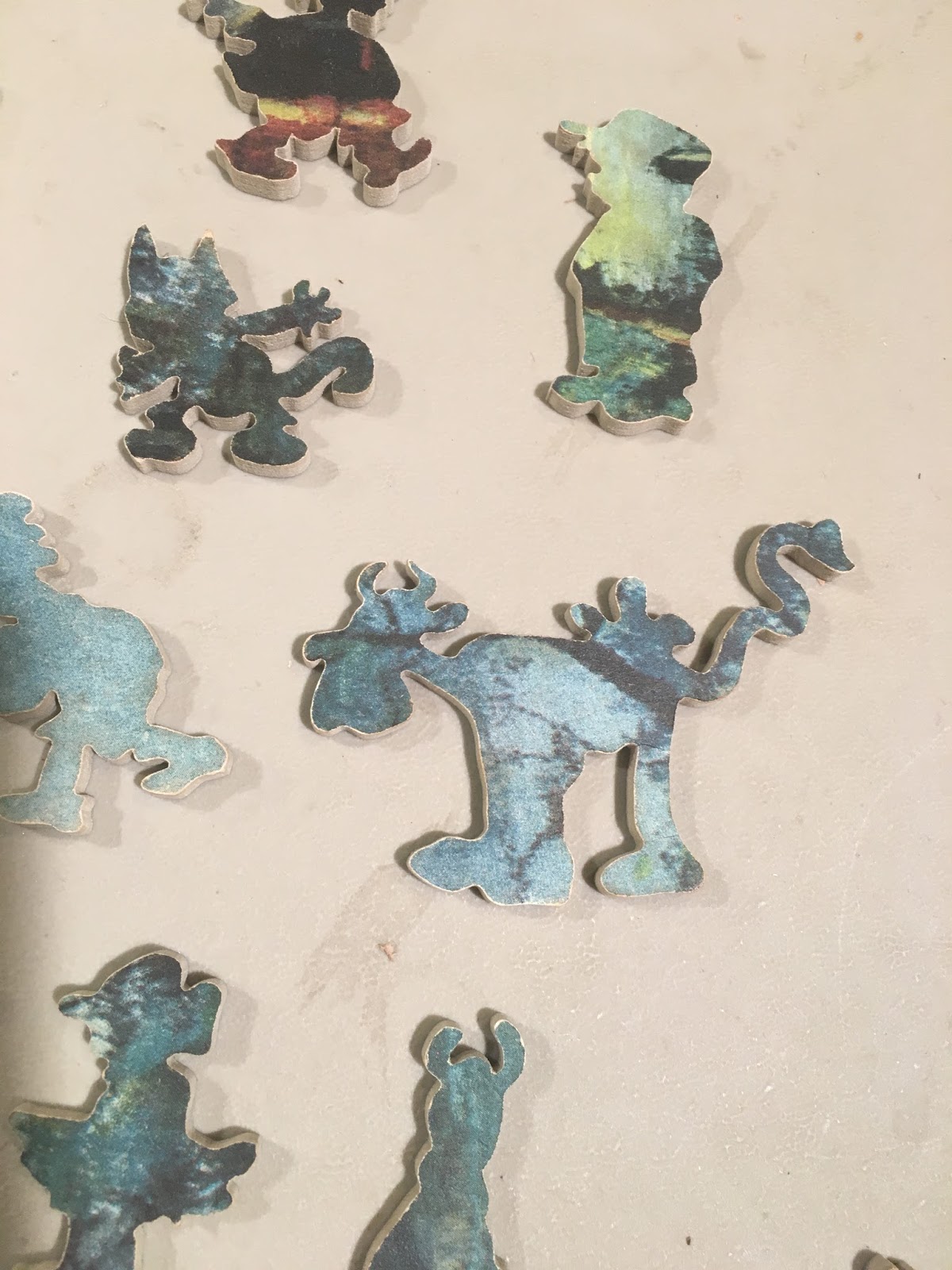
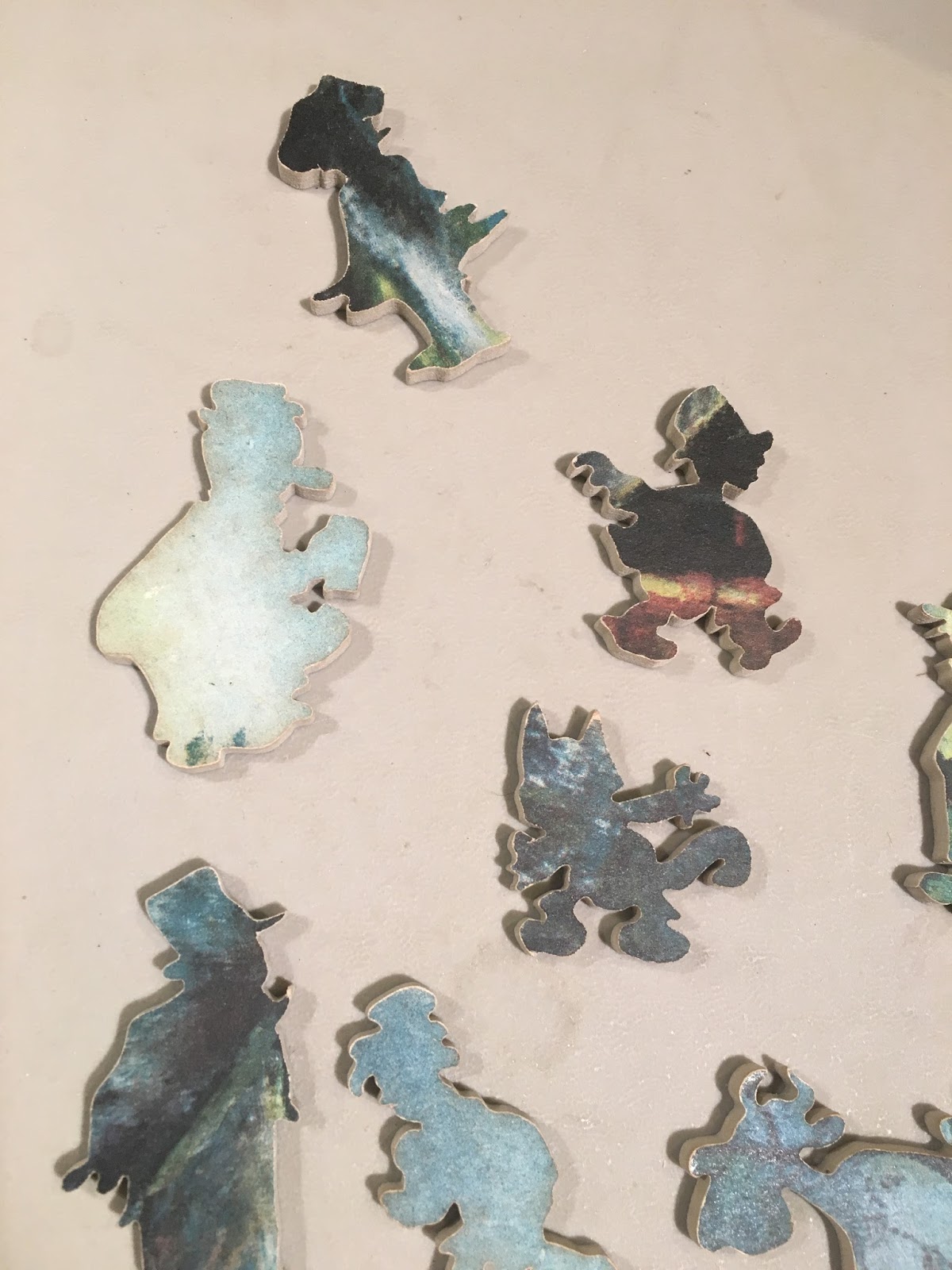
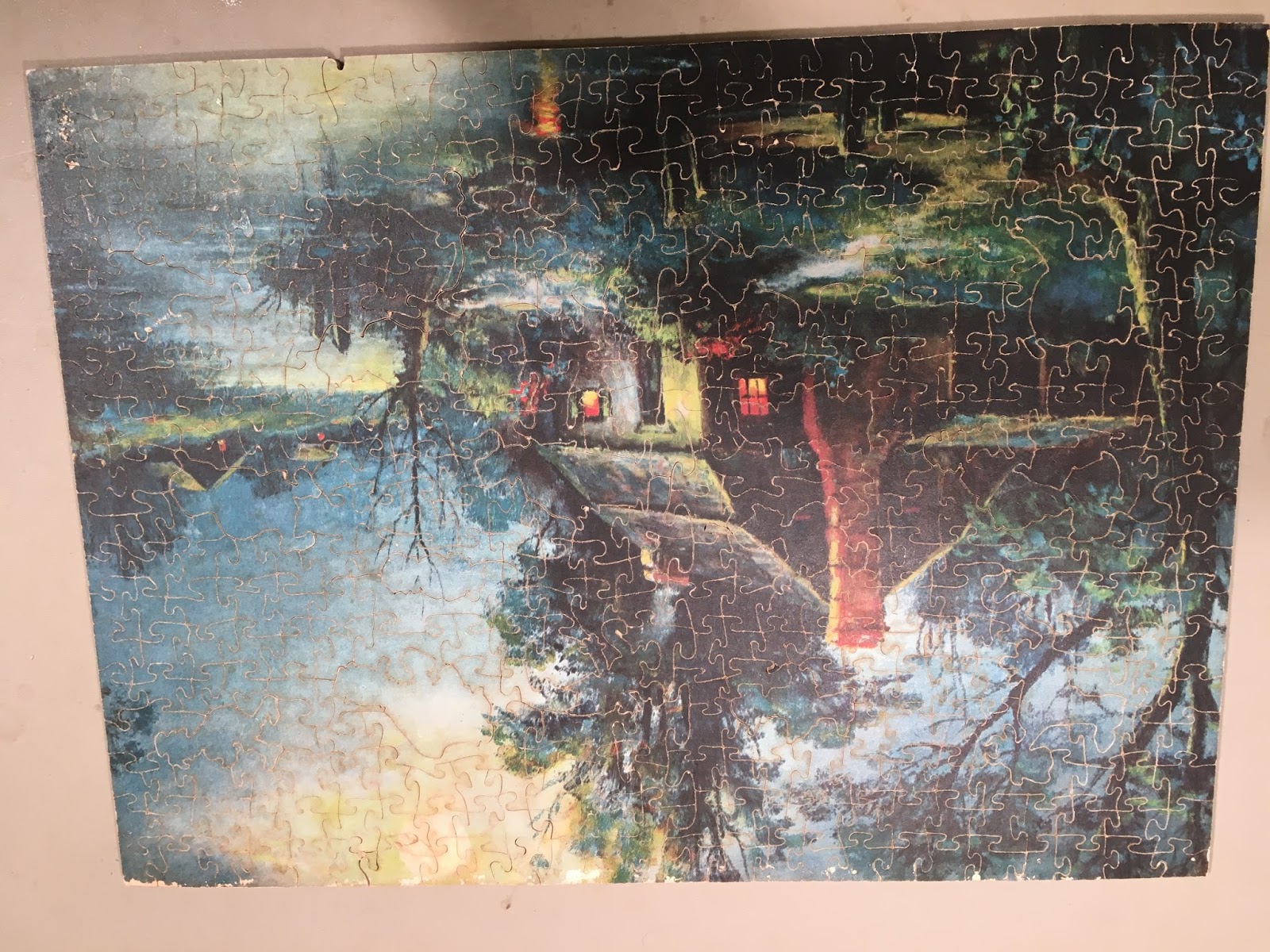
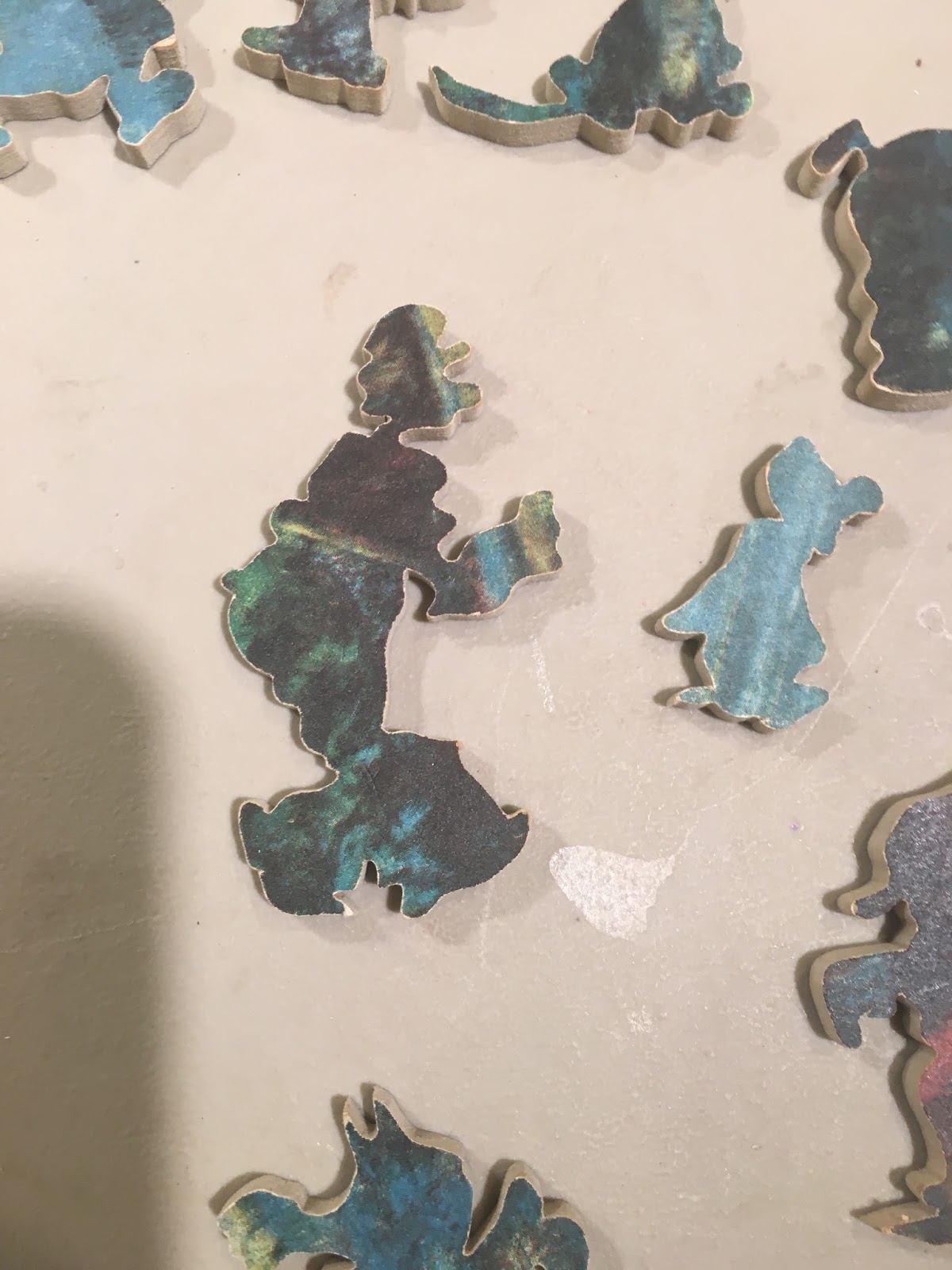
Puzzle/IP overlap with character figures

This delightful vintage puzzle contains whimsies in the shape of once popular cartoon characters–some I can ID, like Popeye, while others are more elusive.  Suggestions welcome.

Add caption

Upside down but complete

from Blogger https://ift.tt/2uIHAwe

Posted in Uncategorized | Tagged , | Leave a comment

Lost goodwill isn’t irreparable harm without more specifics, court says

Alfasigma USA, Inc. v. Nivagen Pharmaceuticals, Inc., No. 17-cv-01974-MCE-GGH,
2018 WL 1567820 (E.D. Cal. Mar. 30, 2018)
The parties make “medical foods,” which are intended to be
used under a doctor’s supervision; subscriptions for their use are common
though not required. They are not eligible for reimbursement by Medicaid,
Medicare, or many private insurers. Alfasigma makes Foltx and Breckenridge makes
a generic version called Folbic.
The pharmaceutical industry allegedly maintains a database
in which generic foods can be linked to their name brand equivalent through an
honor system. If a generic company “represents to industry databases that its
generic medical food contains the same active ingredients in the same amounts
as a certain branded product, the databases will link the generic to the brand.”  Nivagen makes a generic that it represented
was equivalent to Foltx and Folbic, causing it to be linked. “But Nivagen also
characterized its product as a prescription drug that requires an ‘Rx’ on the
label, thereby entitling users to reimbursement.” Nivagen also allegedly caused
its product Niva-Fol to be shown as having a National Drug Code or National
Health Related Items Code number, which are for approved drugs and medical
devices only, but which would qualify Niva-Fol for federal reimbursement. This conduct
allegedly gave Nivagen a competitive advantage.
The court found that plaintiffs hadn’t shown irreparable harm . The
claimed damages were all financially-based: that Nivagen’s actions had or will cause customers to seek lower prices from plaintiffs and/or buy from Nivagen instead and that its conduct would cause a “loss of goodwill” with certain customers, lost
market share, and “other economic losses.” “To the extent courts may consider a
loss of goodwill to be intangible under certain circumstances, those
circumstances are not present here.” 
[When are they present?  Who
knows?]  The claimed lost goodwill was
the only potentially intangible harm, but was entirely speculative at this
point.
Plaintiffs also argued that their harm was irreparable
because Nivagen wouldn’t be able to satisfy a judgment against it. The court
found it unlikely that “Nivagen is taking customers and stealing market share
at a rapid pace, while also making little profit doing so.” But also, the cases
supporting finding irreparable harm involved defendants who were insolvent or
deliberately dissipating funds to avoid judgment; there was no indication that
Nivagen was either.
Finally, plaintiffs’ delay undercut claims of irreparable
harm. Breckenridge sent Nivagen a letter in June 2015 indicating it knew of the
database linkage and accusing Nivagen of false advertising and unfair business
practices. Plaintiffs still waited until September 2017 to file suit, and
waited until October to move for a preliminary injunction, only then
unsuccessfully seeking expedited discovery to support their request for an
injunction, “which provides at least a tacit admission that they do not have
sufficient evidence to support the Motion as it stands.”
Nor did the balance of equities tip in plaintiffs’ favor. “Plaintiffs
have failed to so much as allege that customers are in fact choosing Nivagen’s
product over their products, let alone that they are doing so at a rate that
puts Plaintiffs’ businesses at risk of greater damages than would be caused by
enjoining Nivagen—a much smaller entity—from advertising, promoting, or selling
its product, and requiring it to change its labeling, correct any false
statements already made, and recall any product already sold.”
Finally, though the public interest favored protecting
consumers from false advertising, it also favored competition.

from Blogger https://ift.tt/2q2Cc2p

Posted in Uncategorized | Tagged , , | Leave a comment

An actual jury verdict favoring plaintiff in false advertising case based on false patent claims

Hillman Group, Inc. v. Minute Key Inc., No. 13-cv-00707, 2018
WL 1532526 (S.D. Ohio Mar. 29, 2018)
Here’s a reminder that meaningless macho banter about the competition can come back to haunt you.  The parties compete in the self-service, automatic key
duplication industry. Hillman initially sued Minute Key, seeking a declaratory
judgment of non-infringement and invalidity of U.S. Patent No. 8,532,809;
Minute Key provided Hillman with a covenant not to sue, but Hillman’s claims
under the Lanham Act/Ohio Deceptive Trade Practices Act continued based on
allegedly false and misleading representations of patent infringement to
Walmart, the parties’ mutual customer for key duplication machines.  A jury trial resulted in a verdict in favor
of Hillman. 
Minute Key sought to overturn that verdict, arguing that
Hillman needed to demonstrate that its statements were “objectively baseless”
as part of the bad-faith requirement applied to false advertising claims based
on patent rights assertions. Minute Key argued that Hillman could not establish
objective baselessness without first proving that its kiosk didn’t infringe the
patent, which would have required pretrial claim construction by the court,
which didn’t happen.  The court agreed
with Hillman that claim construction was unnecessary when the claim terms—
“fully-automatic” and “fully automatic”—were clear on their face.  Indeed, Minute Key had repeatedly claimed in
its marketing materials that its product was fully automatic and Hillman’s was
not, and also a central MK witness agreed that the marketing materials used the
term synonymously with the patent. 
The jury found that Hillman proved by clear and convincing
evidence that Minute Key knew that Hillman’s FastKey kiosk did not infringe the
’809 patent but nonetheless represented to Walmart that it did. The court
instructed the jury that bad faith could be found in a clear case of knowledge
of noninfringement, or by showing that the claim was objectively baseless and
subjectively made as an attempt to interfere with Hillman’s business
relationship with Walmart. The jury was also instructed that a patent can’t be infringed
if even a single claim element is missing in an accused infringing product.  The court instructed the jury to give “fully
automatic” its plain meaning, but noted that the jury wasn’t being asked to
decide whether the Hillman kiosk infringed. 
The instructions also stated that “A patent holder is even allowed to
make representations that turn out to be false or misleading as long as the
representations are not made in bad faith.”
 
A reasonable jury could have found bad faith by clear and
convincing evidence. MK’s internal discussions distinguished its “fully
automated” kiosks from those of Hillman, a distinction it considered of “High”
importance.  The same day the CEO told a
board member that he was “[t]hinking about raising the patent card” with Walmart,
MK told Walmart that its kiosk was the “first and only fully automated,
self-service key duplication machine,” a statement repeated in direct
comparisons with Hillman in marketing behavior. Though MK engaged a patent
attorney to conduct an infringement analysis before telling Walmart about
potential infringement, it produced a chart that showed “‘blank’ or ‘zero’
entries in the chart next to the preamble to the claims that embody the
parties’ claim construction dispute.” Moreover, MK never provided any of the
marketing documents to the attorney. “The absent patent attorney in this case,
whom Minute Key curiously did not bring to trial, cannot save Minute Key on the
question of bad faith.”
The subjective component of bad faith was also supported by
the record.  After learning that MK would
be required to compete against Hillman in a head-to-head competition for
Walmart, a board member/investor asked the CEO “if there is any way we can use
the patent application to create some FUD [fear, uncertainty, and doubt] with
Walmart re Hillman.” Fagundo testified at trial that “FUD” is an acronym for
“fear, uncertainty, and doubt.”  Once MK
learned it lost the head-to-head pilot, the CEO emailed that he was “[t]hinking
about raising the patent card.”  And
here’s the bad stuff that almost always shows up in discovery:
“Fuck Hillman, they don’t know they are messing with a
pirate.” (the CEO); “Ha…love it. Always need a competitor and we will whack
them in time[;]” and “Need to whack them now!” (the CEO). After this civil
action commenced, “I’m pissed. I don’t want to win at the kiosk level – I
really want to hurt them – badly.” (to the CEO); and “We are and will continue.
If we were not they would not be fucking with us. Go to bed please;).” Further,
MK’s remarks surrounding the patent infringement allegation were “glib,” e.g.,
“Let the fun begin” and “Interesting developments at WalMart. They appear to [be]
taking the patent infringement letter very seriously[.]…It’s getting
exciting!” (the CEO).
A reasonable jury could also have found literal falsity,
given the absence of a need to engage in claim construction, and given that the
phrase “it appears” in the letter MK sent to Walmart needed to be interpreted
in context.  That message, “examined as a
whole, is not equivocal in nature, and the jury reasonably could read it to
state the fact that Hillman is a patent infringer.”  In the alternative, a reasonable jury could
have found that Walmart was actually deceived and that it influenced Walmart’s
purchase decisions.
Walmart’s Senior Manager for Home Services denied that MK’s
allegation of patent infringement “brought everything to a halt.” Rather, “it
was considered that Hillman was going to file a countersuit, which then
complicated things.”  However, this
testimony failed to account for that manager’s contemporaneous directive, sent
soon after he received MK’s message: “Due to the upcoming issuance of the
MinuteKey Patent that will occur on Tuesday and the cease order that will be
issued to the Hillman Group (FastKey) we will be using the MinuteKey Program
for all stores asking for the self-assisted key cutting kiosk.” All that was
necessary was proof that “the statement is material in that it will likely
influence the deceived consumer’s purchasing decisions,” and this email
sufficiently demonstrated this likelihood. Likewise, delaying Hillman’s
exercise of a contractual right to install kiosks in the relevant time period, and
denying Hillman (as well as its customer, Walmart) the revenue expected during
that time period, qualified as a “change” to the original purchasing decision.  A reasonable jury could have believed the
manager’s contemporaneous statements over his after-the-fact testimony.
In addition, a reasonable jury could have found “commercial
advertising or promotion.” This requires dissemination either widely enough “to
the relevant purchasing public” or “to a substantial portion of the plaintiff’s
or defendant’s existing customer or client base.” Here, the proper customer
“base” was the market for self-service key duplication kiosks and not key
duplication equipment generally. “Statements to a single customer can trigger
the protections of the Lanham Act ‘if the market at issue is very small and
discrete,’ but it was for the jury to decide whether the market at issue in
this civil action was properly limited to Walmart.” The evidence allowed this
conclusion, even though Home Depot, Lowe’s, Orchard Supply, Meijer, and Menards
were also allegedly in the market. There was testimony “that virtually every
FastKey ever built was and has always been in Walmart stores,” that, out of “a
thousand and twenty” FastKeys ever built, “a thousand” were in Walmart stores,
and that Walmart was “100 percent of [Hillman’s] focus” for self-service key
duplication.
The test for commercial advertising or promotion can focus
on an “existing” customer base, and doesn’t have to include a “potential,
possible, or even once-contemplated customer base.” No retailers besides
Walmart invited a 100-store to 100-store, head-to-head competition between
Hillman and MK; the jury could reasonably find in Hillman’s favor.
Similarly, a reasonable jury could have found causation and
harm based on the rollout freeze on installing kiosks. The jury awarded $164,072
in damages, which was half of the amount computed by Hillman’s witness
regarding the freeze in installation in different Walmart stores brought about
by the patent threat. The court thought this was likely related to the
testimony that Walmart had put a holiday installation blackout in place for
half the time covered; the jury also declined to award damages because of lost
placement of kiosks beyond the initial 1000 awarded by Walmart. The award
wasn’t speculative so the court left it alone.

from Blogger https://ift.tt/2q3jNlp

Posted in Uncategorized | Tagged , | Leave a comment

Can the argument that third party users of a term are engaged in nominative fair use defeat a genericism claim?

Illinois Tamale Co. v. El-Greg, Inc., 2018 WL 1534971, No.
16 C 5387 (N.D. Ill. Mar. 29, 2018)
This case raises the interesting question of whether it’s
possible to distinguish nominative fair uses from generic uses when looking at online
comments/reporting; the jury may not get much guidance on how to do that!
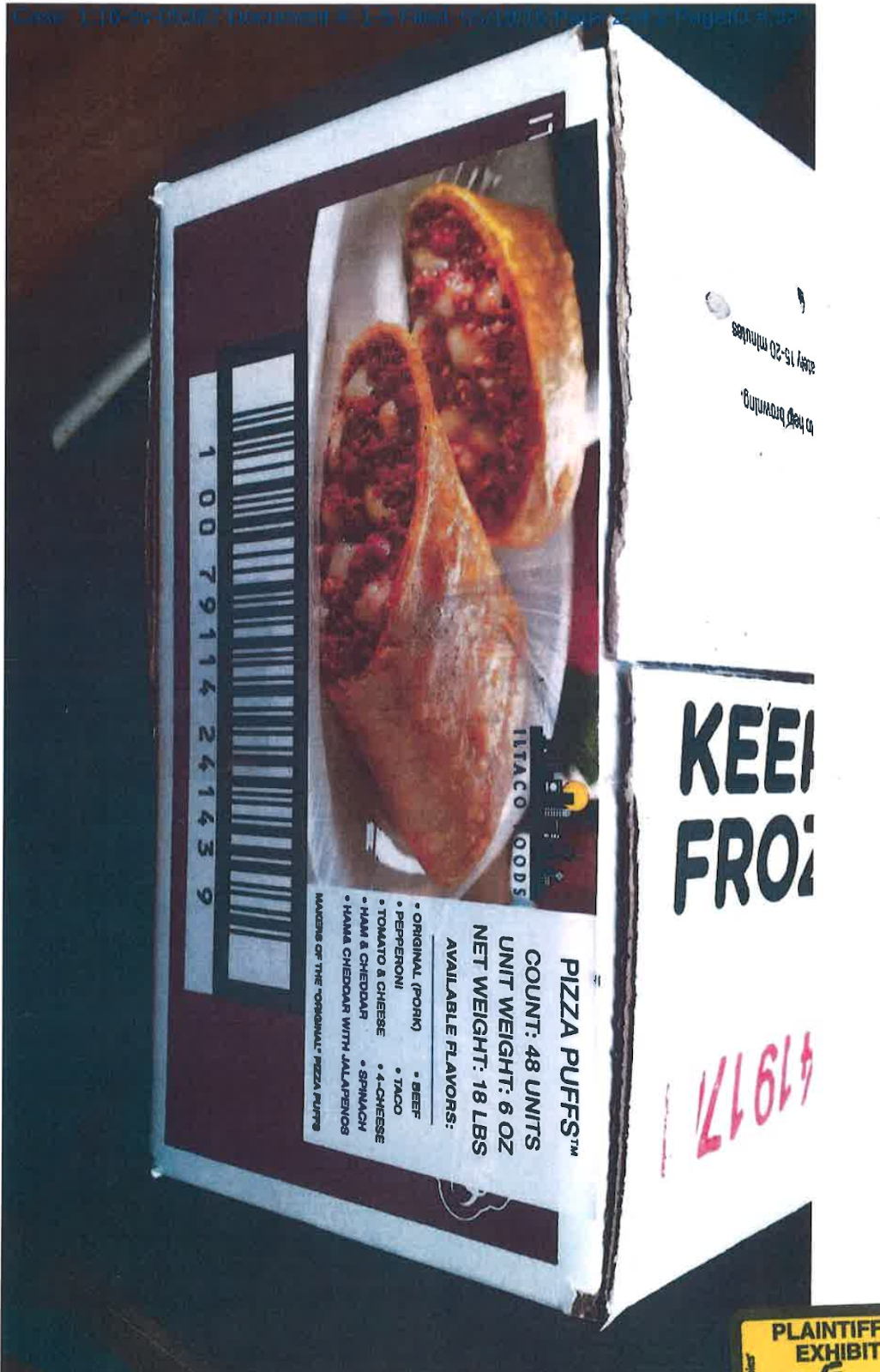
Illinois Tamale owns a registered trademark for PIZZA PUFFS
for “a frozen, hand-held stuffed sandwich or dough pocket filled with meat,
cheese, and sauce,” among other PUFFS trademarks. El-Greg used theproduct names
“Pizza Pies (Puffs),” “Chili Cheese Puff,” and “Veggie Pizza Puff,” and
allegedly similar slogans and packaging. The court denied El-Greg’s motion for
summary judgment on genericism and Illinois Tamale’s motion for summary
judgment on fair use.
Illinois Tamale’s slogan is “MAKERS OF THE ‘ORIGINAL’ PIZZA
PUFFS.” Although the word “pizza” is disclaimed, Illinois Tamale owns an
incontestable registration for PIZZA PUFFS. On its website, Illinois Tamale
describes its Pizza Puff as “Pork Sausage and Mozzarella Cheese with our
Home-Style Pizza Sauce Wrapped [in] a Soft Flour Tortilla.”
El-Greg sells the “Pizza Pie,” a copy of Illinois Tamale’s
Pizza Puffs product, described in El-Greg’s advertising as “Cooked Pork, Real
Mozzarella Cheese, Homemade Pizza Sauce with our blend of fresh spices wrapped
in a flaky tortilla pocket.” The parties have sold their products to Restaurant
Depot, a restaurant supply firm, for many years; the products are sold
side-by-side. In 2010, El-Greg changed its Pizza Pie label, but only for
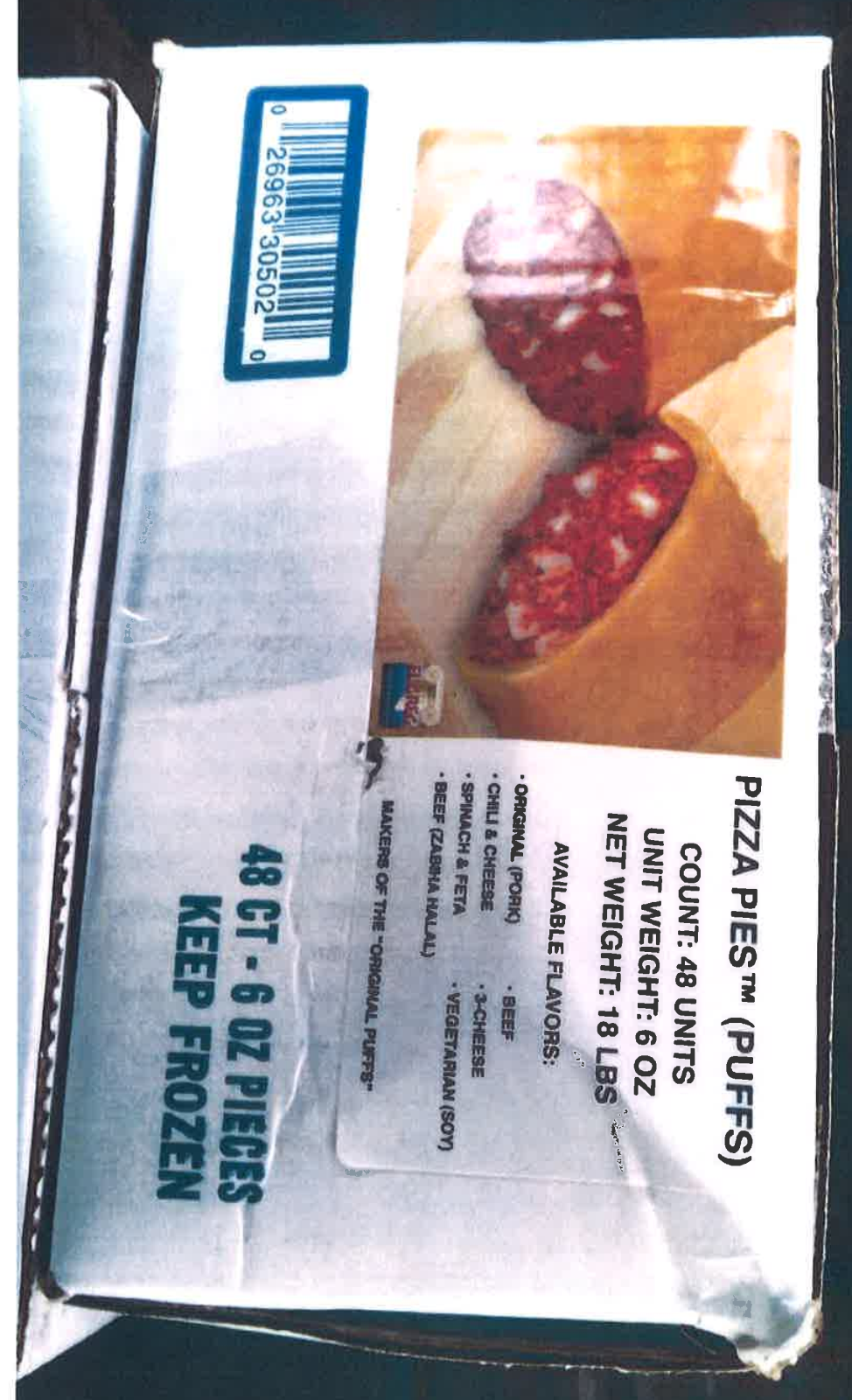
products sold at Restaurant Depot, now referring to the product as “PIZZA PIES
(PUFFS).” El-Greg’s modified label has a layout similar to Illinois Tamale’s
Pizza Puffs label, and it includes the slogan “MAKERS OF THE ‘ORIGINAL PUFFS.’”
The parties’ Restaurant Depot labels:
 

Defendant’s Pizza Pies (Puffs)

Plaintiff’s Pizza Puffs

The parties sell other
products, including
variations on the same stuffed sandwich / dough
pocket theme. Additional stuffed sandwich items from Illinois Tamale include
Sloppy Joe Puffs; Taco Puffs; Gyro Puff; Ham & Cheese Puff; Pepperoni Pizza
Puff; Beef Pizza Puff; 4-Cheese Pizza Puff; Ham, Cheese & Jalapeno Puff;
BBQ Pulled Pork Puff; Reuben Puff; and Breakfast Puff, with registrations for a
number of these products, including Taco Puffs and the Gyro Puff. El-Greg sells
a similar “Chili Cheese Puff” item and phyllo dough “Spinach Puff” hors
d’oeuvres.
Whether or not a term is generic is a question of fact, but
it may be resolved on summary judgment “if the evidence is so one-sided that
there can be no doubt about how the question should be answered.” Though the
Seventh Circuit hasn’t decided who has the burden of persuasion for a
registered mark, it has noted that “an incontestable registration is more like
a bursting-bubble presumption of non-generic-ness” than an “indomitable
presumption” overcome only by strong evidence of actual generic usage of the
term. The court put the burden of persuasion on genericness on the defendant for
incontestable trademarks.
El-Greg’s evidence of genericness was (1) the PTO’s apparent
approval of use of the term to denote a type of good (in six registrations not
currently in force); (2) manufacturers’ and restaurants’ use of the term to
denote a type of good (two other manufacturers and nearly 400 restaurants); (3)
use of the term to denote a type of good in about 100 recipes published online;
(4) dictionary definitions (Urban Dictionary and Wiktionary); (5) use of the
term to denote a type of good in newspapers and other publications (over 200
times); and (6) use of the term to denote a type of good in connection with
other products and services (just under 90 examples in TV shows/ads for other
goods or services).
Illinois Tamale disputed the relevance of much of this
evidence, arguing that it does not compete with restaurants because it sells
Pizza Puffs only to wholesalers and retailers. The court
disagreed—noncompetitors’ uses can be considered “where that use contributes to
consumers’ common understanding of the meaning of the term.”  However, Illinois Tamale’s argument that the
“pizza puff” item on menus and in news articles could be designating Illinois
Tamale’s product, rather than a category of food, was better aimed.  Where the menus didn’t designate the source
of the “pizza puff” product or indicate that it is homemade, they could be
referring specifically to Illinois Tamale’s Pizza Puffs brand, as could many of
the articles that reference pizza puffs. [Capitalization appears not to matter
to the court here.]  “That said, the vast
majority of the articles and menus cited make no reference to Illinois Tamale,
nor do they otherwise suggest that they are referring to ‘pizza puffs’ as a
brand rather than a type of food product.”
Here’s what caught my eye: in responsing to the “pizza
puffs” recipes, Illinois Tamale argued that there are also thousands of recipes
for a homemade version of Hot Pockets; this might just show that Hot Pockets
are a “well-known brand[ ] [that] home cooks want to replicate.” There was also
variation in the recipes—some produced pizza-themed foods that bore little
resemblance to the Pizza Puffs product at issue, allegedly indicating that
consumers don’t use the term “pizza puff” to denote any particular type of food
product. Such use didn’t preclude genericness, but it wasn’t helpful to El-Greg
either.
Illinois Tamale also showed that a number of similar stuffed
sandwich / filled dough pocket products on the market are not named or
described as “pizza puffs,” and El-Greg sold its competing product as “Pizza
Pies” for over 20 years before changing its Restaurant Depot label. The term
“pizza puff” does appear in any dictionaries other than the crowd-sourced ones above,
and definitions of the word “puff” don’t encompass Illinois Tamale’s product. Several
recent news articles expressly identify Illinois Tamale as the source of the
Pizza Puff brand.
Ultimately, the court denied summary judgment to both sides;
there was “significant evidence” of generic use, but no showing that there was
no other name for the product. Thus, a reasonable juror could find either
way.  Similarly, the court denied summary
judgment on the issue of whether Illinois Tamale owned a “Puffs” family of
marks.
So too with descriptive fair use. On factor 1 of the
statutory test, Illinois Tamale argued that El-Greg couldn’t prove it uses
“Pizza Pies (Puffs)” in a non-trademark way because it was featured prominently
on the product label, but that wasn’t dispositive. But a jury could accept
El-Greg’s argument that putting “(Puffs)” after Pizza Pies on the label was not
trademark use, because of its placement and the parentheses, and that El-Greg’s
logo on the box served as the trademark. 
On factor 2, Illinois Tamale argued that “puffs” wasn’t merely
descriptive of its product, because it wasn’t a light, fluffy pastry, and
El-Greg only used the word “puffs” on its label for Restaurant Depot, where the
parties compete side by side. But a jury could agree with El-Greg, and
examining attorneys at the PTO, that “puffs” is descriptive for the
product. 
On factor 3, Illinois Tamale argued that El-Greg lacked good
faith because El-Greg had been involved in other disputes with Illinois Tamale
relating to its use of the word “puffs,” and also because the rest of El-Greg’s
product label clearly demonstrated an intent to copy Illinois Tamale’s label,
which El-Greg admits to having seen prior to creating its own label. [They both look to me exactly like the generic informative labels you’d expect to find
in a food warehouse that isn’t consumer-facing.] El-Greg argued that it added
the “puffs” descriptor because Restaurant Depot complained that people were
opening the boxes to identify the contents, and that it designed its label in
accordance with Restaurant Depot’s requirements. Though Restaurant Depot didn’t
require adding the word “puffs” to the label, that didn’t mean that El-Greg didn’t
make the change to address the problem of customers opening boxes to identify
the product.  A defendant’s good faith
can be judged “only by inquiry into its subjective purpose.” El-Greg’s
awareness of Illinois Tamale’s “Pizza Puffs” trademark and label was
insufficient to prove bad faith, even though “the similarities between the
parties’ labels and slogans is striking and could quite possibly be interpreted
as evidence of bad faith.” 

from Blogger https://ift.tt/2JaiklO

Posted in Uncategorized | Tagged | Leave a comment

Timeshare company can sue anti-timeshare law firm under Florida unfair competition law

Orange Lake Country Club, Inc. v. Castle Law Group, P.C.,
No: 17-cv-1044-Orl-31DCI, 2018 WL 1535719 (M.D. Fla. Mar. 29, 2018)
Plaintiffs are entities involved in selling timeshares;
defendants promise to help timeshare owners get out of their contracts.
Defendants allegedly use misleading advertising to solicit Orange Lake owners,
claiming a high likelihood of success, when in reality they are rarely
successful. Further, Castle Law allegedly advises its clients to breach their
contracts with Orange Lake as a way of increasing the chance that Orange Lake
will agree to let them out of their contracts.
Plaintiffs alleged false or misleading communications from
Castle Law in which it “guaranteed timeshare owners it would relieve them of
their timeshare obligations within one year to eighteen months.” Castle Law didn’t
dispute having made this statement or others, but referred to its standard
contract, which states that “Client understands and agrees that there is no
guaranteed result of the Firm’s services or that Client will recover money or
other property as a result of the Firm’s engagement. Client understands and
agrees that there is no way to determine the time frame in which the Client’s
case will be resolved and that there is no guarantee regarding the time
required to resolve your Claims.”  But “a
truthful disclosure is not necessarily sufficient to overcome the net
impression caused by a misleading communication. Even if every Castle Law
customer signed an engagement letter with the quoted language – something that
cannot be determined at this stage of the proceedings – it would not
necessarily require dismissal.”
On Florida Deceptive & Unfair Trade Practices Act
claims, the plaintiffs alleged that defendants violated FDUTPA by soliciting the Orange Lake owners misrepresenting to the Orange Lake owners
that Castle Law could legally represent them in Florida courts and falsely
informing clients who were Orange Lake owners that their timeshare matters had been
resolved. These allegations failed to state a claim because these alleged
violations would have [directly] harmed the Orange Lake owners, not the plaintiffs. In
addition, though, plaintiffs alleged that defendants’ advertising falsely induced
timeshare owners to stop making payments even though they were contractually
required to do so. Further, the advertising allegedly falsely portrayed
timeshare developers and associations, generally, and plaintiffs specifically,
as systematically engaging in fraudulent and deceptive conduct, tarnishing
their business reputations.  FDUTPA isn’t
limited to consumers, and competitors need not be the only parties aside from
consumers that can bring FDUTPA claims. 
Though the Lanham Act claims failed here (see below), the FDUTPA claims
survived because of the allegation about lost contractual payments.
Lanham Act false advertising: The allegedly false
advertising consisted of a website guarantee that Castle law would relieve
timeshare owners of their timeshare obligations within 12-18 months from the
date they sign up with Castle Law; a claim to have saved “6000+” customers
“millions of dollars” defending against timeshare developers with express
mention of one plaintiff; “[n]o matter your reason for wanting to get rid of
your timeshare, Castle Law Group can help”; Resort Relief guarantees relief,
promising “a 100 percent money back guarantee certificate for an added sense of
security”; a claim of 93% success at cancellation, and again with an express
mention of one plaintiff as a developer against whom it has achieved success.
But the alleged injury to plaintiffs’ reputation caused by false claims that
they were engaged in unlawful or illegal conduct couldn’t have happened as a
result of these allegedly false statements. 
“Misleading potential clients about Castle Law’s success rate in getting
timeshare owners out of their contracts does not harm the reputation of
timeshare developers or lenders.”  The implication is that lost contractual payments would solve the Lanham Act hurdle as well if otherwise properly alleged.
Section 817.41, Florida Statutes also makes misleading ads unlawful. But plaintiffs weren’t consumers and couldn’t allege that they relied
on any of the advertising. Some courts have held that “when the party alleging
misleading advertising is a competitor of the defendant in selling the goods
and services to which the misleading advertisement relates, an allegation of
competition is permitted to ‘stand-in’ for the element of direct reliance that
a consumer is obligated to plead.”  But
here, the parties didn’t compete; the plaintiffs “are in the business of
getting people into timeshares, while the Defendants are in the business of getting
them out. Though their target audiences necessarily overlap, the Plaintiffs and
Defendants are selling entirely different services. They are adversaries, not
competitors.”

from Blogger https://ift.tt/2pXozRl

Posted in Uncategorized | Tagged , | Leave a comment

Post-sale statements that prevent return of items can constitute advertising & promotion

Boltex Manufacturing Co. v. Galperti, Inc., 2018 WL 1535199,
No. H-17-1439 (S.D. Tex. Mar. 29, 2018)
The parties compete in the market for carbon steel
flanges.  Normalization is a heat
treatment process that changes the physical composition of carbon steel to
increase its machinability and toughness; it’s more expensive to make
normalized flanges than non-normalized (or forged) ones. Boltex sells
normalized flanges, made with processes compliant with ASTM standards, which
require heat treatment for certain types of flanges. Several processes are
available, but many customers will only purchase certain flanges if they are
normalized.  Boltex stamps its normalized
flanges to indicate their compliance with ASTM standards and provide a Mill
Test Report (“MTR”)—an industry-standard report “used to promote and certify a
material’s compliance with the appropriate ASTM standards, applicable
dimensions, and physical and chemical specifications.” Boltex charges more for
normalized flanges than for forged ones.
Defendants allegedly advertise some flanges as normalized
and as meeting the the ASTM standards in the same way as Boltex touts
normalization, but their flanges are allegedly not normalized and not
ASTM-compliant.
Defendants argued that stamping flanges and providing MTRs
wasn’t “advertising or promotion,” 
because MTRs and stamped flanges are “post-sale communications to
consumers who have already purchased a product[.]” Further, because the
statements are “only seen by the specific customer who has already purchased
the product” the statements weren’t disseminated sufficiently to the relevant
purchasing public within the carbon steel flange industry.
However, previous cases about package inserts weren’t
binding and were distinguishable. Here, the stamping and inclusion of MTRs,
rather than containing new false statements, allegedly confirmed the assumption
that consumers made when purchasing the flanges.  Stamping and MTRs allegedly allowed defendants
to “convince their distributors to ship and their end use customers to accept
non-compliant shipments” rather than returning them.  This was enough to state a plausible claim.

from Blogger https://ift.tt/2GryHNl

Posted in Uncategorized | Tagged , | Leave a comment