no disgorgement under state law when false advertising wasn’t shown to result in sales

Republic Technologies (NA), LLC v. BBK Tobacco & Foods,
LLP, 2023 WL 3004625, No. 16 C 03401 (N.D. Ill. Apr. 19, 2023)

Previous
discussion
. A jury found that defendant HBI engaged in unfair competition
and violated the Illinois Uniform Deceptive Trade Practices Act (IUDTPA” in its
packaging and promotional activities for its RAW Organic Hemp branded tobacco
rolling paper products. Here, the court mostly denied a renewed motion for
disgorgement, prejudgment interest, and attorneys’ fees.

Republic alleged that HBI, its competitor in the tobacco
rolling paper industry, engaged in false advertising under the Lanham Act,
unfair competition, and violations of the IUDTPA. HBI counterclaimed that
Republic infringed its copyrights and trade dress. The jury ruled for HBI on
one of its copyright infringement counterclaims and one of its trade dress
claims against Republic and awarded HBI $979,620 in lost profits and $40,000 in
statutory damages. The jury found that HBI did not engage in false advertising
under the Lanham Act, but that HBI had engaged in unfair competition under
Illinois common law and violated the IUDTPA. There was no special verdict form.

Because the jury was instructed not to consider the question
of damages as to the unfair competition and IUDTPA claims (and plaintiffs
cannot seek monetary damages under that statute), Republic was not awarded any
monetary damages. The false advertising claims were based on statements (1)
that HBI’s rolling paper is “made in Alcoy, Spain, the birthplace of rolling
paper;” (2) that HBI’s RAW “Organic Hemp” papers are the “World’s Only” or
“World’s First” organic hemp rolling papers; (3) that HBI contributes its funds
or sales to a charitable entity called the “RAW Foundation;” (4) that HBI’s
rolling papers are made with “natural hemp gum;” (5) that RAW rolling papers
are “100% wind powered;” and (6) that OCB Organic Hemp papers (Republic’s
products) are knock-offs, “RAWnabees,” copies, or fake versions of RAW. The
court granted an injunction focusing on the Alcoy claims, which were false.

Here, the court declined to order disgorgement of “every
cent of profit from HBI’s RAW brand during that time period—over $34 million.” Disgorgement
is unavailable under the IUDTPA, which provides only for injunctive relief, and
if the violation was willful, attorneys’ fees. But IUDTPA remedies are
additional to any other remedies available against the same conduct under the
common law. “And here, the jury also found that HBI committed common law unfair
competition, which may carry with it the right to disgorgement, though the
parties have not cited, and this Court could not find, an example in Illinois
in the last 75 years.”

Assuming that disgorgement was available, the court looked to
the Restatement (Third) of Unfair Competition for guidance. That worthy
document deems disgorgement appropriate only when (1) “the actor engaged in the
conduct with the intention of causing confusion or deception,” and (2) “the
award of profits is not prohibited by statute and is otherwise appropriate” in
light of all of the factors of the case.

The court was primarily guided by the absence of proof that
the false statements were a substantial factor in producing sales. The court’s
previous finding that the falsehoods “are likely to cause consumers to choose
HBI’s products over Republic’s products” were directed at “likely” future harm
to Republic, not actual proof of causation of HBI’s past profits. Republic
could have provided survey data or consumer testimony, but did not.

Republic mainly pointed to the testimony of HBI’s own
witnesses that the purpose and effect of the “RAW Foundation” promotion and
charitable giving campaigns was to drive more sales, increase brand awareness,
and enhance brand loyalty. “But though there was no official ‘Raw Foundation’
entity, HBI did indeed donate moneys to charities and conduct charitable
events.” Also, a company’s belief that its advertising is important and profitable
“is not evidence that the advertising actually had that effect.” (Once again,
courts in false advertising cases refuse to make the plaintiff-favorable
inferences that are standard in TM cases, here about intent.)

As for the parties’ competing damages experts, HBI’s expert
admitted that he did not review any consumer data or have any background in
understanding consumer behavior, while Republic’s expert also admitted that he
did not know “how much of HBI’s profits are attributable to the challenged
statements;” did not “have any basis for adjusting [his] profit opinion to account
for the fact that the jury might accept some of the statements, but not all of
them, as false advertising;” and did not “have any basis for an opinion that
any of the challenged advertisements actually increased HBI’s profits.”  This lack of evidence that the wrongful
conduct was a “substantial factor” in producing sales was “fatal” to an award
of disgorgement.

The other factors listed by the Restatement didn’t change
anything (the adequacy of other remedies; the public interest in
deterrence/disgorgement; degree of fault; any delay in suing; any related
plaintiff misconduct).  The court
specifically noted the risk of a windfall to Republic, given that there are 22
hemp-based competitor rolling paper products, “all of whom may have suffered
sales losses because of HBI’s misleading statements.” Deterrence was
sufficiently served because it cost HBI money to bring itself into compliance
with the injunction by removing numerous marketing statements from all
packaging, marketing, and promotional materials for upwards of 600 items. Nor
was Republic a completely innocent party in the matter, given that the jury
found that it willfully infringed HBI’s trade dress and copyright.

However, the court did award some attorneys’ fees under
IUDTPA, which are available “if the court finds that [defendant] has willfully
engaged in a deceptive trade practice.” Willful conduct is defined as conduct
that is “voluntary and intentional, but not necessarily malicious.” HBI acted
with willfulness as to the Alcoy statements. “[W]hen HBI—a full year after
trial—claimed that any problems with its Alcoy statements could be solved by
essentially rearranging the punctuation of its previous statements, this Court
found that it was ‘an attempt to mislead.’” Thus, Republic’s reasonable
attorneys’ fees as to that issue would be awarded.

from Blogger http://tushnet.blogspot.com/2023/04/no-disgorgement-under-state-law-when.html

Posted in Uncategorized | Tagged , | Leave a comment

“Margarita Hard Seller” with no tequila isn’t deceptive

Warren v. Coca-Cola Co., 2023 WL 3055196, No. 22-CV-6907
(CS) (S.D.N.Y. Apr. 21, 2023)

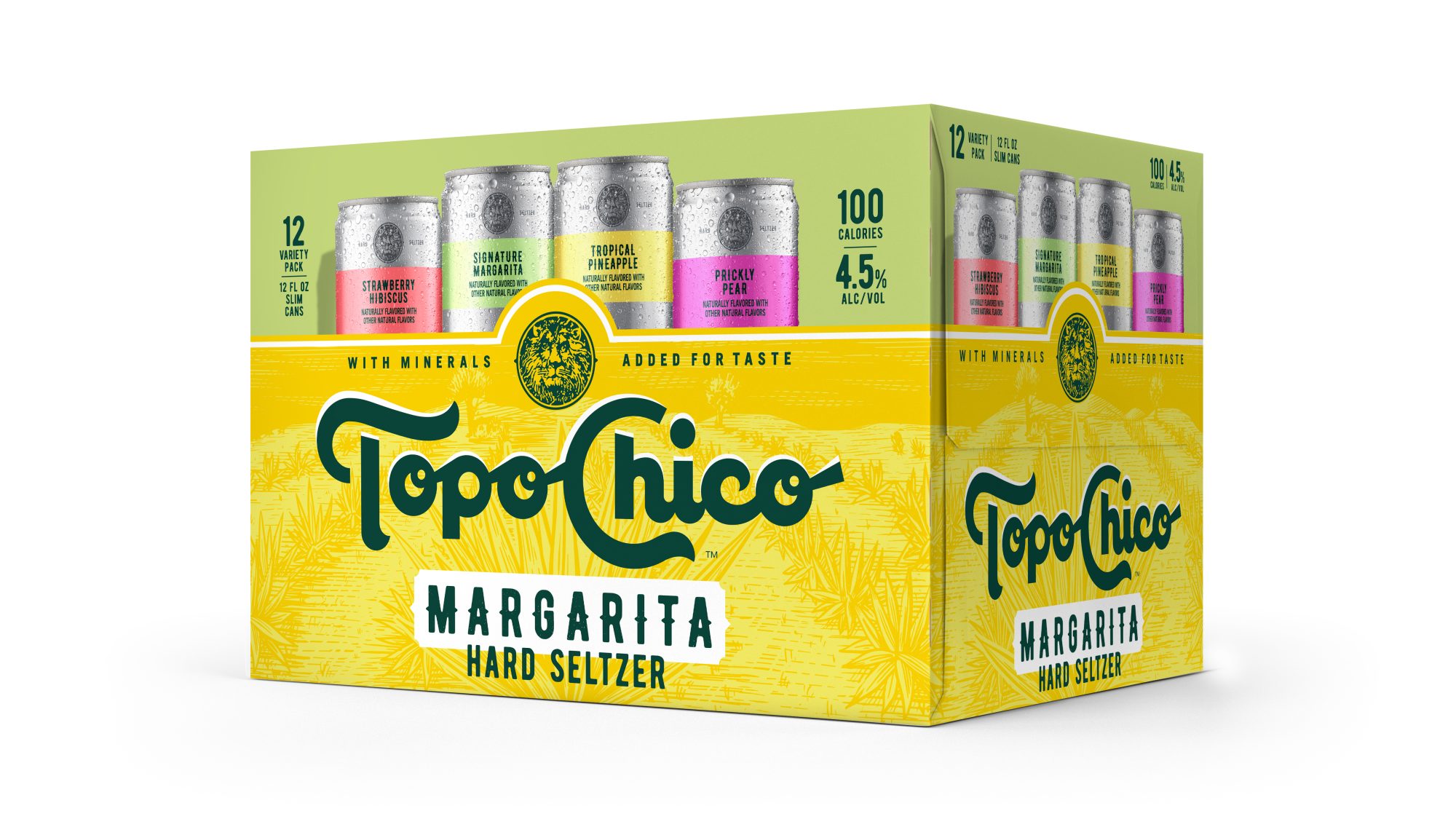
Defendant makes Topo Chico “Margarita Hard Seltzer.” It
doesn’t have any tequila in it, though it is made with agave sugars. The front
label contains the brand name “Topo Chico,” the word “Margarita,” and the
phrase “Hard Seltzer.” These words appear on a yellow background containing
faint images of agave plants. The label further indicates that the Product is
4.5% alcohol by volume.

defendant’s package

Warren alleged that “[c]onsumers expect to receive a
cocktail containing tequila when they order a margarita as this ingredient
defines what a margarita is,” “[c]onsumers will expect the Product to contain
tequila.” The use of “Hard Seltzer” allegedly reinforced that expectation, as
“the term ‘hard’ in the context of alcohol refers to distilled spirits, i.e.,
‘hard liquor’ ” like tequila. Nor does the product contain sparkling mineral
water sourced in Monterrey, Mexico, which Plaintiff claims “is an essential
part of Topo Chico beverages.”

She alleged NY GBL and other related claims. The court
rejected them without leave to amend.

This is a question, at heart, of whether producers can push
the definitions of products in new directions, not different in kind from
whether “chik’n” can be made with all-vegan ingredients; consumers may need to
learn new information, such as that alcoholic “margaritas” may not be made with
tequila, if the definition is not frozen (no pun intended) by regulators.

Tequila: Plaintiff’s allegations were inconsistent with the
label and with common sense. The product didn’t use the word “Margarita” in a
vacuum, and instead states that the Product is a “Margarita Hard Seltzer.” “The
context provided by the term ‘Hard Seltzer’ is critical and fatal to
Plaintiff’s claim.” I didn’t know one couldn’t add tequila to seltzer!

The court: “Hard seltzer is a category of ‘alcoholic
beverages that contain carbonated water, alcohol, and – in most cases fruit
flavors, that have enjoyed skyrocketing popularity in the United States,’ which
reasonable consumers would recognize as a product distinct from cocktails like
margaritas.” How do we know? While plaintiff alleged that “hard” predominantly
refers to distilled spirits, that’s only true for “hard liquor,” not for “hard
cider” or “hard lemonade,” “and a reasonable consumer would understand the same
in the phrase ‘hard seltzer.’” The reasonable meaning here is that, unlike
regular seltzer, this one contains alcohol.

The court also took judicial notice that the product’s labeling
as a “Margarita Hard Seltzer” contrasts sharply with the labels of the BuzzBox
and Dulce Vida “[r]eady to drink … margarita beverages” identified as
competing alternatives in the complaint:

Those canned beverages are called
“Perfect Margarita” and “Sparkling Margarita” with no additional qualifiers,
and come in packages that describe the contents as “premium cocktails” and
specify that they contain tequila. In contrast, the Product’s labeling does not
refer to it as a cocktail or state that it contains tequila, nor does it
describe the drink solely as any kind of Margarita – perfect, sparkling, or
otherwise. Rather, the Product’s label uses “Margarita” as a modifier of the
term “hard seltzer,” without any reference to cocktails or tequila.

Thus, “margarita” was a reference to taste, as confirmed by
its proximity to flavor varieties on the package. Thus, “a reasonable consumer
viewing the Product’s label as a whole would understand that they were
purchasing a hard seltzer made to taste like a margarita and not a
ready-to-drink margarita cocktail.”  

The use of agave images didn’t change anything, since the
product uses an agave-based sweetener.

The court also pointed to the broader “circumstances” of
purchase.

Had [Warren] lived in New York for
any length of time, she would know that cocktails containing hard liquor are
not and cannot be sold in grocery stores. But even assuming that she moved to
New York right before buying the Product, she plainly was familiar with a
margarita cocktail, and surely knew that nobody sells a margarita for $1.50. Further,
cursory observation of the other items on sale in the beverage section of the
ShopRite supermarket where she purchased the Product would have revealed soft
drinks, beer, and hard ciders/lemonades/seltzers, but no hard liquor,
cocktails, or wine.

[Would it be deceptive to sell these cans for $8 in a
theater?]

Even if there was ambiguity created by the front (which the
court thought there wasn’t) the ingredients label on the back, with its lack of
reference to tequila, cured that ambiguity. I’m not sure why continued silence
can cure ambiguity—the ingredient list doesn’t specify the type of alcohol—but the
court thought that here, with “hard seltzer,” that continued silence confirmed
the absence of tequila.

Likewise, Warren’s claim that the use of the Topo Chico
brand name would lead reasonable consumers to believe that it contains
sparkling mineral water sourced from Monterrey, Mexico was not plausible. The
label made no claims that it was manufactured in Mexico or is otherwise
connected to Mexico in any way, or that it contains sparkling mineral water of
any kind; that was just Warren’s belief about the brand. “[A]ny such ambiguity
is quickly resolved after reading the information on the Product’s back label,
which explicitly states that it contains filtered carbonated water that is ‘not
from source’ and certain ‘minerals for taste,’ and that it is produced and
bottled in Milwaukee, Wisconsin.”

from Blogger http://tushnet.blogspot.com/2023/04/margarita-hard-seller-with-no-tequila.html

Posted in Uncategorized | Tagged , | Leave a comment

hashtags are plausibly infringing; sales claims plausibly false based on P’s own history of sales

Automated Pet Care Prods., LLC v. Purlife Brands, Inc., 2023
WL 3046592, No. 22-cv-04261-VC (N.D. Cal. Apr. 21, 2023)

In two opinions on the same day, the court dealt with various
IP/false advertising claims brought by one litter box seller against another.
The first considered various trademark claims, including claims based on use of
a hashtag on social media, where we are apparently going through everything we
went through with domain names and search terms/metatags, yay.

Plaintiff (dba Whisker) sued defendant (dba Smarty Pear),
its competitor in the market for automated, self-cleaning litter boxes. “Whisker
is the pioneer of this technology while Smarty Pear is the newcomer.”

Whisker’s flagship Litter-Robot consists of a rotating
chamber that automatically sifts cat waste after each use into a waste drawer
beneath the chamber, thus keeping the litter box perpetually clean and
eliminating the need for manual scooping. It has registrations for the word
marks “Litter-Robot,” “Litter-Robot 3,” “Litter-Robot 3 Connect,” and
“Litter-Robot Pinch Detect.” Smarty Pear allegedly used confidential information
to inject the market with a new—and virtually identical—automated litter box:
the Leo’s Loo. Its social media posts featured photos of the Leo’s Loo
products, but those posts were tagged, at least in part, with #litterrobot,
#LitterRobot, and #litterrobot3.

Using the old “Internet troika,” the three most important
factors were (1) the similarity of the marks, (2) the relatedness of the goods
or services, and (3) the simultaneous use of the Web as a marketing channel,
all of which weighed heavily in plaintiff’s favor.

Defendant claimed that plaintiff lacked valid rights over the
phrase “Litter Robot” (that is, with a space instead of a hyphen) and the
hashtag “#litterrobot,” given the previous refusal of registration for “Litter
Robot” as merely descriptive; in subsequent applications, Whisker “disclaimed”
exclusive rights to the “Litter Robot” word mark, “meaning it acknowledged that
it lacks a valid trademark over those words.” The PTO also declined to register
“#litterrobot” on the Principal Register, because adding a hashtag to an
otherwise descriptive mark did not alone make the mark suggestive.

If Whisker were pursuing claims
based on [“Litter Robot” and “#litterrobot”]—say, if it were arguing that those
marks have attained secondary meaning since the time they were rejected—then
Smarty Pear’s disclaimer arguments would have merit. Whisker’s recent
disclaimers would constitute admissions that the marks are not yet protectable.

But Whisker is not advancing
trademark infringement claims based on those disclaimed marks. It neither
disputes that it has disclaimed them nor argues that they’ve attained secondary
meaning. … The key question here is whether Smarty Pear’s hashtags are
confusingly similar to the marks over which Whisker has rights; focusing on
whether they are also similar to marks over which Whisker does not have rights
is not helpful.

This is the classic problem of scope v. validity, which modern
trademark doctrine generally resolves by promising to appropriately limit scope
in the infringement analysis, though that promise is often unrealized. The
court commented:

To be sure, there is something
unintuitive about the idea that Smarty Pear could be held liable for using
marks that are nearly identical to marks the Trademark Office has determined
are not protected. … But there is a place in the analysis to account for this
peculiarity: the first of the Sleekcraft factors, the “strength of the mark.” …
The resemblance between the marks that the Trademark Office has determined are
merely descriptive and those it has agreed to register suggests that Whisker’s marks—while
valid—are weak.

But plaintiff also alleged “significant marketing efforts
over the course of 22 years, widespread publicity and write-ups, and rave
customer reviews ranging in the tens of thousands. These allegations suggest
the marks have been strengthened over time.” Anyway, “weak mark[s] entitled to
a restricted range of protection,” infringement may still be found where, as
here, “the marks are quite similar, and the goods closely related.”

The real issue here isn’t validity or strength, but whether
the hashtags functioned as comparative advertising, and here the court tilts
heavily against defendant: “For one, Smarty Pear’s intent is transparent: Not
only are the products themselves virtually identical, but the strategic use of
the number three and the upper-case letters in its hashtags evinces an intent
to capitalize on Whisker’s goodwill.” The court didn’t discuss whether the rest
of the post contained anything equivalent to the labeling that the 9th Circuit
has considered relevant for sponsored ads.

Likely expansion also favored plaintiff. And plaintiff alleged
actual confusion: “when Smarty Pear offered consumers free accessories to
incentivize reviews of the Leo’s Loo, several consumers emailed Whisker’s
customer support to claim their accessories, such that Whisker’s product
specialists had to explain that the Leo’s Loo was not Whisker’s product.” And purchaser
care was hard to assess: “These automated litter boxes aren’t exactly cars
costing tens of thousands of dollars, but they’re not insubstantial purchases
either. They sell for nearly $500 each. Most consumers would pause to reflect
before spending that much on a product.”

Motion to dismiss denied as to trademark infringement, false
designation of origin, and unfair competition claims based on the use of Smarty
Pear’s hashtags.

Automated Pet Care Prods., LLC v. Purlife Brands, Inc., 2023
WL 3049106, No. 22-cv-04261-VC (N.D. Cal. Apr. 21, 2023)

After dismissing patent claims because infringement wasn’t
plausibly pled, the court declined to dismiss some false advertising
claims.  Statements like “[w]e’ve packed
the Leo’s Loo with features that make it one of the most convenient
self-cleaning litter boxes available” and “[w]e designed Leo’s Loo with kitty
safety in mind … so our feline friends are always safe when they step inside”
were classic, non-actionable puffery. The allegation that these statements were
likely to mislead consumers into believing that the product is made in
California when it is allegedly manufactured in China was “strained and
unconvincing.”

It was also puffery to label the Leo’s Loo Too as “the
smartest self-cleaning litter box.” Standing alone, that descriptor is classic puffery.
Plaintiff argued that, in context, the statement is actionable because the
video then goes on to identify several specific features, falsely implying that
competitor products lack those features.

If anything, the context here reinforces the conclusion that
the statement is not actionable. Immediately below the video is a bold header
that reads “Features You’ll Love,” followed by a second line of text which—in
reference to the features listed immediately below it—describes the Leo’s Loo
Too as “one of the most advanced … self-cleaning litter boxes available.” And
of the four features highlighted ever so briefly in the video itself, two are
the most basic functions of any automated litter box: the Leo’s Loo Too
“detects when kitties visit” and “cleans after they leave.” Under these
circumstances, no reasonable consumer could believe the video implies that no
other automated litter box can boast the identified features.

However, plaintiff adequately alleged false advertising
based on defendant’s claim that the Leo’s Loo Too is the “First-Ever
App-Connected Self-Cleaning Litter Box with Alexa and Google Voice Controls.”
Plaintiff alleged that its own product, released years earlier, had its own
smart app and can support Alexa and Google Voice, and that another Chinese
product that defendant allegedly knocked off featured this built-in
functionality long before the Leo’s Loo Too did.

Likewise, plaintiff plausibly alleged false advertising that
“[o]ver half a million cats and their owners have made the transition to a
litter-free life with Pear Family.” “This statement—conveying to consumers that
Smarty Pear has sold over 500,000 of its Leo’s Loo and/or Leo’s Loo Too
products—is a quantifiable claim capable of being proven false.”

Here’s the interesting bit: falsity was plausible because
plaintiff, which has been in business for over 22 years, has had 700,000 sales
in that time. “It thus seems implausible that Smarty Pear could have sold over
500,000 of its products in the one to two years it has been in the market.
Moreover, such a representation is material to consumers and likely to induce
reliance because it inspires confidence in the product.”

And the statement that defendant’s product’s UV rays are
99.9% effective at eliminating viruses and bacteria was also plausibly false
advertising. Plaintiff alleged the existence of FDA guidance advising that UV
rays are not effective at eliminating viruses or bacteria when they are
“covered by dust or soil, embedded in porous surface or on the underside of a surface.”
“Because bacteria or viruses within the Leo’s Loo Too are likely to be buried
in litter, Whisker has adequately alleged that Smarty Pear’s boast of 99.9%
effectiveness is false. And the complaint adequately alleges that such a
representation is material and likely to induce consumer reliance given the
premium placed on odor reduction in the market for litter boxes.”

from Blogger http://tushnet.blogspot.com/2023/04/hashtags-are-plausibly-infringing-sales.html

Posted in Uncategorized | Tagged , | Leave a comment

fake meat law reinstated on appeal: intentionally misleading commercial speech gets no protection

Turtle Island Foods, S.P.C. v. Strain, No. 22-30236 (5th
Cir. Apr. 12, 2023)

Reversing the district
court
, the court of appeals found that Tofurkey’s facial challenge to a
Louisiana anti-fake meat law failed because the law plausibly could be read
only to cover intentional deception.

Louisiana’s 2019 Truth in Labeling of Food Products Act bars,
among other things, the intentional “misbrand[ing] or misrepresent[ing of] any
food product as an agricultural product” through several different labeling
practices. Those practices include “[r]epresenting a food product as meat or a
meat product when the food product is not derived” from various animals.

Tofurkey’s products include plant-based “chick’n,” deli
slices, burgers, sausages, tempeh, and roasts. Each of its labels, while
employing meat-esque words like “sausage” or “burger,” prominently indicates
that the product is “plant-based.”

Tofurkey had Article III standing: it intended to engage in
conduct arguably affected by a constitutional interest. “Tofurky’s labels and
marketing— which no one contends are misleading or involve illegal activity—are
just the kind of commercial activity the First Amendment protects.” And its
intended actions were arguably proscribed by the law given its dictate that
“[n]o person shall intentionally misbrand or misrepresent any food product as
an agricultural product through any activity including:

[ . . . ]

(2) Selling a food product under
the name of an agricultural product.

[ . . . ]

(4) Representing a food product as
meat or a meat product when the food product is not derived from a harvested
beef, pork, poultry, alligator, farm-raised deer, turtle, domestic rabbit,
crawfish, or shrimp carcass. [similar for beef, pork, and poultry]

[ . . . ]

(9)       Utilizing
a term that is the same as or deceptively similar to a term that has been used
or defined historically in reference to a specific agricultural product.

The statute defines “misbrand” as “intentionally
identify[ing] or label[ing] a food product in a false or misleading way.” To
“misrepresent” also requires intention.

Louisiana argued that Tofurkey lacked standing because it
didn’t intend to mislead or to break the law. But “intent” can mean different
things, including intentionally making a statement that turns out to be
misleading. Thus, the law was arguably broad enough to cover Tofurkey’s conduct.
There was no explicit safe harbor for “meat-like, plant-based products as found
in similar statutes in other states. See, e.g., Okla. Stat. tit. 2 § 5-107 (‘[P]roduct
packaging for plant-based items shall not be considered in violation of [this
statute] so long as the packaging displays that the product is derived from
plant-based sources.’).”

And Tofurky faced a substantial (or credible) threat of
enforcement. In a pre-enforcement challenge “to recently enacted (or, at least,
non-moribund) statutes that facially restrict expressive activity by the class
to which the plaintiff belongs, [we] will assume a credible threat of
prosecution in the absence of compelling contrary evidence.” While Louisiana
conceded that Tofurky’s nine demonstrative labels do not violate the Act, it declined
to make any “representations as to whether any other label of Tofurky would be
violative of the provisions of the Act.” And nothing bound the state from
changing its mind and deciding Tofurky’s labels do violate the statute.

Merits: This was a facial challenge, which is a big deal. In
the commercial speech context, “[t]o succeed in a typical facial attack,
[Tofurky] would have to establish ‘that no set of circumstances exists under
which [the Act] would be valid,’ or that the statute lacks any ‘plainly
legitimate sweep.’”

Here, the law covered only speech that was completely
unprotected: actually misleading commercial speech. Courts are required “to accept a narrowing construction of a state law in order
to preserve its constitutionality.” The state’s preferred interpretation was
that the law prohibits a company from intentionally misleading a consumer by
claiming a product is made from beef, pork, poultry, crawfish, shrimp, meat,
sugar, or rice when it is not. These would be “actually misleading
representations” and thus not within the coverage of the First Amendment. The district
court erred by applying Central Hudson to its reading of the statute,
when it should have accepted this narrowing construction.


from Blogger http://tushnet.blogspot.com/2023/04/fake-meat-law-reinstated-on-appeal.html

Posted in Uncategorized | Tagged , , | Leave a comment

May the Fourth promotion seen in the wild

Not sure I’d want to describe my own food as Bantha meat, but ok.

from Blogger http://tushnet.blogspot.com/2023/04/may-fourth-promotion-seen-in-wild.html

Posted in Uncategorized | Tagged | Leave a comment

consumer class settlement can’t include injunctive relief unless there’s Art. III standing to seek injunctive relief

Williams v. Reckitt Benckiser LLC, — F.4th —-, 2023 WL
2906311, No. 22-11232 (11th Cir. Apr. 12, 2023)

The court of appeals reversed approval of a settlement that
would have provided injunctive relief and up to $8 million in monetary relief
to a class of individuals who purchased one or more “brain performance
supplements” manufactured and sold by defendants. Given that the named
plaintiffs alleged that the products were worthless, there was no reasonable
probability that they’d want to buy them again, so they lacked standing to seek
injunctive relief—and apparently even to agree to it as a settlement offer,
which seems different.

I’m not a standing expert, but I don’t understand why, even
if claims for injunctive relief couldn’t be maintained, one couldn’t settle
claims for monetary relief with non-monetary remedies. The case the court of
appeals discussed, Local No. 93, International Association of Firefighters v.
City of Cleveland, 478 U.S. 501 (1986), seems very different (it’s about a
consent decree that arguably violated a rule against issuing race-conscious
court orders, and says “a consent decree must spring from and serve to resolve
a dispute within the court’s subject-matter jurisdiction”). Here, the money damages
provide the jurisdiction for the damages class, so why can’t the damages class
agree to accept injunctive relief?

I assume that next on the chopping block is cy pres remedies
for nonexhausted settlement funds, since plaintiffs can’t seek that as a remedy
to be awarded either.

FWIW this was not a great settlement in terms of injunctive
relief—it didn’t require anything meaningful—but this ground of reversal might
be worse for consumers overall if such settlements do provide meaningful relief.

from Blogger http://tushnet.blogspot.com/2023/04/consumer-class-settlement-cant-include.html

Posted in Uncategorized | Tagged , , , | Leave a comment

paying a referral fee is a consumer injury, not a competitor injury, for Lanham Act standing purposes

Lewis v. Acuity Real Estate Services, LLC, 63 F.4th 1114 (6th
Cir. 2023)

Acuity operates a website that connects people looking to
buy or sell homes with a local real-estate agent in their area. Acuity offers
its services for free to home buyers and sellers but requires realtors to pay a
fee for referrals. Lewis’s employer required him to pay Acuity’s fee out of his
commissions from home sales. Lewis sued under the Lanham Act, alleging false
statements to home buyers and sellers.

Lewis lacked a “commercial injury” because he was suing as a
customer—he alleged that the “product” he bought was defective and sought to
recover the referral fee. (The facts do sound frustrating: Lewis paid a
referral fee to a different site, which he considered the one that brought him
the client, but because Acuity was also involved, it successfully sued him and
also collected.)

The court held that “no reasonable person would describe
Lewis’s payment of this referral fee as a commercial injury to his ‘reputation
or sales.’” Rejecting Lewis’s specific factual situation as relevant, the court
reasoned, “whenever this injury arose (that is, whenever Acuity requested its
fee), Lewis will have gained, not lost, a sale.” (This arguably makes sense
because the falsity alleged is misrepresentations that lead consumers to use
Acuity’s site rather than continuing to search for agents on their own.) Lewis
didn’t allege that his payment of this referral fee injured his status in the
realtor market in any way. Nor did he allege any reputational harm from, say,
Acuity’s online description of the realtors in its network (including Lewis) as
“top talent.”

The court commented that other realtors could have standing:

To be sure, it is not difficult to
imagine a potential commercial injury to realtors arising from Acuity’s
allegedly false advertising. Instead of identifying the referral fee as the
injury, suppose that a different group of realtors refused to join Acuity’s
network. Suppose further that these realtors alleged that they lost business
because Acuity’s purportedly false advertising caused home buyers and sellers
to use Acuity’s referral services and the competing realtors in Acuity’s
network. Even though this different group of realtors would not directly
compete with Acuity (as compared to its network of realtors), this purported
lost business may well qualify as “an injury to a commercial interest in …
sales” that falls within the Act’s zone of interests.

But that wasn’t the case presented.

from Blogger http://tushnet.blogspot.com/2023/04/paying-referral-fee-is-consumer-injury.html

Posted in Uncategorized | Tagged , | Leave a comment

Adequate price disclosure?

Seen in the wild:

Sign on door: “Due to inflation, prices for some food are increasing without notice. Guests can ask the staff at any time for the updated prices. Sorry for the inconvenience!”

My suspicion is that this is not really adequate, but these days, who knows.

from Blogger http://tushnet.blogspot.com/2023/04/adequate-price-disclosure.html

Posted in Uncategorized | Tagged | Leave a comment

Press release touting preliminary injunction can found false advertising counterclaims

Zest Anchors, LLC v. Geryon Ventures, LLC, 2023 WL 2903668,
No. 22-CV-230 TWR (NLS) (S.D. Cal. Apr. 10, 2023)

Zest sued defendants for trademark/trade dress infringement,
alleging that defendants’ DESSLoc suite of denture attachment products
infringed the trademarks and trade dress of their Locator product suite. The
alleged trade dress was the insert colors and “distinctively-shaped” gold
abutments. Defendants had entered into a distribution agreement for its
allegedly infringing products with one of Zest’s former distribution partners,
ZimVie, under ZimVie’s OverdenSURE line.

The court partially granted the request for preliminary
injunctive relief on the trade dress claim. Zest issued a press release
announcing “a significant legal victory” that enjoined use of “the DESS
overdenture system that imitates Zest’s LOCATOR® product line while Zest
pursues its claims. The ruling helps to assure Zest customers, new and old,
that when they buy Zest LOCATOR® products they will receive the genuine
article.” The press release also stated that the order covered “infringing
products sold by ZimVie.” Etc.

ZimVie intervened and counterclaimed for declaratory
judgment of invalidity, cancellation fo the color marks registration,
declaratory judgment of noninfringement, false advertising under the Lanham Act
and California law, and tortious interference.

Lanham Act: ZimVie alleged three false and/or misleading
statements in the press release: (1) Defendants’ DESSLoc products “infringe”
Zest’s products, (2) ZimVie’s products “infringe” Zest’s products, and (3) the PI
applies to ZimVie.

Zest argued that the claim should be dismissed because there
was nothing false, misleading, or even factual in the statements, since “the
truth of Zest’s position ‘depends on the resolution of a disputed legal issue.’

The court disagreed. Though it found likely success on the
merits, “whether DESS—much less ZimVie—is actually infringing remains to be
determined.” Although Zest used the phrases “preliminarily” and “while Zest
pursues its claims,” reading the press release as a whole, the court couldn’t
conclude as a matter of law that no reasonable consumer could have been
deceived regarding the scope of the PI, and ZimVie alleged that several reports
and consumers understood the press release to mean that the Court had concluded
that ZimVie was acting unlawfully. It went beyond “legal opinions” by imputing
conclusions that had yet to be reached to the court; the limits of the court’s
opinion were “clear” enough to be factual.

However, California FAL claims failed because ZimVie sought
monetary damages, which are not authorized under the FAL. The FAL allows
restitution, but that “requires both that money or property have been lost by a
[claimant], on the one hand, and that it have been acquired by a
[counterclaimant], on the other.”

Intentional interference with prospective economic advantage
also survived.

Zest also argued that ZimVie’s state law claims were barred
by California’s anti-SLAPP statute. ZimVie responded that the commercial speech
exception applied. Zest argued that “the Press Release is a litigation update,
not comparative advertising, so it is not exempt from the Anti-SLAPP Statute.” But
the press release compared Zest’s “genuine article” to the “infringing products
sold by ZimVie” and “provides contact information and a website URL for readers
‘[t]o learn more about’ Zest’s products and how they ‘can help you exceed
patient expectations and grow your practice[.]’ ”

This was a close issue, but the press release was commercial
speech because it “did more than summarize Zest’s allegations or provide a
summary of this litigation.” Former licensees, such as ZimVie, “may not
challenge the licensor’s mark based upon facts which arose during the term of
the license,” although they “may challenge the validity of the mark if such
challenge is based upon facts which arose after the license expires.” ZimVie
alleged that the Trademark Office refused Zest’s trademark applications “for
the ‘standard’ Inserts (blue, pink, and clear) and the ‘extended range’ Inserts
(red, green, and orange) as they appeared packaged together in a set,” the court
had previously “observed the functionality of these Inserts,” and Zest issued
the press release touting the Locator product suite’s “well-known aesthetic
features.” Because these developments occurred after the termination of the
Distribution Agreement in September 2021, the court couldn’t find as a matter
of law that ZimVie was estopped at this stage in the proceedings.

from Blogger http://tushnet.blogspot.com/2023/04/press-release-touting-preliminary.html

Posted in Uncategorized | Tagged , , | Leave a comment

Monster wins permanent injunction against VPX in false advertising case

Monster Energy Co. v. Vital Pharmaceuticals, Inc., 2023 WL
2918724, No. EDCV 18-1882 JGB (SHKx) (C.D. Cal. Apr. 12, 2023)

Following a large verdict for Monster on false advertising
claims, this opinion discusses extensively the requirements for injunctive relief
in false advertising cases. The jury awarded $271,924,174 for damages sustained
by Defendants’ false advertising and found that the false advertising was
willful and deliberate.

“As a general rule, a permanent injunction will be granted
when liability has been established and there is a threat of continuing
violations.”

The court applied a rebuttable presumption of irreparable
harm. VPX argued that Monster didn’t show irreparable harm because: (1) the
harms are purely economic; (2) VPX “abandoned any marketing focus on Super
Creatine or creatine” before the jury rendered its verdict; and (3) VPX’s
remediation obviates the need for an injunction.

Are lost prospective customers and market share purely
economic harms? Although they sound economic, “evidence of threatened loss of
prospective customers” can be intangible, irreparable harm. [This only makes
sense if the real issue is difficulty calculating those losses; otherwise, this
is straight-up economic harm.] There was evidence at trial that Super Creatine
was VPX’s point of difference, allowing VPX to distinguish its Bang from
Monster’s beverages. “Six months after the jury rendered its verdict, Defendants
continue to manufacture, distribute, and advertise BANG cans with the Super
Creatine label. Accordingly, unless an injunction is granted, consumers will
continue to believe that BANG contains creatine and view Monster’s products
less favorably than they otherwise would, rendering the threat of future lost
customers an intangible irreparable harm.”

The court reasoned that “a loss of customers directly
translates to lost sales. A lost customer may constitute the loss of a
relationship with a customer as well as reference to other potential customers.”
It might not be irreparable if there was already no evidence of lost customers
or sales and no explanation of why money was sufficient.  But “Monster presented evidence that it lost
customers and an award of monetary damages to Monster has not stopped
Defendants from continuing to falsely advertise their products to consumers.”

So too with lost market share.

Defendants argued that VPX had already abandoned any marketing
focus on Super Creatine or creatine, “reflecting the economic reality that
neither is an important contributor to sales.” The jury rejected this argument
at trial, and they were still—even after trial—posting ads showing pictures of
cans with the Super Creatine label.

VPX also argued that it has redesigned the BANG label,
promotional materials, and advertising to eliminate any reference to Super
Creatine or creatine. It has announced its decision to stop marketing BANG as
containing Super Creatine and notified its distributors of the label changes
along with the jury verdict; and its retailers are aware of its ongoing
transition as well as the verdict. “VPX also argues that it will not return to
the type of advertising that was the subject of the jury’s verdict because it
is now governed by a board of majority-independent directors, who have
instructed VPX to complete the redesign transition.”

These efforts were insufficient to meet the “formidable”
burden of showing “it is absolutely clear the allegedly wrongful behavior could
not reasonably be expected to recur.” Defendants admitted that VPX was still
manufacturing cans with the “Super Creatine” label and continued to do so until
sometime in March 2023. They also intend to sell “Super Creatine” cans through
the end of the calendar year. Defendants argued that the destruction of its
existing cans “would cause millions of dollars in losses, severely disrupt
VPX’s supply lines and business relationships, and leave VPX unable to fill
existing customer orders or meet consumer demands.” “But Defendants have
brought on themselves these unfortunate consequences through their false
advertising.”

Plus, they hadn’t removed existing false advertising from
their social media accounts. Defendants assert that “[i]t is impossible for VPX
to review and eliminate all of the hundreds of thousands archived and
historical social media posts that may include an image of the legacy [BANG]
can or logo.” But they didn’t explain why this is impossible, especially for VPX’s
own social media accounts. It wasn’t enough that VPX was “removing active
content most likely to be seen by consumers … [and] expects to complete …
revisions to the contents of its website by approximately March 31, 2023.” content.”
Moreover, consumers were still being deceived by its false advertising (citing
a consumer post saying “The ceo posted a pretty descriptive video on the whole
breakdown. A lot of fancy words in there but it sounded like [Bang]’s got
[creatine] and the lawsuit is more against the word ‘super’ and another saying “A
reminder that Bangs have creatine.”).

For the same reasons, monetary remedies were inadequate,
though the court was less persuaded by the contention that a damages award is
inadequate because VPX’s bankruptcy makes future relief uncertain. VPX is
undergoing a chapter 11 reorganization, where “[l]iquidation is not the
objective” and “the aim is by financial restructuring to put back into
operation a going concern.” Monster offered no proof that damages “payable
through a plan of reorganization is an inadequate remedy” or evidence that VPX
“would be unsuccessful in reorganizing.”

The balance of hardships also favored an injunction: “there
is no harm to a defendant from an injunction which prevents continuing
dissemination of false statements.” What about the problems with destroying
inventory/filling existing customer orders? Monster argued that VPX could wrap
the cans in shrink sleeves, and anyway it’s been more than 6 months since the
verdict. “Courts have ordered recalls for less than that amount of time. … But considering
the burden that may fall on Defendants to remove all false advertising and cans
nationwide, the Court will give Defendants an additional 30 days to complete
the transition.”

The public interest also favored a permanent injunction.

Defendants argued that an injunction would burden legitimate
and protected speech by requiring VPX to remove social media posts merely for
including an image of a BANG can with the Super Creatine label. But there’s no
free speech interest in false commercial speech. [Interesting question about old
advertising hanging around—especially if the ad didn’t focus on the label; what
result if the benefit of old promotional partnerships would be lost? Would the
possibility of digital editing suffice? What if such editing would violate the
contract with old promotional partners?]

The court wasn’t concerned about the non-false aspects of
advertising that included images of the falsely labeled cans, e.g., an Instagram
post with an image of a BANG can with the Super Creatine label and the caption
reads: “With a blast of berry flavors in every sip, you won’t believe it has
ZERO sugar, carbs, or calories! Tag a friend in the comments who needs to try
this flavor!” “That social media post is advertising Defendants’ product by
encouraging consumers to tell their friends to buy the BANG can with the Super
Creatine label—a label that misleads consumers into believing that the can
contains creatine.”

The court did narrow the scope of the proposed injunction. An
injunction that prohibits Defendants from falsely or deceptively claiming that
Super Creatine is creatine, that BANG drinks contain creatine, and that BANG
drinks or Super Creatine provide the physical, mental, health, or other
benefits of creatine, was appropriate. However, Monster’s proposed outright ban
on any reference to creatine/creatine-related substances, even if truthful, was
overbroad. It would enjoin VPX from ever using “any form or purported form of
creatine” in their beverages, even if there was no deception. Thus the court
adopted this language:

The Enjoined Persons are
permanently enjoined from falsely or deceptively using, either expressly or
impliedly, [using] the word ‘creatine’—whether alone or together with other
words—in selling, offering to sell, marketing, promoting, or advertising any
BANG energy drink or any other beverage ….

Defendants argued that the injunction should not burden
truthful discussions concerning ongoing scientific research and developments
regarding creatyl-L-leucine (“CLL”) and creatine forms, “ ‘about which there is
legitimate ongoing scientific disagreement,’ ” [citing ONY v. Cornerstone]
and that individual defendant Owoc has “legitimate commercial and noncommercial
interests in CLL and creatine research that go beyond the promotion of BANG,
which the injunction needlessly burdens.” But the injunction would be limited
to advertising and promotional statements, not conclusions made from scientific
articles. It was tailored to enjoin false statements made in “selling, offering
to sell, marketing, promoting, or advertising” BANG drinks. Defendants were
only enjoined from speaking about their views on CLL in a false or deceptive
manner when “selling, offering to sell, marketing, promoting, or advertising,”
BANG drinks.

Defendants argued that Monster’s brief confirmed its attempt
to suppress noncommercial speech when Monster argued that defendants’ false claims
continued by highlighting an Instagram video posted by Owoc on @bangenergy.ceo in
November 2022, that has since been taken down by Defendants. Defendants argued
that Owoc’s video was not purely commercial as it does more than propose a
commercial transaction by including his critiques about Monster’s litigation
tactics, his opinions on defendants’ and Monster’s studies, and VPX’s
reorganization. The court declined to decide the issue since the video was no
longer public. “But the Court will note that Owoc’s statement in the video that
Super Creatine is ‘just like creatine monohydrate’ seems to be misleading and
not inextricably entwined with pure speech such that it would be entitled to
full First Amendment protection.” As the Supreme Court has held, “advertising
which links a product to a current public debate is not thereby entitled to the
constitutional protection afforded noncommercial speech.”

Removing the word “creatine” from all Bang labels and packaging
wasn’t impossible; defendants were already in the process of doing it. Monster argued
that the redesigned label will continue to deceive consumers because it lists
CLL as an ingredient and it shows the seal and number for the Super Creatine
patent. The court was not persuaded that VPX should be required to remove CLL
as an ingredient or its patent number.

Defendants are entitled to include
CLL and its patent number in their drinks, but they are not entitled to falsely
claim that CLL is something it is not. Thus, because the redesigned label does
not mention the word “creatine,” it sufficiently addresses the false
advertising at issue: that CLL or “Super Creatine” is creatine.

The court also modified Monster’s proposed requirement to remove
from all media “all videos and pictures showing the Bang Drinks can, label, or
packaging,” because VPX isn’t in charge of the internet. The court thus limited
the injunction to those that were posted by defendants or at their direction.

The court also partly granted Monster’s request for a required
corrective statement.  A corrective
statement was appropriate to “remedy lingering confusion caused by” past and
ongoing deception. But it was unnecessary to require defendants to share a
corrective statement in all of their presentations and to make available copies
of the injunction at all U.S. trade shows and professional meetings attended by
the defendants for at least a year. The “purpose of an injunction is to ensure
that past wrongdoing is not repeated, not to further punish the wrongdoer.” They’d
be ordered to “deliver to all retailers, e-commerce websites, brokers,
distributors, dealers, wholesalers, importers, influencers, and other
non-consumers who they have worked with to sell, offer to sell, market,
promote, or advertise BANG Drinks a written, signed notice” “that includes a
copy of” the permanent injunction.

Likewise, Monster’s proposal to make them share the
corrective statements for at least one year raised First Amendment concerns. “Once
Defendants remove within 60 days of this order their false advertising from all
cans, labels, packaging, physical locations, and media, the harm to Monster
will likely be greatly reduced, and sharing corrective statements for at least
a year will ‘burden speech without justification.’” Thus the required duration would
be reduced to one month. During that period, defendants had to post a
corrective statement on “all webpages they use to sell, offer to sell, market,
promote, or advertise any BANG Drinks” and on all their social media accounts a
corrective statement in a font size at least 50% as large as the most prominent
language on the page “and immediately adjacent to the most prominent language
on the landing page of each website or pinned or otherwise saved as the first
post on each social media account”:

In September 2022, a jury issued a
unanimous verdict finding that Vital Pharmaceuticals, Inc. (d/b/a Bang Energy)
(“VPX”) and former Chief Executive Officer John H. “Jack” Owoc willfully and
deliberately engaged in false advertising by claiming that the BANG energy
drink contains creatine, contains “Super Creatine,” and provides the benefits
of creatine. The United States District Court for the Central District of
California has permanently enjoined VPX and Mr. Owoc from falsely or
deceptively selling, offering to sell, marketing, promoting, or advertising
BANG as containing creatine, as containing “Super Creatine,” or as providing
the benefits of creatine.

[This also omitted Monster’s request to mention the jury’s
willfulness finding.]

Would the injunction compel VPX’s independent retailers and
distributors to return or destroy any legacy products they purchased, creating
massive losses? VPX cited caselaw finding that nonparty retailers and
distributors were not in active concert or participation with the defendant
because they had completed their purchases of the enjoined products prior to
the injunction, though the court gave a “but see” to Aevoe Corp. v. AE Tech
Co., 727 F.3d 1375, 1384 (Fed. Cir. 2013) (finding that distributors were
“acting in concert” with defendant “in connection with the resale of the
enjoined products,” because distributors had notice of the injunction and they
had an exclusive distribution agreement with the defendant, making them
“privies” of the defendant).

Because determining whether a retailer or distributor is in
“active concert” with defendants wass a fact-intensive inquiry, the court
declines to decide whether the injunction would compel retailers and
distributors to return or destroy Bang products and subject those retailers and
distributors to being held in contempt. Defendants were “free to explain the
lawsuit, the scope of the injunction, the injunction’s timetable, and
Defendant[s’] own theory of ‘active concert or participation’ to those
retailers [or distributors] who express concern.” Yikes.


from Blogger http://tushnet.blogspot.com/2023/04/monster-wins-permanent-injunction.html

Posted in Uncategorized | Tagged , | Leave a comment