Rejected compliance offer to AG leads to fee shift after defense victory

State ex rel. Rosenblum v. Living Essentials, LLC, 313 Or.App. 176, A163980 — P.3d
—-, 2021 WL 2946172 (Jul. 14, 2021)

The
state alleged that LE falsely advertised its 5-hour Energy drinks,
misrepresenting (1) the effects of the noncaffeine ingredients in their
products and (2) the results of a survey of physicians in several “Ask Your
Doctor” advertisements, falsely implying that physicians recommended 5-HE to
their patients. Not only did the state lose, the court of appeals found that
the trial court erred in denying attorneys’ fees.

First,
the trial court didn’t err in requiring materiality to prove an unlawful trade
practice under Oregon statutes. The challenged claims were, for example, that
5HE “contains the powerful blend of B-vitamins for energy, and amino acids for
focus. The two-ounce shot takes seconds to drink and in minutes you’re feeling
bright, alert and ready for action. And the feeling lasts for hours—without the
crash or jitters.” As for the doctors claim, the ads said, e.g. “We asked over
3,000 doctors to review Five-Hour Energy and what they said is amazing. Over
73% who reviewed Five-Hour Energy said that they would recommend a low-calorie
energy supplement to their healthy patients who use energy supplements. 73%. …
Is Five-Hour Energy right for you? Ask your doctor. We already asked 3,000.”

The
court held that the state failed to prove materiality. As to the first, it
found defendant’s expert more persuasive. That expert “offered a consumer
survey demonstrating that the NCI blend in defendants’ caffeinated products is
not a significant factor in consumer purchasing decisions; that most consumers
were repeat customers who were satisfied with their experience with the
product; that consumer buying was influenced by a multitude of factors,
including product effectiveness, taste, convenience, and price.” And the court
also found that the Ask Your Doctor campaign wasn’t misleading or material. It
was persuaded that by expert and survey evidence “that advertising is not
highly influential to consumer purchasing decisions in general; that, in
particular, the cessation of the AYD advertising campaign did not cause a drop
in sales; that consumers expect bias in a survey touted in advertising; and
that the doctors’ survey was not represented to be conducted in a scientific or
unbiased manner.”

The
state argued that the legislature “did not intend to require specific proof of
materiality in each individual case, which can be difficult and expensive.” This
is not really the same thing as not requiring materiality at all, and the court
of appeals was unpersuaded. Reading the statutory requirement that a practice “cause[
] likelihood of confusion or of misunderstanding,” for example, it had to cause
something, and that something must necessarily be material; if it weren’t material,
it would be unlikely to create confusion or misunderstanding. Not only was that
consistent with the history of unfair competition laws, a statute without a
materiality requirement would risk running afoul of the state constitution’s
protection for free speech.

The
trial court also concluded that falsity about the non-caffeine ingredients
would be material, so that didn’t entirely resolve the case. The trial court
found was persuaded by the state’s view that those ingredients do not produce
feelings of energy and alertness “during the five hours following consumption.”
However, the specific presentation of each claim saved 5HE [as we all know that
consumers read ads like they’re looking for perjury.] For example, “
‘B-vitamins for energy,’ is not an inherently false representation, as the body
does require B-vitamins in order to produce energy.”

The
court thus found that Decaf 5HE’s claims had false implications, but only one
case of the product came to Oregon. It found that civil penalties weren’t
allowed because the falsity wasn’t willful and thus entered a verdict in favor
of 5HE. The state argued that the court should have found a violation even if
civil penalties weren’t appropriate. But the state didn’t show explicit
falsity, only false implications, so its theory of the case (that the other
ingredients had no effect at all, as opposed to no effect for 5 hours after
consumption) failed.

The
statute also provides: “If the defendant prevails in [an action brought by the
prosecuting attorney under the relevant statute] and the court finds that the
defendant had in good faith submitted to the prosecuting attorney a
satisfactory assurance of voluntary compliance [AVC] prior to the institution
of the suit ***, the court shall award reasonable attorney fees at trial and on
appeal to the defendant.” Defendants qualified. They submitted an AVC commiting
not to make false/misleading material representations and offering $250,000 be
used by the State of Oregon as allowed by law, including, but not limited to,
restitution and consumer education.

The
state rejected the AVC on the grounds that “it does not provide restitution for
Oregon consumers and because it does not provide sufficient assurances that
[defendants] will not re-offend.” It was merely a restatement of the legal
prohibition on false/misleading claims, and relative to defendants’ size and
income, the proposed payment was “insufficient to provide meaningful deterrence
to future misconduct.” Although defendants won at trial, the trial court agreed
that the AVC was not satisfactory “given the state’s claims and the relief that
they were seeking at the time.” Noting that the UTPA is subject to various
interpretations and “not a lot of developed case law,” the trial court found
that, despite not prevailing, not all of the state’s claims were unreasonable,
there were contested legal theories involved, and the case was one that
“probably needs to be litigated.”

But
even if it was reasonable for the state to litigate, defendants were still
entitled to fees. The AVC was concededly submitted in good faith; was it
“satisfactory”? This assessment must be made by a court based “on the
circumstances existing at the time the AVC was submitted, not through the lens
of hindsight.” The legislative history indicated that the mandatory attorney
fee provision was intended to protect sellers by deterring the state from
bringing “unjustified” actions. A later amendment specified that the
prosecuting attorney could reject as unsatisfactory any AVC that didn’t promise
specific restitution for people who lost ascertainable money/property or that
didn’t include certain recordkeeping or other requirements necessary to ensure
cessation. But that’s not exclusive; there can be other reasons for an AVC to
be unsatisfactory.

This
one, however, was satisfactory. It did offer restitution, even though the sum
it offered could also be used other ways at the state’s discretion. Given that
the case involved “a small-scale consumable product, in which it may be
difficult, if not impossible, to identify specific individuals who may have
been injured by the alleged violation, and in the absence of any argument by
the state that the restitution amount promised was inadequate,” this offer was
fine. Nor was the offer contrary to Oregon law—even assuming that 5HE’s promise
not to make material misrepresentations or omissions about 5-HE that consumers
would reasonably rely on to their detriment “would hold defendants to a less
demanding standard than what is required under the UTPA,” the AVC contained
other provisions promising to obey the UTPA in its entirety.  Even if it was “reasonable” for the state to
have rejected the AVC and proceeded to trial, the statute didn’t have a
reasonableness test.

from Blogger https://ift.tt/3gIIjTG
Posted in Uncategorized | Tagged , , | Leave a comment

Pom Wonderful applies to pharmaceuticals, but “implied FDA approval” claim still fails

Belcher
Pharms., LLC v. Hospira, Inc., 1 F.4th 1374 (11th Cir. 2021)

Belcher
alleged that the labels for two of Hospira’s drugs falsely implied that the
products and their uses were FDA-approved. The district court rejected that
claim on the grounds that resolving it would invade the FDA’s enforcement
authority under the FDCA. And anyway, it held, Belcher had failed to show that
Hospira made misleading statements.

Belcher
appealed, and the court of appeals found that its claim wasn’t precluded, but
it also wasn’t sufficiently supported by a showing of misleadingness, so
summary judgment was appropriately granted.

Injectable
ephinephrine is (for purposes of this litigation) grandfathered into the US
market, though there are also actual FDA-approved ampules; they just didn’t
push the grandfathered products out of the market.

Because
Belcher submitted an NDA to the FDA, its indications for use were limited to
those the FDA approved: for hypotension associated with septic shock; during
intraocular surgery; and emergency treatment of allergic reactions. Hospira,
being grandfathered (again, for purposes of this litigation), “listed additional
historical uses, claiming, among other things, that its products could be used
to treat cardiac arrest and to prolong the effects of anesthetics.”

Belcher
argued that Hospira’s inserts gave the false impression that Hospira’s
epinephrine products (along with their indications) were approved by the FDA. The
district court held that, to avoid FDCA preclusion, Belcher needed to “show
more than the mere fact that a drug has been placed on the market with standard
packaging and inserts.” Also, though Belcher offered evidence that “some
consumers believed Hospira’s epinephrine products were FDA-approved,” it was
“unable to tie those beliefs to actionable acts by Hospira.”

Does
the greater regulation of pharmaceuticals mean that Pom Wonderful
applies differently to them than to food and beverage labels? “[N]othing in the
text of the Lanham Act or the FDCA suggests a different rule for drug products.”
Nor is the extensiveness of FDA’s regulatory role matter—FDA’s role in
food/beverage labels is already detailed. But Pom Wonderful stated that
the FDA “does not have the same perspective or expertise in assessing market
dynamics that day-today competitors possess,” and the Lanham Act harnesses that
expertise by motivating competitors to challenge certain misleading labels. “Nothing
about those two points is different in the drug industry.”

There
are some reasons a court might “disallow label challenges involving certain
drug claims that call on courts to contradict a conclusion of the FDA or to
make an original determination on an issue committed to the FDA’s discretion.”
In particular “an original determination that is committed to the FDA,” such as
“whether a drug is ‘new,’ and whether it can be lawfully marketed under the
FDCA, may be for the FDA alone. But this case wasn’t like that.

For
one thing, these labels hadn’t been preapproved by the FDA. Nor was Belcher
asking for an original determination “that only the FDA could make—such as
whether the indications for use are safe or effective, or whether Hospira’s
drug is approved or grandfathered.”

So,
contrary to some previous cases, the court found that whether the package
inserts falsely implied FDA approval was cognizable under the Lanham Act.

But
the claim still failed: “Hospira’s inserts never claimed FDA approval, nor does
Belcher point us to any language that hints at it. As best we can tell, Belcher
relies solely on the existence of the drug and its inserts on the market. That
is simply not enough.” There was no consumer evidence. [Query what kind of survey
would have been appropriate. What if you showed relevant consumers the inserts
with a clear disclosure of lack of approval as a control—would that be ok?]


from Blogger https://ift.tt/3kBVF5r

Posted in Uncategorized | Tagged , , , | Leave a comment

FTC fails to show lack of substantiation because court reads ASTM standards as nonrestrictive

Federal
Trade Comm’n v. Innovative Designs, Inc., 2021 WL 3086188, — Fed.Appx. —-, No.
20-3379 (3d Cir. Jul. 22, 2021)

Another
FTC loss, this time for failing to prove that IDI’s claims about its Insultext
House Wrap were false or unsubstantiated. Insultex (which I can’t help reading
as “insult-ex”) is “a weather-resistant barrier used in building construction.”
IDI’s ads tout its R-value, a measure of the product’s ability to restrict the
flow of heat. The higher, the better it is at insulating. The standard test for
insulation is set forth in ASTM C518. 

“IDI
advertises that ASTM C518 testing revealed that Insultex has an R-value of
either R-3 or R-6, but “standard” ASTM C518 testing conducted on Insultex has
not yielded those results.” Instead, IDI used “modified” ASTM testing. “IDI
also advertises that Insultex provides energy savings to its users based upon
its claimed R-values, but it has conducted no energy savings studies.”

The
district court held that R-value testing results could be admitted only with
expert testimony explaining them; it then held that the FTC’s expert’s opinions
weren’t reliable or fit under Daubert. Because the FTC couldn’t show
that the modified testing didn’t conform to ASTM standards, it hadn’t shown
falsity, and because of that, it hadn’t shown that the energy savings claims
were unsubstantiated, because IDI relied on the Federal Register statement that
a high R-value leads to energy saving.

At
the time IDI made its advertising claims, relevant regulations provided that
R-values in labels and promotional materials “must be based on tests done under
the methods listed below.” The regulations stated stated one of those methods
is “ASTM C 518[ ],” and that such a test “must be done on the insulation
material alone (excluding any airspace).” (The modified test used an air gap.)

When
the FTC brings a lack-of-substantiation claim, it must show materiality and must
also “(1) demonstrate what evidence would in fact establish such a claim in the
relevant scientific community; and (2) compare [ ] the advertisers’
substantiation evidence to that required by the scientific community to see if
the claims have been established.” If an advertising claim “states a specific
type of substantiation,” as some of IDI’s claims at issue here, the “advertiser
must possess the specific substantiation claimed.”

The
problem here was that the FTC failed to prove “that use of a modified ASTM test
is not ASTM C518 testing.” The standard itself “sets forth a standard test and
explicitly contemplates that variations of the standard method may be
acceptable,” nor does it bar alternative tests with air gaps. [It doesn’t
actually say that variations would satisfy ASTM: The exact language is “[s]tandardization
of [the ASTM C518] test method is not intended to restrict in any way the future
development of improved or new methods or procedures by research workers
(emphasis added). That plus the “must” be done “excluding airspace” would have led me to the opposite conclusion. I suppose the rationale is that one needs an expert to interpret ASTM standards–no matter what?]

Thus,
“the use of such testing could provide substantiation that satisfies ASTM C518.”
The FTC would have had to prove that consumers believed otherwise to prevail,
and, in the absence of expert or even lay testimony, it couldn’t. The FTC
argued that the modification-permitting language of the ASTM Guidance was
intended to cover future standards developed by “standard-setting bodies” and
“research workers,” not any modifications that “individual marketers” might
wish to make.  That does seem to be the
far more natural reading of the guidance, but the court found that the FTC
didn’t meet its burden of proof, which I guess means that admissible expert
testimony about what ASTM C518 means could have fixed the problem.

The
burden was on the FTC to show that IDI’s substantiation evidence would not
satisfy the relevant scientific community, not on the defendant to do more than
possess evidence that plausibly was sufficient to satisfy the relevant
community.

Thus,
both the falsity and substantiation theories failed. The FTC failed to show
that the modified ASTM C518 unit did not accurately measure Insultex’s
R-values.

from Blogger https://ift.tt/38sfmXD

Posted in Uncategorized | Tagged , | Leave a comment

Duelling results in Mexican origin cases

Rodriguez
v. Olé Mexican Foods Inc., 2021 WL 1731604, No. EDCV 20-2324 JGB (SPx) (C.D.
Cal. Apr. 22, 2021)

Rodriguez
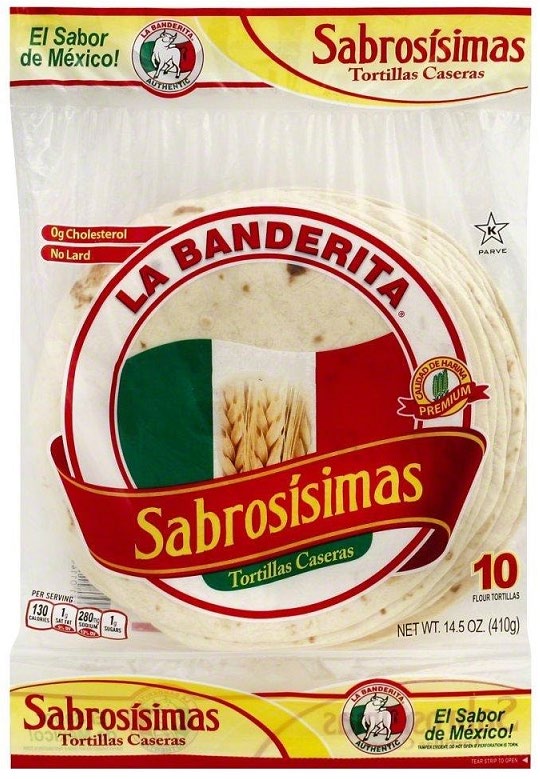
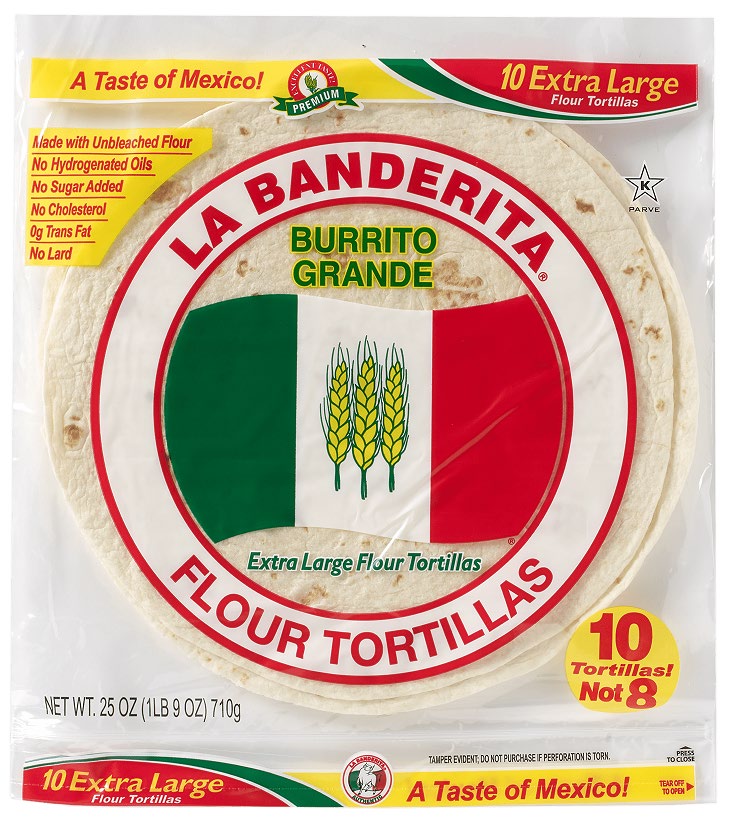
alleged that Olé’s La Banderita tortillas falsely advertised Mexican origin
based on  a Mexican flag front and center
on the packaging, the phrase “El Sabor de Mexico!” or “A Taste of Mexico!”, the
brand name “La Banderita” (“the flag”), and the Spanish phrase “Tortillas de
Maiz” on the label of the Corn tortillas. Some of the products also contain a
circular logo with the Mexican flag and the word “Authentic,” as well as other
Spanish words and phrases.  

Olé
argued that its products merely invoked the “spirit” of Mexico and didn’t make any
specific geographic references (other than “MADE IN U.S.A.” and “Manufactured
by: Olé Mexican Foods, Inc., Norcross, GA 30071” at other places on the
package, which properly disclosed origin). The court disagreed. Although a
previous case found that “The Taste of Jamaica” wasn’t plausibly misleading,
that product was prominently marked “Jamaican Style Lager,” and style or type
language strongly affects the meaning of a geographic term used on food or
drink.  Here, there was no such
indication about “style.” Moreover, deception was still plausible here in
context, even if some reasonable consumers would not be deceived. Though the
back disclosed the true origin, a reasonable consumer is not “expected to look
beyond misleading representations on the front of the box to discover the
truth.”
 

from the complaint; disclosure: I have purchased these and I have never given a second’s thought to their geographic origin one way or another

version with the “authentic” graphic

Govea
v. Gruma Corp, 2021 WL 1557748, No. CV 20-8585-MWF (JCx) (C.D. Cal. Mar. 1,
2021)

The
packaging here wouldn’t plausibly mislead a reasonable consumer into believing
that Guerrero Tortillas are produced in Mexico, though the court granted leave
to amend.

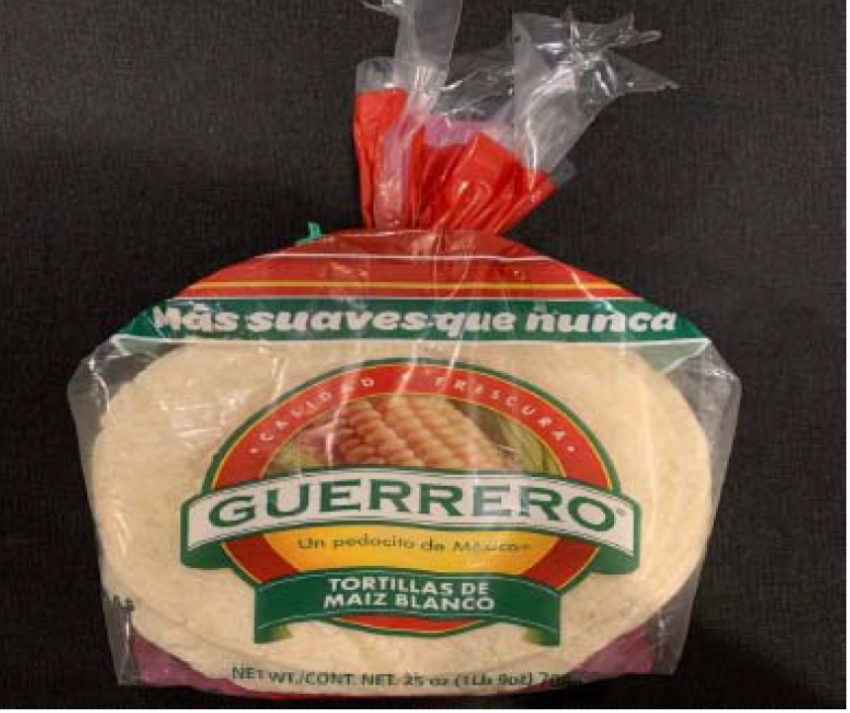
One of the accused packages

Plaintiffs
allegedly saw and relied on the word “Guerrero” (the name of a Mexican state,
also “warrior”) and the Spanish phrases on the packaging, which included: “Un
pedacito de México” and “Calidad Y Frescura” (“a piece of Mexico” and “quality
and freshness” respectively). They also allegedly relied on the Spanish descriptions
of the products they purchased: Tortillas De Maiz Blanco, Riquisimas Tortillas
De Harina, and Tortillas De Harina Integral. The rule is that “the language or
imagery of a product’s packaging is actionable if it falsely indicates a
specific place that the product is purportedly made.” “Originated in Germany,”
“Born in Brazil,” and “Belgium 1926” were plausibly false and misleading
statements of origin where the products at issue were not made in those
countries and lacked a visible origin disclaimer. In contrast, if the packaging
merely evokes the spirit of a generalized location or culture in a vague and
non-specific manner, such claims are properly dismissed at the 12(b)(6) stage.”

Here,
there were no “born in” statements, and “un pedacito de México,” was “a vague
and meaningless phrase” that is meant to “evoke the spirit or feeling of
[Mexico].” Nor did the packaging expressly describe the tortillas as Mexican.
All the packages disclosed that the Gruma Corporation was based in Irving,
Texas, and at least some of the Packaging also stated that the Tortillas are
“[l]ocally baked and delivered fresh from your Guerrero Bakery.” Nor did the
package name a specific address, city, or location in Mexico where the
tortillas were purportedly baked or invite a visit.

One of
the prior cases refusing to dismiss a complaint also noted allegations of
survey evidence that more than 85% of a “demographically representative U.S.
sample of over 1,000 adults” who viewed the accused beer or its packaging
believed that it was produced in Japan. There was no such evidence here. While
the court was dubious that it could be done, it did give plaintiffs a chance to
augment their allegations with a similar consumer survey, which might or might
not alter the court’s overall impression.

from Blogger https://ift.tt/3zwMLwe

Posted in Uncategorized | Tagged , , , | Leave a comment

Lexmark allows direct and contributory false advertising claims against certifier

U.S. Structural Plywood Integrity Coalition v. PFS Corp.,
No. 19-62225-CIV-ALTMAN, 2021 WL 810279 (S.D. Fla. Mar. 3, 2021)

Sometimes I worry that judicial writing is tending too much
towards the flip as it moves away from prolixity, but this is a lovely example
of how clear language can be deployed:

If you want to build with plywood
in the United States, you generally need a certification— called a PS 1-09
stamp. The Plaintiffs are a coalition of ten American structural-plywood mills
who manufacture and sell their plywood in the United States. The Defendants are
two companies that inspect structural plywood and, if it conforms to the PS
1-09 standard, stamp the wood as PS 1-09-compliant. According to the
Plaintiffs, the Defendants have been certifying 36 Brazilian plywood mills with
the PS 1-09 stamp—even though the Defendants know (or should know) that the
Brazilian wood doesn’t comply with the PS 1-09 standard. In the Plaintiffs’
view, this sham certification process has allowed the Brazilian mills to sell
their cheaper, non-compliant wood all over the United States—thus displacing
the Plaintiffs’ stronger, better, more expensive products.

Plaintiffs brought negligence and Lanham Act claims.

After a settlement with one defendant, the two remaining
defendants “are the sole licensors of the PS 1-09 stamp to 36 Brazilian plywood
mills that export structural plywood to the United States.” The US standards
for structural plywood are voluntary at the federal level, but customary, and “construction
codes across all 50 states require builders to use PS 1-09 structural-grade
plywood.” The stamps thus allegedly operate as powerful advertising, allowing Brazilian
plywood companies to market their products as conforming to an important
American safety standard. But, plaintiffs allege, “it is impossible to
consistently manufacture PS 1-09 compliant plywood from the extraordinarily
fast-growing loblolly and slash pine plantations in southern Brazil which are
the source of the raw materials for all of the Brazilian plywood producers in
southern Brazil.” Such accelerated growth rates allegedly “inevitably result in
weaker (and less dense) plywood, even when the plywood panels are produced from
the same pine species that are commonly found in North America.” These cheaper
imports drove down sales and profits of domestic manufacturers, causing the plaintiffs
some $75 million in alleged annual losses.

A few years back, the American Plywood Association, the
non-profit organization to which all of the plaintiffs belong, announced that defendants’
Brazilian licensees failed its PS 1-09 testing. Plaintiffs commissioned a
second test at Clemson University which, again, allegedly revealed shocking
failure rates.

Plaintiffs allegd both direct and contributory false
advertising, which requires (1) that the “third party in fact directly engaged
in false advertising that injured the plaintiff” and (2) “that the defendant
contributed to that conduct either by knowingly inducing, or causing the
conduct, or by materially participating in it.”

Were there allegedly false or misleading statements by the
defendants? Yes, the defendants made representations about the quality of the
Brazilian products by giving the Brazilian mills the authority to certify their
plywood with the defendants’ PS 1-09 stamps. And without the stamps, the mills
wouldn’t be able to sell in the US. This wasn’t like Google running a search
engine that putative locksmiths abused to sell fraudulent services. Google didn’t
attest to anything about the locksmiths; it was like a building that rents
space to business owners. Defendants, “by contrast, are like a state
medical-licensing board, which tests the doctors’ qualifications and, by
issuing them their licenses, allows them to practice medicine within the
jurisdiction. In doing so, the licensing board is making a powerful
statement—some would say, the most important statement—about the doctors’
qualifications.”

Defendants argued that they weren’t making any statements at
all, because it was the Brazilian mills stamping the wood. “But the Brazilian
plywood companies didn’t steal or forge the Defendants’ stamp. The Defendants
gave them the stamp and authorized them to use it…. These stamps are thus
unquestionably statements of the Defendants.” Even if the mills are the ones
touting the certification, the certification came from defendants, and it was
disingenuous to say otherwise, given that outside of this litigation, it would
be awful for defendants’ business for them to say that they weren’t doing the
certifications. “What value … would the certification hold if it were just the
self-affixed manifestation of any-old mill’s efforts at self-policing? No. The
Defendants’ stamps only have value—and the Defendants’ certification businesses
only exist— because the stamps are statements of the Defendants.”

Anyway, even if the stamps weren’t “statements” within the
meaning of the Lanham Act, plaintiffs also alleged other false statements by
defendants, such as letters to clients reassuring them about the APA report.

As for the contributory false advertising claim, it too was
well pled. Plaintiffs “allege that the Defendants knew or should have known about
the Brazilian mills’ lack of compliance; that, despite this knowledge, they
failed to stop it; and that they conspired with the mills to facilitate the
dissemination of faulty plywood throughout the United States.” Because it was
undisputed that the mills needed the stamp to sell in the US, “looking the
other way” “easily” sufficed as material participation.

Defendants argued that, because they neither stamped the plywood
nor profited directly from plywood sales, their stamps weren’t “commercial advertising.”
But “commercial speech encompasses not merely direct invitations to trade, but
also communications designed to advance business interests.” And the stamps
unquestionably “advance” their “business interests,” since their entire
certification business depended on the message conveyed by the stamps.

Defendants then argued that the stamps were mere statements
of opinion. But “subjective assessments by third-party entities that had no
control over market entrants” involved in other cases were not the same as “a
series of engineering tests susceptible of objective examination,” as here. A
licensor’s certification is a statement of fact—that the aspirant has met the
relevant standards—whereas a third-party evaluator that purports to assess
competency would just be offering an opinion. It’s true that a licensor, like a
medical board, can get it wrong. “But the possibility that the certifier might
get the tests wrong—or apply the tests improperly—doesn’t somehow render the
tests subjective. We can all agree that the answers to questions of math are
objective, even if, from time to time, a young student may erroneously believe
that two and two is five.”

Plus, plaintiffs weren’t merely alleging failure to meet the
PS 1-09 standards. They alleged that use of the stamp certified that defendants
had subjected the mills to certain quality-control processes—even though they
allegedly did no such thing. That isn’t subjective. “Either the Defendants
tested the wood—or subjected it to quality-control review—or they didn’t. In
all these ways, then, the stamp is an actionable statement of fact— not a mere
safety rating.” The court also noted that other professionals must of necessity
rely on the stamp for verification of quality, since they don’t test it
themselves. This too supported the characterization of the stamp as factual.

Next, defendants argued that their certification wasn’t the
proximate cause of the plaintiffs’ injuries. But Lexmark teaches that
direct sales diversion isn’t the only cognizable injury. Because (and only
because) of the allegedly false certification, the Brazilian mills can sell
their wood in the United States at a far lower price point, causing major
losses. This was proximate cause.

Finally, defendants argued that plaintiffs didn’t
sufficiently allege control or participation in the Brazilian mills’
noncompliance. But the plaintiffs adequately alleged close relationships with Brazilian
clients, including exclusive inspection service deals. And they alleged that defendants
knew or should have known of the defects based on biological facts and
independent studies.

The court also refused to dismiss the negligence claim.

from Blogger https://ift.tt/3gG6Mt3

Posted in Uncategorized | Tagged , | Leave a comment

class action certified with adequate price premium model for “nutritious” claims

McMorrow v. Mondelēz International, Inc., 2021 WL 859137, No.
17-cv-2327-BAS-JLB (S.D. Cal. Mar. 8, 2021)

Consumers in California and New York who purchased belVita
breakfast biscuits, brought a putative class action alleging that MDLZ labeled
the breakfast biscuits as “nutritious,” despite the biscuits’ high added sugar
content. Showing how plaintiffs’ lawyers adapt to barriers to class
certification, the court granted a renewed motion for class certification
because their class-wide damages model matches their theory of liability in
compliance and because no other individual issues predominate over common ones.

Plaintiffs’ expert opined that a conjoint analysis could
measure the relevant price premium. MDLZ argued that the price premium cannot
be estimated without considering supply-side and competitive factors, but
conjoint analysis can do so if the prices used in the surveys underlying the
analysis reflect actual market prices in the class period, and the quantities
used in the calculatiosn reflect actual quantities sold during the class period.
That was the case here. Other criticisms of conjoint analysis went to weight
rather than admissibility.

A similar fate befell MDLZ’s objections to the proposed
survey. Debates over whether the survey should include taste; include only belVita
purchasers or include breakfast biscuit purchasers generally; account for repeat
purchases where a consumer might not scrutinize the label; etc. went to weight
and not admissibility.

The court also declined to exlcude MDLZ’s experts. It relied
on one consumer expert to argue that different interpretations of the term “nutritious”
meant that individualized issues predominated over common ones. The court
disagreed. The expert’s survey sought to measure, in relevant part, whether and
to what degree “consumers associate the term ‘nutritious’ with a variety of
attributes including calorie content, whole grains, and vitamins and minerals.”
However, plaintiffs wouldn’t need to prove individual reliance, but rather that
members of the public are likely to be deceived, so some variation isn’t fatal.
Plaintiffs “need only make an objective showing of a probability that a
significant portion of the relevant consumers acting reasonably could be misled
by the challenged statements.”

Plaintiffs used internal MDLZ documents to show that
reasonable consumers can understand “nutritious” to mean food conducive to
health. This was enough to get to a jury. Similarly, it wasn’t important that the
health effects of sugar varies among consumers; that’s irrelevant to
misleadingness.

NYGBL statutory damages: Plaintiffs sought to recover
statutory damages for the NY class. For violations of section 349, the statute
allows a plaintiff to recover “actual damages or fifty dollars, whichever is
greater” For violations of section 350, a plaintiff may recover “actual damages
or five hundred dollars, whichever is greater.”

MDLZ argues that statutory damages were unavailable absent
class-wide proof that consumers suffered an “actual injury” in the form of a
price premium, and that an award of statutory damages would result in
disproportionate recovery for the New York class as compared to the class
members’ actual injury. It is true that the GBL has injury and causation
elements, requiring them to prove a price premium, which they were prepared to
do. And as for disproportionate recovery: “It is well settled that statutory
damages under the relevant sections of the GBL are available as a class-wide
remedy in class actions brought in federal courts under Federal Rules of Civil
Procedure, irrespective of New York legislature’s limitation of class actions
to causes of actions brought under statutes with specific authorization of
class recovery.” That didn’t bear on whether certification was “superior” to
alternate methods. (Citing, inter alia, a case pointing out that “[i]f the size
of a defendant’s potential liability alone was a sufficient reason to deny
class certification, however, the very purpose of Rule 23(b)(3)—‘to allow
integration of numerous small individual claims into a single powerful
unit’—would be substantially undermined.”) “In the Court’s general experience,
the prospect of recovering $550 (the maximum statutory damages for each
violation under the New York GBL, for example) is not enough to incentivize
individual litigation.”

from Blogger https://ift.tt/3jlrGza

Posted in Uncategorized | Tagged , , | Leave a comment

Diamond hands: timeshare entity’s alleged misconduct towards consumers didn’t allow exit company to assert unclean hands

Diamond Resorts U.S. Collection Development, LLC v. Wesley
Financial Group, LLC, No. 3:20-CV-251-DCLC-DCP, 2021 WL 3277260 (E.D. Tenn.
Jul. 14, 2021) (R&R)

In this timeshare v. timeshare exit company case, the judge
recommended tossing the exit company’s unclean hands defense.  An analogy between trademark and false
advertising arguably would have supported allowing unclean hands: the exit
company pointed out that, without the allegedly false solicitation of
timeshares, the timeshare company would have nothing for the exit company to
interfere with. This matches pretty well with the trademark standard that
unclean hands requires that the plaintiff must have secured the right upon
which it sues by inequitable conduct.

But the judge here quoted another case with approval:
“allowing Defendants to assert the affirmative defense of unclean hands may
serve to confuse the issues and prejudice Plaintiffs.” The timeshare company’s
allegedly inequitable conduct was harmed a third party, not the exit company.

from Blogger https://ift.tt/3kuXdy5

Posted in Uncategorized | Tagged , | Leave a comment

false association wasn’t plausible given clear comparative statements

Dynatemp Int’l, Inc. v. R421A, LLC, No. 5:20-CV-142-FL, 2021
WL 3284799 (E.D.N.C. Jul. 30, 2021)

Dynatemp and another company sued defendants for false
advertising and related claims; defendant RMS counterclaimed similarly.

Notable holdings: RMS didn’t plausibly allege that
plaintiffs falsely designated their goods. Instead, it alleged that their
customers displayed a Dynatemp R421A product and the Dynatemp brand alongside
RMS’s trade dress and trademarks. But RMS failed to allege any facts that allow
the court to infer that these plaintiffs controlled the content on those
websites. RMS alleged that their behavior “confused even their own customers,”
but this was a conclusory assertion.

The allegations were particularly speculative in light of
Dynatemp statements that RMS attached to its counterclaims, such as, “for a
number of years we have distributed the Choice® R421A product with a lubricant
additive. Recently, we began a transition to producing and distributing our own
Dynatemp R421A™ product. It contains a different lubricant that we believe you
will find works even better.” Also: “Our new proprietary Dynatemp R421A™
contains a different premium lubricant than Choice® R421A, and it is sold
exclusively under our own Dynatemp brand.” And: “[a]s we make our transition to
producing and distributing our new Dynatemp R421A™ product and phasing Choice®
R421A out of our product line-up, we are continuing to sell our remaining
inventory of Choice® 421A.” These statements “reflect an effort to distinguish
its products from RMS’s products, to associate its products with the Dynatemp
R421A™ brand, and to associate RMS’s R-421A product with RMS’s trade dress and
trademarks.”


from Blogger https://ift.tt/3gEIDD4

Posted in Uncategorized | Tagged | Leave a comment

statements about legality of service were factual/falsifiable

Allied Servs., LLC v. Smash My Trash, LLC,  2021 WL 3354839, No. 21-cv-00249-SRB (W.D.
Mo. Aug. 2, 2021)

Allied, aka Republic, “provides waste and recycling services
to business and residential customers in the Kansas City metropolitan area.” It
supplies dumpsters and open top roll-off waste containers to its customers.
This equipment is designed and constructed only to collect a customer’s
ordinary waste. Their agreements with customers provide that the equipment is
Republic’s property and that the customer is liable for any loss or damage to
it.

Smash provides mobile waste compacting services in the
Kansas City metropolitan area using “Smash Machines,” 25,000 pound trucks with
hydraulic booms and three-ton spiked, rotating metal drums. (Awesome.)

Republic alleged tortious interference, trespass/conversion,
and false advertising claims.

Lanham Act false advertising: Smash’s website FAW said:

Will my waste company let me Smash my trash? It’s not their
waste, it’s yours. Well established legal doctrines protect your rights to
manage your waste while under your control at your facility. This includes the
right to Smash your trash.

First, the complaint adequately alleged that the challenged
statements weren’t merely opinion. “Statements about the status of a case or
one’s … property rights are not necessarily subjective opinions and are
generally verifiable … [t]hat a court of law need ultimately determine the
truth or falsity of these statements does not render them ‘opinion’
statements.”

Second, Republic adequately alleged literal falsity by
alleging that Missouri law does not recognize this purported “right.” Republic
also alleged falsity by necessary implication: Republic’s customers were
allegedly “led to believe that they are legally entitled to utilize Republic’s
containers to have their waste compacted by Smash’s mobile compaction service.”

Materiality: It was sufficient to allege that “Smash has
falsely led Republic’s business customers to believe that the company is both
aware of and has no objection to Smash’s misuse of the Equipment and also that
Republic’s customers nevertheless have the unfettered ‘right to Smash their
trash’” along with allegations that “Republic’s business customers have
contacted it to cancel and amend Agreements, and in some instances, they have
refused to follow Republic’s direction that the Equipment may not be used by
Smash for its mobile waste compaction services.”

Causation/injury: 
Again, it was adequately alleged that the statements “caused Republic’s
customers to breach their Agreements, have resulted in the denial of access to
its Equipment, have interrupted regularly scheduled hauls, have led to damage
to its containers, and have harmed its reputation with its customers.” Only
that last one is traditional false advertising damage—the others don’t really
seem to fall within the usual zone of interests—but ok!

from Blogger https://ift.tt/3ynNlem

Posted in Uncategorized | Tagged | Leave a comment

affiliation claim true when sent out to consumers can’t be false endorsement

Klayman v. Judicial Watch, Inc., — F.4th —-, 2021 WL
3233953, No. 19-7105 (D.C. Cir. 2021)

Larry Klayman founded and ran the conservative activist group
Judicial Watch, but the relationship ended badly in 2003. “During the fifteen
years of ensuing litigation, Klayman lost several claims at summary judgment
and then lost the remaining claims after a jury trial. The jury ultimately
awarded Judicial Watch $2.3 million.” The court of appeals affirmed.

Based on the trial evidence: “Klayman’s time at Judicial
Watch came to a close after a meeting in May 2003 with two Judicial Watch
officers,” at which he showed them his then-wife’s divorce complaint and admitted
he was pursuing a romantic relationship with a Judicial Watch employee.
“Negotiations over Klayman’s departure ensued over the next several months.
Meanwhile, in September 2003, Judicial Watch began preparing its October
newsletter, which was mailed to donors along with a cover letter signed by
Klayman as Judicial Watch’s ‘Chairman and General Counsel.’ After Klayman
reviewed the newsletter, Judicial Watch sent it to the printer.”

They executed a severance agreement while the newsletter was
at the printer; Klayman agreed to resign effective Sept. 19, 2003.

Klayman alleged, among other things, that the newsletter was
a false endorsement or advertisement under the Lanham Act because it identified
him as “Chairman and General Counsel” after he had left Judicial Watch. The
court of appeals affirmed the rejection of this claim. “There was no genuine
dispute of material fact that Klayman authorized the use of his name in the
newsletter, so it was neither a false endorsement nor a false advertisement….
As proven by his handwritten edits on a draft, Klayman edited the newsletter at
issue, which Judicial Watch approved for printing while Klayman still worked
there.”

Klayman argued that he didn’t authorize the use of his name
after he left, but the Lanham Act focuses on “false or misleading statements of
fact at the time they were made.” When Judicial Watch wrote the newsletter
identifying Klayman as “Chairman and General Counsel,” that’s what he was. “His
subsequent resignation does not render the newsletter a false endorsement or
advertisement.”

[Note that if they’d continued to call him that in material
they distributed after he was gone, the cases could counsel a different result
on this particular issue—you generally can’t continue an active ad campaign
after it becomes false. And some cases even require products on shelves to be
altered if their labels become false, which makes sense as a
consumer-protective measure;  but even those cases probably wouldn’t require
reaching out to consumers who’d already taken the products home, as these
newsletters were. First Amendment considerations, too, could play a role in
the court’s conclusion, though that might be in some tension with the Lanham
Act counterclaims the jury heard about Klayman’s subsequent fights with Judicial
Watch.]

Lanham Act counterclaims: evidence of Klayman’s forced
resignation and name-calling of his ex-wife was relevant to Judicial Watch’s
Lanham Act unfair competition counterclaim, which alleged that Klayman falsely
represented in his Saving Judicial Watch campaign that he left Judicial Watch
to run for U.S. Senate. Evidence about his forced resignation was introduced to
prove falsity, and the court of appeals agreed that the risk of prejudice
didn’t outweigh its probative value. [I have questions about whether the First
Amendment really allows a Lanham Act false advertising claim about an advocacy
organization slapfight, but unfortunately neither side had an incentive to
press this point.]

Klayman also argued that the district court failed to properly
instruct the jury on Judicial Watch’s trademark infringement claims alleging
infringement of “Judicial Watch” and “Because No One is Above the Law.” Klayman
argued that the court erred by failing to instruct the jury that likelihood of
confusion requires confusion by an “appreciable number” of consumers. But the
instructions, viewed as a whole, fairly presented the applicable standard,
based on a model instruction. (The court noted that it had never actually
adopted a particular multifactor test, though it had cited other circuits’ with
approval.) “Neither our sister circuits nor the model instruction mention the
number of consumers likely to be confused. No instruction on the number of
consumers was required for the district court to fairly present the applicable
legal principles on the confusion element.” [I have my doubts about this
too—not needing to mention a “number” is not the same thing as not needing to
meet some requirement of substantiality, or even nontriviality. Suppose the
jury is absolutely convinced that confusion is likely among .5% of relevant
consumers. What should it do?]

from Blogger https://ift.tt/3DoNUIS

Posted in Uncategorized | Tagged , , | Leave a comment