ThermoLife wins appeal of Lexmark-based dismissal of claims

Thermolife Int’l, LLC v. Compound Solutions, Inc., No.
20-16138, — Fed.Appx. —-, 2021 WL 963782 (9th Cir. Mar. 15,
2021)

ThermoLife got a significant success in this appeal of the
dismissal of its false patent marking, false advertising, and unfair
competition claims.

One part was affirmed: TL alleged that Compound falsely
marked one of its products, “VASO6,” as patented even though VASO6 does not
practice a patented invention and is merely common green tea extract. Although
TL sufficiently pled false marking by alleging that lab results confirmed that
there were no patented materials in it, it didn’t plausibly allege an intent to
deceive the public. It wasn’t enough to allege that Compound was a “sophisticated”
seller.

TL also alleged that Compound falsely advertised that VASO6
has vasodilative properties, “and therefore potential customers were deceived
into purchasing VASO6 and that such false advertising diverted sales away from
ThermoLife’s nitrates.” Was TL allowed to sue under Lexmark? Yes. Its
injury was in the Lanham Act’s zone of interests because ThermoLife alleged
that customers chose VASO6 over ThermoLife’s nitrates, which is a commercial
injury to sales. And it alleged proximate cause by alleging that its nitrates
directly compete with Compound’s falsely advertised VASO6. It alleged that both
its nitrates and VASO6 [purportedly] increase vasodilation “and are sold at the
same level in the dietary supplement supply chain to pump and pre-workout
manufacturers for licensing and use in their own products.” Further, some of TL’s
customers considered replacing or replaced TL’s nitrates with VAS06.  Products containing the ingredients are
allegedly displayed side-by-side in the “pump and pre-workout” sections of
online shops and brick-and-mortar stores. This sufficed, and so the Lanham Act
and congruent state law claims were revived.

from Blogger https://ift.tt/3zc3ZPv

Posted in Uncategorized | Tagged , | Leave a comment

“tested and certified” can be false if in fact products were merely “certified” by non-tester

Wedi Corp. v. Wright, 2021 WL 1054463, No. 20-35242 (9th
Cir. Mar. 3, 2021)

Wedi alleged that three statements were literally false in
violation of the Lanham Act and the Washington Consumer Protection Act:

All Hydro-Blok Products Are IAPMO Tested and Certified.
(IAPMO is a relevant certifier).

Hydro-Blok Products Are ICC-ES Tested and Certified. (ditto).

What is HYDRO-BLOK? Put simply it is the easiest, quickest
and most user-friendly way to build a water-proof shower or tub surround at a
price you can afford.

The last (easiest, quickest, most user-friendly, affordable)
was non-actionable puffery.

As to the first, Wedi didn’t provide enough evidence to show
that the products weren’t IAPMO tested.

However, the district court erred in granting summary judgment
on the ICC-ES statement. Wedi presented evidence that ICC-ES did not request
product samples from Hydro-Blok to test, but rather relied upon IAPMO’s tests. “A
legitimate claim could be made that no testing of Hydro-Blok products was
conducted by ICC-ES.” This is interesting because some courts won’t inquire
further into a certifier’s practices—query whether there is a material
difference between “ICC-ES Certified” and “ICC-ES Tested and Certified.”

from Blogger https://ift.tt/2UJ20mM

Posted in Uncategorized | Tagged | Leave a comment

Vanilla claim comes closer than most b/c of label image, still falls short

Budhani v. Monster Energy Co., 2021 WL 1104988, No. 20-cv-1409
(LJL) (S.D.N.Y. Mar. 22, 2021)

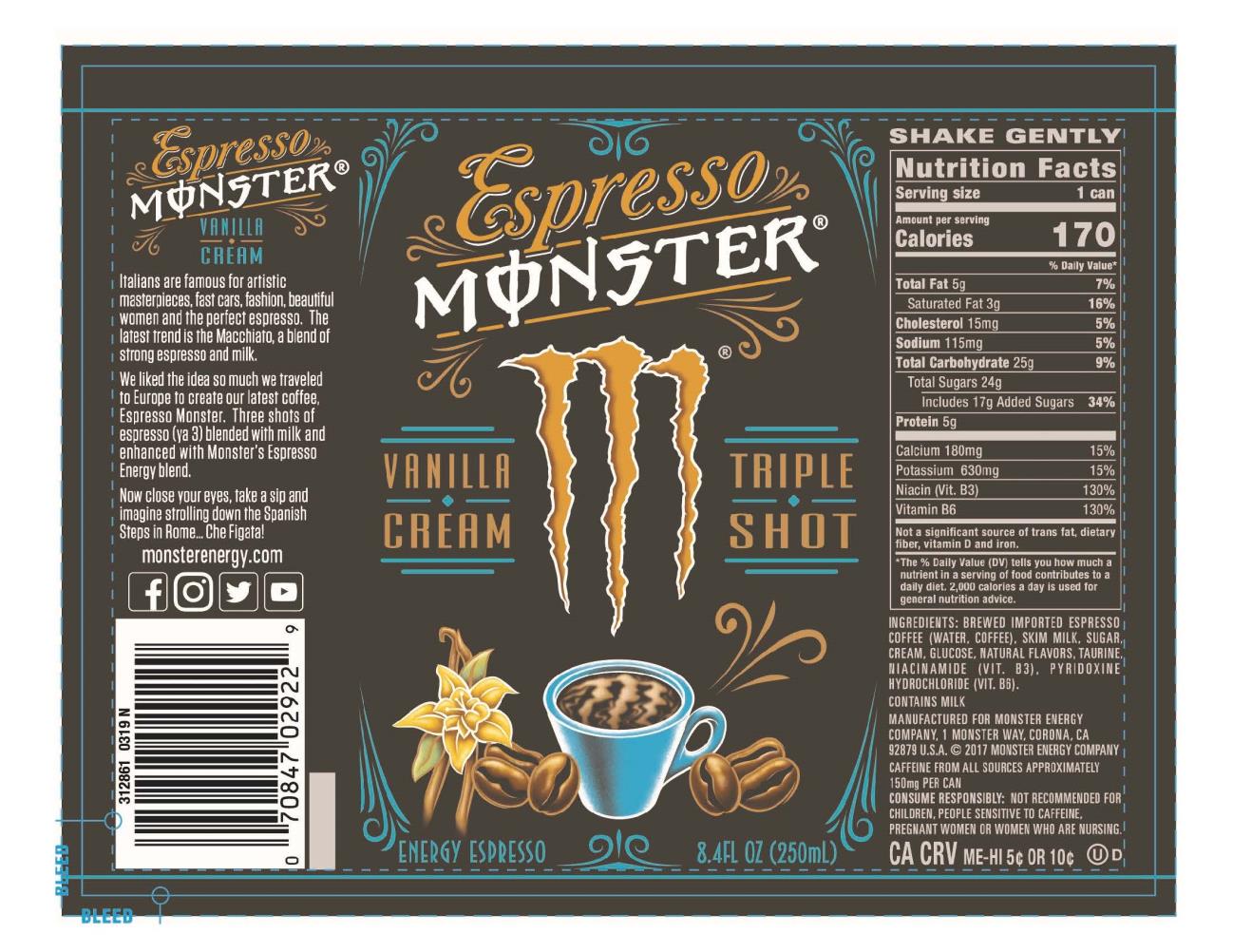
Monster “sells espresso energy drinks blended with European
milk and purporting to be flavored with vanilla under their Monster brand.” E.g.,
the Espresso Monster Vanilla Cream Triple Shot says “Vanilla Cream,” “Triple
Shot,” and has an image of the vanilla flower on the front label. But it allegedly
had only trace/de minimis amounts of vanilla from the vanilla bean, not
predominantly/exclusively vanilla. Plaintiff’s survey allegedly showed that
over 56% of respondents believed that the flavor in Defendant’s Product “came
from vanilla beans from the vanilla plant.”

Even that wasn’t enough, despite the court’s conclusion that
the presence of a vanilla bean image could plausibly mislead consumers, because
plaintiff failed to sufficiently plead falsity.

Previous cases held that the word “vanilla,” by itself,
indicates a flavor, and dismissed complaints when the labels in question made
no further representation as to any ingredient(s) or the source of that flavor.
“In each of these cases the court noted that a different result might follow if
the defendant had used additional language that made representations about an
ingredient and not a flavor or contained additional modifiers or where
consumers have a demonstrated reasonable belief about the inclusion of a particular
ingredient.” By contrast, courts in the Second Circuit “have sustained claims
where the language of a product label, in context, referred not only to a
flavor but also indicated the presence of an ingredient.”

The product in suit didn’t have “made with” language, which
has been significant in the past, or other verbal indicia of using recognizable
ingredients such as touting a commitment to “clean food” and “menu
transparency,” or promoting the nutritional values of vanilla from vanilla
beans. But defendant did use the image of a vanilla flower, “prominently,
next to the image of a coffee bean, and alongside the use of the word ‘vanilla.’”
That image and context plainly suggested the presence of extract from a vanilla
bean. And Monster admitted that the coffee bean images were intended to
convey ingredients, not just flavors or “facsimiles.” So too with the word “cream.”
The text on the side of the can confirmed both of those things, with some
marketing blather ending in “Three shots of espresso[] blended with milk and
enhanced with Monster’s Espresso Energy Blend.”

So: a reasonable consumer “could understand it to convey
that the Product contains some non-negligible amount of extract derived from a
vanilla bean, but would not understand the Product’s vanilla flavor to be
derived predominantly or exclusively from vanilla bean extract.” Thus, it was
plausibly deceptive if, as alleged, the product contained only trace amounts of
vanilla from vanilla beans. As the Second Circuit has already held, a defendant
can’t “lead consumers to believe” that its products were made with an
ingredient “so long as [the product] contained an iota of [that ingredient].”

Monster argued that most vanilla-flavored products aren’t
made exclusively or primarily from vanilla beans, so no reasonable consumer
would believe that of its product.  “At
this stage, however, the Court cannot assume that a reasonable consumer will
necessarily be knowledgeable about the compounds that create the vanilla taste,
the artificial and natural sources from which they derive, and where the
compounds are obtained for commercial use.”

Although the survey and other allegations about what
consumers want and believe wouldn’t alone be enough to sustain the complaint in
the absence of the court’s conclusions about the label itself, they did reinforce
the court’s reasoning.

However, reasonable consumers wouldn’t conclude that vanilla
bean extract was the predominant or exclusive source of the vanilla flavor,
because the label didn’t say anything about that, and the ingredient list
included “natural flavors.”

Now: “A plaintiff cannot simply obtain discovery into a
product’s ingredients by making the conclusory assertion that the defendant is
falsely representing those ingredients.” It was not enough to allege that a
chemical analysis showed differences in compounds in Simply Organic Madagascar
Vanilla Extract—represented to be vanilla derived from vanilla bean—with the
compounds in the drink that “are responsible for the bulk of vanilla’s flavor.”
Plaintiff alleged that “the Product contains an abnormal excess of vanillin …
which is a strong indicator it contains vanillin from non-vanilla sources.” That
wasn’t enough to plead that there was only a trace or de minimis amount of
vanilla from vanilla beans in the drink.

Pleading that the label violated FDA standards for food
labeling also failed, since the FDCA doesn’t provide for private enforcement,
and NY, unlike California, hasn’t adopted all federal food rules as its own to
be enforced via the UCL. “To state a GBL claim, the challenged act must be
‘inherently deceptive,’ and ‘such acts cannot be re-characterized as
‘deceptive’ simply on the grounds that they violate another statute which does
not allow for private enforcement.’ ”

Other common-law causes of action also failed, though
plaintiff had leave to replead the Section 349 & 350 claims.

from Blogger https://ift.tt/3mqZKfl

Posted in Uncategorized | Tagged , , | Leave a comment

“free-run” chicken was plausibly misleading, but “wild-caught fish” claims needed more

Sultanis v. Champion Petfoods USA Inc., 2021 WL 3373934, No.
21-cv-00162-EMC (N.D. Cal. Aug. 3, 2021)

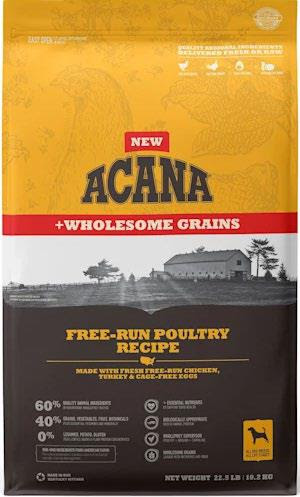
Sultanis alleged that petfood sold as being made with
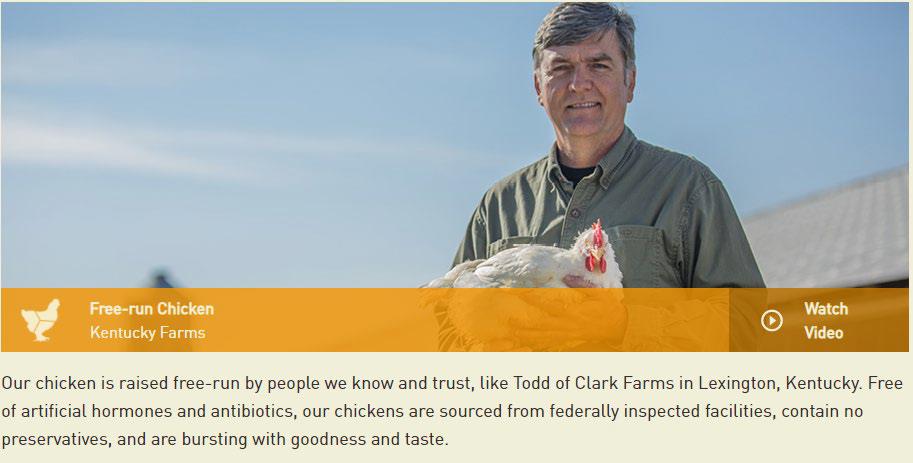
“free-run” poultry and “wild-caught” fish was falsely advertised. (Champion’s
website also allegedly described its chicken supplier as “Todd of Clark Farms
in Lexington, Kentucky,” even though the person depicted alongside that
statement was in fact Greg Hefton of Tyson Foods.) She alleged that reasonable
consumers expected the poultry products were made with chickens “raised in
better, more humane conditions than typical chickens grown for meat,” and that
“have access to the outdoors.” She further alleged that “[to] reasonable
consumers…‘free-run’ is synonymous with ‘free range.’ ” For example, an
Amazon review said that “[f]ree range chicken is the meat in [the Products].”
But in fact, she alleged, the products are made from “factory-farmed birds
raised under standard industrial conditions— confined in crowded barns without
outdoor access.”

Similarly, marketing for fish products allegedly depicted a
fisherman next to what looks like a fresh body of water with the caption
“trusted supplier of fresh wild-caught fish,” and the website promised that
“[Champion’s] saltwater fish are sustainable and wild-caught from New England’s
cold and fertile waters, and [their] freshwater fish from American waters.”
However, the products are allegedly actually made with “rainbow trout from
industrial fish farms” in Idaho and “do not use wild-caught fish.” Animal
Equality allegedly commissioned laboratory tests that revealed the fish products
tested positive for ethoxyquin, a chemical that is only found in farmed fish,
not wild-caught fish.

admittedly wrong “wild-caught rainbow trout” description online

“wild=caught fish” description

The court dismissed claims to represent a multi-state class
under Rule 23 because Champion identified “substantial variations in the
consumer protection laws of the [13] states at issue,” including whether
notice, intent, reliance, or causation are required, as well as whether a
three-, four-, five-, or six-year statute of limitations applied.

California statutory claims: The term “free-run,” on its own,
could reasonably be read to imply that the chickens used to make the products
can freely run outside, especially because the label also depicts chicken
running freely on a spacious, grassy, and outdoor field without any disclaimer
that those are not the chickens in the products.

Champion argued that its statements were true because
“Canadian trade organizations” define it as chickens that are “free to run
throughout the barn in which they were raised.” Even if the court were to take
judicial notice of the Canadian definition, “it is highly implausible that Ms.
Sultanis was aware of this Canadian definition given that she lives in the
United States,” and it certainly wasn’t dispositive of what reasonable US
consumers would think.

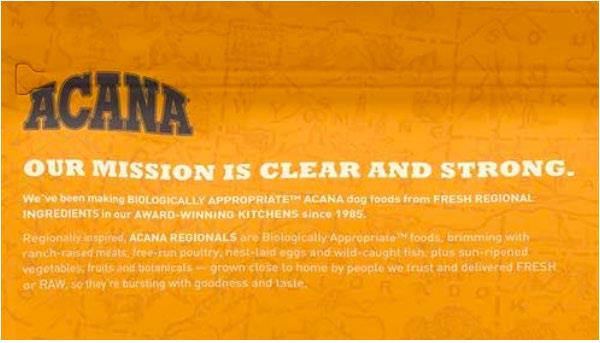
Wild-caught fish: Champion argued that “brimming with
wild-caught fish” wasn’t false or misleading because the fish products
contained wild-caught catfish and white perch, even though they also contained
farmed rainbow trout. Its photos of fishermen in fresh-water lakes were photos
of the Kentucky fishermen who supply Champion with wild-caught catfish and
white perch.  None of the products
claimed that “all” or “100%” of the fish was wild caught, and other parts of
the packaging tout rainbow trout from Idaho and wild-caught catfish and white
perch from Kentucky.

But “whether a reasonable consumer read the inconspicuous
disclaimers that explain the ingredients include wild-caught and farmed fish
is, at the very least, a question of fact.” And, even if a consumer did, it’s
not clear that would disabuse her of misconceptions; they didn’t specify
percentages or explicitly say the Idaho trout was farmed. Nor was the absence
of “all” or “100%” dispositive, especially with the phrase “brimming with
wild-caught fish.”  And Champion acknowledged
that it at least once “inadvertently” claimed to make the product with
“wild-caught rainbow trout.”

For poultry, Sultanis also alleged both that she relied on
the representations and that reasonable consumers would attach importance to
them, citing studies showing that, for example, “84% of food shoppers say it is
‘important’ or ‘very important’ to provide better living conditions for
animals”; “74% stated that they were willing to pay more for humanely raised
meat products”  three-quarters of respondents
“said they were concerned about how chickens are raised for meat”; and even
studies showing that consumer concerns with how farm animals—particularly
chickens—are raised are “increasingly carrying over to pet foods.”

However, the fish complaint didn’t plead reliance with
sufficient particularity. Sultanis didn’t see the erroneous “wild-caught
rainbow trout” statements. And the statements she did see “to some extent
explain that the Products are made with rainbow trout and wild-caught blue
catfish/white perch.” She didn’t explain what part of the labels she saw and
relied on.

Champion’s disclosure that there were three fish species involved

“rainbow trout from Idaho plus wild-caught blue catfish and whole perch”–better, but not great

from Blogger https://ift.tt/2WaaMLr

Posted in Uncategorized | Tagged , , | Leave a comment

pharmaceutical equivalence isn’t therapeutic equivalence/FDA approval

Concordia Pharmaceuticals Inc., S.À.R.L. v. Winder
Laboratories, LLC, 2021 WL 3573118, No. 16-cv-00004-RWS (N.D. Ga. Feb. 17,
2021)

Concordia makes DONNATAL, a combination of phenobarbital and
belladonna alkaloids (PBA) used to treat irritable bowel syndrome (IBS) and
acute enterocolitis. Winder makes generics.

When the FDCA was amended to require proof of efficacy, FDA began
an administrative process called the Drug Efficacy Study Implementation (DESI)
to retroactively evaluate prescription drugs that were previously only
evaluated and approved for safety between 1938 and 1962. Drug manufacturers
still need an NDA or ANDA to sell their drugs, but, during the pendency of an
open DESI proceeding, the FDA permits the subject product or drug to remain on
the market. Drugs that are “identical, related, or similar” to a product that
is subject to an ongoing DESI proceeding can also remain on the market during
the proceeding. Drugs that contain the same active ingredients are considered
identical, related, or similar.

People in the industry use subscription pharmaceutical drug
information databases to fulfill prescriptions and determine whether generic
substitutes are available for brand named products. “When companies submit
drugs to the Drug Databases for listing, FDA regulations require that the drug
products’ labels and package inserts list the drug’s active ingredients,
strengths, usage, and dosage form.” The databases rely on the information
submitted by drug manufacturers to classify drugs based on pharmaceutical
equivalence, that is, the same active ingredients, in the same amounts, in the
same dosage forms, and the same route of administration. Pharmaceutical equivalents
are given the same generic alphanumeric identifier and linked in the databases
so that a search for one returns information on both. Pharmaceutical
equivalence is not bioequivalence, therapeutic equivalence, FDA approval, or a
rating by the FDA. As another case said: “In fact, they explicitly warn that
drugs that are listed together as pharmaceutically equivalent may have
different efficacies.”

The FDA publishes the “Orange Book,” which lists all
approved drugs and their therapeutic equivalence determinations, and which is “the
primary mechanism used in the pharmaceutical industry to determine whether
drugs are therapeutically equivalent, rather than only pharmaceutically
equivalent.” Orange Book therapeutic equivalences are also published in the
databases; if the FDA hasn’t evaluated a drug’s therapeutical equivalence, then
that drug will not appear in the Orange Book.

State law governs how and when pharmacists and health care
professionals can and must make generic substitutions. “Some states, including
Georgia, permit substitution based solely on the pharmaceutical equivalence of
drug products, while others require that the drugs be therapeutically
equivalent before they can be substituted.”

Donnatal dates to the 1930s and has had conditional ANDAs
for tablets and elixir since 1980; DESI review remains ongoing. According to
their labels and package inserts, Defendants’ B-Donna and Phenohytro products
contain the same active ingredients, in the same amounts, and in the same
dosage forms, and have the same route of administration, as the DONNATAL
products. They are therefore allowed on the market during the DESI review pendency
and qualify as pharmaceutically equivalent. But they aren’t listed in the
Orange Book as therapeutically equivalent to any other product, and the labels
and package inserts state that “[t]his drug has not been found by FDA to be
safe and effective, and this labeling has not been approved by FDA.”  They were linked in the databases, but the
listings “explicitly indicated that the products were ‘unapproved’ and ‘Not
Rated’ as therapeutically equivalent to any other product.” (Nor were they
labeled as bioequivalent.)

Around the same time as defendants listed their products,
Concordia began a letter writing campaign to the databases, the three largest
drug wholesalers and distributors in the United States, and retail pharmacy
chains and supermarkets, warning that defendants “were illegally advertising
and promoting their drugs as therapeutically or FDA-approved generic
equivalents that are substitutable for DONNATAL.” Concordia specifically
asserted that: Defendants’ products were “unapproved, “non-substitutable,”
“unsafe,” and “present[ ] a high risk for FDA enforcement action, including
seizure and recall”; Defendants had “previously tried to launch an unlawful
drug product that claimed to be a generic version” of DONNATAL; Defendants’
product listings were “inaccurate”; Defendants’ products were being
“illegal[ly] market[ed] and substitut[ed]” for DONNATAL; and Defendants “d[id]
not appear to have any basis for claiming that [their] products are equivalent
or substitutable for Donnatal.” Concordia suggested that the letter recipients
could face civil and criminal liability by continuing to list and distribute the
products. This was the basis of the counterclaims.

“Several entities, including Red Oak Sourcing, a
pharmaceutical buying agent that negotiates contracts for the purchase of
generic drug products on behalf of Cardinal and CVS, and AmerisourceBergen,
subsequently terminated contracts or contractual negotiations with Defendants.”
One database contacted the FDA for additional guidance; the FDA responded that,
based on its review, the products qualified as “identical, related, or similar”
and that  “[t]he final determination
regarding the regulatory status, and therefore lawful marketing, of a drug
subject to a pending DESI proceeding (including both a drug product that is
approved for safety only and has been specifically identified as being subject
to that proceeding and products identical, related or similar to that drug product)
is reached only when the DESI proceeding has been closed.” Concordia, possibly
in a fit of pique, responded to the FDA by stating that it was “now considering
launching numerous new unapproved products that [they] believed would qualify
for marketing under [the FDA’s] letter.”

Concordia alleged that defendants falsely advertised or
promoted their B-Donna and Phenohytro products as “generic” to DONNATAL,
thereby misleading wholesalers and the pharmaceutical supply chain to believe
that these products were “therapeutically equivalent and/or FDA-approved
‘generic’ products that are A-rated to and/or automatically substitutable for
DONNATAL.” This claim was based o: (1) the information that they submitted to
the databases on their drug products’ labels and package inserts for inclusion
on their product listings; and (2) four email threads that included
representatives of defendants. However, the court had previously concluded that
the labels/packages were accurate and not false or misleading. They explicitly
stated that the their drugs “ha[ve] not been found by [the] FDA to be safe and
effective,” and the subsequent product listings on the databases clearly
indicated that the drugs were “unapproved” and not therapeutically equivalent
to any other drug. Their statements couldn’t reasonably be interpreted to
convey FDA approval, therapeutic equivalence, or automatic substitutability.

As to the email threads, the presence of the word “generic”
in an email thread didn’t “transform an otherwise innocuous email into false
advertising.” In full context (including the parties’ contracts and attachments
that disclosed the nature of the products), none of the emails reasonably could
be interpreted as false or misleading.

Contributory false advertising:  This required direct false advertising, here
either by the databases or pharmacies. Those allegedly advertised and promoted defendants’
products as “FDA-approved ‘generic’ products that are therapeutically
equivalent or A-rated to and/or substitutable for DONNATAL.” But the evidence
didn’t show any such statements, only that the databases linked the parties’
products. Database linking alone isn’t false or misleading, since it means only
pharmaceutical equivalence. Again, the listings for defendants’ products
explicitly stated that the drugs are “Not Rated” for therapeutical equivalence
and are “unapproved” by the FDA.

Moreover, even if Concordia had sufficiently alleged direct
false advertising, it didn’t show that defendants “intended to participate in
or actually knew about the false advertising” and “actively and materially
furthered the [third party’s] unlawful conduct.” All they did was submit
product labels and package inserts with explicit statements that they lacked
FDA approval.

This also knocked out state-law deceptive practices claims
and tortious interference claims based on the alleged misrepresentations.

Lanham Act counterclaims based on Concordia’s letters: Concordia
argued that its letters were written to industry legal departments to protect
its legal rights and weren’t commercial speech (or misleading).

Commercial advertising or promotion: “[W]hile it is true
that Plaintiffs’ letters do not directly market their own DONNATAL products, it
is undeniable that Plaintiffs sent the letters to prevent the recipients from
purchasing Defendants’ products, which would therefore influence consumers to
buy Plaintiffs’ products instead.” And the letters went broadly to the relevant
purchasing public: the databases, the three largest drug wholesalers and
distributers in the country, and “countless” retail pharmacy chains and
supermarkets. That qualified.

The court declined to grant summary judgment in defendants’
favor on falsity or misleadingness, though a jury could so find. There were genuine
disputes of material fact on materiality and losses sustained. While defendants
presented testimony from existing and prospective consumers “stating that the
allegations in Plaintiffs’ letters were the reason they chose to either move on
from contractual relationships with Defendants or terminate discussions
regarding prospective relationships,” plaintiffs offered conflicting testimony
and evidence. The result was the same for tortious interference and state-law
deceptive practices counterclaims.

from Blogger https://ift.tt/3mjGi41

Posted in Uncategorized | Tagged , | Leave a comment

Advocacy organization lacked standing to litigate over foie gras claims

Voters for Animal Rights v. D’artagnan, Inc., 2021 WL
1138017, No. 19-CV-6158 (MKB) (E.D.N.Y. Mar. 25, 2021)

Plaintiff, a nonprofit dedicated to advancing the interests
of citizens who support animal protection, alleged that defendants violated sections
349 and 350 of the NYGBL by deceptively marketing their foie gras products as
originating from humanely treated ducks, which injured it by “(1) setting back
its organizational mission to reduce demand for foie gras and obtain the
passage of laws banning its sale, and (2) requiring it to spend money and
resources to counter Defendants’ misleading messages.” The court dismissed the
complaint; these injuries were not cognizable and indirect.

Plaintiff maintained that its efforts had been harmed
because “[r]esearch commissioned by the foie gras industry specifically shows
that consumers who support a ban on foie gras production may change their
views, to oppose such legislation, once they are exposed to misleading
pro-industry messaging.”

The NY Court of Appeals has denied recovery for a plaintiff’s
“derivative injuries,” that is, injuries that arise solely as a result of
injuries sustained by another party. This was the case here; plaintiff did not
suffer diversion of trade, which is “direct” injury by reason of deceived
consumers. [This is, as the Lexmark court recognized, playing with the
concept of directness; proximate cause really does better as an explanation
because it’s more honest about being a legal judgment and not some ontological
step-counting exercise.]

Plaintiff argued that it was directly injured when
defendants’ misleading ads decreased support for its mission, analogous to lost
sales, and that it was injured by being forced to expend additional resources
to counteract the effects of the advertising, as in opioid litigation, where
government entities have been held to have suffered relevant injury based on
the costs of addiction/overdose to their law enforcement/healthcare resources.

The court disagreed. The NY Court of Appeals has held that
an insurer could not sue a tobacco company that “misrepresented the dangers of
smoking and engaged in a campaign to encourage consumers to smoke” even though
the plaintiff insurer was required to bear the increased medical costs that
resulted, because the plaintiff insurer’s claims were “too remote” and
derivative of consumers’ injuries. The Court of Appeals found no legislative
history in support of the insurer’s theory, and it “warned against ‘the
potential for a tidal wave of litigation against businesses that was not
intended by the [l]egislature.’ ” So too with later claims by the State that
defendants had misrepresented internet purchases of cigarettes as tax-free and
New York consumers had bought them, depriving the state of tax revenue.

I have to admit, if the Court of Appeals is serious that
“[a]n injury is indirect or derivative when the loss arises solely as a result
of injuries sustained by another party,” then I don’t see how any competitor
can logically sue under these statutes, but I have no doubt that the magic word
“goodwill” will bring different results in practice. (Even disparagement only occurs
when a wrong has been done to the consumer—deceiving them about something; the
harm to the plaintiff’s goodwill is the changed mental state of the
consumer.) Indeed, the court distinguishes other cases as involving “direct
harms to a business,” e.g., via allegedly misleading claims to consumers that
the defendants provided independent/unbiased mattress reviews. What makes that “direct”?
Well, deceived consumers withheld trade from plaintiffs. [That sounds …
indirect.] But here, defendants weren’t targeting the plaintiff directly, but
merely affecting public opinion, “which in turn affects how Plaintiff allocates
resources to fulfill its organizational mission.” The legislative history
supported the court’s holding because it “suggest[ed] a balance between
allowing individual plaintiffs to seek relief while limiting the potential for
mass litigation.” [The legislature was dubious about class actions, which doesn’t
seem like the same thing as here and also is trumped by the Federal Rules of
Civil Procedure, if I recall correctly.]

Plaintiff’s allegedly unique situation—with empirical research
establishing the harm to its mission—didn’t change things, any more than the
state’s special position with respect to cigarette taxes did for it.


from Blogger https://ift.tt/3D4dR08

Posted in Uncategorized | Tagged , , | Leave a comment

Be kind, certify a class

In re KIND LLC “Healthy and All Natural” Litig., 2021 WL
1132147, Nos. 15md2645, 15mc2645 (S.D.N.Y. Mar. 24, 2021)

Plaintiffs sought class certification of their false
advertising claims based on the claims that KIND falsely advertised “All
Natural / Non-GMO,” “Non-GMO,” and “No Genetically Engineered Ingredients”;
KIND sought to exclude expert reports. Both were partially successful.

Plaintiffs allege that KIND products contain “a
conglomeration of chemically-synthesized and highly-processed ingredients,” that
“[t]esting … detected the presence of GMOs in at least some of the products,”
and that “approximately 90% of canola, 89% of corn, and 94% of soybeans grown
in the United States are genetically modified.” They brought NY, California,
and Florida claims.

Numerosity, adequacy, commonality, and typicality were
satisfied. “Even if a named Plaintiff did not see all of the label variants,
the typicality requirement would still be met. … The differences are slight and
all can be litigated in this action with the current class representatives.”

The class was also ascertainable. “While KIND labels varied,
all the labeling over the putative class period is allegedly deceptive. As
such, the possibility that a potential class member could join the litigation
without ever seeing the allegedly deceptive advertising cannot occur here.” Nor
was the lack of a receipt requirement fatal. “Imposing a receipt requirement
would severely constrict consumer class actions where most consumers do not
keep receipts because the purchase price is low and part of a minerun retail
transaction.”

The court thought that the three states’ laws were similar
enough on the key aspects to analyze predominance together, focusing on (1) the
deceptive act, (2) materiality, and (3) injury.

The court agreed that common questions about
deceptiveness/materiality predominated, given the extreme similarity in meaning
of the three label variants. None of the labels displayed “All Natural” on its
own, but always with “Non-GMO.” They could be proved true or false on a
classwide, as could materiality (which is an objective inquiry about reasonable
consumers under the governing laws). Nor was the fact that plaintiffs offered
various definitions of “All Natural” fatal; none of the definitions contradicted
each other. Finding commonality also served “important policy considerations”:

This consumer class action spins a
familiar tale. A large company produces similar products with different labels.
Should employing slightly different labels allow a company to escape liability?
… The labels on these products vary slightly but all are sufficiently similar
to draw potential customers to the KIND brand. Moreover, as every company does,
KIND refined its advertising strategy with the passage of time and market
research, resulting in gradual changes to its labeling. … If this Court
declined to certify the proposed classes, consumer-product companies would have
a roadmap to avoid class actions. And given the relative low cost of most
consumer products, those companies could avoid any liability for deceptive
labeling.

KIND also argued that the number of ingredients challenged
as non-natural defeated predominance. But, if a product contains (what a jury finds
to be) a single non-natural or GMO ingredient, the label is incorrect and plaintiffs
may be entitled to damages.

Plaintiffs were also prepared to have their expert quantify
the alleged price premium. A damages model for a false advertising case must
“isolate the premium due only to the allegedly misleading marketing statement.”
Plaintiffs’ expert proposed to use a hedonic regression and a conjoint analysis;
this could be workable despite the label variations. KIND’s argument to the
contrary assumed that different variations of the label would lead to different
premiums. First, a liability class could be certified even if damages weren’t
amenable to classwide proof. Second, all purchasers were exposed to allegedly
misleading advertising and therefore may have paid a premium. Third, the
differences among the labels were slight, making it unlikely that any
differences were significant.

The court also rejected KIND’s Daubert motion to
exclude the damages expert; he did all that was required at this stage: opine
what could be done to assess damages and that the data to do so were available.
A rebuttal expert from plaintiffs was, however, excluded as untimely.

Finally, superiority favored certification because a class
action was the best way to resolve this kind of dispute about a low-cost
problem, and it was already consolidated as MDL.

Plaintiffs were, however, not allowed to seek injunctive
relief under Rule 23(b)(2). Berni v. Barilla S.p.A., 964 F.3d 141 (2d Cir.
2020), held that past purchasers couldn’t maintain an injunctive class. They
weren’t definitely going to buy again, and they knew they’d been deceived
before, so they wouldn’t be fooled again. In the Second Circuit, inability to
rely on a continuing representation is not sufficient injury.

from Blogger https://ift.tt/3z6KyaP

Posted in Uncategorized | Tagged , , , | Leave a comment

patent misrepresentations to prospective dealer could be false advertising under Dastar/Lexmark

Three very similar
cases involving the same plaintiff.

Roof Maxx Technol., LLC
v. Holsinger,
2021 WL 3617153, No. 2:20-cv-03154
(S.D. Ohio Aug. 16, 2021)

Roof Maxx distributes “a
soy-based liquid product that is sprayed on asphalt shingle roofs to extend the
life of the shingles.” It enters into dealership agreements, often geographically
exclusive, around the country. It did so with Holsinger (Shingle Savers) and
included a noncompete. Shingle Savers ultimately terminated the agreement,
alleging misrepresentations by Roof Maxx; RM denied any misrepresentations and
sued, seeking declaratory judgment of the validity of the noncompete clause.

Shingle Savers
counterclaimed, alleging, among other things, false advertising under the
Lanham Act and violation of the Ohio Deceptive Trade Practices Act. It alleged
that RM enticed Holsinger to sign the agreement by falsely representing that
two generations of the product were patented, when it knew the patent lapsed in
2014 due to failure to pay maintenance fees.

The resulting
fraudulent inducement counterclaims were pled with sufficient particularity
under Rule 9(b). They also required justifiable reliance:  

Here, the circumstances involved in the agreement show that Mr.
Holsinger had no reason to doubt the veracity of Roof Maxx’s representation
that the Product was subject to a valid patent. The Feazels have a long history
of starting roofing companies, and Roof Maxx (his most recent roofing company)
is a national distributor of roofing products. Mr. Holsinger, on the other
hand, is a layperson with no previous experience in the roofing industry.
Indeed, Shingle Savers alleges that Roof Maxx and the Feazels specifically
targeted individuals with no roofing or business background for the purpose of
entering into exclusive dealer agreements. Moreover, the alleged
misrepresentations concerned the nature of Roof Maxx’s own roofing Product and
were presented in official marketing material and conversations. Given Mr.
Holsinger’s relative inexperience and the formality in which the
representations were made, it was not unreasonable for Mr. Holsinger to trust
them and rely upon them when he signed the agreement.

RM argued that reliance
wasn’t justifiable because patents are a matter of public record, but the court
declined to extend real estate cases to cover this situation. “[T]he
transaction at issue here revolved around forming a dealership relationship,
and the patent representations constituted an inducement to enter the
dealership agreement. Under these facts, a person ‘is under a duty to
reasonably investigate’ only if he was ‘put on notice as to any doubt about the
truth of representation.’” Because the facts in the counterclaim didn’t suggest
that Holsinger should have known he was being deceived, “he was not obligated
to verify the patent status by independently checking the USPTO website.”

Lanham Act/ODTPA
claims: First, the court declined to hold that Rule 9(b) applied to Lanham Act
false advertising claims, which don’t require fraud.

Did RM misrepresent “the
nature, characteristics, or quality” of its product? Its Prospective Dealer
Guide represented that “Roof Maxx has worked closely with our strategic
partners … to develop an optimal formula….The product formula is patented.” In
a sales pitch:

In 2016, Roof Maxx entered into a worldwide exclusive licensing
agreement … for the rights to the patent covering the Roof Maxx product. … Click
HERE to review the patent.

In an effort to continually bring value to our Dealers and their
customers (property owners), Roof Maxx has entered into another worldwide
exclusive licensing agreement … for a new and improved Roof Maxx formulation. This
formulation is the subject of a separate patent filed in 2017
and is
currently in the final phases of testing. [patent application number]

Despite Roof Maxx’s best efforts to provide superior products
which are covered by various patents
, the business opportunity should be
evaluated on the basis of the underlying value of the Roof Maxx product, Roof
Maxx’s world-class Onboarding and Success teams and resources, national brand
recognition, and the other systems and resources provided to the Dealer as part
of the Roof Maxx opportunity.

However, RM petitioned
the PTO to accept a late payment of the maintenance fee and was rejected, and
thus was allegedly “keenly aware” that the original patent lapsed at the end of
2014, and the PTO rejected the patent application for this second-generation
Product numerous times.

The court thought that
patent status was part of the covered “nature, characteristics,
qualities, or geographic origin” of the product. Dastar doesn’t exclude
coverage. The defendant in Dastar was in fact the origin of the products
it sold, so there was no misrepresentation of origin. Thus, the Lanham Act does
not protect a company against a rival that “steal[s] its product ideas to
manufacture a rival, facsimile product,” but Dastar didn’t cover “misrepresentations
that its Product was subject to an active, valid patent,” which weren’t the
same thing as claims about who originated or authored a product. Filing for a
patent isn’t a Lanham Act-covered act, but falsely representing patent coverage
on marketing materials and in meetings with prospective dealers” is.
This allegedly created the impression that RM was the exclusive source of the
product and that exclusive dealers would face little or no direct competition. “As
such, these statements go directly to the Products’ nature, characteristics,
and qualities.” More generally, Section 43(a) of the Lanham Act “does reach a
seller who, by exaggerating the scope of a patent, creates a false impression
that he is the exclusive source of the product.”

Was this commercial
advertising or promotion? RM argued that it wasn’t in competition with Lexmark,
but most of the cases it cited preceded Lexmark, which removed any
competition requirement, and the others failed to grapple with Lexmark. Without
discussing whether Shingle Savers should be treated as a customer of RM—who is
not within the Lanham Act’s zone of interests—the court found that Shingle
Savers sufficiently pled “damages to its commercial interest in sales and
business reputation.” Individual RM officers were also sufficiently alleged to
be personally liable given that they allegedly were aware that the patent
lapsed and participated in making the challenged marketing materials.
 

Roof Maxx Technol., LLC
v. Tabbert,
2021 WL 3617158, No. 2:20-cv-03156
(S.D. Ohio Aug. 16, 2021); Roof Maxx Technol., LLC v. Rourk, 2021 WL 3617154,
No. 2:20-cv-03151 (S.D. Ohio Aug. 16, 2021)

In addition to the claims discussed above, defendants/counterclaimants
also alleged that RM breached the parties’ agreement by publishing disparaging
statements. The agreement said, inter alia:

The parties jointly
agree to not post for public consumption, any disparaging remarks, comments,
accounts, or other relationship detail.
Such disagreements shall be
first submitted to a licensed Mediator/Arbitrator for informal
adjudication….Any violation of this paragraph is a material breach, and
breaching party will remove, caused to be removed, or authorize removal, of
such offending public statements.

RM told a group of RM
Certified Dealers:

Recently, there have been some questions regarding why certain
Roof Maxx dealers terminated their dealerships. Roof Maxx and these dealers
have disagreements regarding various practical and legal matters pertaining to
those dealerships and their related activities.

Roof Maxx and those dealers engaged in good faith attempts to
informally resolve these issues. Initial discussions failed to resolve the matter.
In the meantime, Roof Maxx has filed lawsuits in Franklin County, Ohio,
pursuant to the terms of the respective EDAs, to have these matters adjudicated
according to law.

Roof Maxx has filed these actions to preserve the integrity of the
industry and brand that all our dedicated dealers have built (and continue to
build), as well as ensure that the time, dedication, and resources that you
have committed your success to are not diluted….

Roof Maxx respects the legal process and will not comment on or discuss
pending litigation.

The counterclaimants
argued that this amounted to an assertion that they were a threat to the integrity
of the industry and brand. [I find this statement innocuous, unlike the other
alleged activity.] The court disagreed: it didn’t specify them as one of the
dealers, and thus didn’t disclose details in contravention of the agreement.

from Blogger https://ift.tt/3y2t8La

Posted in Uncategorized | Tagged , , | Leave a comment

Even a default can’t make false claims made to Amazon violate the Lanham Act

Wilco Trading LLC v. Shabat, 2021 WL 1146634, No.
8:20-cv-579-TPB-JSS (M.D. Fla. Mar. 8, 2021) (R&R)

Wilco is an online reseller, primarily on Amazon. It allegedly
sold authentic beauty products made or branded by defendant EL Sales, which
nonetheless filed complaints on Amazon claiming that Wilco was selling
counterfeit products, and also posted a warning on the webpage for the product warning
against purchasing “counterfeits” and telling consumers only to buy from the
authorized account. Amazon suspended Wilco as a result of the complaints, and
refused to reinstate it for several months.

Defendants defaulted. Despite this, the magistrate found
that there was no valid Lanham Act claim. False complaints to Amazon weren’t “commercial
advertising or promotion.”  

Defendants’ warning on their website regarding “unauthorized
dealers” arguably was “commercial advertising” under the Lanham Act. Wilco
alleged that the warning falsely stated “that all other products are not only
‘unauthorized,” but ‘counterfeit’ and therefore dangerous.” But the complaint
didn’t identify any literally false allegations that the products could only
be found through authorized dealers. The warning would only be literally false
if no unauthorized dealers sold counterfeit Predire Paris products, and
the complaint didn’t so allege. Thus, Wilco was required to offer some evidence
of consumer deception. Even with the default, it wasn’t enough to allege that
the website was “likely to deceive and confuse the public.” Nor did it
adequately allege materiality; its claims of injury also focused on the Amazon
suspension.

FDUTPA: Doesn’t allow for consequential damages, including
lost profits, so that went too.

Tortious interference and defamation per se (false
accusations of selling counterfeits) did work, though, resulting in damages over
$166,000 but no injunction or attorney’s fees.

from Blogger https://ift.tt/3AX1zVq

Posted in Uncategorized | Tagged , | Leave a comment

claims that “infant” formula misleadingly implies special formulation survives

Youngblood v. CVS Pharmacy, 2020 WL 8991698, No. 20-cv-06251-MCS-MRW
(C.D. Cal. Oct. 15, 2020)

Youngblood bought an acetaminophen product for infants,
believing based on its packaging that it was specifically formulated for
infants and therefore different from CVS’s acetaminophen product for children.
The word “infants,” photo of a mother and infant, and instruction to “Compare
to the active ingredients in Infants’ Tylenol Oral Suspension” allegedly drove
that belief. Comparing it to the Children’s product would allegedly reinforce
that belief, because the children’s product displays an image of a parent
holding what appears to be an older child and states that it is “For Ages 2 to
11.” However, they are both dosed at 160 mg/5 mL. The formulations are identical;
the only difference is that the Infant Product comes with a syringe while the
Children’s Product comes with a plastic cup. But the Infant product costs $6.49
per ounce of medicine and the Children’s Product costs $8.79 per eight ounces
of medicine. Plaintiffs brought the usual California statutory claims.

Children’s Version

Infant Version

Although the consumer protection statutes don’t authorize
the court to set retail prices, that’s not what the complaint did. Plaintiffs
didn’t contend that the price was the source of the deception, but relied on:
(1) the name “Infants’ Pain + Fever”; (2) the instruction to “Compare to active
ingredients in Infants’ Tylenol Oral Suspension”; and (3) the picture of what
appears to be a mother holding a young child relative to the older child
featured on the Children’s Product. Without any express disclosure that the medicine
in the bottle is exactly the same, and provided at the exact same
concentration, this could plausibly lead a significant portion of the general
consuming public to concluded that the product was unique or specially
formulated for children under two. Merely displaying the acetaminophen
concentration on each package, or including a syringe in the box, didn’t foreclose
all reasonable inferences that the medicine is specially made for infants. Even
if the box had no literal untruths, a reasonable juror could nevertheless
conclude that it is “has a capacity, likelihood or tendency to deceive or
confuse the public.’ ”

from Blogger https://ift.tt/3xVEjFm

Posted in Uncategorized | Tagged , , | Leave a comment