What Dastar took, does 1202 give back?

Another older case found in my year-end roundup.

Pilla v. Gilat, 2020
WL 1309086, No. 19-CV-2255 (KMK) (S.D.N.Y. Mar. 19, 2020)

Pilla provides
“professional architectural services to various construction projects.” Defendants
own a “luxury construction project” at 324–326 West 108th Street in New York
City involving the renovations of two existing five-story buildings and a
sixth-story addition to the buildings. Pilla provided architectural services to
defendants for the project and registered two sets of architectural drawings
therefor. Pilla alleged that defendants began unlawfully copying the designs,
including by submitting unauthorized copies to the NYC Department of Buildings,
representing that the submitted drawings were their own, and Gilat
“intentionally removed [Plaintiff’s] name and [the] notice of copyright” from
the original designs.

The court couldn’t
resolve the substantial similarity issues on a motion to dismiss, even given
that the existing building constrained the designs. Defendants’ arguments, such
as that similarities were attributable to the codes of the Landmark
Preservation Commission, had to await summary judgment. Even for architecture,
dismissal on a motion to dismiss required an “utter lack of similarity,” not
present here.

Of more interest: Dastar
barred the false designation of origin claim. The “copying of creative content
like [architectural drawings] is not protected by the origin of work provision
of the Lanham Act … precisely because this sort of claim falls within the
purview of copyright law.” (Dismissed without prejudice in case plaintiff could
allege the presentation of a “tangible good[ ] … offered for sale.”  The court gets a bit confused: it suggests
that allegations of copying “with no revisions or changes” could state a false
designation of origin claim, but copying to create a derivative work couldn’t;
this is just wrong because of the “tangible good” issue.)

DMCA §1202: The
court refuses to dismiss the claim for CMI removal/alteration. Courts in
general have not always taken 1202 seriously by its own terms, perhaps because
it seems very limited if they were to do so. By its own terms, 1202 treats
“removing” CMI differently from “distributing copies that have had the CMI
removed.” But, as the court here does, courts often collapse those two together.
On a motion to dismiss, Pilla sufficiently alleged the necessary double intent,
“albeit barely.” It alleged that there was CMI on its designs: its logo, name,
and seal, as well as a note stating, “[t]he entire contents of this document
… and all copyrights therein[ ] are and shall remain the sole and exclusive
property of [Plaintiff]. The documents and their contents may not be used,
photocopied[,] or reproduced digitally, electronically[,] or in any other
manner without the express written consent of [Plaintiff].”

It wasn’t necessary
to allege how, when, or where the CMI removal occurred, and Pilla sufficiently
alleged that this was intentional. And Pilla alleged that defendants copied the
designs and submitted derivative designs to NYC. [Note that the court doesn’t
require explanation or allegation of how this removal induced, enabled, etc. infringement—would
fewer copies have been created if they’d left this information on?] The court
signalled that it would be open to the argument that infringing derivative
works (that is, nonexact copies) can’t violate §1202, but reserved this issue
for later development. And Pilla seemed to state a claim for provision of false
CMI, for the same reasons.

from Blogger https://ift.tt/2WegtnJ

Posted in Uncategorized | Tagged , , , , | Leave a comment

copyright in model codes after Georgia v. PublicResource.Org

Older case, but worth working through!

International Code
Council, Inc. v. UpCodes, Inc., 2020 WL 2750636 (S.D.N.Y. May 26, 2020)

ICC claimed that defendants
infringed its copyrights in forty model building codes (I-Codes) by posting them
and derivative works on their website, UpCodes. The court endorsed the basic
proposition that there can be no liability for sharing the law with the public,
whether as a matter of copyrightability or fair use, but found that some of
UpCodes’ “redlines” might go too far and thus denied cross-motions for summary
judgment. It’s a great survey of issues that remain after the Georgia v.
Publicresource.org
case and well worth reading—especially on merger.

State/local adoption of model codes benefits everyone involved, including the public, by
aligning the law with industry best practices. ICC was founded in 1994 by three regional standards development
organizations (SDOs) that developed similar codes, who donated their copyrights
in model codes to ICC in 2003 “and envisioned that ICC would produce
coordinated national building codes. Its codes have been adopted into law by jurisdictions across all fifty states.

One of the
“foremost” reasons ICC develops model codes is to get them enacted into law. It
has a dedicated government relations department that helps jurisdictions enact
its codes. The development process “allows for public participation and comment
at no cost,” “involves significant participation by government representatives,”
and includes revisions every three years.  “ICC currently incurs the up-front costs of
its code development process and recoups the relevant costs at least in part
from the sale and licensing of its copyrighted codes.” ICC charges “modest”
prices compared to those for other technical reference works and donates
hundreds of copies of its model codes to libraries and other jurisdictions
throughout the US. Members of the public can purchase model codes and
guidelines online. ICC also sells a variety of supplemental materials and
services, such as code commentary, study companions, handbooks, user’s guides,
and training materials incorporating model code text. And:

ICC also makes its model codes, and some government codes that adopt
the model codes, available for free on its website in a digital library called
publicACCESS. The publicACCESS reading room makes printing, copying, and
downloading of the codes difficult, though it does not necessarily completely
prevent such functions. ICC publicizes that the free access it provides to its
model codes and the enacted state and local codes is on a read-only basis. ICC
relatedly offers a paid service called premiumACCESS, which provides users with
access to additional features such as full access to commentaries, and tools to
highlight, bookmark, and annotate the codes.

Meanwhile, UpCodes
is a startup providing “easy and convenient access to
materials of particular importance to members of the architecture, engineering,
and construction (‘AEC’) industries, such as the state and local building codes
that governed their projects.” Like publicACCESS, it has some free services and
others that are available only to paid users. There are two versions of
relevance to the suit: pre-suit UpCodes made the forty I-Codes at issue freely available
to anyone to view, print, copy, and download, but redirected users to ICC’s
website for at least one (the International Zoning Code 2015). The forty ICC
model codes were posted in a section titled “General Building Codes” and
identified by their model code names, but also identified jurisdictions that
had adopted the model codes on the same page, at least as to some of the codes.
Meanwhile, the paid access portion displayed governmentally enacted building
codes that adopted ICC’s model codes with amendments. “[A]dditions by the
enacting state or local jurisdiction were displayed in green, while all model
code text that a jurisdiction did not adopt was struck-through in red, much
like in a redline.”

Current UpCodes “purports
to post only enacted state and local building codes, rather than any model
codes as such,” and doesn’t charge for access to enacted laws. It also now
shows only the titles or headings of the deleted model code provisions in
struck-through red text, rather than all portions of the model codes that were
not adopted. But it still uses the “trademarked” names of ICC’s model codes at
various points, e.g. by noting on a state/local code page that the enacted code
adopts a particular model code with or without amendment.

There is an
extensive and nuanced review of the case law, but the bottom line is simple: “the
I-Codes as Adopted are in the public domain, because they are in fact enacted
state and local laws binding on the enacting jurisdictions’ constituents.” (The
court declined to rely on collateral estoppel against ICC’s predecessors in
interest.)  However, it is possible that
defendants infringed by posting the codes “as model codes or the I-Code
Redlines … [T]he record is ambiguous as to whether what the Defendants actually
post constitutes ‘the law’ alone.”

The court rejected
ICC’s arguments that, if adoption of model codes prevents enforcement of
copyright in those codes, that’s an unconstitutional taking, and its related
argument that 17 U.S.C. § 201(e) prohibits government expropriation of
copyrights.

Takings: “Private
parties do not have reasonable investment-backed expectations in property or
information voluntarily provided to government, beyond what is explicitly
provided by the government itself.” Given that ICC urged government adoption of
its codes, it could not complain when that happened, even if it wanted to have
its copyright and enact it too:

Even if ICC did not expect that its encouragement of government
adoption would prevent it from enforcing its copyrights as to the I-Codes as
Adopted, that legal consequence flows from the federal law of the public domain
rather than from unjust action by the state or local jurisdictions. Far from
coercing ICC to give up its copyrights, the jurisdictions are following ICC’s
advice that the I-Codes would protect their citizens better than would the
jurisdictions’ trying to draft complex technical codes from scratch.

Nor did it matter
that “many jurisdictions sign licensing agreements respecting ICC’s copyrights.”
ICC retained copyrights in its model codes as model codes, but that didn’t
answer the question of whether the model codes became “laws” governing the
public. Regardless, those agreements could not override the public’s right to “freely
share the laws that govern them.”

As for §201(e), that
applies only to individual authors, and also more fundamentally “addresses
government actions avowedly intended to coerce a copyright holder to part with
his copyright, so that the government itself may exercise ownership of the
rights.”

How broad is this
holding?

A privately-authored work may “become the law” upon substantial
government adoption in limited circumstances, based on considerations including
(1) whether the private author intended or encouraged the work’s adoption into
law; (2) whether the work comprehensively governs public conduct, such that it
resembles a “law of general applicability”; (3) whether the work expressly
regulates a broad area of private endeavor; (4) whether the work provides
penalties or sanctions for violation of its contents; and (5) whether the
alleged infringer has published and identified the work as part of the law,
rather than the copyrighted material underlying the law. These considerations
may not all be strictly necessary or exhaustive, but are guideposts to assess
whether notice of the purported copyrighted work is needed for a person to have
notice of “the law,” such that due process concerns would effectively
categorically outweigh the private author’s need for economic incentives.

However, “SDOs may
still sue for infringement if a defendant copies their model codes as model
codes or indiscriminately mingles the enacted portions of the model codes with
portions not so enacted.”

Though there were
some factual issues remaining, the framework was clearly highly
defense-favorable. Even the trademark-y, “others are free to copy the law, they
are not free to copy the copy” bit favored defendants: “While it would likely
be inappropriate for a user to post the model codes without any indication that
they have been adopted into law, the Court is not persuaded that it would be
improper to identify in such posting both an enacted law and where that law
derived from. Whether a state or local jurisdiction has referenced a private
work is a matter of fact, and is not equivalent to posting the private work
itself.”

A jury could find
that posting model codes as model codes or “indiscriminately” mingling enacted
text with nonadopted text constituted willful infringement, “particularly
considering that Historic UpCodes also hid state and local amendments to the
I-Codes behind a paywall.” 
(A footnote also commented that redlining isn’t really indiscriminate because of its well-understood signalling function.) But a member of the public can post enacted
laws “and state the simple fact that those laws are derived from the I-Codes.” 

One interesting
argument: UpCodes’ posting of the law was underinclusive, “because they do not
post other statutory provisions that might affect the enacted model code text,”
including definitional statutes. The court disagreed; for example, South
Holland’s enacting ordinance states that “the International Building Code
(2012) be and is hereby adopted as the building code of the Village of South
Holland in the State of Illinois.” “While South Holland undoubtedly has other
laws that pertain to building safety, the Court cannot conclude that
Defendants’ description of the IBC 2012 as the building code of South Holland
was inaccurate when South Holland’s ordinance states the same.” It was true
that defendants needed to post amendments to the I-Codes themselves “to
accurately portray the enacted law,” it wasn’t practical to require them to
post any “additional legal material that may bear on the enacted model text’s
full meaning,” since such interactions could go on infinitely.

The court denied the
defendants’ motion for summary judgment because there were genuine factual
disputes suggesting that at least some codes posted on Current UpCodes
“indiscriminately mingled” enacted text with unadopted model text, e.g. posting
a code as part of Wyoming’s building code with all the appendices, when Wyoming
didn’t adopt any appendices (including one focusing on tsunami-generated flood
hazards). 

As to the redlines,
they were not in the public domain just because they “reflect[ ] the work of
lawmakers just as much as the enacted text of the law.” That had to be assessed
as fair use.

Merger: Historic
UpCodes displayed the I-Codes as model codes in full, including even their
copyright pages. The parties disputed at what time merger should be assessed:
at the creation stage (in which case the ideas are separable from the text) or
the putative infringement stage (in which case they aren’t separable from the
law as enacted). While the Federal Circuit has said that merger should be
assessed at the time of copying (Google v. Oracle), the court here
disagreed, elegantly pointing out that this contradicted the Federal Circuit’s
own framing of the Second Circuit approach, which is to assess merger as a
matter of infringement, not copyrightability:

[I]f that defense can turn only on considerations that relate to the
time of initial copyrightability, rather than the time of the activity that may
expose a defendant to liability, it is hard to see how courts are meaningfully
considering merger “in the context of alleged infringement” and under the
rubric of substantial similarity.  Far
from providing courts with “a more detailed and realistic basis for evaluating”
defendants’ merger claims, such reasoning requires courts to ignore potentially
relevant evidence from defendants while shifting a burden of proof to them.

Thus, merger
requires assessing “whether previously copyrighted language has become
essential to the expression of, or integrated with, a legal conception.” The
enacted law is a fact. “Even though the model codes themselves have not become
the law, one would need to use those model codes’ precise language to express
laws that had adopted the codes by reference in their entirety.”

What about the
copyright pages? “[D]e minimis under the circumstances.” So too with the
current UpCodes approach of showing model code headings struck-through in red
when displaying enacted codes that amend the model codes, “bearing in mind the
headings’ minimal contribution to the overall model codes.”

Again, there were
factual issues about what exactly defendants posted that prevented summary
judgment for them:

There are some pages on Historic UpCodes where Defendants appear to
have posted model building codes without mentioning adopting jurisdictions. On
still other pages, the model code is accompanied by a section listing states
that adopted the model code, but it is unclear whether those states adopted the
code without amendment (such that the model code was the only way to express
their laws, even if not explicitly identified as such) or whether those states
amended the model codes (such that the model code text was not the only way to
express those laws). That Defendants made government amendments to the I-codes
available only to paying users may also cut against the notion that they meant
only to express the law.

Fair use: The court
would have reached the same result on the I-Codes as adopted if it had relied
on fair use, and the redlines might be fair use. 
Purpose: “Posting
enacted laws for the purpose of educating members of the public as to their
legal obligations may be transformative, even if the enacted laws are identical
to other copyrighted works.” And commerciality isn’t very important when the
use is educational/informative/transformative.

Whether the redlines
were transformative was a closer call. “In a sense, the I-Code Redlines are
like legislative history showing what the state and local jurisdictions
explicitly decided to add or delete when adopting the model codes.” The PRO case expressed
concern that a state might try to “monetize its entire suite of legislative
history.” But those were works authored by judges and legislatures, and the
redlines might be “less probative” than legislative history or annotations. “As
ICC points out, knowing that Wyoming did not adopt an appendix on
tsunami-generated flood hazards probably does not help Wyoming residents comprehend
their legal duties.” And that the redlines were only available to paying
customers could partially offset transformativeness.

Nature of the work:
highly factual, even as to the redlines; favored defendants.

Amount copied: As in
the DC Circuit’s ASTM case, where a defendant “limits its copying to
only what is required to fairly describe the standard’s legal import, this
factor would weigh strongly in favor of finding fair use here, especially given
that precision is ten-tenths of the law.” However, that likely weighed against
fair use for the redlines.

Market effect: Again
relying on ASTM, the court considered (1) the marginal harm caused,
given that SDOs make their standards available for free in controlled reading
rooms without hurting sales of their standards; (2) the harm caused by making
available only the portions of the standards that “became law” versus the
markets for the complete standards; (3) the market for derivative works, “particularly
considering that the standards are regularly updated and that the private
parties most interested in the standards would presumably remain interested in
having the most up-to-date ones.” ASTM also noted that ICC remains
profitable, despite its predecessors in interest having lost similar cases,
through sales of copies of the I-Codes and other services such as consulting,
certification, and training.

This factor, unlike
the others, could potentially weigh against copying the I-Codes as adopted,
because if they were adopted without amendment they were effective substitutes
for the model codes. There was also a genuine dispute on the effect on the market
for derivative works, though the court doubted that any dispute was material
given the combined weight of the other three factors. The effect of the
redlines was also unclear; they could have competed with ICC’s own redlines,
but “the record tends to focus on a variety of derivative works that are not
redlines, such as training and certification documents, user’s guides,
handbooks, and code commentary.” (In a footnote, the court noted that UpCodes
could substitute for the controlled reading rooms/online libraries—but, I note,
if those are free to users, then it’s not clear what “market” ICC loses from
that.)

For the same
reasons, the court declined to rule on whether defendants’ infringement (if it
existed) was willful. A reasonable jury could so find:

Defendants undisputedly copied the I-Codes without ICC’s authorization,
and ICC cites multiple statements suggesting Defendants knew doing so would
displease ICC and possibly harm ICC’s business. ICC also argues that Defendants
were at least reckless insofar as they posted the I-Codes without seeking the
advice of counsel.

But they might
nevertheless have believed their actions were entirely legal “based on their
understanding of the law,” as their public statements indicated, and the jury
might believe that they couldn’t afford to hire a lawyer; they might not have
recklessly disregarded the possibility of infringement. (If the district judge
can’t figure out whether there was infringement even after extensive briefing
and analysis, could it really be reckless to think there wasn’t?)

from Blogger https://ift.tt/2JUm00p

Posted in Uncategorized | Tagged | Leave a comment

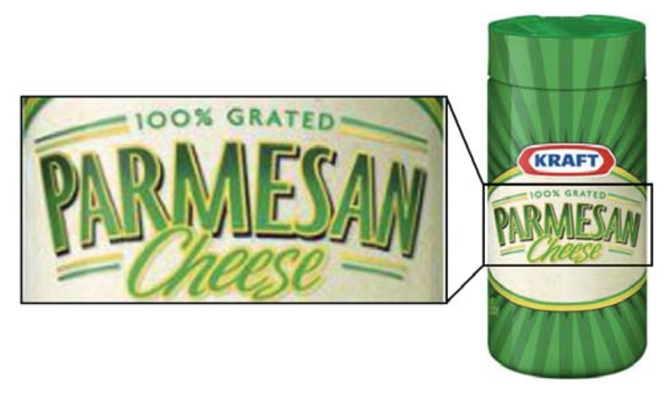
100% good news: 7th Cir. reverses “100% grated parmesan cheese” dismissal

Bell v. Publix Super
Markets, Inc., 2020 WL 7137786, — F.3d –, Nos. 19-2581, 19-2741 (7th Cir.
Dec. 7, 2020)

Note: Then-Circuit
Judge Barrett was a member of the panel when this case was submitted but did
not participate in the decision and judgment. The appeal was resolved by a
quorum of the panel pursuant to 28 U.S.C. § 46(d).

In a victory for
common sense, the court of appeals reversed the dismissal of this consumer protection
claim (except for certain parts of the case; because of the way the district
court handled this multidistrict litigation, it found that the appeal for some
was untimely). Defendants advertise “100% Grated Parmesan Cheese.” Plaintiffs alleged
that the products actually and deceptively contain between four and nine
percent added cellulose powder and potassium sorbate, though the ingredients
list discloses these as ingredients (they fight caking and mold, respectively).

The district court
found that “100%” was ambiguous (maybe it was just 100% grated, not 100%
parmesan/cheese) and any deception was dispelled by the ingredient list, and
also that “common sense would tell a reasonable consumer that, despite the 100%
claims, these cheese products must contain added ingredients because they are
sold unrefrigerated in the main grocery aisles, alongside dried pastas and
canned sauces.”

The core holding,
consistent with cases from other circuits: “[A]n accurate fine-print list of
ingredients does not foreclose as a matter of law a claim that an ambiguous
front label deceives reasonable consumers. Many reasonable consumers do not
instinctively parse every front label or read every back label before placing
groceries in their carts.” This rule recognizes that ordinary shoppers aren’t
judges parsing statutes, and that ambiguities can be carefully designed to
deceive. It was at least plausible that, in “100% Grated Parmesan Cheese,” the
100% applied to the cheese. [Cheese is sold grated or not grated. Why would anyone ever expect to get a half grated block of cheese or think the 100% referred to the degree of gratedness?]

Context does matter.
And “unreasonable or fanciful interpretations of labels or other advertising”
can merit dismissal on the pleadings. Moreover, defendants can offer evidence
for their [dumb, linguistically implausible] interpretation showing that
consumers aren’t misled. (The court pointed out that plaintiffs said they were
prepared to submit surveys showing 85-95% misleadingness, and affidavits from
linguists that the most natural and plausible reading was “100% parmesan cheese
that is grated.”) Misleadingness is generally a factual matter, as is appropriate
in consumer protection cases (and in trademark and Lanham Act false advertising
cases), and there was no reason to disregard plaintiffs’ allegations:

What matters here is how consumers actually behave—how they perceive
advertising and how they make decisions. These are matters of fact, subject to
proof that can be tested at trial, even if as judges we might be tempted to
debate and speculate further about them. We doubt it would surprise retailers
and marketers if evidence showed that many grocery shoppers make quick
decisions that do not involve careful consideration of all information
available to them. See, e.g., U.S. Food & Drug Admin., Guidance for
Industry: Letter Regarding Point of Purchase Food Labeling (Oct. 2009) (“FDA’s
research has found that with [Front of Package] labeling, people are less
likely to check the Nutrition Facts label on the information panel of foods
(usually, the back or side of the package).”); Karen Bradshaw Schulz,
Information Flooding, 48 Ind. L. Rev. 755, 782 (2015) (when terms “like
‘low-fat’ and ‘multi-grain’ were written in big, bright letters on foods,”
consumers would “focus on the bright claim rather than turning the box around
to read the dull, black-and-white nutrition label on the back”) ….

Next, defendants
argued that the FDA’s definition of “grated cheese” allows them to call their
products “grated cheese” because that designation allows addition of cellulose
and potassium sorbate. As the court pointed out, “[t]he problem lies in the ‘100%,’
especially since the pleadings provide reason to think that consumers understand
‘100% grated cheese’ to mean that the cheese does not have the additives.”
Interestingly, the court also pointed to competitive reasons: a manufacturer of
grated cheese without additives needs a way to differentiate its
product, which couldn’t be done if these sellers also get to claim “100%
cheese.”

Regardless, “average
consumers are not likely to be aware of the nuances of the FDA’s regulations
defining ‘grated cheese.’ … Rather, both plain meaning and the plaintiffs’
surveys and linguists plausibly indicate that a significant portion of
consumers read the labels as promising pure cheese without added ingredients.”

Relying on “common
sense” about lack of refrigeration did not justify dismissing the claim. As the
plaintiffs pointed out, “pure grated Parmesan cheese can be shelf-stable for a
long time without refrigeration.” And “today’s grocery shoppers can often spot
unrefrigerated cartons of pure grated Parmesan sold beside the cheese wheels
that source them.” True, defendants’ products are shelved in the main grocery
aisles instead. “But since pure grated Parmesan can be and sometimes is sold
unrefrigerated, common sense is not a substitute here for evidence, and
certainly not as a matter of law.”

The court also
rejected defendants’ alternative preemption argument.

The FDCA expressly bars
states from “directly or indirectly establish[ing] under any authority … any
requirement for a food which is the subject of a standard of identity … that
is not identical to such standard of identity or that is not identical to the
requirement of section 343(g)” of the Act. The FDA’s standard of identity for
“grated cheeses” allows the defendants to add anticaking agents (cellulose
powder) and antimycotics (potassium sorbate) and to call the product “grated
cheese.” In fact, the standard of identity requires defendants to call their
products “Grated Parmesan Cheese.” “If only one variety of cheese is used, the
name of the food is ‘grated ____ cheese’, the name of the cheese filling the
blank.”

That provision is
silent about the addition of “100%.” Given the FDCA, a remedy requiring further
disclosures would be preempted. But plaintiffs “seek only to stop defendants
from voluntarily adding deceptive language to the federally permitted labels.”
Preventing deception wouldn’t establish a new requirement different from the
standard of identity, especially given that the FDCA already provides generally
that “a food shall be deemed to be misbranded” if its labeling is “false or
misleading in any particular.”  “[S]tate-law
claims challenging defendants’ voluntary addition of ‘100%’ to their labels are
not preempted…. After all, there are all sorts of potentially misleading
additions that standards of identity do not explicitly ban.” For example, a
false claim that the cheese was from Italy wouldn’t violate the standard of
identity, but that wouldn’t require preemption. “The FDCA’s preemption
provision means that, while states may not require sellers to add further
labeling that is not required by federal law, they may prevent sellers from
voluntarily adding deceptive content that is not required by federal law.”

Nor was there
conflict preemption/a safe harbor. Though defendants argued that the FDA
actually approved Kraft’s use of the “100% Grated Parmesan Cheese” label in
1999 and 2000, that wasn’t what happened. In 1999, the FDA issued Kraft a
temporary permit “to market test a product designated as ‘100% Grated Parmesan
Cheese’ that deviates from the U.S. standards of identity for Parmesan cheese
and grated cheeses” in that it used “a different enzyme technology that fully
cures the cheese in 6 months rather than 10 months.” In 2000, the FDA extended
the permit. The technology was the focus of the permit, and there was no
indication that the FDA assessed the potential deceptiveness of “100% Grated
Parmesan Cheese” or approved that label.

Judge Kanne
concurred to emphasize that, “while lawyers and judges can find ambiguity in
just about anything, that’s not what we expect of the reasonable consumer.” On
a motion to dismiss, it’s not enough for defendants to “proffer some
alternative, nondeceptive reading of the front label—or fashion the label
precisely so that it can bear one plausibly non-deceptive reading—regardless of
whether the reasonable consumer (or some significant portion of reasonable
consumers) would read it that way,” even when the ingredient list resolves the
ambiguity. The district court’s alternative rule would allow a court to
announce “as a matter of law that a statement is not deceptive even where it
could deceive reasonable consumers as a matter of fact. It assumes reasonable
consumers not only notice ambiguities but then investigate to resolve them,
either by scouring the fine print or, even less likely, reading up on the shelf
life of Parmesan cheese. It assumes too much.”

“[I]f a plaintiff’s
interpretation of a challenged statement is not facially illogical,
implausible, or fanciful, then a court may not conclude that it is nondeceptive
as a matter of law.”  In concluding that the
challenged statement was ambiguous, the district court necessarily found that
reasonable consumers may interpret the statement in multiple, plausible ways. That
meant that likelihood of deception was a factual question that couldn’t be
resolved on the pleadings. The deception didn’t have to be “clear”: “Determining
that a statement is not ‘clearly misleading’ on the pleadings robs the jury of
the opportunity to determine, as a matter of fact, whether the statement is ‘clearly
misleading,’ just ‘misleading,’ or ‘not misleading at all.’” Also, a consumer’s
interpretation isn’t implausible as a matter of law “just because fine print
elsewhere on the label could clarify an ambiguity that a reasonable consumer
might not have even noticed in the first place.”

from Blogger https://ift.tt/2W5ZwvL

Posted in Uncategorized | Tagged , , | Leave a comment

Penn. dilution is broader than federal dilution; former licensee might not own marks despite its registrations

I.M. Wilson, Inc. v.
Otvetstvennostyou “Grichko,” No. 18-5194, 2020 WL 6731109 (E.D. Pa. Nov. 13,
2020)

The OG parties are
Russian and Czech entities that manufacture and sell ballet and pointe shoes
under the name GRISHKO.

In the early 1990s, Grishko and I.M. Wilson partnered to distribute
Grishko-branded products in the United States via an exclusive licensing
agreement. Around that time, Mr. Grishko wrote two letters that allowed I.M.
Wilson to register the GRISHKO house mark, the ownership of which, among other
things, is currently contested here. The partnership lasted until the music
stopped in 2016, when Grishko terminated the exclusive licensing agreement. The
exclusivity arrangement officially ended in March 2018 and Grishko began
directly selling to U.S. customers.

IMW then sued; a
preliminary injunction in its favor was subsequently vacated after the court
found that “[e]njoining the defendants from selling GRISHKO-branded products in
the U.S. in no way rectifies the irreparable harm the Court found to be caused
by Mr. Grishko’s communications,” which had interfered with IMW’s relationships
with its distributors by claiming that IMW didn’t have the rights it claimed.

This opinion deals
with the OG parties’ counterclaims: (1) Lanham Act and common law claims
arising from I.M. Wilson’s use of disputed marks and trade dress, (2) claims
arising from the parties’ since-terminated licensing agreement, and (3) claims
arising from I.M. Wilson’s actions while this litigation was pending.

Grishko produces
several lines of pointe shoes, each bearing unique model names, and it’s
applied to register certain of them at the PTO.

Mr. Grishko purportedly
gave IMW permission to register the Grishko mark in the US based on the
understanding that I.M. Wilson would own the registration so long as that I.M.
Wilson remained in an exclusive relationship with Grishko. He signed the
following statement, which reads in full: “I agree that I.M. Wilson, Inc. is
the owner of the Trademark, GRISHKO and its goodwill in the United States of
America. I further consent to the use of my name in that trademark.” The PTO
wanted more, and so he signed another document: “In addition to the consent to
I.M. Wilson, Inc. that I previously granted on August 5, 1992, I hereby grant
I. [sic] Wilson, Inc. the right to register the trademark GRISHKO in the U.S.
patent and trademark office.”

Some years later,
the USPTO declined to register Mr. Grishko’s applications for the marks GRISHKO
and NICOLAY GRISHKO due to the existence of IMW’s registration. As a result,
the parties allegedly reached an agreement that IMW wouldn’t renew that
registration upon its expiration, so it expired in 2004. In 2007, IMW applied
to register GRISHKO in connection with “ballet slippers; dance shoes; dance
tights; dance leotards; and dance dresses.” It eventually submitted the August
1992 and March 1993 documents to support its application, which then succeeded
in 2009; IMW now owns seven federal registrations consisting of or
incorporating the GRISHKO name, four of which are now incontestable.

Mr. Grishko’s
cancellation proceeding is suspended pending the outcome of this litigation.

Grishko alleged that,
after their agreement terminated, IMW subsequently began using a third-party
Chinese manufacturer to produce its shoes, which has allegedly caused
widespread consumer confusion as to the source of IMW’s products, constituting
trademark and trade dress infringement, trademark dilution, and unfair
competition.

In addition, Grishko
alleged that IMW falsely advertised itself as the “Exclusive Distributor for
North America,” not just the US, while there was an exclusive distributor in
Canada and a nonexclusive arrangement in Mexico. IMW allegedly continues to
advertise online that it is the exclusive U.S. distributor of Grishko-branded
pointe shoes even though the exclusive licensing arrangement has been
terminated. IMW also allegedly made false statements to U.S. dance retailers.
Specifically: “[Grishko] began a major campaign to undercut us and you, our
valued retailers, through their trademark-infringing sales via grishkoshop.com
…. You may have received a letter from Nikolay Grishko on I.M. Wilson’s GRISHKO
letterhead containing unfortunate and misleading claims.” When the court
granted the preliminary injunction, IMW notified retailers that Grishko was
enjoined from selling GRISHKO-branded products in the United States before the
injunction formally took effect.

Trademark/trade
dress counterclaims: The court couldn’t resolve ownership of the house mark or
model marks at this stage. The first writing was ambiguous as to whether it was
irrevocable. “The Court would not ordinarily expect an agreement irrevocably
transferring the ownership of a valuable mark—particularly one’s own surname—to
be concluded in two lines of text.” The agreement was so short that it was
silent on the issue of consideration, which IMW argued was “in exchange for its
ongoing efforts to invest in and develop the U.S. market for Grishko products.”
But that wasn’t evident, just as it wasn’t evident that it was a temporary
assignment for registration purposes only as Grishko argued. Ambiguity also
inhered in the fact that IMW “drafted the document and presented it to Mr.
Grishko in English—not his native language.” This couldn’t be resolved on a
motion to dismiss.

So too with the
model marks, “sole mark,” and trade dress, though IMW argued that they were
necessarily transferred in order to ensure that the assignment of the main mark
wasn’t naked/without associated goodwill. In particular, the court wasn’t
persuaded that acquiring the main mark’s goodwill necessarily included the
model marks:

I.M. Wilson cites exclusively to case law from the 1980s for the
general proposition that trademarks must be owned by a single source.
Defendants rely on the USPTO Manual that suggests that trademarks can have
multiple owners and a case holding that evidence is capable of “decoupl[ing] the
product marks from the famous house mark” where product marks have independent
significance. Suffice it to say, neither effort wins the day yet.

One case did
conclude that the goodwill symbolized by certain trademarks did not include the
transfer of unregistered product marks and trade dress. Hetronic Int’l, Inc. v.
Hetronic Germany GmbH, No. CIV-14-650-F, 2019 WL 3003679, at *31 (W.D. Okla.
Mar. 22, 2019). And Callman’s treatise distinguishes goodwill that follows the
house mark and that which is associated with the model marks. The treatise
explains that “an exclusive transfer of a trademark apart from the business
organization can only be done with respect to product marks. House marks are
inseparable from the organization.” The court characterized this as “quite the
opposite of I.M. Wilson’s argument,” but the question is: what is transferred? The
quoted Callman language addresses a transfer of a single product mark out of a
business organization versus an attempted transfer of the house mark without
the business; it doesn’t directly address what happened here.

Anyway, ownership of
the model marks, sole mark, and trade dress is contested! The court pointed out
that a schedule listing all the marks to be transferred would have been a lot
more probative of intent.

Also, Grishko could
plead ownership/first use in the US by relying on IMW’s licensed use. “Because
Grishko introduced all but one of the model marks while I.M. Wilson was acting
as its licensee, I.M. Wilson’s use of the marks were on behalf of, and so for
the benefit of, Grishko.” IMW argued that the second writing was a pure
transfer, not a license, but that was contested.

And the
incontestable registrations could be challenged because of Grishko’s possible
prior rights and the allegations of fraud on the PTO in using the allegedly
outdated/revoked consents in 2007, which were sufficient to survive a motion to
dismiss. However, the court cautioned that it would be hard to prove fraud on
the PTO. The party against whom fraud is alleged enjoys “considerable room for
honest mistake, inadvertence, erroneous conception of rights, and negligent
omission.” And, “even were Grishko to prevail on the fraud theory, at most, the
marks would revert to an unregistered status but still be the property of I.M.
Wilson” unless Grishko further proved that it was the owner.

Also, “[s]witching
to an arguably inferior manufacturer without more does not rise to
misrepresentation sufficient to warrant cancelling the registration.”

Grishko also sufficiently
pled the existence of a protectable trade dress. It provided specifics and
photos, and while some of the elements were not unique (“use of pink satin for
the exterior of the pointe shoes made of an unremarkable shade of pink”), it
did plead that Grishko was the only manufacturer that places a “unique
identification number that can be used to identify the specific individual who
inspected” the shoe, and spelled out other components and their locations.
While certain aspects of the alleged trade dress could be seen as inherently
functional—including the unique inspector identifier number and the placement
and orientation of the size and width markings—other aspects were plausibly “inherently
aesthetic (i.e., the pink satin trim, white inner sole, stitch patterns, and
diamond sole mark)”—and thus nonfunctional. The trade dress as a whole was
plausibly nonfunctional.

And Grishko
adequately alleged secondary meaning. While IMW argued that its allegations
about sales and advertising didn’t show that the trade dress had
independent secondary meaning, Grishko did enough for a motion to dismiss.

Since likely
confusion was also pled, trademark infringement counterclaims survived. So too
with false designation of origin. “Should a dancer wearing an allegedly harmful
shoe—but believing it to be a Grishko—suffer an injury, so too would Grishko’s
business and reputation. Section 43(a) of the Lanham Act is designed to reach
this type of conduct.”

Pennsylvania
trademark dilution: The state law requires state fame, but did not specify
whether “niche” fame sufficed. Because a pre-2006 federal court had
reasoned that federal fame allows niche fame, and reasoned that the
state would do the same thing, the court here concluded that state law—which
wasn’t amended after the TDRA was enacted—still allows for niche fame. Thus,
dilution was properly alleged. I don’t think this is a great idea. There’s
still no reason to think that Pennsylvania wanted niche fame; it just got
dragged along with the Third Circuit’s interpretation of the federal law, which
Congress deemed wrong. Pennsylvania’s legislature shouldn’t be forced to
correct that mistake too. (Insert your own comment about the Pennsylvania
legislature.)

 Compare Componentone, L.L.C. v. Componentart,
Inc., No. 02: 05CV1122, 2007 WL 4302108, at *1 (W.D. Pa. Dec. 6, 2007)
(reaching the opposite result; noting that “niche market fame” was a “creature
of judicial construction of federal law” and does not appear in the
Pennsylvania anti-dilution statute). Rejecting that case, the court here
reasoned that it was still bound by the Third Circuit’s old interpretation of
Pennsylvania law, since state courts haven’t spoken. (The court acknowledged
that “this issue is unlikely to reach a Pennsylvania state court given removal
jurisdiction, and the fact that parties often plead both federal and state law
trademark claims.” To me this is extra reason not to stick with the mistake!) “In
the 14 years since the TDRA, Pennsylvania has chosen not to reform its state
anti-dilution law to conform with the federal standards. …. Principles of
federalism restrain this Court from reading in a stricter standard than the law
currently provides.”

Anyway, Grishko
sufficiently alleged fame in the performing arts community and among dancers.
It alleged that its marks and trade dress were recognized by Pennsylvania’s
premier professional ballet company—the Pennsylvania Ballet—in addition to the
“American Ballet Theatre, West Ballet, and other organizations throughout the
United States.”

False advertising: Grishko
alleges that IMW’s “exclusive North American distributor” claims harmed its
relationship with distributors in Canada and Mexico and impacted its ability to
enter into new exclusive distribution and licensing agreements worldwide, and
that it continues to advertise online as the exclusive wholesale distributor
for Grishko-branded products.

IMW argued that
Grishko only pled injury to its reputations with retailers, not that consumers
withheld trade from it, and that it wasn’t plausible that advertisements in the
U.S. directed to U.S. consumers harmed Grishko’s worldwide reputation. No:

I.M. Wilson incorrectly attempts to cabin the scope of “consumers”
within the meaning of the Lanham Act. “[N]othing in the language of § 43(a)
specifically requires a false representation be intended to influence the
ultimate consumer, whoever that might be.” The relevant “purchasing public”
varies according to the specifics of the industry.… Grishko sells goods through
retail relationships as well as through wholesaling.

Grishko alleged that
IMW’s marketing necessarily diverted sales away from Grishko because “[c]onsumers
and retailers viewed I.M. Wilson as the sole purveyor of Grishko-branded
products.” This was enough to allege statutory standing.

And a false
statement made in the US is cognizable under §43(a) even if the economic harm occurs
outside the US.

So too with the
allegedly false claim of being the exclusive distributor after the parties’
relationship ended.

Litigation-related
allegations: Grishko alleged defamation because IMW told retailers that Grishko
was (1) undercutting and undermining retailers; (2) no longer supplying
high-quality products; and (3) not abiding by court orders. Shortly after the
preliminary injunction issued, IMW sent a cease and desist letter to one of the
largest U.S. dance retailers and a letter to various retailers supposedly
apprising them of the recent order. Though IMW argued that it was substantially
true, the court wasn’t going to resolve that at this stage.

In Pennsylvania, out-of-court
statements made by parties to a proceeding enjoy a qualified privilege provided
those “statements are a fair and accurate report of statements made or
pleadings filed” in the proceeding and the individual does not “make his report
with the sole purpose of causing harm to the person defamed.” The C&D “sufficiently
remains within the bounds of protected statements. The letter recounts I.M.
Wilson’s litigation position that it is the exclusive owner of the GRISHKO
house mark and notifies the recipient of the pending litigation.” So too with
the letter to retailers. Though it says those retailers “have been undercut” by
Grishko’s recent sales efforts, “read in context, these statements provide the
basis for I.M. Wilson to seek an injunction,” and IMW made the very same claims
in court (unlike certain political campaigns one could mention).

Even though the
letter was sent before IMW posted the bond and so the PI wasn’t in effect, the
court order had been entered, and the letter “expressly notes that it was ‘perfect[ing]
the injunction,’ and attached a copy of the order granting the preliminary
injunction. The Court rejects Grishko’s attempt to fashion a defamation claim
on a technicality.”

The remaining
possible basis was IMW’s July 2019 letter to its customers, which “rehashed”
the present trademark claims and discusses the “unsatisfactory” quality of
Grishko’s recent shipments. While IMW argued that this was mere opinion, the
court thought that statements about the quality of goods should have been, and
weren’t, pled as commercial disparagement. “Opining on the quality of the
ballet shoes does not go to the honesty and fairness of Grishko’s dealings” and
thus the letter wasn’t capable of defamatory meaning. Nor could it be
defamation per se, since it was just a negative opinion. (In a footnote, the
court noted that it’s not clear why corporate entities should be eligible for
defamation per se, because corporations can’t be embarrassed or humiliated, but
“Pennsylvania law continues to recognize it as a viable claim for corporations
to assert.”)

Tortious
interference with business relations: Under Pennsylvania law, interference is
“privileged when the actor believes in good faith that his legally protected
interest may otherwise be impaired by the performance of the contract.” Where
the parties are competitors, there must be a showing that the defendant engaged
in “independently actionable conduct” for plaintiff to succeed on a tortious
interference claim. The court was persuaded by IMW’s argument that it had a
duty to send notice to the retailers to apprise them that the court had entered
an order enjoining Grishko, in order to bind them, since the Federal Rules of
Civil Procedure say that PIs bind only people who receive “actual notice.”
Plus, the defamation claims failed and so there was nothing independently
actionable, even though Grishko sufficiently alleged actual damages.

from Blogger https://ift.tt/3mewLaO

Posted in Uncategorized | Tagged , , , | Leave a comment

intentional misleadingness obviates need for deception evidence

Aoki v. Gilbert, 2020
WL 6741693, No. 11-cv-02797-TLN-CKD (E.D. Cal. Nov. 17, 2020)

The court explains: “Put
most succinctly, at trial Plaintiffs contended Defendants infringed Dr. Aoki’s
patents for his pulsed insulin diabetes treatment method; infringed Dr. Aoki’s
copyrighted slides; and made false or misleading statements amounting to false
advertising and unfair business practices.” There were also breach of
confidentiality claims (the parties used to be in a business relationship).

There were some
literal falsities, such as claiming that their treatment was FDA-cleared and
that certain patient outcomes were the result of defendant’s treatment when
they depicted plaintiff’s results. (If they were the exact same medically, but
administered by different entities, I would think that’s not false, but that
doesn’t appear to have been the case.)

Defendants argued
that their statement that their treatment was the “only” treatment meant merely
that it was a licensed use of plaintiff’s technology and the treatments were
the same; the court found this to be misleading and, because the statements
were intentionally deceptive, no proof of consumer reaction was required.
Certain defendants intended to deceive prospective patients and investors. “That
deception was material in that FDA clearance, patient outcomes, and
exclusivity, for example, are likely to influence both investors’ and patients’
decisions.” This also harmed plaintiffs by “intentionally muddying the waters
concerning who is the inventor and rightful owner of the patented technology”
and “tarnishing Dr. Aoki’s reputation concerning his research and protocol.”

However, plaintiffs
failed to establish liability under California’s FAL/UCL because they didn’t
show economic injury. They showed no evidence of lost profits, inability to
open clinics, or otherwise lost money or property as a result of the deceptive
statements. “Although goodwill is a protected property interest and harm to
goodwill is a cognizable injury, Plaintiffs presented no evidence of the value
of their goodwill or an economic harm stemming from the loss of goodwill.” And
to the extent that the UCL claim was premised on underlying patent/copyright
infringement, it was preempted.

The court also found
copyright infringement for copying and using Aoki’s slides for the same purpose
as Aoki used them, and awarded the maximum statutory damages:

Even after this lawsuit was filed in 2011, Defendants continued to use
Dr. Aoki’s copyrighted slides in promoting APT. Most glaringly, they used the
foot wound photos of Dr. Aoki’s patient whom he treated with MAT and which
photos he copyrighted, to claim that the patient was treated with APT rather
than MAT. These facts demonstrate Defendants knew their conduct was unlawful or
at minimum engaged in reckless conduct sufficient to support a finding of
willfulness.

The court found that
this was an exceptional case meriting a fee award because of the clear patent
infringement and defendants’ refusal to produce any financial documents.

Moral rights in
patent claims: The irreparable injury finding for purposes of permanent
injunctive relief based on the patent claims was predicated mainly on the harm
to Aoki’s good name and the uniqueness of his invention. “A lack of proper
oversight led to clinics modifying the treatment in some instances, creating a ‘wild
west of medicine’ and resulting in adverse consequences to patients.” Driving
the defendants out of business would be ok, if that happened, because the
treatment was “Dr. Aoki’s life’s work.” But what about the fact that the
parties agree that the treatment is good for patients? “[T]he evidence reflects
that a lack of oversight at the clinics licensed by Trina Health resulted in
negative patient outcomes in some cases, indicating the public would be better
served by the grant of an injunction to halt operations of illegitimately
licensed clinics.”

The copyright
infringement also merited a permanent injunction and a fee award.

For Lanham Act
damages, though plaintiffs didn’t show any actual damages, they were entitled
to disgorgement. Defendants profited by nearly $8 million (they earned that
amount, and failed to show any deductions) from the false advertising. (The
court doesn’t require tracing here, perhaps because the claims are at the core
of any advertising they might have engaged in.) And unsurprisingly they get a
fee award too.

from Blogger https://ift.tt/2W7NnGM

Posted in Uncategorized | Tagged , , , | Leave a comment

Copyright year in review

I had a great time presenting this to the Copyright Society of Los Angeles. My slides.

This is going to be an opinionated overview; I know you’re
an expert audience and I’m going to try to highlight developments you may have
heard less about or at least spent less time thinking about.

I’m going to begin with some notes about legislative and
administrative developments—the Next Great Copyright Act may not be coming, but
changes well beyond the Music Modernization Act are on the horizon. After that
I’ll review a number of cases with not necessarily much of a throughline,
though I have some larger thoughts about various topics.

Legislatively:

We may get the CASE Act as part of the continuing resolution:
This would mean the institution of copyright Small claims run out of the
Copyright Office. The key features are: removal of registration requirement for
up to $15,000 in statutory damages; opt-out instead of opt-in; constitutional
questions because of the very limited possibility of Article III review
contemplated by the setup (due process because of the lack of an opt-in
requirement and separation of powers issues because these would be Article I
judges not in the executive branch); increased deference to Copyright Office in
other areas on the horizon?

DMCA reform: Sen. Tillis plans to release a draft next week. 

1201 rulemaking for exemptions from the prohibition on
circumventing access control  measures:
Ongoing; second round using a streamlined process for renewing existing
exemptions. The Copyright Office is obviously interested in minimizing the ongoing
burden of the exemption proceedings, and enthusiastic about getting Congress to
at least let it make permanent exemptions so that it doesn’t have to redo all
this work every three years. Until then, it has indicated its intention to
renew every exemption for which a short-form petition asserting the continued
need for that exemption has been filed, in the absence of something more than
pro forma opposition from the usual suspects—which is to say representatives of
the music and movie industries.

Music Choice v. Copyright Royalty Board, 970 F.3d 418 (2020)

Illustrates that the increased judicial skepticism of administrative
lawmaking may well be coming for certain Copyright Office functions as well.
Specific holdings:

Under the DMCA, a lower grandfathered royalty rate is paid
by some music services that were early providers of digital music
transmissions. The Board’s categorical exclusion of Music Choice’s
transmissions from the grandfathered rate conflicted with the unambiguous
statutory language, though the board had discretion to determine whether parts
of Music Choice’s current service offering, which includes mobile applications
and internet-exclusive channels, should be excluded from the grandfathered
rate. The Board also acted arbitrarily and capriciously in altering the audit
standards for Music Choice.

Other Caselaw: I’m roughly going to follow the outline of my
copyright course, though the emphasis will be on new and interesting cases
rather than trying to cover all the aspects of the course.

I.          Subject
Matter

Obviously this is the marquee area with high profile cases,
but Google v. Oracle is still pending so it will be a big case of 2021.

With respect to the other Supreme Court case about copyright
subject matter, Georgia v. Publicresource.org: Supreme Court articulates a
“government edicts” doctrine that says the law is not copyrightable even
without the need for the statutory exclusion making works of the US government
uncopyrightable.

The most interesting thing to me is that we are constantly
told how textualist the new conservative majority is going to be. This isn’t
even close to a textualist decision; instead it is derived from basic
principles that inform the legal meaning of the word “author” despite the fact
that no one would reasonably expect those principles to show up in a generalist
dictionary definition; particularly striking contrast to Star Athletica decided
only a couple of years earlier which disregards even legislative history. I
speculate that one reason that the Justices in the majority were willing to do
this is that the subject matter involved the actual text of the law itself,
whose fundamental nature they think they understand much better than they understand the average
subject matter like visual art or music. When it comes to law, they lack any
epistemological humility about its essence. And that might well be ok!

Second, as stated, the rule that there’s no © in works “(1)
created by judges and legislators (2) in the course of their judicial and
legislative duties,” leaves open what happens if the works are created by
lobbyists and then incorporated into law, or if they’re made part of the law
like building codes drafted by private parties.

International Code Council, Inc. v. UpCodes, Inc., 2020 WL
2750636 (S.D.N.Y. May 26, 2020): Refused to decide on summary judgment both the protectability and fair use questions; note inclusion of constitutional argument that if it’s not copyrightable, then the legislature engages in a taking by enacting a private code into law.

Bork v. Tran Huong Quynh, 2020 WL 4474485 (M.D. Fla. Aug. 4,
2020): Not a really significant case, but I like it because it involves a
strong illustration of the concept of relativity of title—the owner of these
works is not Disney, and successfully registered the copyright thereto and
asserted an infringement claim against a person who copied these works on Etsy.

II.        Authorship

Everly v. Everly, 958 F.3d 442 (6th Cir. 2020) is a case
that suggests the possibility of new things: Existing precedents hold that a
claim for ownership “accrues only once, and if an action is not brought within
three years of accrual, it is forever barred” and this includes claims for
authorship. Though there can be disputes over what starts the limitations
period running, an express repudiation of a person’s authorship claim will do
so. Recently appointed Judge Murphy’s concurrence, however, suggested that the
statutory language and other rules of construction compelled a different
finding: authorship, too, should be subject to the rule of Petrella and the
remedies created by a successful authorship claim should merely stretch back
only three years.

Biggest takeaway: the federal judiciary has been
comprehensively reshaped over the past 4 years by people who were not hired for
their opinions on IP. There is the potential for very big, but highly
unpredictable, changes in IP doctrines.

III.       Infringement

The removal of the blanket license for licenses that host
political events has led to a number of C&D letters and the occasional
lawsuit against the Trump campaign, highlighting the importance of the ASCAP
etc. licenses for daily business life, and also highlighting the relevance of
privately negotiated agreements to changing statutory schemes. Here I will tout
the work of Kristelia Garcia who has written fascinatingly about private
agreements and how they interface with the statute, including sometimes by
depriving artists of the royalties they might otherwise be entitled to get.

Embedding as implicating any of the exclusive rights:
thought it was settled; isn’t: McGucken v. Newsweek LLC, 464 F.Supp.3d 594 (SDNY 2020). Instagram is leaving users of its embed feature twisting in the wind (also
rejecting a fair use defense on a motion to dismiss though leaving open a
little room for a different result later; in the unlikely event that the
Supreme Court says something about the relationship between common industry
beliefs and fair use, that could bear on the outcome)

Skidmore and progeny: While 2019 might have been the peak
year for finding musical work infringement based on stylistic similarities—both
in the Blurred Lines case and in the Taylor Swift lawsuit over players gonna
play/haters gonna hate—2020 represented a real reversal of the trend, not just
in Skidmore itself but in some cases that clearly took guidance from it.

1.    
Skidmore: it is not enough to assert “a
‘combination of unprotectable elements’ without explaining how these elements
are particularly selected and arranged.”

2.    
Cortes v. Universal Music Latino, — F.Supp.3d
—- (2020) “Despacito” or “Despasito” As Title and Lyric and other shared
words were not protectable, nor were the number of times the words were used,
nor was the general style or theme of the works

3.    
Gray v. Perry, 2020 WL 1275221 (C.D. Cal. Mar.
16, 2020): Many if not most of the elements that appear
in popular music are not individually protectable. Music, perhaps more than any
other work of art, “borrows, and must necessarily borrow, and use much which
was well known and used before.” Further, the court held, none of these
individual elements are independently protectable. It was plaintiffs’ burden to
establish the protected elements of their allegedly infringed work, and they
didn’t show that what was copied was protectable. “A relatively common 8-note
combination of unprotected elements that happens to be played in a timbre
common to a particular genre of music cannot be so original as to warrant
copyright protection.”

But compare: Compulife Software Inc. v. Newman, 959 F.3d
1288 (11th Cir. 2020): In a software case using the abstraction, filtration,
comparison approach, the burden of proof on the protectability of what was
copied is on the defendant in the filtration analysis, not on the plaintiff. Not
yet determined: Will this be hugely significant in many cases? The question of
what is an idea or a scene a faire may be determinable as a matter of law, but
it does make things look harder for a defendant that concedes copying for
purposes of summary judgment.

Potential signal: SAS Institute Inc. v. World Programming Limited, 2020 WL
6271230 (E.D. Tex. Oct. 26, 2020): once the defendant contests the
protectability of the things it copied, the burden shifts back to the plaintiff
to “face[ ] the manageable task of responding to the appropriately narrowed
issue” and combat the allegations. This may occur either by showing what
defendant alleges as not protectable actually is entitled to protection, or by
coming back and showing that there are remaining and identifiable protectable
elements that defendant copied. In SAS, the defendant got summary judgment
because SAS didn’t do that.

IV.       Moral Rights

After big damages in 5Pointz case, we can also expect more
attention to the Visual Artists Rights Act—where, as with 1202 violations,
statutory damages are available independent of registration.

VARA provides visual artists the right to “prevent any
intentional distortion, mutilation, or other modification” of a covered work “which
would be prejudicial to his or her honor or reputation, and any intentional
distortion, mutilation, or modification of that work is a violation of that
right,” and also the right “to prevent any destruction of a work of recognized
stature . . . . “

Cavallero case: Alleges that the defendants trespassed in
order to destroy his cheese wall. If proved, might justify enhanced damages.

Kerson v. Vermont Law School, Inc., No. 20-cv-00202-cr (D.
Vt. filed Dec. 2, 2020): The Law School is apparently planning to put acoustical
tiles over the mural, presumably thinking that covering it up does not violate
the statute, but Kerson seeks to enjoin the coverup. This is unlikely to
succeed but, perhaps surprisingly given that VARA has been around for so many
years, a novel issue.

Also not resolved:
what happens when the art is put up without permission. The plain text of the
statute gives the artist the right to object to its removal or destruction
without reference to whether the artist placed the artwork with the permission
of a building owner, and related precedents on art that violates non-copyright
laws suggest that VARA might apply even to trespassing art, so watch this space
(no pun intended)

V.        Fair Use and
other defenses

One way to think of this year’s roughly 40 new fair use
cases is to divide them into cases featuring Richard Liebowitz’s firm as the
plaintiff’s attorney and cases not featuring that firm. Starting with the
latter:

“Experimental use” comes to copyright law: Nicki Minaj
avoided liability for private use of Tracy Chapman’s work in order to
experiment with it before seeking a license. The evidence was that making the
work before seeking the license “was customary practice because rights holders
often request copies of new works during licensing discussions and prospective
licensees usually include their proposed derivative works with their initial
licensing requests.” The court reasoned that interfering with this industry
practice would be inconsistent with copyright’s purposes, and that because it
was private and experimental it didn’t have a negative market impact.

Estate of Smith v. Graham, 799 Fed.Appx. 36 (2d Cir. 2020): “Pound Cake”: The first identified instance of transformativeness
without parody in a music case! However, the district court found that the
defendant’s use was implicitly critical of the original, which had celebrated
jazz over all other forms of music; the defendant’s rap song claimed the same
longevity for all real music including rap.

Perhaps most interesting in the case, however, is the
court’s statement that “Nor is there evidence of the existence of an active market
for ‘Jimmy Smith Rap,’ which is vital for defeating Defendants’ fair use
defense.” This attention to the market for the specific work at issue, rather
than the overall market for works of the same general type, is of increasing
importance in fair use cases of many kinds, including educational uses in last
year’s University of Georgia case and in cases where fair use fails, like the
TVEyes v. Fox dispute.

Hughes v. Benjamin, 437 F.Supp.3d 382 (SDNY 2020): On a
motion to dismiss. Showing a series of clips of another YouTuber of the
opposite political persuasion, with a mocking title, was transformative and
fair. The context—including the selection of clips, the title, and the poster’s
other political commentary, was enough to create comment and a new message.
Subsequently, the court awarded nearly $40,000 in attorneys’ fees to the
prevailing defendant.

Also: dueling tattoo cases: disputes over whether summary
judgment should be granted to defendants: (1) the second case follows a pattern
of treating videogames worse than other artworks in holding that the videogame
might have the same purpose as the original tattoo; (2) Google v. Oracle might
give some signals about how courts should think about summary judgment in fair
use cases, but it’s an unusual enough case that I wouldn’t put too much
confidence in that.

Educational uses, or uses that courts clearly think
contribute to education, continue to have some sway with courts: Tresóna Multimedia, LLC v. Burbank High School Vocal Music
Ass’n, 953 F.3d 638 (9th Cir. 2020) Use of a portion of a musical work in a new
arrangement for a show choir was a nonprofit educational use, and the use of a
portion of the song to tell a new story as part of an audiovisual presentation
was transformative (remand to award attorneys’ fees to the defendant—not just
for reconsideration by the district court: Tresona’s fair use argument was
“objectively unreasonable” because the use was nonprofit teaching and highly
transformative, and its litigation strategy was unduly aggressive; it sued
parent volunteers!)

And the Bell v. Worthington City School District, 2020 WL
2905803 (S.D. Ohio Jun. 2, 2020): case granted summary judgment to the
defendants, reasoning that an athletic coach’s retweet of an inspirational
passage about how winning isn’t usual was fair because the use was educational
and noncommercial, and the defendant couldn’t show market harm from loss of a
tweet license for noncommercial use—this is another of the cases where the
court itself puts the copyrighted material online for free by reproducing it in
its entirety.

Now to the other half of the cases: Richard Liebowitz
continued his one-man crusade to further develop the law of fair use of
photographs on a motion to dismiss.

Yang v. Mic Network, Inc., 2020 WL 6562403 (S.D.N.Y. Nov. 9,
2020): fair use on a motion to dismiss where the defendant used a screenshot of
an article that included roughly the top half of the relevant photo.

Boesen: embedded Instagram post was fair use for purposes of
reporting on the story generated by the Instagram post.

Walsh v. Townsquare Media, Inc., 464 F.Supp.3d 570 (S.D.N.Y.
2020): (Cardi B) same thing.

Schwartzwald v. Oath Inc., No. 19-CV-9938 (RA) (S.D.N.Y.
Sept. 10, 2020): (altered photo of Jon Hamm commenting on the ridiculousness
of people caring about Jon Hamm’s penis)

Marano v. Metropolitan Museum of Art, — F.Supp.3d —-,
2020 WL 3962009 (S.D.N.Y. 2020) (focus on history of guitar, rather than on
musician, was transformative)

Harbus v. Manhattan Institute for Policy Research, Inc. 2020
WL 1990866 (S.D.N.Y. Apr. 27, 2020): (granting motion to dismiss where the use
highlighted the defendant’s own research and educational mission)

But he didn’t lose every fair use defense: Iantosca v. Elie Tahari, Ltd., 2020 WL 5603538 (S.D.N.Y.
Sept. 18, 2020). Unauthorized use by a clothing designer in its social media
to show off a model wearing the designer’s clothes was not fair use! Not
transformative.

Cruz v. Cox Media Group, LLC, 444 F.Supp.3d 457 (E.D.N.Y.
2020) News use of newsworthy photo by amateur photographer not fair use (I will
note that the relevant photo is now freely available to the public because the
court included it in the opinion).

And he lost fees in a different failed fair use defense: Otto v. Hearst (court found that license fee was $100 and awarded $750 in
statutory damages).

Emerging, tentative pattern: people in the business of
making and using photos as part of their ordinary operations have to pay for
photography, but people primarily in the commentary business don’t.

Grant v. Trump: Pending litigation over the use of music in political ads.
Will this be the first finding of fair use in unaltered use of a portion of sound
recording in a political ad? Trump’s motion to dismiss relies on recent cases like Smith
and Brown v. Netflix, Inc., 462 F. Supp. 3d 453, 460 (S.D.N.Y. May 27, 2020), which found that
short excerpts of a recording in a larger work were fair use, to argue that its
40 seconds were limited enough to be fair. Fair warning: The Trump campaign’s papers are much better than the ones that have made the news of late.

VI.       Secondary
Liability/512

512(a)’s protections for conduits aren’t really working any
more. Sony Music Entertainment v. Cox Communications, Inc., 464
F.Supp.3d 795 (E.D. Va. 2020). $ 1 billion damages award upheld against post trial motions.

Warner Records Inc. v. Charter Communications, Inc., 454
F.Supp.3d 1069 (2020): vicarious and contributory liability by provider of high
speed internet access was sufficiently alleged. UMG Recordings, Inc. v. RCN Telecom Services, LLC, 2020 WL
5204067 (D.N.J. Aug. 30, 2020) same. UMG Recordings, Inc. v. Bright House Networks, LLC, 2020 WL
3957675 (M.D. Fla. Jul. 8, 2020): Vicarious liability failed for want of direct
financial benefit:

“This interpretation of the direct financial benefit
requirement effectively reads the limiting term “direct” out of the test,
allowing the imposition of vicarious liability based on indirect, highly
attenuated connections between infringing conduct of the patron and alleged
financial benefits.” What Plaintiffs alleged was that Bright House’s internet
speed and efficiency are “draws” to the service, but that wasn’t enough: “It is
not readily apparent or plausibly alleged that an internet thief would be
“drawn” by the efficiency of internet service any more than the average
law-abiding purchaser of copyrighted content.”

But contributory infringement claims survived.

ALS Scan, Inc. v. Steadfast Networks, LLC, 819 Fed.Appx. 522
(2020): Over a dissent, the Ninth Circuit held that a data-center
service provider took adequate “simple measures” to avoid contributory
copyright infringement by forwarding notices of such infringement to the
hosting website — and every alleged infringement was taken down. Even if the
notices kept coming, generalized knowledge of likely infringement wasn’t enough
where each specific infringement was taken down and the data center didn’t
control the website where the infringements were allegedly occurring. The
plaintiff could sue the website if it was liable for the underlying
infringement. Important case in rejecting an attempt to evade the DMCA’s
requirements.

512(f): Beyond Blond: allegedly false takedowns sent to
Amazon based on public domain materials; though the plaintiff counternoticed,
Amazon declined to honor the counternotice unless the notices were actually
withdrawn. 512(f) can preempt state law tortious interference and
related claims if they’re based on bad copyright notices—but if the notice
sender also alleges trademark issues, that may not be preempted (but the recipient likely has a harm causation problem). Because the standard for succeeding on a 512(f) claim is so
stringent, 512(f) can leave people who received bad takedown notices in a worse
position than if it didn’t exist.

VIII.    1202 Gains
Momentum

Sometimes it takes a while for lawyers to discover a cause
of action. Most important case: Mango v. BuzzFeed, Inc., 970 F.3d 167 (2d
Cir. 2020): Digital Millennium Copyright Act (DMCA) includes double scienter
requirement; but publisher knew of CMI removal and publisher had reason to know
distribution with altered CMI concealed infringement.

Recif Resources, LLC v. Juniper Capital Advisors, L.P., 2020
WL 5739138 (S.D. Tex. Sept. 24, 2020) timely registration isn’t required for
statutory damages under 1202.

Fischer v. Forrest, 968 F.3d 216 (2d Cir. 2020):

While an author’s name can
constitute CMI, not every mention of the name does. Here, “Fischer’s” is part
of a product name; it is not a reference to “James H. Fischer” as the owner of
a copyrighted text. What was removed was not Fischer’s name as the copyright
holder of the advertising text, but “Fischer’s” insofar as it was a part of the
actual product’s name. …  “Fischer’s”
cannot be construed as CMI with respect to the advertising text at issue
because it is simply the name of the product being described. In short: context
matters.

Mills v. Netflix, Inc., 2020 WL 548558 (C.D. Cal. Feb. 3,
2020): where the defendant kept the plaintiff’s name visible in its screenshots
of plaintiff’s video, it wasn’t plausible that it intentionally removed CMI in
order to facilitate or conceal infringement. Continues the divide in courts
about whether the CMI has to be integrated into the work or really close to the
work in order to count as CMI.

Kirk Kara Corp. v. Western Stone and Metal Corp., 2020 WL
5991503 (C.D. Cal. Aug. 14, 2020): “Based on a review of the side-by-side
images included in the Complaint, the Court can determine that, while the works
may be substantially similar, Defendant did not make identical copies of
Plaintiff’s works and then remove the engraved CMI. In such cases, even where
the underlying works are similar, courts have found that no DMCA violation exists
where the works are not identical.”

Takeaway: Courts are not really reading “remove” to mean
“remove,” even though they probably should—they are often reading “remove” to
include “making copies without the CMI.”  Someone who makes a nonexact copy will often not
be held to have “removed” CMI. However, this isn’t always the case and
especially not on a motion to dismiss, example: Pilla v. Gilat, 2020 WL 1309086
(S.D.N.Y. Mar. 19, 2020): use to create infringing derivative work could
plausibly state a claim for removing CMI.

IX. Remedies

Greg Young Publishing, Inc. v. Zazzle, 2020 WL 3871451 (C.D.
Cal. Jul. 9, 2020) (now on appeal): Despite finding willful infringement by Zazzle through sales
of items bearing infringing images, the court denied a permanent injunction: irreparable
harm is not likely when high-volume sellers promptly and voluntarily remove
infringing items. Zazzle can afford to pay money damages. Loss of exclusive
rights of copyright is not itself irreparable harm after eBay v. Mercexchange.
In terms of balancing the equities, GYPI has not presented any evidence of a
more effective way for Zazzle to prevent infringement than its current system

Disney Enterprises, Inc. v. VidAngel, 2020 WL 2738233 (C.D.
Cal. Mar. 31, 2020): Over $62 million in statutory damages for copying, altering,
and streaming over 800 Disney movies.

Energy Intelligence Group, Incorporated v. Kayne Anderson
Capital Advisors, L.P., 948 F.3d 261 (5th Cir. 2020) (failure to mitigate is
not a complete defense to statutory damages): Plaintiffs produced a specialized newsletter and basically
did not try to stop copying for a while, then sued for over 1600 infringements
and 425 DMCA §1202 violations. At trial, the defendants persuaded the jury that
the plaintiff could reasonably have avoided almost all the copyright and DMCA
violations at issue. EIG took nothing for those violations and received $15,000
in statutory damages for 39 infringed works, about half a million dollars. The
court of appeals remanded on the infringement damages because it couldn’t tell
whether the jury intended to award EIG $15,000 per infringed work if failure to
mitigate wasn’t a complete defense and held that the plaintiff should get $2500
per DMCA violation, over $1 million.

X. Licensing

Tresona again: The plaintiff didn’t own exclusive rights in
certain songs because it was only licensed by a co-author, and the other
co-authors could have licensed the songs, thus it owned no exclusive rights.
This seems correct but the Ninth Circuit’s attempt to distinguish previous
precedent is a bit puzzling.

XI.       Preemption

Jackson v. Roberts, No. 19-480 (2d Cir. Aug. 19, 2020): The Second Circuit reached a conclusion for which I and
others like Jennifer Rothman have long argued: especially with respect to the
right of publicity, conflict preemption, not §301 preemption, determines what
happens when right of publicity claims are asserted against ordinary uses of
copyrighted works in which the plaintiff consented to perform. Because
non-advertising exploitation of such works is at the core of copyright rights,
a subject’s assertion of the right of publicity to stop that exploitation
fundamentally conflicts with copyright’s purposes. This reasoning preserves
false association and privacy claims, but not right of publicity claims
predicated merely on unauthorized exploitation of a work in which the claimant
consented to appear.

Of particular note: Many courts have, with much more
confused reasoning, reached similar results when the defendant is the copyright
owner or is licensed by the copyright owner, the Second Circuit went further, I
think properly, and held that a pure attempt to control a work’s distribution
on right of publicity grounds is preempted even if the copyright owner didn’t
authorize the distribution. There might or might not be a copyright claim—the
use might be fair, for example—but either way the right is the copyright
owner’s.

Conflict preemption reasoning explains the actual results of
the cases much better than invocation of express preemption under §301. One of
my remaining questions is: why do courts insist the result has to be different
with advertising uses? Advertising use can be nonconfusing use—like using a
licensed image of Kim Kardashian and saying “Kim wouldn’t be caught dead using
our product”—and licensing copyrighted works for use in advertising is
certainly an ordinary use for copyrighted works.

from Blogger https://ift.tt/3m7fD6I
Posted in Uncategorized | Tagged , , | Leave a comment

Pirate donut’s TM claim against Dunkin X’ed out

Grazette v. Bitcoin of America, LLC, 2020 WL 6789352, No. 19-CV-4837
(MKB) (E.D.N.Y. Sept. 30, 2020)

Despite the main name here, the question presented is
whether the design on a gift card sold by Dunkin’ Donuts “counterfeit[s]” the
trademarked logo for Grazette’s doughnut shop in violation of the Lanham Act
and NY’s GBL. The court dismissed the claims against the moving defendants (and
ordered Grazette, pro se, to show cause why the remaining claims shouldn’t be
dismissed).

Grazette makes and sells vegan doughnuts. In 2018, he
designed a logo, “Sprinkle Roger,” consisting “of a circular face design shaped
like a donut consisting of two x[-]shape[d] eyes and a smaller inner circular
nose in the middle with sprinkles within the outer circle and cross bones
underneath.” The “Sprinkle Roger” mark was designed to “appeal to an edgy,
gritty and ethical crowd … by signaling” that his product was gluten-free and
vegan. He made business cards and stickers with the logo on them.

In 2019, Dunkin’ “advertised a brand new gift card on their
… [Instagram] page,” which allegedly“counterfeit[ed]” the trademark. That
year, it also announced delivery and plant-based (vegan) options. The card
depicts the brightly colored letters “XO,” with the “O” replaced by a doughnut
with sprinkles. Grazette disputed whether the card was meant to be viewed
horizontally.

Grazette’s mark wasn’t fanciful because it included an image of a
doughnut, but had “at least a moderate degree of inherent distinctiveness.”
However, there were no allegations of significant sales using the mark, and it
had only been alleged to be in commercial use for a short time (Oct. 2018).

Similarity strongly favored Dunkin’. There was no allegation
that the colorful Dunkin’ card was intended to be “edgy,” and its colorful
design “supports the conclusion that it is intended to give a different
impression than Plaintiff’s mark.”

Proximity/no gap to bridge: favored Grazette.

Actual confusion: Grazette indicated that he showed two
items to store employees, and at least one called them “the same.” The absence
of actual confusion was neutral because of the short time on the market.

Bad faith: Even assuming Dunkin’ knew of the mark, “it is
implausible that the Dunkin’ Defendants, a longstanding national brand, had any
‘intention of capitalizing on [P]laintiff’s reputation and goodwill and any
confusion between his and the [Dunkin’ Defendants’] product,’ when Plaintiff
markets and sells his products to a niche market.”

Quality: favors neither party, assuming that Grazette is
correct that consumers consider vegan, gluten-free doughnuts to be entirely
different products than those sold by Dunkin’.

Consumer sophistication: Dunkin’ contended that Grazette’s
“allegations suggest that his buyers … are sophisticated, since they likely
have dietary restrictions around gluten and animal products.” But the products
at issue are inexpensive, so this slightly favored Grazette.

On balance, likely confusion wasn’t plausible:

Both marks are associated with
doughnut companies and include a sprinkle doughnut and crossed lines in the
design, but the similarities end there. A comparison of the “Sprinkle Roger”
mark and the “XO” mark (paired with Dunkin’s logo) reveals that they give
starkly different impressions.

The other factors were neutral or weakly in favor of
Grazette.

Also, there was no counterfeiting, which requires “a
spurious mark which is identical with, or substantially indistinguishable from,
a registered mark.” A mark isn’t counterfeit when consumers would recognize the
differences on cursory inspection; the differences here were enough.

from Blogger https://ift.tt/3gxVOnS

Posted in Uncategorized | Tagged | Leave a comment

advertising injury insurance covers false advertising/patent case despite exclusions

In re Indian Harbor Ins. Co. v. SharkNinja Operating LLC,
No. N20C-02-014 PRW CCLD (Del. Super. Ct. Nov. 19, 2020)

Indian Harbor provided SharkNinja with personal and
advertising injury insurance; it was sued for false advertising and patent
infringement by a competing vacuum manufacturer. Under Massachusetts law,
Indian Harbor had a duty to defend. The relevant covered offenses:

(d) Oral or written publication, in
any manner, of material that slanders or libels a person or organization or disparages
a person’s or organization’s goods, products or services; …

(f) The use of another’s
advertising idea in your “advertisement”; or

(g) Infringing upon another’s
copyright, trade dress or slogan in your “advertisement”[.]

There were also exclusions for failure to conform “with any
statement of quality or performance made in your ‘advertisement’ ” and “infringement
of copyright, patent, trademark or other intellectual property rights.”

 iRobot then sued,
alleging that “SharkNinja deployed a smear campaign calculated to target, and
to assert false advantages over, iRobot’s vacuum cleaners, and to mislead
consumers about the legitimacy and fairness of iRobot’s pricing in comparison
to its own pricing.”In Massachusetts, “[a]n insurer’s duty to defend is
triggered where the allegations in the complaint ‘are reasonably susceptible of
an interpretation that states or roughly sketches a claim covered by the policy
terms,’” even if “the merits of the claim are weak or frivolous” or “the
insurer could eventually be determined to have no duty to indemnify the
insured.” A possibility of coverage is enough; the allegations of the
underlying complaint need not “specifically and unequivocally” make out a covered
claim. The manner in which the plaintiff presents her accusations need not
“mirror the policy’s coverage language.”

The underlying claim “roughly sketche[d]” personal and
advertising injury. For example, iRobot alleged that SharkNinja “directly
targets iRobot’s Roomba vacuums … [by] expressly and falsely claim[ing] that
the Shark IQ offers the same technological advancements as iRobot, but at less
than half the price;” makes “false comparisons to iRobot’s vacuums [that]
threaten iRobot with … reputational harm;” etc. This singling out of iRobot
for negative advertising potentially “disparaged” iRobot for purposes of
coverage.

So too with “use of another’s advertising idea” injury. This
concept encompasses myriad meanings, including: “an idea about the solicitation
of business and customers;” “ideas in connection with marketing and sales and
for the purpose of gaining customers;” and “an idea for calling public
attention to a product or business, especially by proclaiming desirable
qualities so as to increase sales. …” In the underlying complaint, iRobot
provided a line-item chart detailing the ways in which SharkNinja “mimic[ked]”
iRobot’s marketing claims about the Roomba’s “selected cleaning” and
“recharge/resume” features to influence purchasing decisions.

Indian Harbor’s arguments failed because “Massachusetts
courts routinely reject narrow, insurer-preferred interpretations of undefined
policy terms that would winnow broad defense coverage.”

What about the failure to conform exclusion? Indian Harbor
failed to meet its burden to show that the underlying complaint was really
about SharkNinja’s own products, not iRobot’s products. At the very least, some
of iRobot’s complaint was about negative things said about iRobot. Anyway, the
failure to conform exclusion “cannot be fairly read also to bar coverage
whenever SharkNinja couples those with misleading or disparaging statements
about a competitor’s products. Otherwise, much of the personal and advertising
injury coverage would be nullified—a result clearly contrary to SharkNinja’s
reasonable expectations.”

And the IP exclusion may well plainly exclude any defense
against the patent claims, but: “[T]he general rule in Massachusetts in the
general liability insurance context is that the insurer must defend the entire
lawsuit if it has a duty to defend any of the underlying counts in the
complaint.”  

from Blogger https://ift.tt/3gvDBr7

Posted in Uncategorized | Tagged , , | Leave a comment

it’s not misleading to advertise the same thing with two names and two prices

 Lokey v. CVS Pharmacy, Inc., 2020 WL 6822890, No.
20-cv-04782-LB (N.D. Cal. Nov. 20, 2020)

Lokey alleged that CVS violated the FAL/UCL/CLRA by
marketing its CVS-branded infant pain-and-fever medicine at a higher price (up
to two and a half times as much) than its CVS-branded child pain-and fever
medicine, even though the ingredients in the two products are the same. The
court held that reasonable consumers would not be confused and dismissed the
claim.

The front labels for the two products describe their
composition identically, including their concentrations of 160 mg/5 mL (a
concentration required by the FDA for infants and children), but brand them for
infants (with a syringe for administering the dosage and with no other representation
about age) and children (with a dosage cup and a representation that the
product is for children from ages 2 to 11 years). The infant version has
instructions for children up to 35 lbs/3 years; the child version goes up to 95
pounds and 11 years; both versions say that for under 24 lbs/2 years one sohuld
“ask a doctor.”

Although it seems to me that Lokey’s argument that “[n]o
reasonable consumer would pay two and a half times as much per ounce and
sometimes more to purchase Infants’ acetaminophen over Children’s acetaminophen
unless he or she had been deceived into thinking that infants cannot safely
take the Children’s product” is plausible, the court disagreed.

Lokey was fundamentally challenging pricing decisions, which
aren’t justiciable without some other deception (which seems like it would be a
surprise to the standard economic take that prices are themselves informational
signals). Boris v. Wal-Mart Stores, 35 F. Supp. 3d 1163 (C.D. Cal. 2014)
(rejecting essentially the same claim for headache remedies), aff’d, 649 F.
App’x 424 (9th Cir. 2016).

Relatedly, “the labels here would not mislead a reasonable consumer.”
The front label disclosed the compositional identity, and they have different
delivery mechanisms (syringe and cup). The pictures of infants and older
children, respectively, and the dosing instructions “do not plausibly suggest
different formulations, given the front-label representation about the
composition of the medicines.” “What ultimately dooms Plaintiff’s claims is
that Defendant tells the consumer exactly what she is getting: the package
actually discloses the fact that Plaintiff complains it omits[.]”

from Blogger https://ift.tt/3gvUjXl

Posted in Uncategorized | Tagged , | Leave a comment

MGM ekes out motion to dismiss TM claim against movie content

Deus ex Machina Motorcycles Pty. Ltd. v. Metro-Goldwyn-Mayer
Inc., No. CV 20-4822-PLA, 2020 WL 6875178 (C.D. Cal. Oct. 23, 2020)

The Honey Badger case continues to screw up 9th Circuit law,
here making a movie’s protection against allegations of trademark infringement
based on its content appear contingent on the movie having a different vibe
than the trademark owner’s brand allegedly does. Ugh. At least MGM did win the
motion to dismiss, but with leave to amend.

Deus Ex Machina makes custom motorcycle parts, hand-built
motorcycles, and related goods, including clothing “compatible with a
motorcycle riding lifestyle.” It owns registrations for DEUS EX MACHINA for
various articles of clothing, including jackets and alleged that many years of
effort had created “a very specific brand image and reputation for quality,” drawing
on “custom motorcycle culture and vintage surf culture, along with the
intersection and mingling of those lifestyle cultures with art, music, and
other popular culture.” Its “core market” is males, ages 18 to 30 years
old. 

One of plaintiff’s motorcycle jackets

Although sales of apparel and accessories comprise 80% of
its business, DEM alleged that it also makes and publishes movies to promote
its brand. Its movies “portray surf, motorcycle, and other cultural themes and
activities like music and snowboarding” and are “a core part of its cultural
foundation to enhance the value of its brand.”

MGM made “The Sun is Also a Star,” “a schmaltzy, teen-style
love story.” In the film and trailer, the “lead actress … Yara Shahidi” wears
a blue and rustic gold bomber jacket “with the words ‘DEUS EX MACHINA’
inscribed in the back in large letters.” It plays a role in the plot (and the plot of the book on which the film is based) because the male lead writes the phrase in a notebook before meeting the female lead and deciding they’re meant for each other based on her jacket.

MGM allegedly authorized copies of the jacket to
be sold by, among others, two different websites. This jacket was allegedly inferior
in quality to plaintiff’s products, and inconsistent with what DEM’s consumers
expect from its products. (Although DEM alleged that a non-defendant actor who
played a teen in the film “posed for pictures posted to social media to help
promote the [Film] in which he wore clothing actually sold by [plaintiff],” he
wasn’t wearing the allegedly infringing jacket nor did DEM allege that MGM directed
or encouraged this appearance, so this part of the claim failed no matter what.)

DEM alleged that its customers and potential customers were
therefore “confused” as to the image it “is trying to create with its products,”
and it was being associated with a teen love story that is “totally
inconsistent” with its brand image.

First, Rogers and its 9th Circuit progeny applied
both to the trademark and to the false advertising claims because the false
advertising claims were “in connection with the use of a trademark in an
expressive work.”

Rogers applied to the film, its trailer, and the
promotional appearance by one of its stars in which he allegedly wore
plaintiff’s clothing because, as Empire held, “efforts to advertise,
promote, and market an expressive work are merely extensions of the use of a
mark in the original expressive work.”

Artistic relevance: DEM didn’t allege any facts showing lack
of artistic relevance. Despite being willing to take judicial notice of the
trailer and film, however, the court declined to go any further and evaluate
artistic relevance, though it noted that showing lack of artistic relevance
would be an “uphill battle.”

Explicitly misleading as to source/content: This prong is
now complicated because, after Gordon, explicit misleadingness can be
implicit. However, it’s not enough to show that consumers are confused. The focus
is on “the nature of the [junior user’s] behavior” as opposed to “the impact of
the use.”

In assessing explicit misleadingness, courts should consider
“the degree to which the junior user employs the mark in the same way as the
senior user.” Use in a “different context” isn’t explicitly misleading (citing
the Barbie cases and Empire). “By contrast, where the junior user
employs the mark in the same way as the senior user, the explicitly misleading
component of the Rogers test is likely to be satisfied.” (Citing to Gordon’s
dicta about TV show “Law and Order: Special Hip Hop Unit” being explicitly
misleading.) Also, “[c]ourts consider the extent to which the junior user has
added its own expressive content to the work beyond the mark itself.”

DEM didn’t sufficiently allege explicit misleadingness.
First, MGM’s use was different from DEM’s primary use—which is primarily on
clothing.

Comment: This is an implicit harmonization of the Ninth and
Second Circuit approaches: the Second doesn’t use Rogers in
title-v-title cases, but Empire said the Ninth would do so, but then Gordon’s
“same use” reasoning is really title-v-title on steroids. I think the Second
Circuit’s approach, which is confined to titles and based on the
advertising-like function of titles specifically, is a lot less dangerous than Gordon’s
standardless “same use” reasoning, which apparently applies to all parts of a
work. It’s not surprising that, in light of Gordon, the plaintiff here
asserts that it is somehow in the moviemaking business. The court’s addition of
“primary” to put the plaintiff’s uses in a hierarchy, so that Gordon will
benefit only TM plaintiffs who are actually in the business of producing
expressive works to make their money, is understandable but adds to the
epicycles and uncertainty here.

Anyhow, this analysis then turns into content analysis of
MGM’s movie:

Although plaintiff alleges that it
also produces movies to promote its brand, those movies promote plaintiff’s
brand story, which draws on custom motorcycle culture and vintage surf culture,
along with the intersection and mingling of those lifestyle cultures with art,
music, and other popular culture. Nothing in the Film touches on any of those
themes and activities. On the contrary, as plaintiff alleges, the Film is “a
schmaltzy, teen-style love story,” and is “totally inconsistent” with the brand
image that plaintiff has built. Moreover, the mark in the Film appears on a jacket
worn by a young female. This allegation also undermines a finding that the use
of the mark is explicitly misleading because plaintiff alleges that its
clothing, including its jackets, is “primarily marketed to males” between the
ages of 18 and 30.

Just to be super clear, if the content of the film were
focused on young males and surf culture, there would still be nothing
“explicit” about source, sponsorship, or affiliation in it.

Second, the court said, MGM added its own expressive content
to the film “beyond the mark itself.” The mark

plays only a part in a movie about,
among other things, two young people who meet and fall in love over the course
of the day, only to have events beyond their control tear them apart.
Specifically, the Film uses the mark to establish a connection between the
couple — as the young man writes the words “deus ex machina” in a notebook and
then later sees the young female wearing the Jacket bearing those same words.

Although the Court makes no
determination at this point as to the artistic relevance of the mark in the
Film, there is nothing in the Film or in plaintiff’s allegations to suggest
that the mark, itself, is the centerpiece of the Film or that, like the
unadorned use of the “Honey Badger” marks in Gordon, defendants used the
mark without adding any artistic expression of their own.

DEM’s own description of the film, “a schmaltzy, teen-style
love story,” was inconsistent with claiming that the mark was the centerpiece. (And
again, even a centerpiece—like an unauthorized biopic about Tiger
Woods—wouldn’t therefore be explicitly misleading about source or sponsorship.)

“Finally, although not dispositive, in and of itself,
the Film includes no affirmative or implicit statement indicating plaintiff’s
sponsorship of, or association with, the Film” (emphasis added). [That’s not
what “explicit” means!] The jacket has no reference to surfing, motorcycles, or
DEM’s “brand image.” The style and color were allegedly “inconsistent” with
DEM’s use of its mark.

Trademark dilution: Not plausibly famous. DEM alleged that its
mark was widely recognized only among “a discrete group of males,” and alleged
only conclusory facts about its sales, especially in the US, which it didn’t
enter until 2011.

The court did not dismiss the trademark infringement/false
advertising claims with respect to the online sales of the jacket. “To be sure,
an argument can be made that any purported sales of the Jacket could be
considered promotional materials related to the Film. But defendants, at the
pleading stage, cannot establish that fact, and plaintiff does not allege it.”
Nor would the court take judicial notice of printouts showing that DEM’s mark
didn’t appear on/wasn’t referenced in ads for the jacket, since those might
only be a snapshot of time. (Given Empire’s findings about promotional
goods, though, it’s hard to imagine how long this claim can last. Presumably
targeted discovery should commence.)

from Blogger https://ift.tt/3m00t3m

Posted in Uncategorized | Tagged , | Leave a comment